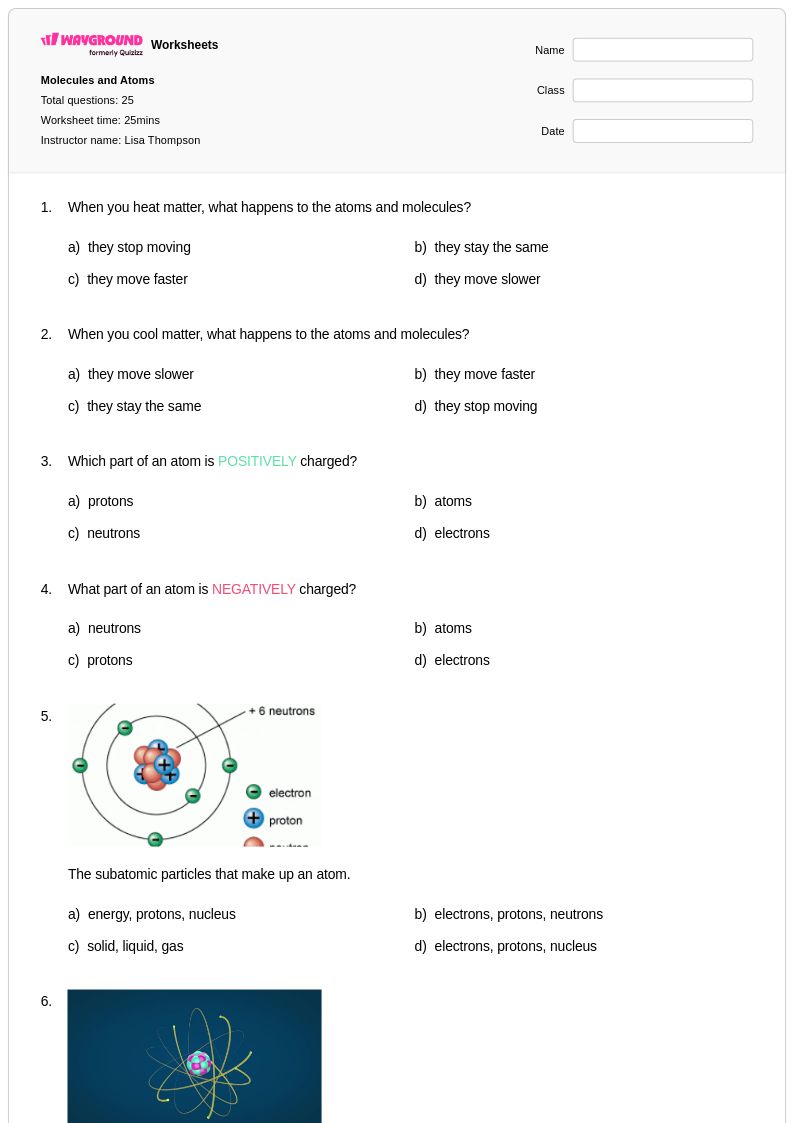
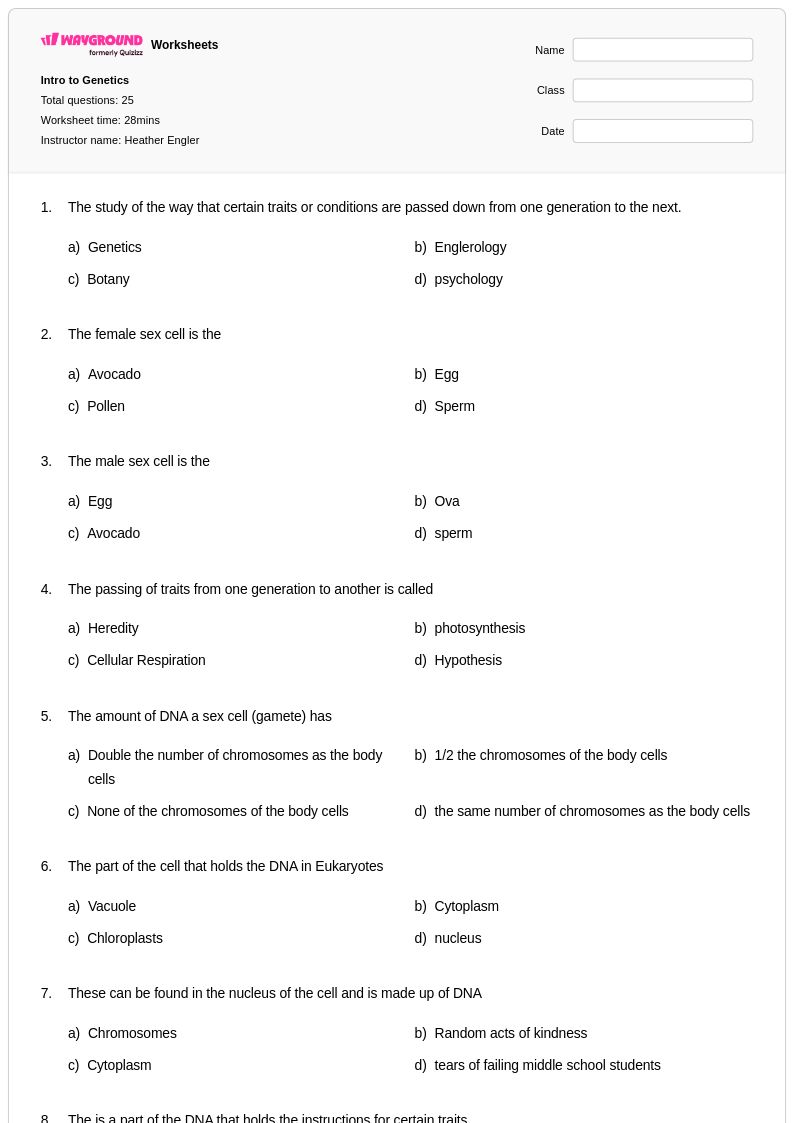
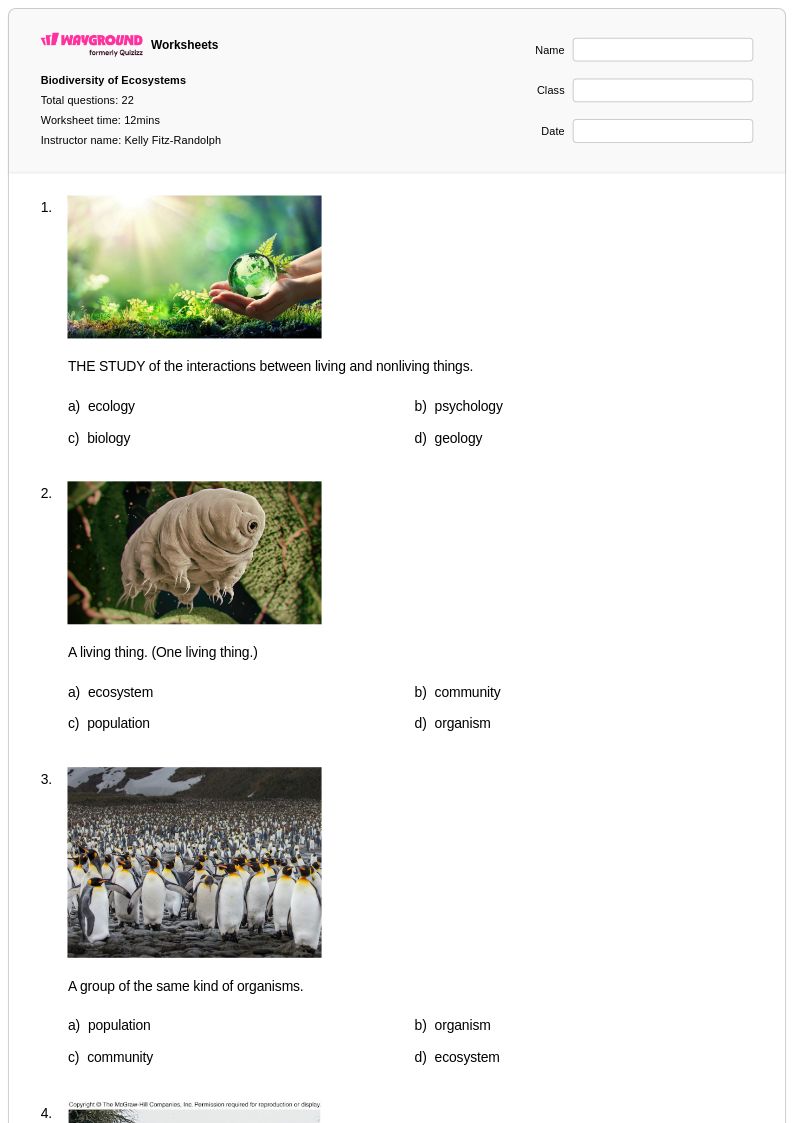
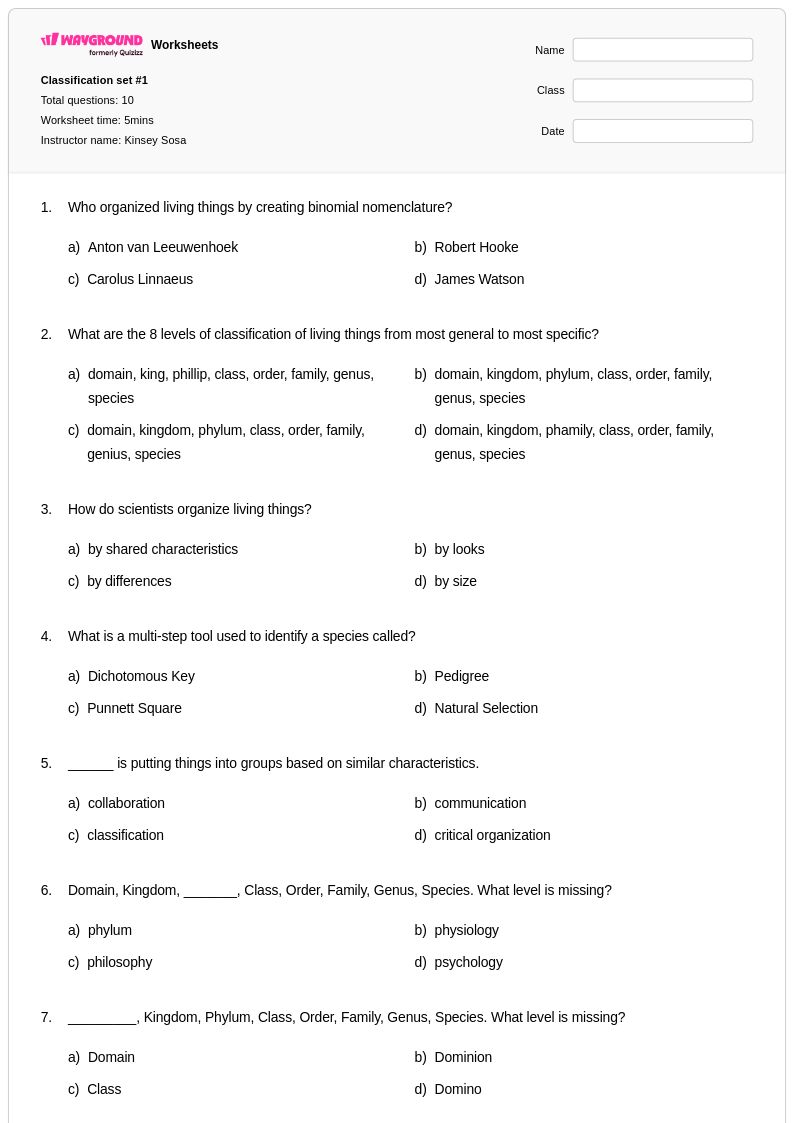
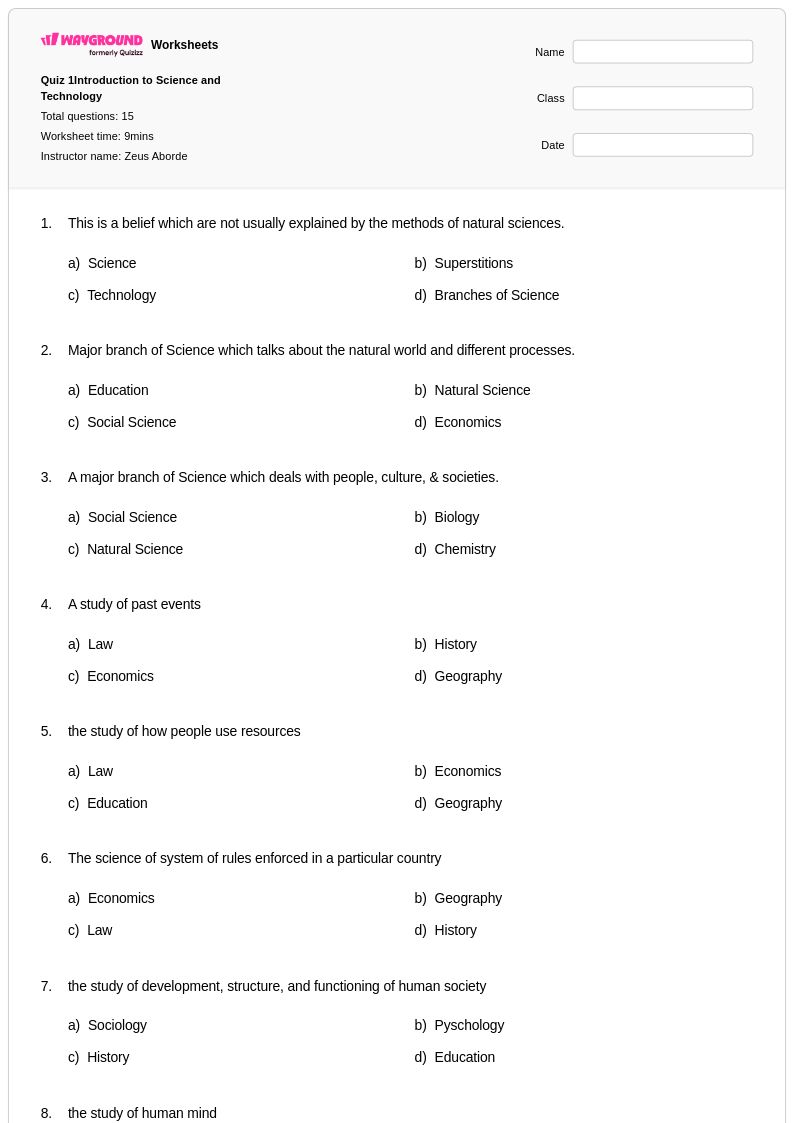
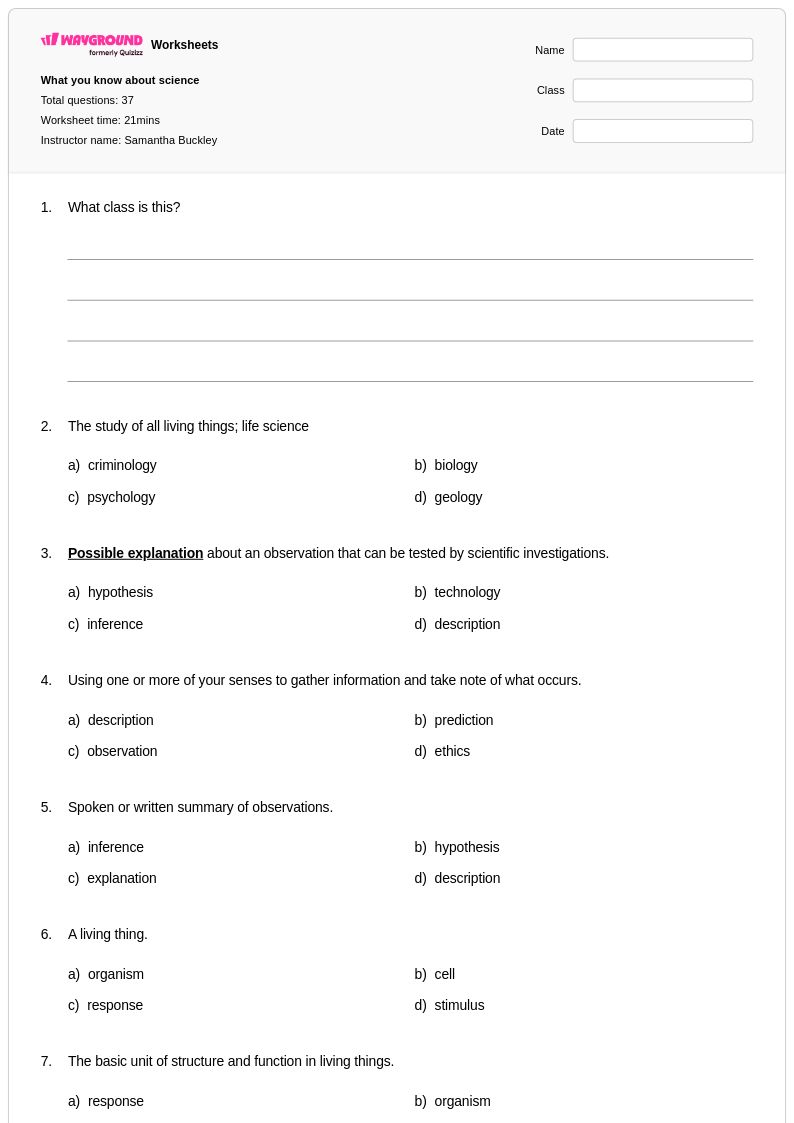
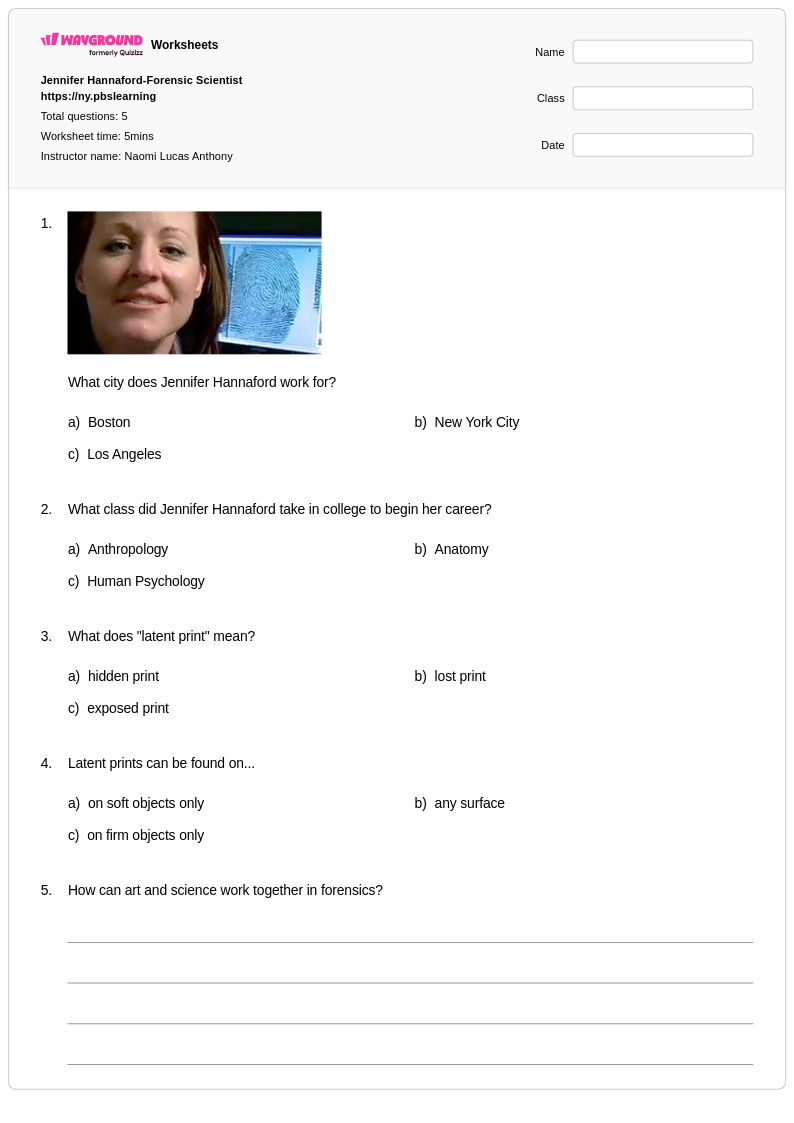
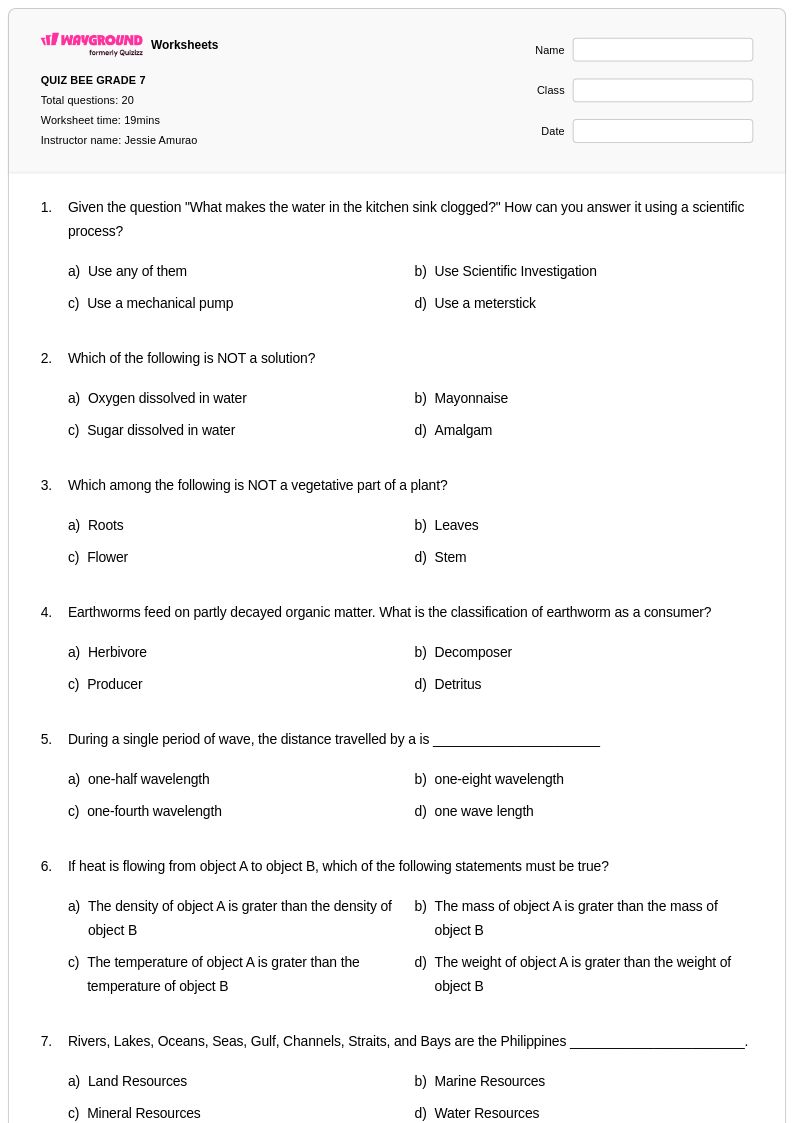
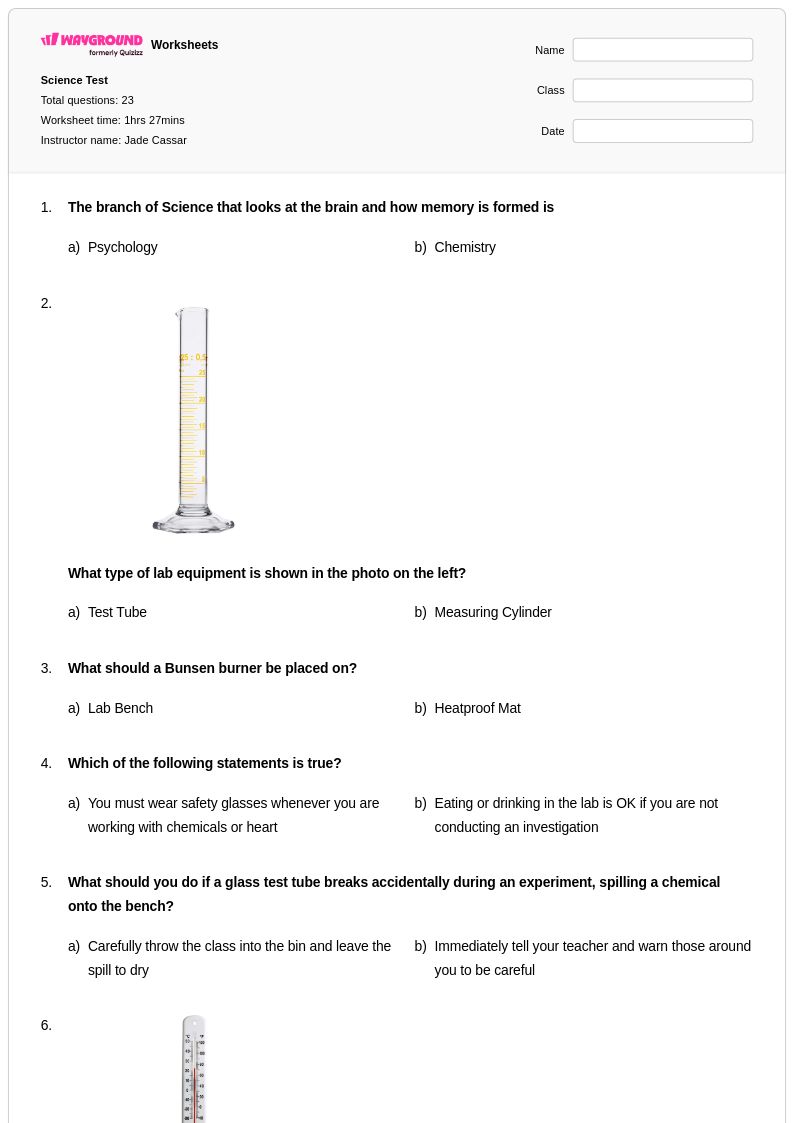
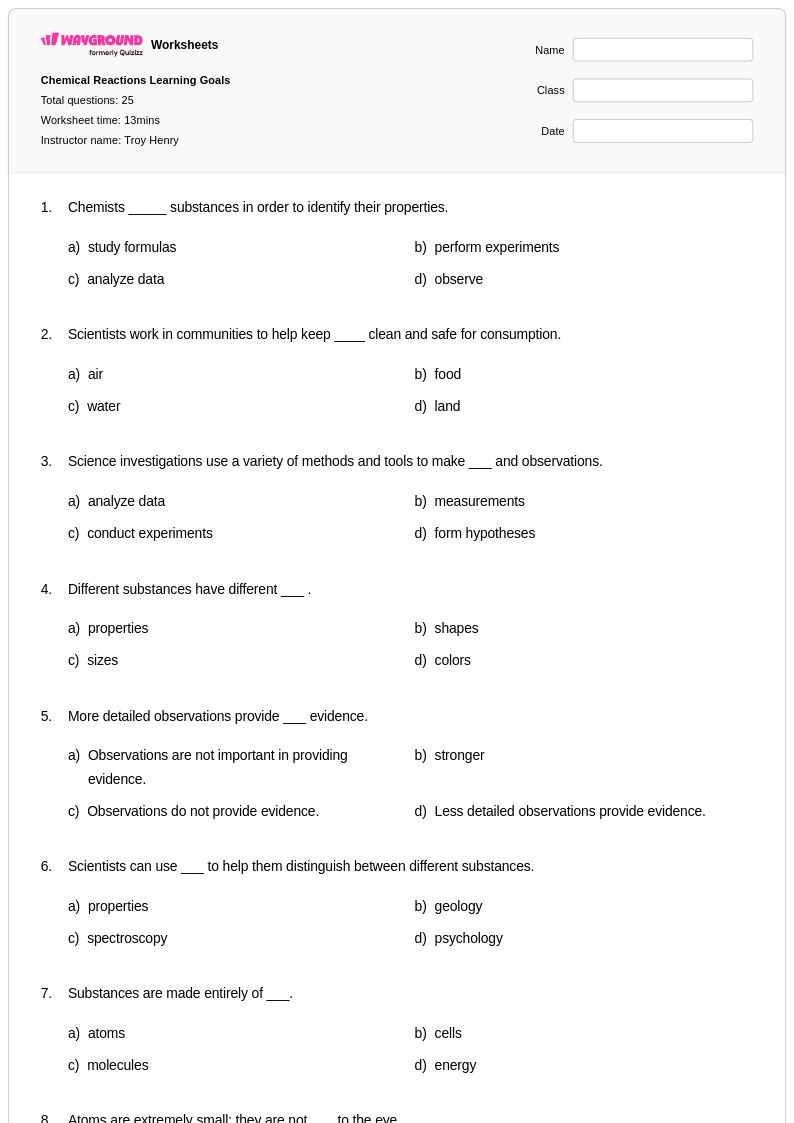
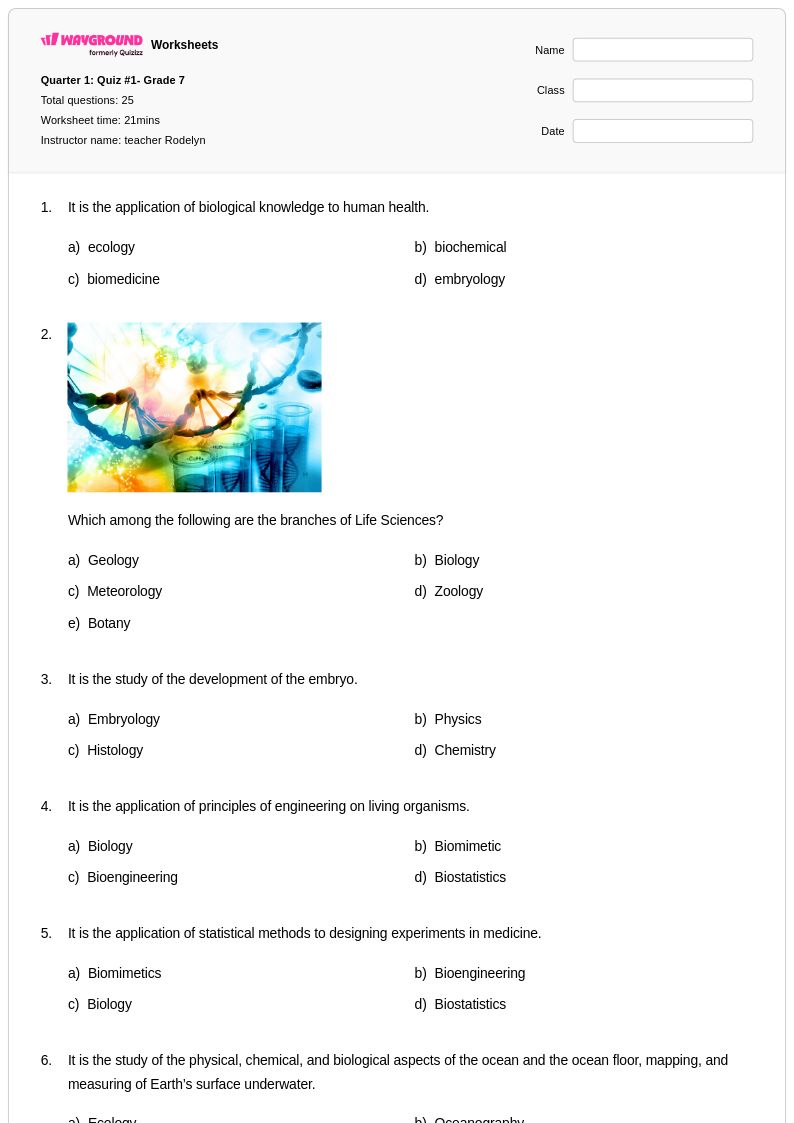
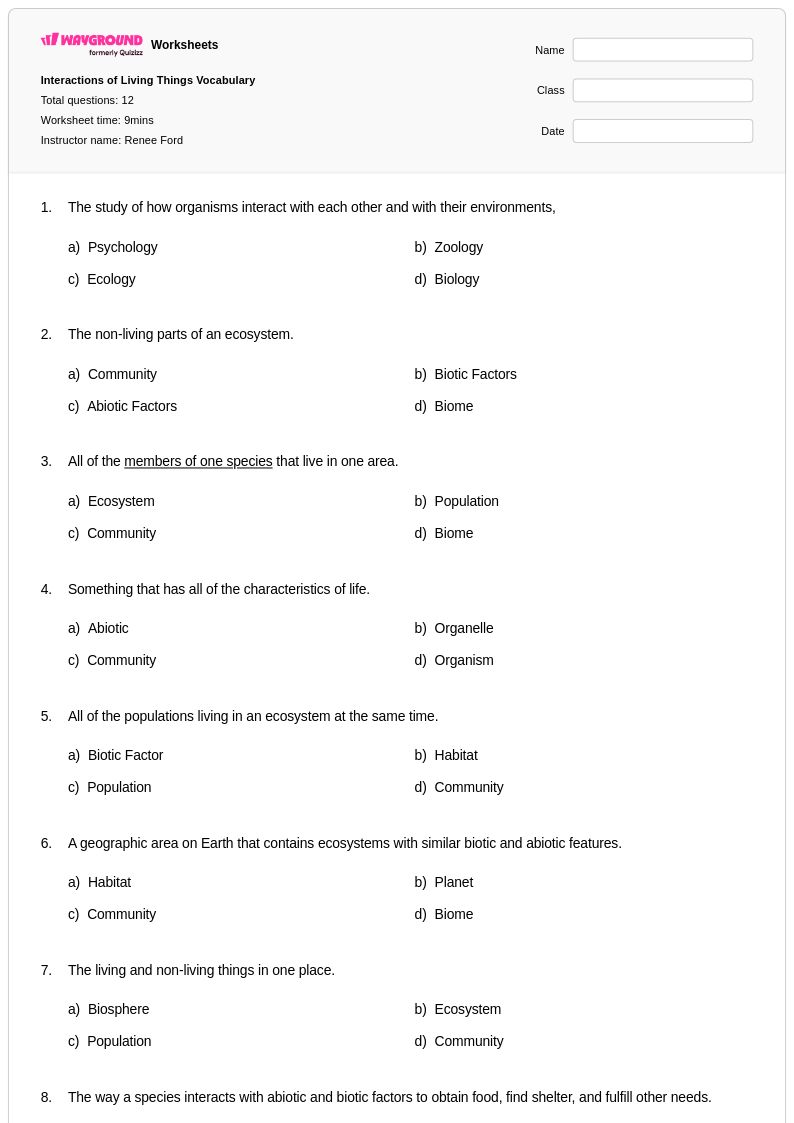
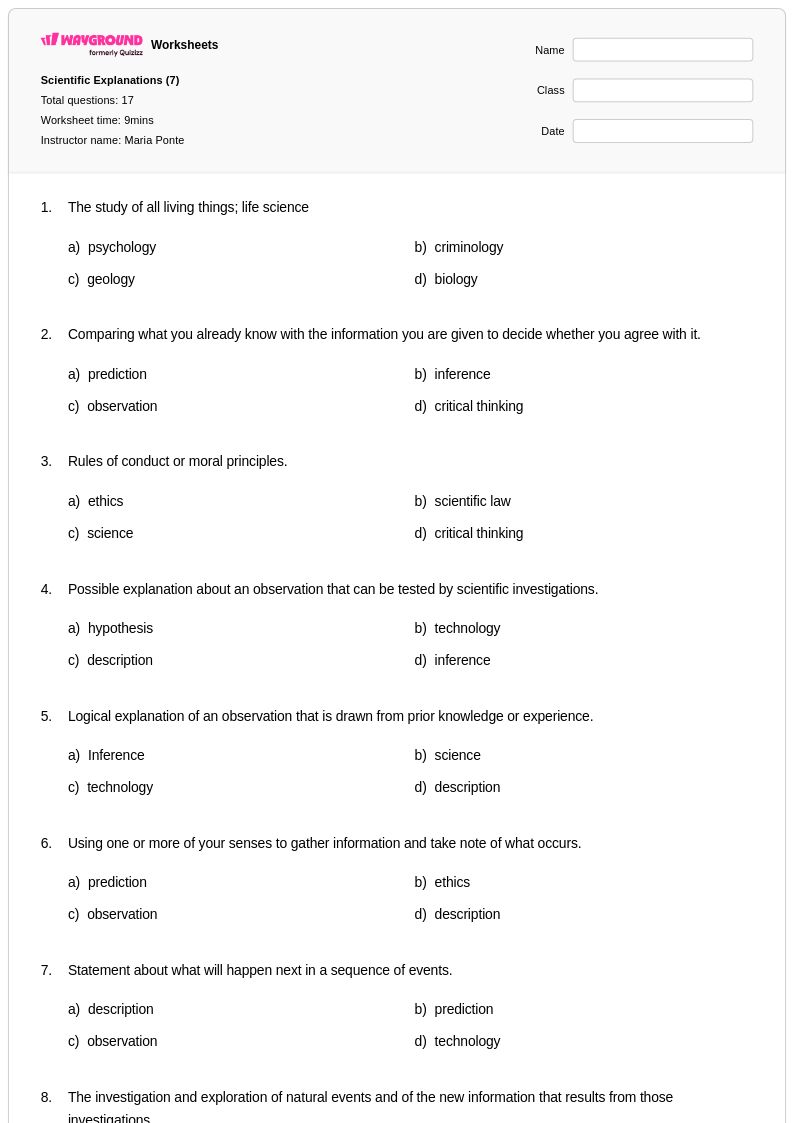
Explore Wayground's free Class 7 psychology worksheets and printables that help students understand human behavior, mental processes, and psychological concepts through engaging practice problems with comprehensive answer keys.
Explore printable Psychology worksheets for Class 7
Psychology worksheets for Class 7 students available through Wayground (formerly Quizizz) provide an engaging introduction to the scientific study of human behavior and mental processes. These educational resources help seventh-grade students develop critical thinking skills while exploring fundamental psychological concepts such as perception, memory, learning theories, and basic research methods. The worksheets strengthen analytical abilities through practice problems that require students to identify psychological phenomena in everyday situations, interpret simple experimental data, and understand the connection between brain function and behavior. Teachers can access comprehensive materials including answer keys and printable pdf formats that support both classroom instruction and independent study, ensuring students build a solid foundation in psychological science concepts appropriate for their developmental level.
Wayground (formerly Quizizz) supports educators with an extensive collection of teacher-created psychology resources specifically designed for middle school learners. The platform's robust search and filtering capabilities allow teachers to quickly locate materials aligned with curriculum standards and differentiate instruction based on individual student needs. These customizable worksheets are available in both digital and printable formats, including downloadable pdfs that facilitate flexible lesson planning and accommodate various learning environments. The comprehensive resource library enables teachers to seamlessly integrate psychology concepts into their science curriculum, providing targeted practice for skill development, remediation support for struggling learners, and enrichment opportunities for advanced students ready to explore the fascinating intersection of science and human behavior.
FAQs
How do I teach psychology concepts like memory and states of consciousness to high school students?
Effective psychology instruction combines direct instruction with application-based activities that ask students to connect abstract concepts to their own experiences. For memory, teachers often use encoding, storage, and retrieval frameworks alongside real-world examples like eyewitness testimony. For states of consciousness, structured note-taking activities paired with case analysis help students distinguish between sleep stages, hypnosis, and altered states. Grounding lessons in psychological research methods early in the unit gives students a framework for evaluating all subsequent content.
What practice exercises help students understand psychological theories and research methods?
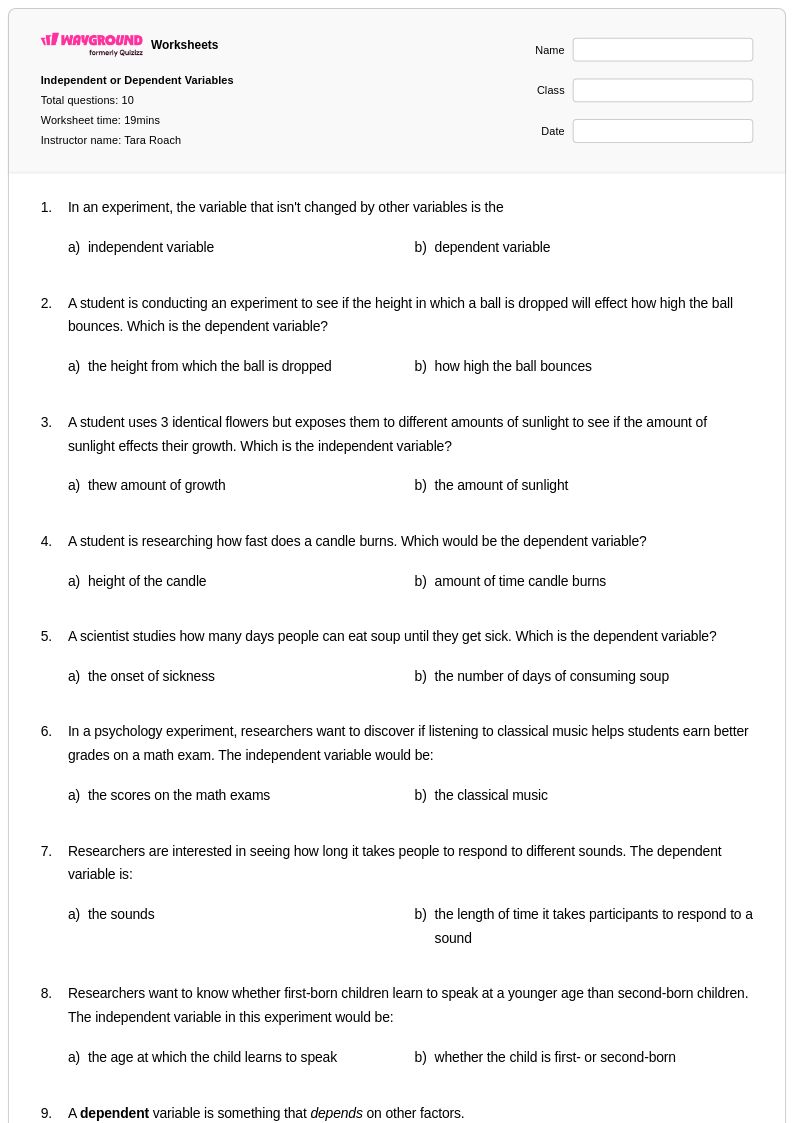
Practice exercises that ask students to apply theoretical frameworks to case studies are particularly effective in psychology because they bridge abstract theory and observable behavior. Worksheets that present psychological experiments and ask students to identify variables, interpret findings, and evaluate methodology reinforce research literacy alongside content knowledge. Exercises focused on behavioral conditioning, cognitive development, and personality theories benefit from scenario-based prompts that require students to justify their reasoning rather than simply recall definitions.
What common mistakes do students make when learning about memory in psychology?
Students frequently conflate the three stages of memory, using encoding, storage, and retrieval interchangeably when each refers to a distinct process. Another common error is treating memory as a fixed recording rather than a reconstructive process, which leads to misconceptions about eyewitness reliability and memory distortion. Students also struggle to distinguish between short-term and working memory, often using the terms as synonyms despite meaningful conceptual differences. Addressing these errors explicitly with counter-example exercises strengthens accuracy.
What misconceptions do students commonly have about states of consciousness?
A prevalent misconception is that sleep is a passive, uniform state rather than an active, cyclical process with distinct stages that serve different physiological and cognitive functions. Students often mischaracterize hypnosis as a form of unconsciousness or mind control rather than a state of heightened suggestibility, leading to confusion when interpreting research on its clinical applications. Many students also conflate psychoactive drug categories, struggling to differentiate stimulants, depressants, and hallucinogens based on their mechanisms of action.
How can I use psychology worksheets in both in-person and digital classroom settings?
Psychology worksheets on Wayground are available as printable PDFs for traditional classroom use and in digital formats for technology-integrated environments, making them flexible across instructional settings. Teachers can distribute printed worksheets for in-class case analysis or assign digital versions as homework or assessment preparation. Wayground also allows teachers to host worksheets as interactive quizzes on the platform, which provides real-time insight into student understanding. Digital delivery supports accommodation settings such as read aloud, extended time, and reduced answer choices for students who need additional support.
How do I differentiate psychology worksheets for students at different skill levels?
Differentiation in psychology can mean adjusting the complexity of case studies, the scaffolding provided for theoretical application, or the number of concepts addressed in a single task. On Wayground, teachers can apply student-level accommodations including extended time, read aloud support, and reduced answer choices, which are especially useful for students who struggle with dense psychological terminology or complex experimental scenarios. These settings can be configured per student and apply automatically across sessions without alerting other students, allowing seamless in-class differentiation.