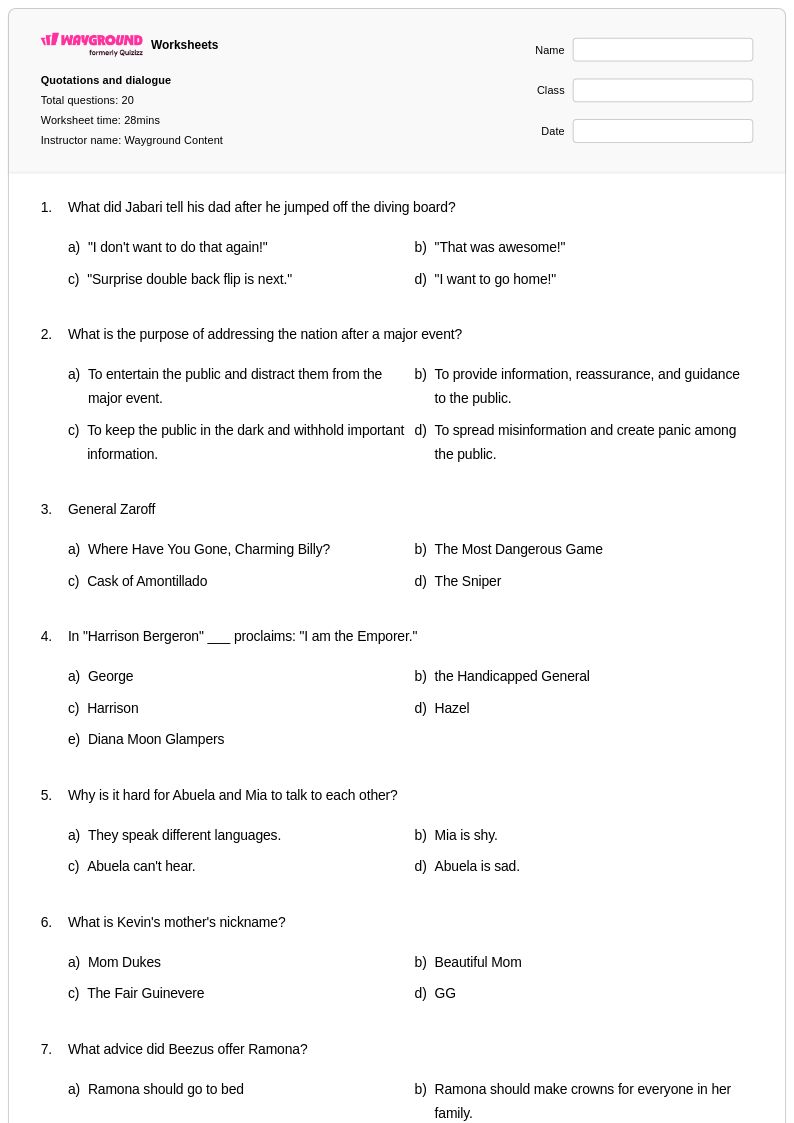
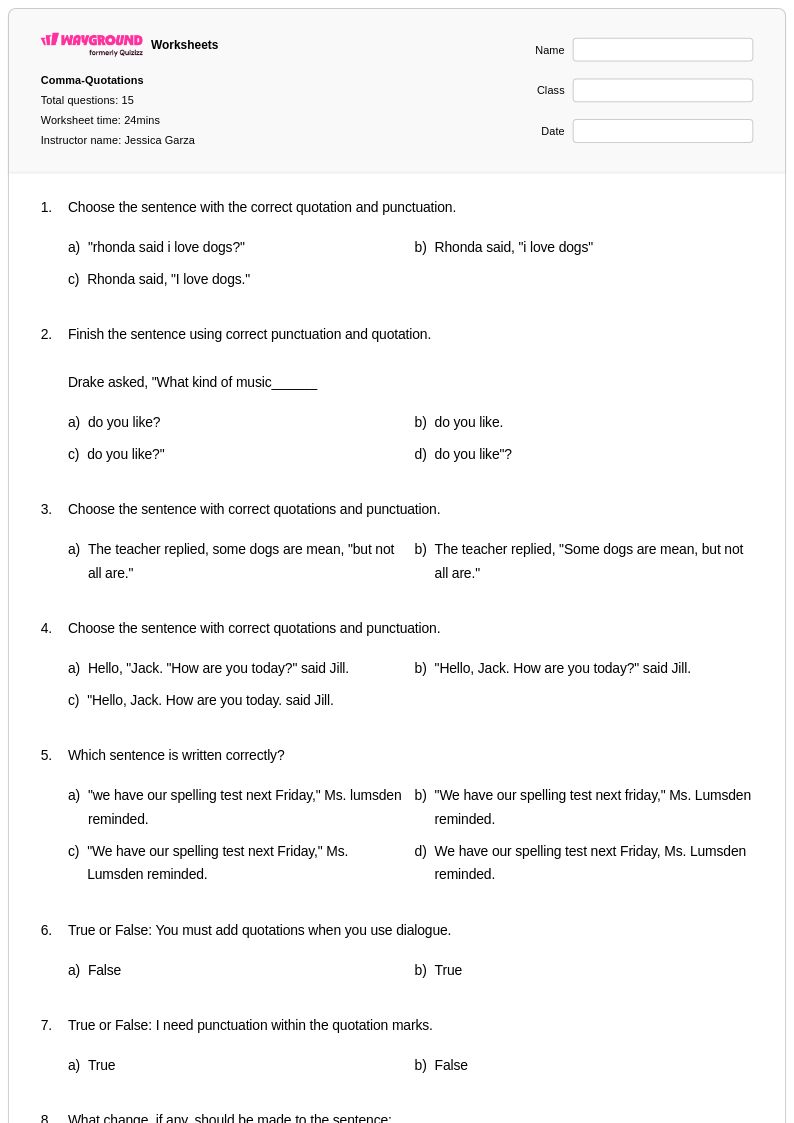
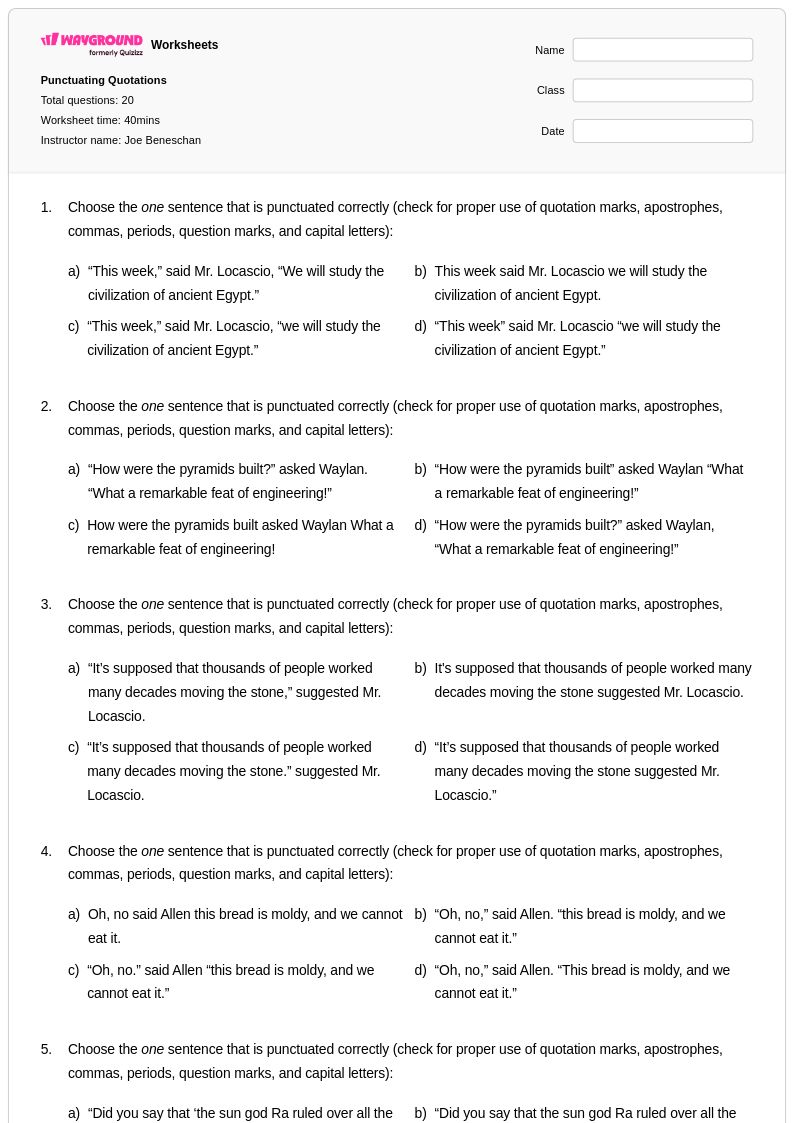
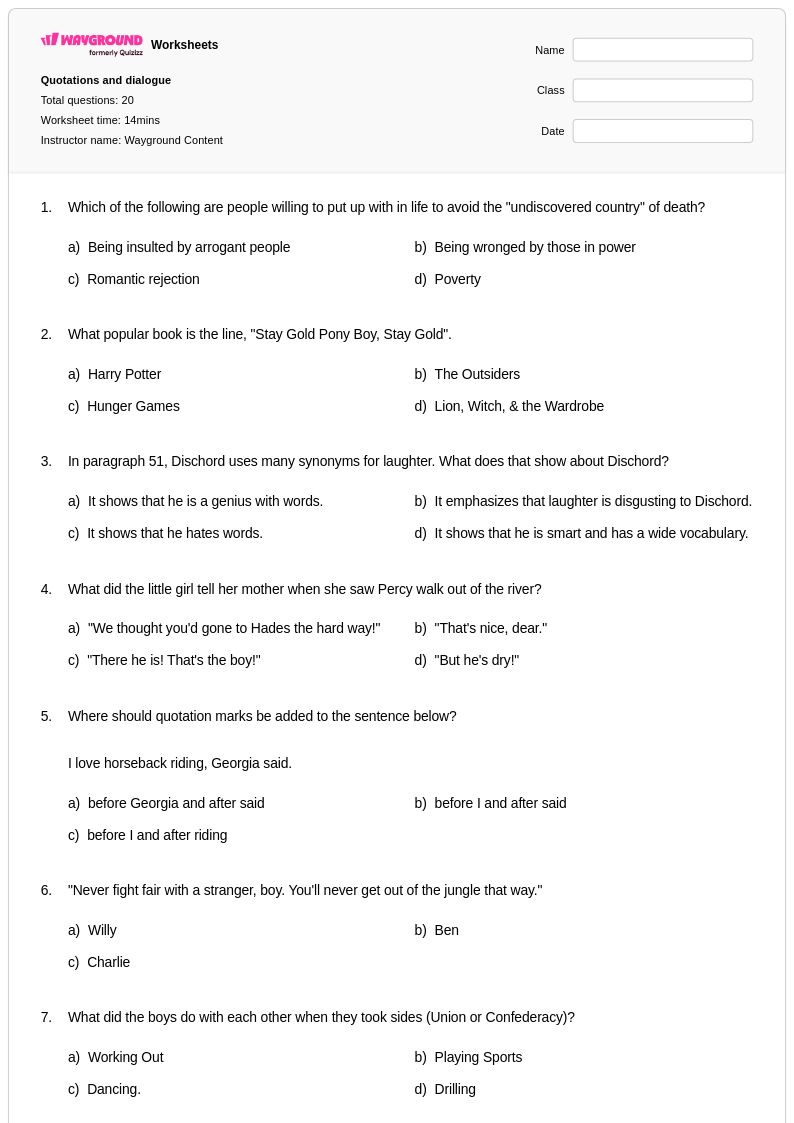
Enhance Class 6 students' understanding of quotations with Wayground's comprehensive collection of free worksheets, printables, and practice problems that include detailed answer keys and PDF formats for effective punctuation mastery.
Explore printable Quotations worksheets for Class 6
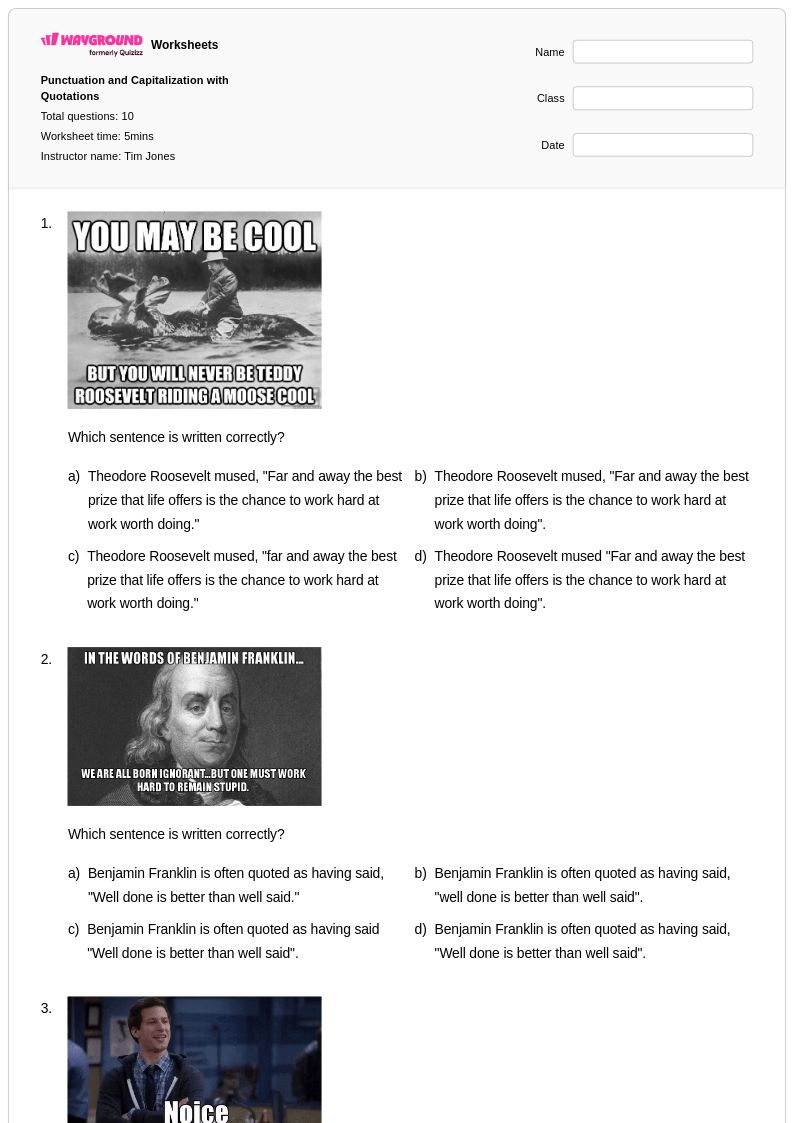
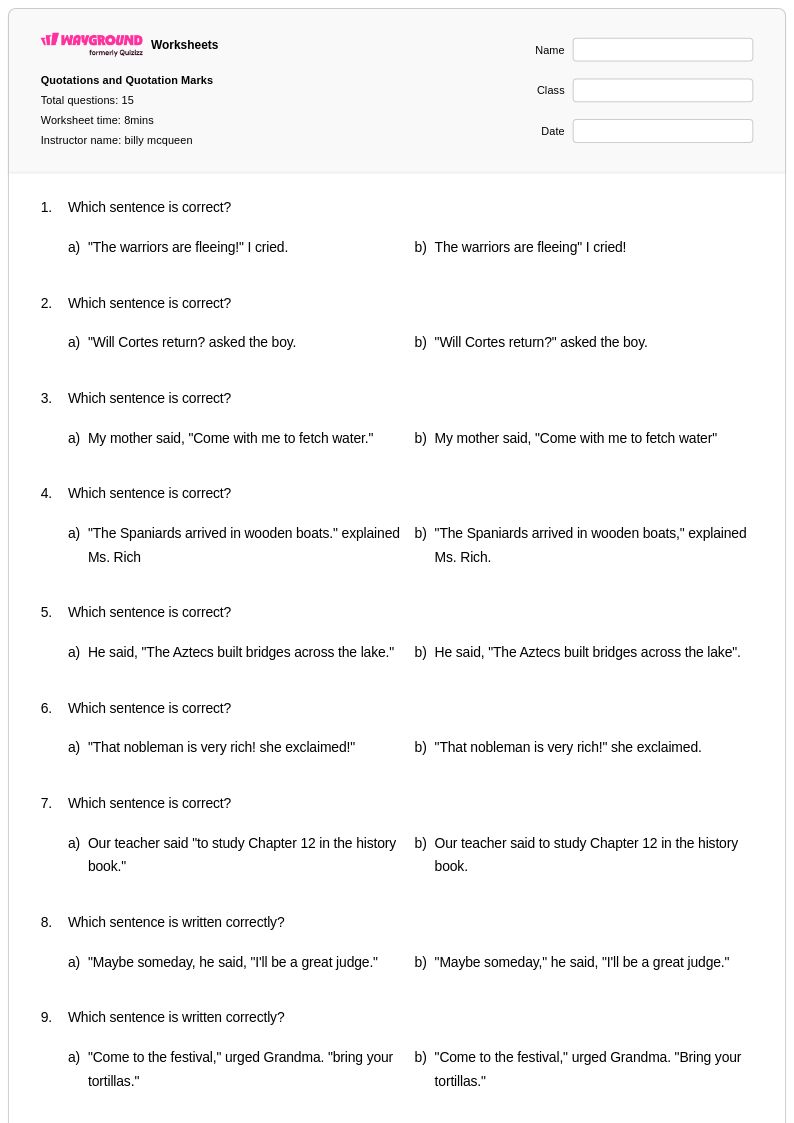
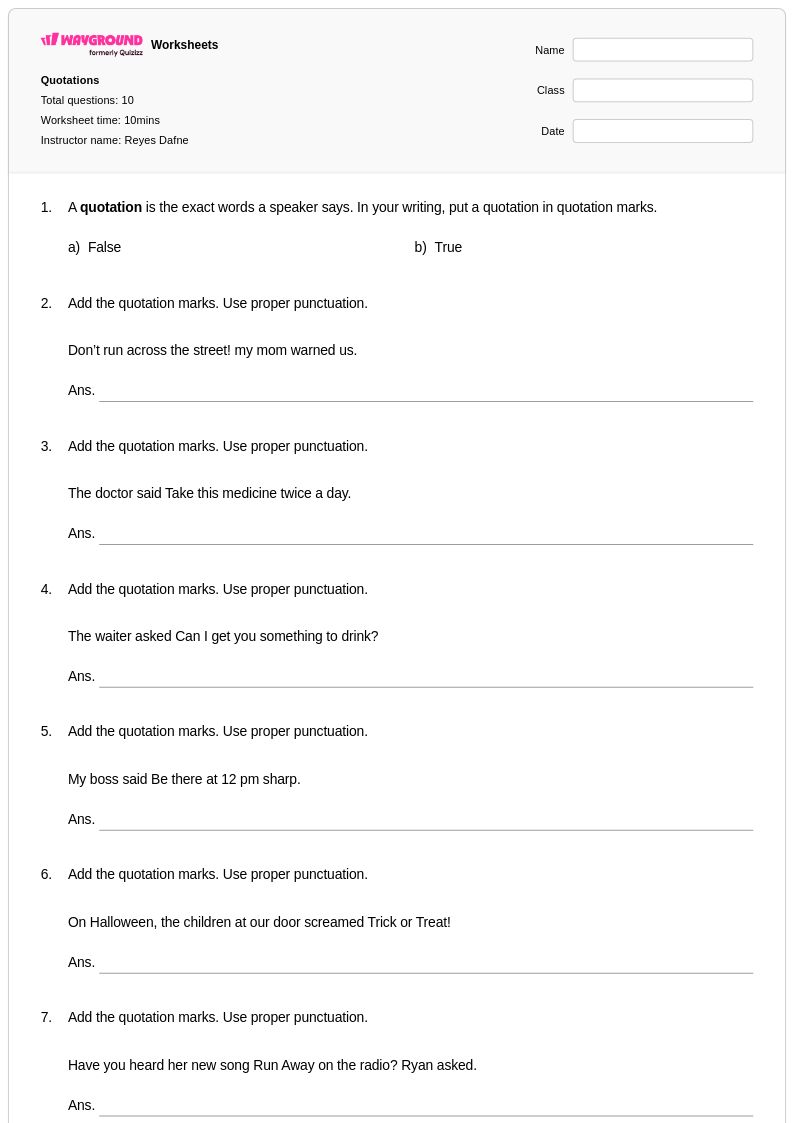
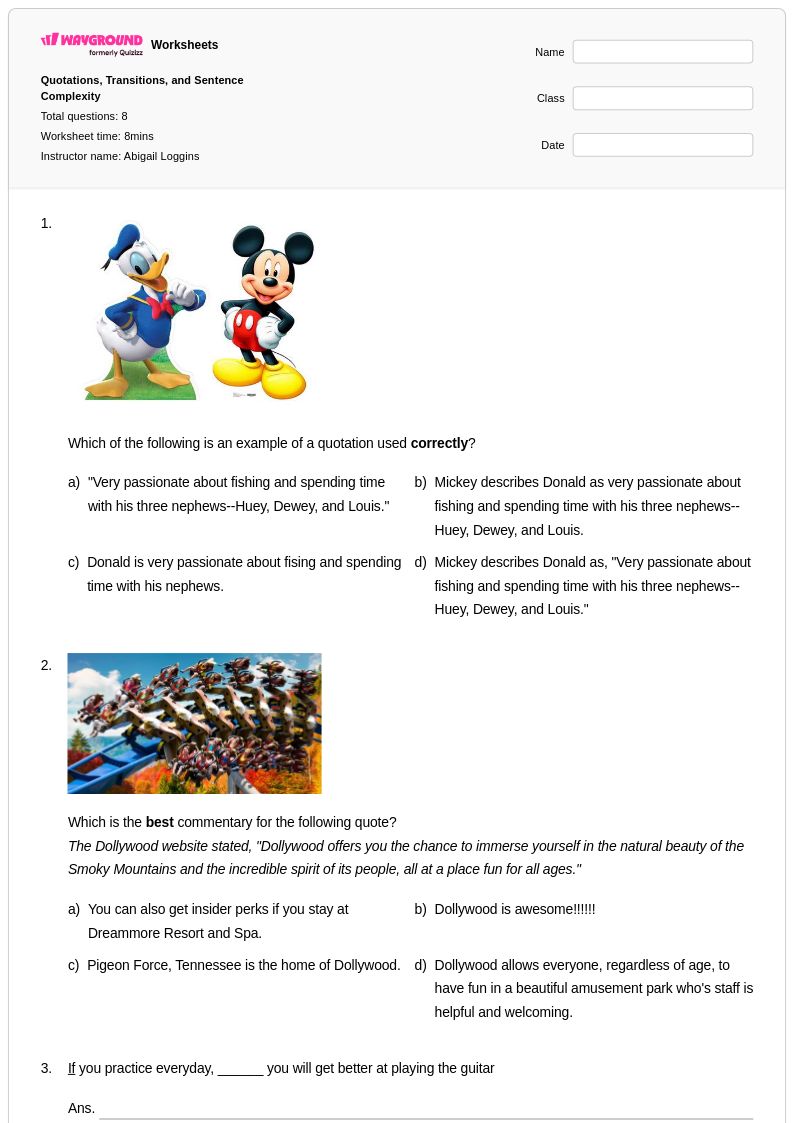
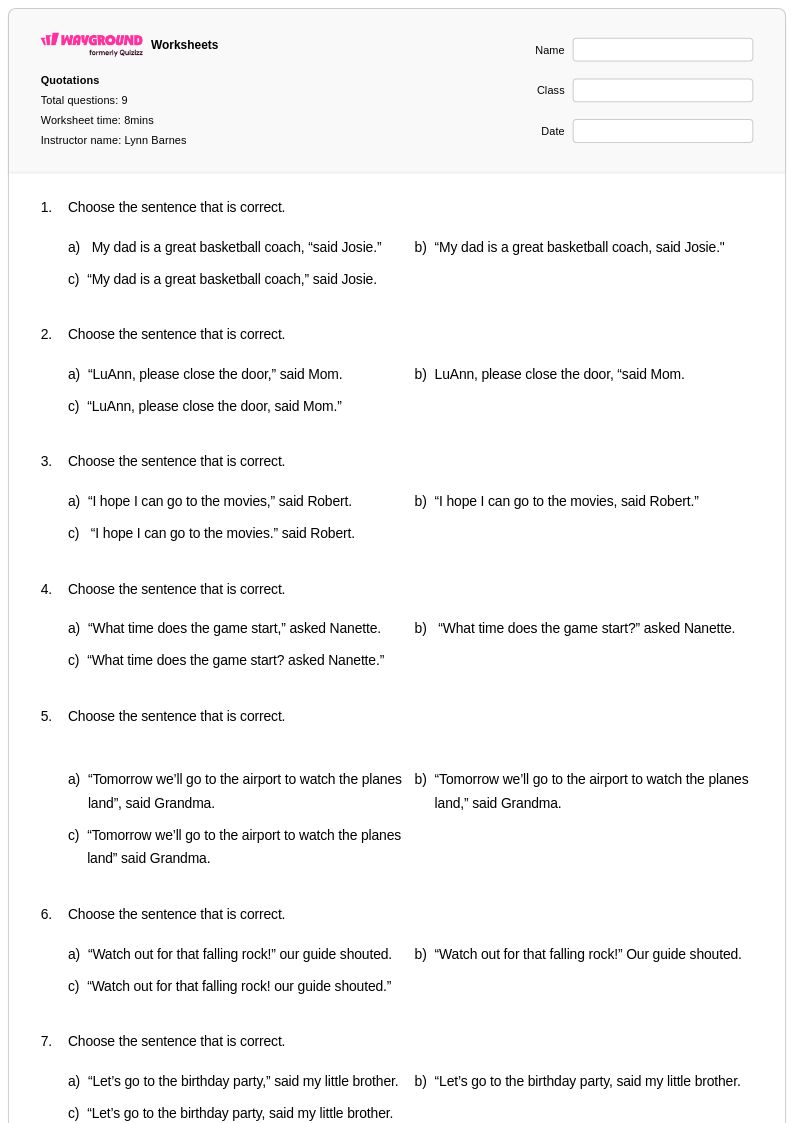
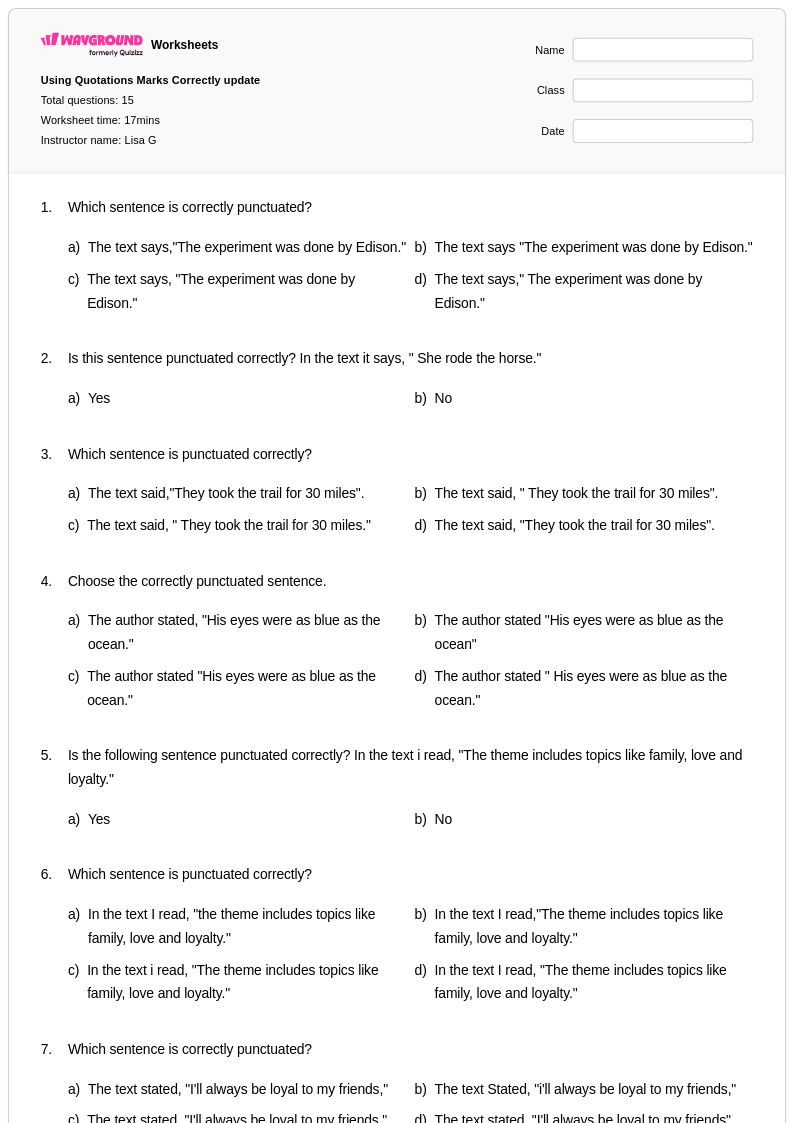
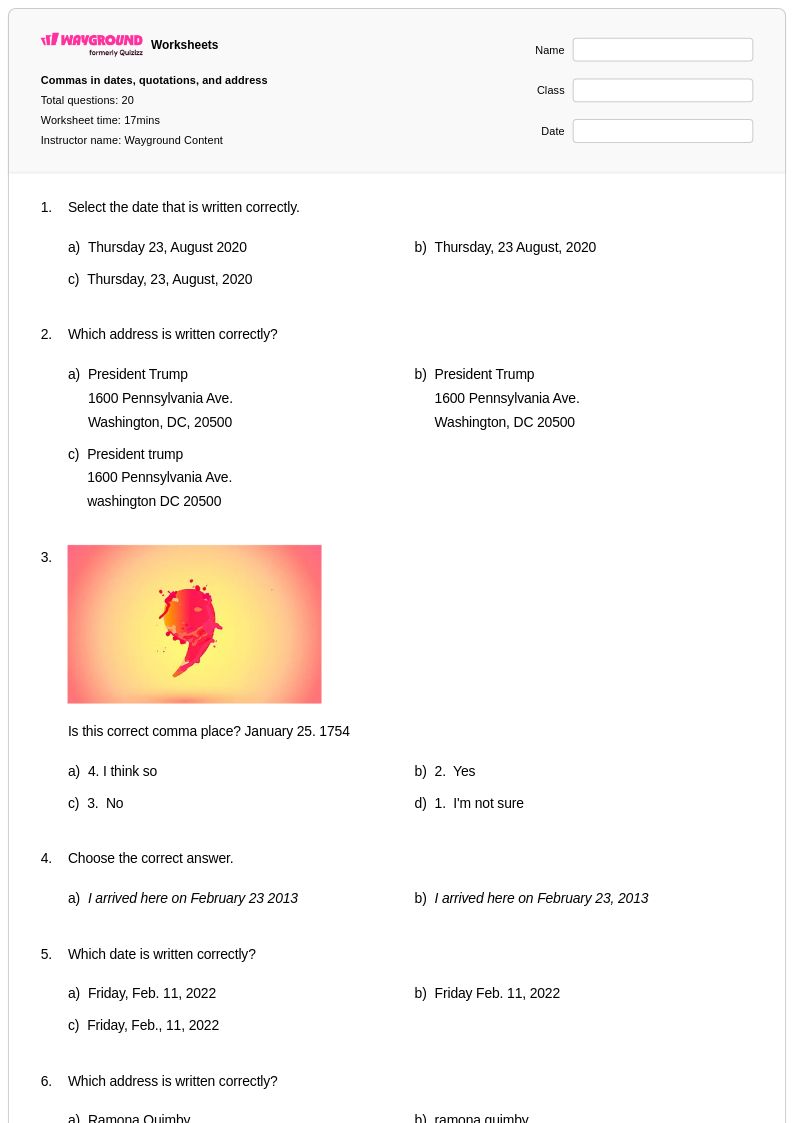
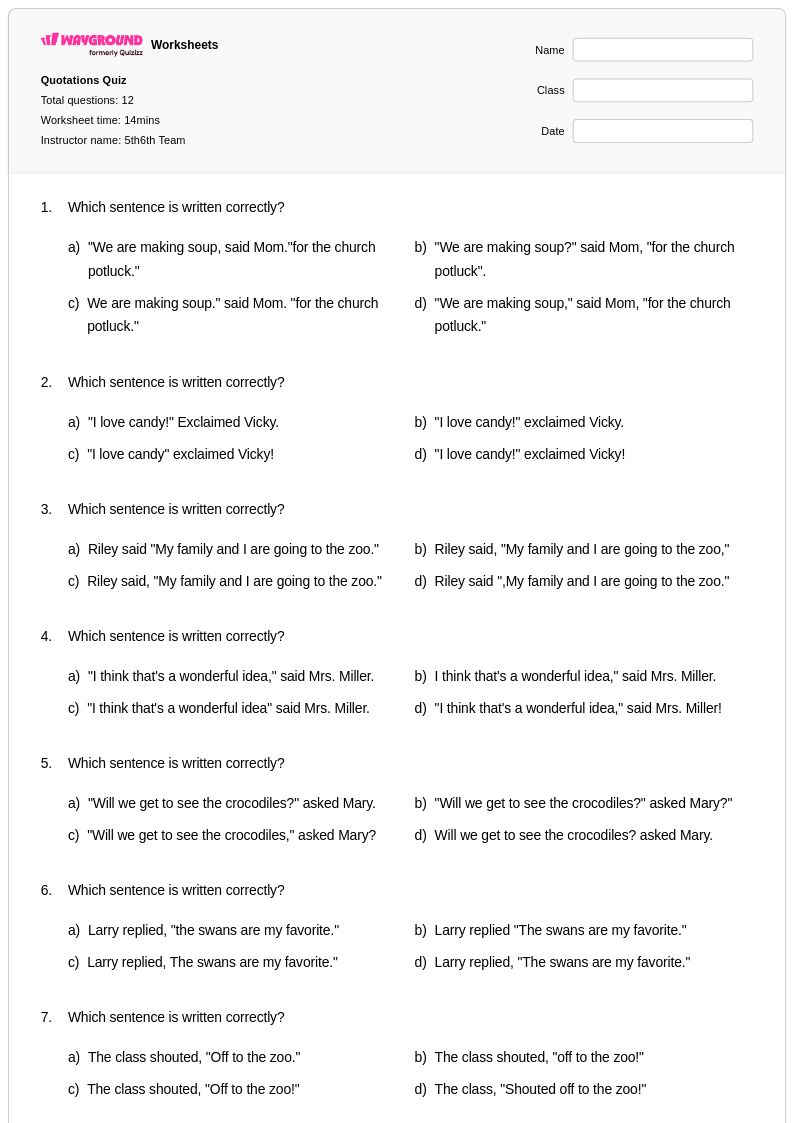
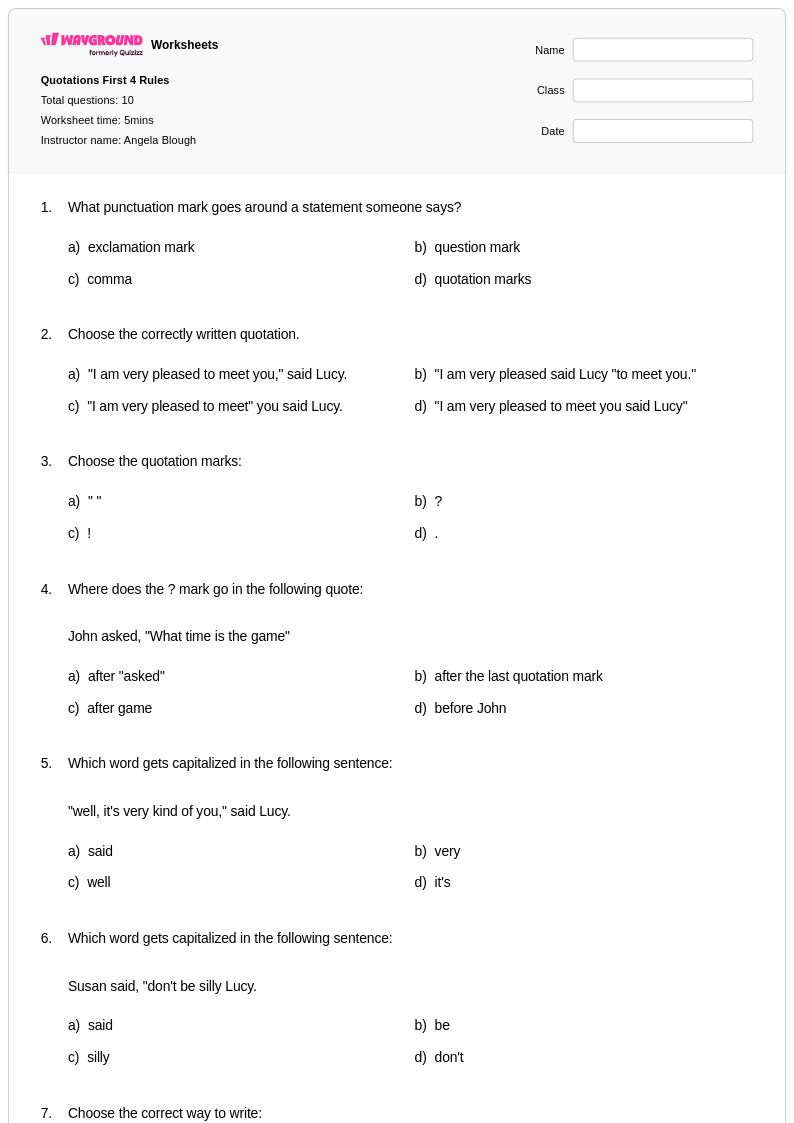
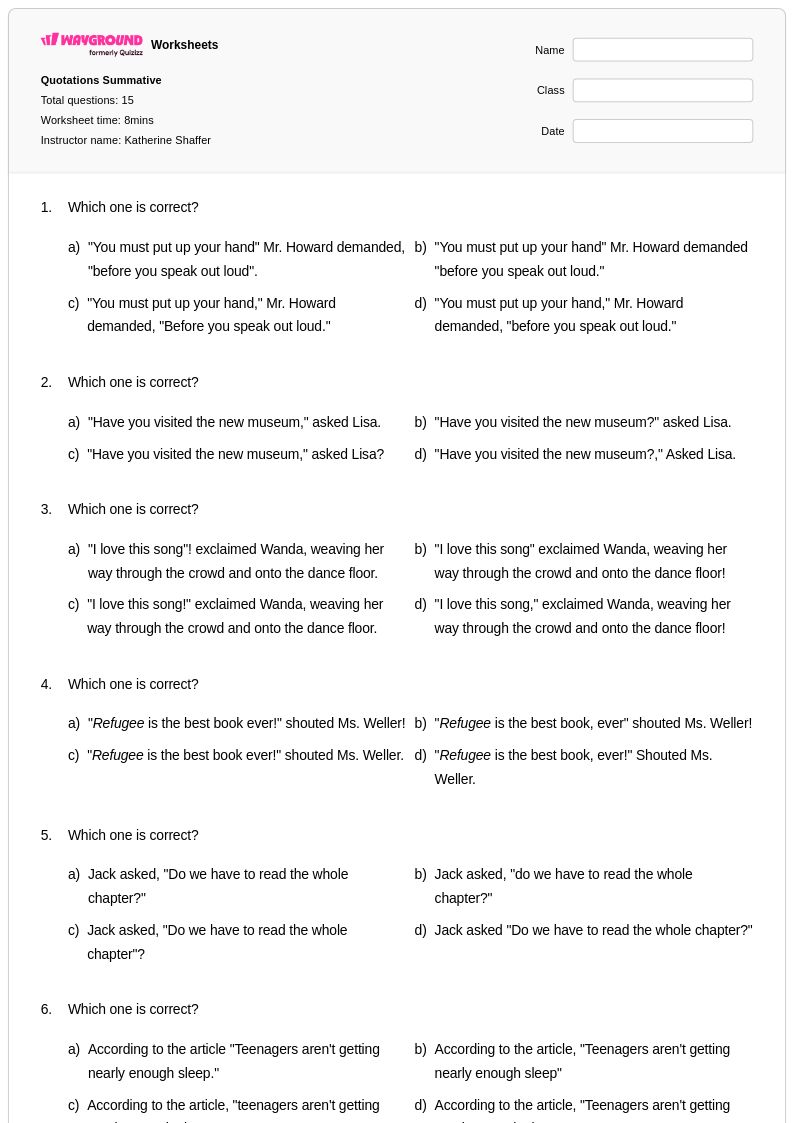
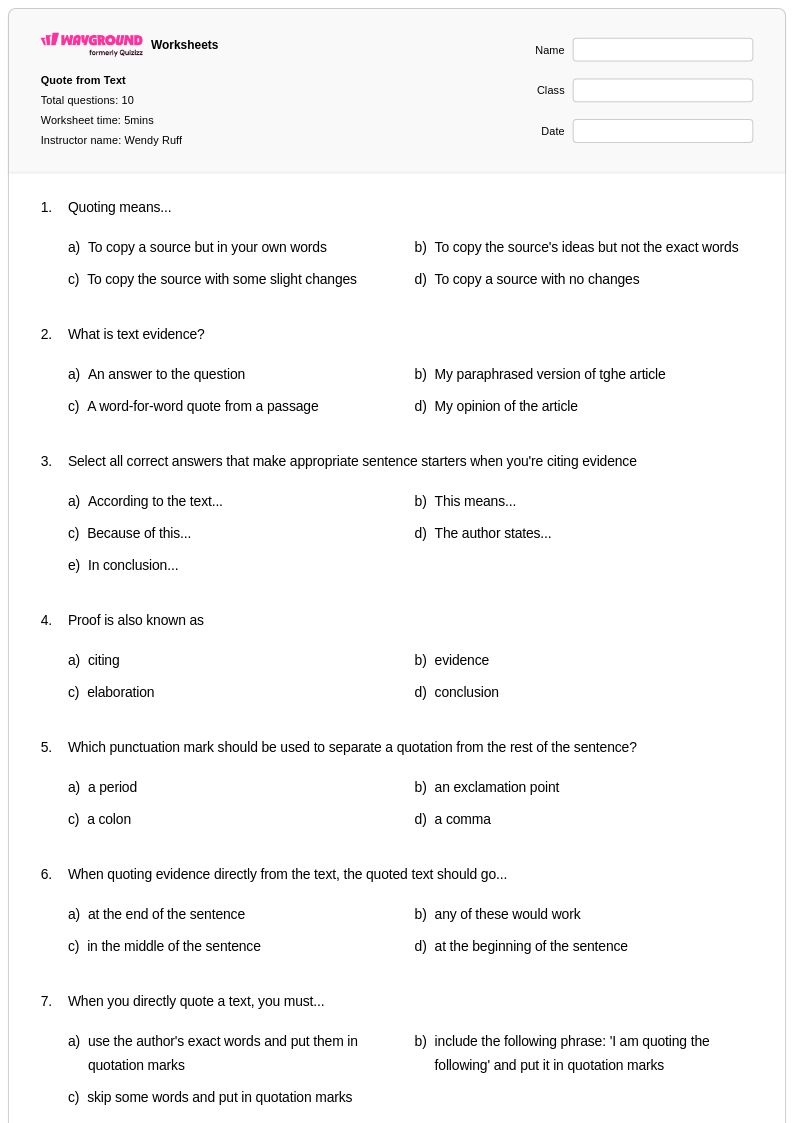
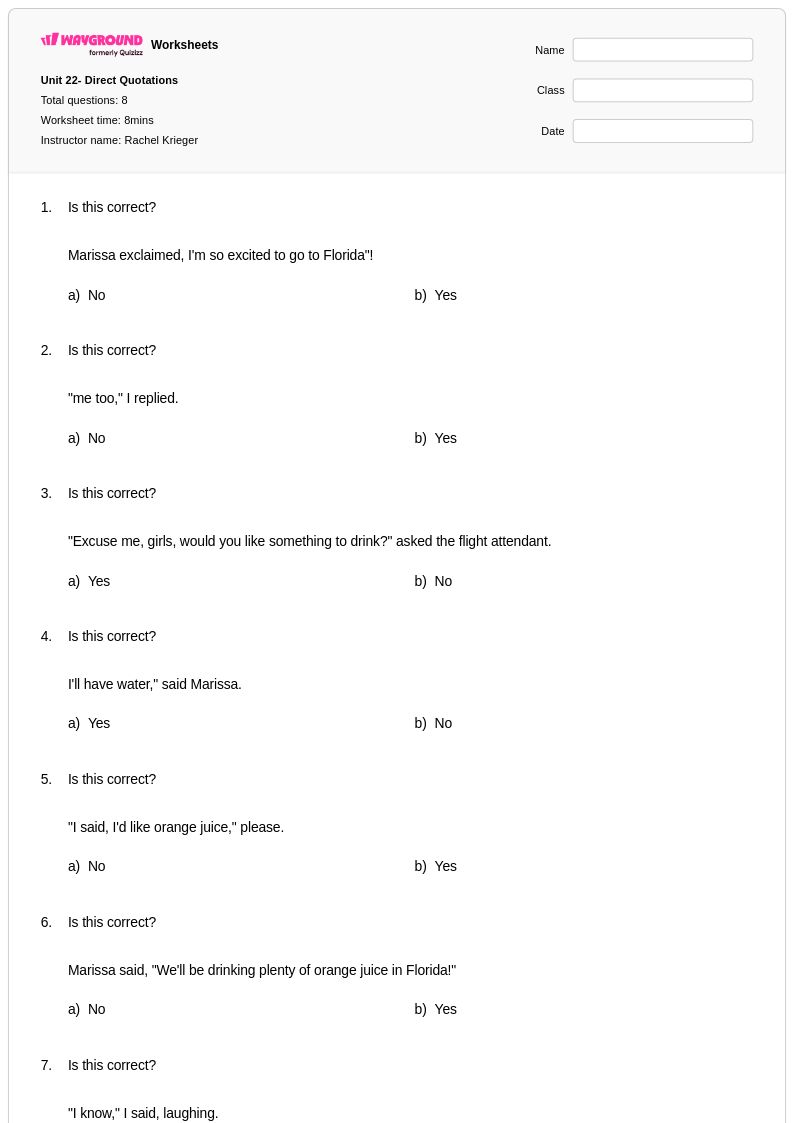
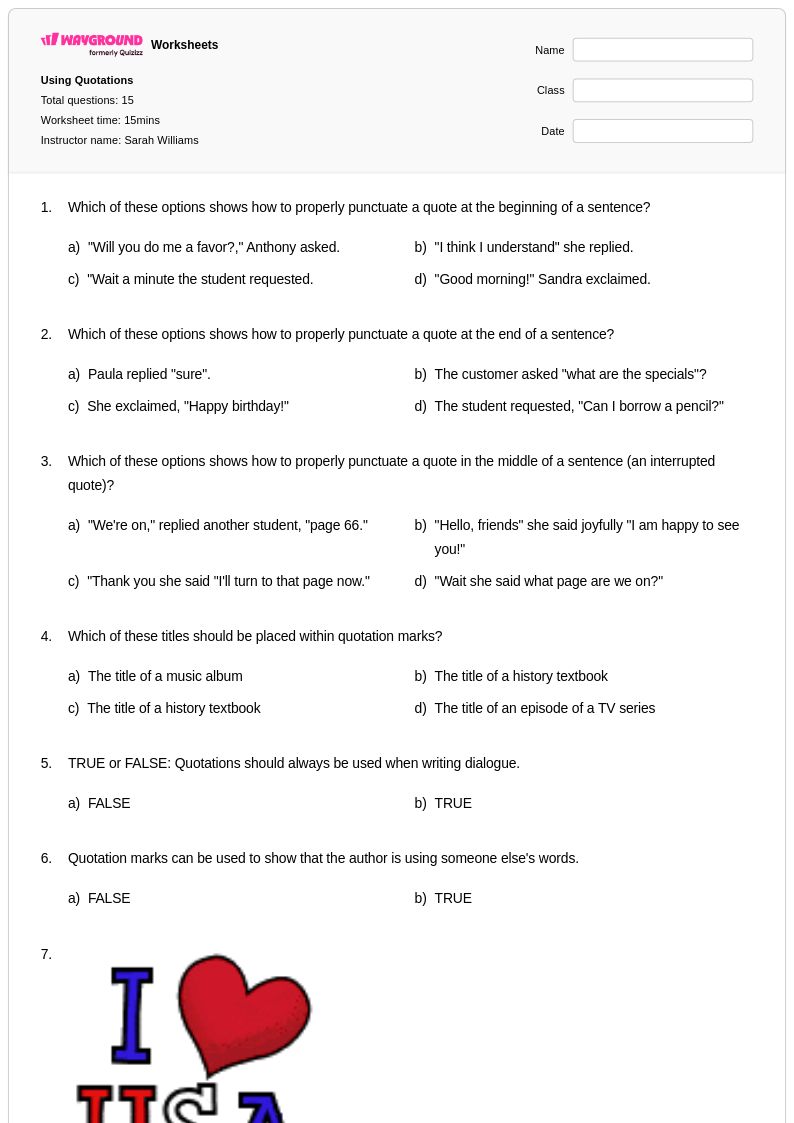
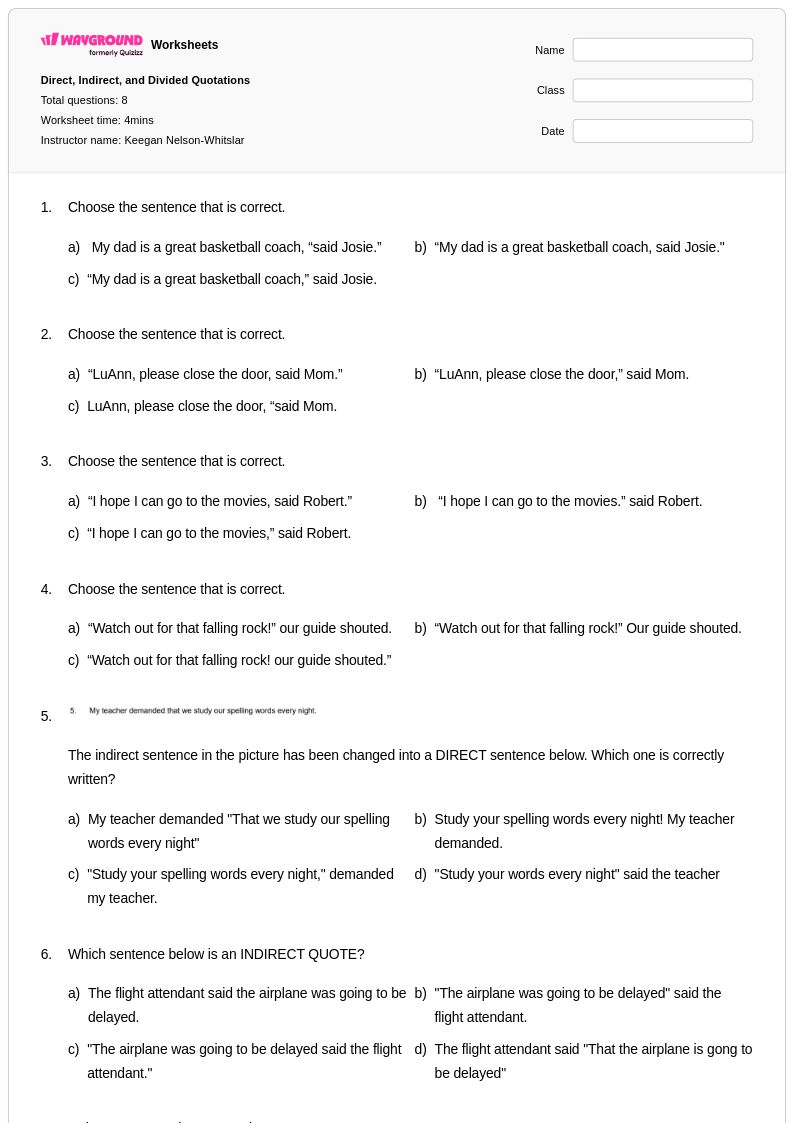
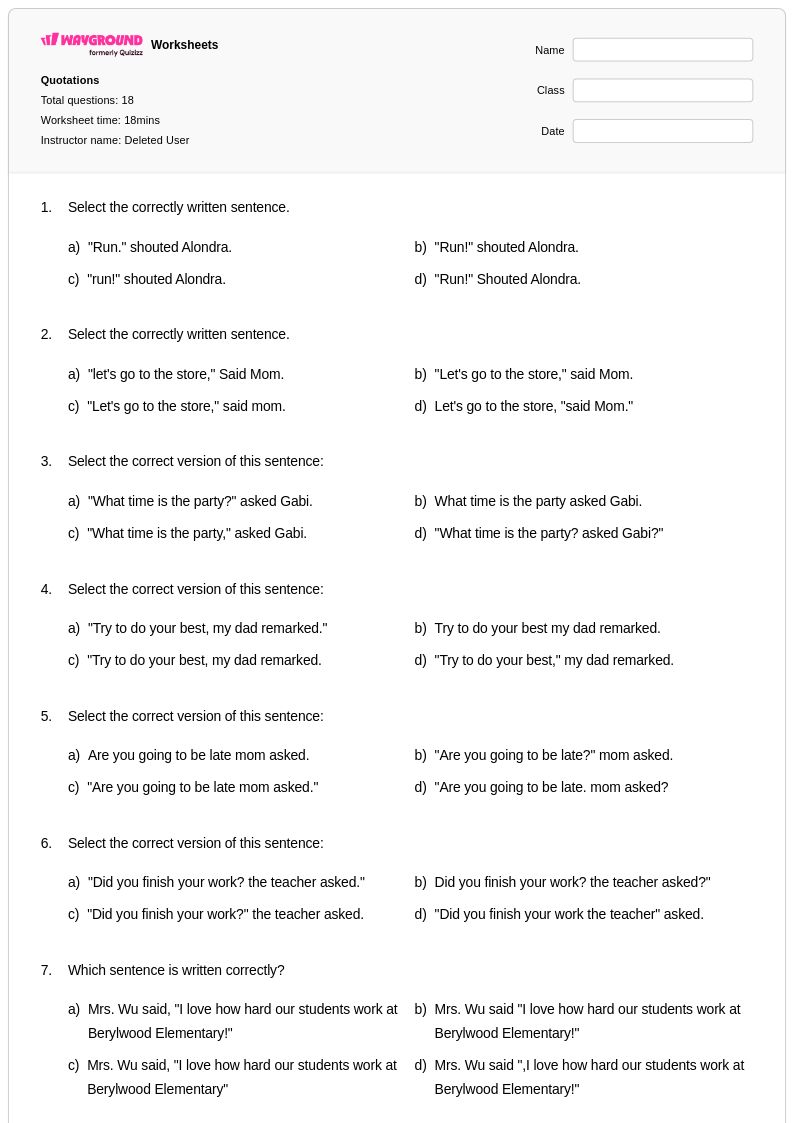
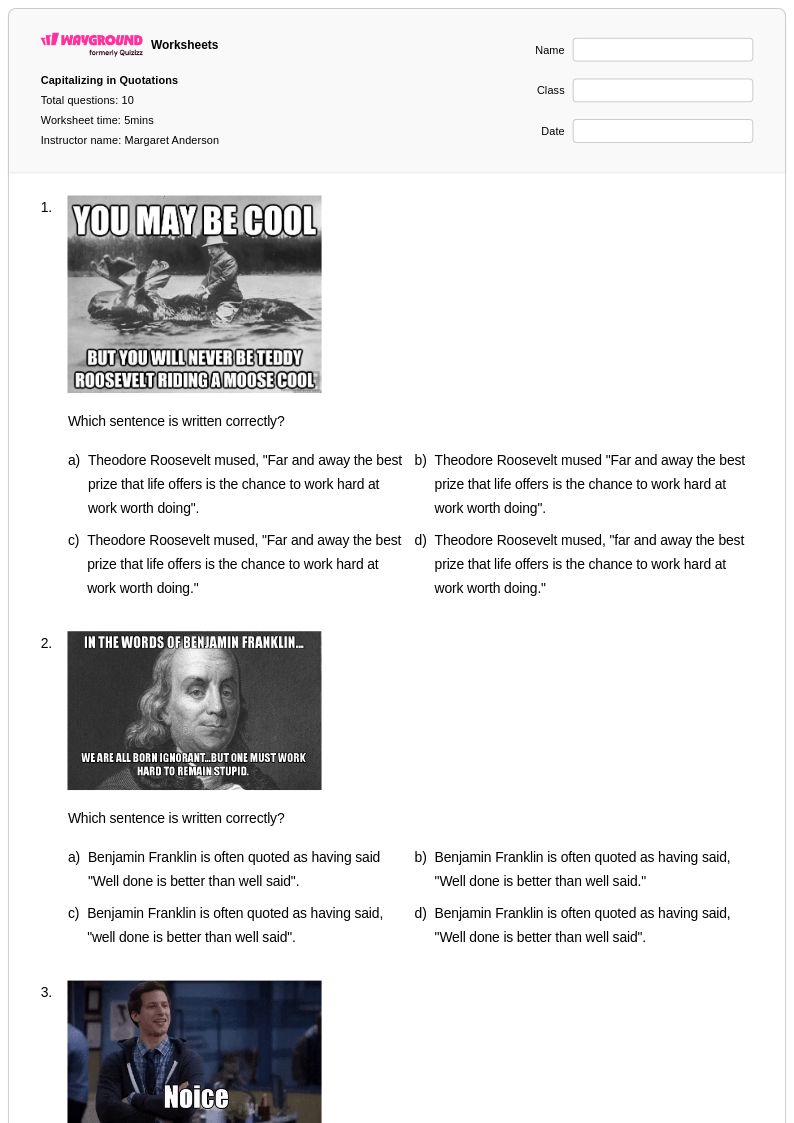
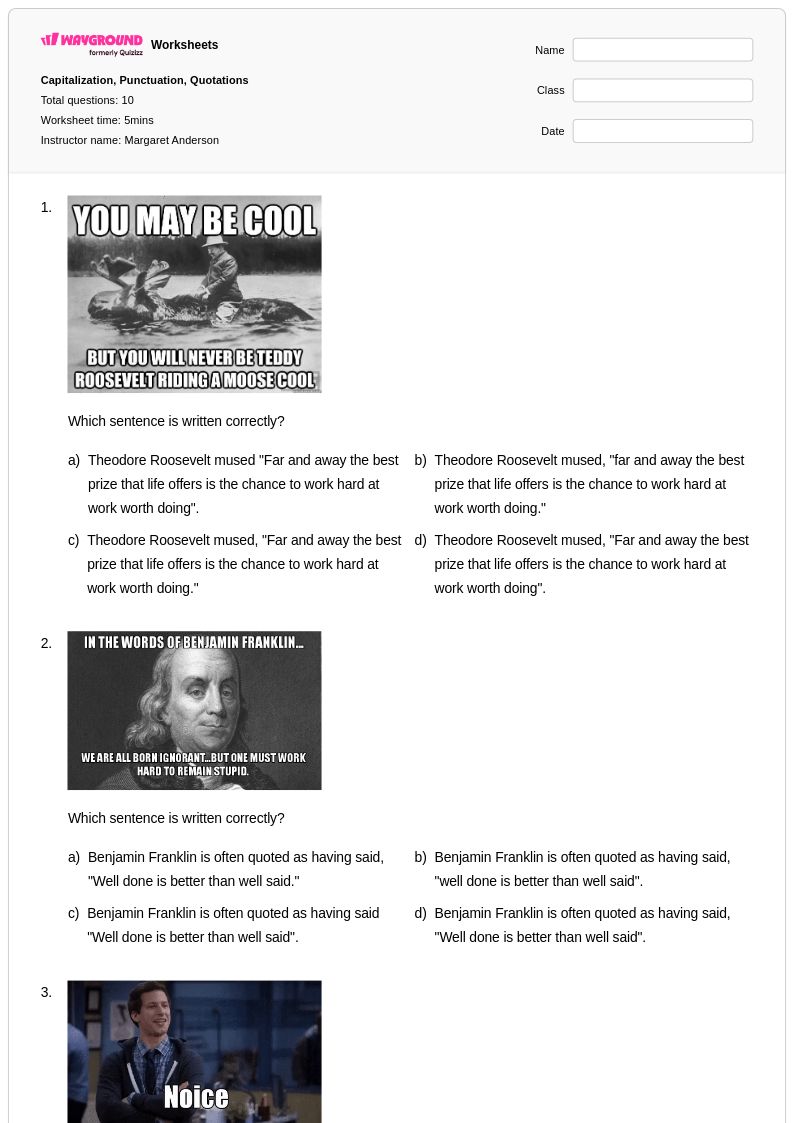
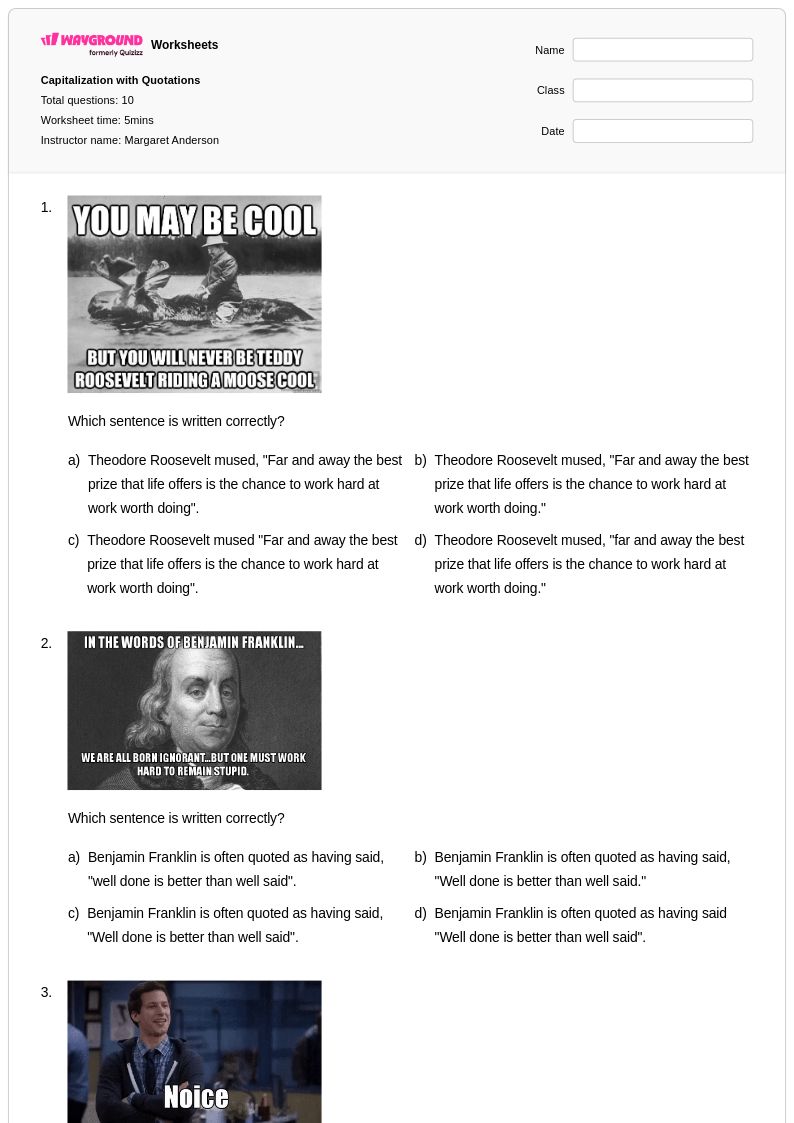
Quotations worksheets for Class 6 students available through Wayground (formerly Quizizz) provide comprehensive practice with the essential punctuation skills needed to properly incorporate dialogue and direct quotes into written work. These carefully designed resources help sixth-grade students master the placement of quotation marks, understand capitalization rules within quoted material, and learn to integrate dialogue tags and attribution phrases correctly. Students work through engaging practice problems that cover single and double quotation marks, nested quotations, and the proper punctuation of interrupted dialogue, while answer keys allow for immediate feedback and self-assessment. The free printable pdf worksheets offer structured exercises that build confidence in recognizing when quotation marks are needed and how to punctuate around them accurately.
Wayground (formerly Quizizz) empowers teachers with millions of educator-created quotation worksheets and punctuation resources that support effective Class 6 English instruction. The platform's robust search and filtering capabilities enable teachers to quickly locate materials aligned with specific standards and learning objectives, while differentiation tools help customize worksheets for diverse student needs and ability levels. Teachers can access these quotation mark resources in both printable and digital pdf formats, making them ideal for classroom instruction, homework assignments, remediation sessions, and enrichment activities. The extensive collection supports flexible lesson planning by providing varied practice opportunities that reinforce proper dialogue punctuation, helping students develop the foundational skills necessary for clear and effective written communication.
FAQs
How do I teach quotation marks and dialogue punctuation to my students?
Start by distinguishing direct from indirect quotations, since students often confuse the two and incorrectly apply quotation marks to paraphrased speech. Use mentor texts with dialogue to show how punctuation like commas and periods interact with closing quotation marks. Gradually introduce more complex cases such as interrupted dialogue and quotations within quotations, giving students a clear visual model before asking them to apply the rules independently.
What exercises help students practice using quotation marks correctly?
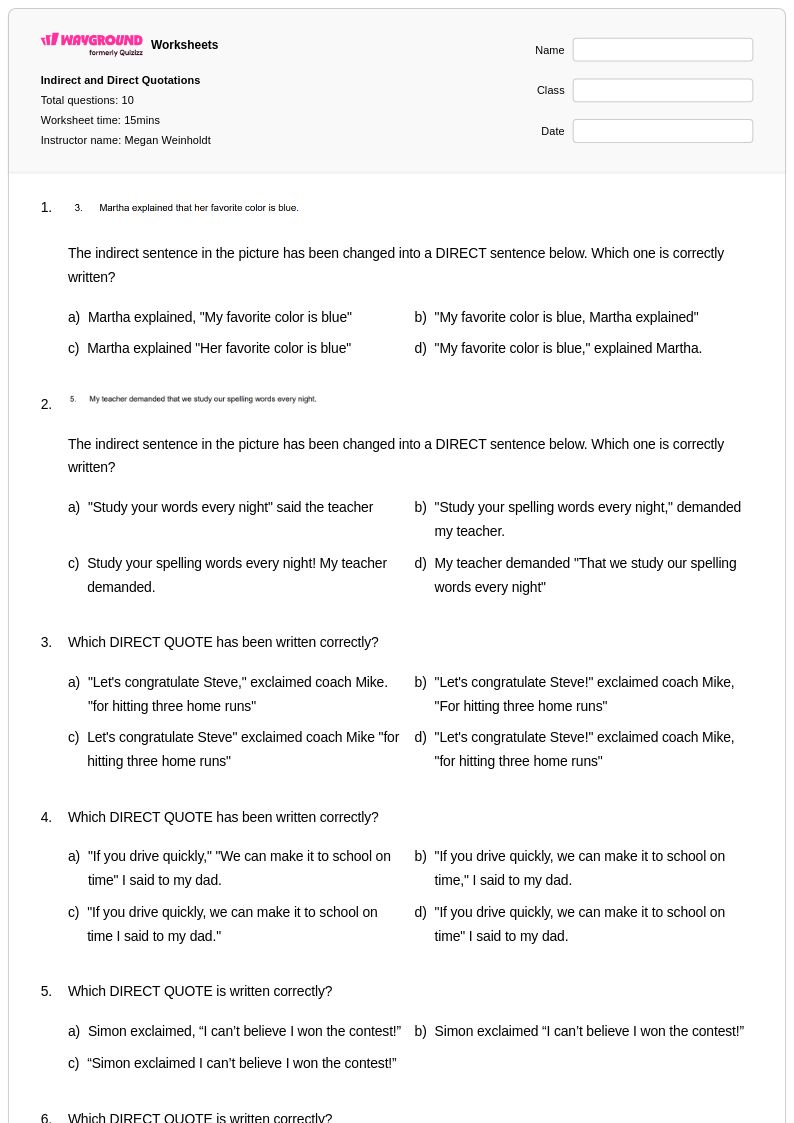
Effective practice exercises include adding missing quotation marks to pre-written dialogue passages, converting indirect quotations into direct ones, and punctuating interrupted speech. Students also benefit from proofreading activities where they identify and correct misplaced or missing punctuation within quoted material. Varied problem types prevent rote memorization and ensure students can apply the rules flexibly across different writing contexts.
What mistakes do students commonly make with quotation marks?
One of the most frequent errors is placing commas and periods outside closing quotation marks rather than inside them, which reflects a misunderstanding of standard American punctuation conventions. Students also commonly apply quotation marks to indirect quotations, treat titles of long works the same as short works, and forget to capitalize the first word of a direct quote. Interrupted dialogue causes particular confusion because students often struggle to determine when to use a comma versus a period after the attribution.
How do I help struggling students who can't remember quotation mark rules?
For students who need additional support, reducing the complexity of practice problems by focusing on one rule at a time, such as end punctuation inside quotation marks before introducing interrupted dialogue, can reduce cognitive overload. On Wayground, teachers can enable accommodations such as read-aloud support and reduced answer choices for individual students, making digital practice more accessible without signaling differences to the rest of the class.
How do I use Wayground's quotations worksheets in my classroom?
Wayground's quotations worksheets are available as printable PDFs for traditional classroom use and in digital formats for technology-integrated instruction, including the option to host them as a quiz directly on Wayground. Teachers can assign them as in-class practice, homework, or assessment preparation depending on where students are in the instructional sequence. Each worksheet includes a complete answer key, so students can self-assess their work or teachers can use them for quick formative checks.
How do I differentiate quotation mark instruction for advanced versus struggling writers?
For struggling learners, focus on foundational rules first: direct versus indirect quotations and standard end punctuation placement. Advanced students can be challenged with more nuanced tasks such as punctuating quotations within quotations, handling split dialogue across multiple paragraphs, or applying quotation rules to titles of short works. Wayground's filtering tools allow teachers to locate worksheets matched to different proficiency levels, and differentiation settings let teachers assign accommodations to individual students without disrupting the rest of the class.