
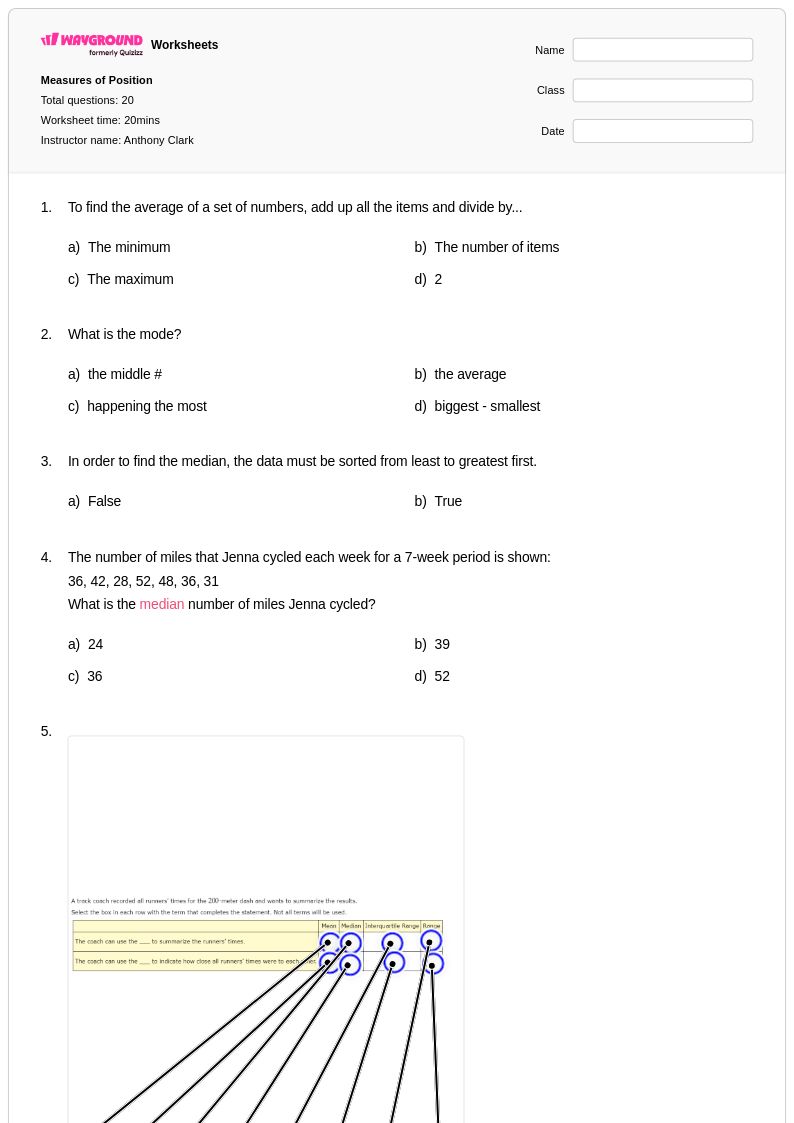
20 Q
6th - Uni
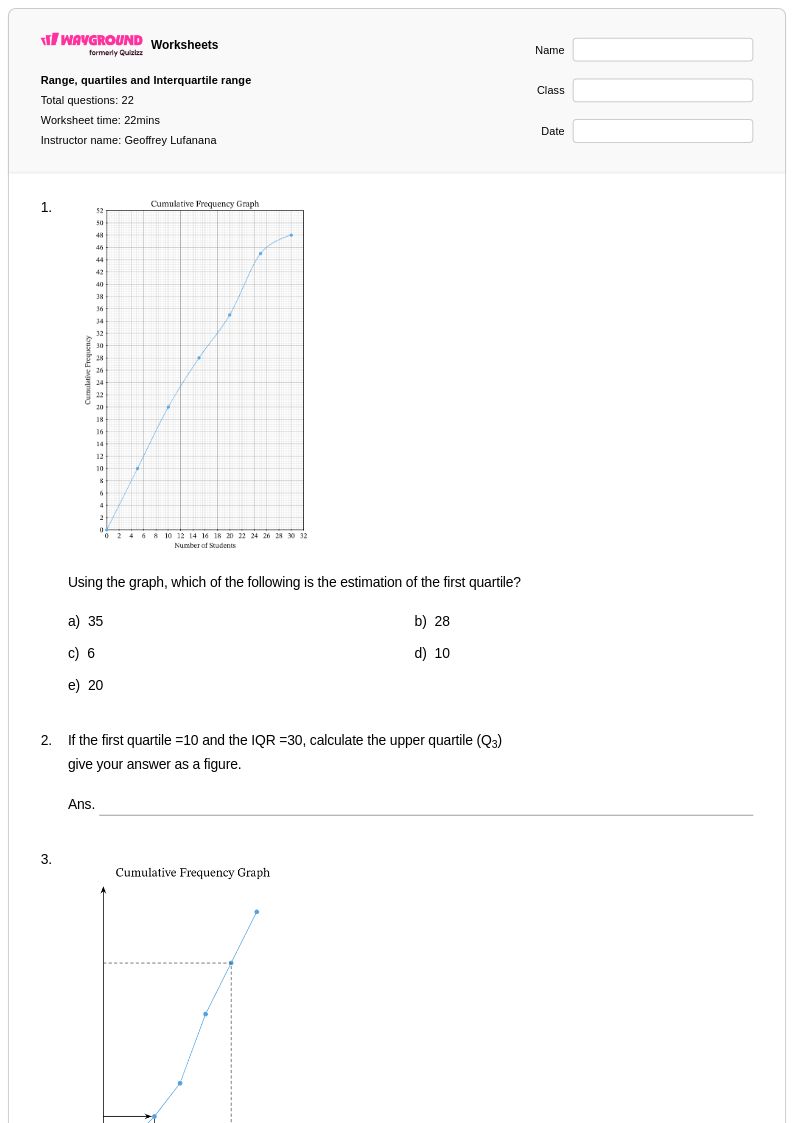
22 Q
10th
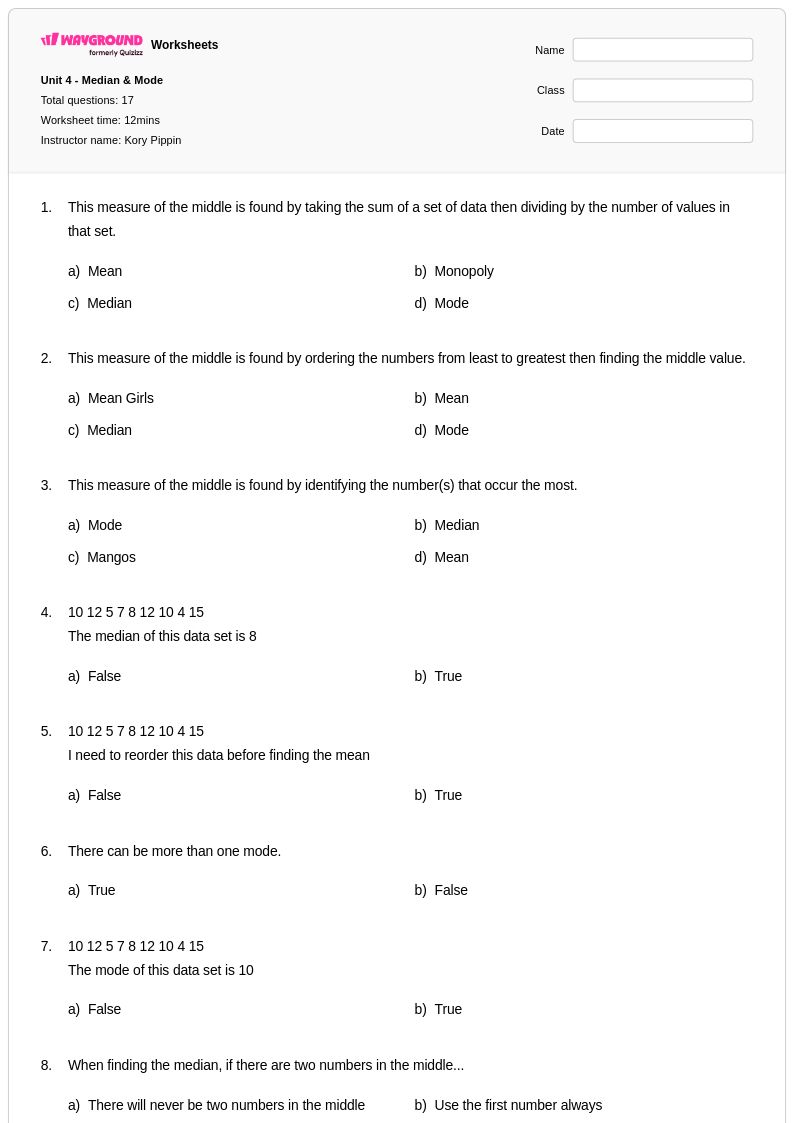
17 Q
9th - 12th
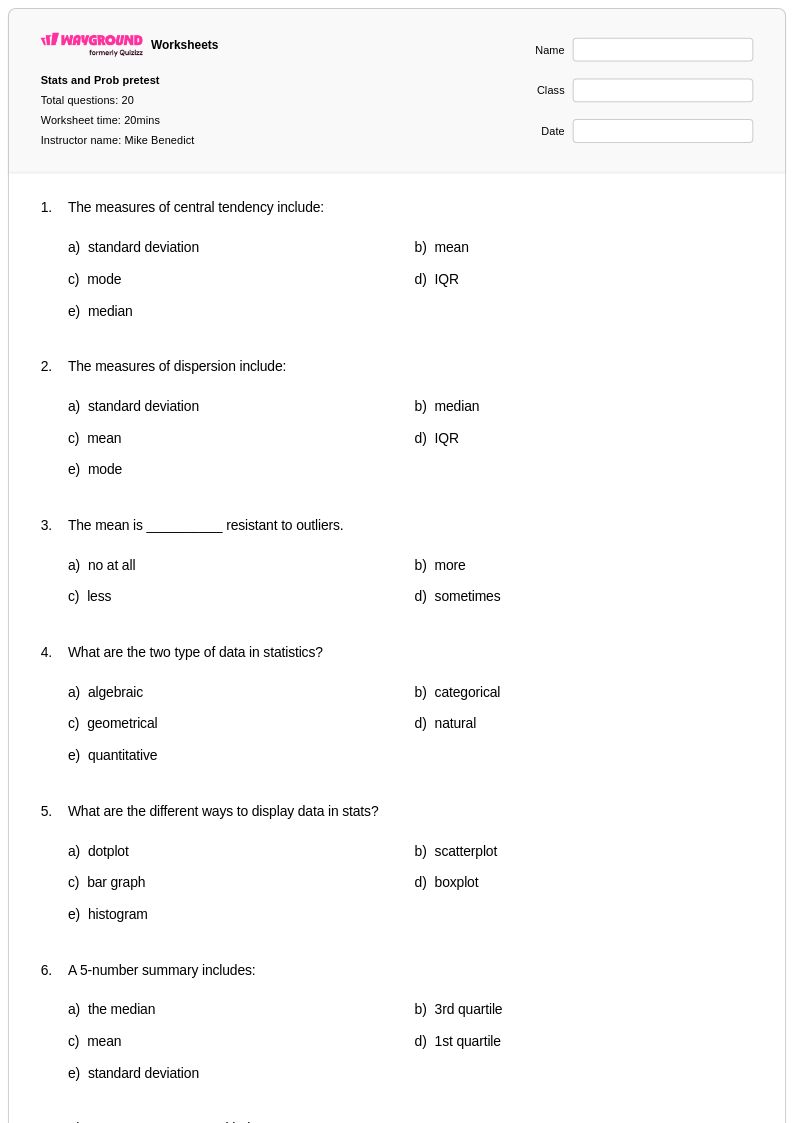
20 Q
9th - 12th
19 Q
6th - Uni
19 Q
6th - Uni
20 Q
6th - Uni
14 Q
8th - Uni
20 Q
10th
20 Q
7th - Uni
30 Q
9th - 12th
20 Q
6th - Uni
17 Q
9th - 12th
20 Q
7th - Uni
53 Q
6th - Uni
17 Q
10th
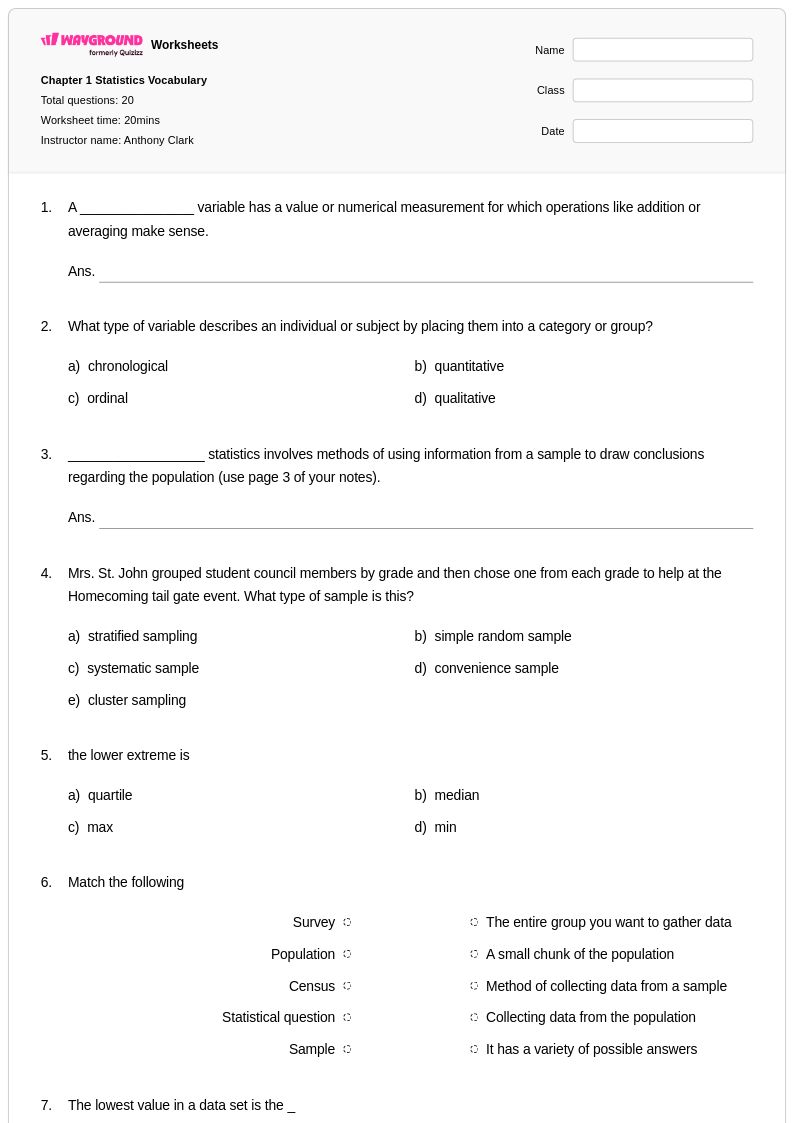
20 Q
8th - Uni
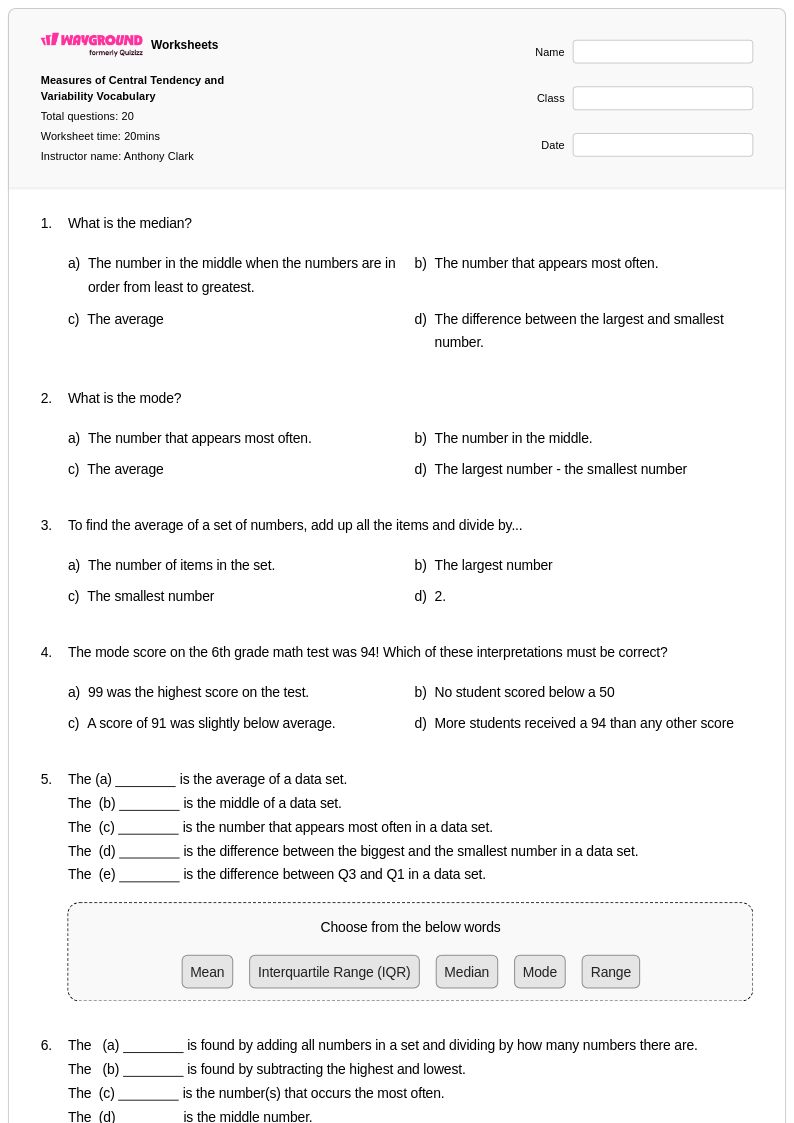
20 Q
8th - Uni
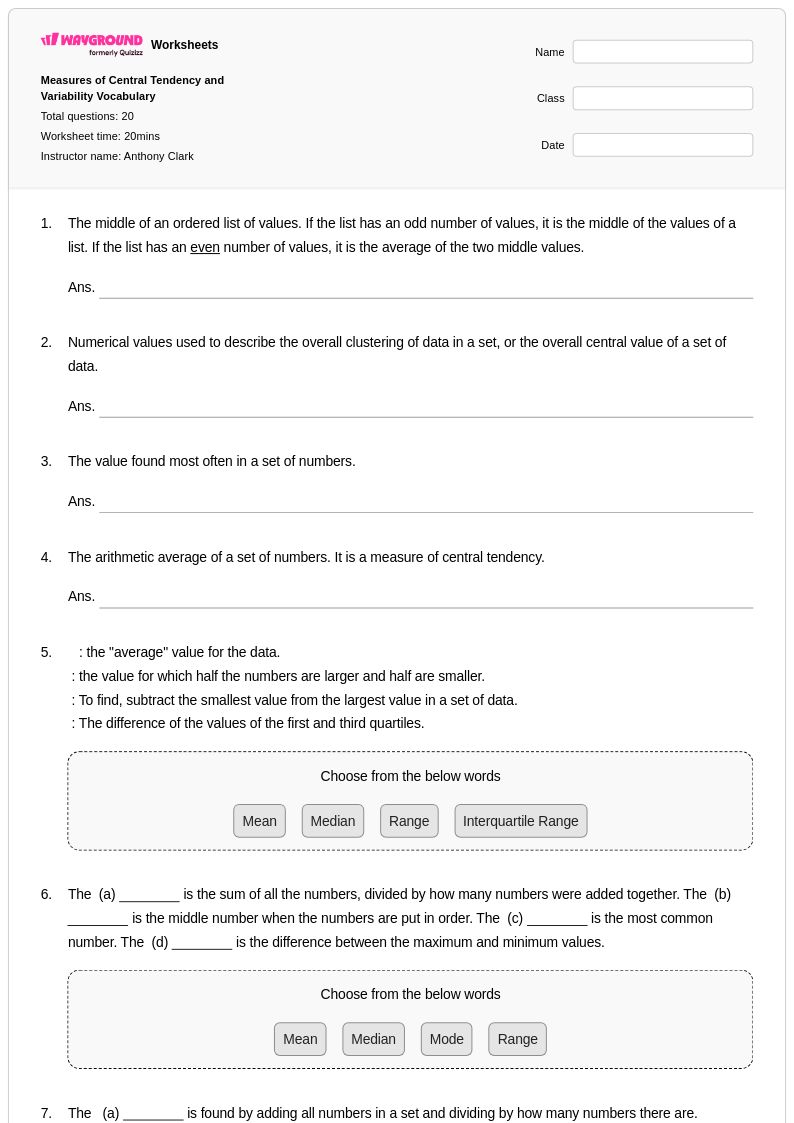
20 Q
7th - Uni
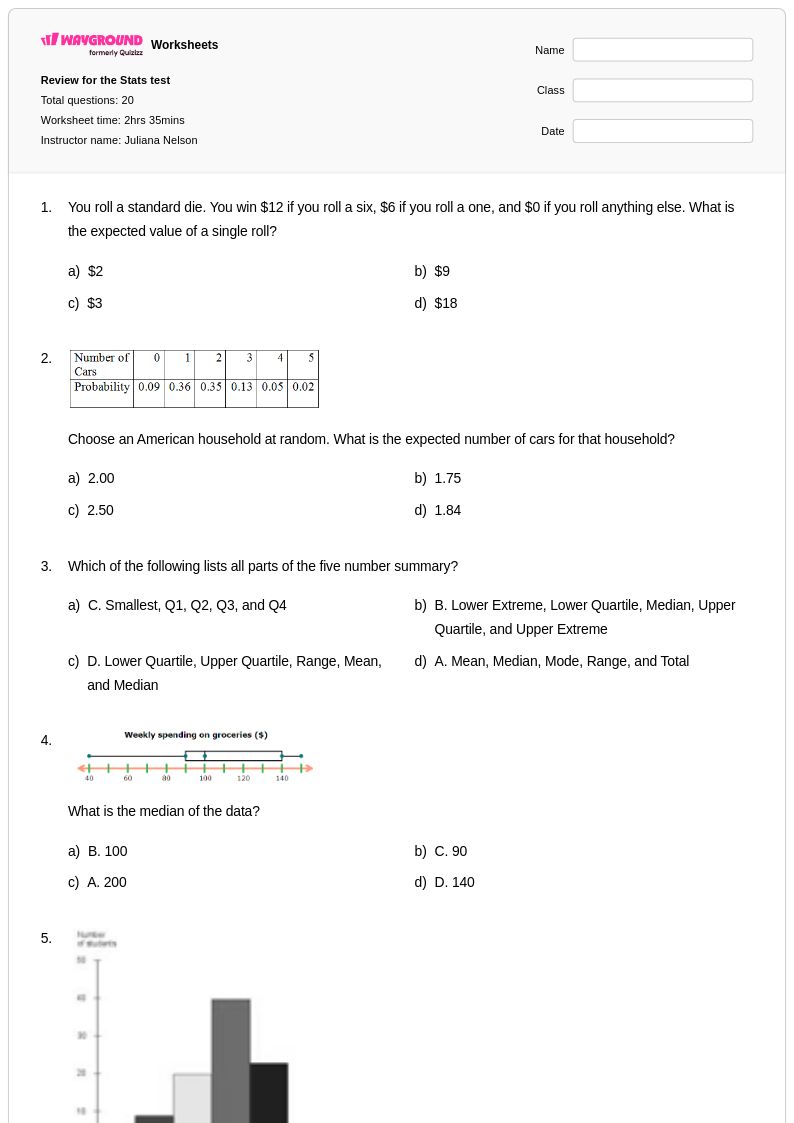
20 Q
10th
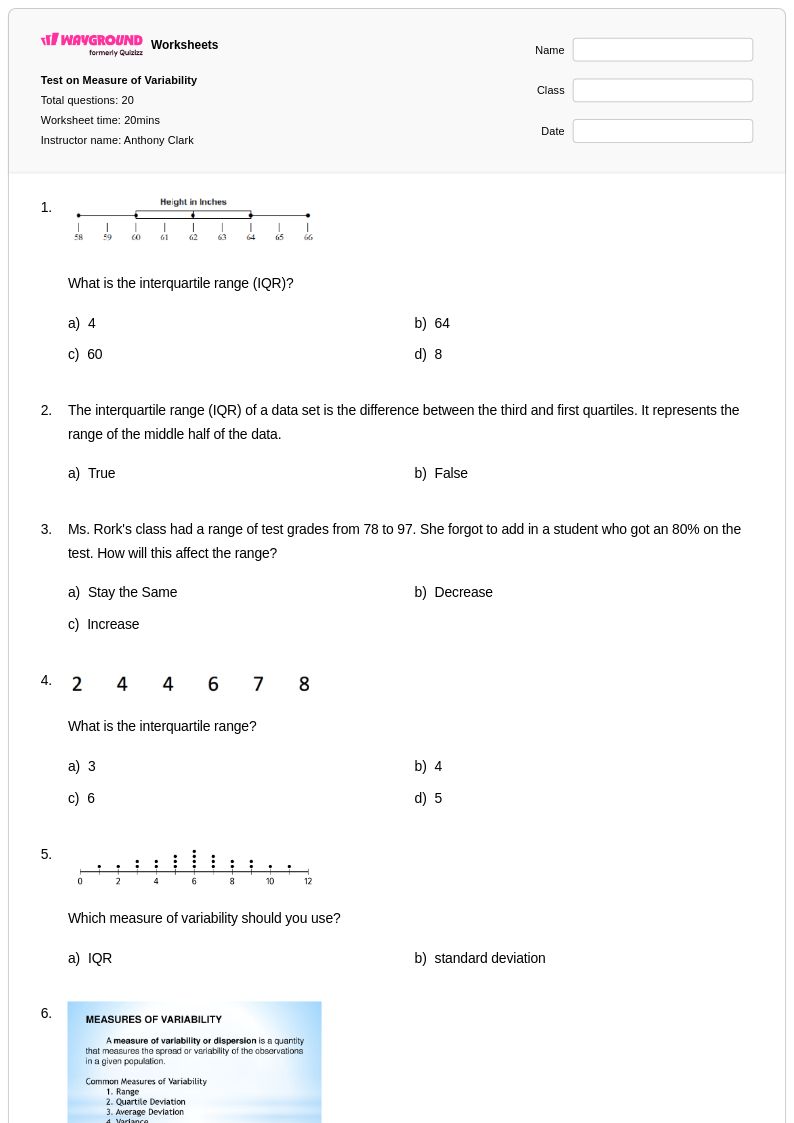
20 Q
7th - Uni
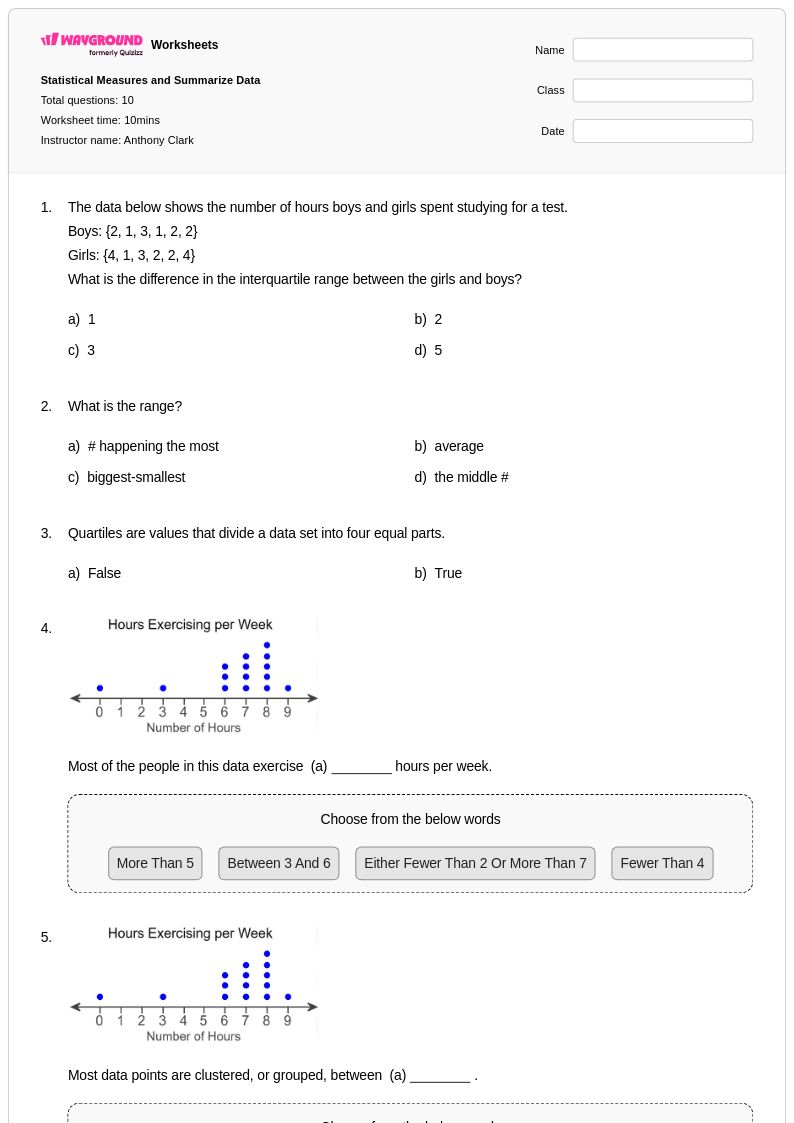
10 Q
6th - Uni
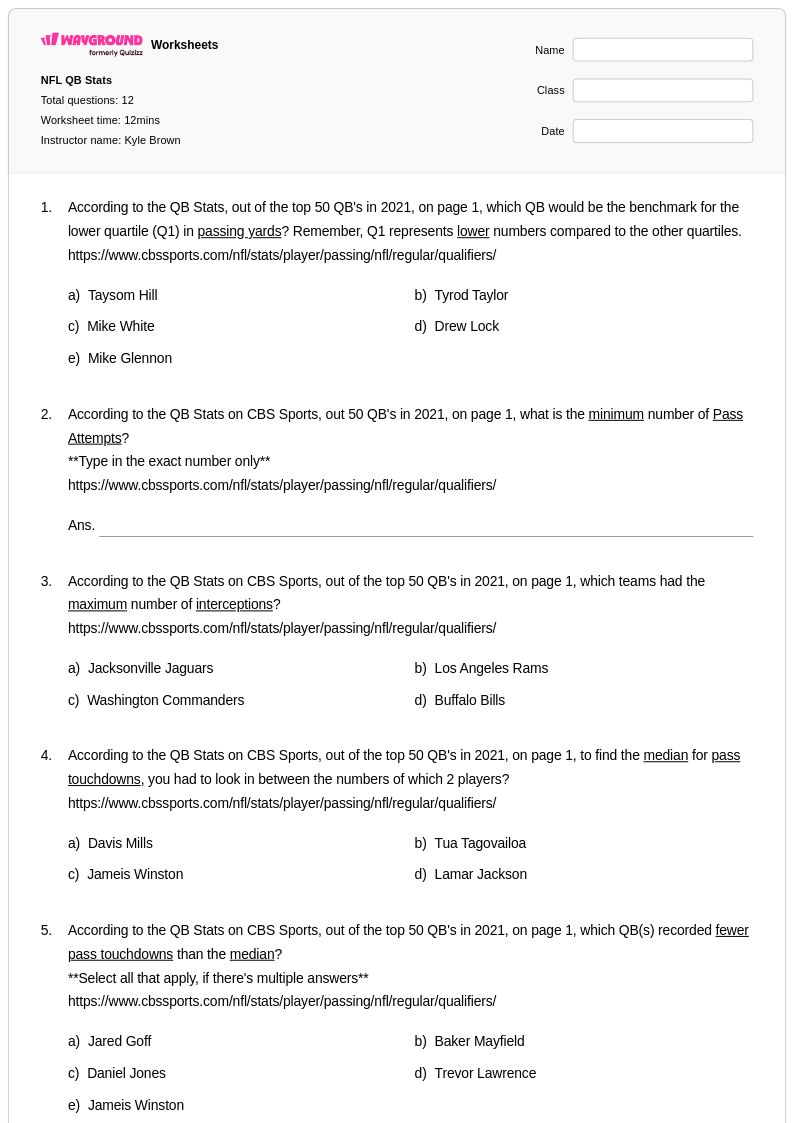
12 Q
9th - 12th
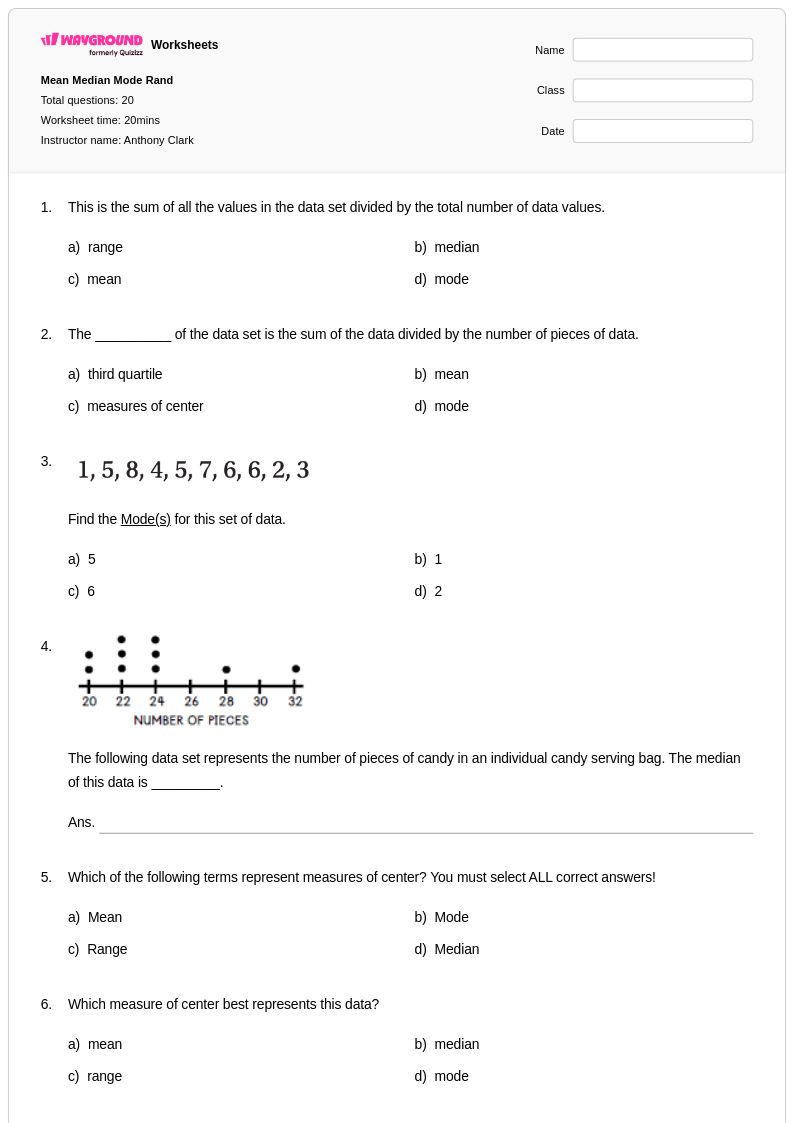
20 Q
7th - Uni
Explore Other Subject Worksheets for class 10
Explore printable Quartiles worksheets for Class 10
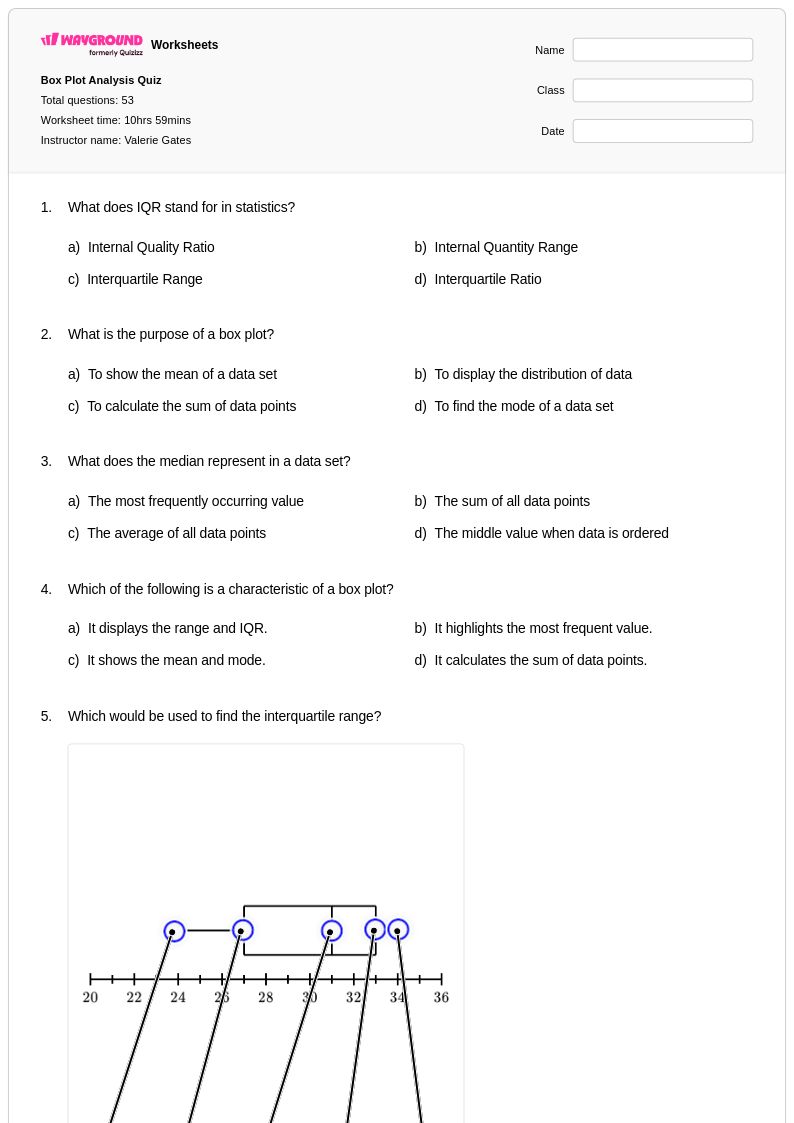
Class 10 quartiles worksheets from Wayground (formerly Quizizz) provide comprehensive practice materials that help students master the fundamental concepts of dividing data sets into four equal parts. These carefully designed worksheets strengthen essential statistical skills including calculating first, second, and third quartiles, determining interquartile ranges, and interpreting box plots to analyze data distribution. Students work through practice problems that range from basic quartile identification in small data sets to more complex applications involving large numerical arrays and real-world statistical scenarios. Each worksheet includes a detailed answer key that guides students through step-by-step solutions, while the free printable format ensures accessibility for both classroom instruction and independent study.
Wayground's extensive collection features millions of teacher-created quartiles resources specifically aligned with Class 10 mathematics standards, offering educators powerful search and filtering capabilities to locate materials that match their exact instructional needs. The platform's differentiation tools allow teachers to customize worksheets for varying skill levels, providing additional support for students who need remediation while offering enrichment opportunities for advanced learners. Available in both digital and printable pdf formats, these quartiles worksheets seamlessly integrate into lesson planning whether teachers need quick practice activities, comprehensive skill assessments, or targeted review materials. The robust customization features enable educators to modify existing content or combine multiple resources, creating tailored learning experiences that address specific gaps in statistical understanding while building confidence in data analysis techniques.