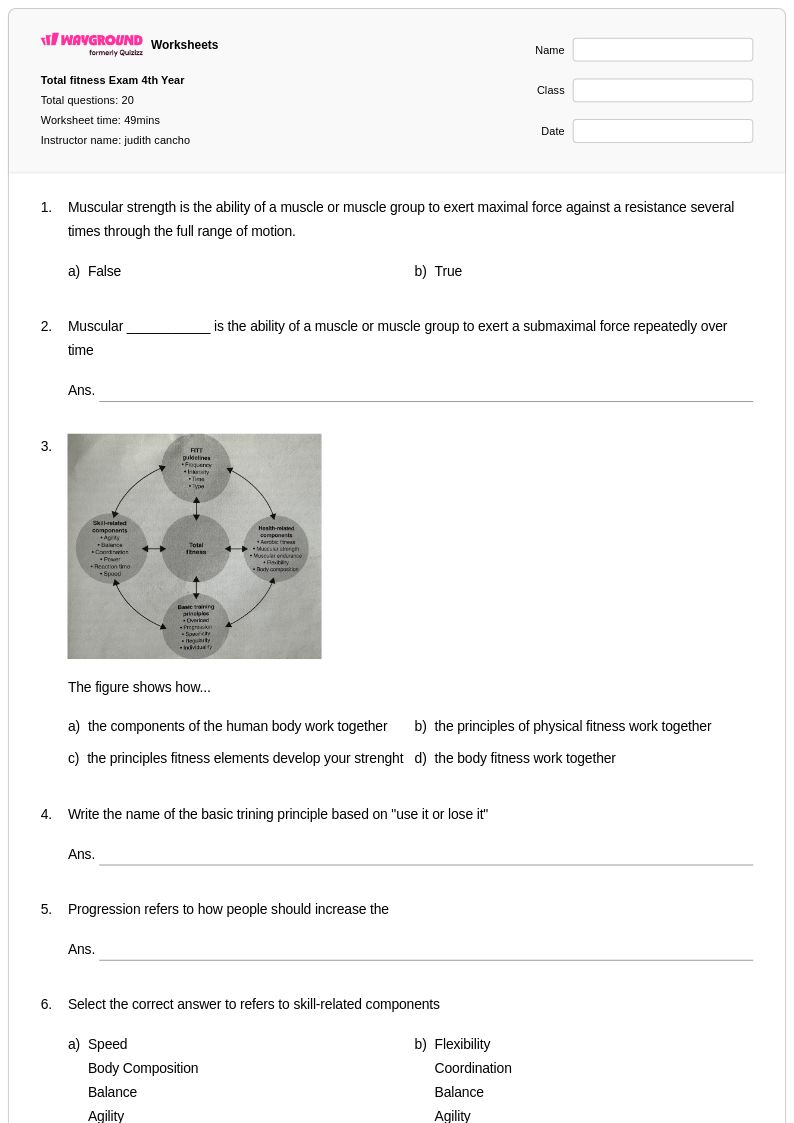
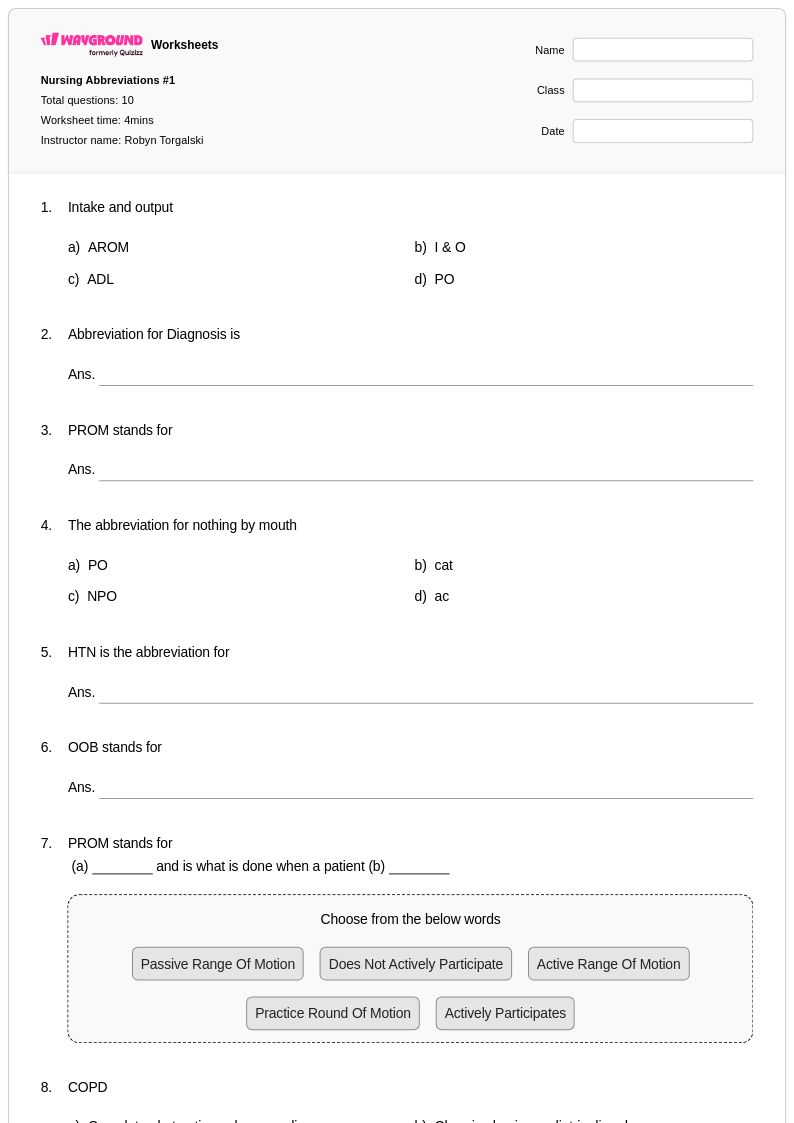
Explore Wayground's free range of motion worksheets and printables that help students understand joint flexibility, muscle movement, and body mechanics through engaging practice problems and comprehensive answer keys.
Range of motion worksheets available through Wayground (formerly Quizizz) provide comprehensive resources for developing students' understanding of joint mobility, flexibility, and movement mechanics in physical education. These expertly designed materials focus on teaching proper stretching techniques, identifying different types of joint movements, and assessing flexibility levels across major muscle groups and articulations. The worksheets strengthen essential skills including body awareness, injury prevention knowledge, and the ability to perform safe warm-up and cool-down routines. Each resource includes detailed practice problems that guide students through range of motion assessments, movement pattern analysis, and flexibility improvement strategies, with accompanying answer keys that ensure accurate self-evaluation and progress tracking. These free printables serve as valuable tools for reinforcing theoretical concepts while providing practical applications that students can implement in their daily physical activities.
Wayground (formerly Quizizz) empowers physical education teachers with an extensive collection of millions of teacher-created range of motion resources that streamline lesson planning and enhance instructional effectiveness. The platform's robust search and filtering capabilities allow educators to quickly locate materials that align with specific curriculum standards and match their students' developmental needs. Teachers can easily differentiate instruction by customizing worksheets to accommodate varying skill levels, from basic joint identification exercises to advanced flexibility assessment protocols. The flexible format options, including both printable pdf versions and interactive digital materials, support diverse classroom environments and learning preferences. These comprehensive tools facilitate targeted skill practice, enable effective remediation for students struggling with movement concepts, and provide enrichment opportunities for advanced learners seeking deeper understanding of biomechanics and human movement science.
FAQs
How do I teach range of motion in physical education?
Teaching range of motion effectively starts with helping students identify the major joints and the types of movement each joint allows, such as flexion, extension, rotation, and abduction. From there, connect those concepts to real movement patterns students already use in warm-ups, sports, and daily activity. Pairing direct instruction with hands-on flexibility assessments gives students both the vocabulary and the body awareness to apply the concepts meaningfully.
What exercises help students practice range of motion concepts?
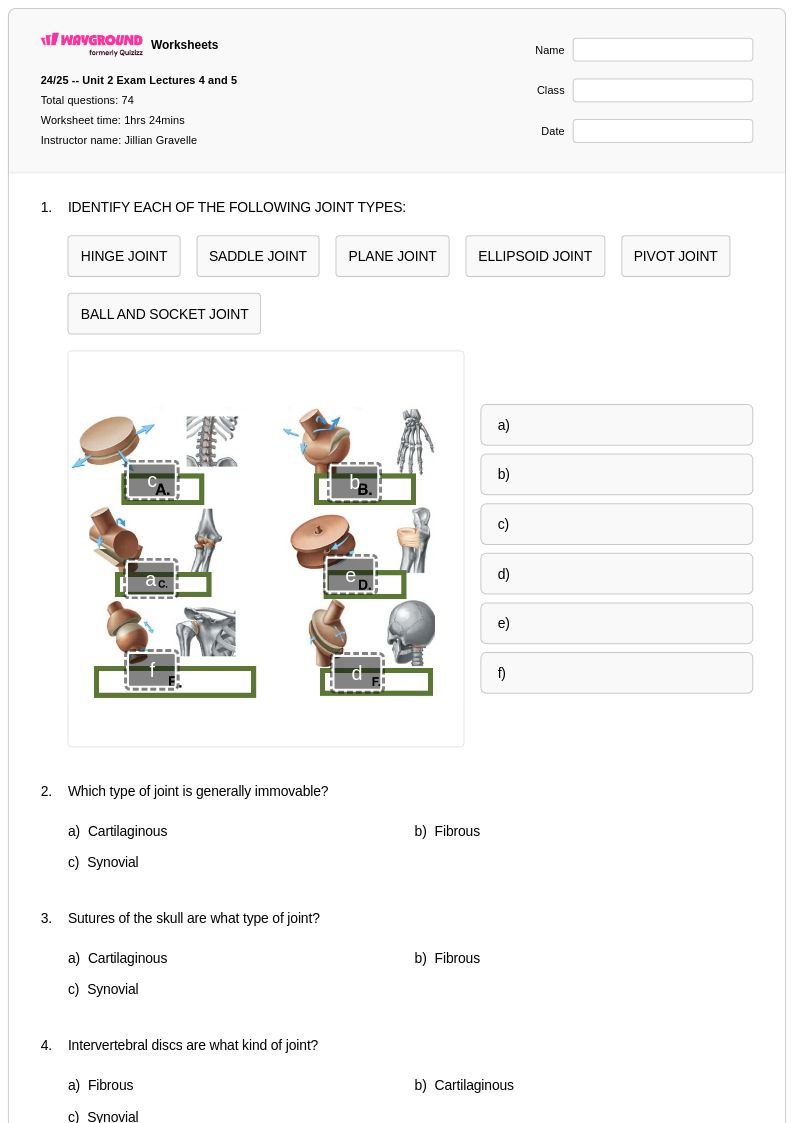
Structured flexibility assessments, movement pattern analysis activities, and guided stretching routines are among the most effective ways for students to practice range of motion. Worksheets that walk students through evaluating their own flexibility across major muscle groups and joints help them connect theoretical knowledge to physical self-awareness. Practice problems that require students to identify joint types and predict appropriate movements reinforce terminology while keeping the content grounded in practical application.
What mistakes do students commonly make when learning about range of motion?
A common misconception is that greater flexibility always indicates better health or fitness, when in reality, hypermobility can increase injury risk just as much as restricted movement. Students also frequently confuse joint types with movement types, for example, assuming all joints allow the same range of movements. Worksheets that include error-analysis problems or require students to classify joint movements across multiple body regions help address these gaps directly.
How do range of motion worksheets support injury prevention instruction?
Range of motion worksheets build the foundational knowledge students need to understand why proper warm-up and cool-down routines matter, which is a key pillar of injury prevention. By guiding students through flexibility assessments and movement mechanics, these worksheets develop body awareness that students can apply before and after physical activity. When students understand which joints and muscle groups are involved in a given movement, they are better equipped to recognize when their body is being pushed beyond a safe range.
How do I use Wayground's range of motion worksheets in my class?
Wayground's range of motion worksheets are available as printable PDFs for traditional classroom or gymnasium use, and in digital formats for technology-integrated physical education settings. Teachers can also host these materials as a quiz directly on Wayground, making it easy to assign flexibility assessments or movement knowledge checks and track student responses in one place. Each worksheet includes a complete answer key, so students can self-evaluate their progress and teachers can quickly verify understanding without additional prep.
How can I differentiate range of motion instruction for students at different skill levels?
Range of motion instruction can be differentiated by varying the complexity of the tasks, starting with basic joint identification for students who are new to the content and moving toward advanced flexibility assessment protocols and biomechanics analysis for more experienced learners. On Wayground, teachers can apply individual student accommodations such as read aloud support, reduced answer choices, or extended time, making the same core worksheet accessible to students with different learning needs. These settings can be configured per student and reused across future sessions without disrupting the rest of the class.