Free Printable Rhetorical Appeals Worksheets for Class 12
Class 12 rhetorical appeals worksheets from Wayground help students master persuasive writing techniques through engaging printables, practice problems, and comprehensive answer keys available as free PDF downloads.
Explore printable Rhetorical Appeals worksheets for Class 12
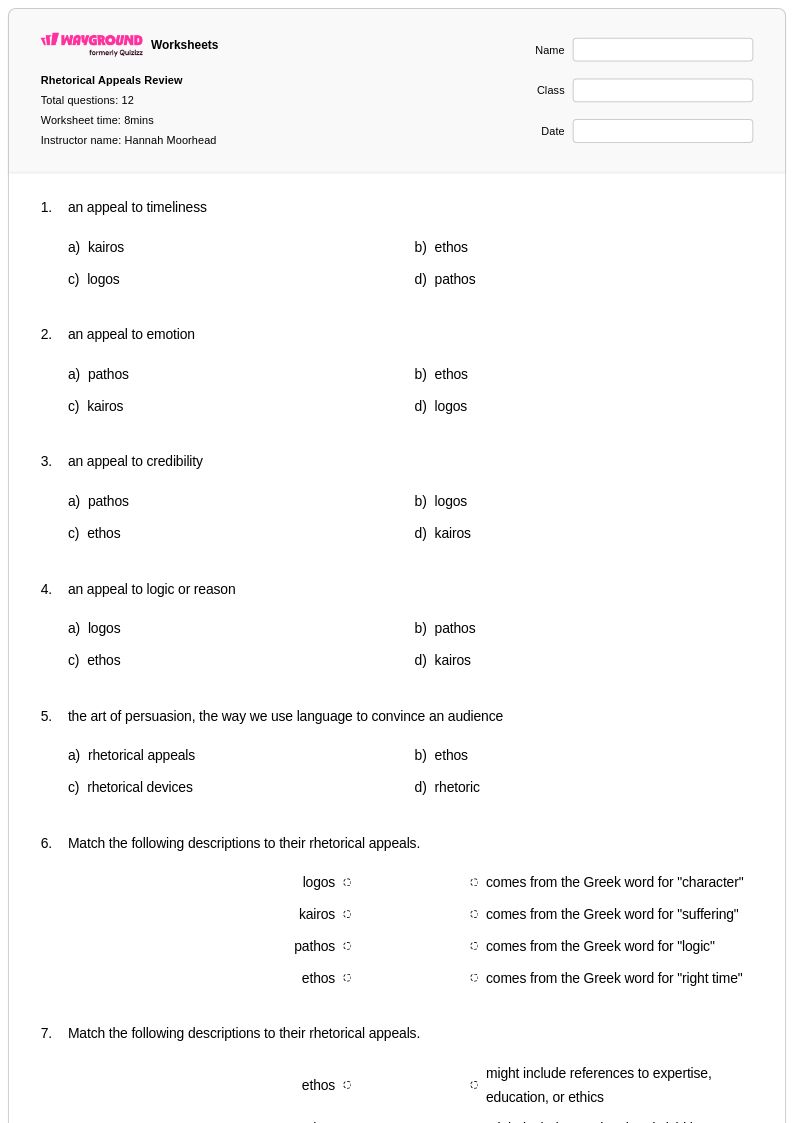
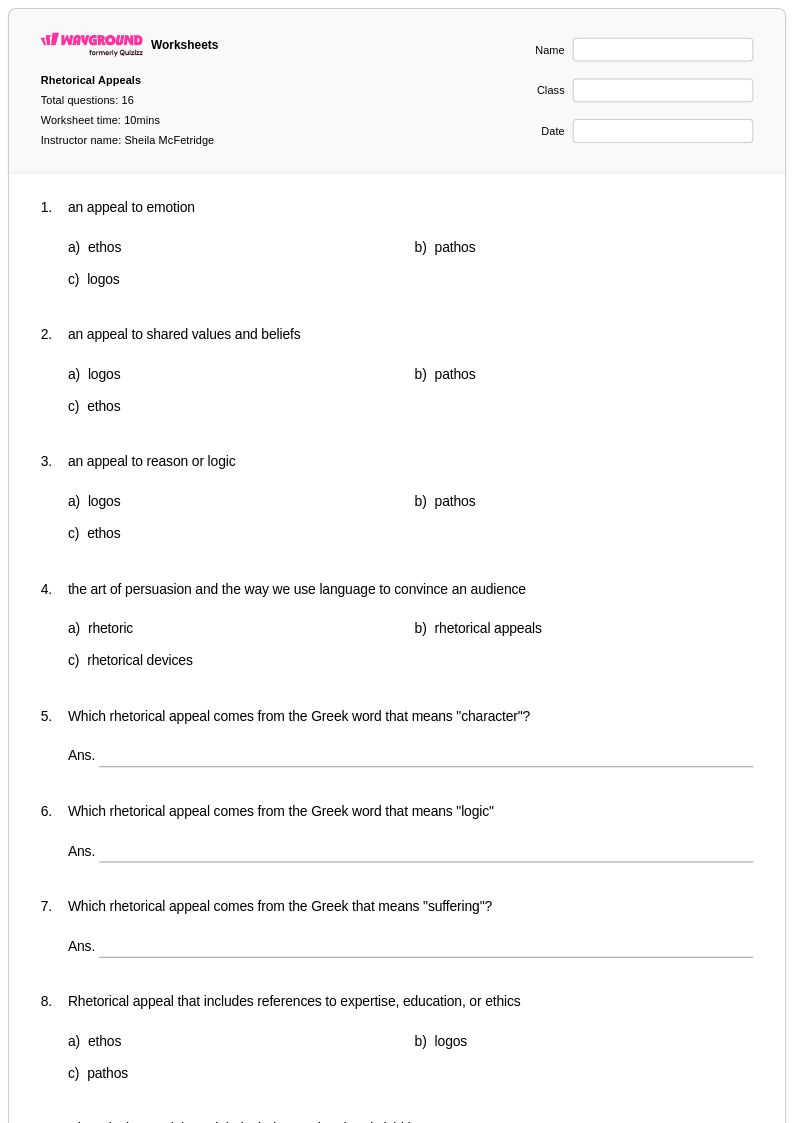
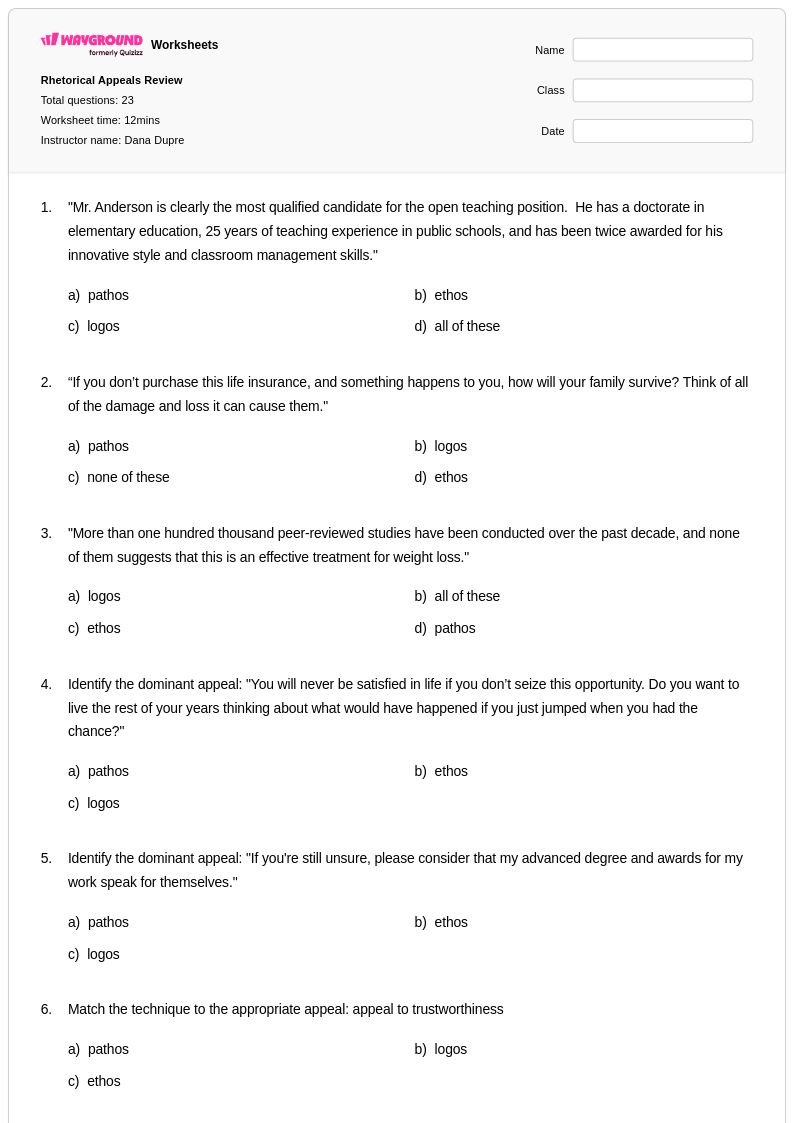
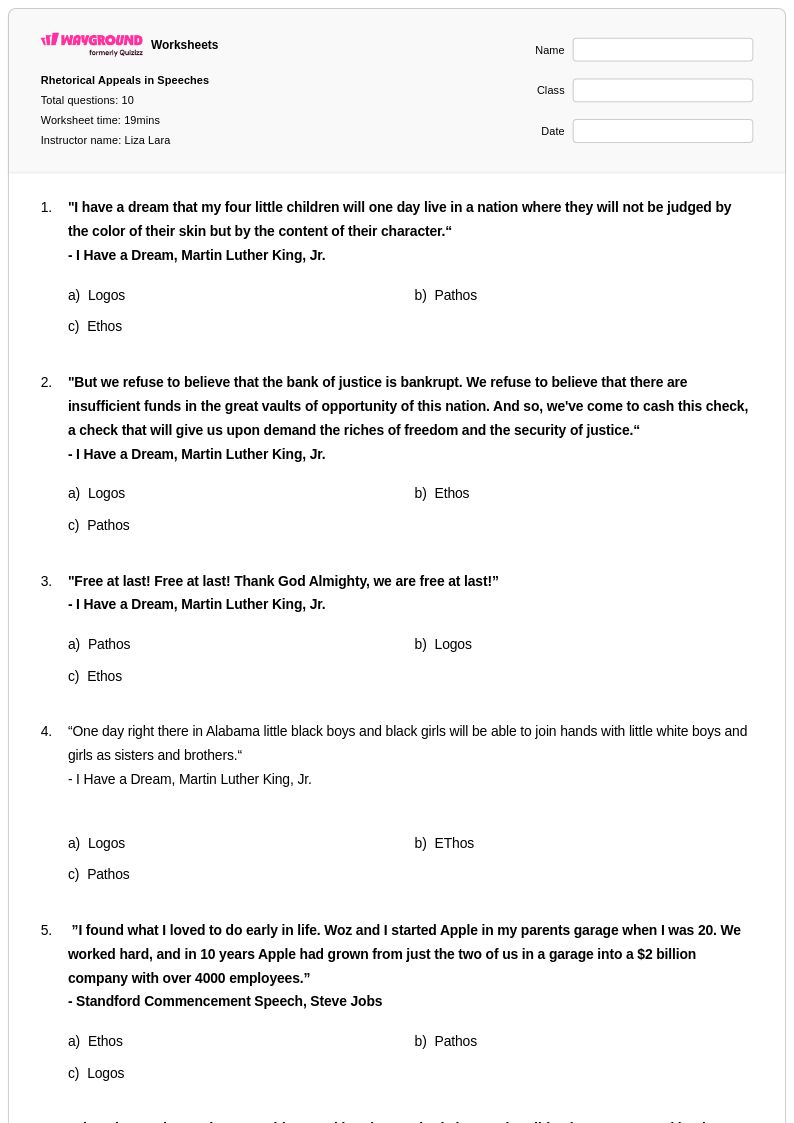
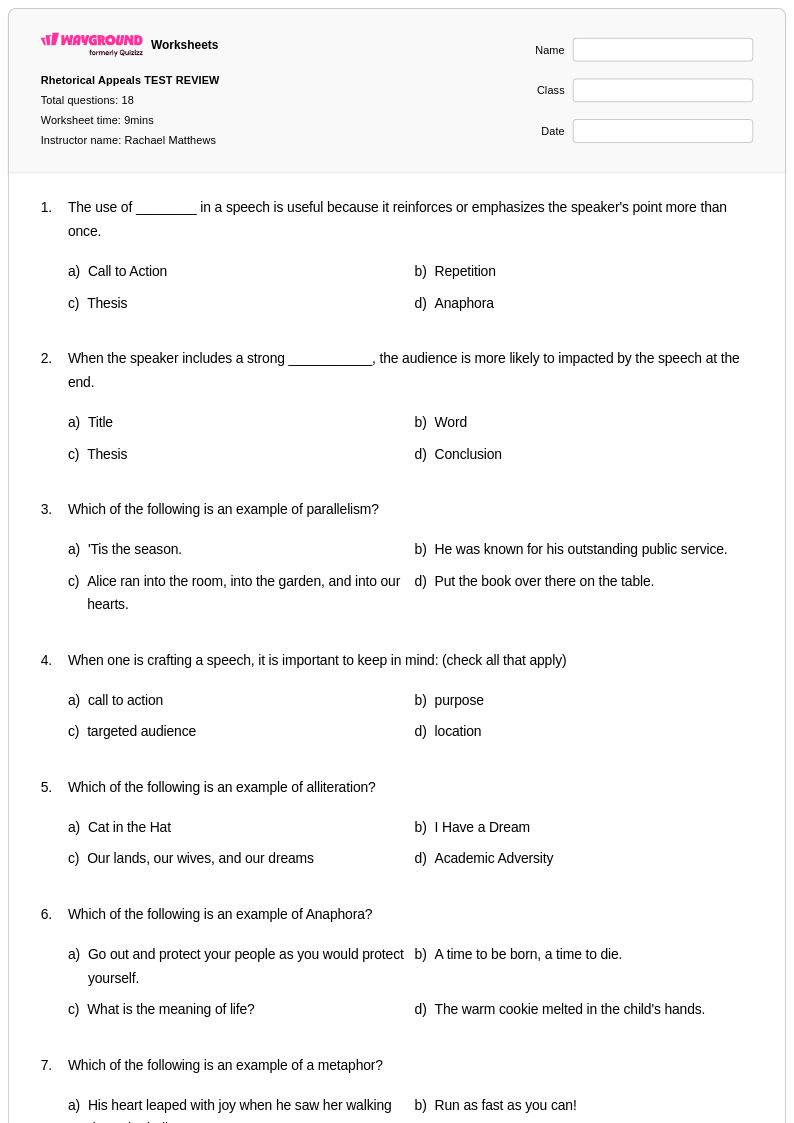
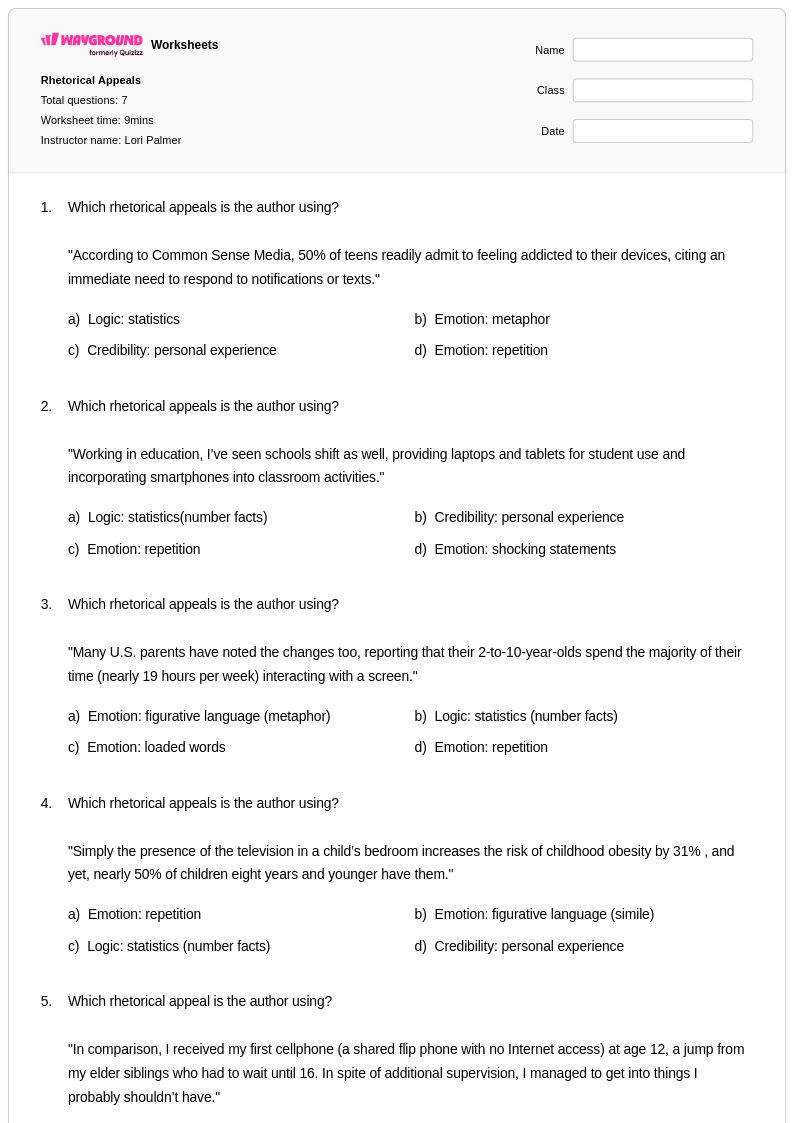
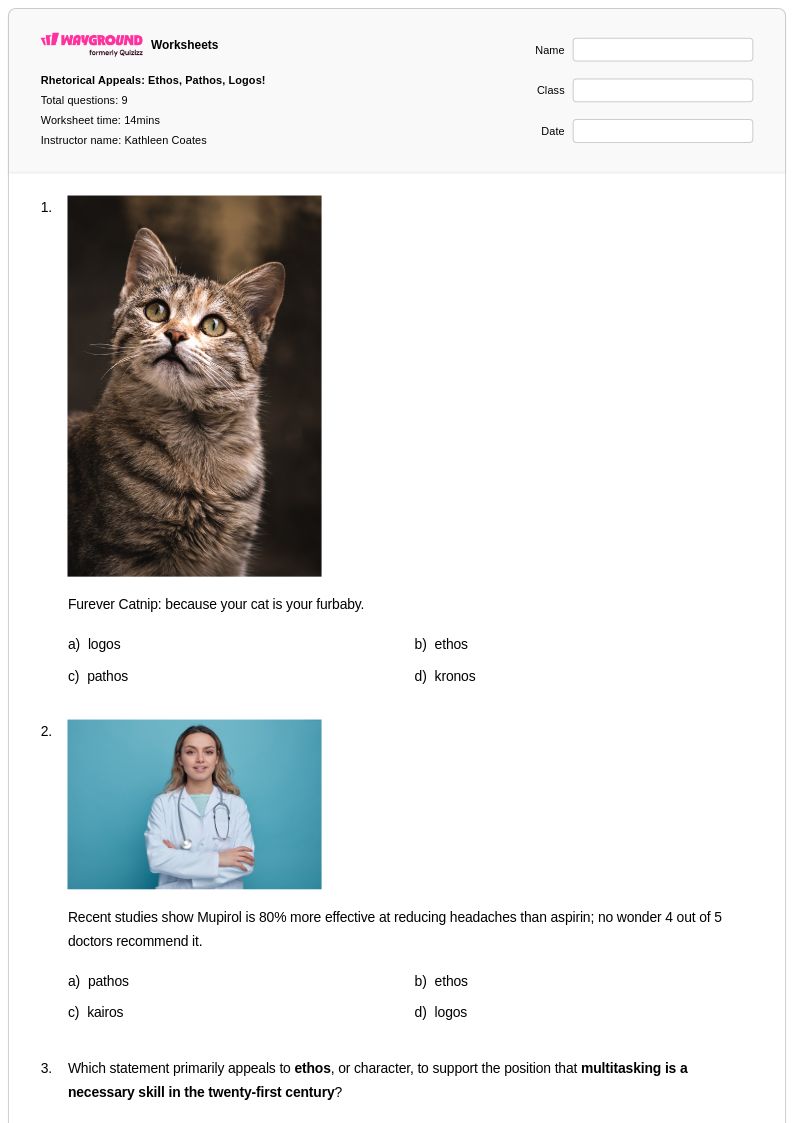
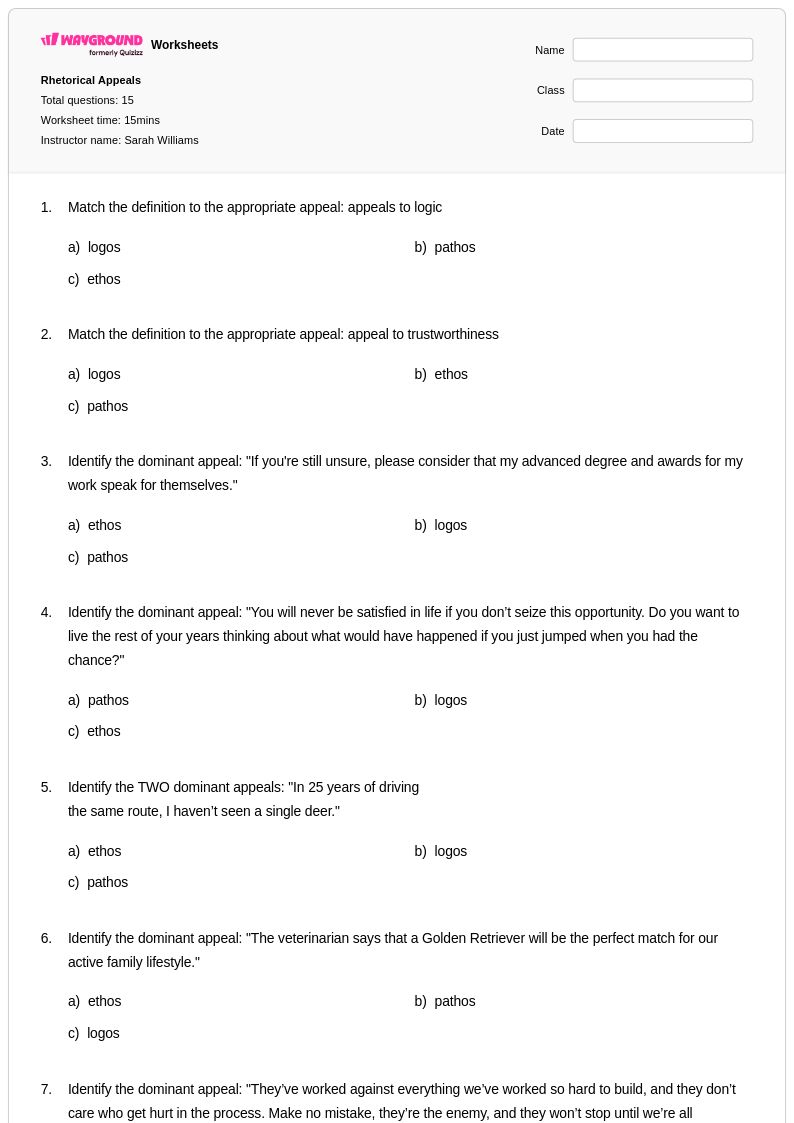
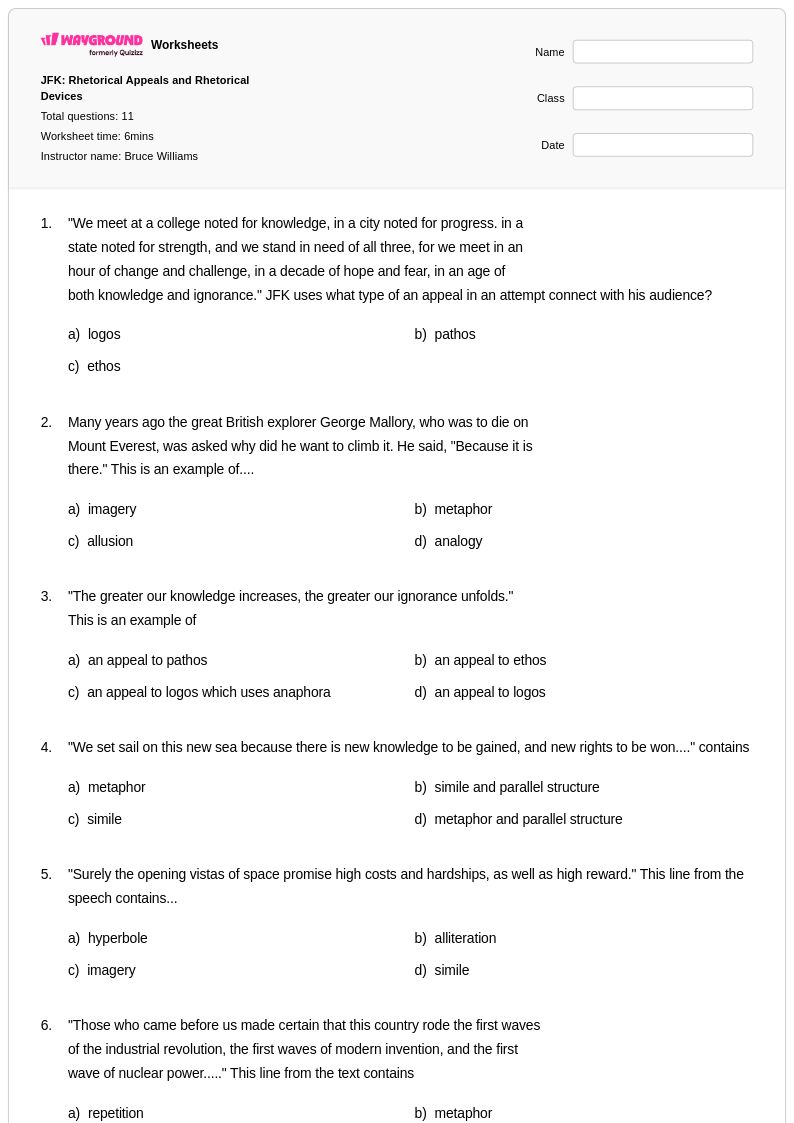
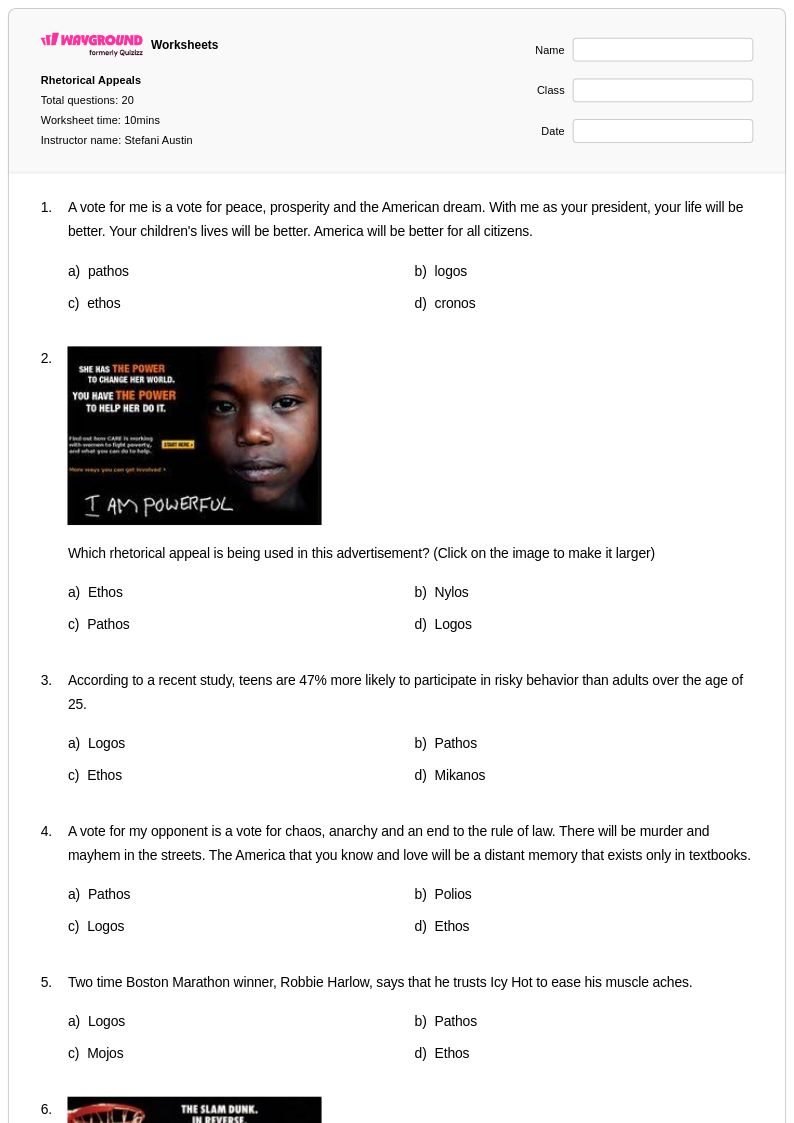
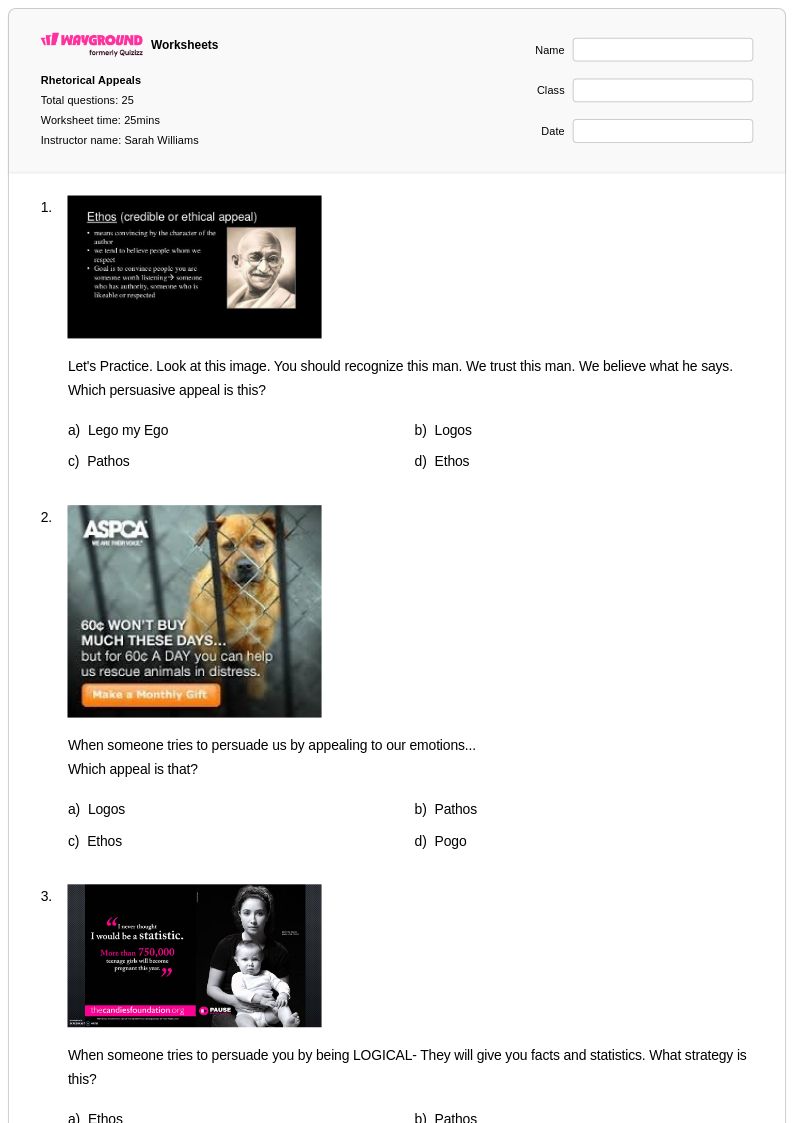
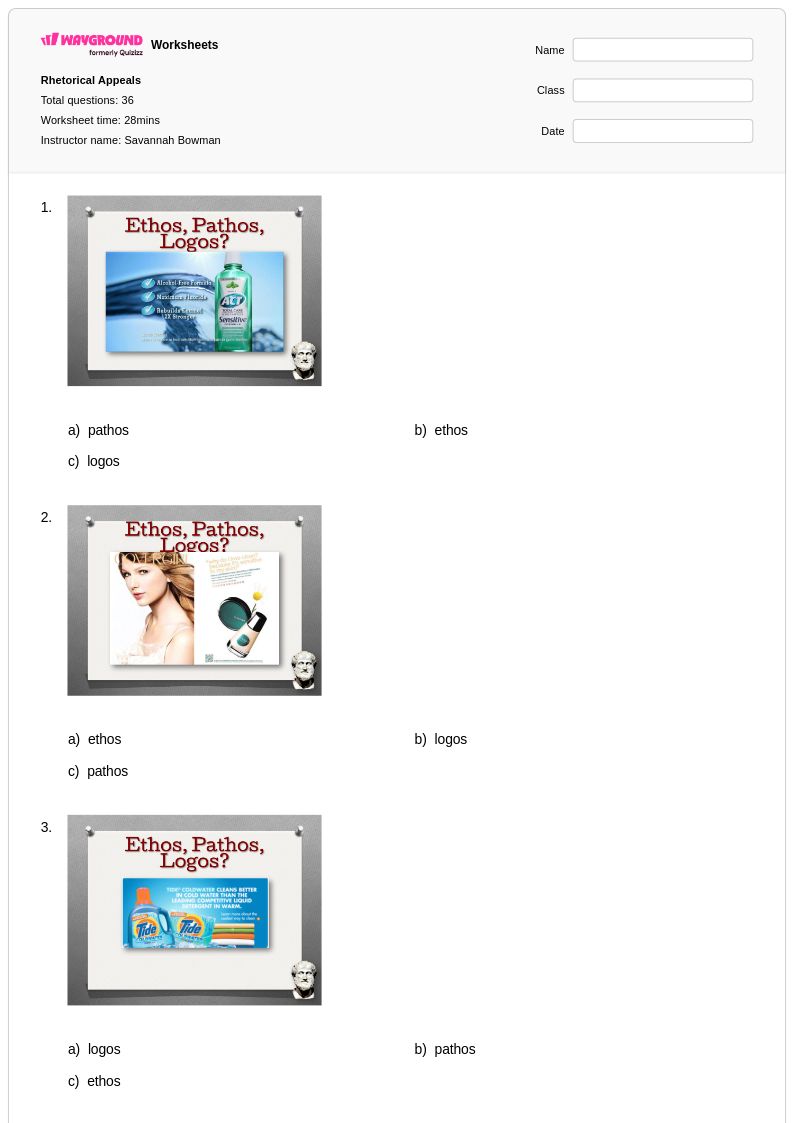
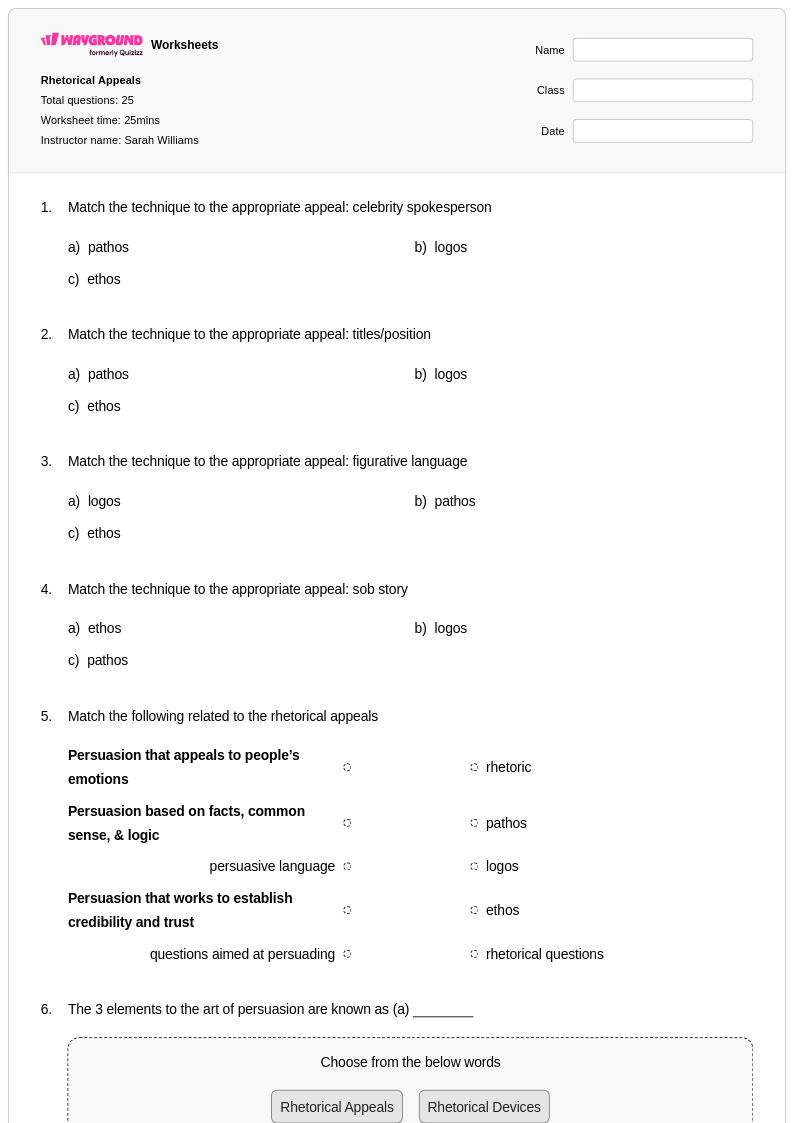
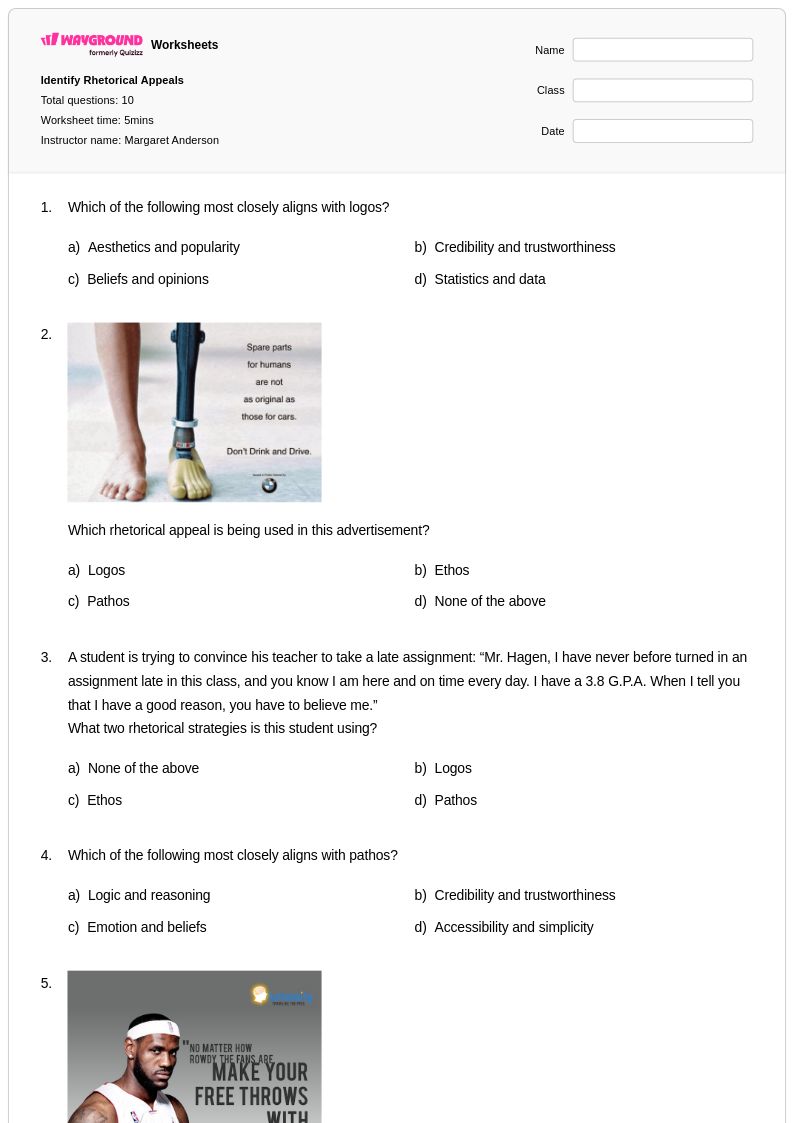
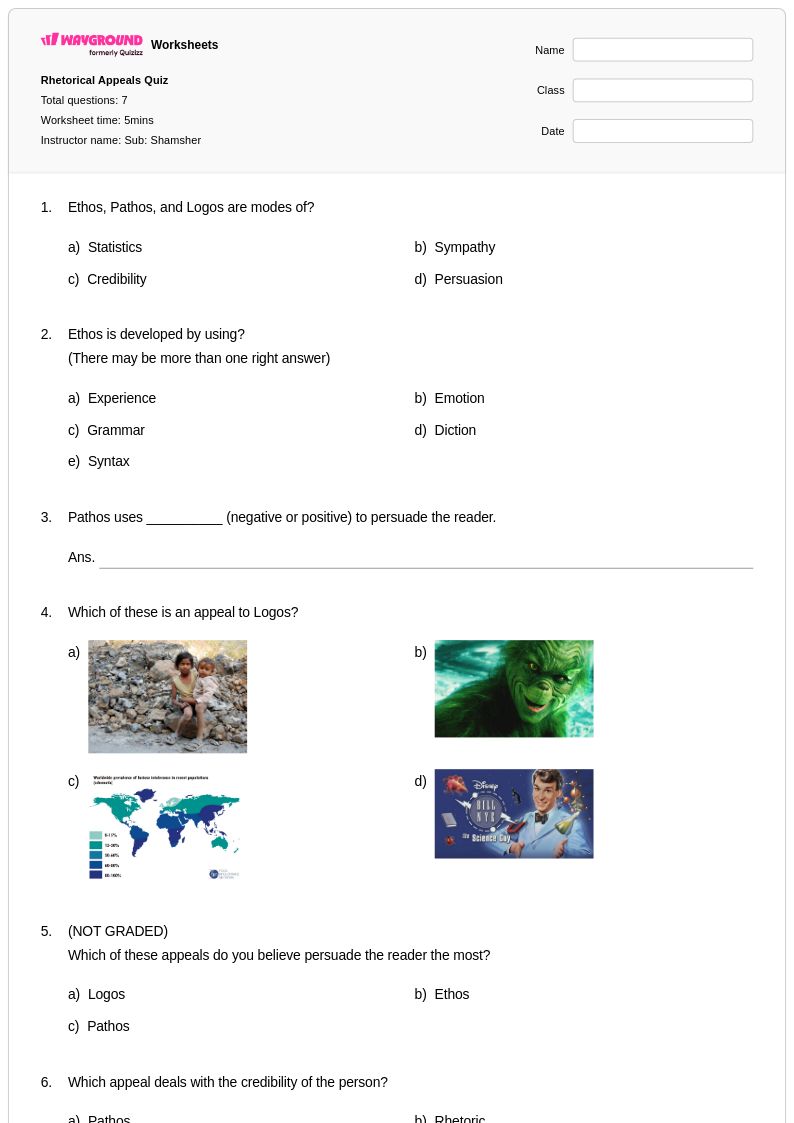
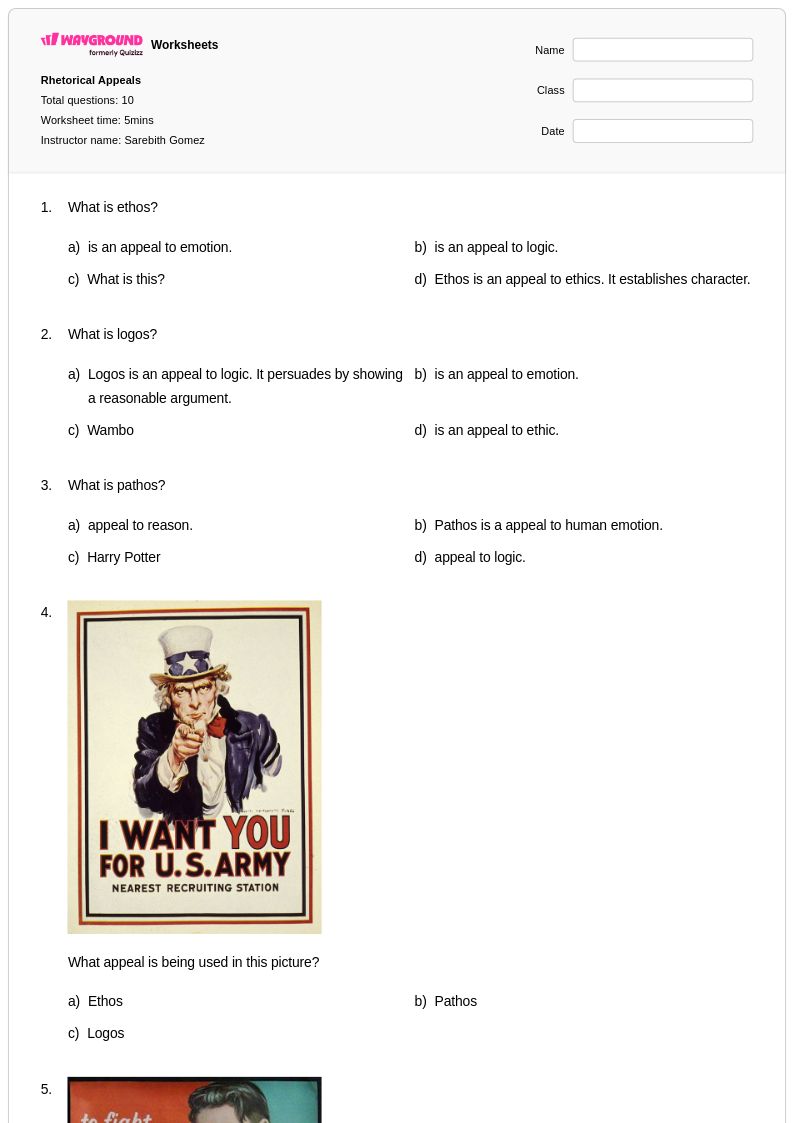
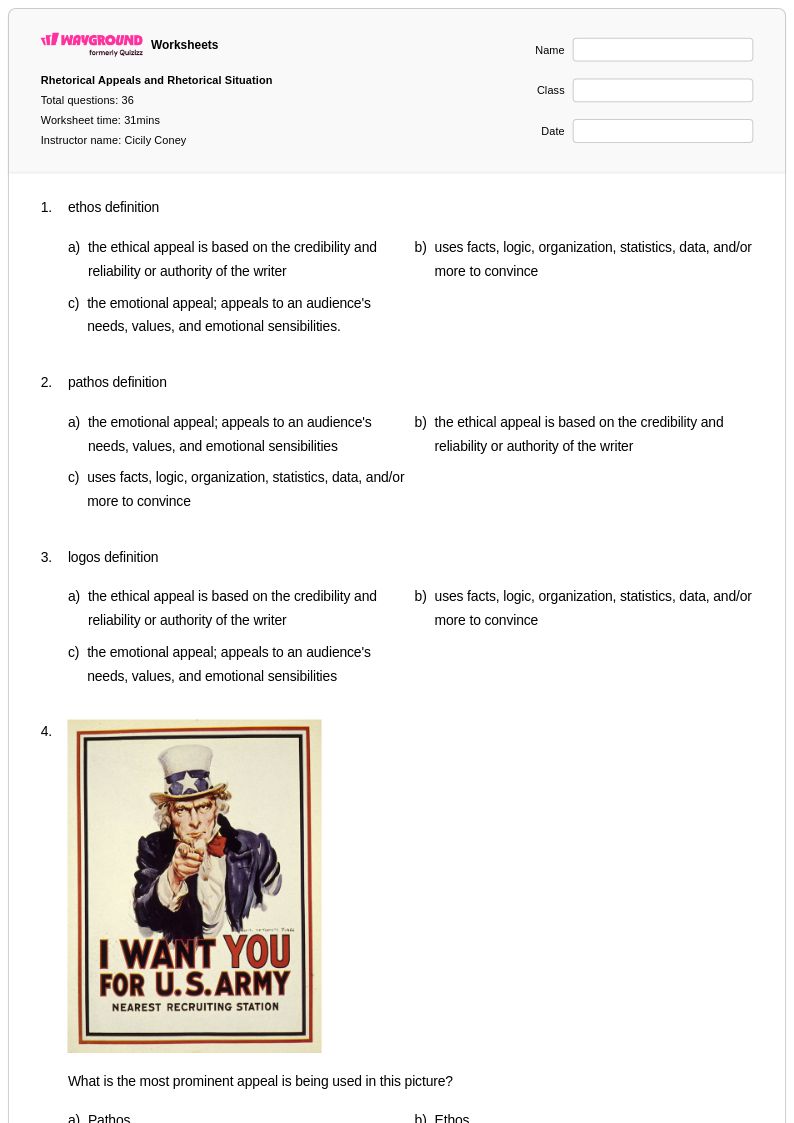
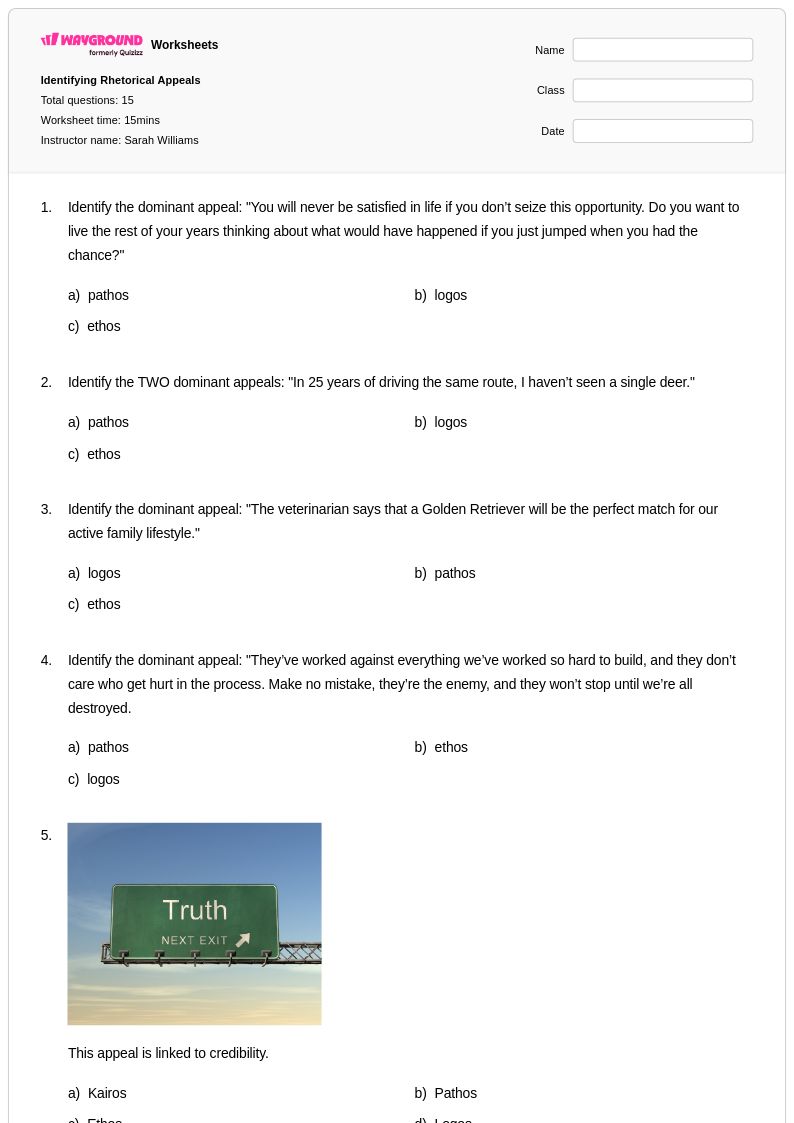
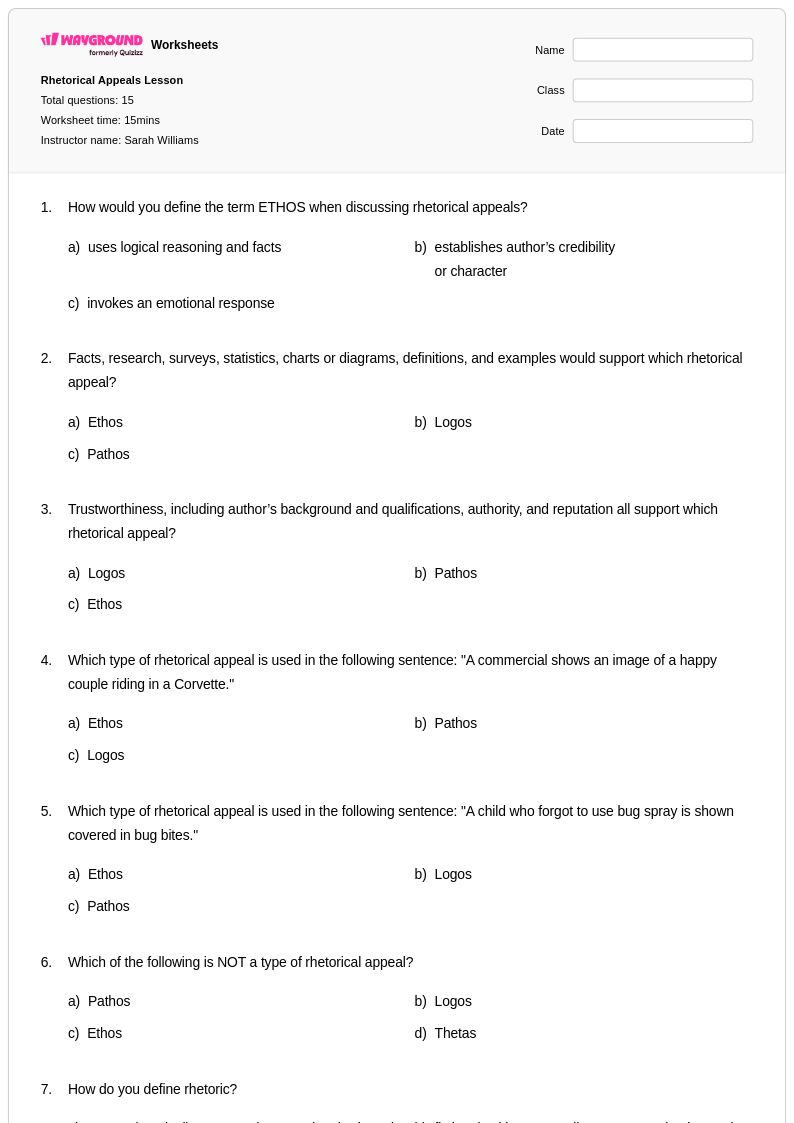
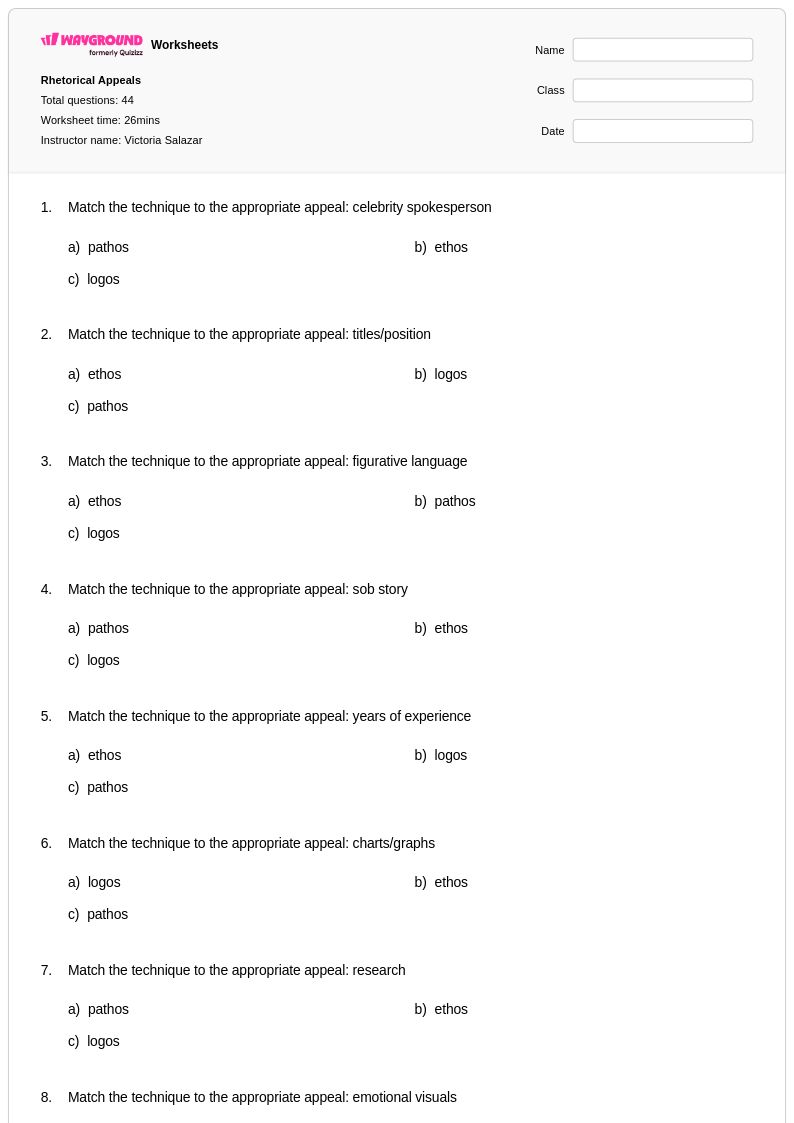
Rhetorical appeals worksheets for Class 12 students available through Wayground (formerly Quizizz) provide comprehensive practice with ethos, pathos, and logos—the foundational persuasive techniques that sophisticated writers must master. These expertly designed worksheets strengthen students' ability to identify, analyze, and effectively employ credibility-based appeals, emotional connections, and logical reasoning in their own persuasive writing and critical analysis of complex texts. Students engage with practice problems that require them to deconstruct arguments from speeches, essays, and multimedia sources, while also crafting original persuasive pieces that strategically integrate multiple appeals. Each worksheet collection includes detailed answer keys and is available as free printable PDFs, allowing students to develop the analytical precision and rhetorical sophistication expected at the Class 12 level.
Wayground (formerly Quizizz) empowers educators with millions of teacher-created rhetorical appeals resources that transform how Class 12 students approach persuasive writing and critical analysis. The platform's advanced search and filtering capabilities enable teachers to locate worksheets that align with specific writing standards and learning objectives, while differentiation tools allow for seamless customization to meet diverse student needs and skill levels. Available in both printable PDF formats and interactive digital versions, these resources support flexible lesson planning whether teachers need targeted remediation for students struggling with argument analysis, enrichment activities for advanced writers, or systematic skill practice across the entire rhetorical appeals spectrum. This comprehensive approach ensures that all Class 12 students develop the sophisticated understanding of persuasive techniques essential for college-level writing and informed citizenship.
FAQs
How do I teach ethos, pathos, and logos to students?
Start by introducing each appeal with a clear definition and a concrete, familiar example — advertisements, speeches, and opinion editorials work well because students already encounter them outside school. Once students can name each appeal in isolation, move to mixed-text analysis where they must distinguish between all three within a single passage. The key is to emphasize that skilled writers rarely use just one appeal; helping students see how the appeals interact builds the deeper analytical thinking the concept demands.
What exercises help students practice identifying rhetorical appeals?
The most effective practice tasks ask students to read a short persuasive passage and annotate or label specific lines as ethos, pathos, or logos, then justify their labeling in writing. Moving from recognition to production — having students draft their own sentences that deliberately employ each appeal — closes the gap between comprehension and application. Rhetorical appeals worksheets that pair excerpt analysis with short written responses are especially useful because they require students to explain their reasoning rather than simply choose an answer.
What mistakes do students commonly make when identifying ethos, pathos, and logos?
The most persistent error is conflating pathos with any emotionally charged language, even when the passage is actually building a logical argument that happens to use vivid word choice. Students also frequently misidentify ethos as any mention of facts or statistics, confusing credibility-building with evidence-based reasoning, which belongs to logos. A third common misconception is treating the three appeals as mutually exclusive categories rather than overlapping strategies that authors blend intentionally.
How can I use rhetorical appeals worksheets to assess student understanding?
Rhetorical appeals worksheets work well as formative checks when assigned after direct instruction on one or two appeals, giving teachers immediate insight into whether students can distinguish between them before moving to full rhetorical analysis. For summative assessment, passages that require students to identify all three appeals and evaluate their effectiveness in context reveal both recognition skills and higher-order analytical thinking. The included answer keys make scoring consistent and allow teachers to quickly identify class-wide patterns in misidentification.
How do I use Wayground's rhetorical appeals worksheets in my classroom?
Wayground's rhetorical appeals worksheets are available as printable PDFs for traditional classroom use and in digital formats for technology-integrated environments, so they fit independent practice, small-group instruction, or homework assignments without additional preparation. Teachers can also host them as a quiz directly on Wayground, which enables real-time tracking of student responses. All worksheets include answer keys, so grading is straightforward whether the activity is completed on paper or on screen.
How do I support struggling students when teaching rhetorical appeals?
Students who struggle with rhetorical appeals often benefit from a simplified anchor chart that keeps the three definitions visible during practice, reducing cognitive load while they build fluency. On Wayground, teachers can apply individual accommodations such as reduced answer choices and read-aloud support for students who need it, while the rest of the class works through the standard version without interruption. Pairing a reduced-choice version of an identification task with sentence starters for the written justification gives struggling learners a structured entry point without removing the analytical demand.