
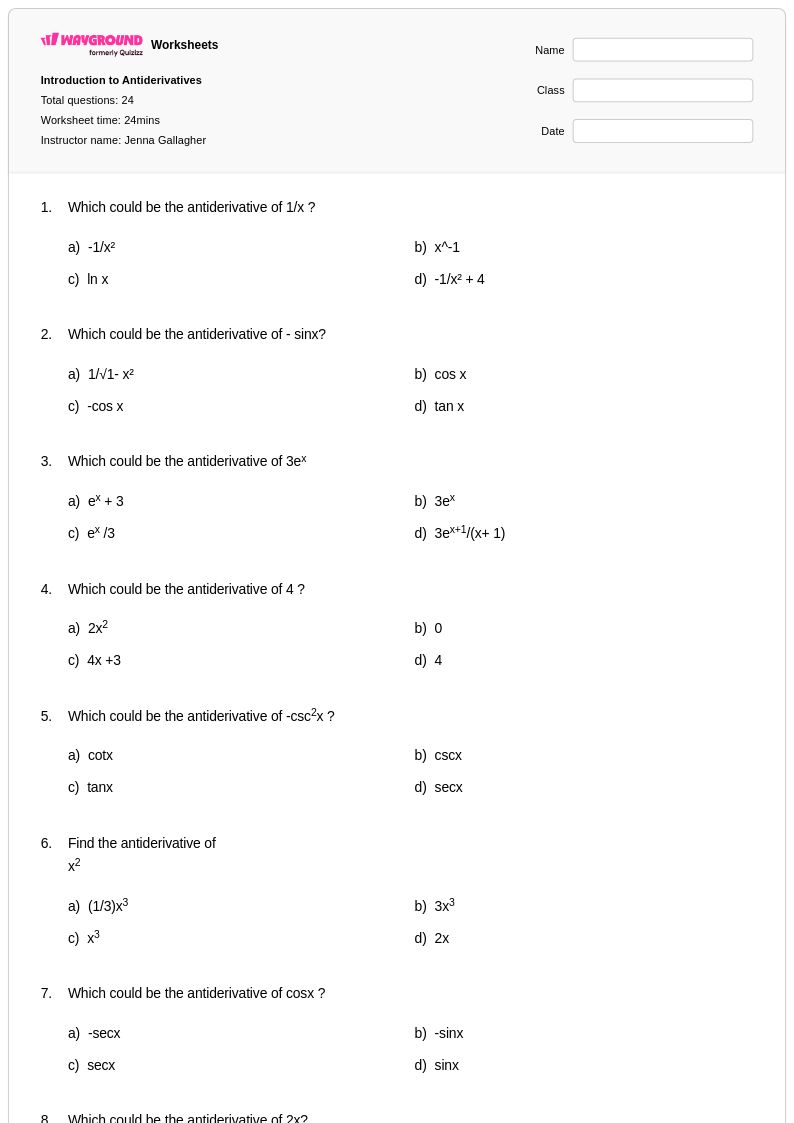
24 Q
10th - 12th
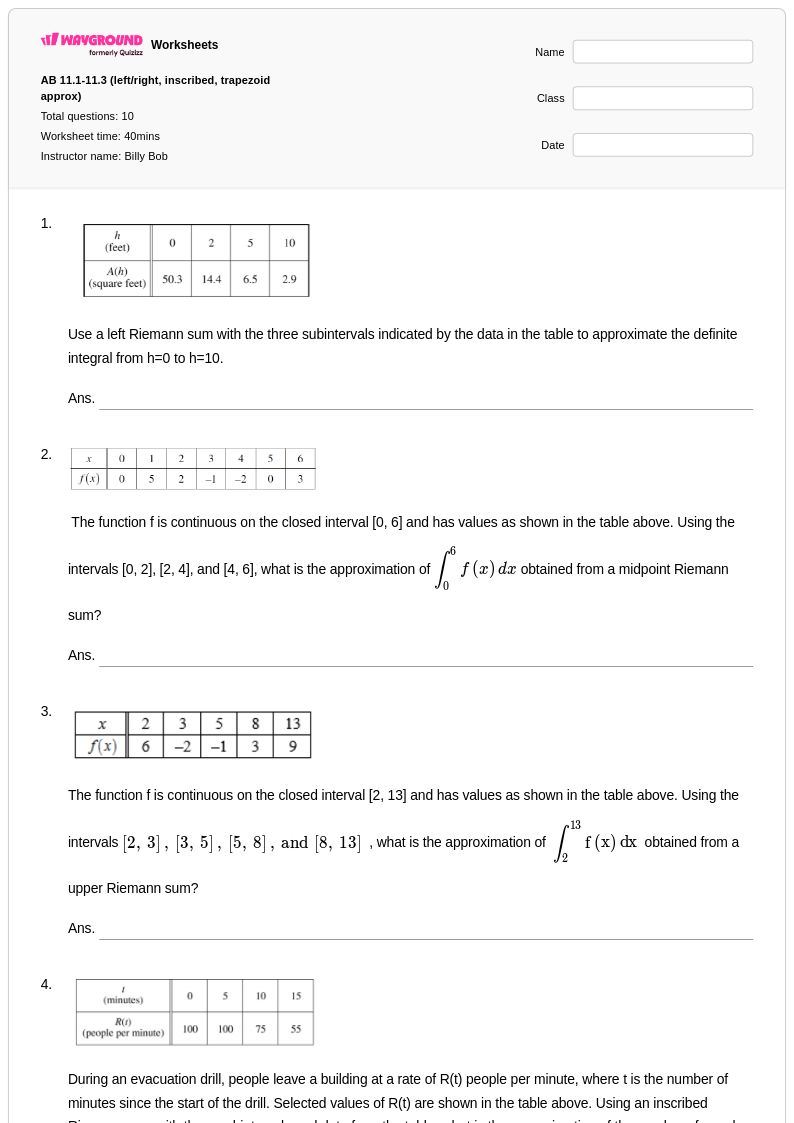
10 Q
10th - 12th
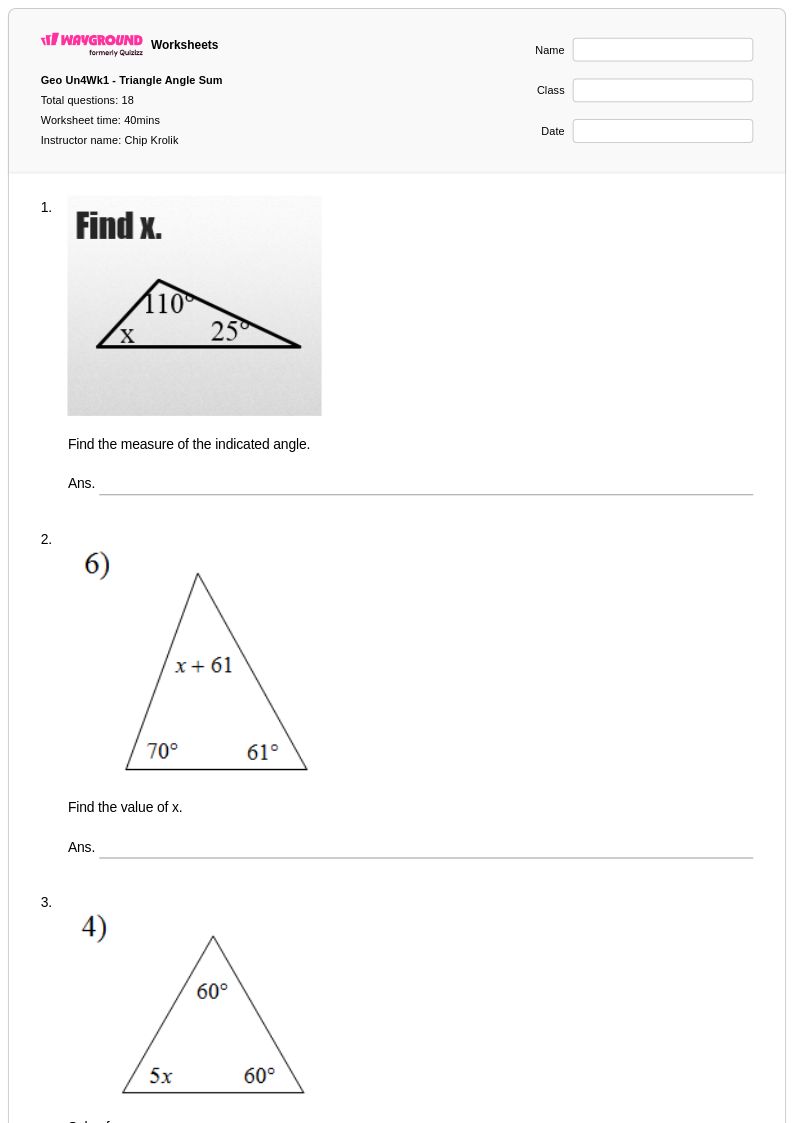
18 Q
9th - 11th
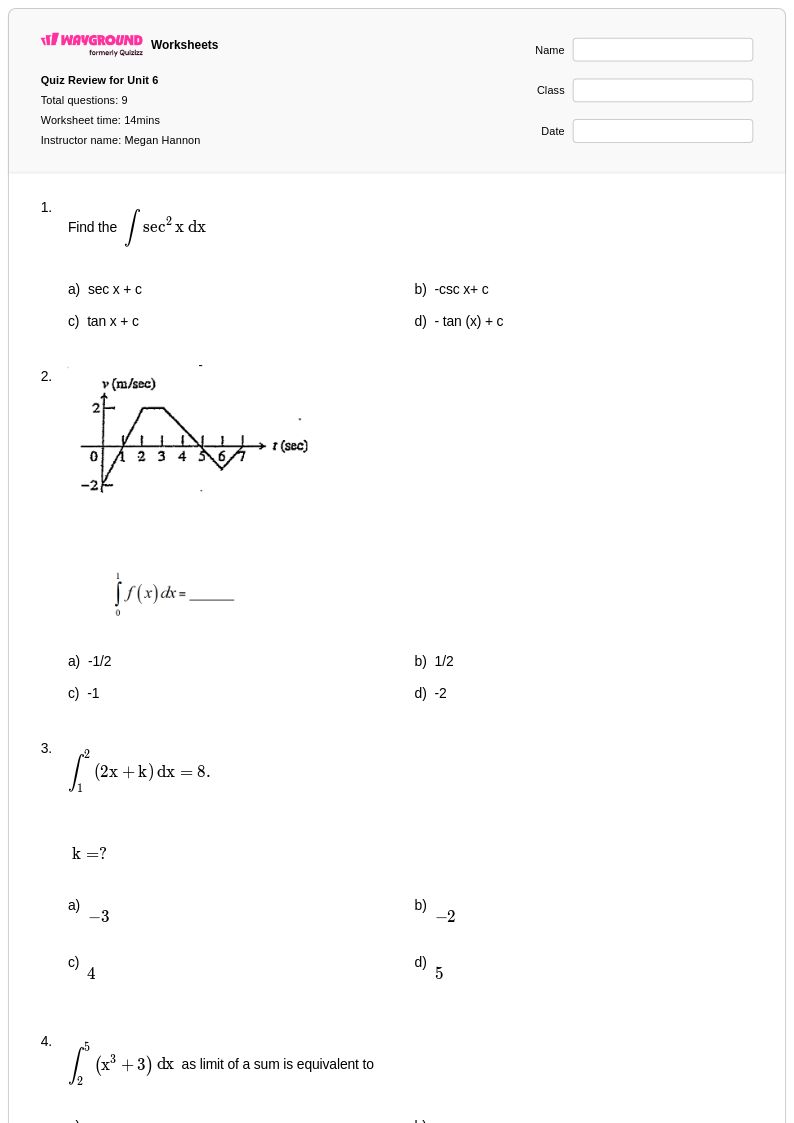
9 Q
9th - 12th
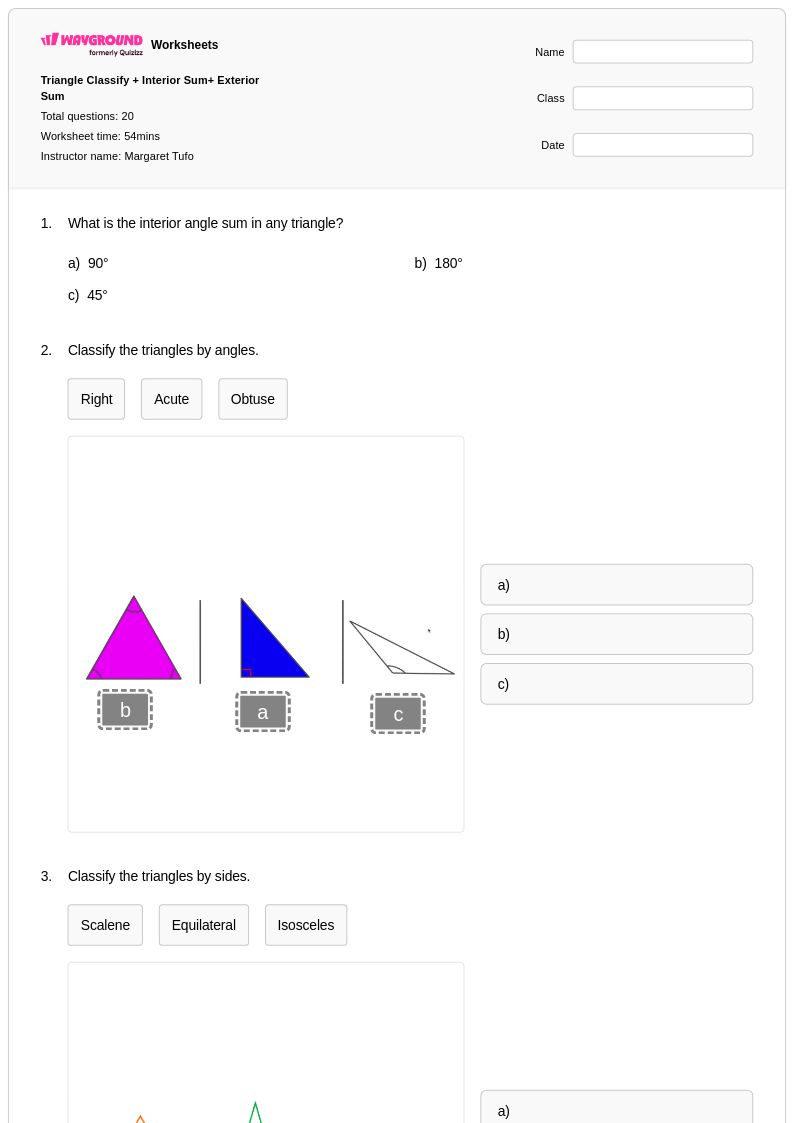
20 Q
9th - 12th
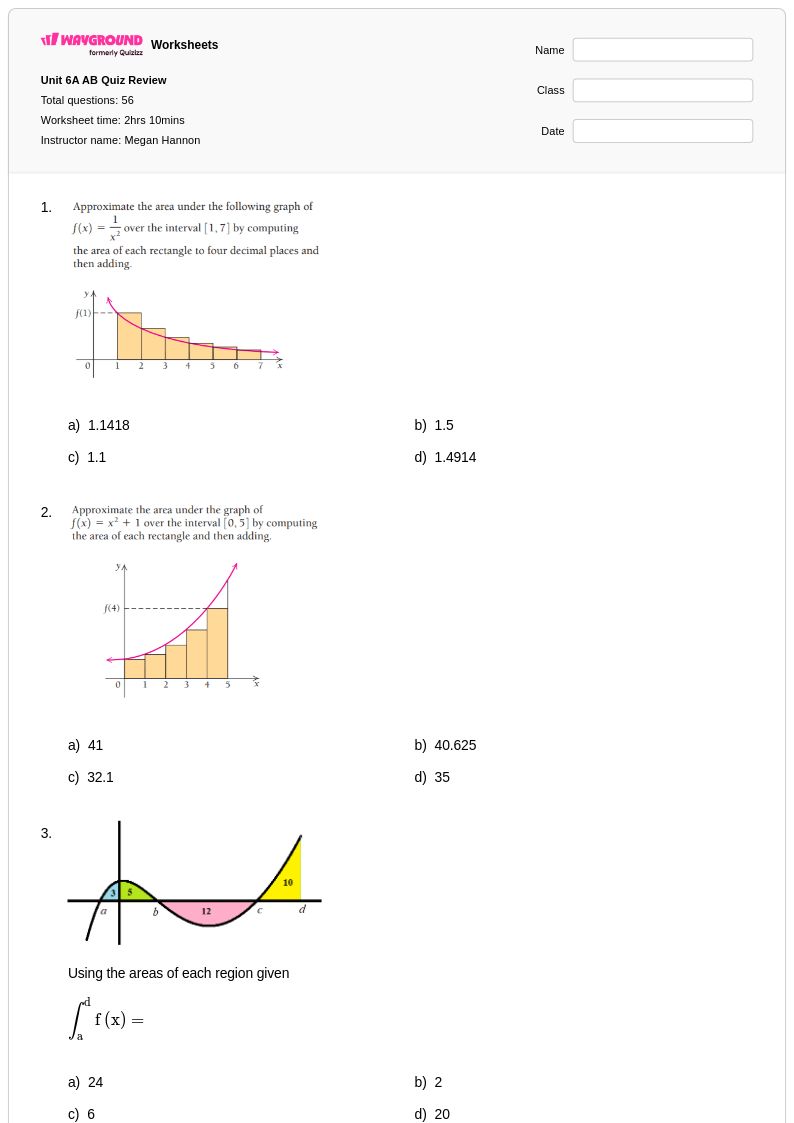
56 Q
9th - 12th
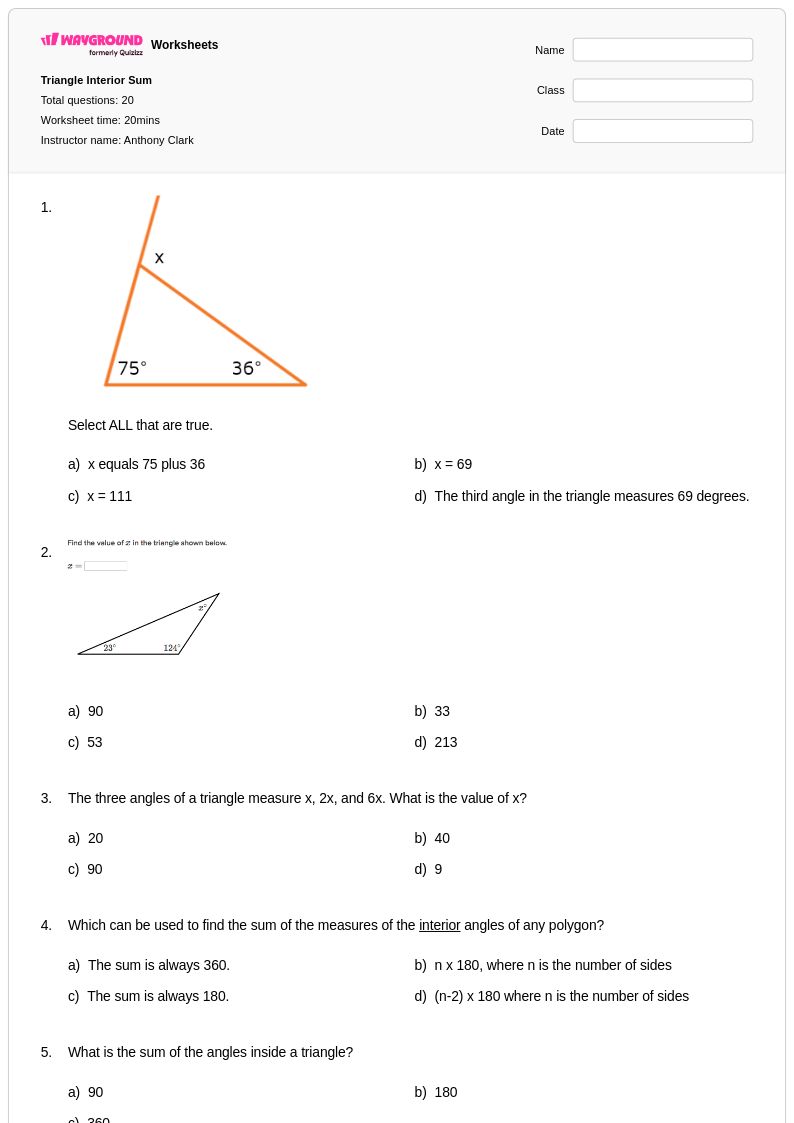
20 Q
8th - Uni
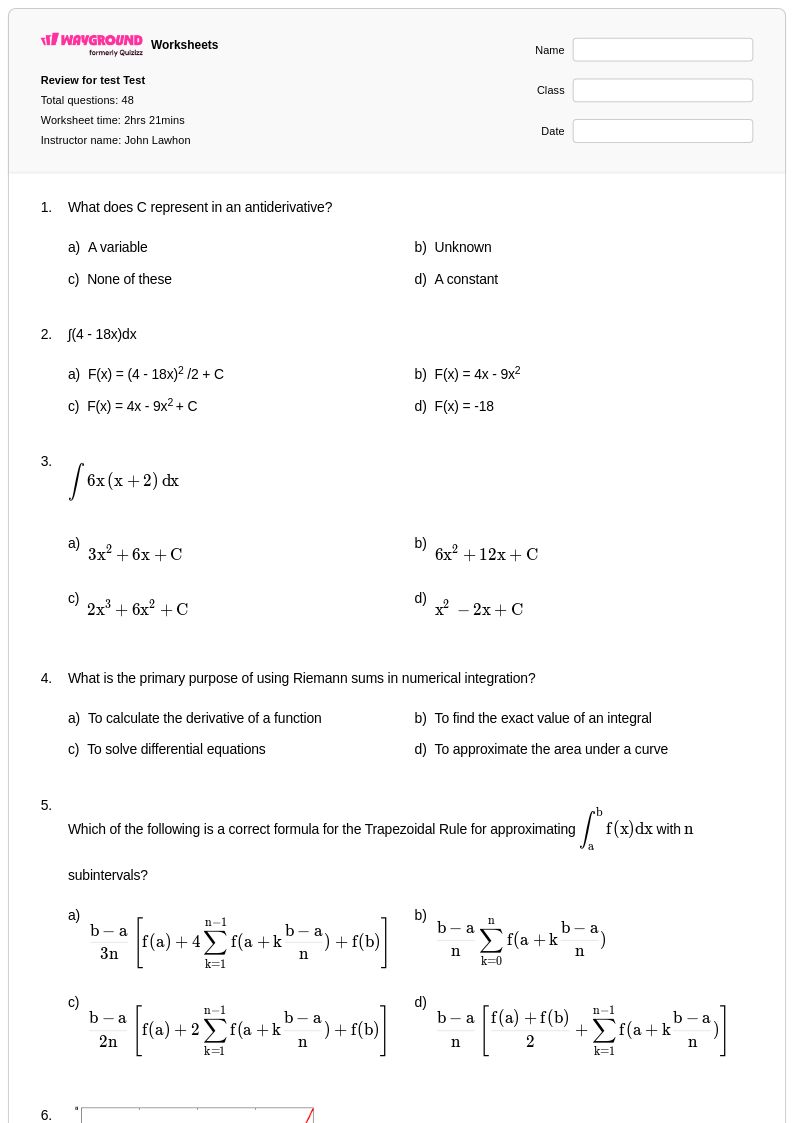
48 Q
9th - 12th
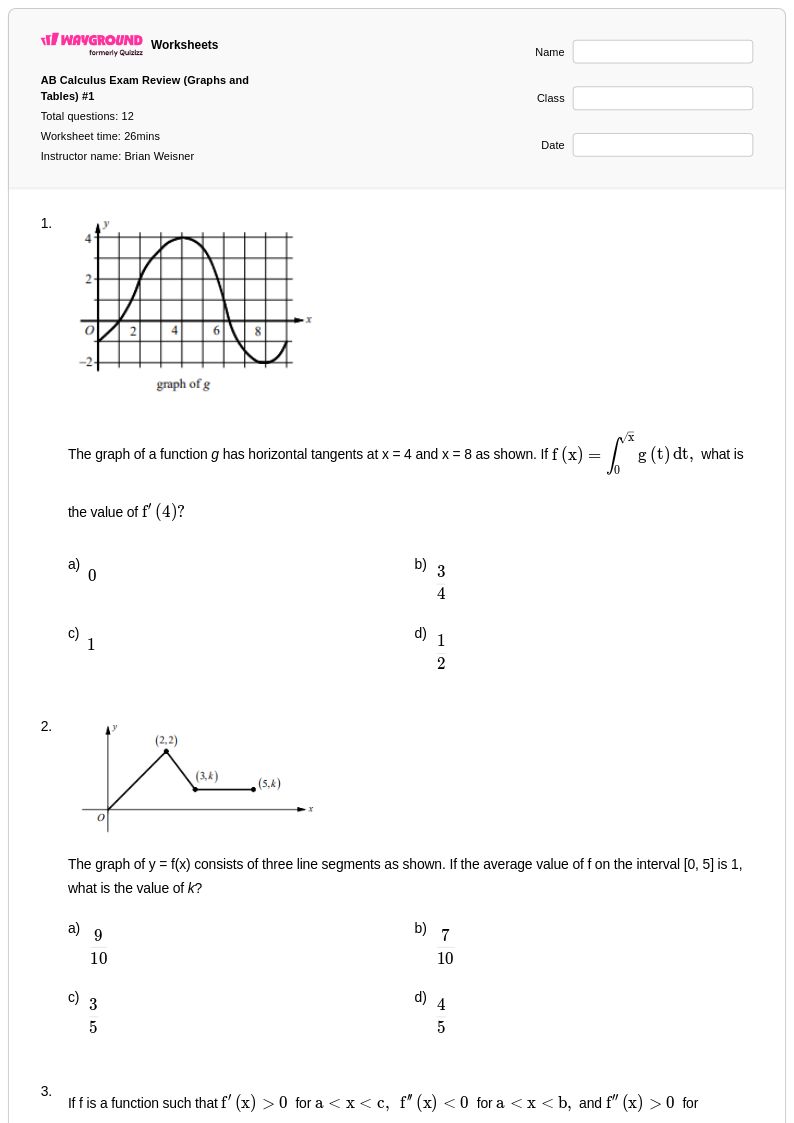
12 Q
10th - Uni
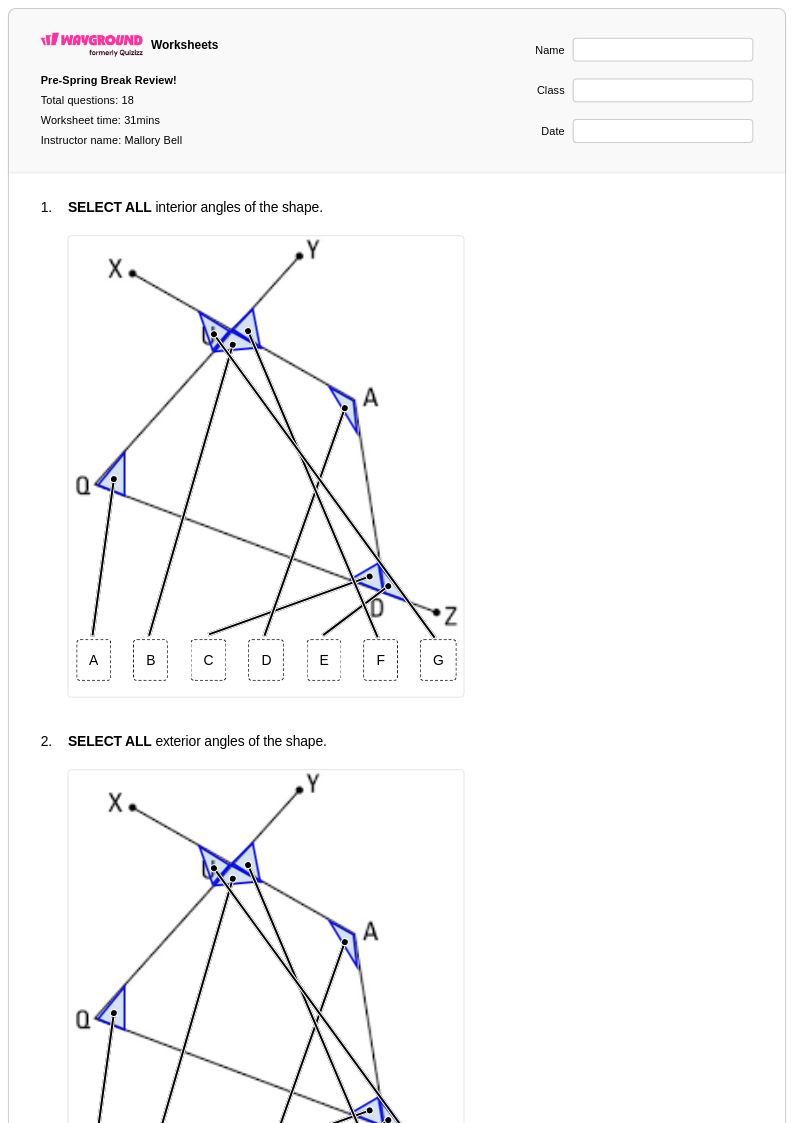
18 Q
9th - 12th
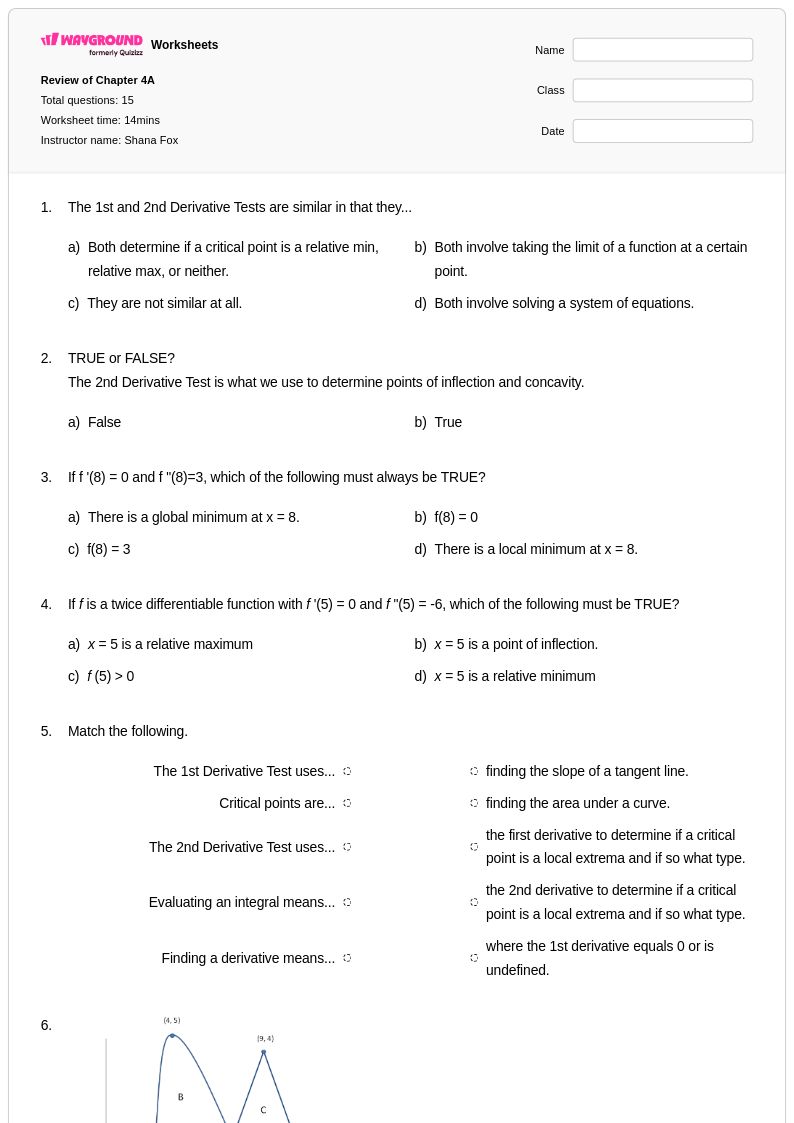
15 Q
9th - 12th
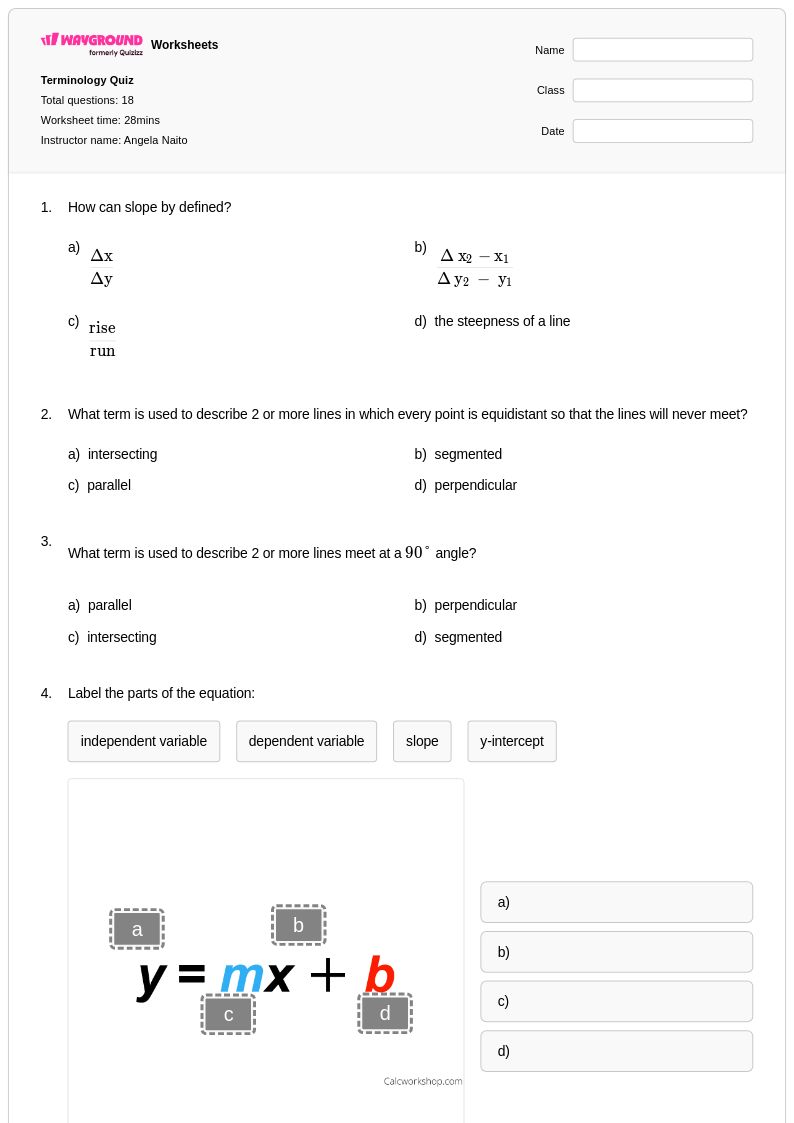
18 Q
10th
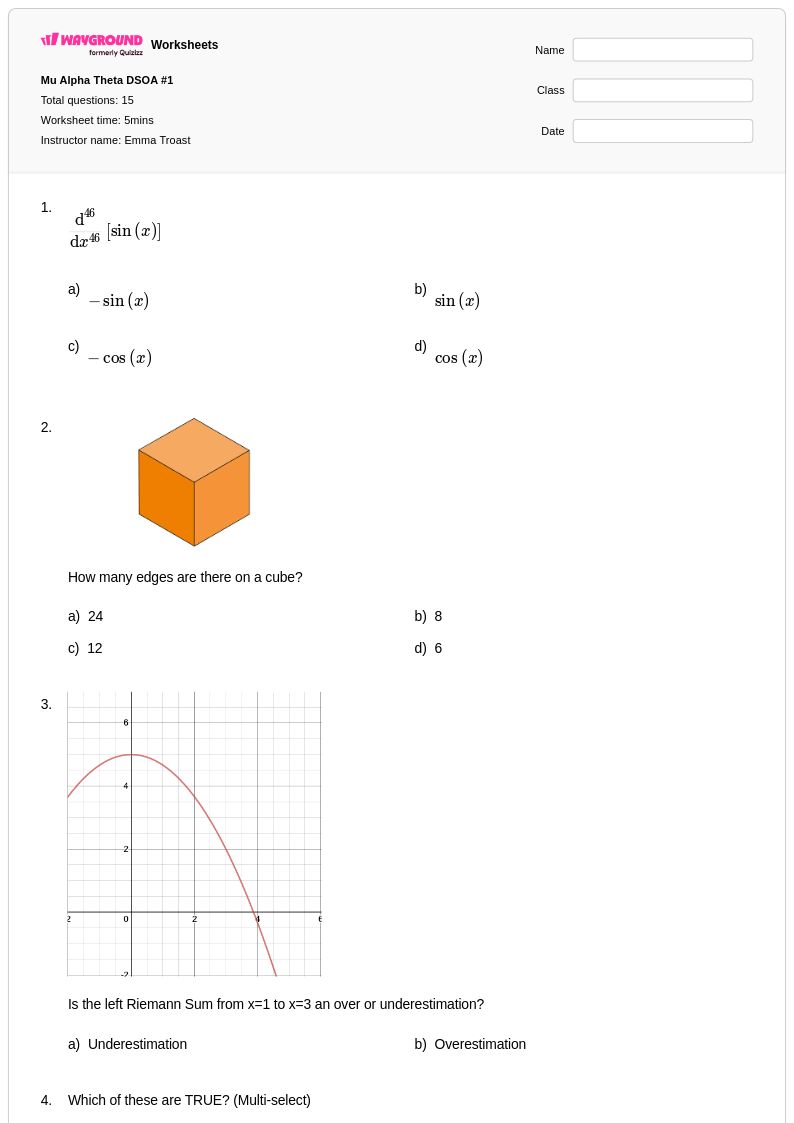
15 Q
9th - 12th
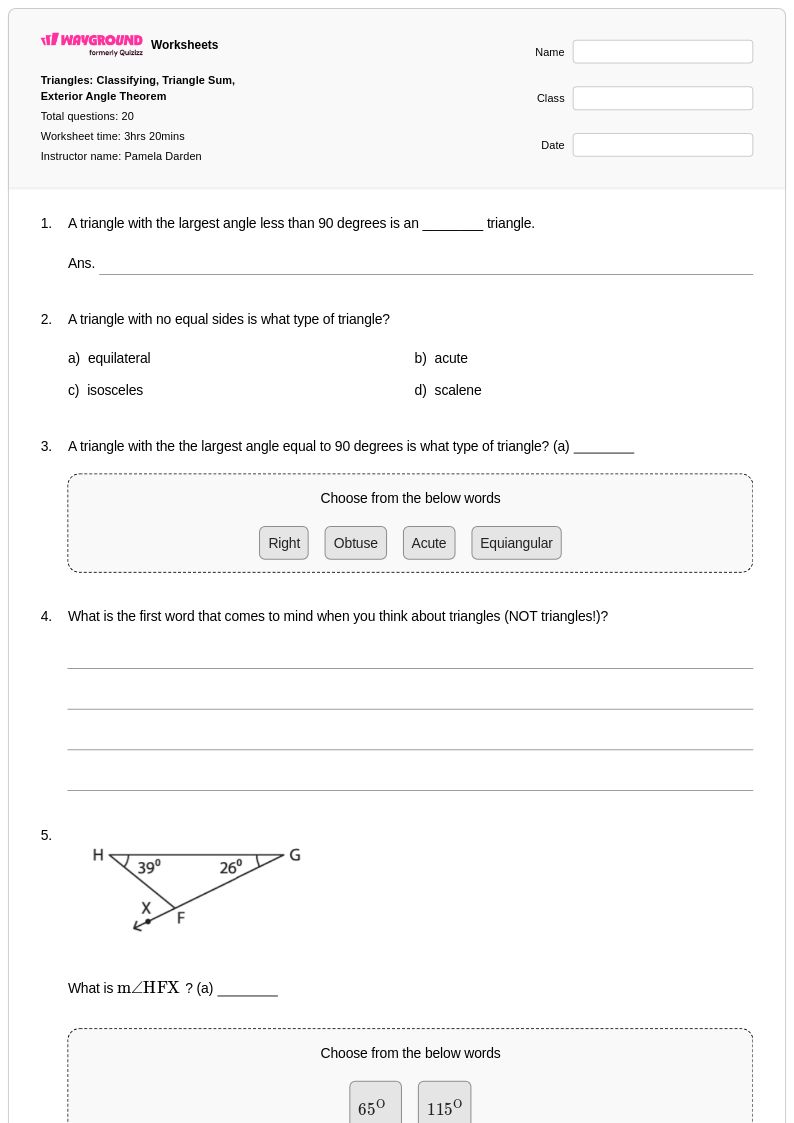
20 Q
9th - 12th
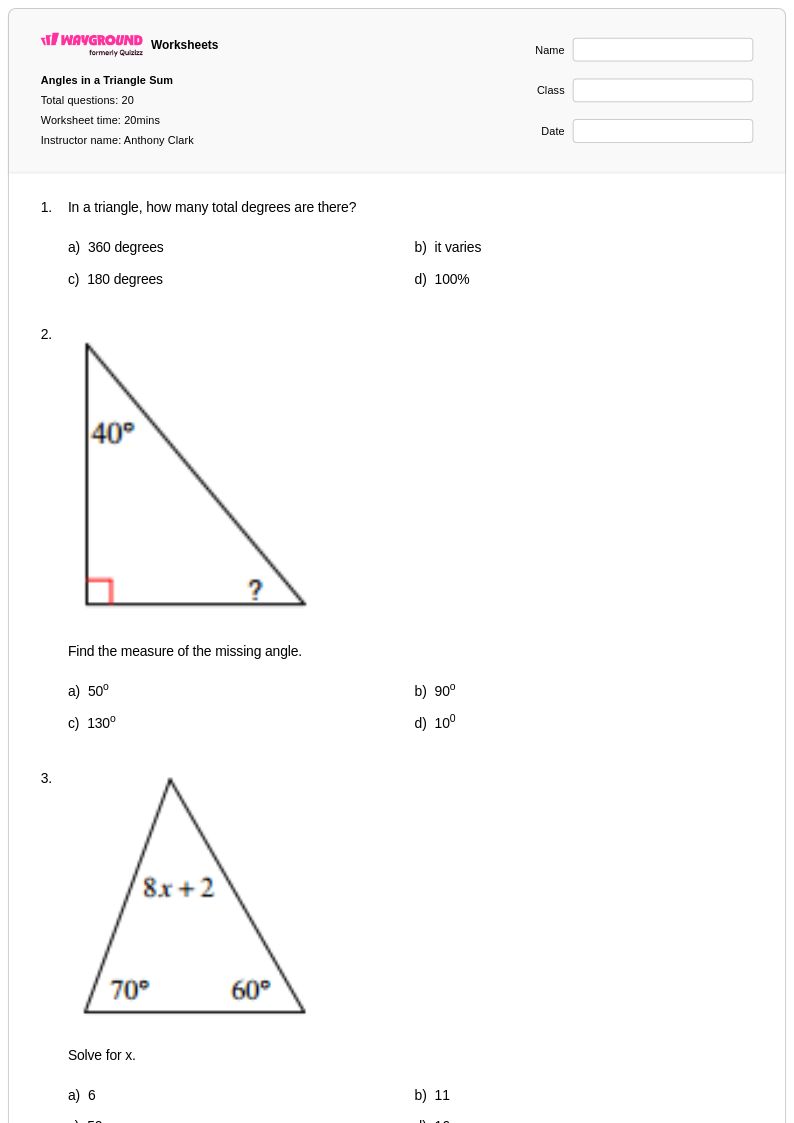
20 Q
8th - Uni
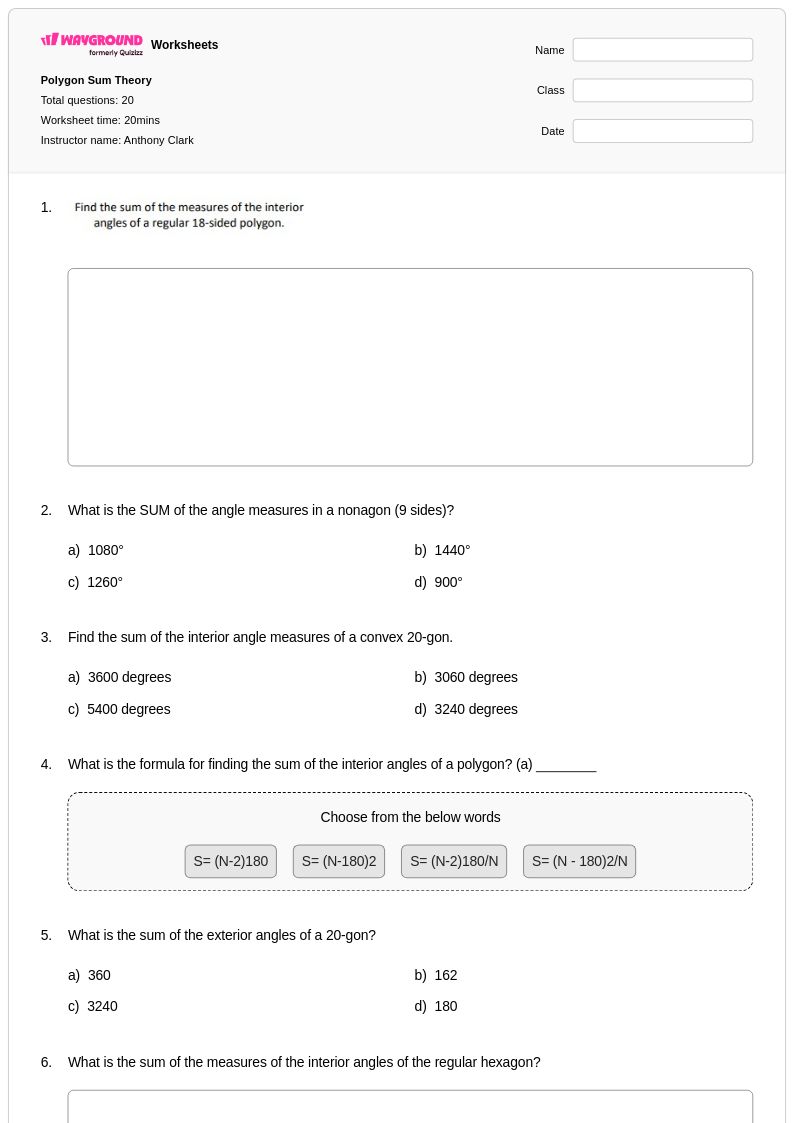
20 Q
8th - Uni
55 Q
9th - 12th
8 Q
10th
11 Q
9th - Uni
20 Q
4th - Uni
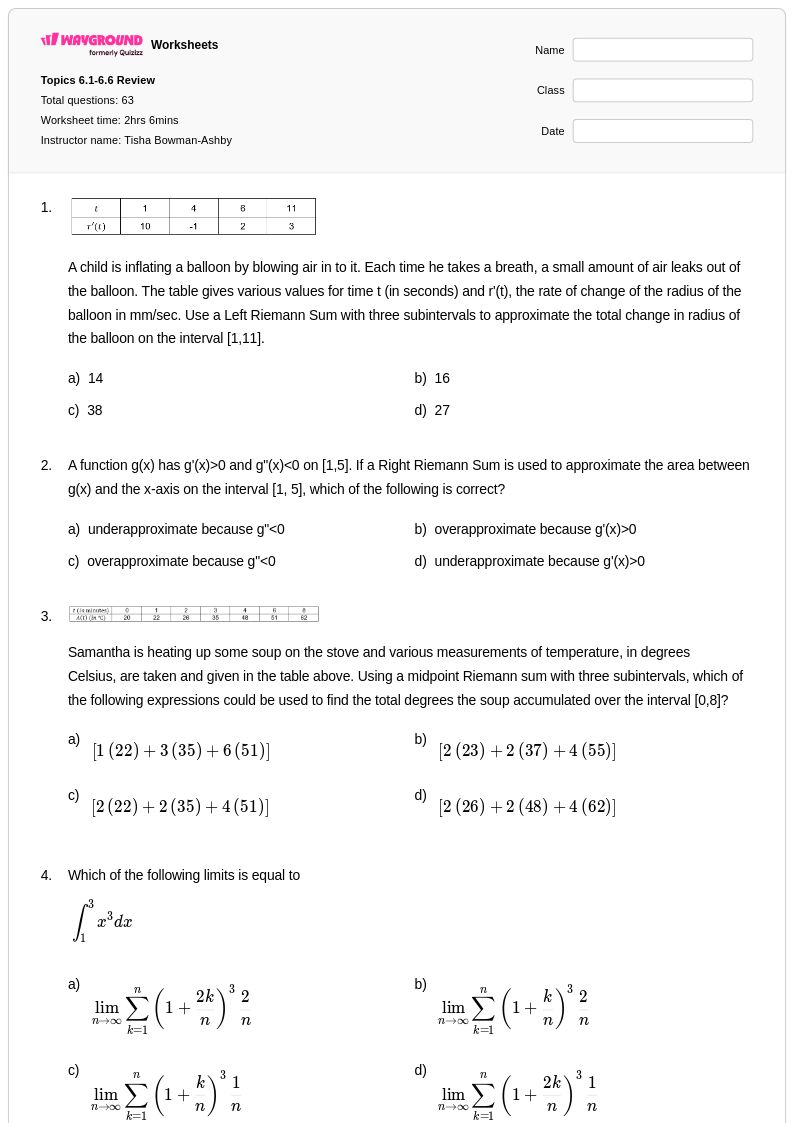
63 Q
10th - 12th
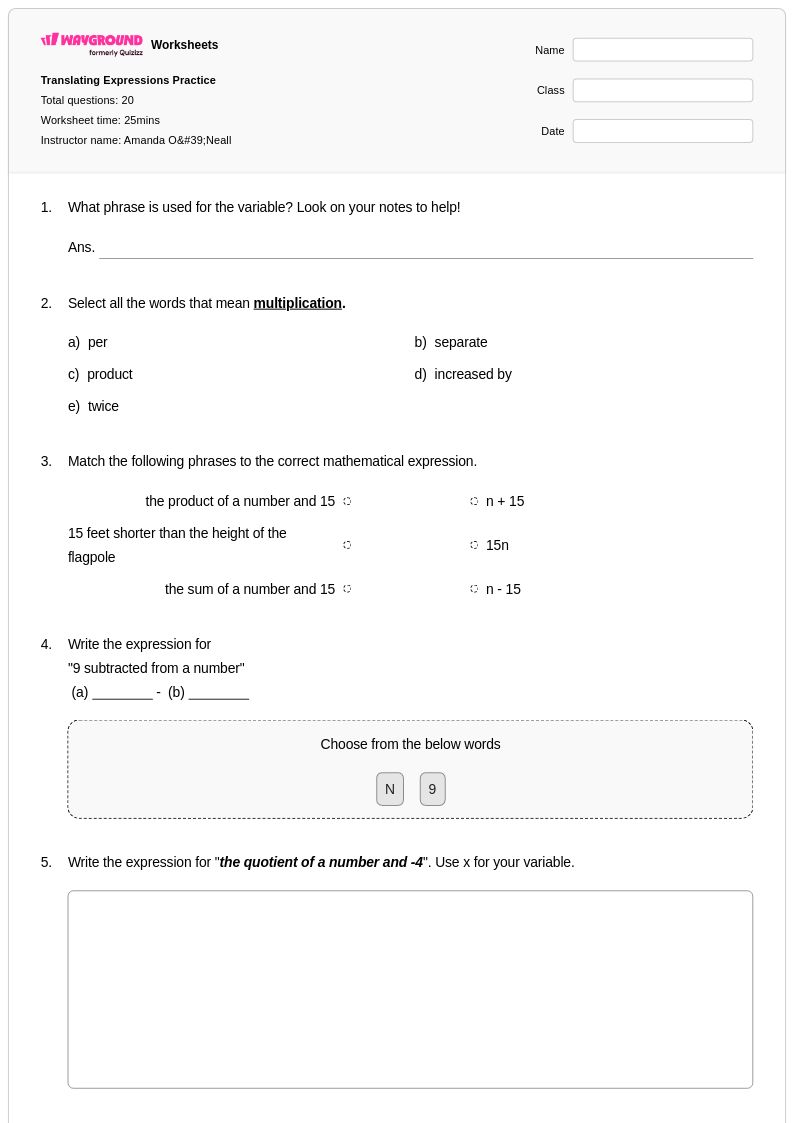
20 Q
7th - Uni
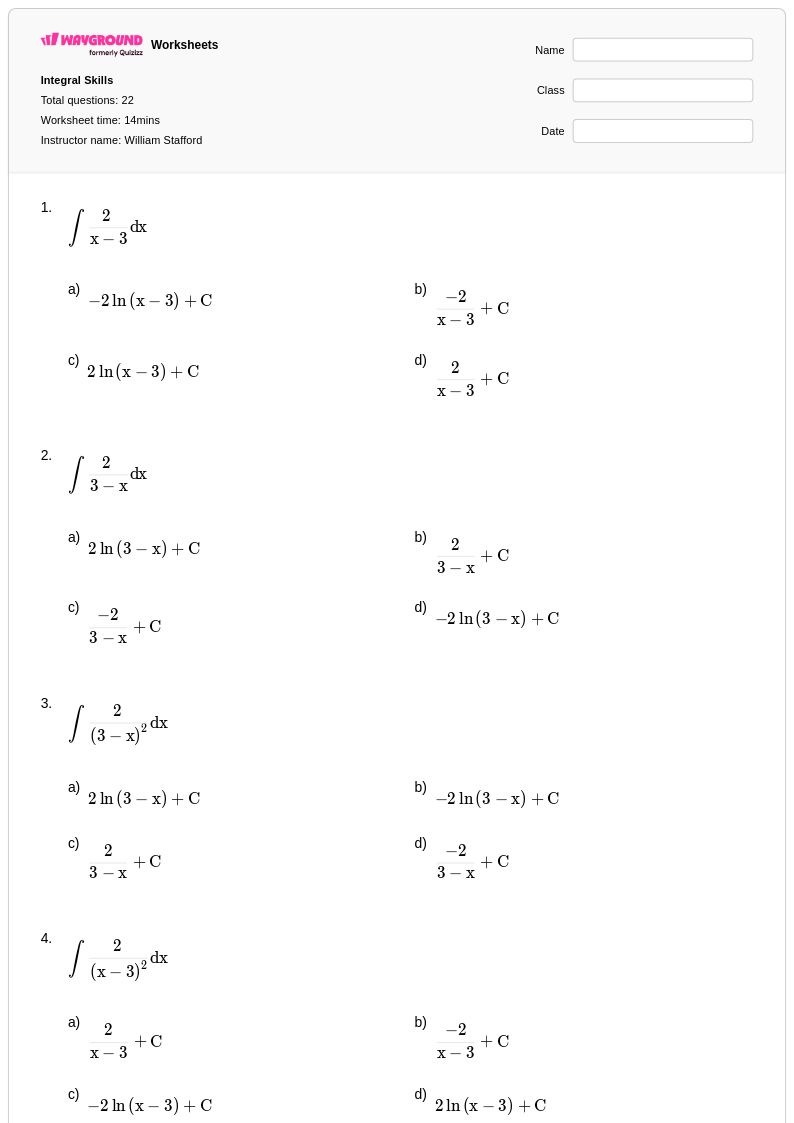
22 Q
9th - 12th
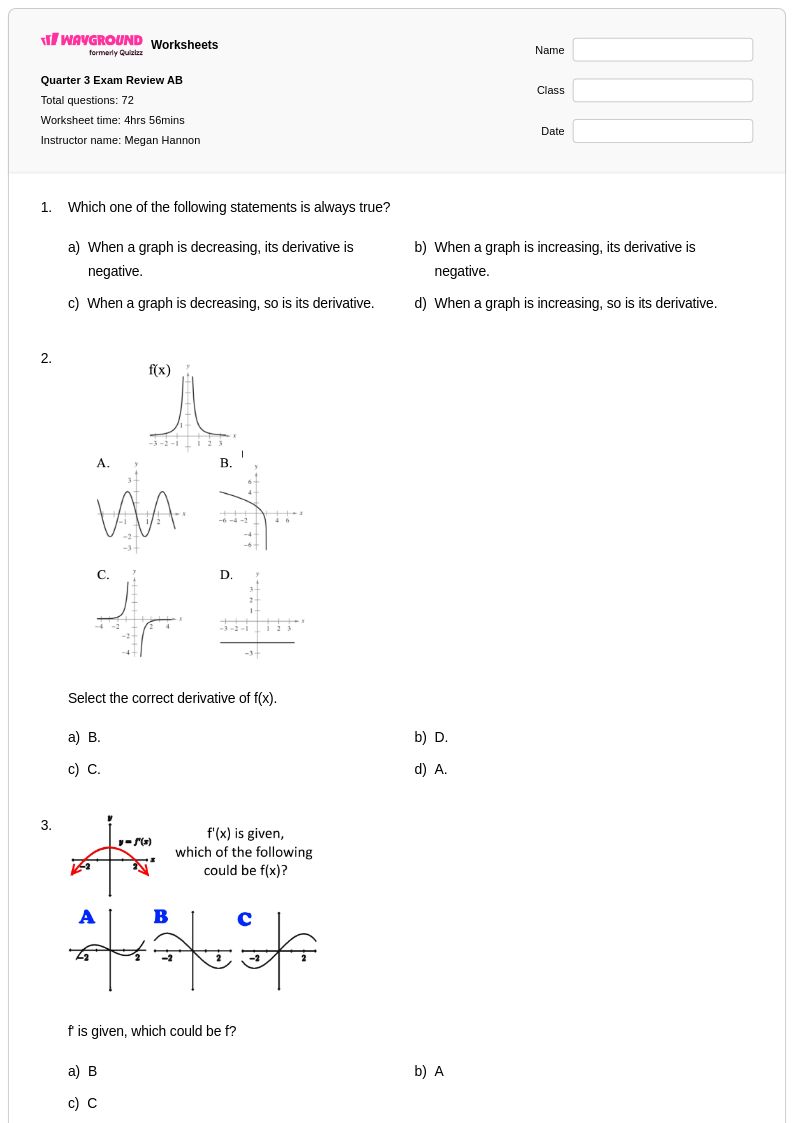
72 Q
9th - 12th
Explore Other Subject Worksheets for class 10
Explore printable Riemann Sum worksheets for Class 10
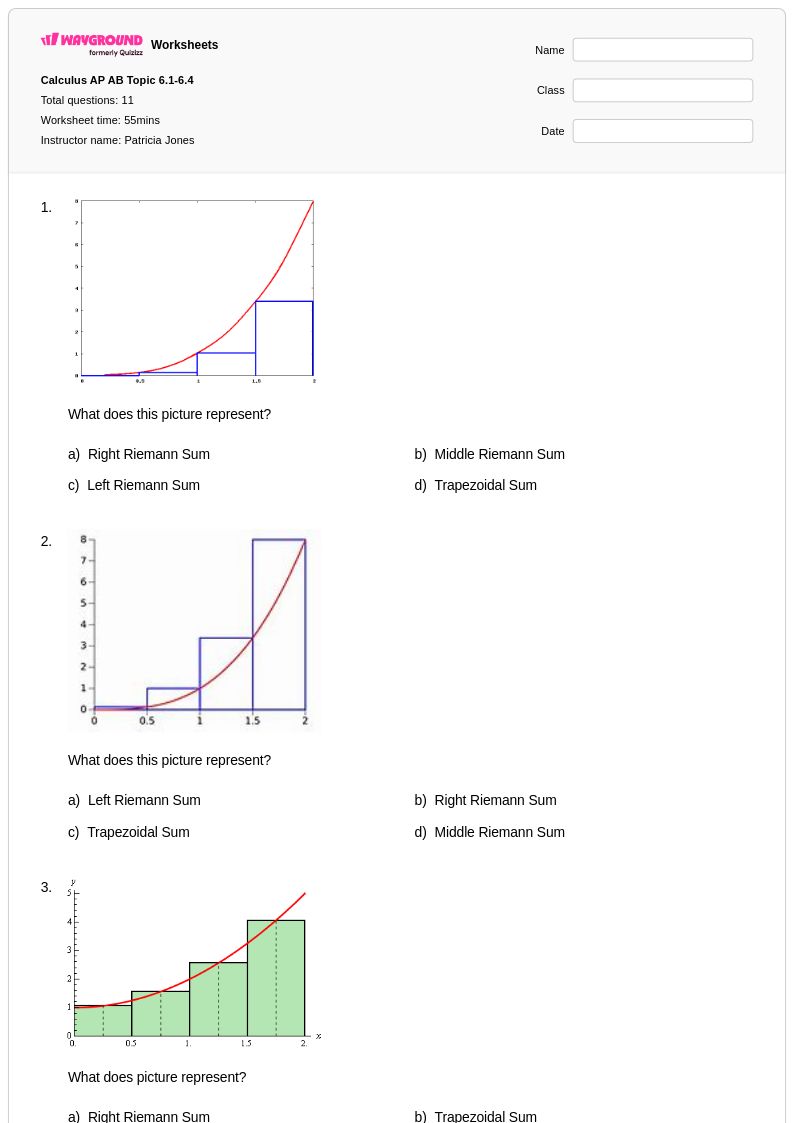
Riemann Sum worksheets for Class 10 students available through Wayground (formerly Quizizz) provide comprehensive practice with this fundamental calculus concept that bridges the gap between discrete summation and continuous integration. These carefully crafted worksheets guide students through the process of approximating areas under curves using rectangular partitions, helping them develop crucial skills in understanding left-hand, right-hand, and midpoint approximations. Students work through practice problems that progressively build their ability to set up Riemann sums, calculate approximate values, and recognize how increasing the number of partitions leads to more accurate area estimates. Each worksheet collection includes detailed answer keys and is available as free printables in convenient pdf format, allowing students to master the conceptual foundation necessary for understanding definite integrals and the Fundamental Theorem of Calculus.
Wayground (formerly Quizizz) empowers mathematics educators with access to millions of teacher-created Riemann Sum resources that can be seamlessly integrated into Class 10 calculus instruction. The platform's robust search and filtering capabilities enable teachers to quickly locate worksheets that align with specific learning standards and match their students' varying skill levels, from introductory concepts to more advanced applications. These differentiation tools allow educators to customize content for remediation support or enrichment challenges, while the flexible format options provide both printable pdf versions for traditional classroom use and digital formats for interactive learning environments. Teachers can efficiently plan lesson sequences that build student understanding systematically, using these resources for initial skill practice, formative assessment, and targeted intervention to ensure all students develop the analytical thinking required for advanced calculus concepts.
FAQs
Is this topic part of a typical 10th-grade curriculum?
How should I approach teaching Riemann sums in a 10th-grade pre-calculus class?
What is the main learning objective for Riemann sums in 10th grade?
What's a good exercise to show the effect of increasing partitions?
How can I use this Grade 10 Riemann sum worksheet?
What's a common conceptual hurdle for 10th graders with this topic?