
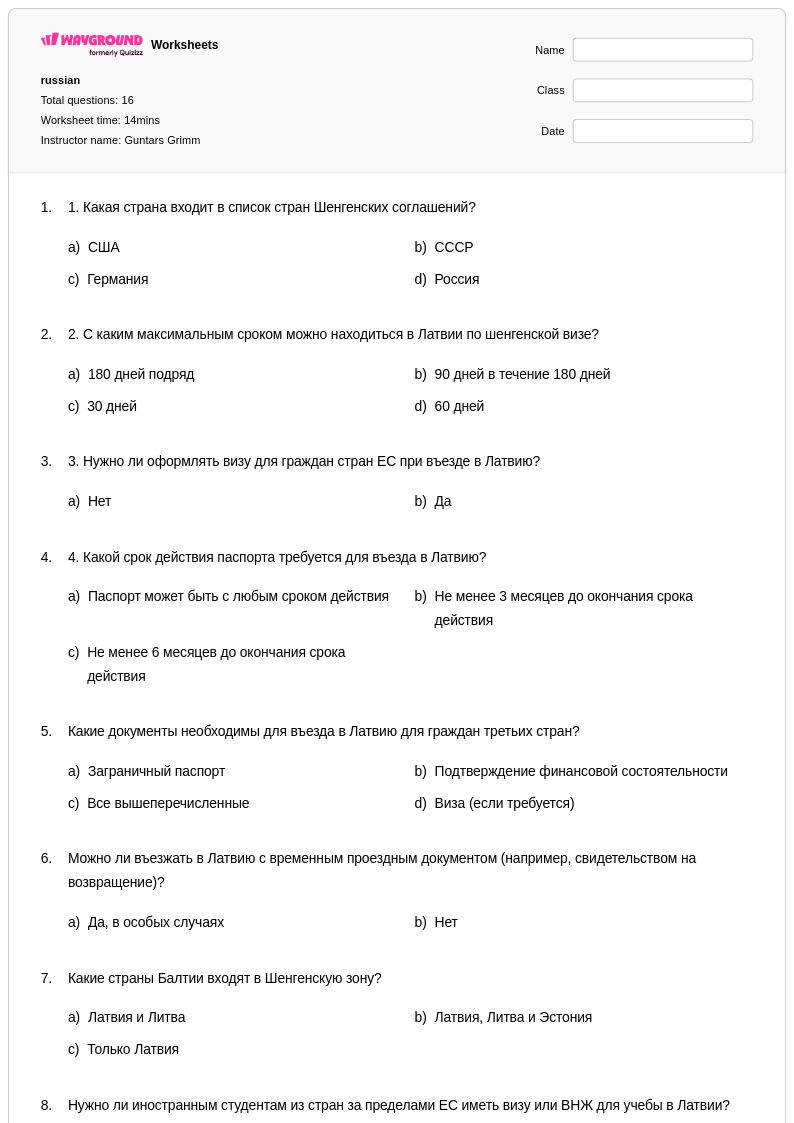
16 Q
1st
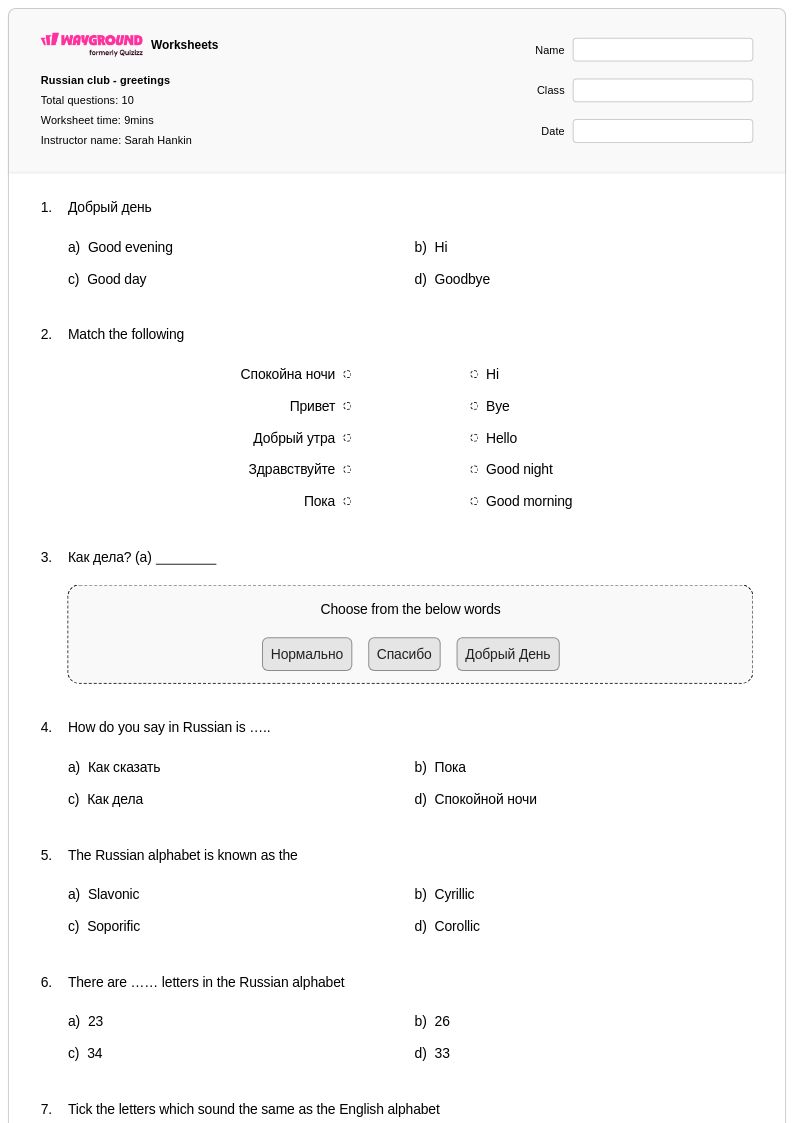
10 Q
1st
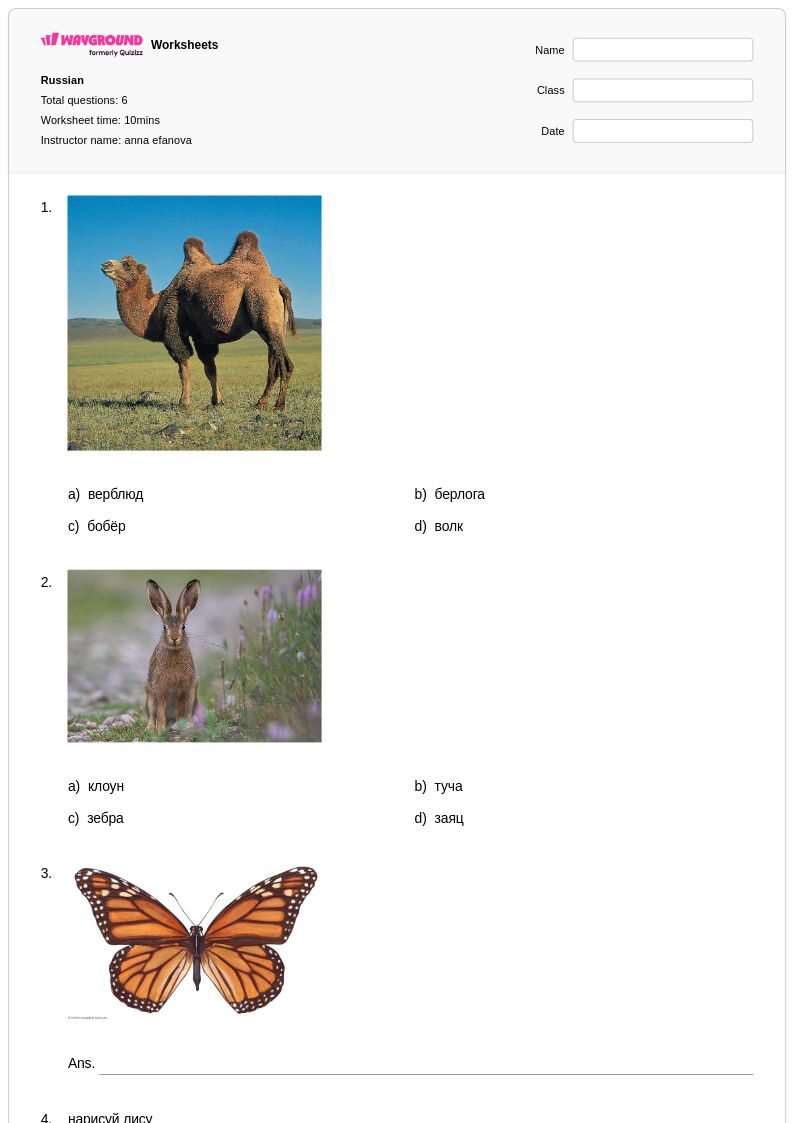
6 Q
KG - 11th
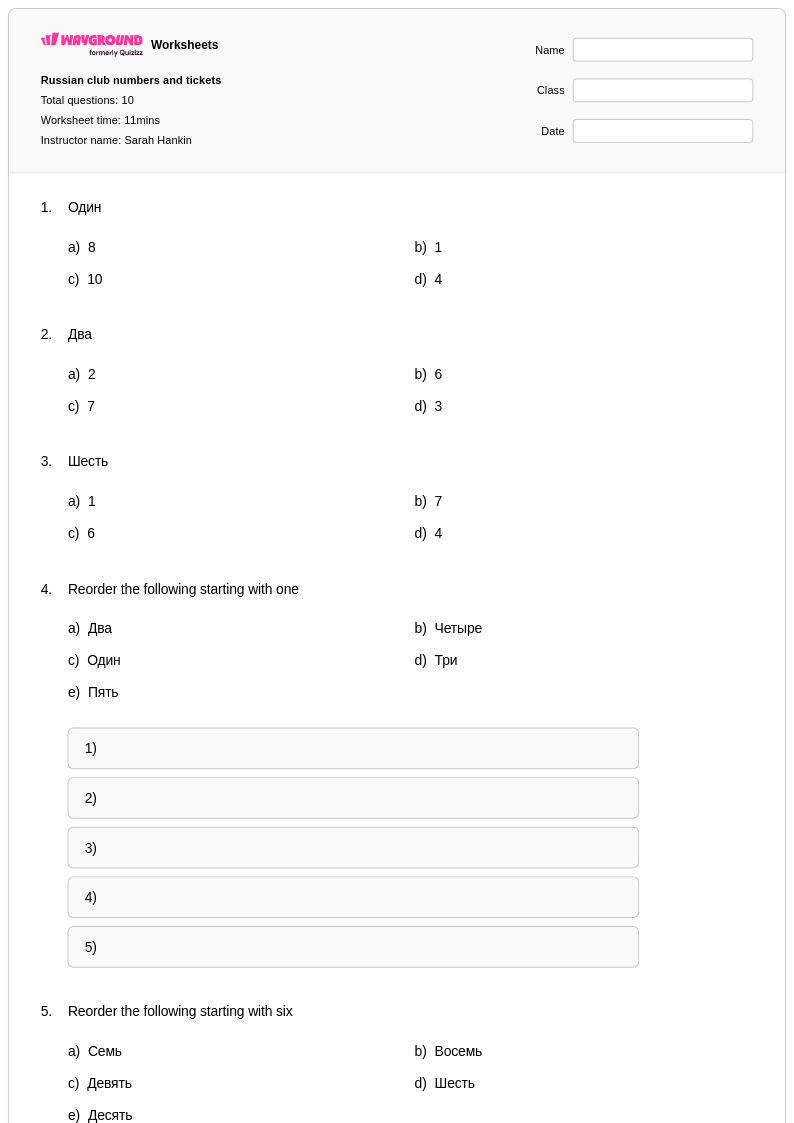
10 Q
1st
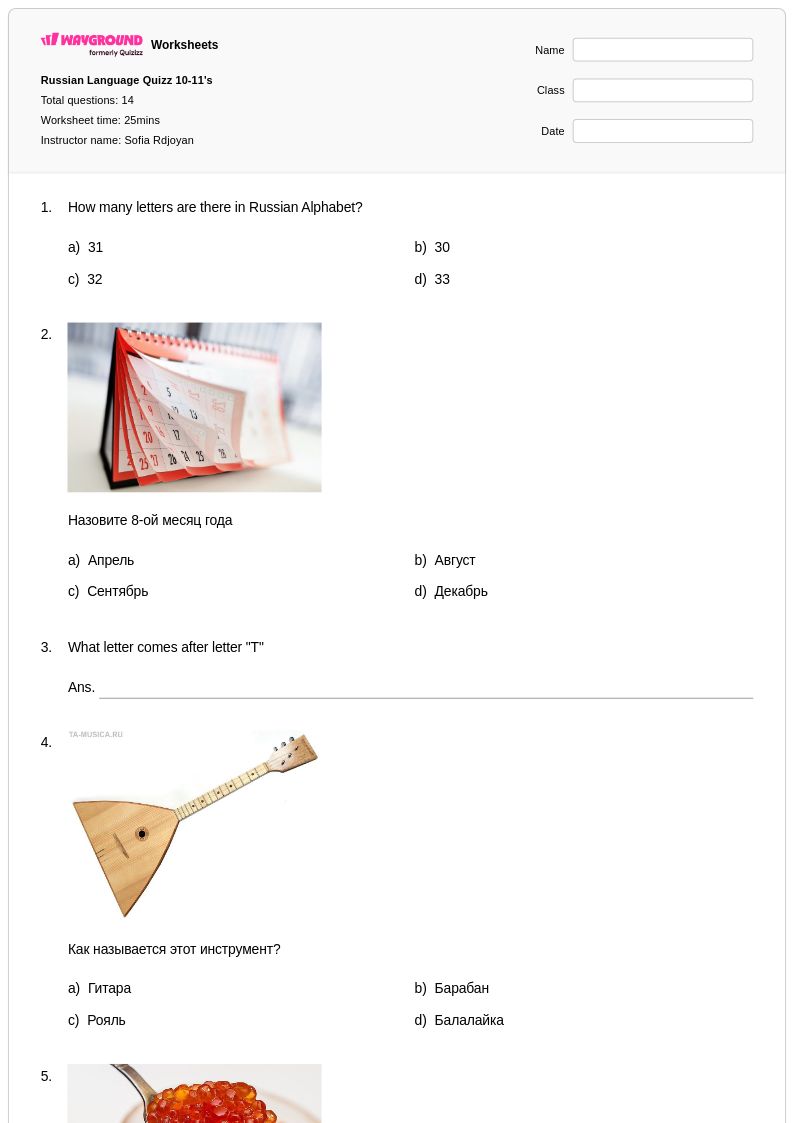
14 Q
1st - 6th
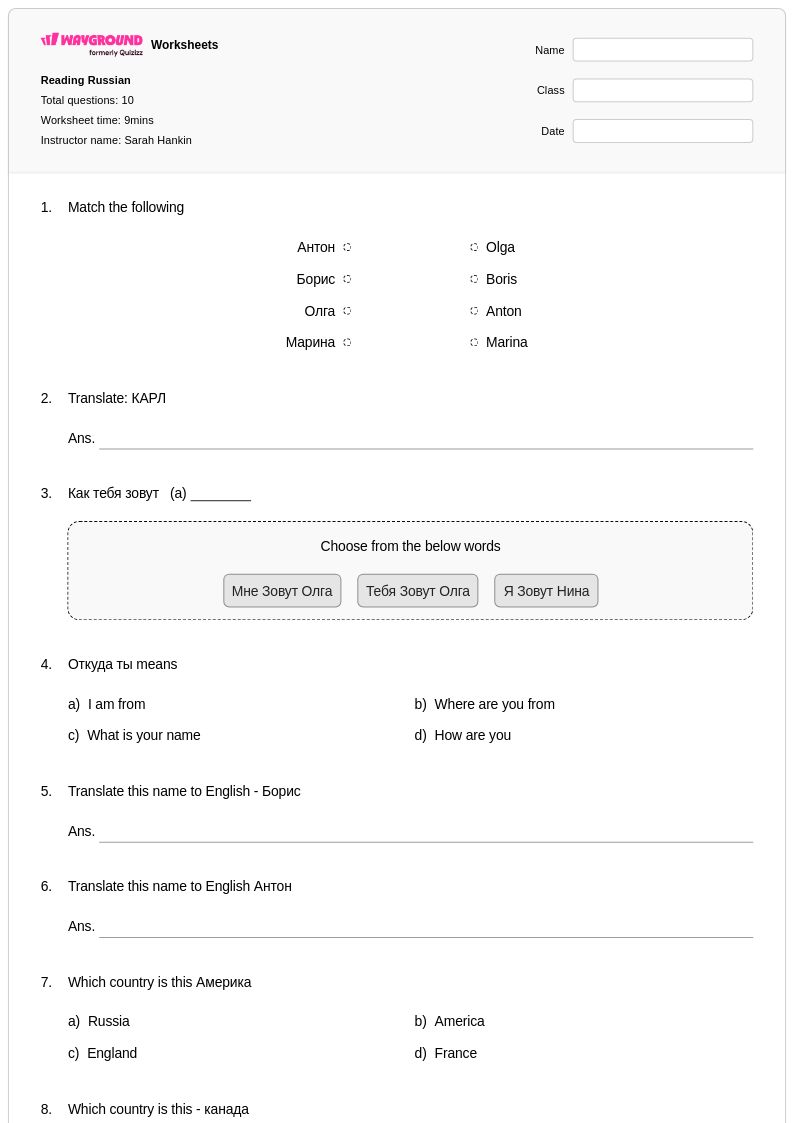
10 Q
1st - 5th
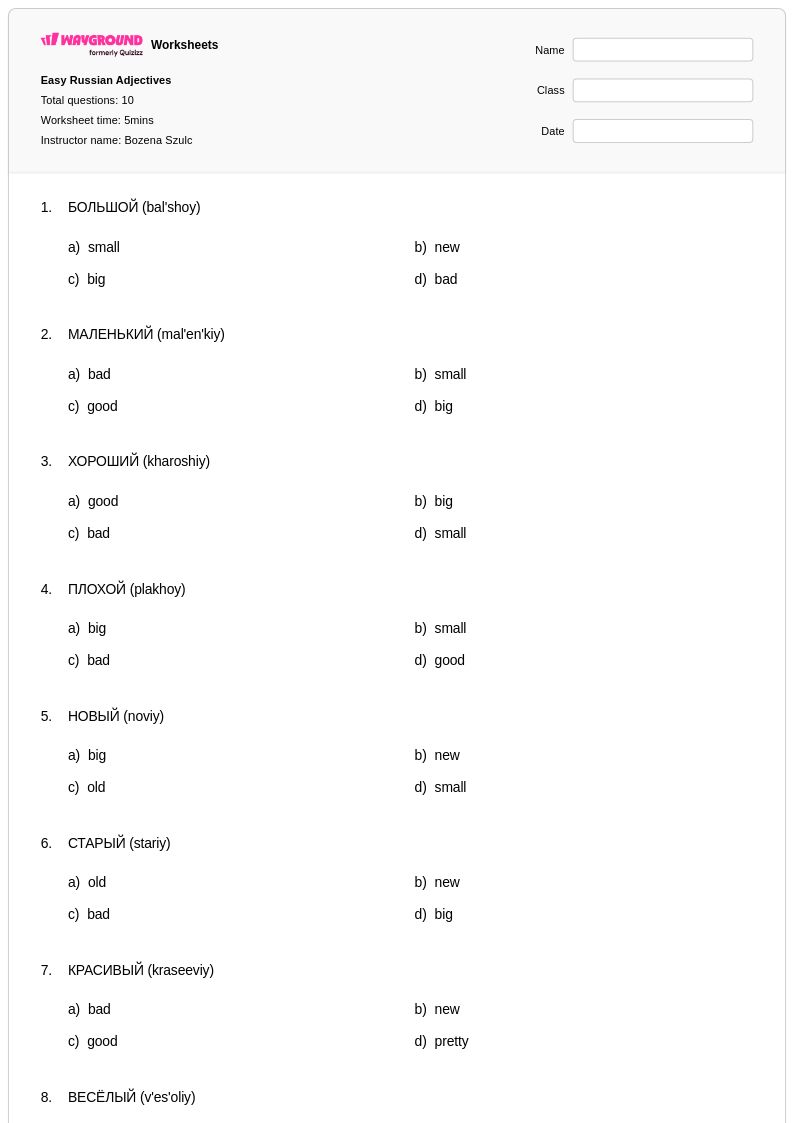
10 Q
1st
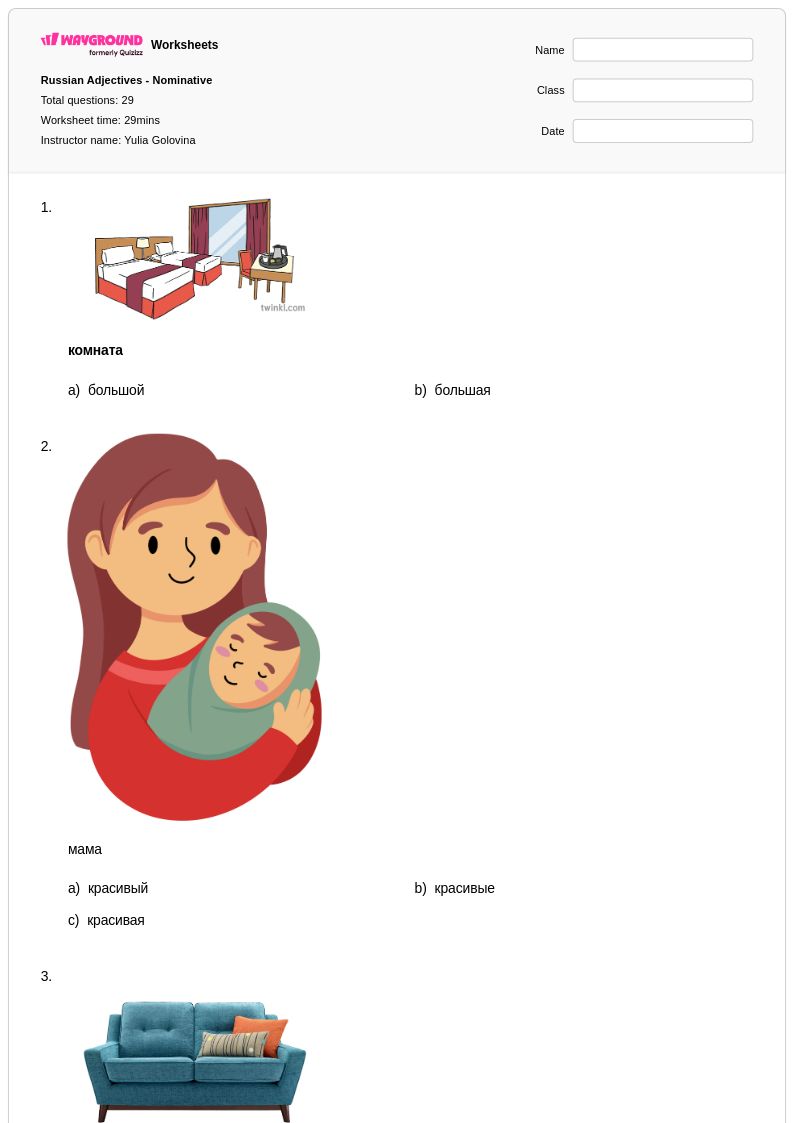
29 Q
1st - 5th
25 Q
1st - 5th
15 Q
1st - 5th
25 Q
1st - 12th
36 Q
1st
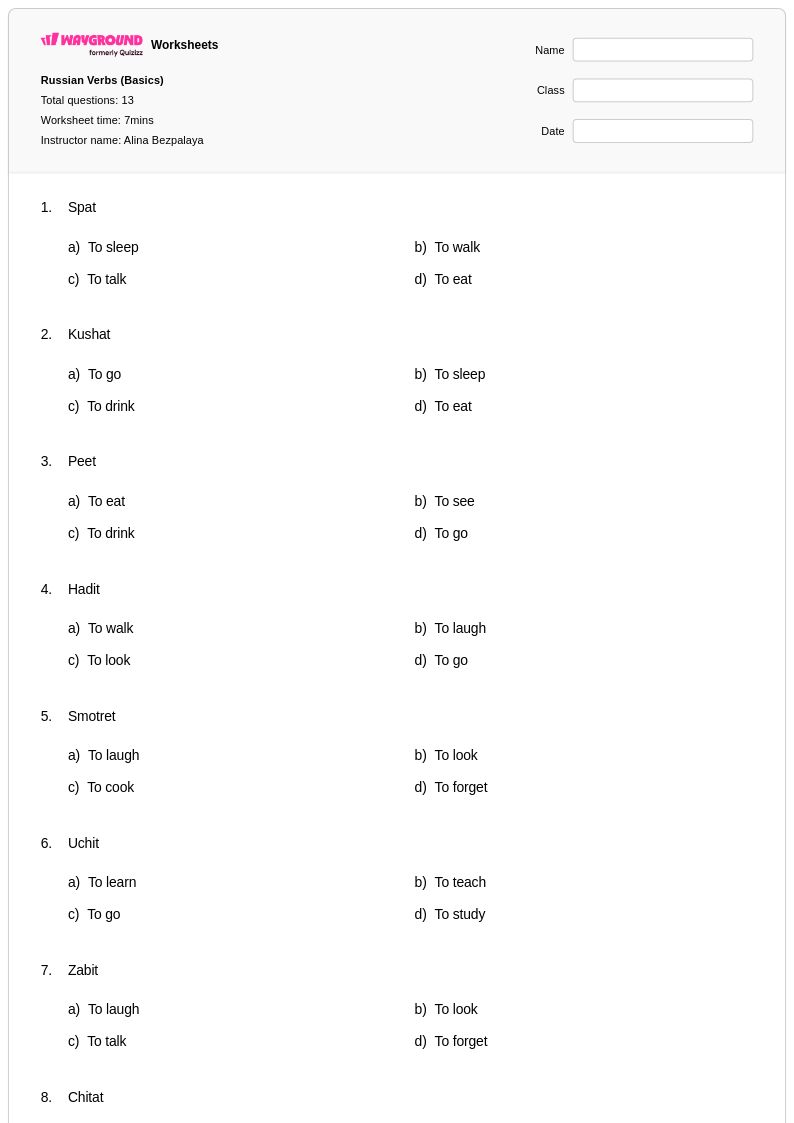
13 Q
1st - 5th
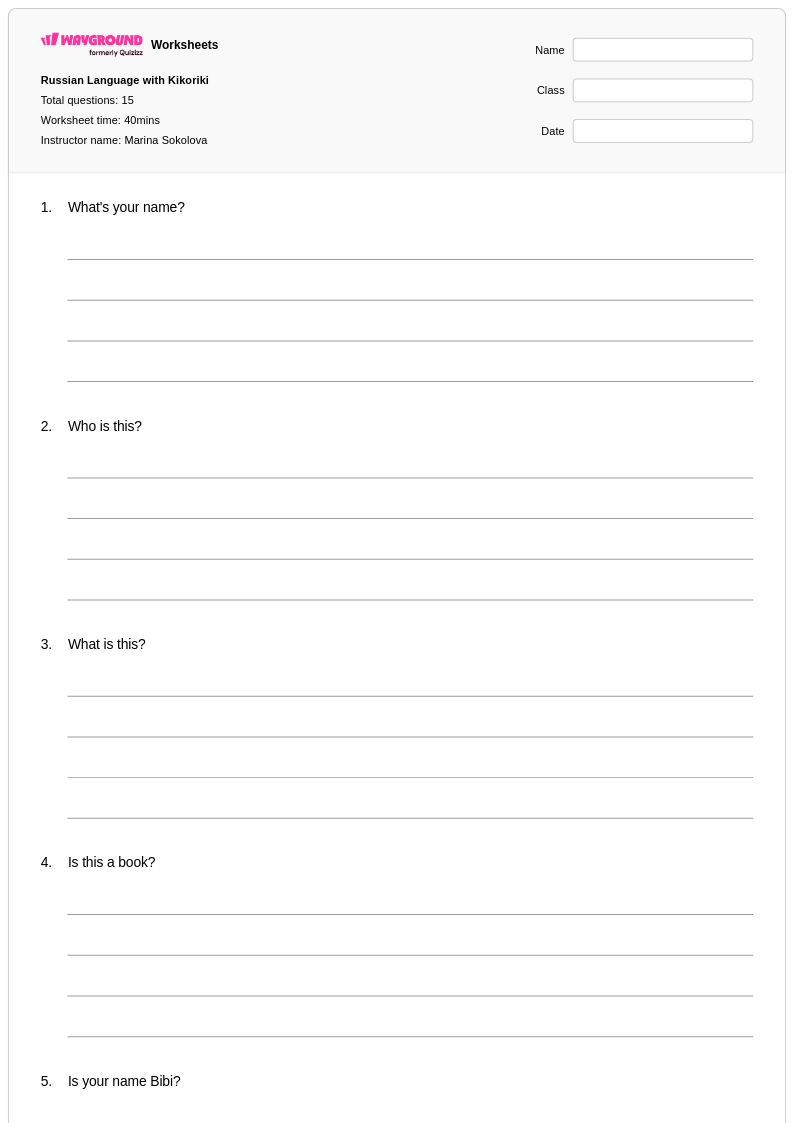
15 Q
1st - 5th
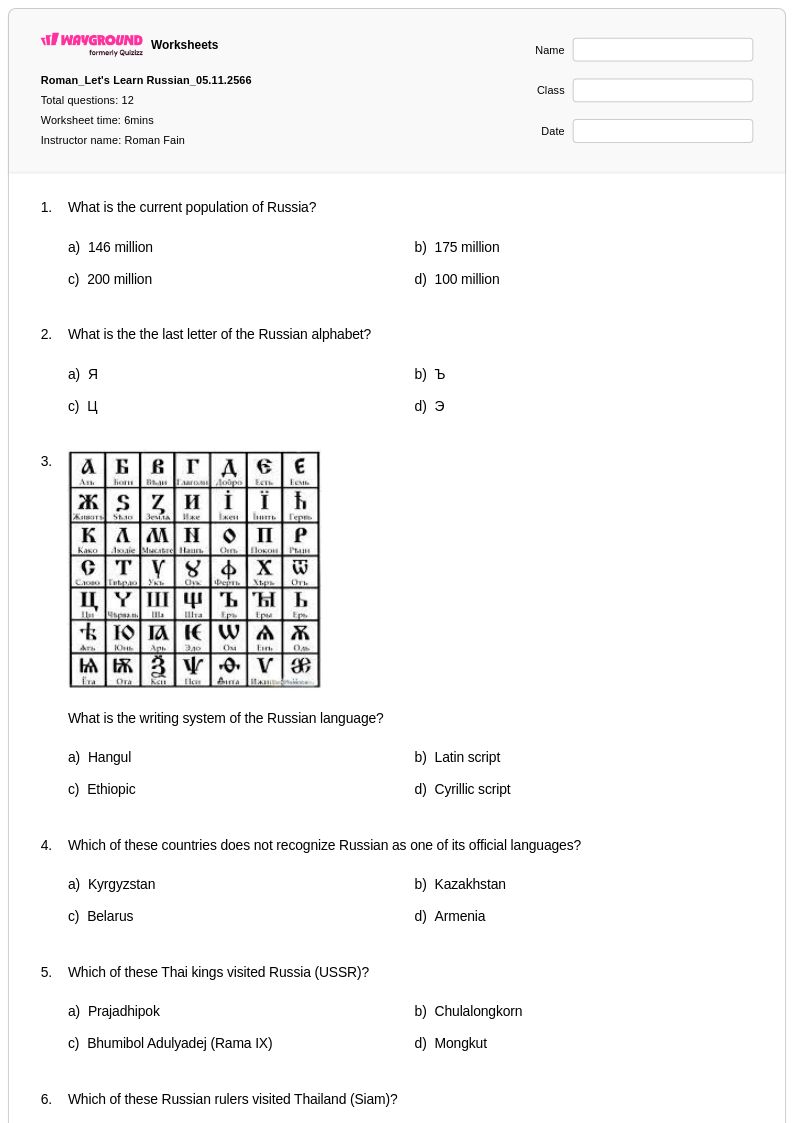
12 Q
1st - 5th
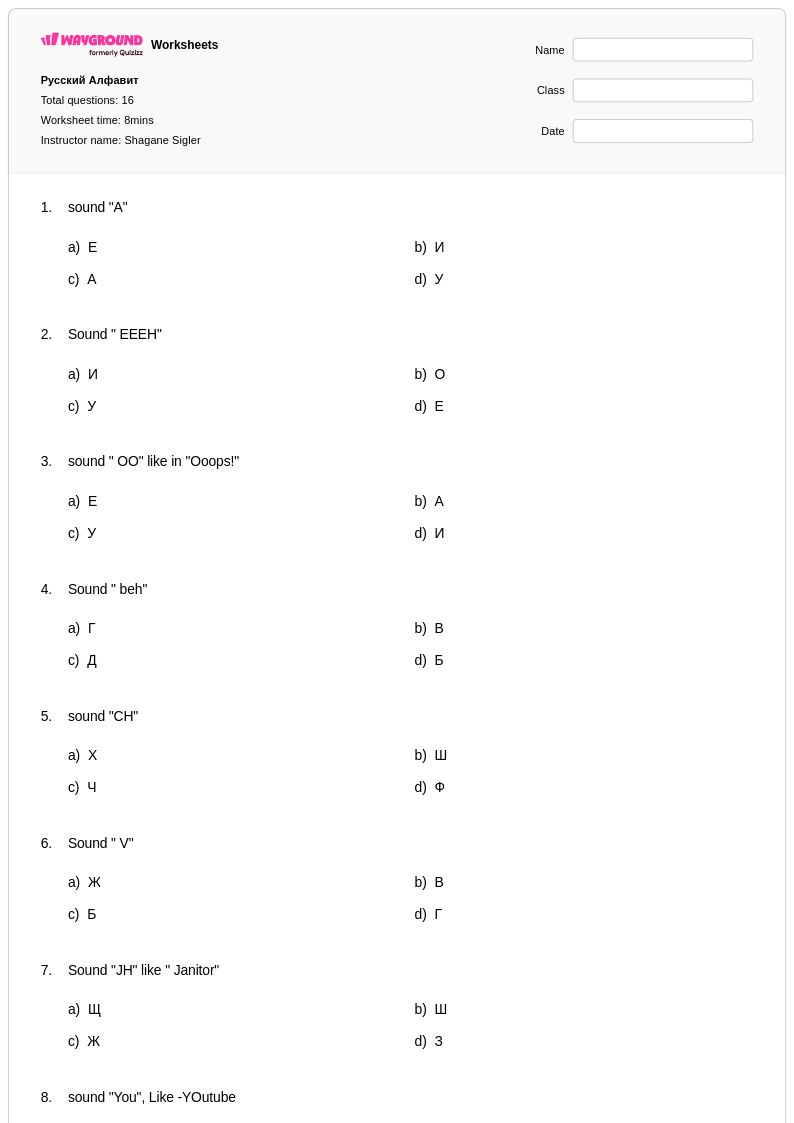
16 Q
1st - 12th
100 Q
1st - Uni
10 Q
1st - 2nd
24 Q
1st - 5th
10 Q
KG - 5th
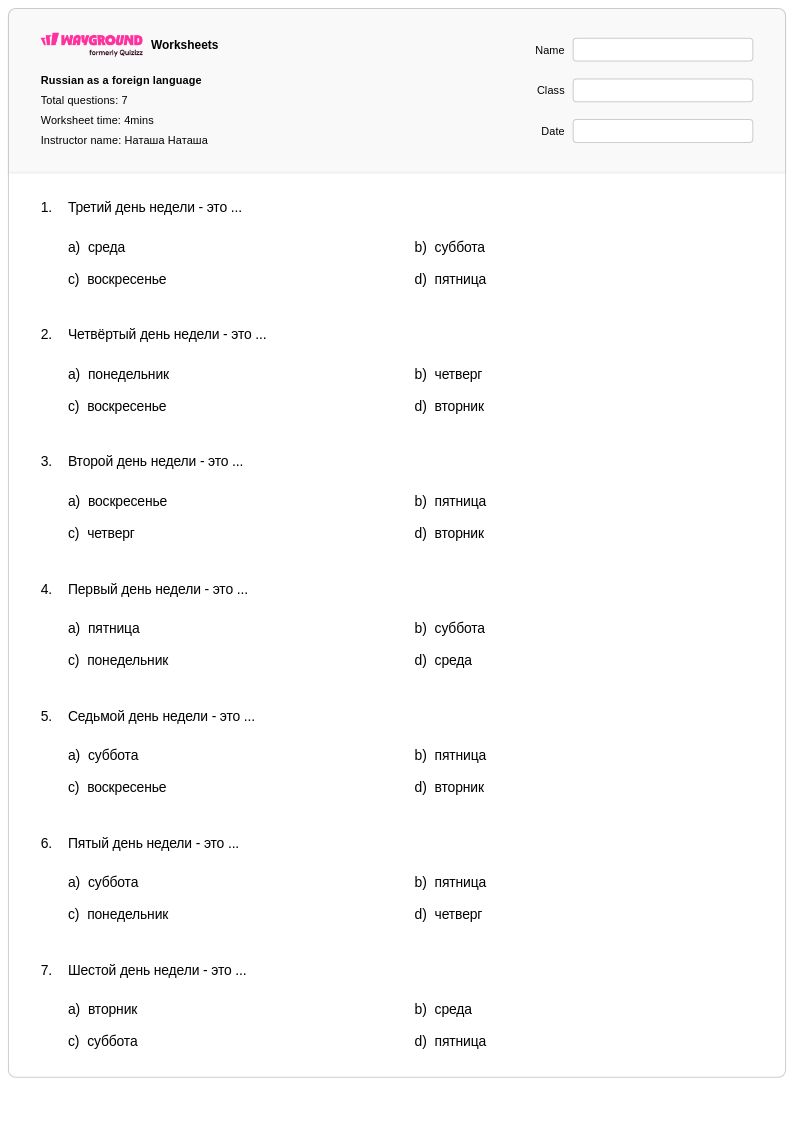
7 Q
1st
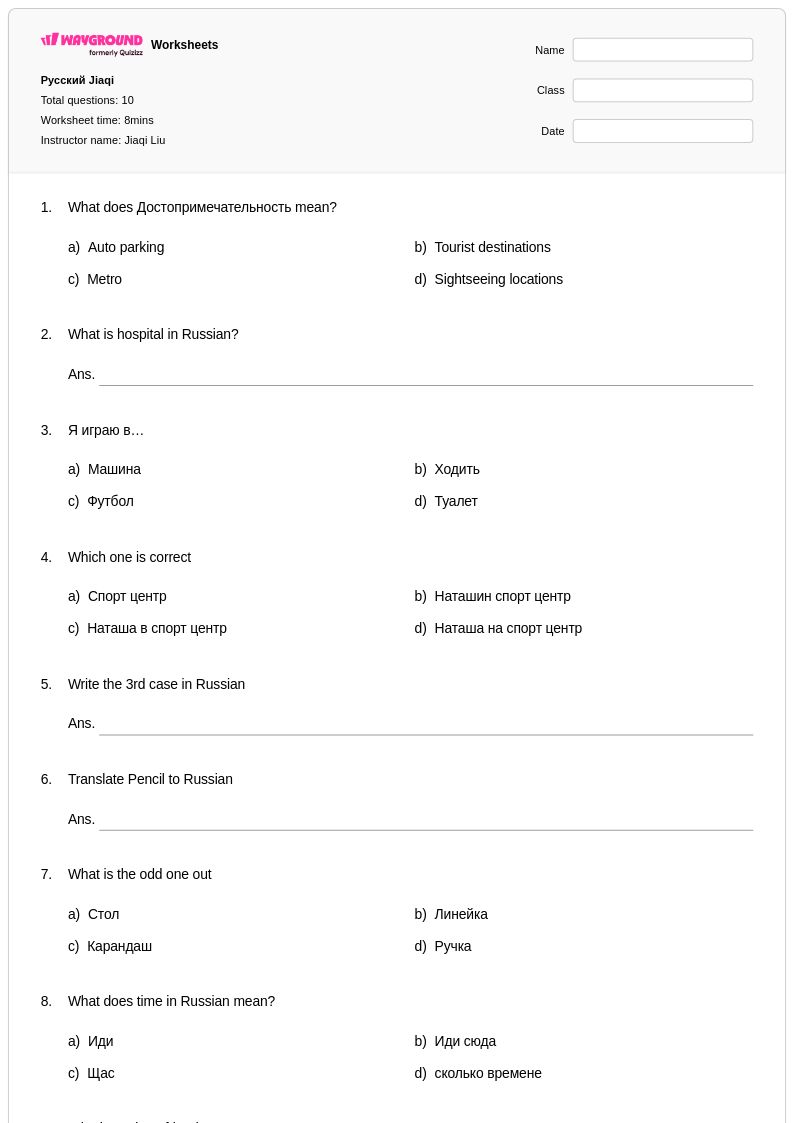
10 Q
KG - 6th
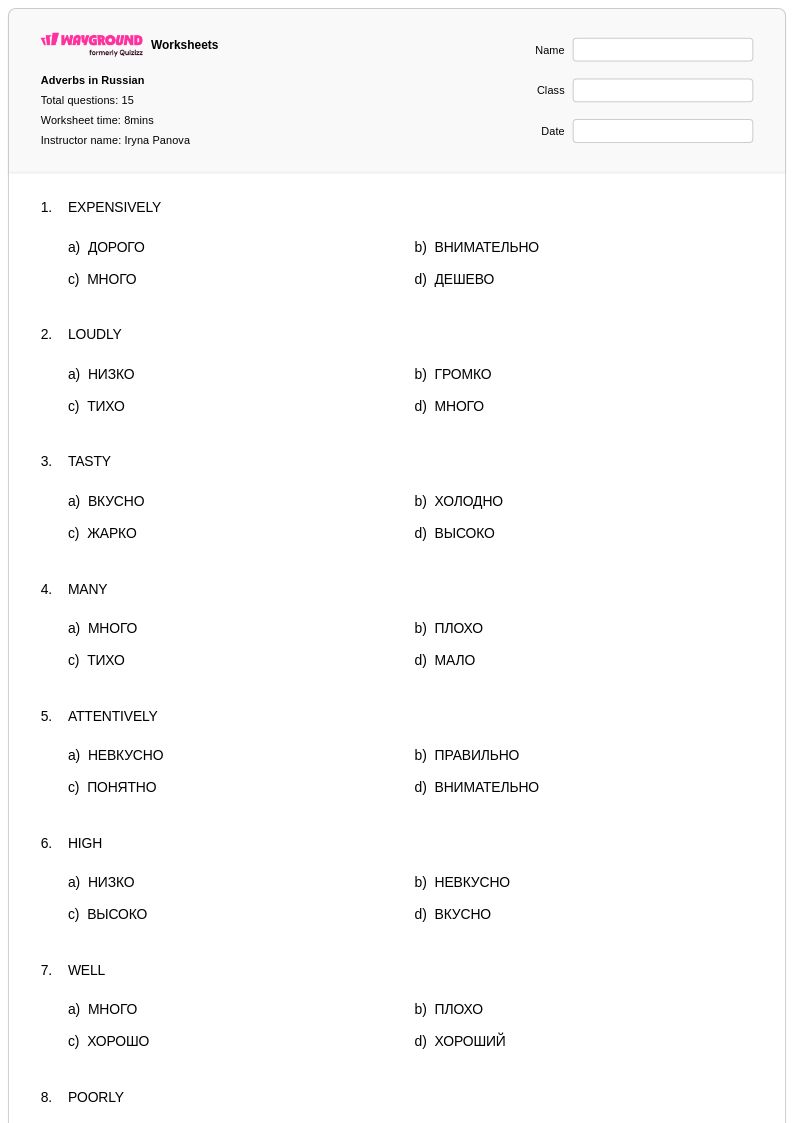
15 Q
KG - PD
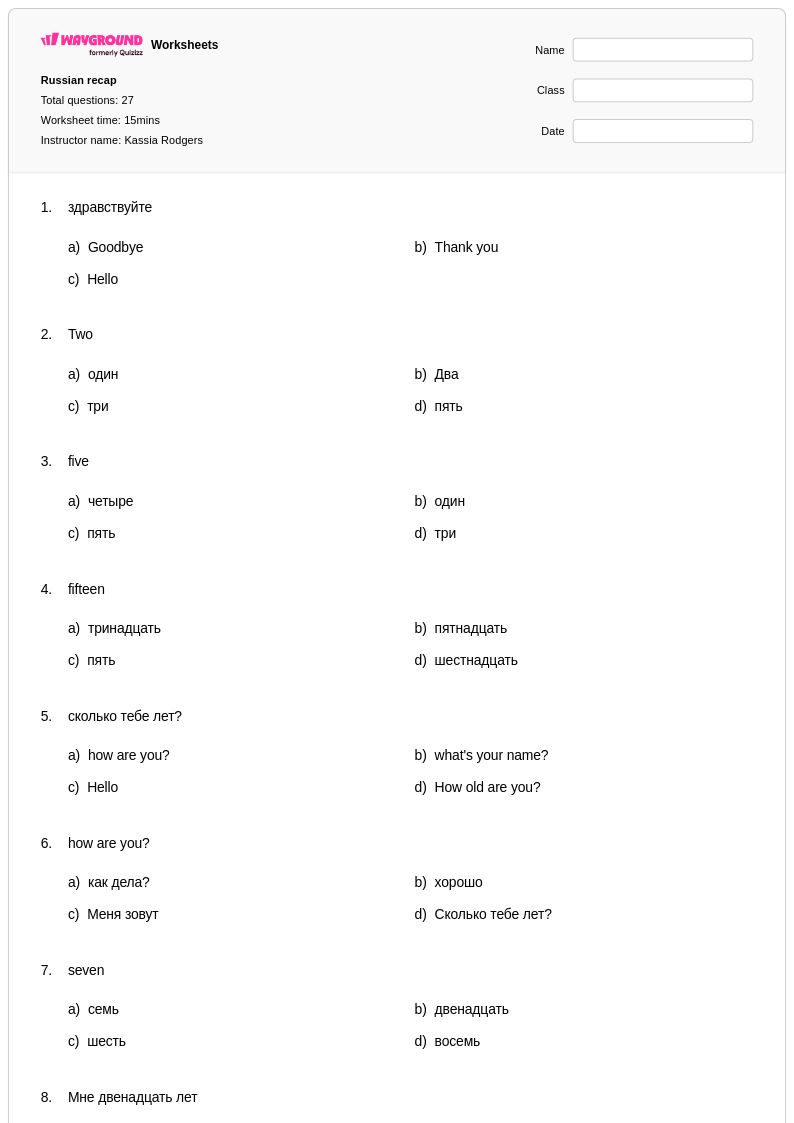
27 Q
1st - 4th
Explore Russian Worksheets by Grades
Explore Other Subject Worksheets for class 1
Explore printable Russian worksheets for Class 1
Russian language worksheets for Class 1 students available through Wayground (formerly Quizizz) provide an engaging foundation for young learners beginning their journey into this rich Slavic language. These carefully crafted educational materials introduce first-grade students to essential Russian basics including the Cyrillic alphabet, simple vocabulary words, basic pronunciation patterns, and fundamental greeting expressions. The worksheets strengthen critical early language acquisition skills such as letter recognition, sound-symbol correspondence, visual discrimination between Cyrillic and Latin characters, and initial speaking confidence. Each printable resource comes complete with answer keys to support both independent practice and guided instruction, while the free pdf format ensures accessibility for diverse classroom and home learning environments. These practice problems systematically build students' familiarity with Russian script and sounds through age-appropriate activities that make language learning enjoyable and memorable.
Wayground (formerly Quizizz) empowers educators with an extensive collection of teacher-created Russian language resources specifically designed for Class 1 instruction, drawing from millions of professionally developed materials that undergo continuous refinement and quality assessment. The platform's robust search and filtering capabilities allow teachers to quickly locate worksheets aligned with specific learning objectives and language proficiency standards, while built-in differentiation tools enable seamless customization for students with varying skill levels and learning needs. Available in both printable and digital formats including downloadable pdf versions, these versatile resources support comprehensive lesson planning, targeted remediation for struggling learners, enrichment opportunities for advanced students, and consistent skill practice across diverse instructional settings. Teachers benefit from the flexibility to modify content, track student progress, and seamlessly integrate Russian language instruction into their broader world languages curriculum while maintaining alignment with grade-appropriate developmental expectations.
FAQs
How do I teach the Cyrillic alphabet to beginners?
What exercises help students practice Russian verb conjugations?
What mistakes do students commonly make when learning Russian grammar?
How can I differentiate Russian language instruction for students at different proficiency levels?
How do I use Russian worksheets from Wayground in my classroom?
How do I help students build Russian vocabulary effectively?