Free Printable Safety Rules and Symbols Worksheets for Class 5
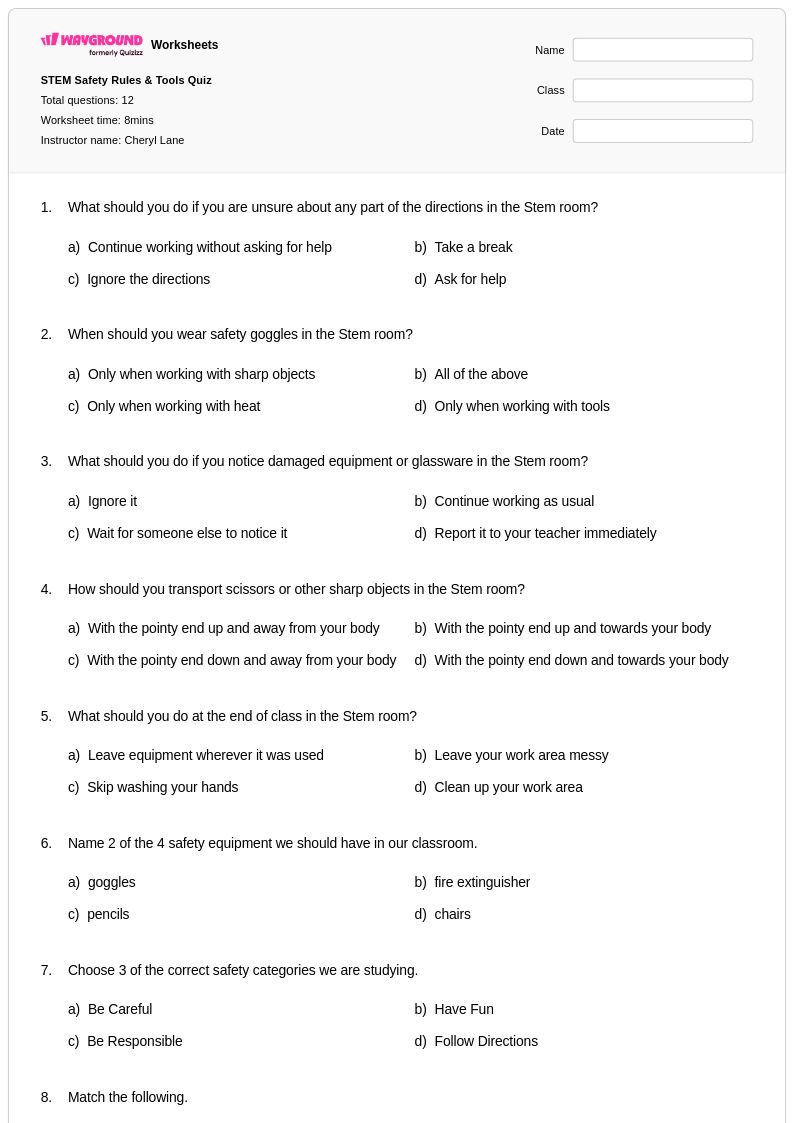
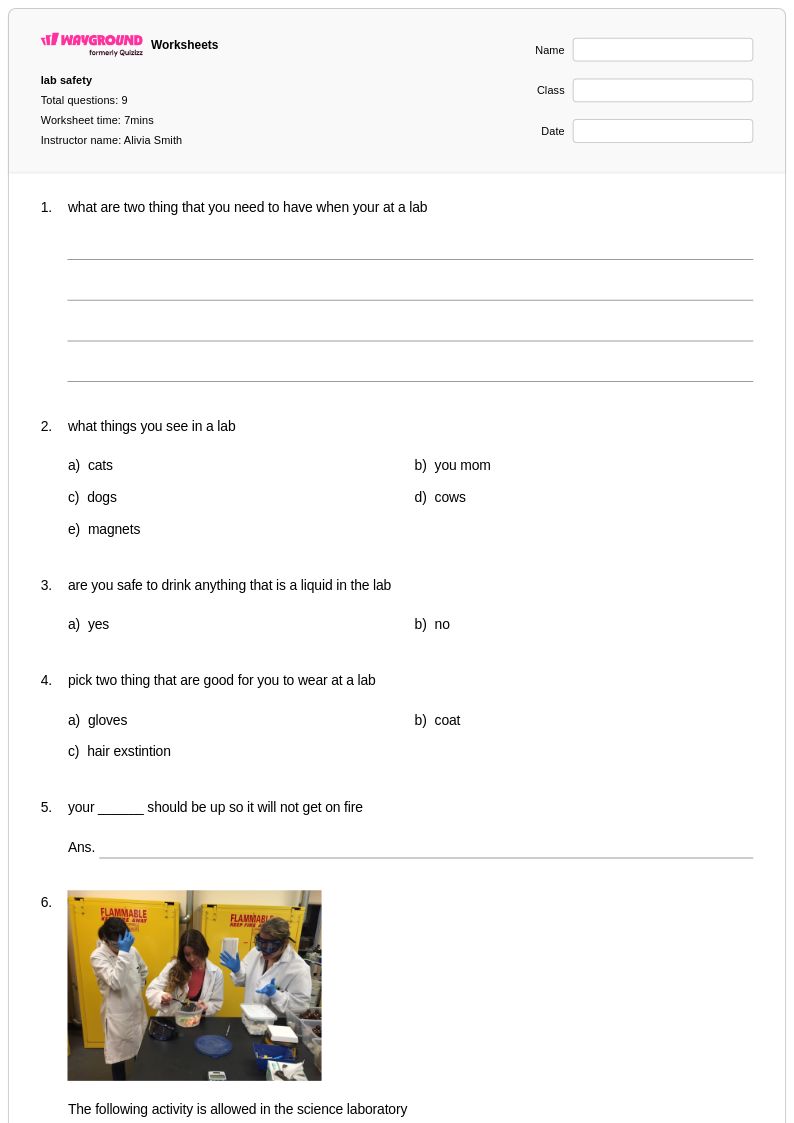
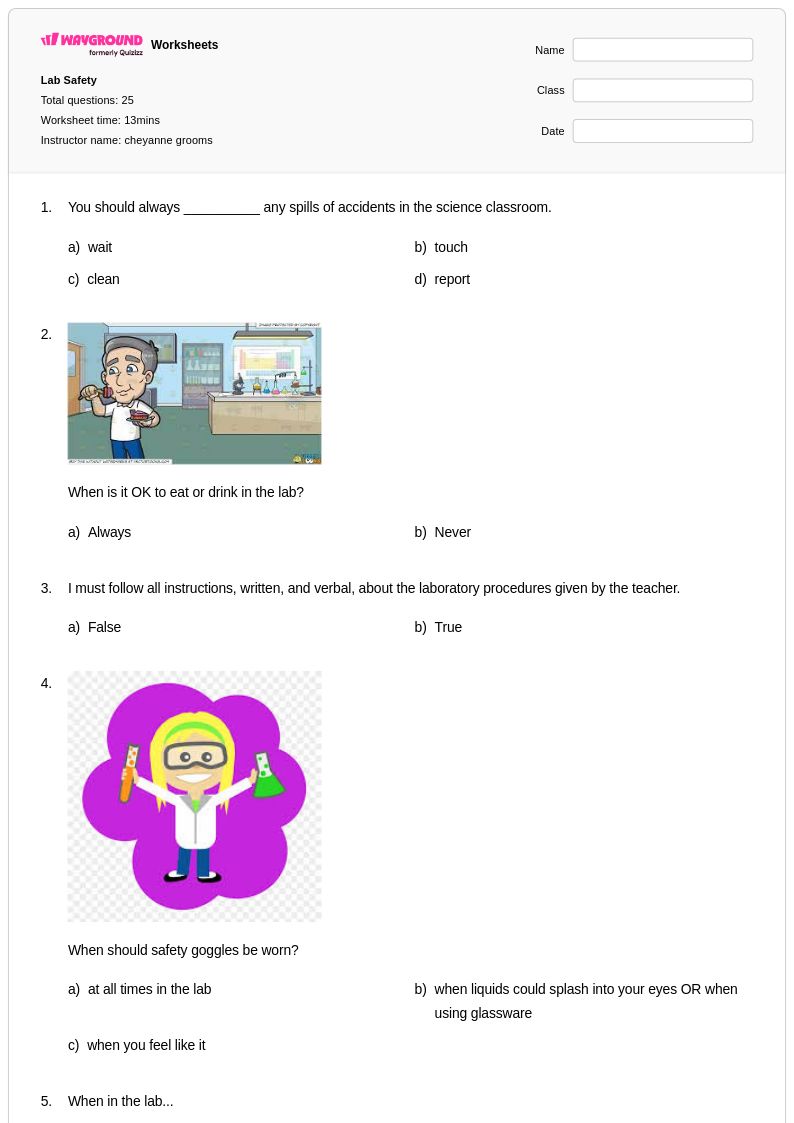
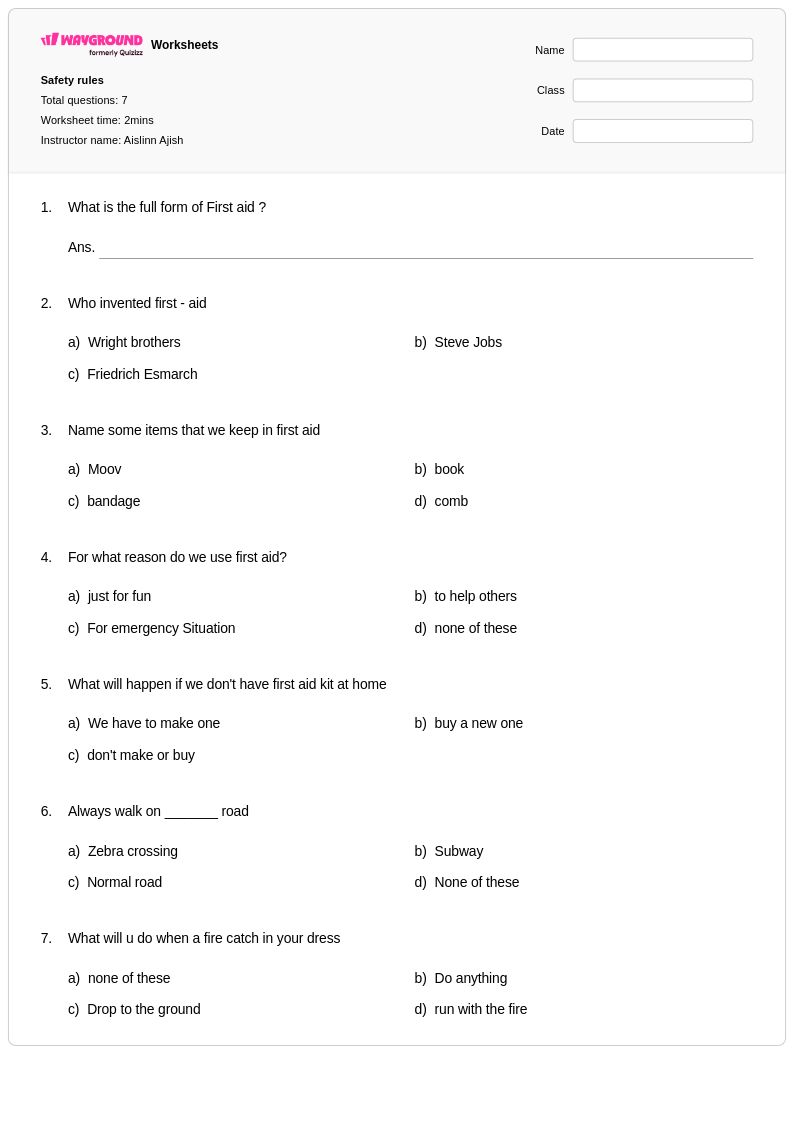
Class 5 safety rules and symbols printables help students master essential laboratory and engineering safety practices through engaging worksheets, practice problems, and answer keys available as free PDF downloads.
Explore printable Safety Rules and Symbols worksheets for Class 5
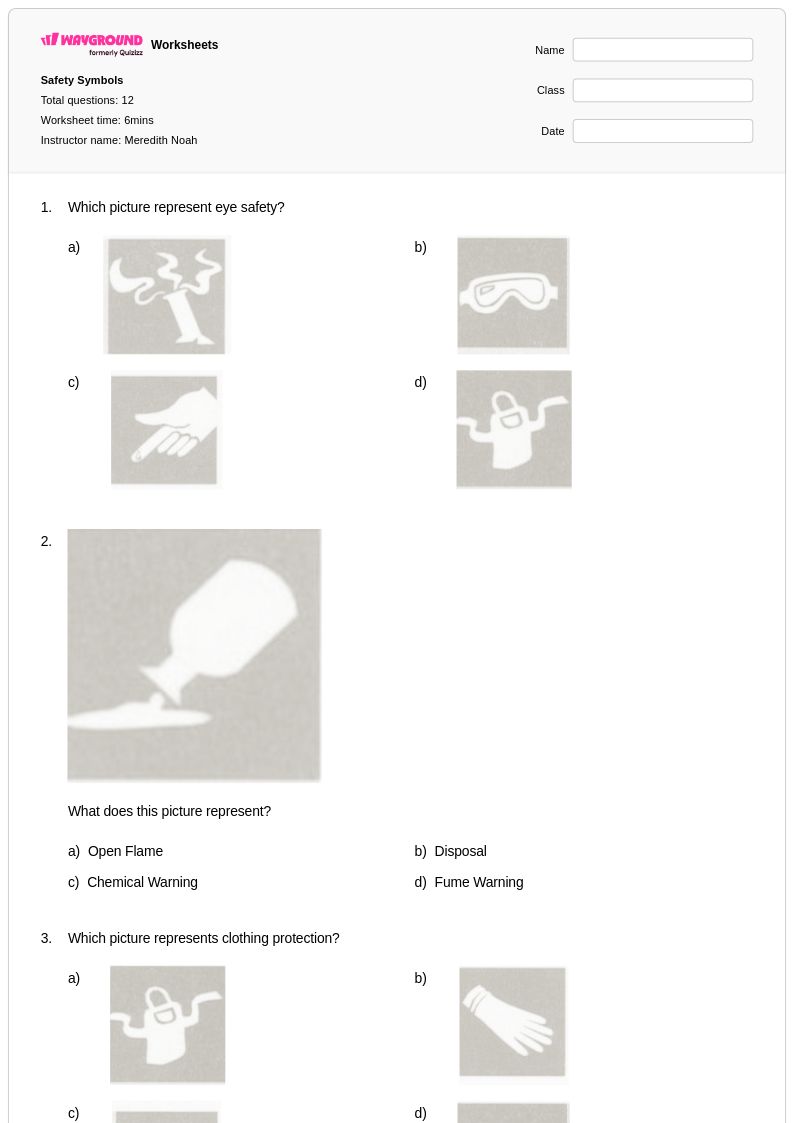
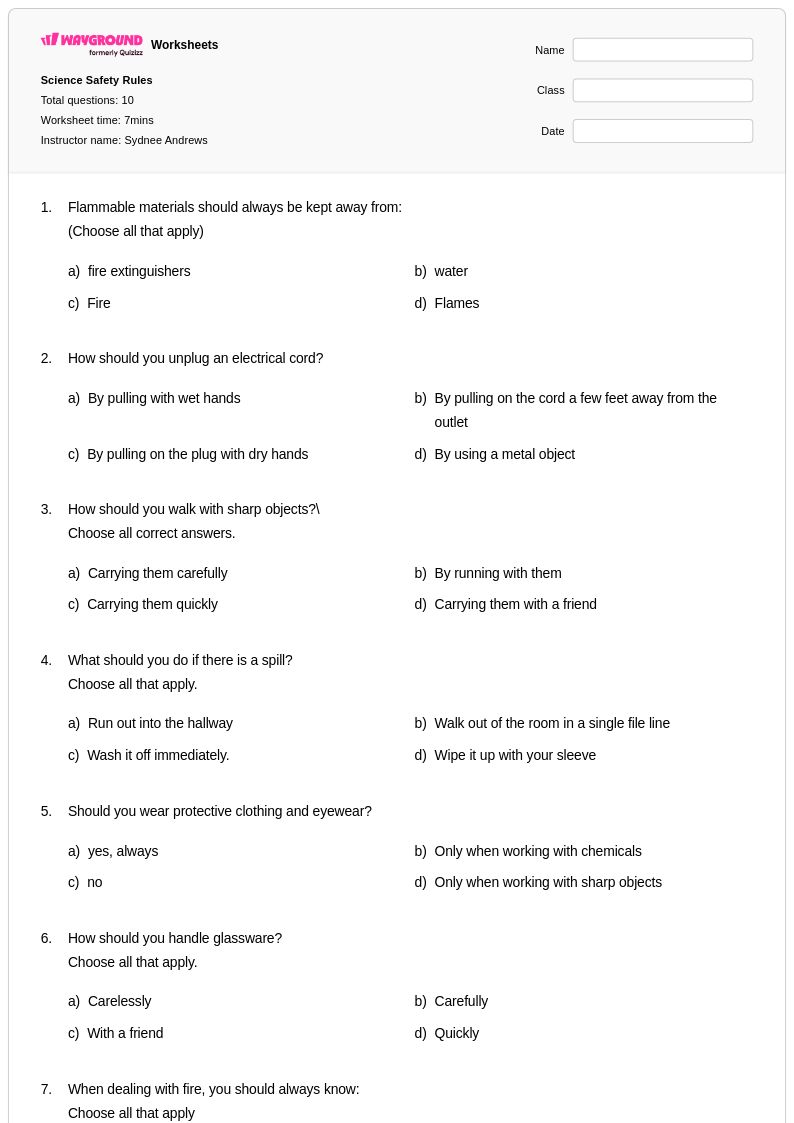
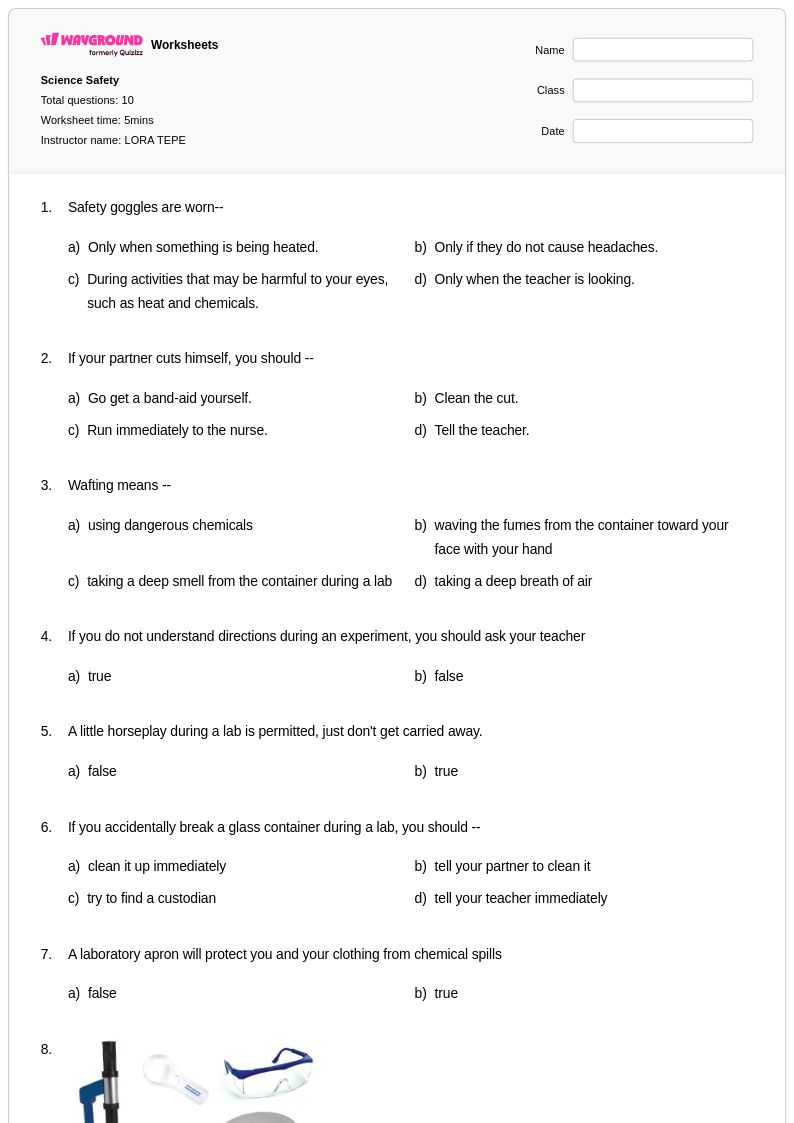
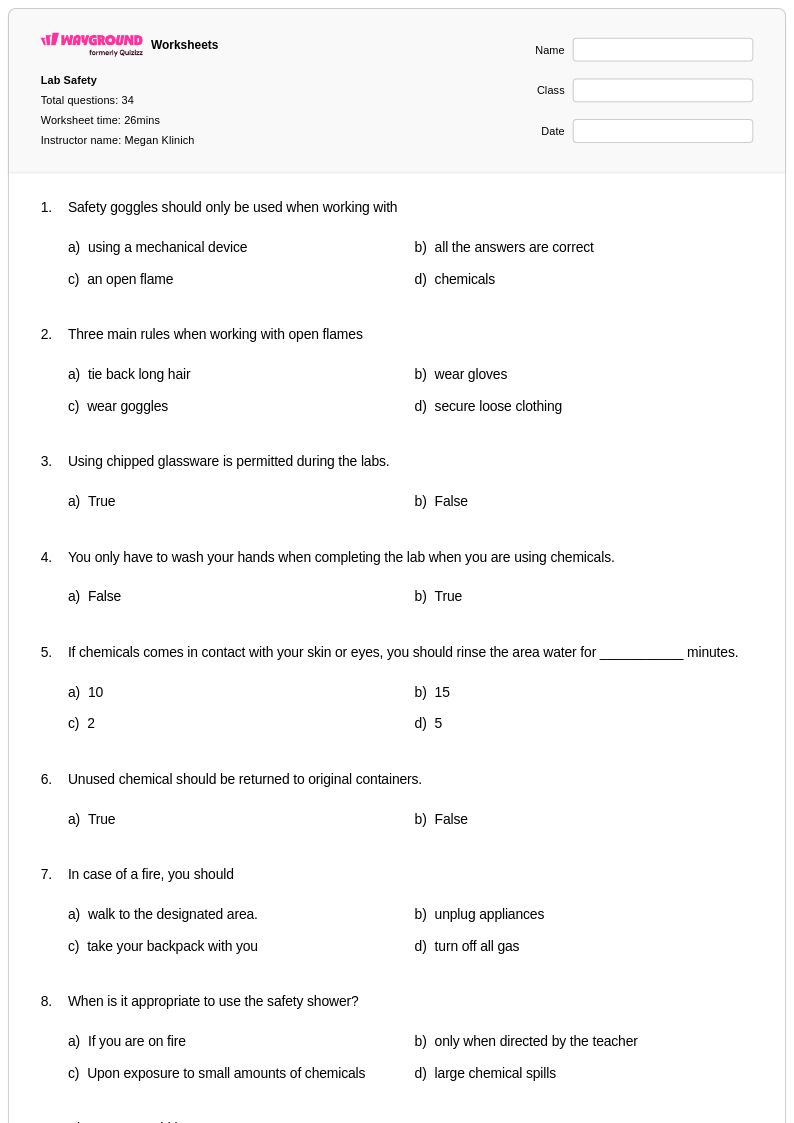
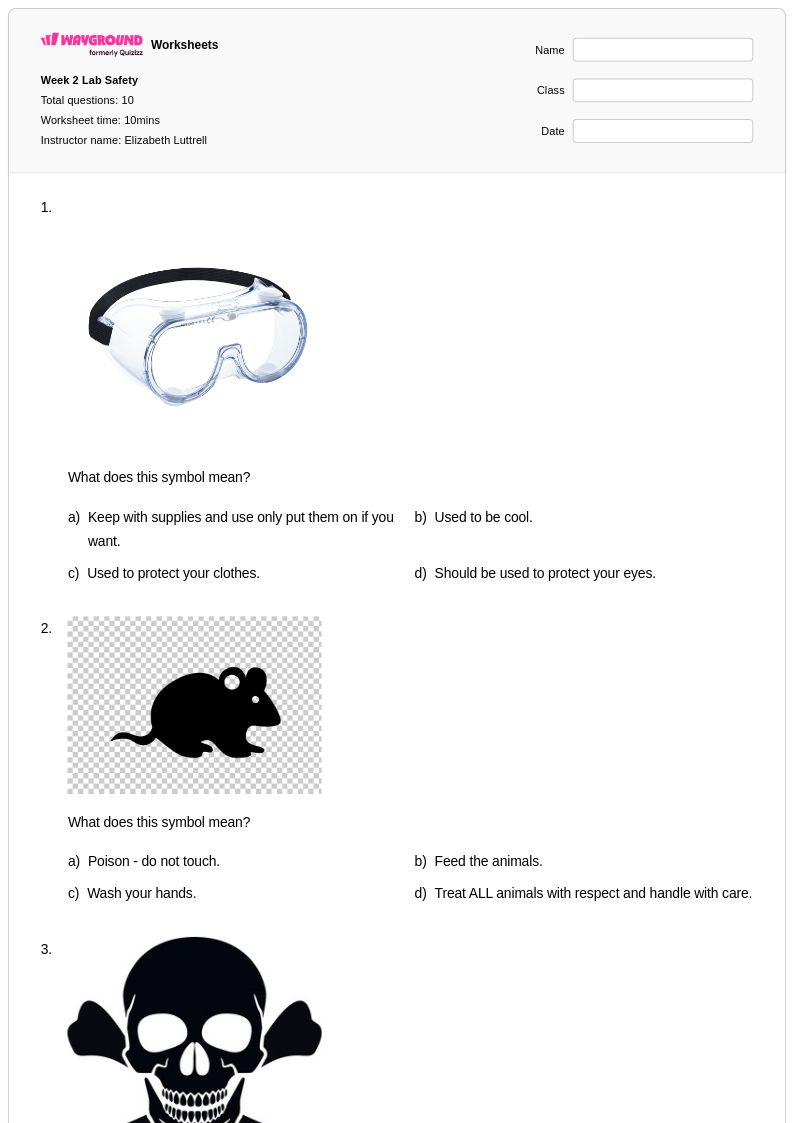
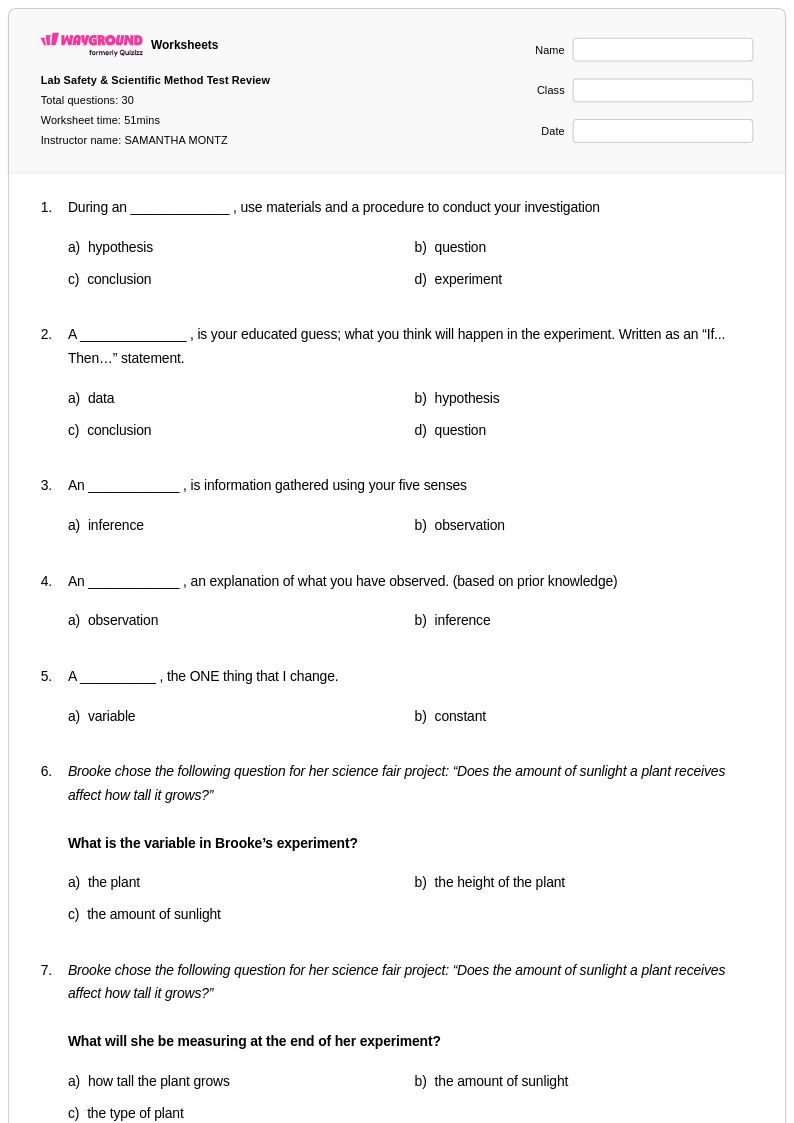
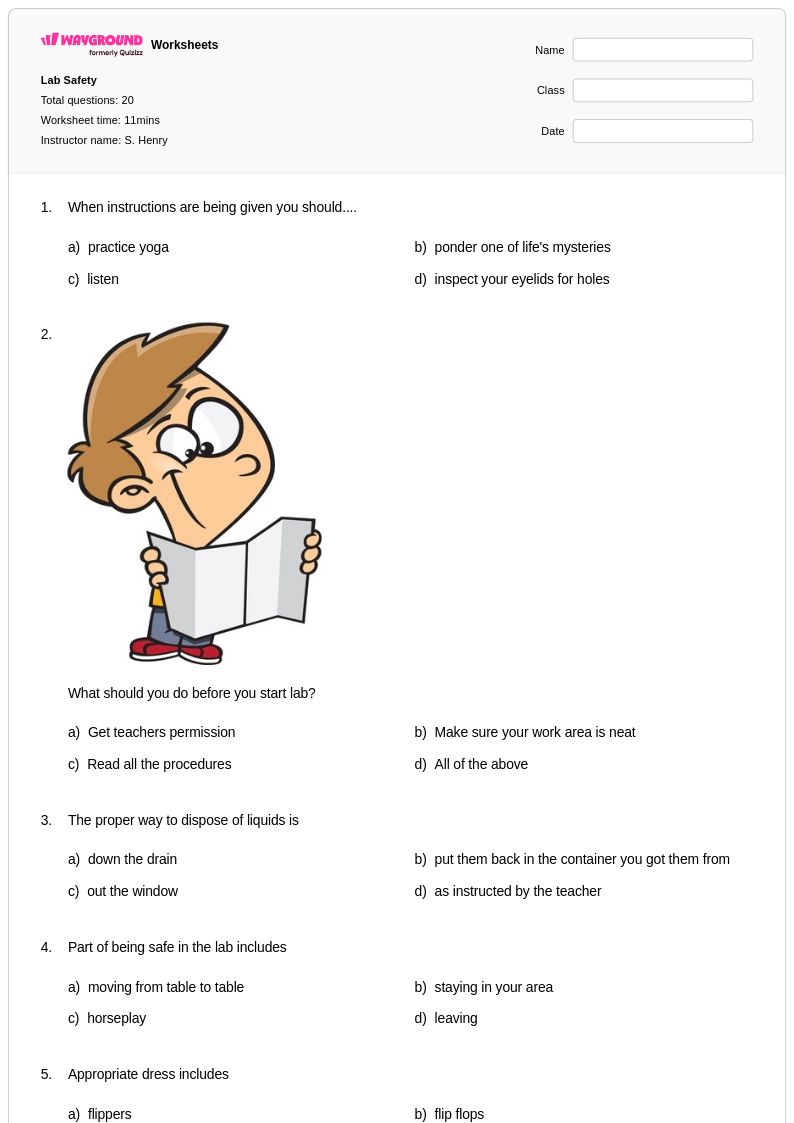
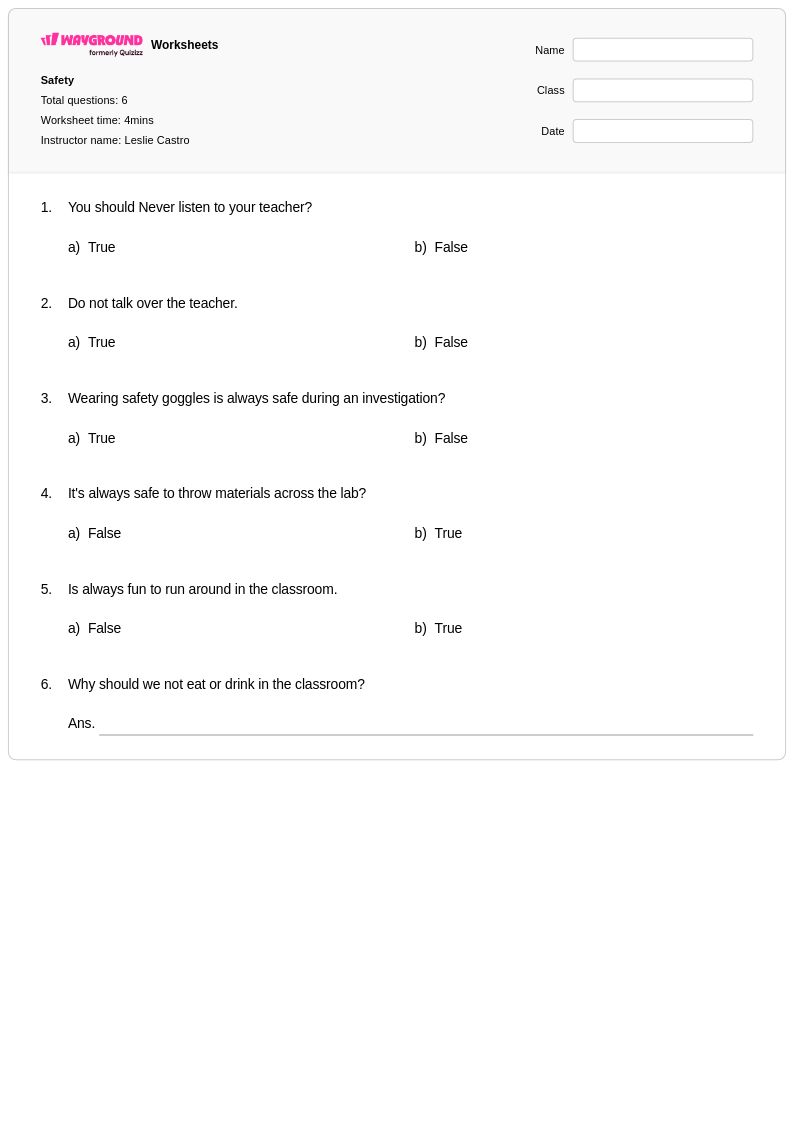
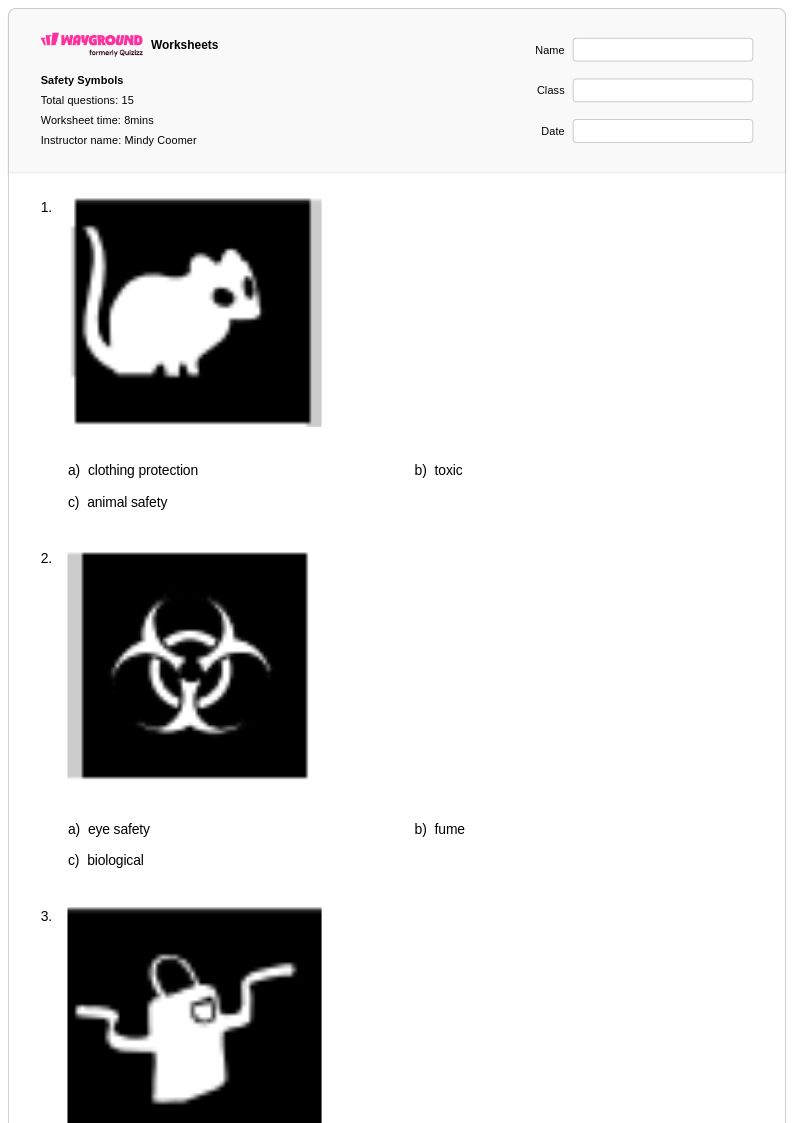
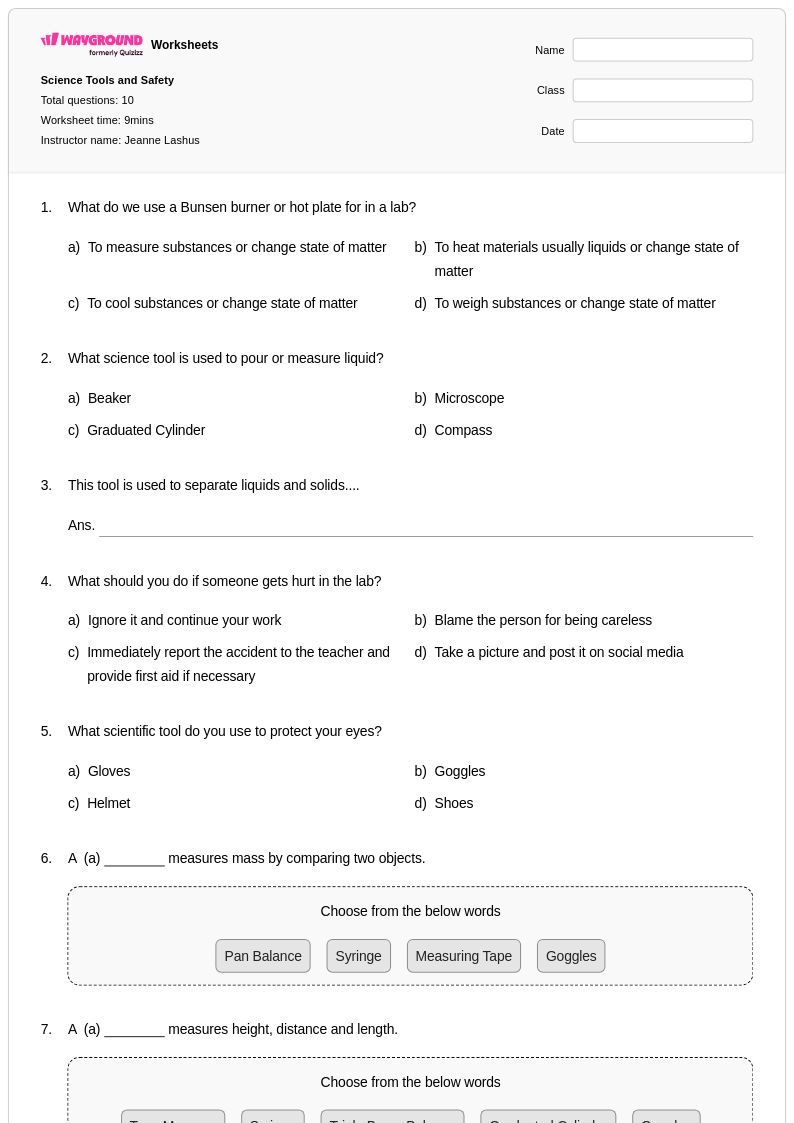
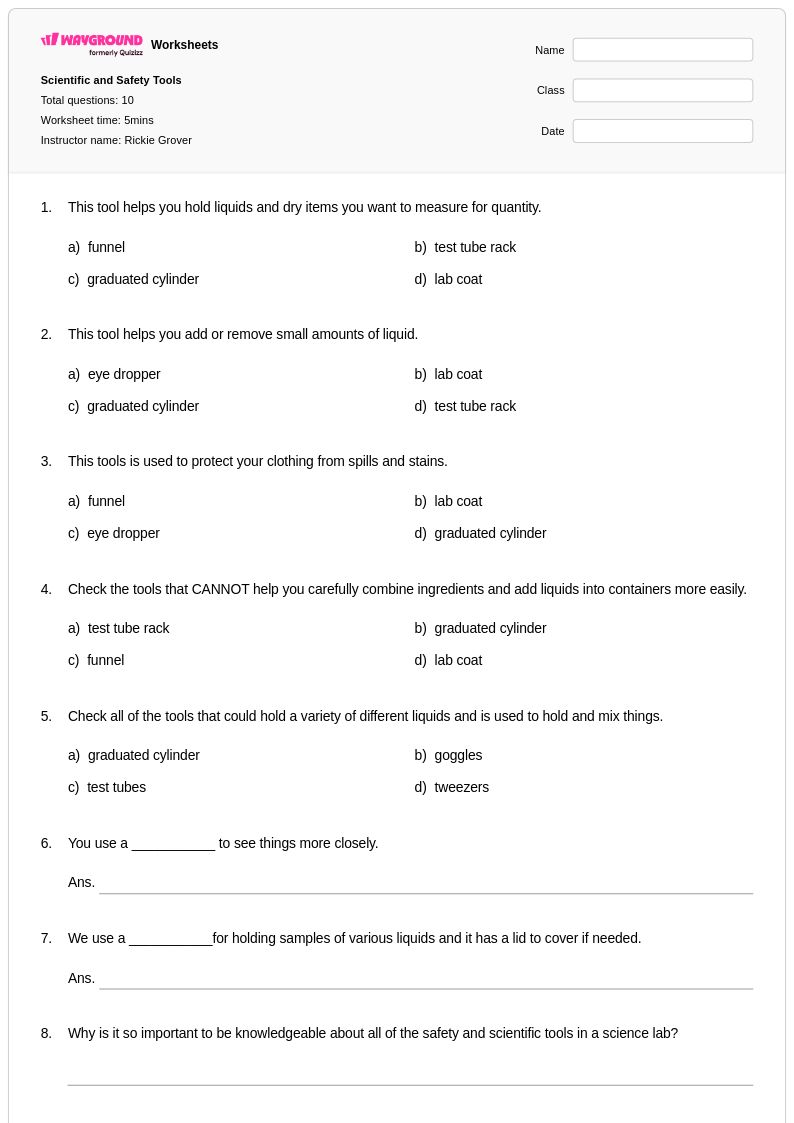
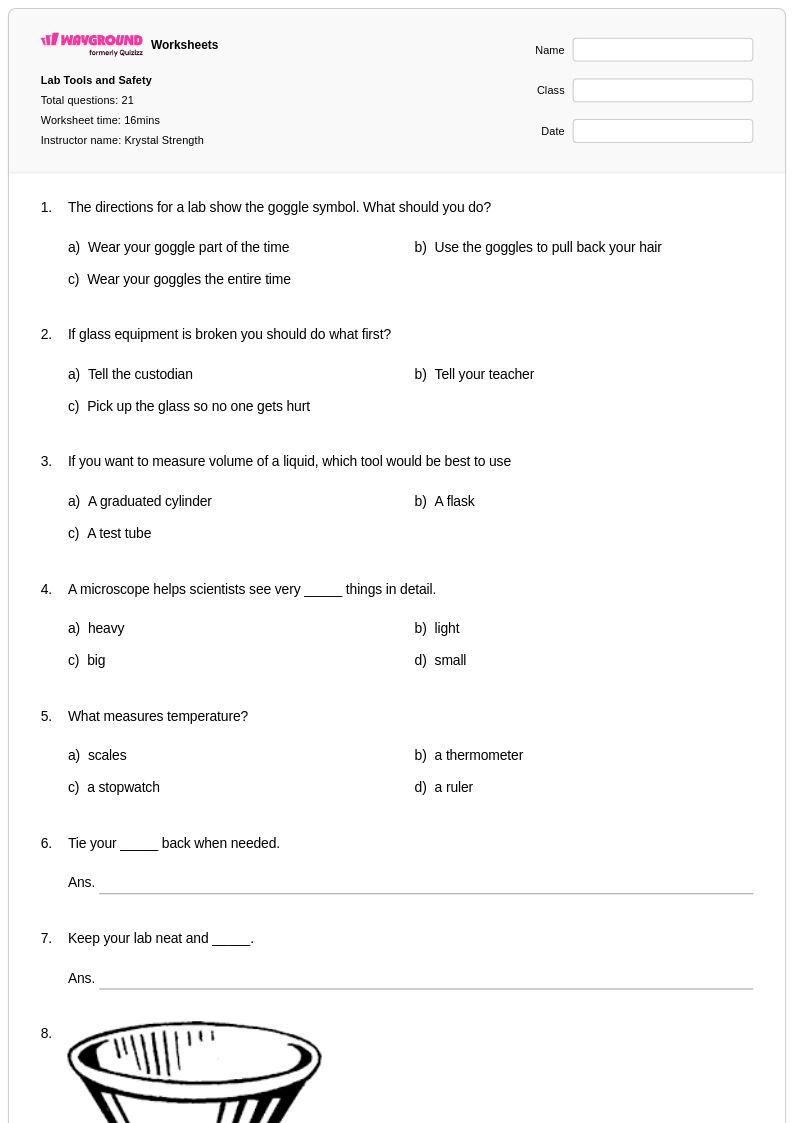
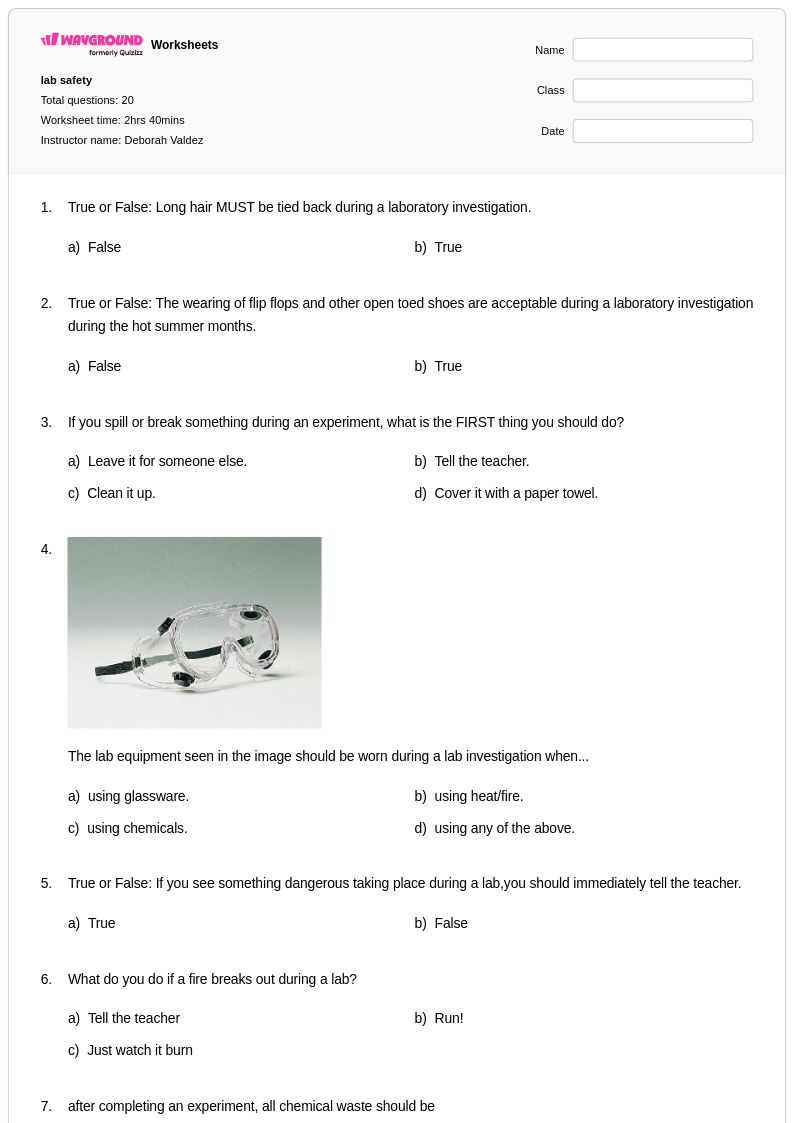
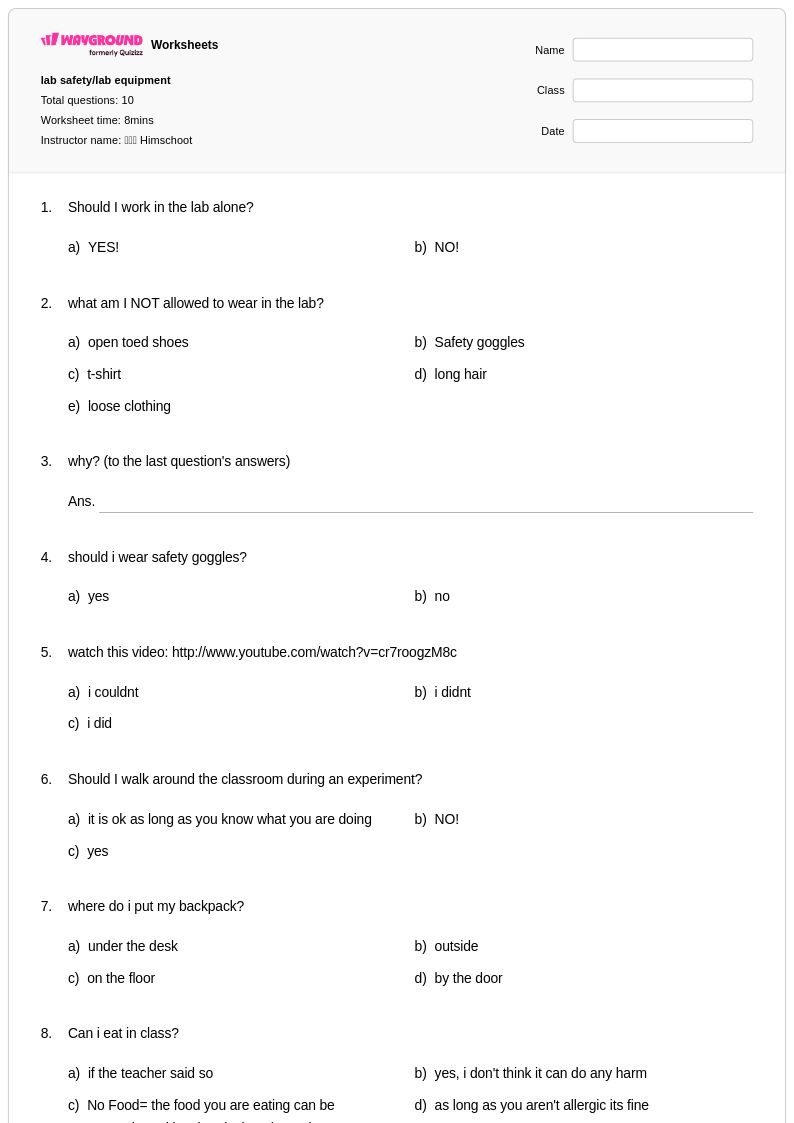
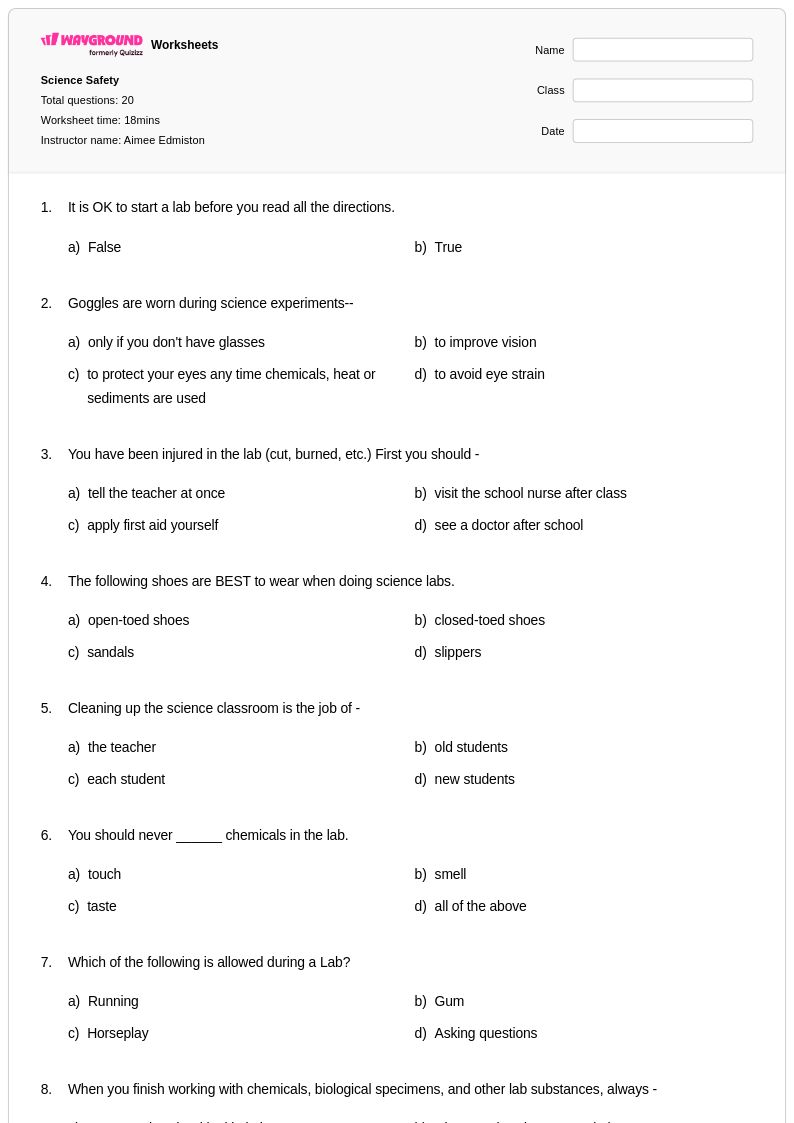
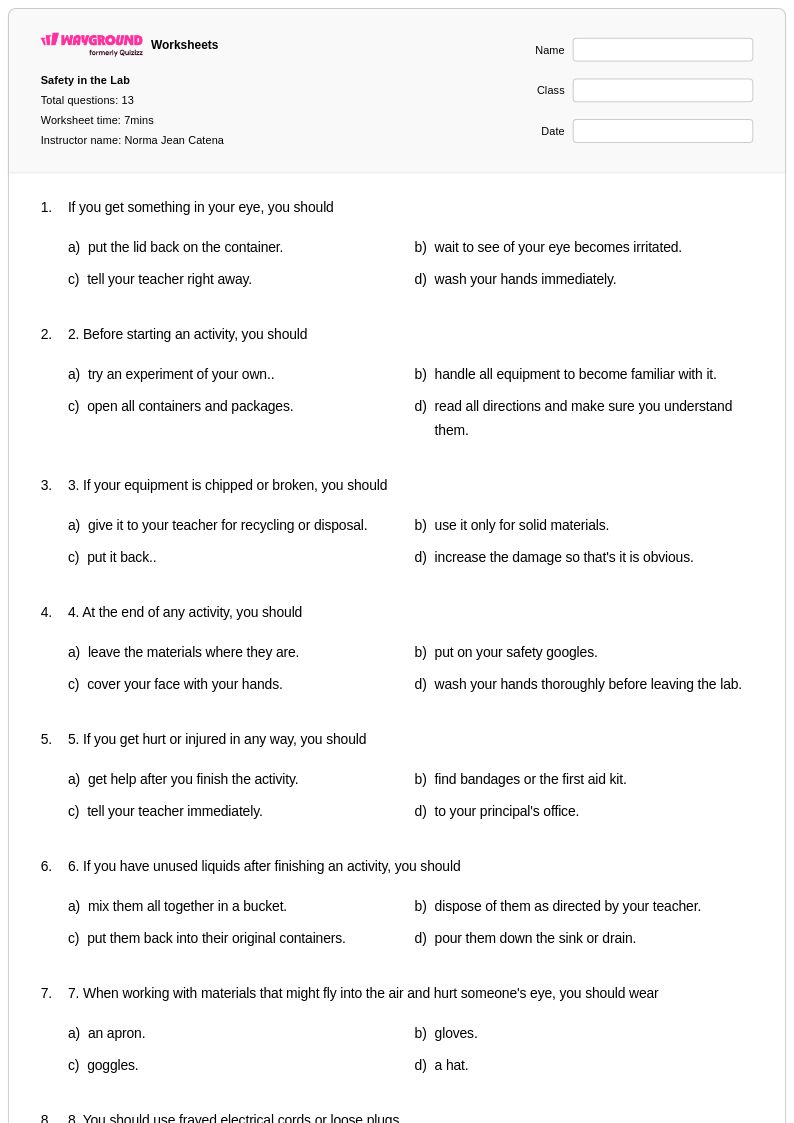
Safety Rules and Symbols worksheets for Class 5 students available through Wayground provide essential foundation-building exercises that help young scientists develop critical laboratory and field safety awareness. These comprehensive printables focus on teaching students to recognize universal safety symbols, understand their meanings, and apply appropriate safety protocols in scientific investigations. The worksheets strengthen key skills including hazard identification, risk assessment, and proper safety procedure implementation through engaging practice problems that mirror real-world scientific scenarios. Each resource includes detailed answer keys and comes in convenient PDF format, making it easy for educators to integrate safety education seamlessly into their engineering and science practices curriculum while ensuring students build confidence in following established safety protocols.
Wayground supports teachers with an extensive collection of millions of teacher-created safety education resources that can be easily located through robust search and filtering capabilities designed specifically for Class 5 science instruction. The platform's safety rules and symbols worksheets align with established science education standards and offer powerful differentiation tools that allow educators to customize content complexity based on individual student needs and learning objectives. Teachers can access these materials in both printable PDF formats for traditional classroom use and digital formats for interactive learning experiences, providing the flexibility needed for effective lesson planning, targeted skill remediation, and enrichment activities. This comprehensive approach ensures that educators have the tools necessary to build strong safety foundations while meeting diverse classroom requirements and supporting varied learning styles through adaptable practice opportunities.
FAQs
How do I teach laboratory safety rules and symbols to students?
Start by introducing universal hazard symbols in context, connecting each symbol to a real-world or lab scenario so students understand not just the image but the risk it communicates. Move from recognition to application by having students identify appropriate safety responses for given symbols or situations. Reinforcing safety protocols through repeated, low-stakes practice, such as worksheet-based identification tasks, helps build the automatic recognition students need before entering a lab setting.
What exercises help students practice identifying safety symbols?
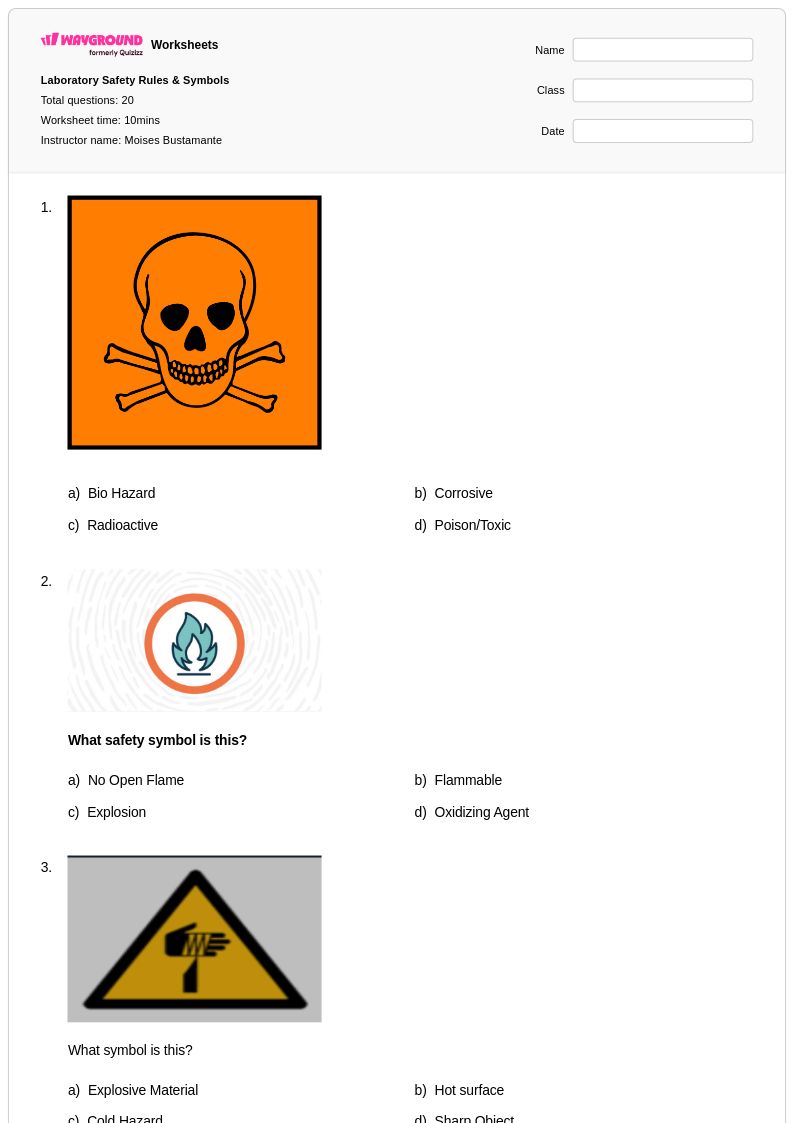
Effective practice exercises include symbol-matching tasks where students pair hazard icons with their correct meanings, scenario-based questions that ask students to identify which safety symbol applies to a given situation, and error-analysis problems where students spot incorrectly applied safety measures. These formats push students beyond memorization and require them to interpret and apply safety knowledge, which is the skill that matters most in an actual lab or field environment.
What mistakes do students commonly make when learning safety rules and symbols?
The most common error is treating safety symbols as interchangeable or conflating similar-looking icons, such as confusing the biohazard symbol with the radiation symbol. Students also frequently misapply personal protective equipment (PPE) requirements, selecting goggles or gloves based on habit rather than the specific hazard indicated. A third common misconception is assuming that safety symbols are only relevant in formal laboratory settings, rather than understanding they apply across science and engineering environments.
How can I differentiate safety rules and symbols instruction for students with different learning needs?
For students who need additional support, reduce the number of symbols introduced at one time and pair each with a clear, plain-language explanation before asking for independent identification. On Wayground, teachers can enable Read Aloud so questions and symbol descriptions are read to students who benefit from audio support, and Reduced Answer Choices to lower cognitive load for students who find multi-option tasks overwhelming. Extended time settings can also be applied individually, ensuring students who process more slowly can still demonstrate their safety knowledge accurately.
How do I use safety rules and symbols worksheets from Wayground in my classroom?
Wayground's safety rules and symbols worksheets are available as printable PDFs for traditional classroom use and in digital formats for technology-integrated or remote learning environments, and teachers can also host them as a quiz directly on Wayground. Printable versions work well for pre-lab safety briefings or take-home review, while the digital format allows for immediate feedback during instruction. Each worksheet includes a complete answer key, so teachers can use them efficiently for guided practice, independent work, or formative assessment without additional preparation.
When should I introduce safety symbols in a science course?
Safety rules and symbols instruction should occur before students engage in any hands-on lab activity, ideally at the start of the school year or at the beginning of a new science course. Building this foundation early ensures students can independently read and respond to hazard warnings throughout the year. Revisiting safety symbols at the start of each new unit involving chemicals, heat, biological materials, or electrical equipment reinforces recognition and keeps safety protocols active in students' working memory.