Free Printable Sentence Diagramming Worksheets for Class 12
Class 12 sentence diagramming worksheets from Wayground help students master visual grammar analysis through comprehensive printables and practice problems with detailed answer keys.
Explore printable Sentence Diagramming worksheets for Class 12
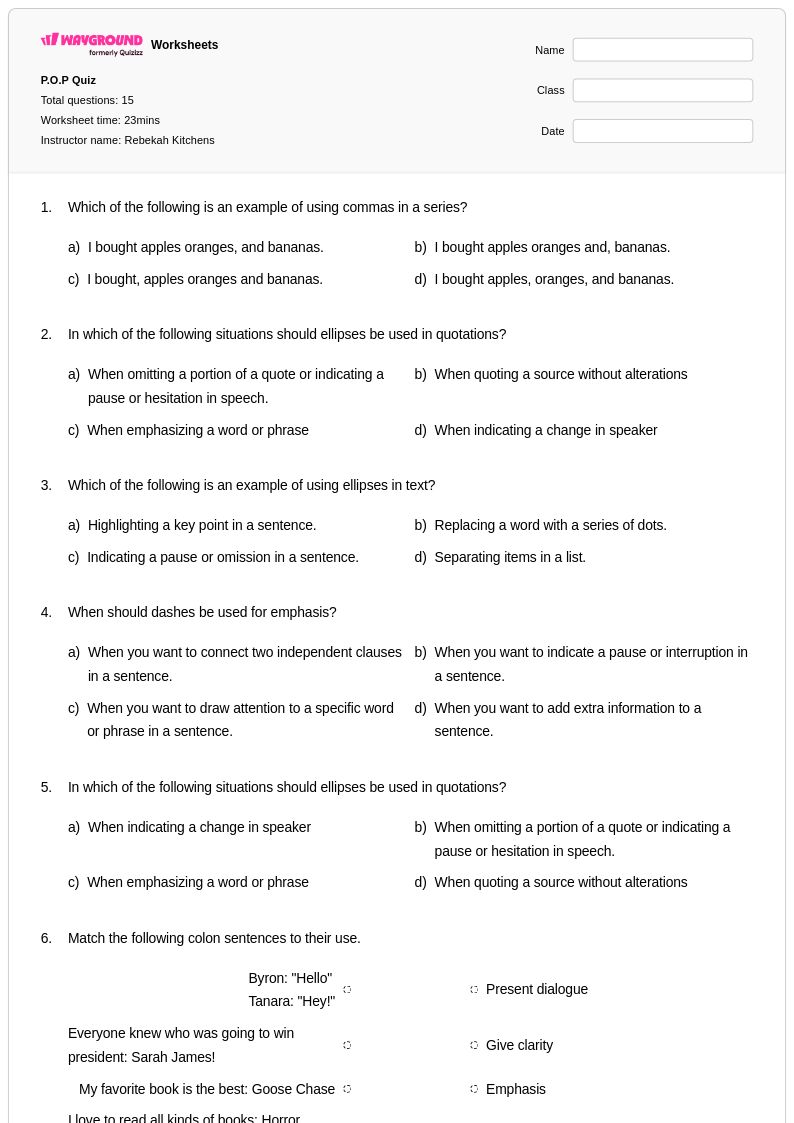
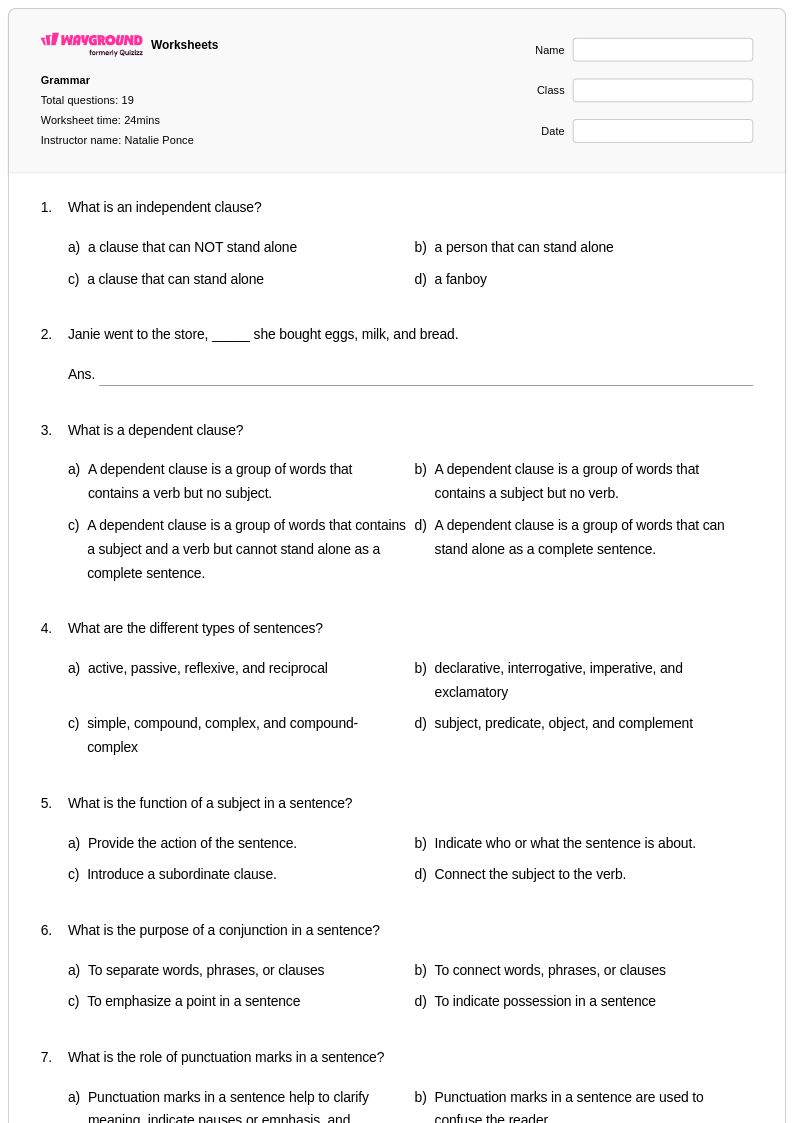
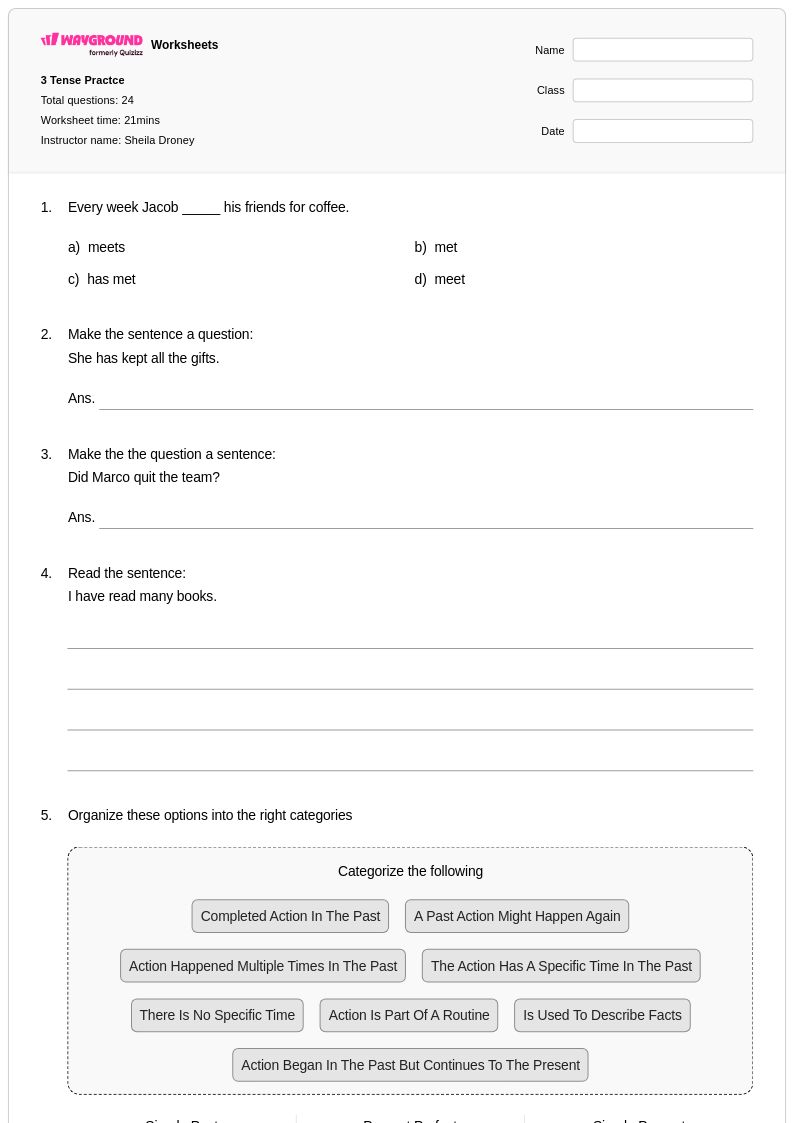
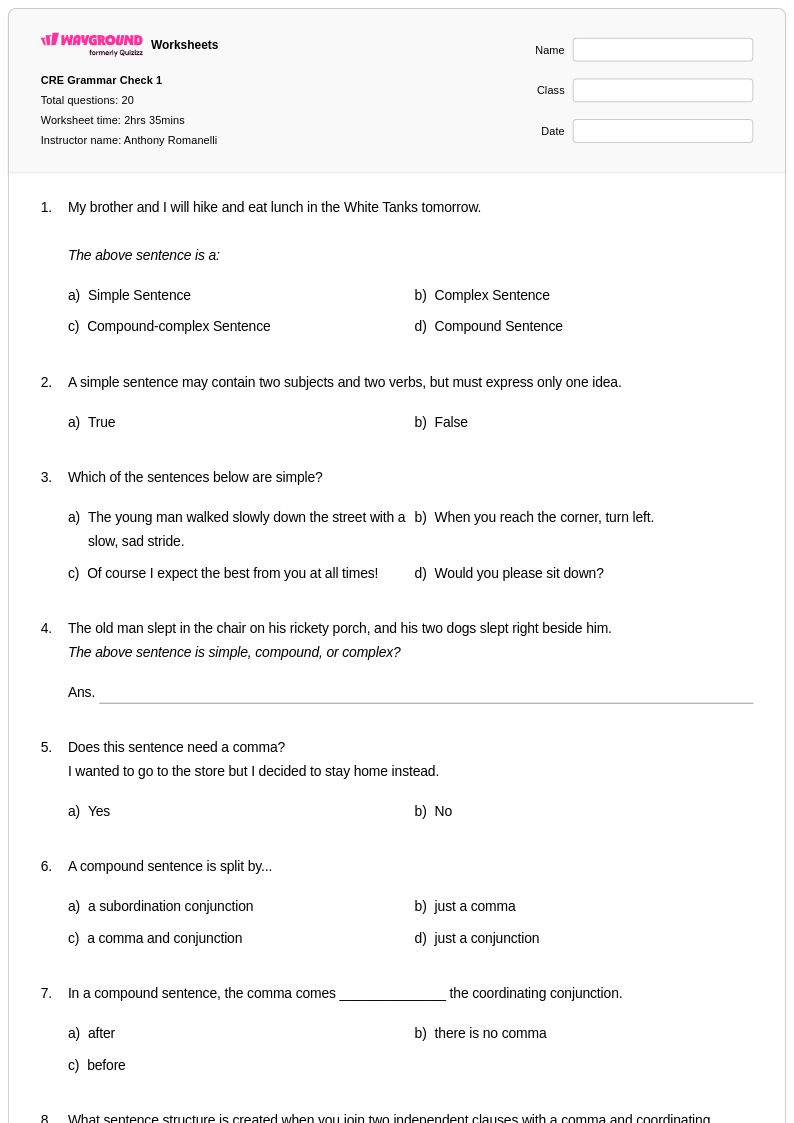
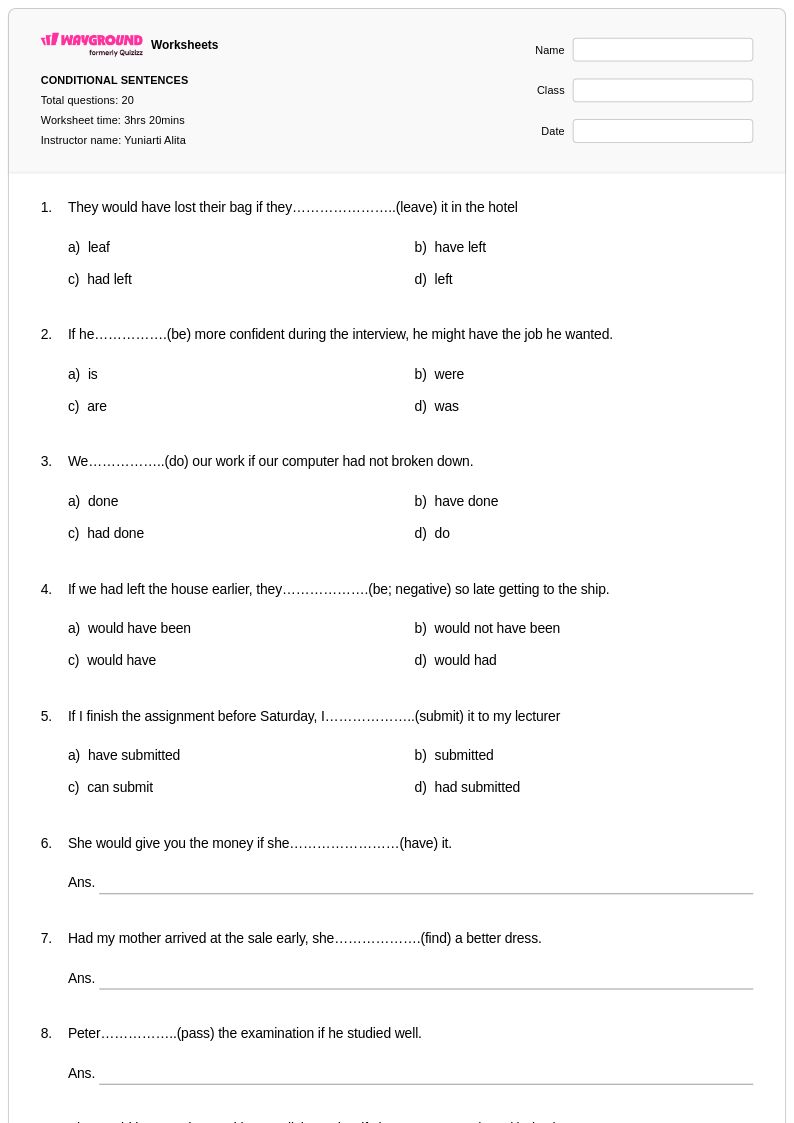
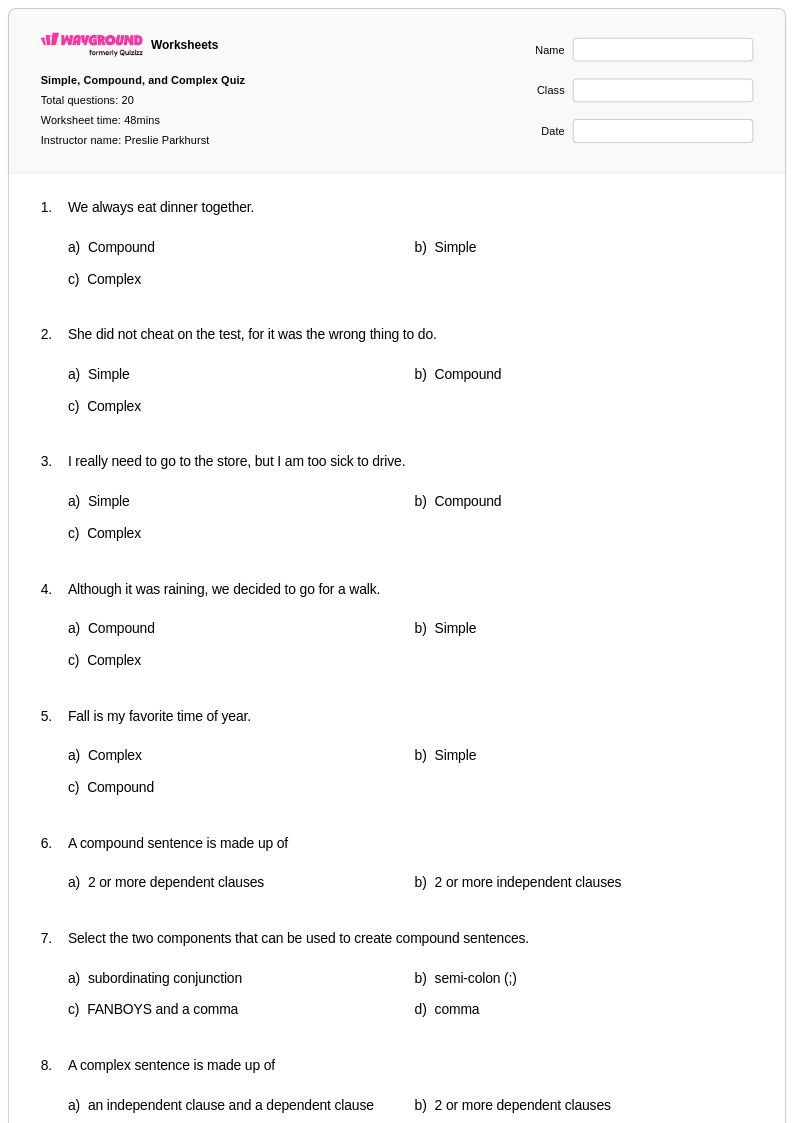
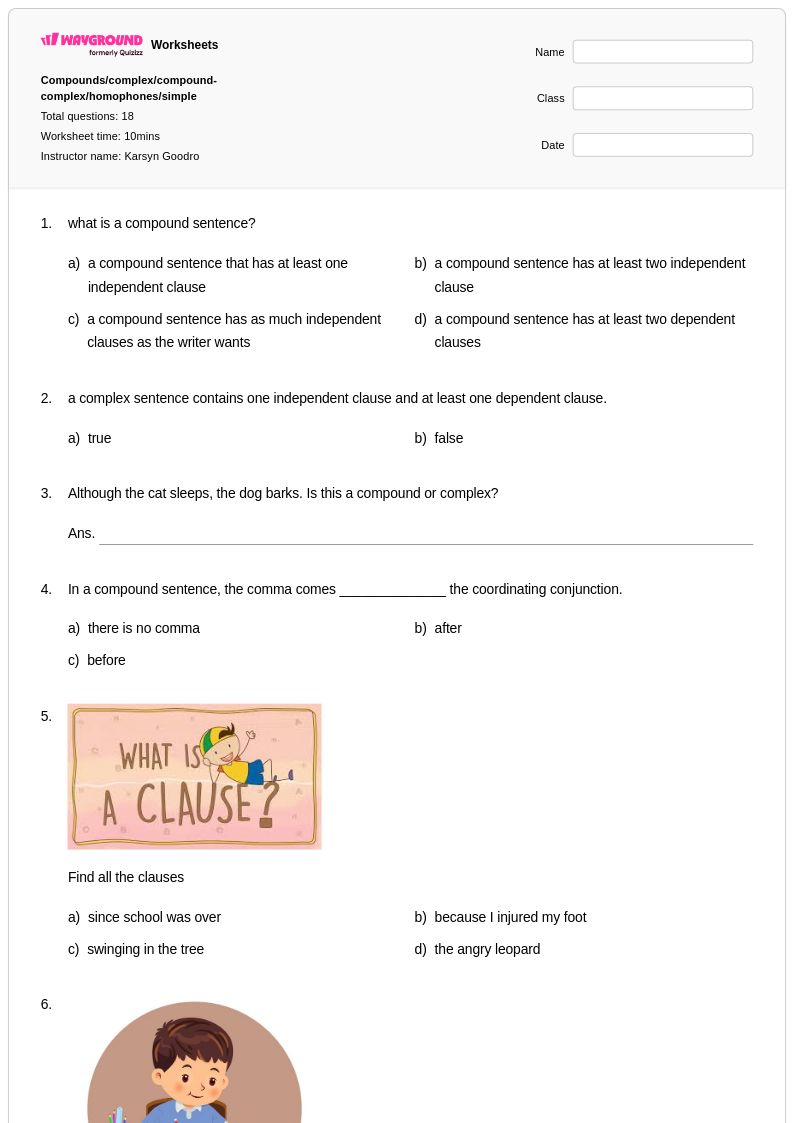
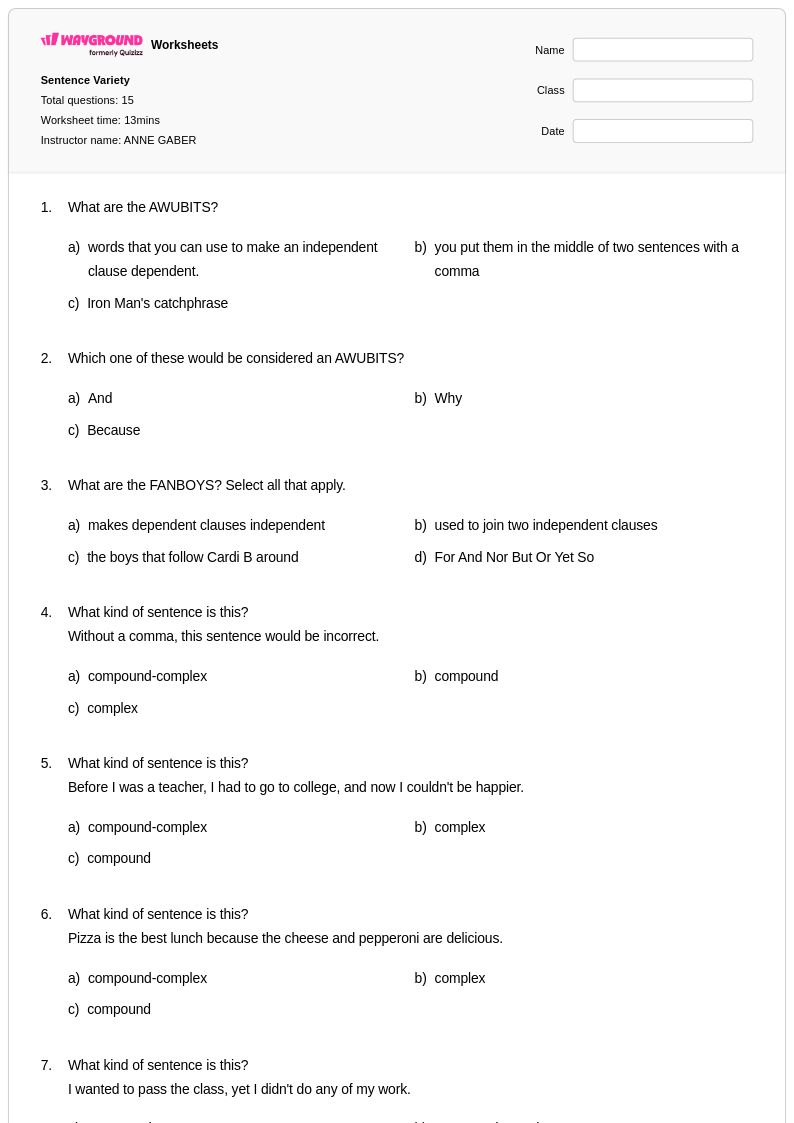
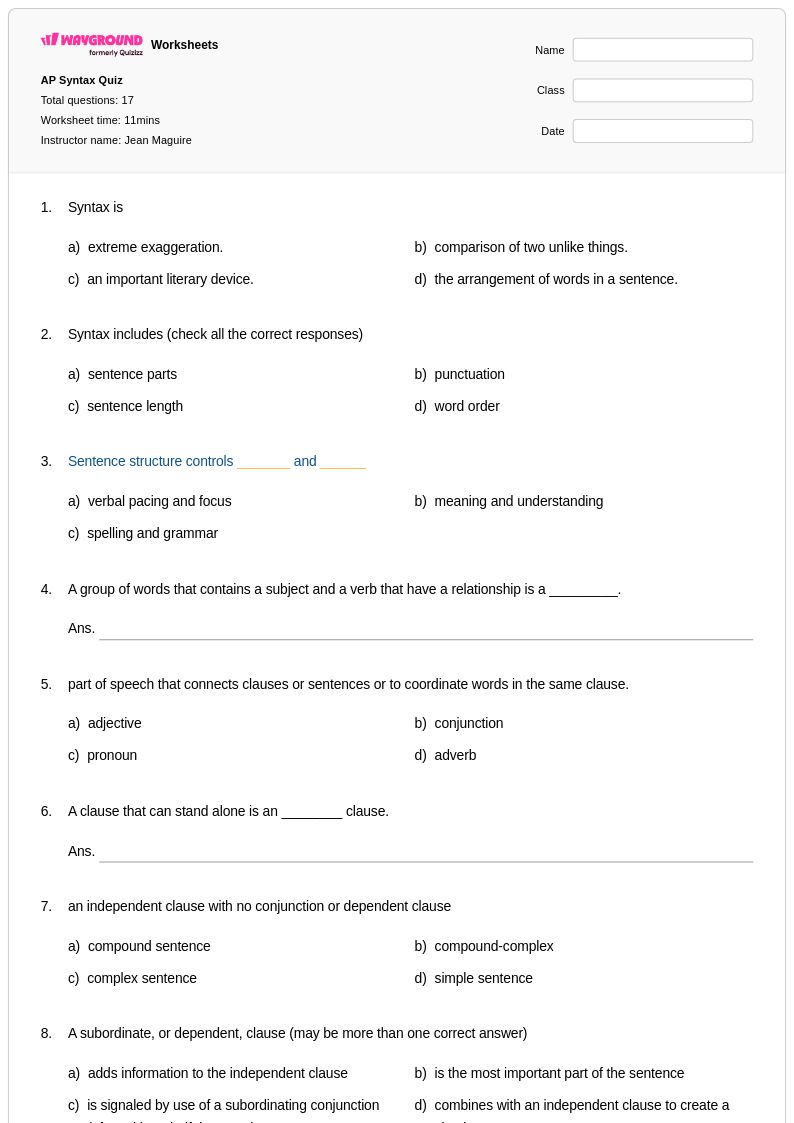
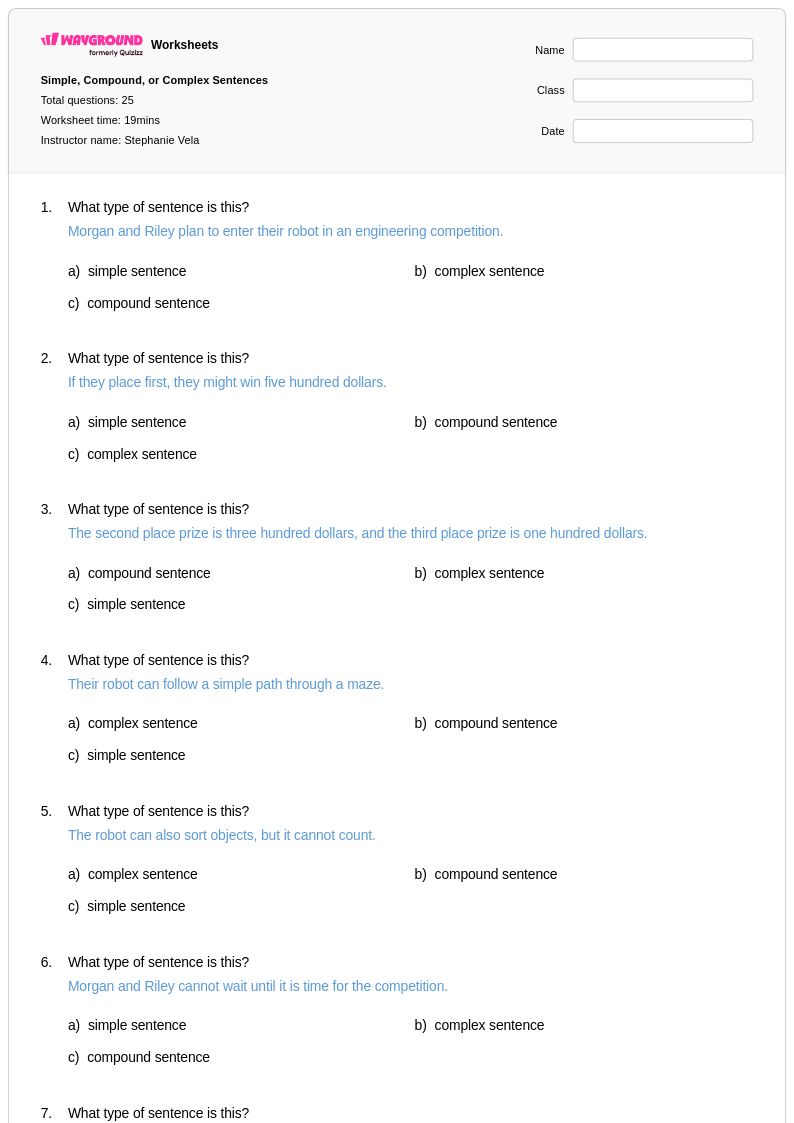
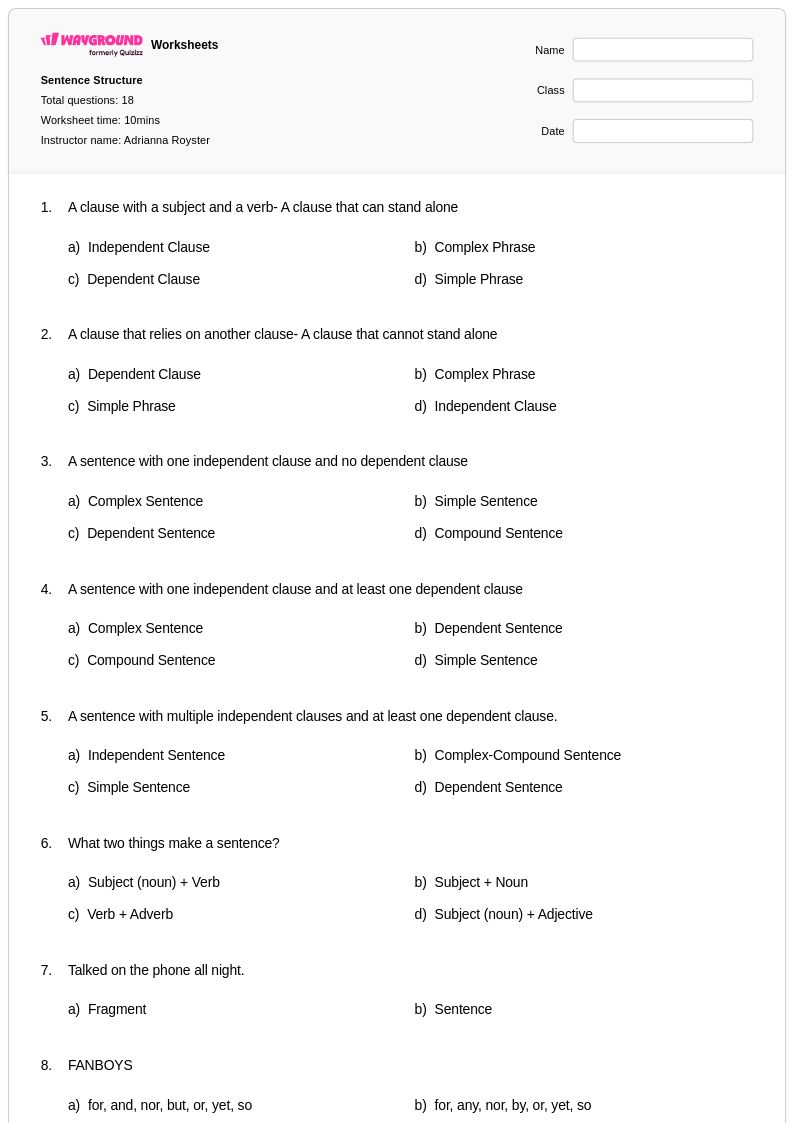
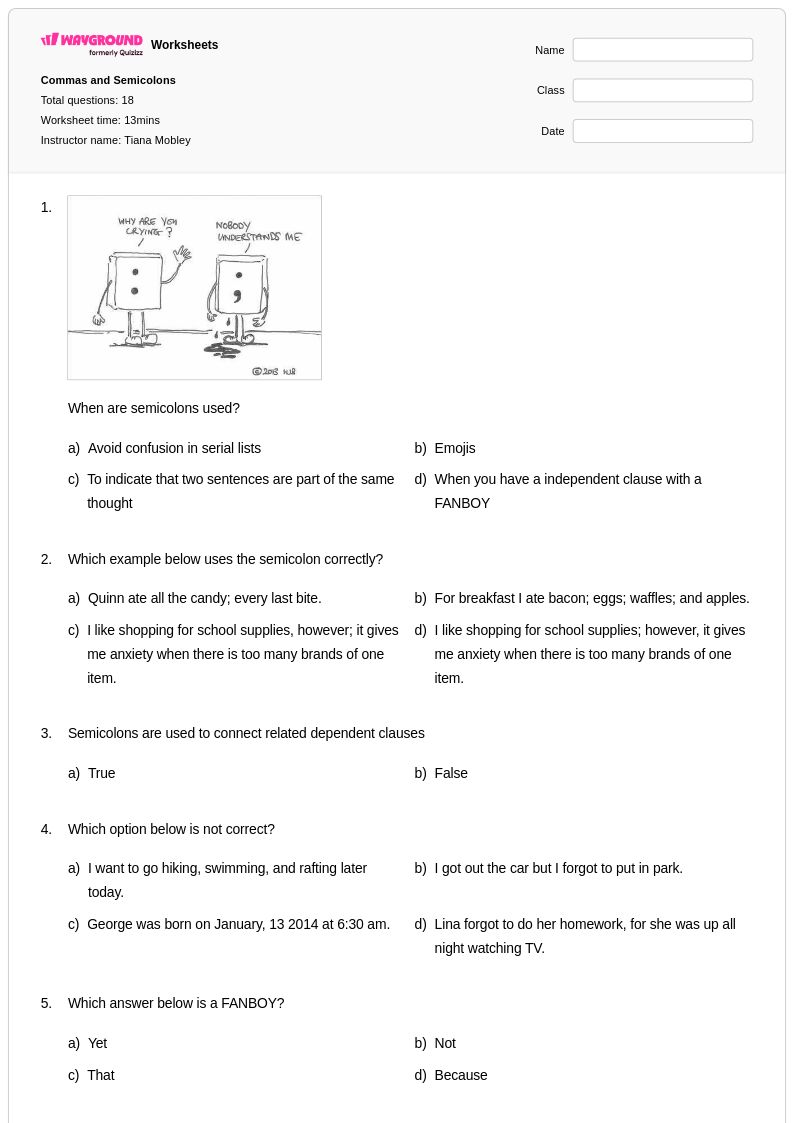
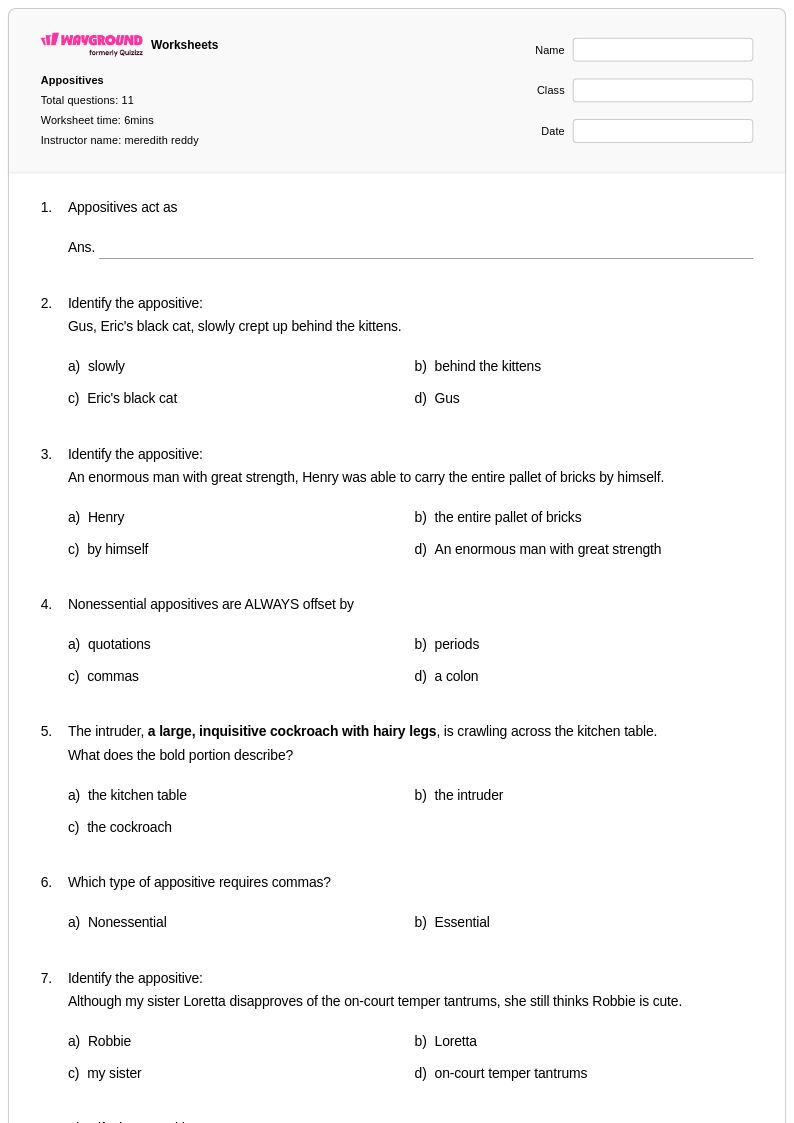
Sentence diagramming worksheets for Class 12 students provide advanced practice in visualizing complex grammatical structures and analyzing sophisticated sentence patterns. These comprehensive resources from Wayground (formerly Quizizz) focus on diagramming compound-complex sentences, participial phrases, gerund constructions, and intricate clause relationships that appear frequently in college-level texts and standardized assessments. Students develop critical analytical skills by breaking down elaborate sentences into their component parts, identifying subjects, predicates, modifiers, and various types of clauses through systematic visual representation. Each worksheet includes detailed answer keys and step-by-step diagramming solutions, with free printable PDF formats that allow for flexible classroom implementation and independent practice problems that reinforce proper grammatical analysis techniques.
Wayground (formerly Quizizz) empowers educators with an extensive collection of teacher-created sentence diagramming resources specifically designed for Class 12 instruction, featuring millions of professionally developed worksheets that align with advanced grammar standards and college preparatory objectives. The platform's sophisticated search and filtering capabilities enable teachers to locate materials targeting specific diagramming concepts, from basic sentence patterns to complex syntactic structures involving multiple subordinate clauses and advanced punctuation rules. These differentiation tools support both remediation for students struggling with foundational grammar concepts and enrichment activities for advanced learners ready to tackle graduate-level sentence analysis, while the flexible customization options allow educators to modify existing worksheets or create targeted practice sessions. Available in both printable and digital PDF formats, these resources seamlessly integrate into lesson planning workflows and provide consistent support for skill development across diverse learning environments.
FAQs
How do I teach sentence diagramming to students who have never seen it before?
Start with the simplest possible sentence structure: a single subject and predicate on a horizontal baseline divided by a vertical line. Once students can reliably place subjects and verbs, introduce modifiers on diagonal lines beneath the words they modify, then build toward prepositional phrases and dependent clauses. Scaffolding each new element one at a time prevents cognitive overload and gives students a clear visual logic to anchor new grammar concepts.
What exercises help students practice sentence diagramming effectively?
Effective practice moves from recognition to production: begin with partially completed diagrams where students fill in missing components, then progress to diagramming simple sentences from scratch, and finally tackle compound-complex constructions independently. Exercises that require students to identify parts of speech before placing them on the diagram reinforce the connection between grammatical labels and structural function, which deepens retention.
What mistakes do students commonly make when diagramming sentences?
The most frequent errors involve misplacing modifiers, particularly confusing adjectives modifying nouns with adverbs modifying verbs, and incorrectly attaching prepositional phrases to the wrong anchor word. Students also commonly treat dependent clauses as standalone units rather than recognizing their subordinate relationship to an independent clause. Reviewing answer keys immediately after completing a diagram helps students catch and correct these structural misunderstandings before they solidify.
How does sentence diagramming improve students' writing and grammar skills?
Sentence diagramming makes abstract grammatical relationships concrete and visible, which helps students internalize how different parts of a sentence function and relate to one another. When students can see that a modifier is attached to the wrong word on a diagram, they more readily recognize the same error in their own writing. This visual, analytical approach to grammar is especially effective for students who struggle to apply grammar rules from memory alone.
How can I use Wayground's sentence diagramming worksheets in my classroom?
Wayground's sentence diagramming worksheets are available as printable PDFs for traditional classroom use and in digital formats for technology-integrated instruction, so they work whether students are completing them on paper or on a device. Teachers can also host the worksheets as a quiz directly on Wayground, which allows for structured, timed practice with built-in answer key verification. Wayground's filtering tools let teachers select materials by grammatical complexity, making it straightforward to match worksheets to the specific structures a class is currently studying.
How do I differentiate sentence diagramming instruction for students at different skill levels?
For struggling students, limit early practice to simple sentences with one subject, one verb, and one or two modifiers before introducing clauses or phrases. Advanced learners benefit from diagramming sentences drawn from literary or academic texts, which often contain appositives, participial phrases, and subordinate clauses that require more nuanced analysis. On Wayground, teachers can apply accommodations such as reduced answer choices or read-aloud support to individual students, ensuring that differentiation happens without singling anyone out in front of the class.