
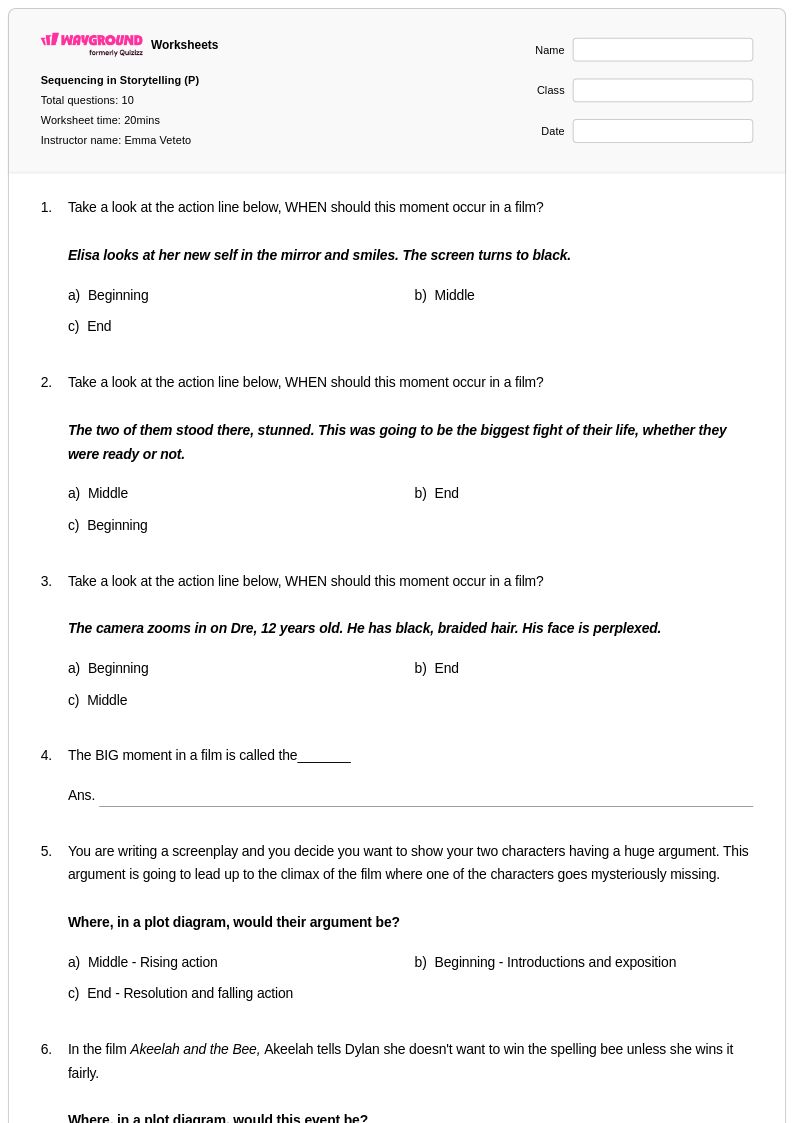
10Q
6th - 8th
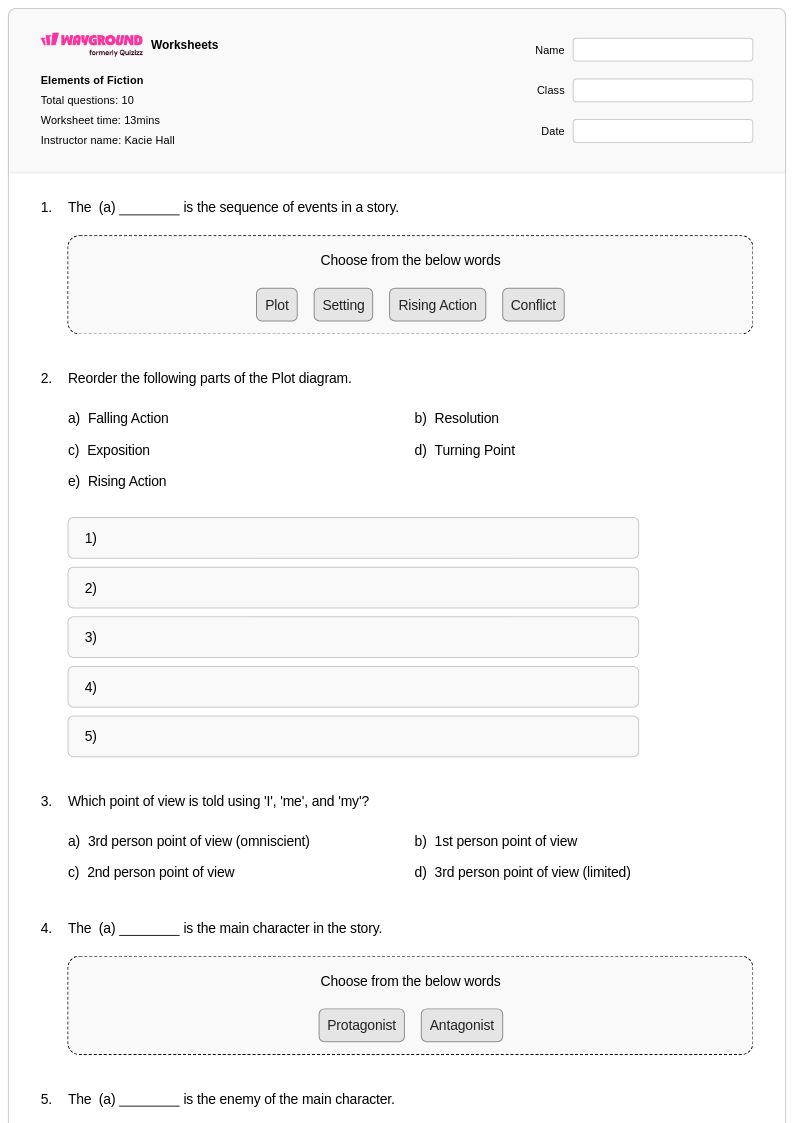
10Q
6th
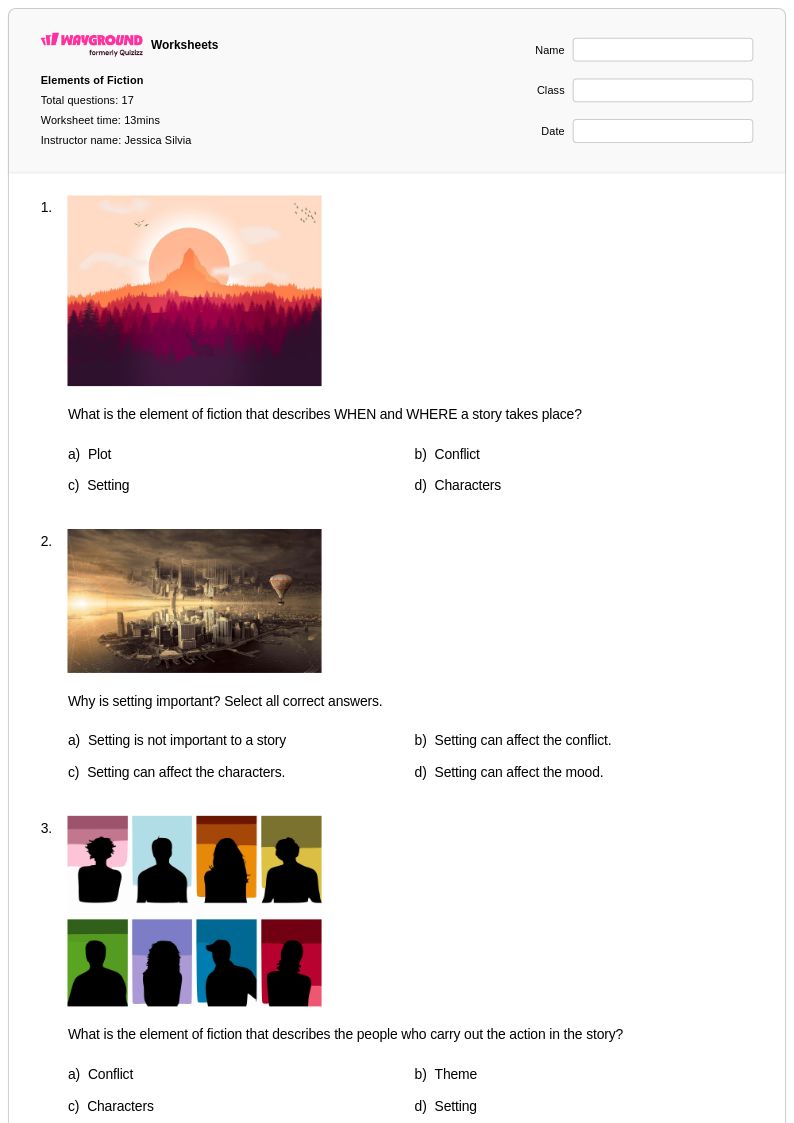
17Q
6th
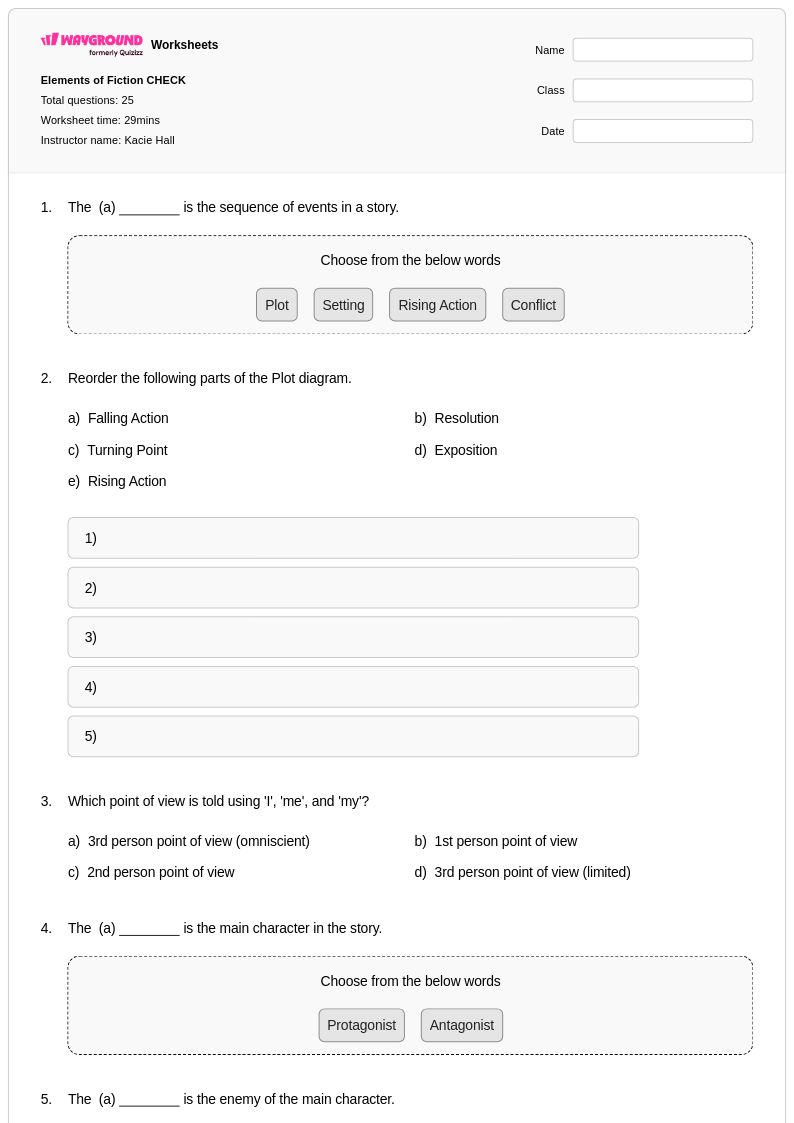
25Q
6th
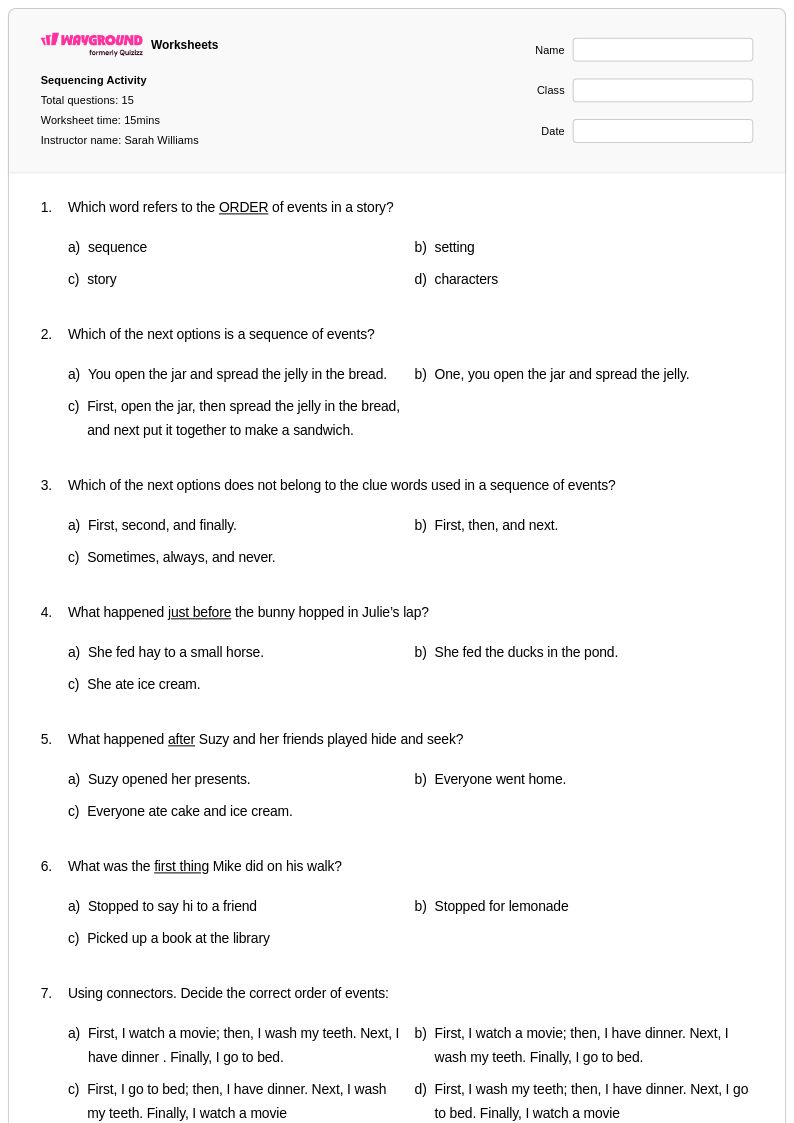
15Q
5th - Uni
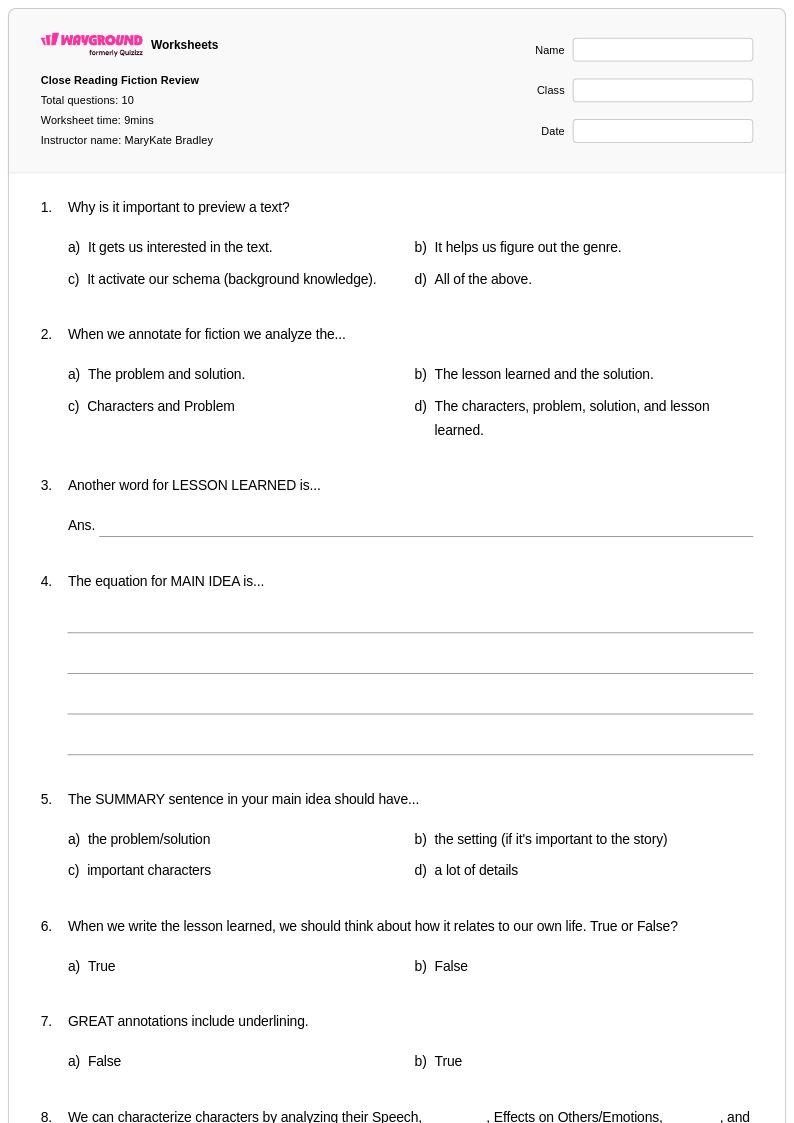
10Q
5th - 7th
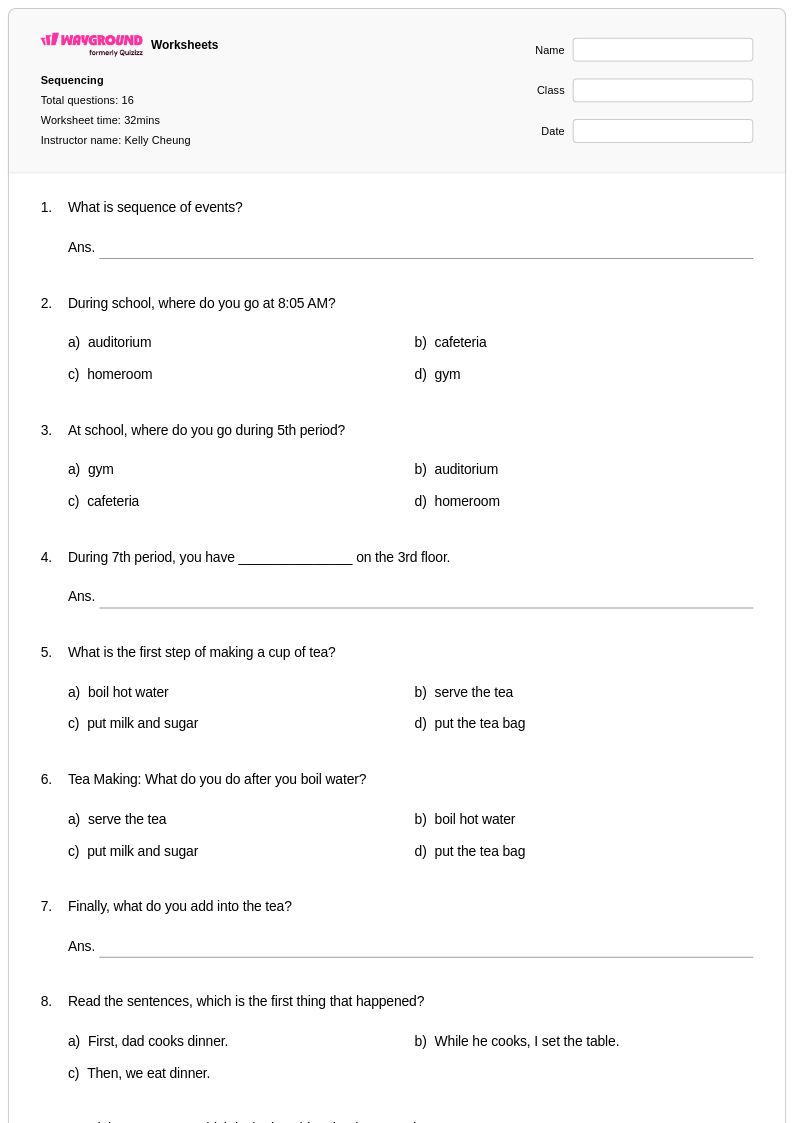
16Q
6th
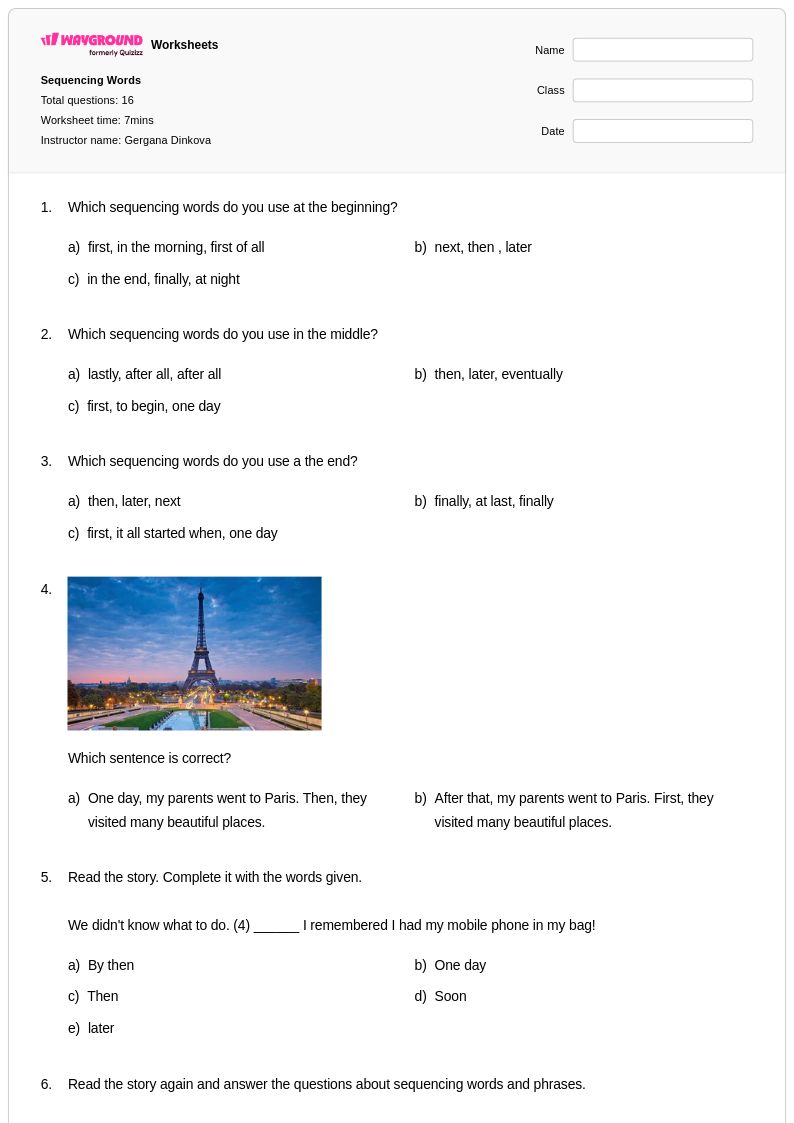
16Q
6th - 8th
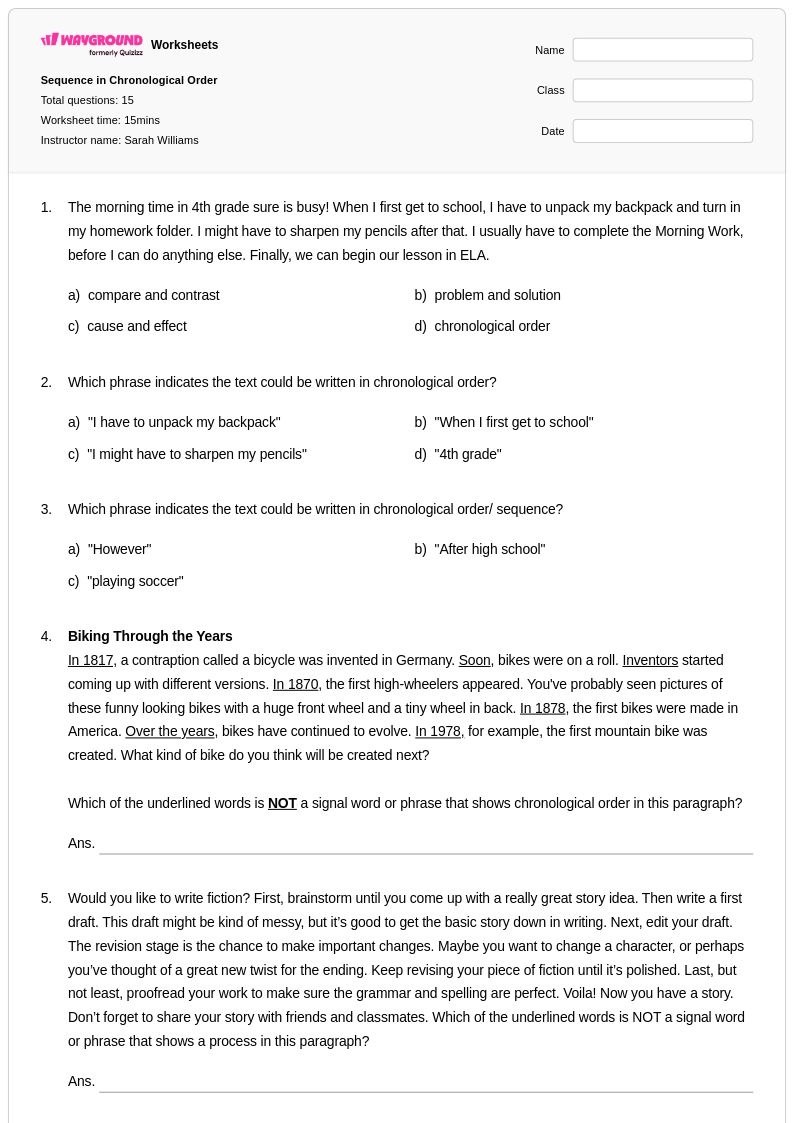
15Q
5th - Uni
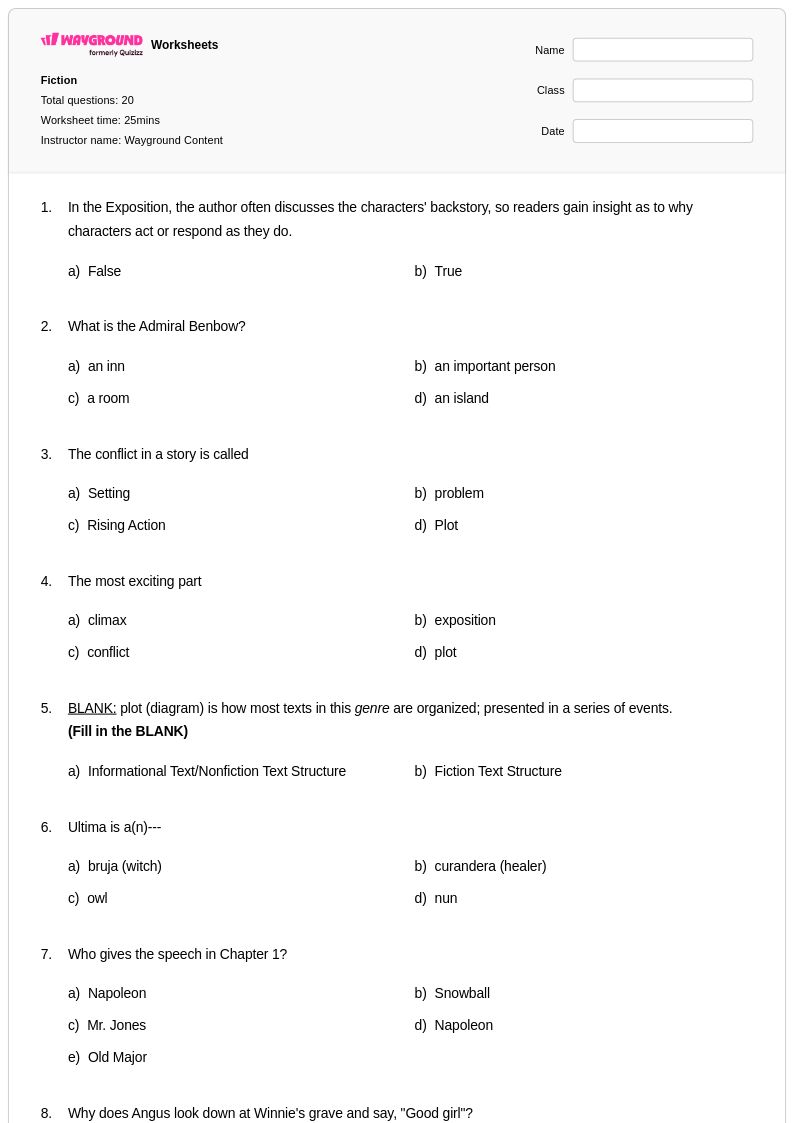
20Q
5th - 6th
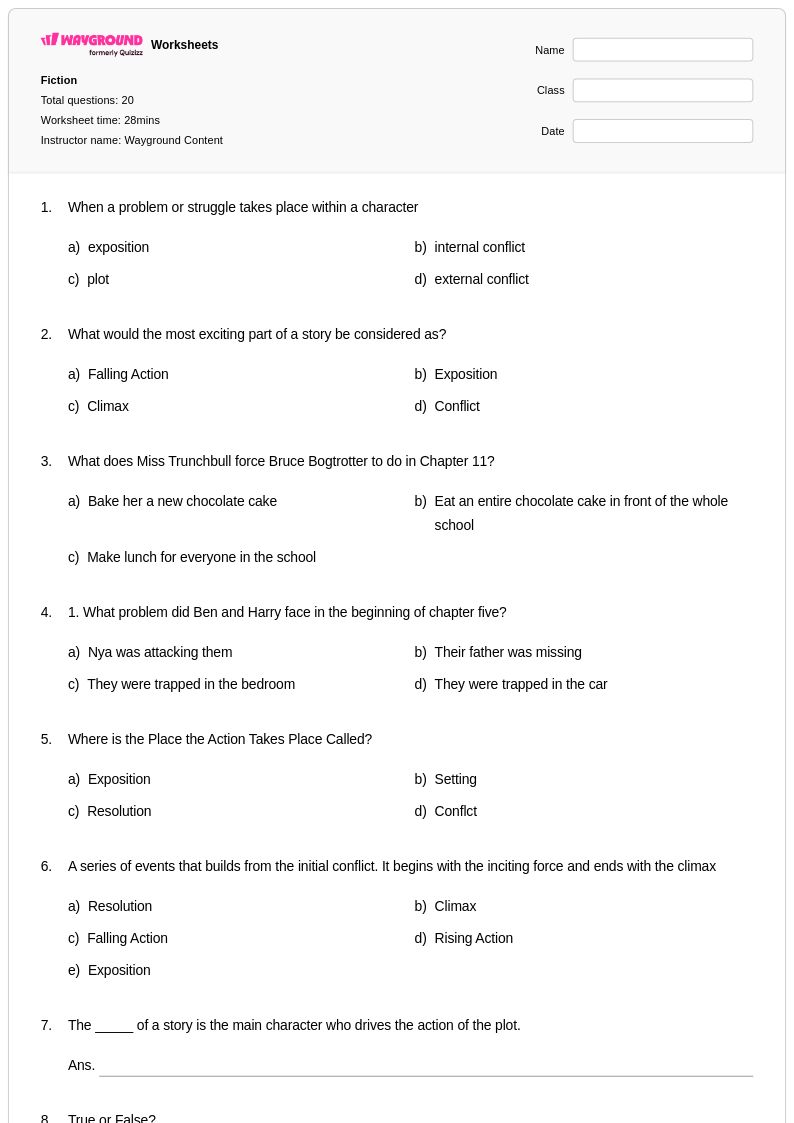
20Q
5th - 6th
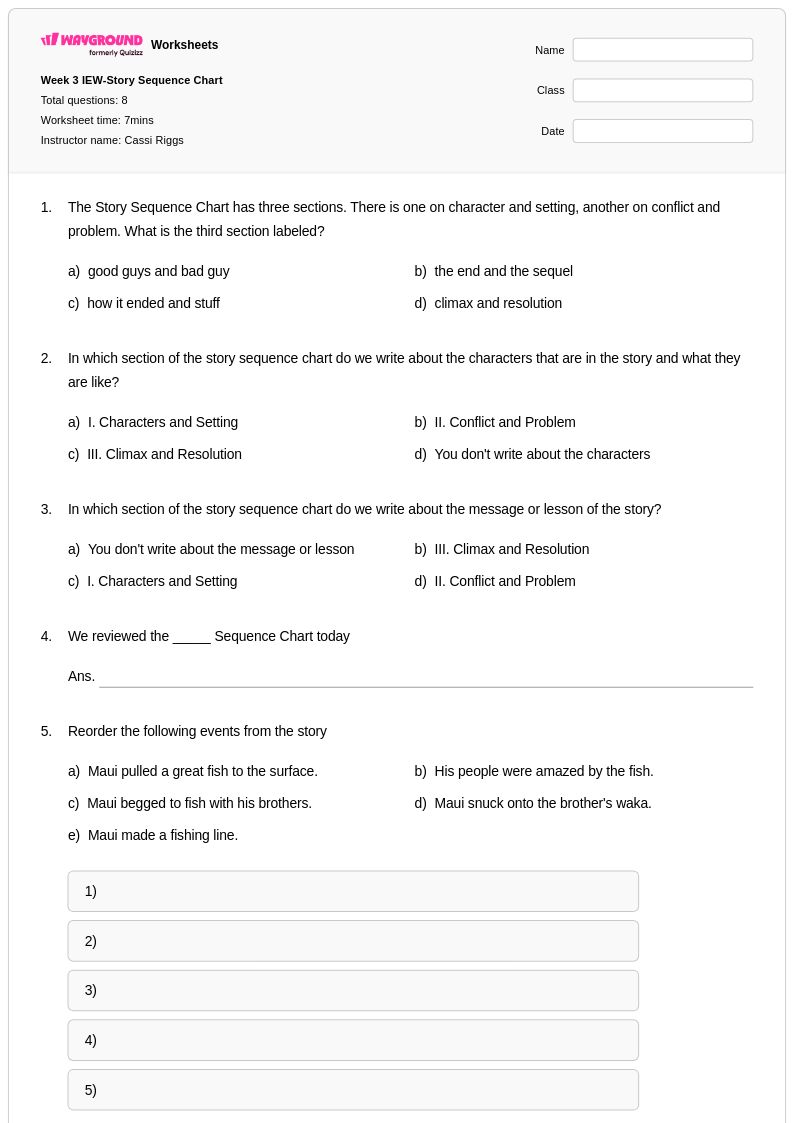
8Q
6th - 7th
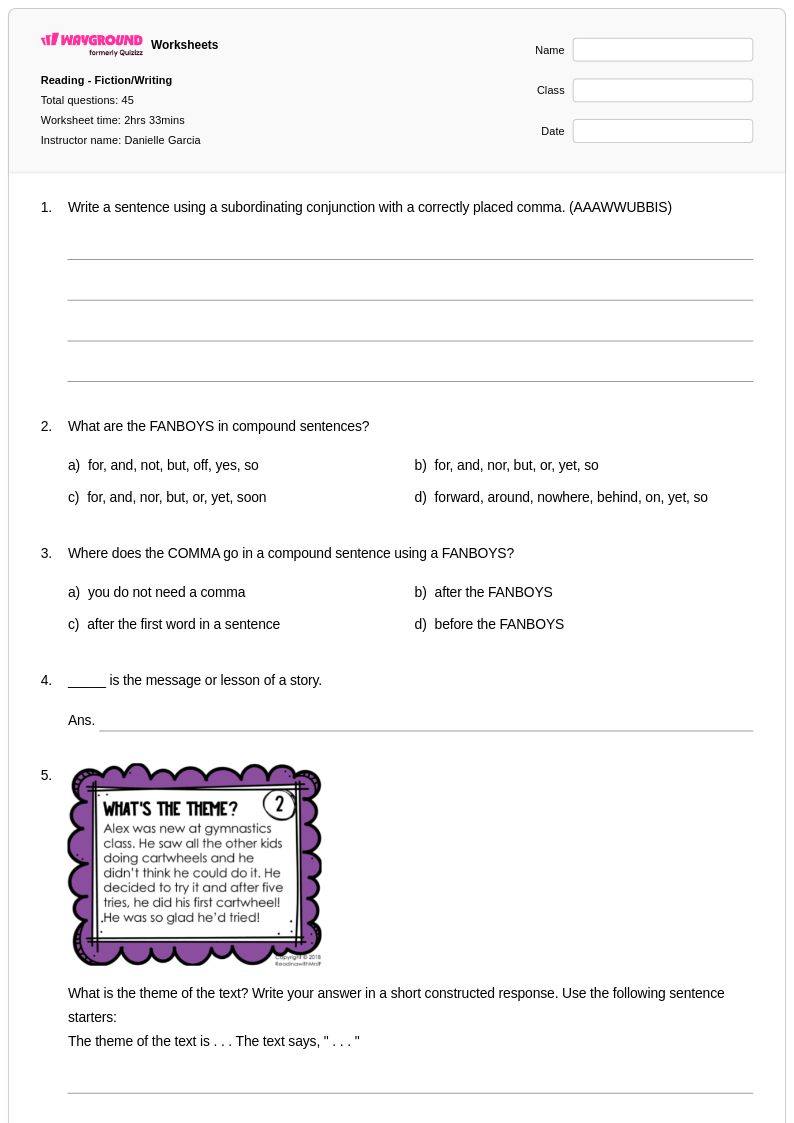
45Q
6th - 8th
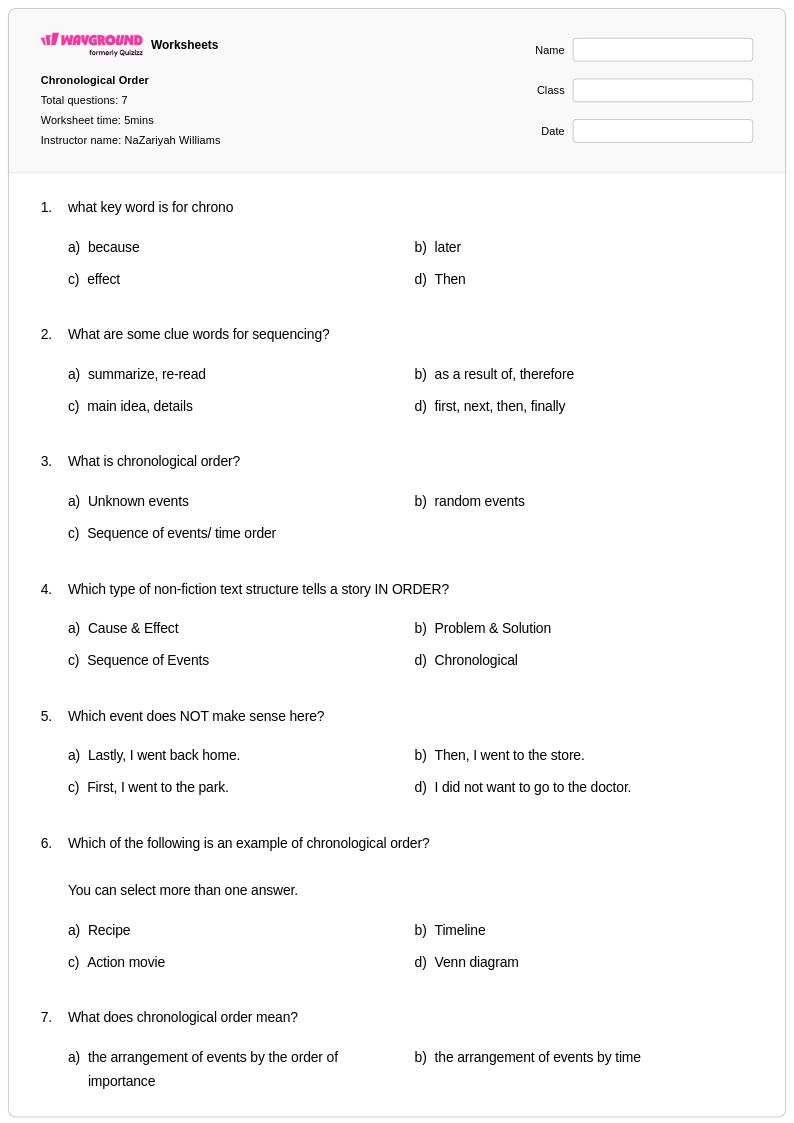
7Q
5th - 8th
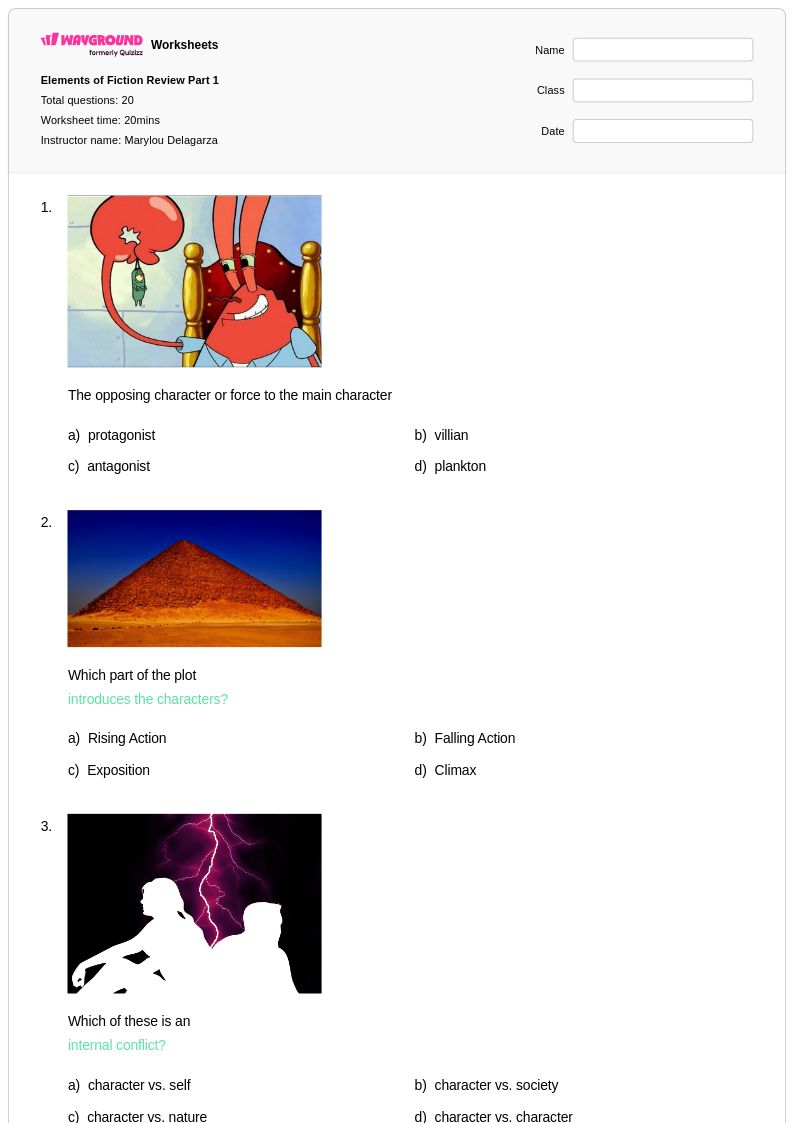
20Q
6th - 8th
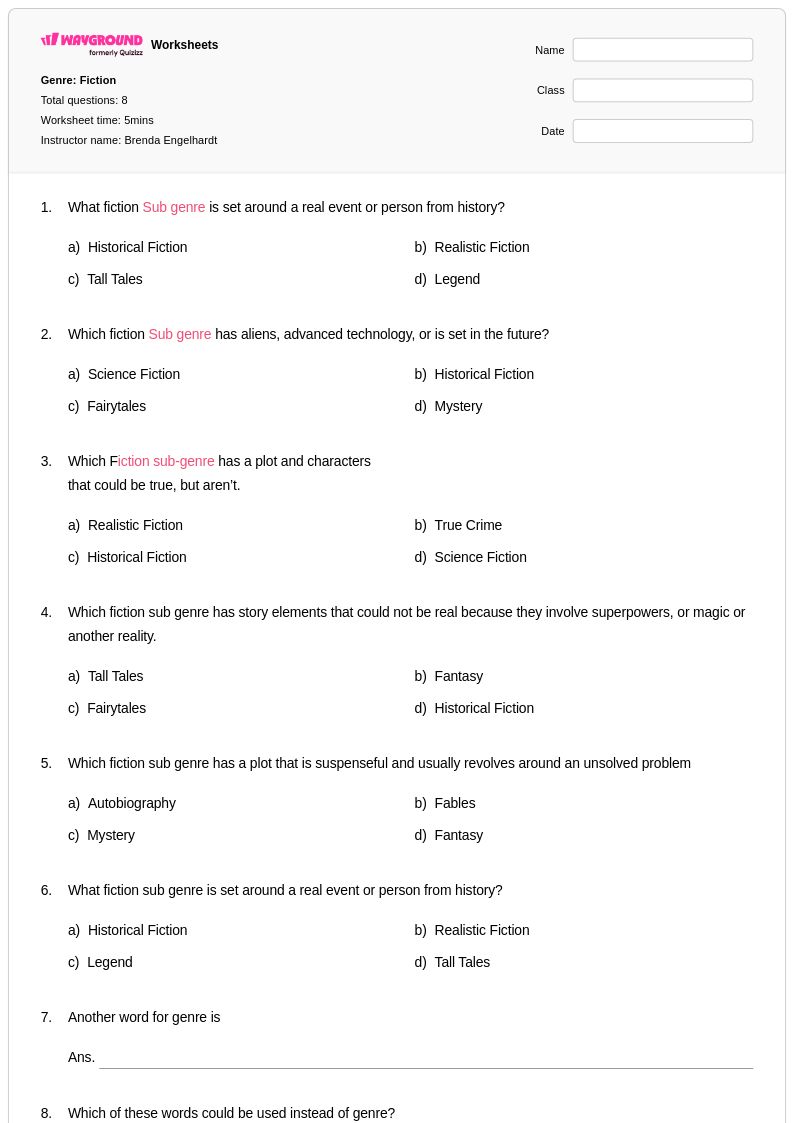
8Q
6th
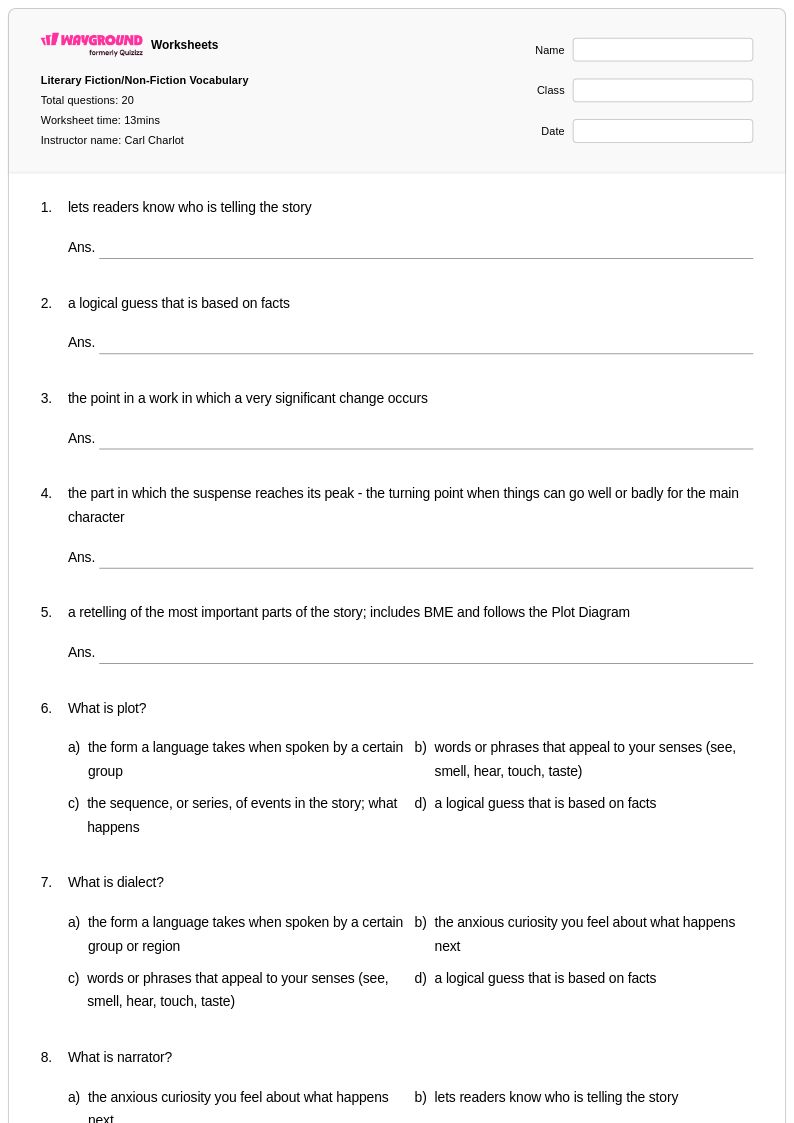
20Q
6th
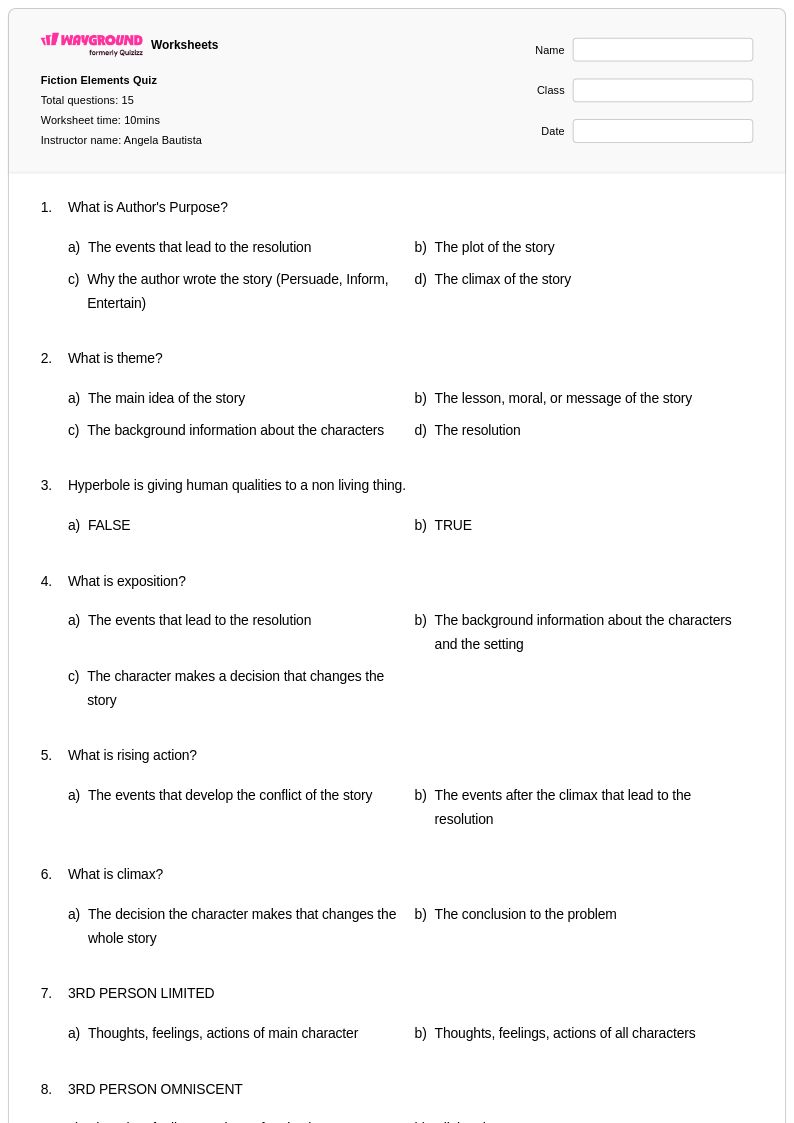
15Q
6th
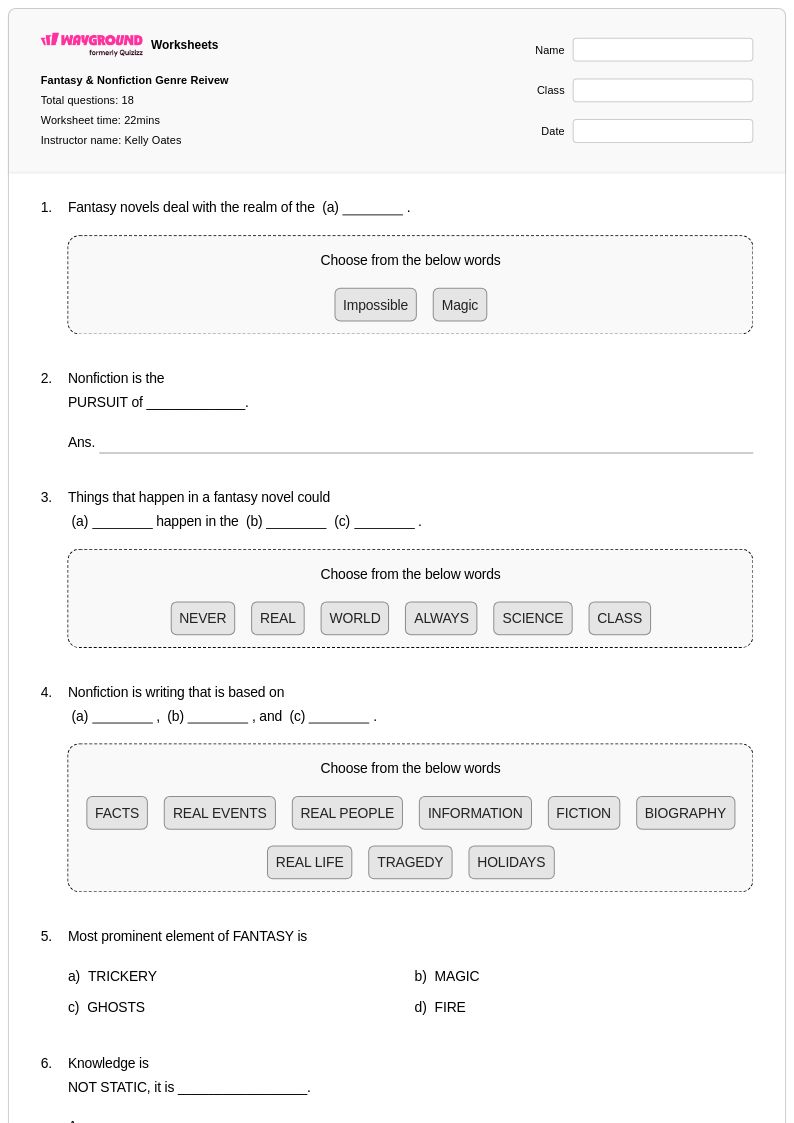
18Q
6th
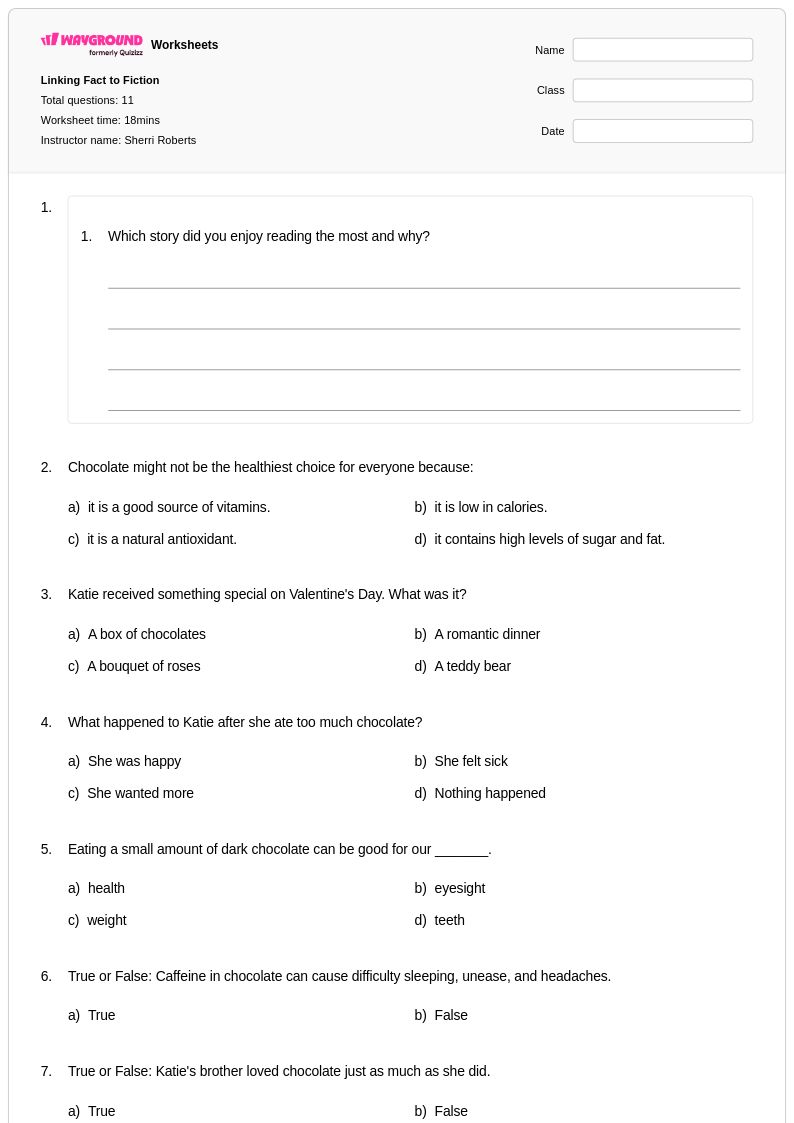
12Q
5th - Uni
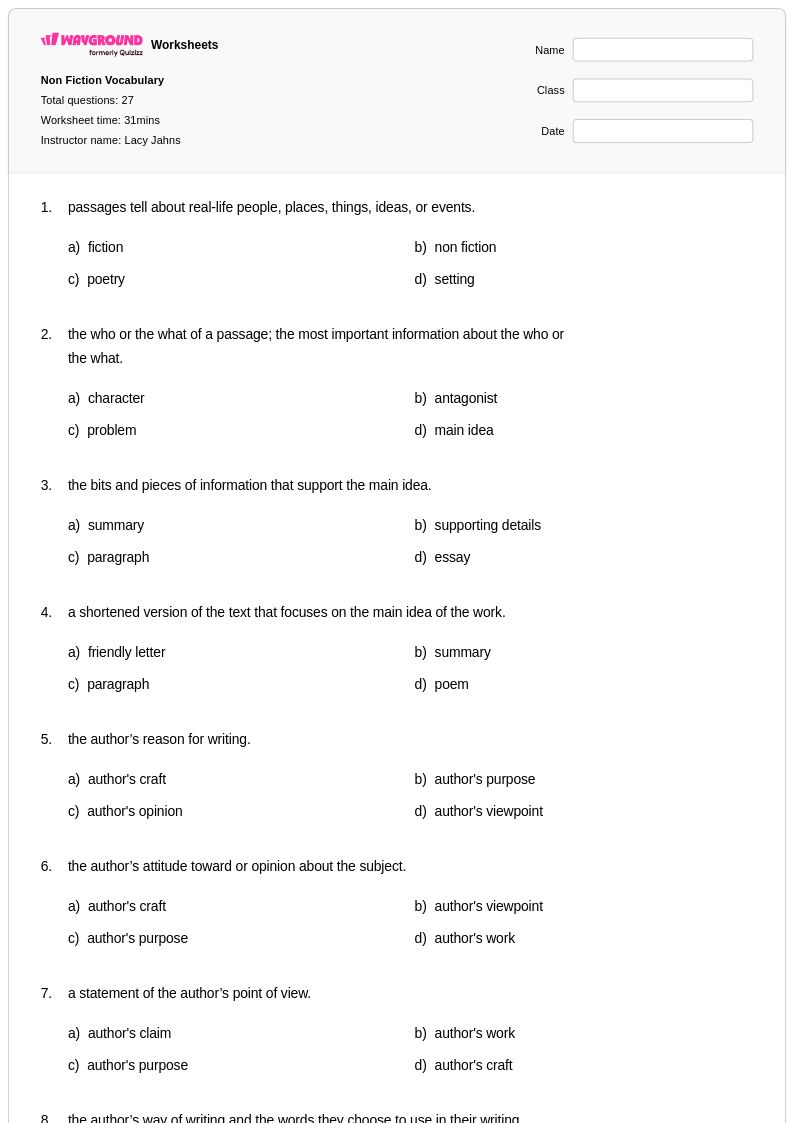
27Q
6th - 8th
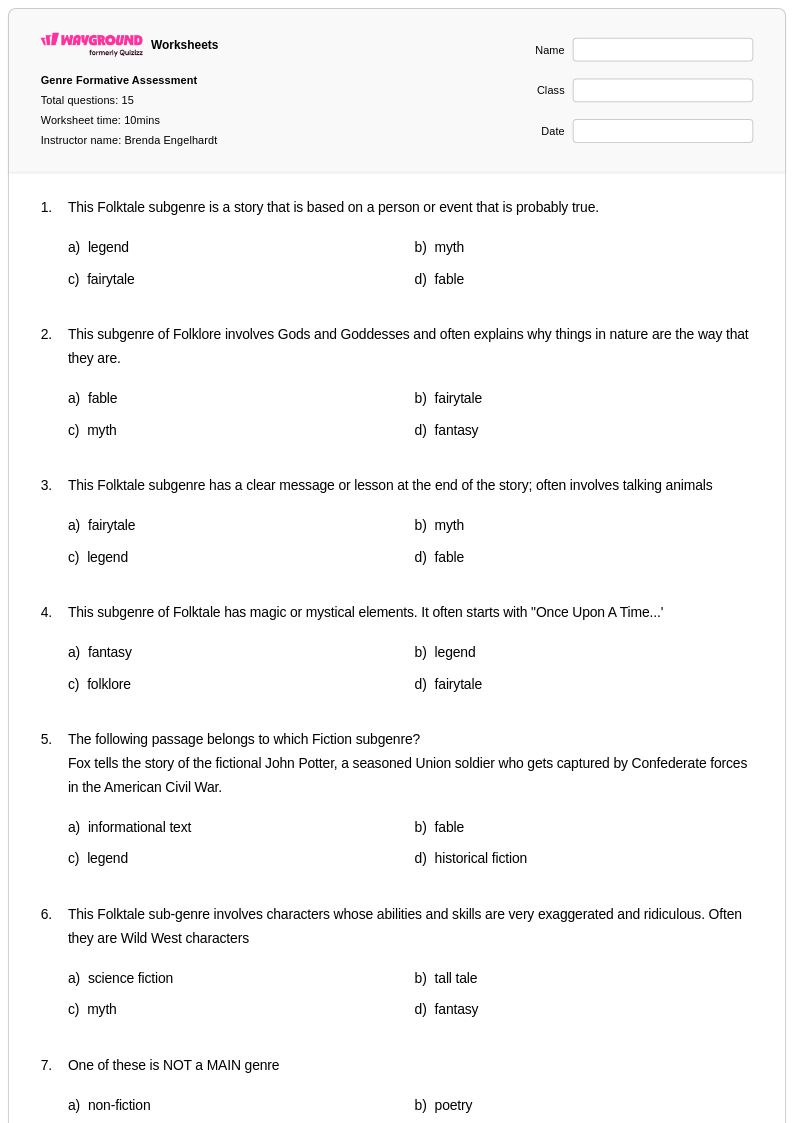
15Q
6th
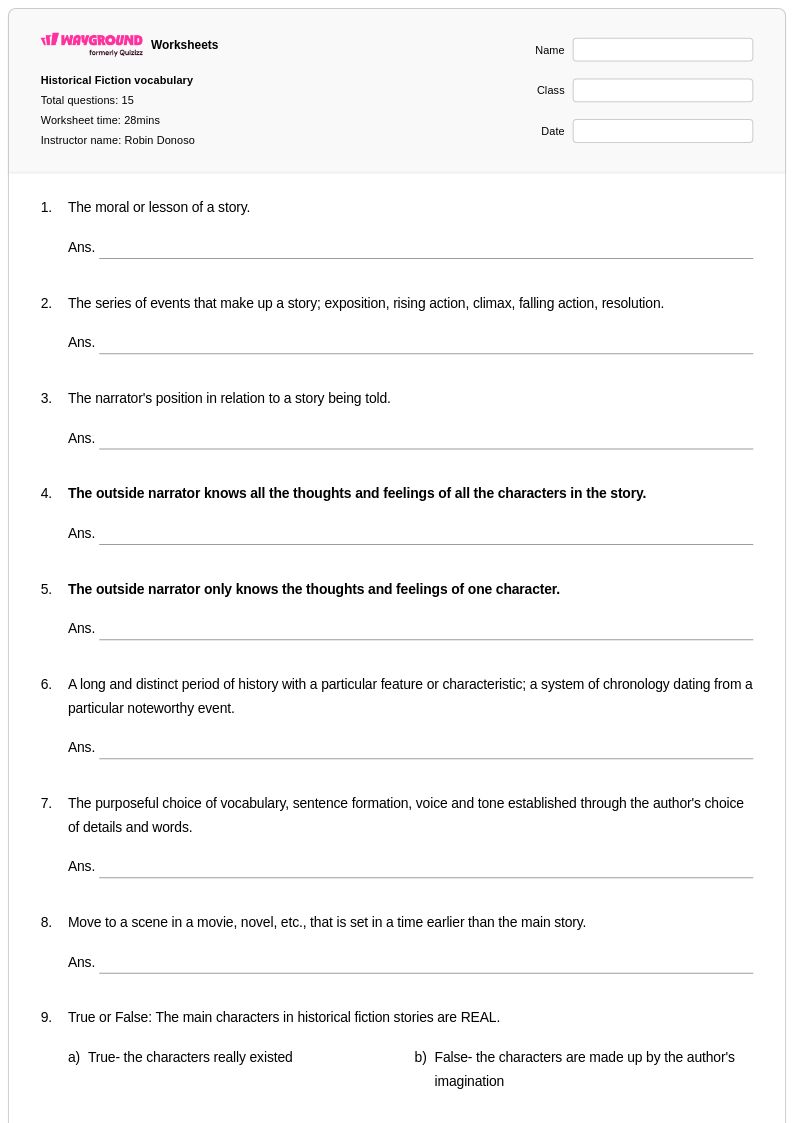
15Q
6th
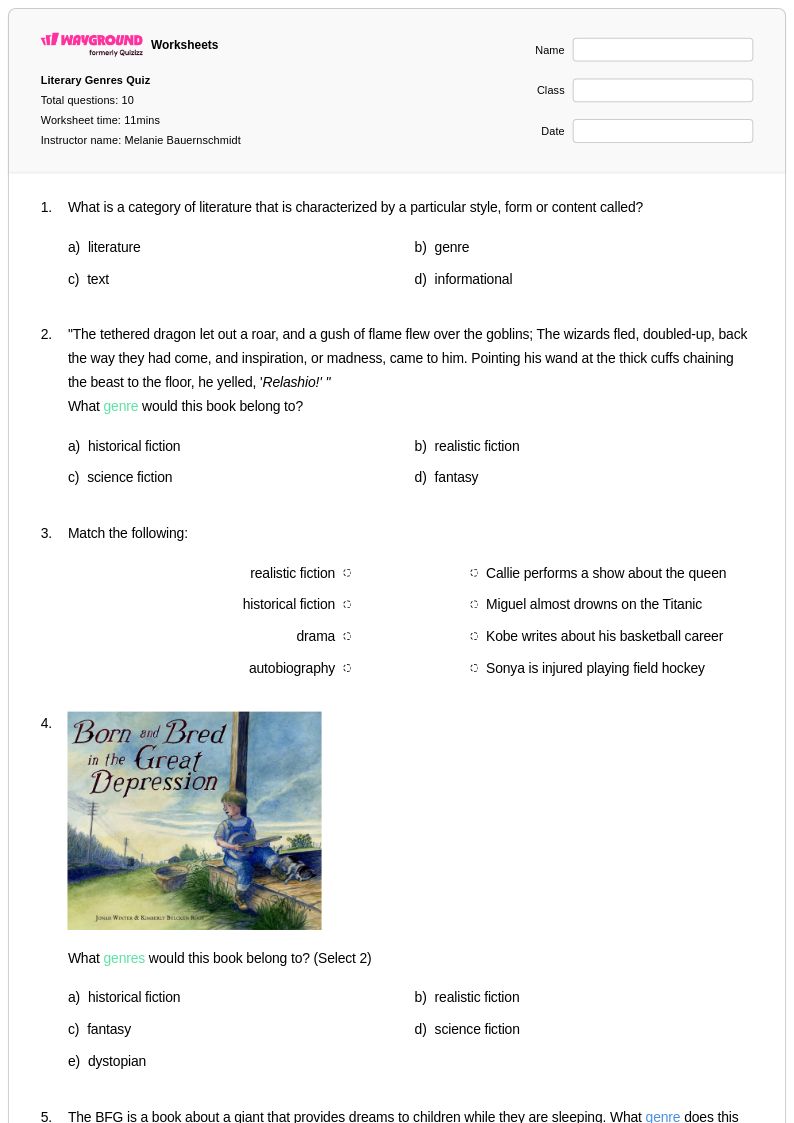
10Q
5th - 8th
Explorar Sequencing in Fiction hojas de trabajo por grados
Explore otras hojas de trabajo de materias para class 6
Explore printable Sequencing in Fiction worksheets for Class 6
Sequencing in fiction worksheets for Class 6 students through Wayground (formerly Quizizz) provide comprehensive practice opportunities for developing critical reading comprehension skills essential to literary analysis. These carefully crafted resources help students master the ability to identify, analyze, and organize story events in chronological order, recognize cause-and-effect relationships, and understand how authors structure narratives to create meaning and engage readers. The worksheet collections include diverse practice problems featuring excerpts from various fictional genres, enabling students to work with different narrative structures, plot devices, and storytelling techniques. Each printable resource comes with a detailed answer key, making it easy for educators to assess student understanding and provide targeted feedback on sequencing accuracy and analytical reasoning.
Wayground (formerly Quizizz) empowers teachers with an extensive library of millions of educator-created sequencing in fiction worksheets that streamline lesson planning and support differentiated instruction for Class 6 classrooms. The platform's robust search and filtering capabilities allow teachers to quickly locate resources aligned with specific learning standards and customize materials to match individual student needs and reading levels. These free, high-quality printables are available in both digital and PDF formats, providing flexibility for in-class activities, homework assignments, and remote learning scenarios. Teachers can utilize these comprehensive worksheet collections for skill-building practice sessions, targeted remediation for struggling readers, enrichment activities for advanced learners, and formative assessments that track student progress in understanding narrative structure and sequential thinking across various fictional texts.