Free Printable Si Units Conversion Worksheets for Class 12
Master SI units conversion with Class 12 science worksheets from Wayground, featuring comprehensive printables, practice problems, and answer keys to help students excel at converting between metric units.
Explore printable Si Units Conversion worksheets for Class 12
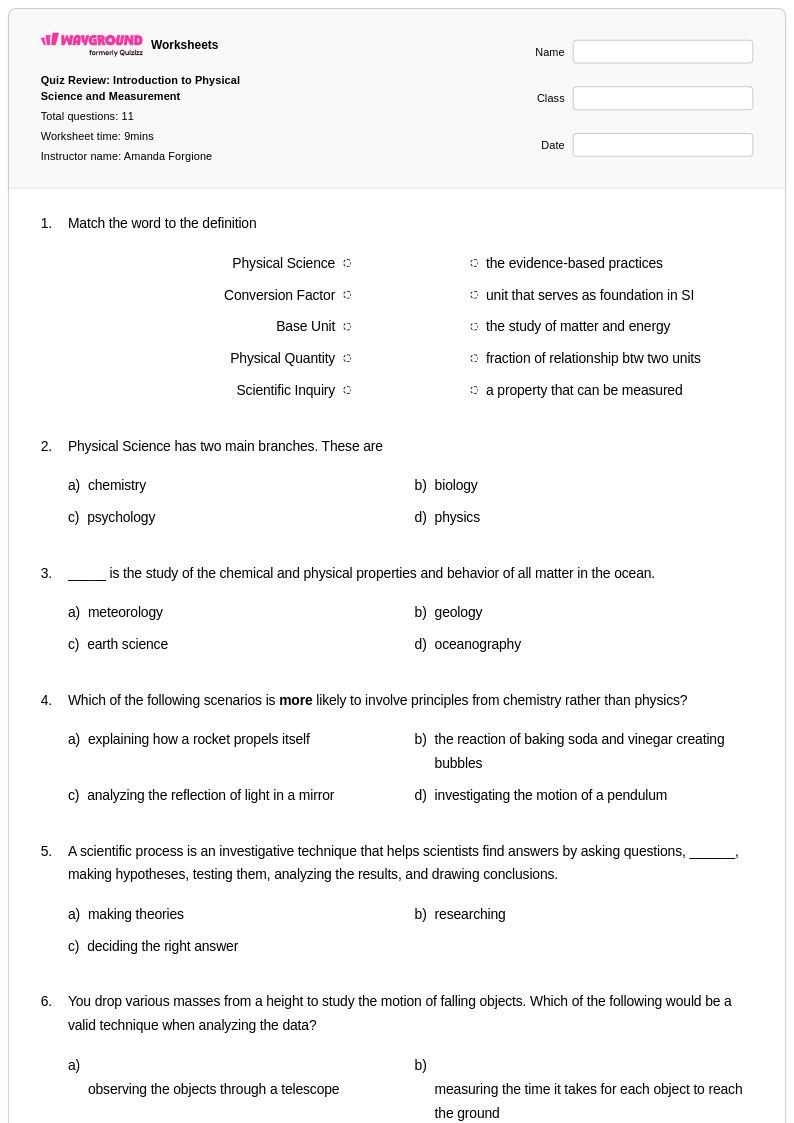
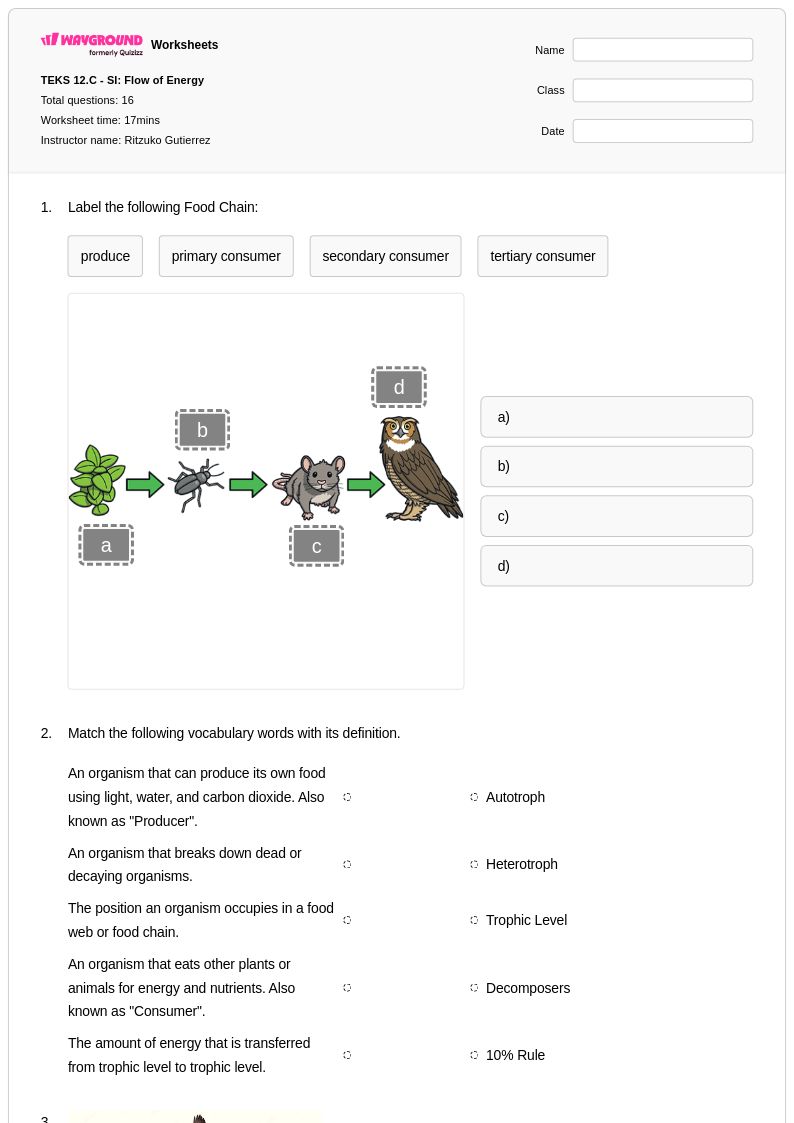
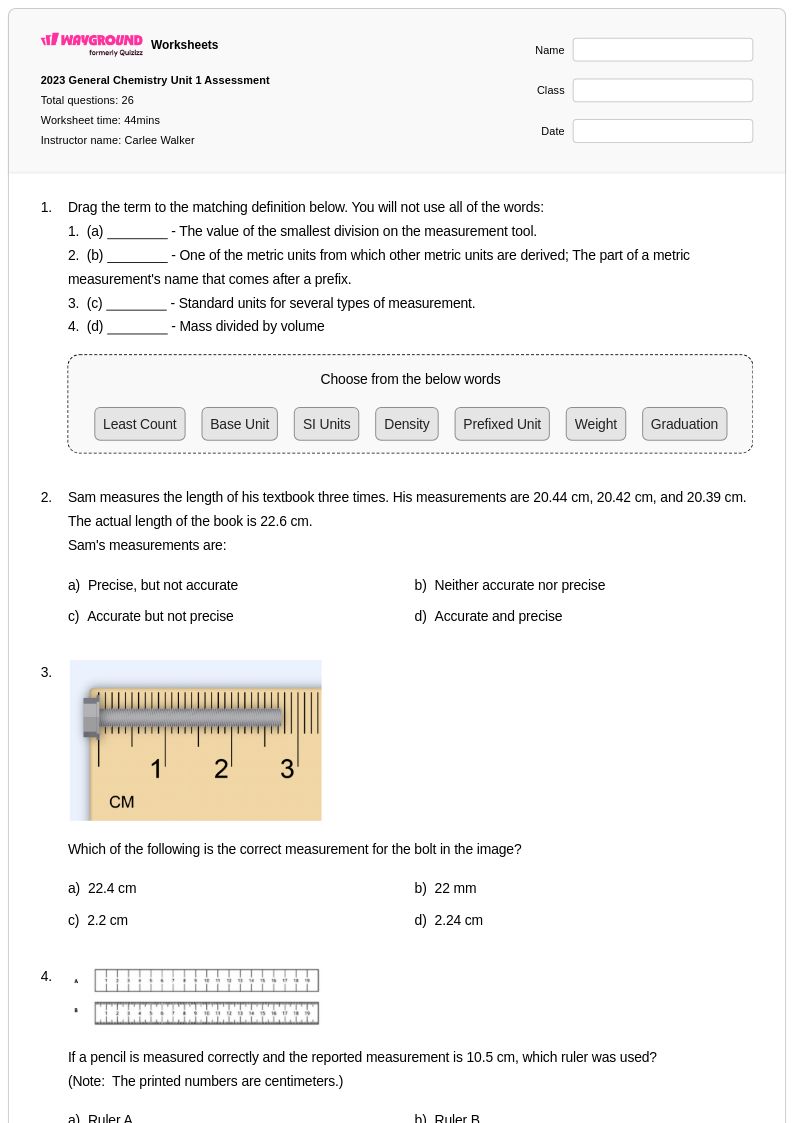
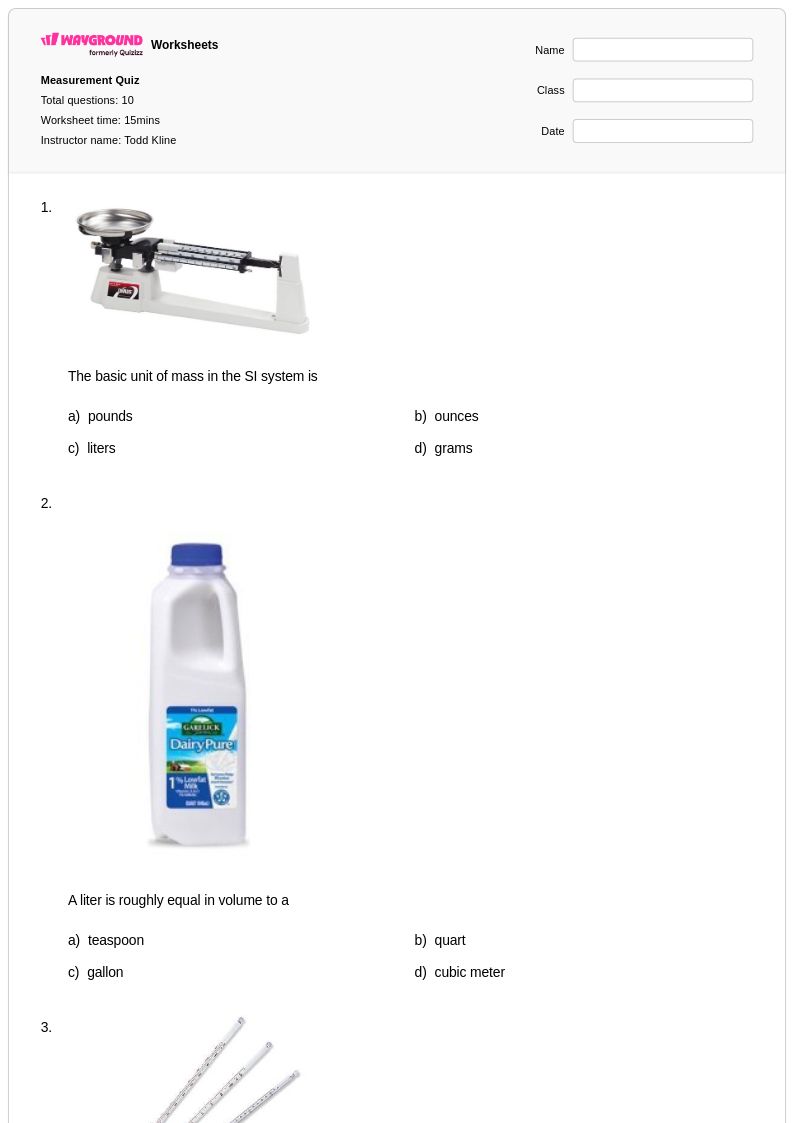
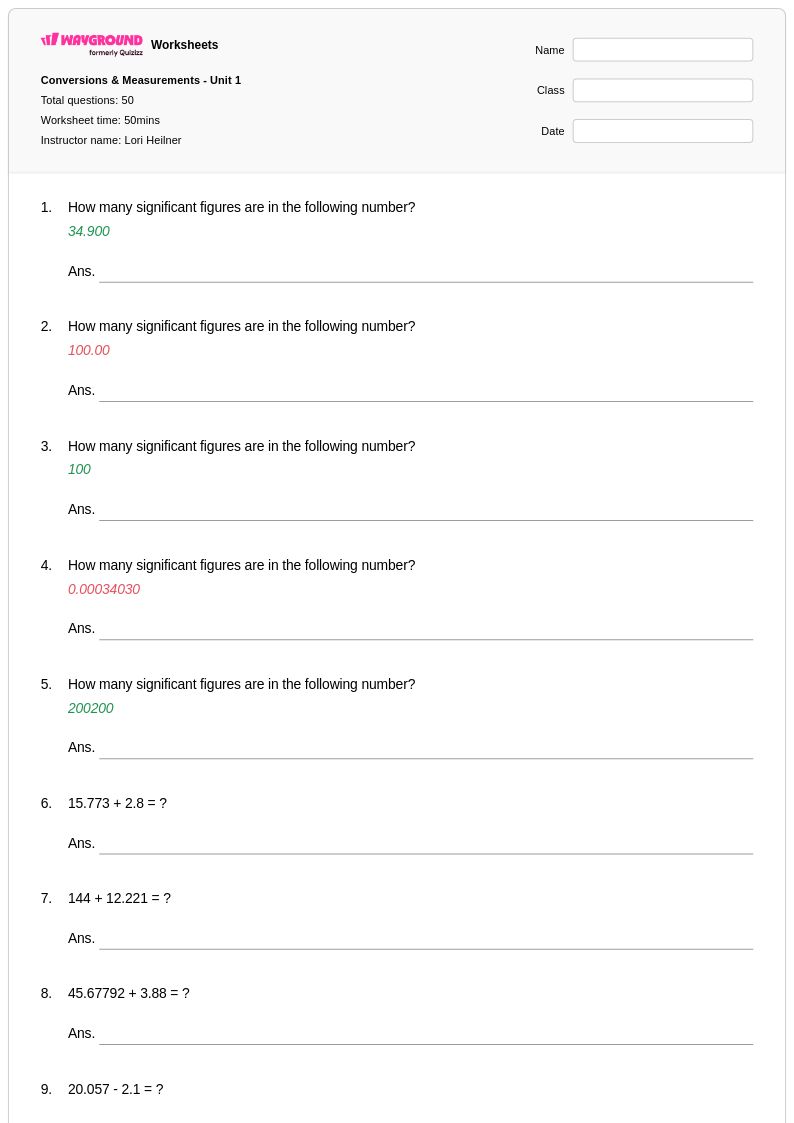
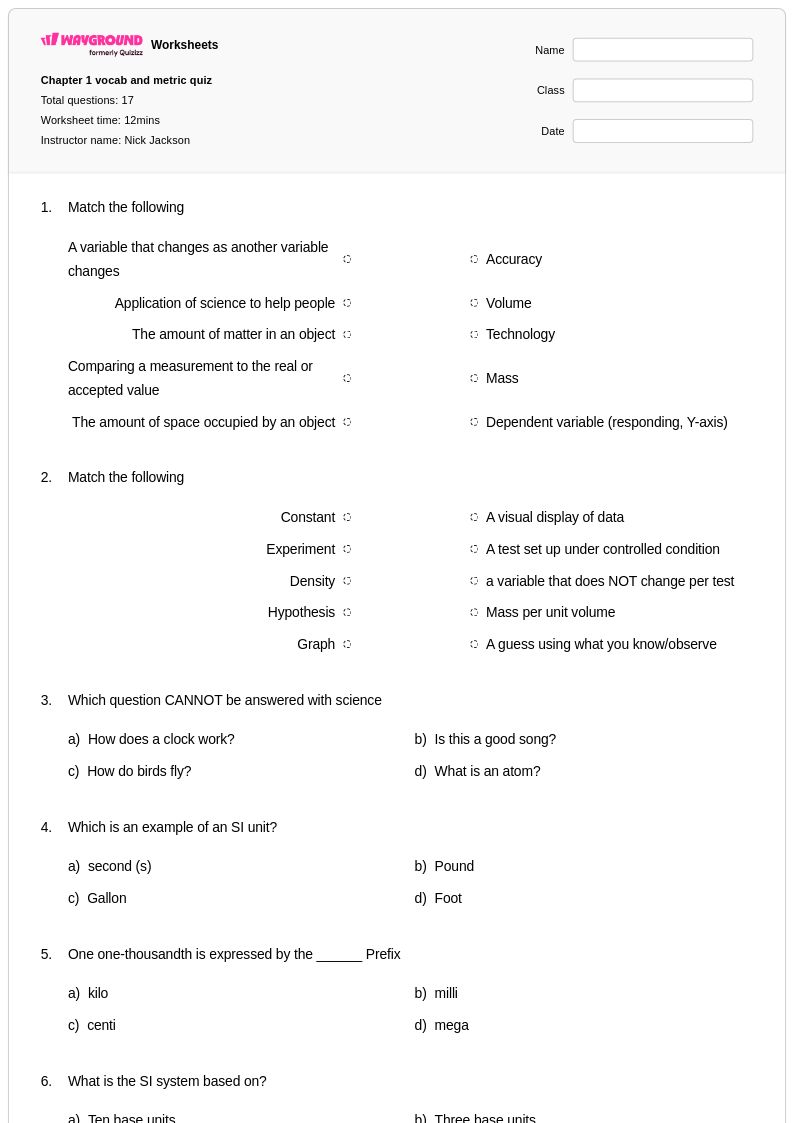
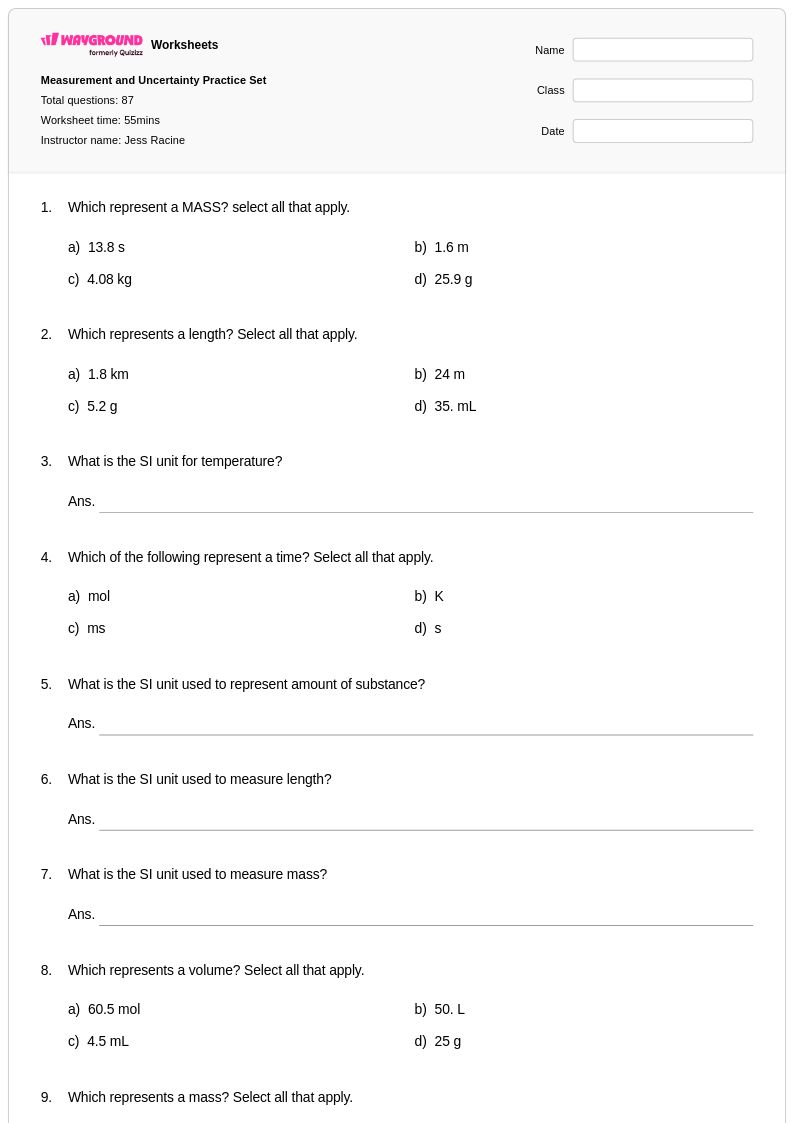
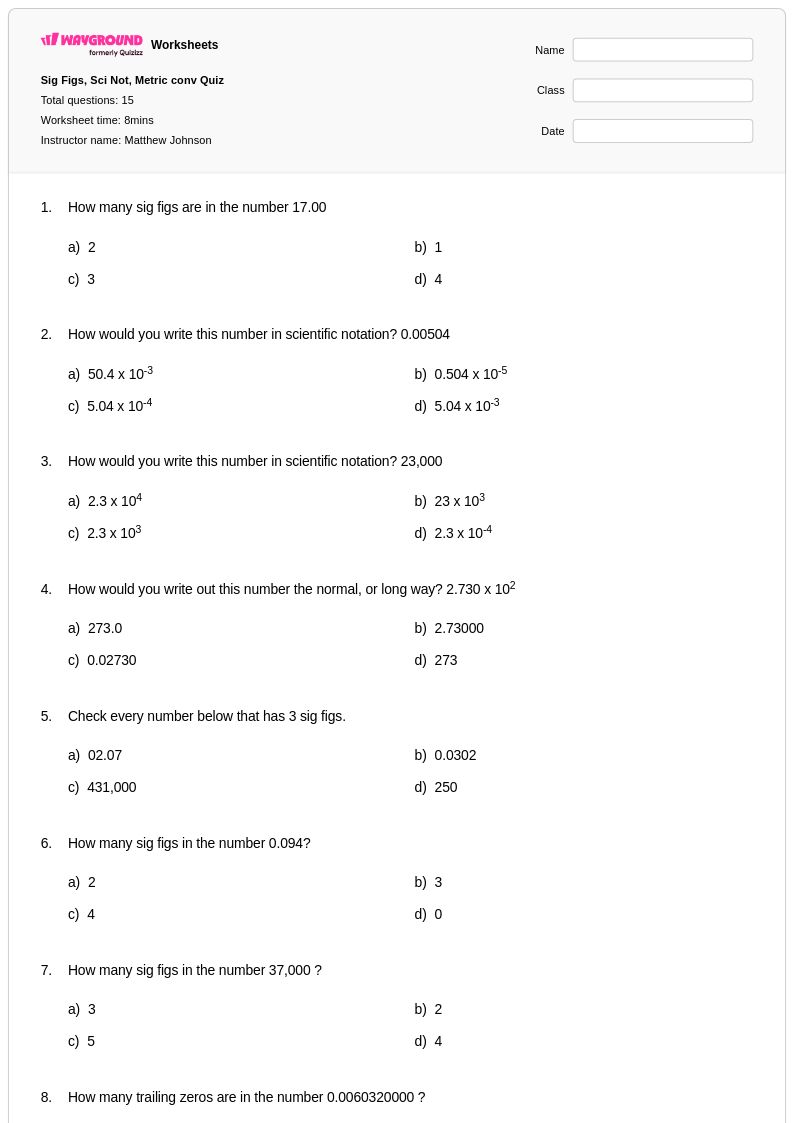
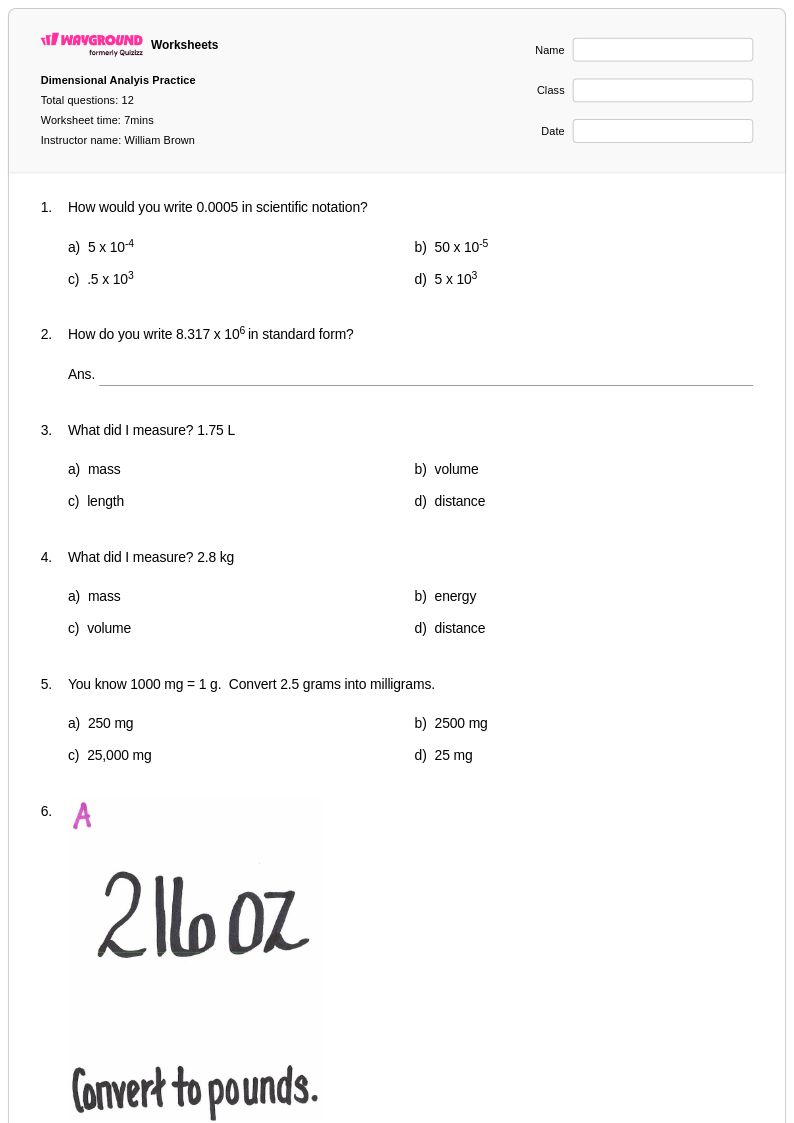
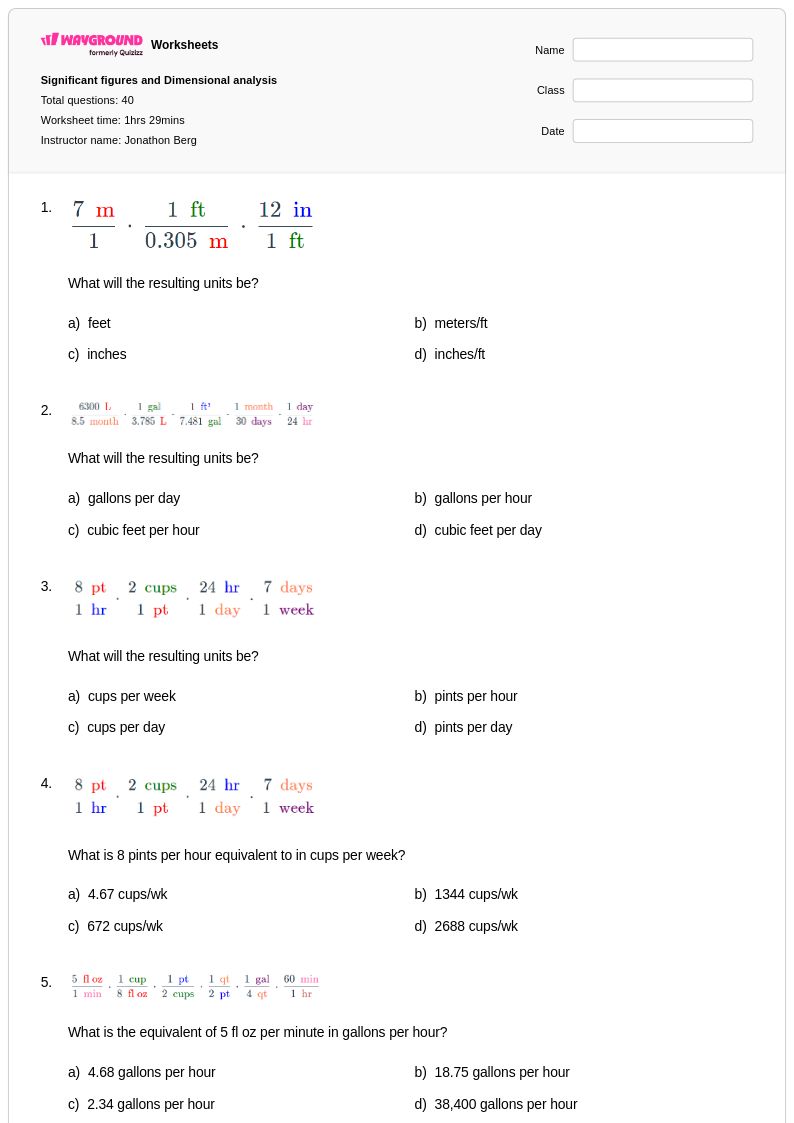
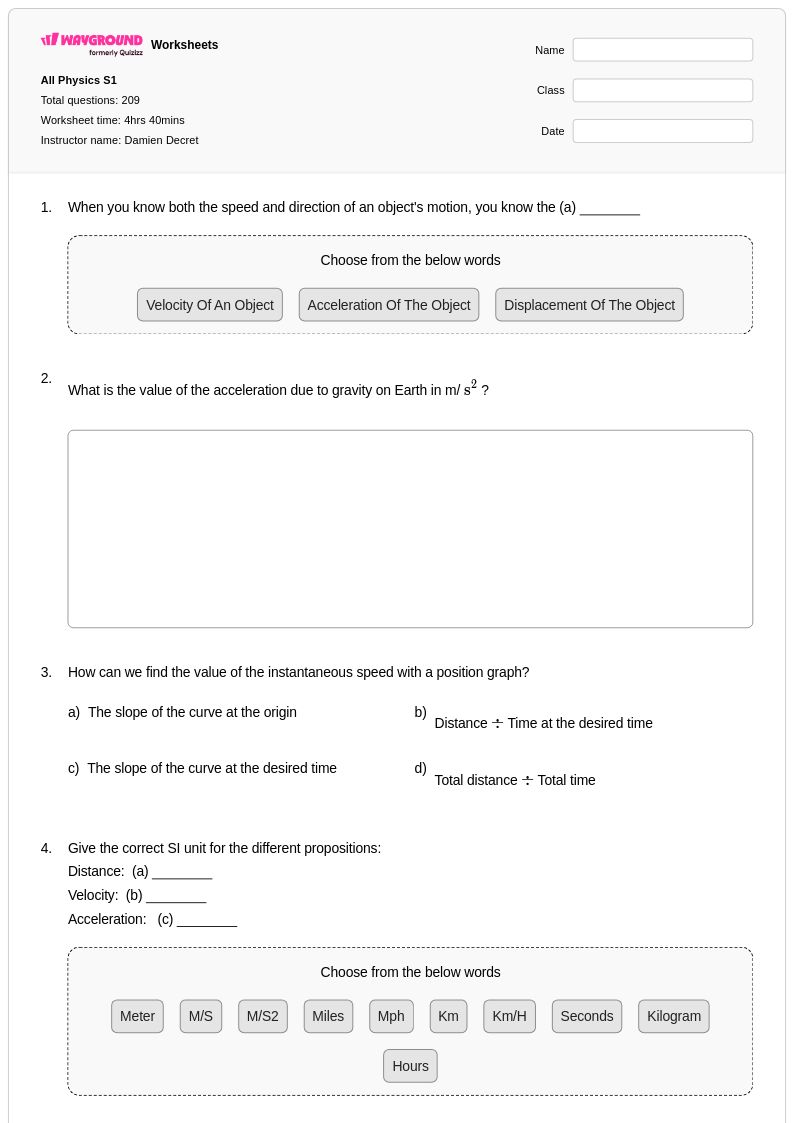
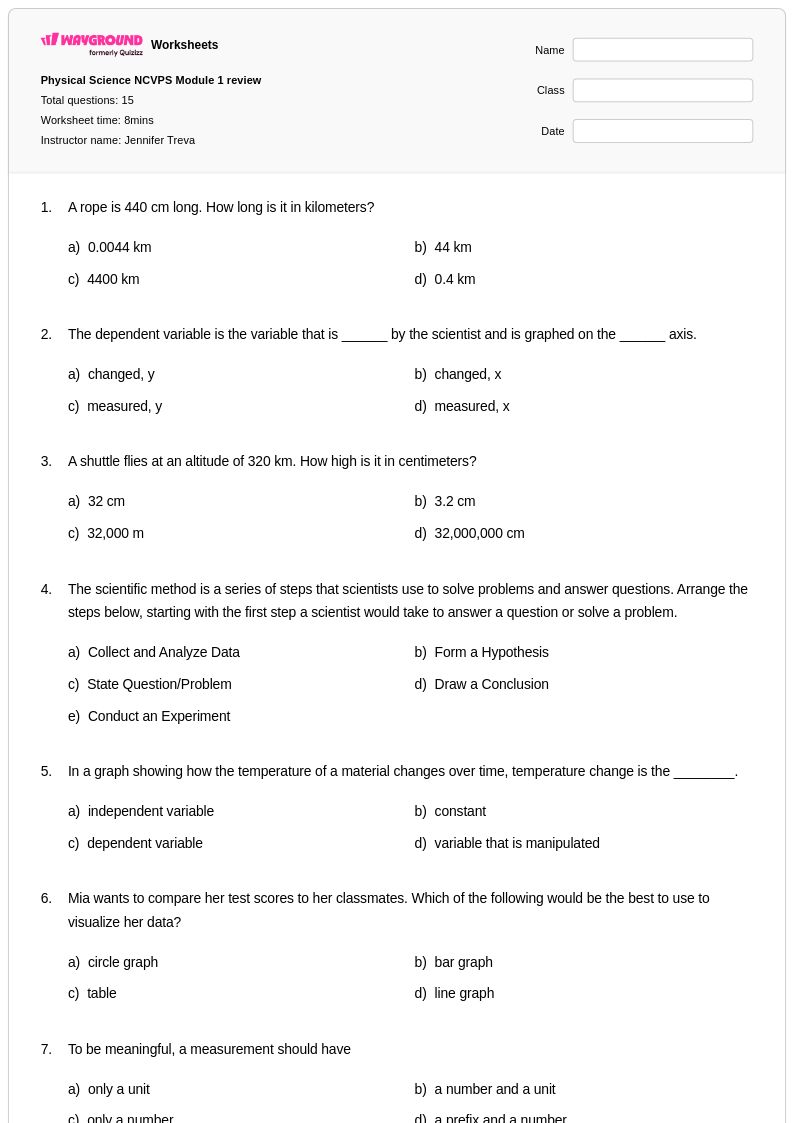
SI Units Conversion worksheets for Class 12 students available through Wayground (formerly Quizizz) provide comprehensive practice with the International System of Units and metric conversions essential for advanced scientific study. These expertly crafted worksheets strengthen students' ability to convert between base units like meters, kilograms, and seconds, as well as derived units such as newtons, joules, and watts, while mastering the use of metric prefixes from nano to giga. Students develop proficiency in dimensional analysis, scientific notation applications, and complex multi-step conversions that mirror real-world laboratory scenarios. Each worksheet includes detailed practice problems with corresponding answer keys, ensuring students can verify their work and identify areas needing reinforcement. These free printable resources in PDF format support both classroom instruction and independent study, helping students build the measurement fluency required for success in physics, chemistry, and engineering coursework.
Wayground (formerly Quizizz) empowers teachers with millions of educator-created SI Units Conversion resources specifically aligned with Class 12 science standards and curriculum requirements. The platform's robust search and filtering capabilities allow instructors to quickly locate worksheets targeting specific conversion challenges, from basic metric relationships to complex unit manipulations involving derived quantities and scientific measurements. Teachers can customize existing materials or create new assessments using built-in differentiation tools that accommodate varying skill levels within the classroom. Whether delivered as traditional printable worksheets or interactive digital activities, these resources support flexible lesson planning while providing targeted remediation for struggling students and enrichment opportunities for advanced learners. The comprehensive collection includes both foundational skill practice and application-based problems that prepare students for standardized assessments and post-secondary scientific studies.
FAQs
How do I teach SI units conversion to science students?
Start by grounding students in the structure of the metric system, specifically the role of base units and the meaning of each prefix (kilo-, centi-, milli-, etc.). From there, introduce dimensional analysis as the systematic method for converting between units, since it works across all measurement types including length, mass, volume, time, and temperature. Using a consistent conversion factor approach early on prevents students from relying on memorized tricks that break down with multi-step problems.
What exercises help students practice SI units conversion?
Effective practice starts with single-step conversions within one measurement category, such as converting millimeters to kilometers, before moving to multi-step problems that require chaining conversion factors. Problems that integrate scientific notation alongside unit conversion are especially useful for preparing students for chemistry and physics coursework. Worksheets that progress in difficulty within a single session help students build procedural fluency without overwhelming them early in the learning sequence.
What mistakes do students commonly make when converting SI units?
The most frequent error is multiplying when they should divide, or vice versa, because students guess at the direction of conversion rather than applying dimensional analysis systematically. Students also confuse prefix values, most often mixing up centi- (10⁻²) and milli- (10⁻³), which leads to answers that are off by a factor of 10. A third common mistake is failing to cancel units correctly when setting up conversion factors, leaving the answer in the wrong unit without noticing.
How do I use SI units conversion worksheets on Wayground in my classroom?
Wayground's SI units conversion worksheets are available as printable PDFs for traditional classroom use and in digital formats for technology-integrated learning environments, so you can assign them as independent practice, homework, or in-class review depending on your setup. You can also host them as a quiz directly on Wayground, which allows for real-time student response tracking. For students who need accommodations, Wayground supports features such as extended time, read aloud, and reduced answer choices, which can be configured individually without affecting other students' experience.
How do I differentiate SI units conversion practice for students at different levels?
For struggling students, begin with single-unit conversions using a reference chart of metric prefixes before removing the scaffold. Advanced students benefit from multi-step conversions that combine measurement categories, such as converting a speed given in cm/s to km/hr. On Wayground, teachers can apply accommodations such as reduced answer choices or extended time to individual students, allowing the same worksheet to serve a mixed-ability class without requiring separate materials.
At what grade level should students learn SI units conversion?
SI units conversion is typically introduced in middle school science, around grades 6 through 8, where students first encounter lab-based measurement and the metric system formally. It is reinforced in high school chemistry and physics, where dimensional analysis becomes essential for stoichiometry and formula-based problem solving. Students who master the systematic conversion method early are significantly better prepared for quantitative reasoning in advanced science courses.