Free Printable Social-Emotional Learning Worksheets for Class 2
Free Class 2 social-emotional learning worksheets and printables help students develop self-awareness, empathy, and relationship skills through engaging physical education activities with complete answer keys and PDF downloads.
Explore printable Social-Emotional Learning worksheets for Class 2
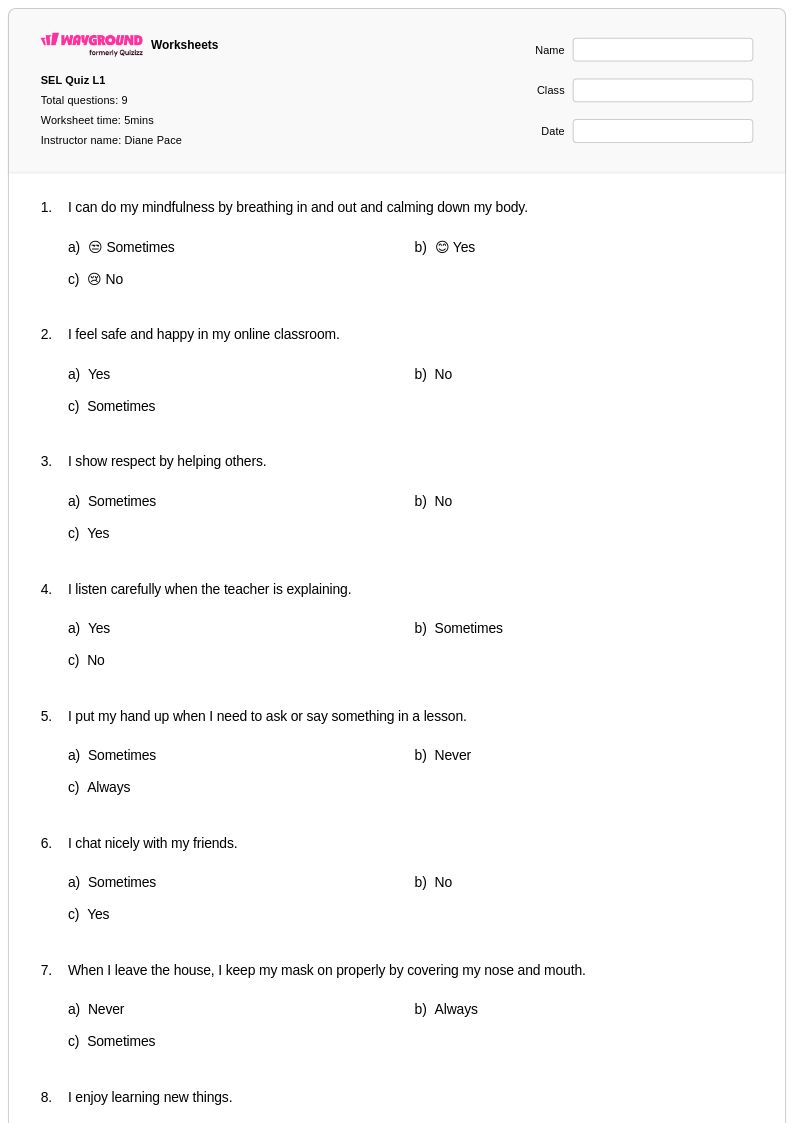
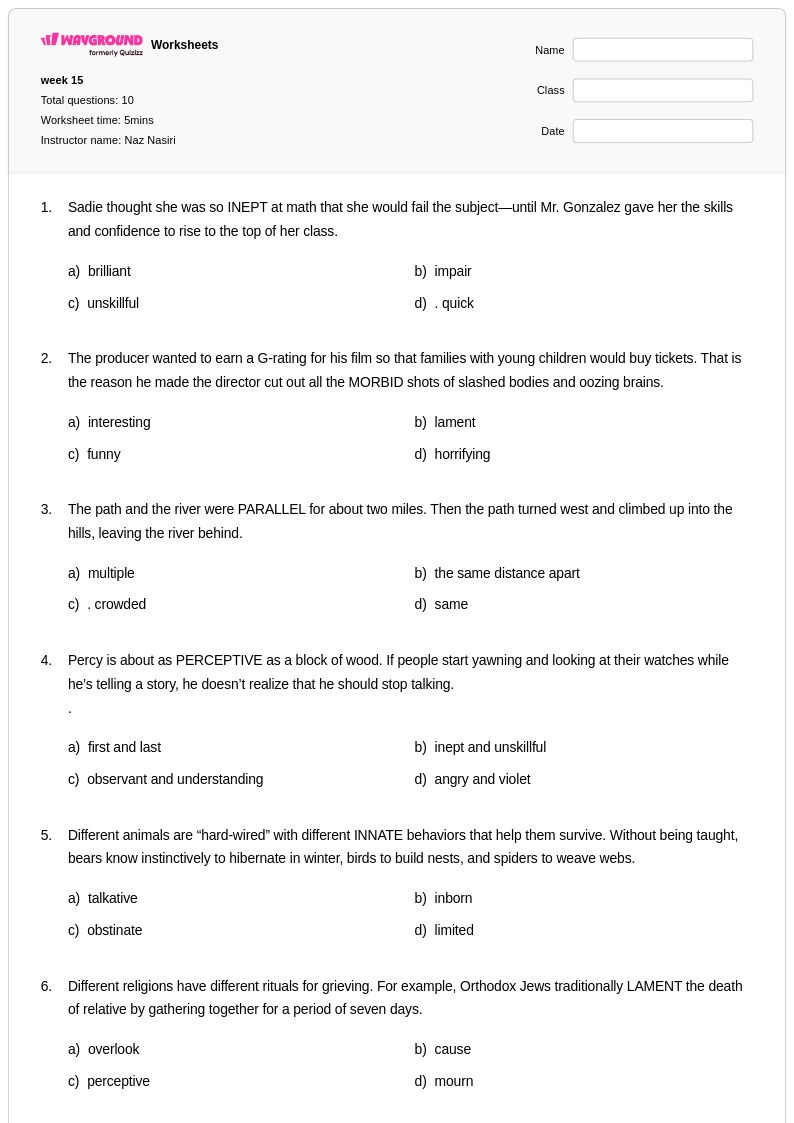
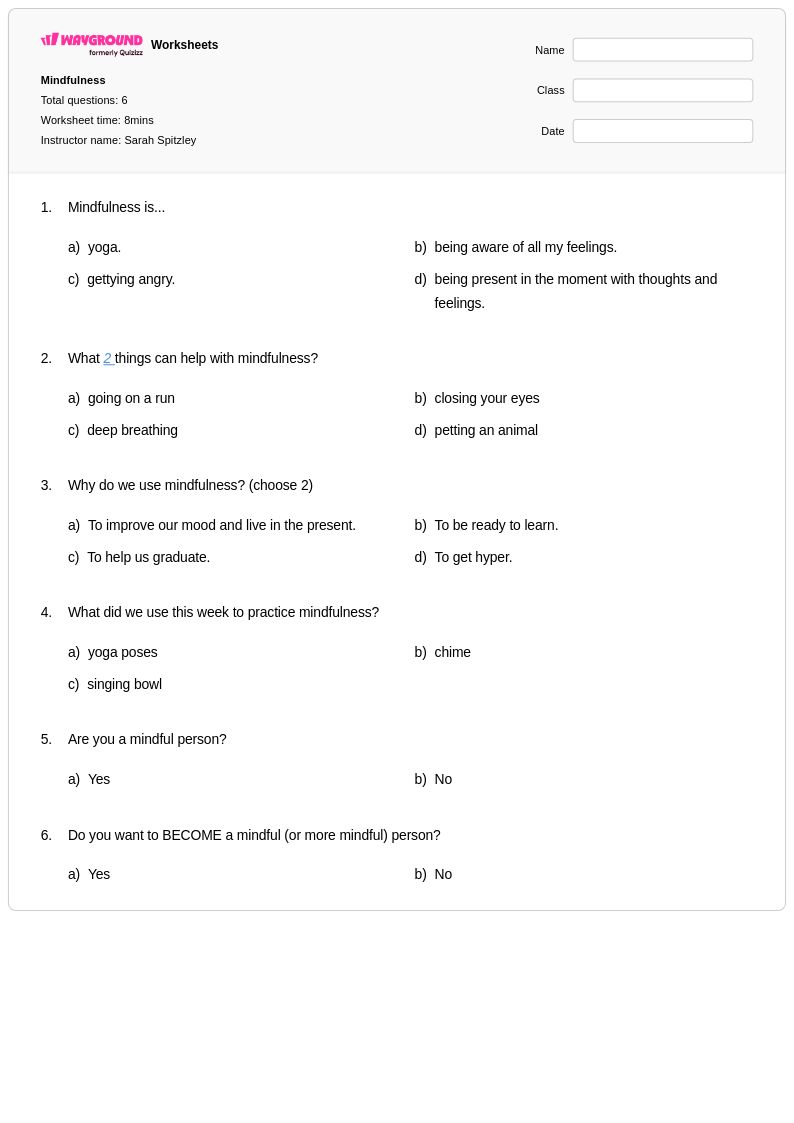
Social-emotional learning worksheets for Class 2 physical education from Wayground (formerly Quizizz) provide young students with essential tools to develop interpersonal skills, self-awareness, and emotional regulation within active learning environments. These carefully crafted printables focus on building foundational social competencies such as teamwork, conflict resolution, empathy, and communication skills that are crucial for successful participation in physical activities and sports. Each worksheet includes structured practice problems that guide second-grade students through scenarios they might encounter during PE classes, playground activities, or team-based exercises, with accompanying answer keys that help educators assess student understanding of appropriate social responses and emotional management strategies. The free pdf resources emphasize age-appropriate vocabulary and relatable situations, enabling young learners to connect abstract social-emotional concepts with concrete physical education experiences.
Wayground (formerly Quizizz) empowers physical education teachers with access to millions of teacher-created social-emotional learning resources specifically designed for elementary students, featuring robust search and filtering capabilities that allow educators to quickly locate materials aligned with specific learning standards and developmental needs. The platform's comprehensive worksheet collection supports differentiated instruction through customizable content that can be adapted for varying skill levels within Class 2 classrooms, whether teachers need materials for remediation, enrichment, or regular skill practice sessions. Both printable and digital formats, including downloadable pdf versions, provide maximum flexibility for lesson planning and implementation, while the extensive library of social-emotional learning activities helps physical education instructors seamlessly integrate character development and interpersonal skill building into their movement-based curriculum throughout the academic year.
FAQs
How do I teach social-emotional learning in a physical education or movement-based setting?
Teaching SEL in physical education works best when emotional concepts are embedded directly into activity scenarios rather than taught in isolation. Use moments during team sports, cooperative games, and competitive exercises to prompt reflection on emotions like frustration, excitement, and disappointment. Structured debrief discussions after activities help students connect their physical experiences to skills like self-regulation, empathy, and conflict resolution. Worksheets that present real sport and collaboration scenarios give students a framework for recognizing and naming their emotional responses before, during, and after physical challenges.
What exercises help students practice impulse control and emotional regulation?
Scenario-based worksheets are highly effective for practicing impulse control because they ask students to evaluate a situation, identify the emotional trigger, and select a measured response rather than a reactive one. Role-play prompts, reflection journals, and structured choice activities that present competitive or conflict-heavy situations give students repeated practice applying regulation strategies. In physical education contexts, exercises tied to sportsmanship and managing competitive emotions are especially useful because they mirror real situations students encounter during games and team activities.
What common mistakes do students make when learning about personal space and interpersonal boundaries?
Students frequently conflate physical proximity preferences with intent, assuming that someone who stands close is being aggressive or that distance signals unfriendliness. They also tend to apply a single standard of personal space to all situations, not accounting for cultural differences or context-specific norms like team huddles versus one-on-one conversations. A common misconception is that personal space boundaries are fixed rather than dynamic, which is why scenario-based practice that varies setting and relationship type helps students develop more flexible, context-aware social awareness.
How can I use teamwork and team-building worksheets to strengthen classroom community?
Teamwork worksheets are most effective when they reflect situations students genuinely encounter, such as disagreements during group tasks, unequal workload distribution, or communication breakdowns. Use them as pre-activity primers before cooperative challenges or as post-activity reflection tools to help students articulate what worked and what didn't. Pairing worksheet practice with live team-building activities creates a feedback loop where students can test the strategies they identified on paper. Focus on communication, role clarity, and shared goal-setting as core teamwork competencies, since these are the areas where students most frequently struggle.
How do I differentiate SEL worksheets for students with varied social-emotional skill levels?
For students who need additional support, reduce the complexity of scenario prompts, provide sentence starters for reflection questions, and limit answer choices to decrease cognitive load. Wayground allows teachers to apply individual student accommodations such as reduced answer choices, read aloud support, and extended time directly within the platform, which is particularly valuable for students with learning differences or those still developing emotional vocabulary. Students with stronger SEL foundations can be challenged with open-ended analysis prompts, peer coaching activities, or scenarios that require synthesizing multiple social skills simultaneously.
How do I use Wayground's Social-Emotional Learning worksheets in my classroom?
Wayground's SEL worksheets are available as printable PDFs for traditional classroom use and in digital formats for technology-integrated learning environments, making them flexible across in-person, hybrid, and remote settings. Teachers can also host worksheets as an interactive quiz directly on Wayground, giving students a structured digital experience with immediate feedback. Each worksheet includes a complete answer key, allowing teachers to facilitate meaningful discussion or use the material for formative assessment. The digital format also supports individual student accommodations such as read aloud, extended time, and font adjustments, which can be configured per student from the Students or Classes tab.