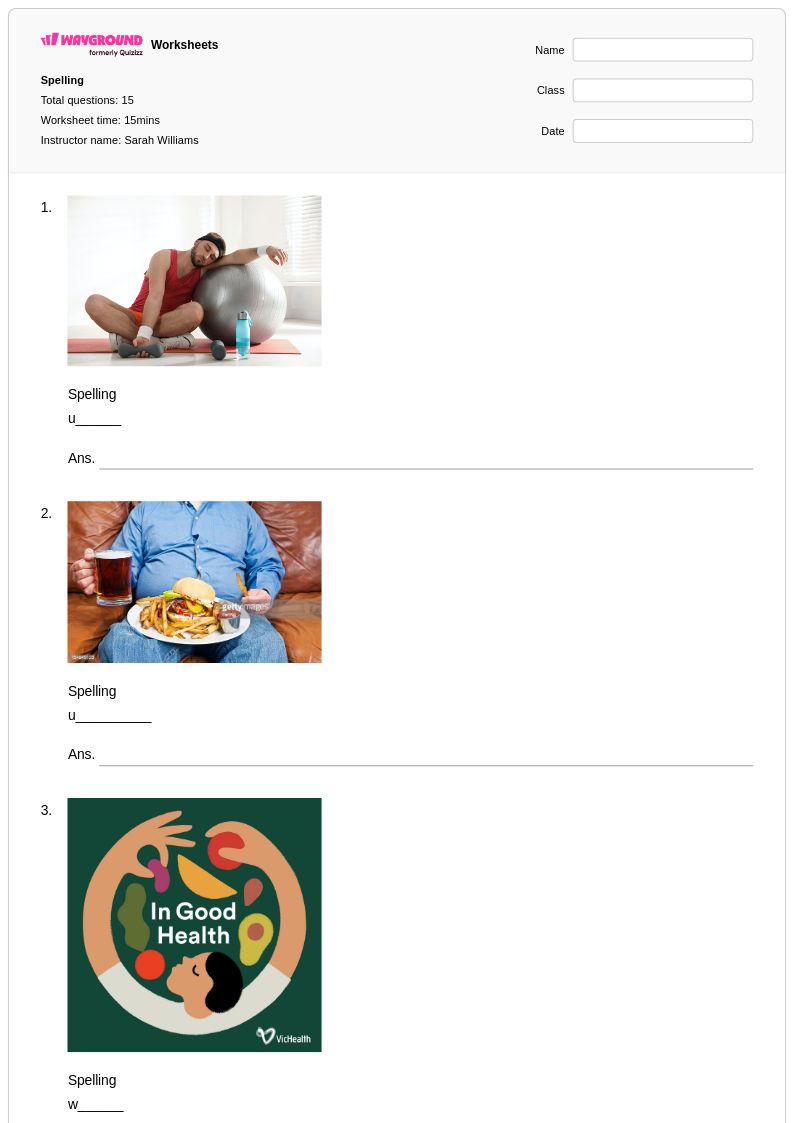
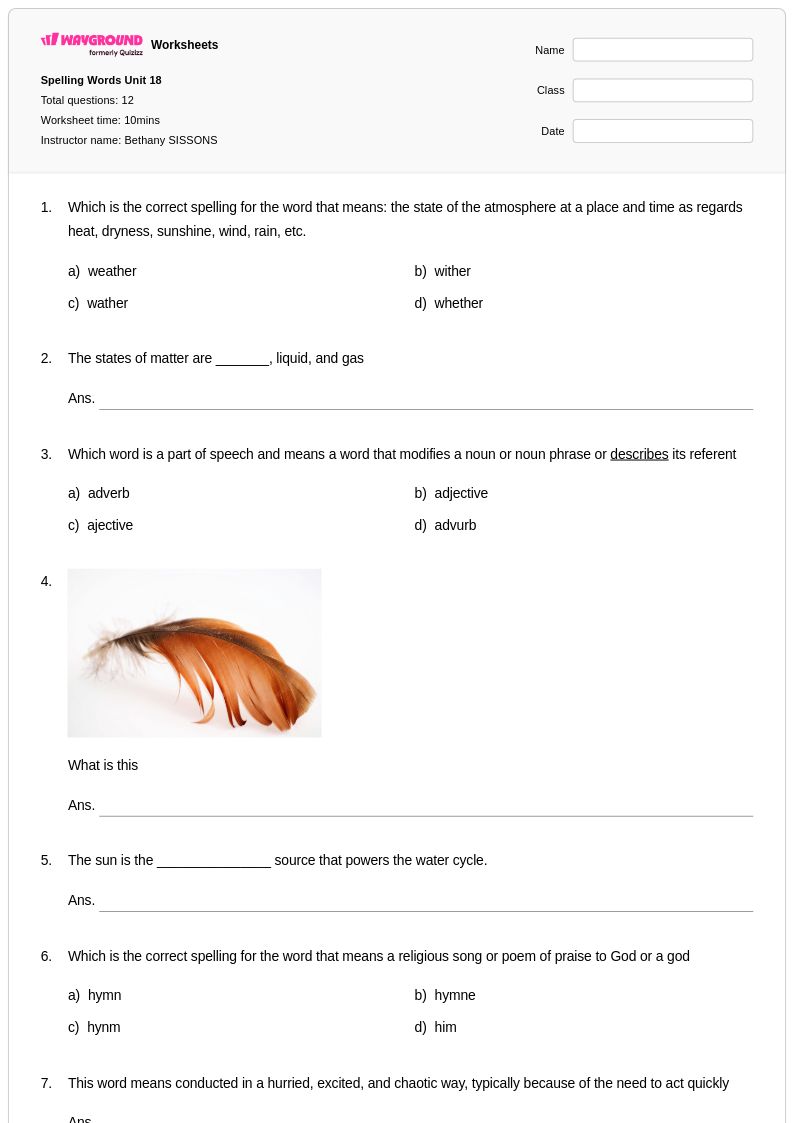
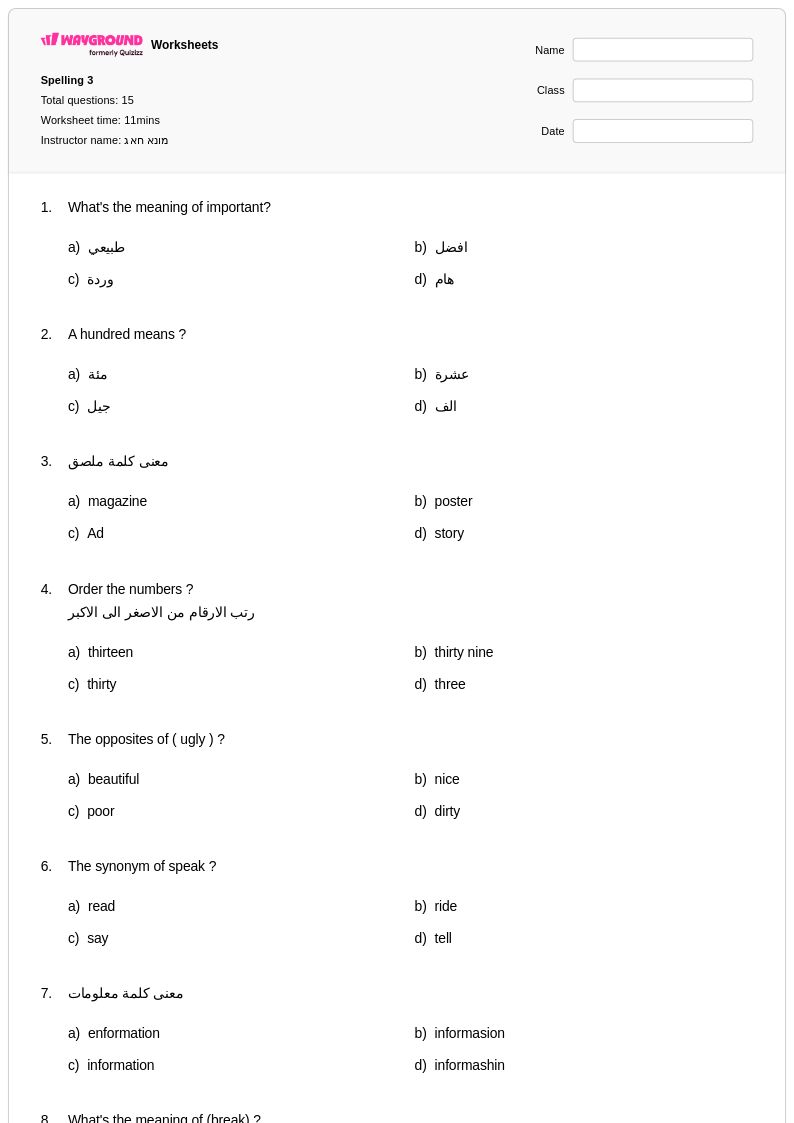
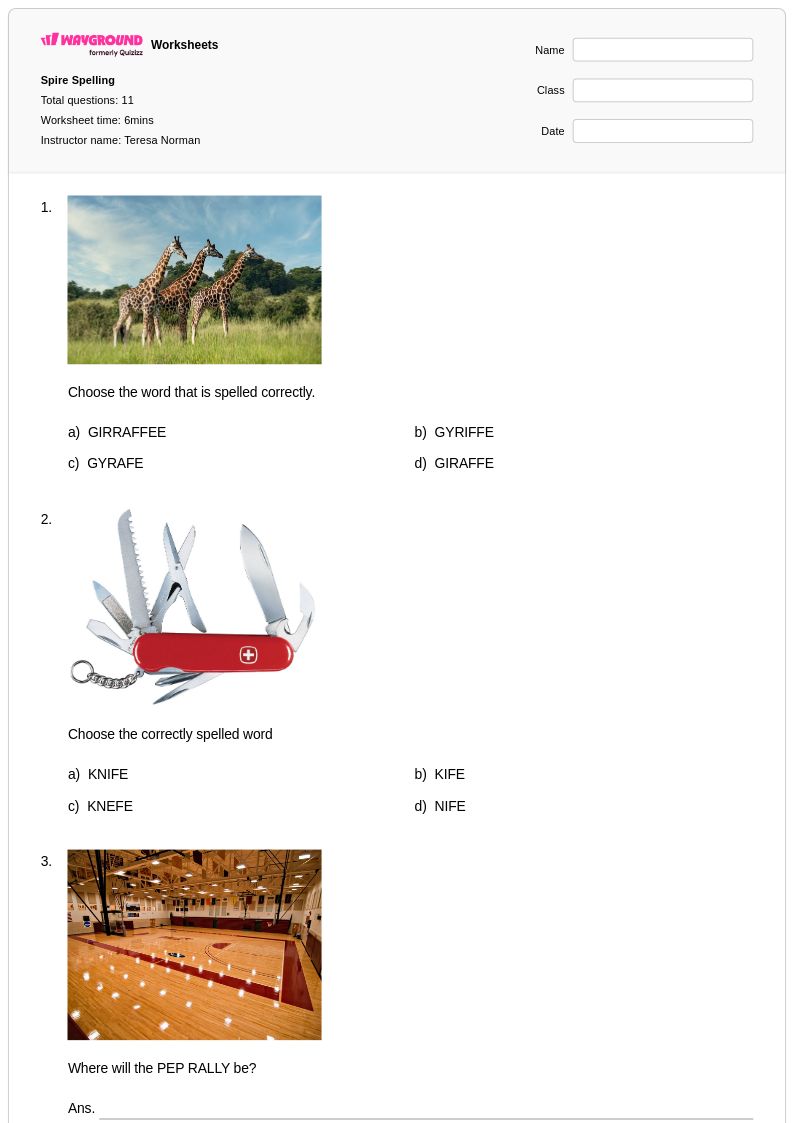
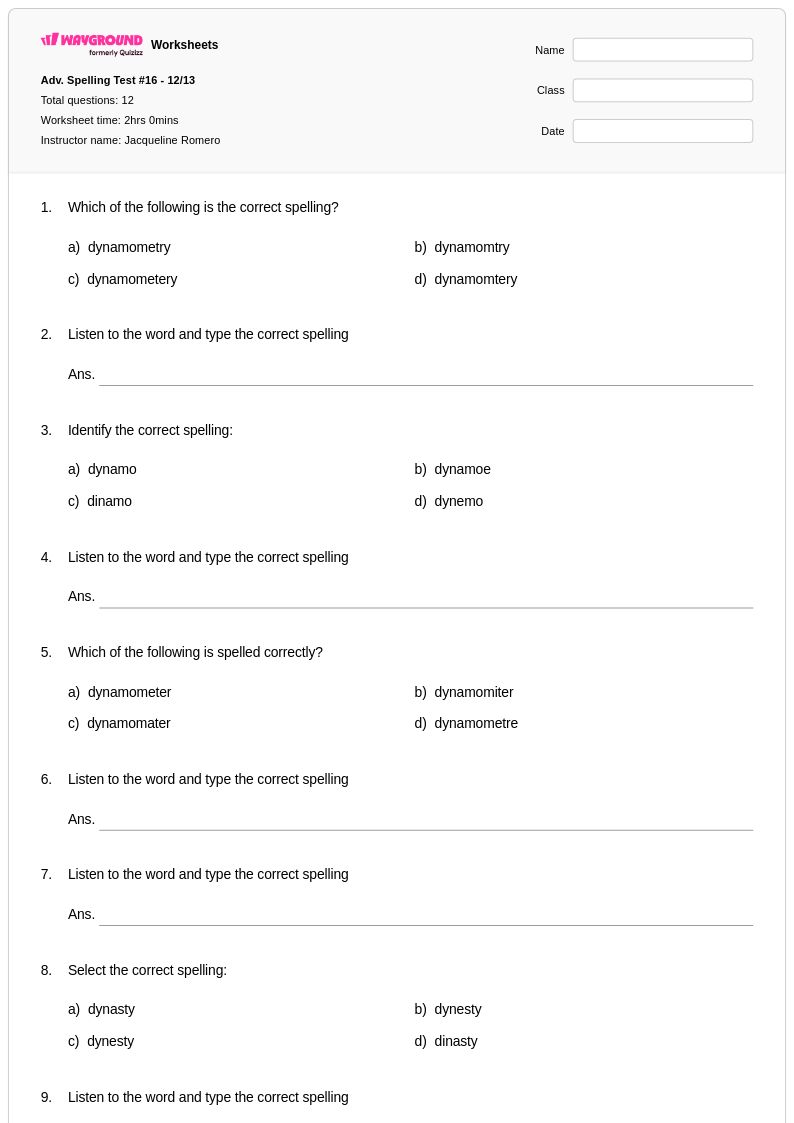
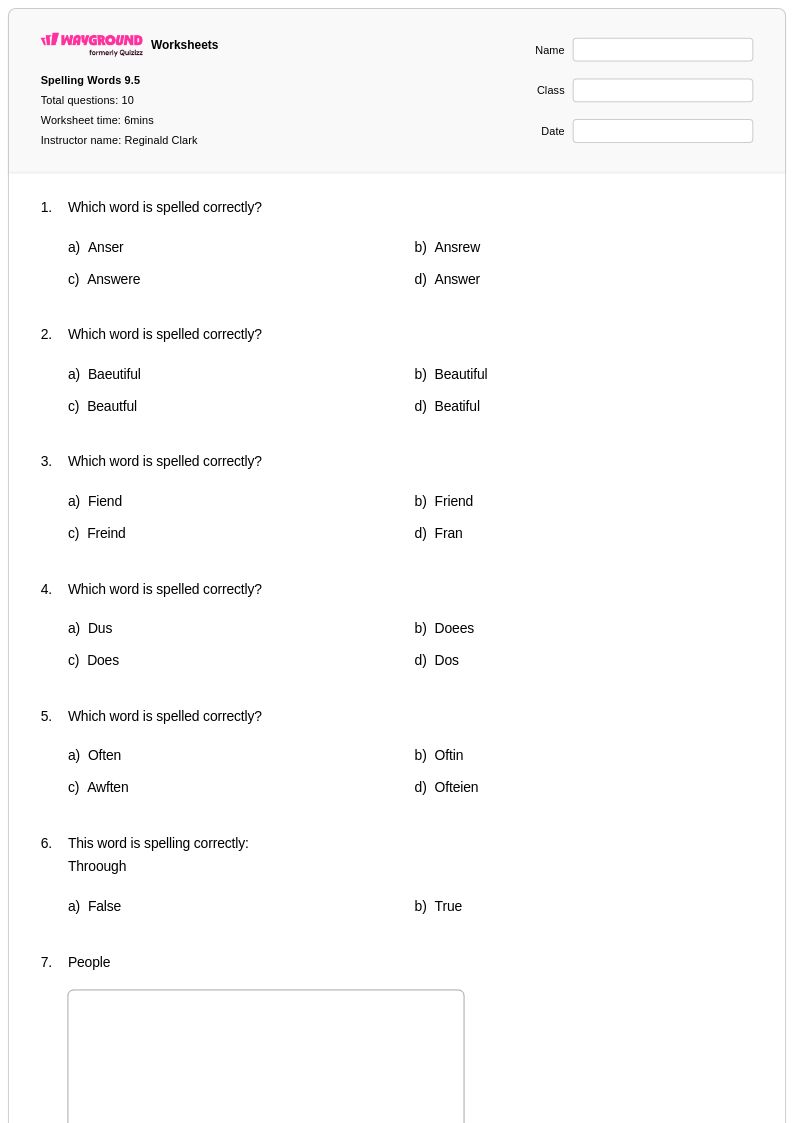
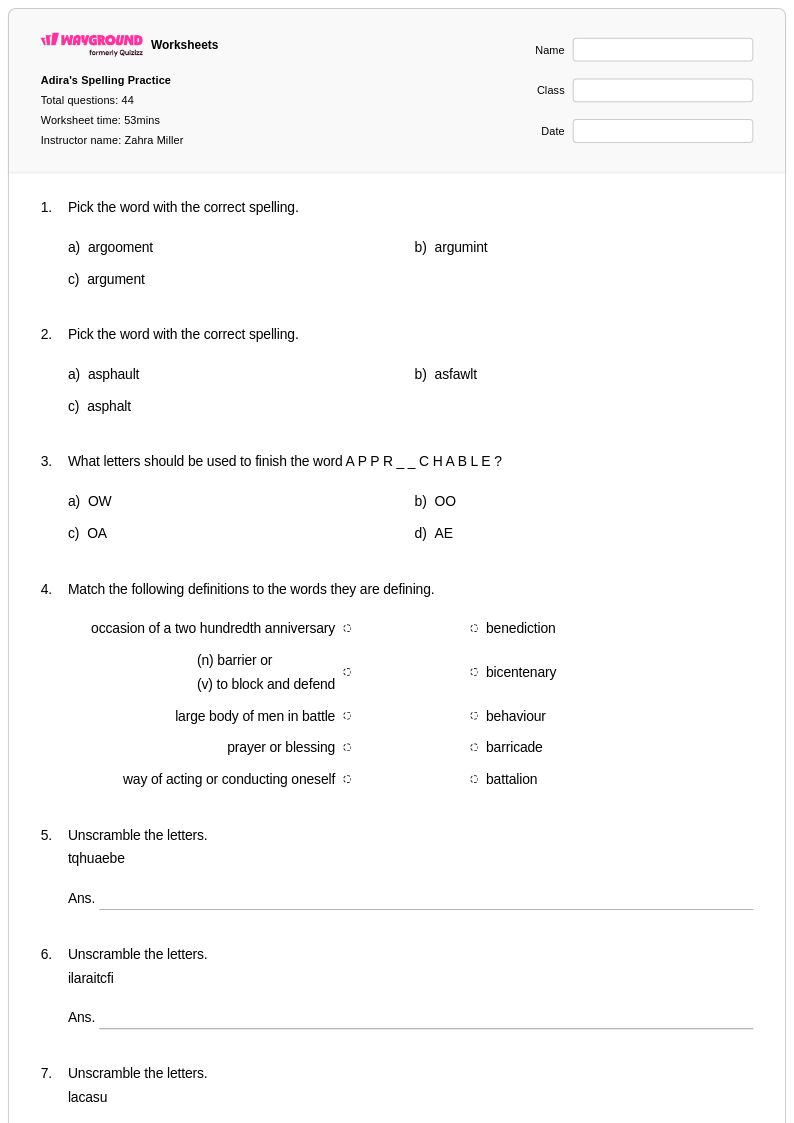
Enhance Class 5 spelling skills with Wayground's free printable worksheets and practice problems, featuring comprehensive PDF resources and answer keys to build vocabulary and writing confidence.
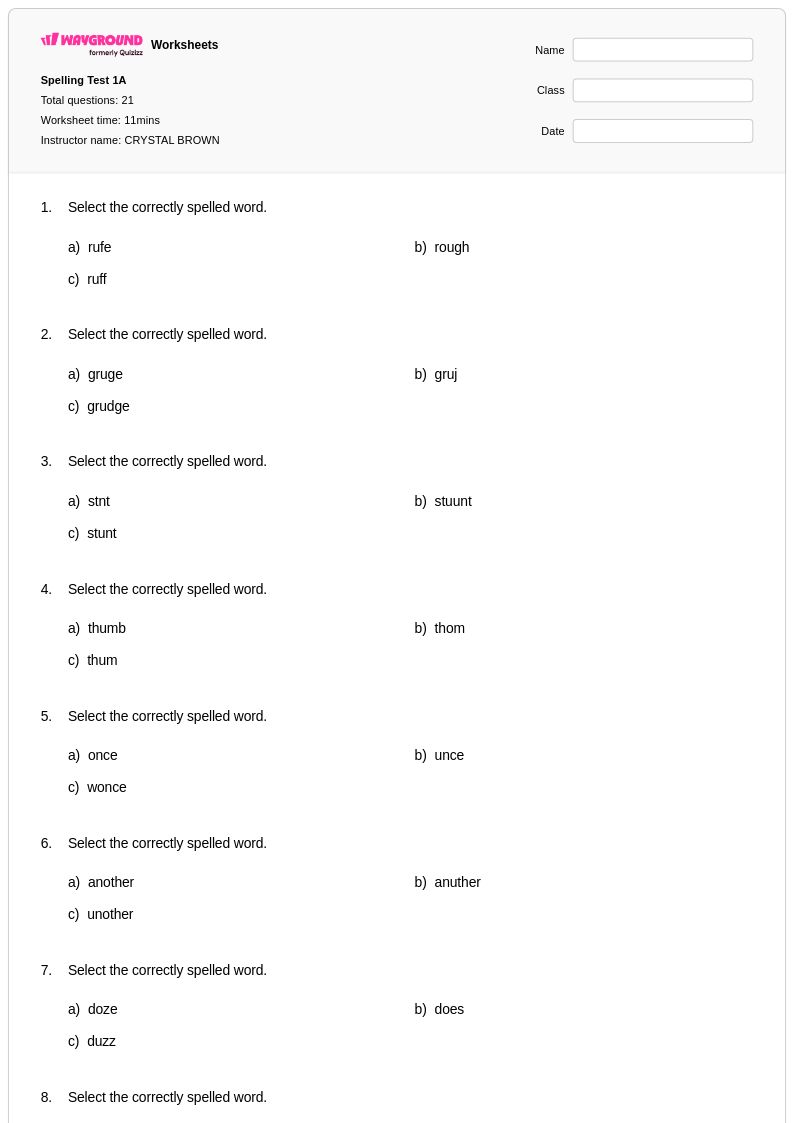
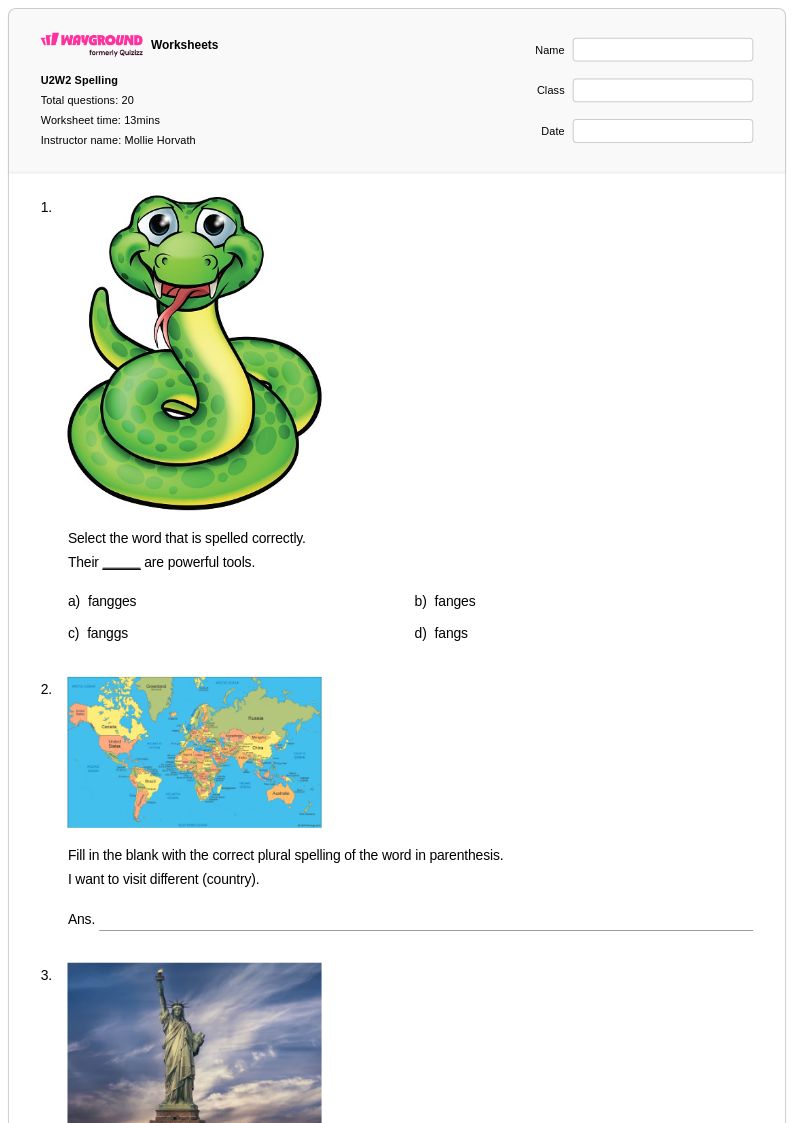
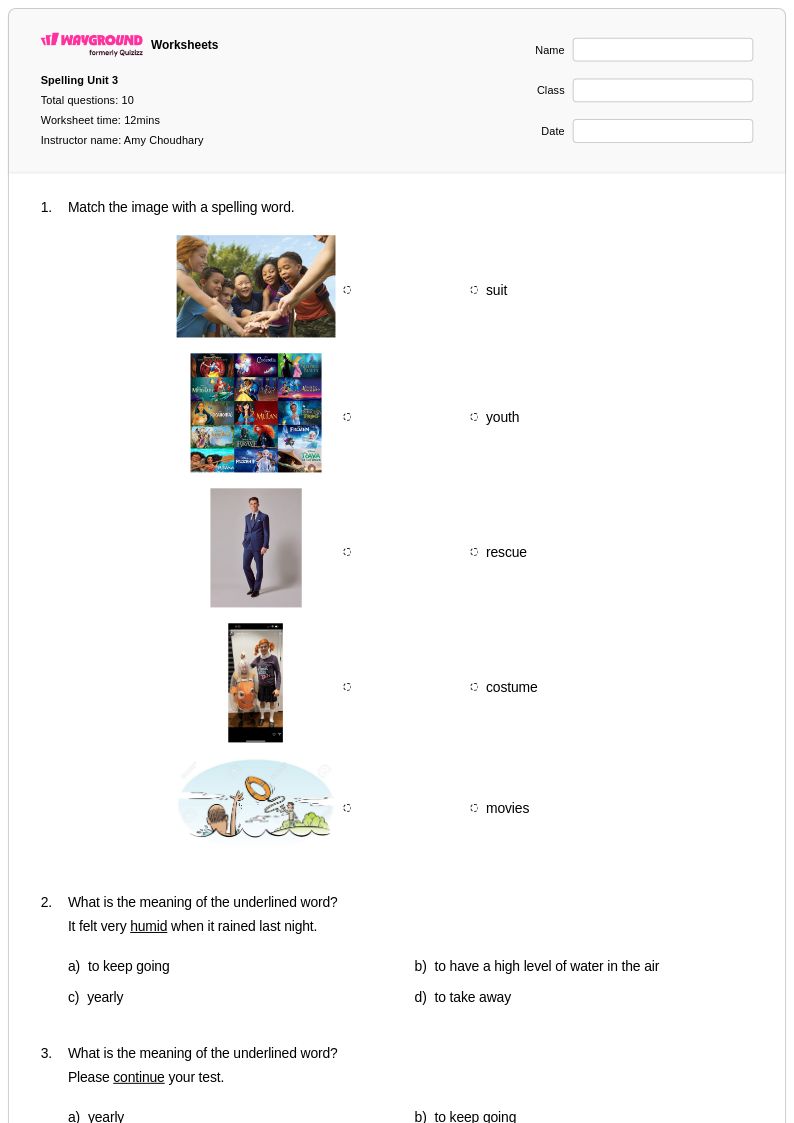
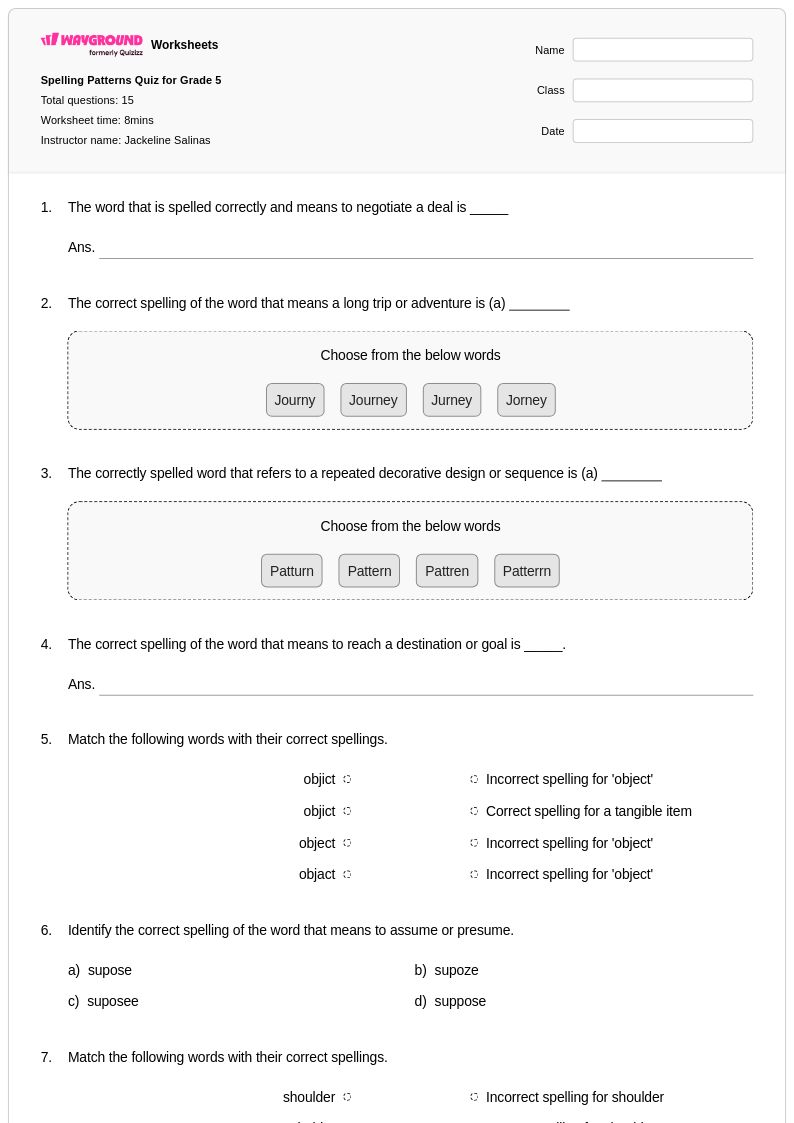
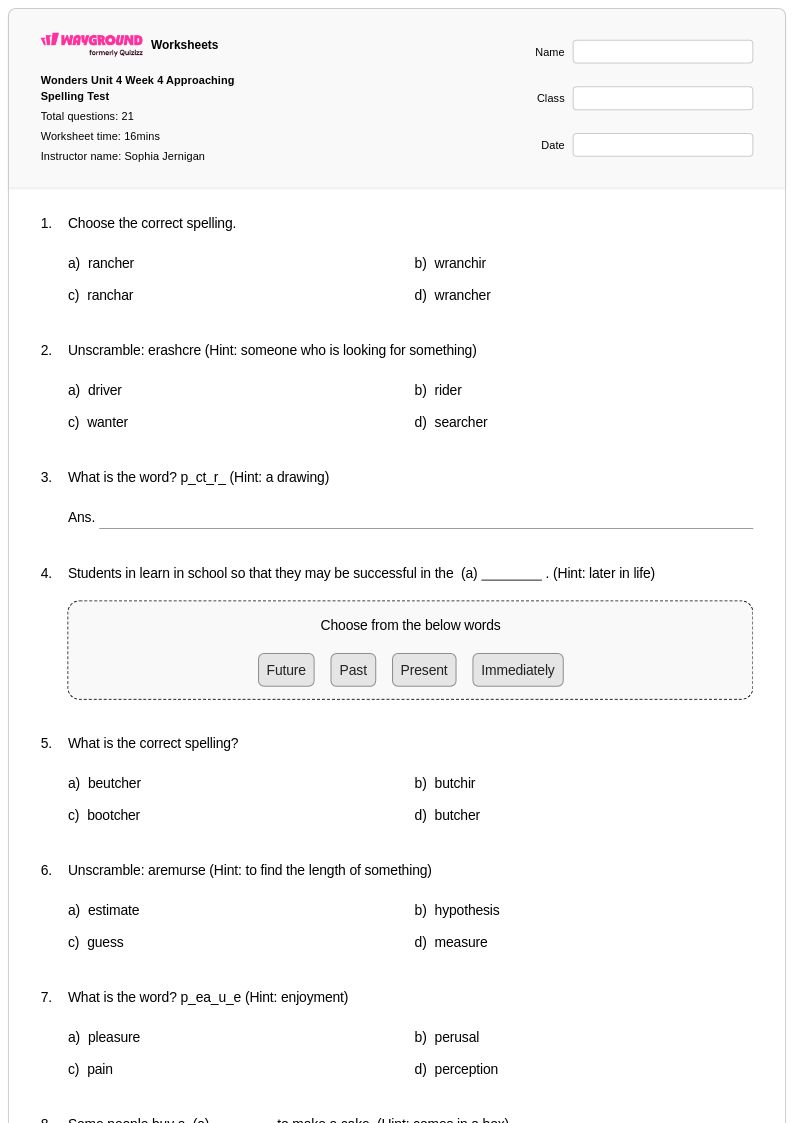
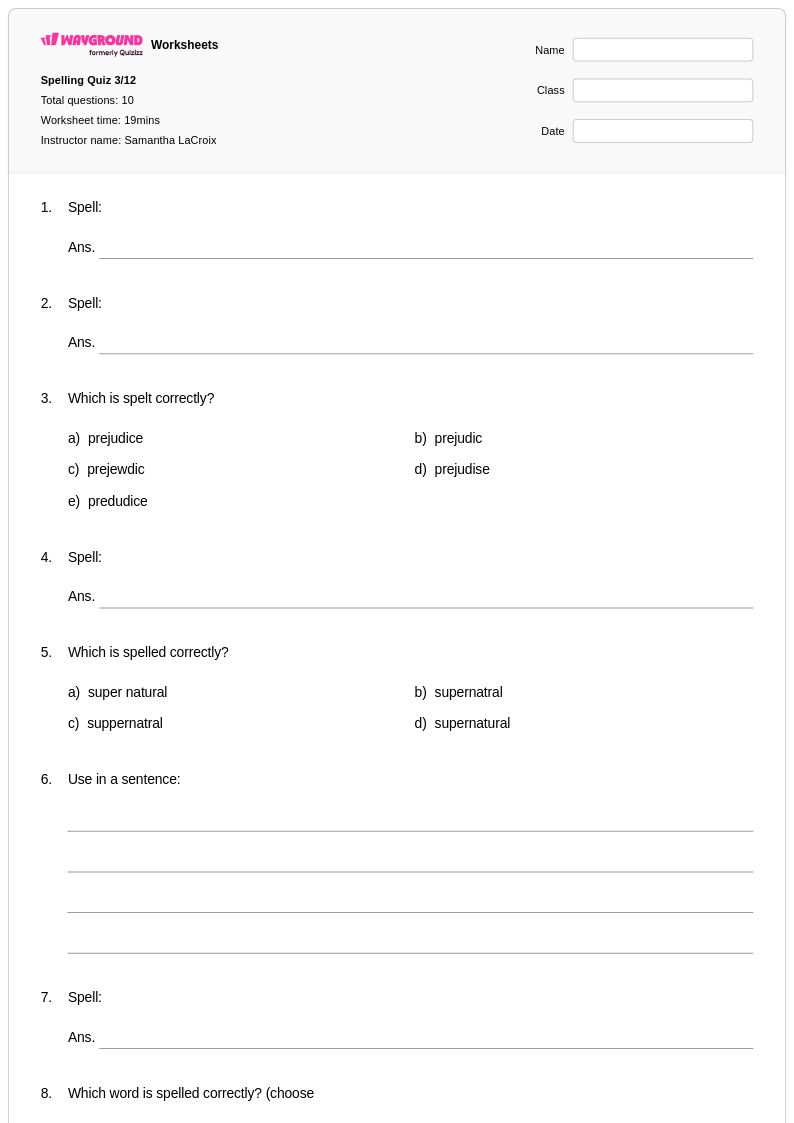
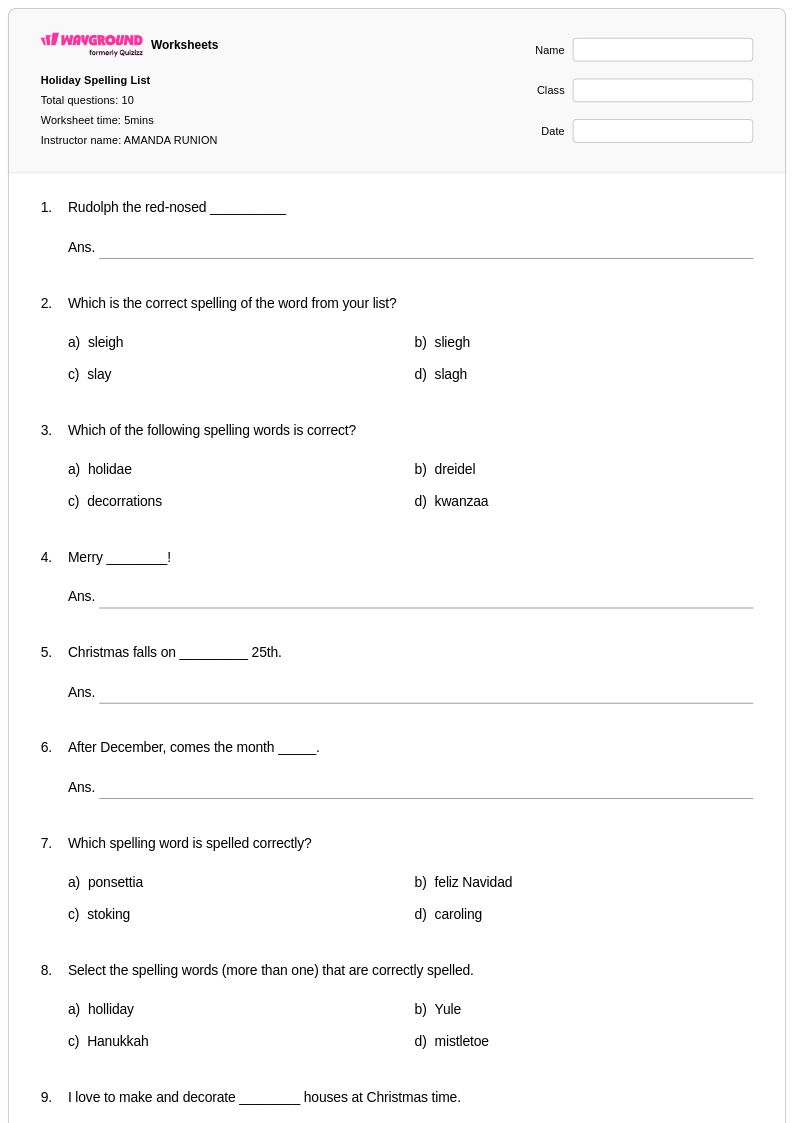
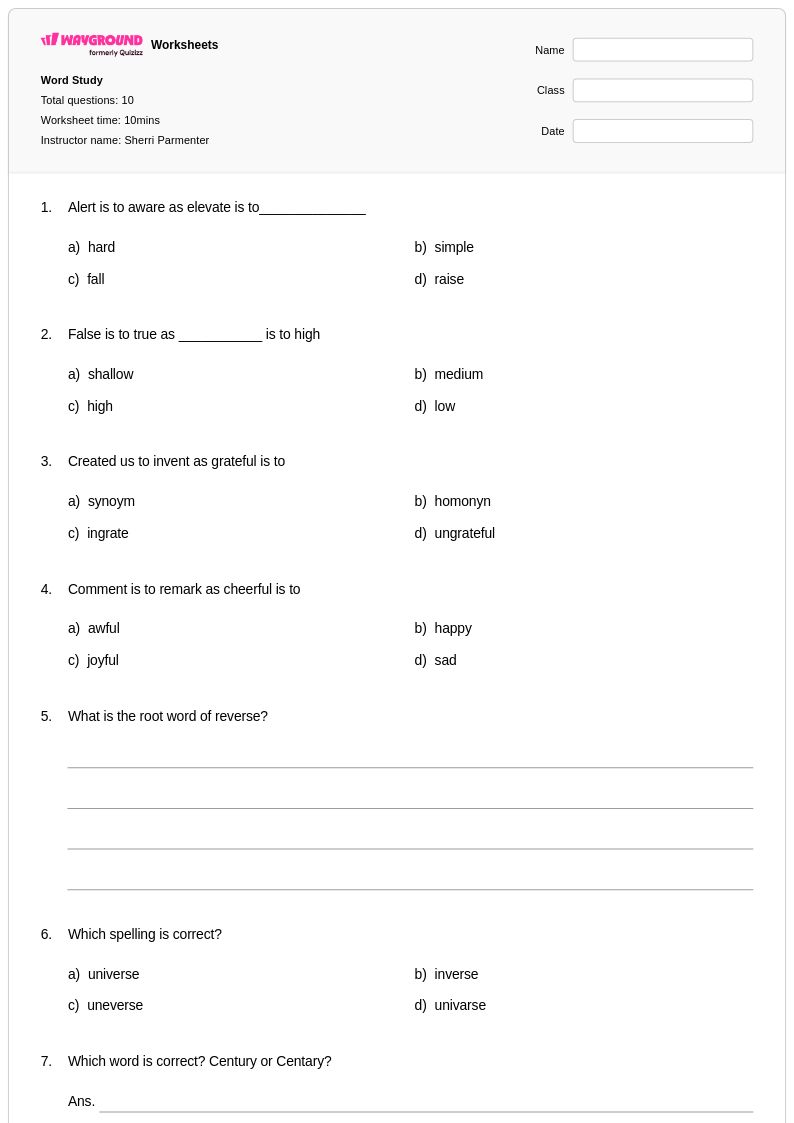
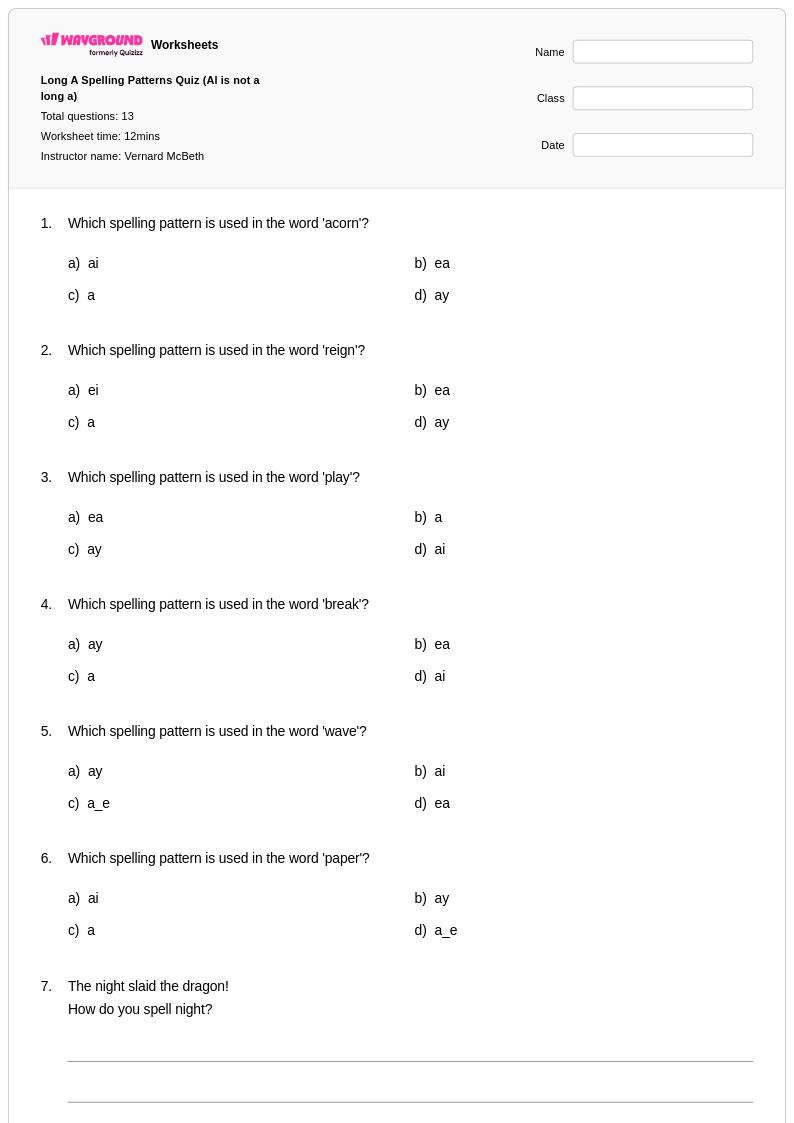
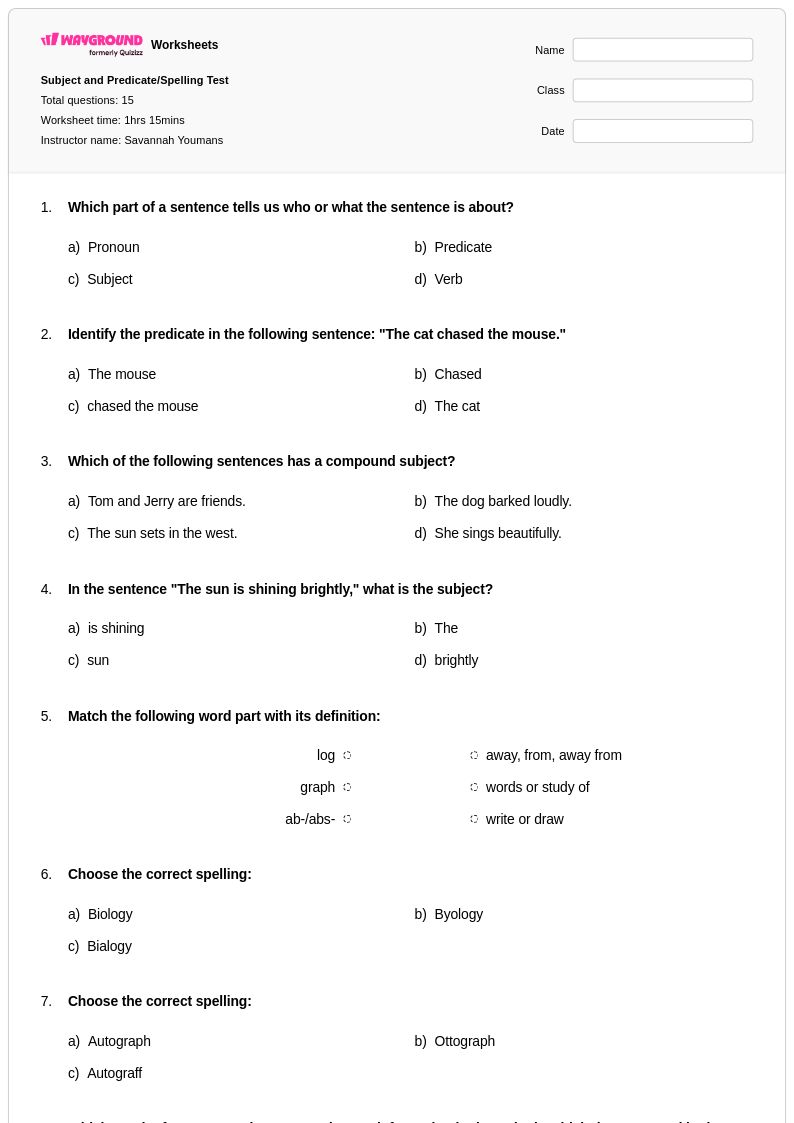
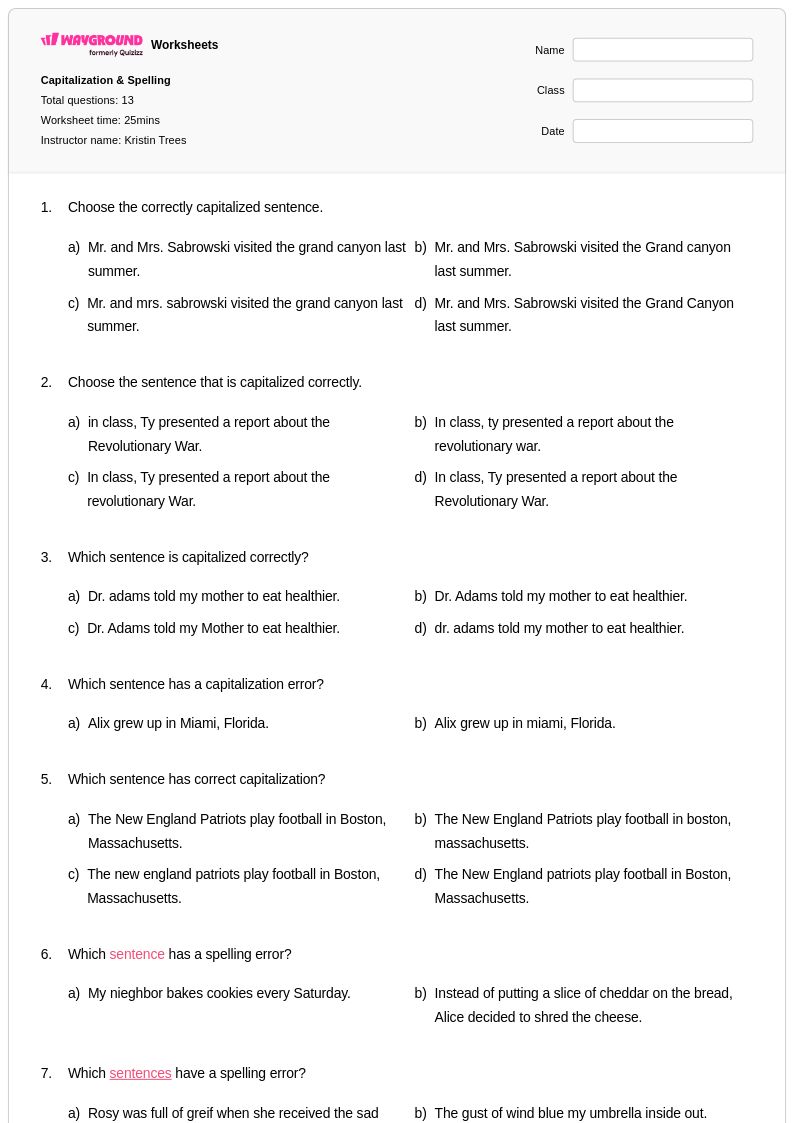
Class 5 spelling worksheets available through Wayground (formerly Quizizz) provide comprehensive practice opportunities for students developing essential orthographic skills at this critical elementary level. These carefully designed resources target key spelling patterns, phonetic rules, and vocabulary expansion that fifth graders need to master for academic success across all subjects. The worksheets systematically address complex spelling concepts including consonant doubling rules, silent letters, prefixes and suffixes, homophones, and multi-syllable word construction. Each printable resource comes with a complete answer key, making assessment and self-checking straightforward for both teachers and students. These free practice problems reinforce classroom instruction through varied activities such as word sorts, sentence completion exercises, proofreading tasks, and pattern recognition challenges that strengthen students' ability to spell accurately and confidently in their written work.
Wayground (formerly Quizizz) empowers educators with millions of teacher-created spelling resources specifically tailored for Class 5 learners, featuring robust search and filtering capabilities that allow instructors to quickly locate materials aligned with specific standards and learning objectives. The platform's differentiation tools enable teachers to customize worksheets based on individual student needs, whether for remediation of fundamental spelling concepts or enrichment activities for advanced learners. These versatile resources are available in both printable pdf formats for traditional classroom use and digital formats for interactive learning experiences, providing maximum flexibility for diverse teaching environments. The comprehensive collection supports effective lesson planning by offering ready-to-use materials that complement core curriculum instruction, while the variety of skill practice options helps teachers address different learning styles and provide targeted intervention when students struggle with specific spelling patterns or rules.
FAQs
How do I teach spelling rules like consonant doubling and the drop-the-e rule?
Effective spelling rule instruction follows a sequence: introduce the rule explicitly with clear examples, then move students through guided sorting activities before independent application. For consonant doubling, have students identify short vowel sounds before adding suffixes like -ing or -ed. For the drop-the-e rule, teach students to check whether the suffix begins with a vowel or consonant before writing. Consistent rule-based practice builds automaticity so students apply conventions correctly during writing tasks.
What exercises help students practice high-frequency and sight words?
Sight word practice is most effective when it combines recognition speed with contextual use. Dolch and Fry word list activities, such as timed identification, sentence completion, and word sorting, build automaticity with words that appear most frequently in print. Worksheets that isolate high-frequency word families allow students to practice in focused repetitions, which is especially important for words with irregular spellings that cannot be decoded phonetically.
What spelling mistakes do students commonly make in grades 3 through 6?
In grades 3 and 4, the most common errors involve inconsistent application of suffix rules, such as incorrectly doubling consonants or failing to drop the silent e before a vowel suffix. By grades 5 and 6, errors shift toward morphological confusion: students frequently misspell words with prefixes and homophones because they rely on sound alone rather than understanding meaning and word structure. Targeted practice on these specific patterns, rather than general word lists, leads to faster and more durable correction.
How can I differentiate spelling instruction for students at different skill levels?
Differentiation in spelling instruction means adjusting both the complexity of word patterns and the cognitive demand of the task. Struggling spellers benefit from reduced word lists focused on a single phonetic pattern, while advanced students can work with morphological analysis of prefixes and root words. On Wayground, teachers can apply student-level accommodations such as read aloud, reduced answer choices, and extended time to individual students when assigning digital spelling activities, so each student works within an appropriately challenging range without disrupting the rest of the class.
How do I use Wayground spelling worksheets in my classroom?
Wayground spelling worksheets are available as printable PDFs for traditional classroom use and in digital formats for technology-integrated environments, including interactive quizzes hosted directly on the platform. Teachers can filter worksheets by grade level and learning objective to match current instruction, whether targeting phonetic pattern sorting, sight word fluency, or suffix rule application. Completed digital sessions generate data that teachers can use to monitor student mastery by spelling pattern over time, making it easier to identify which students need additional intervention.
In what order should I sequence spelling instruction across the elementary grades?
Spelling instruction should progress from phonetic foundations to rule-based conventions to morphological analysis. Begin in early grades with letter-sound correspondences, vowel patterns, and sight word identification from Dolch and Fry lists. In grades 2 through 4, introduce and systematically practice spelling rules such as consonant doubling, the change-y-to-i rule, and the drop-the-e rule when adding suffixes. By grades 5 and 6, instruction should shift toward prefix and root word analysis, homophone distinctions, and irregularly spelled words that require word-specific memorization.
Why do some students still misspell words even after repeated practice?
Repeated practice alone is insufficient if students are practicing without understanding the underlying rule or pattern. Students who misspell consistently despite drill often have a gap in phonemic awareness, are applying an overgeneralized rule incorrectly, or have not connected word meaning to spelling in the case of homophones and morphologically complex words. Diagnostic analysis of error patterns, such as identifying whether a student omits vowels, reverses letters, or applies suffix rules inconsistently, is necessary before selecting the right type of practice to close the gap.