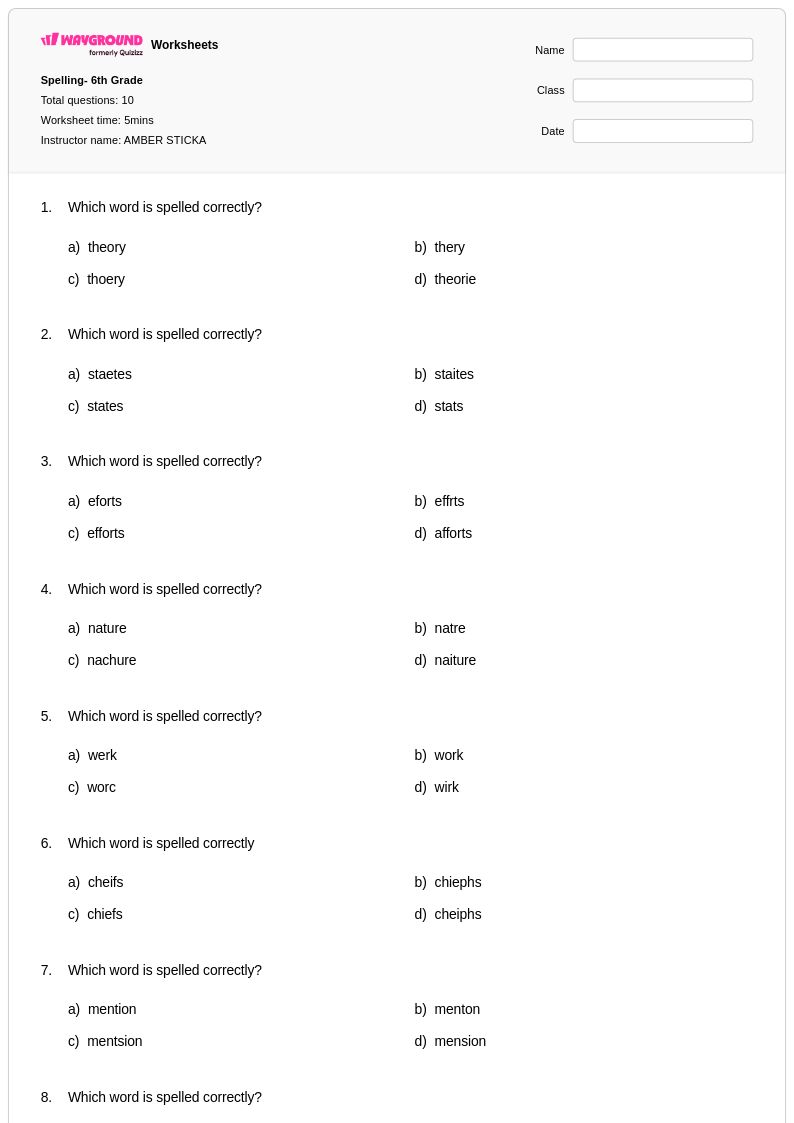
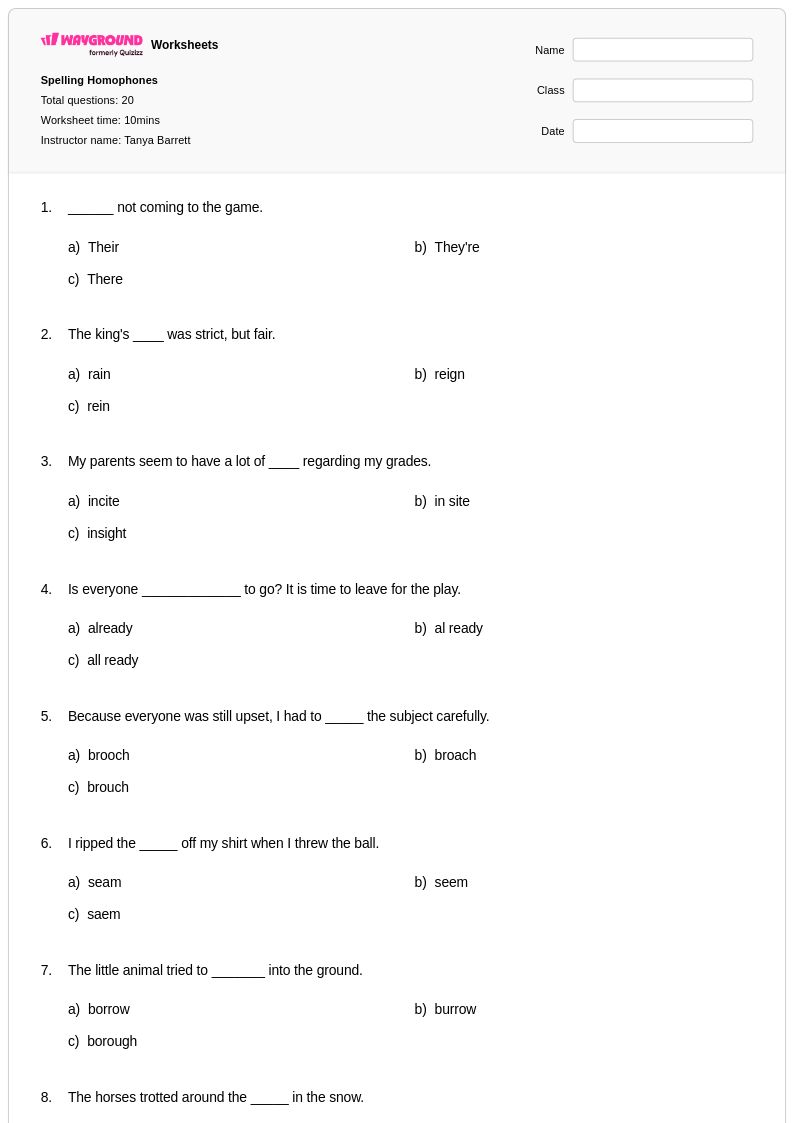
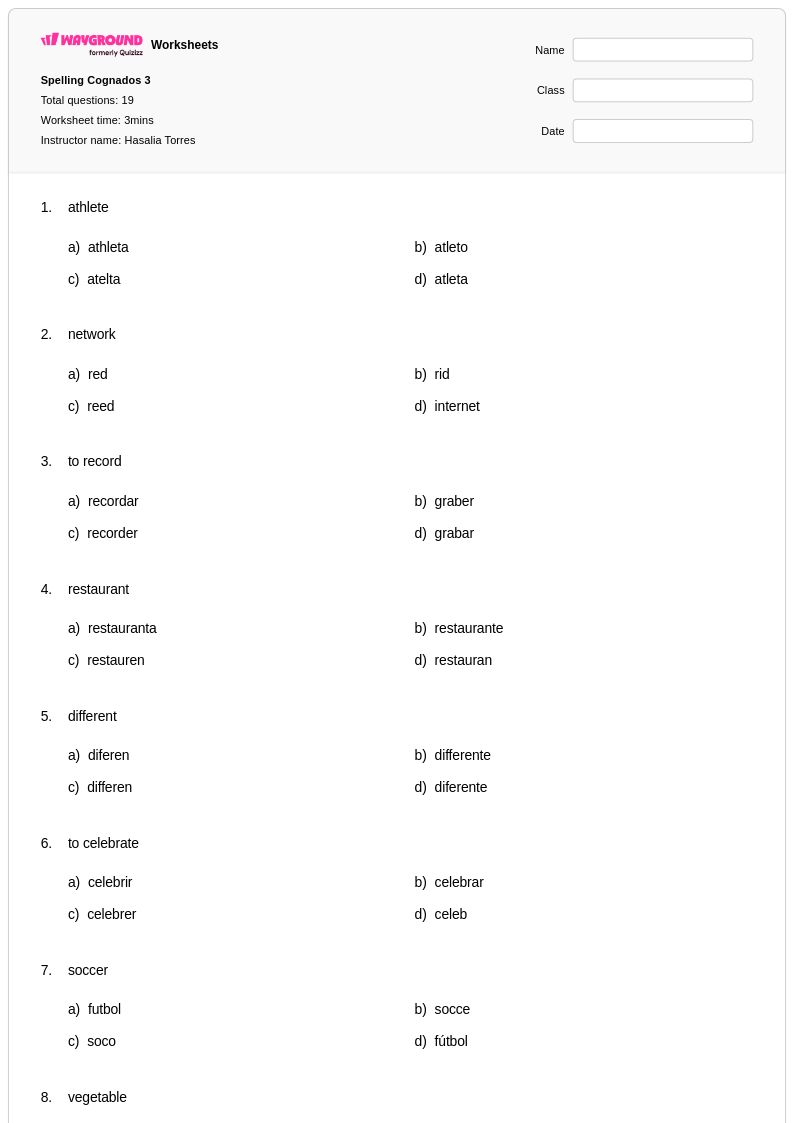
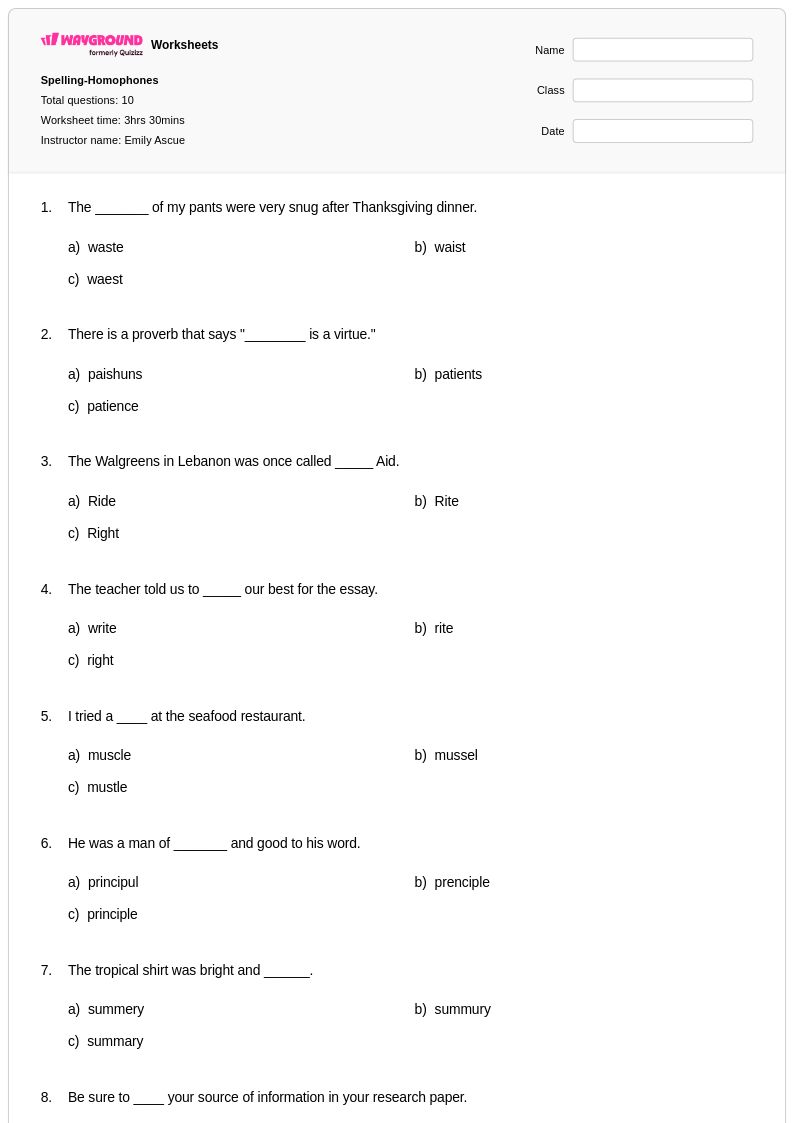
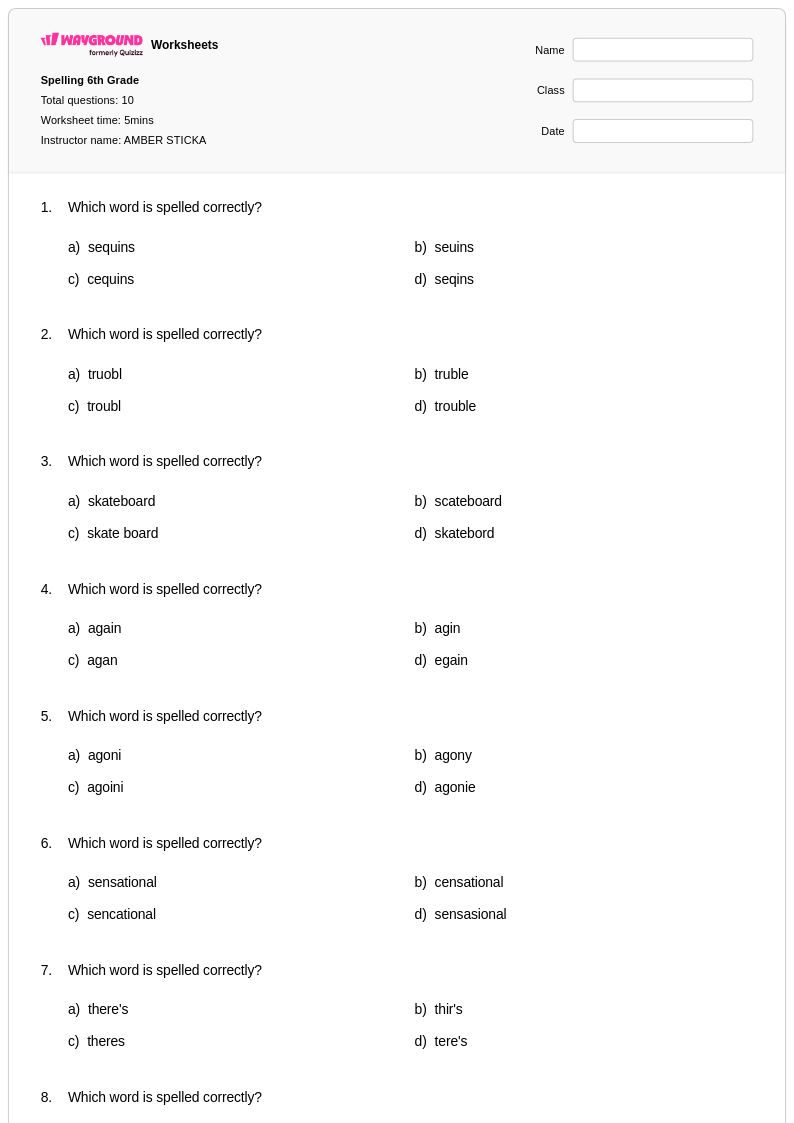
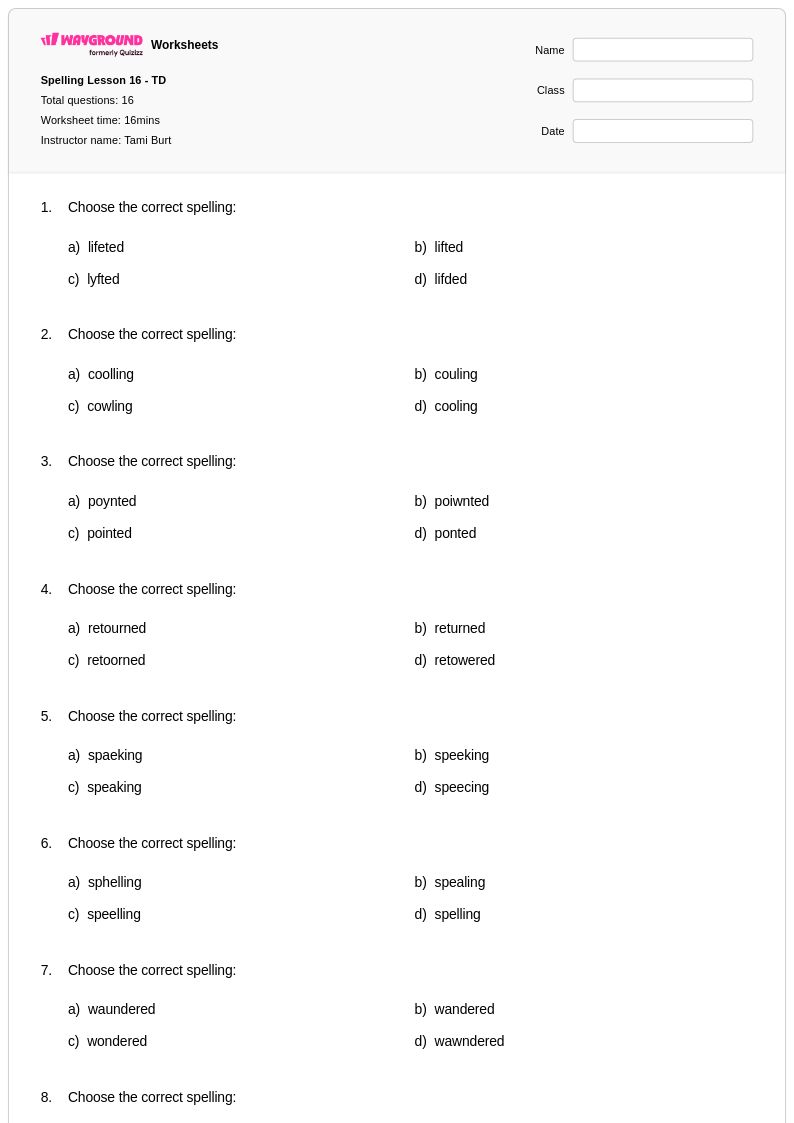
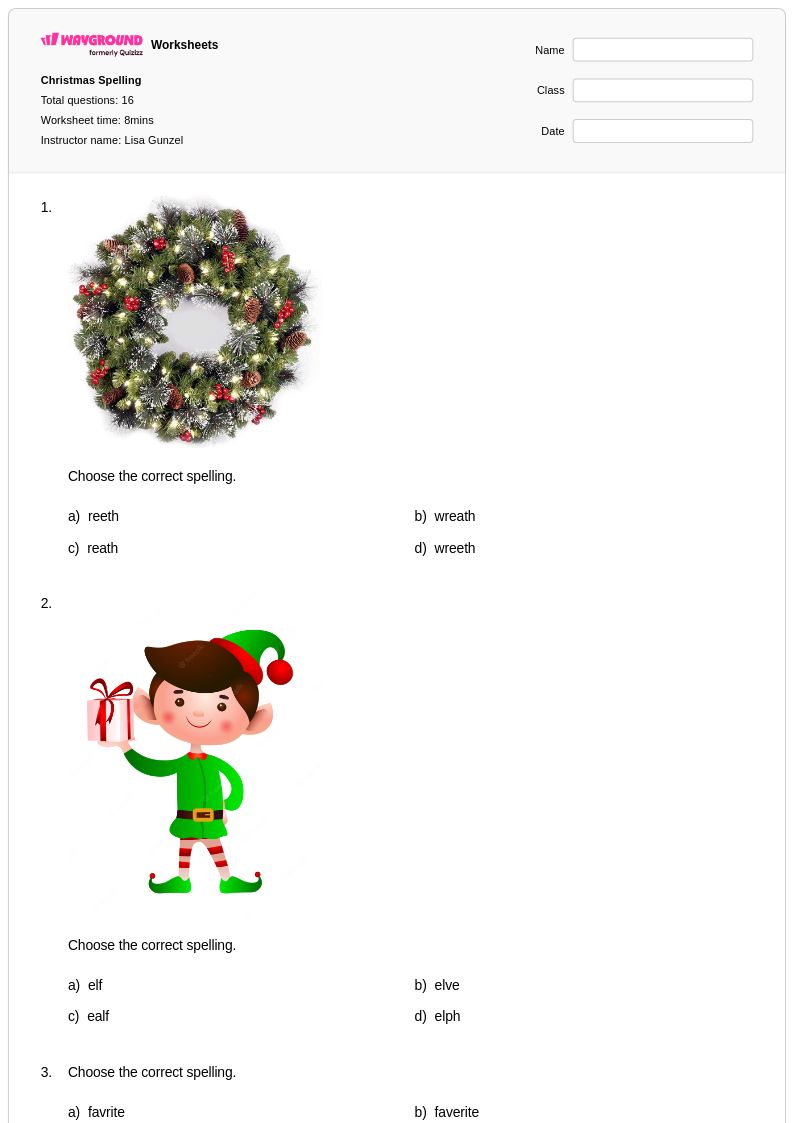
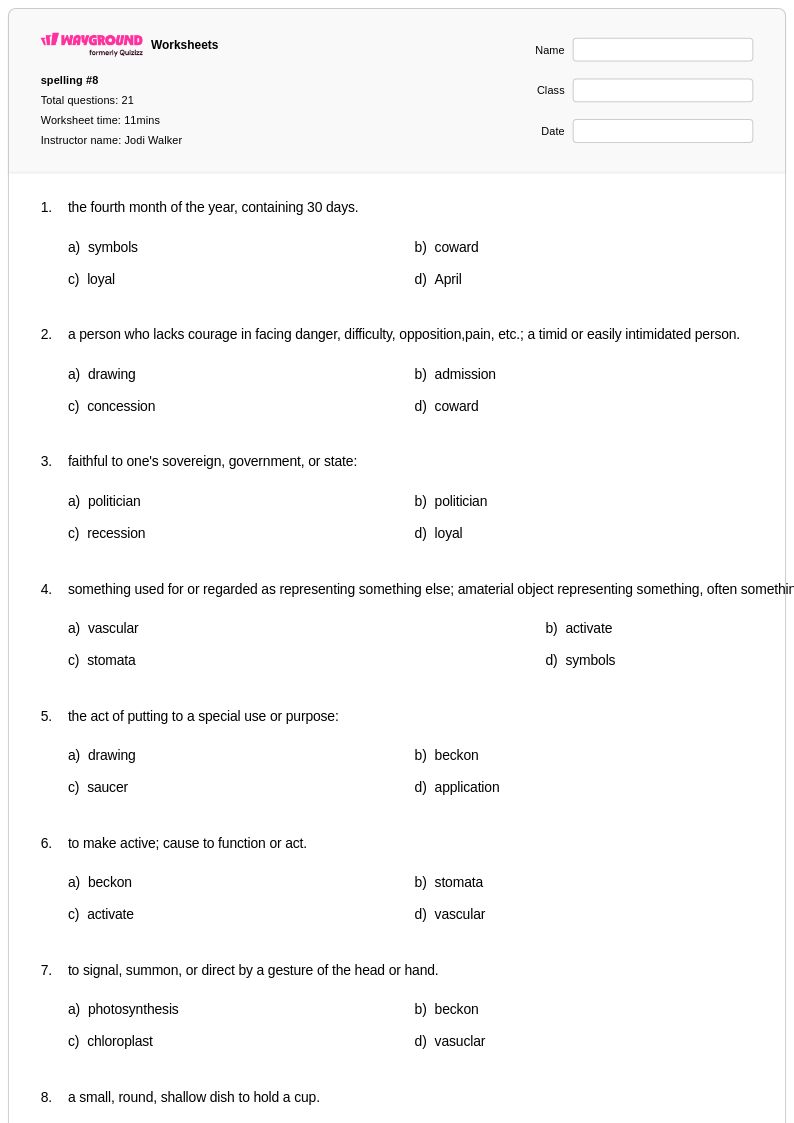
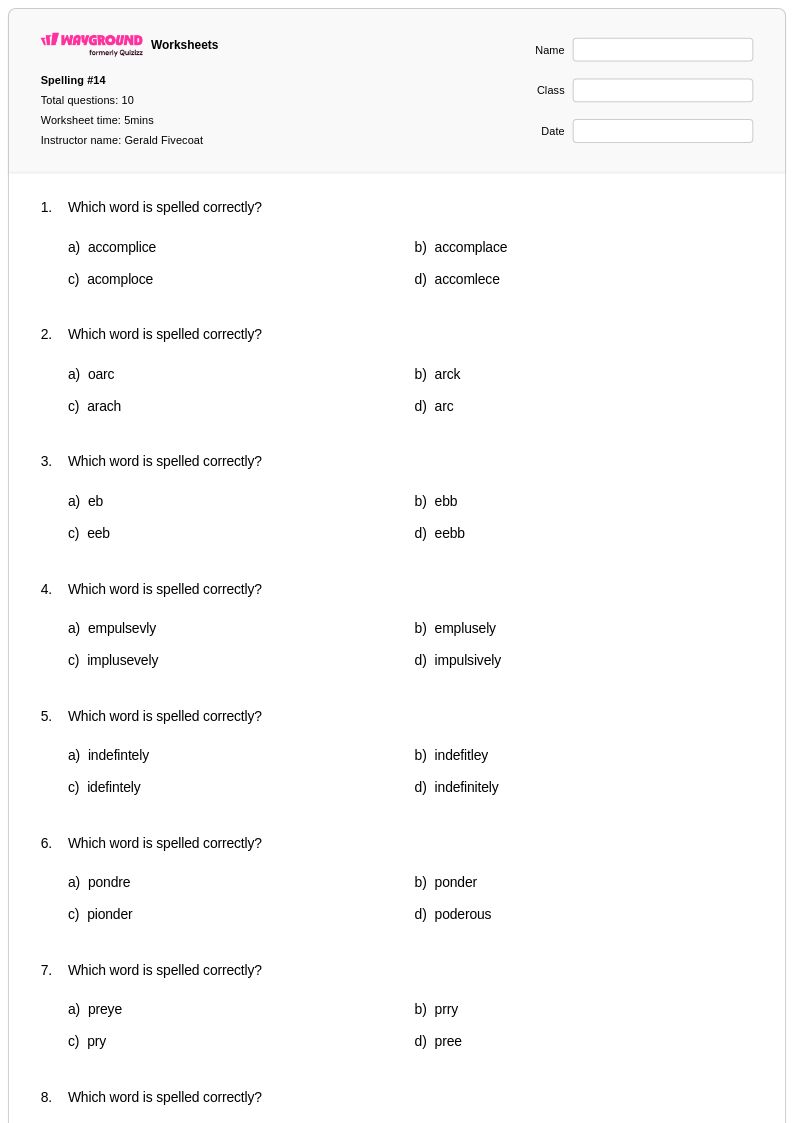
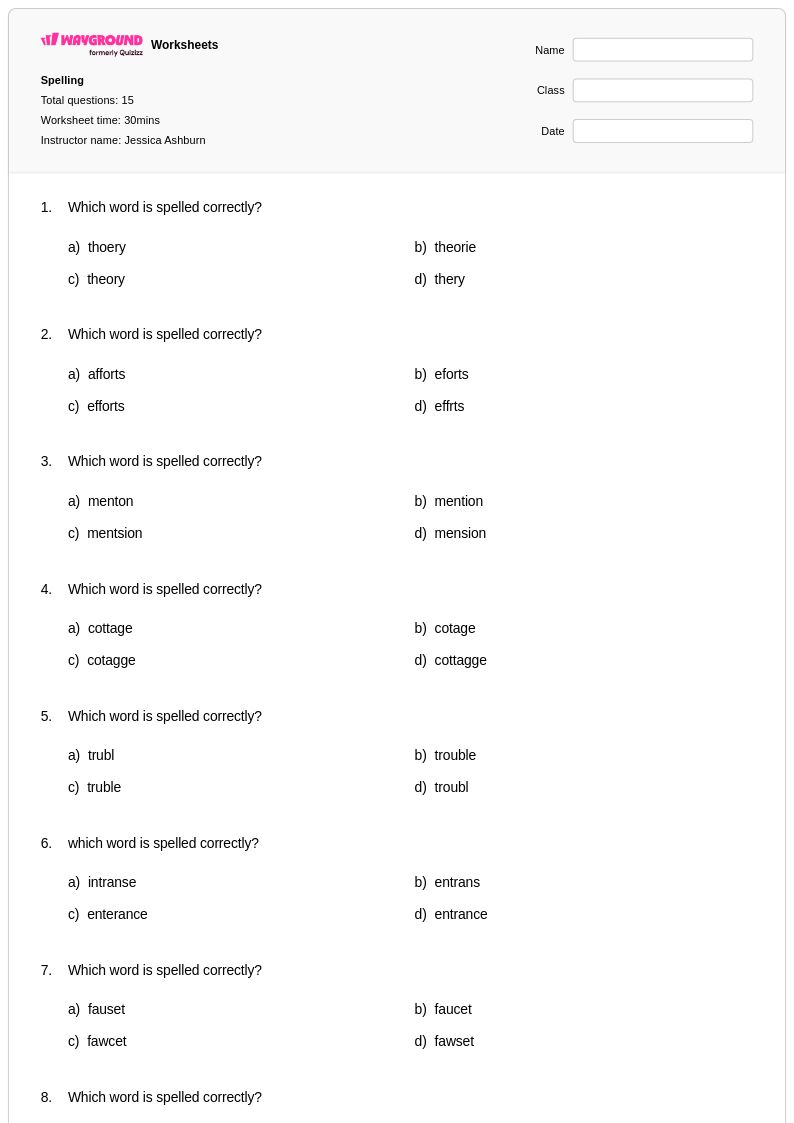
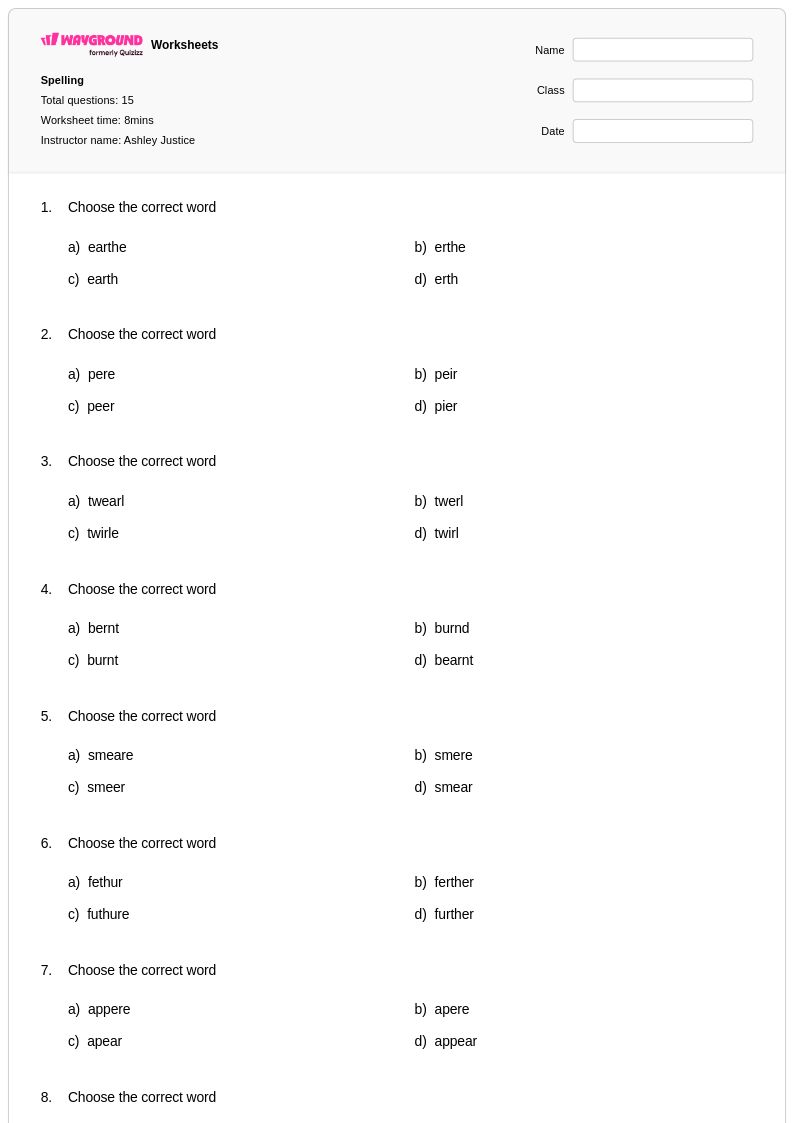
Enhance Class 6 spelling skills with Wayground's free worksheets and printables, featuring comprehensive practice problems and answer keys to help students master correct spelling patterns and vocabulary development.
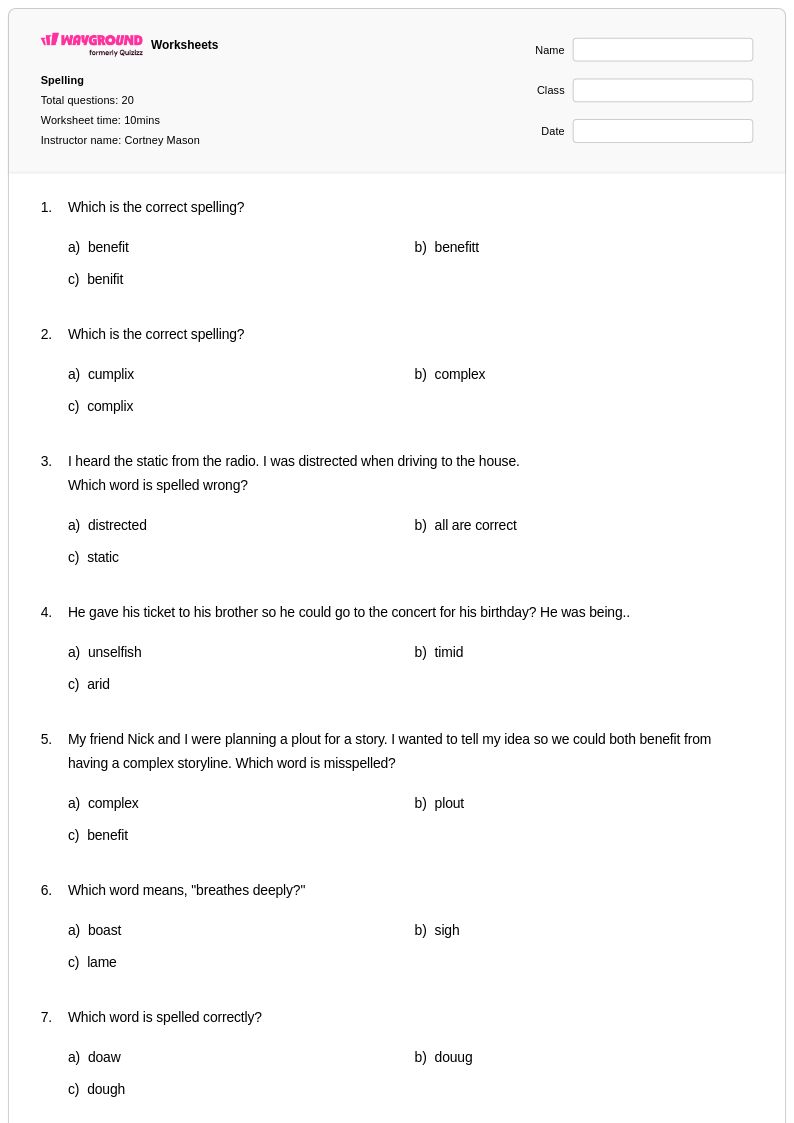
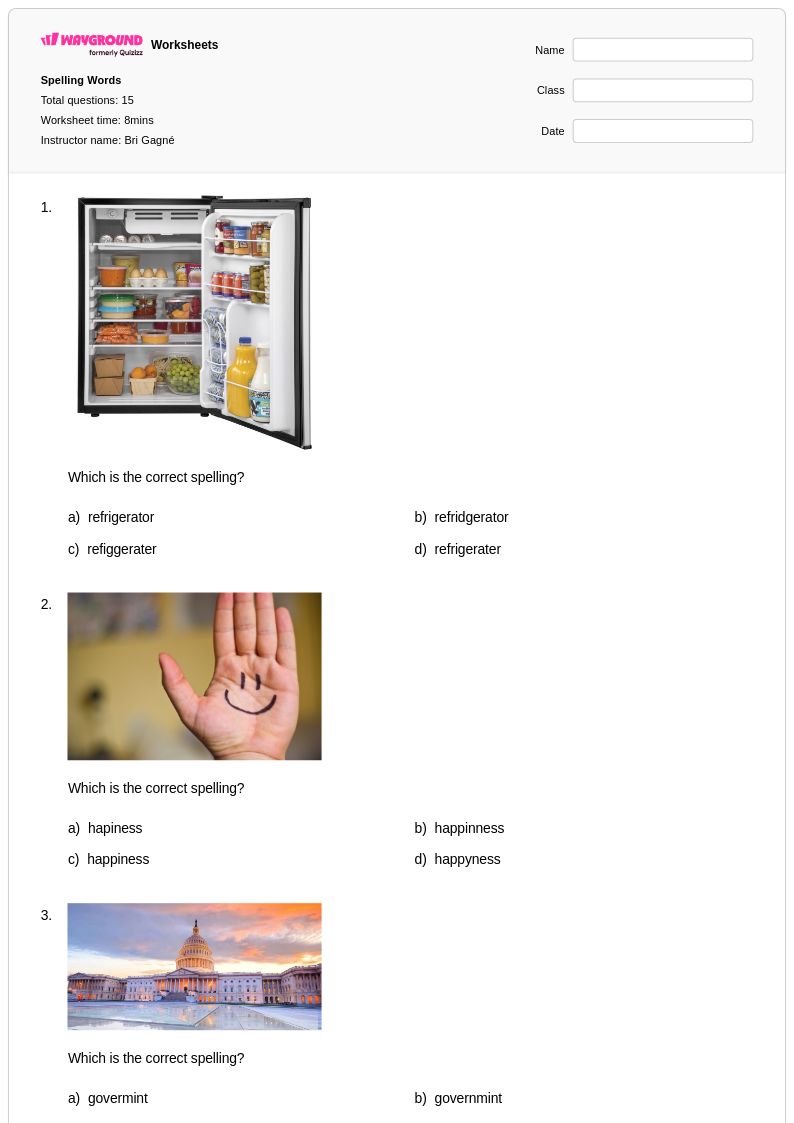
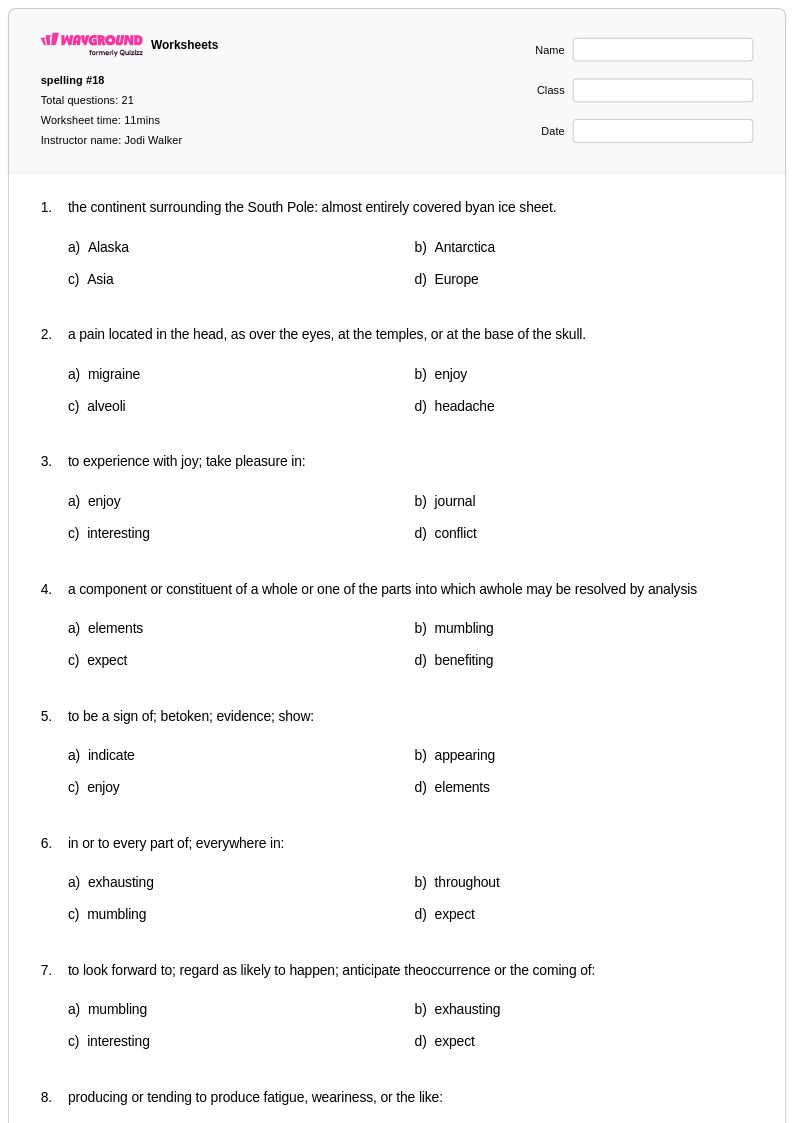
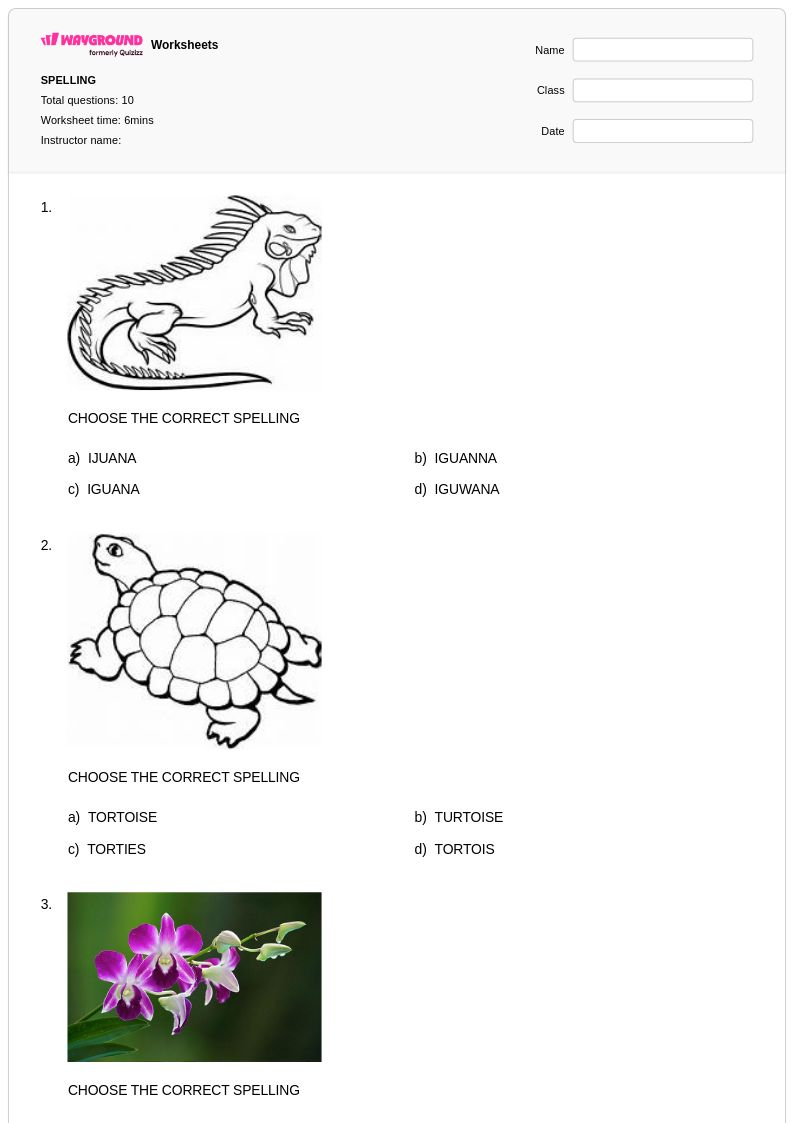
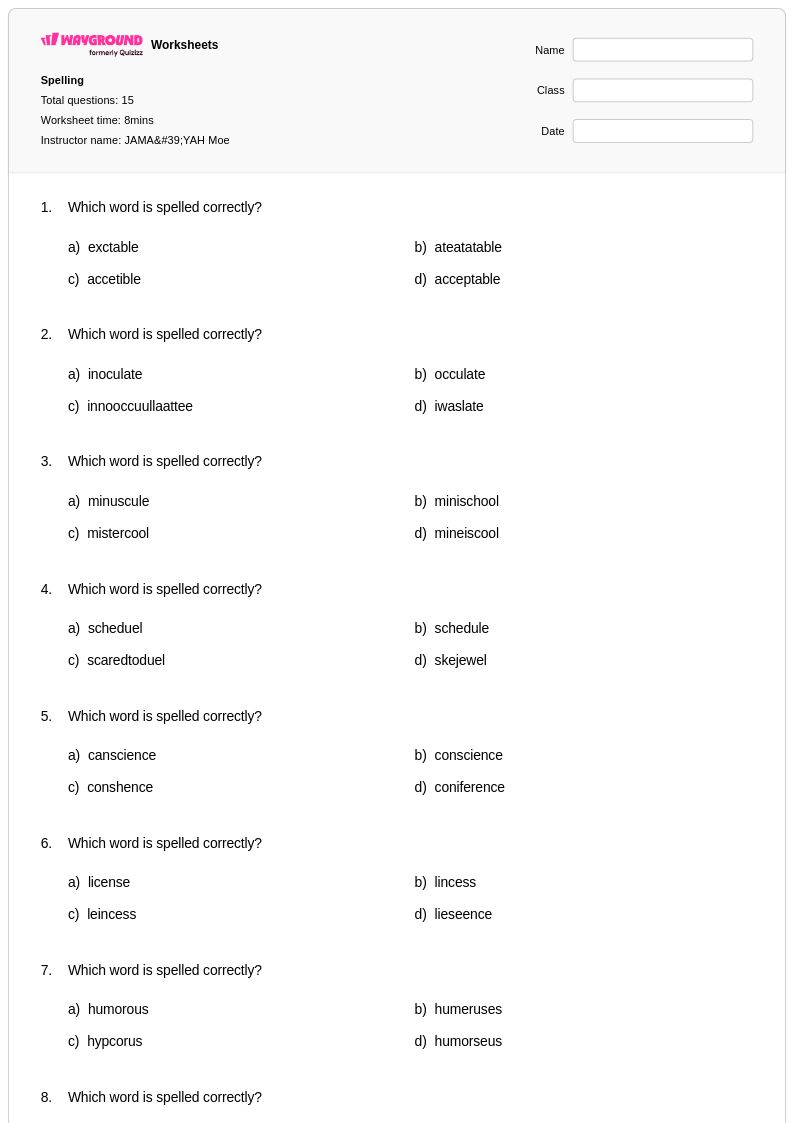
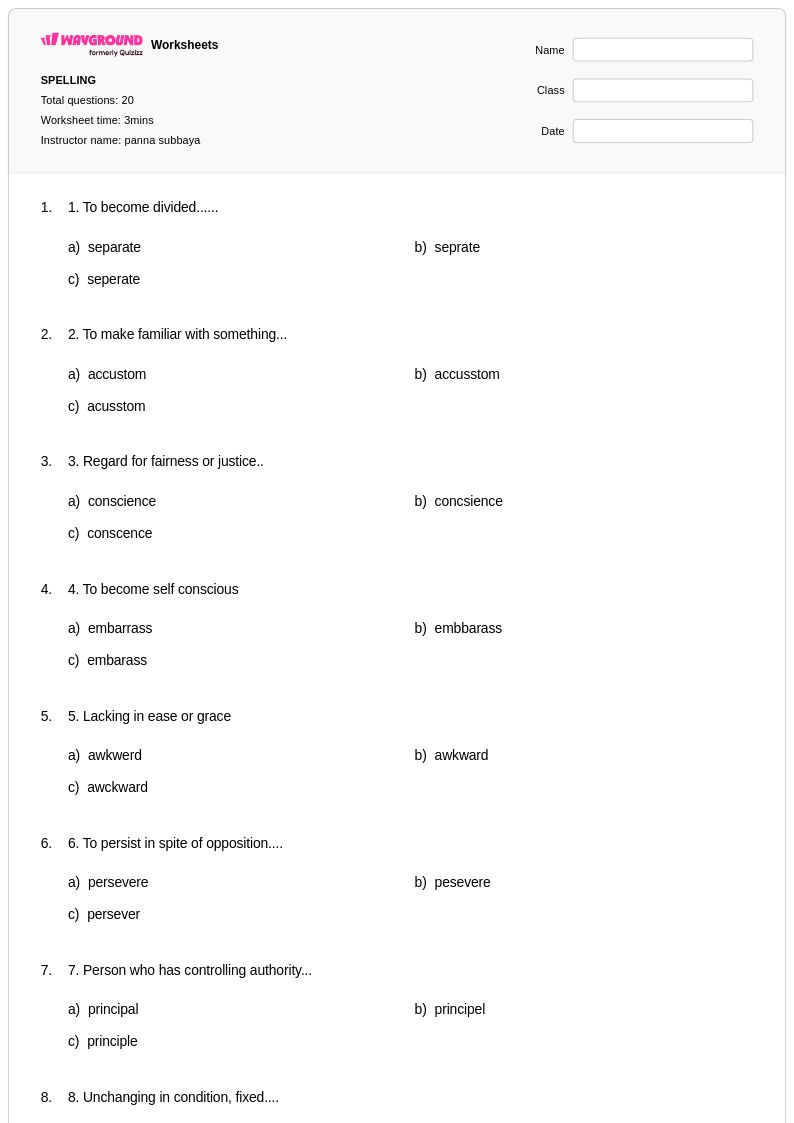
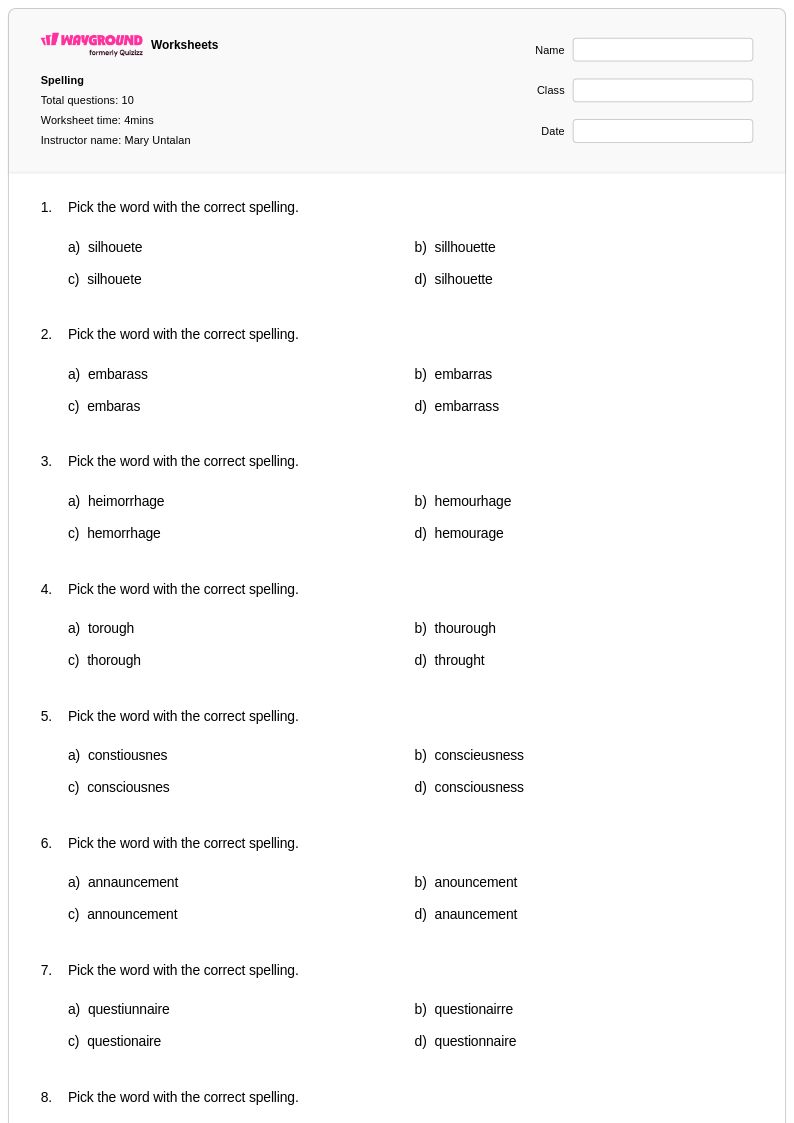
Class 6 spelling worksheets from Wayground (formerly Quizizz) provide comprehensive practice opportunities for students to master essential orthographic skills and spelling patterns crucial for academic success. These expertly designed resources focus on age-appropriate spelling challenges including compound words, prefixes and suffixes, homophones, and multi-syllable word construction that sixth-grade students encounter across all subject areas. Each worksheet collection includes detailed answer keys and free printable pdf formats, making it simple for educators to implement structured spelling practice that reinforces phonetic principles, vocabulary development, and visual memory skills. The practice problems progress systematically from basic pattern recognition to complex word formation, ensuring students build confidence while tackling increasingly sophisticated spelling conventions.
Wayground (formerly Quizizz) empowers educators with access to millions of teacher-created spelling resources specifically curated for Class 6 learners, featuring robust search and filtering capabilities that allow quick identification of materials aligned with state standards and curriculum requirements. The platform's differentiation tools enable teachers to customize worksheets for varying skill levels within their classrooms, while flexible formatting options provide both printable and digital pdf versions to accommodate diverse learning environments. These comprehensive collections support effective lesson planning by offering ready-to-use materials for daily practice, targeted remediation for struggling spellers, and enrichment activities for advanced students, ultimately streamlining the instructional process while ensuring all learners receive appropriate spelling skill development opportunities tailored to their individual needs.
FAQs
How do I teach spelling effectively to elementary students?
Ground spelling instruction in phonics first by teaching letter-sound correspondences and spelling patterns before introducing rule-based generalizations like consonant doubling or the drop-the-e rule. Use worksheets that organize words by shared patterns -- such as word families or vowel teams -- so students internalize regularities rather than memorizing words in isolation. Integrate high-frequency word practice using Dolch or Fry word lists alongside pattern-based instruction, since many common words are irregularly spelled and require separate memorization strategies.
What exercises help students practice spelling patterns and rules?
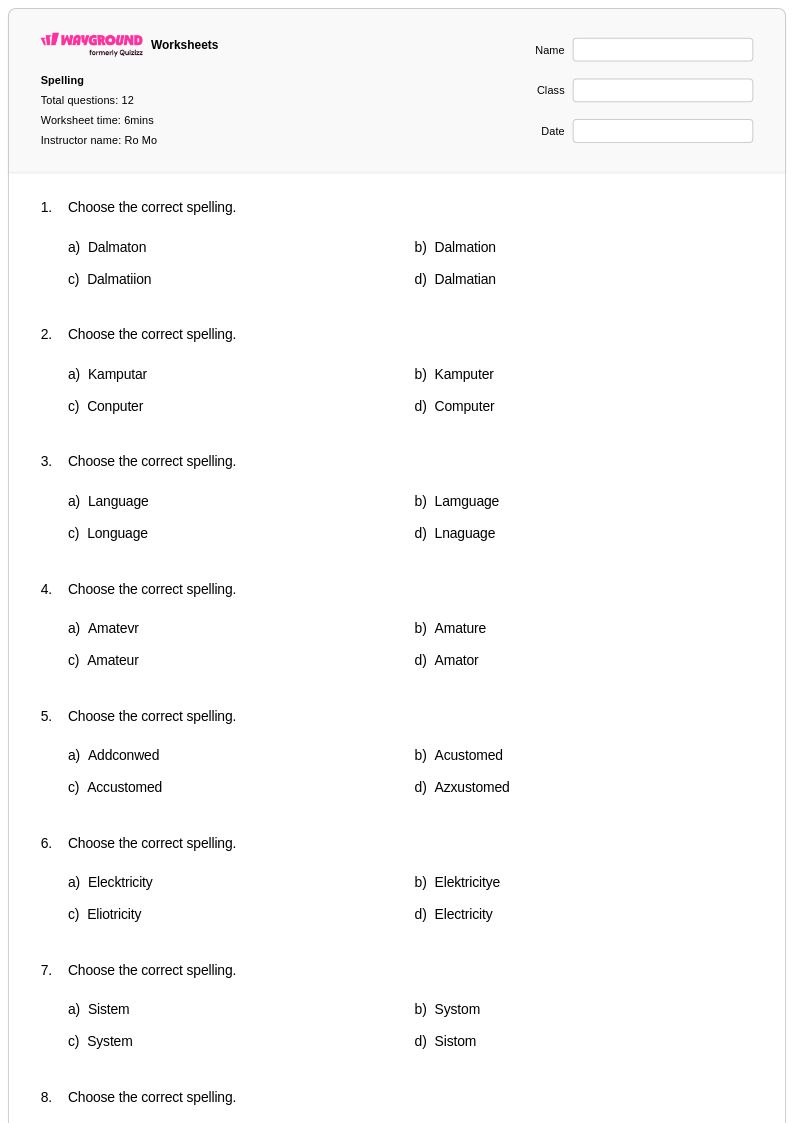
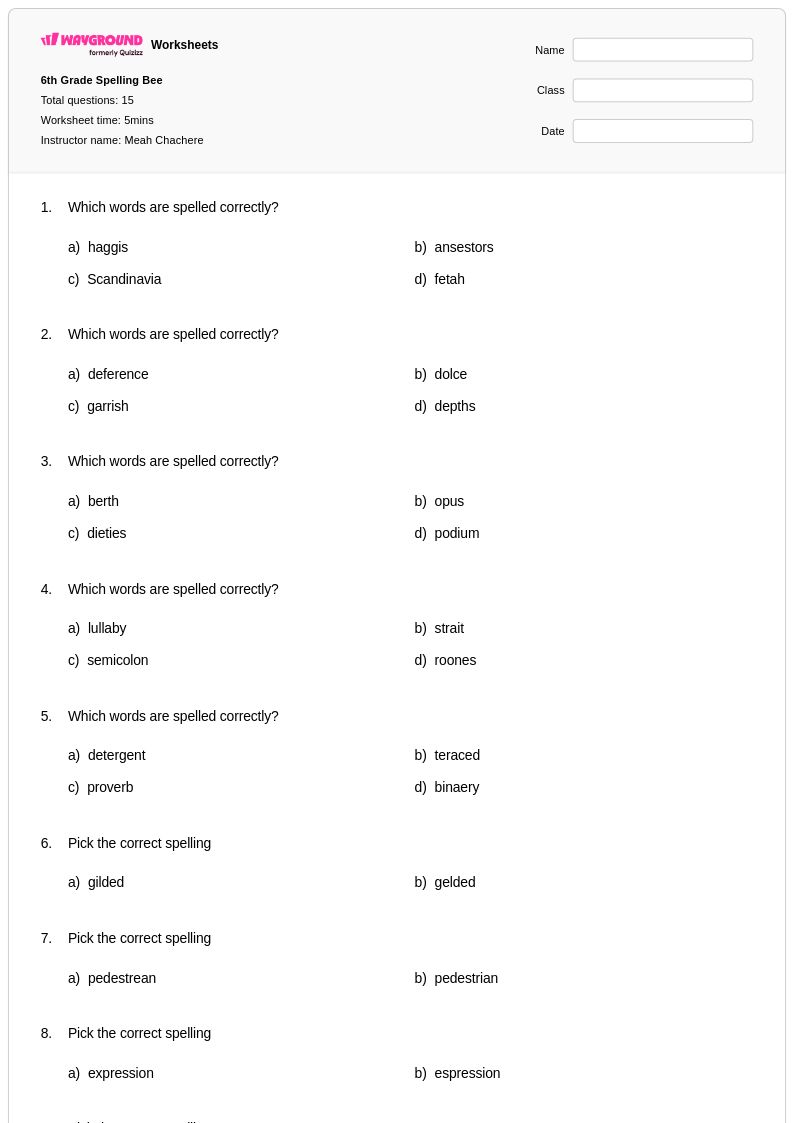
Word sorting worksheets where students categorize words by spelling pattern -- such as grouping words that follow the consonant doubling rule versus those that do not -- build analytical spelling skills. Dictation exercises paired with worksheet follow-ups reinforce the connection between hearing a word and producing its correct written form. For rule application, worksheets that present a base word and require students to add suffixes while applying the change-y-to-i or drop-the-e rule develop procedural fluency with spelling conventions.
What common spelling mistakes should teachers watch for by grade level?
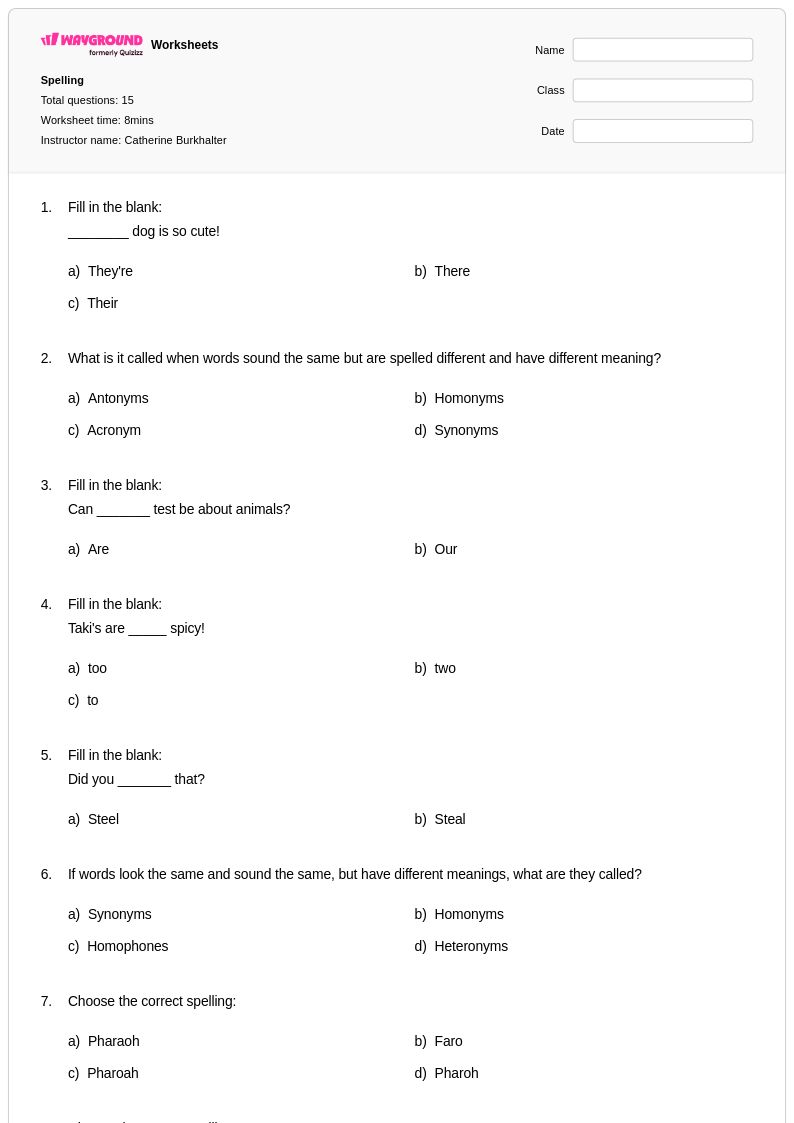
In grades K-2, students commonly omit vowels in CVC words, reverse letter sequences, and spell phonetically without recognizing silent letters. In grades 3-4, the most frequent errors involve failing to double consonants before adding suffixes, dropping the silent e incorrectly, and misspelling high-frequency irregular words like "said" and "because." By grades 5-6, errors shift toward morphological confusion -- misspelling prefixes and suffixes, confusing homophones like "their/there/they're," and inconsistently applying the change-y-to-i rule.
How do I assess student spelling progress beyond weekly spelling tests?
Use worksheets that test rule application rather than rote recall -- for example, presenting unfamiliar words that follow taught patterns and asking students to spell them correctly. Error analysis worksheets where students identify and correct misspelled words reveal whether they understand the underlying rule or have simply memorized specific words. Tracking performance across spelling pattern categories over time using Wayground's data-driven tools provides a clearer picture of which rules a student has mastered versus which require reteaching.
How do I use spelling worksheets for homework and classroom practice?
These worksheets are available as printable PDFs for traditional classroom use and in digital formats for technology-integrated learning environments. Use word sorting and pattern identification sheets as guided practice during small group instruction, and assign rule application worksheets as independent homework that reinforces the day's lesson. High-frequency word recognition sheets work well as daily warm-up activities or timed fluency checks at the start of an ELA block.
How do I differentiate spelling instruction for struggling readers and advanced spellers?
For struggling spellers, use worksheets focused on high-frequency sight words from the Dolch or Fry lists with visual supports like word boxes and letter tracing, building automatic recognition before requiring independent production. For advanced spellers, assign morphological awareness worksheets that explore how prefixes, suffixes, and root words combine to form new words, extending beyond basic phonics into word formation and etymology. Grouping students by spelling pattern mastery rather than grade level ensures each student practices at the appropriate instructional level.
What spelling topics should I teach at each elementary grade level?
Kindergarten and grade 1 focus on letter-sound correspondences, CVC words, and initial sight word memorization from the Dolch pre-primer and primer lists. Grades 2-3 introduce consonant blends, digraphs, long vowel patterns, the double final consonant rule, and expanded high-frequency word banks including Fry words. Grades 4-6 cover the drop-the-e rule, change-y-to-i rule, consonant doubling before suffixes, irregularly spelled words, and morphological patterns including common prefixes and suffixes.