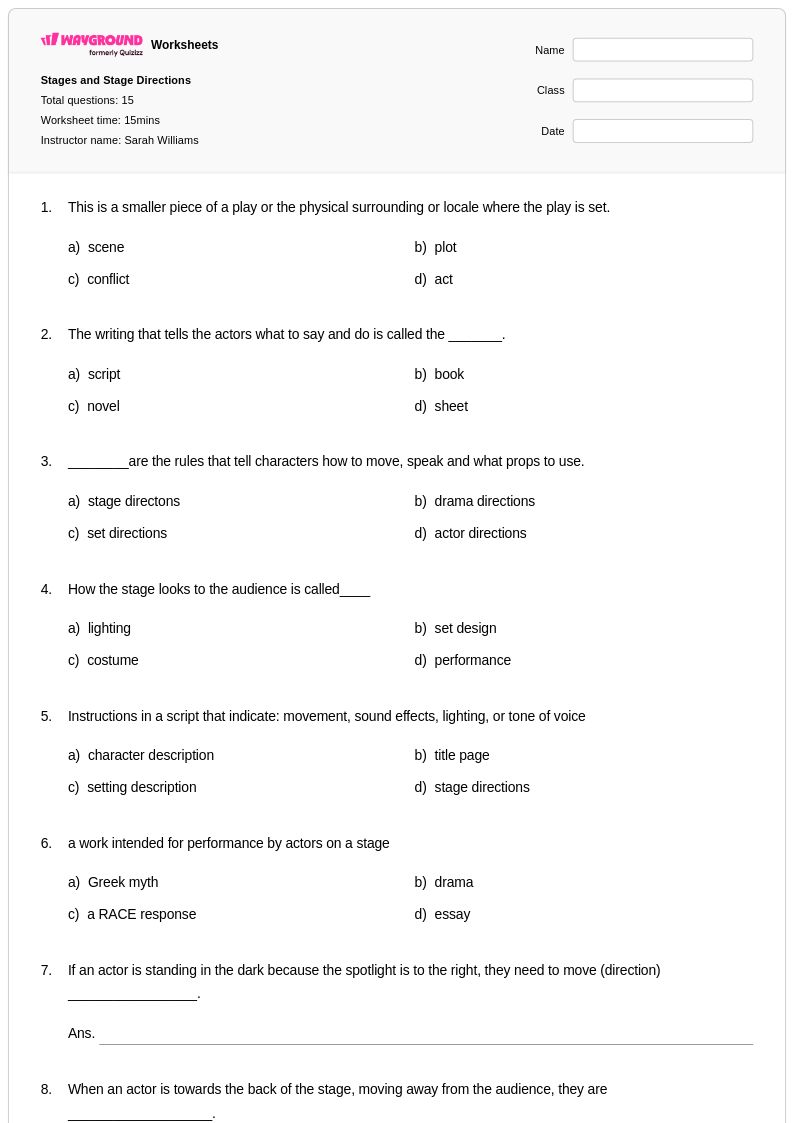
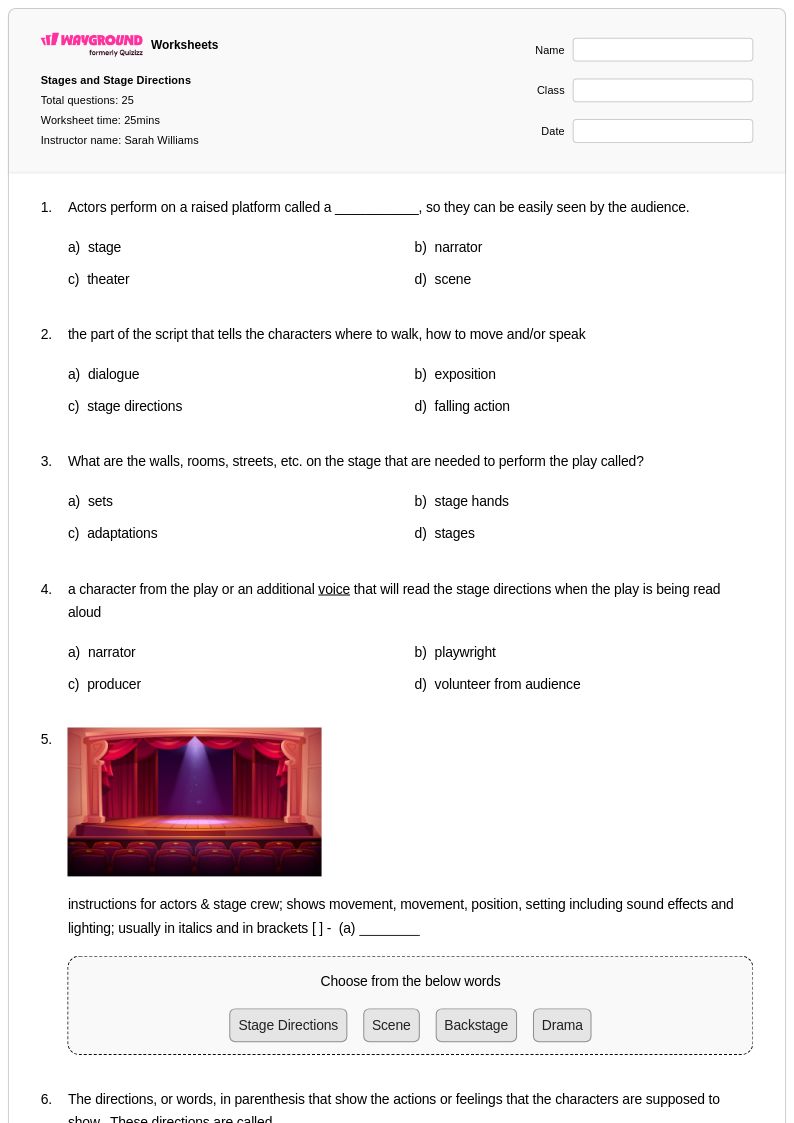
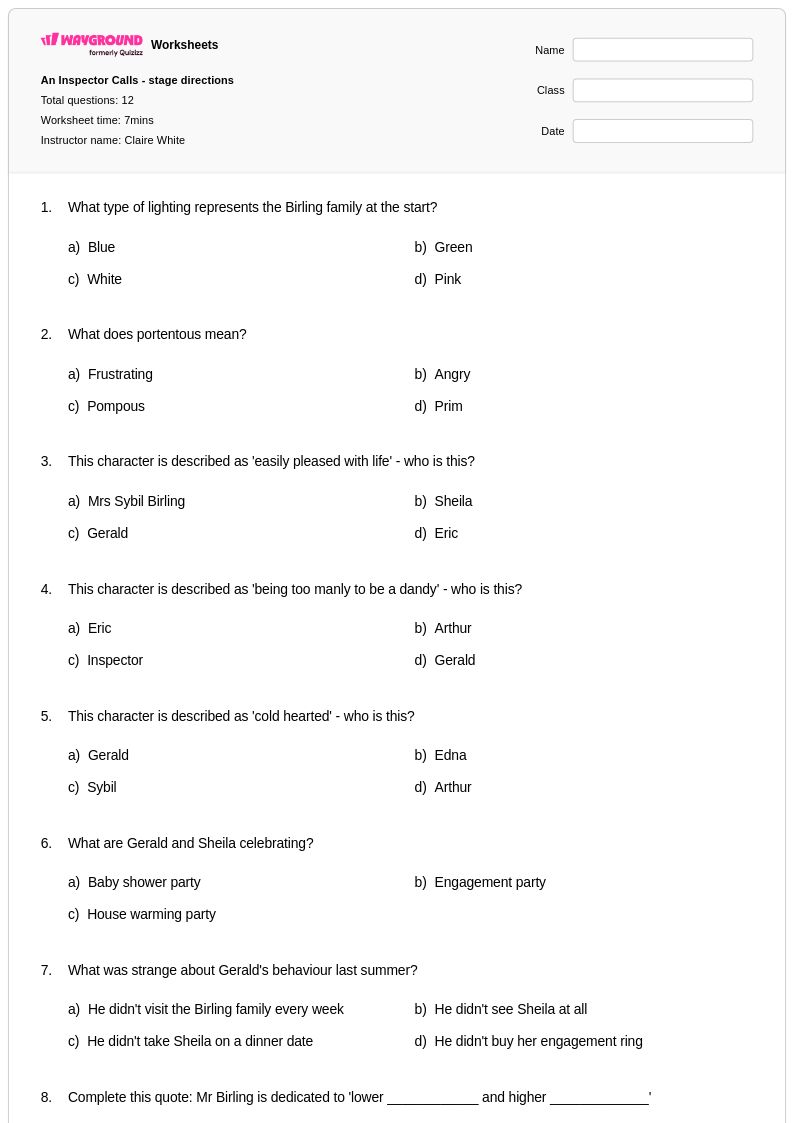
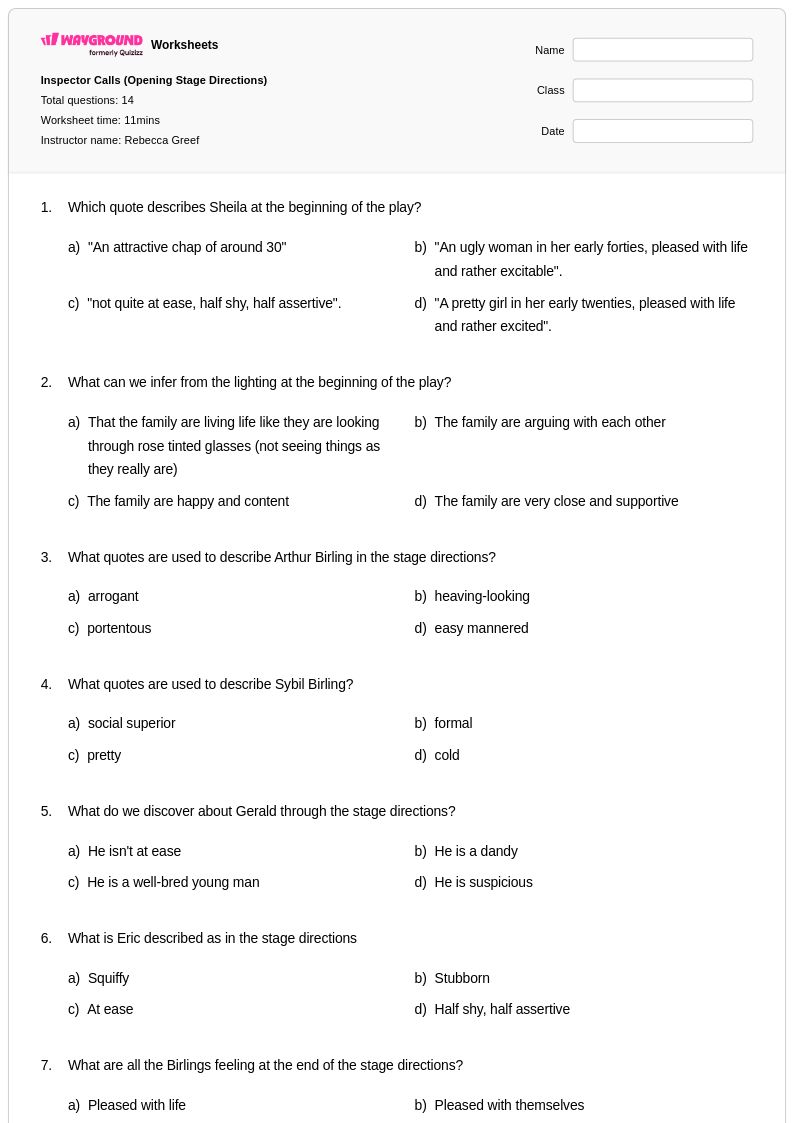
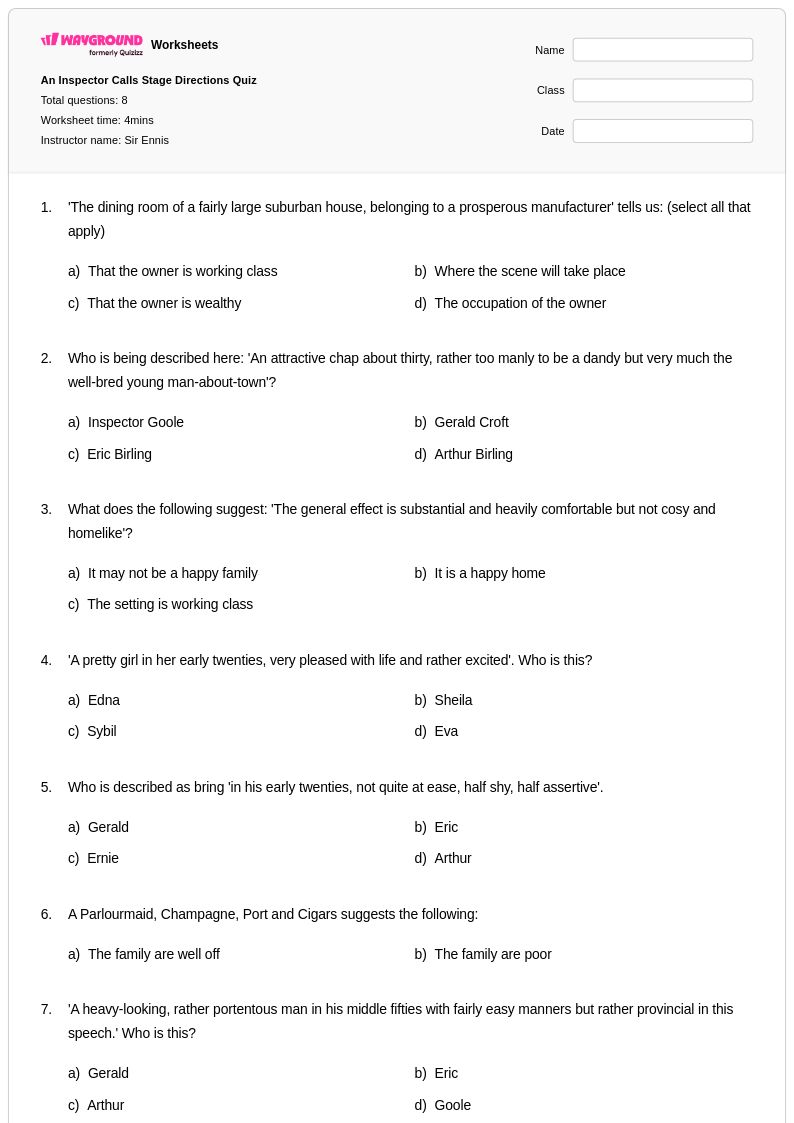
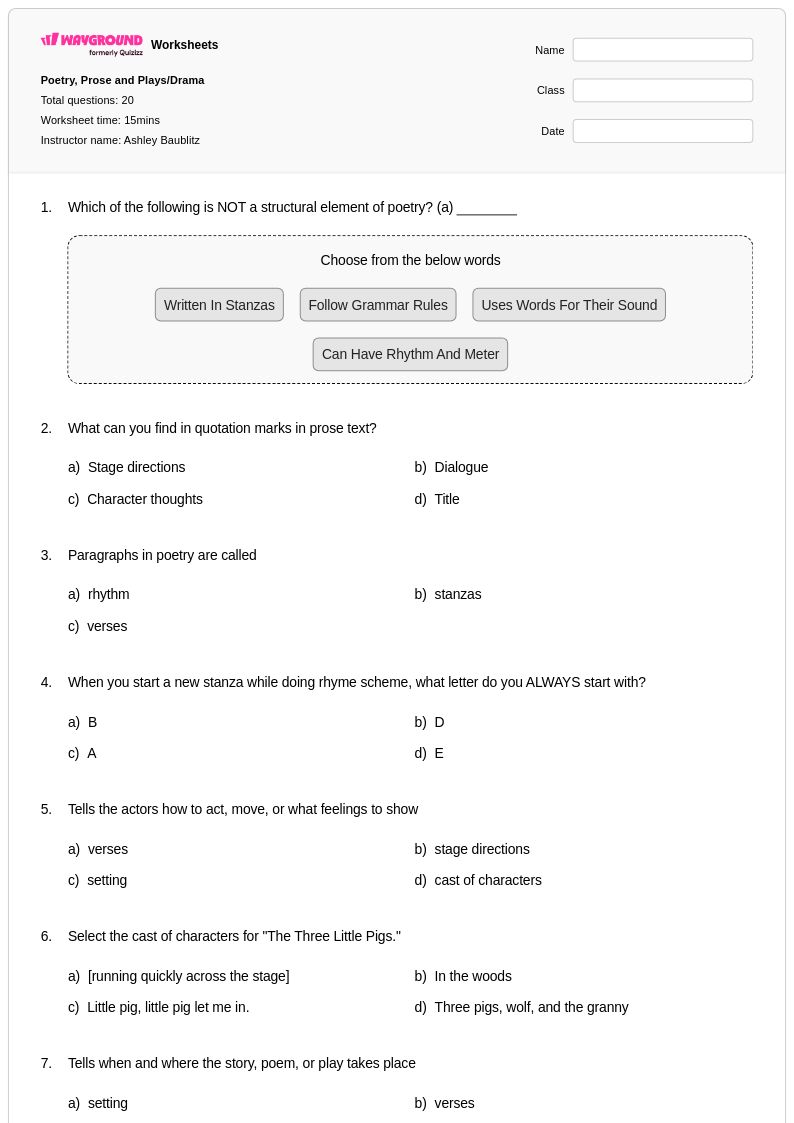
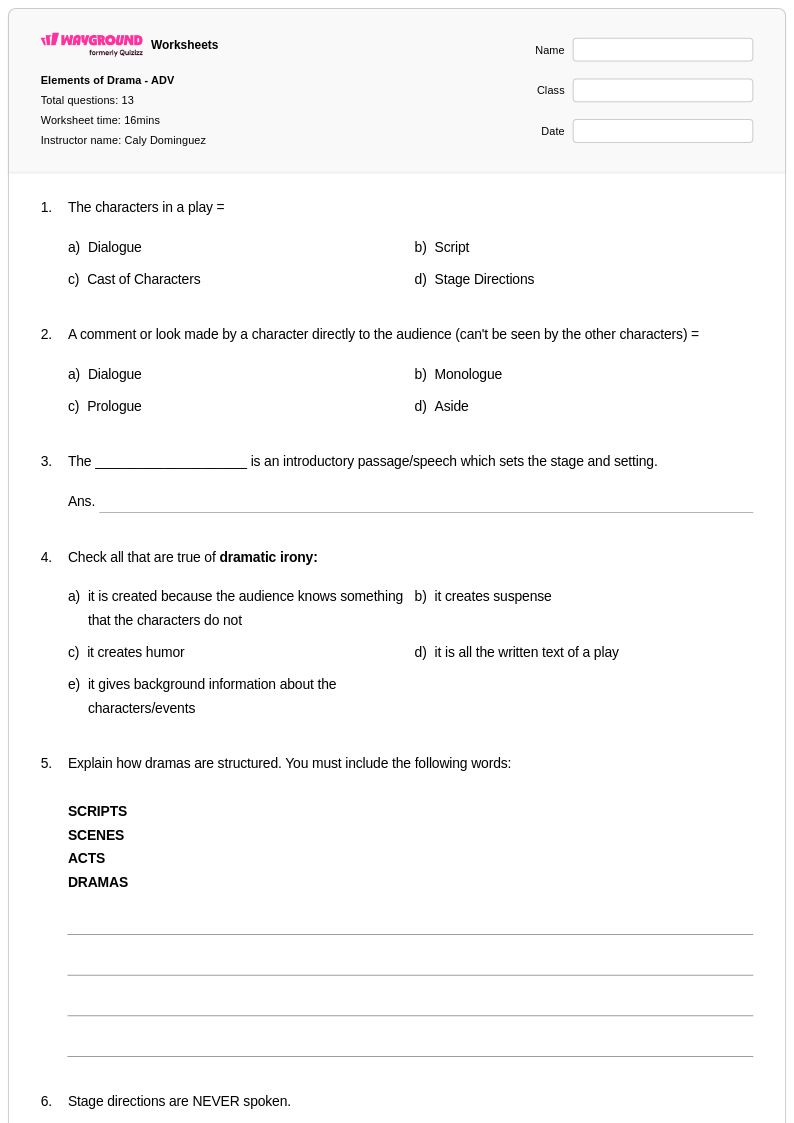
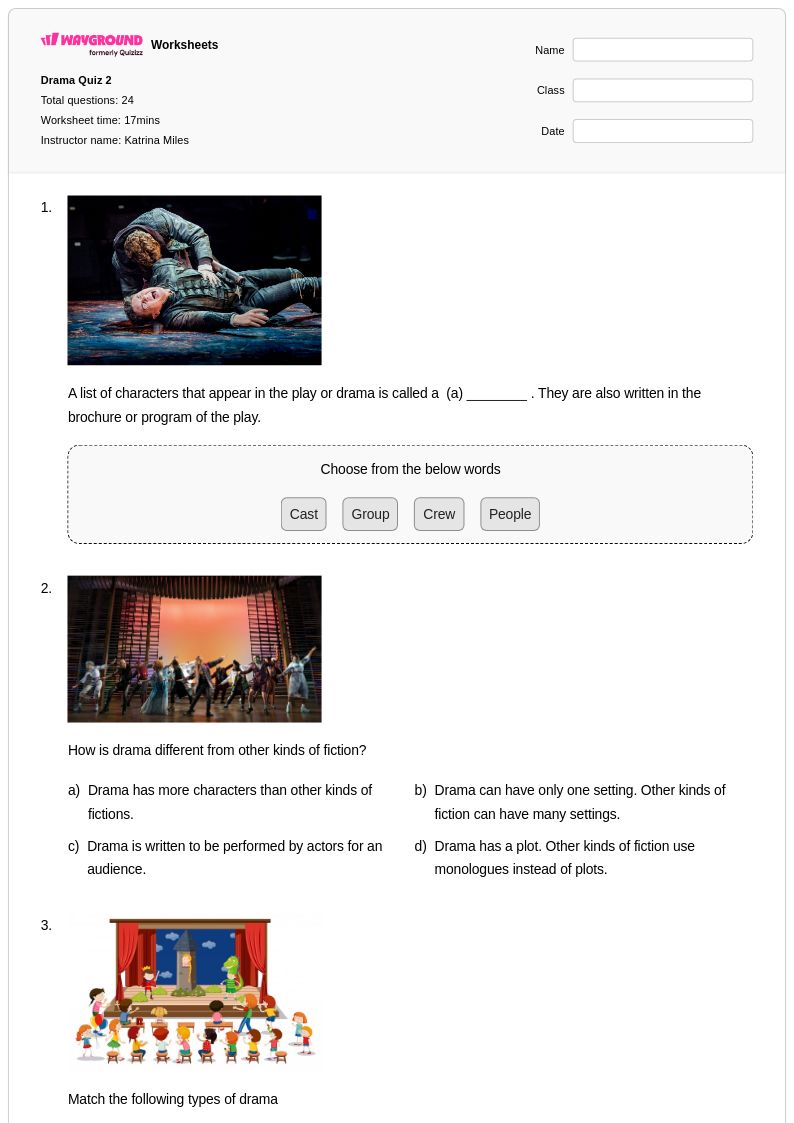
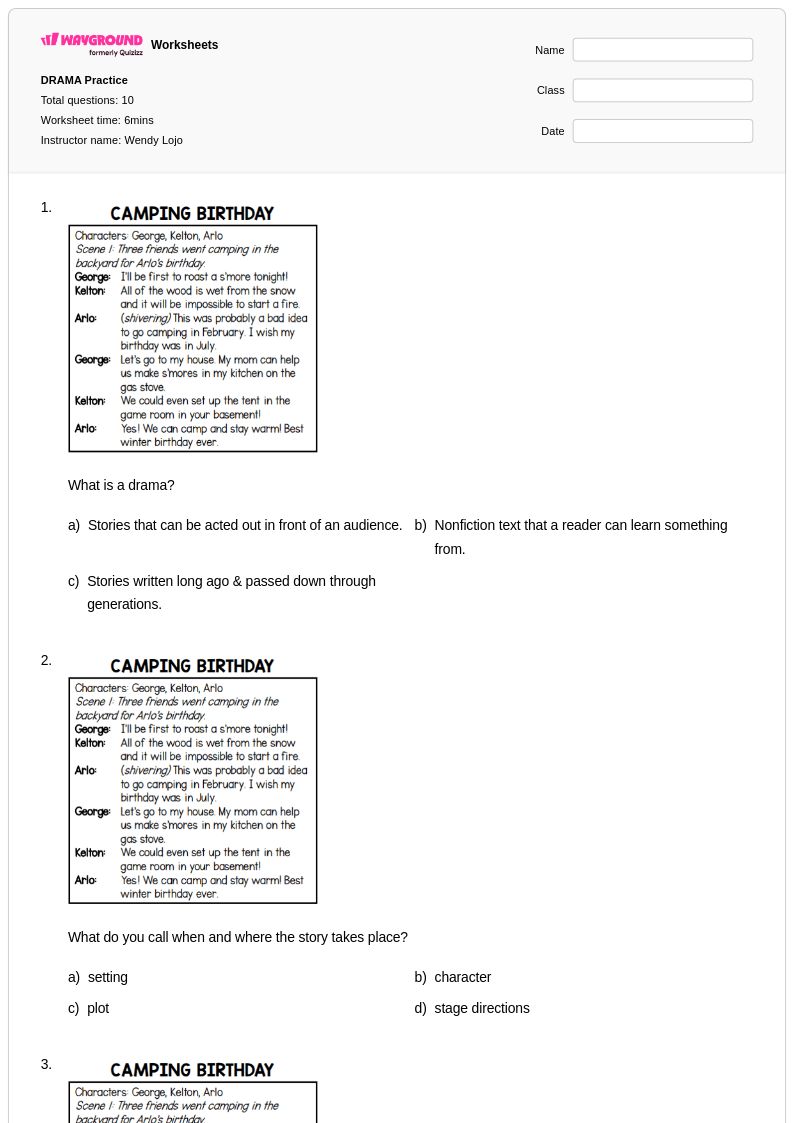
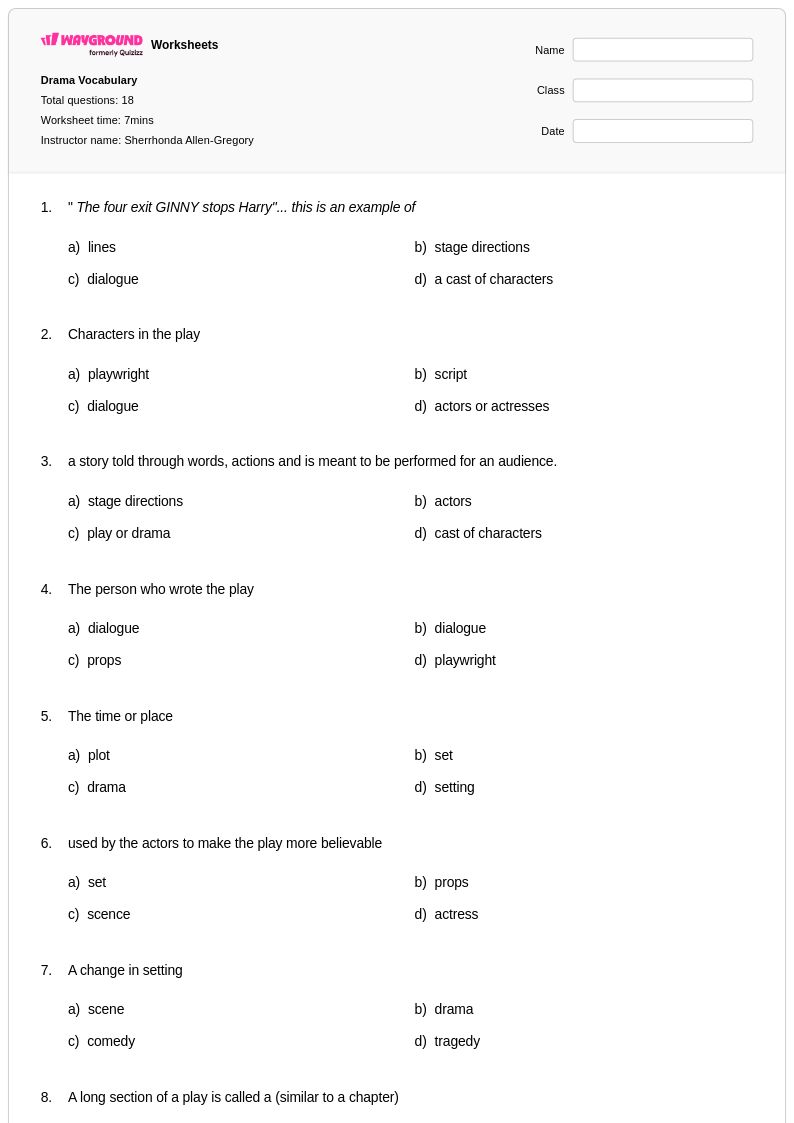
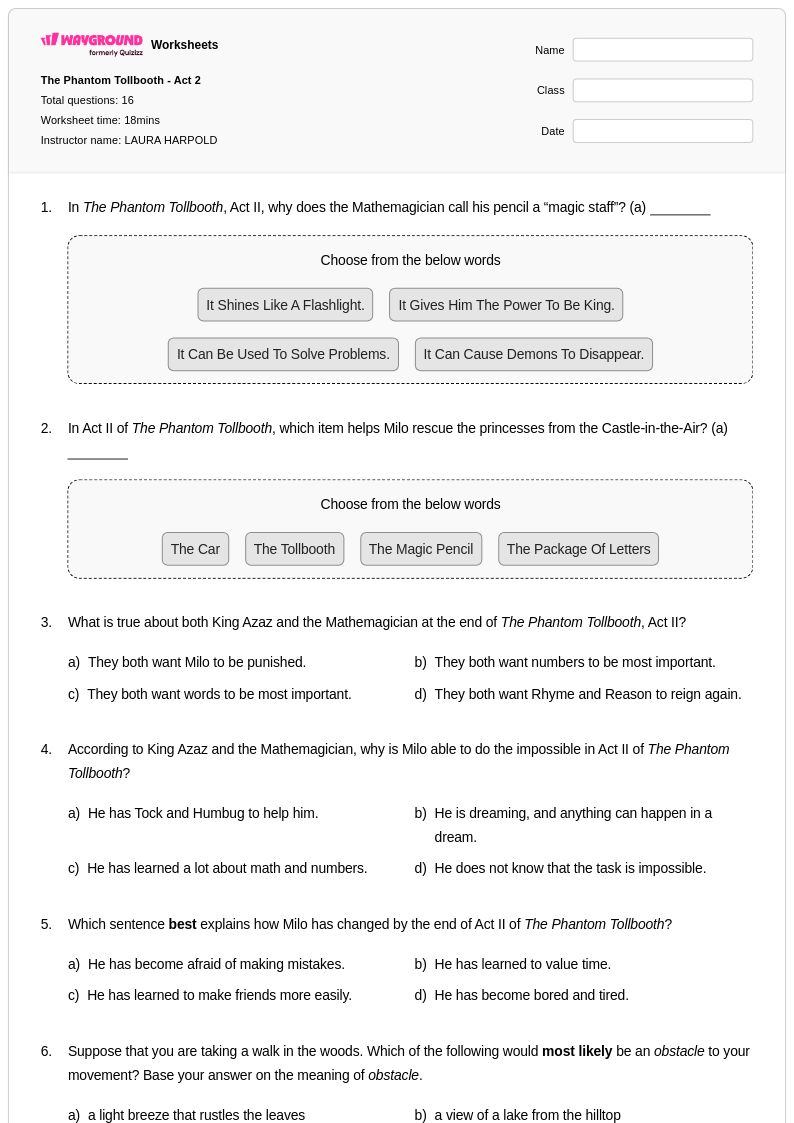
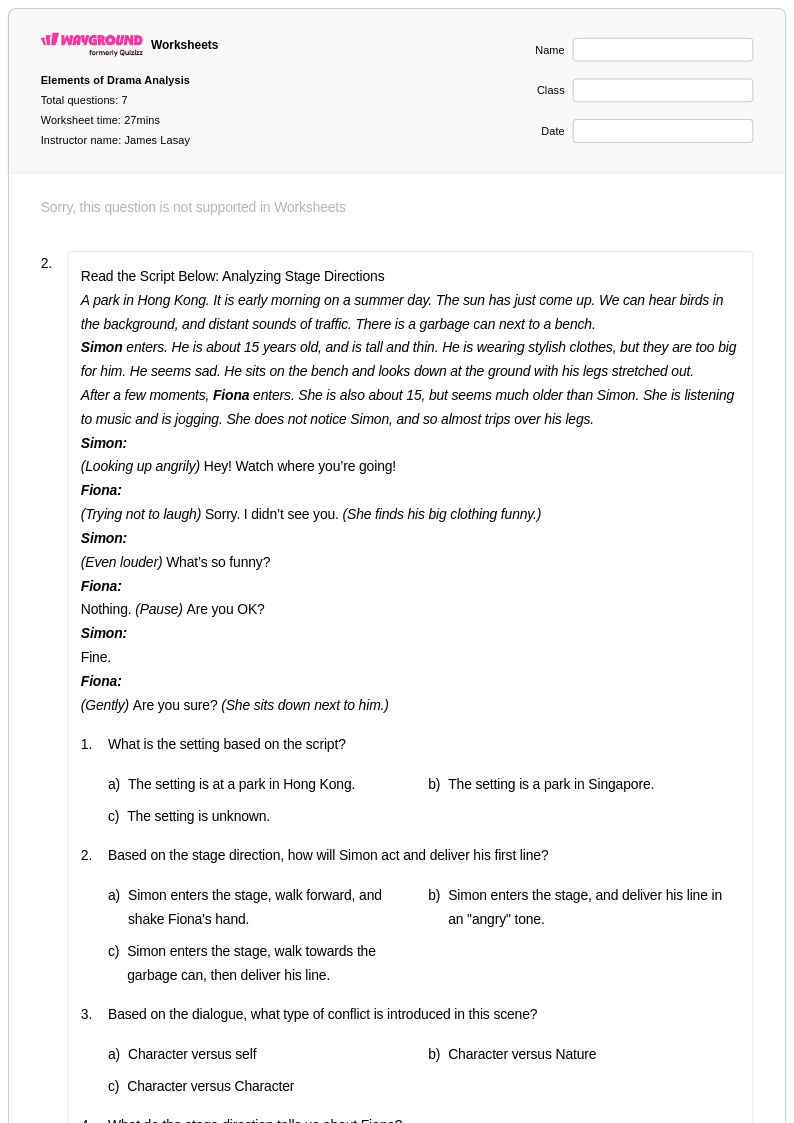
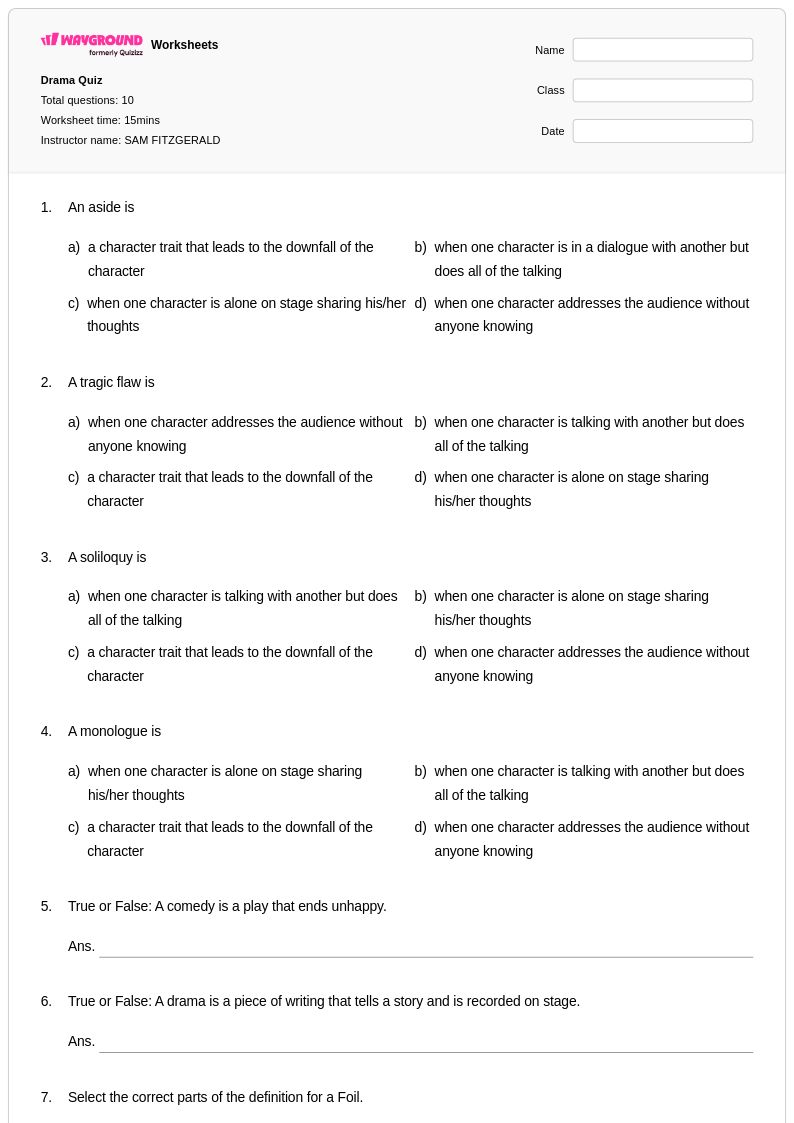
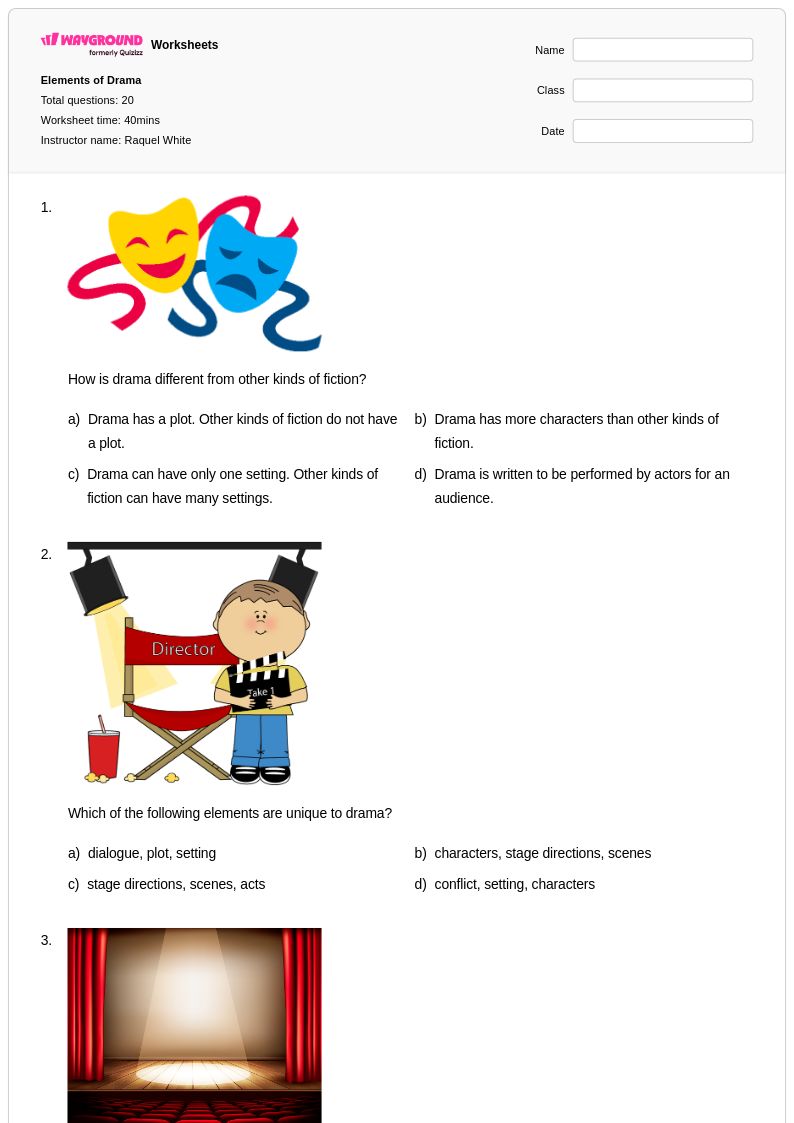
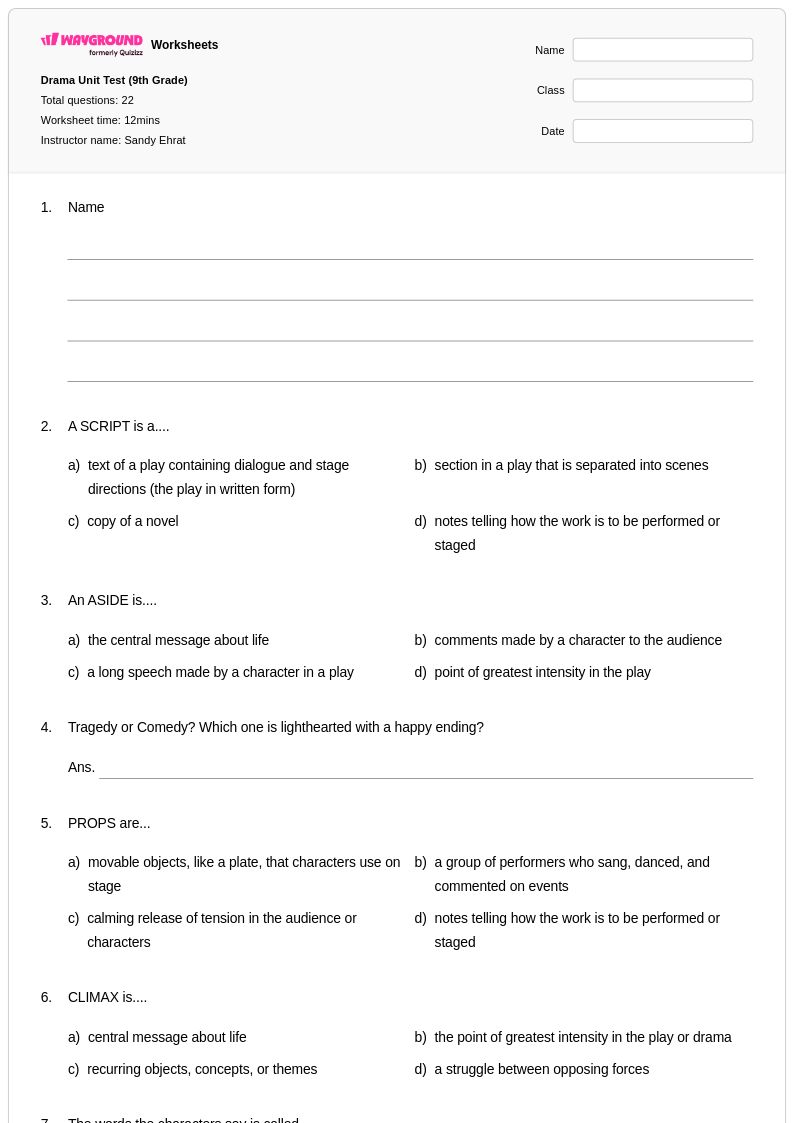
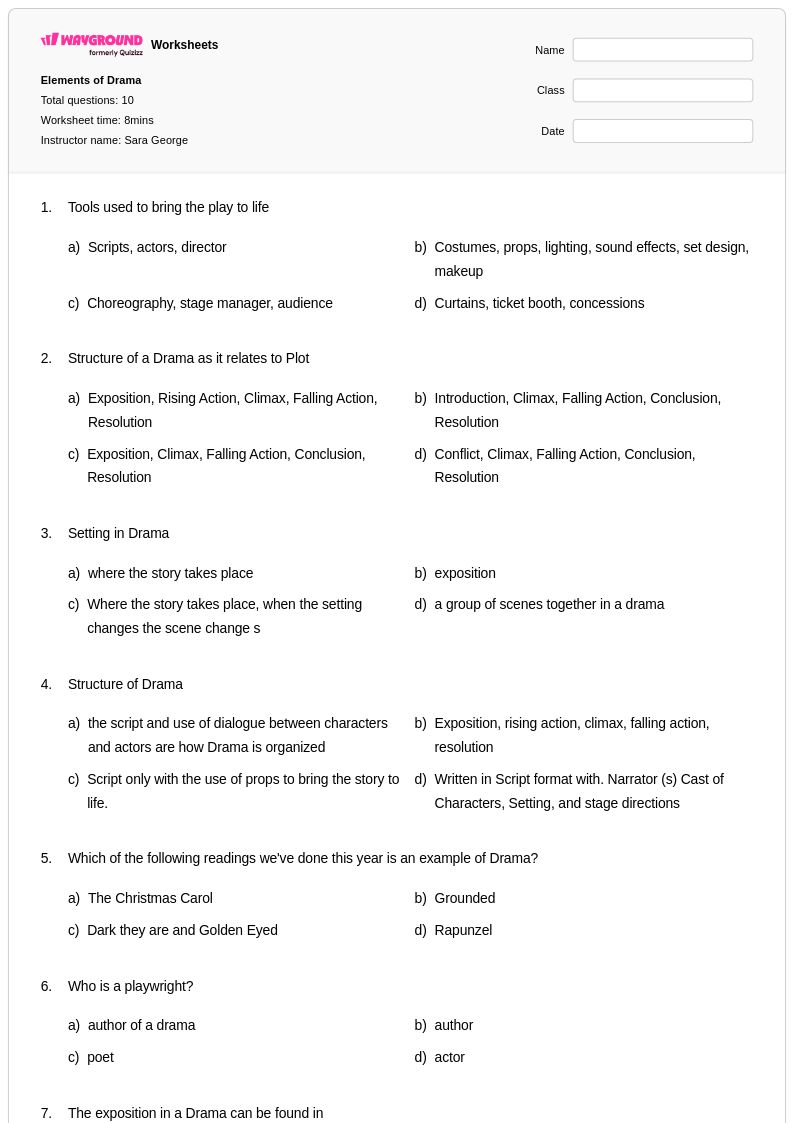
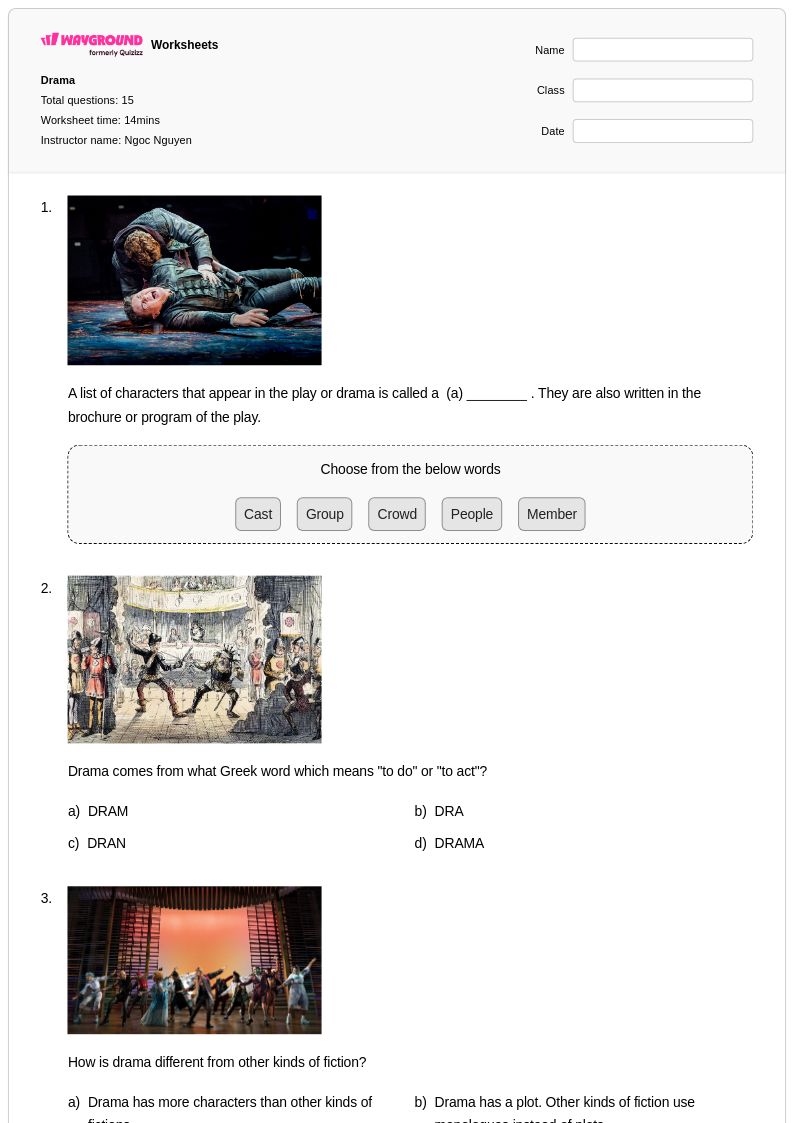
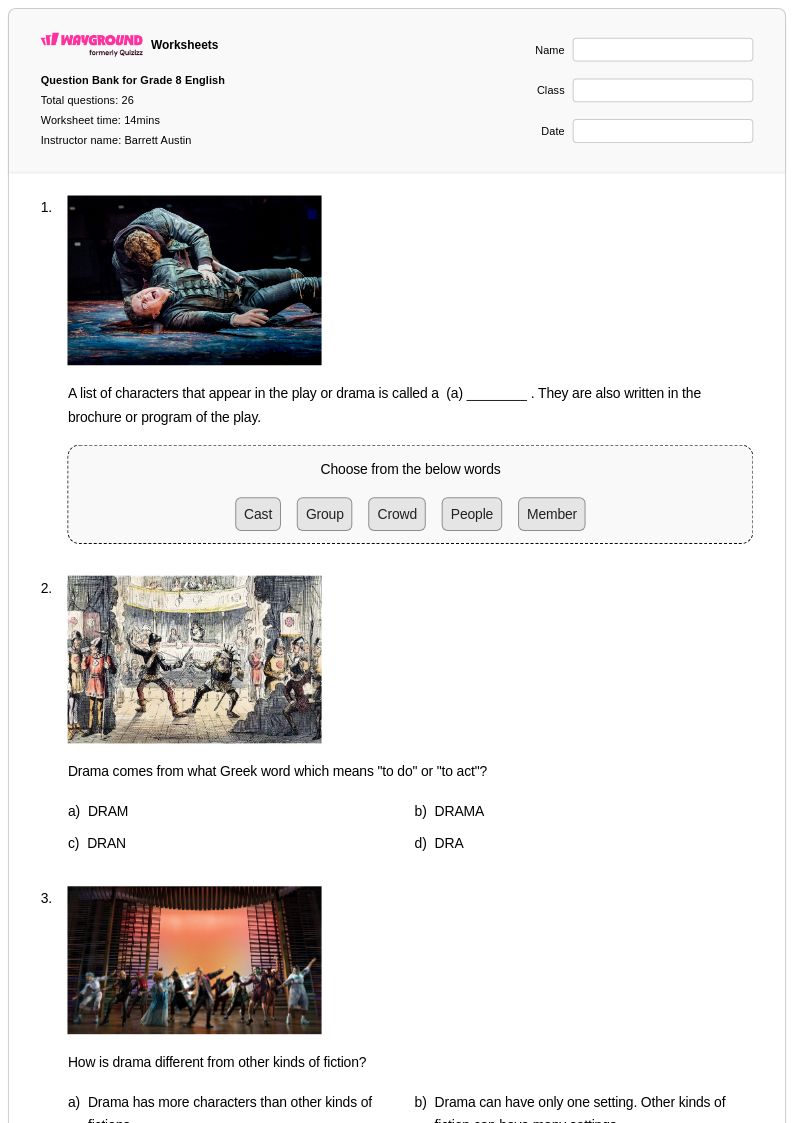
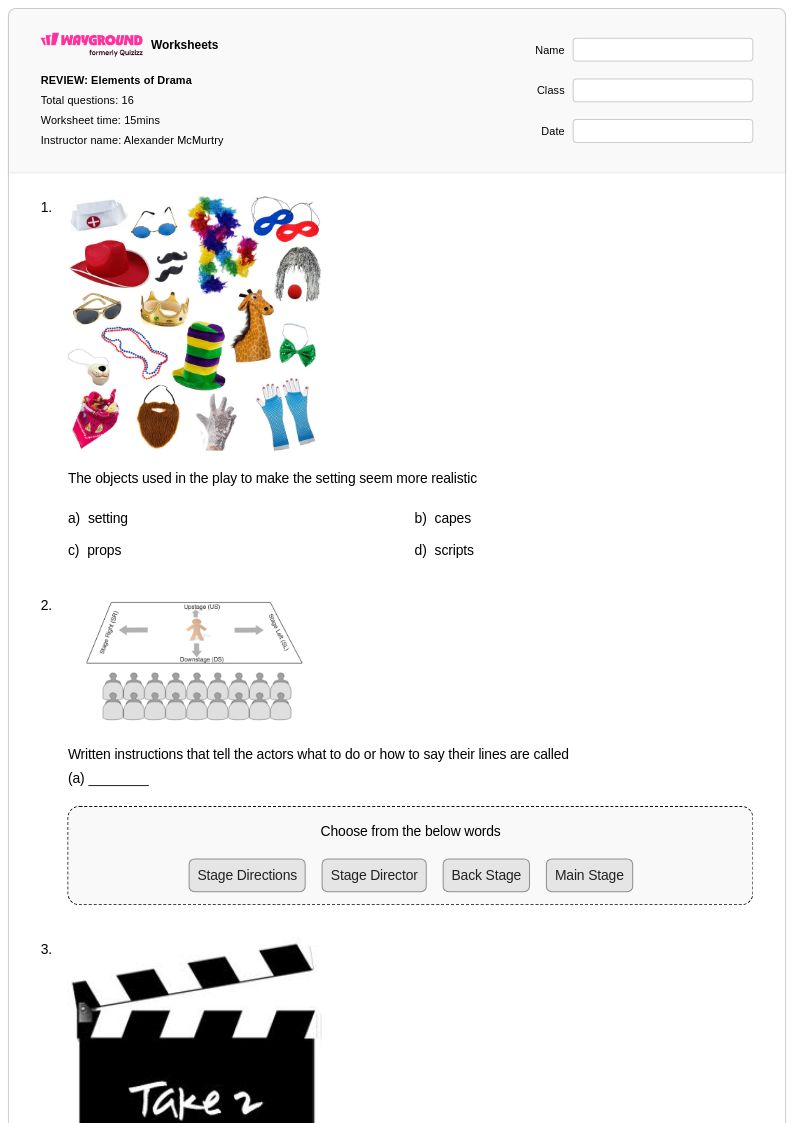
Explore Wayground's free stage directions worksheets and printables that help students master theatrical elements, dramatic structure, and script analysis through engaging practice problems with comprehensive answer keys.
Stage directions worksheets available through Wayground (formerly Quizizz) provide students with essential practice in understanding and interpreting the technical elements that guide theatrical performances and dramatic literature. These comprehensive printable resources help students develop critical reading skills by analyzing how playwrights use stage directions to convey character movement, emotional states, setting details, and atmospheric elements that cannot be expressed through dialogue alone. Each worksheet includes carefully crafted practice problems that challenge students to identify different types of stage directions, understand their purposes, and recognize how these textual elements enhance the overall meaning of dramatic works. The accompanying answer key allows for immediate feedback and self-assessment, while the free pdf format ensures easy accessibility for both classroom instruction and independent study.
Wayground (formerly Quizizz) supports educators with millions of teacher-created resources specifically designed for teaching stage directions and other elements of dramatic literature. The platform's robust search and filtering capabilities enable teachers to quickly locate worksheets that align with specific learning objectives and standards requirements, while differentiation tools allow for customization based on individual student needs and reading levels. These versatile materials are available in both printable and digital formats, including downloadable pdf versions, making them ideal for various instructional settings and learning environments. Teachers can effectively use these resources for lesson planning, targeted remediation of reading comprehension skills, enrichment activities for advanced learners, and regular skill practice to reinforce students' understanding of how stage directions function as a distinct genre element within dramatic texts.
FAQs
How do I teach stage directions to students who have never read a play before?
Start by distinguishing stage directions from dialogue — explain that stage directions are the playwright's instructions to actors, directors, and designers, written outside of spoken lines. Use a short, familiar excerpt and have students highlight only the stage directions, then discuss what each one tells a performer to do or feel. Once students can identify stage directions on sight, move to interpretation: ask what the scene would lose if those directions were removed. This builds both close-reading habits and an understanding of why playwrights use this technique.
What exercises help students practice reading and interpreting stage directions?
Effective practice activities include annotating scripts to categorize stage directions by type (movement, emotion, setting, lighting), rewriting a scene's stage directions in a student's own words, or comparing two productions of the same scene to see how directors interpret the written directions differently. Worksheets that ask students to identify the purpose of specific stage directions — and explain how they shape meaning — build the analytical reading skills most useful in both theater and ELA contexts.
What mistakes do students commonly make when analyzing stage directions?
The most common error is treating stage directions as optional background information rather than as deliberate authorial choices. Students often focus exclusively on dialogue and skip over stage directions when reading, which causes them to miss crucial context about character intent, tone, and setting. A related misconception is assuming stage directions are always literal instructions with no interpretive weight — in reality, playwrights like Tennessee Williams or Arthur Miller embed emotional and thematic meaning directly into their stage directions.
How can I differentiate stage directions instruction for students at different reading levels?
For struggling readers, reduce cognitive load by working with shorter script excerpts and focusing on one type of stage direction at a time, such as movement cues before tackling emotional or atmospheric directions. On Wayground, teachers can enable Read Aloud so questions and script content are read to students who need audio support, and can assign reduced answer choices to selected students without other students being notified. Advanced learners can be challenged to evaluate how a playwright's use of stage directions evolves across an entire act, or to compare stage directions across dramatic genres.
How do I use Wayground's stage directions worksheets in my classroom?
Wayground's stage directions worksheets are available as printable PDFs for traditional classroom use and in digital formats for technology-integrated environments, including the option to host them as a quiz directly on Wayground. The printable version works well for annotation exercises where students physically mark up a script, while the digital format supports remote learning, individual pacing, and immediate feedback through the built-in answer key. Both formats include comprehensive answer keys, making them suitable for guided instruction, independent practice, or self-assessment.
How do stage directions function differently from dialogue in a script?
Dialogue conveys what characters say; stage directions convey everything else a playwright needs to communicate to bring the script to life — including how characters move, where they stand, what the space looks, sounds, or feels like, and what emotional states underlie a scene. Stage directions are not spoken aloud in performance but are essential reading for actors, directors, and designers. Teaching students to read stage directions as carefully as dialogue is fundamental to script analysis and dramatic literature comprehension.