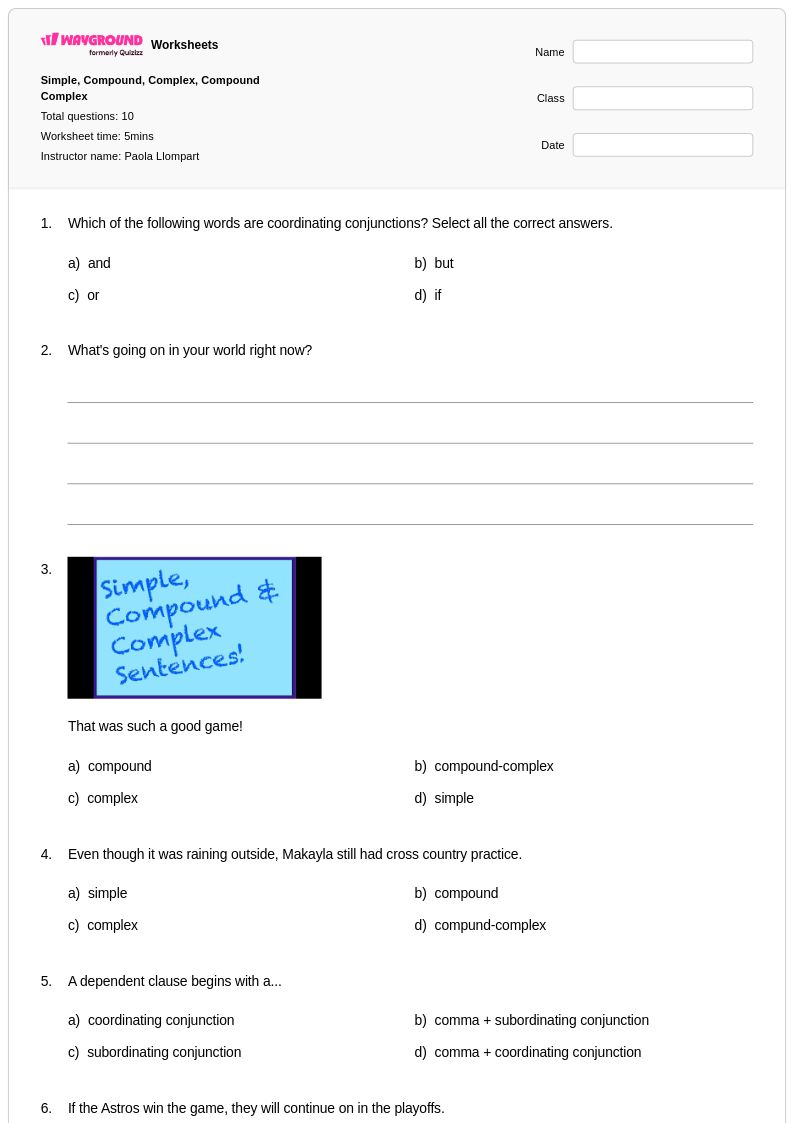
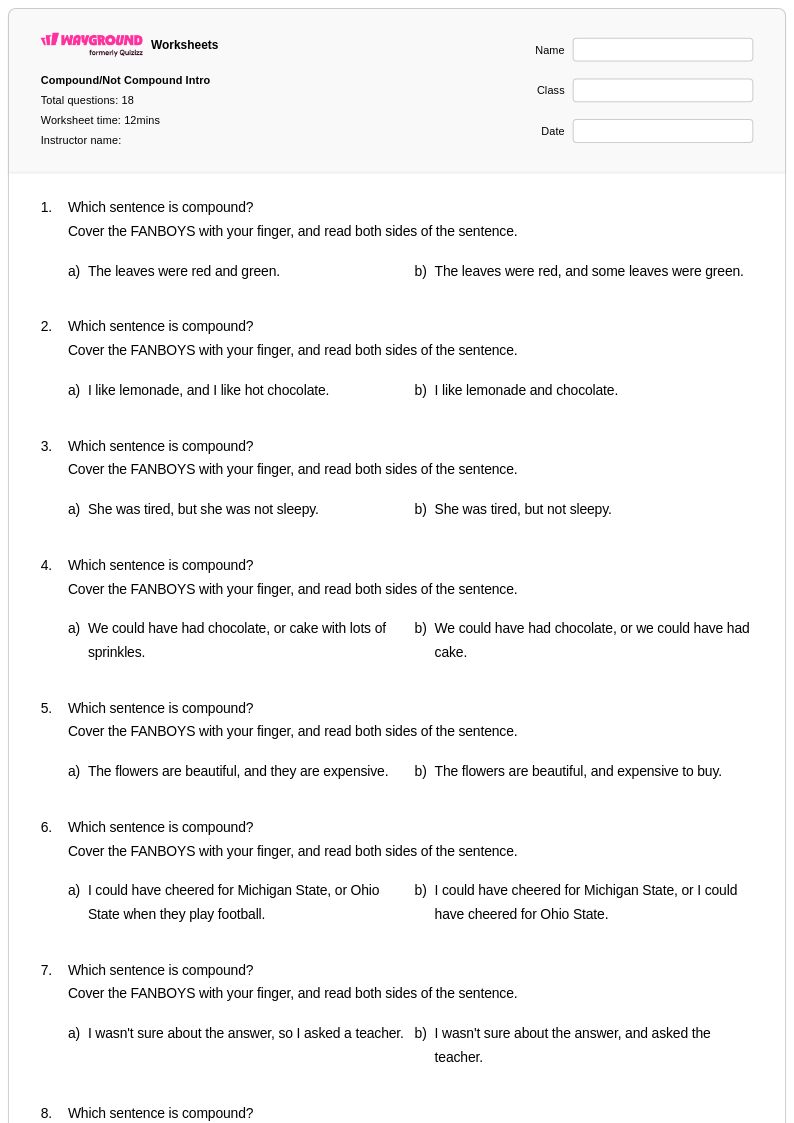
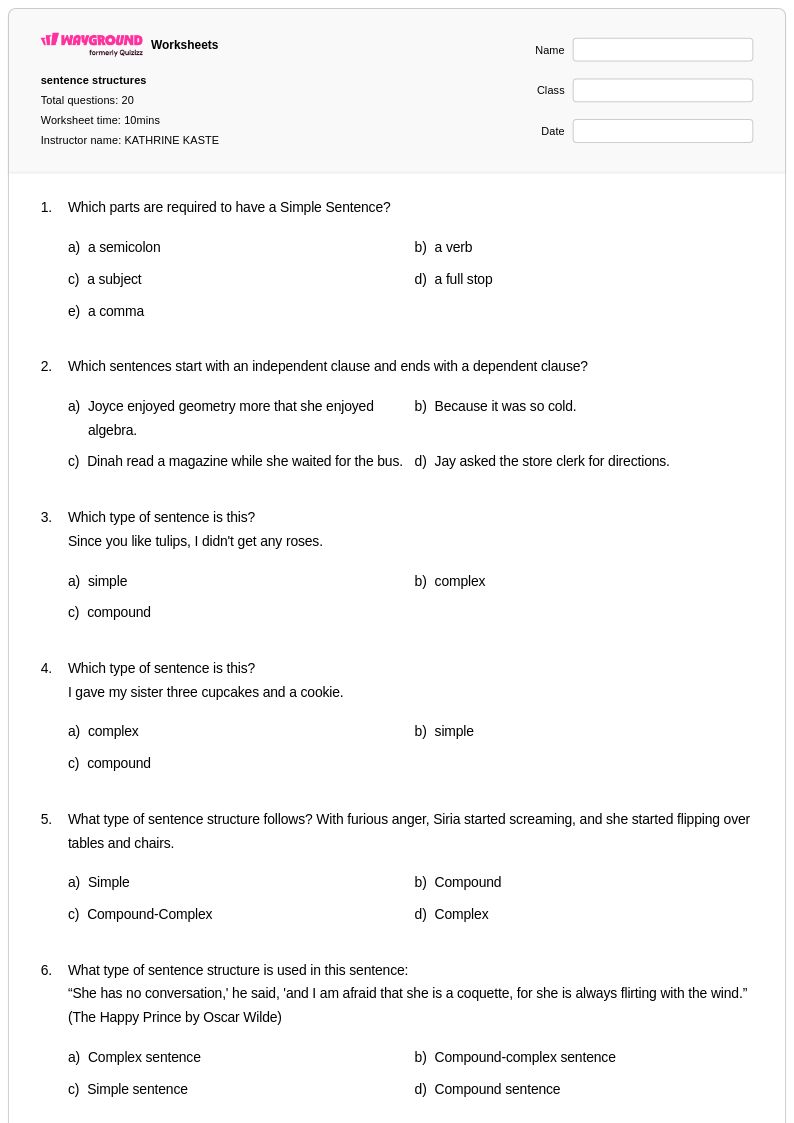
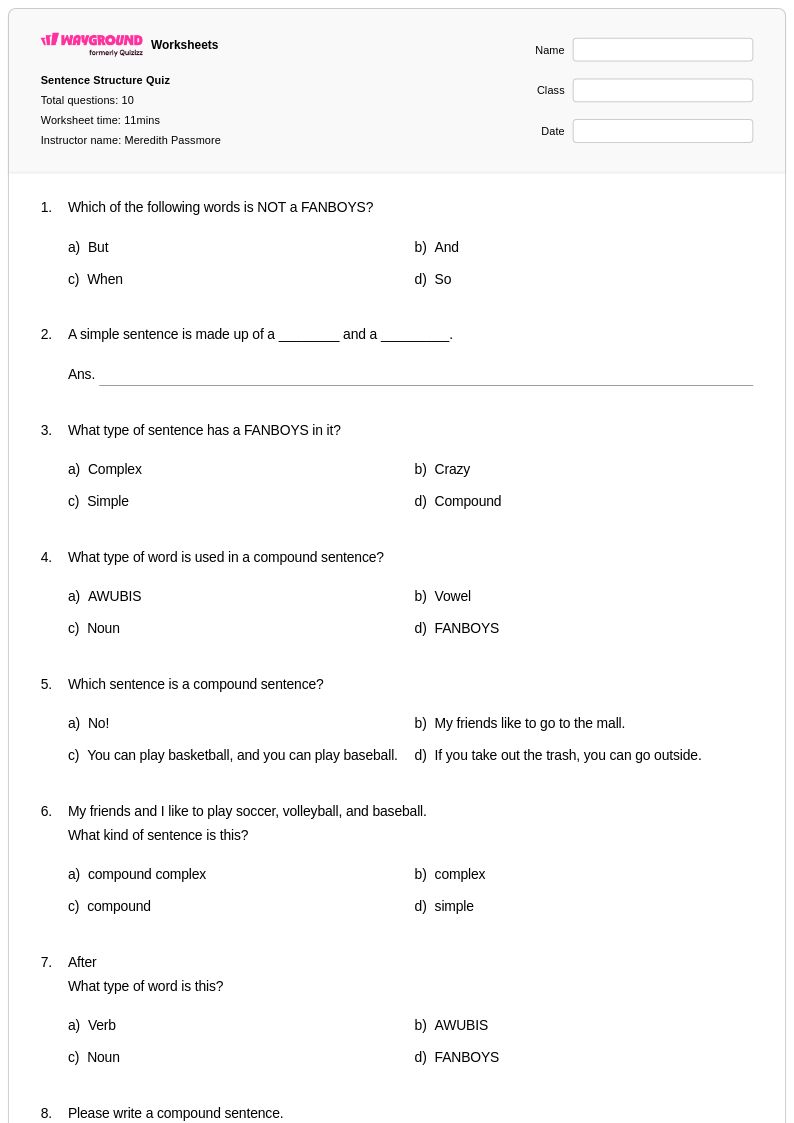
Free Printable Structure of Compound Words worksheets
Explore Wayground's free printable worksheets and practice problems that help students master the structure of compound words through engaging exercises with comprehensive answer keys and downloadable PDFs.
Explore printable Structure of Compound Words worksheets
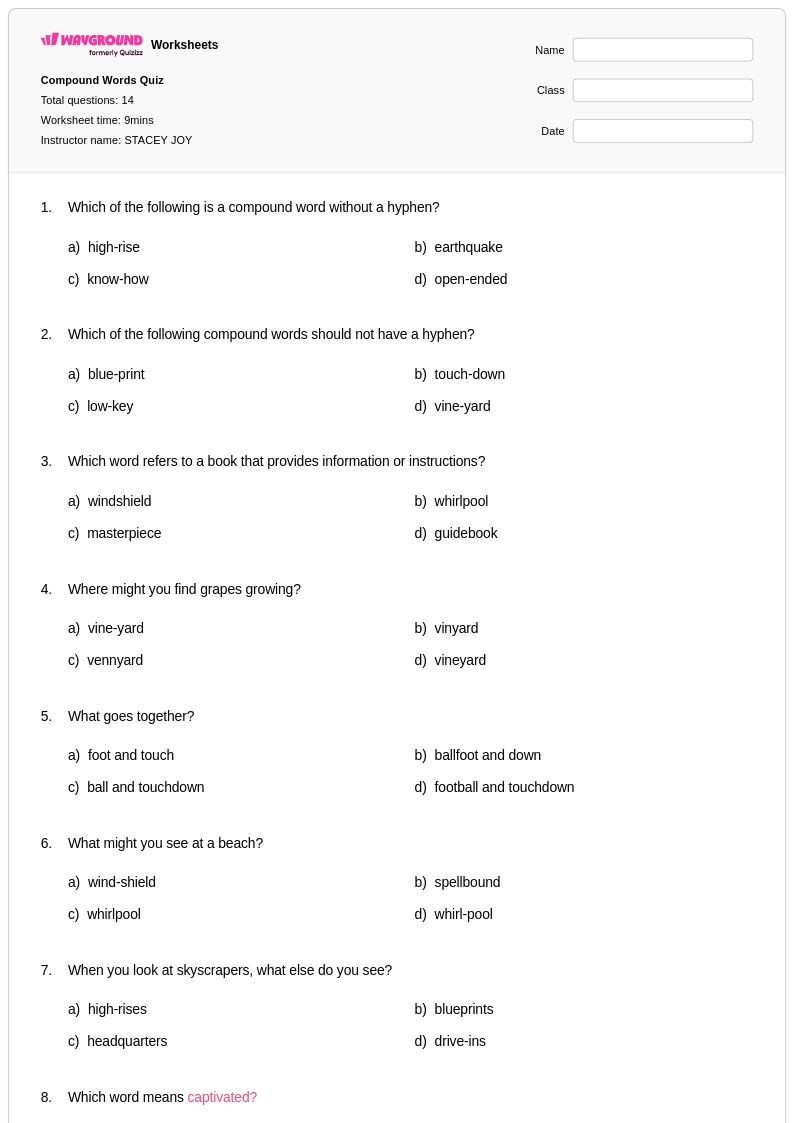
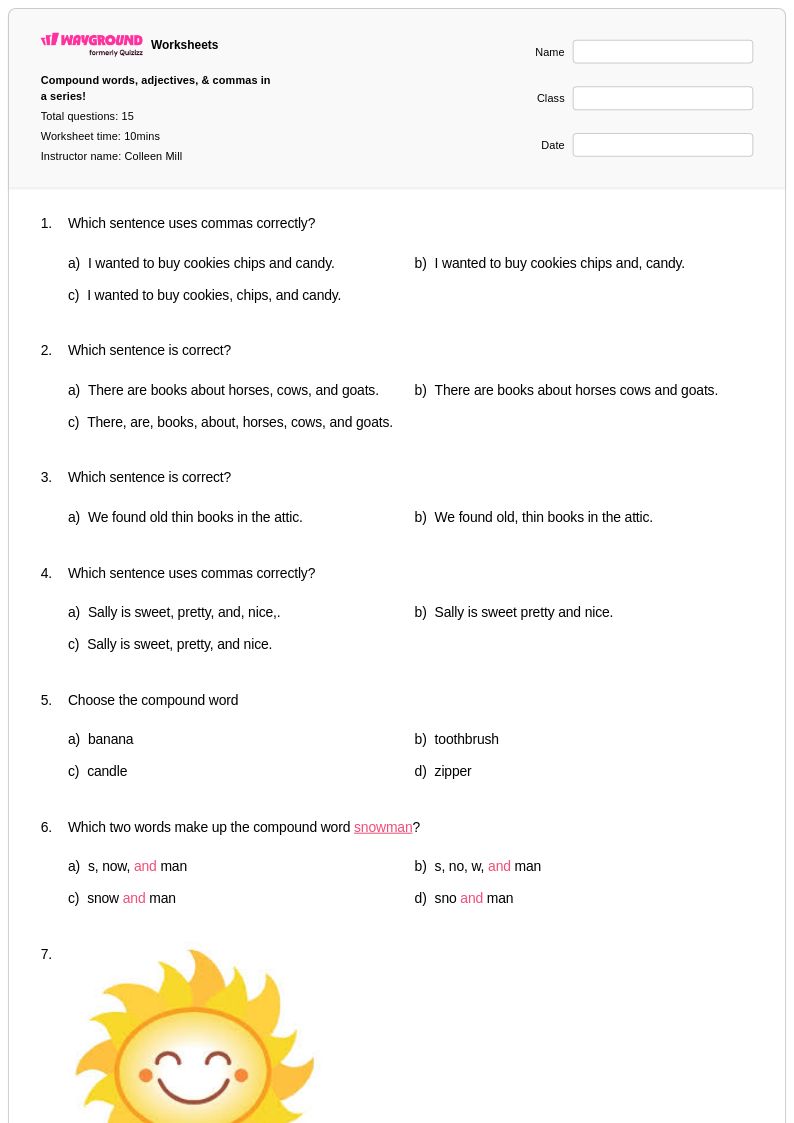
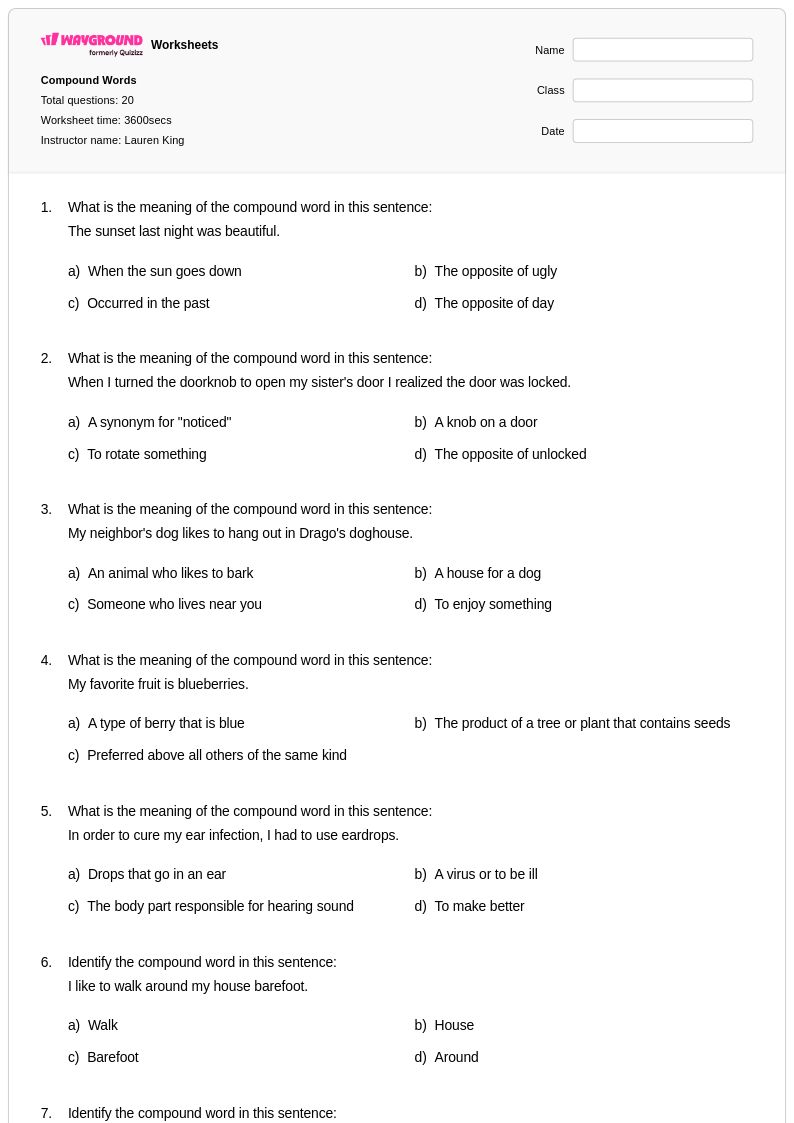
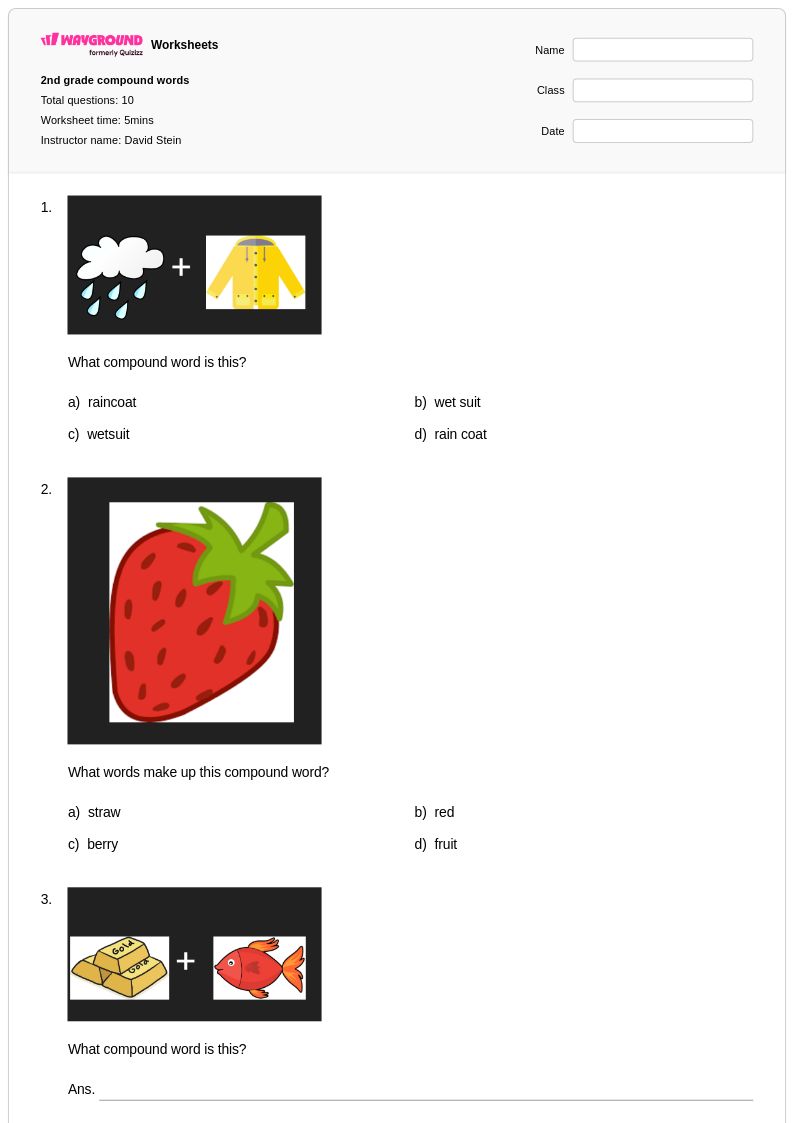
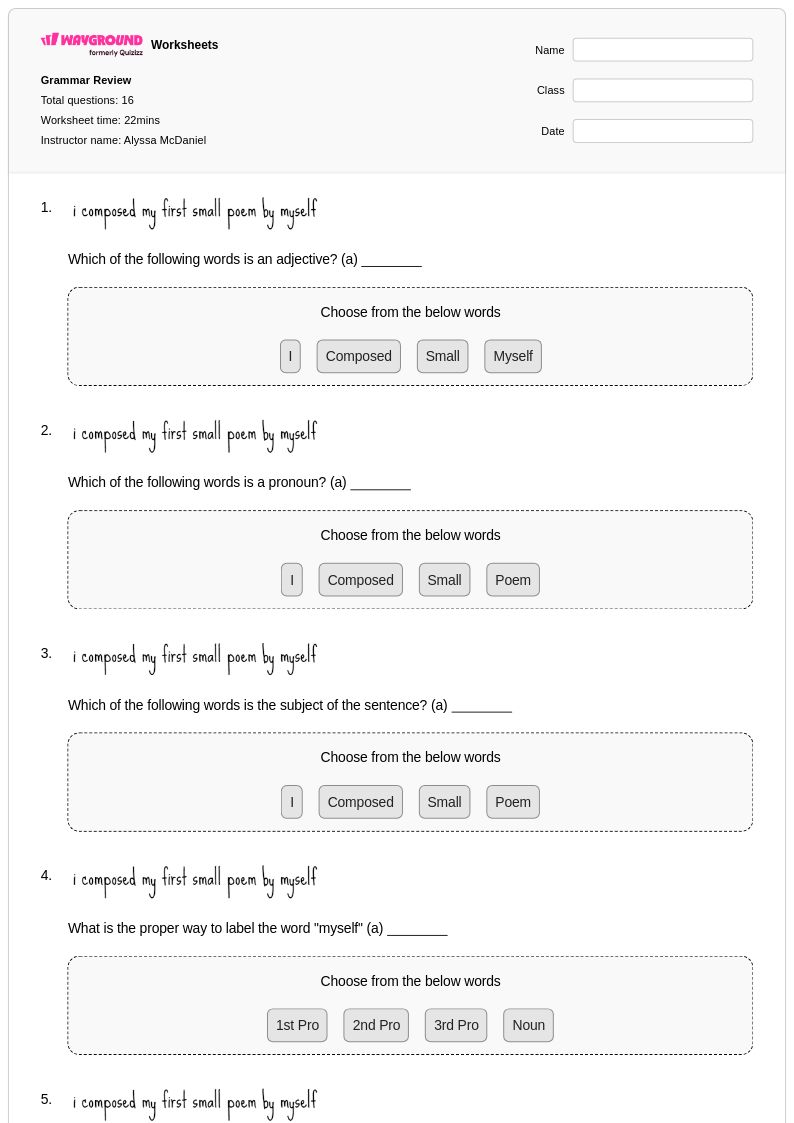
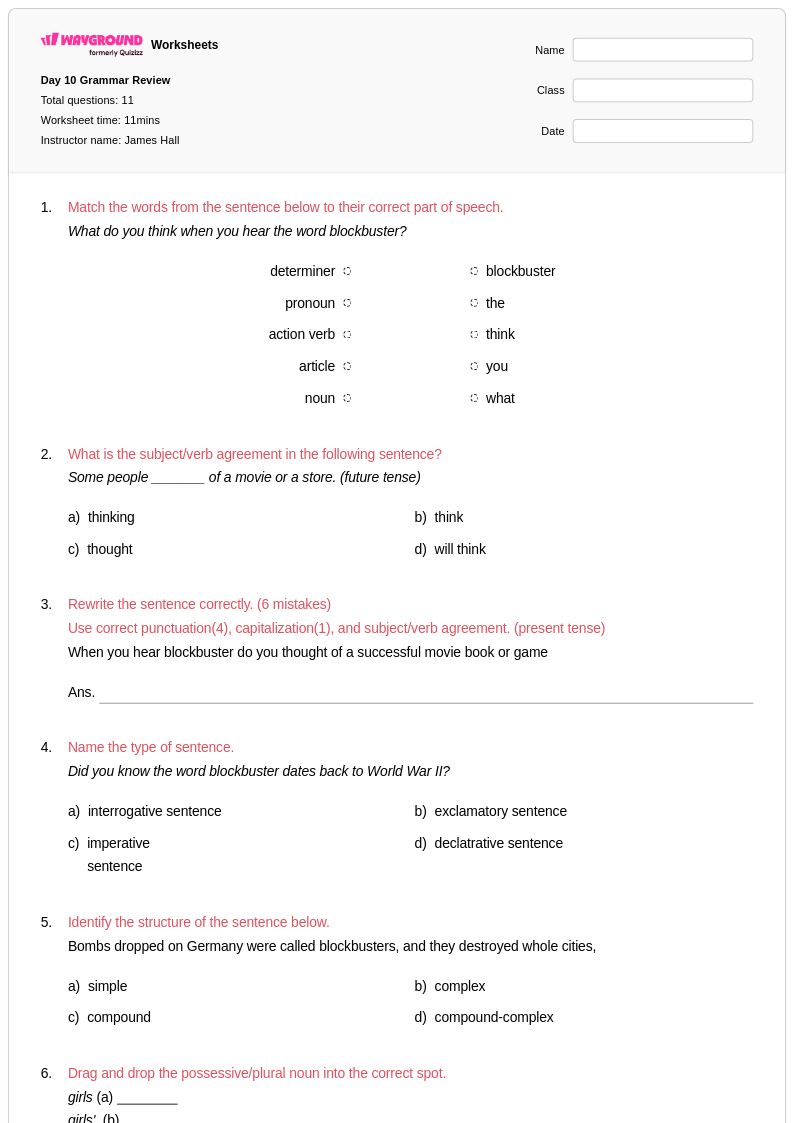
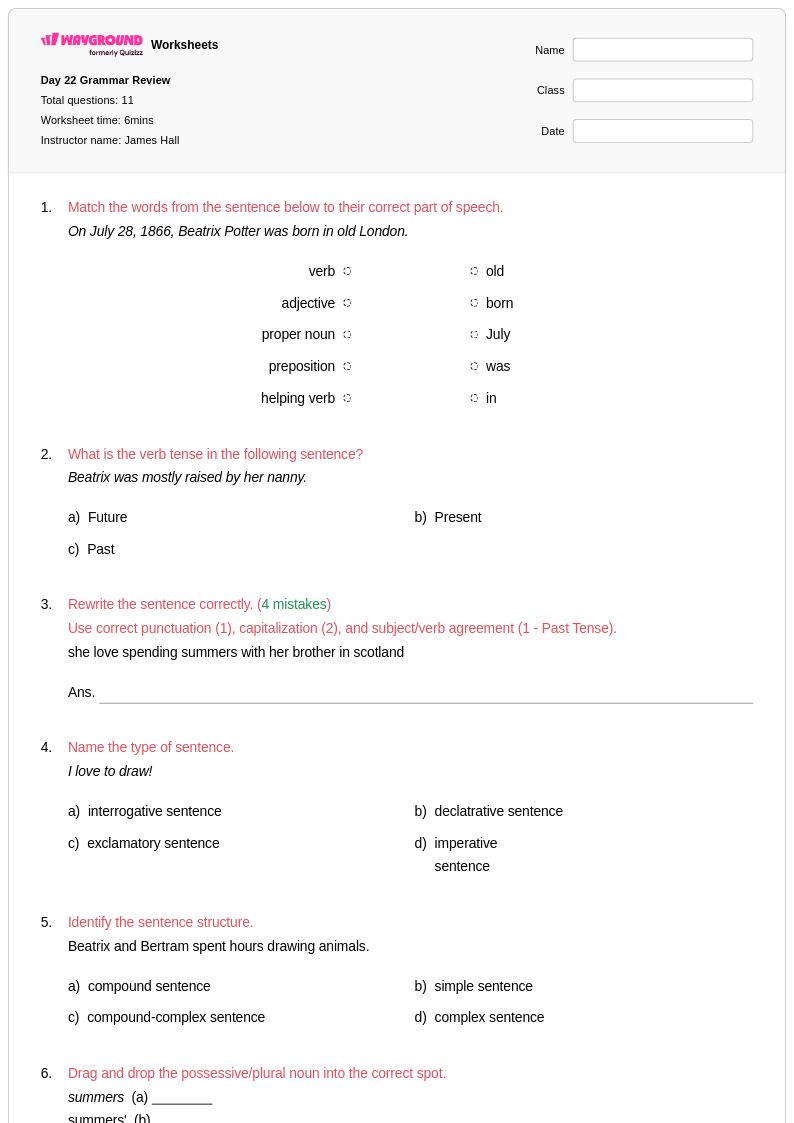
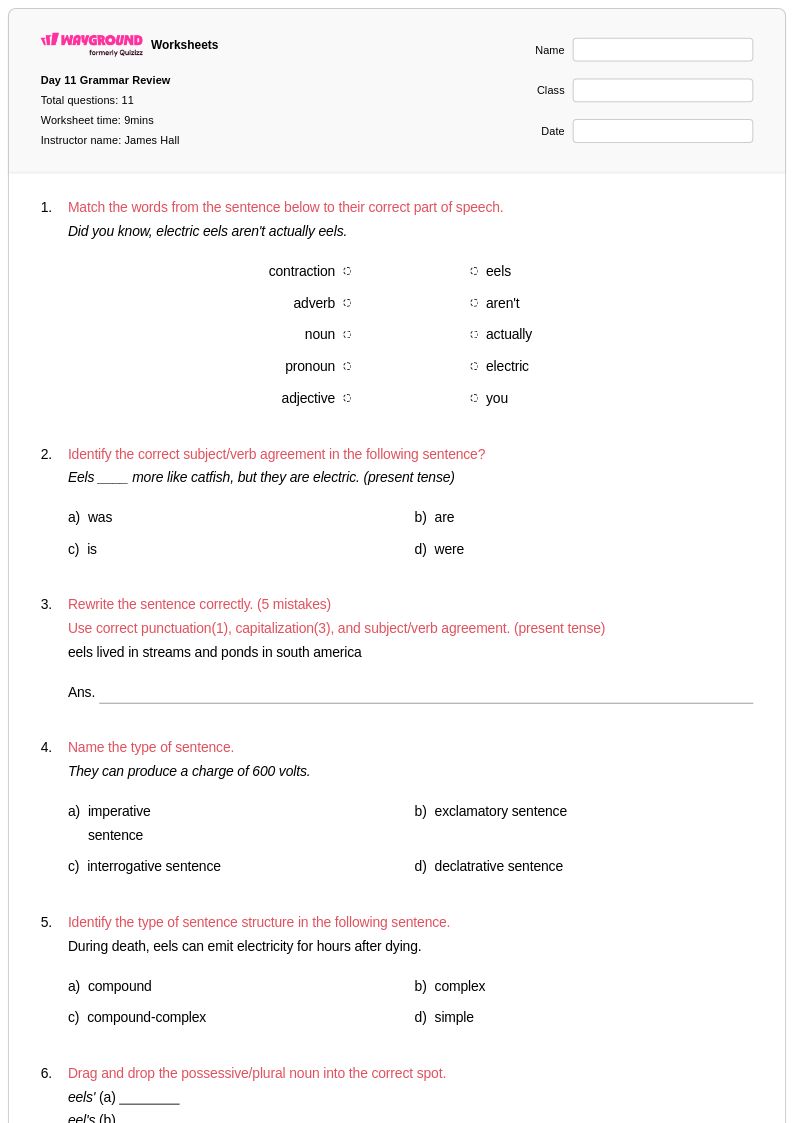
The structure of compound words represents a fundamental building block in English language development, and Wayground's comprehensive worksheet collection provides educators with expertly designed resources to help students master this essential concept. These worksheets systematically guide learners through the various ways compound words are formed, including closed compounds (like "basketball"), open compounds (like "ice cream"), and hyphenated compounds (like "mother-in-law"). Students engage with practice problems that strengthen their ability to identify root words, understand how meaning changes when words combine, and recognize structural patterns across different compound word types. Each worksheet includes a detailed answer key and is available as a free printable pdf, making it easy for teachers to incorporate structured compound word instruction into their lesson plans while providing students with clear examples and guided practice opportunities.
Wayground supports teachers in delivering effective compound word structure instruction through its vast library of millions of teacher-created resources that can be easily searched and filtered to match specific learning objectives and standards alignment requirements. The platform's differentiation tools allow educators to customize worksheets based on individual student needs, whether for remediation with struggling learners or enrichment for advanced students who are ready to explore more complex compound word formations. These resources are available in both printable and digital formats, including downloadable pdfs, giving teachers the flexibility to seamlessly integrate compound word structure practice into classroom instruction, homework assignments, or independent learning centers. The comprehensive filtering system enables quick identification of materials that target specific aspects of compound word structure, supporting efficient lesson planning and ensuring that students receive systematic, progressive practice in understanding how individual words combine to create new meanings and concepts.
FAQs
How do I teach the structure of compound words to students?
Start by introducing the three types of compound words: closed compounds (e.g., 'basketball'), open compounds (e.g., 'ice cream'), and hyphenated compounds (e.g., 'mother-in-law'). Help students see that compound words are built from two or more root words, and that the combined meaning is often related to — but distinct from — each individual word. Using visual word-building activities where students physically combine word cards reinforces the structural logic behind how compounds form.
What exercises help students practice identifying compound words?
Effective practice exercises include sorting activities where students categorize compound words as closed, open, or hyphenated, as well as exercises that ask students to identify the two root words within a given compound. Meaning-comparison tasks — where students explain how the compound word's meaning relates to its parts — deepen conceptual understanding beyond simple recognition. Structured worksheets with guided examples and progressive difficulty are especially useful for building fluency with compound word patterns.
What mistakes do students commonly make when learning compound word structure?
A frequent error is assuming all compound words are written as one closed word, leading students to incorrectly join open compounds like 'ice cream' or incorrectly drop hyphens from words like 'mother-in-law.' Students also often struggle to recognize that meaning shifts when words combine — for example, assuming 'bluebird' simply means a bird that is blue, rather than understanding it as a specific species. Explicitly comparing compound word types and discussing meaning helps address both structural and semantic misconceptions.
How can I differentiate compound word structure practice for students at different skill levels?
For students who are still developing foundational skills, focus on high-frequency closed compounds and provide word-part cards that reduce the cognitive load of generating combinations independently. Advanced students can explore hyphenated compounds and open compounds, as well as analyze how meaning shifts across compound types. On Wayground, teachers can apply accommodations such as reduced answer choices or read-aloud support for individual students, while the rest of the class works with standard settings — all without drawing attention to those adjustments.
How do I use Wayground's compound word structure worksheets in my classroom?
Wayground's compound word structure worksheets are available as printable PDFs for traditional classroom use and in digital formats for technology-integrated environments, giving teachers flexibility for in-person instruction, homework, or independent learning centers. Each worksheet includes a complete answer key, making self-correction and formative assessment straightforward. Teachers can also host worksheets as a quiz directly on Wayground, enabling quick checks for understanding on compound word identification and classification.