
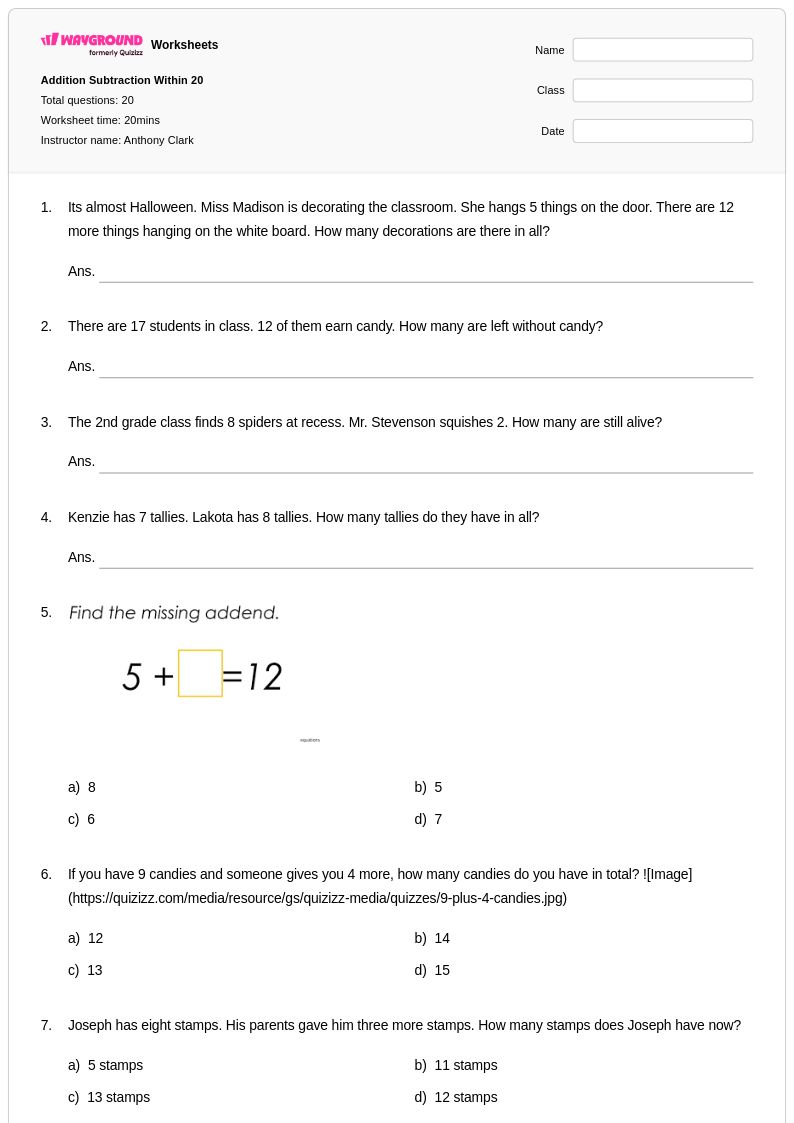
20 Q
2nd - Uni
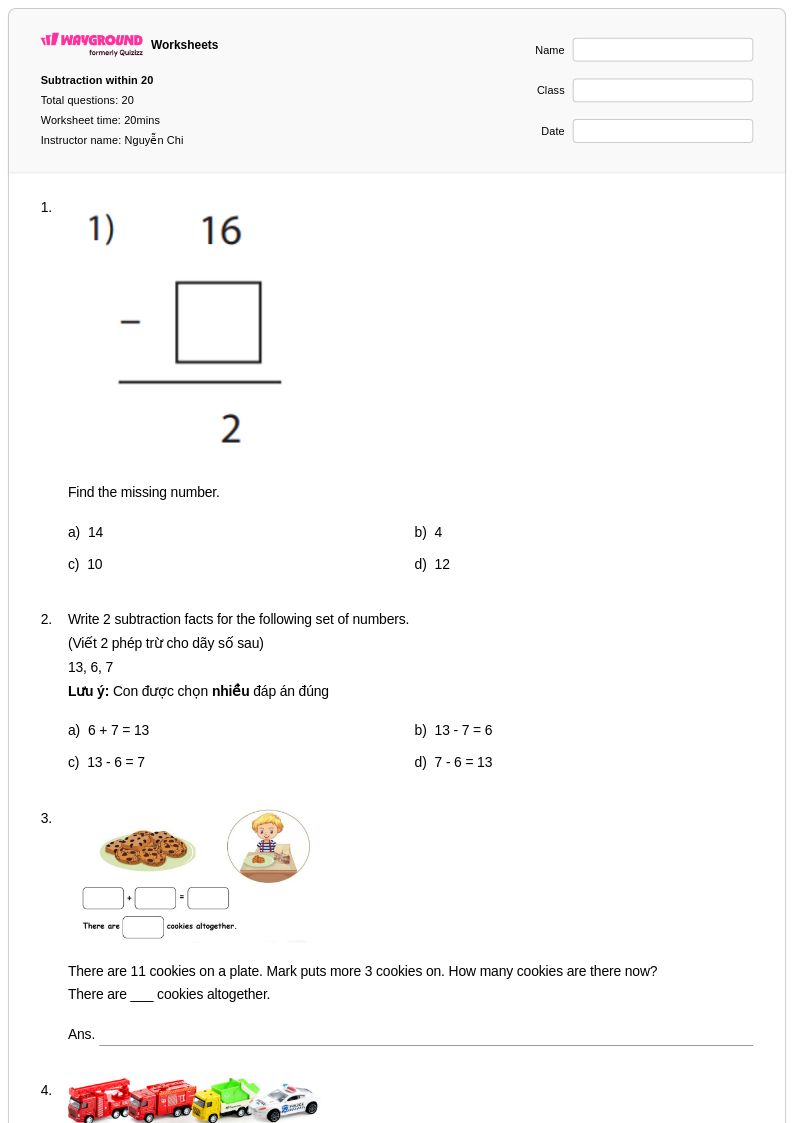
20 Q
1st - 5th
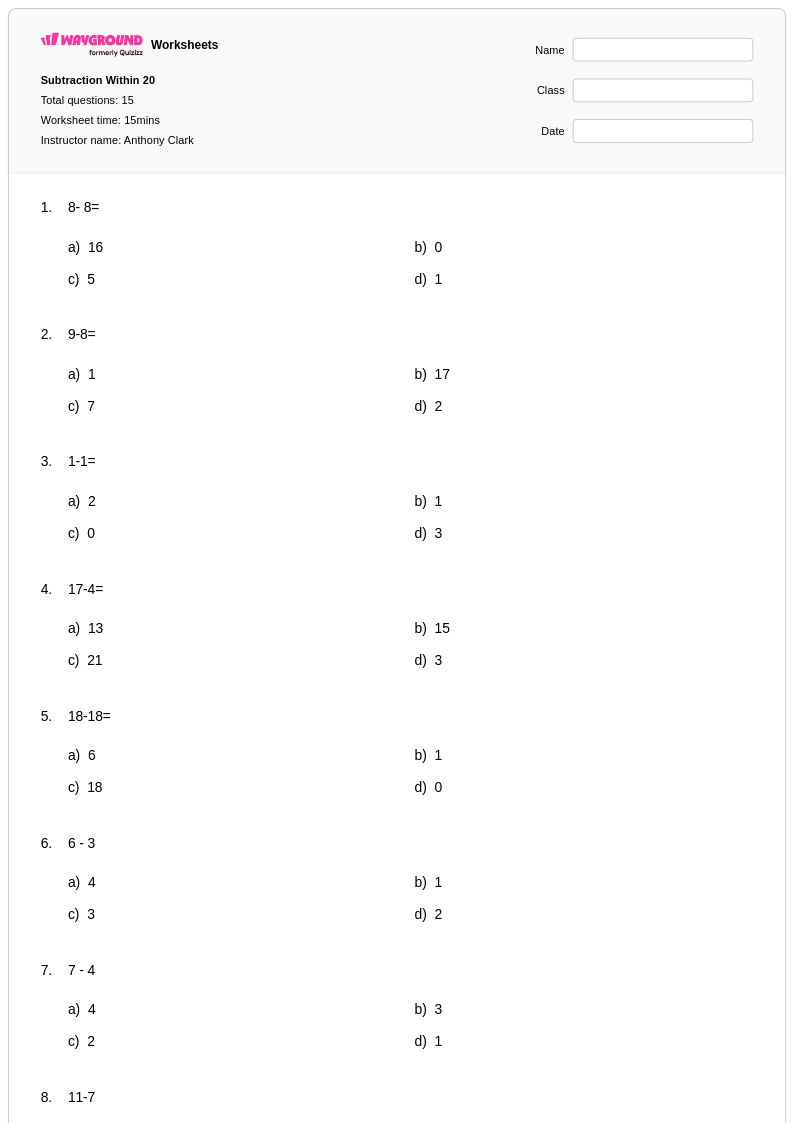
15 Q
2nd - Uni
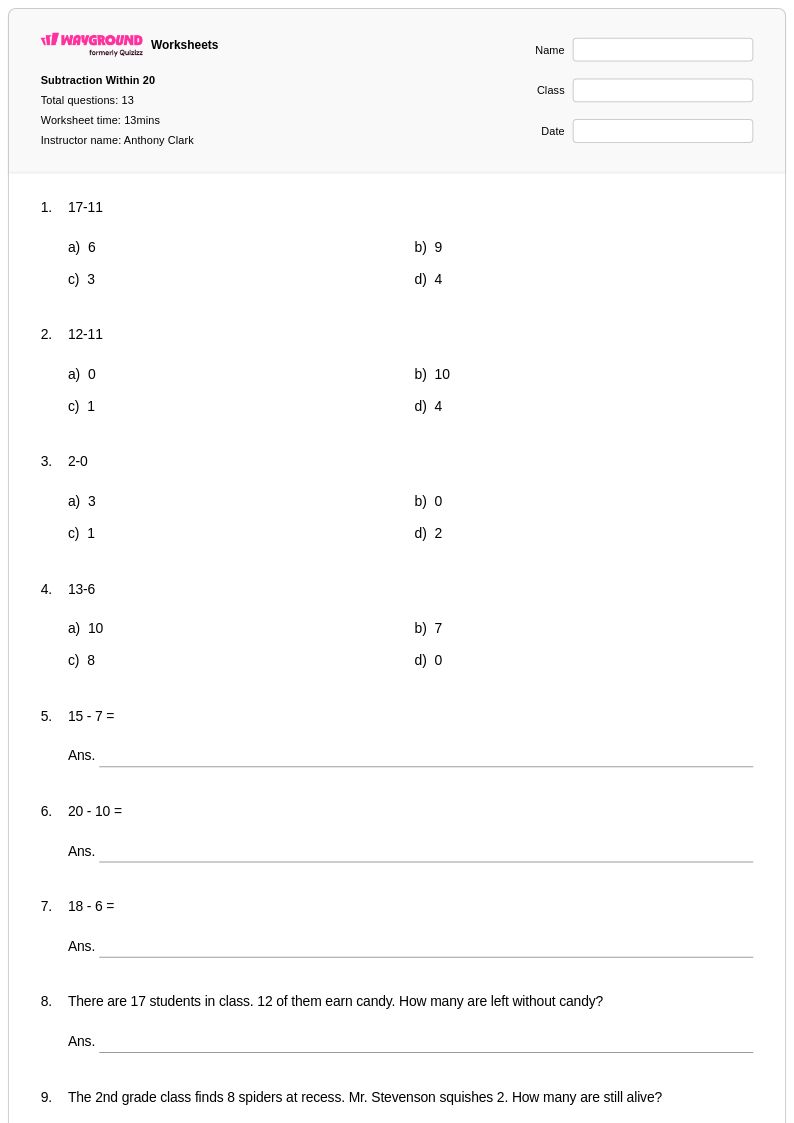
13 Q
2nd - Uni
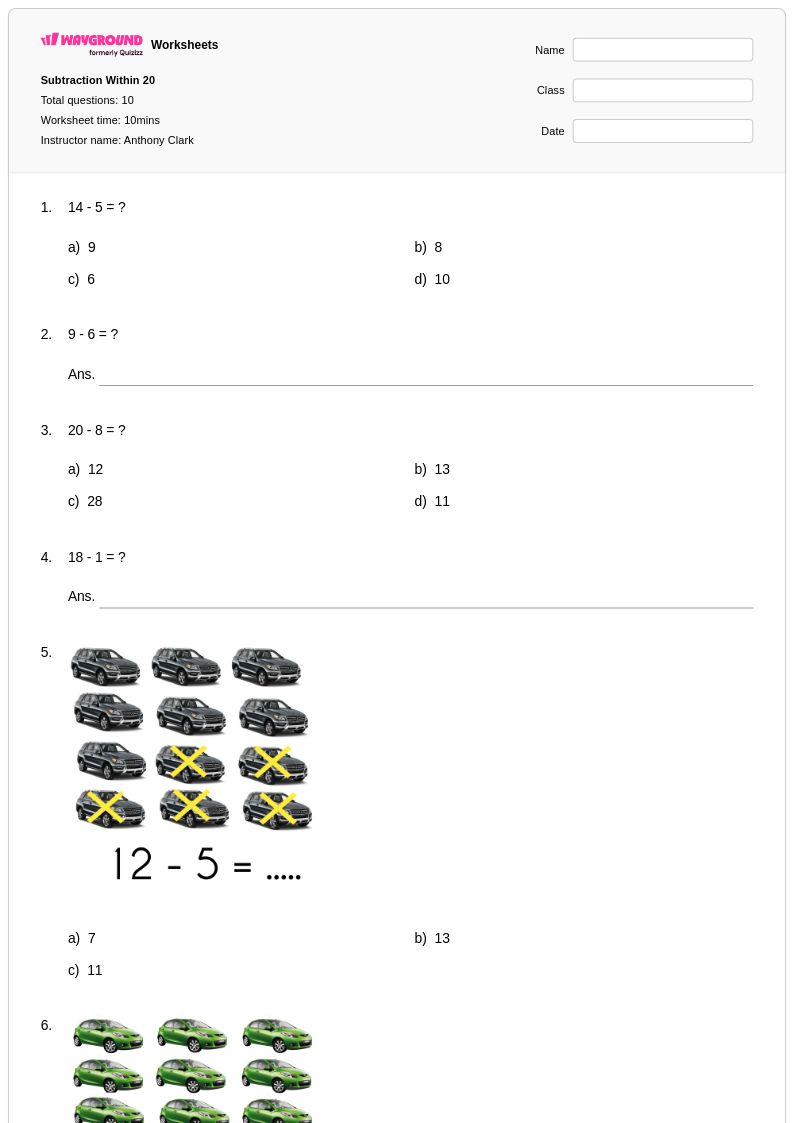
10 Q
1st - Uni
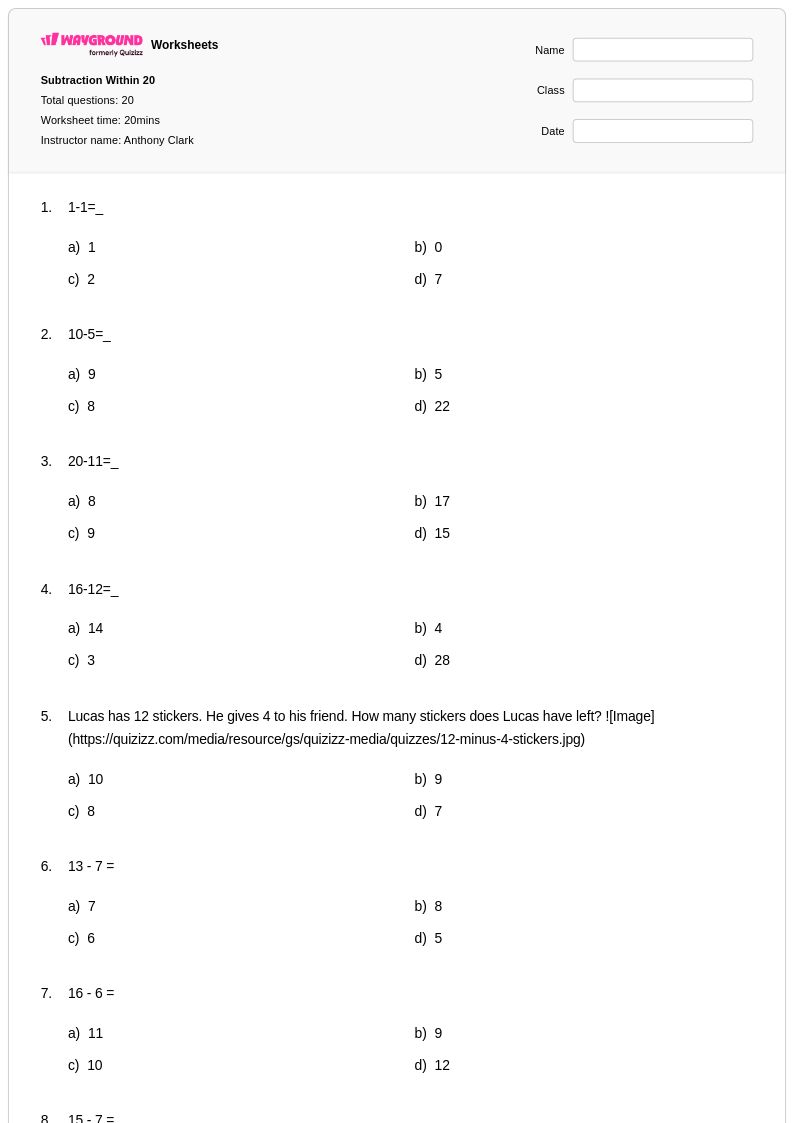
20 Q
1st - Uni
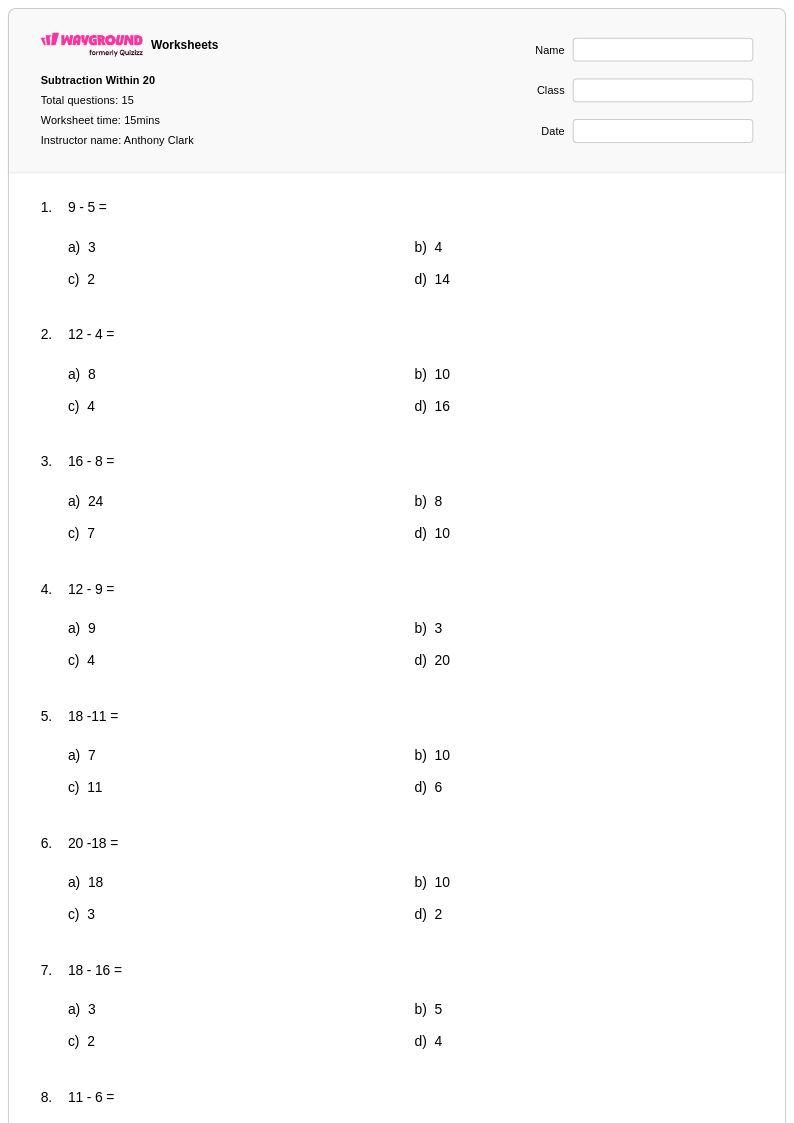
15 Q
1st - Uni
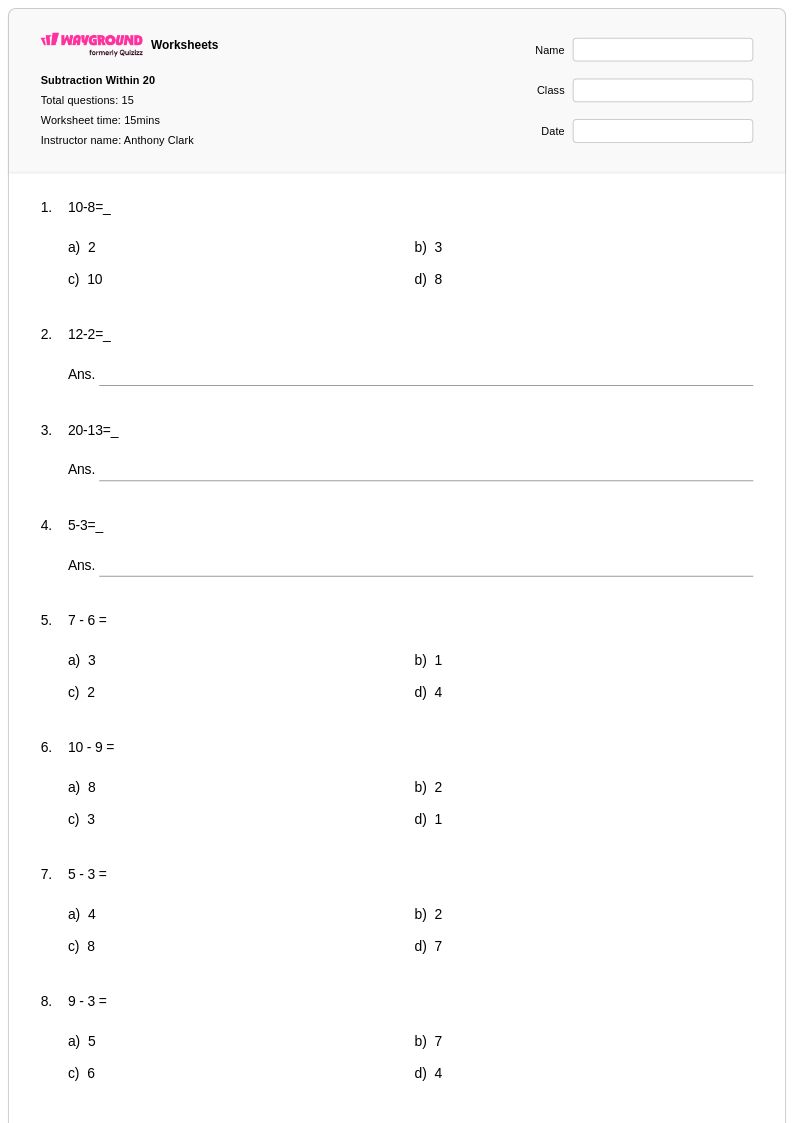
15 Q
1st - Uni
13 Q
1st - Uni
15 Q
1st - Uni
14 Q
1st - Uni
10 Q
1st - Uni
20 Q
1st - Uni
13 Q
1st - Uni
20 Q
2nd - Uni
12 Q
1st - Uni
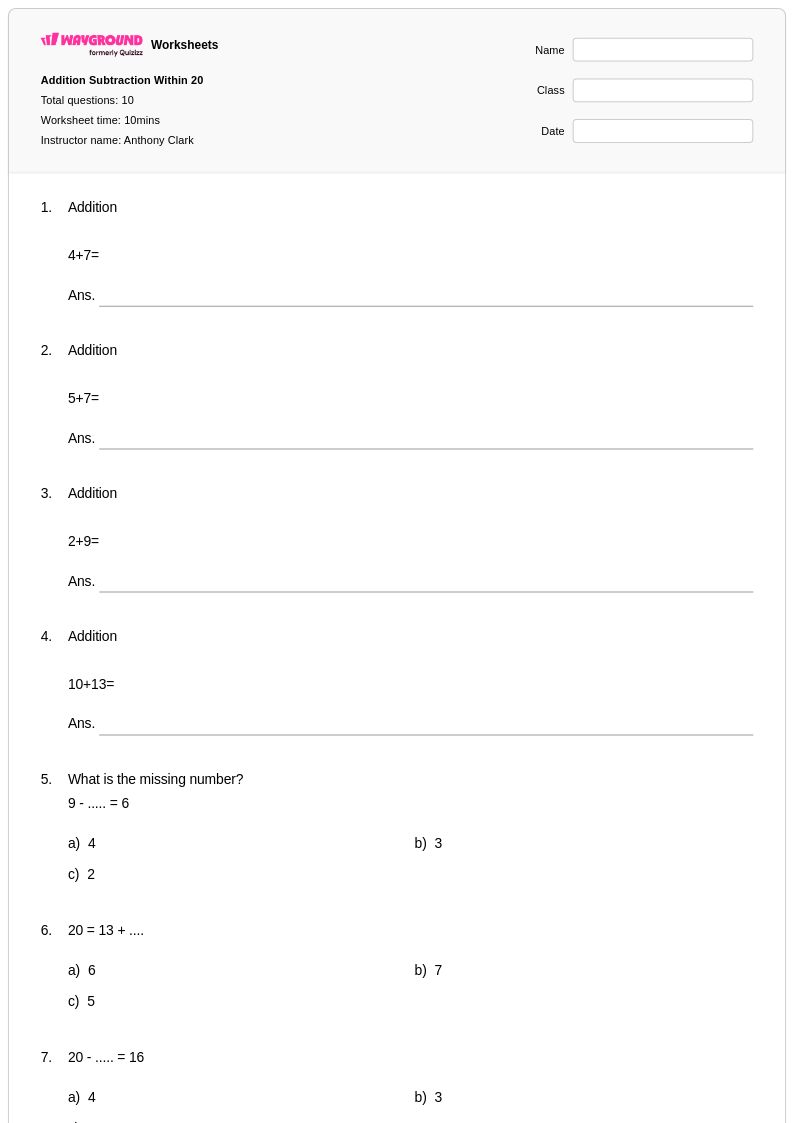
10 Q
2nd - Uni
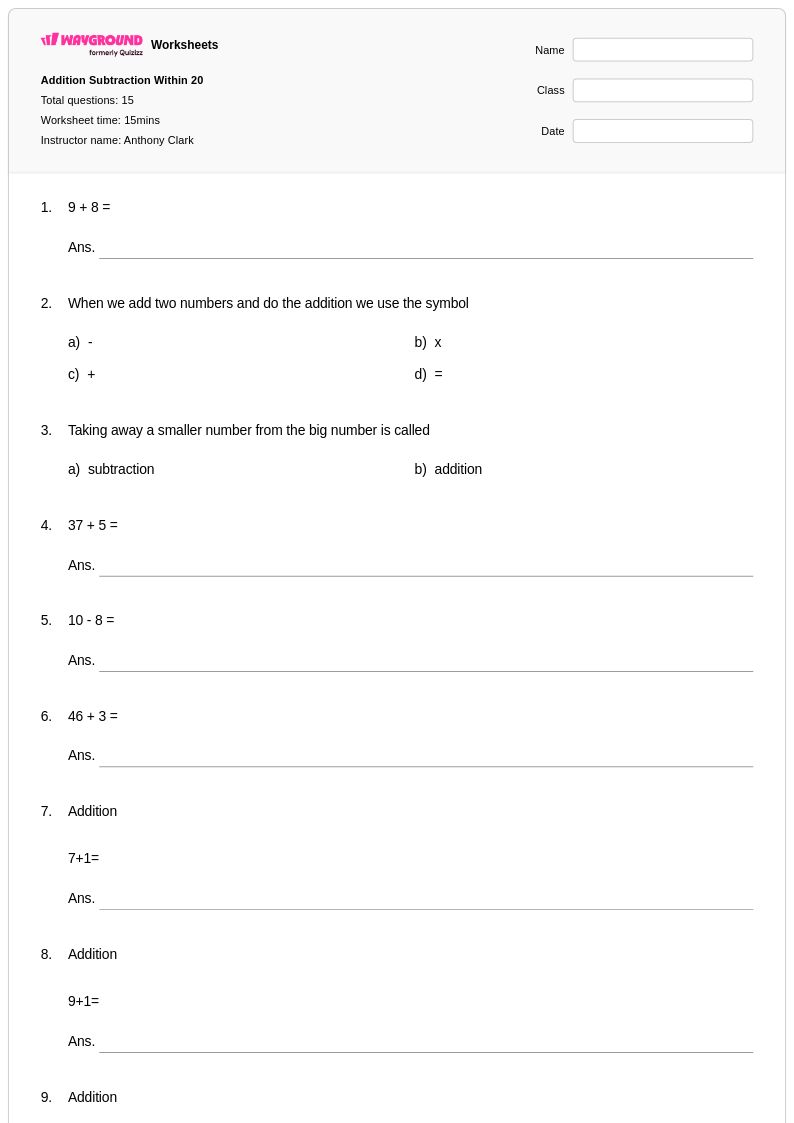
15 Q
2nd - Uni
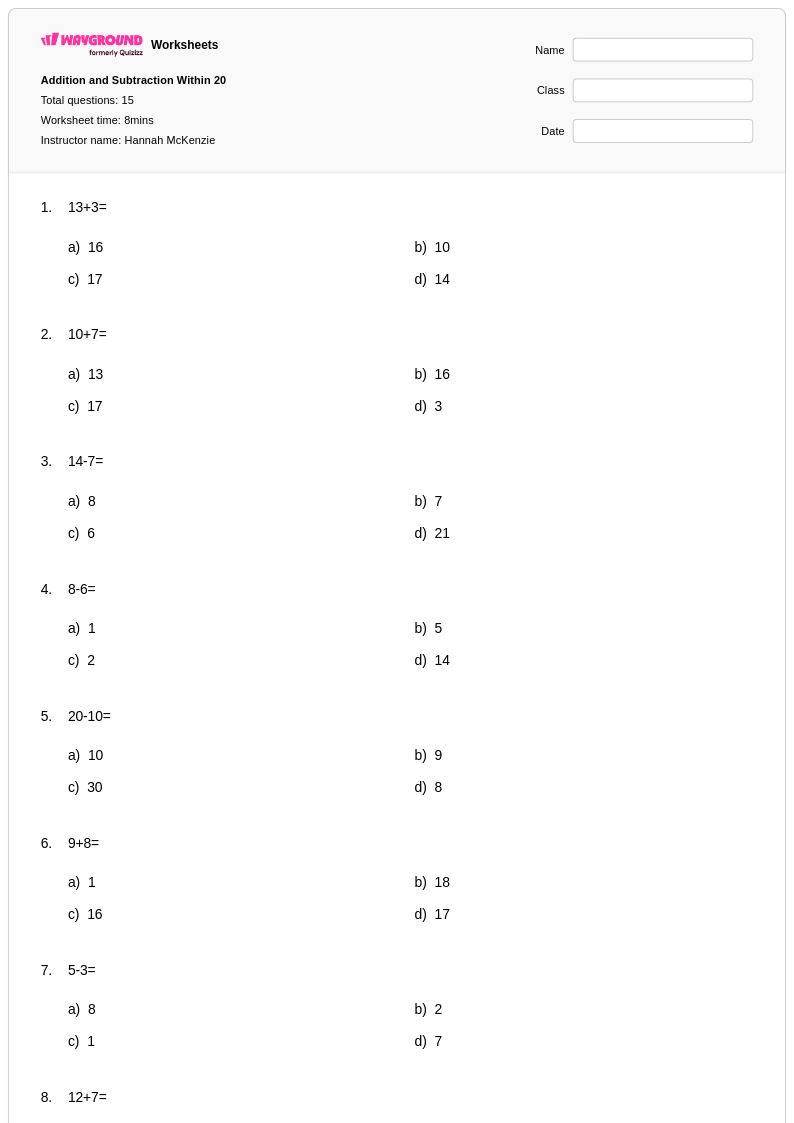
15 Q
1st - 3rd
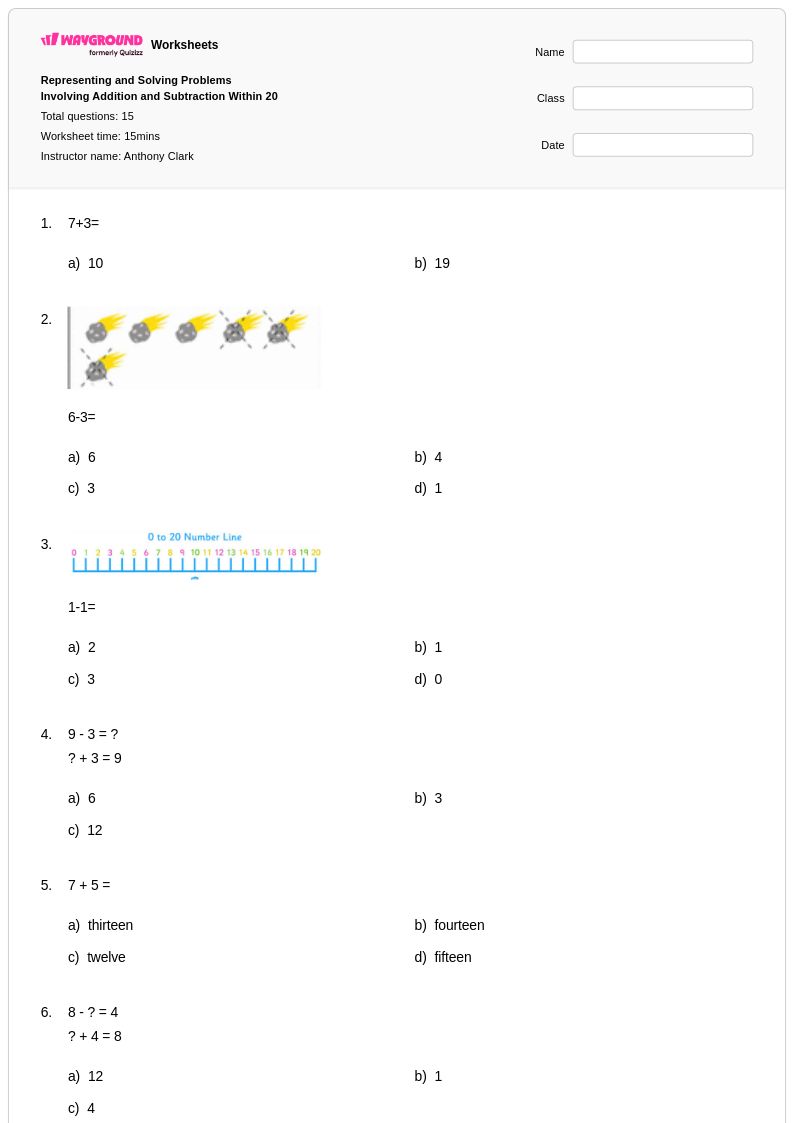
15 Q
1st - Uni
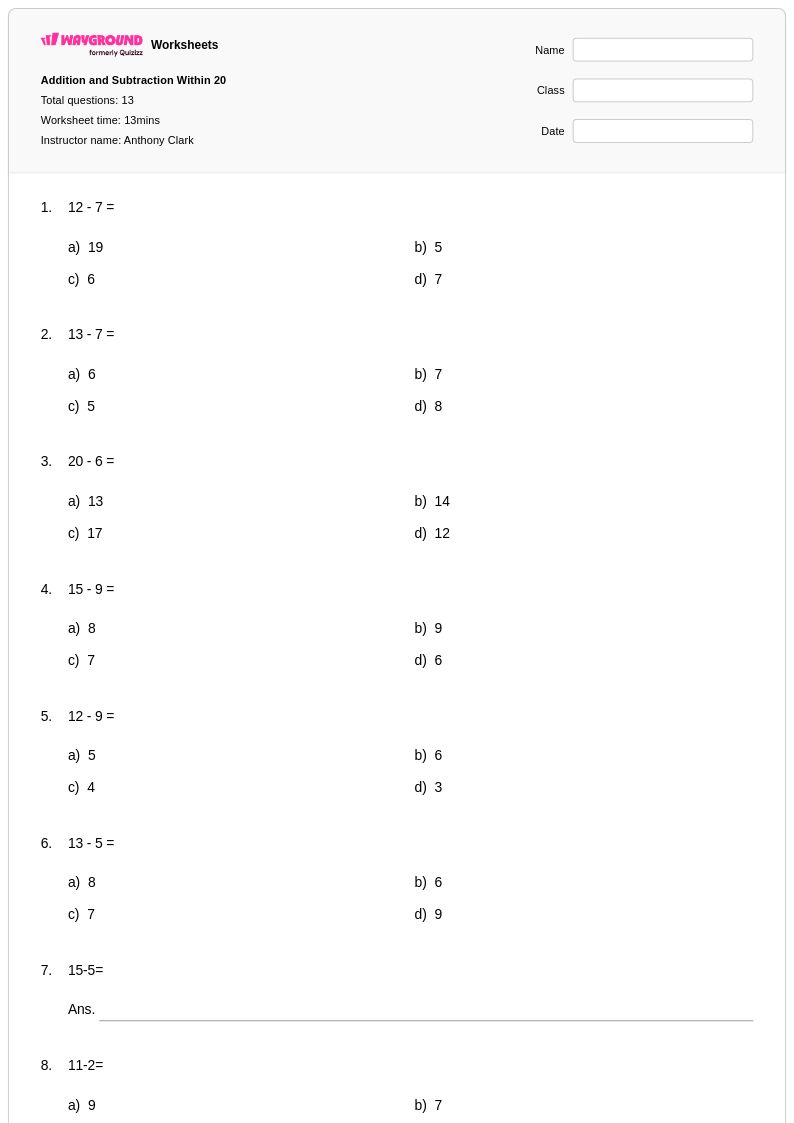
13 Q
1st - Uni
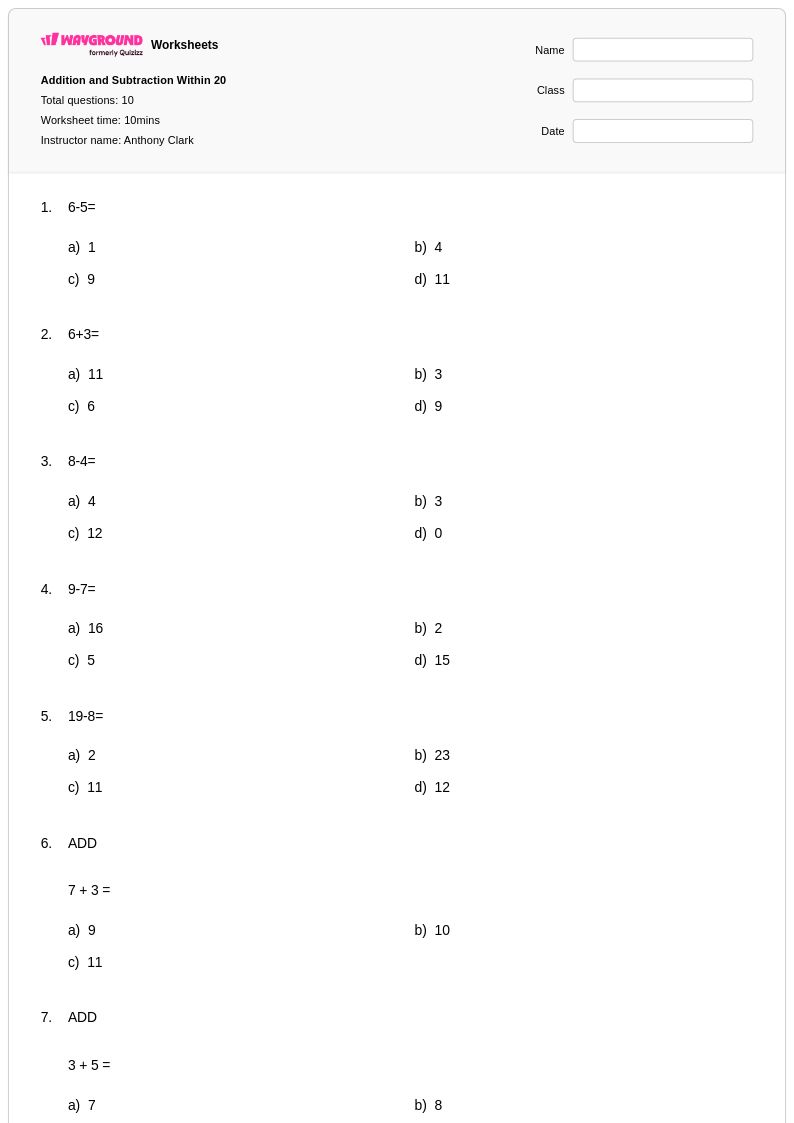
10 Q
2nd - Uni
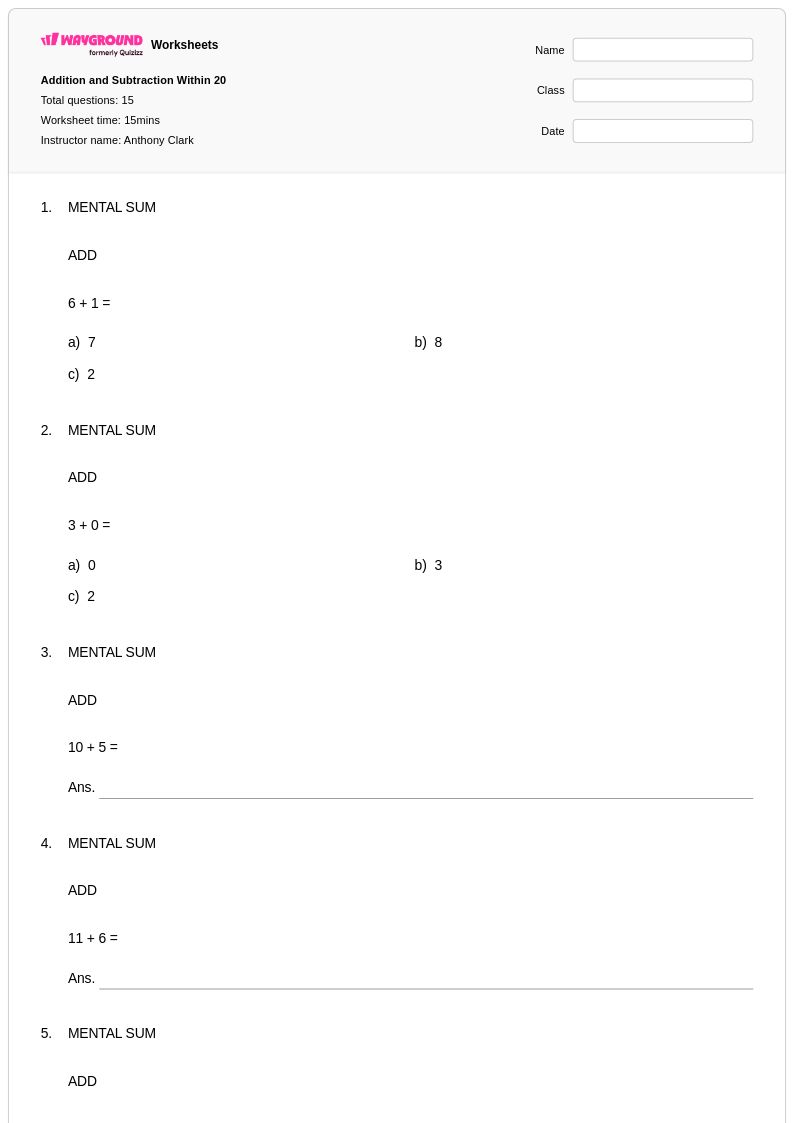
15 Q
2nd - Uni
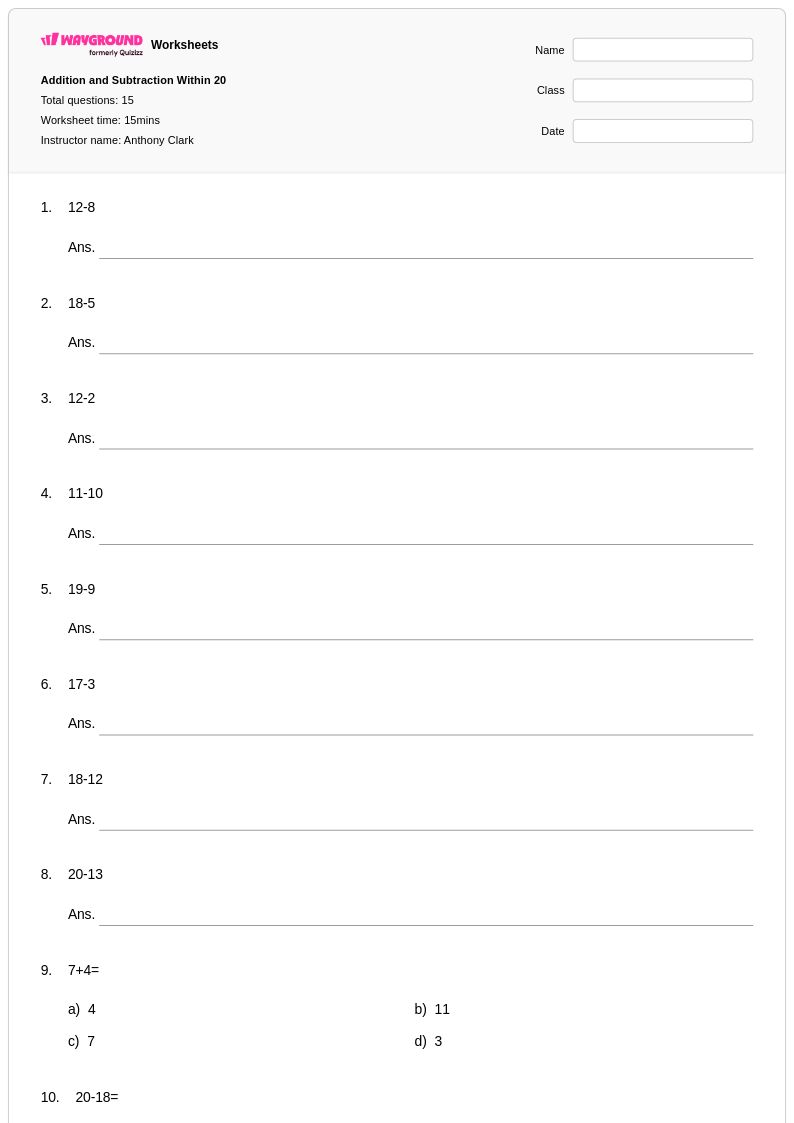
15 Q
2nd - Uni
Explore Subtraction Within 20 Worksheets by Grades
Explore Other Subject Worksheets for class 3
Explore printable Subtraction Within 20 worksheets for Class 3
Subtraction within 20 worksheets for Class 3 students available through Wayground (formerly Quizizz) provide comprehensive practice opportunities for mastering essential foundational math skills. These carefully designed printables focus on helping third-grade students develop fluency with subtraction facts involving numbers up to 20, reinforcing mental math strategies and computational accuracy that serve as building blocks for more advanced mathematical concepts. Each worksheet collection includes varied practice problems that challenge students to work with different problem formats, from basic number sentences to word problems, while comprehensive answer keys enable efficient grading and immediate feedback. These free pdf resources systematically address the progression from concrete counting strategies to automatic fact recall, ensuring students build both conceptual understanding and procedural fluency in subtraction operations.
Wayground (formerly Quizizz) empowers educators with millions of teacher-created worksheet resources specifically designed to support Class 3 subtraction instruction within the number range of 20. The platform's robust search and filtering capabilities allow teachers to quickly locate materials aligned with specific learning standards and student needs, while built-in differentiation tools enable customization for diverse learning levels within the classroom. These subtraction within 20 worksheets are available in both printable pdf format and digital versions, providing flexibility for various instructional settings and learning preferences. Teachers can seamlessly integrate these resources into lesson planning for initial skill introduction, targeted remediation for struggling learners, enrichment activities for advanced students, or regular skill practice sessions, making it easier to address individual student needs while maintaining consistent progress toward mathematical proficiency goals.
FAQs
How should I teach subtraction within 20 to third graders who still struggle?
What Grade 3 exercises reinforce subtraction within 20?
What subtraction errors should I look for in Grade 3?
How can I use these subtraction worksheets for Grade 3 review?
Is subtraction within 20 appropriate for Grade 3?
How does subtraction fact fluency support the Common Core Grade 3 curriculum?
How can I differentiate subtraction within 20 practice in Grade 3?