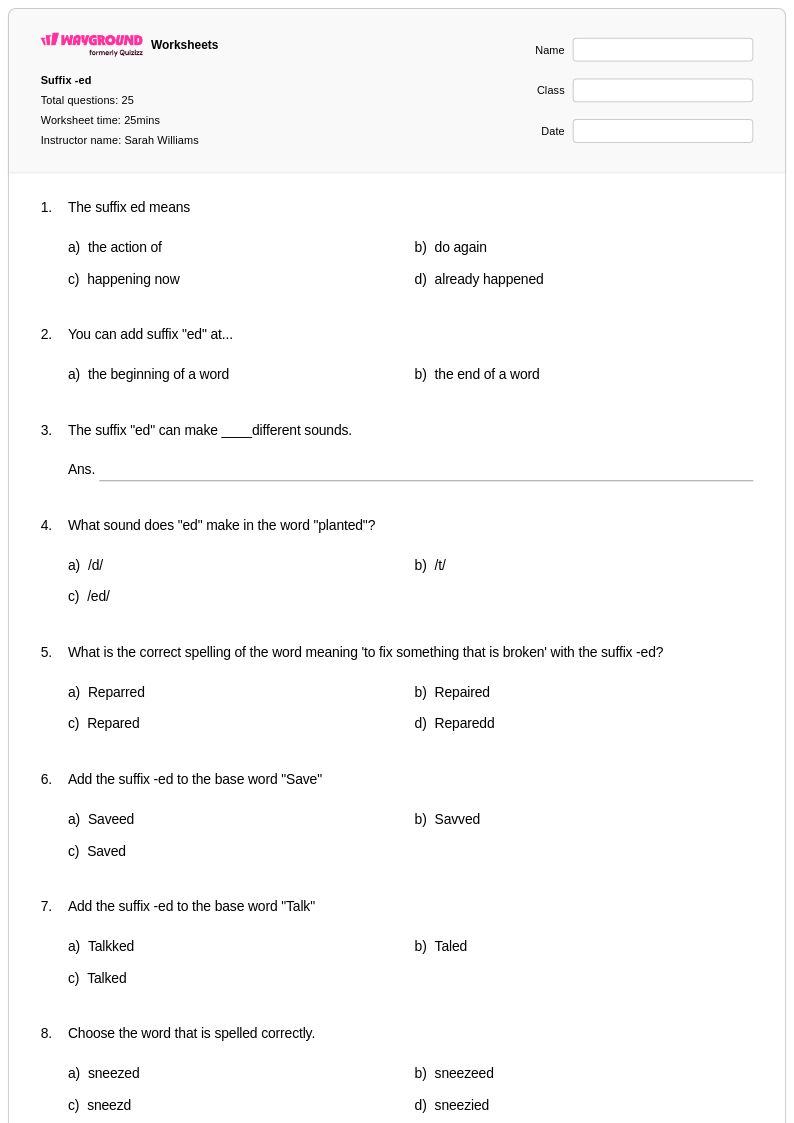
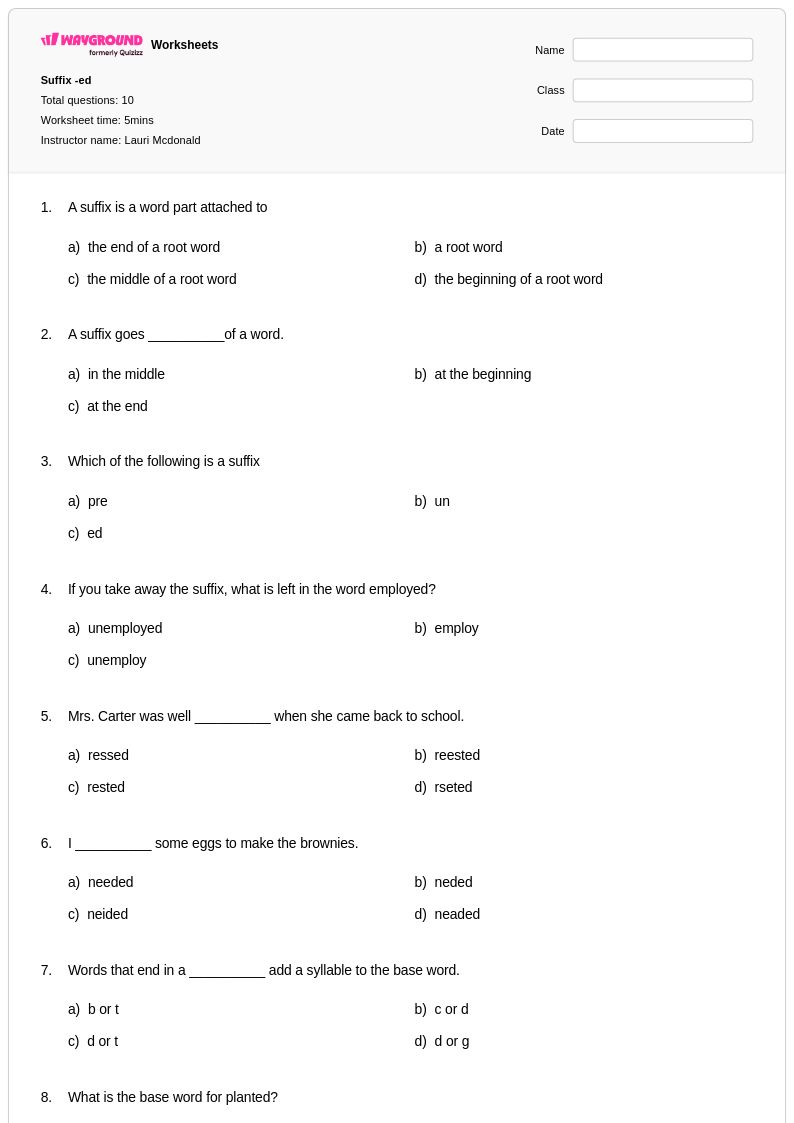
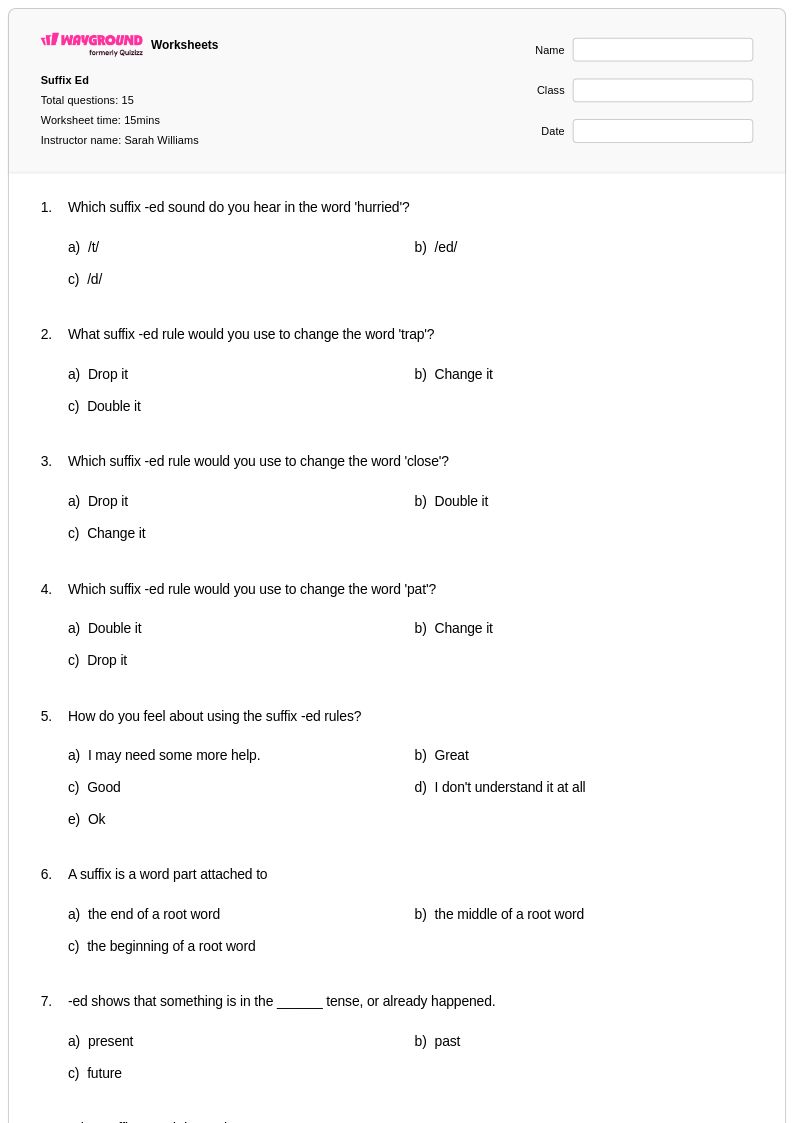
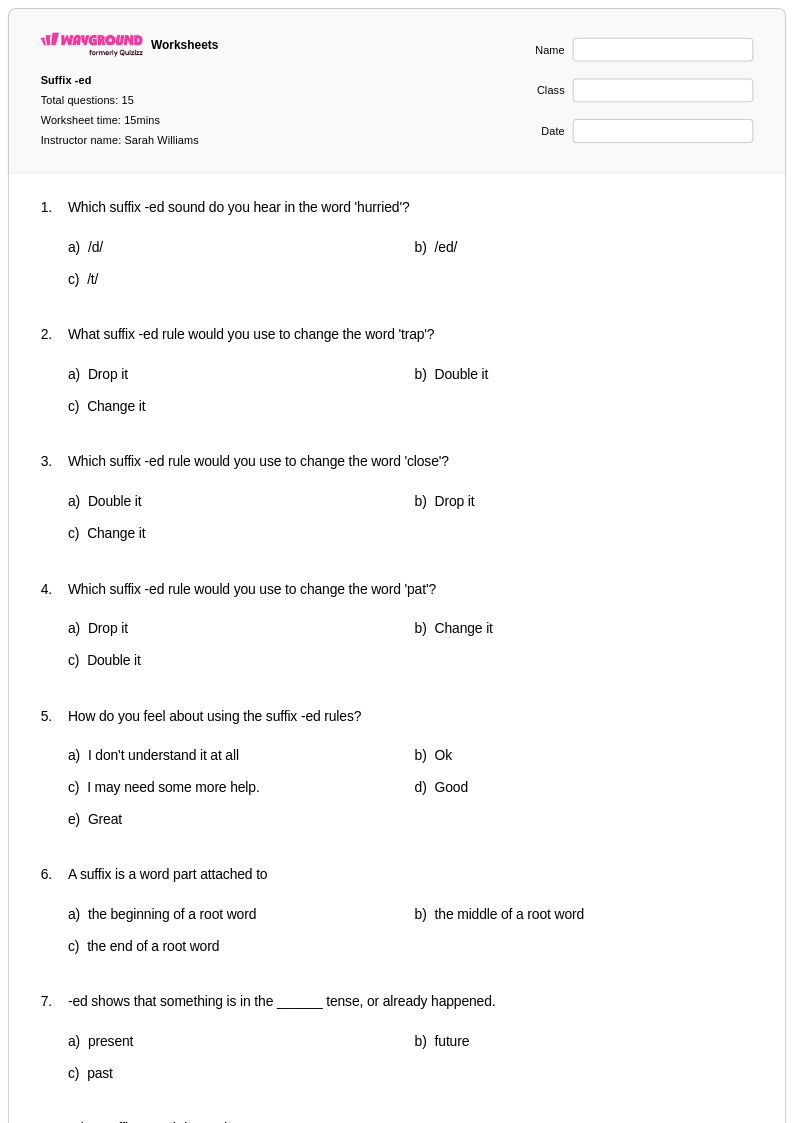
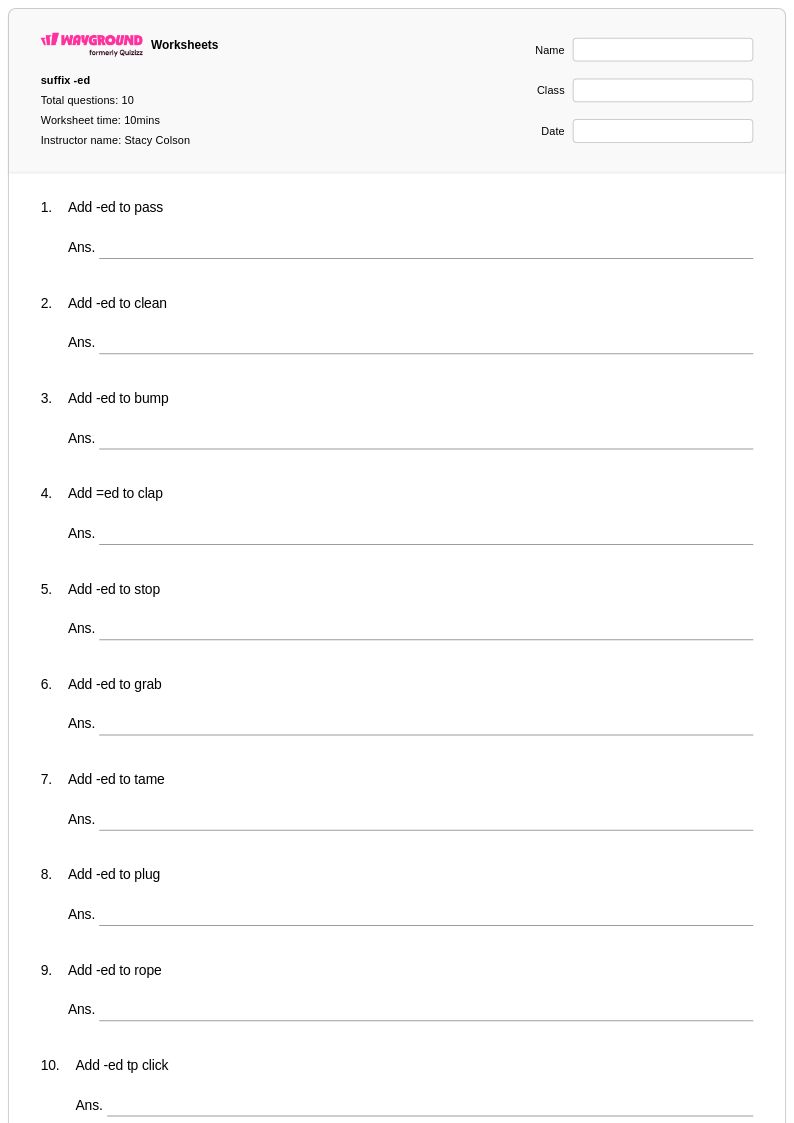
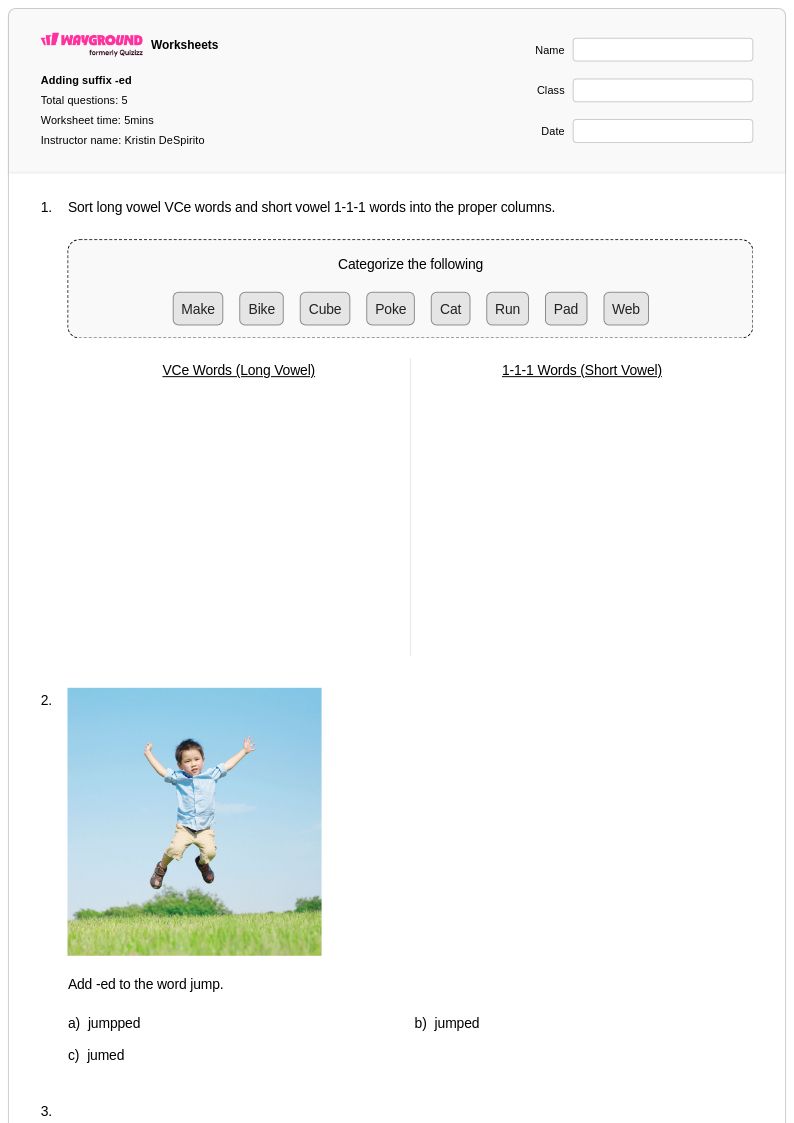
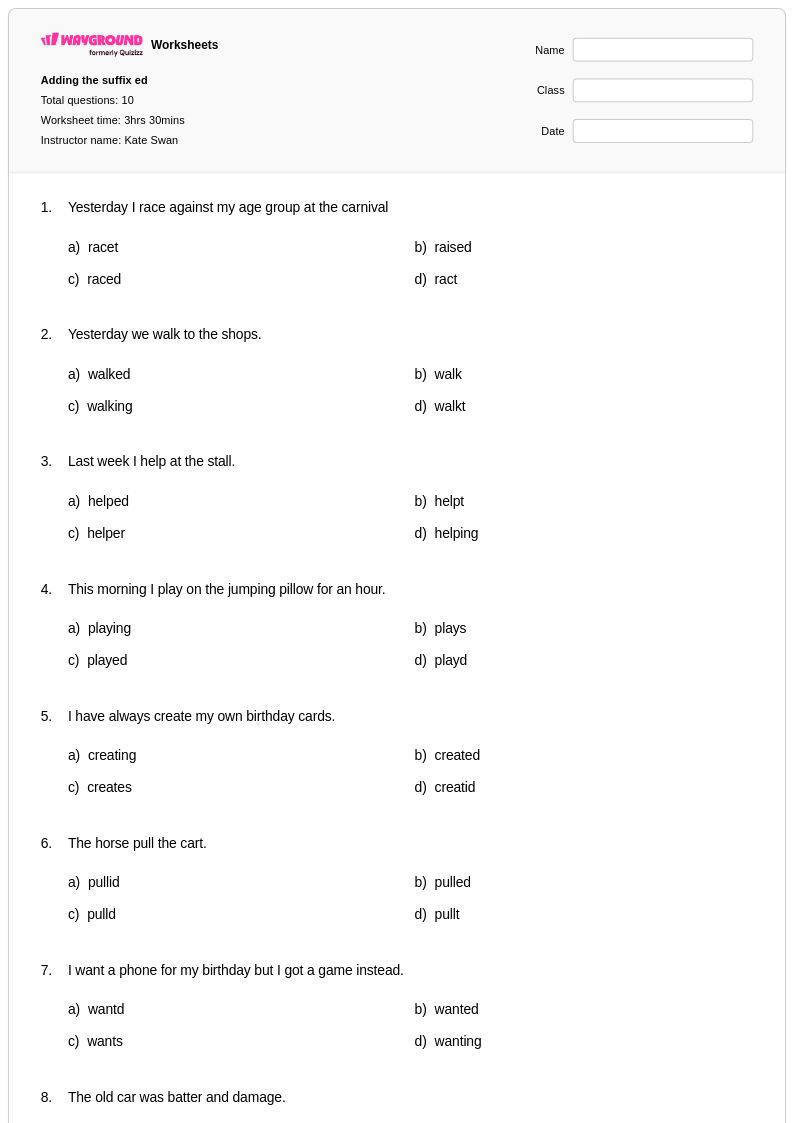
Class 4 students can master the suffix -ed with Wayground's comprehensive collection of free worksheets, printables, and practice problems that include detailed answer keys to reinforce word pattern recognition skills.
Explore printable Suffix -Ed worksheets for Class 4
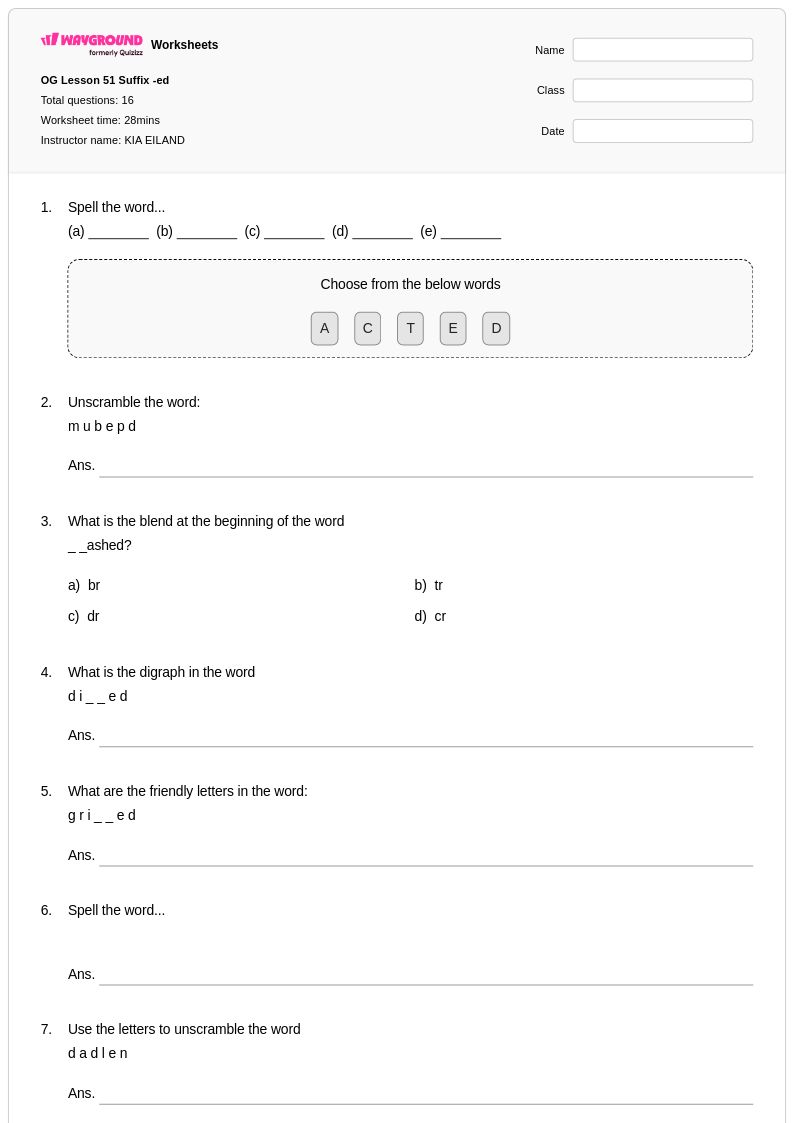
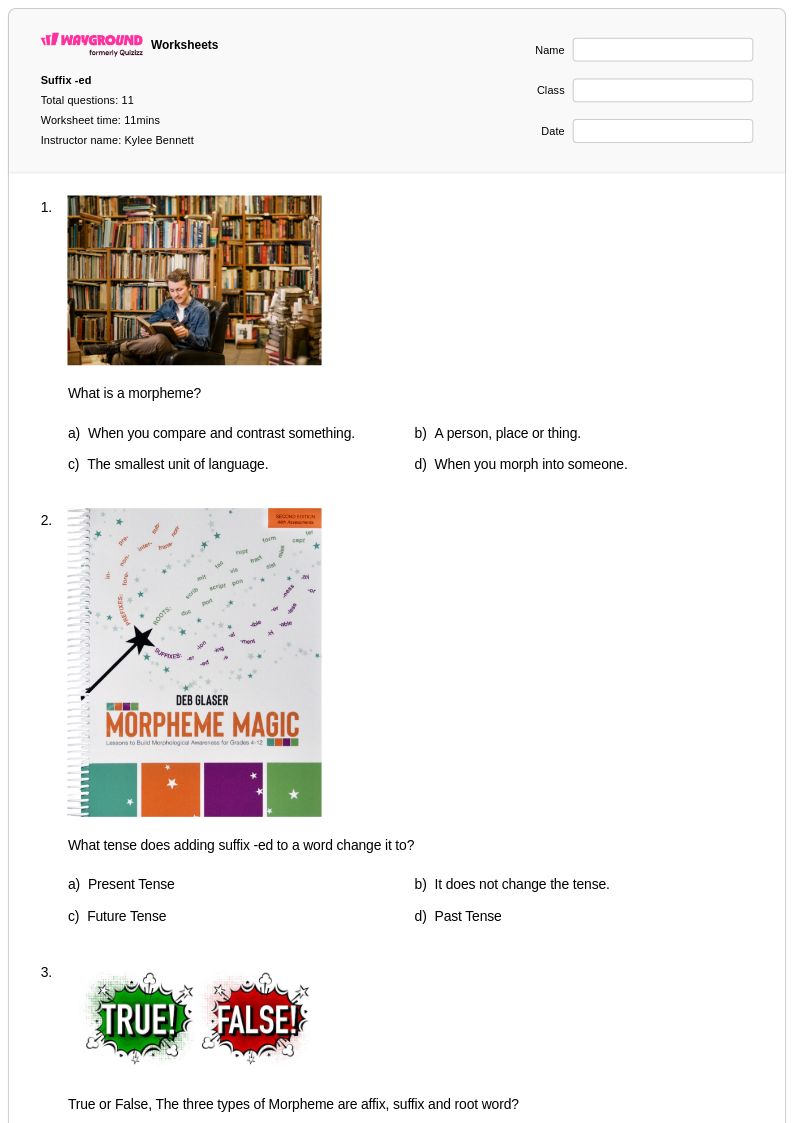
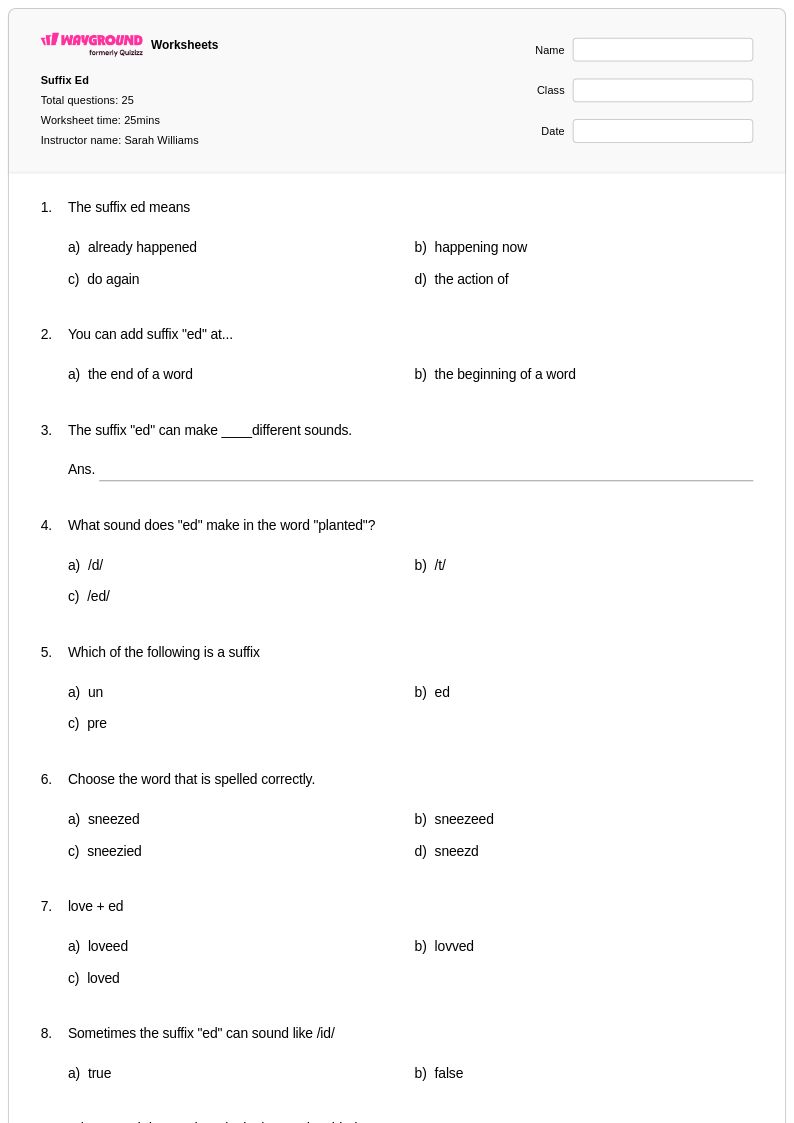
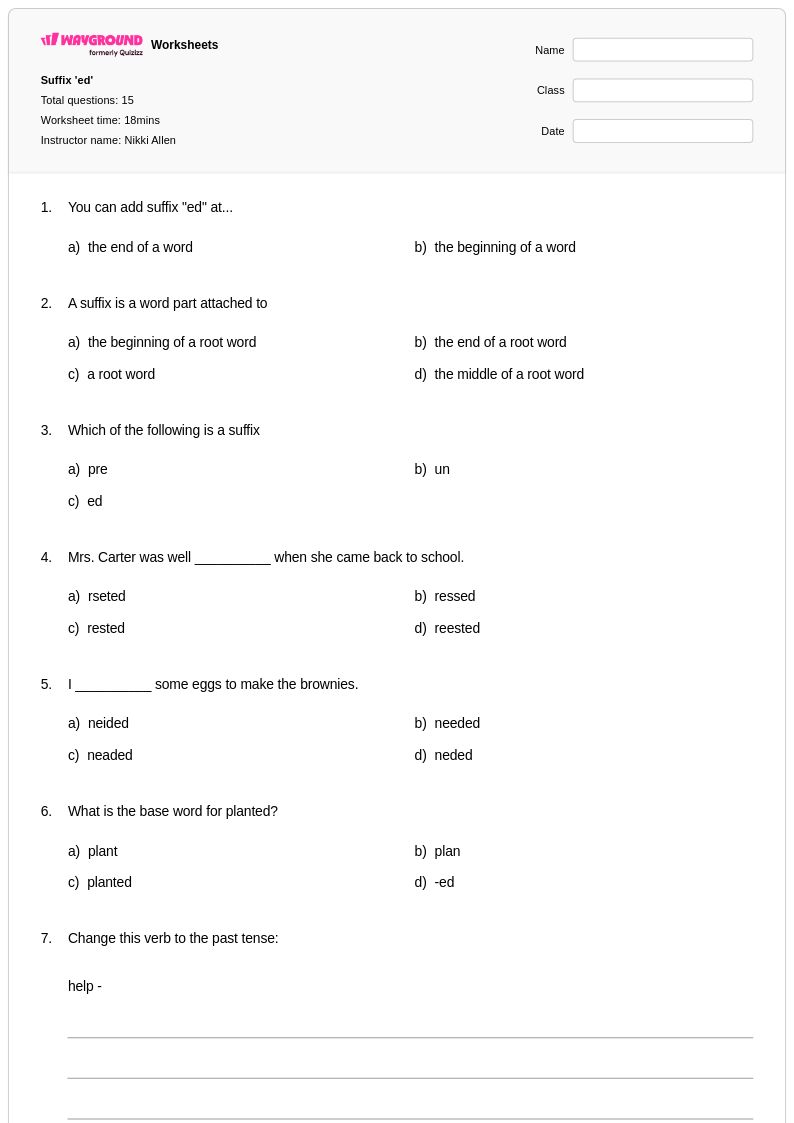
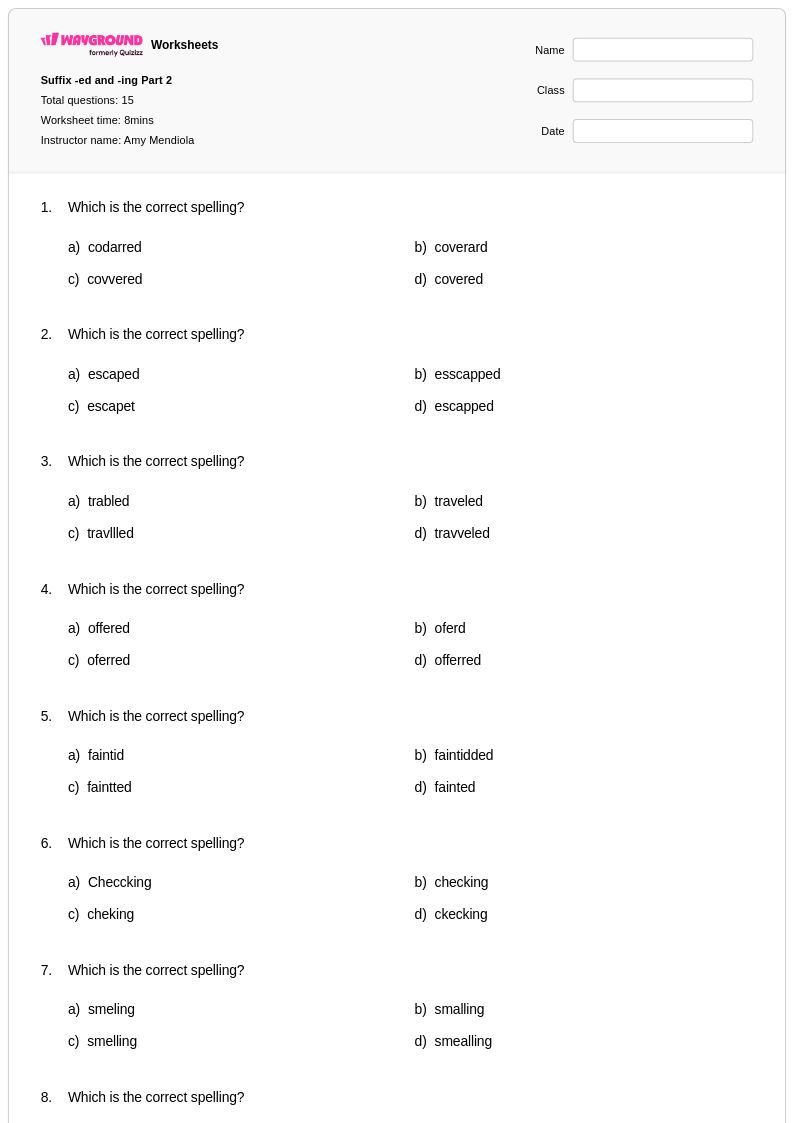
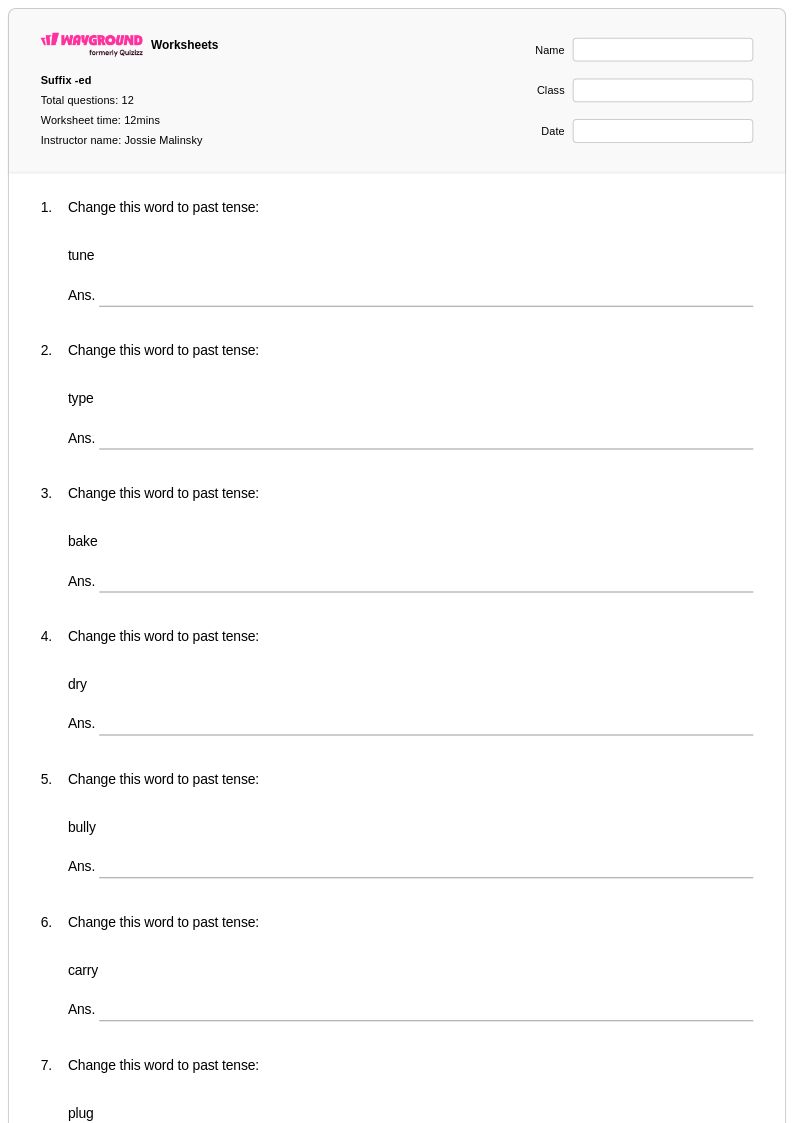
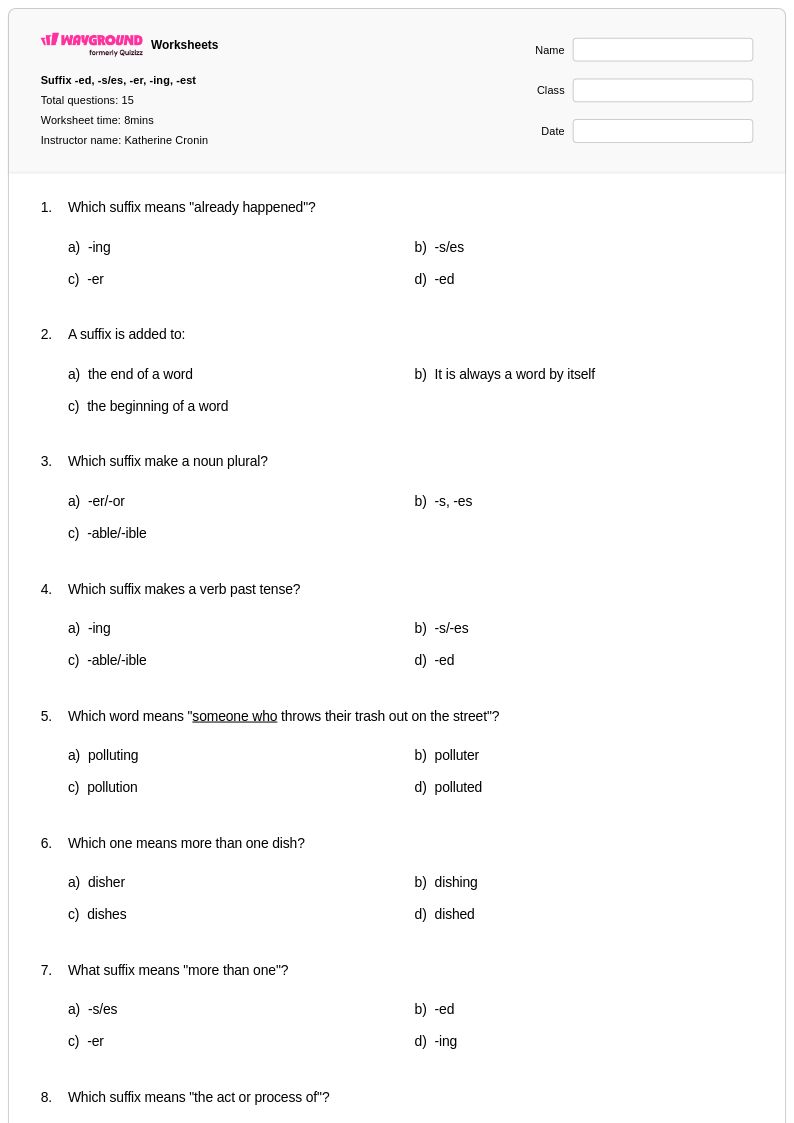
The suffix -ed worksheets available through Wayground (formerly Quizizz) provide Class 4 students with comprehensive practice in understanding and applying this fundamental word pattern that transforms present tense verbs into past tense forms. These educational resources strengthen essential literacy skills by helping students recognize how adding -ed creates predictable spelling and pronunciation patterns, while also introducing them to irregular past tense exceptions. The collection includes diverse practice problems that guide learners through the rules governing when to simply add -ed, when to drop silent e before adding the suffix, and when to double final consonants, with each worksheet featuring a complete answer key for immediate feedback. Teachers can access these free printables in convenient pdf format, making it easy to incorporate targeted suffix practice into daily instruction, homework assignments, or remediation sessions.
Wayground (formerly Quizizz) empowers educators with millions of teacher-created resources specifically designed for suffix -ed instruction, featuring robust search and filtering capabilities that allow teachers to quickly locate worksheets aligned with their specific Class 4 curriculum standards and learning objectives. The platform's differentiation tools enable instructors to customize content difficulty levels, ensuring that struggling learners receive appropriate scaffolding while advanced students encounter enriching challenges that deepen their understanding of morphological patterns. These versatile materials are available in both printable and digital formats, including downloadable pdf options, giving teachers the flexibility to seamlessly integrate suffix practice into traditional classroom activities, digital learning environments, or hybrid instructional models. This comprehensive approach supports effective lesson planning while providing teachers with reliable resources for targeted skill practice, systematic remediation, and ongoing assessment of student progress in word pattern recognition.
FAQs
How do I teach students the three pronunciations of the suffix -ed?
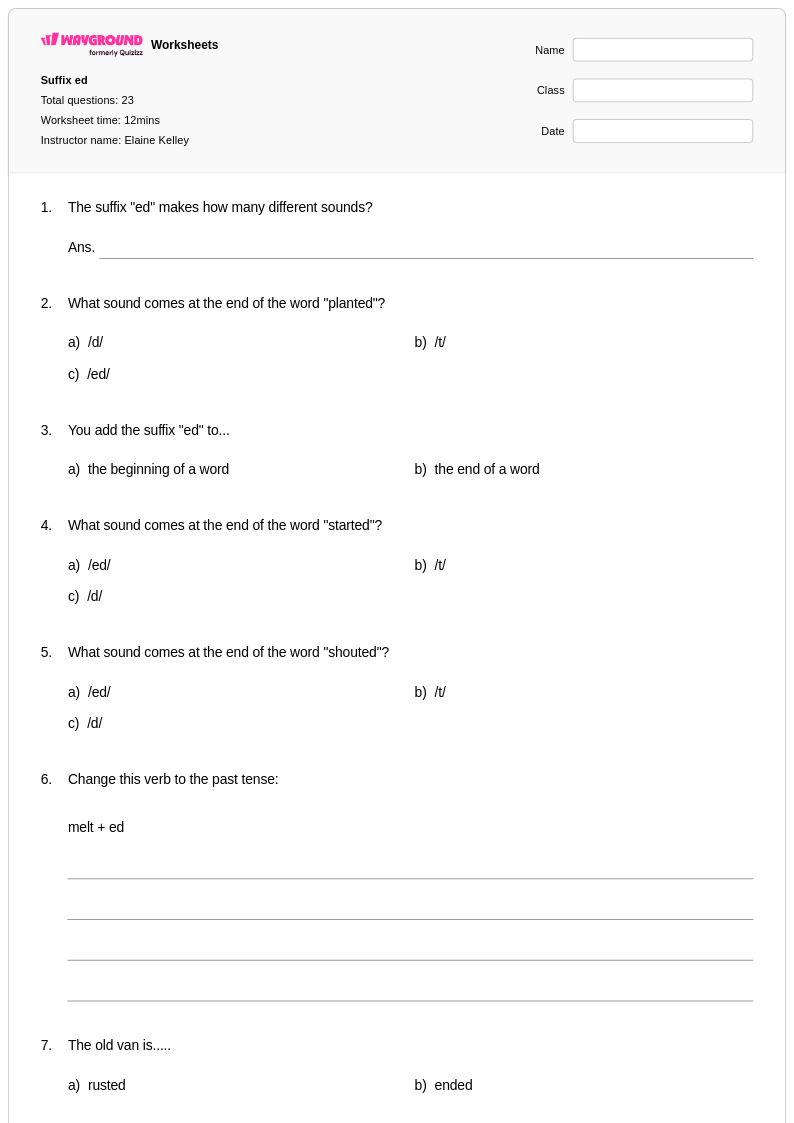
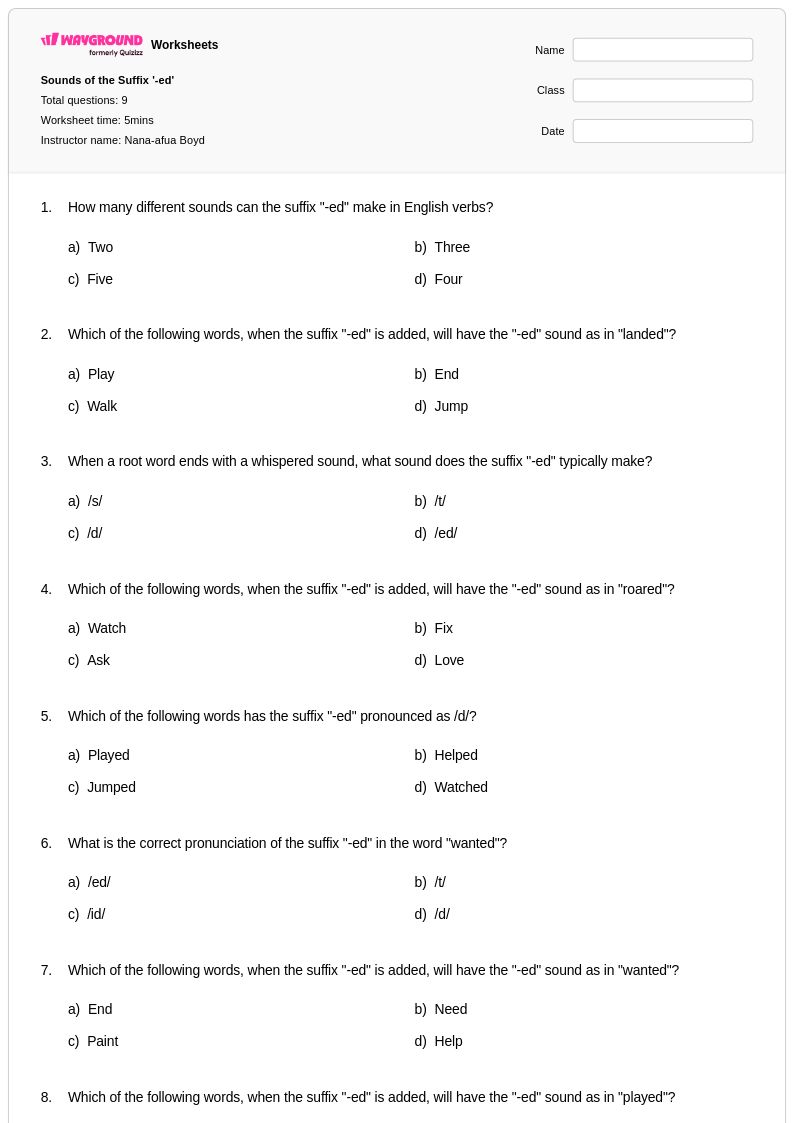
Teach the three -ed pronunciations through explicit phonics instruction grouped by sound: /t/ after voiceless consonants (e.g., jumped, walked), /d/ after voiced sounds (e.g., played, learned), and /ɪd/ after words ending in /t/ or /d/ (e.g., wanted, needed). A reliable classroom strategy is to have students say each word aloud and feel the vibration in their throat — voiced endings take /d/, voiceless take /t/, and words ending in the /t/ or /d/ sound require the full /ɪd/ syllable. Sorting activities where students physically categorize word cards by pronunciation group are especially effective for reinforcing this pattern.
What exercises help students practice spelling words with the -ed suffix?
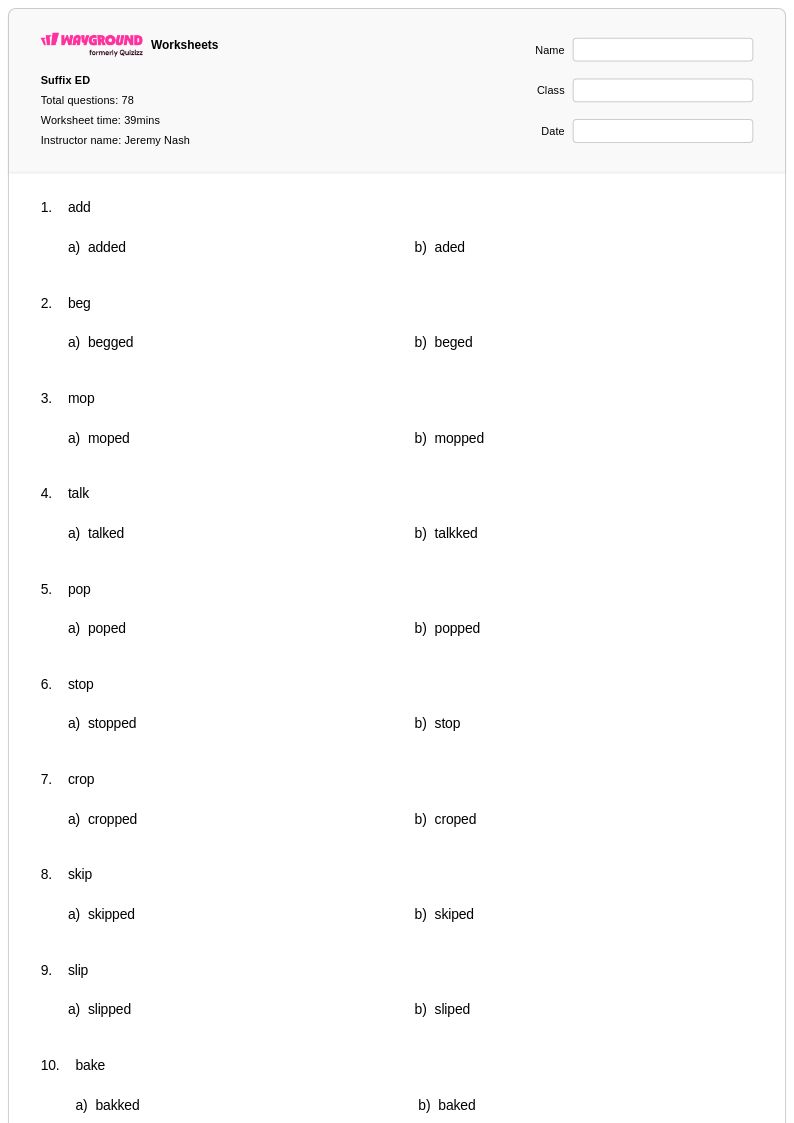
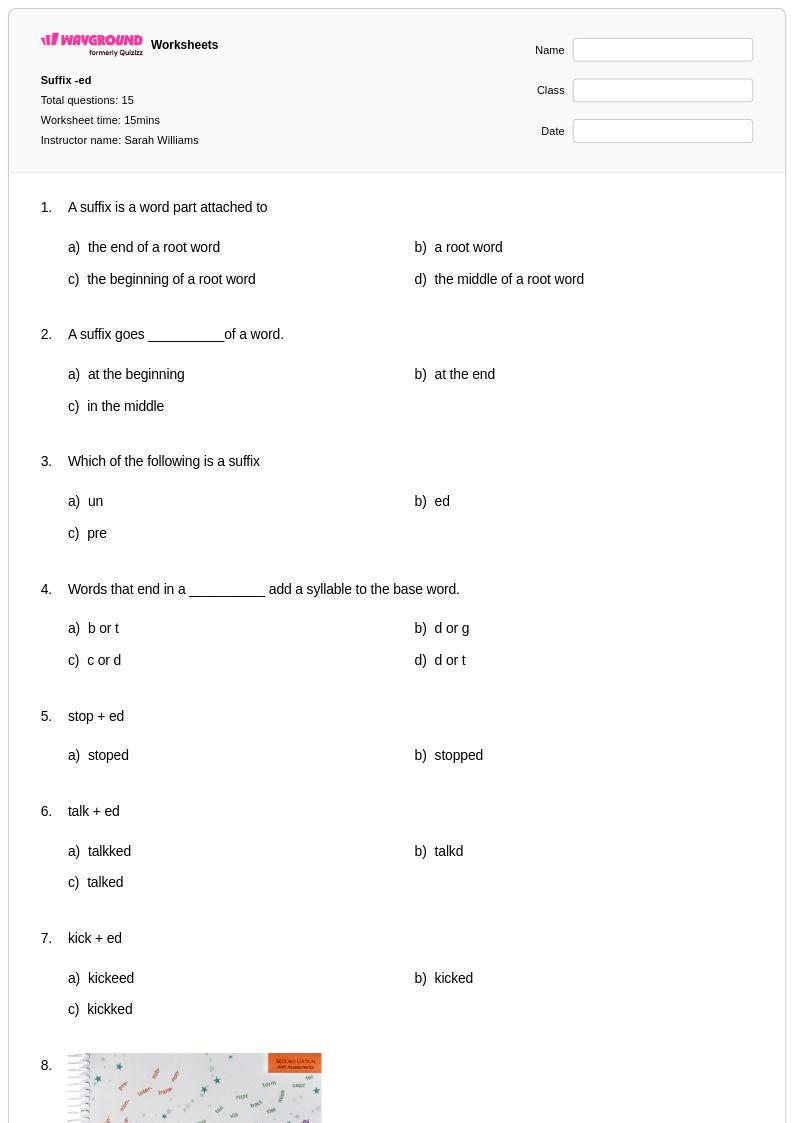
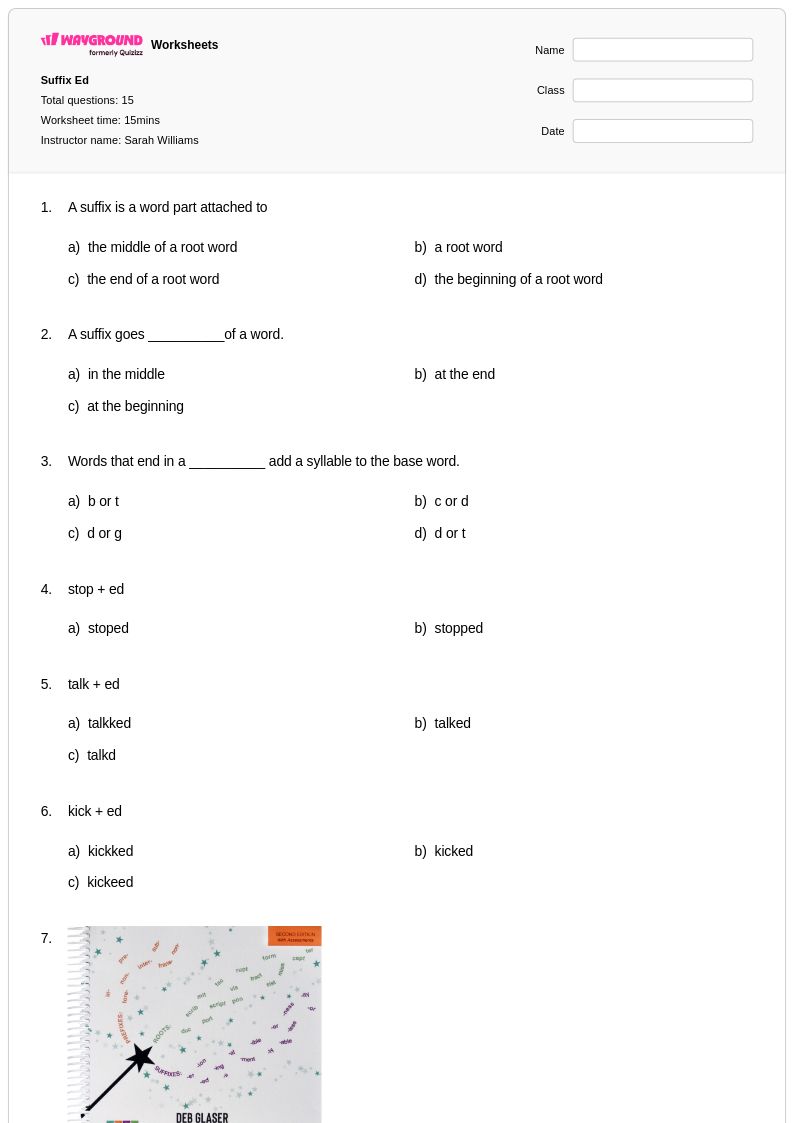
Effective -ed spelling practice includes word-building exercises where students apply spelling rules to base words, such as doubling the final consonant before adding -ed (e.g., stop → stopped) or dropping a silent -e (e.g., smile → smiled). Fill-in-the-blank sentences, word sorting by spelling pattern, and dictation exercises all reinforce accurate application of these rules. Suffix -ed worksheets that move from guided practice to independent application help students internalize the rules rather than memorize them case by case.
What mistakes do students commonly make when using the suffix -ed?
The most common errors include forgetting to double the final consonant before -ed in short-vowel words (writing stoped instead of stopped) and incorrectly applying the drop-the-e rule. Students also frequently mispronounce -ed as a full syllable (/ɪd/) in all words rather than distinguishing between the /t/, /d/, and /ɪd/ sounds. Irregular past tense verbs (e.g., run → ran, not runned) present a separate challenge, as students over-generalize the -ed rule to words that don't follow it.
How can I use suffix -ed worksheets to support students at different skill levels?
For foundational learners, start with worksheets that focus on a single spelling rule or pronunciation category before introducing mixed practice. More advanced students benefit from exercises that compare regular and irregular past tense forms or apply -ed in context through sentence-level work. On Wayground, teachers can assign worksheets digitally and use built-in accommodations such as read aloud, extended time, and reduced answer choices to support students with diverse learning needs — all configurable per individual student without disrupting the rest of the class.
How do I use Wayground's suffix -ed worksheets in my classroom?
Wayground's suffix -ed worksheets are available as free printable PDFs for traditional classroom use and in digital formats for technology-integrated environments, including the option to host them as a quiz directly on Wayground. Teachers can use them for whole-class instruction, small group practice, independent work, or targeted remediation. Each worksheet includes a complete answer key, which reduces prep time and makes them practical for both lesson delivery and self-paced student review.
How does the suffix -ed connect to broader reading and writing skills?
Mastering the -ed suffix supports reading fluency by helping students decode past tense verb forms quickly and accurately without sounding out each word letter by letter. In writing, understanding -ed spelling rules reduces common errors and builds students' confidence in producing grammatically correct sentences. Because -ed is one of the most frequently occurring suffixes in English, strong command of this pattern has a compounding effect on overall literacy development across reading, writing, and grammar tasks.