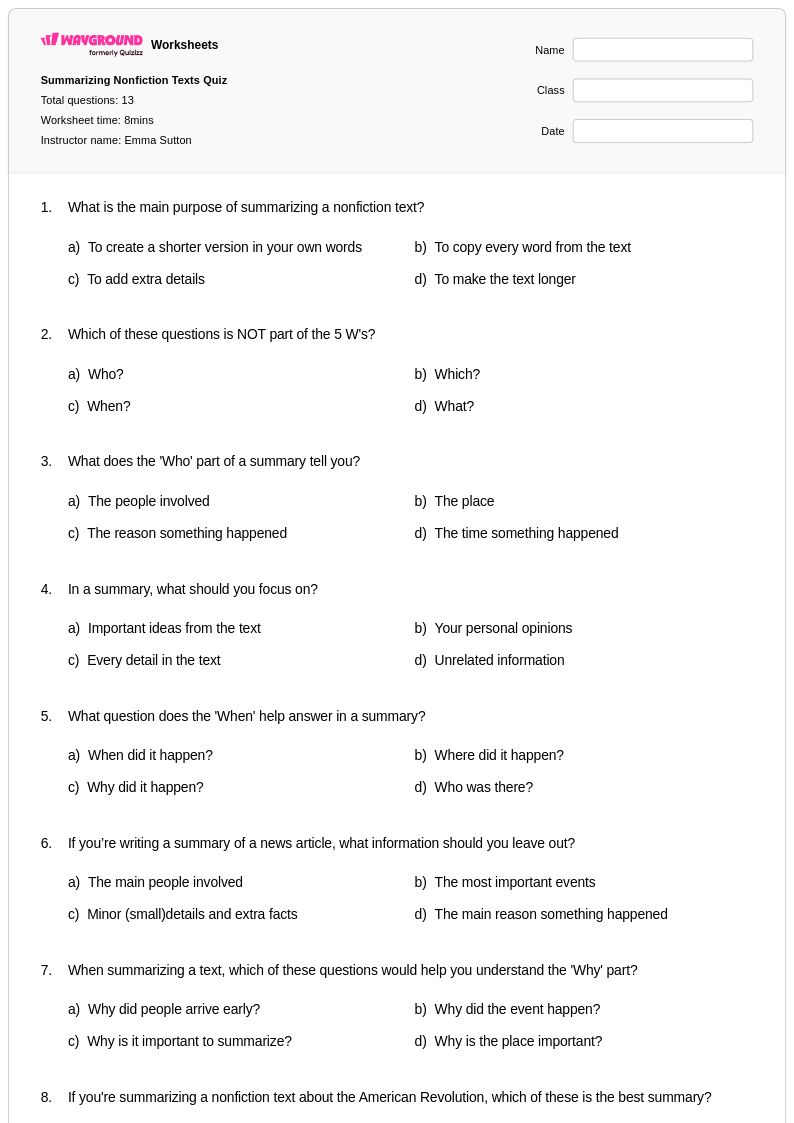
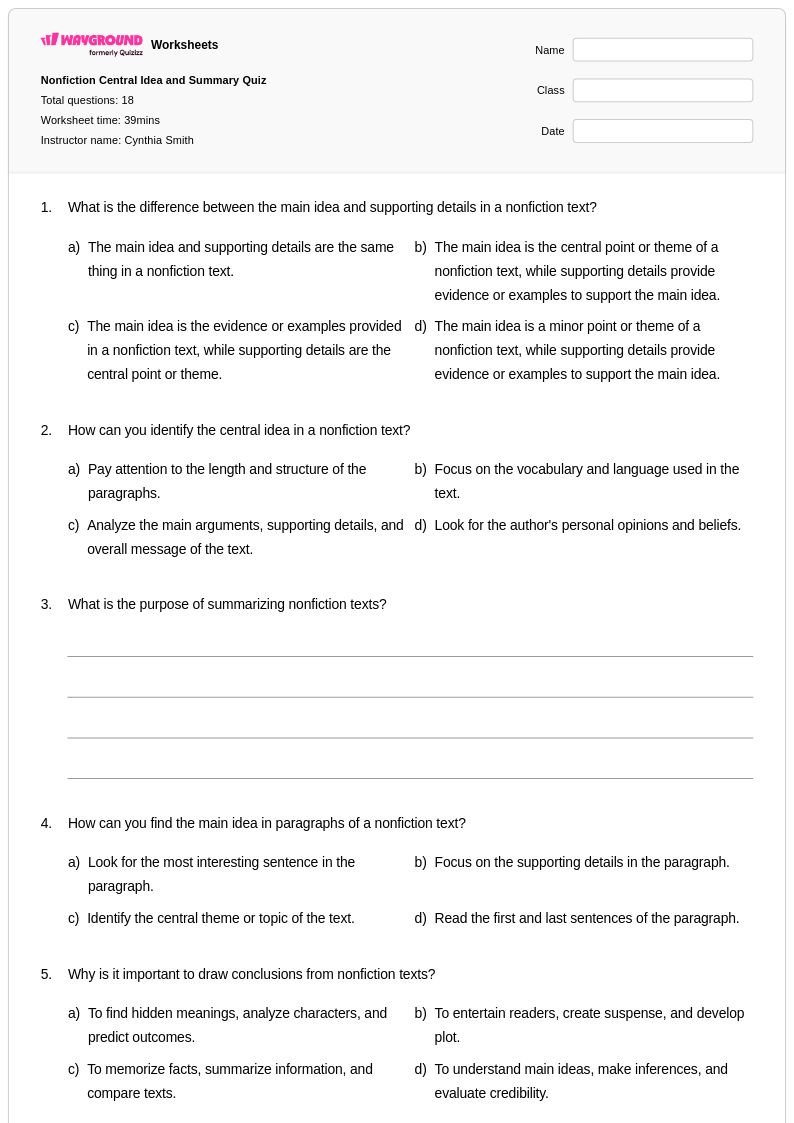
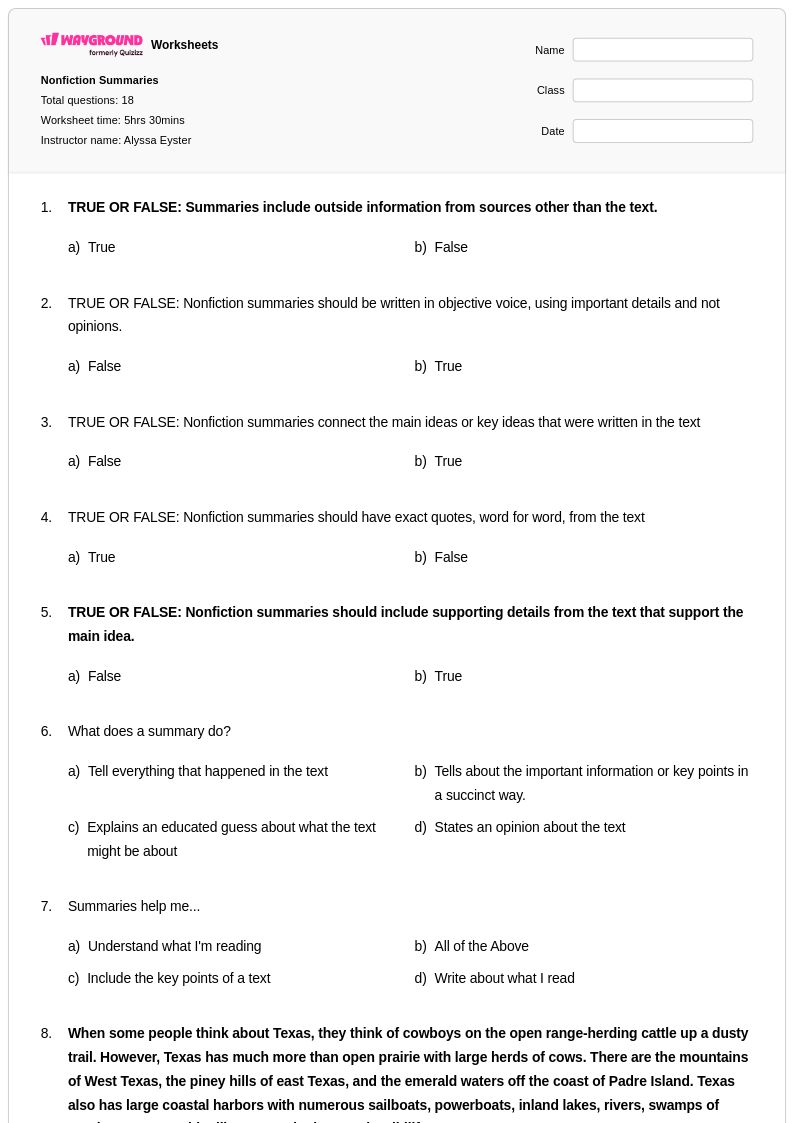
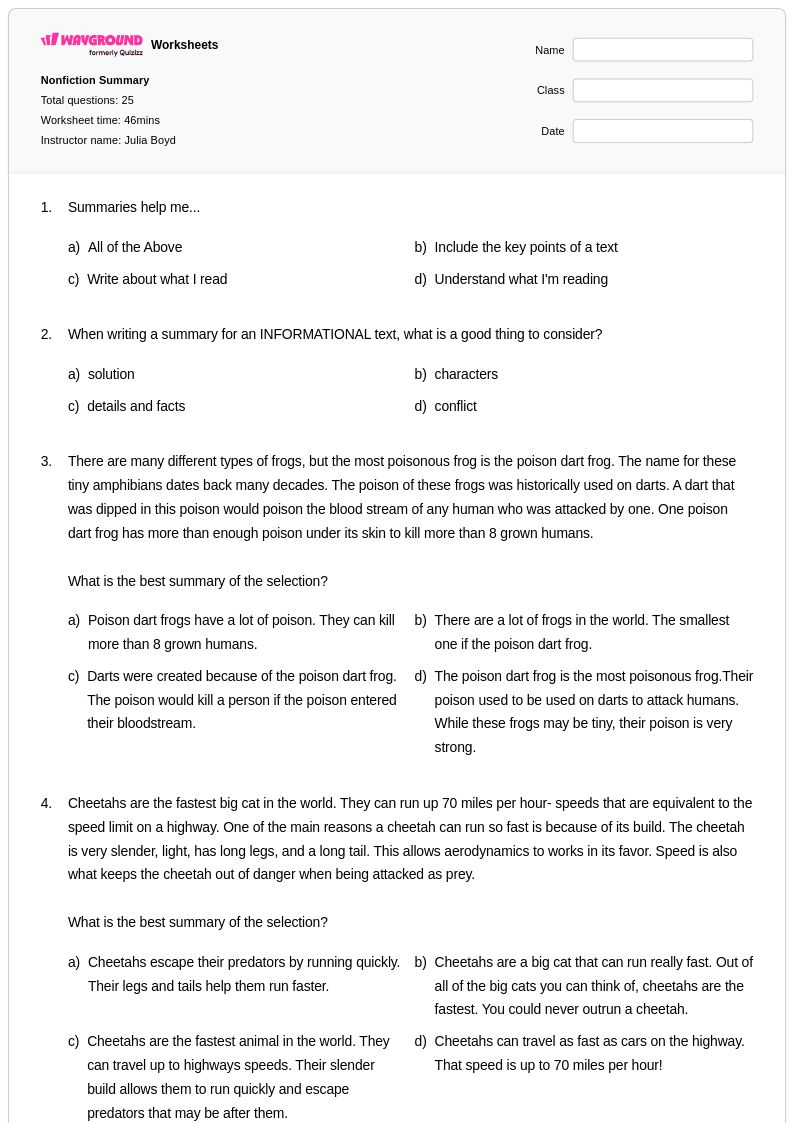
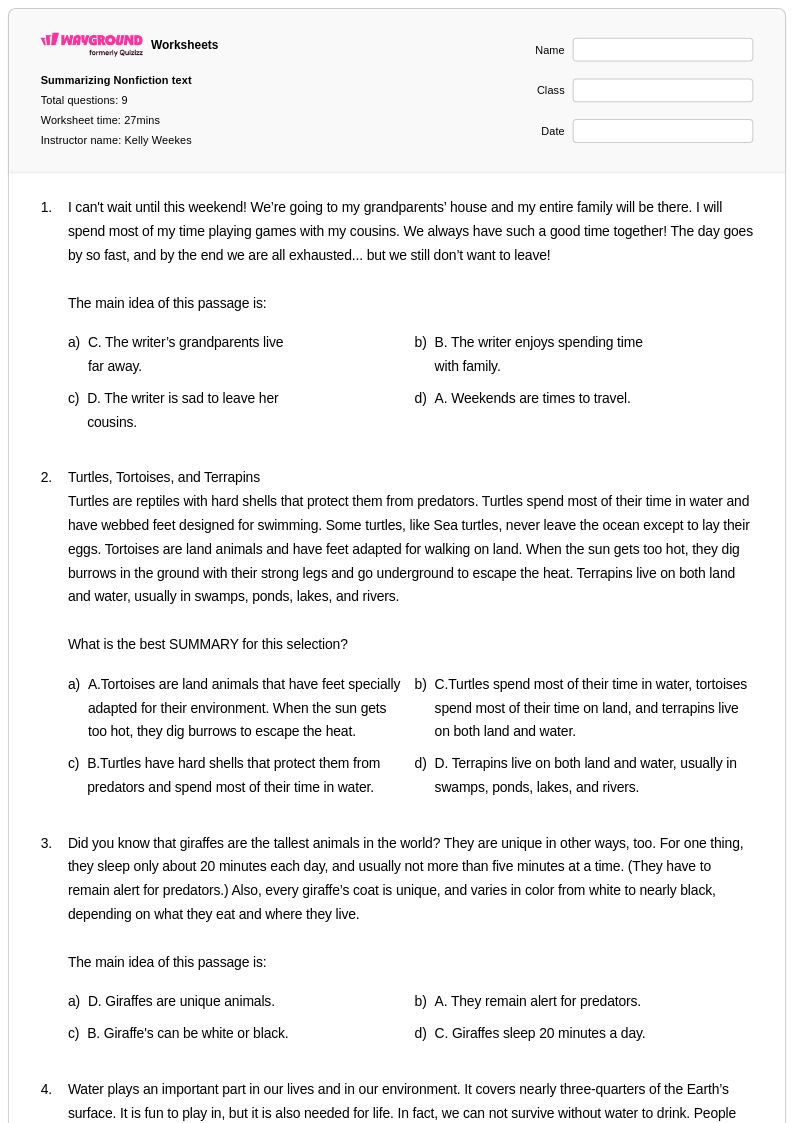
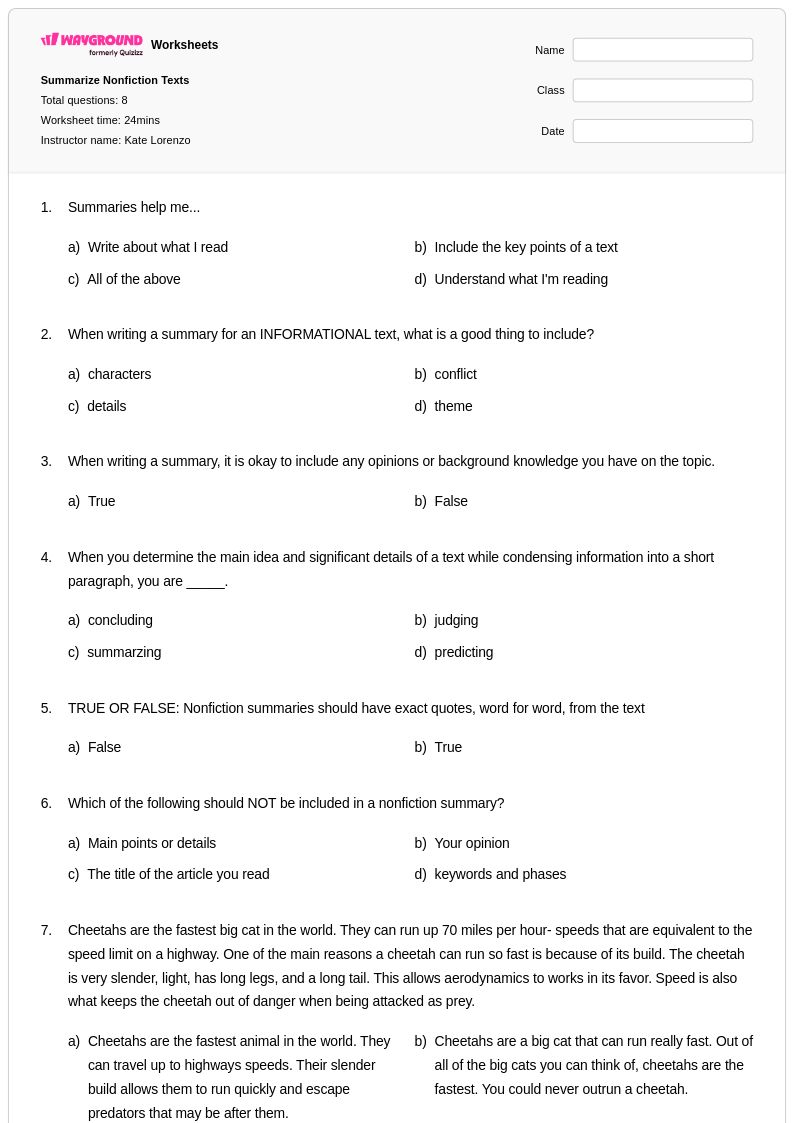
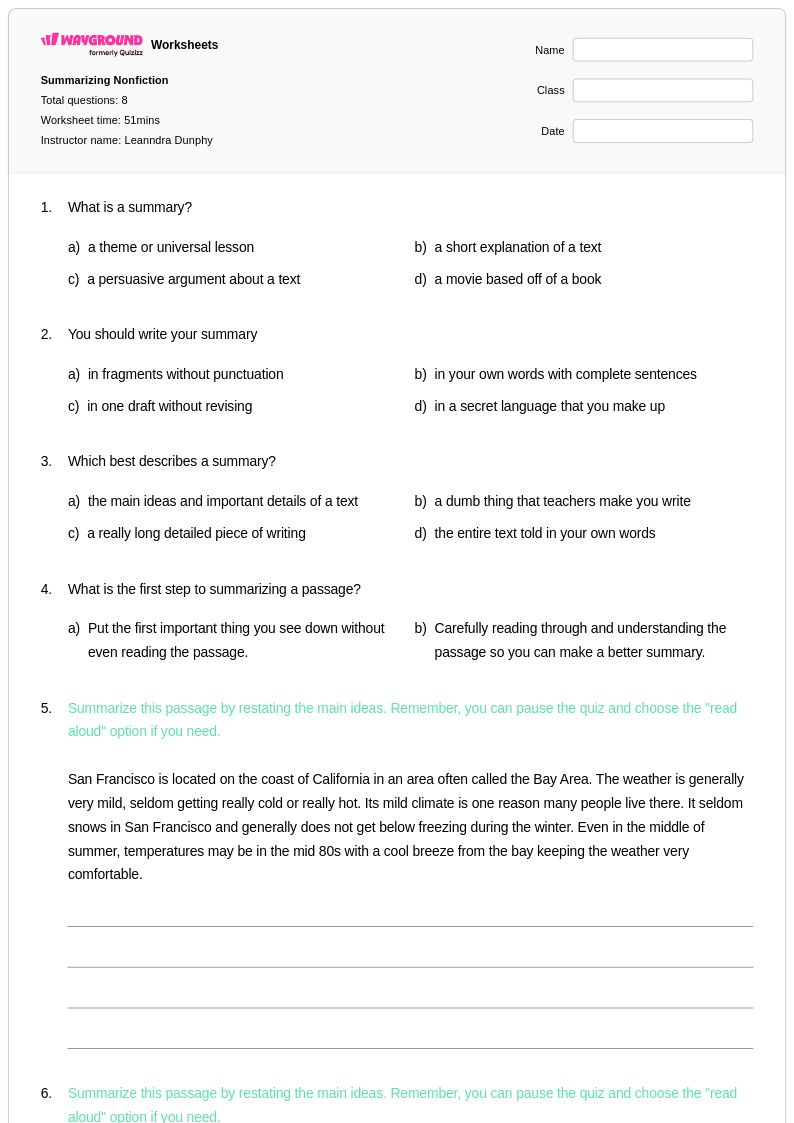
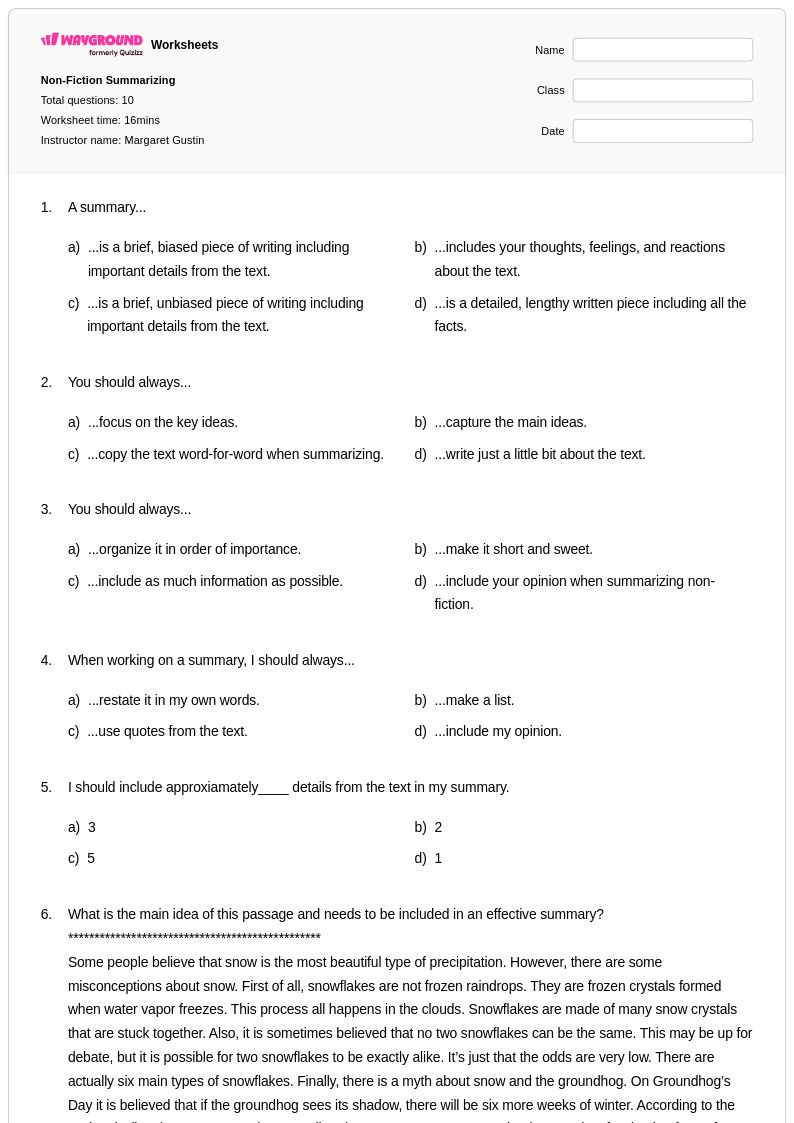
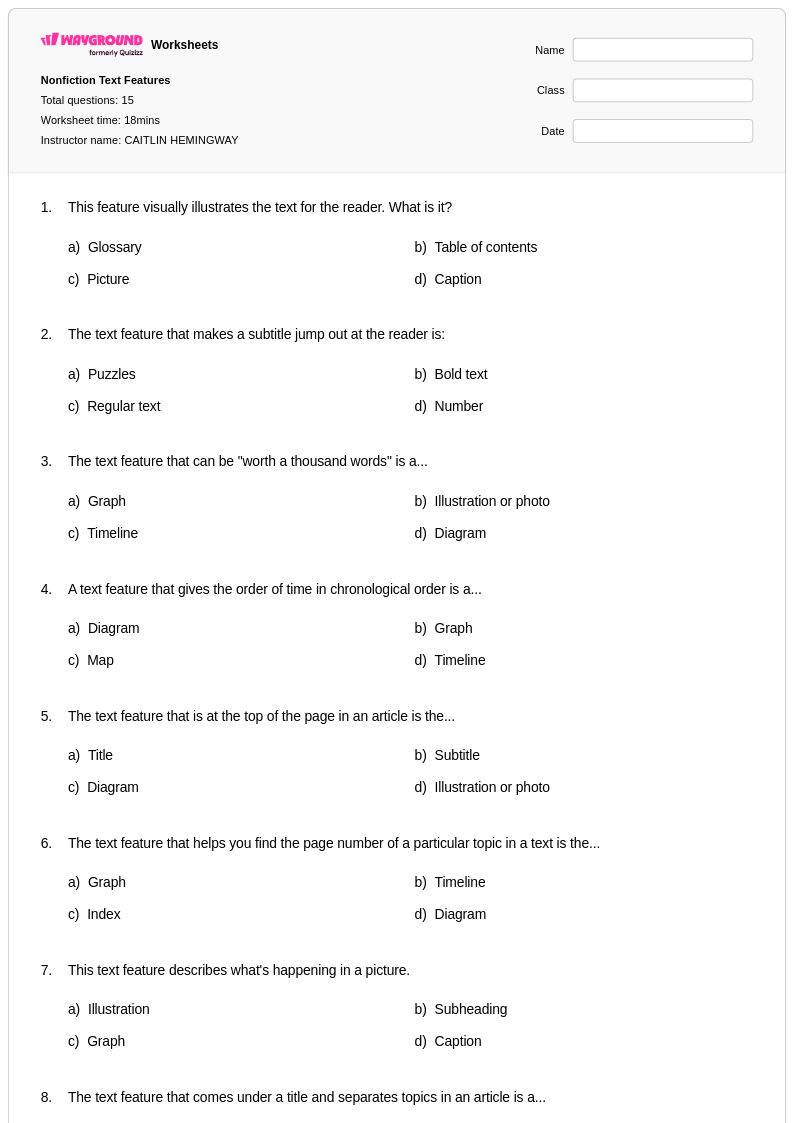
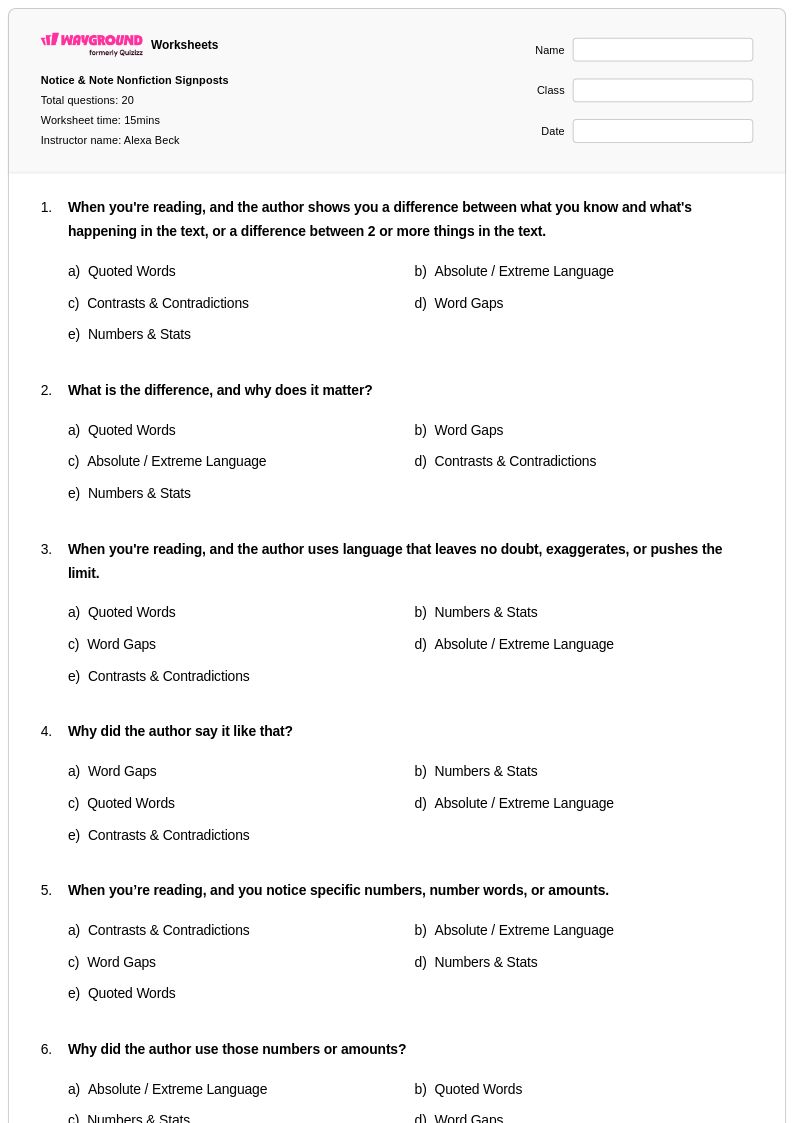
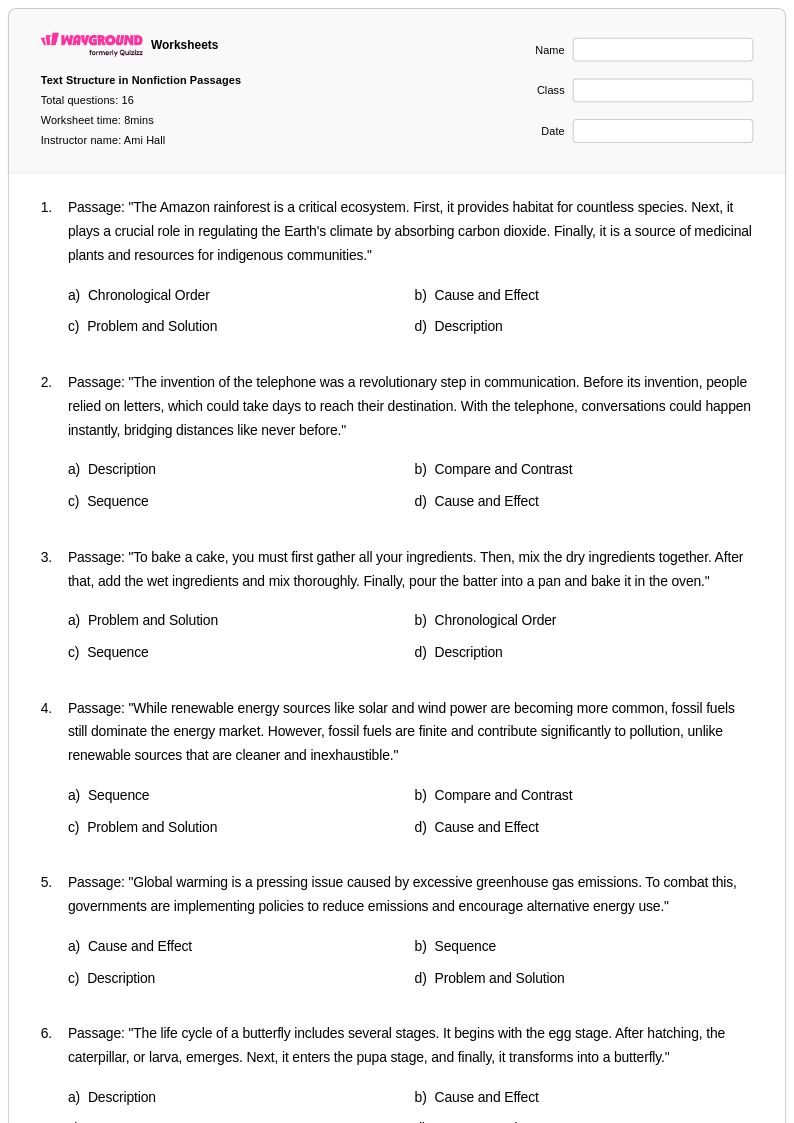
Master summarizing nonfiction texts with Wayground's comprehensive collection of free worksheets and printables, featuring practice problems and answer keys to help students develop essential reading comprehension and analytical skills.
Summarizing nonfiction texts represents a fundamental literacy skill that enables students to distill complex informational content into its essential components while demonstrating comprehension and analytical thinking. Wayground's comprehensive collection of summarizing nonfiction texts worksheets provides educators with expertly crafted practice problems that guide students through the systematic process of identifying main ideas, supporting details, and organizational structures within expository writing. These free printables strengthen critical reading skills by requiring students to distinguish between relevant and irrelevant information, recognize author's purpose, and synthesize key concepts into concise, coherent summaries. Each worksheet includes a detailed answer key that supports both independent practice and guided instruction, while the pdf format ensures consistent formatting across different devices and printing scenarios.
Wayground (formerly Quizizz) empowers teachers with millions of educator-created resources specifically designed to enhance nonfiction summarization instruction across diverse learning environments. The platform's robust search and filtering capabilities allow teachers to locate worksheets that align with specific standards requirements, text complexity levels, and thematic content areas, ensuring seamless integration with existing curriculum frameworks. Advanced differentiation tools enable educators to customize worksheet difficulty, modify question types, and adjust content complexity to meet individual student needs during remediation and enrichment activities. Whether delivered in traditional printable format or through interactive digital assignments, these versatile resources support comprehensive lesson planning while providing flexible options for skill practice, formative assessment, and targeted intervention strategies that strengthen students' ability to comprehend and synthesize nonfiction texts effectively.
FAQs
How do I teach students to summarize nonfiction texts?
Effective instruction in summarizing nonfiction texts begins with explicitly teaching students to identify the main idea and distinguish it from supporting details. Model the process using a short informational passage, thinking aloud as you eliminate irrelevant information and condense key points into a concise statement. Gradually release responsibility by having students practice with increasingly complex texts, using structured graphic organizers to scaffold their thinking before writing independently.
What exercises help students practice summarizing nonfiction texts?
Strong practice activities include main idea and detail sorting tasks, where students categorize sentences as essential or nonessential to a summary. Paragraph-level summarization exercises build up to full-text summaries, allowing students to develop the skill incrementally. Comparing student-written summaries to a model summary is also effective, as it helps students self-assess for accuracy, completeness, and conciseness.
What mistakes do students commonly make when summarizing nonfiction texts?
The most frequent error is copying sentences directly from the text rather than paraphrasing, which signals a lack of genuine comprehension. Students also tend to include too many supporting details, treating every fact as equally important rather than identifying what is central to the author's message. A third common mistake is omitting the author's purpose or overall organizational structure, which can result in summaries that feel fragmented or incomplete.
How do I help struggling readers summarize nonfiction texts?
Struggling readers benefit from sentence frames and graphic organizers that prompt them to record the topic, main idea, and two to three key details before attempting to write a summary. Breaking the text into smaller sections and summarizing each chunk separately reduces cognitive load and makes the task more manageable. On Wayground, teachers can enable Read Aloud so the text and questions are read to students, and Reduced Answer Choices to lower the difficulty of comprehension questions for students who need additional support.
How can I use summarizing nonfiction text worksheets in my classroom?
These worksheets are available as printable PDFs for traditional classroom use and in digital formats for technology-integrated environments, making them flexible across in-person, hybrid, and remote settings. Teachers can assign them as independent practice, small group work, or homework, and can also host them as a quiz directly on Wayground for immediate feedback and progress tracking. Each worksheet includes a complete answer key, streamlining grading and making them practical for both guided instruction and self-paced learning.
How do I align summarizing nonfiction worksheets to specific reading standards?
When selecting worksheets, look for alignment to standards that address identifying main ideas and supporting details, author's purpose, and text structure in informational writing, such as the Common Core Reading Informational Text standards. Wayground's search and filtering tools allow teachers to locate worksheets by standards alignment, text complexity, and thematic content area, reducing planning time and ensuring curriculum coherence.