Free Printable Testable Questions Worksheets for Class 7
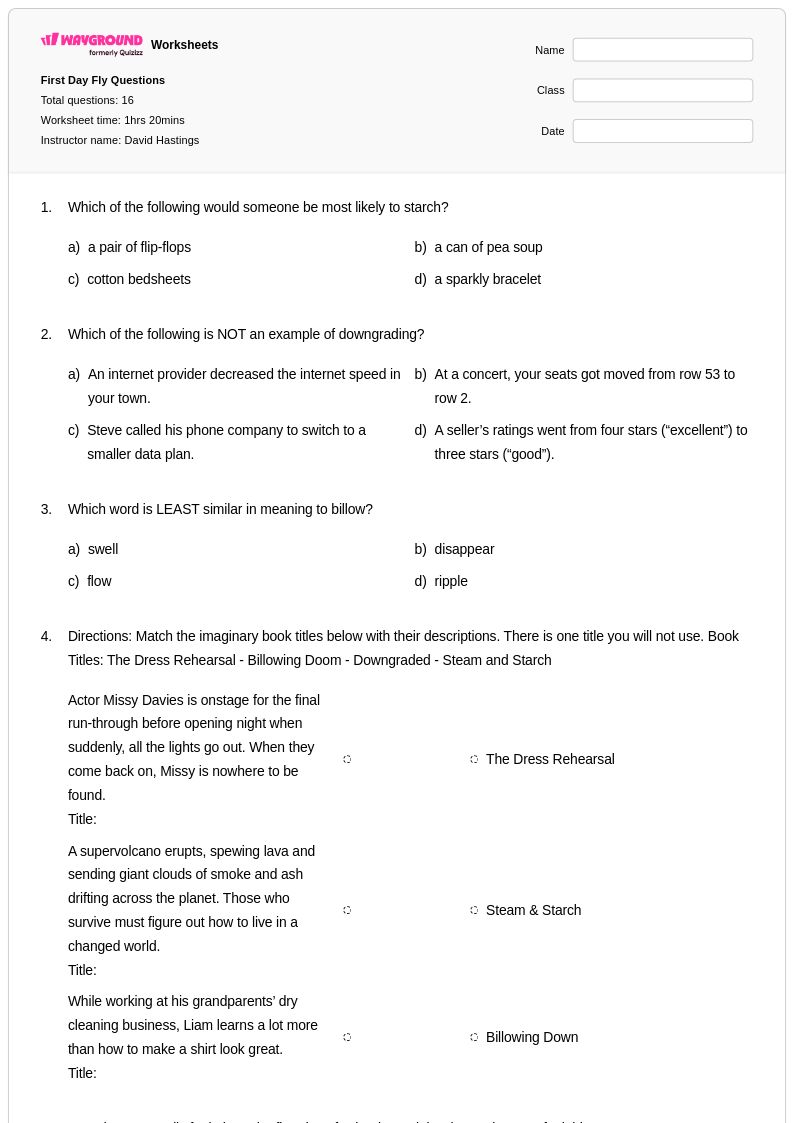
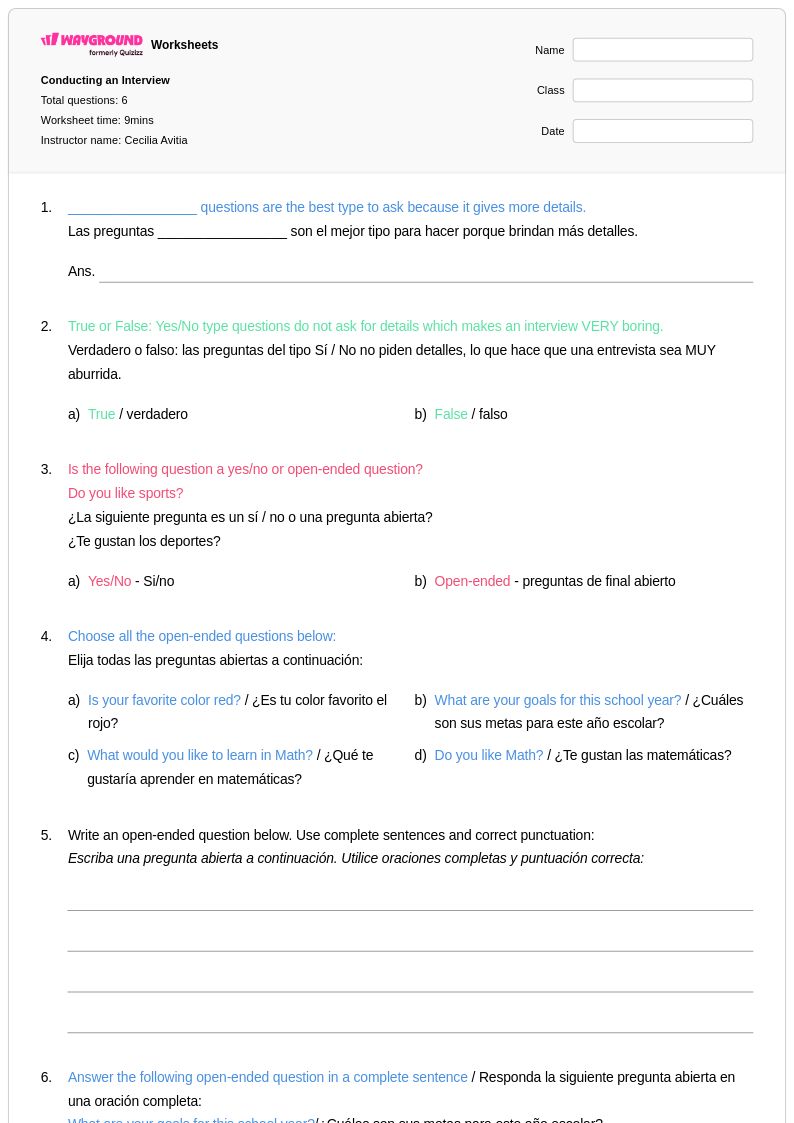
Enhance Class 7 students' research skills with Wayground's comprehensive collection of testable questions worksheets, featuring printable PDFs, free practice problems, and detailed answer keys to master scientific inquiry fundamentals.
Explore printable Testable Questions worksheets for Class 7
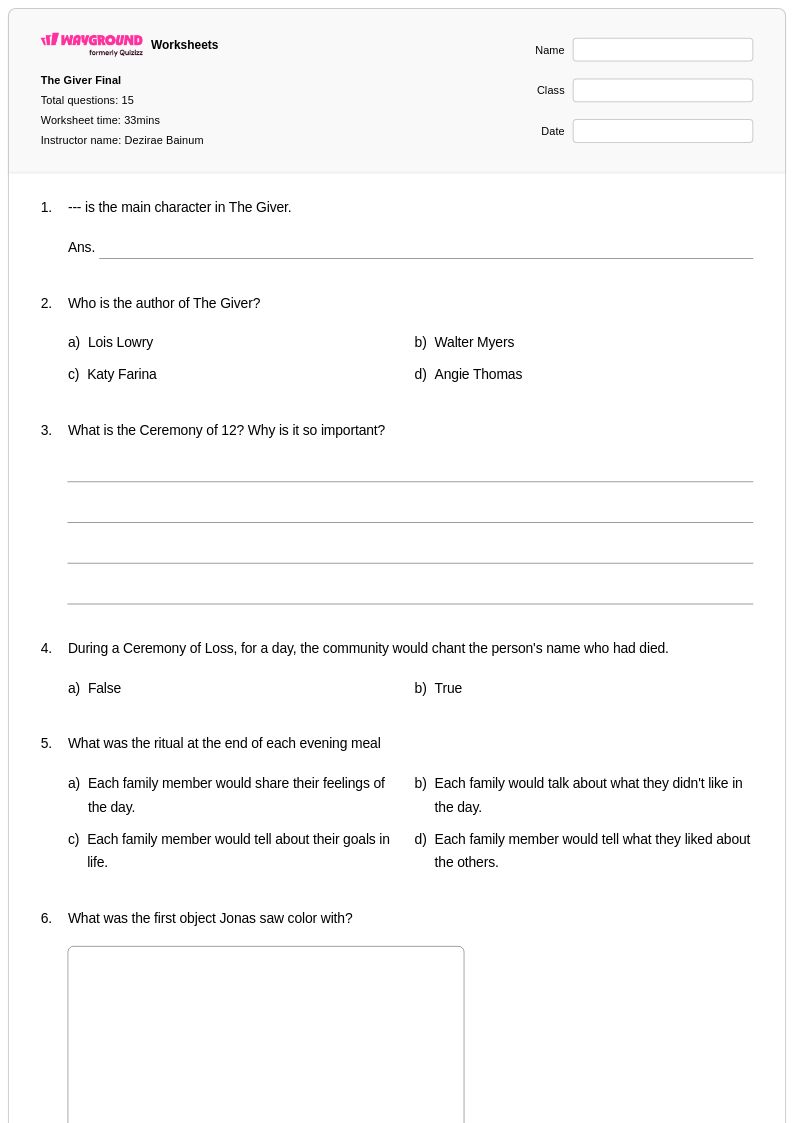
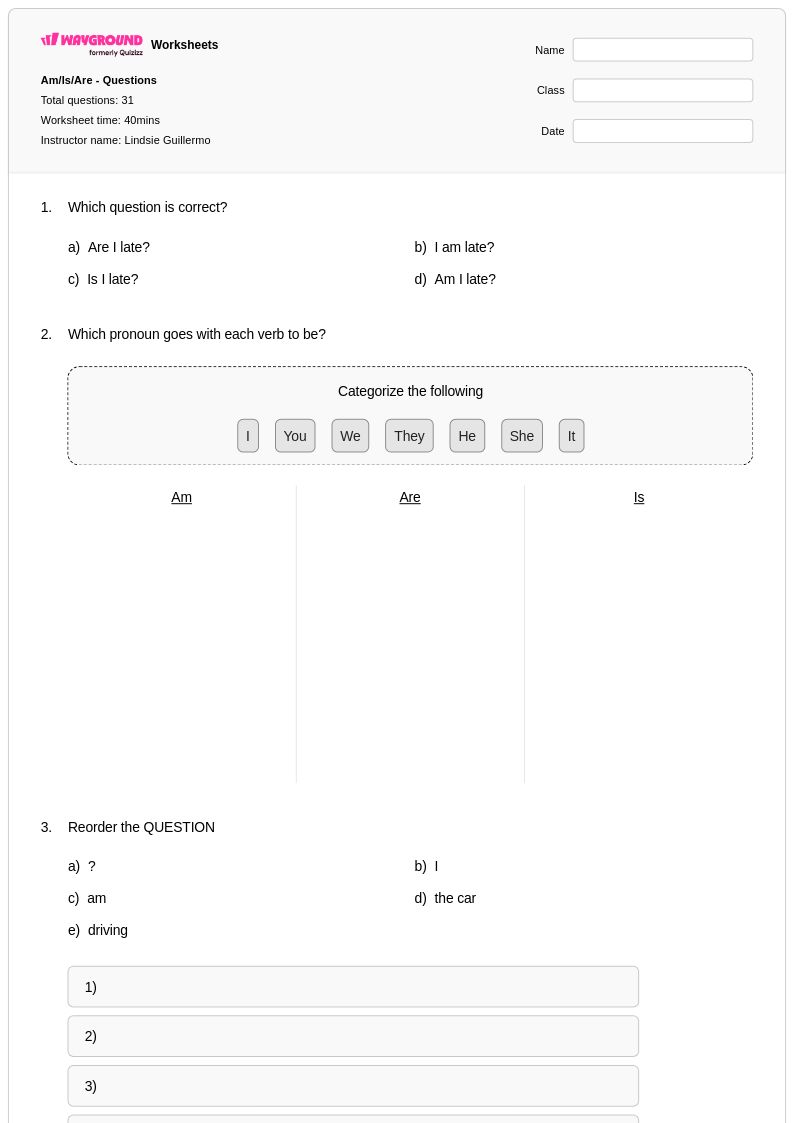
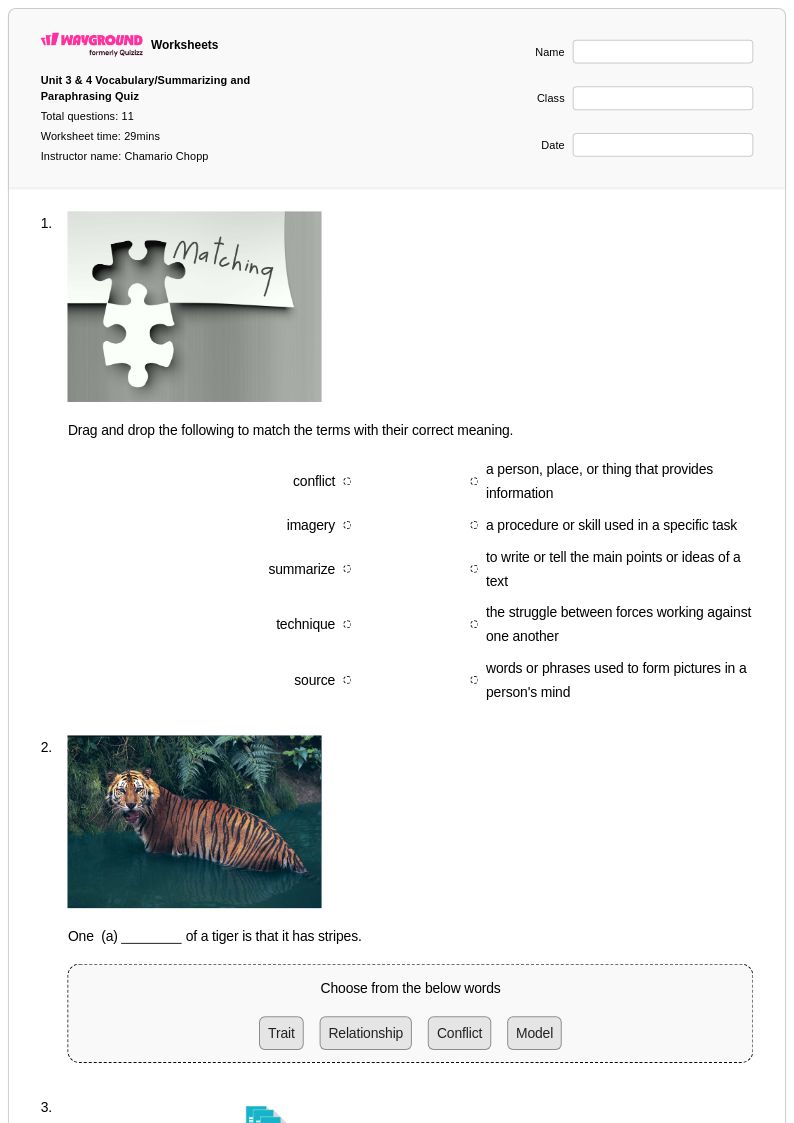
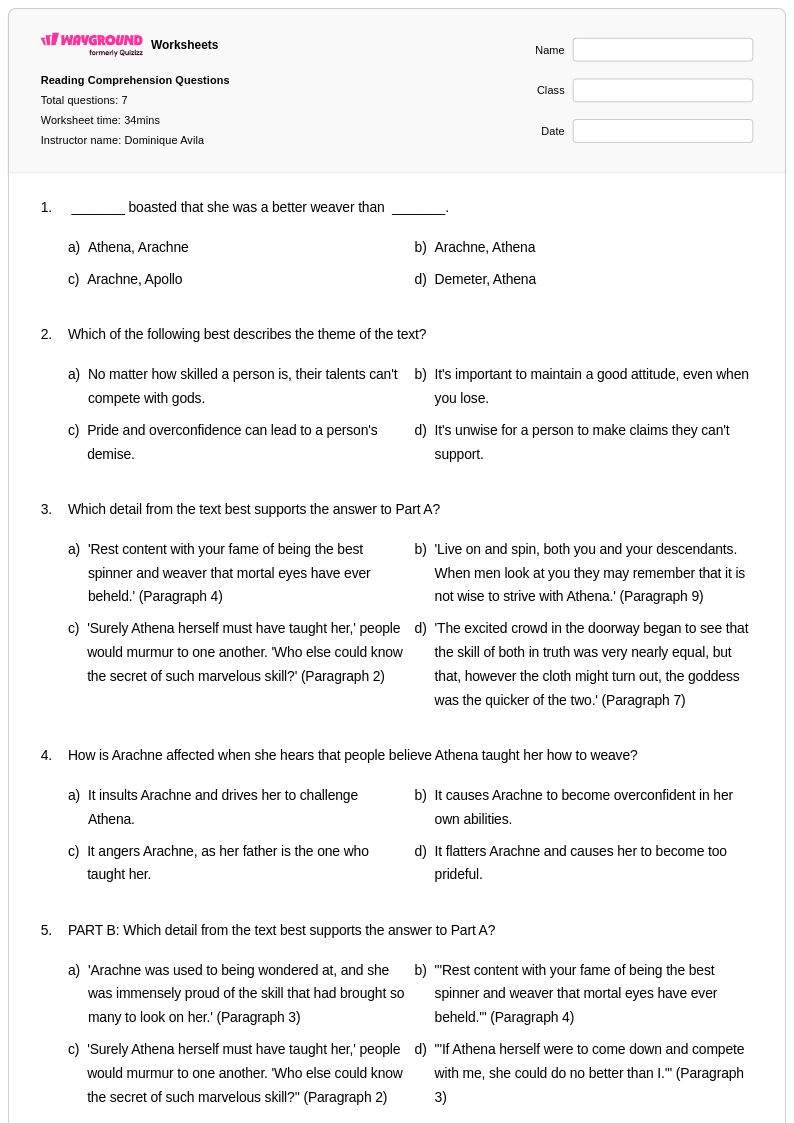
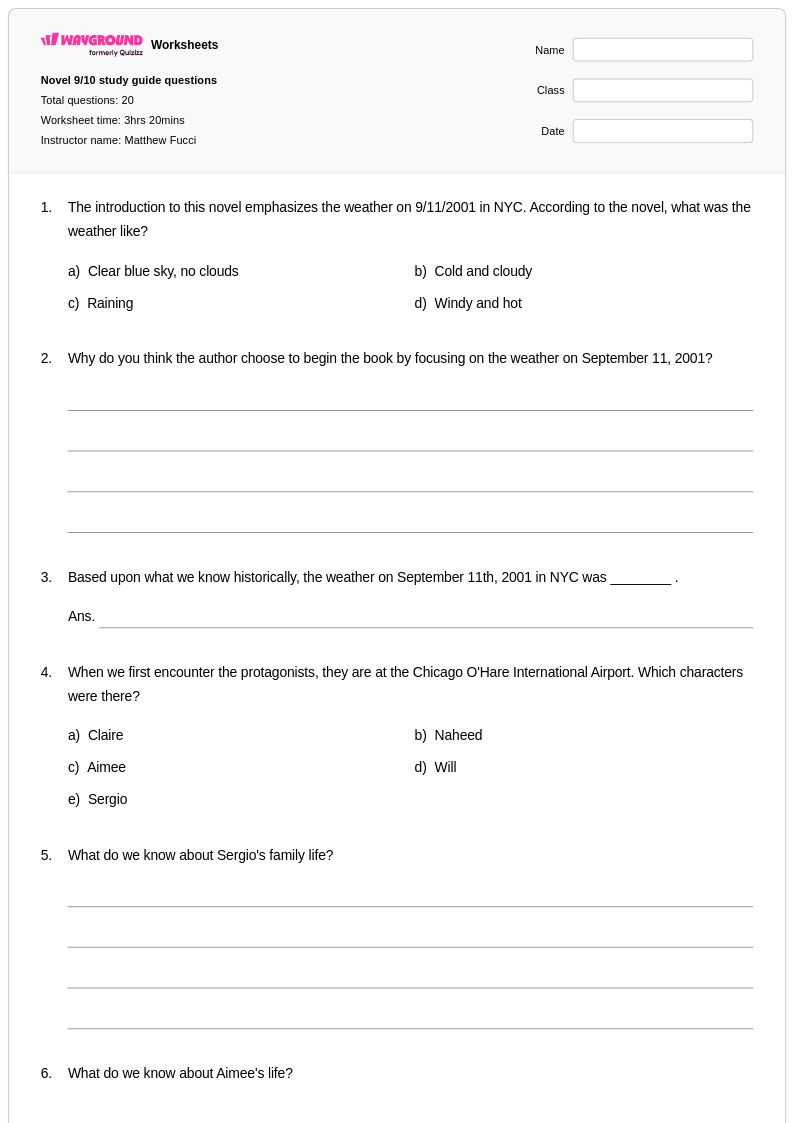
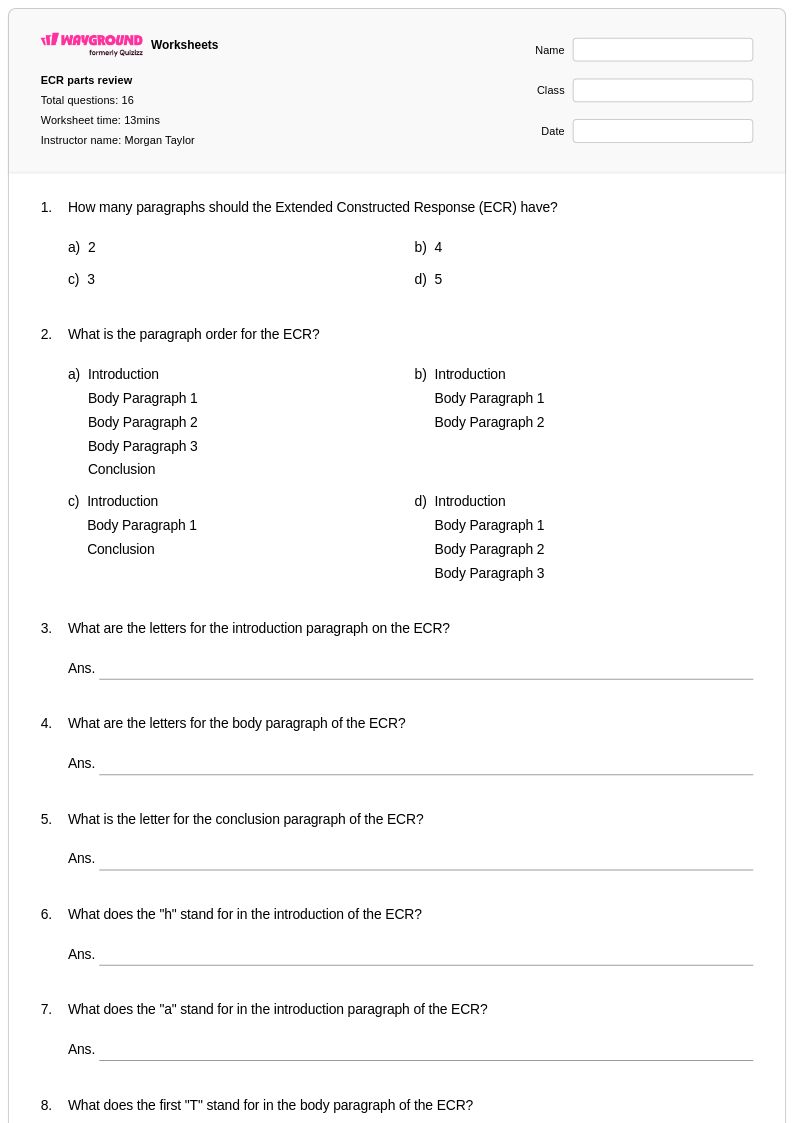
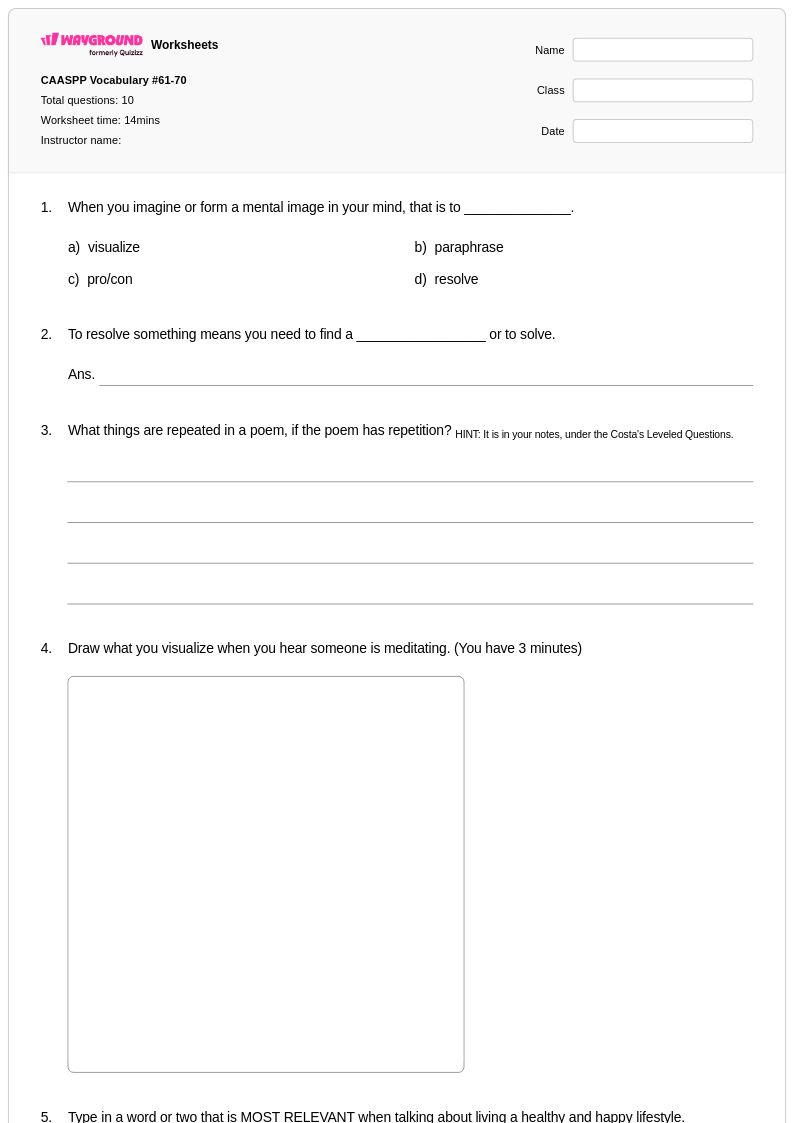
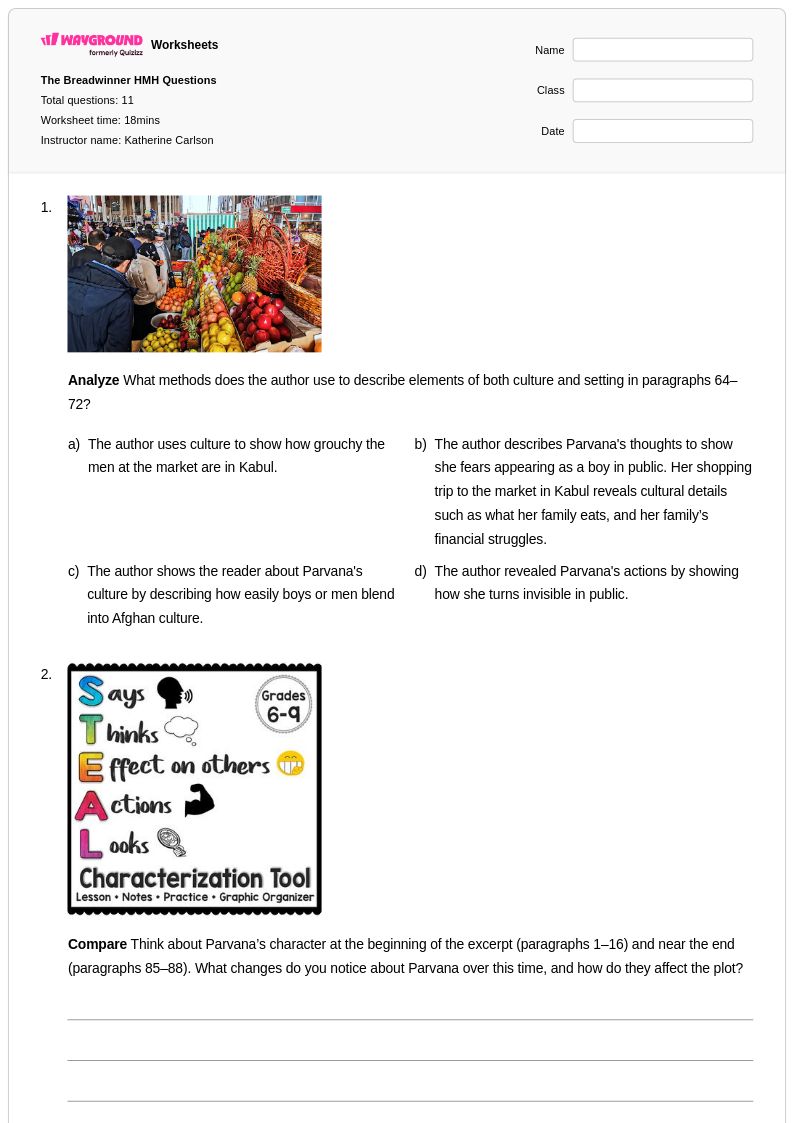
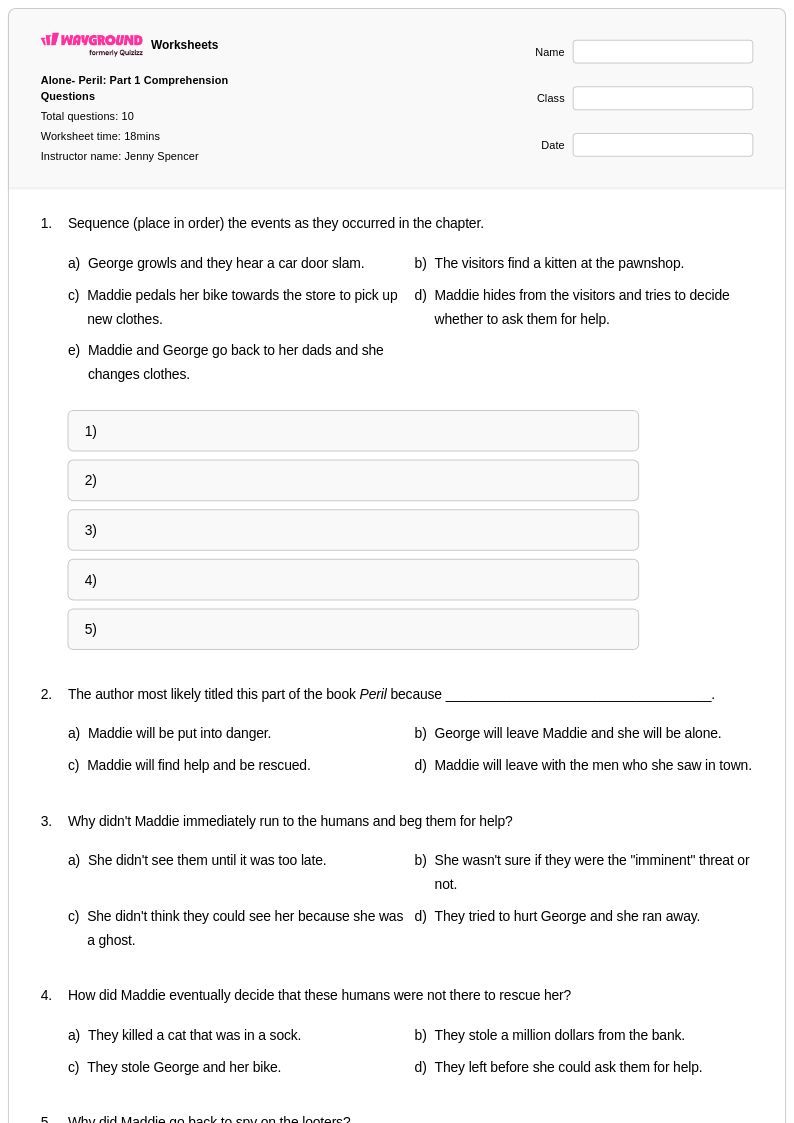
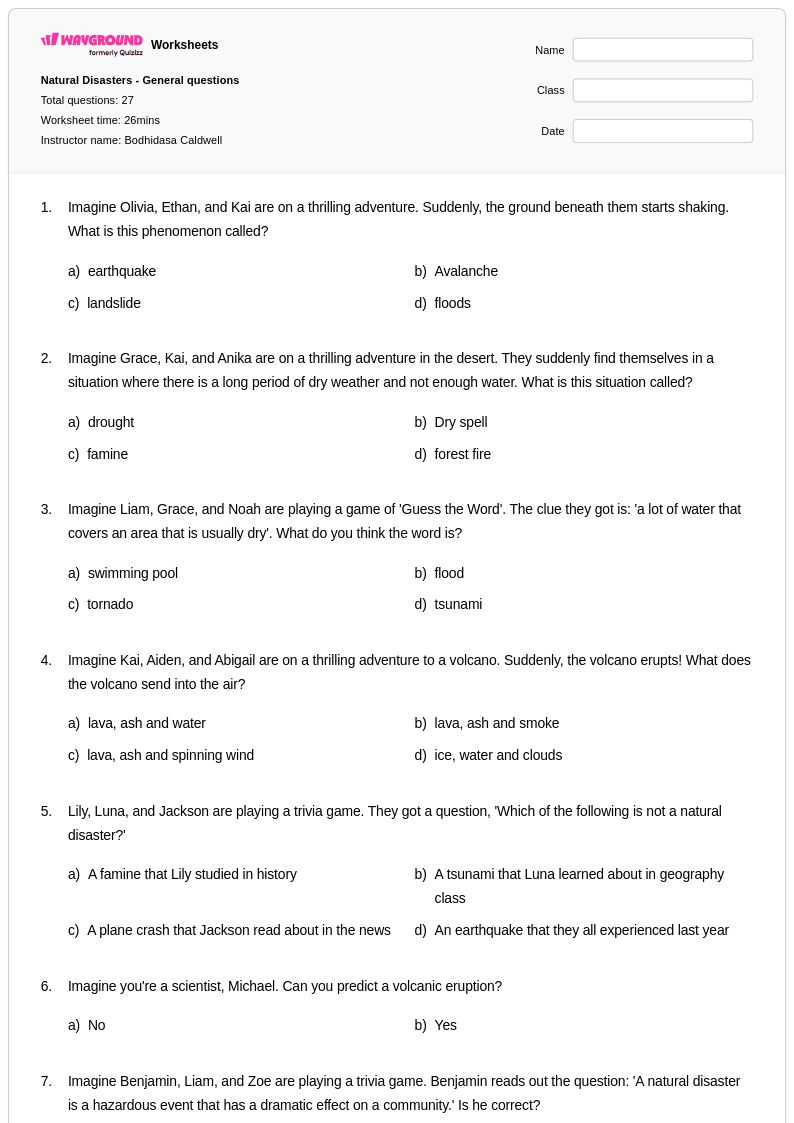
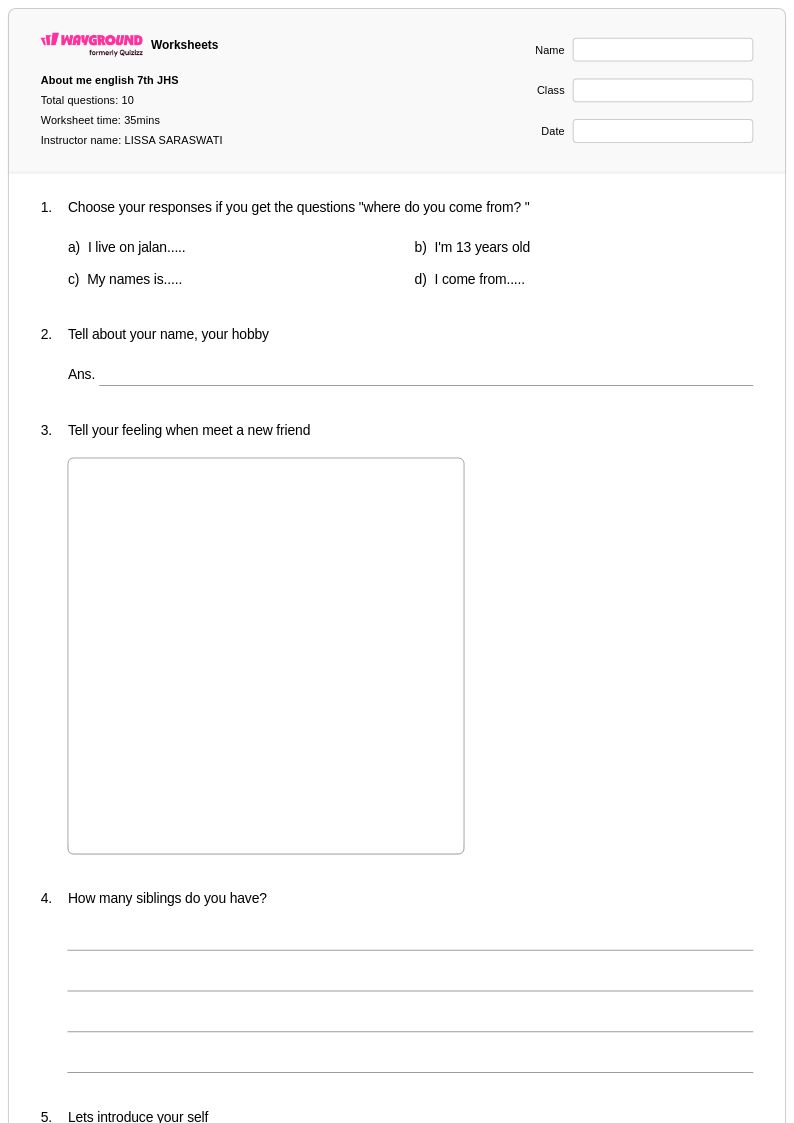
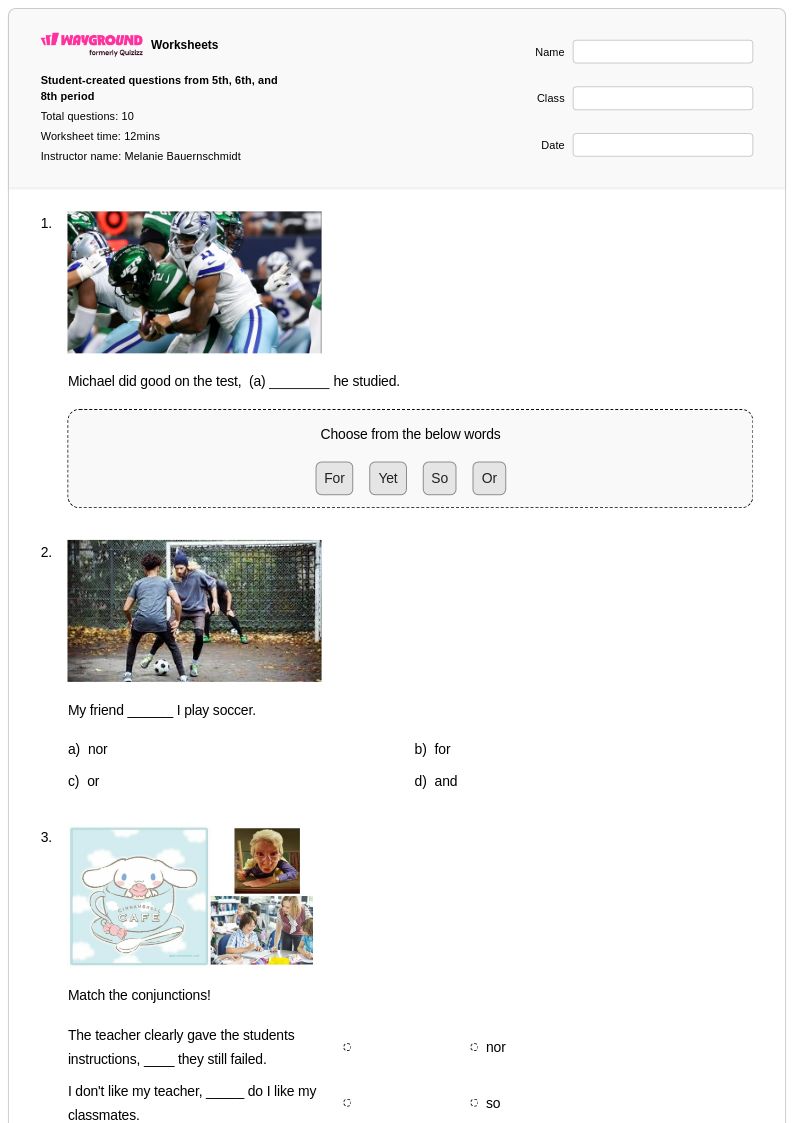
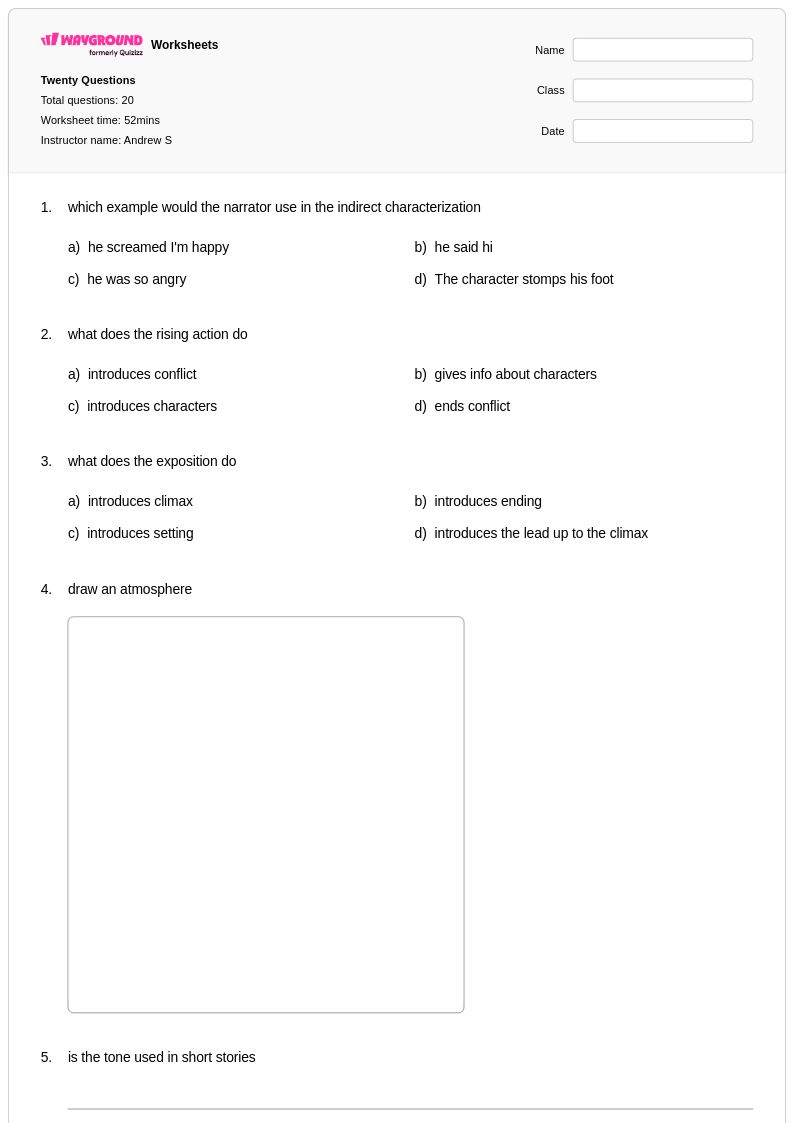
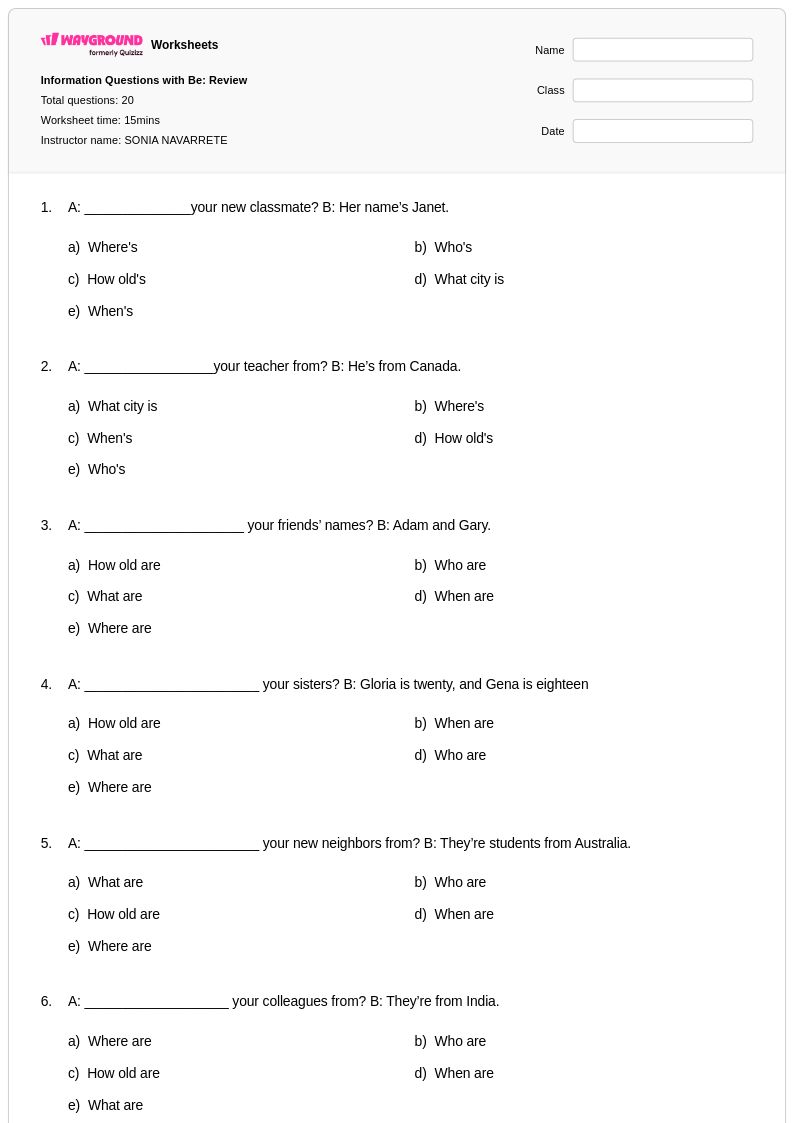
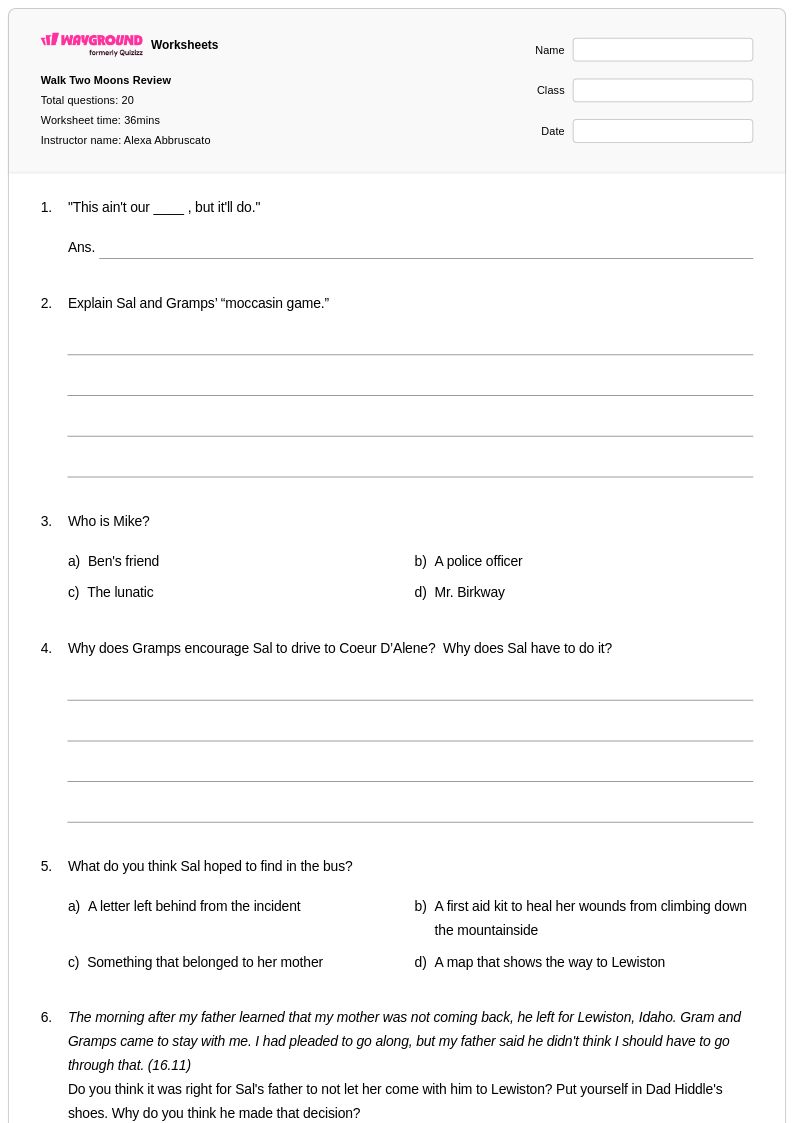
Testable questions form the foundation of scientific inquiry for Class 7 students, and Wayground's comprehensive worksheet collection provides educators with expertly crafted resources to develop this critical research skill. These worksheets guide students through the process of transforming broad curiosities into focused, measurable questions that can be investigated through controlled experiments. Students practice distinguishing between testable and non-testable questions, learning to identify variables, formulate hypotheses, and understand the characteristics that make scientific questions answerable through empirical methods. Each worksheet includes detailed answer keys and practice problems that reinforce key concepts, while the free printable format allows teachers to seamlessly integrate these materials into their lesson plans and provide students with hands-on learning opportunities.
Wayground supports educators with millions of teacher-created resources specifically designed to strengthen students' understanding of testable questions and broader research strategies. The platform's advanced search and filtering capabilities enable teachers to quickly locate worksheets aligned with specific learning standards and differentiated for various skill levels within their Class 7 classrooms. These customizable resources are available in both digital and printable PDF formats, allowing for flexible implementation whether students are working independently, in small groups, or during whole-class instruction. Teachers can easily adapt these materials for remediation with struggling learners, provide enrichment opportunities for advanced students, or offer targeted skill practice to ensure all students master the ability to formulate scientifically sound, testable questions that drive meaningful research and discovery.
FAQs
How do I teach students to write testable questions?
Start by distinguishing testable from non-testable questions: a testable question must involve a variable that can be manipulated and an outcome that can be measured through observable evidence. Use familiar scenarios — such as plant growth or reaction time — to show students how a broad curiosity like 'Why do plants grow?' becomes a testable question like 'How does the amount of sunlight affect the height of a bean plant over two weeks?' From there, guide students through identifying the independent and dependent variables before they attempt to write their own questions independently.
What exercises help students practice writing testable questions?
Identification exercises are an effective starting point — give students a mix of testable and non-testable questions and ask them to sort and justify their decisions. Follow this with rewriting tasks where students revise vague or untestable prompts into focused, measurable questions. Progressing from simple identification to complex question formulation builds both analytical thinking and scientific literacy, making worksheet-based practice particularly effective for this skill.
What is the difference between a testable and a non-testable question?
A testable question can be answered through direct observation or experimentation and involves at least one variable that can be measured or manipulated, such as 'Does water temperature affect how quickly sugar dissolves?' A non-testable question typically involves opinions, values, or phenomena that cannot be measured objectively, such as 'Which season is the most beautiful?' Teaching students to recognize this distinction is a foundational step in scientific inquiry and research methodology.
What mistakes do students commonly make when writing testable questions?
The most common error is writing questions that are too broad or that ask 'why' without specifying a measurable variable, such as 'Why is the sky blue?' rather than 'How does the angle of sunlight affect the color of the sky as measured by a spectrometer?' Students also frequently confuse the independent and dependent variables or write questions with no clear method of investigation. Another common mistake is framing questions as yes/no prompts, which limits the depth of inquiry and data collection.
How can I use testable questions worksheets in my classroom?
Testable questions worksheets on Wayground are available as printable PDFs for traditional classroom instruction and in digital formats for technology-integrated learning environments, and they can also be hosted as a quiz directly on the Wayground platform. Use them to introduce the concept with guided examples, assign them as independent practice after a lesson on variables, or deploy them as formative assessments before students begin a lab investigation. The built-in answer keys make it straightforward to review student responses and identify misconceptions quickly.
How do I differentiate testable questions instruction for diverse learners?
For students who need additional support, reduce the cognitive load by providing sentence starters or a structured template that prompts them to name the variable and the measurable outcome before writing their question. On Wayground, teachers can apply accommodations such as Read Aloud for students who need questions read to them, reduced answer choices to simplify identification tasks, and extended time for students who need it — all configurable per student without notifying the rest of the class. For advanced learners, challenge them to write questions that control for multiple variables or connect to real-world research scenarios.