Free Printable The Constitution Amendments Worksheets for Class 11
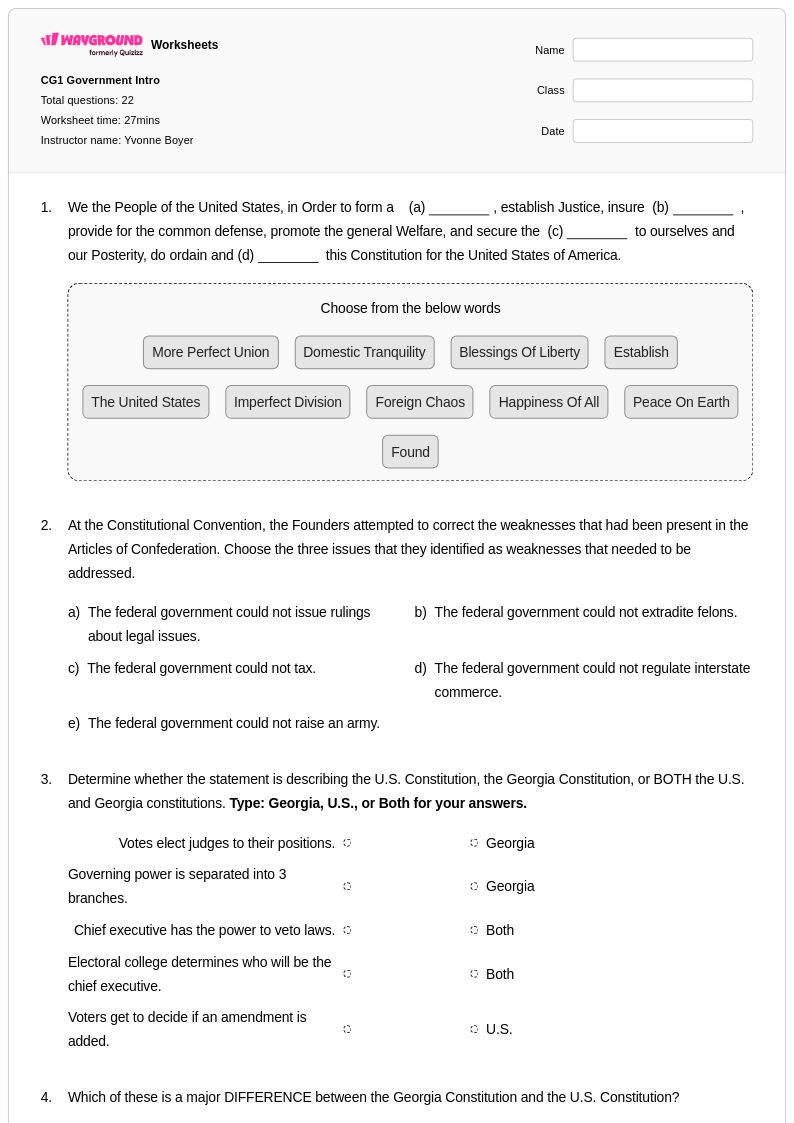
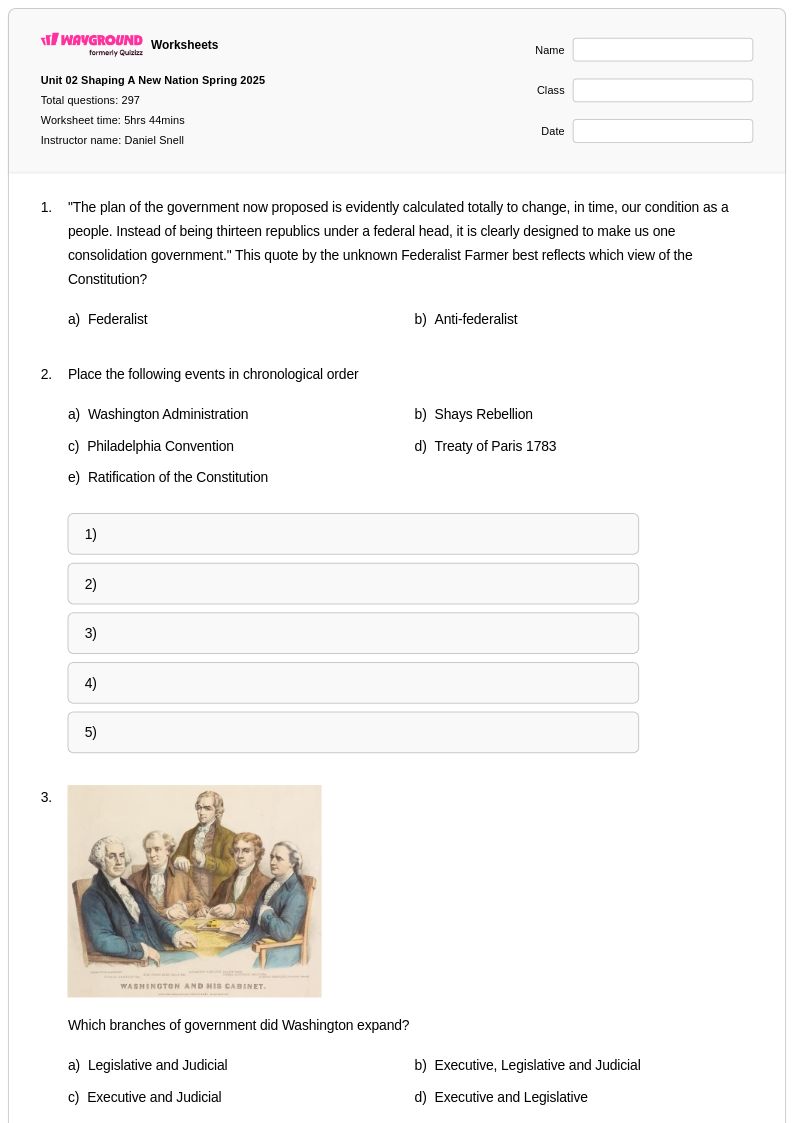
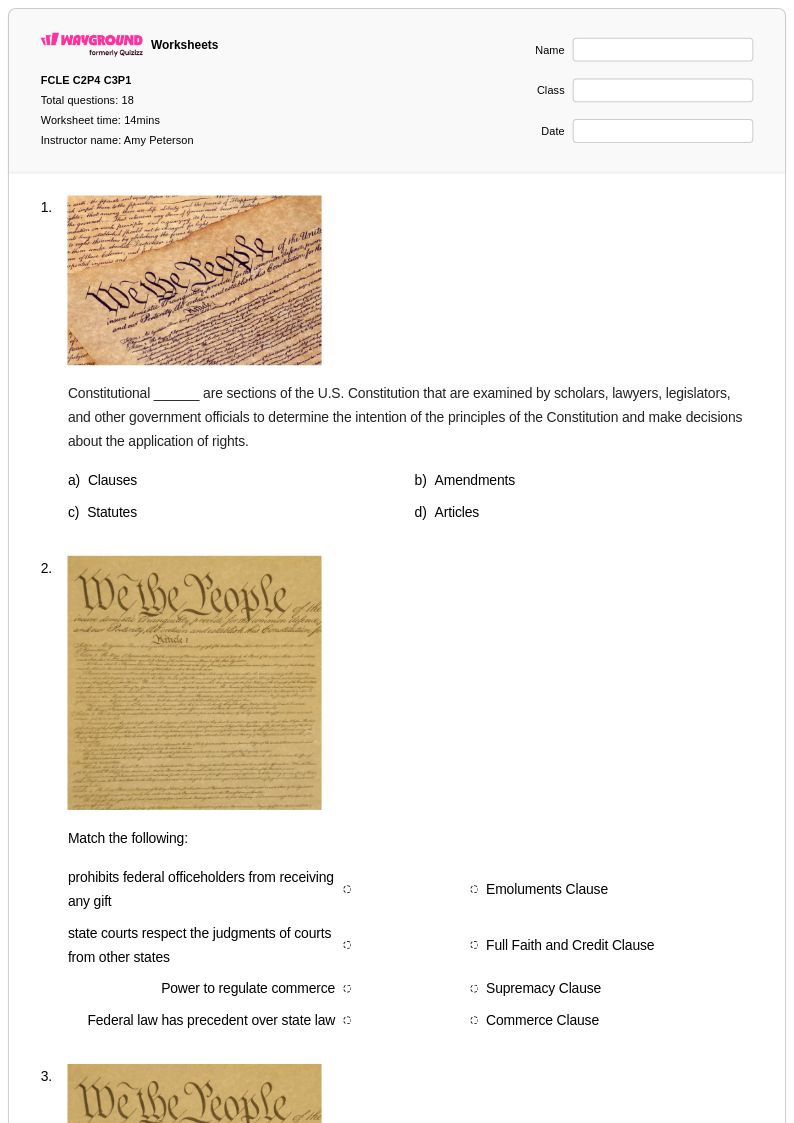
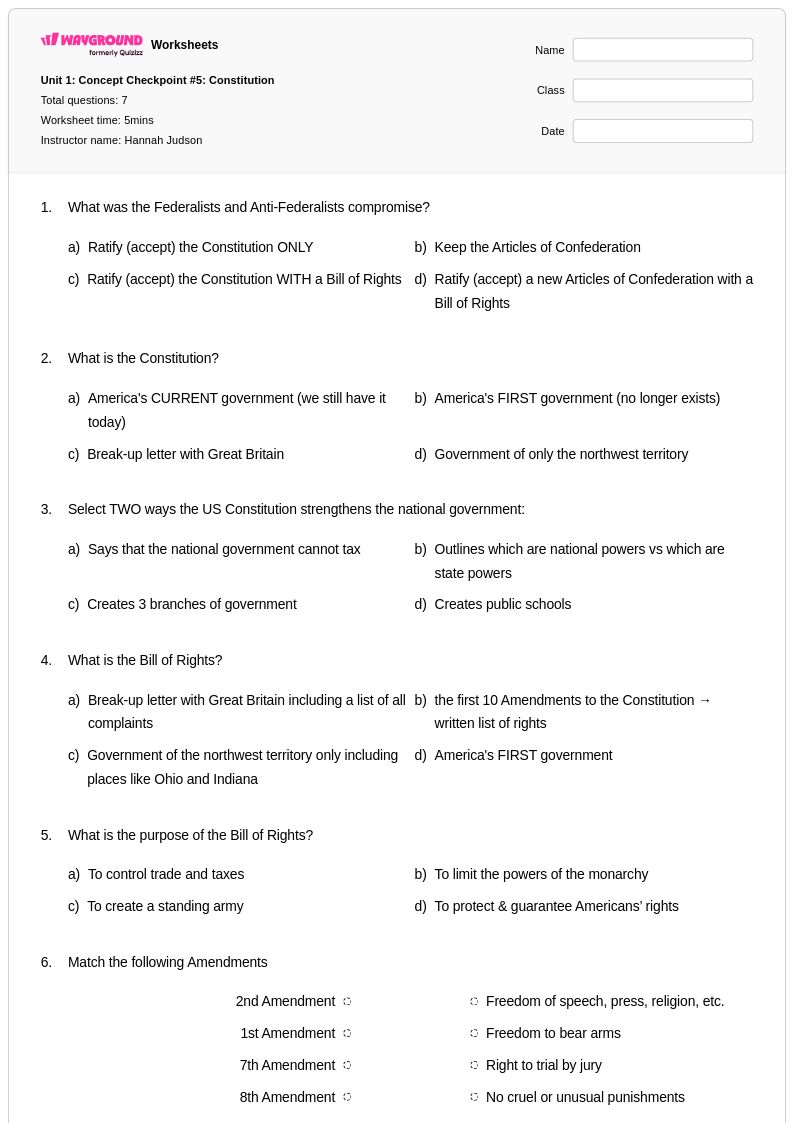
Explore Wayground's comprehensive Class 11 Constitution Amendments worksheets and printables that help students master the Bill of Rights and constitutional changes through engaging practice problems, free PDF resources, and detailed answer keys.
Explore printable The Constitution Amendments worksheets for Class 11
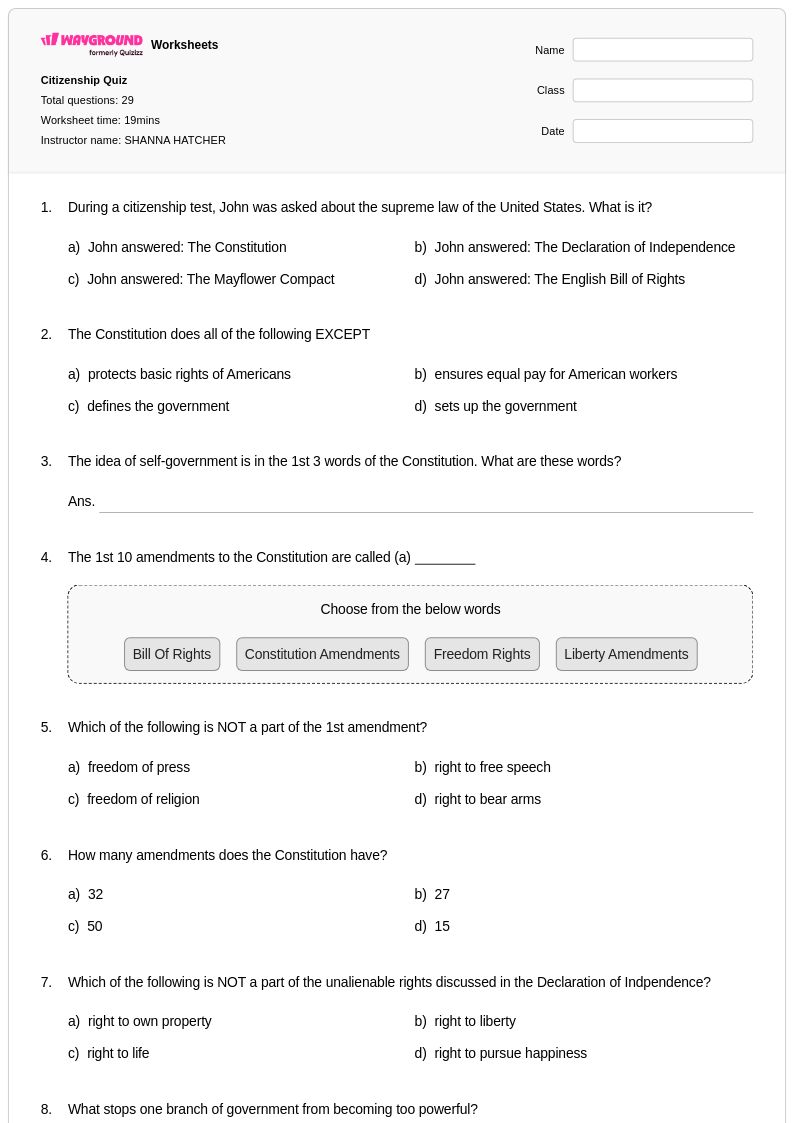
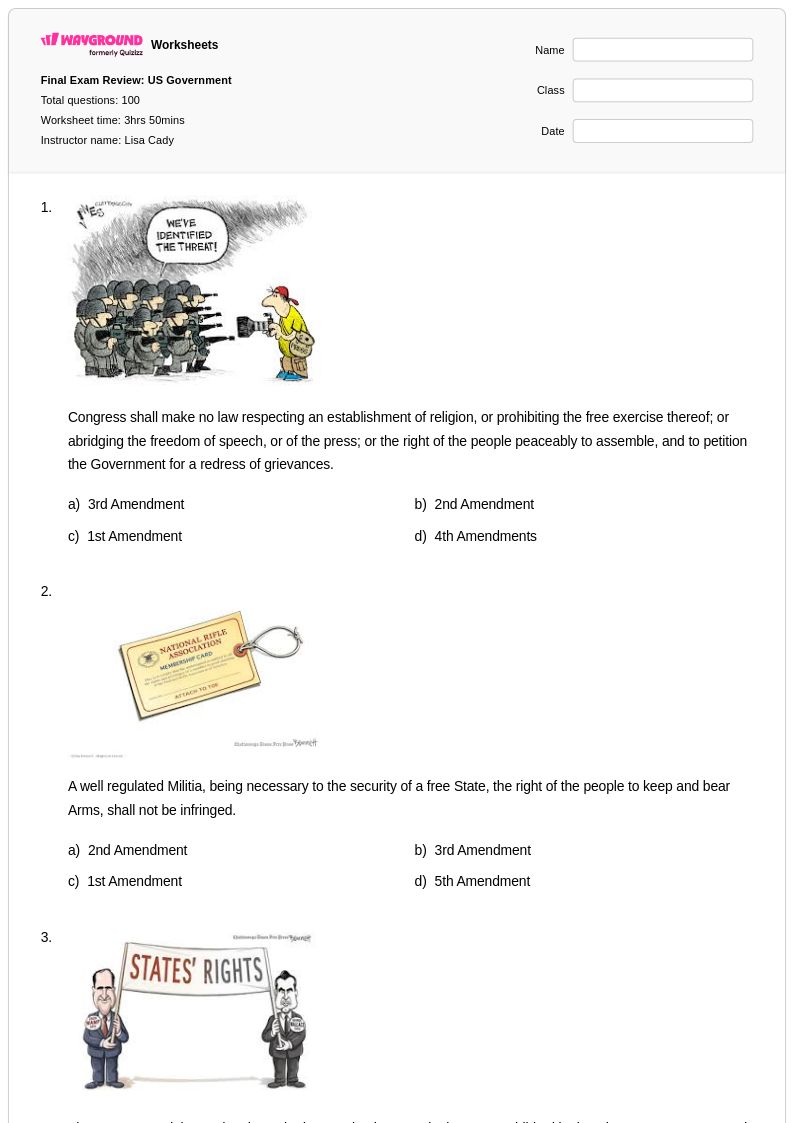
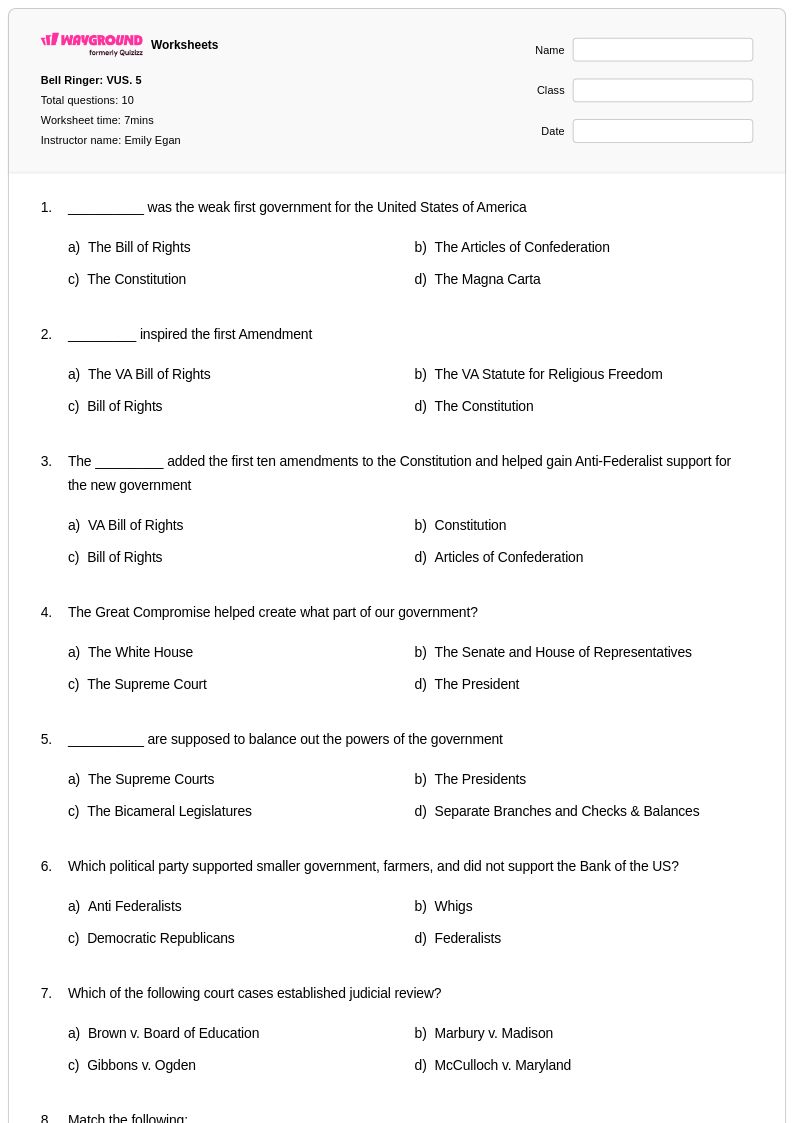
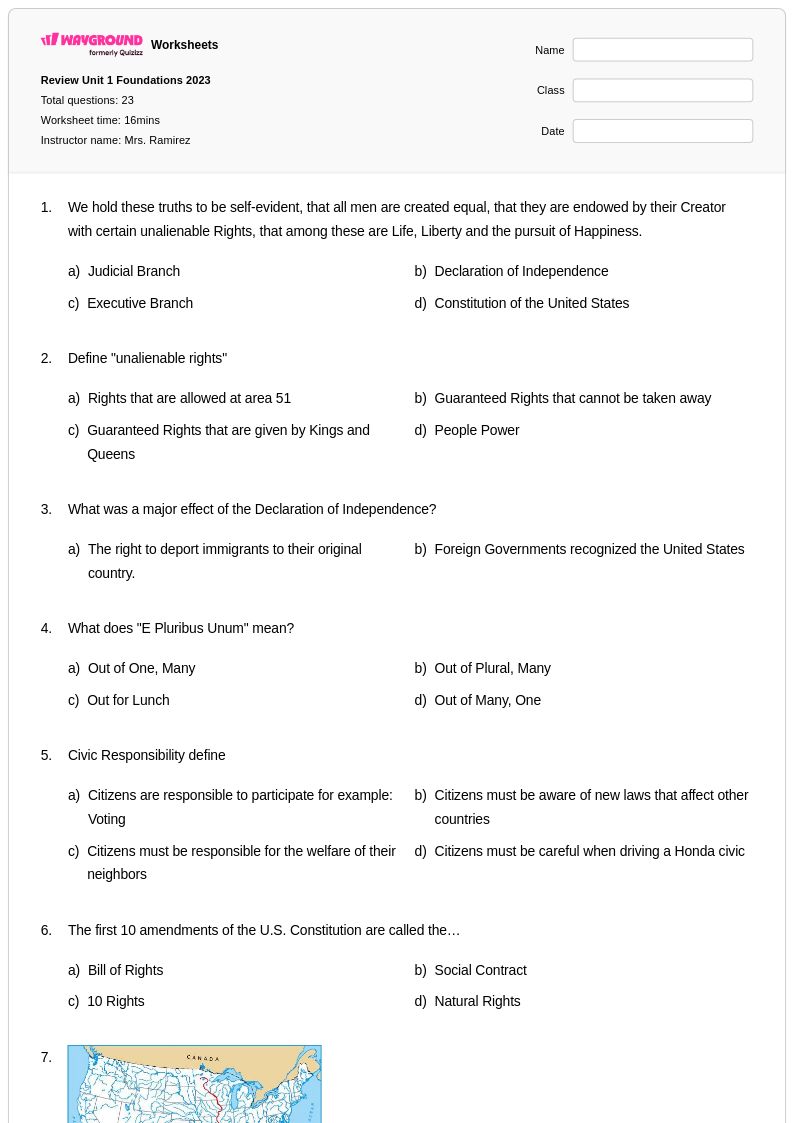
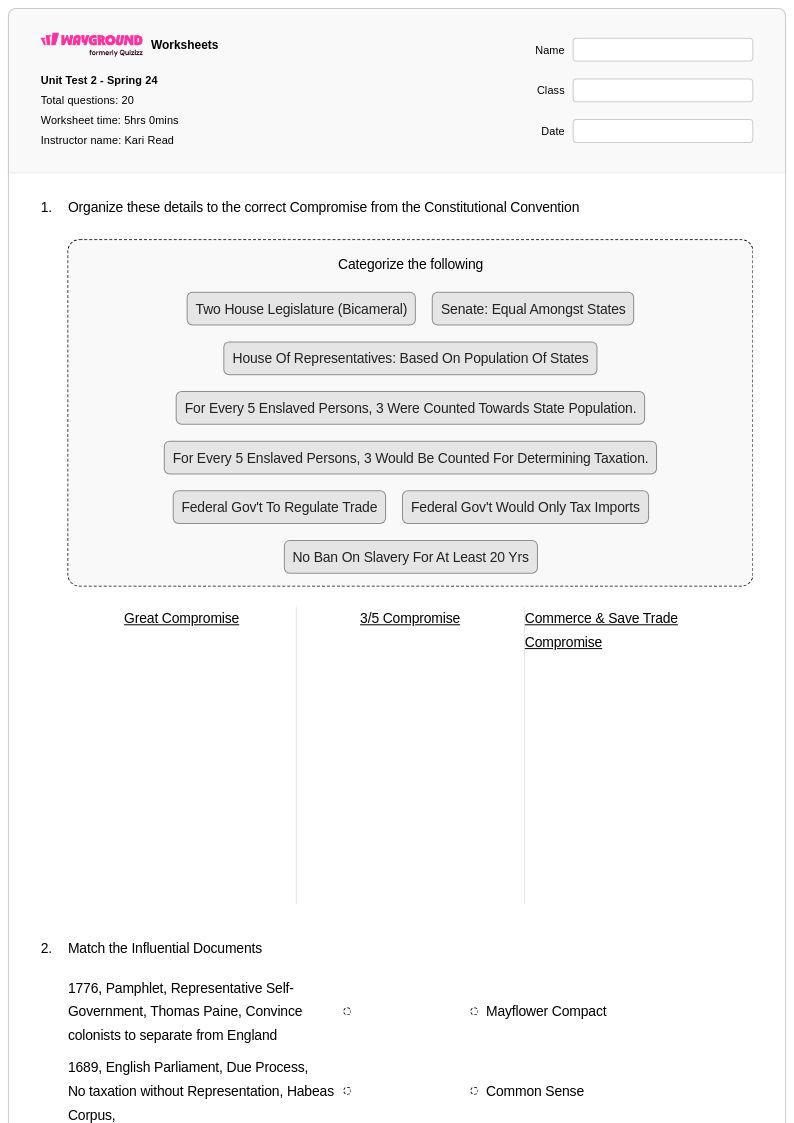
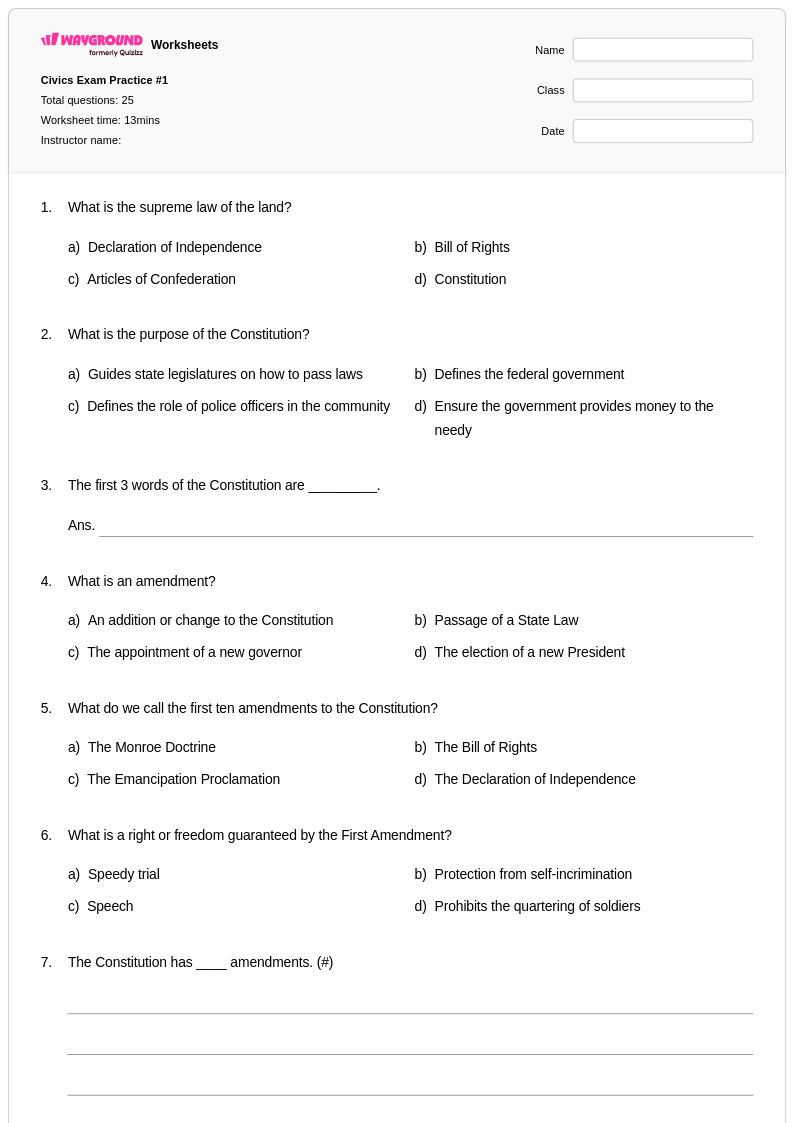
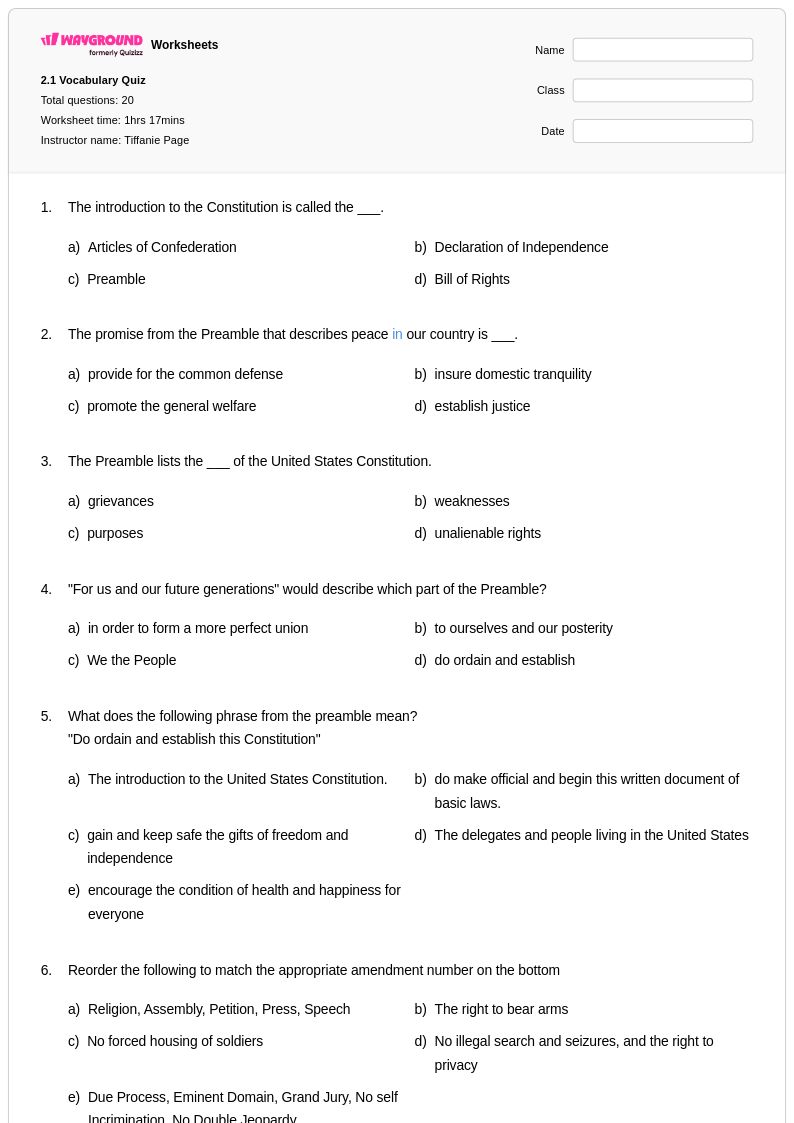
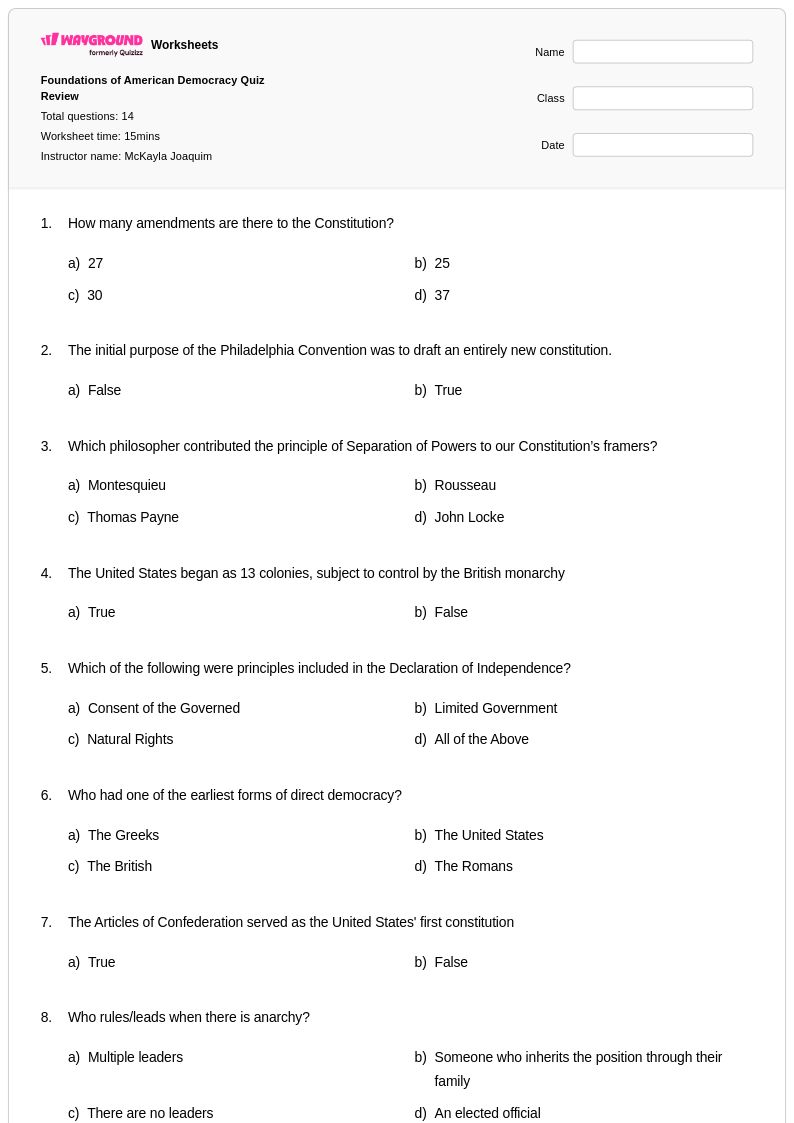
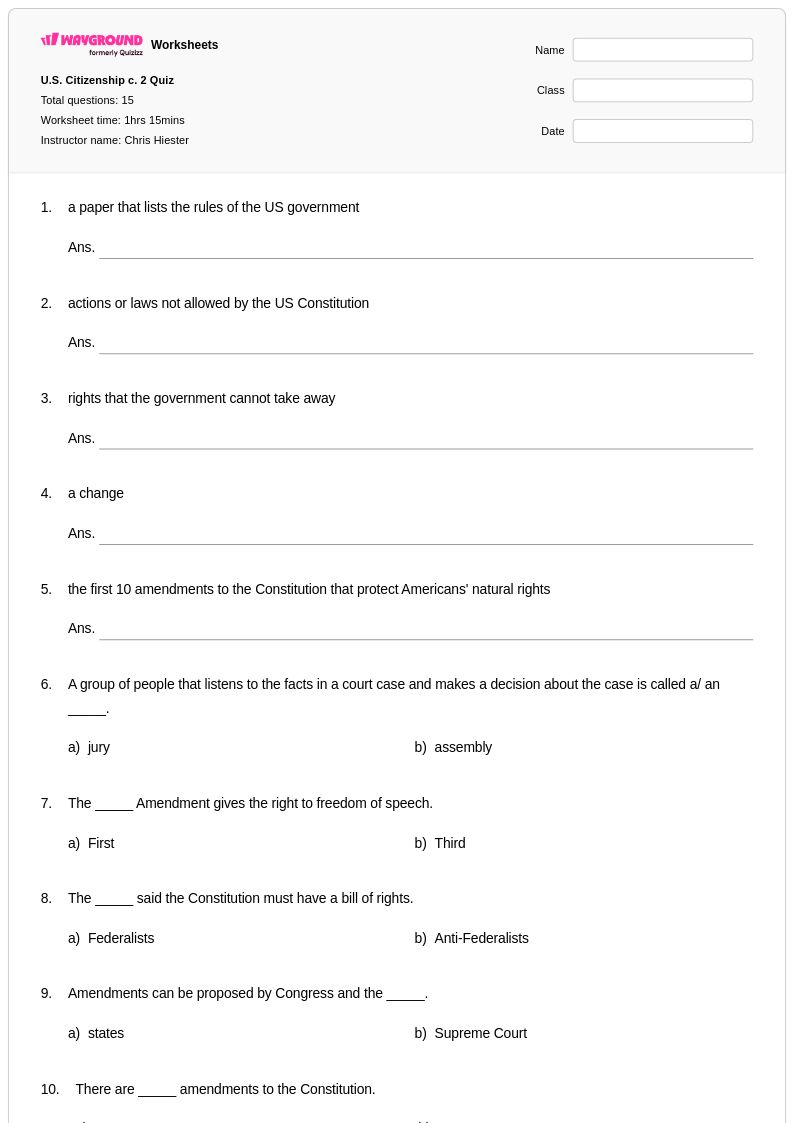
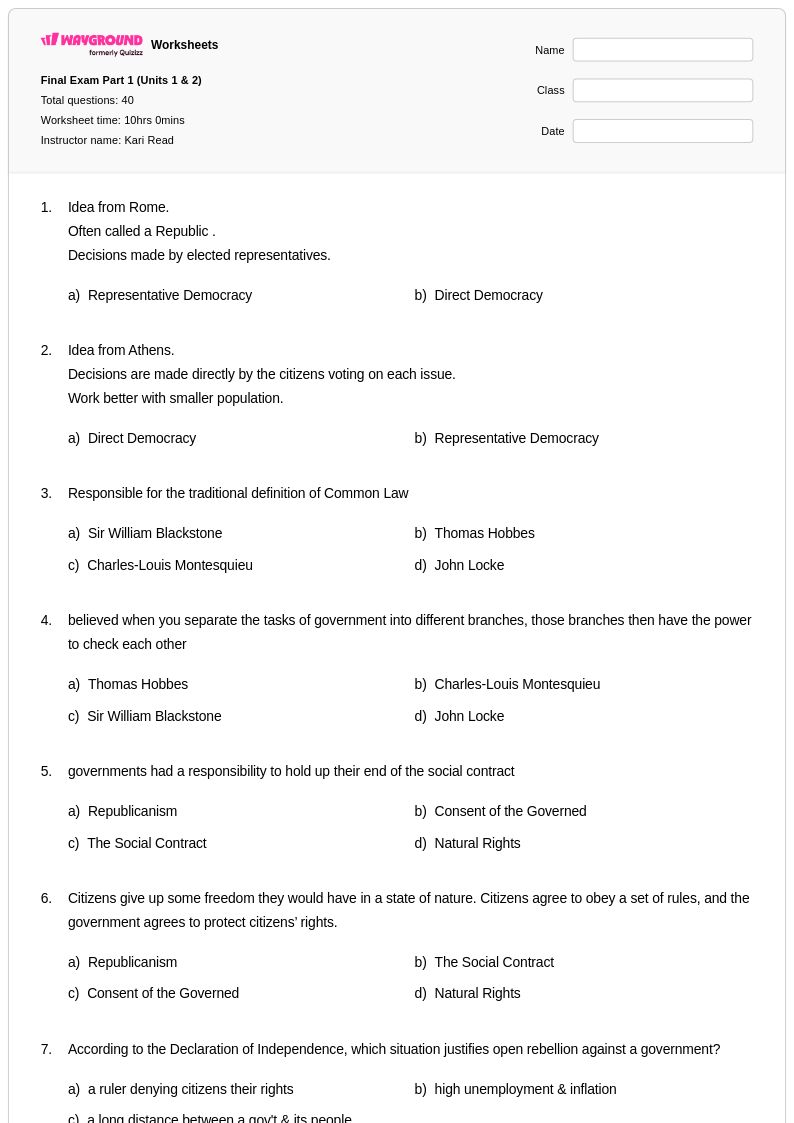
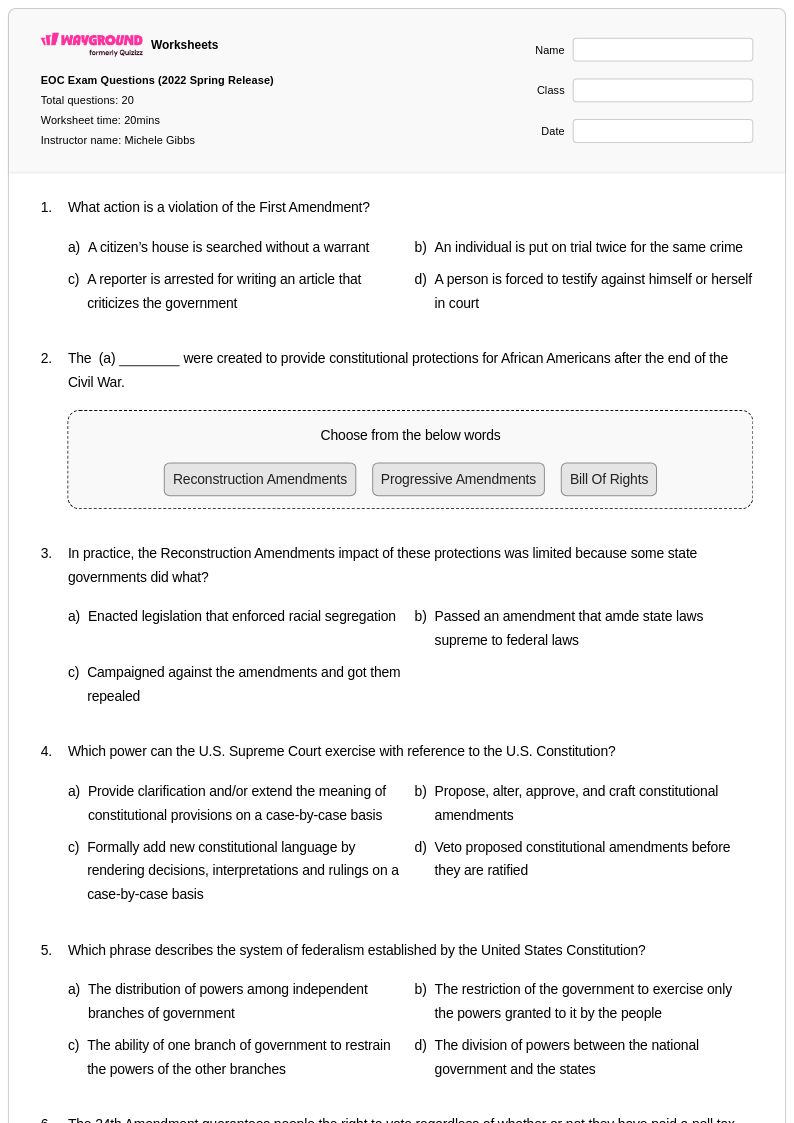
Constitutional amendments worksheets for Class 11 students through Wayground (formerly Quizizz) provide comprehensive practice with the critical process of how the Constitution has evolved since ratification. These expertly crafted resources strengthen students' analytical skills as they examine the historical context, political motivations, and lasting impact of each amendment from the Bill of Rights through modern additions. Students engage with practice problems that require them to interpret amendment language, analyze Supreme Court cases that have shaped constitutional interpretation, and evaluate the amendment process itself. The collection includes detailed answer keys that support both independent study and classroom instruction, with free printables available in convenient pdf format to accommodate various learning environments and teaching preferences.
Wayground's extensive library of millions of teacher-created constitutional amendment resources supports educators in delivering rigorous Class 11 social studies instruction aligned with state and national civics standards. Teachers can efficiently search and filter through comprehensive worksheet collections that cover specific amendments, historical periods, or thematic connections between constitutional changes and American society. The platform's differentiation tools enable instructors to customize materials for diverse learners, while flexible formatting options provide both printable pdf versions for traditional classroom use and digital formats for interactive engagement. These versatile resources streamline lesson planning while offering targeted options for remediation, enrichment, and skill practice, ensuring that all students develop the critical thinking abilities necessary to understand how constitutional amendments continue to shape American democracy and individual rights.
FAQs
How do I teach the Constitutional Amendments in a way students actually remember?
Teaching the Constitutional Amendments effectively means anchoring each amendment in its historical moment rather than presenting them as an abstract numbered list. Group amendments thematically — civil liberties (1st–10th), Civil War-era rights (13th–15th), and Progressive-era reforms (16th–19th) — so students can see constitutional change as a response to real social and political pressure. Pairing primary source excerpts with structured analysis activities helps students internalize not just what each amendment says, but why it was ratified.
What exercises help students practice identifying and applying the Constitutional Amendments?
Scenario-based practice is one of the most effective approaches: present students with a real or hypothetical situation and ask them to identify which amendment applies and why. Amendment matching activities, ratification timeline sequencing, and short-answer analysis of landmark Supreme Court cases all reinforce recognition and application skills. These exercise types move students beyond memorization toward the kind of constitutional reasoning that appears on civics assessments.
What mistakes do students commonly make when learning about the Constitutional Amendments?
One of the most persistent misconceptions is that the Bill of Rights originally applied to state governments — students are often surprised to learn it initially constrained only the federal government, with incorporation through the 14th Amendment coming much later. Students also frequently confuse the amendment number with its content, particularly in the middle amendments (e.g., mixing up the 16th, 17th, 18th, and 19th). Another common error is treating the amendment process as straightforward when, in practice, ratification is deliberately difficult by design.
How can I differentiate Constitutional Amendments instruction for students at different levels?
For students who need additional support, focus first on the Bill of Rights with simplified language and visual organizers that connect each amendment to a concrete right. Advanced students can engage with nuanced questions around constitutional interpretation, such as how the courts have defined the limits of First Amendment protections or the evolving application of the 14th Amendment's equal protection clause. On Wayground, teachers can apply accommodations such as read-aloud support, reduced answer choices, and extended time to individual students, allowing the same core materials to serve the full range of learners in a single class.
How do I use Wayground's Constitution Amendments worksheets in my classroom?
Wayground's Constitution Amendments worksheets are available as printable PDFs for traditional classroom use and in digital formats for technology-integrated or remote learning environments. Teachers can assign them as standalone practice, use them for formative assessment after a unit introduction, or host them as a live quiz directly on Wayground to gather real-time comprehension data. Each worksheet includes a complete answer key, so grading and feedback are built into the resource.
How do I align Constitutional Amendments instruction to civics standards?
Most state civics standards require students to demonstrate understanding of the structure of the U.S. Constitution, the amendment process, and the rights guaranteed to citizens — all of which map directly to Constitutional Amendments content. Wayground's search and filtering tools are designed to help teachers locate resources that align with specific state and national civics standards, reducing lesson planning time. When selecting worksheets, look for those that address both content knowledge (what each amendment says) and analytical skills (why it was added and what it changed).