Free Printable The Scientific Revolution Worksheets for Class 8
Class 8 Scientific Revolution worksheets from Wayground help students explore key discoveries, inventions, and revolutionary thinkers through engaging printables, practice problems, and comprehensive answer keys in convenient PDF format.
Explore printable The Scientific Revolution worksheets for Class 8
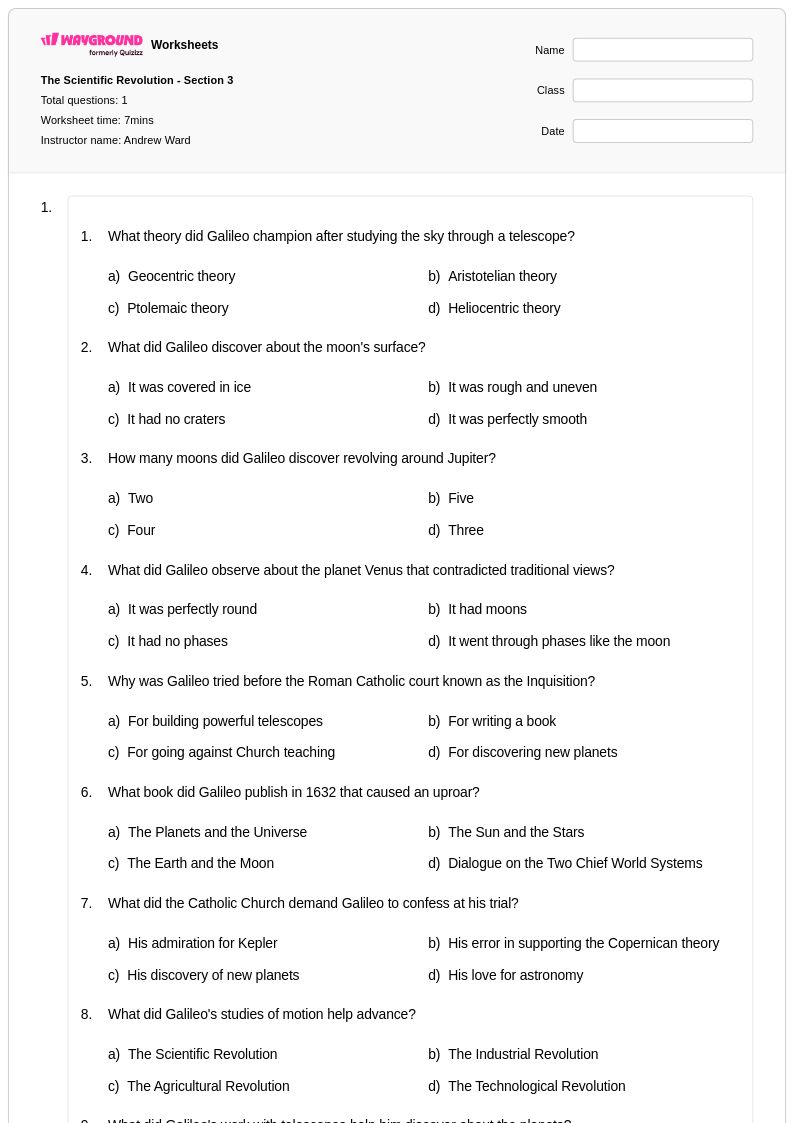
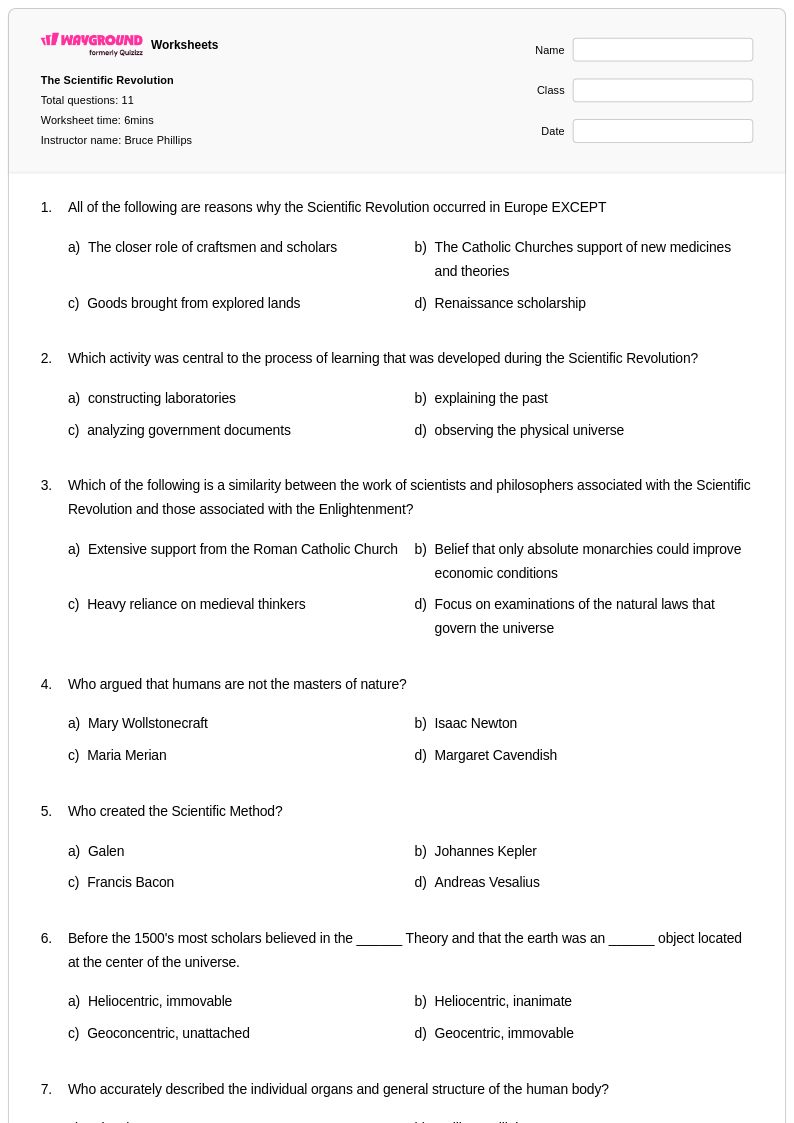
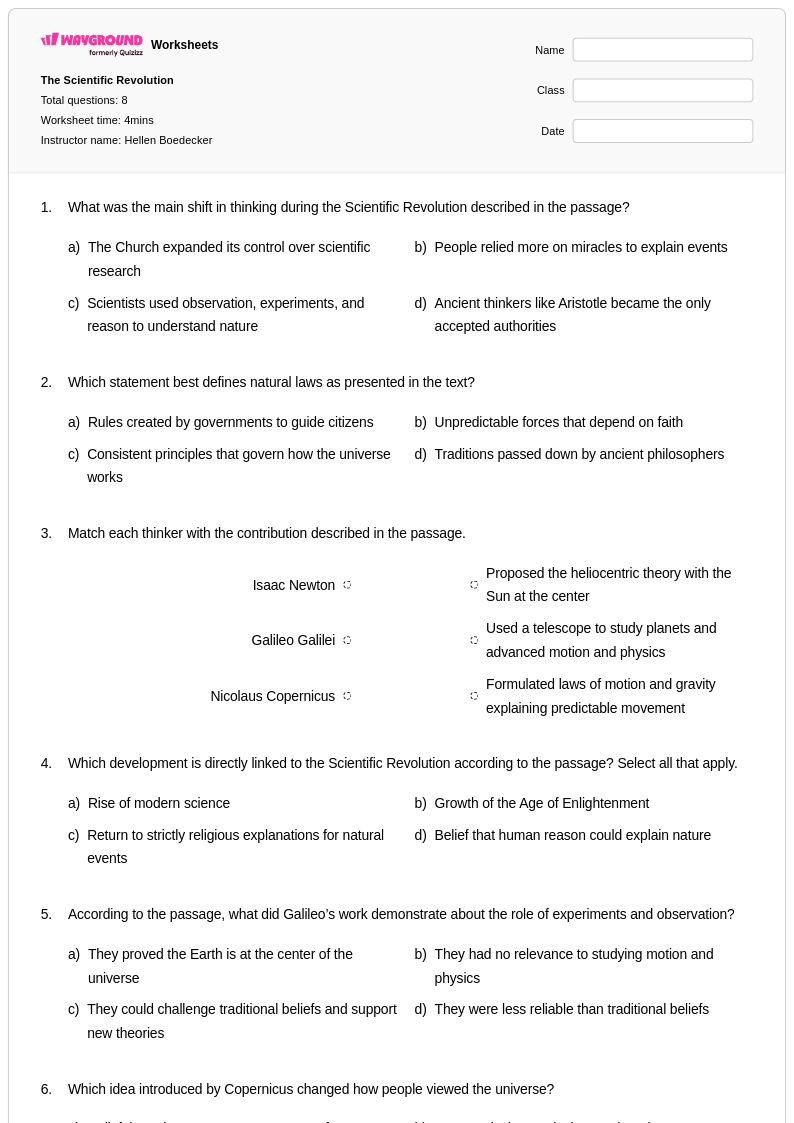
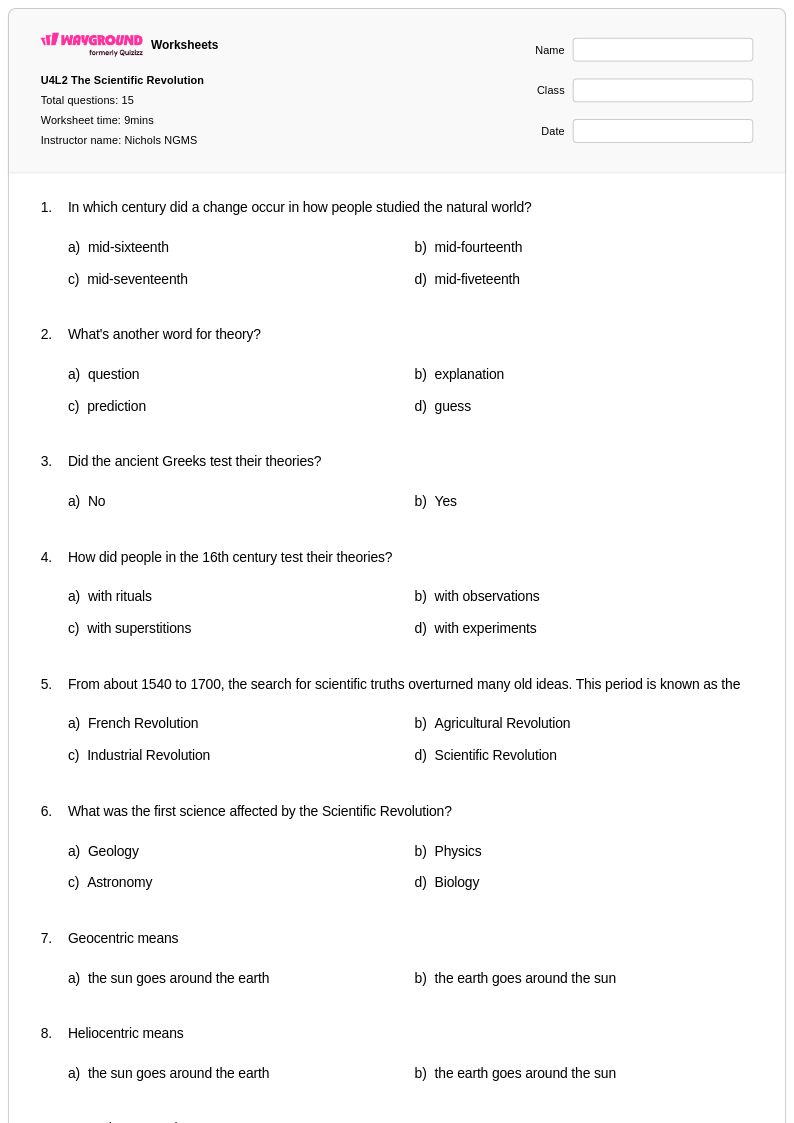
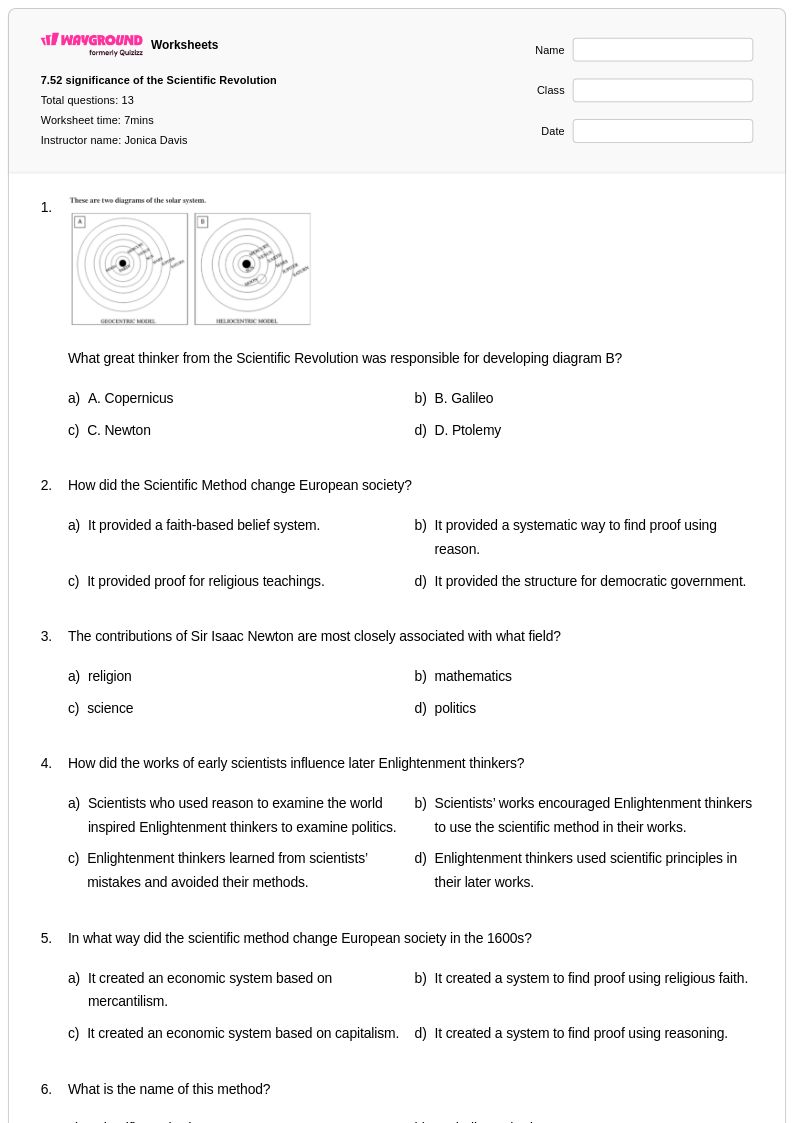
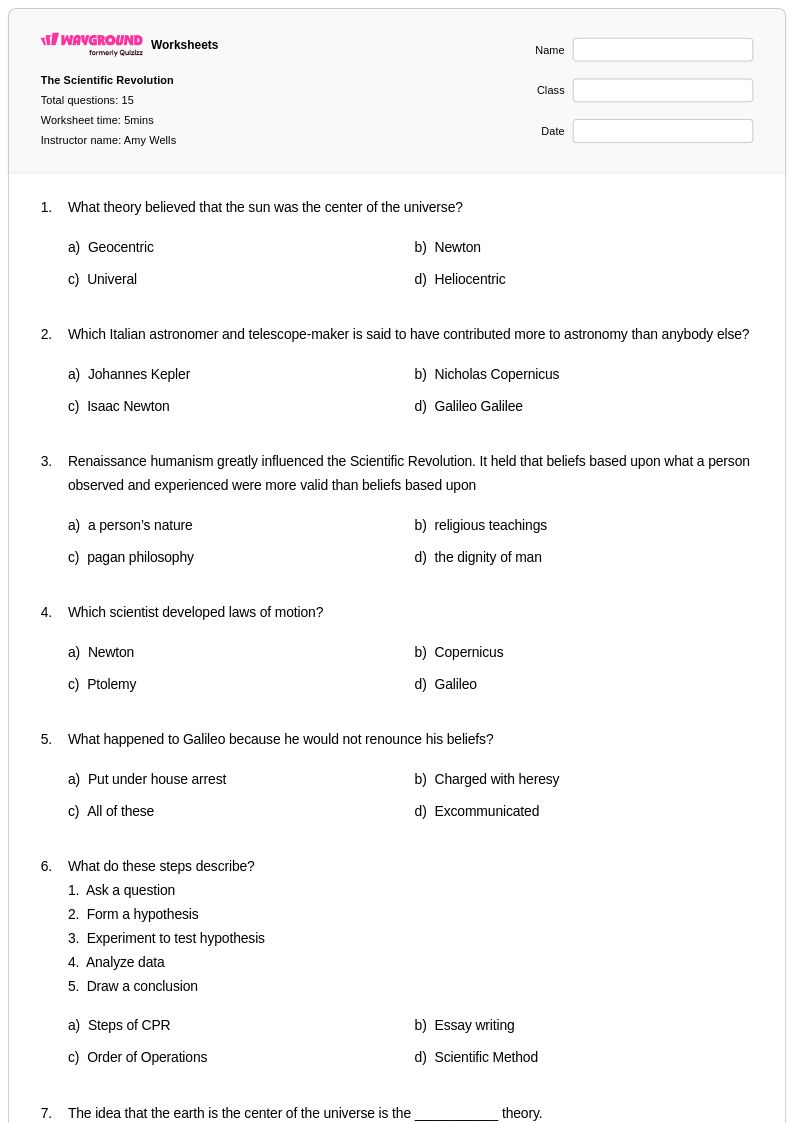
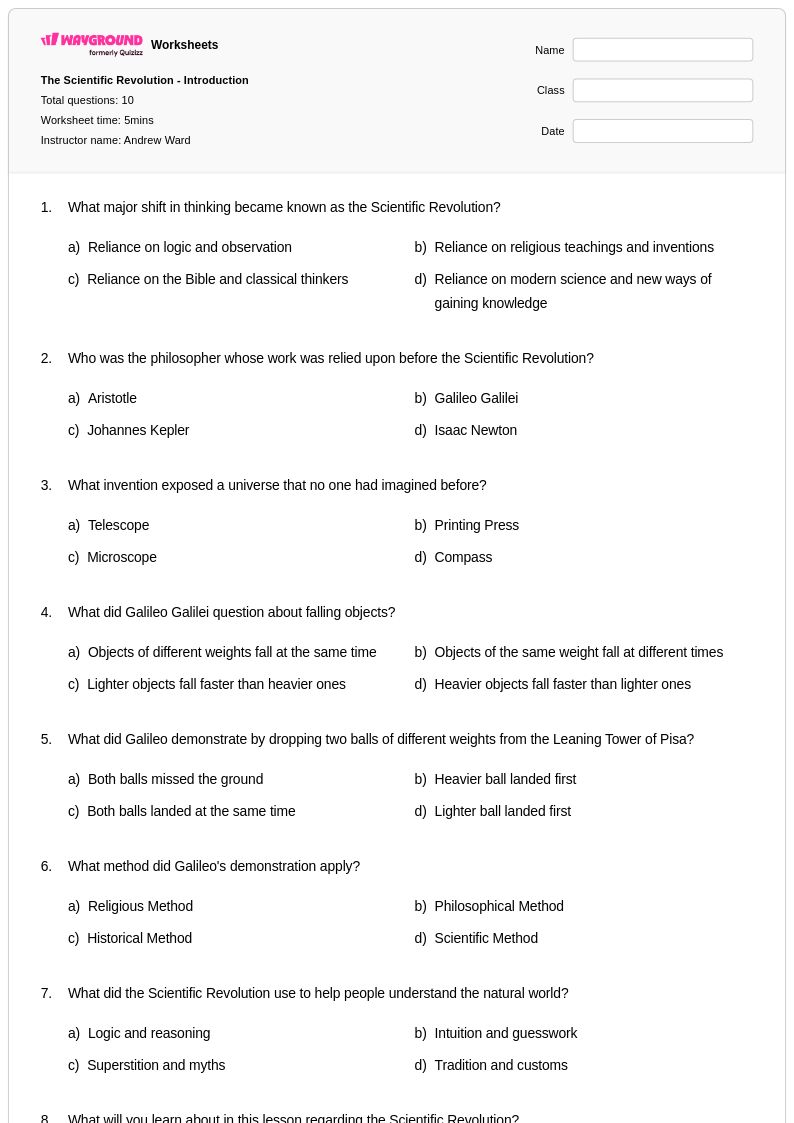
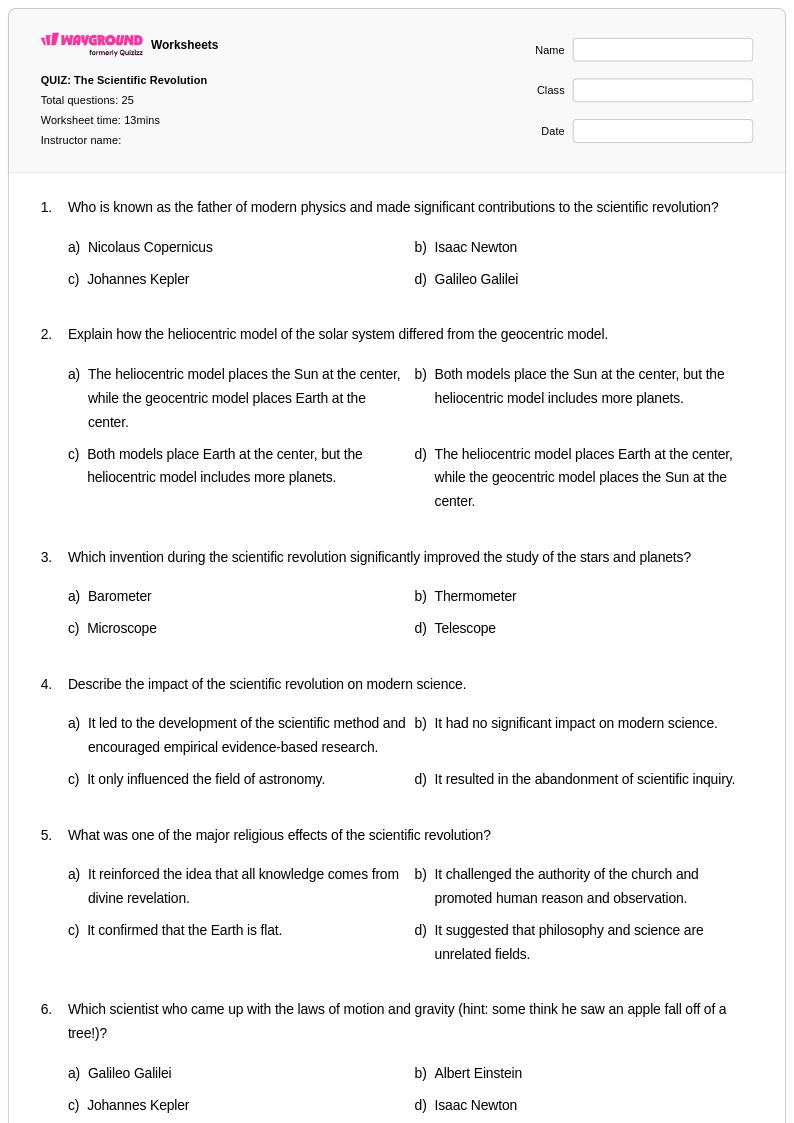
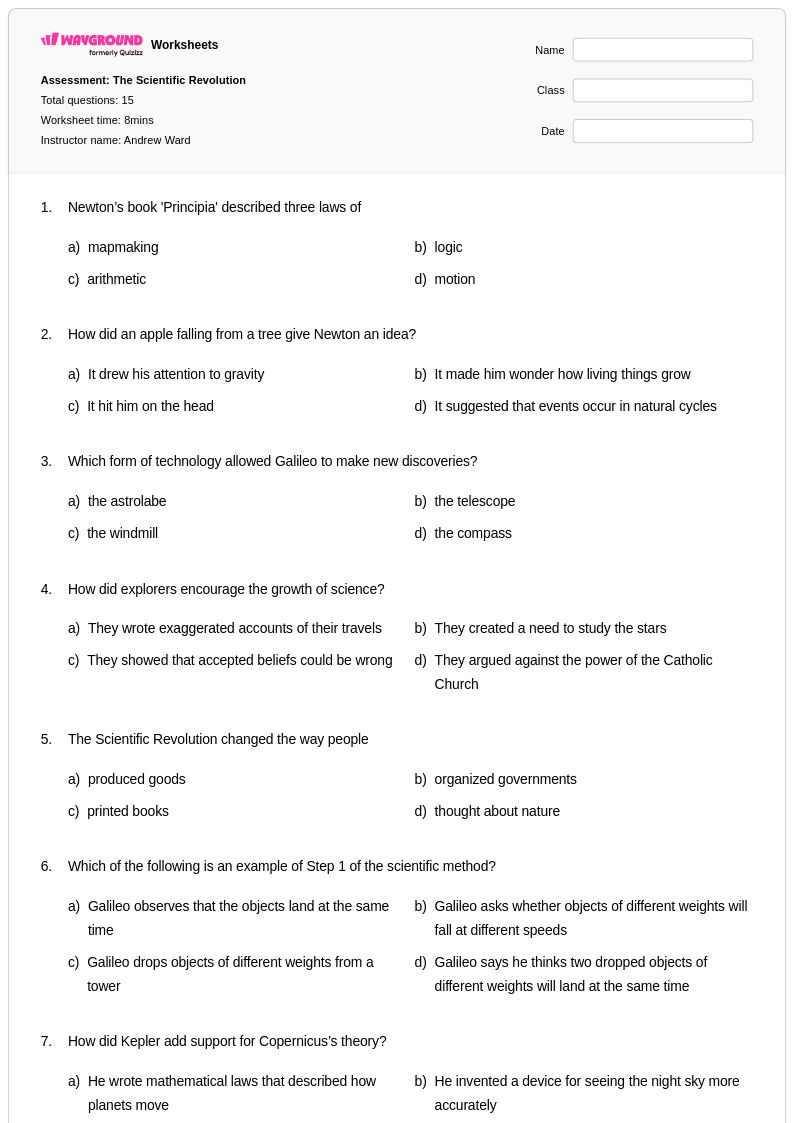
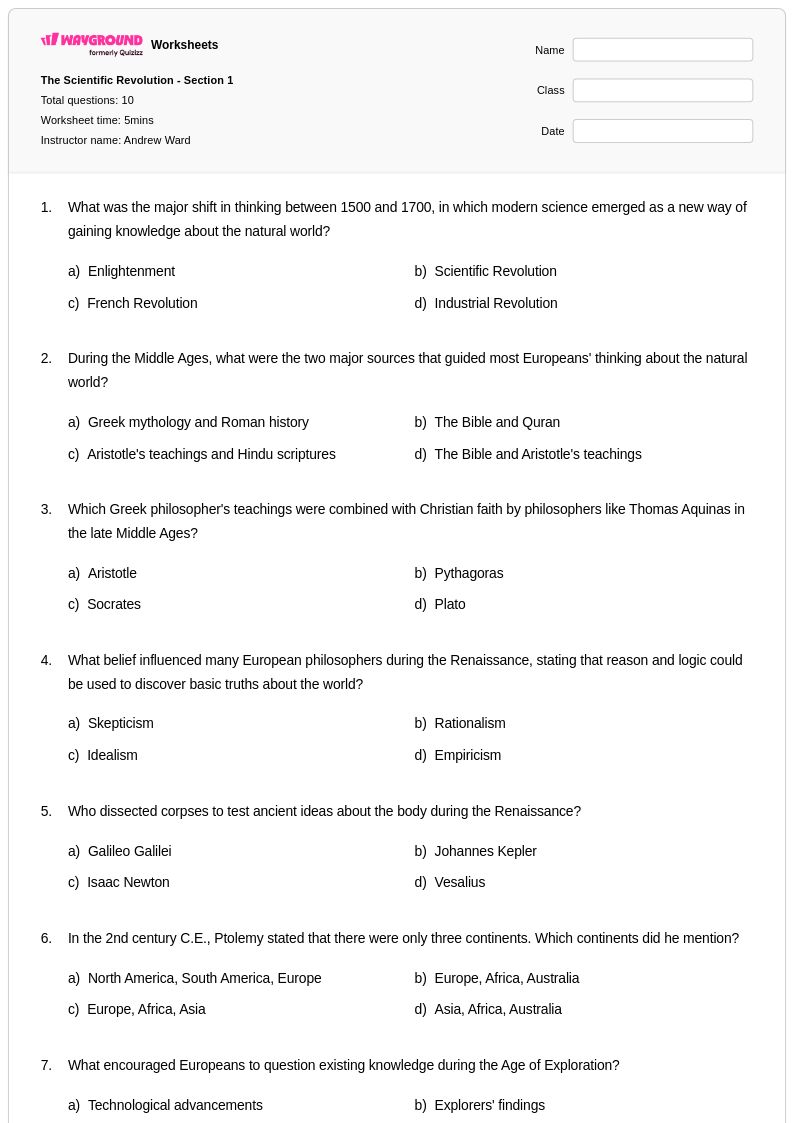
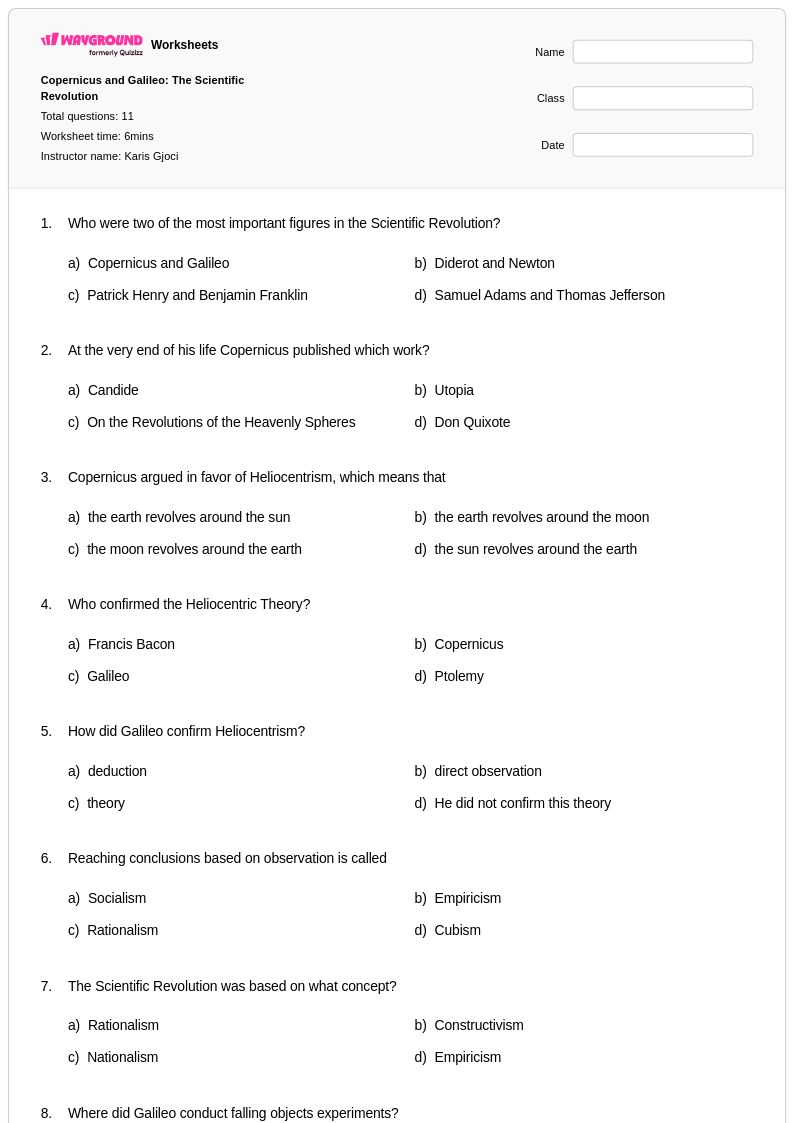
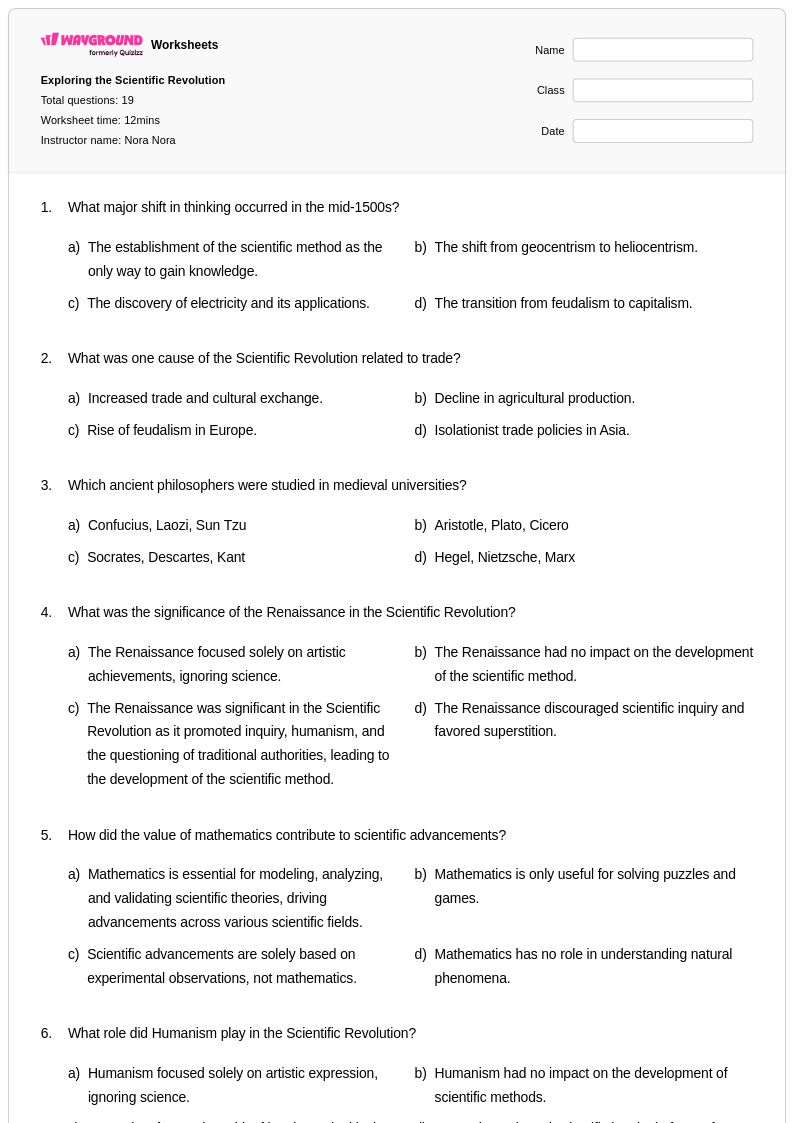
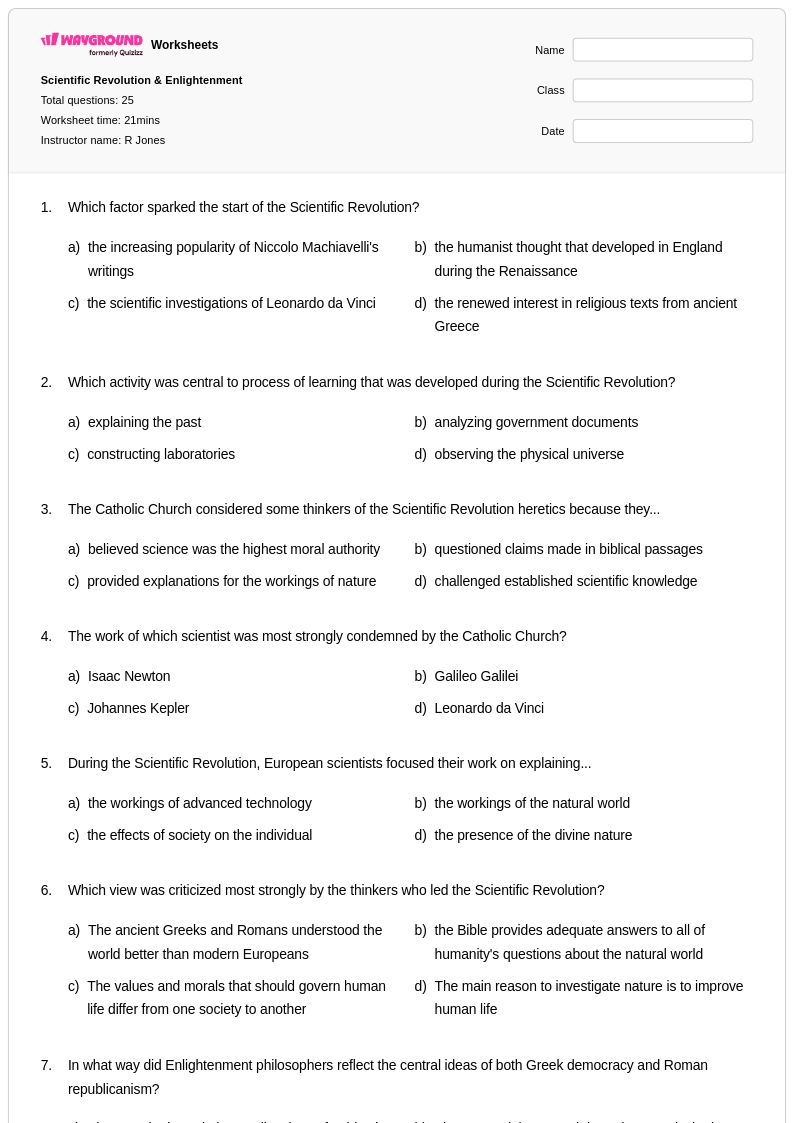
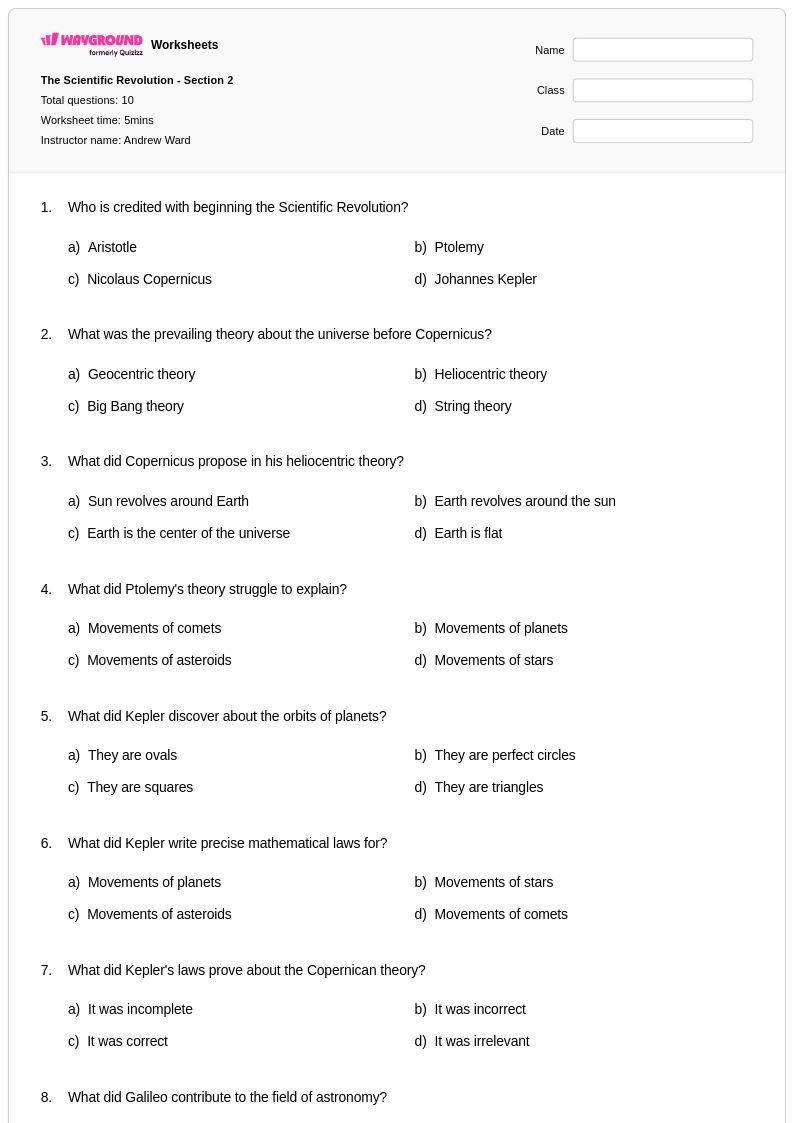
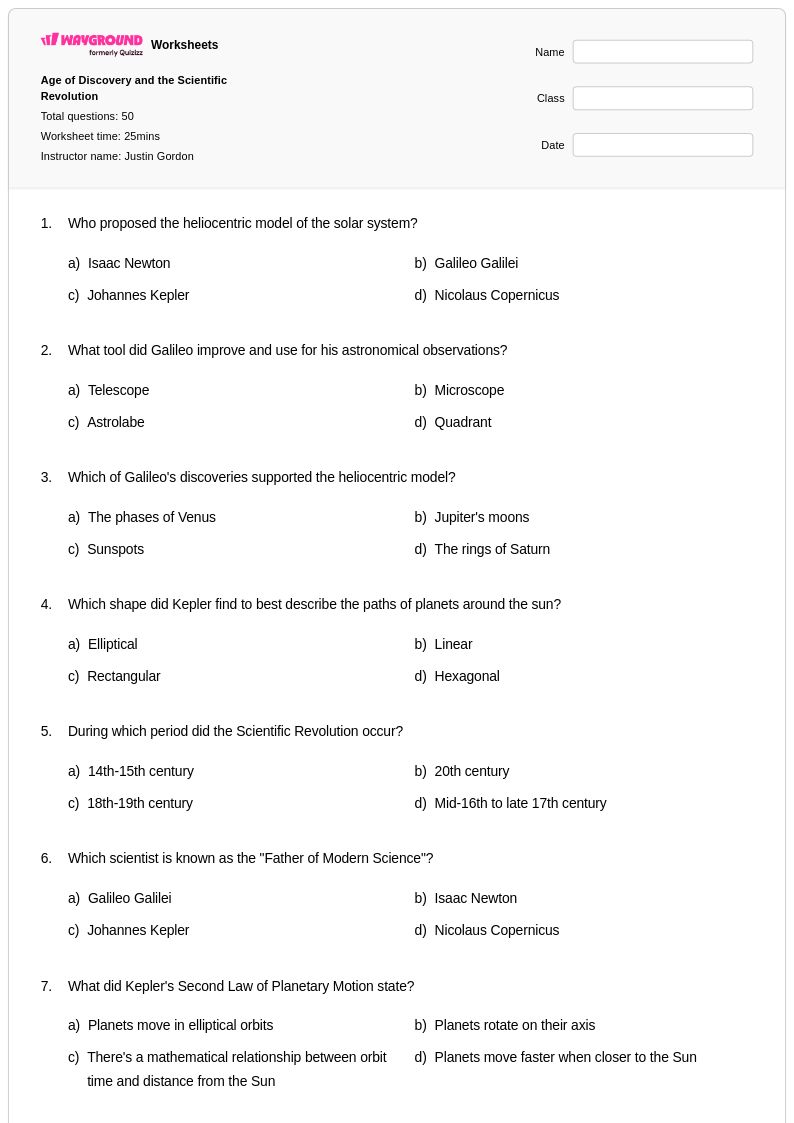
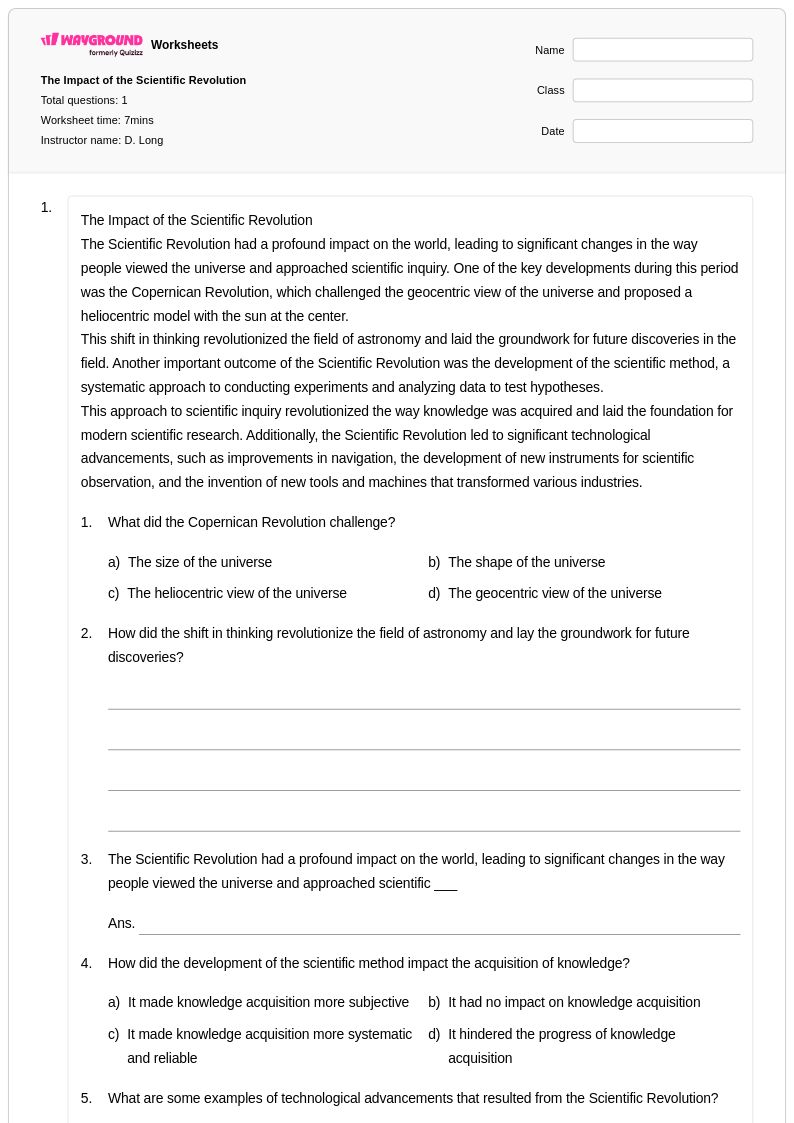
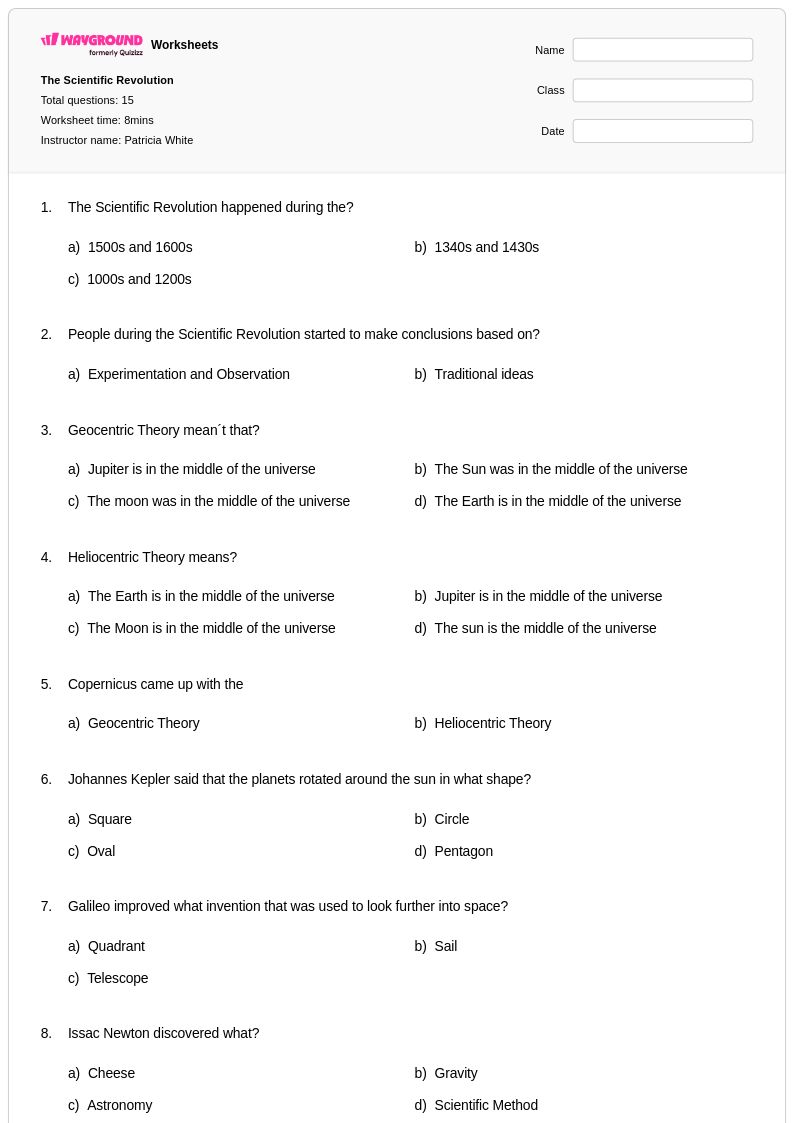
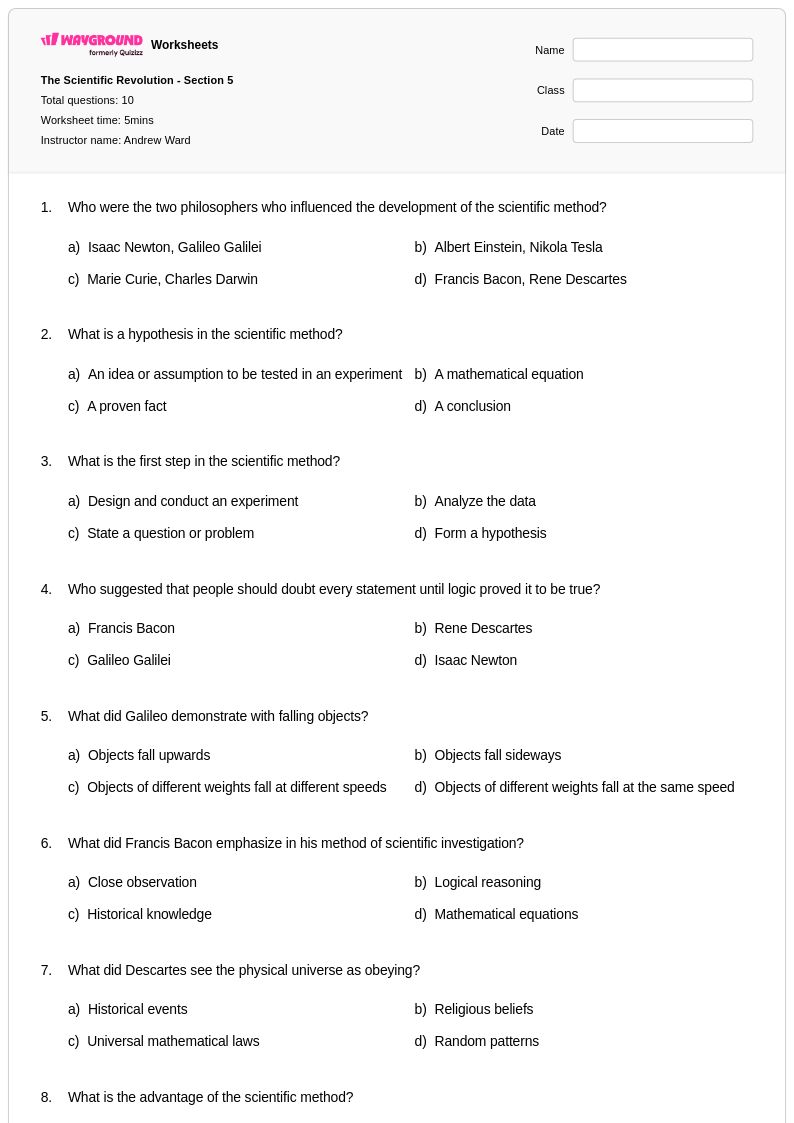
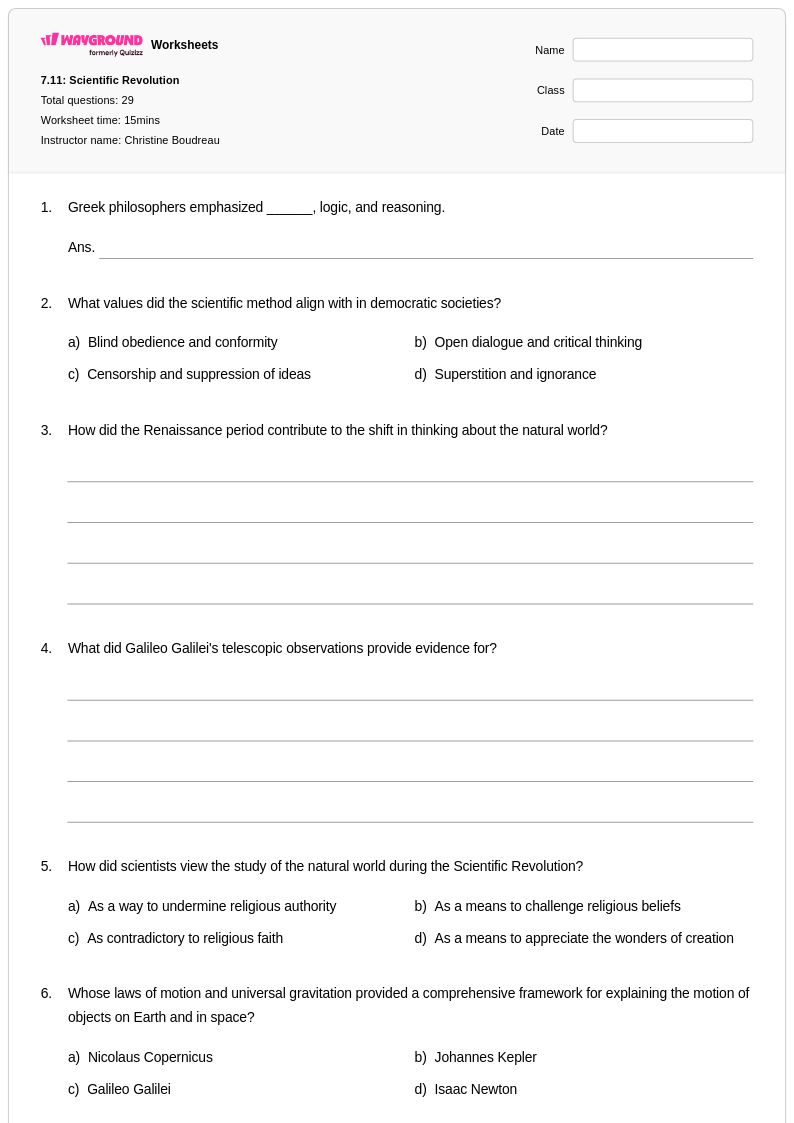
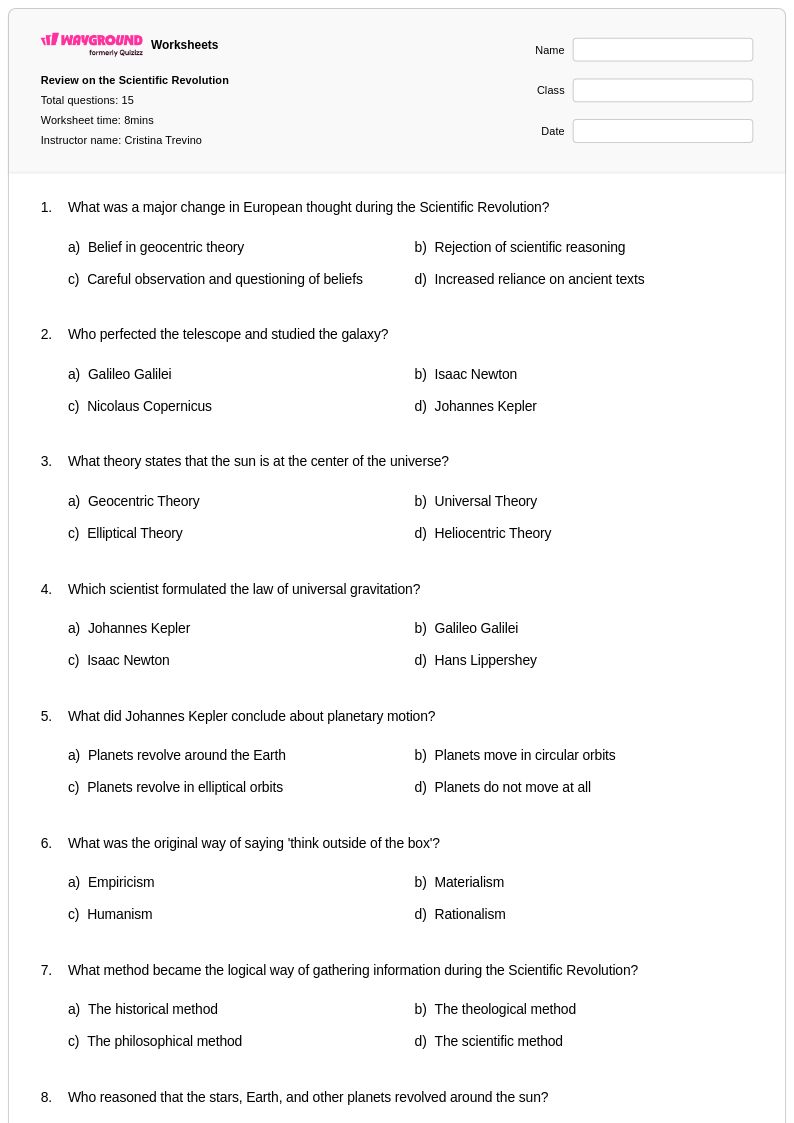
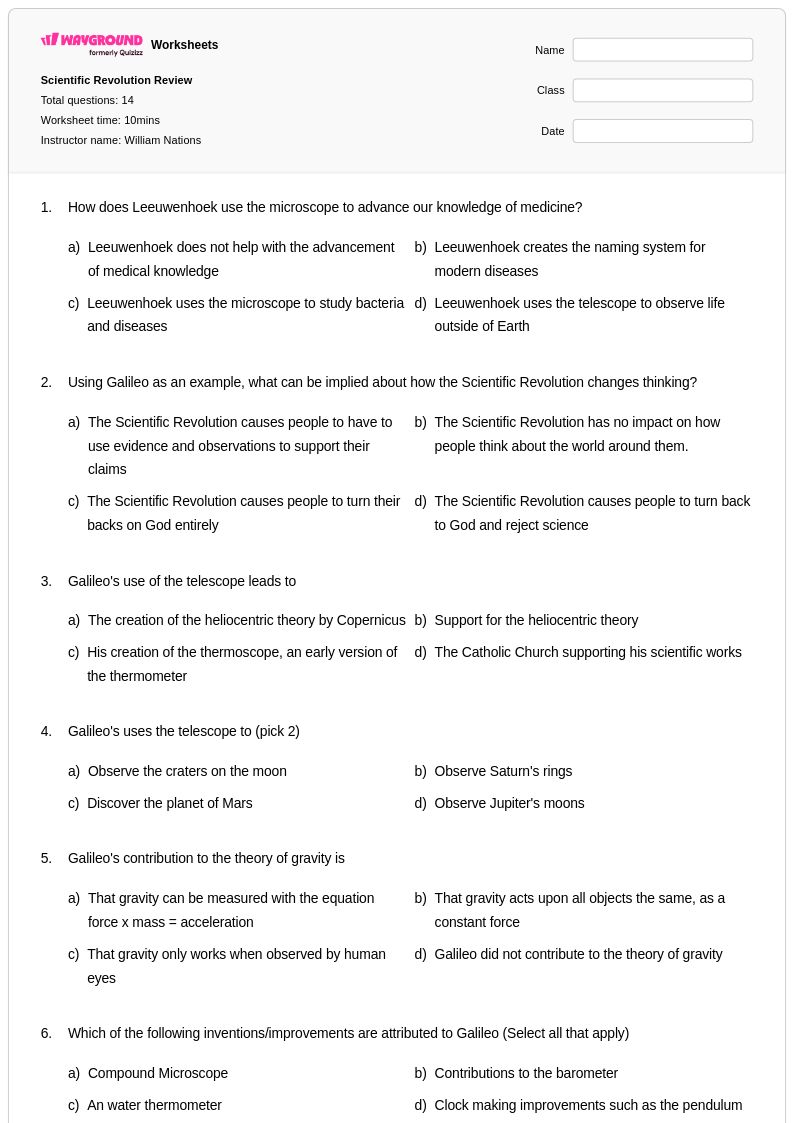
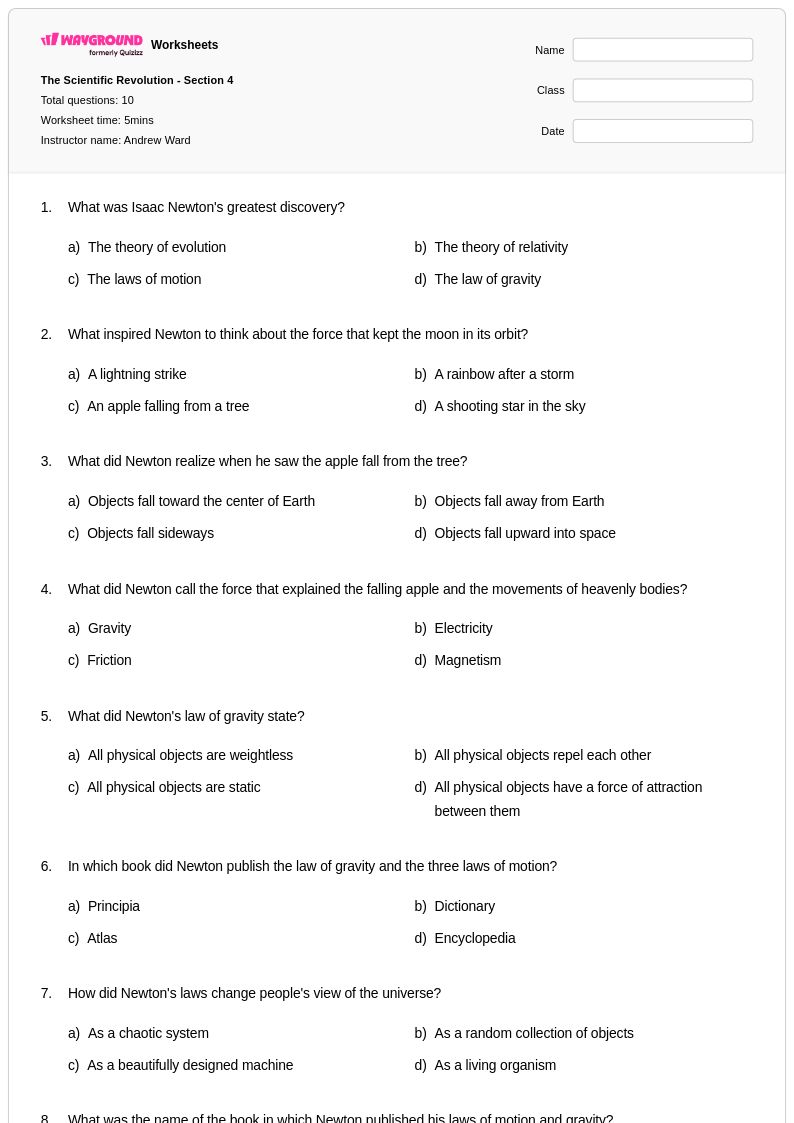
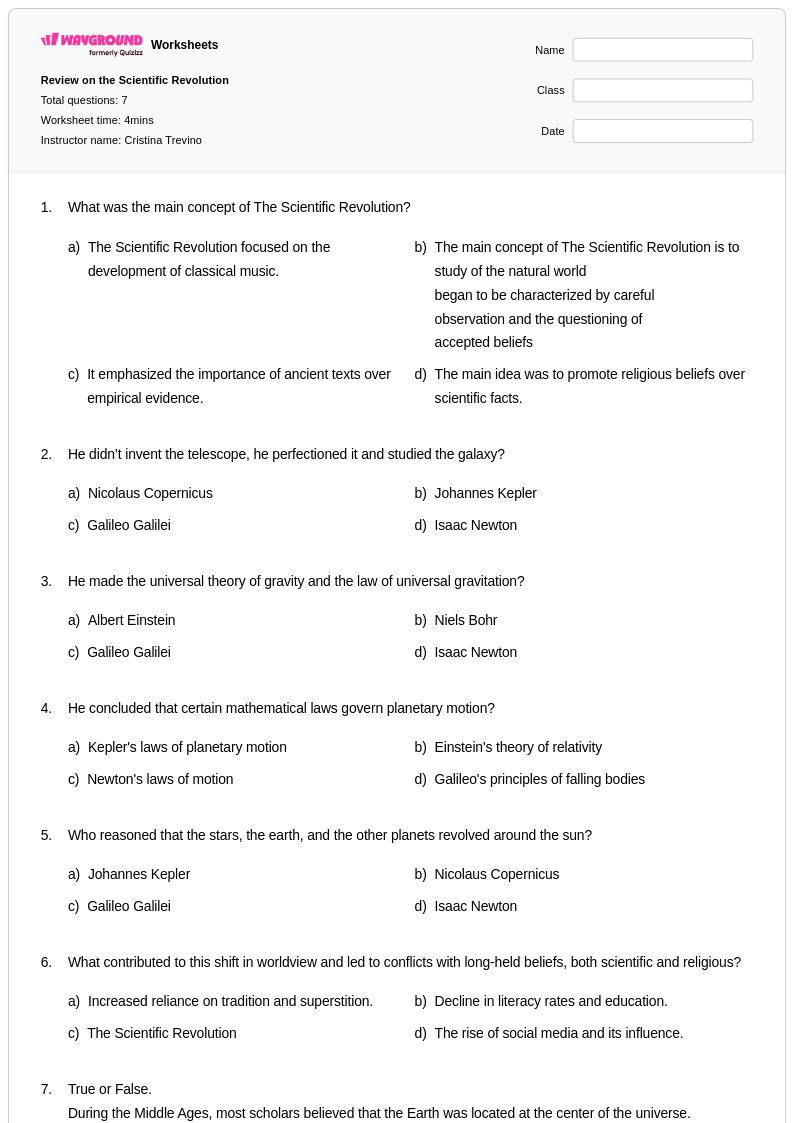
The Scientific Revolution worksheets available through Wayground (formerly Quizizz) provide Class 8 students with comprehensive resources to explore one of history's most transformative periods, spanning roughly from the 16th to 18th centuries. These carefully crafted materials guide students through the groundbreaking discoveries and methodological shifts that fundamentally changed how humans understood the natural world, covering key figures like Copernicus, Galileo, Newton, and Kepler alongside their revolutionary contributions to astronomy, physics, and scientific methodology. The worksheets strengthen critical thinking skills by encouraging students to analyze primary source documents, compare competing scientific theories, and evaluate the social and religious conflicts that arose as new scientific ideas challenged traditional beliefs. Each resource includes detailed practice problems that help students understand complex concepts like the heliocentric model, the scientific method, and the relationship between observation and theory, with comprehensive answer keys provided to support both independent study and classroom instruction in convenient pdf format.
Wayground (formerly Quizizz) empowers educators with an extensive collection of teacher-created Scientific Revolution resources, drawn from millions of materials developed by experienced social studies professionals who understand the unique challenges of teaching Class 8 history concepts. The platform's robust search and filtering capabilities allow teachers to quickly locate worksheets that align with specific curriculum standards and learning objectives, while differentiation tools enable seamless customization to meet diverse student needs within the same classroom. These printable and digital resources, available in multiple formats including pdf downloads, support flexible lesson planning whether teachers need materials for initial concept introduction, targeted skill practice, remediation for struggling learners, or enrichment activities for advanced students. The comprehensive nature of the collection ensures educators can access everything from graphic organizers that help students track scientific discoveries chronologically to analytical exercises that develop deeper understanding of how the Scientific Revolution laid the foundation for modern scientific inquiry and Enlightenment thinking.
FAQs
How do I teach the Scientific Revolution to students?
Teaching the Scientific Revolution is most effective when students examine both the key figures and the broader cultural forces they challenged. Start by grounding students in the medieval worldview, then trace how thinkers like Galileo, Kepler, Newton, and Francis Bacon each contributed to a new way of understanding the natural world through empirical observation and systematic experimentation. Connecting scientific discoveries to the religious and social conflicts they triggered helps students understand why this period was genuinely revolutionary, not just intellectually but institutionally.
What activities help students practice Scientific Revolution concepts?
Effective practice activities for the Scientific Revolution include analyzing primary source documents, comparing heliocentric and geocentric models of planetary motion, and evaluating how figures like Galileo and Newton used experimental evidence to challenge established beliefs. Worksheets that ask students to identify the contributions of specific scientists and explain how those contributions built on or contradicted earlier theories develop both content knowledge and analytical reasoning. Having students trace the development of the scientific method itself is a particularly strong exercise for reinforcing the period's lasting significance.
What misconceptions do students commonly have about the Scientific Revolution?
A common misconception is that the Scientific Revolution happened quickly and was universally accepted. In reality, it unfolded over more than a century and met significant resistance from religious institutions and established academics who viewed empirical challenges to traditional cosmology as deeply threatening. Students also frequently conflate correlation and causation when evaluating the relationship between scientific discovery and social change, or they oversimplify figures like Galileo as lone heroes rather than as participants in a broader intellectual shift.
How do I use Scientific Revolution worksheets in my classroom?
Scientific Revolution worksheets on Wayground are available as printable PDFs for traditional classroom use and in digital formats for technology-integrated or remote learning environments, and teachers can also host them as a quiz directly on Wayground. Printable versions work well for guided note-taking, in-class analysis activities, and homework assignments, while digital formats allow for quick assignment and collection. Each worksheet includes a complete answer key, so teachers can use them for independent practice, formative checks, or targeted remediation without additional preparation.
How does the Scientific Revolution connect to broader world history standards?
The Scientific Revolution is a required topic in most world history and AP European History curricula because it represents a foundational shift in human epistemology, directly preceding and enabling the Enlightenment, the Industrial Revolution, and modern scientific inquiry. Standards typically expect students to analyze the causes and effects of the revolution, evaluate the roles of key scientists, and assess how new scientific ideas challenged religious and political authority. Understanding this period also builds the analytical skills students need to evaluate the relationship between ideas and institutions in any historical context.
How can I differentiate Scientific Revolution instruction for students at different skill levels?
For struggling learners, simplifying the vocabulary around concepts like empiricism, heliocentrism, and the scientific method, and providing structured graphic organizers, can lower the entry barrier without reducing rigor. Advanced students benefit from comparing primary sources, such as excerpts from Galileo's Dialogue or Newton's Principia, and evaluating competing historiographical interpretations of the period's significance. On Wayground, teachers can apply accommodations such as read aloud, reduced answer choices, and extended time on a per-student basis, allowing the same worksheet to serve the full range of learners in a single class.