Free Printable Transitional Devices Worksheets for Class 4
Master Class 4 transitional devices with Wayground's free printable worksheets and practice problems, complete with answer keys to help students learn connecting words and improve writing flow.
Explore printable Transitional Devices worksheets for Class 4
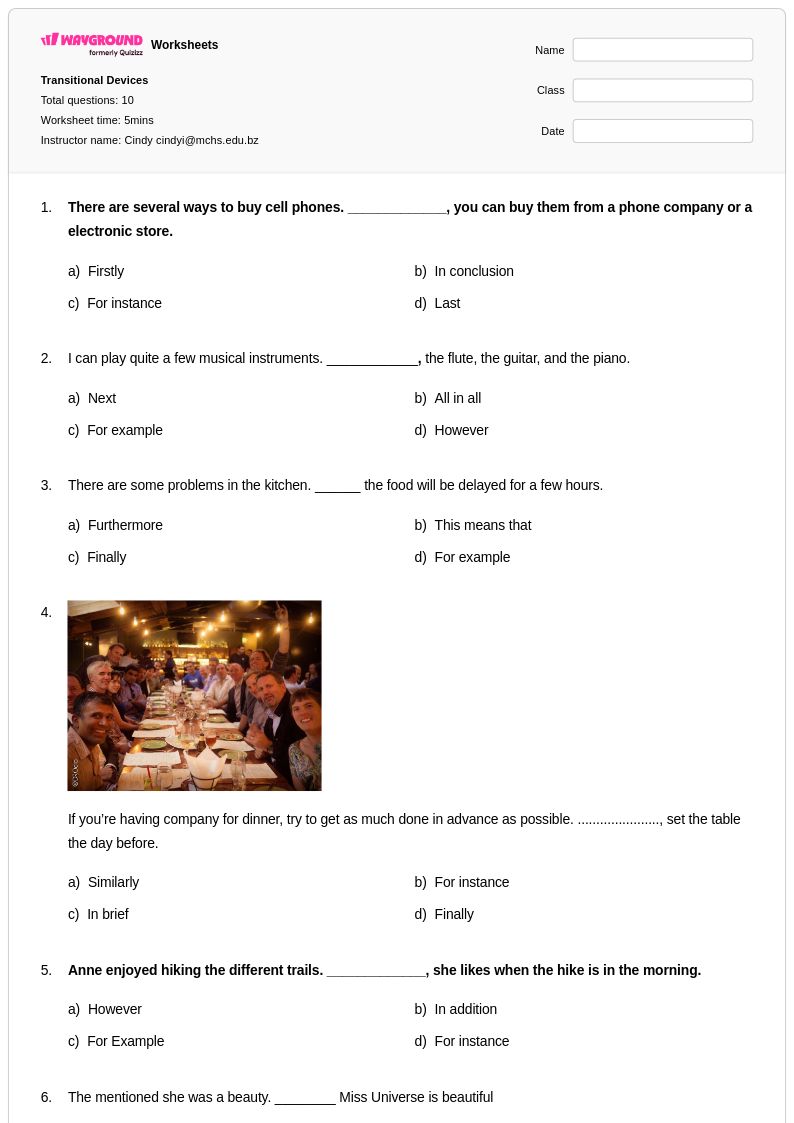
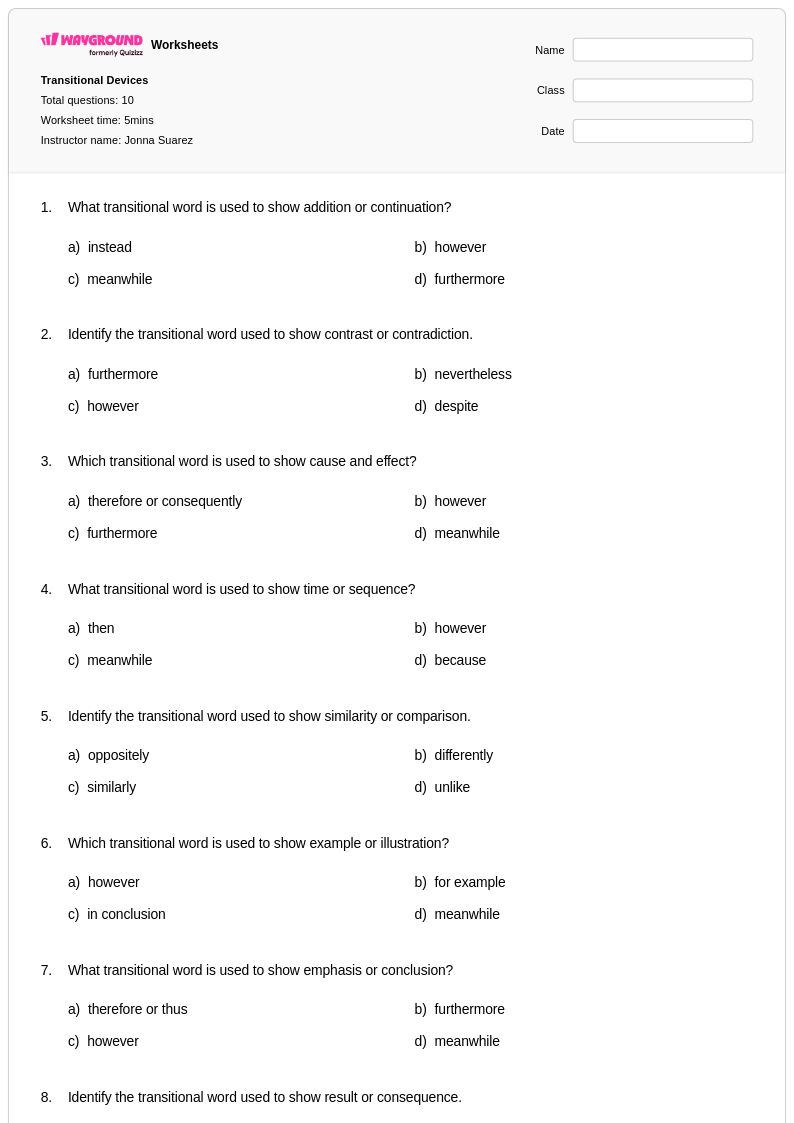
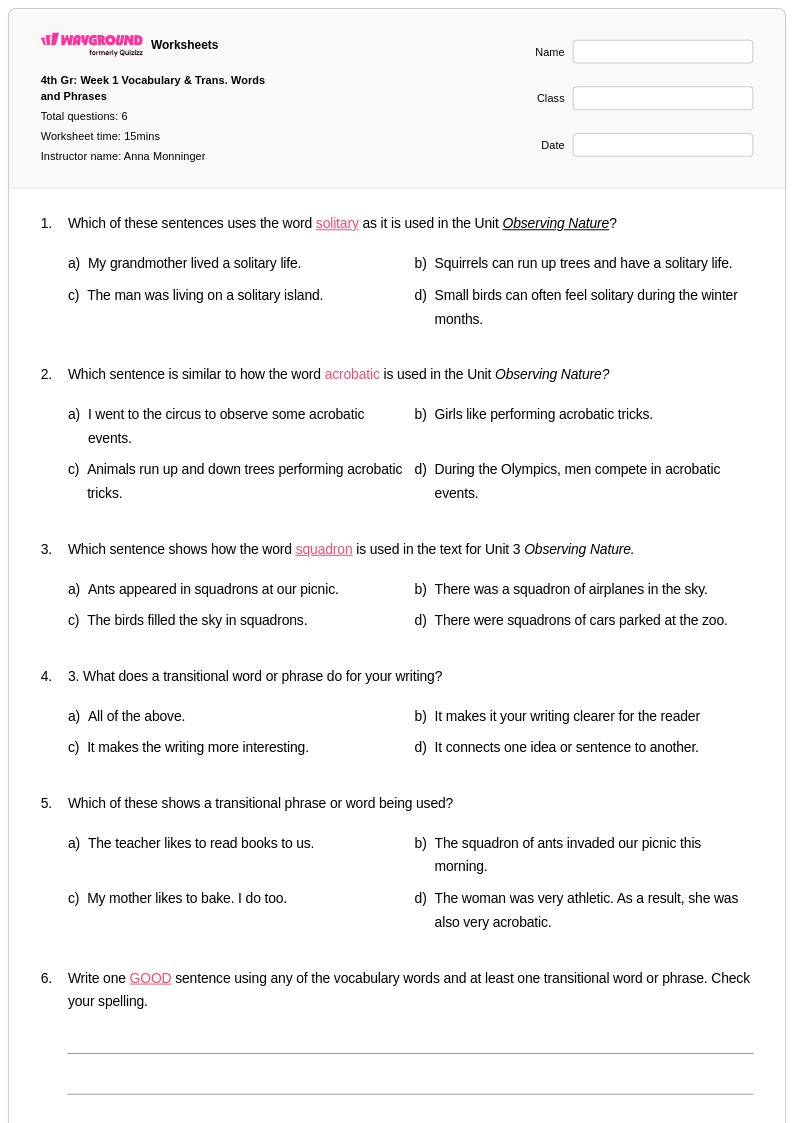
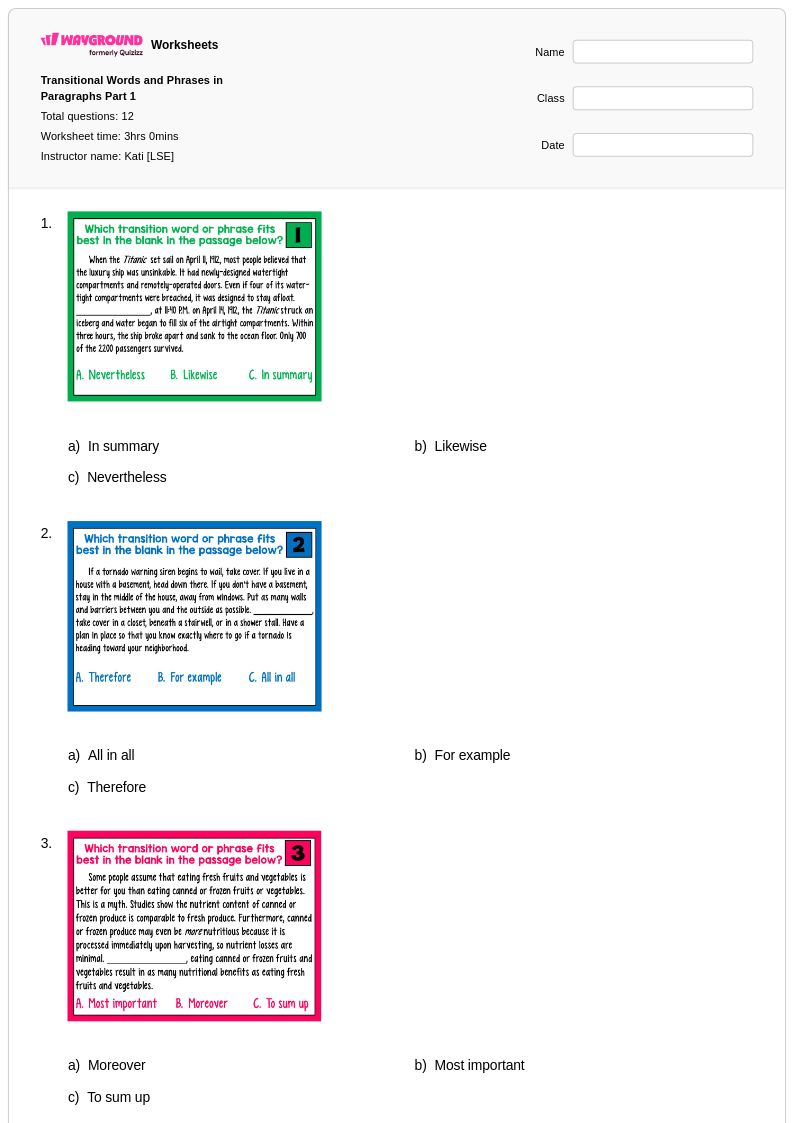
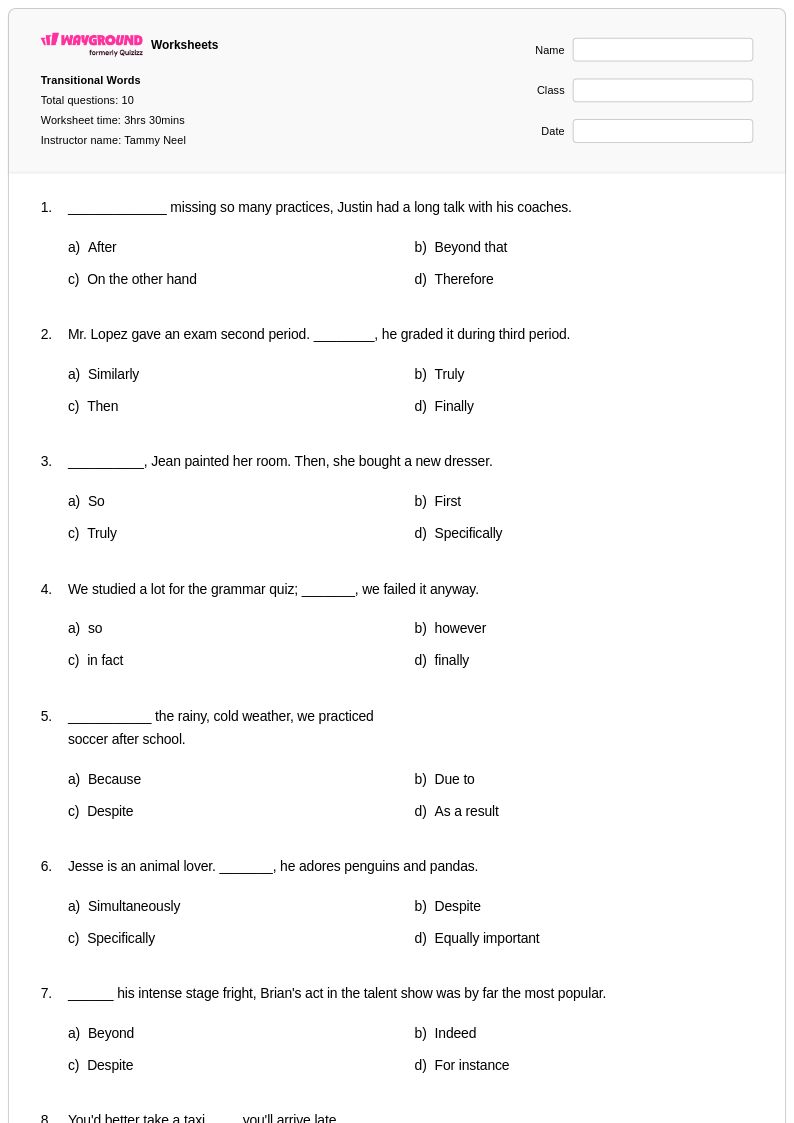
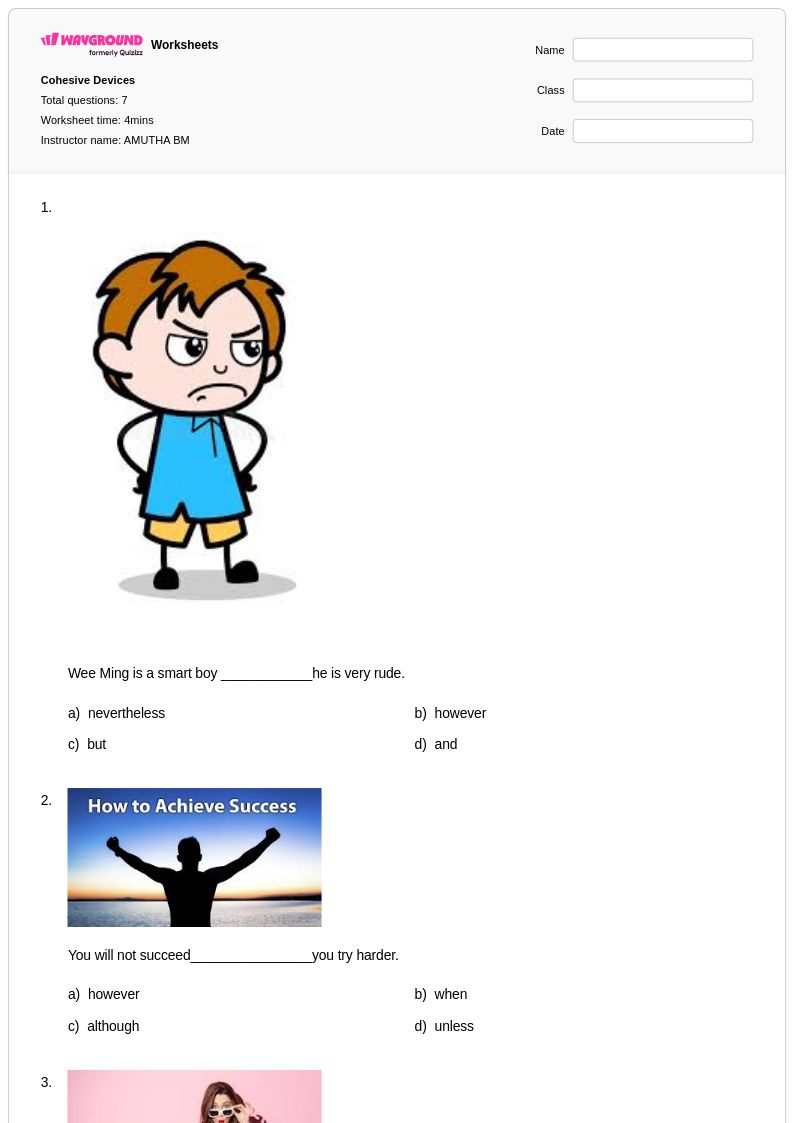
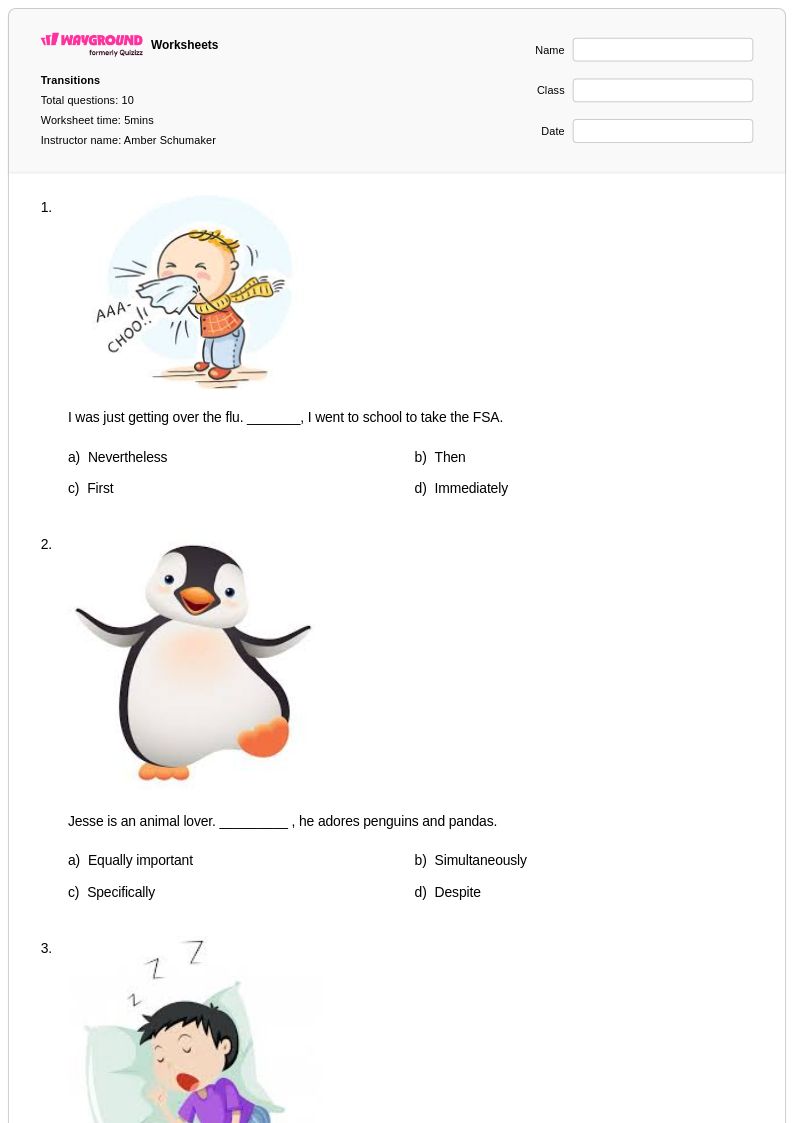
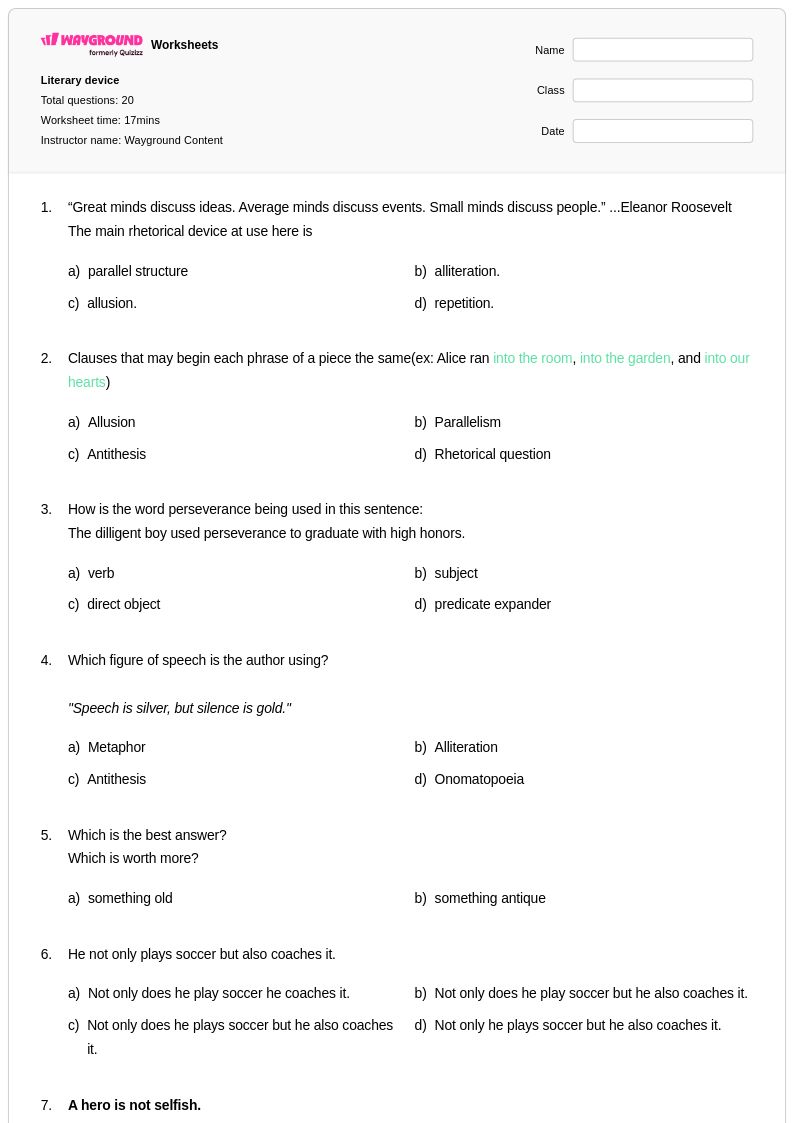
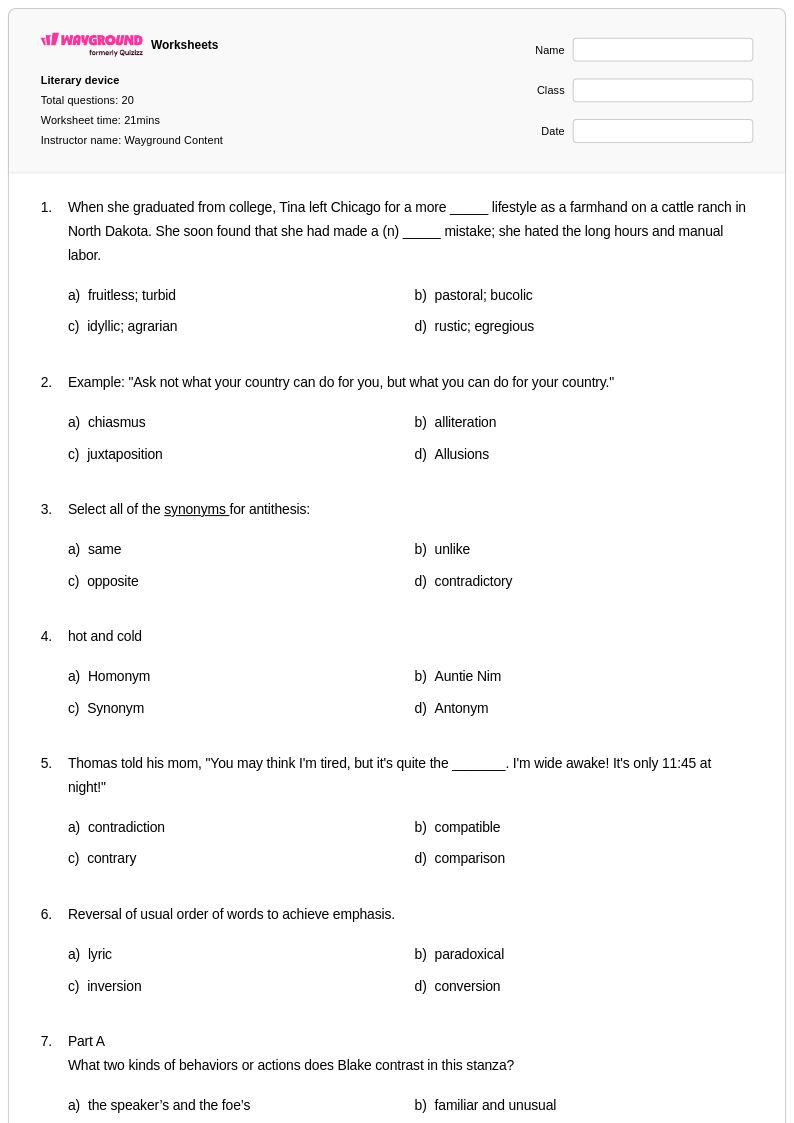
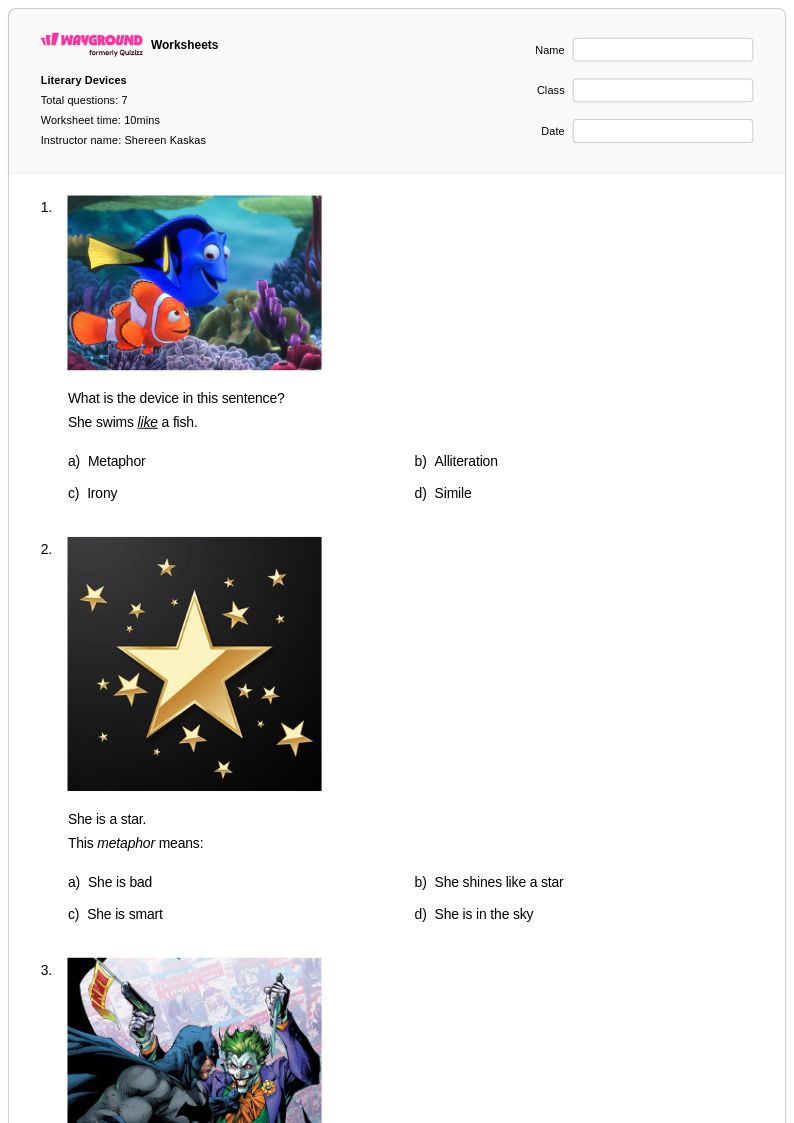
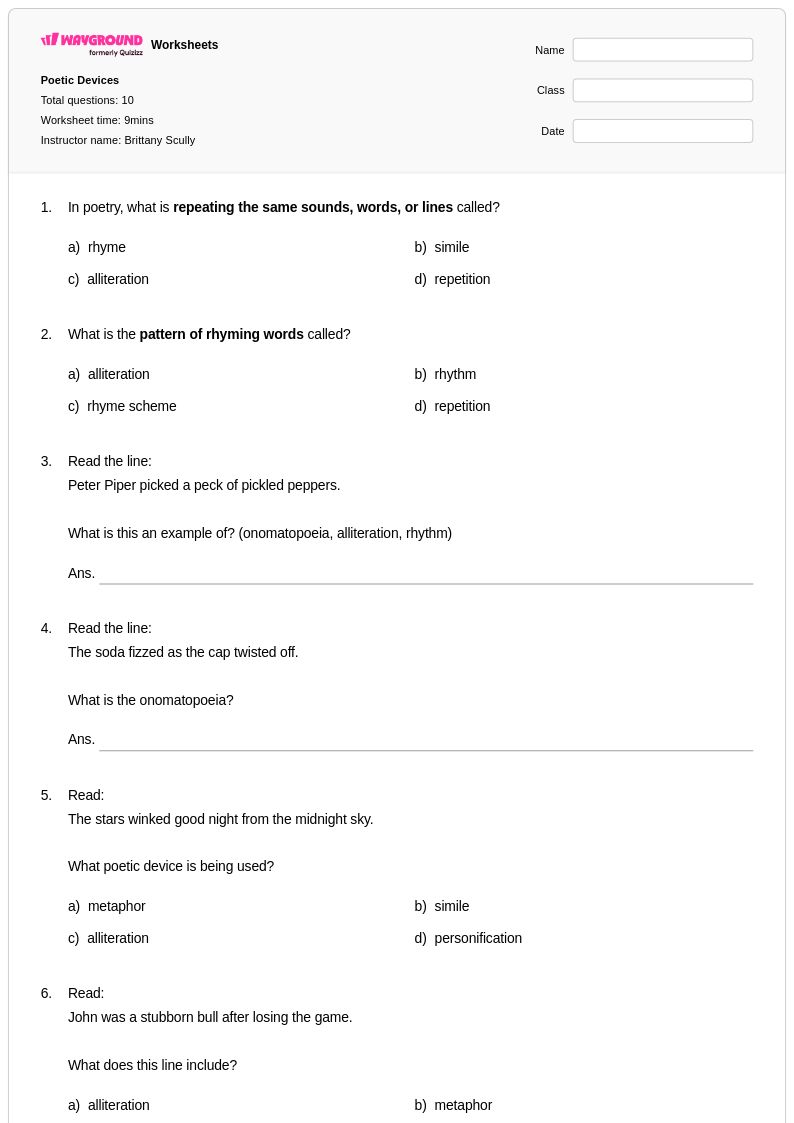
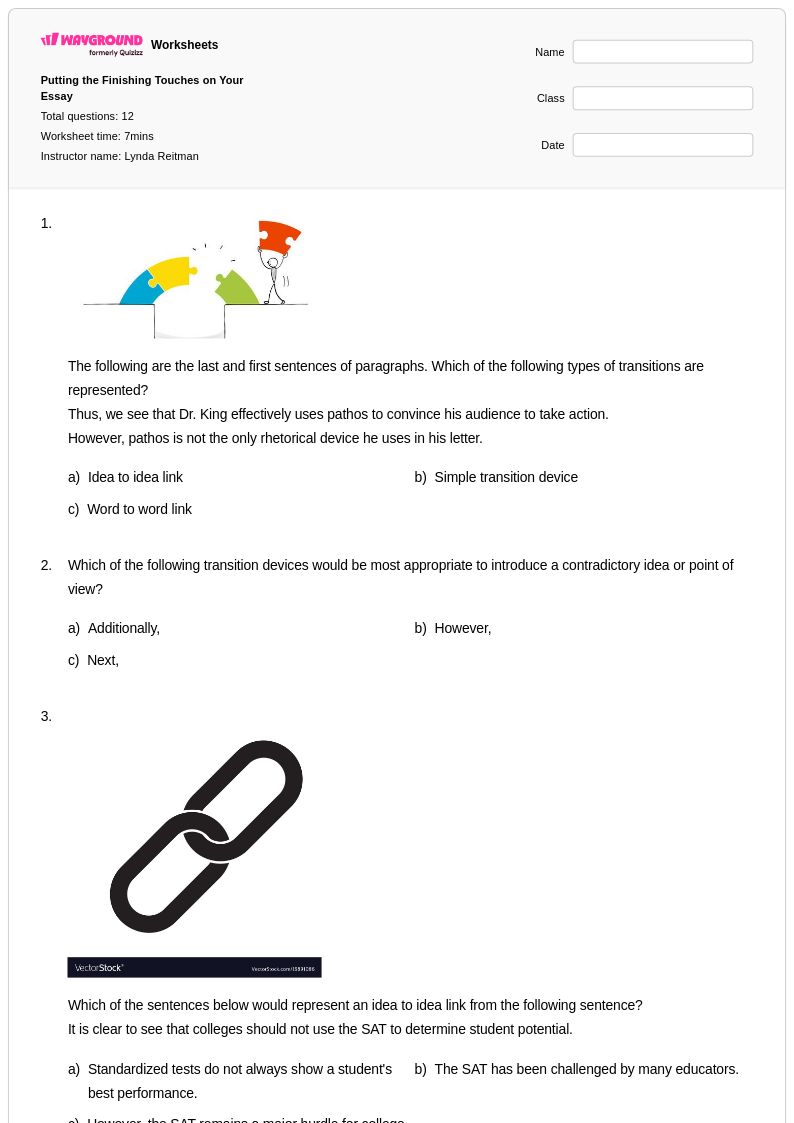
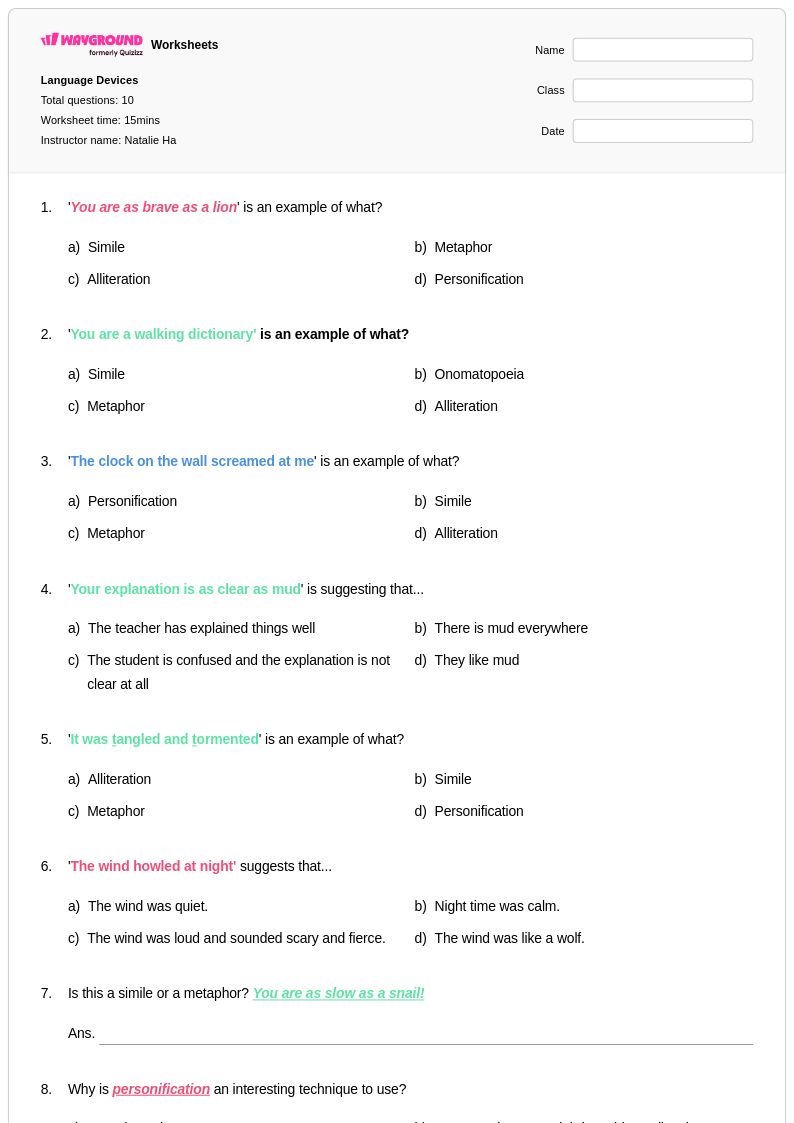
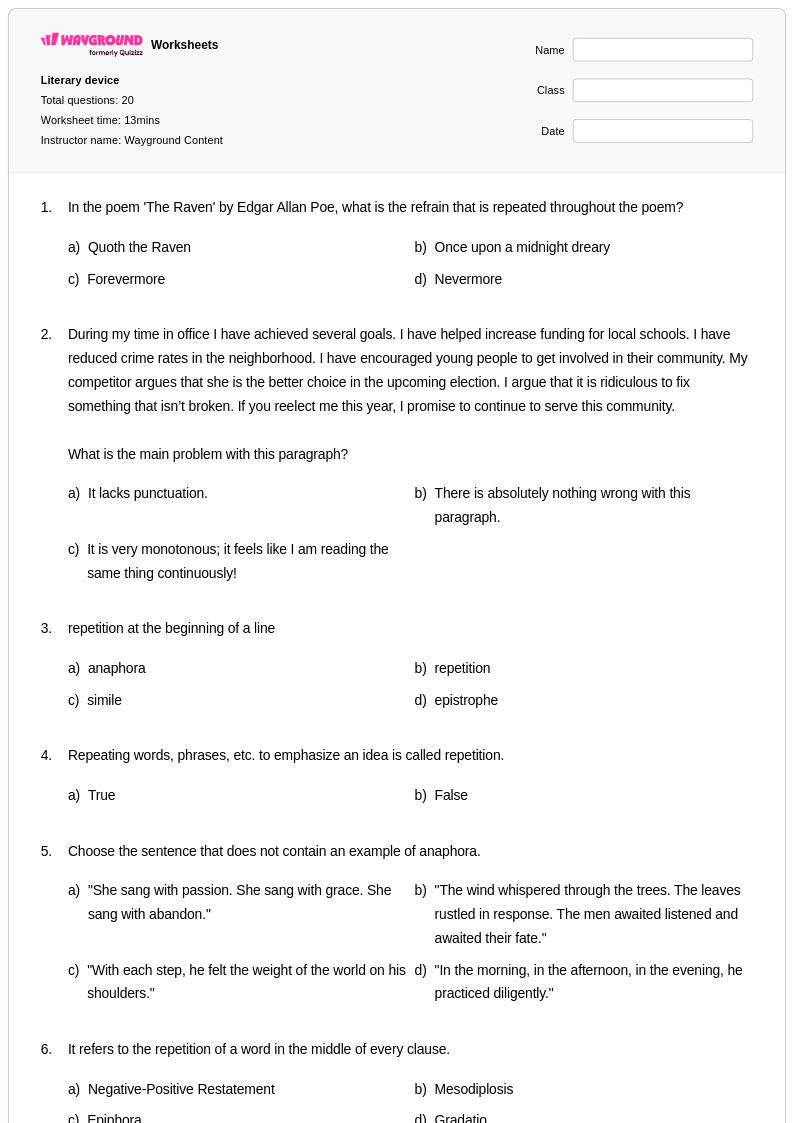
Transitional devices worksheets for Class 4 students available through Wayground (formerly Quizizz) provide essential practice in connecting ideas and creating cohesive writing. These comprehensive printables focus on teaching young writers how to use words and phrases like "first," "next," "because," "however," and "in conclusion" to guide readers smoothly from one thought to another. Students work through carefully structured practice problems that demonstrate how transitional devices improve paragraph flow and overall writing clarity. Each worksheet includes an answer key to support independent learning and self-assessment, while free pdf formats ensure easy classroom distribution and home practice opportunities.
Wayground (formerly Quizizz) empowers teachers with millions of educator-created transitional device worksheets specifically designed for Class 4 writing instruction. The platform's robust search and filtering capabilities allow teachers to quickly locate resources that align with writing standards and match their students' specific learning needs. Teachers can customize worksheets to provide targeted remediation for struggling writers or enrichment activities for advanced students, with both printable pdf versions and interactive digital formats available. These differentiation tools streamline lesson planning while ensuring that all students receive appropriate practice in using transitional devices to organize their thoughts and create more sophisticated, well-structured writing pieces.
FAQs
How do I teach transitional devices to students who struggle with writing flow?
Start by categorizing transitions by function: additive (furthermore, additionally), contrastive (however, on the other hand), and causal (therefore, as a result). Have students analyze mentor texts to identify where and why specific transitions are used before asking them to produce their own. Once students can name the function a transition is serving, they become more intentional about selecting the right one rather than defaulting to overused words like 'also' or 'but'.
What exercises help students practice using transitional devices correctly?
Effective practice tasks include gap-fill exercises where students choose the most logical transition from a set of options, sentence-combining activities that require transitions to show relationships between ideas, and paragraph revision tasks where students replace weak or repeated transitions with more precise alternatives. These exercises build both recognition and application skills, which are both necessary for students to transfer the skill into independent writing.
What mistakes do students most commonly make when using transitional devices?
The most common error is using transitions that don't match the logical relationship between ideas — for example, writing 'therefore' when the relationship is actually contrastive. Students also overuse a narrow set of transitions ('also', 'but', 'so') while ignoring more precise connectors. A third frequent mistake is placing transitions mid-sentence without correct punctuation, which creates run-ons or comma splices.
How can I differentiate transitional devices practice for different skill levels in the same class?
For struggling writers, start with recognition tasks — identifying the transition in a sentence and labeling its function — before moving to production. For advanced students, focus on complex causal and concessive transitions used in academic writing, such as 'notwithstanding' or 'consequently'. On Wayground, teachers can assign reduced answer choices to students who need additional support, lowering cognitive load while keeping the core practice task intact, while other students work with the full set of options simultaneously.
How do I use Wayground's transitional devices worksheets in my classroom?
Wayground's transitional devices worksheets are available as printable PDFs for traditional classroom use and in digital formats for technology-integrated environments, making them flexible for in-person, hybrid, or remote instruction. Teachers can also host worksheets as a quiz directly on Wayground, enabling real-time progress tracking. Each worksheet includes a complete answer key, so teachers can use them for guided practice, independent work, or as a formative assessment tool during writing units.
How do transitional devices fit into a broader writing curriculum?
Transitional devices are a foundational element of coherent writing and should be explicitly taught alongside paragraph structure, argumentation, and text organization. They are especially critical when students move from narrative to expository and argumentative writing, where logical flow between claims and evidence is essential. Teaching transitions in isolation is less effective than embedding practice within actual writing tasks, such as drafting body paragraphs or revising essays for cohesion.