Free Printable Types of Government Worksheets for Class 1
Explore Wayground's free Class 1 types of government worksheets and printables that help young students learn about different forms of government through engaging practice problems with answer keys.
Explore printable Types of Government worksheets for Class 1
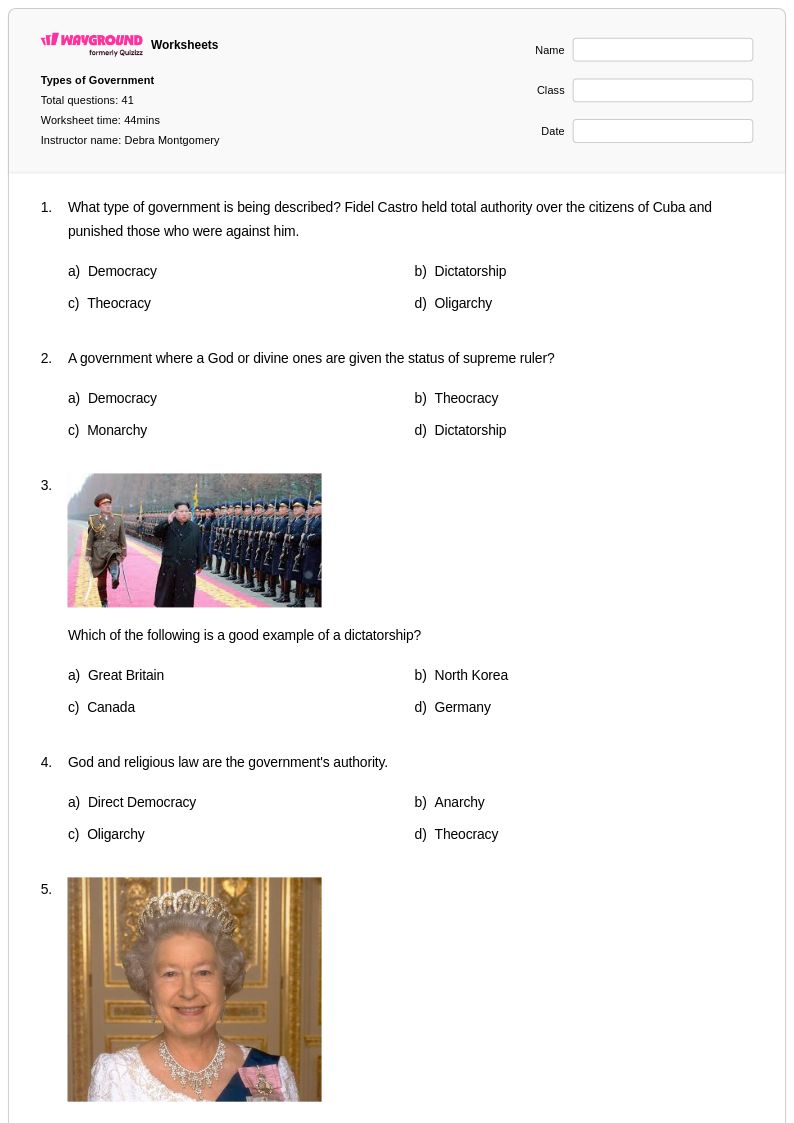
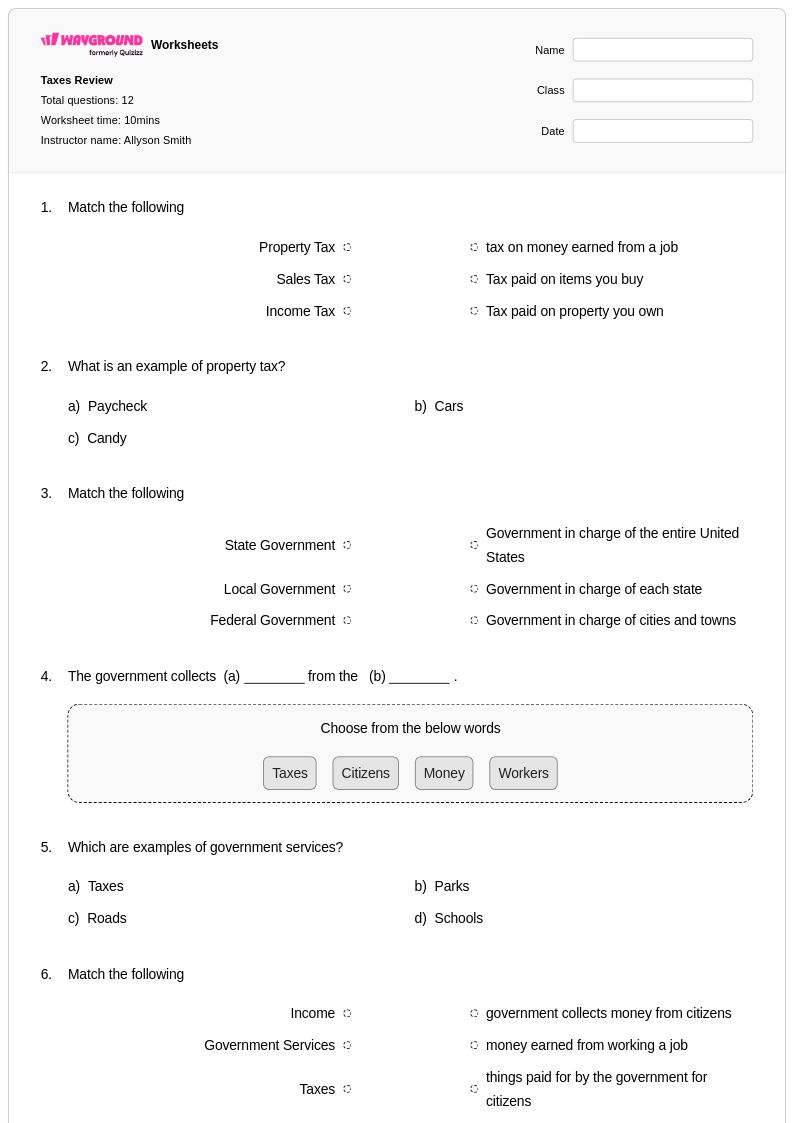
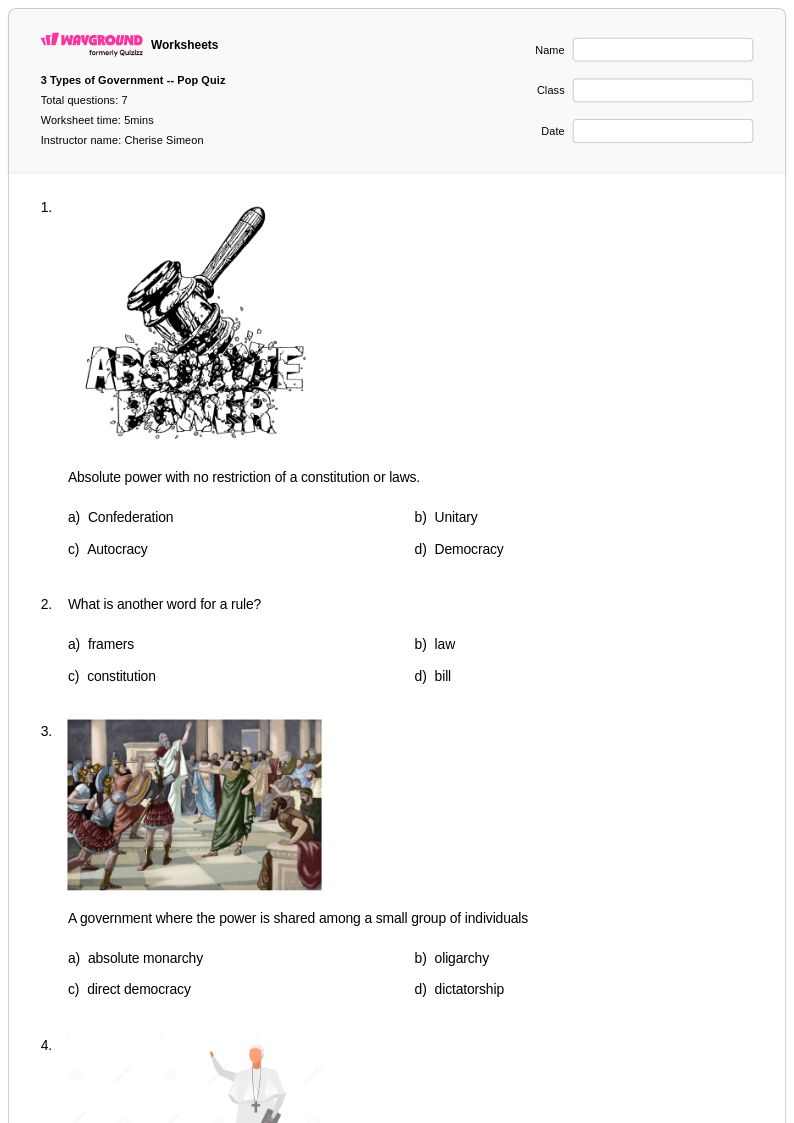
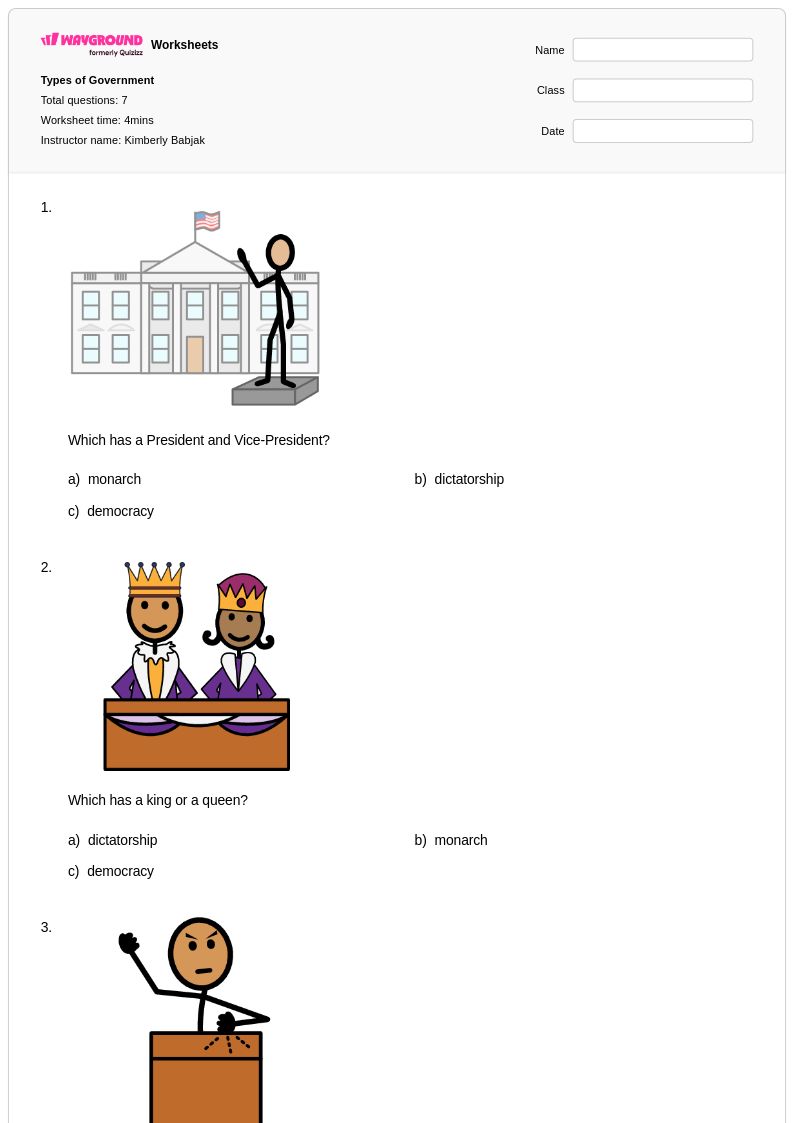
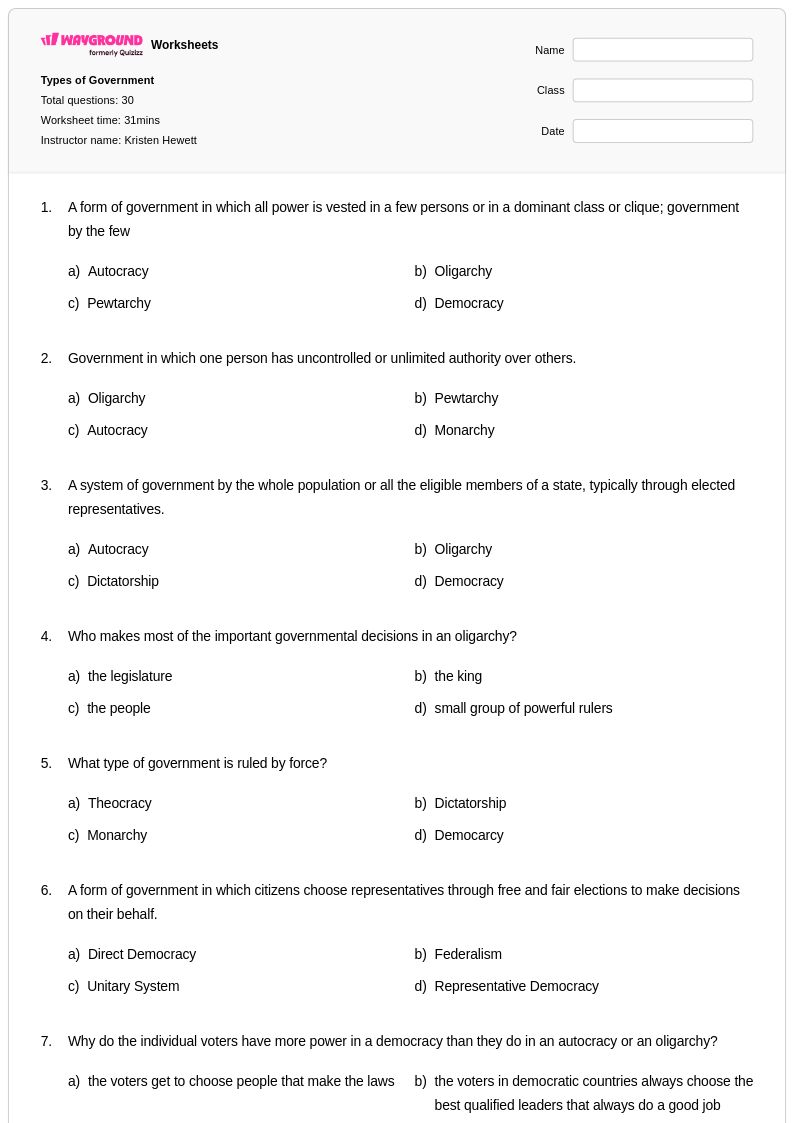
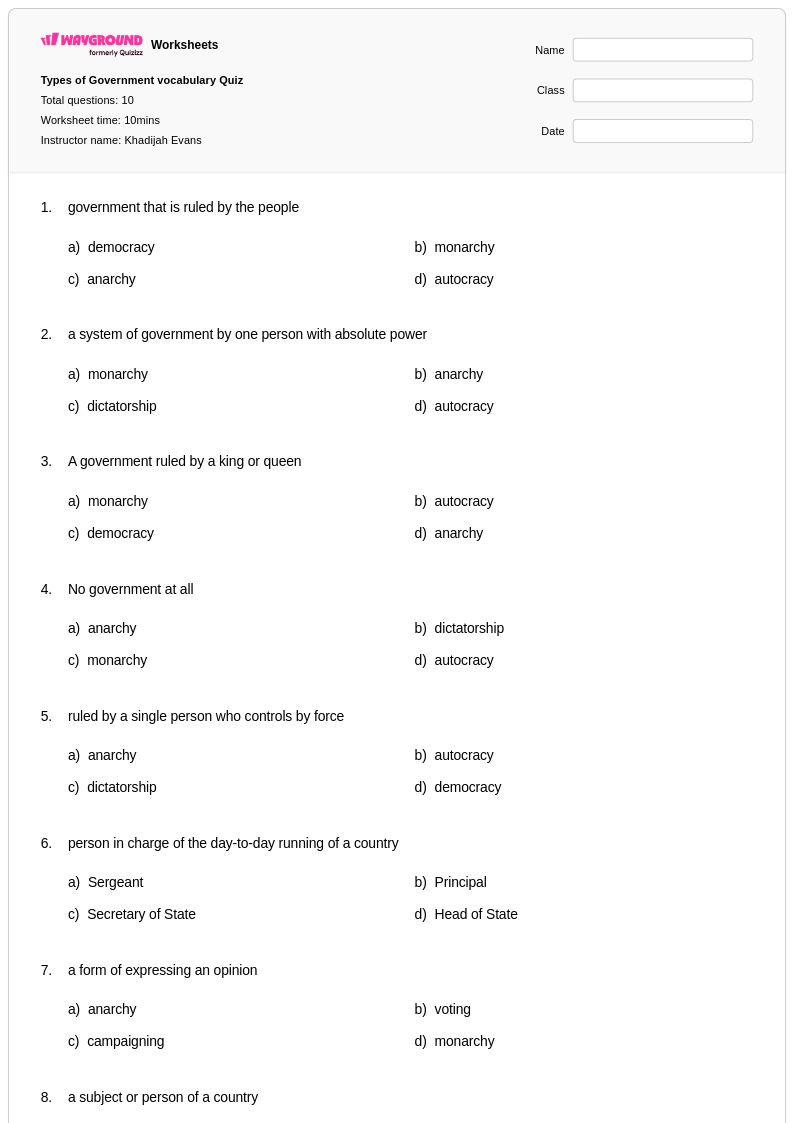
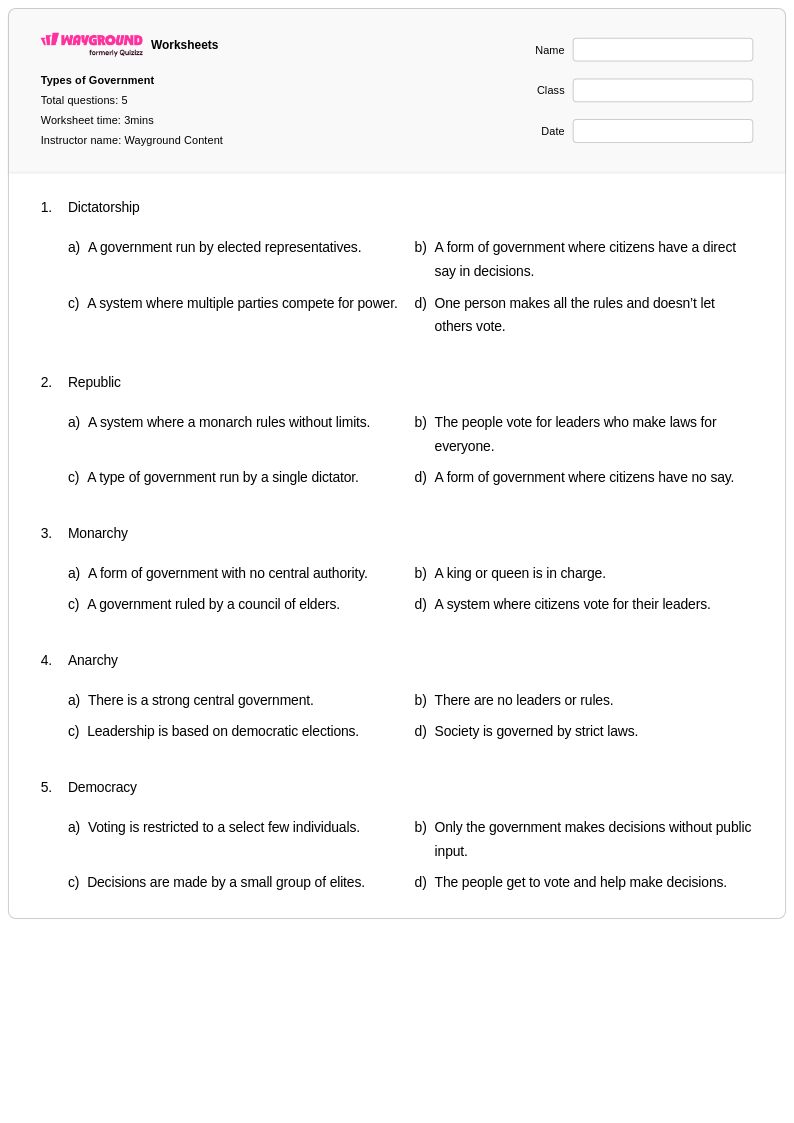
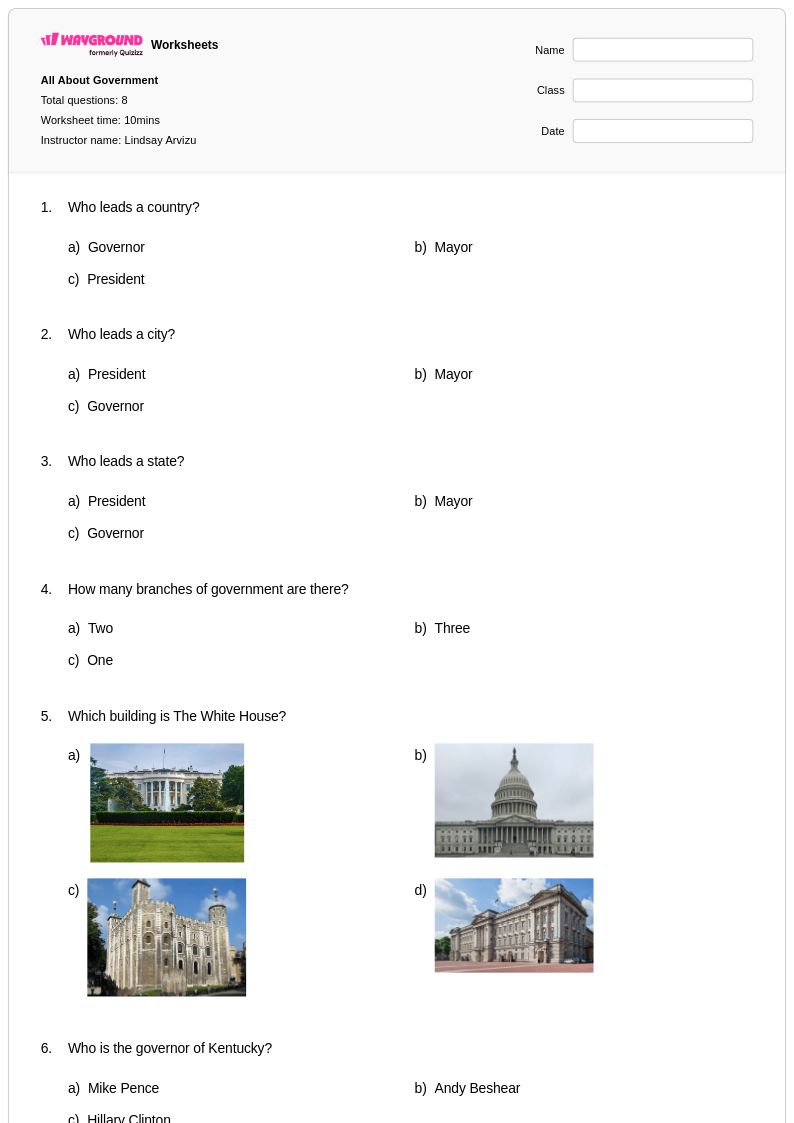
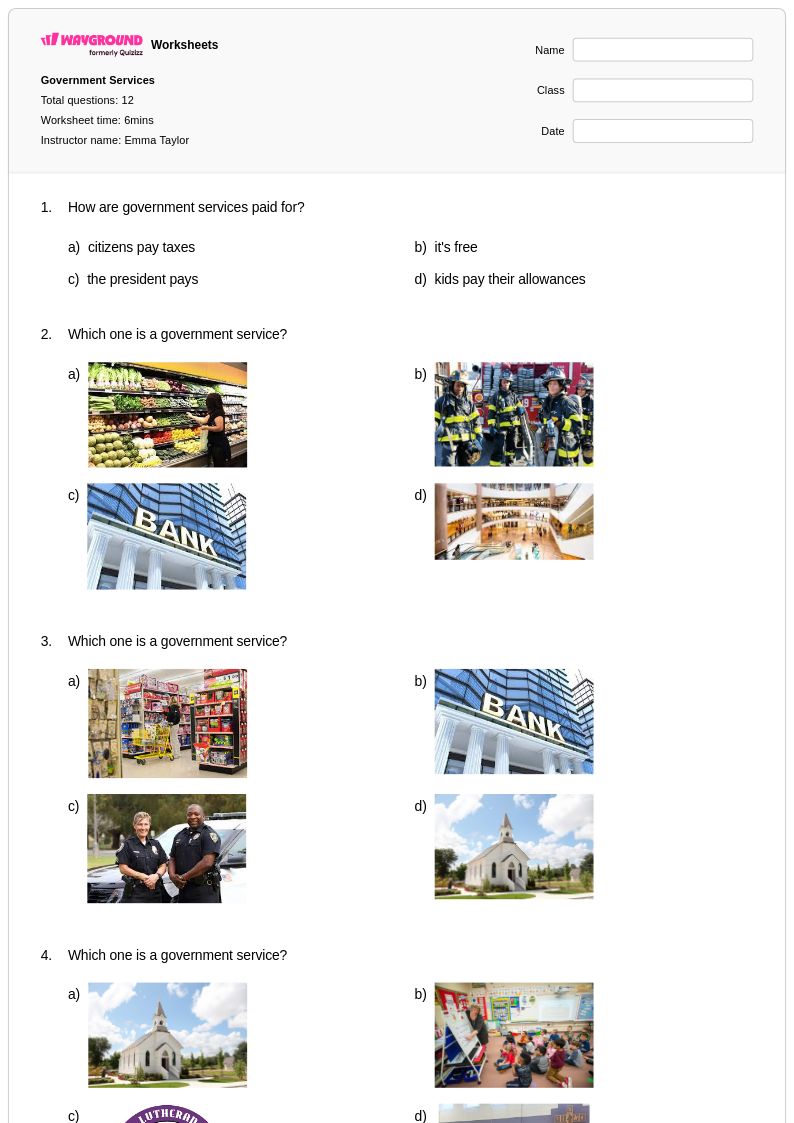
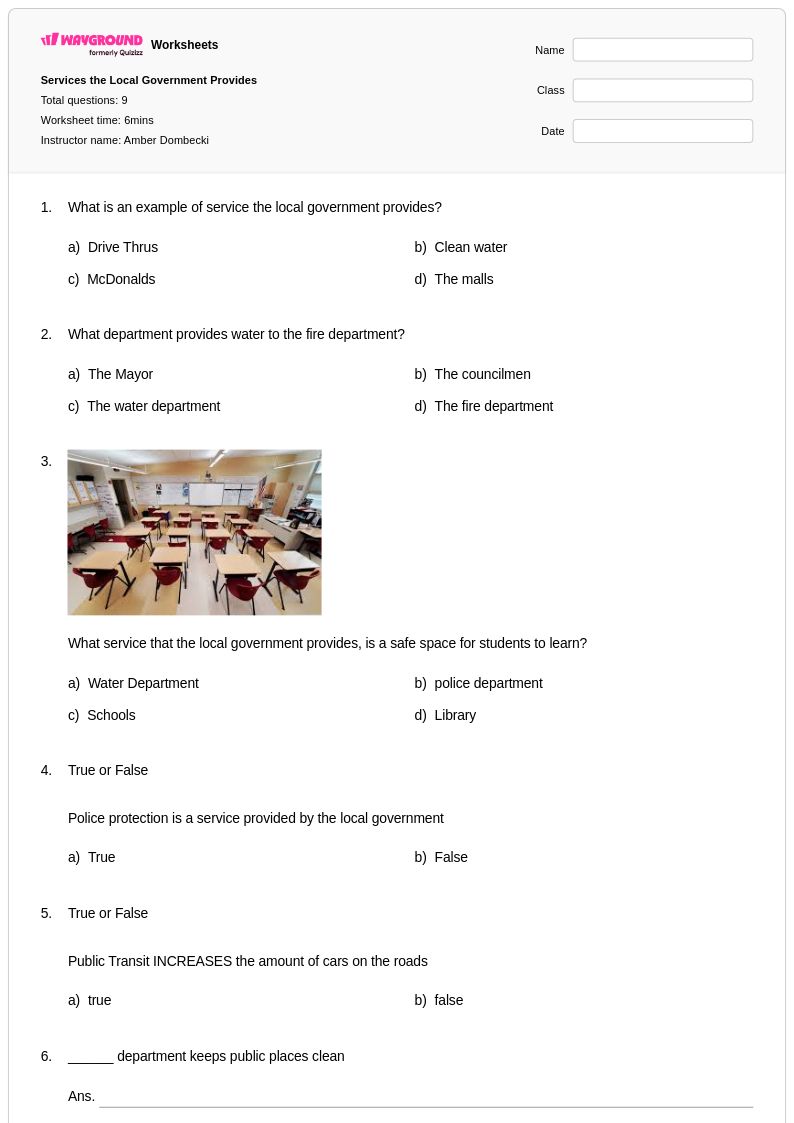
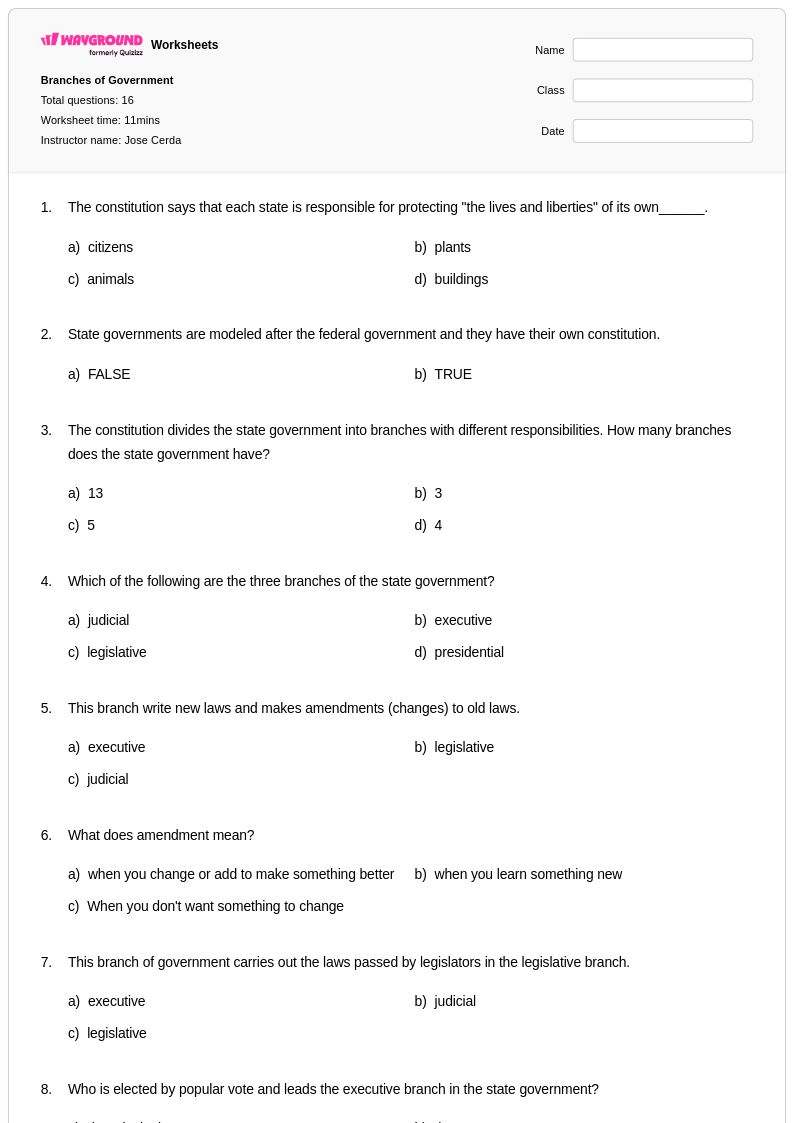
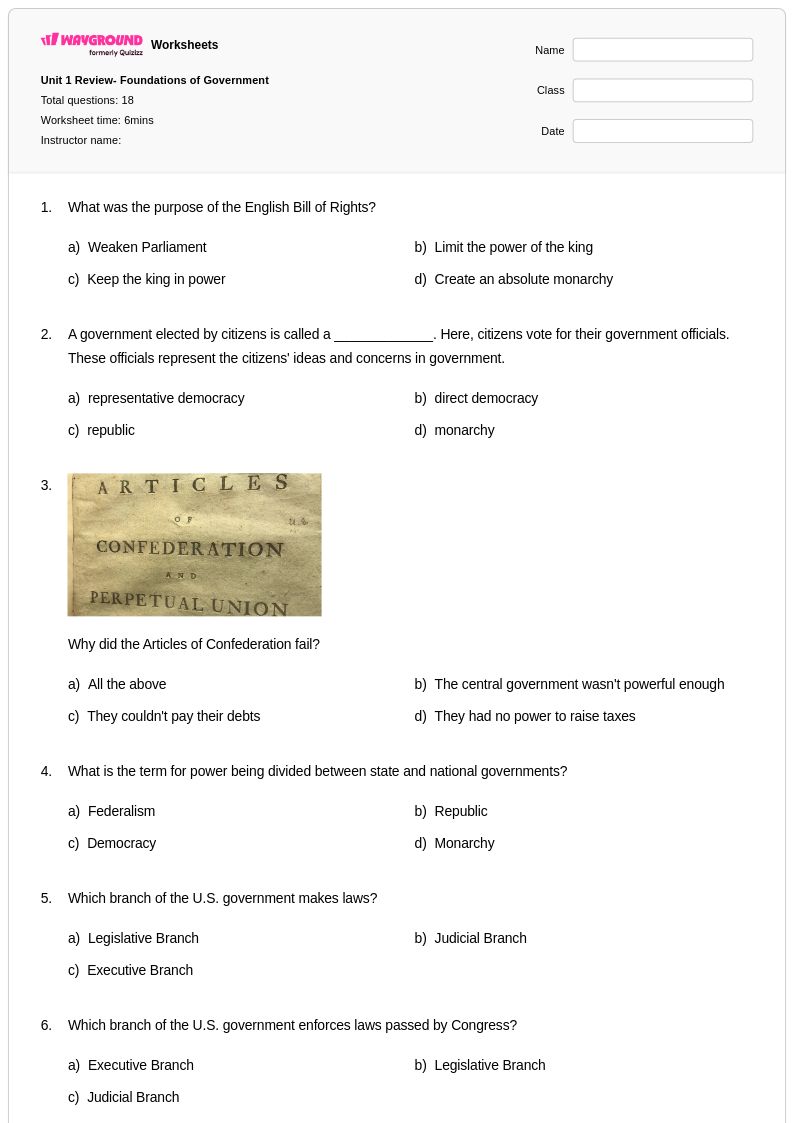
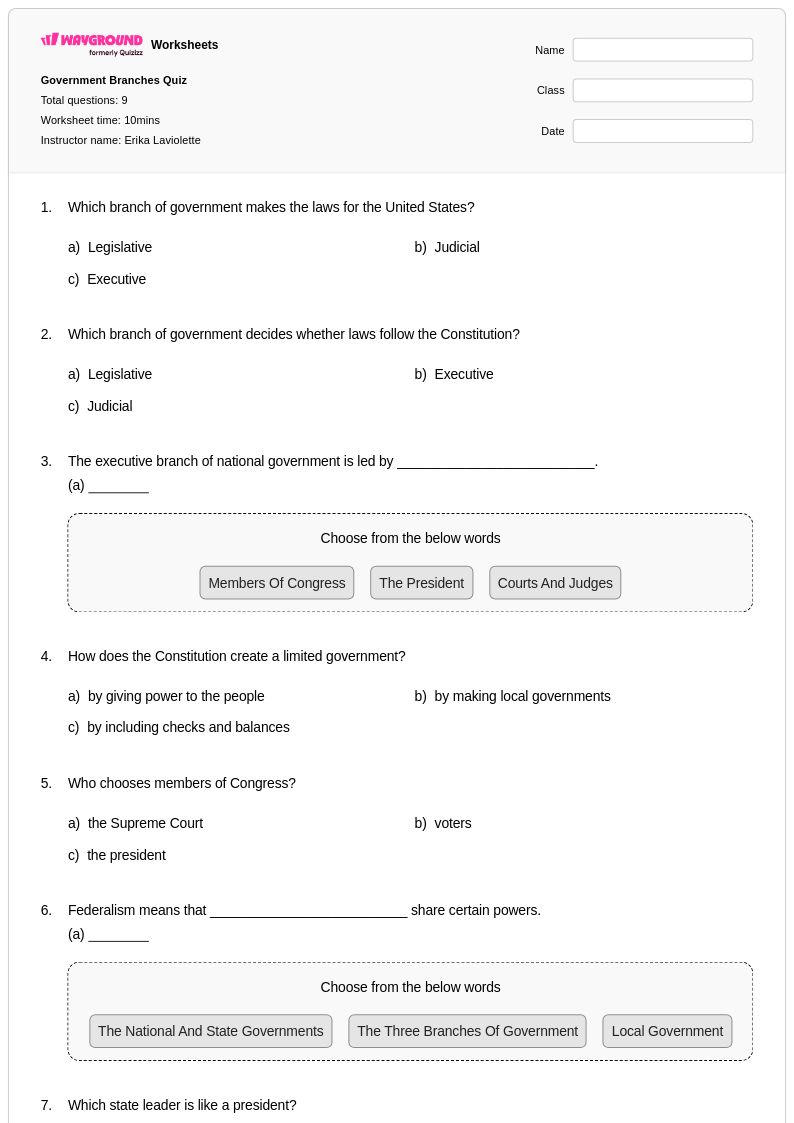
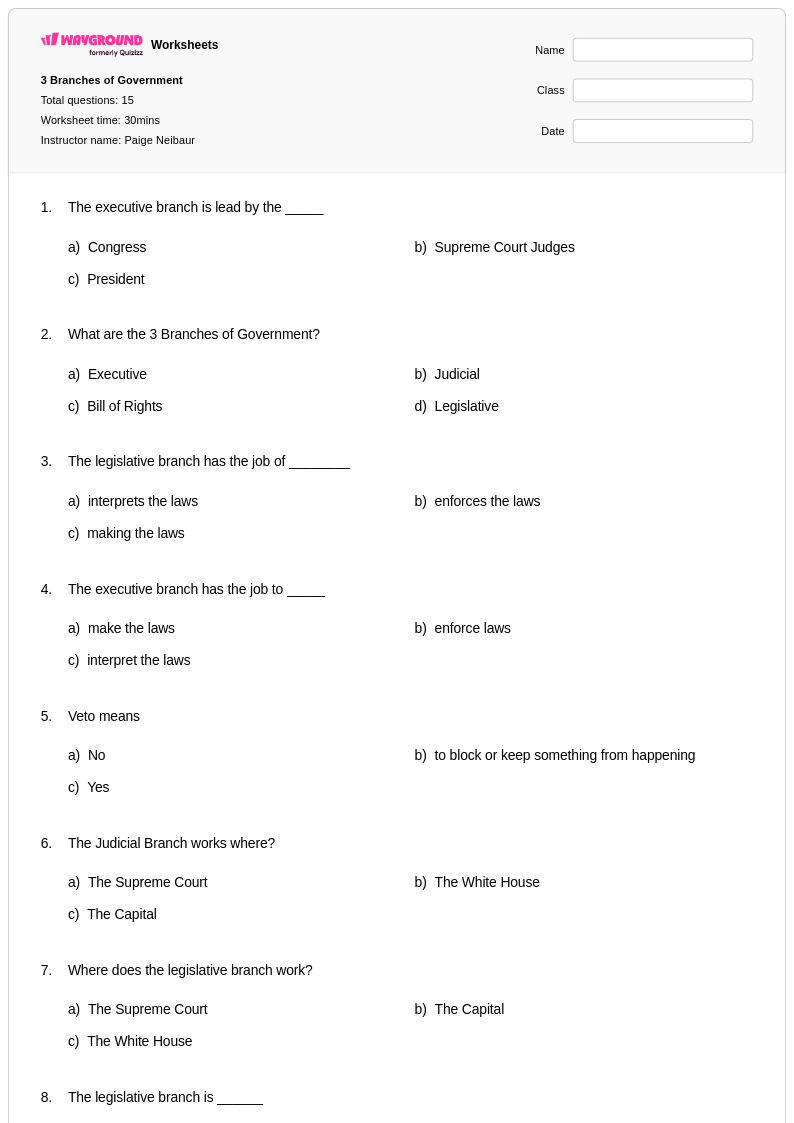
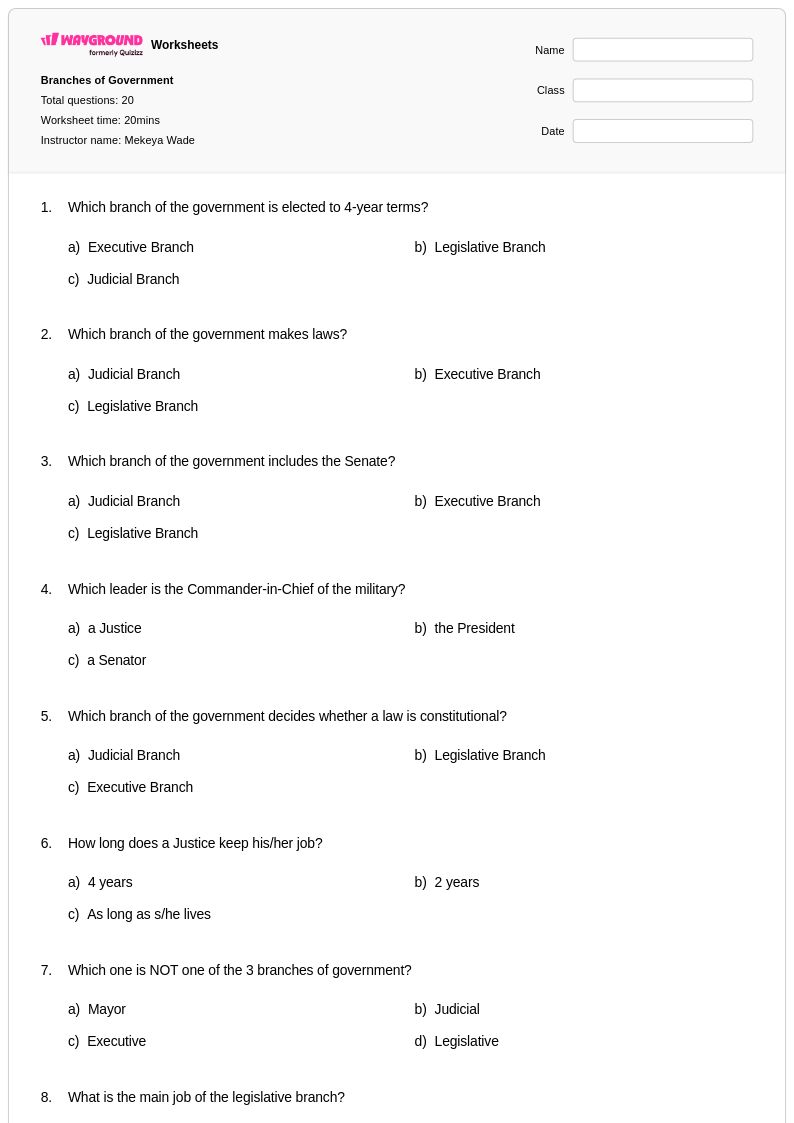
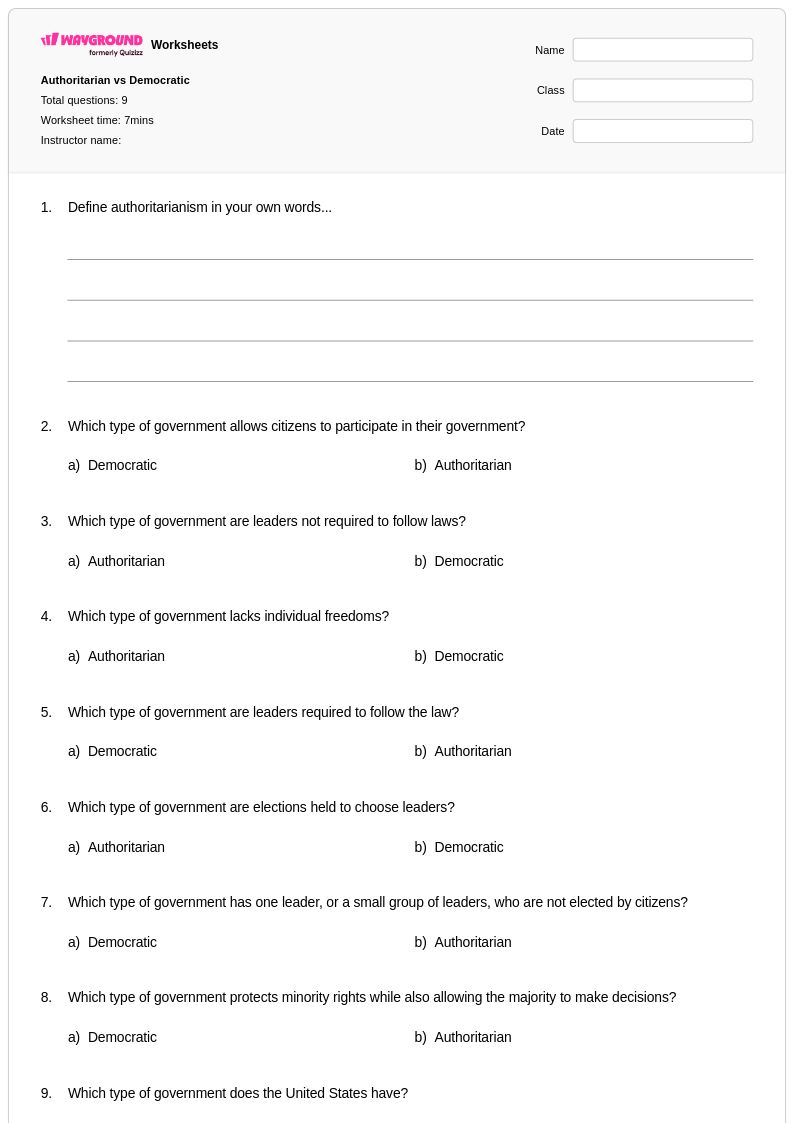
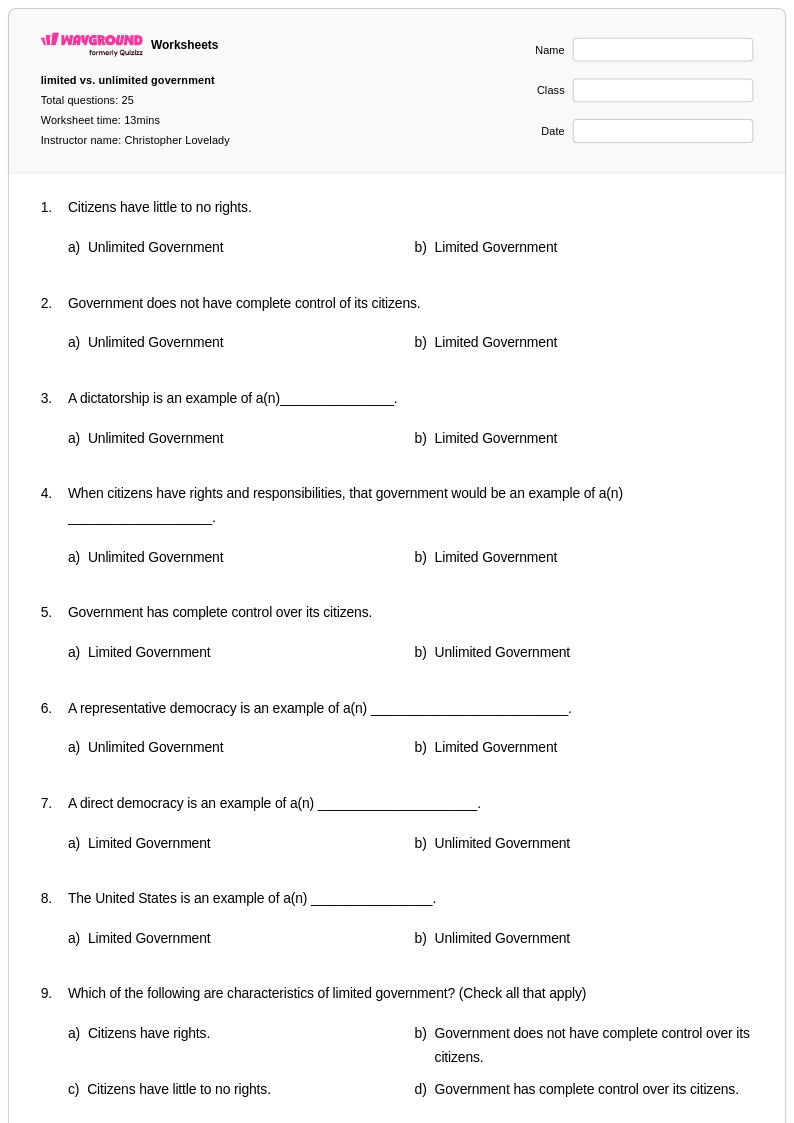
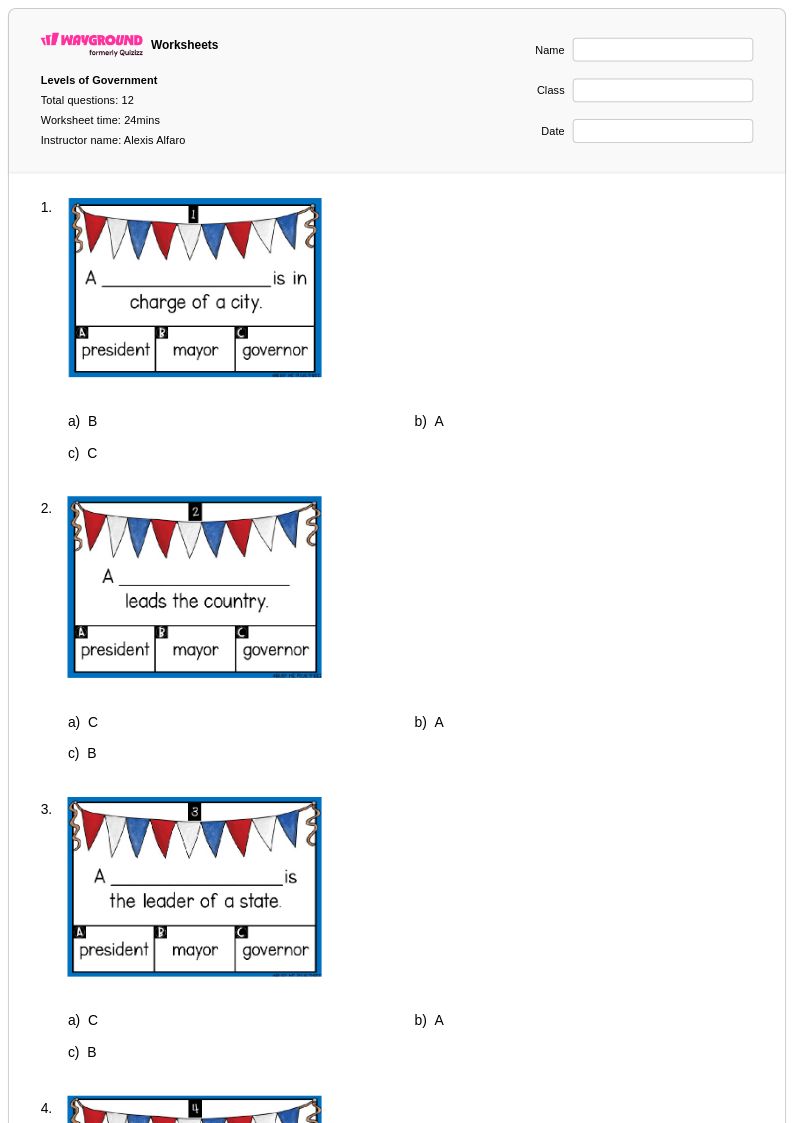
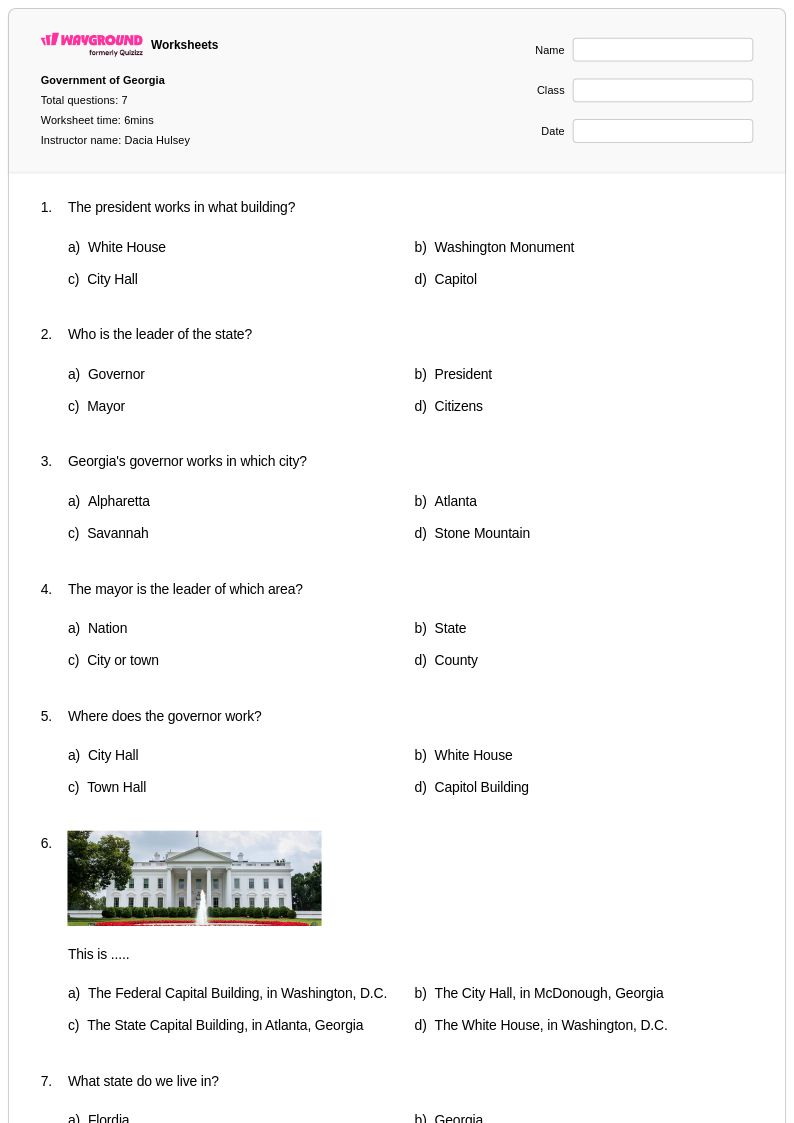
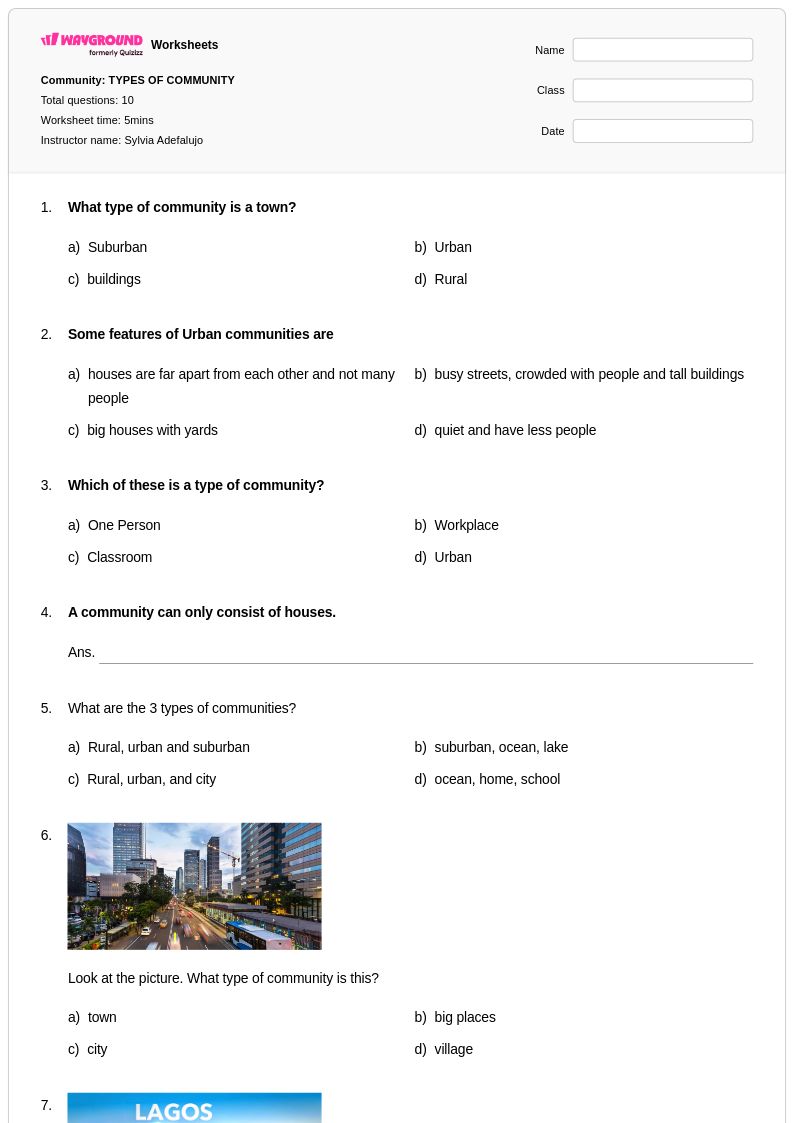
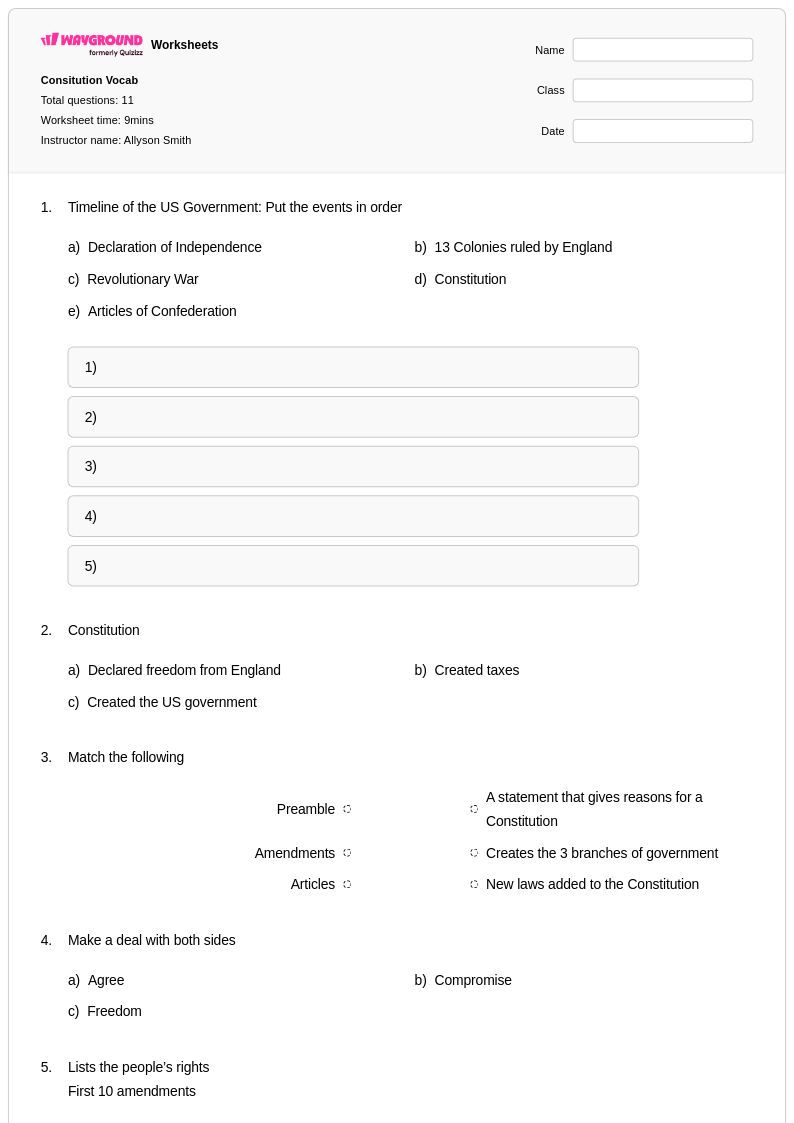
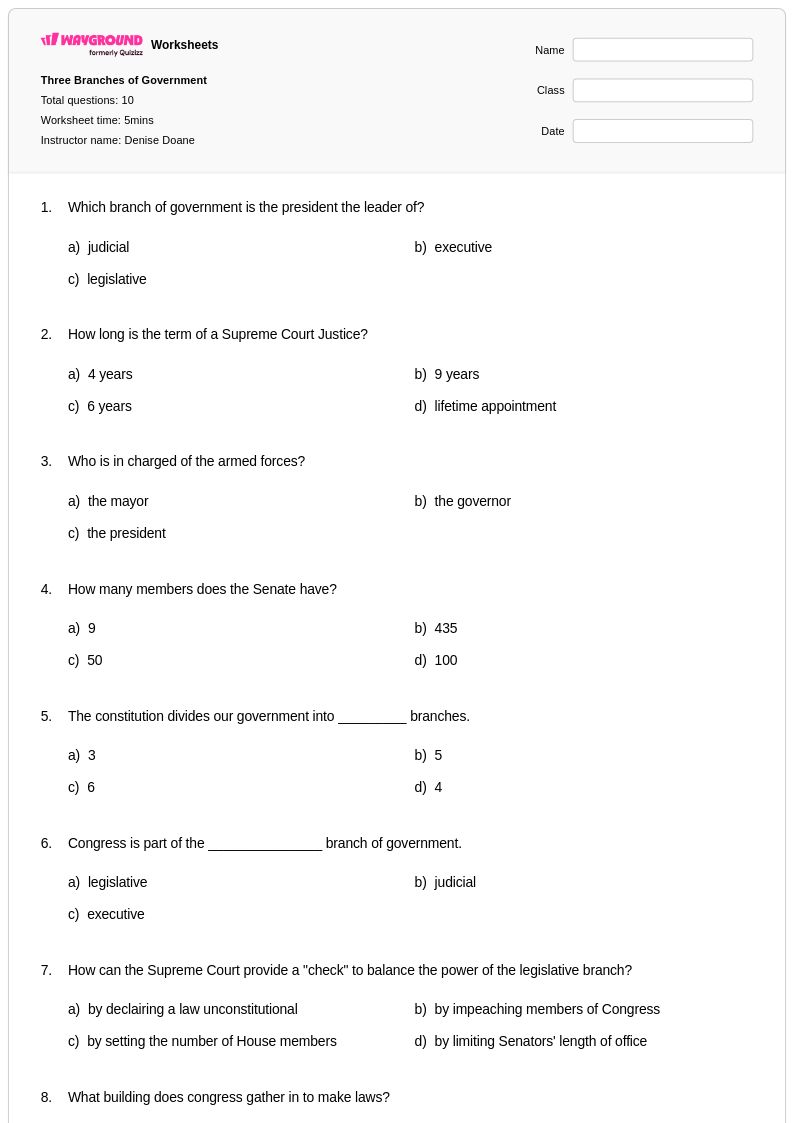
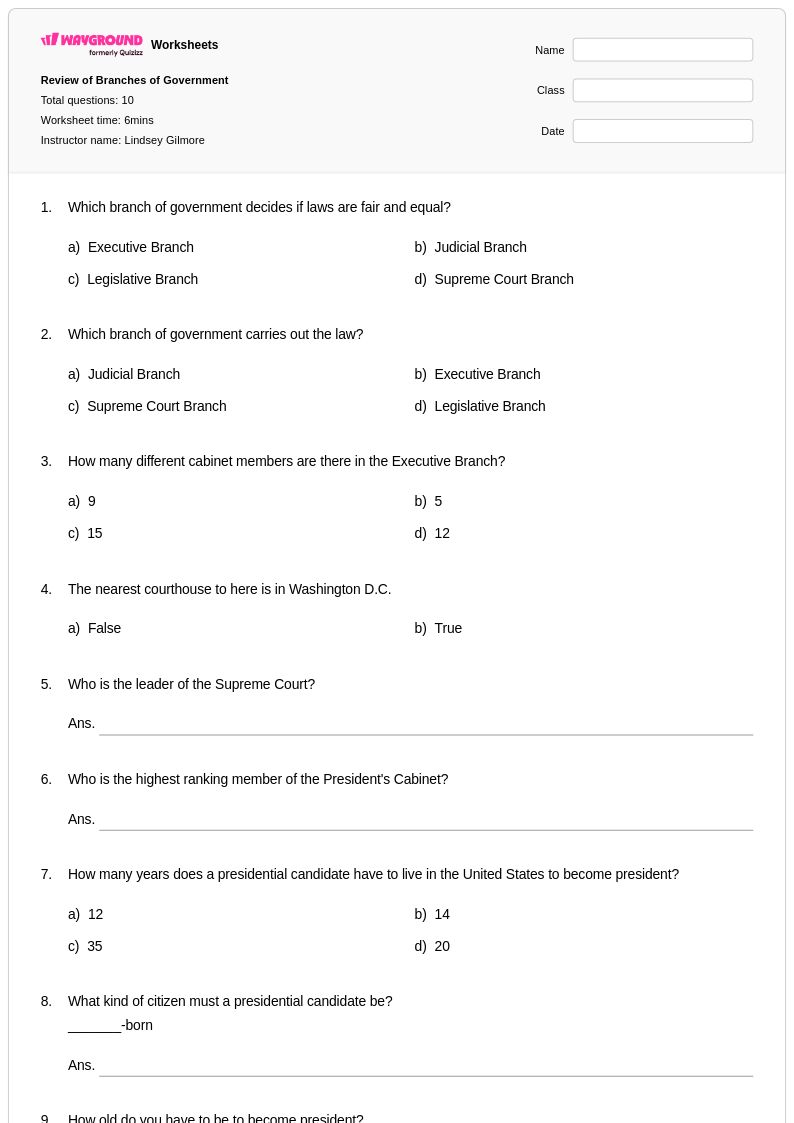
Types of Government worksheets for Class 1 students available through Wayground (formerly Quizizz) introduce young learners to the fundamental concept that different communities organize themselves in various ways. These carefully designed educational resources help first-grade students understand basic governmental structures through age-appropriate activities that distinguish between different leadership models, such as how families, classrooms, and communities make decisions. The worksheets strengthen critical thinking skills by encouraging students to identify who makes rules in different settings and compare simple governmental concepts through engaging practice problems. Teachers can access comprehensive materials including detailed answer keys and free printable resources in convenient pdf format, making it easy to implement these foundational civics lessons in any classroom setting.
Wayground (formerly Quizizz) empowers educators with an extensive collection of teacher-created resources spanning millions of worksheets specifically designed to support Types of Government instruction at the Class 1 level. The platform's robust search and filtering capabilities allow teachers to quickly locate materials that align with state standards and curriculum requirements, while built-in differentiation tools ensure that worksheets can be adapted to meet diverse learning needs within the classroom. These flexible resources are available in both printable and digital formats, including downloadable pdf versions, enabling seamless integration into lesson planning whether for whole-class instruction, small group activities, or individual skill practice. The comprehensive customization options support teachers in creating targeted remediation exercises for struggling students and enrichment opportunities for advanced learners, making it simple to address the full spectrum of student abilities when teaching foundational government concepts.
FAQs
How do I teach different types of government to students?
Start by establishing a clear framework for comparing governments across shared criteria: how power is held, who holds it, and how citizens participate. Introduce systems like democracy, monarchy, oligarchy, theocracy, and authoritarian rule using real-world examples from current and historical nations. Structured comparison activities, such as T-charts or classification exercises, help students move from memorizing labels to analyzing how each system functions in practice.
What activities help students practice identifying types of government?
Practice exercises that present descriptions of political systems and ask students to classify them are highly effective for reinforcing recognition skills. Worksheets that require students to match governmental characteristics to specific types, or evaluate real-world scenarios, push students beyond recall into analysis. Including tasks that ask students to compare power distribution and citizen participation across systems builds the critical thinking skills central to civics instruction.
What mistakes do students commonly make when learning about types of government?
One of the most frequent errors is conflating democracy with any elected government, when in fact democracies vary widely in structure and the degree of citizen participation they guarantee. Students also tend to treat government types as rigid, mutually exclusive categories rather than recognizing that real governments often blend characteristics of multiple systems. Addressing these misconceptions early with concrete counterexamples helps students develop more accurate and nuanced political literacy.
How can I use a types of government worksheet in my classroom?
Types of government worksheets on Wayground are available as printable PDFs for traditional classroom use and in digital formats for technology-integrated environments, giving teachers flexibility regardless of classroom setup. You can also host them as a quiz directly on Wayground, which allows for real-time student responses and immediate feedback. Using the worksheet as a formative check after initial instruction helps identify which students need additional support before moving into deeper comparative or evaluative work.
How do I differentiate types of government instruction for students at different skill levels?
For students who need additional support, reducing the complexity of answer choices or focusing on the most contrasting government types, such as democracy versus authoritarianism, can lower the cognitive load before introducing more nuanced systems. Wayground supports built-in differentiation tools, including reduced answer choices and read-aloud features, which can be applied to individual students without disrupting the rest of the class. More advanced students benefit from tasks that require them to evaluate trade-offs between governmental systems or apply concepts to unfamiliar real-world examples.
How do I assess whether students understand the differences between government types?
Effective assessment goes beyond asking students to define each type and instead presents scenarios or case studies that require students to identify and justify their classifications. Look for whether students can articulate why a government qualifies as one type rather than another, particularly in ambiguous cases where systems share overlapping features. Answer-key-supported worksheets allow teachers to quickly review responses and identify patterns in student errors, making it easier to plan targeted reteaching.