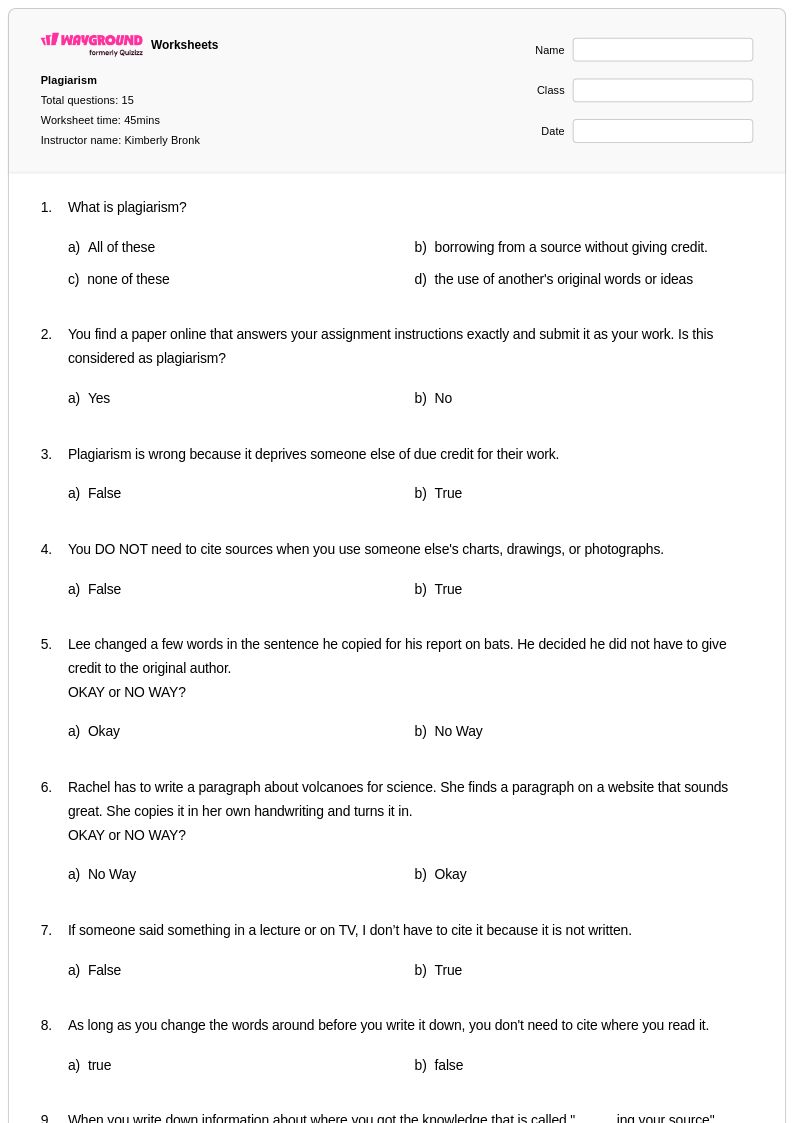
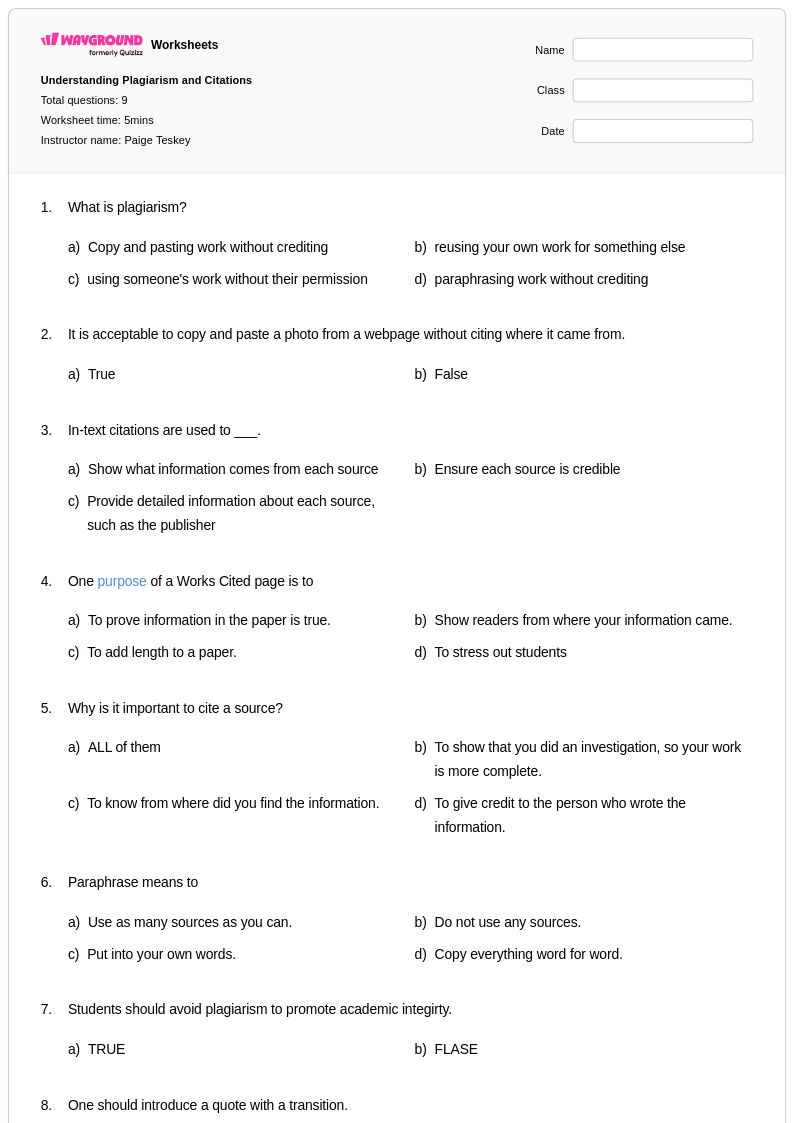
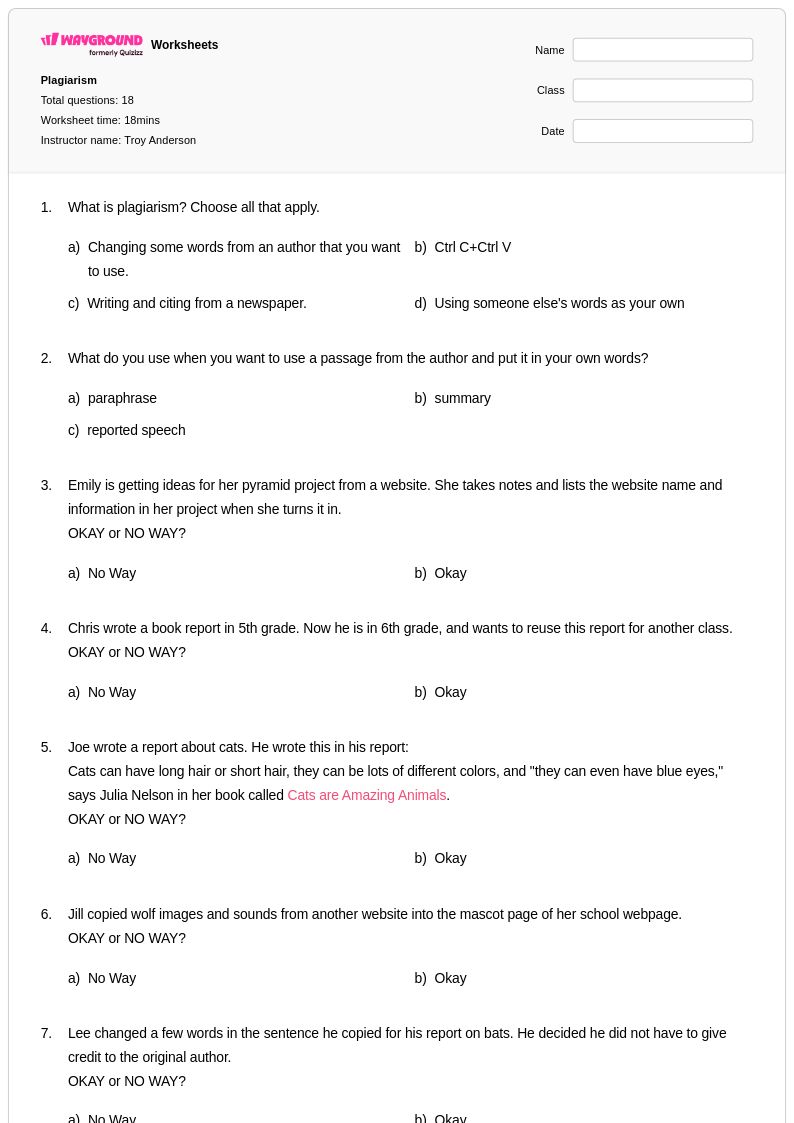
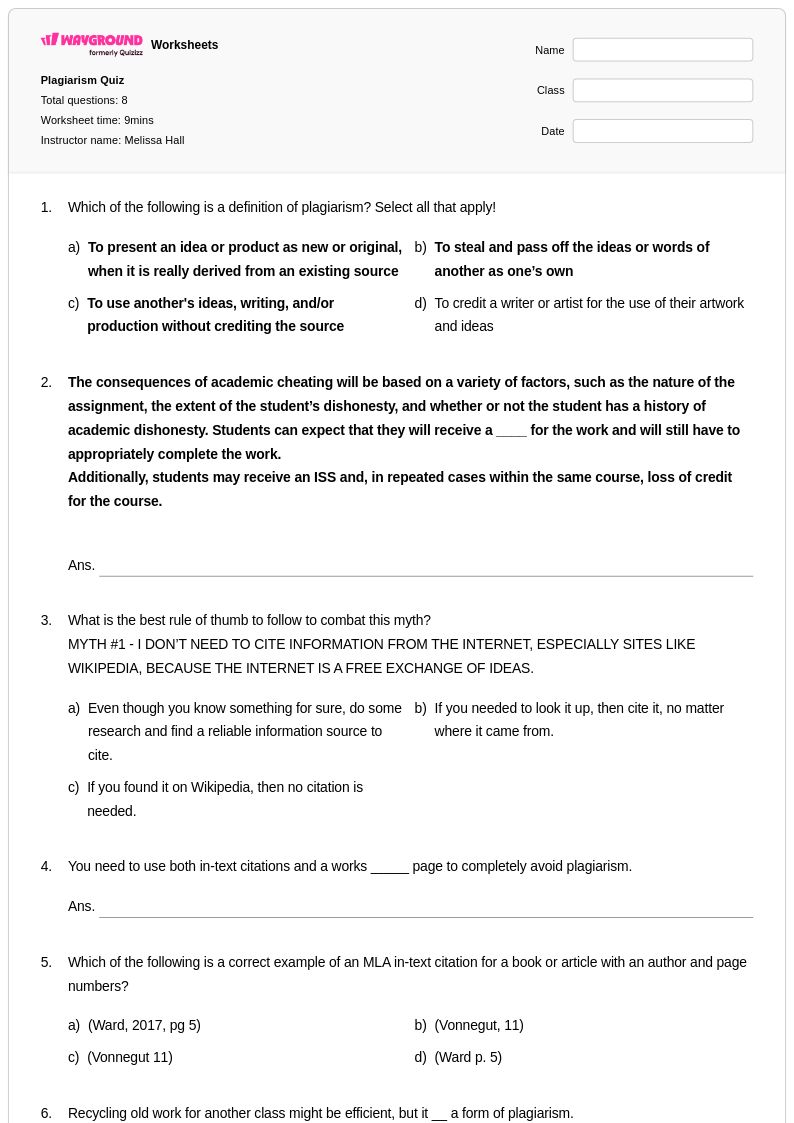
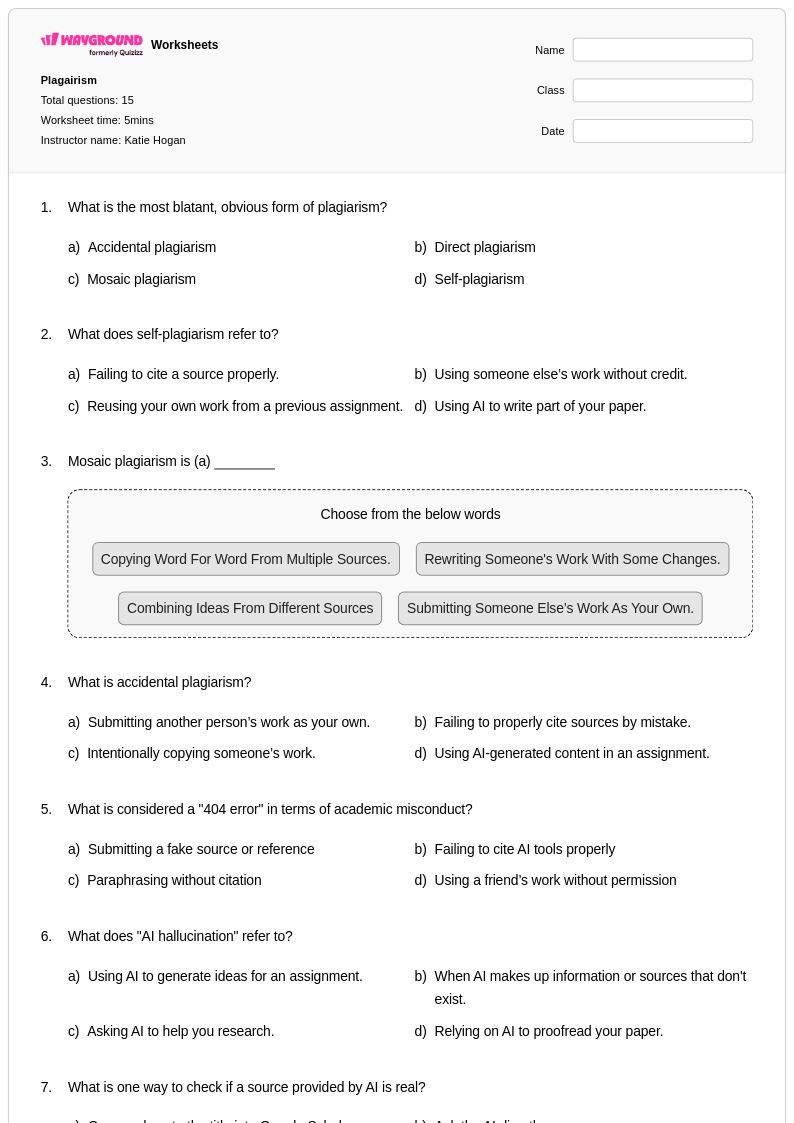
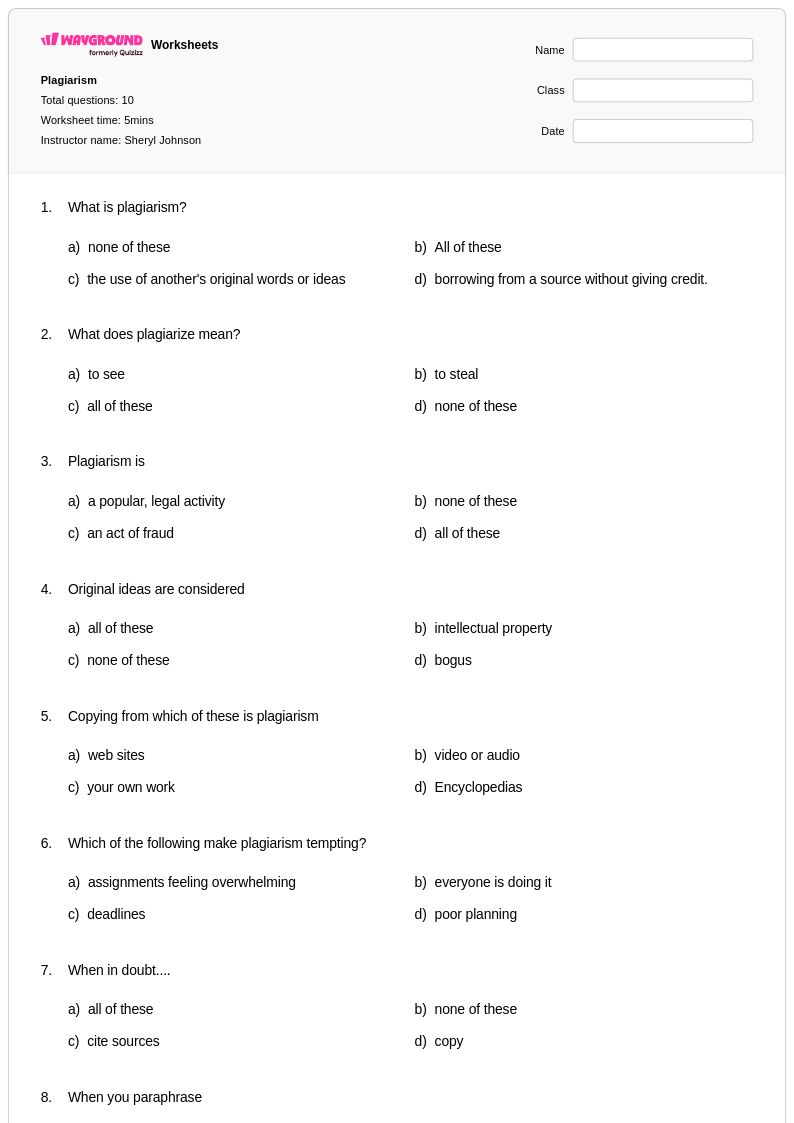
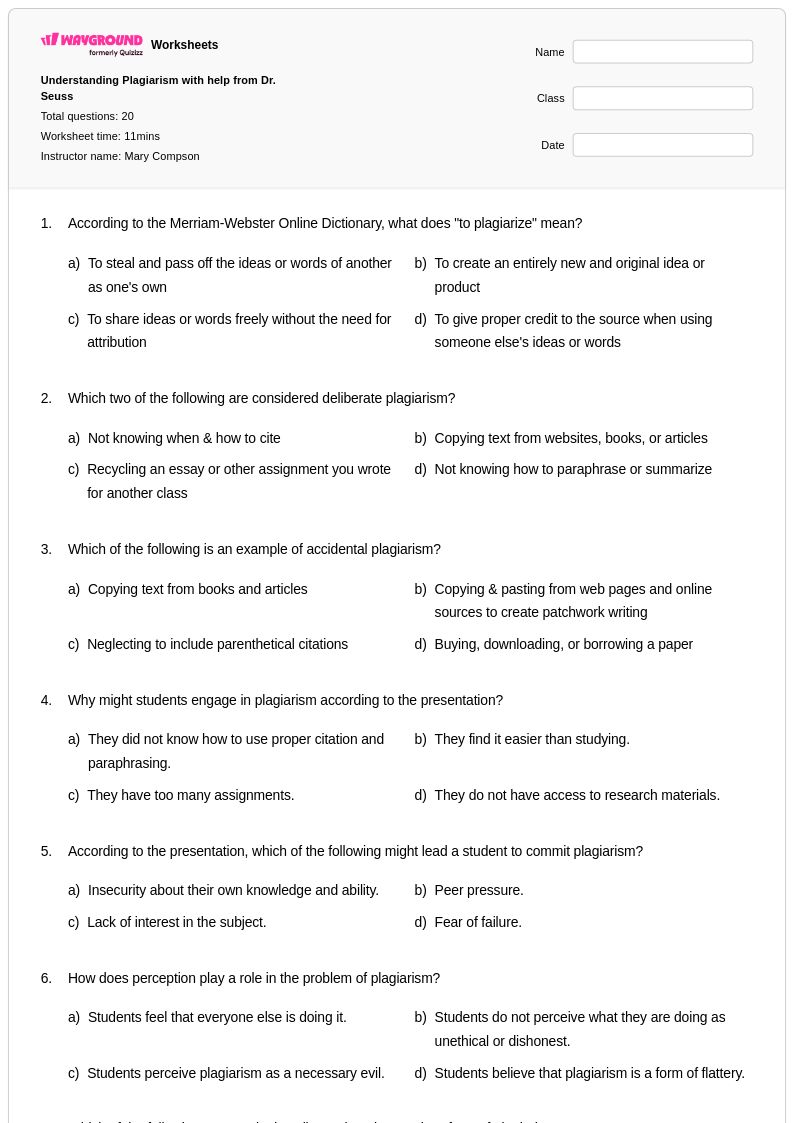
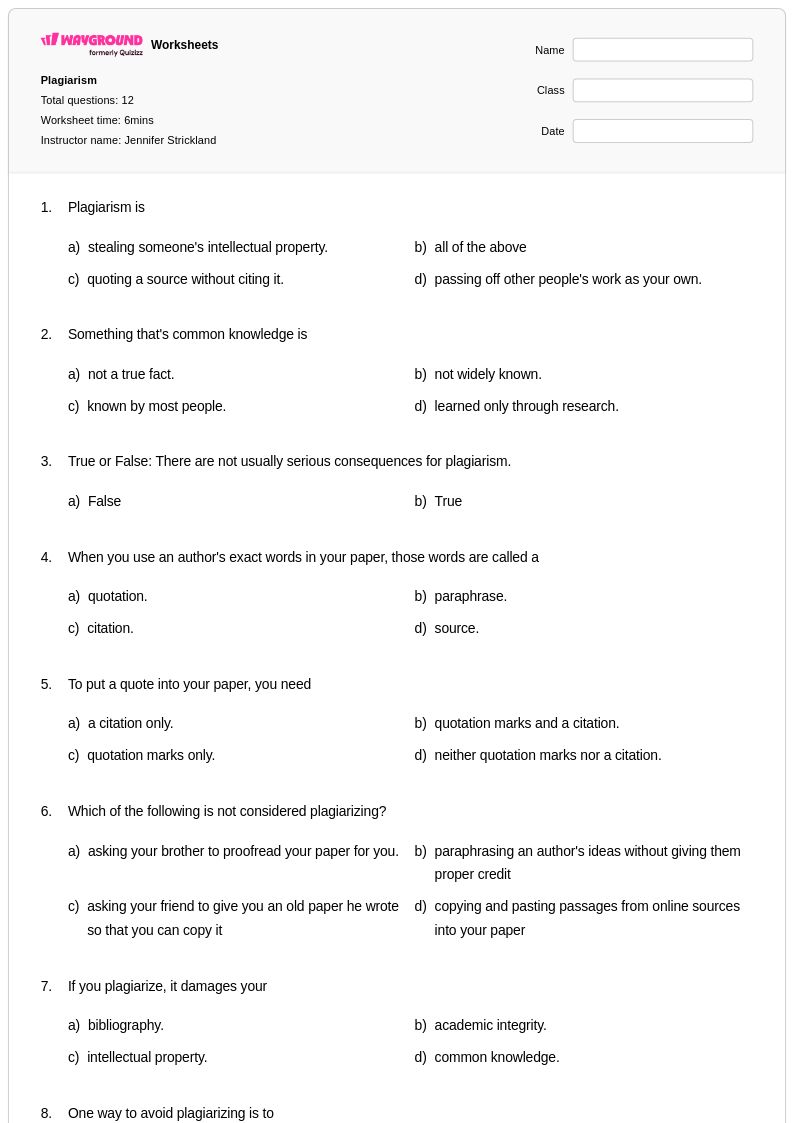
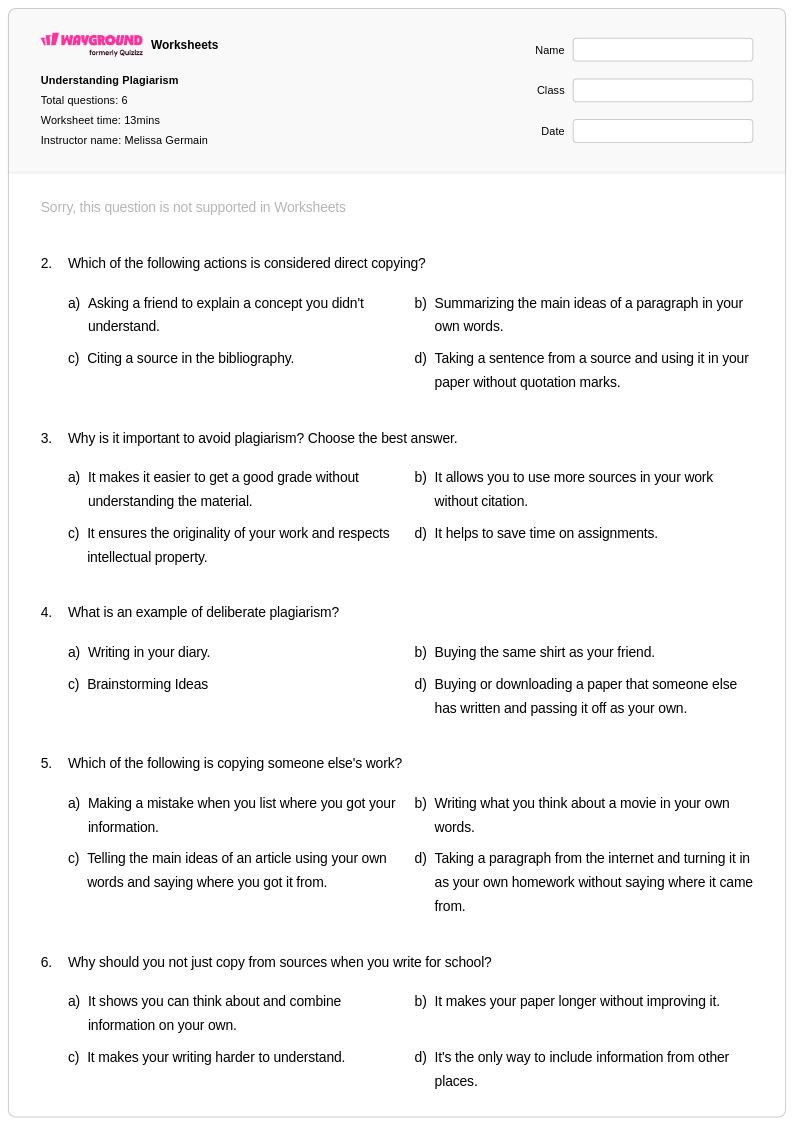
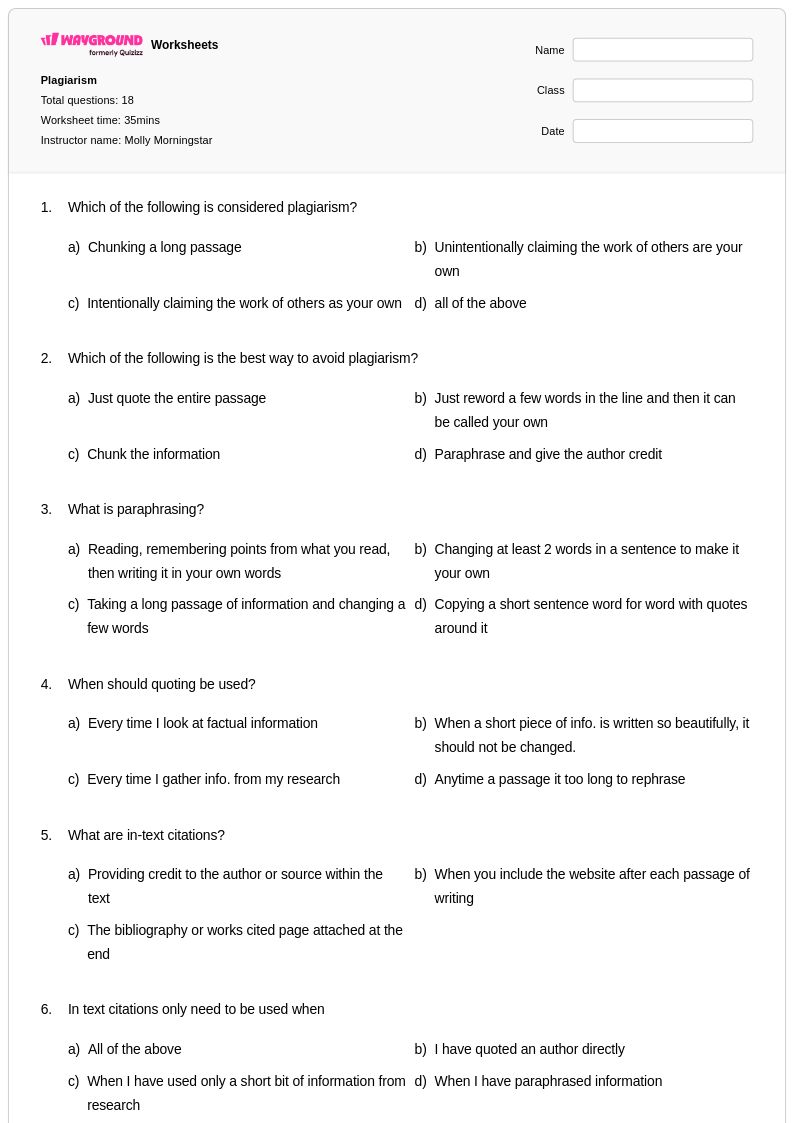
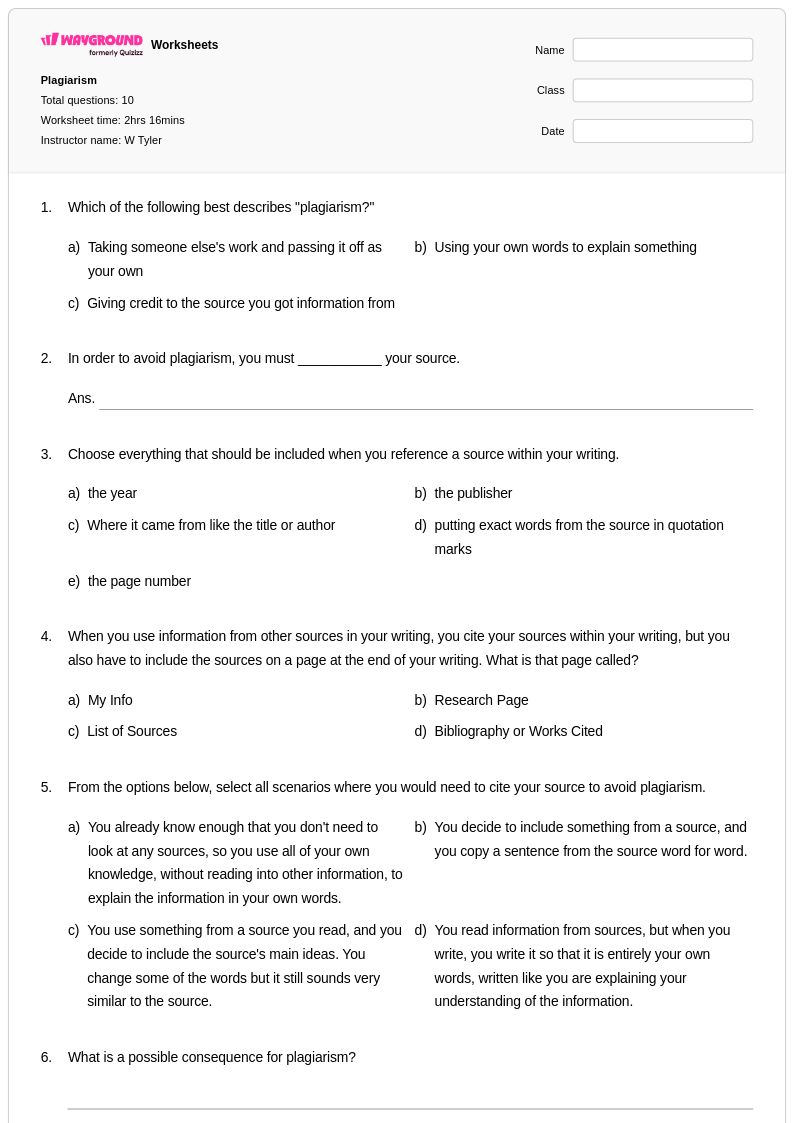
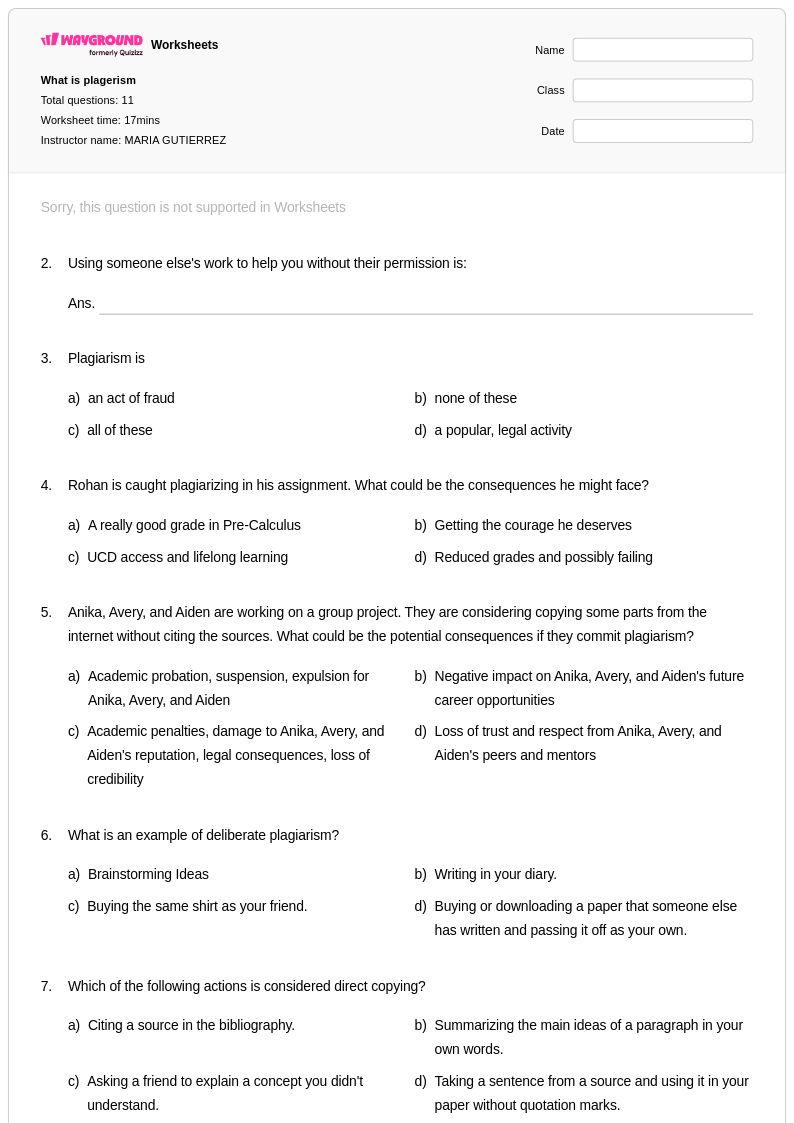
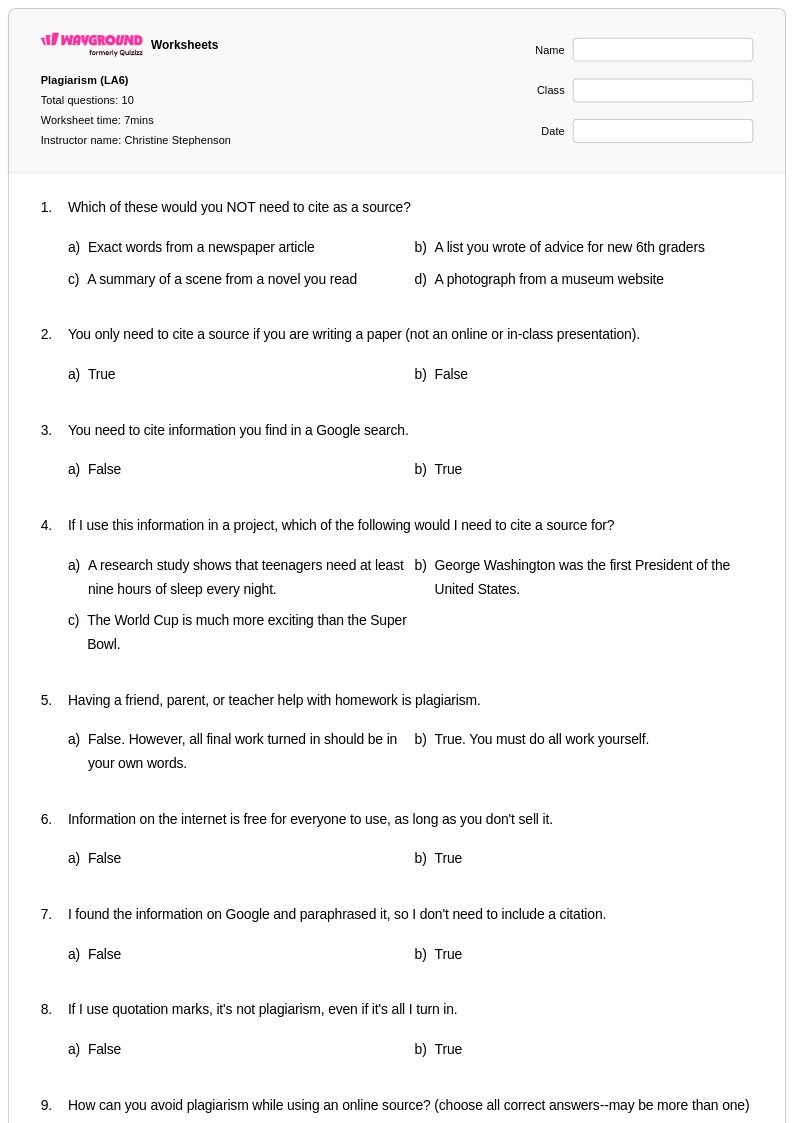
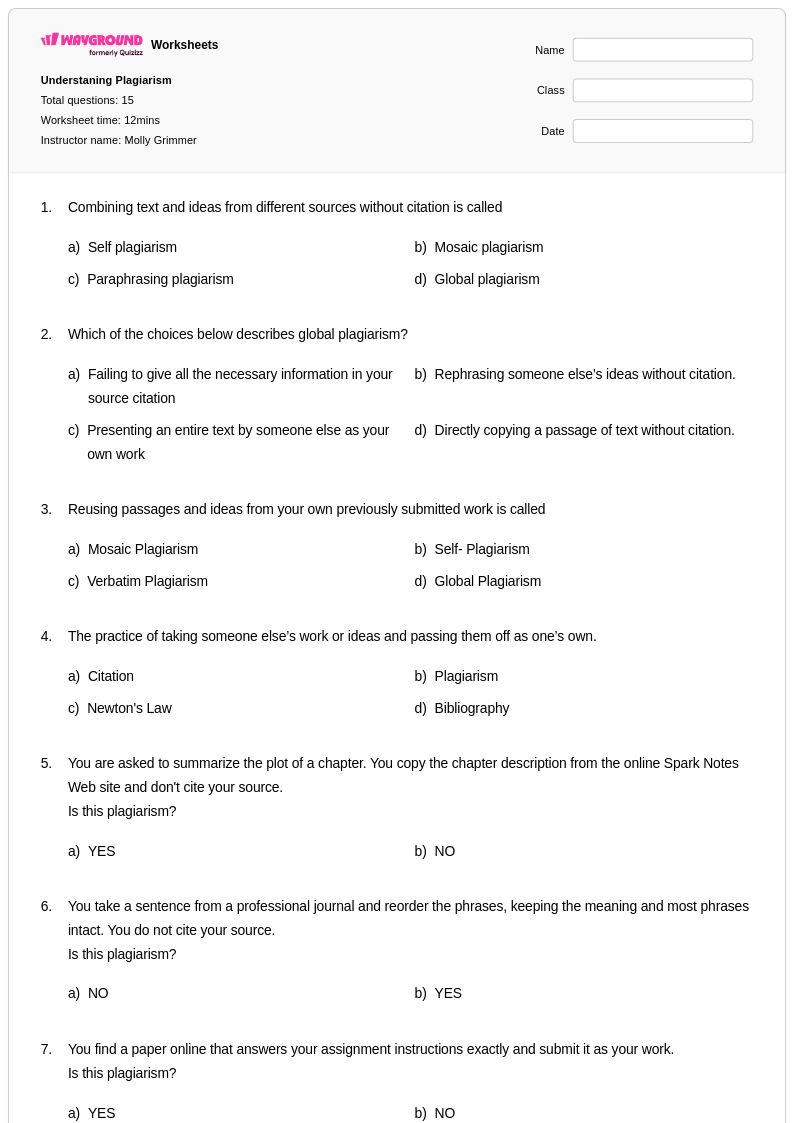
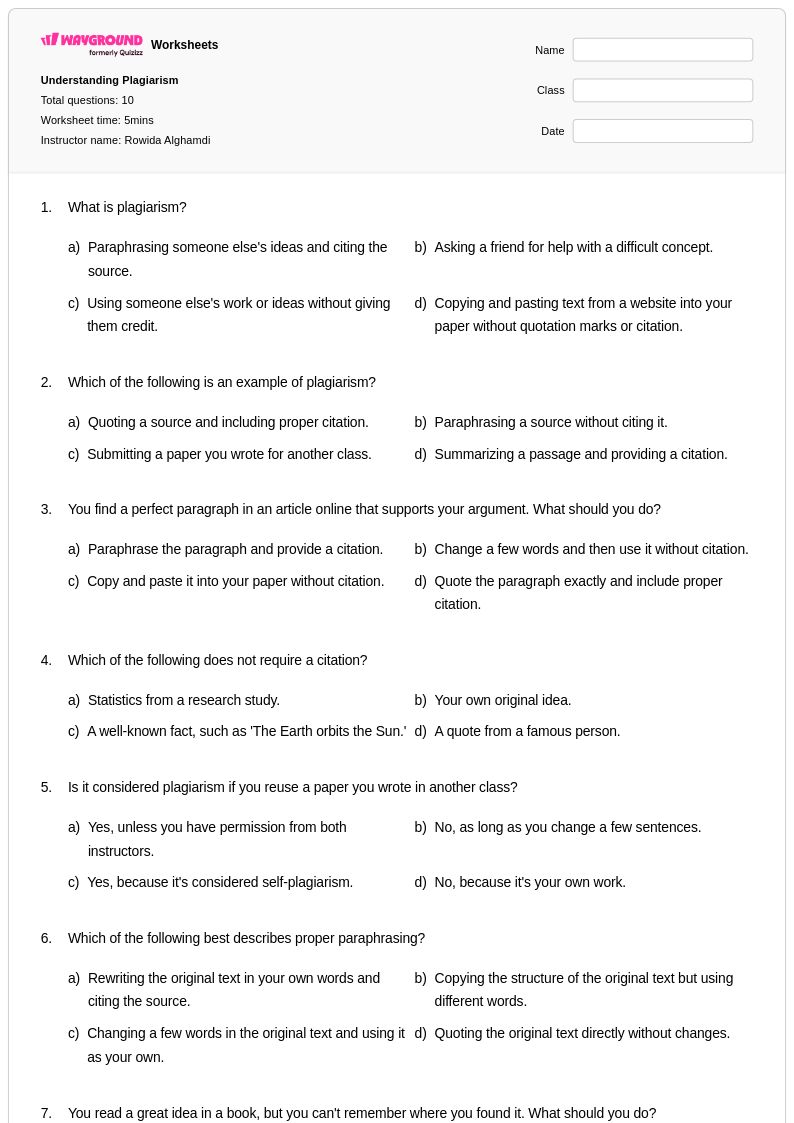
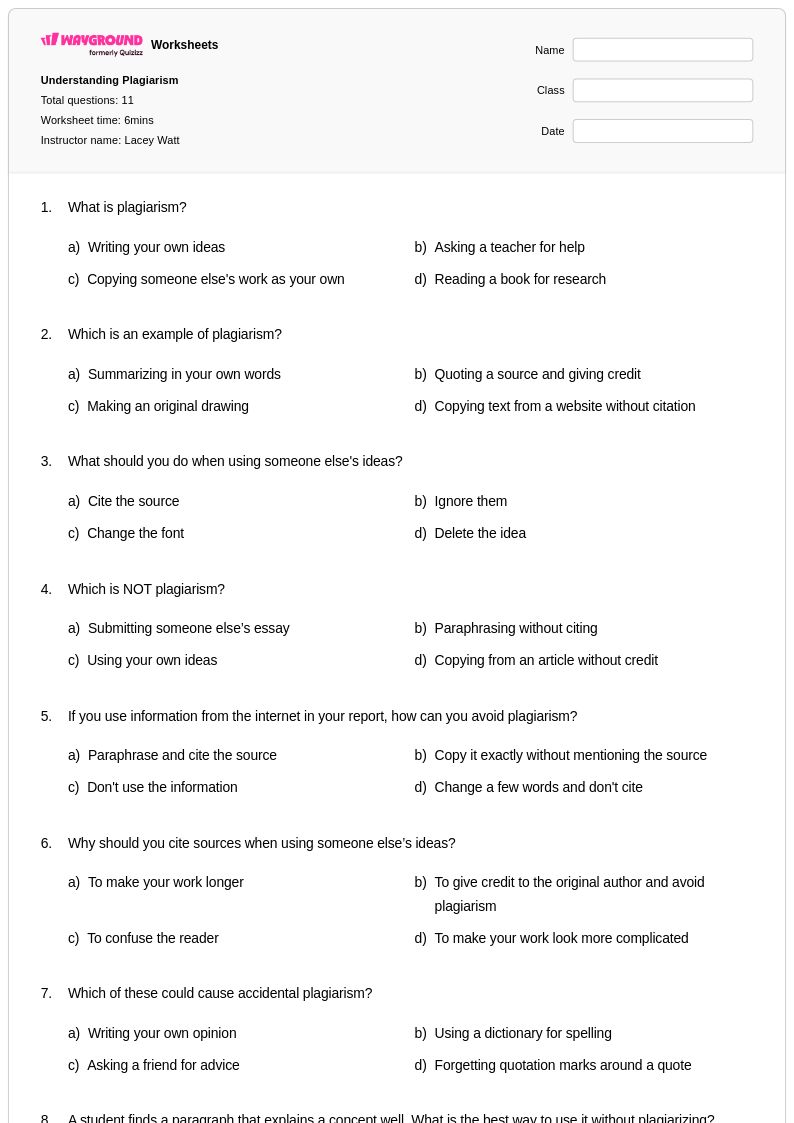
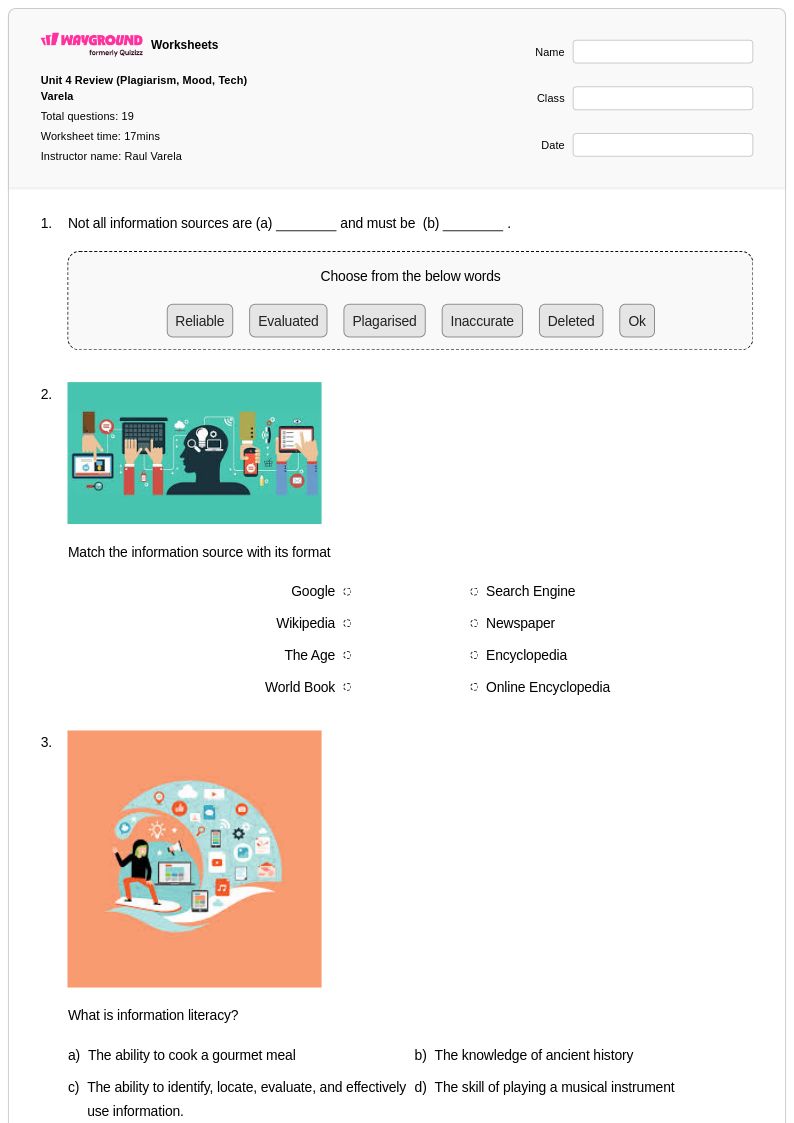
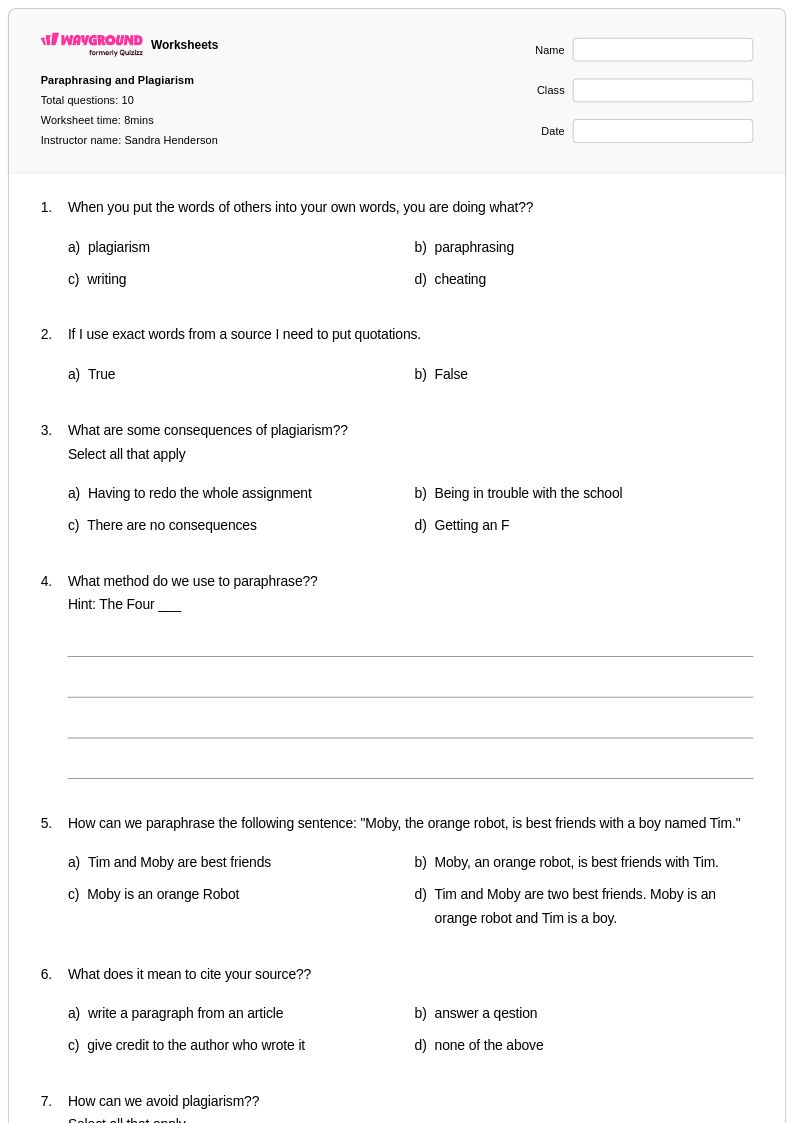
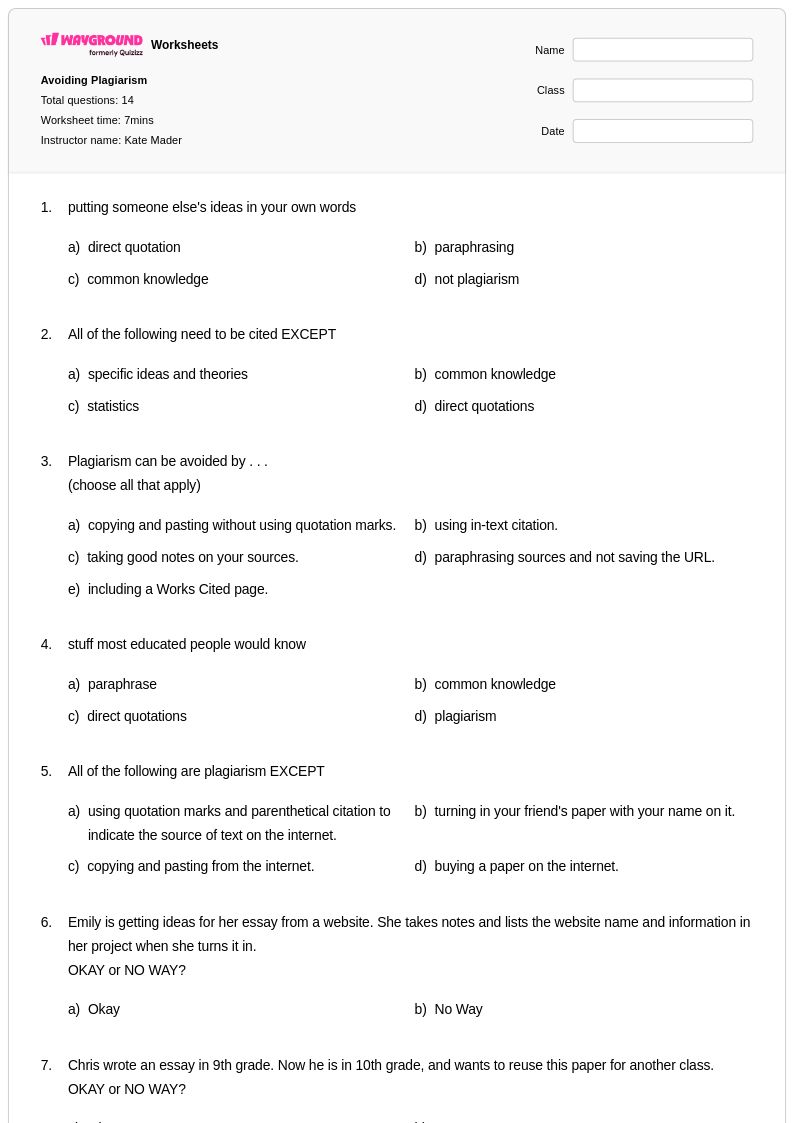
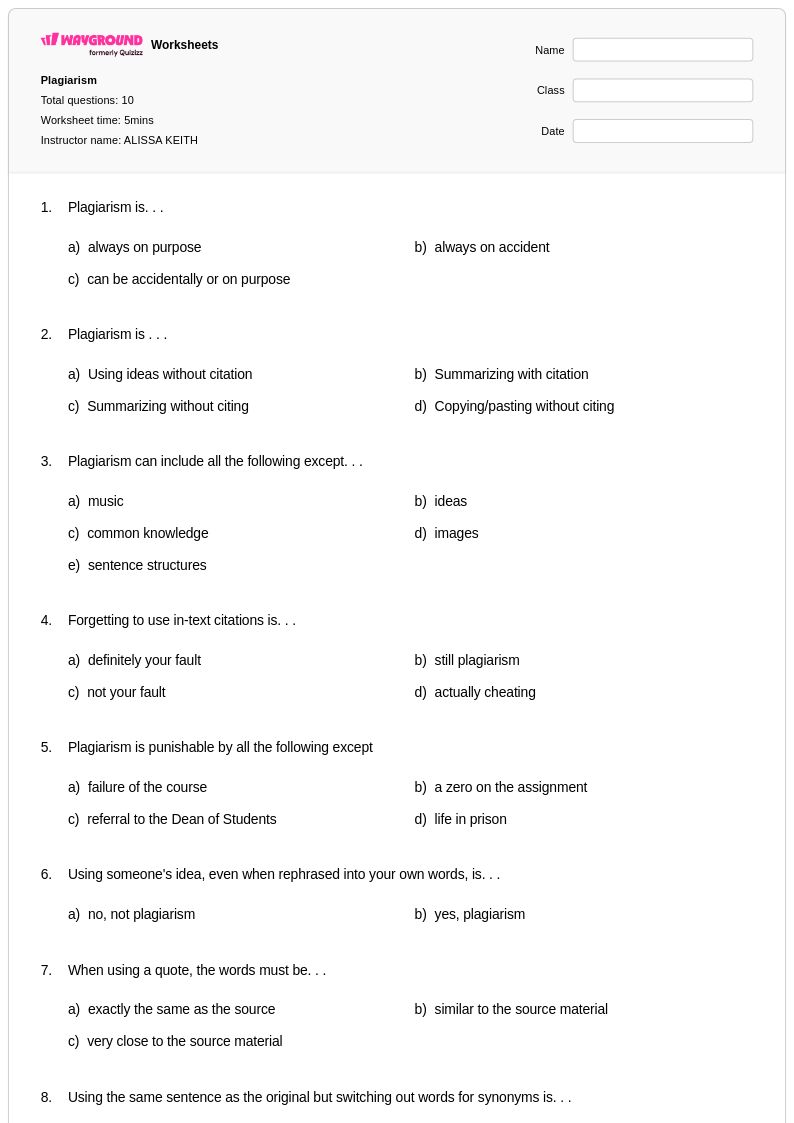
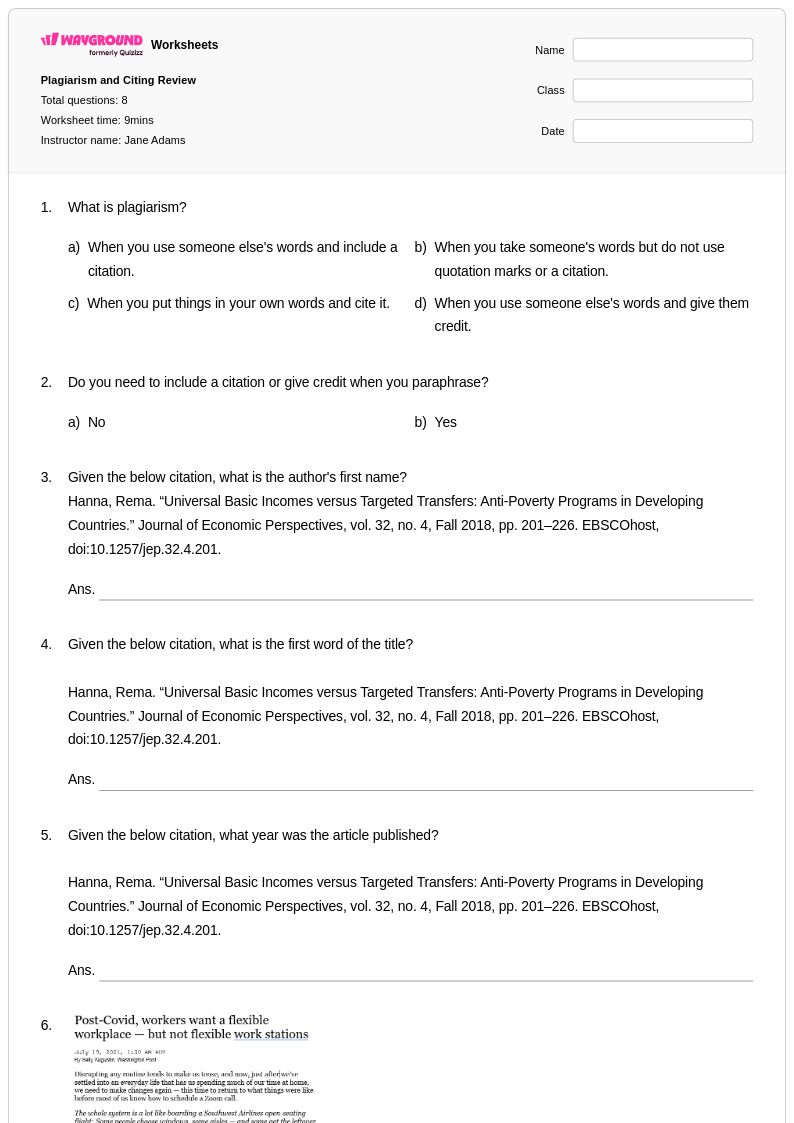
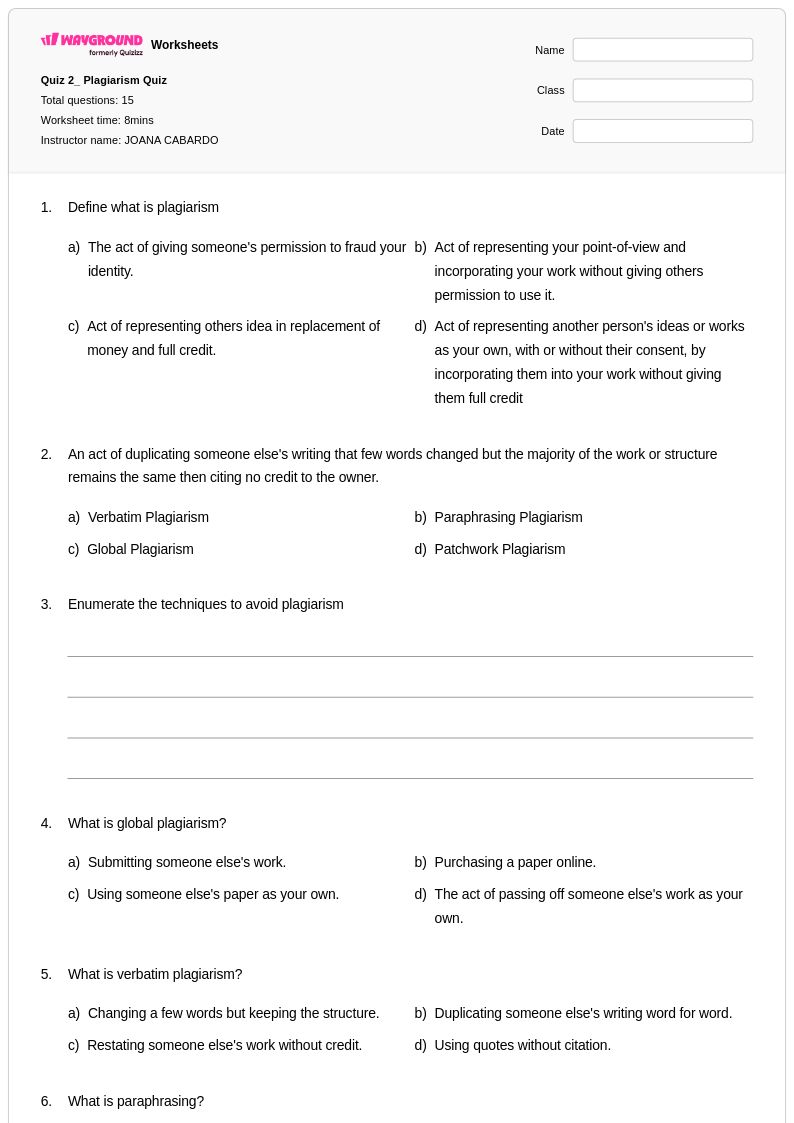
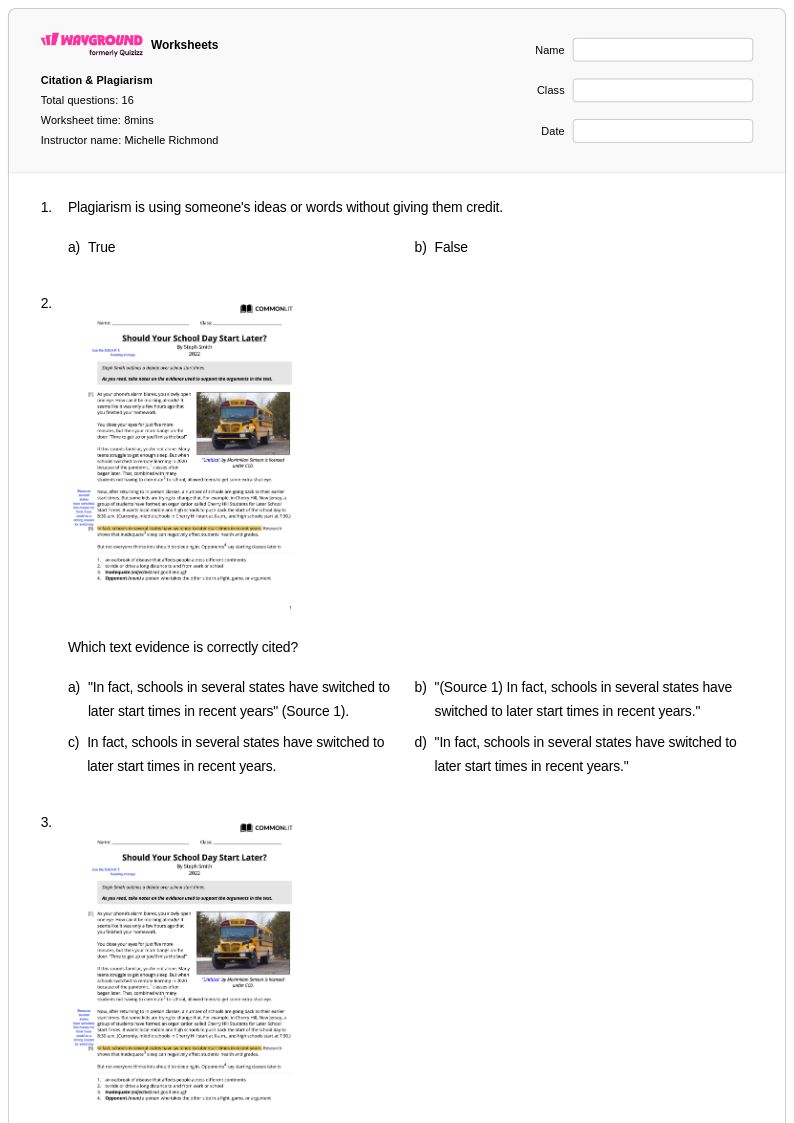
Free printable worksheets and practice problems help students learn to identify, avoid, and properly cite sources to understand plagiarism through engaging PDF activities with comprehensive answer keys.
Understanding plagiarism worksheets available through Wayground (formerly Quizizz) provide comprehensive educational resources that help students develop critical academic integrity skills and ethical research practices. These expertly crafted worksheets focus on teaching students how to recognize different forms of plagiarism, understand proper citation methods, and distinguish between original work and borrowed content. The practice problems included in these free printables guide learners through real-world scenarios involving source attribution, paraphrasing techniques, and quotation formatting, while accompanying answer keys allow for immediate feedback and self-assessment. Students work through exercises that strengthen their ability to identify plagiarized content, practice correct citation formats across various source types, and develop the analytical skills necessary to maintain academic honesty in their research and writing endeavors.
Wayground (formerly Quizizz) supports educators with an extensive collection of teacher-created understanding plagiarism worksheets, drawing from millions of resources that have been developed and refined by classroom professionals. The platform's robust search and filtering capabilities enable teachers to quickly locate materials that align with specific academic standards and match their students' developmental needs, while built-in differentiation tools allow for seamless customization of content difficulty and scope. These versatile resources are available in both printable pdf formats and interactive digital versions, providing flexibility for various classroom environments and learning preferences. Teachers can efficiently incorporate these materials into their lesson planning for direct instruction, use them for targeted remediation with students who struggle with citation concepts, or deploy them as enrichment activities that challenge advanced learners to explore more complex aspects of academic integrity and ethical scholarship.
FAQs
How do I teach students what plagiarism is and why it matters?
Start by distinguishing between intentional and unintentional plagiarism, since many students plagiarize not out of dishonesty but because they don't understand citation rules or paraphrasing. Use real examples that show the difference between copying, patchwriting, and proper paraphrasing so students can see the line concretely. Pair this with direct instruction on why academic integrity matters — for their credibility, their learning, and their future academic and professional lives.
What exercises help students practice identifying and avoiding plagiarism?
Effective practice includes side-by-side comparison exercises where students evaluate an original source against a student-written passage and determine whether it constitutes plagiarism. Paraphrasing drills, citation formatting tasks across different source types, and scenario-based activities that ask students to choose the correct attribution method all build practical academic integrity skills. These exercise types move students from abstract awareness to applied, decision-making competence.
What mistakes do students most commonly make when trying to avoid plagiarism?
The most common error is patchwriting — changing a few words in a source passage while keeping the original sentence structure — which students often believe counts as paraphrasing but still constitutes plagiarism. Students also frequently omit in-text citations when they do paraphrase, assuming that only direct quotes need attribution. A third widespread mistake is failing to cite sources for ideas or statistics, not just quoted language, because students don't realize that borrowed information requires credit regardless of form.
How do I help students understand the difference between paraphrasing and plagiarism?
Teach students that true paraphrasing requires both restating the idea in their own words and restructuring the sentence — not simply swapping synonyms. A useful classroom strategy is to have students read a source, close it, write the idea from memory, and then compare their version to the original to check for unintentional copying. Emphasize that even a well-paraphrased passage still requires a citation, because the idea itself belongs to the original author.
How do I use Understanding Plagiarism worksheets from Wayground in my classroom?
Wayground's Understanding Plagiarism worksheets are available as printable PDFs for traditional classroom use and in digital formats for technology-integrated environments, giving teachers flexibility based on their instructional setup. Teachers can also host worksheets directly as a quiz on Wayground, enabling real-time student responses and immediate feedback through built-in answer keys. The materials work equally well for direct instruction, targeted remediation with students who struggle with citation concepts, or enrichment for advanced learners exploring more complex aspects of academic integrity.
How can I differentiate plagiarism instruction for students at different skill levels?
For students who are newer to citation and source use, focus first on the clearest-cut cases of plagiarism before introducing nuanced scenarios like paraphrasing without attribution. More advanced students can work through complex cases involving multiple sources, indirect citations, and discipline-specific citation formats. On Wayground, teachers can apply accommodations such as read-aloud support or reduced answer choices to individual students, allowing the same core worksheet to serve a range of learners without singling anyone out.