Free Printable US Supreme Court Landmark Cases Worksheets for Class 12
Discover free Class 12 US Supreme Court Landmark Cases worksheets and printables from Wayground that help students analyze pivotal court decisions, practice constitutional interpretation skills, and master civics concepts with comprehensive answer keys and PDF resources.
Explore printable US Supreme Court Landmark Cases worksheets for Class 12
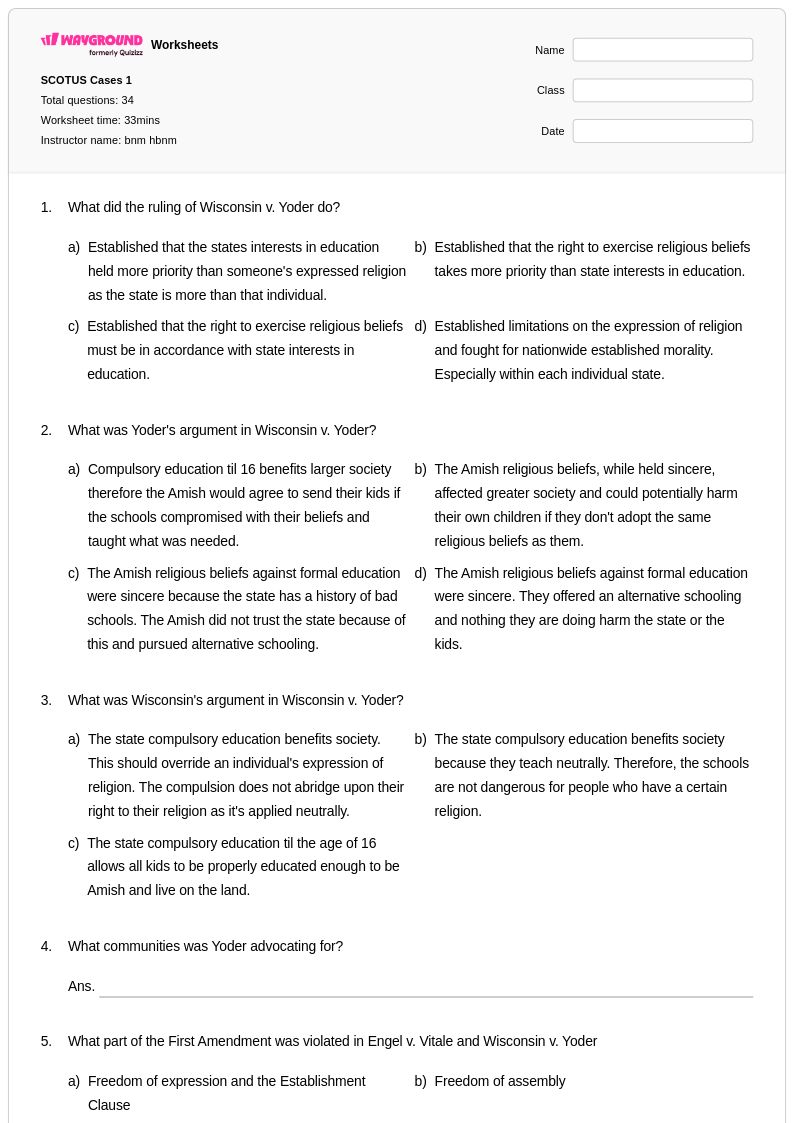
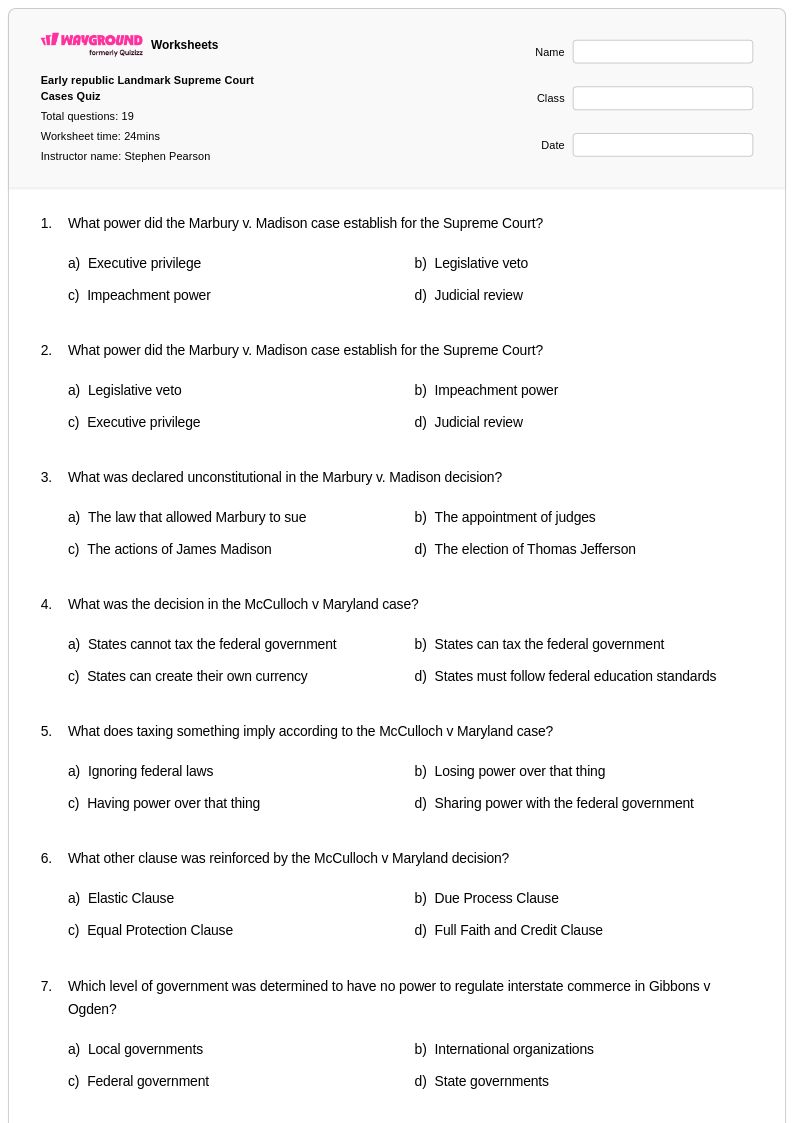
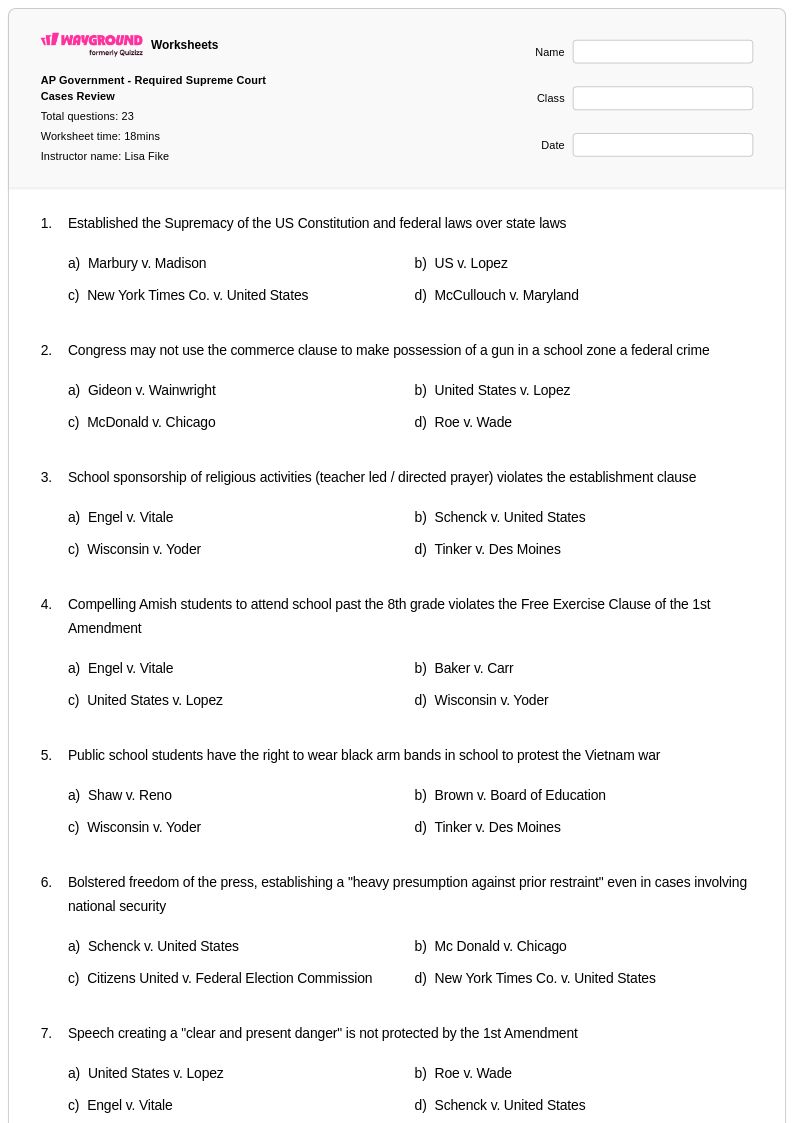
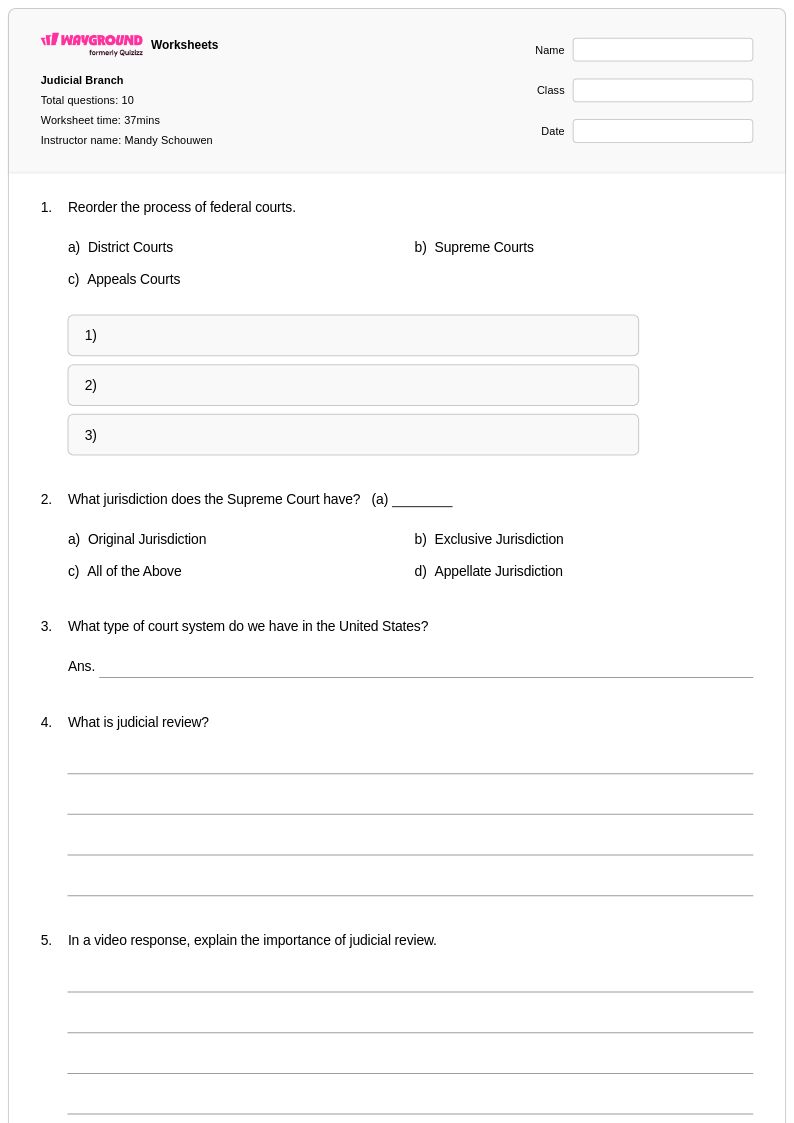
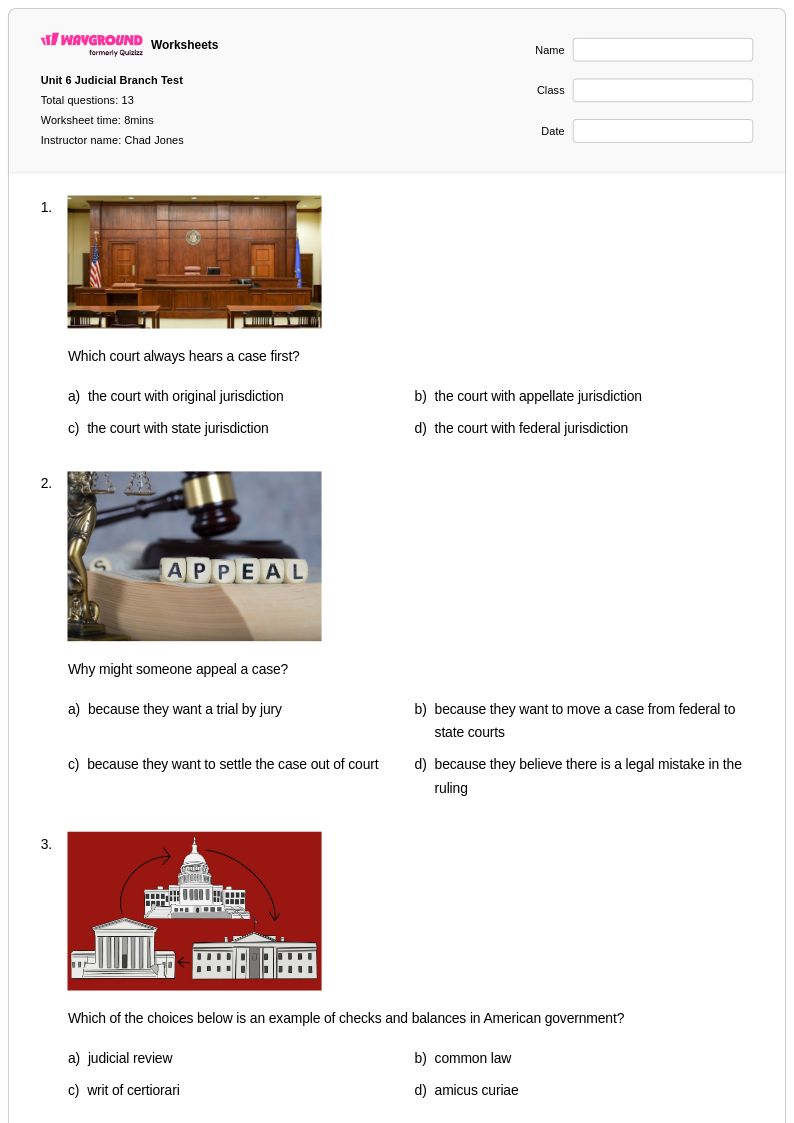
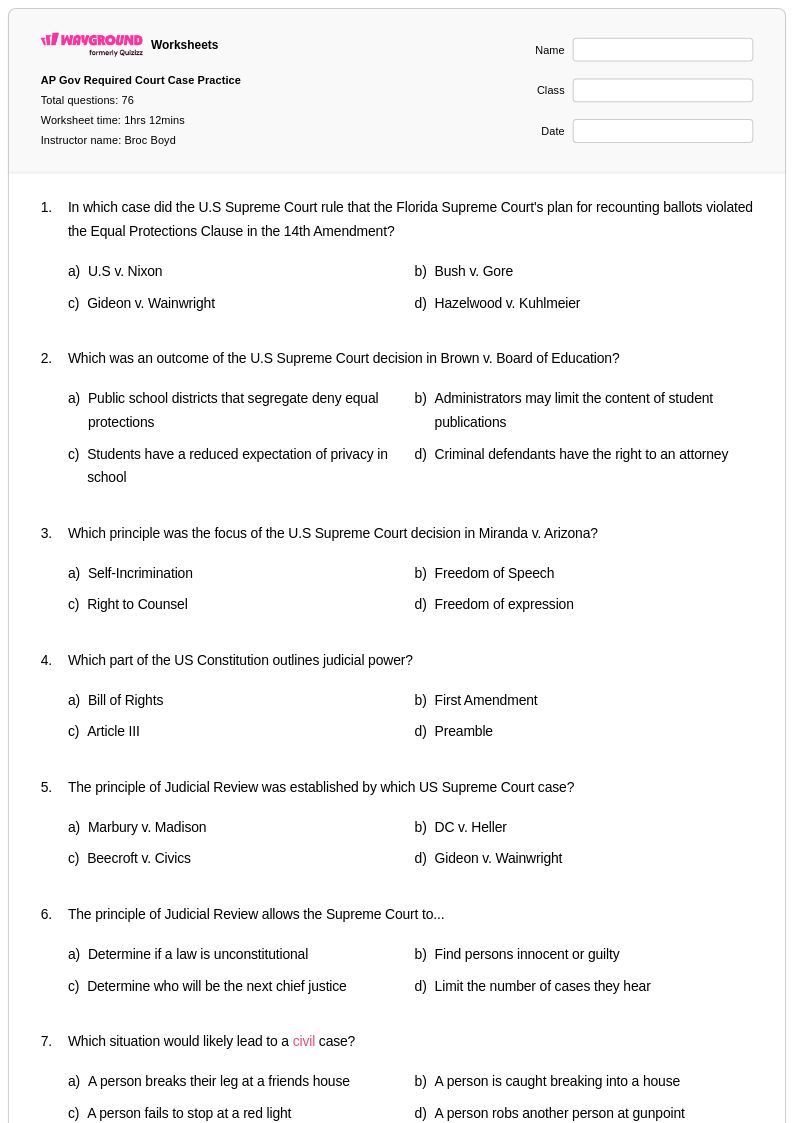
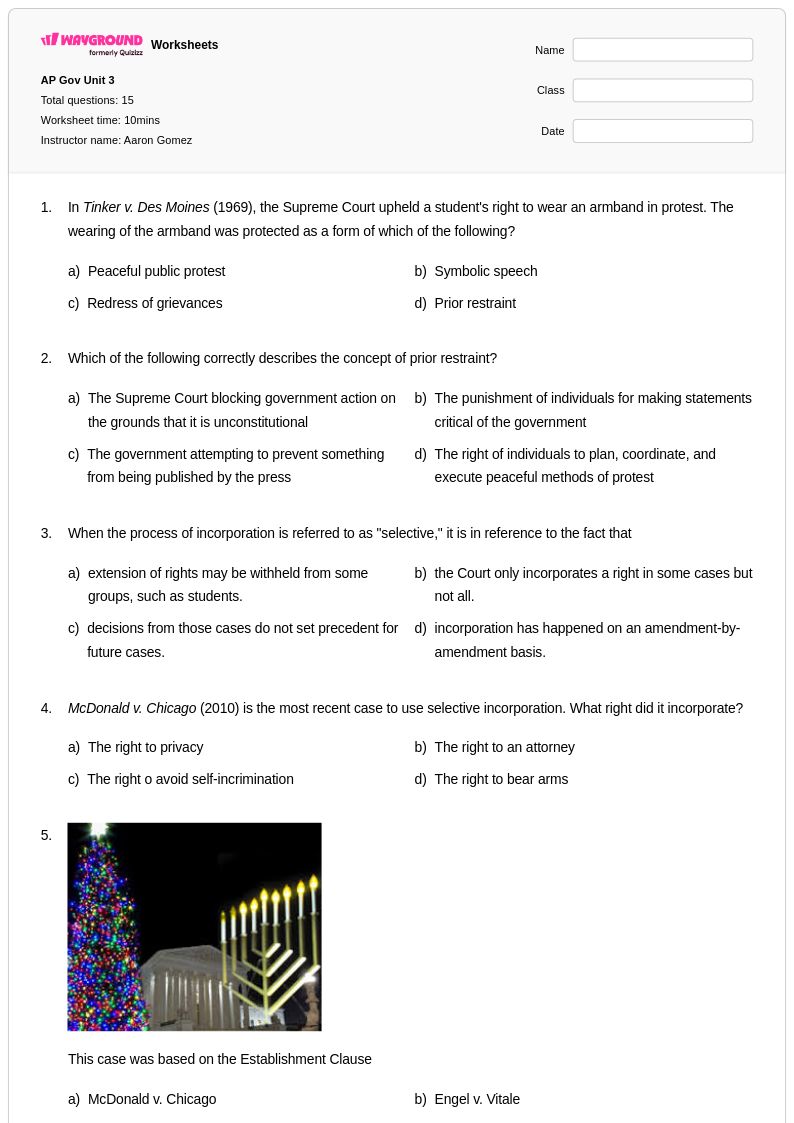
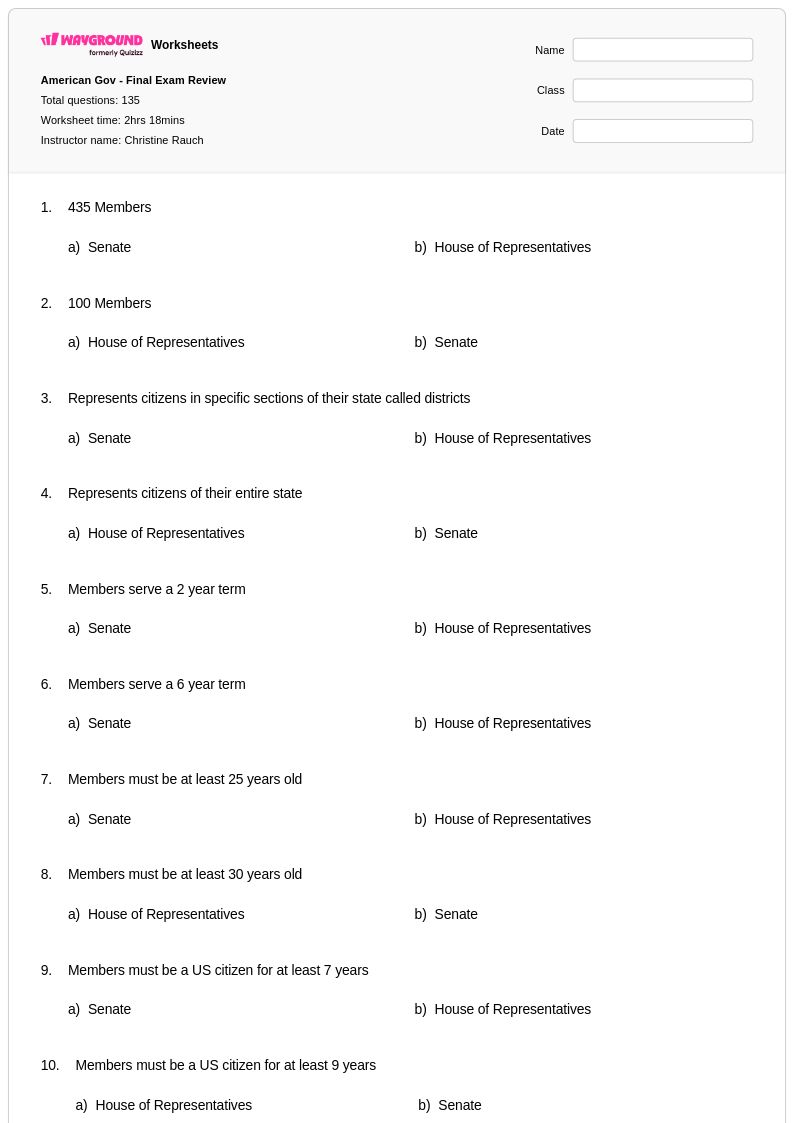
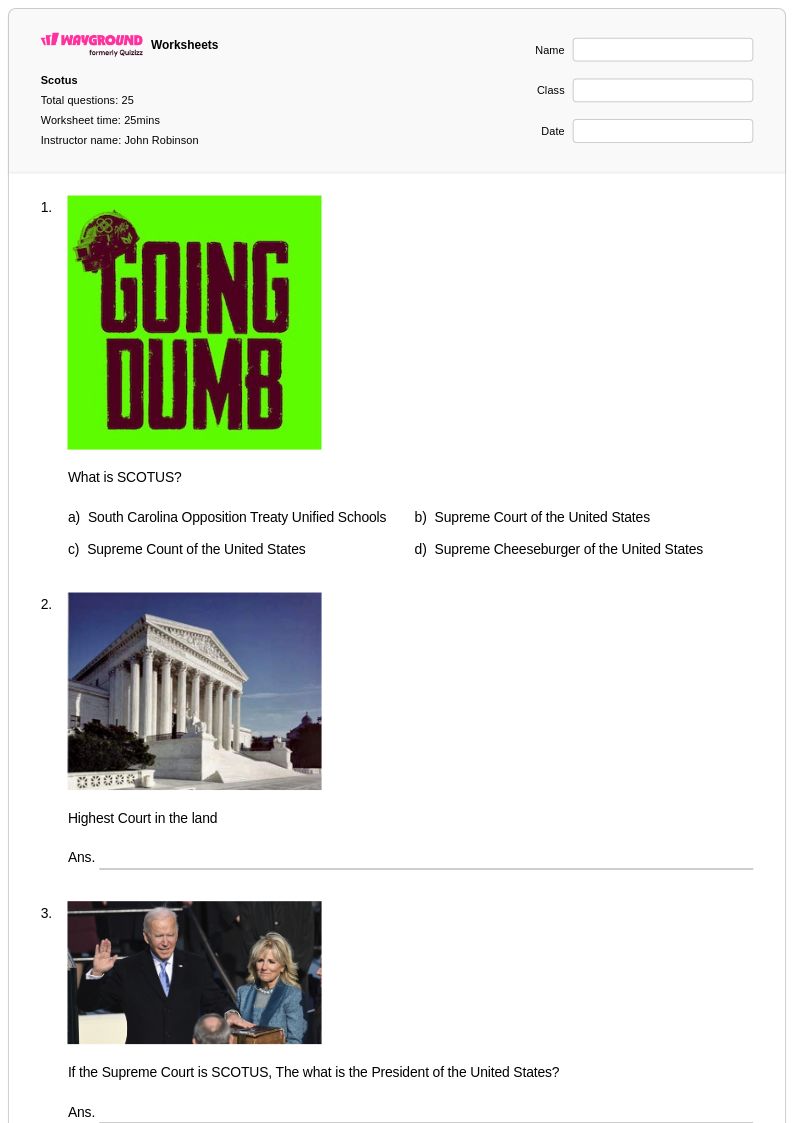
US Supreme Court landmark cases serve as the foundation for understanding constitutional interpretation and judicial precedent in Class 12 civics and government coursework. Wayground's comprehensive worksheet collection focuses on pivotal decisions that have shaped American law and society, from Marbury v. Madison's establishment of judicial review to modern cases involving digital privacy and civil liberties. These expertly crafted worksheets strengthen students' analytical skills through case study examination, constitutional analysis, and critical thinking exercises that connect historical judicial decisions to contemporary legal issues. Each worksheet includes detailed answer keys and practice problems that guide students through complex legal reasoning, while free printable formats ensure accessibility for diverse classroom environments and individual study sessions.
Wayground's extensive library of teacher-created resources provides educators with millions of professionally developed materials specifically designed for advanced civics instruction. The platform's robust search and filtering capabilities enable teachers to locate worksheets aligned with state and national social studies standards, while differentiation tools support varied learning needs within Class 12 classrooms. Flexible customization options allow instructors to modify content for specific landmark cases or legal concepts, ensuring materials match curriculum pacing and student readiness levels. Available in both printable and digital pdf formats, these resources streamline lesson planning while providing targeted support for remediation, enrichment, and skill practice in constitutional law and judicial analysis.
FAQs
How do I teach US Supreme Court landmark cases in a civics or government class?
Start by grounding students in the structure and role of the Supreme Court before introducing individual cases. Organize landmark cases thematically — civil rights, federalism, due process, free speech — so students can see patterns in constitutional interpretation rather than memorizing isolated rulings. Using primary source excerpts alongside guided analysis questions helps students engage with legal reasoning directly, which builds the critical thinking skills civics standards require.
What are the most important Supreme Court landmark cases students should know?
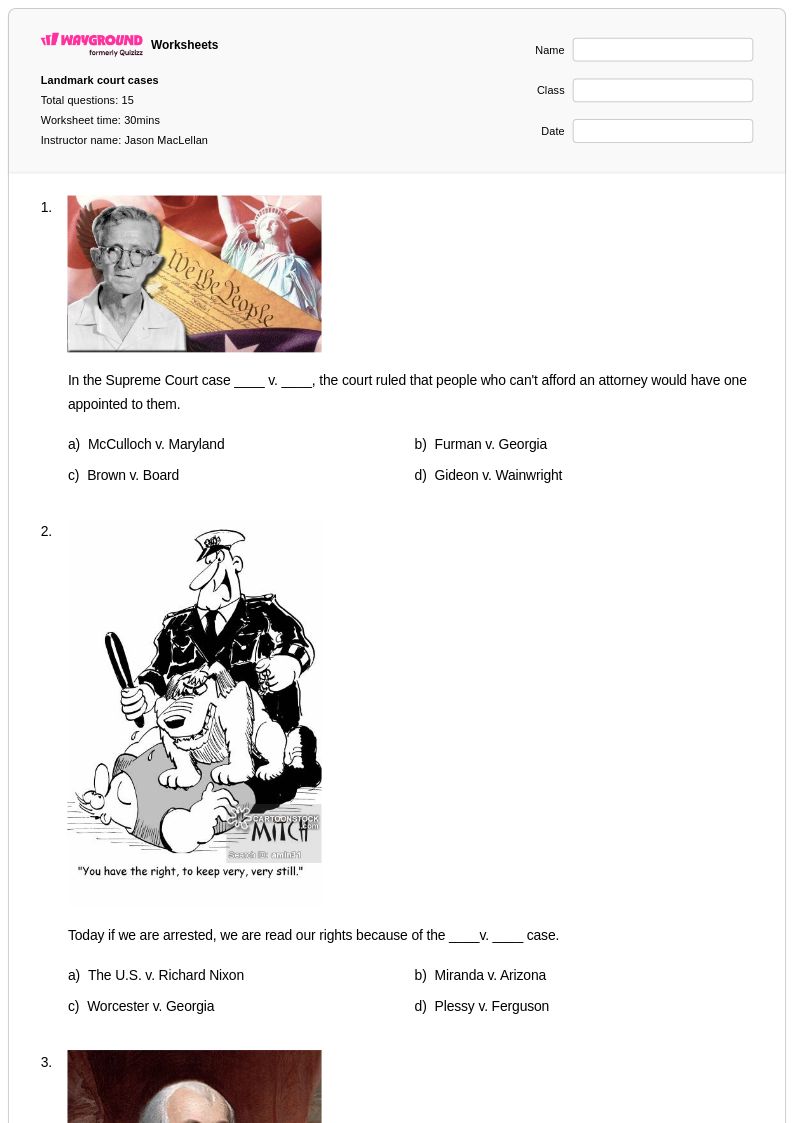
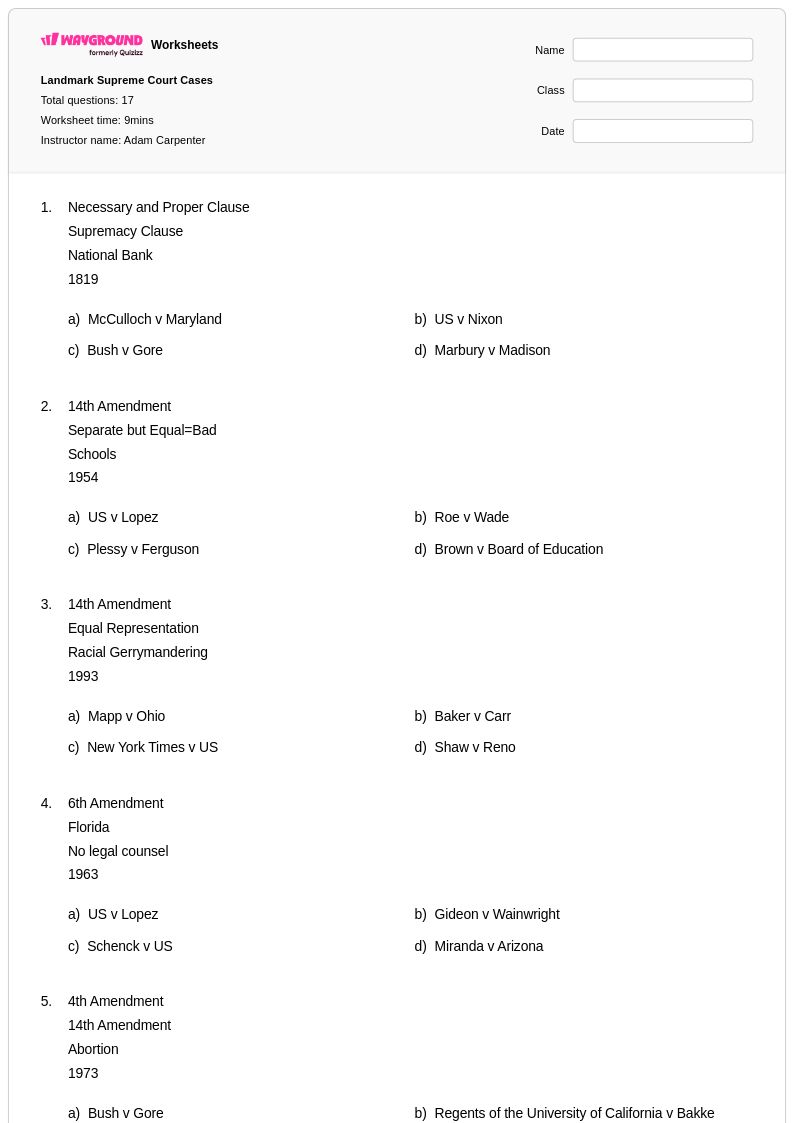
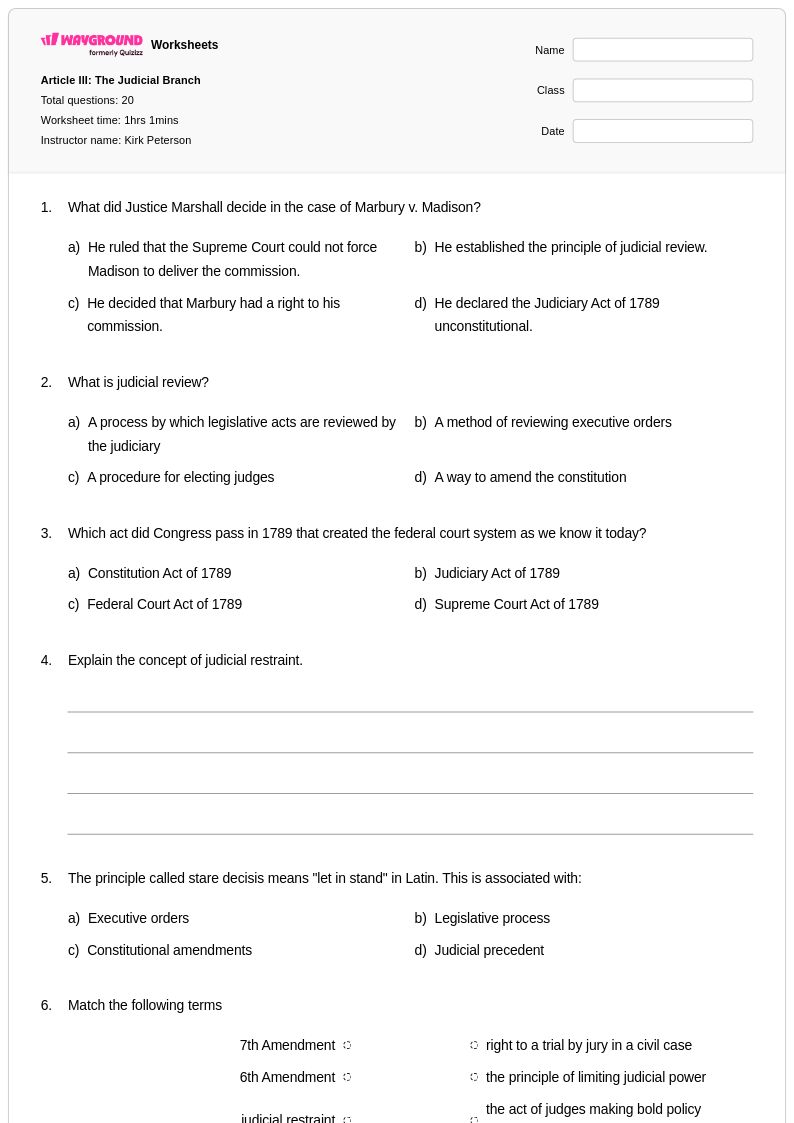
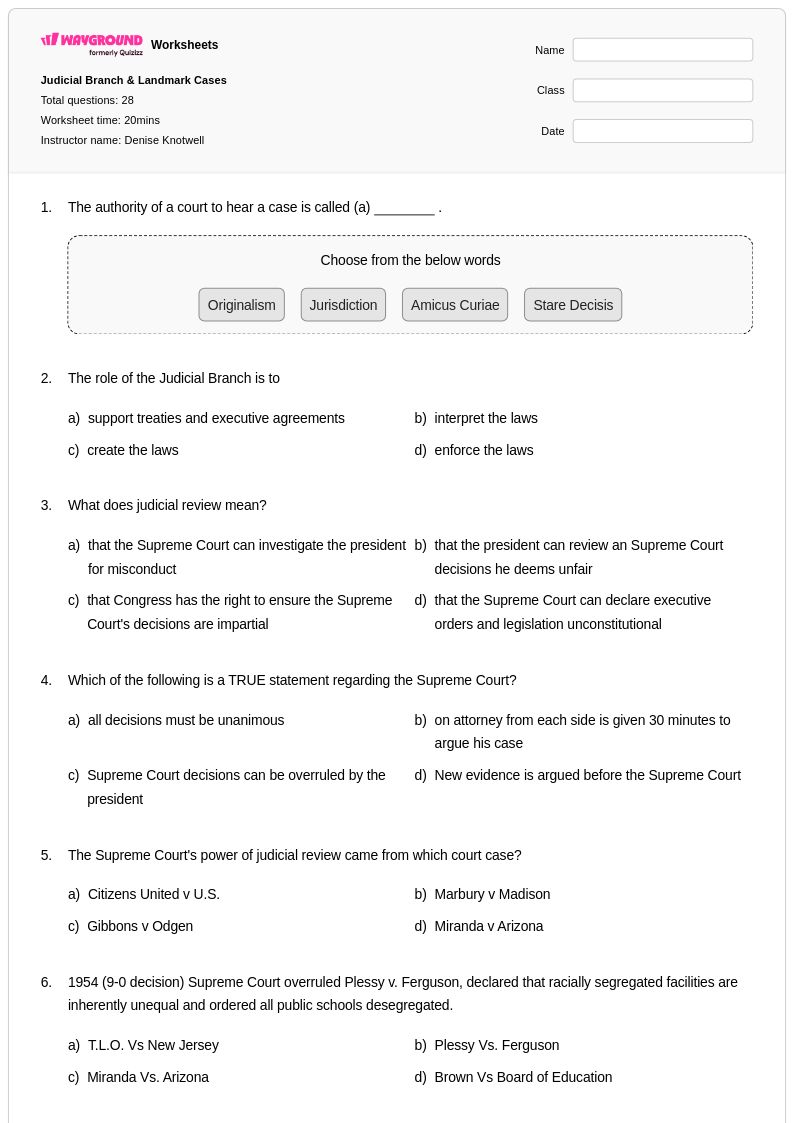
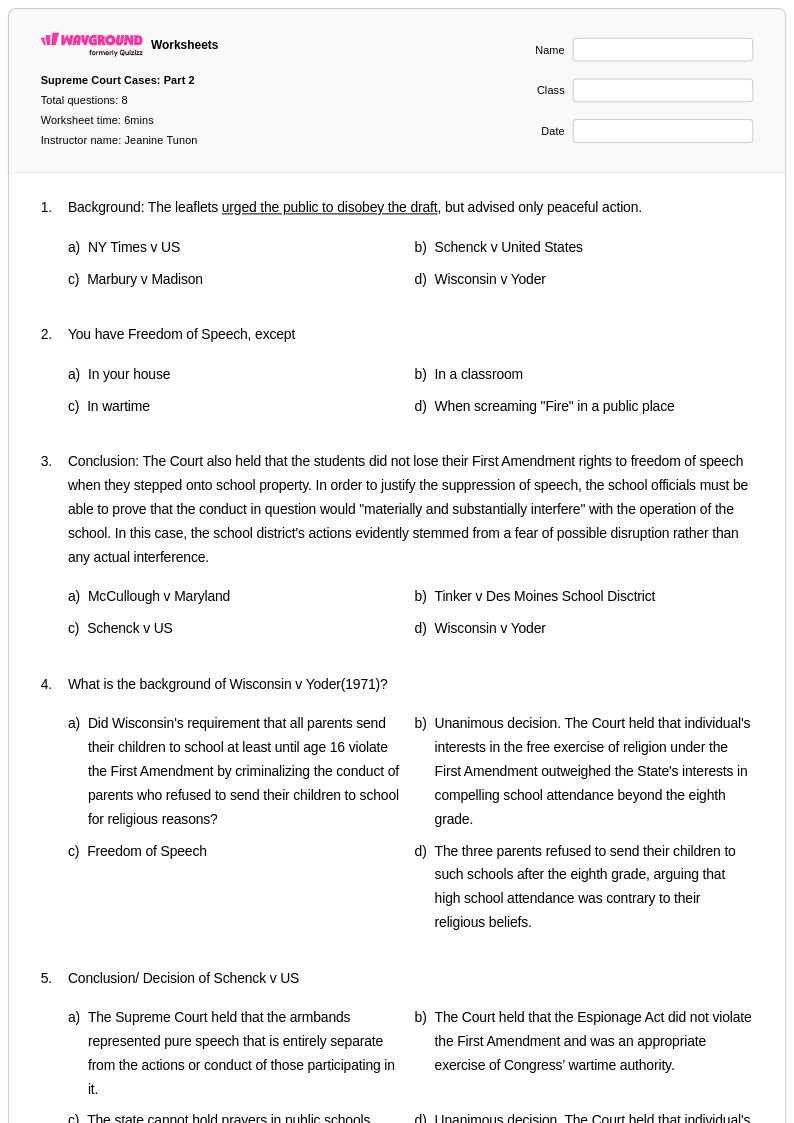
The cases most commonly covered in K-12 civics include Marbury v. Madison (judicial review), Brown v. Board of Education (equal protection), Miranda v. Arizona (due process rights), Tinker v. Des Moines (student free speech), and Roe v. Wade (privacy and due process). These cases collectively illustrate how the Supreme Court has interpreted the Constitution across major areas of American law and society, making them essential anchors for any constitutional literacy curriculum.
What exercises help students practice analyzing Supreme Court decisions?
Effective practice activities include structured case analysis frameworks where students identify the constitutional question, the Court's ruling, the legal reasoning, and the long-term impact of each decision. Applying constitutional principles to hypothetical scenarios is especially valuable because it requires students to think like the justices rather than simply recall facts. Worksheets that prompt students to compare two related cases — such as Plessy v. Ferguson and Brown v. Board — deepen understanding of how judicial precedent evolves.
What mistakes do students commonly make when studying landmark Supreme Court cases?
The most common error is treating Court decisions as final and permanent rather than understanding they can be revisited or overturned. Students also frequently confuse the constitutional amendment at issue with the broader legal doctrine — for example, conflating the 14th Amendment's equal protection clause with the specific ruling in Brown v. Board. Another persistent misconception is assuming that a unanimous decision is more legally authoritative than a split decision, which requires direct instruction to correct.
How can I use Supreme Court landmark cases worksheets to support different reading levels in my classroom?
Differentiated worksheets allow you to assign the same case to all students while adjusting the complexity of reading passages, question scaffolding, or answer format. On Wayground, teachers can apply student-level accommodations such as Read Aloud for students who need audio support, reduced answer choices to lower cognitive load for struggling learners, and adjustable font sizes and reading themes through Reading Mode. These settings can be applied individually to specific students while the rest of the class receives standard settings, making differentiation seamless and private.
How do I use Wayground's Supreme Court landmark cases worksheets in my classroom?
Wayground's Supreme Court landmark cases worksheets are available as printable PDFs for traditional classroom use and in digital formats for technology-integrated environments, accommodating varied teaching setups and student preferences. Teachers can also host worksheets directly as a quiz on Wayground, enabling real-time student responses and immediate feedback. Each worksheet includes a comprehensive answer key, so the materials support both whole-class instruction and independent student work without additional preparation.