Class 10 verb forms worksheets from Wayground help students master complex verb tenses, moods, and conjugations through comprehensive practice problems, printable PDFs, and detailed answer keys for effective grammar reinforcement.
Explore printable Verb Forms worksheets for Class 10
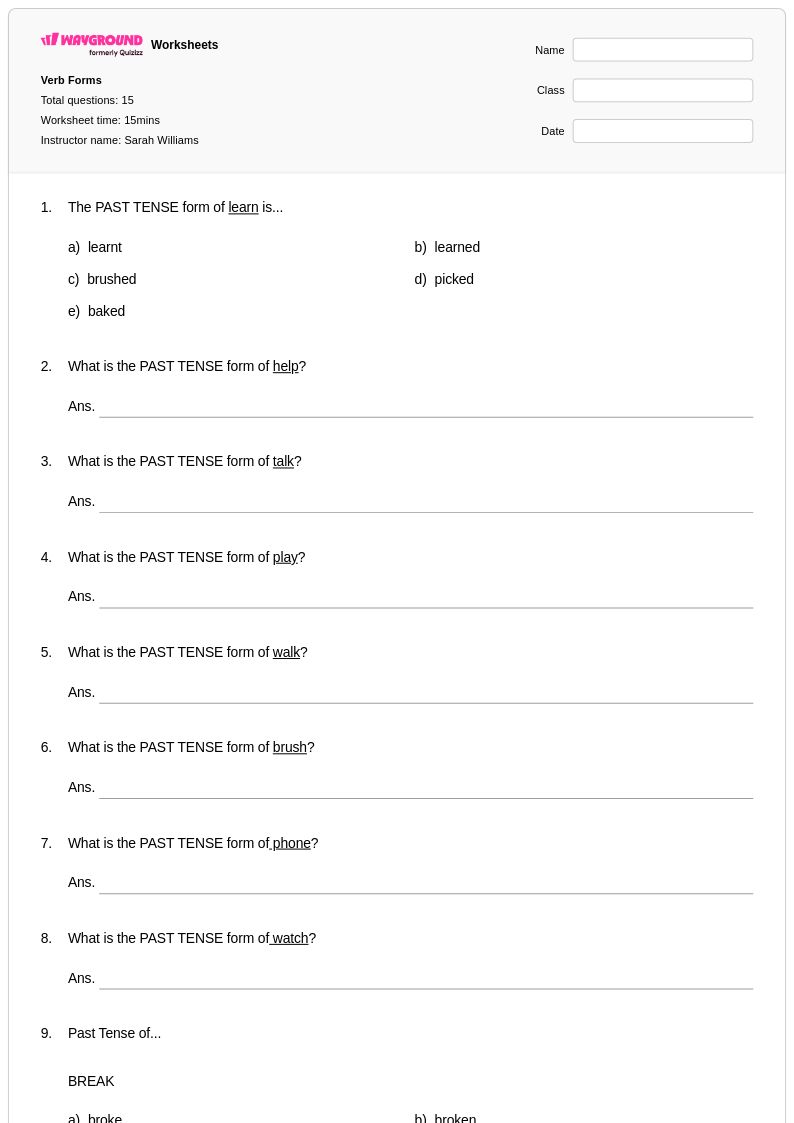
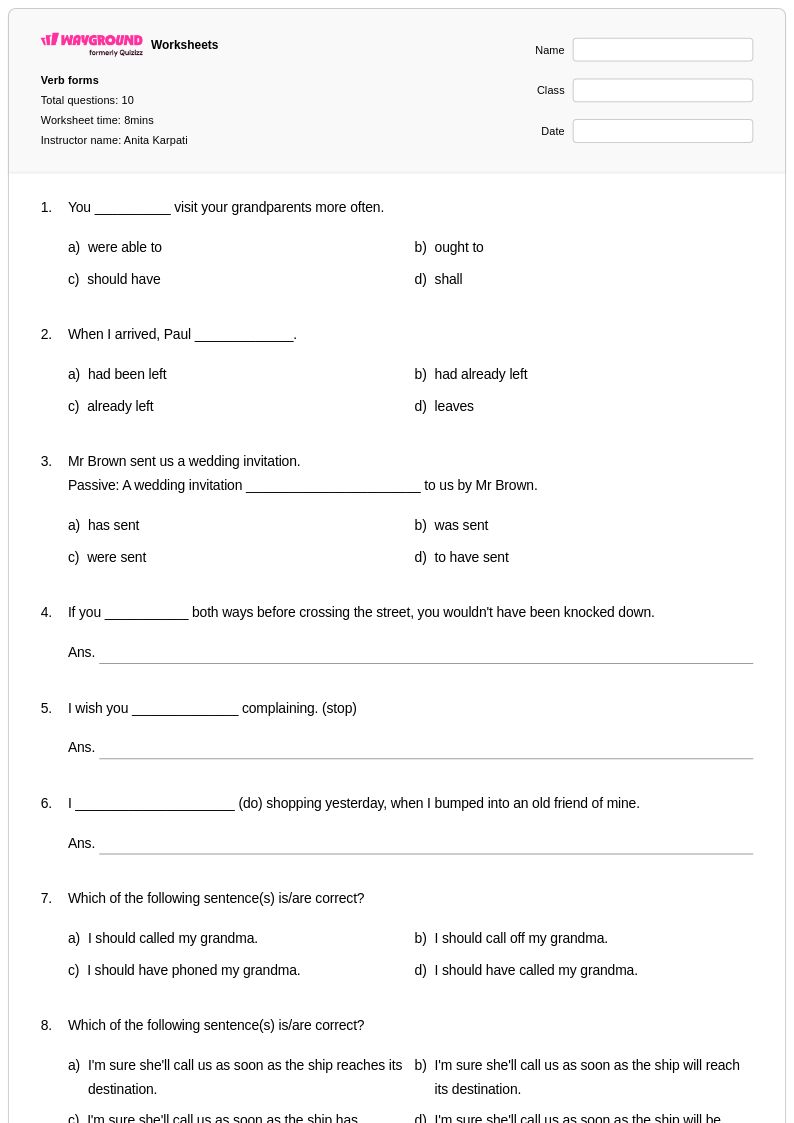
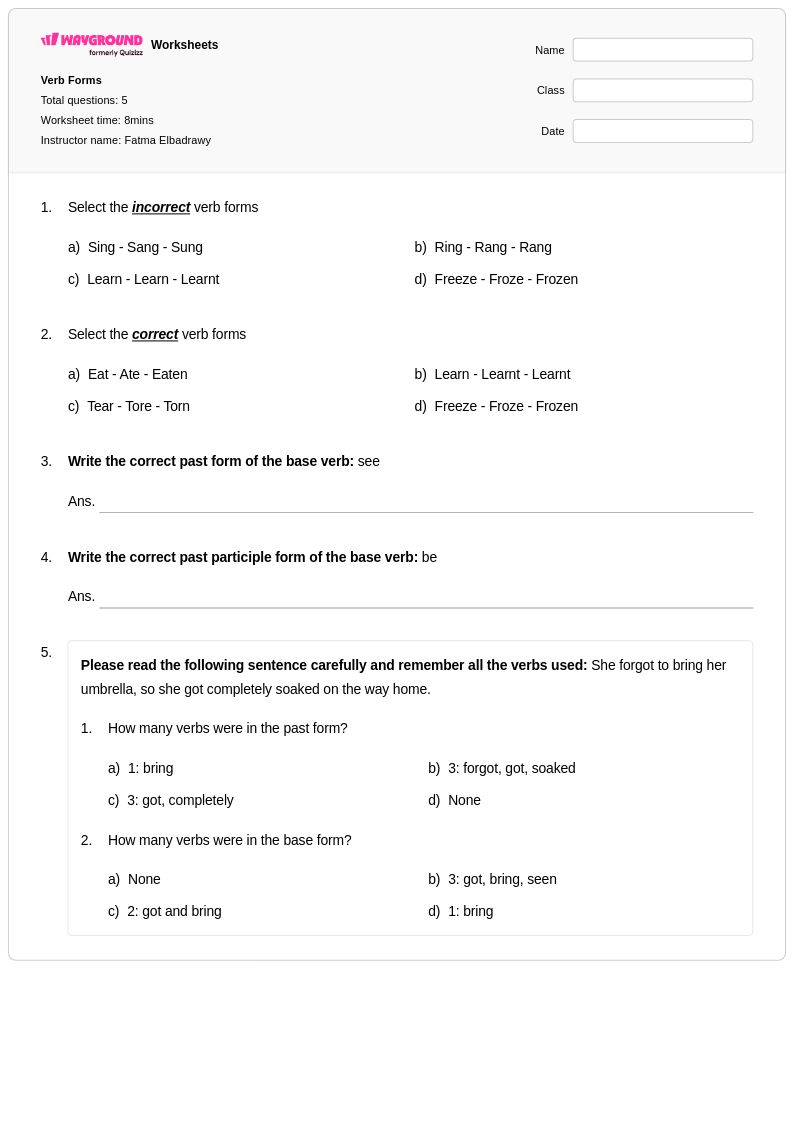
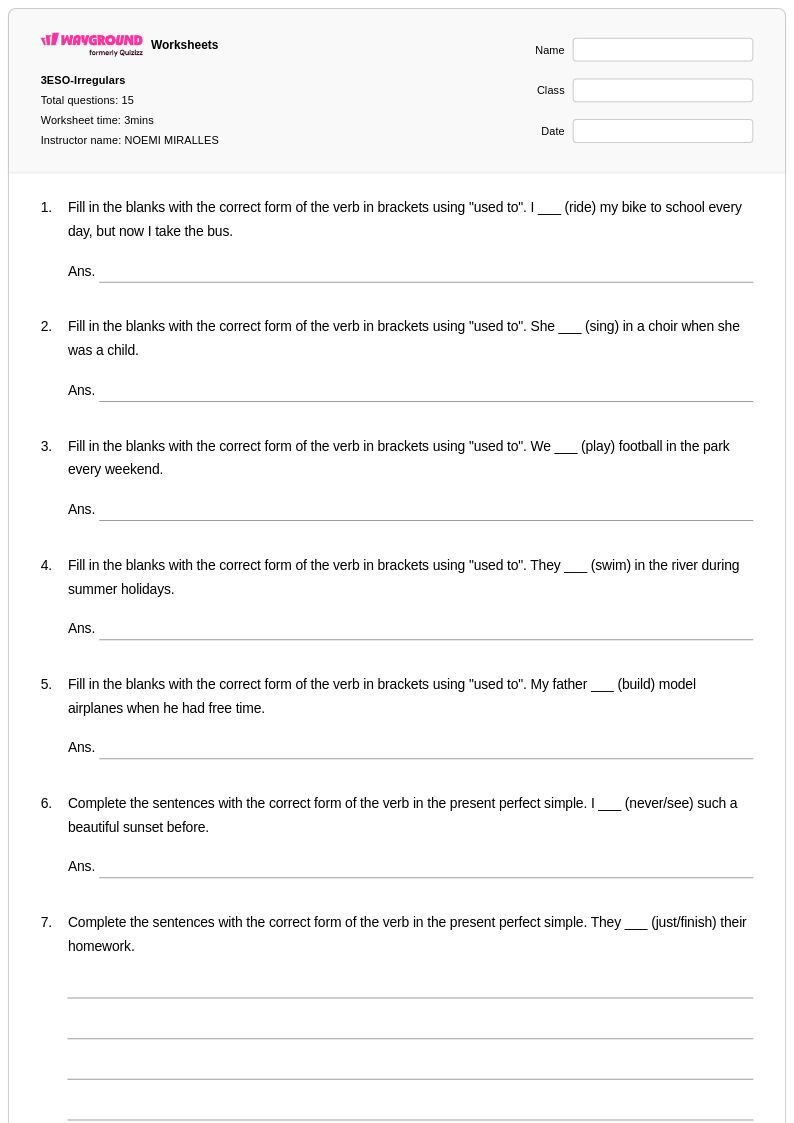
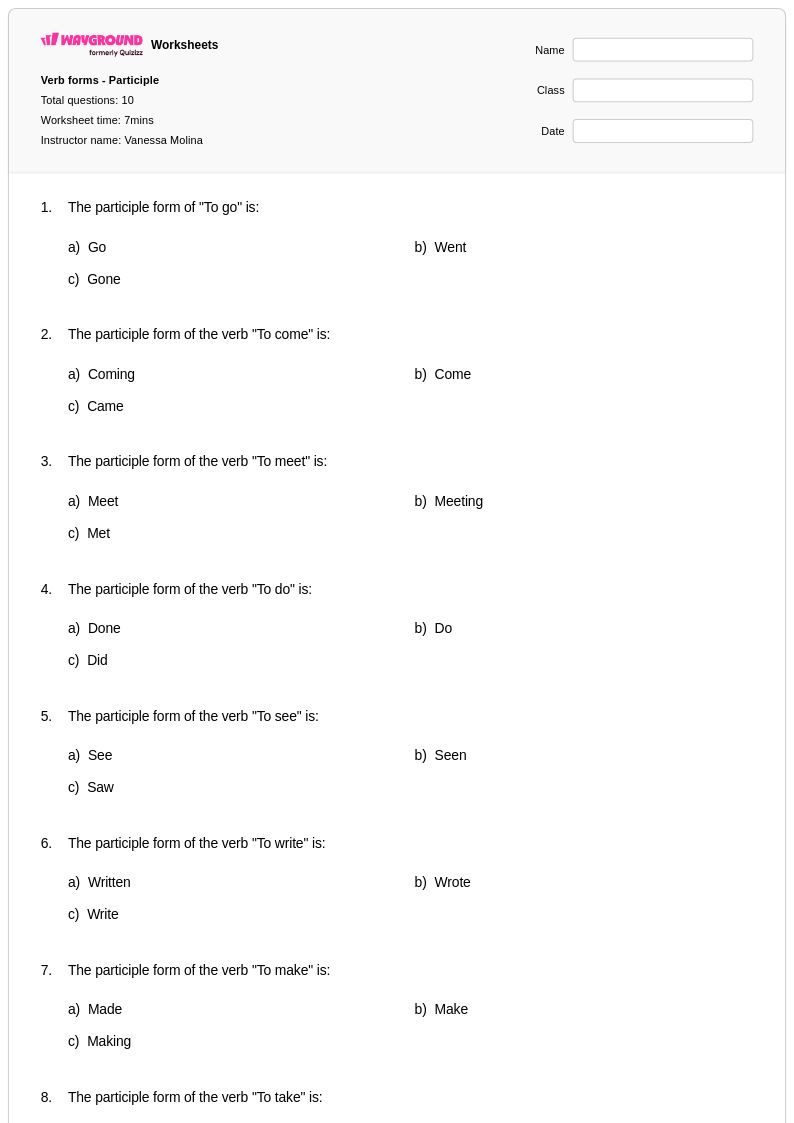
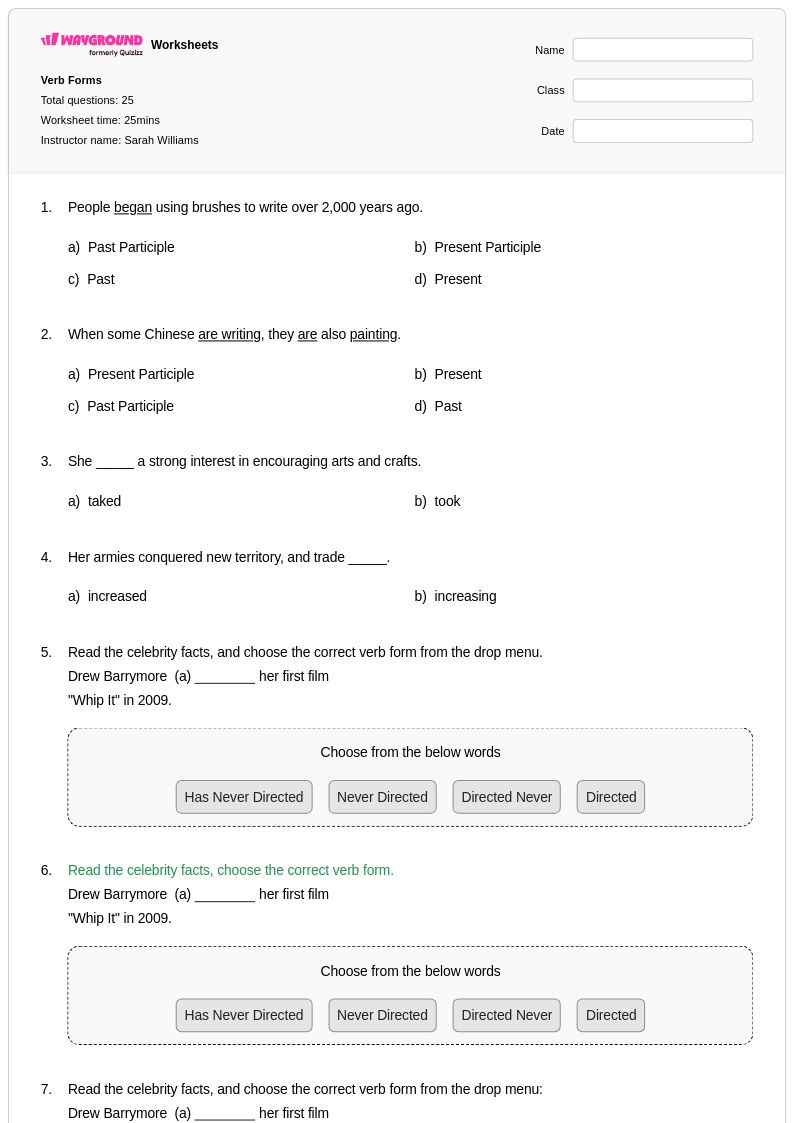
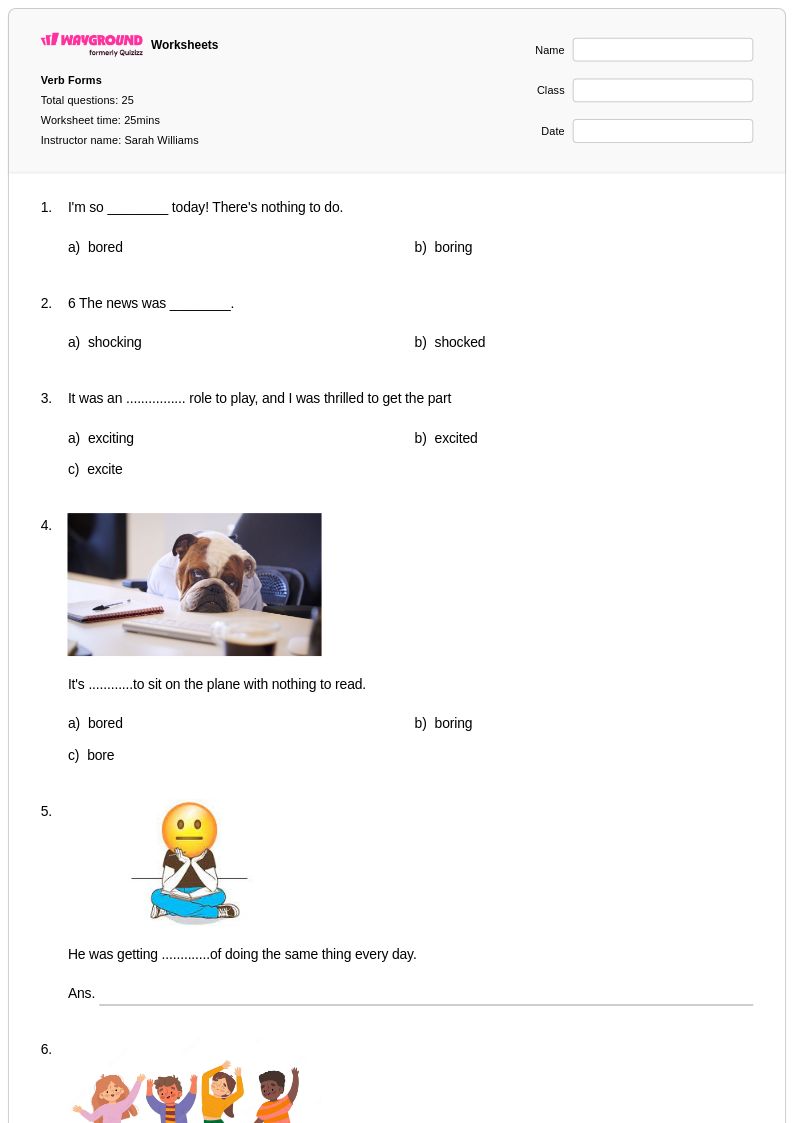
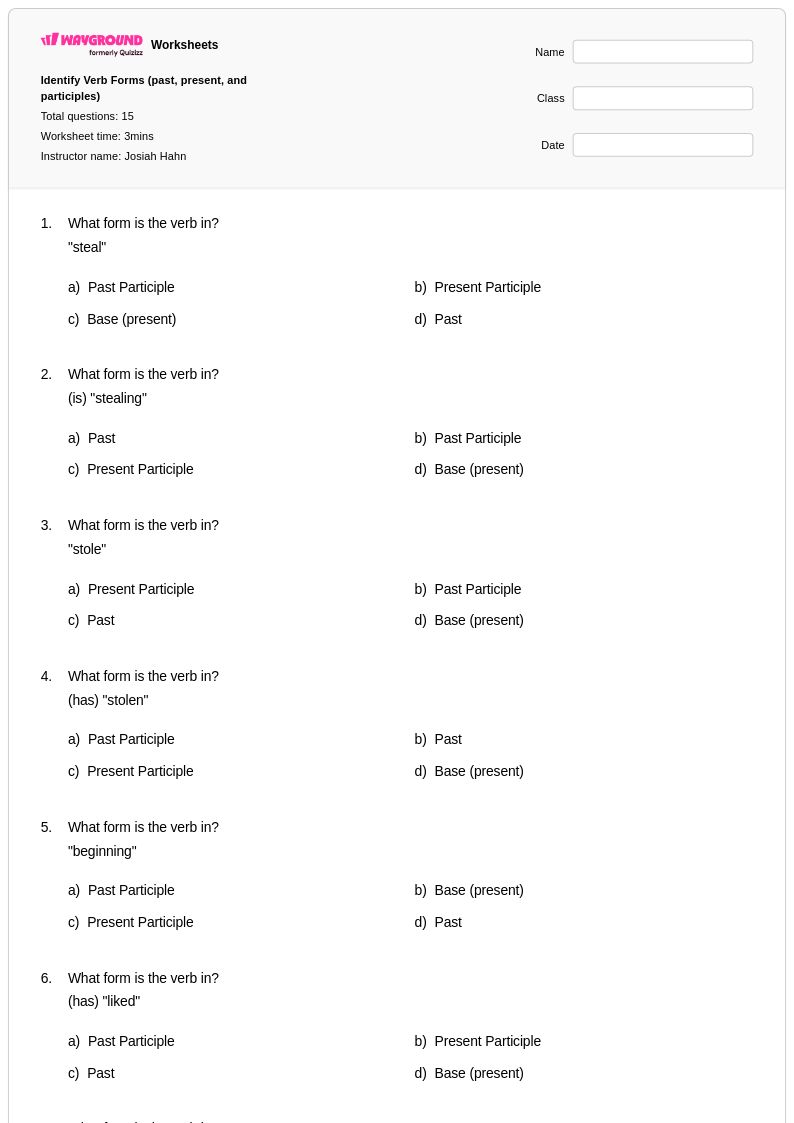
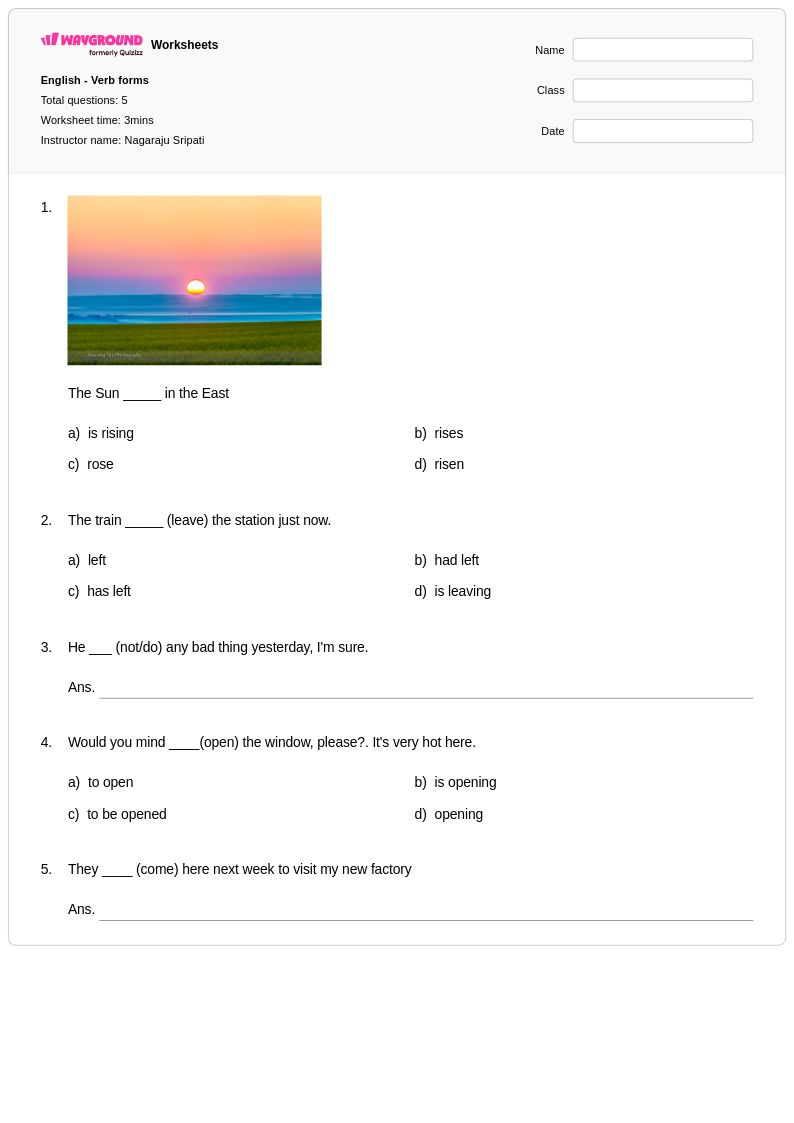
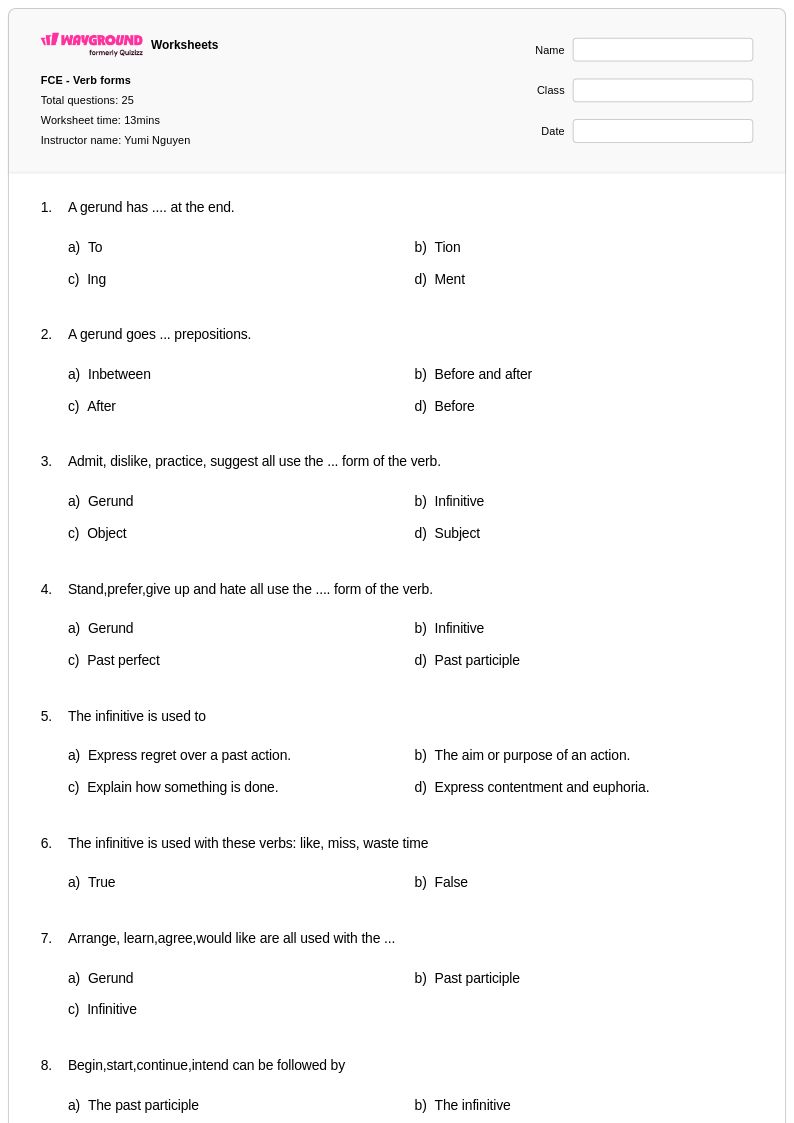
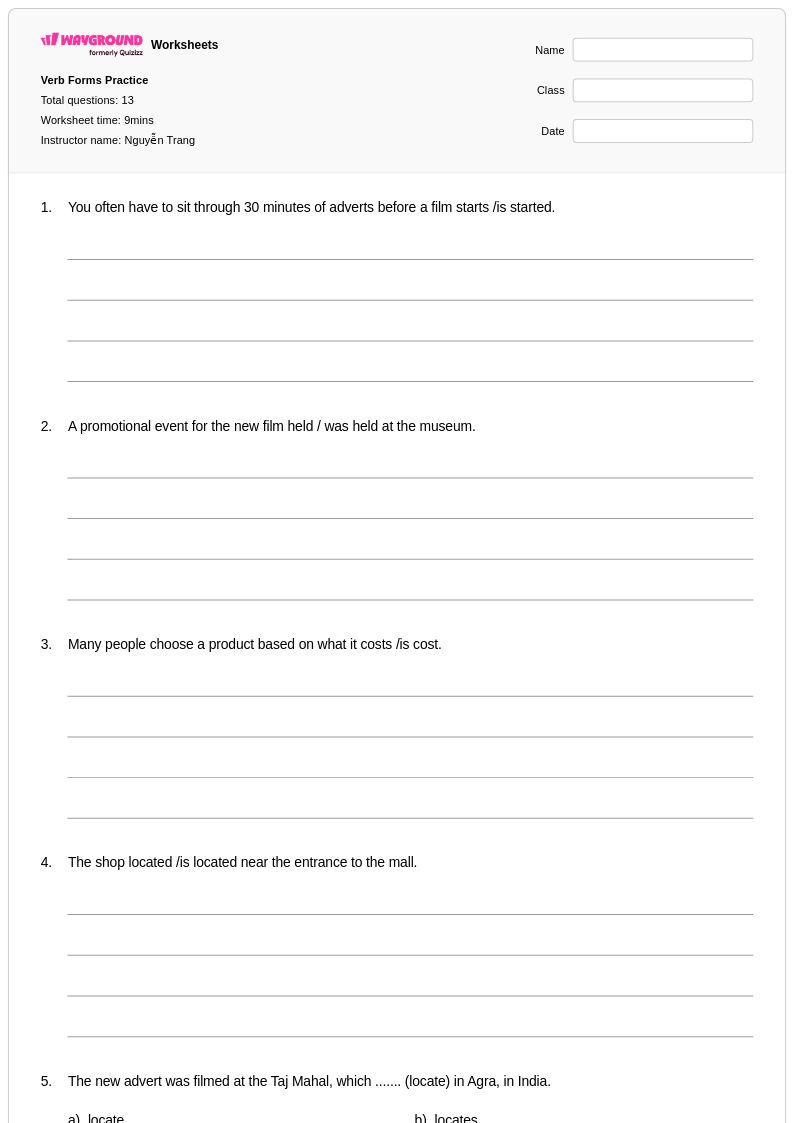
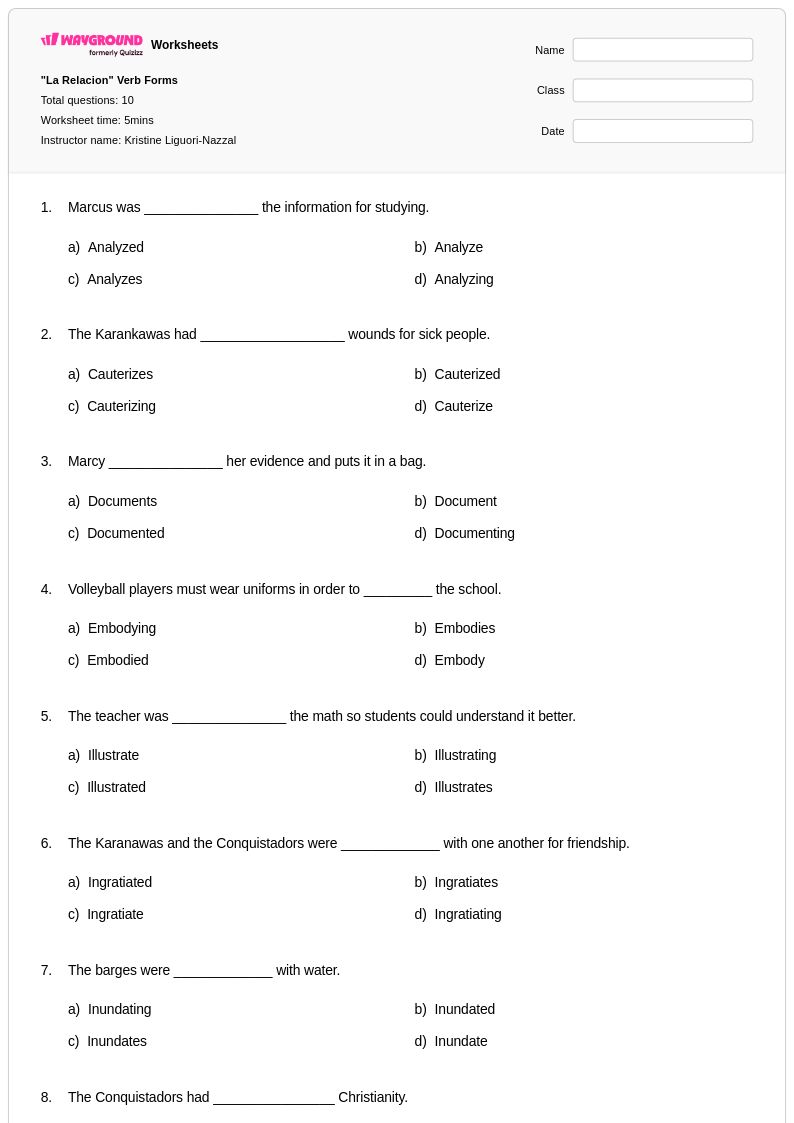
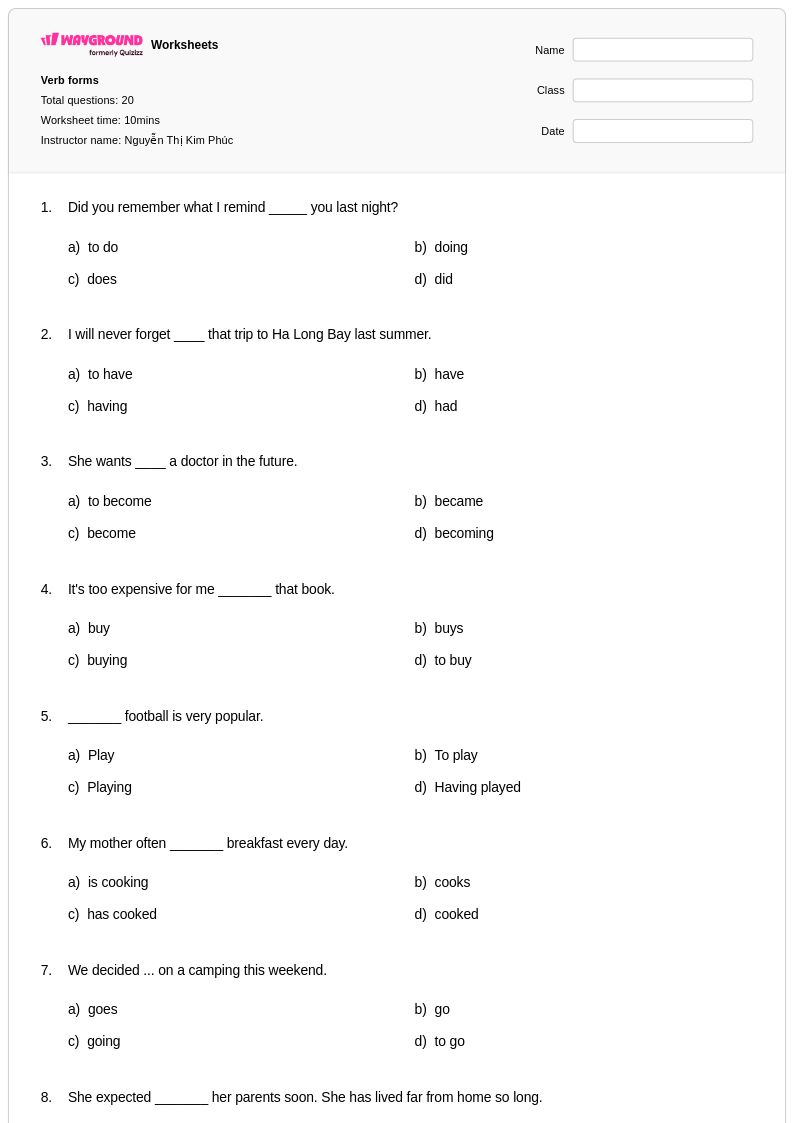
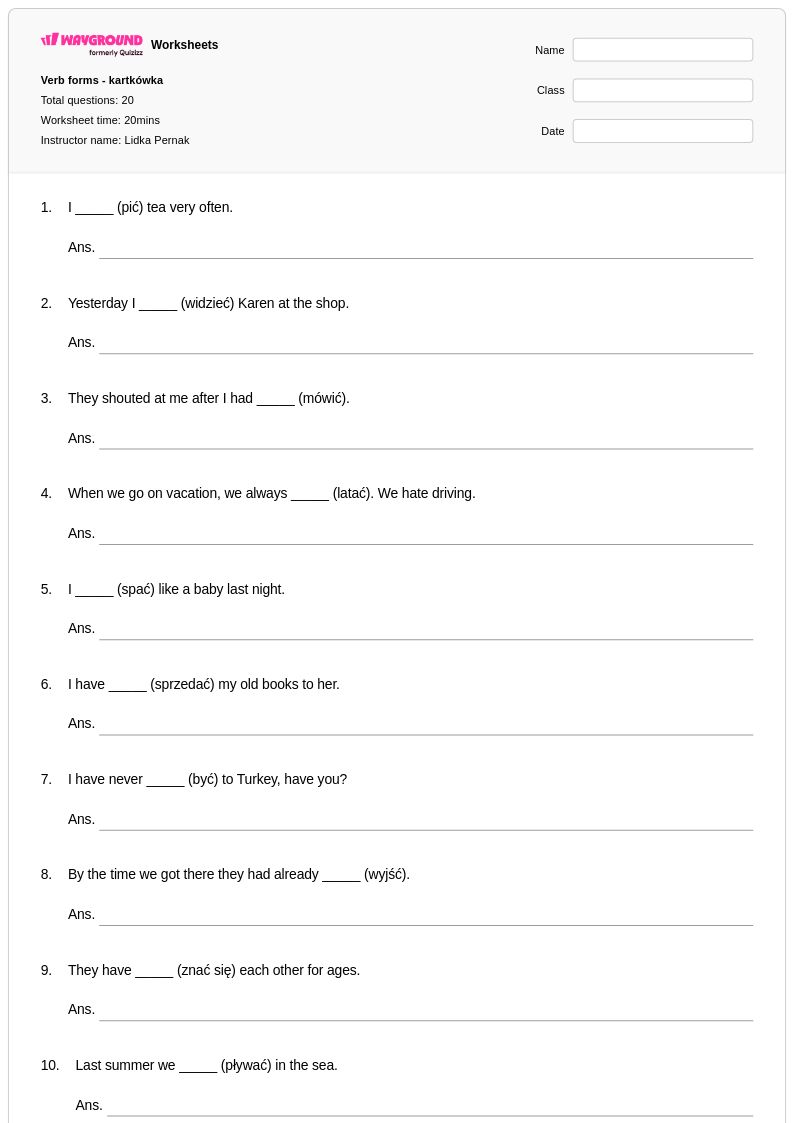
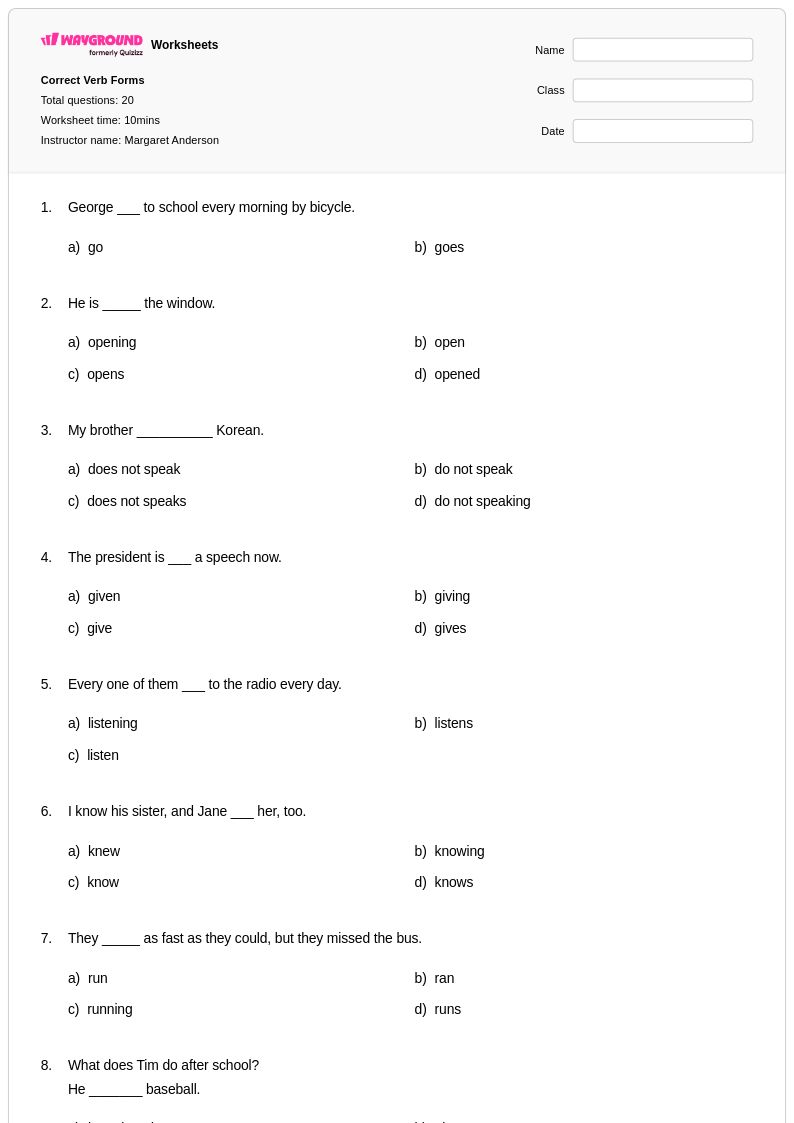
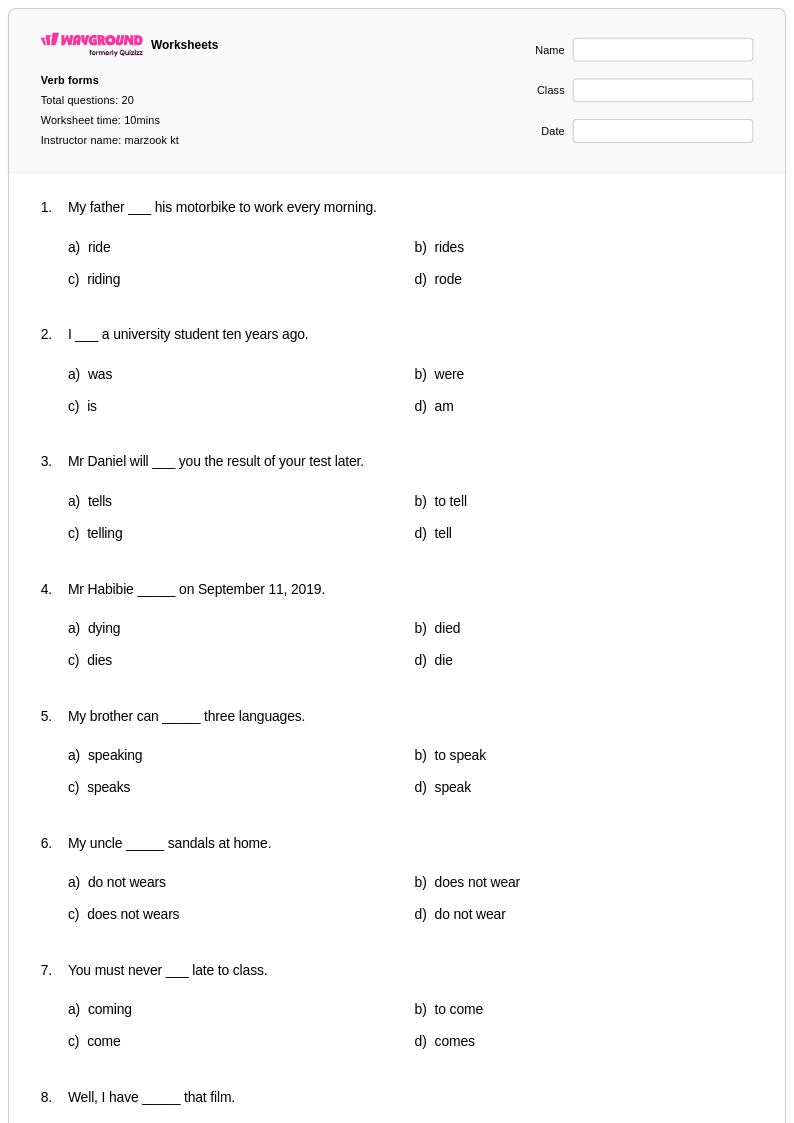
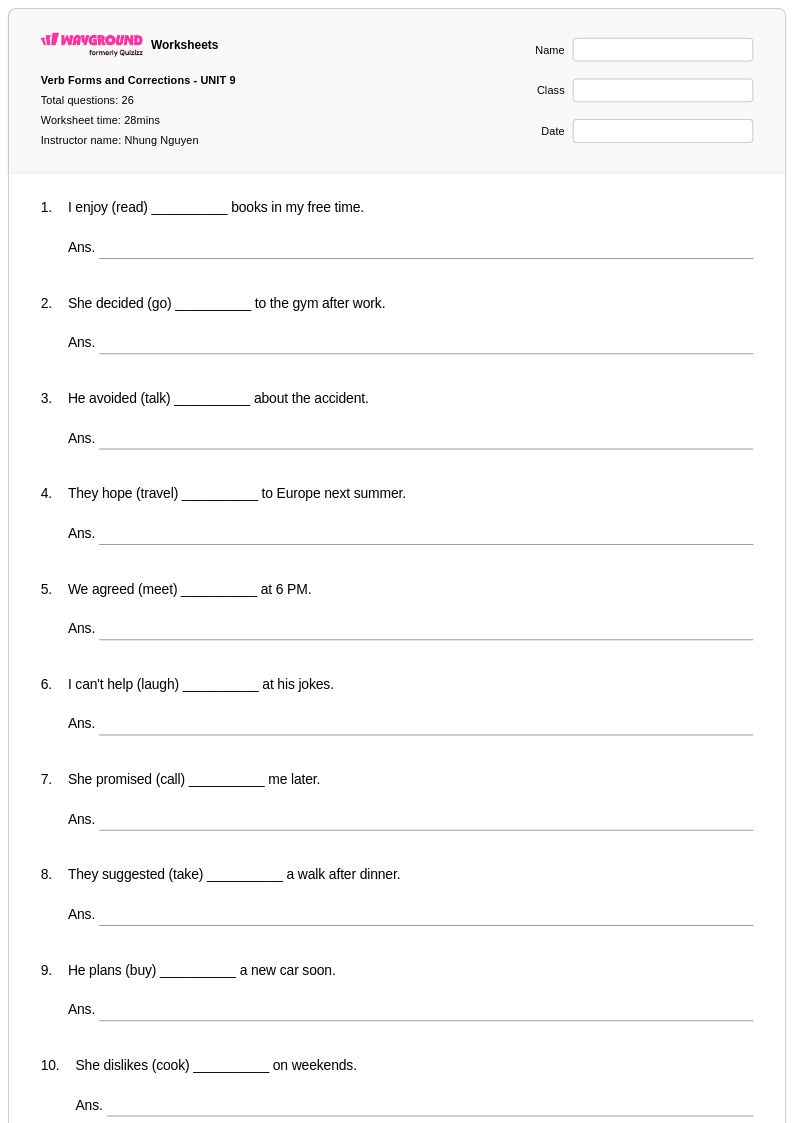
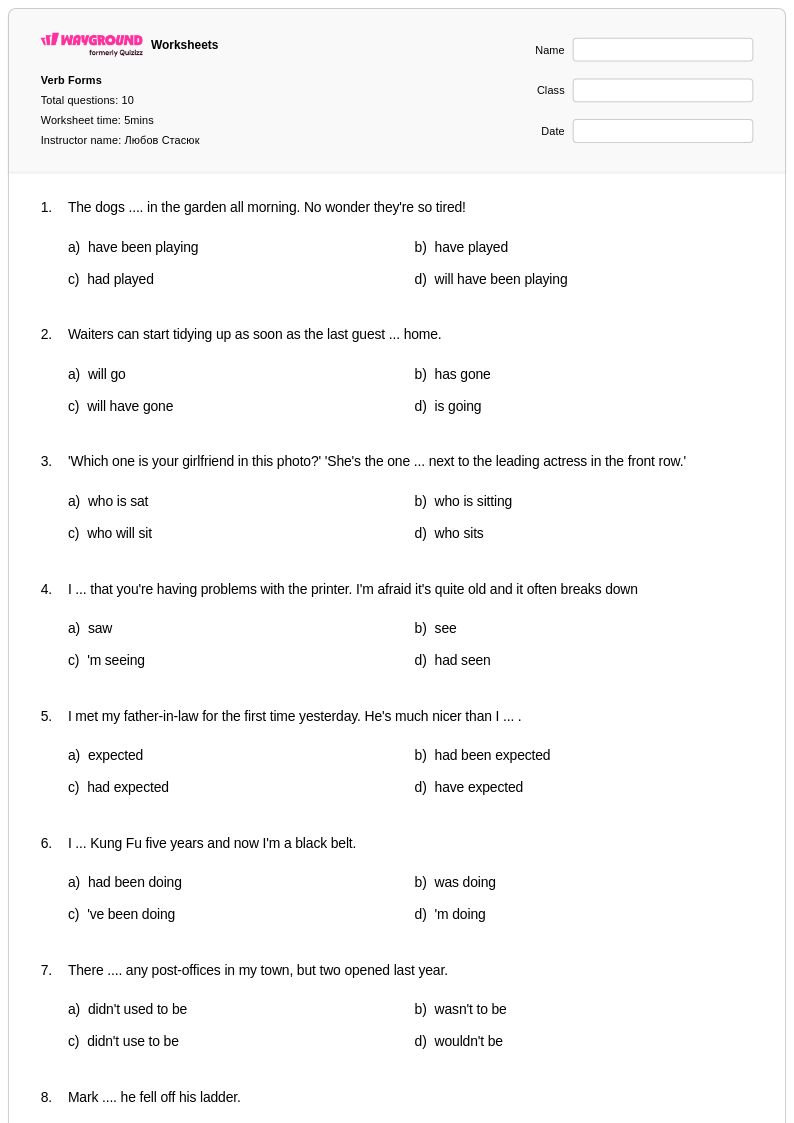
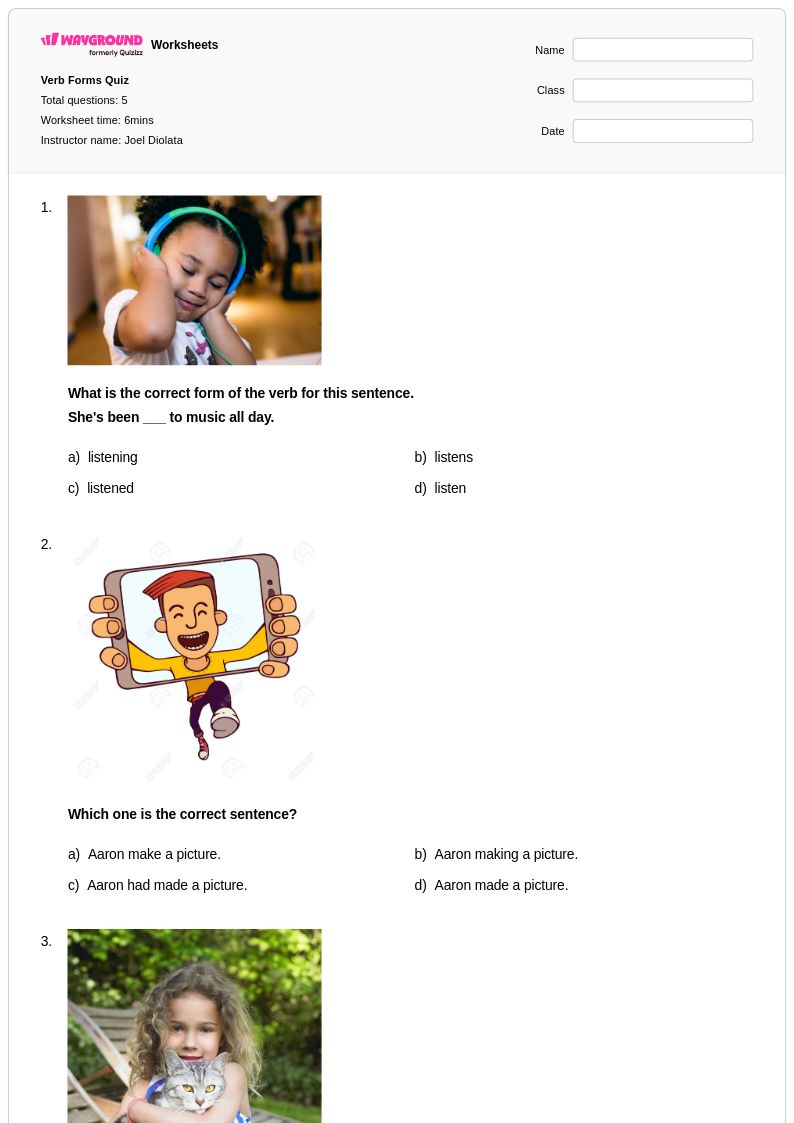
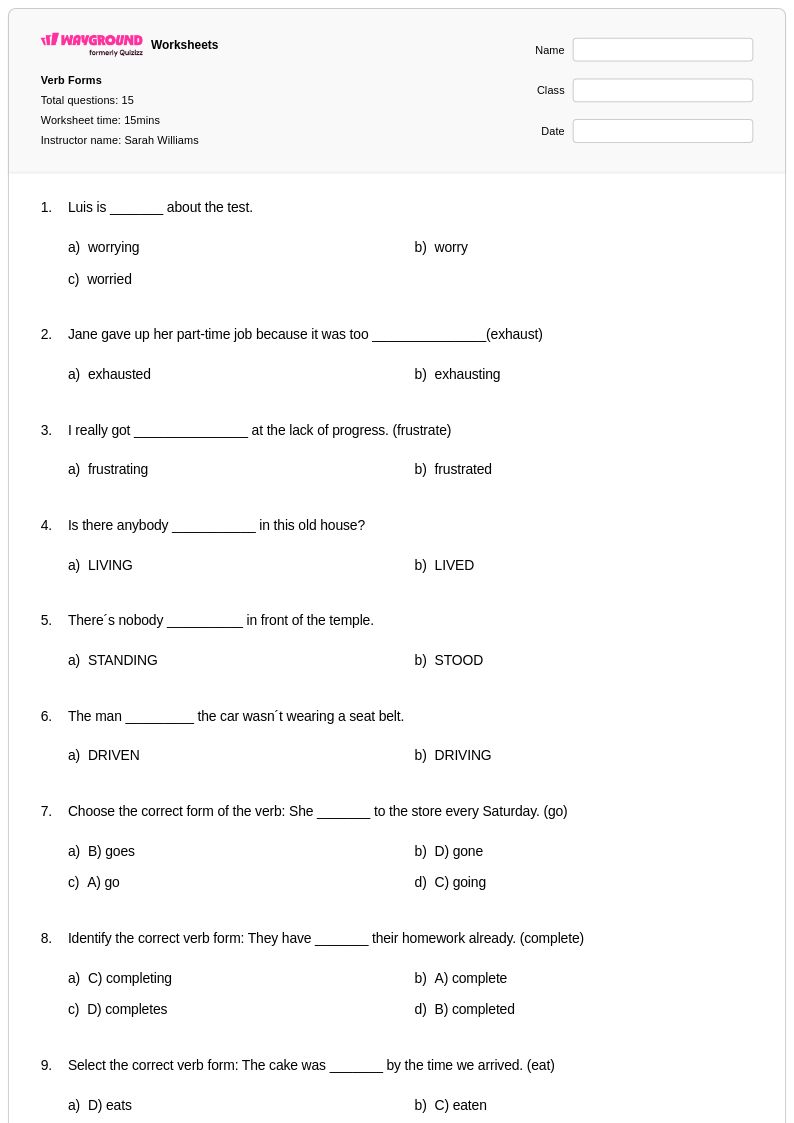
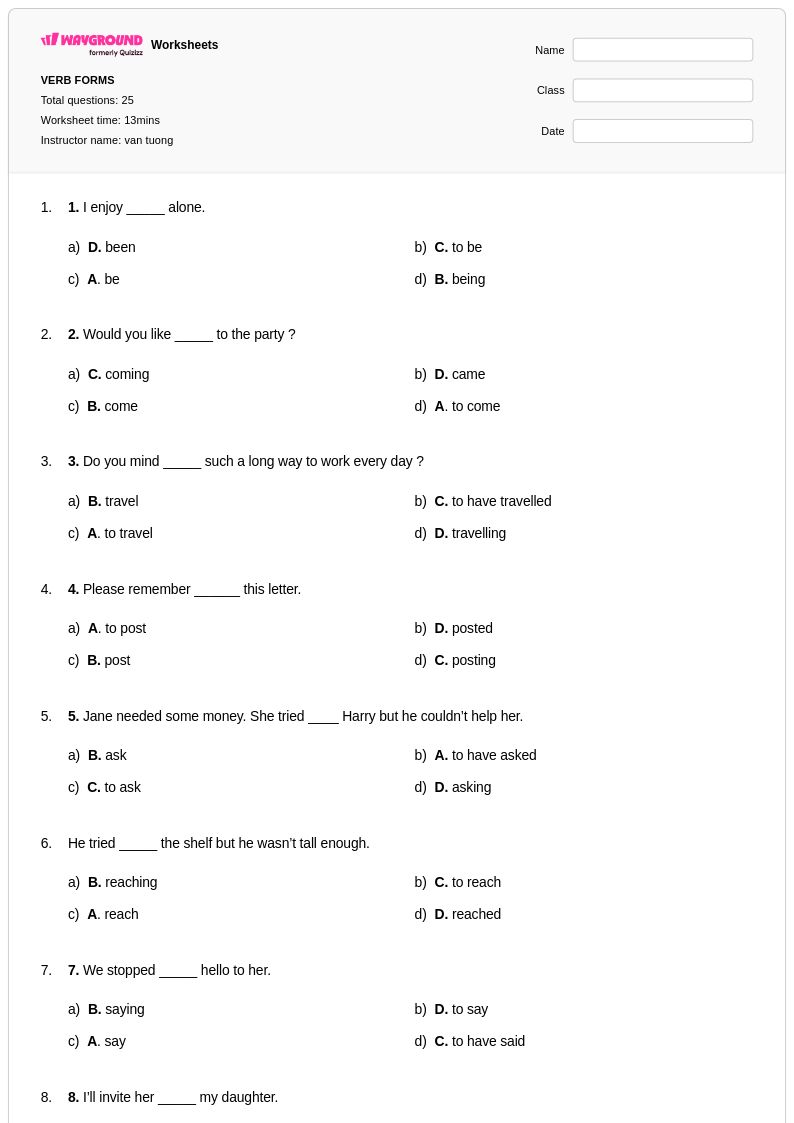
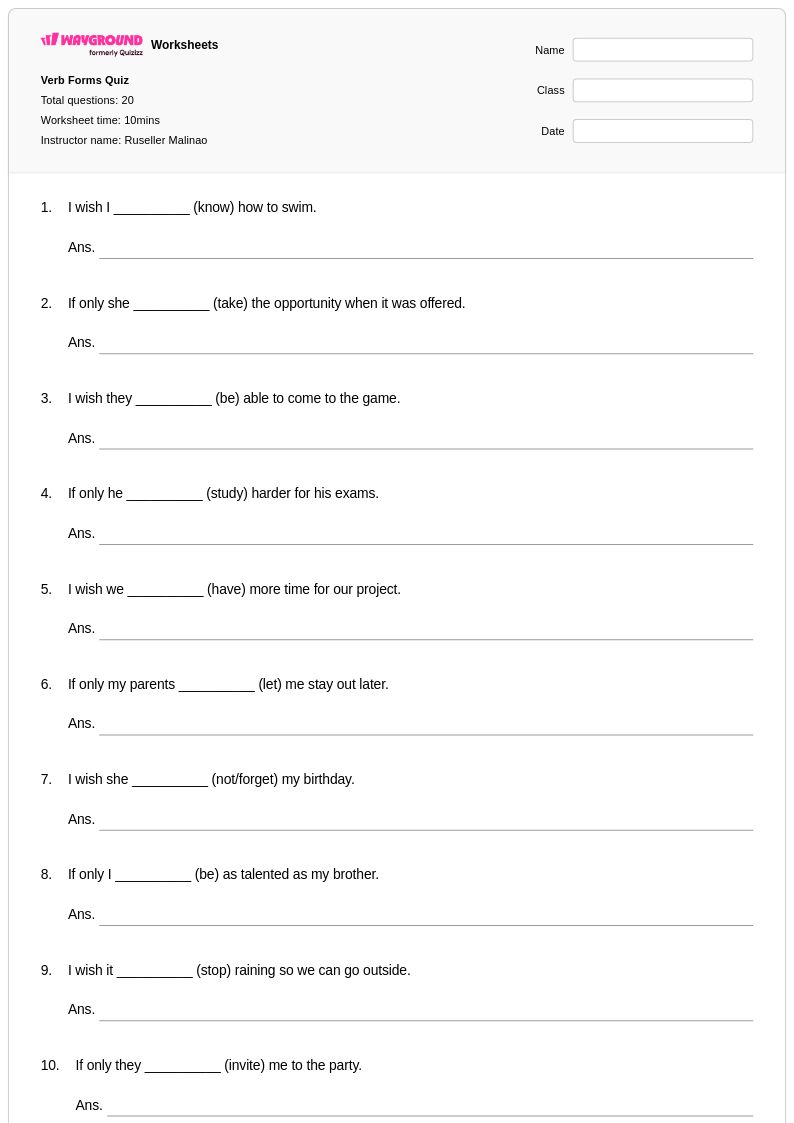
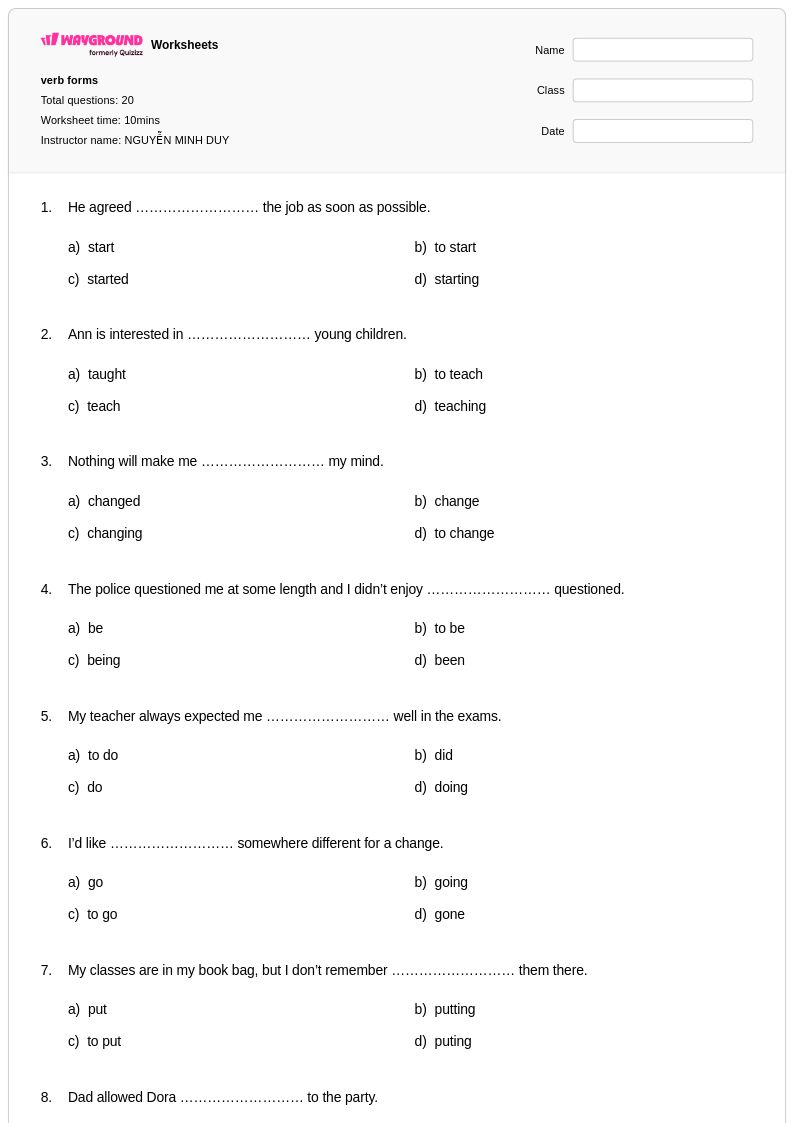
Verb forms worksheets for Class 10 students available through Wayground (formerly Quizizz) provide comprehensive practice with the complex verb structures essential for advanced English proficiency. These expertly designed resources help students master challenging concepts including perfect tenses, subjunctive mood, conditional constructions, and passive voice transformations that are crucial for sophisticated writing and communication. Each worksheet collection includes detailed answer keys and covers progressive skill development from basic verb conjugation review through advanced applications like gerunds, infinitives, and participles in complex sentence structures. Students work through carefully scaffolded practice problems that reinforce proper usage of irregular verbs, modal auxiliaries, and verb agreement in compound and complex sentences. These free printable resources and PDF materials support both classroom instruction and independent study, allowing students to develop the grammatical precision expected at the Class 10 level.
Wayground (formerly Quizizz) empowers educators with millions of teacher-created verb forms worksheets specifically designed for Class 10 English instruction, all supported by robust search and filtering capabilities that help locate resources aligned with specific curriculum standards and learning objectives. Teachers can easily differentiate instruction by accessing materials at varying complexity levels, from foundational verb tense review for struggling learners to advanced syntactic constructions for enrichment activities. The platform's flexible customization tools allow educators to modify existing worksheets or combine multiple resources to create targeted practice sets that address individual student needs during remediation or skill-building sessions. Both printable and digital formats, including downloadable PDFs, provide seamless integration into diverse instructional settings, whether for whole-class lessons, small group work, homework assignments, or assessment preparation, ensuring that teachers can effectively support their students' mastery of sophisticated verb usage patterns essential for academic and professional communication.
FAQs
How do I teach verb forms to students who are struggling with tense consistency?
Start by isolating one tense at a time and anchoring it to a timeline visual so students can see the relationship between past, present, and future before mixing forms. Once students demonstrate accuracy with individual tenses, introduce contrast exercises that require them to distinguish between, for example, simple past and past perfect in context. Consistent exposure to structured sentence-level practice — rather than isolated fill-in-the-blank drills — helps students internalize tense selection as a meaning-driven choice rather than a memorization task.
What exercises help students practice irregular verb forms?
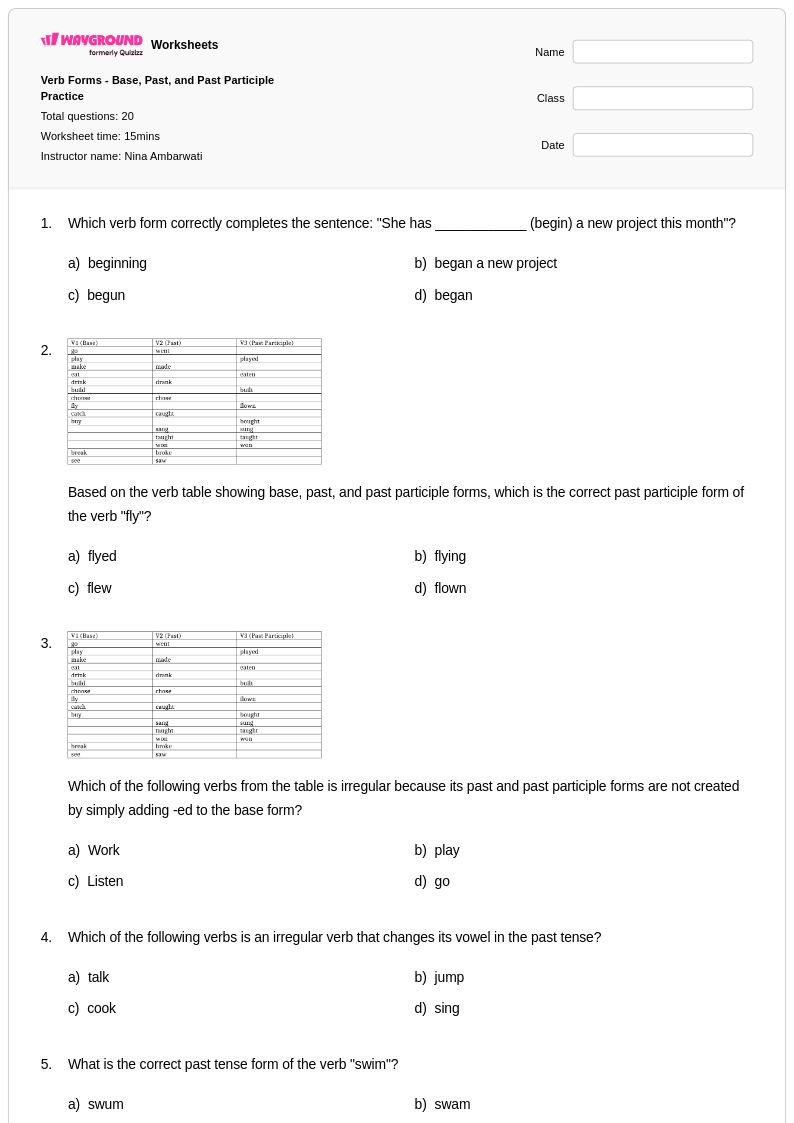
Irregular verb practice is most effective when students encounter the same verbs repeatedly across multiple exercise types, such as gap-fill sentences, sentence transformation, and error correction tasks. Grouping irregular verbs by pattern (e.g., vowel-change verbs like 'begin/began/begun') reduces the memorization burden and helps students recognize internal logic. Timed retrieval practice, where students recall past and past participle forms from base form prompts, builds automaticity that transfers into writing.
What mistakes do students commonly make with verb forms?
The most frequent errors involve overregularizing irregular verbs (writing 'goed' instead of 'went'), confusing simple past with past participle (using 'seen' without an auxiliary), and misapplying progressive aspect (using 'I am knowing' with stative verbs). Subject-verb agreement errors spike when the subject and verb are separated by a prepositional phrase, because students incorrectly match the verb to the nearest noun. Identifying these patterns early through diagnostic worksheets allows teachers to prioritize targeted remediation before errors become habitual.
How do I use Wayground's verb forms worksheets in my classroom?
Wayground's verb forms worksheets are available as printable PDFs for traditional classroom distribution and as interactive digital versions for technology-integrated or remote learning environments. Teachers can also host the material as a quiz directly on Wayground, which makes it easy to track student responses and identify common errors in real time. Each worksheet includes a complete answer key, so the resources work equally well for independent student practice, small-group review, or teacher-led instruction.
How can I differentiate verb forms practice for students at different proficiency levels?
For students who need additional support, reduce the number of answer choices per question and pair exercises with read-aloud functionality so that decoding difficulty does not obscure grammatical understanding. Advanced learners benefit from open-ended sentence construction tasks that require them to deploy multiple verb forms accurately within a single paragraph. On Wayground, teachers can apply individual accommodations — including extended time, read aloud, and reduced answer choices — to specific students without affecting the experience of the rest of the class.
How do I assess whether students have mastered verb tense and aspect distinctions?
Effective assessment of verb forms goes beyond recognition tasks and should include production: ask students to rewrite a paragraph shifting all verbs from past to present, or to complete a cloze passage where each blank requires a different aspect or tense. Error analysis tasks, where students identify and correct verb form mistakes in a given text, reveal whether students understand the grammatical rule or are simply pattern-matching. Answer-key-supported worksheets used after a unit help teachers quickly distinguish students who have consolidated the skill from those who still need reinforcement.