
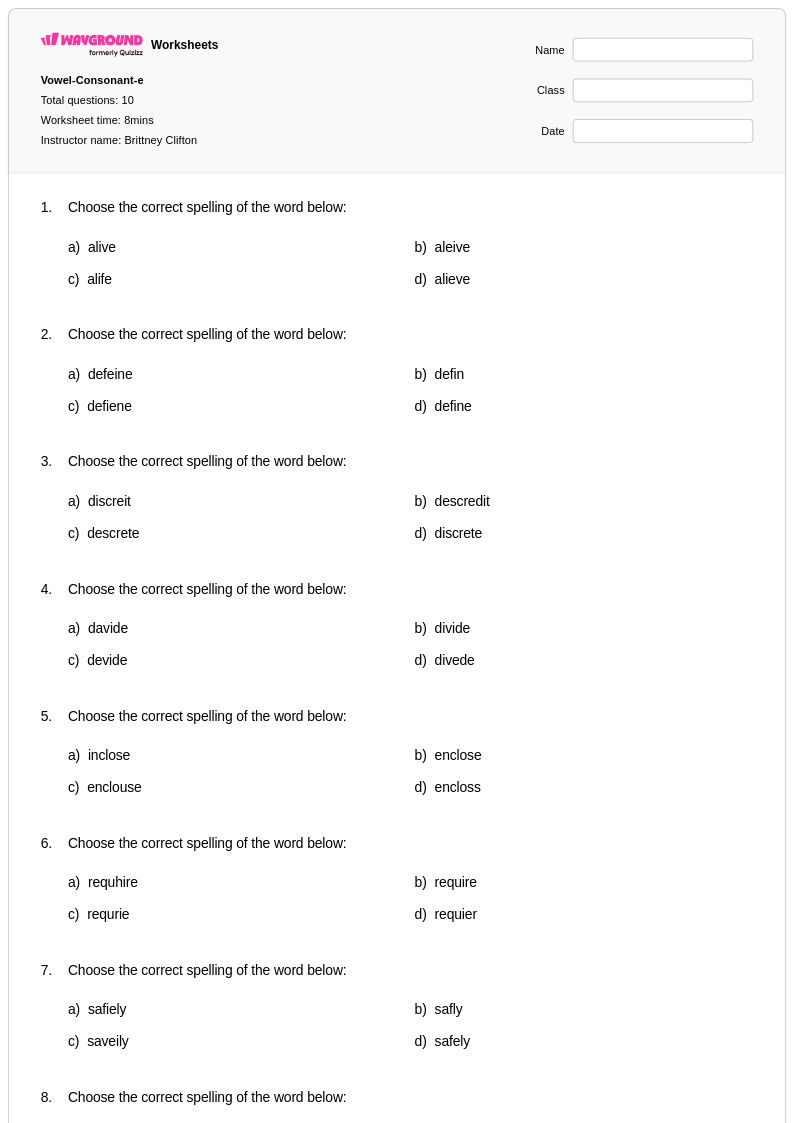
10 Q
4th
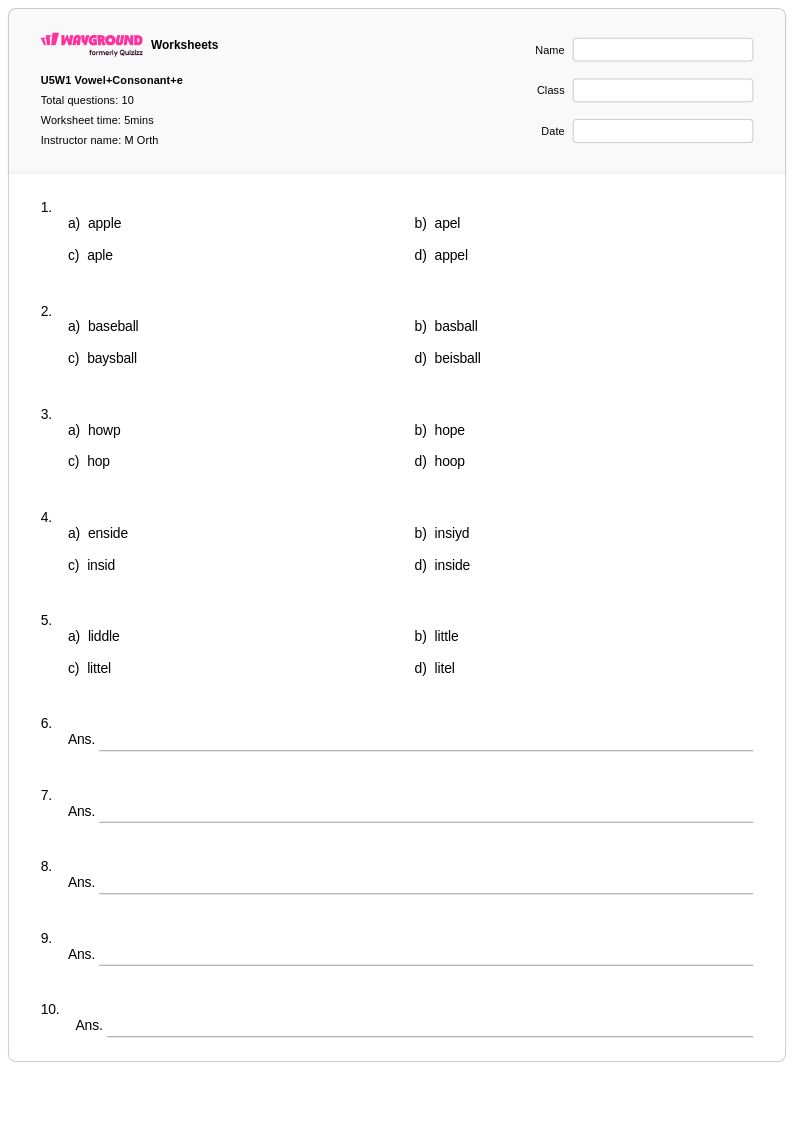
10 Q
2nd
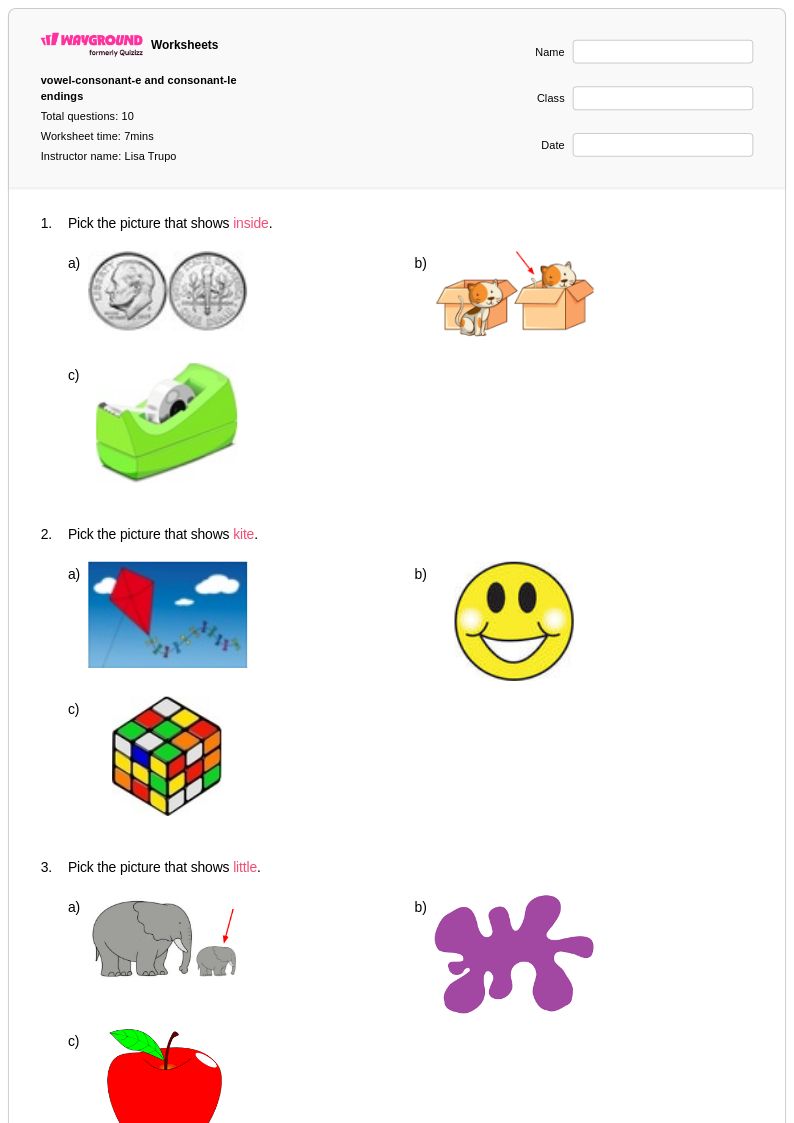
10 Q
KG - 2nd
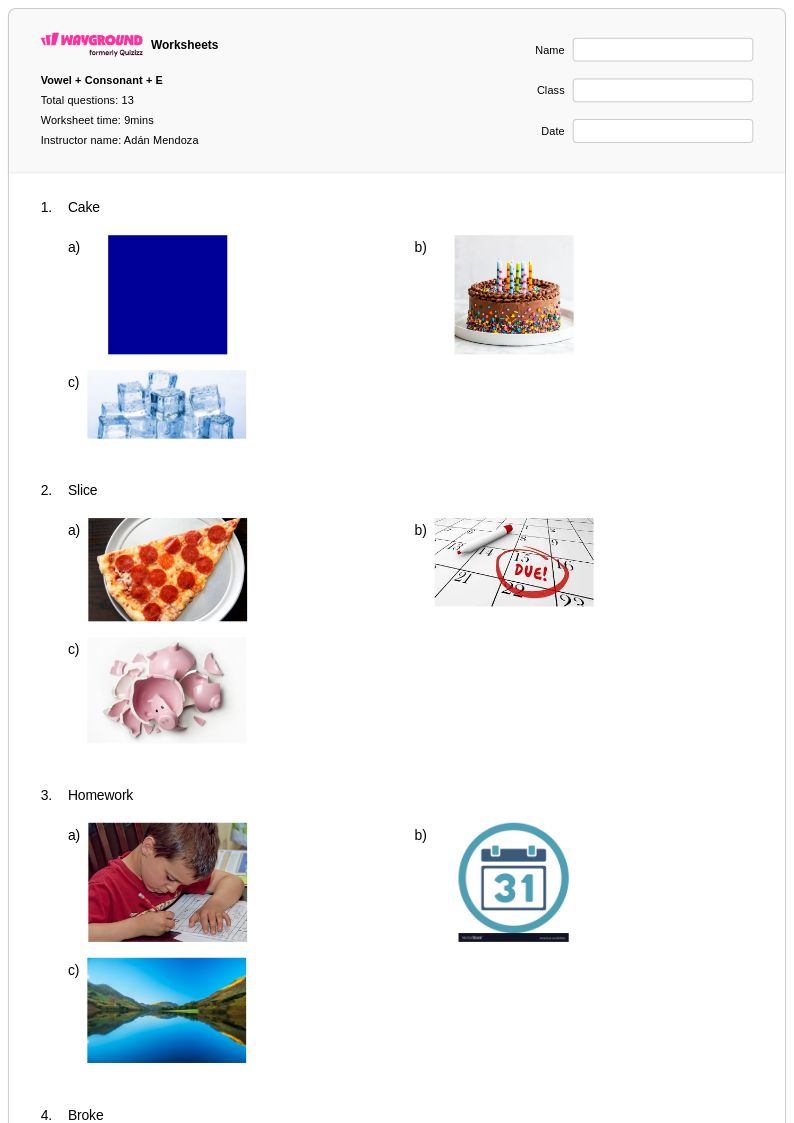
13 Q
2nd
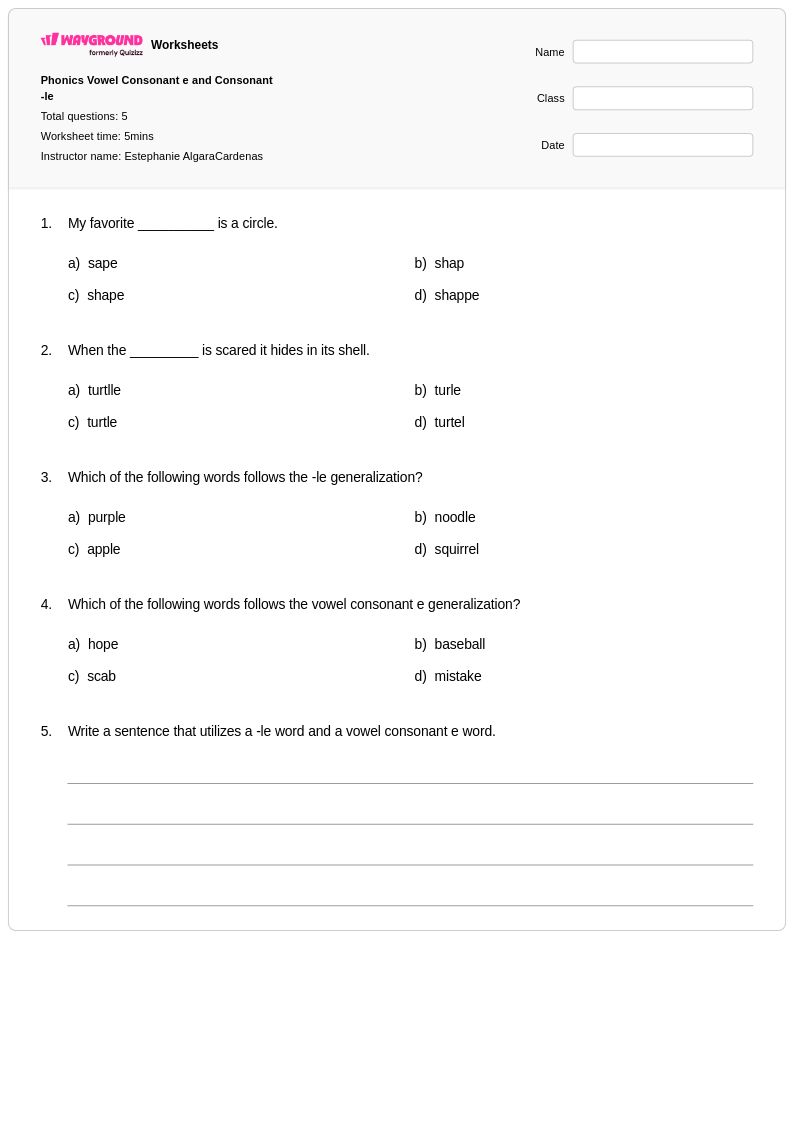
5 Q
2nd
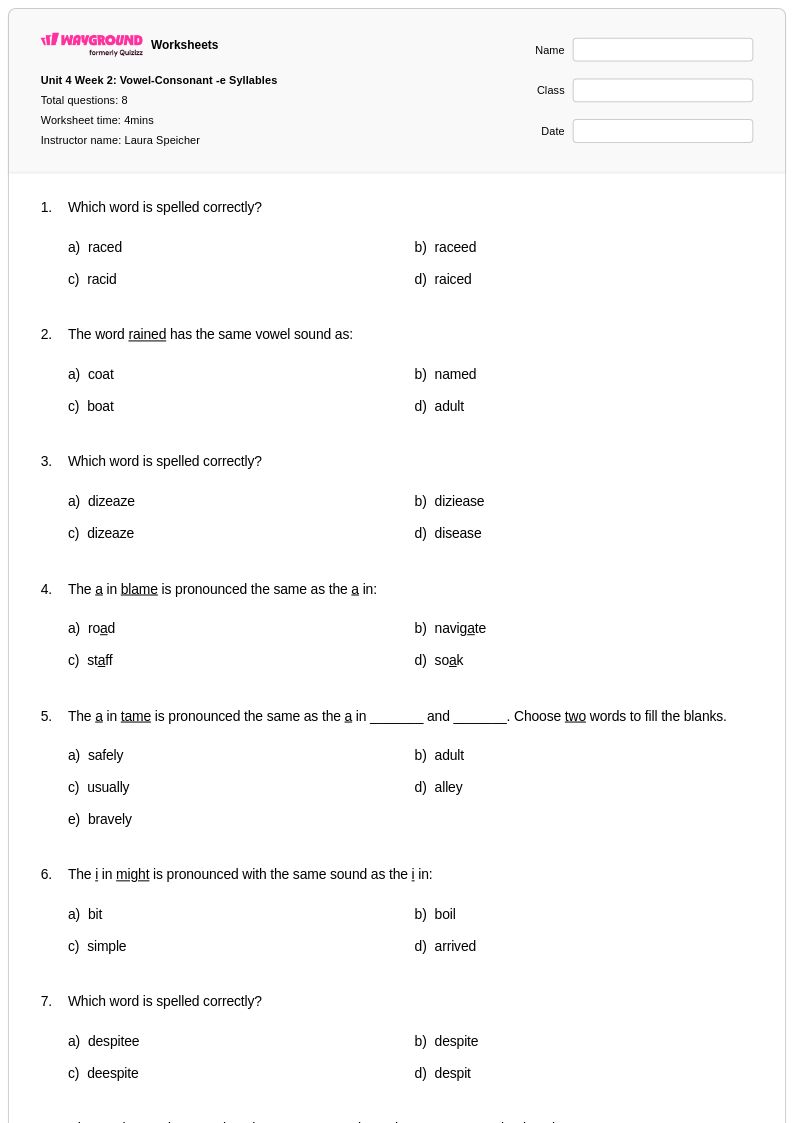
8 Q
4th
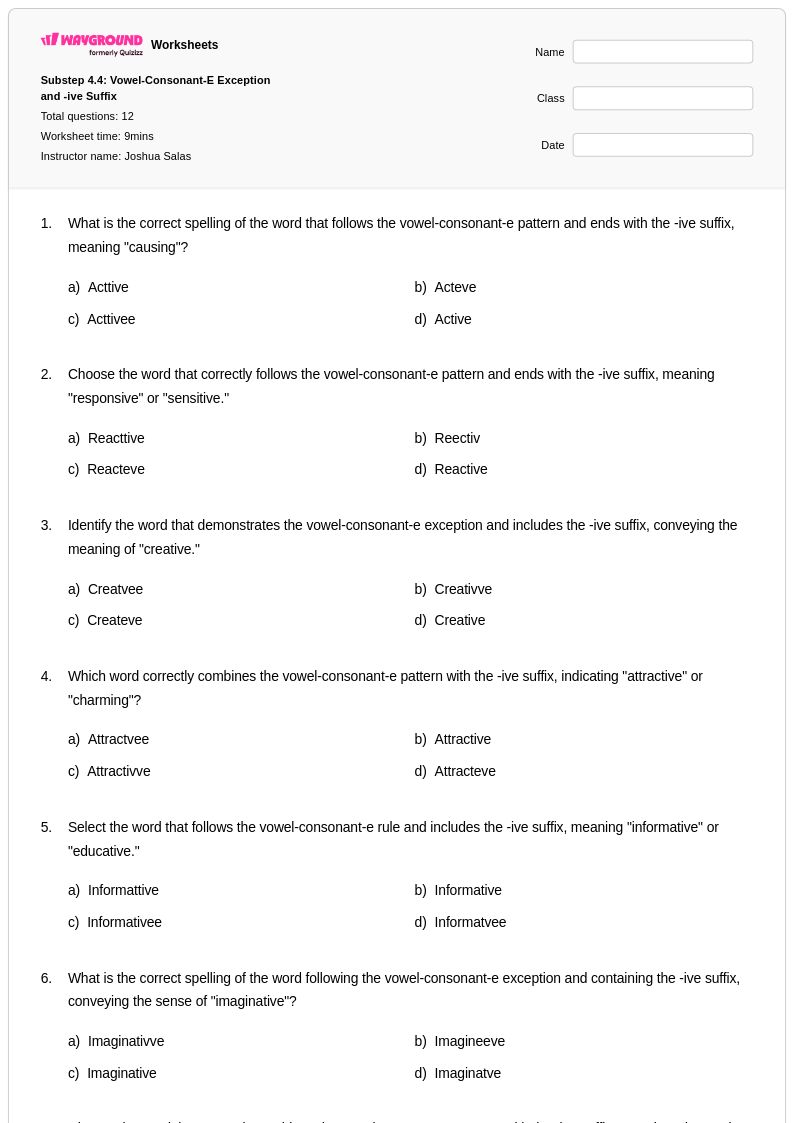
12 Q
12th
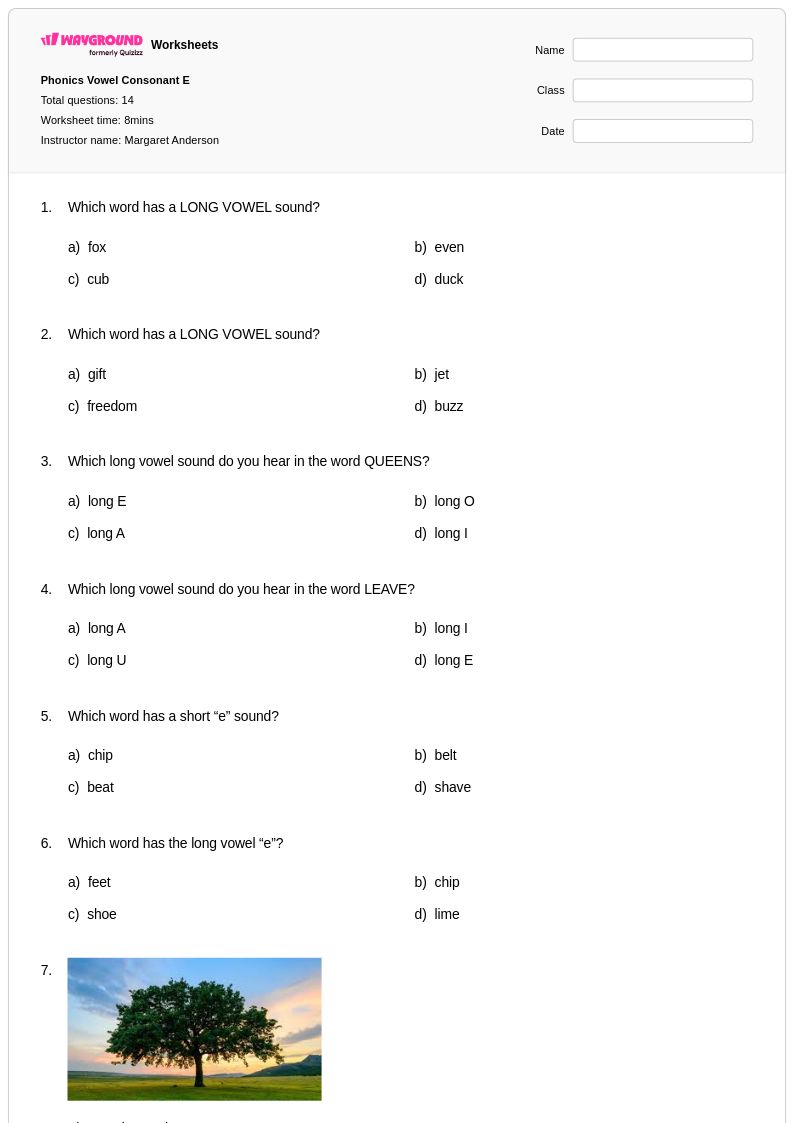
14 Q
2nd
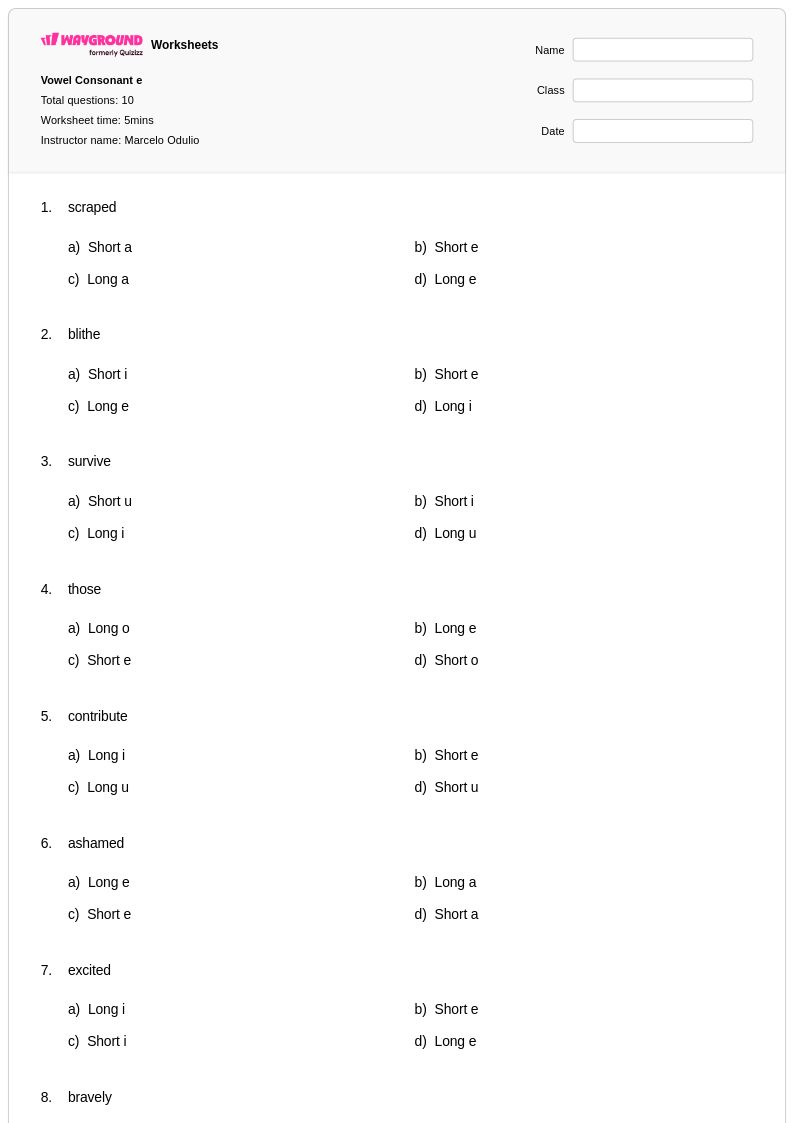
10 Q
3rd - 5th
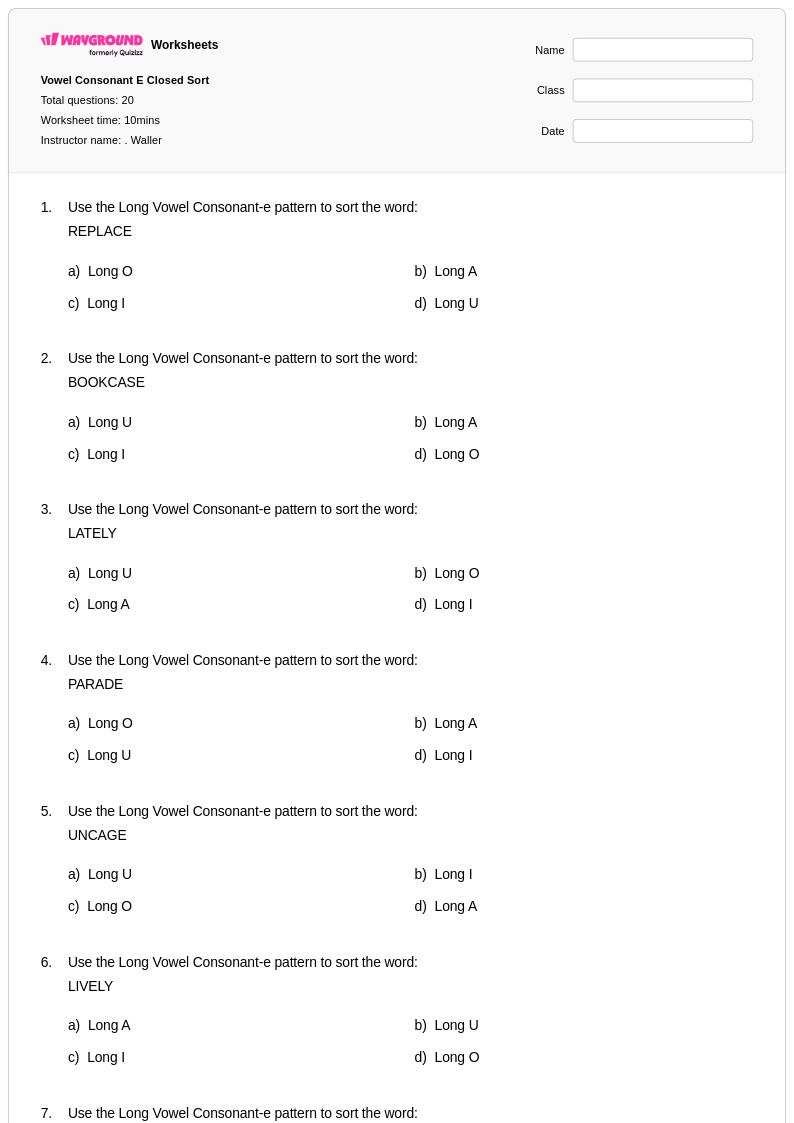
20 Q
4th
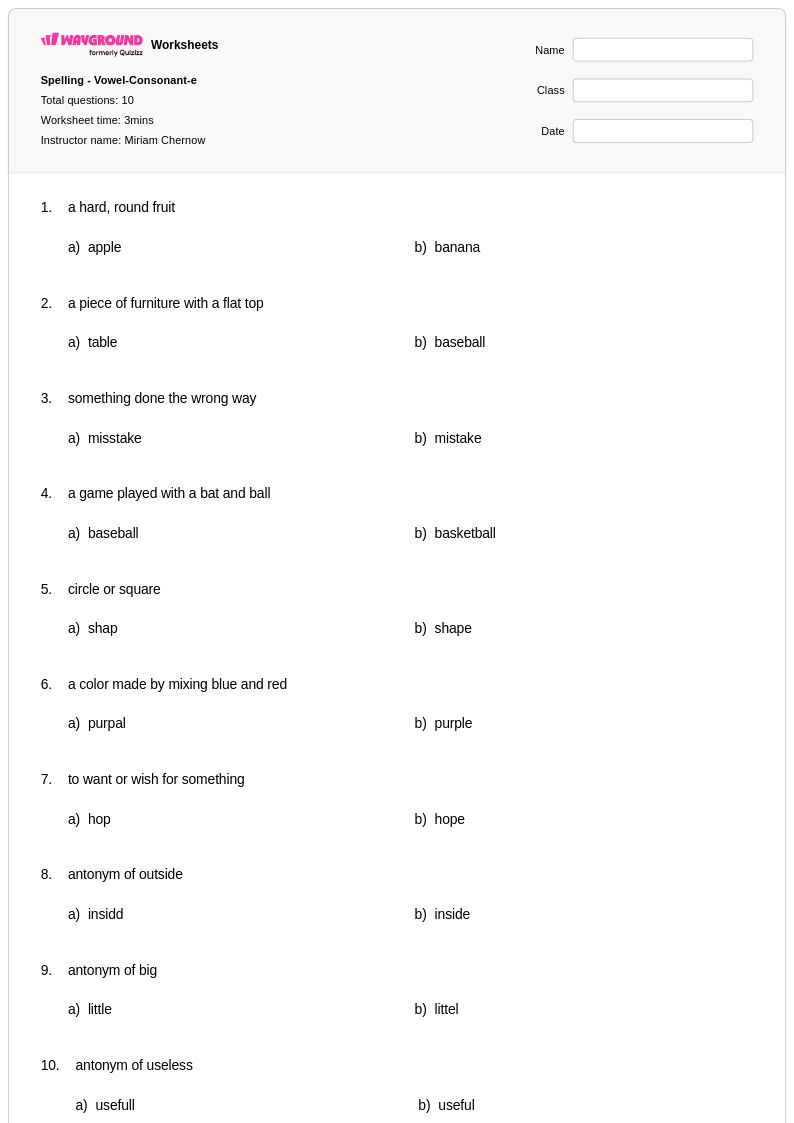
10 Q
2nd
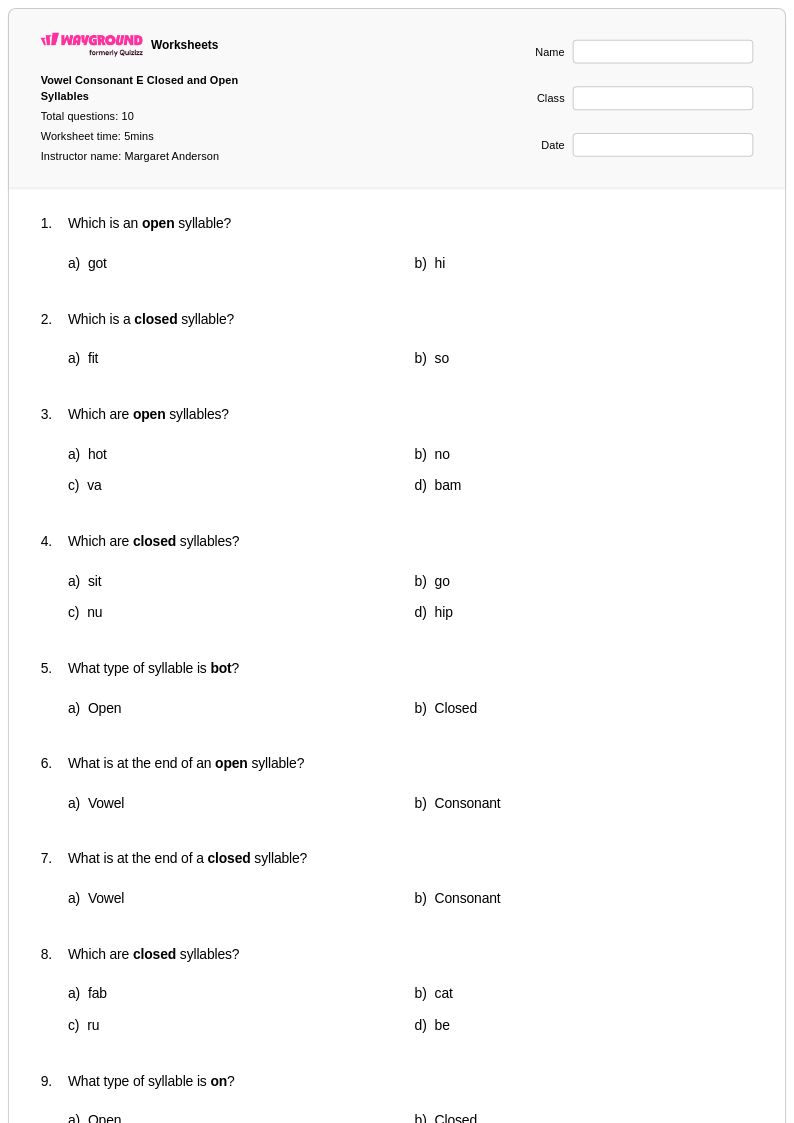
10 Q
4th
10 Q
5th
10 Q
6th
10 Q
4th
15 Q
4th
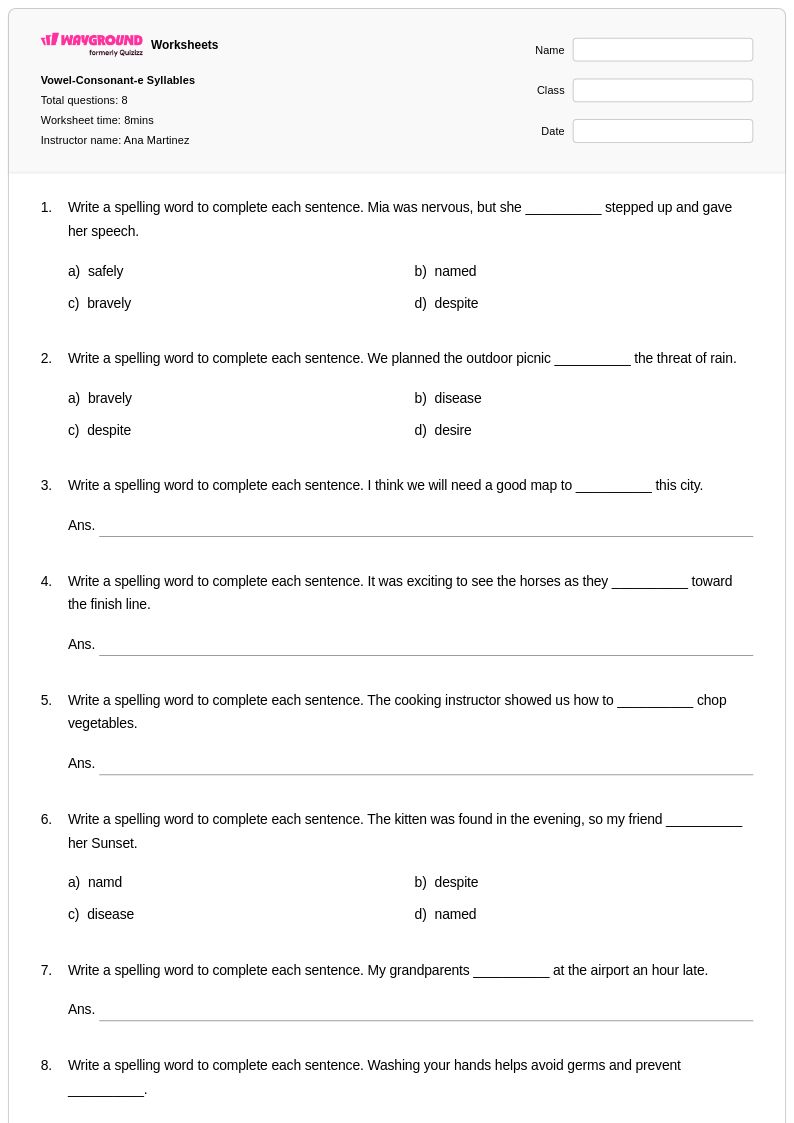
8 Q
4th
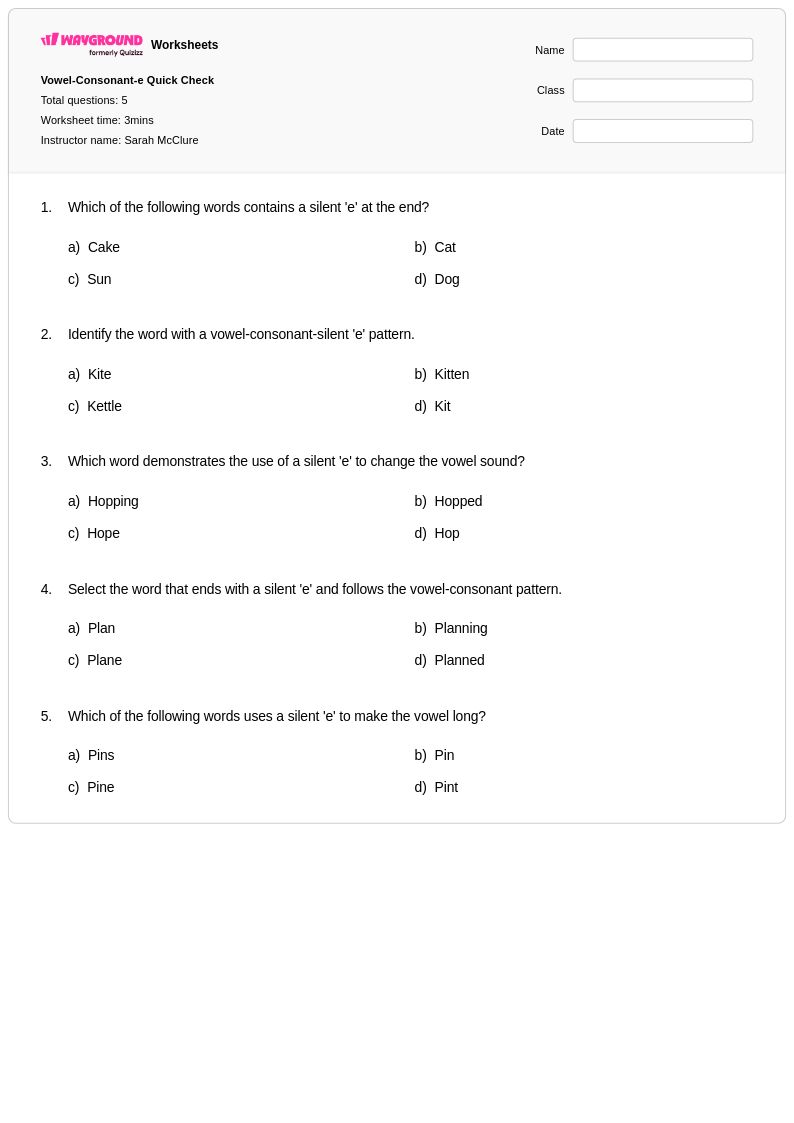
5 Q
6th
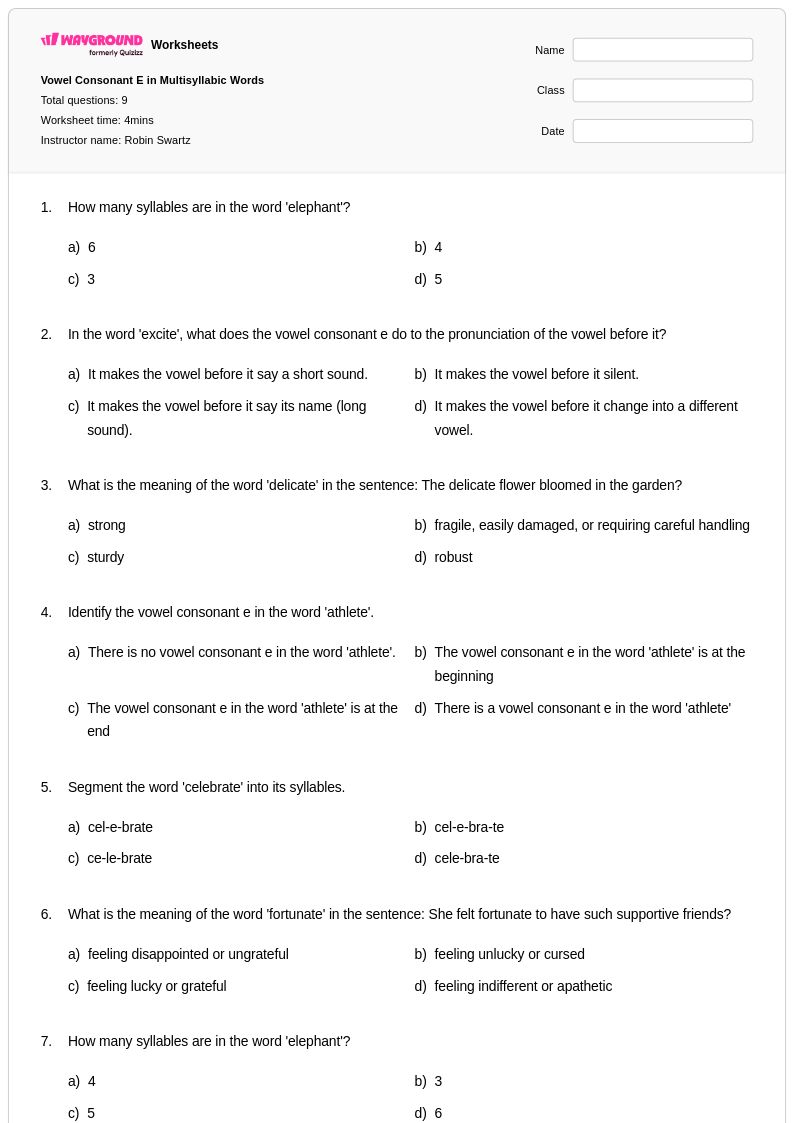
9 Q
5th
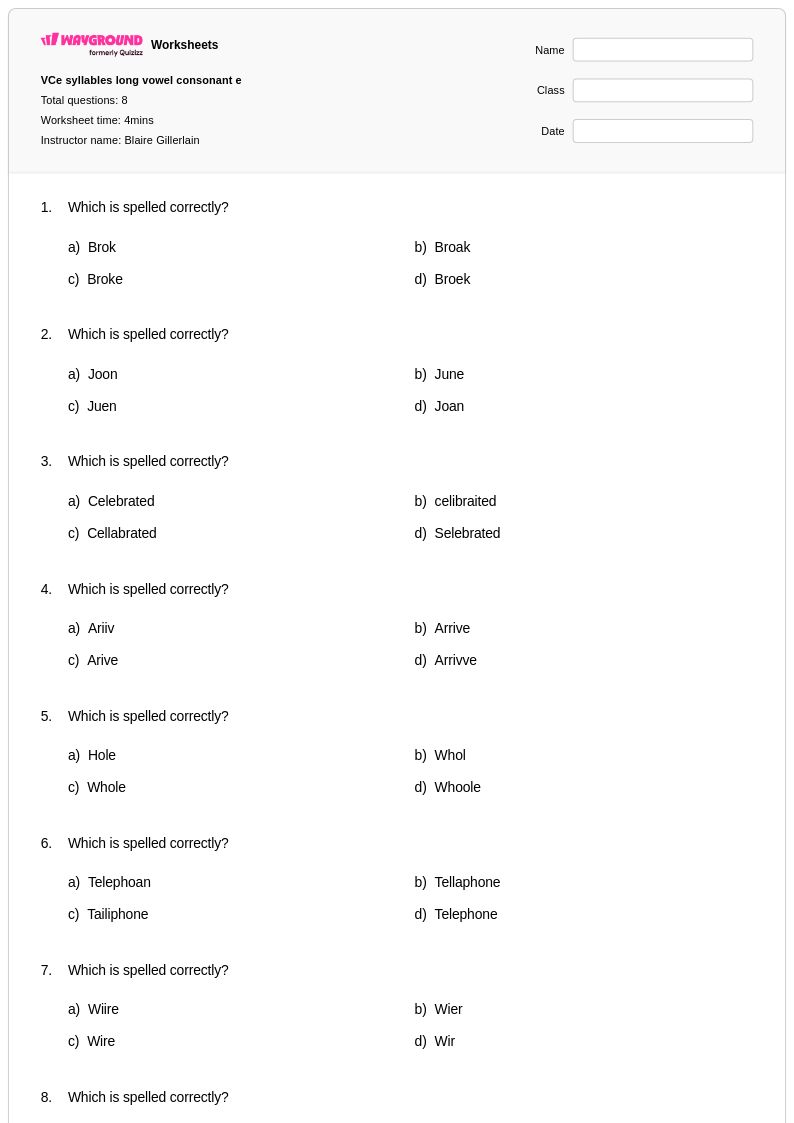
8 Q
3rd - 4th
12 Q
4th
15 Q
8th
12 Q
4th
10 Q
3rd
Explore Worksheets by Grade
Explore Worksheets by Subjects
Explore printable Vowel-consonant-e worksheets
Vowel-consonant-e worksheets available through Wayground (formerly Quizizz) provide comprehensive practice for students learning this fundamental phonics pattern, also known as the silent-e or magic-e rule. These educational resources strengthen students' ability to recognize and decode words where a final silent e makes the preceding vowel say its long sound, transforming words like "hat" into "hate" and "cut" into "cute." The worksheet collection includes systematic practice problems that guide learners through identifying, reading, and spelling vowel-consonant-e words across various difficulty levels. Each printable resource comes with a complete answer key, making assessment and self-checking straightforward for both teachers and students. These free pdf materials offer structured opportunities for students to master this critical phonics concept through engaging activities that reinforce pattern recognition and application.
Wayground (formerly Quizizz) supports educators with an extensive library of millions of teacher-created vowel-consonant-e worksheets that can be easily located through robust search and filtering capabilities. The platform's comprehensive collection aligns with phonics standards and offers built-in differentiation tools that allow teachers to customize materials based on individual student needs and reading levels. These versatile resources are available in both printable and digital formats, including downloadable pdf versions, providing flexibility for various classroom environments and learning preferences. Teachers can efficiently plan phonics instruction, provide targeted remediation for struggling readers, offer enrichment opportunities for advanced students, and deliver consistent skill practice that builds reading fluency and spelling accuracy across diverse learning contexts.
FAQs
How do I teach the vowel-consonant-e pattern to early readers?
What exercises help students practice the magic-e rule?
What mistakes do students commonly make with the vowel-consonant-e pattern?
How can I differentiate vowel-consonant-e instruction for struggling readers?
How do I use Wayground's vowel-consonant-e worksheets in my classroom?