Free Printable Water Distribution Worksheets for Class 2
Class 2 water distribution worksheets from Wayground help young scientists explore how water is found across Earth through engaging printables, practice problems, and free PDF resources with answer keys.
Explore printable Water Distribution worksheets for Class 2
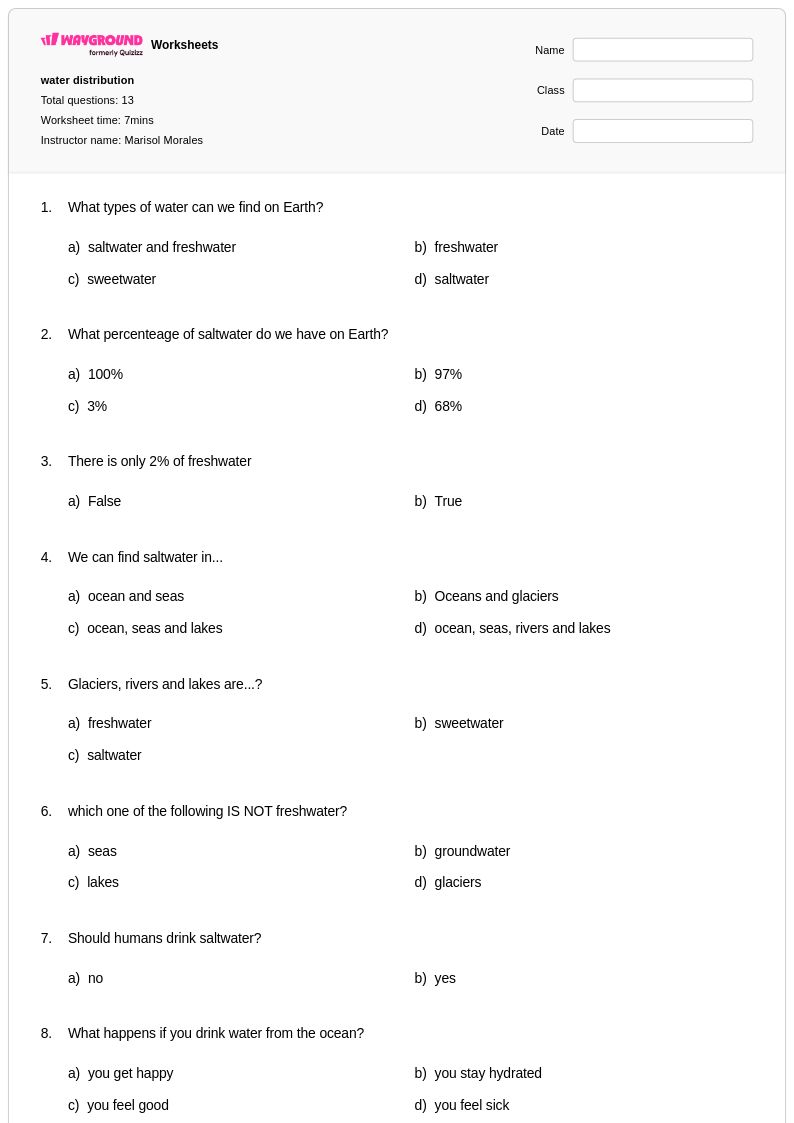
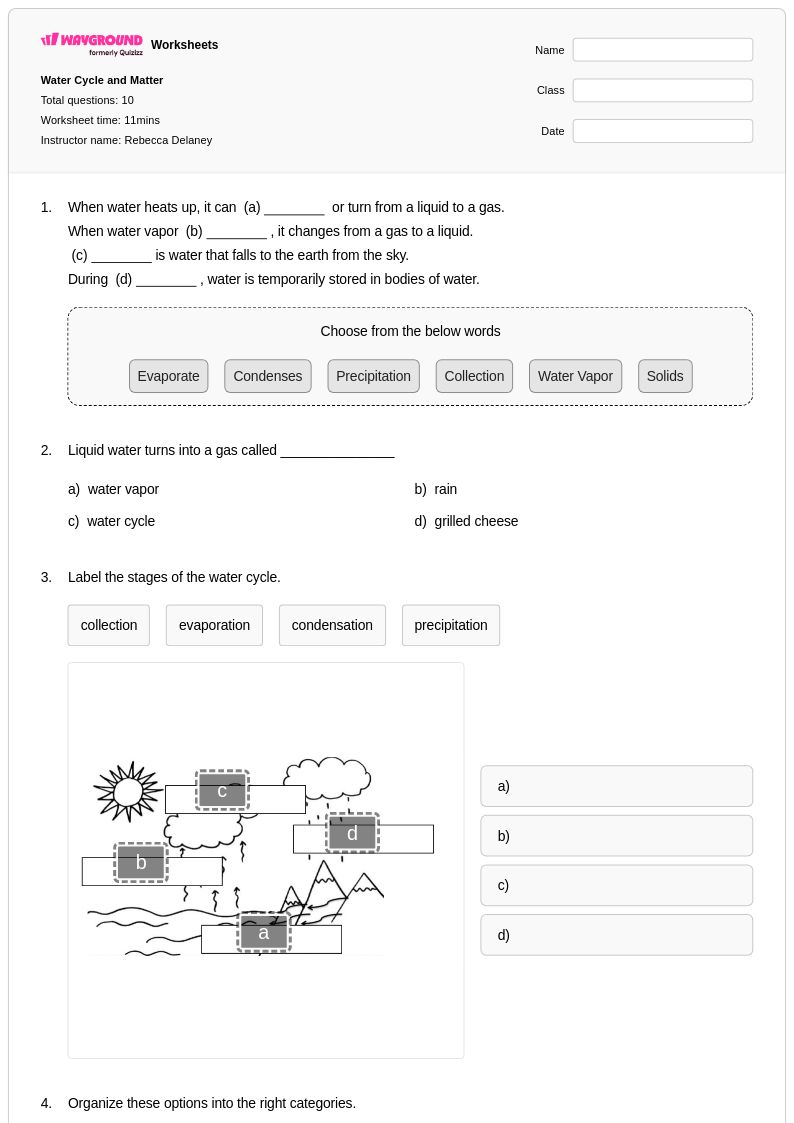
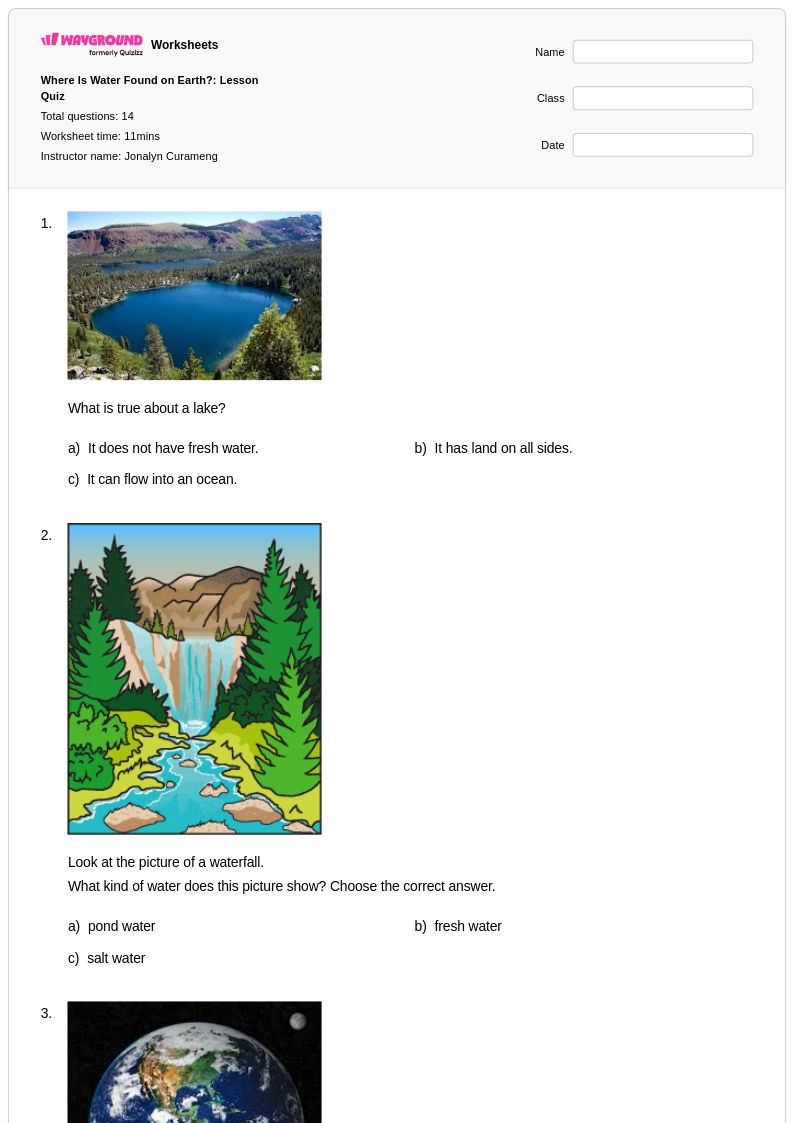
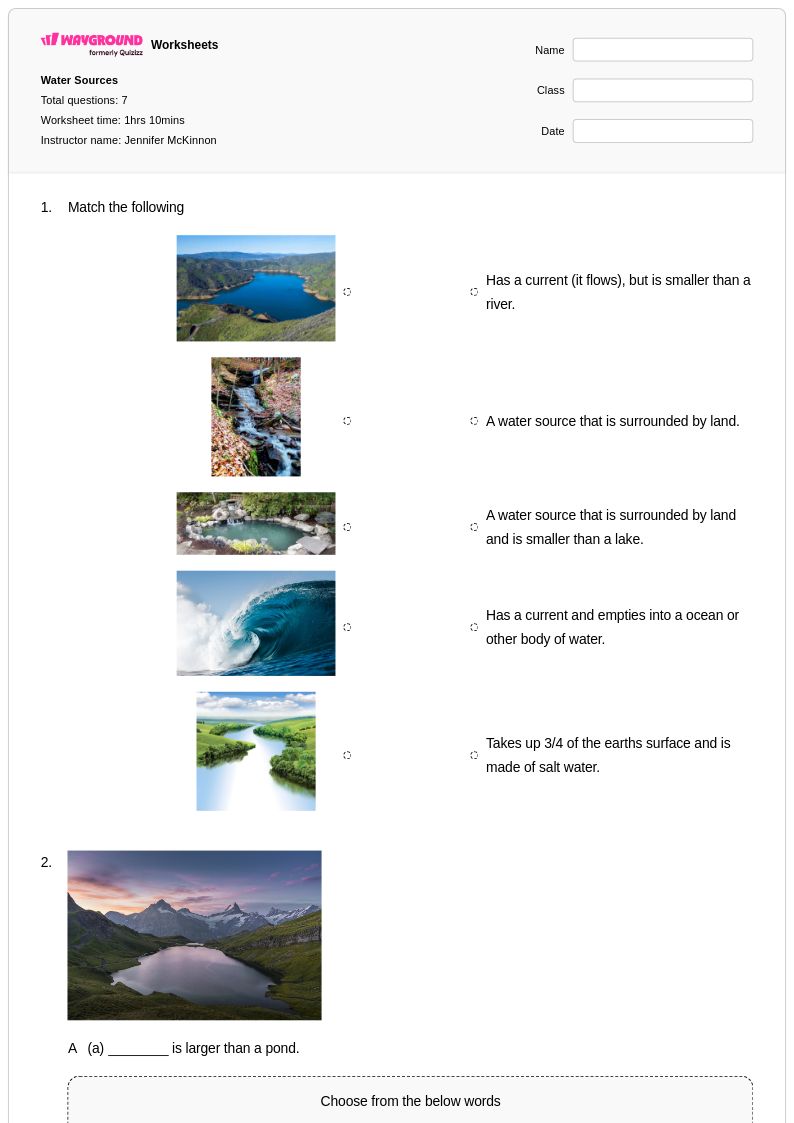
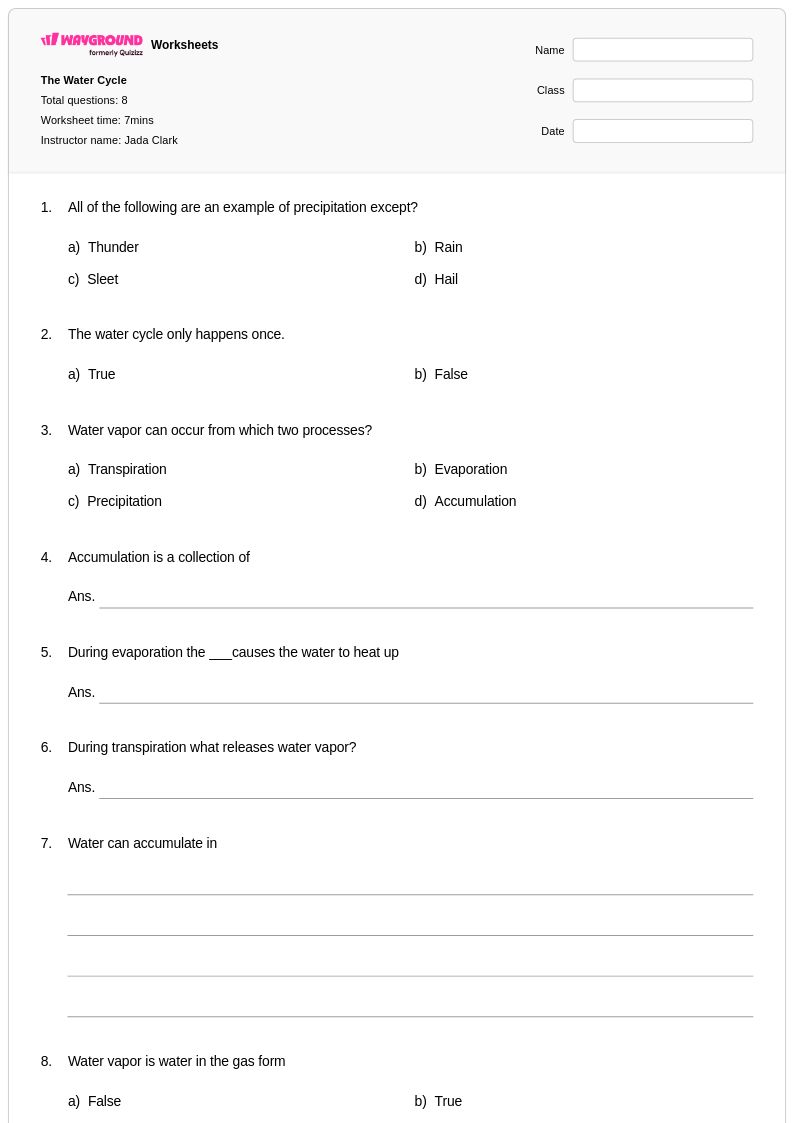
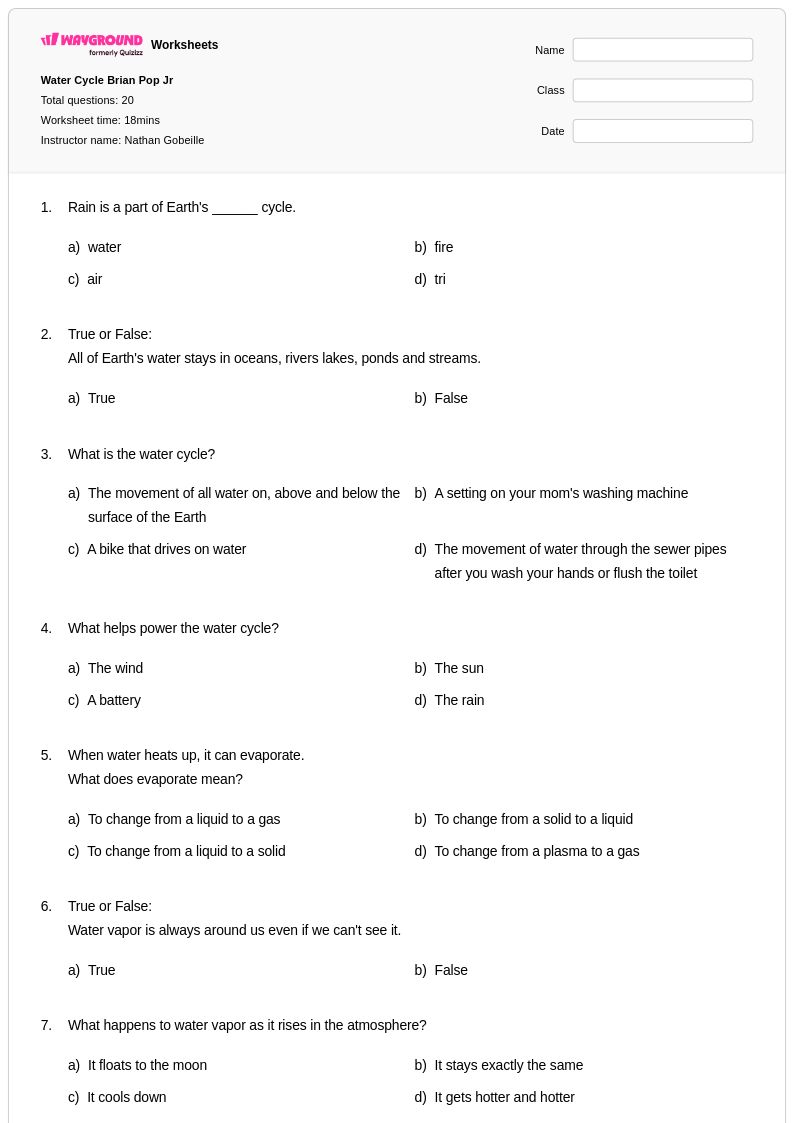
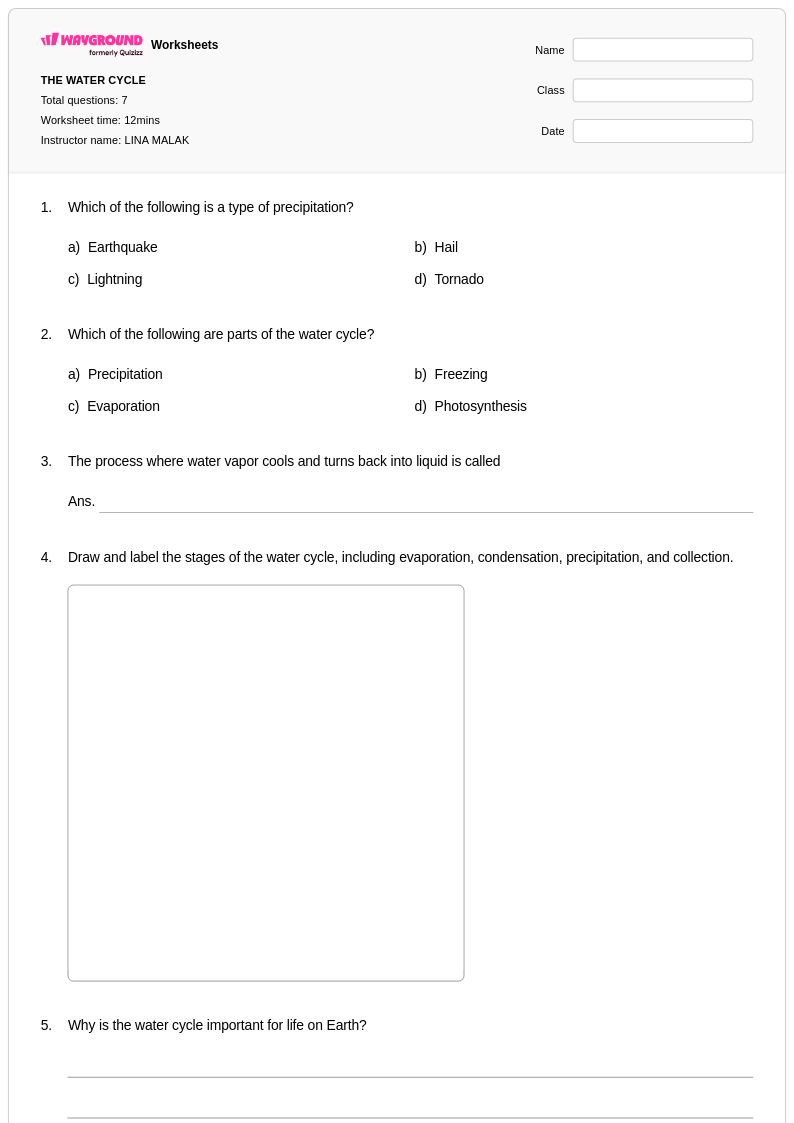
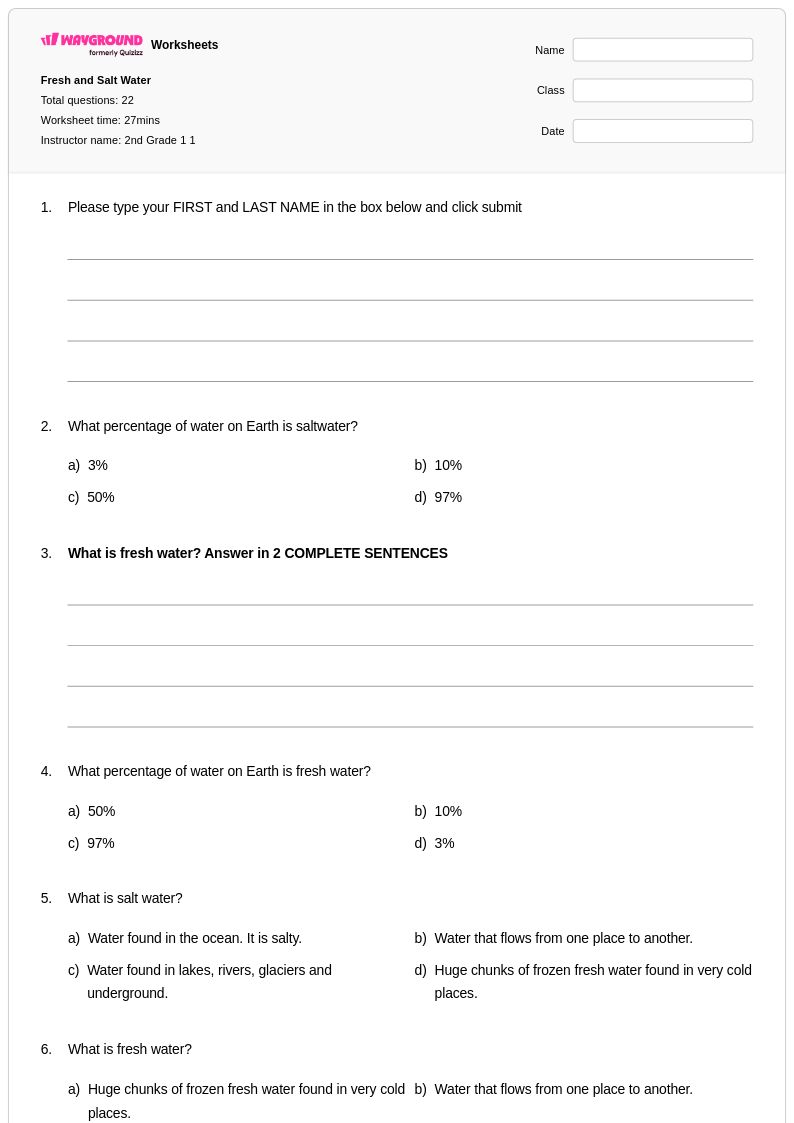
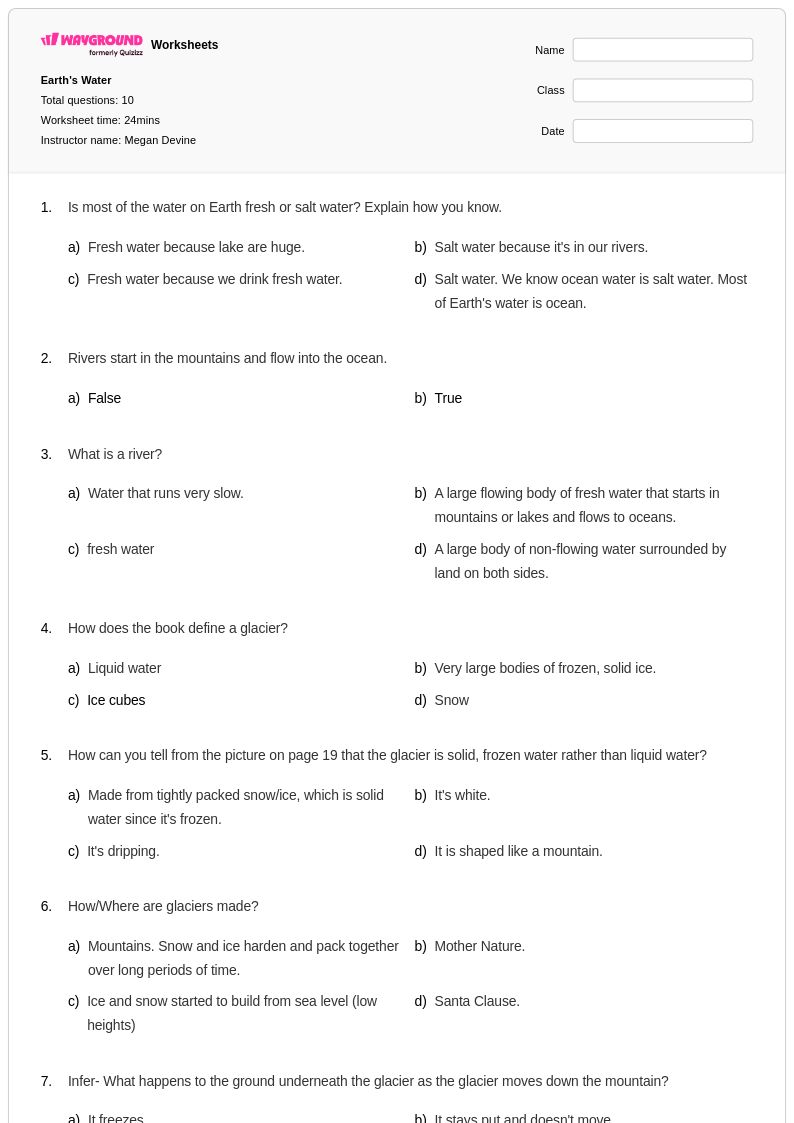
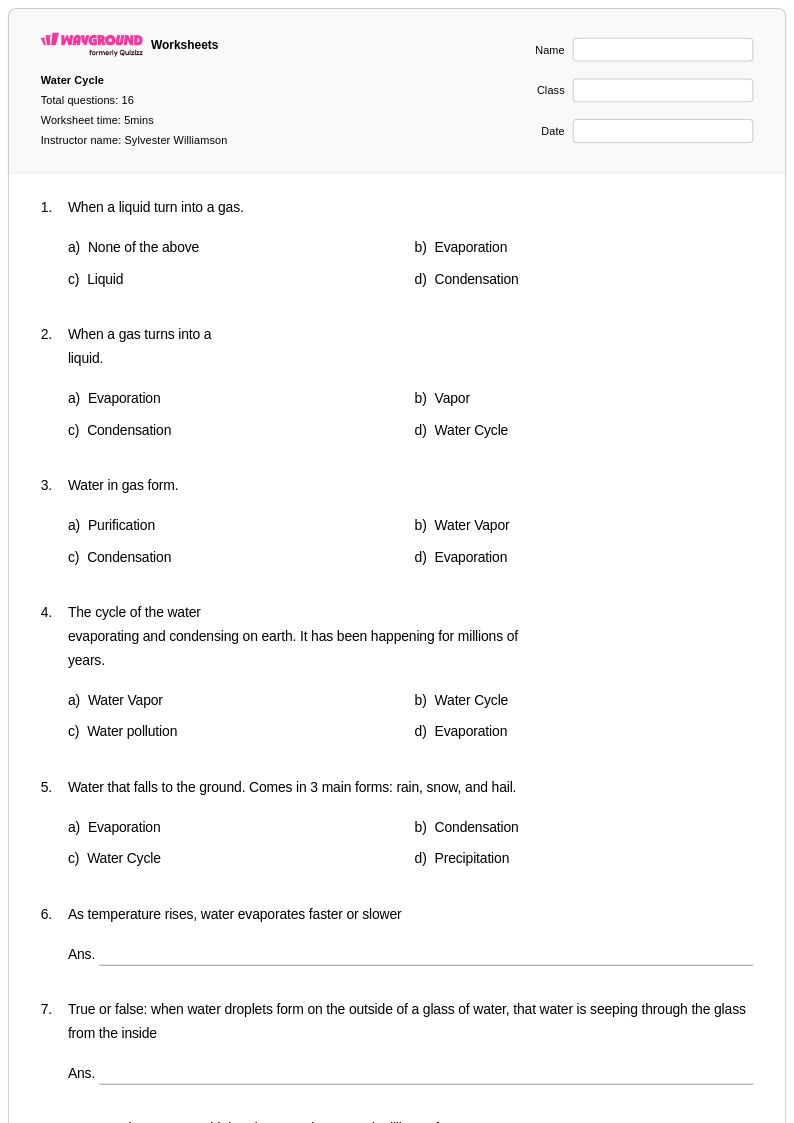
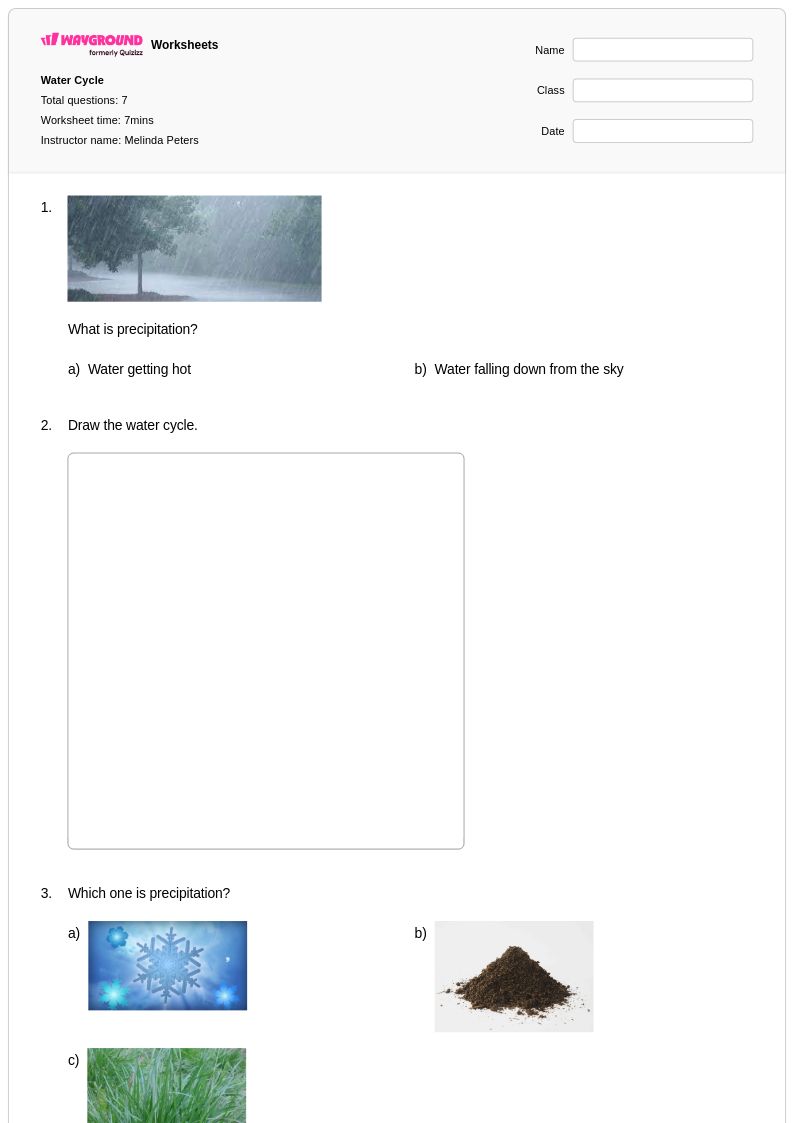
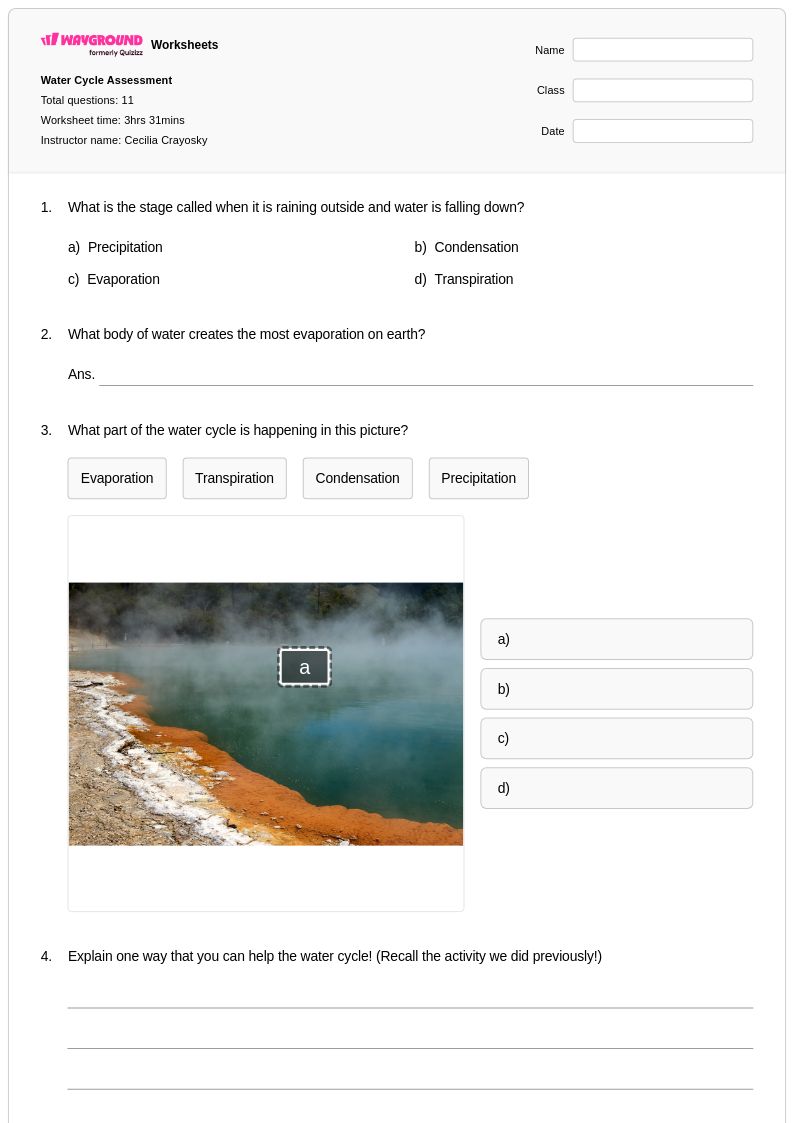
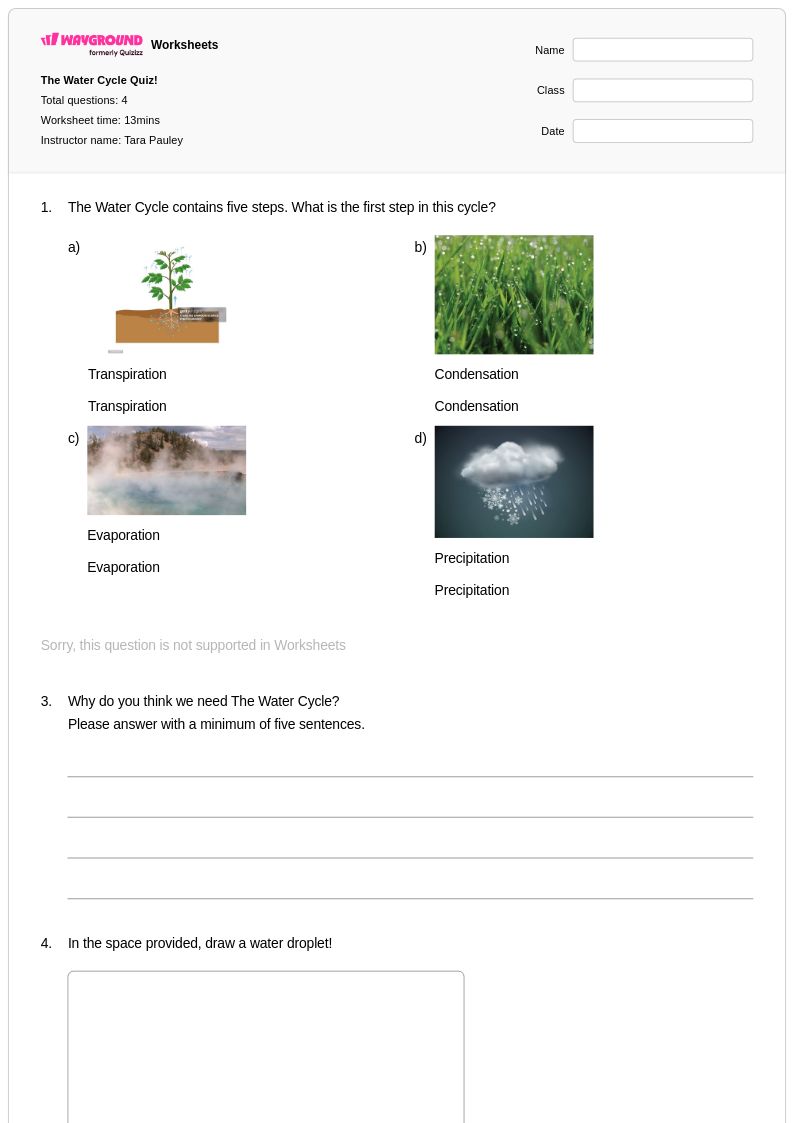
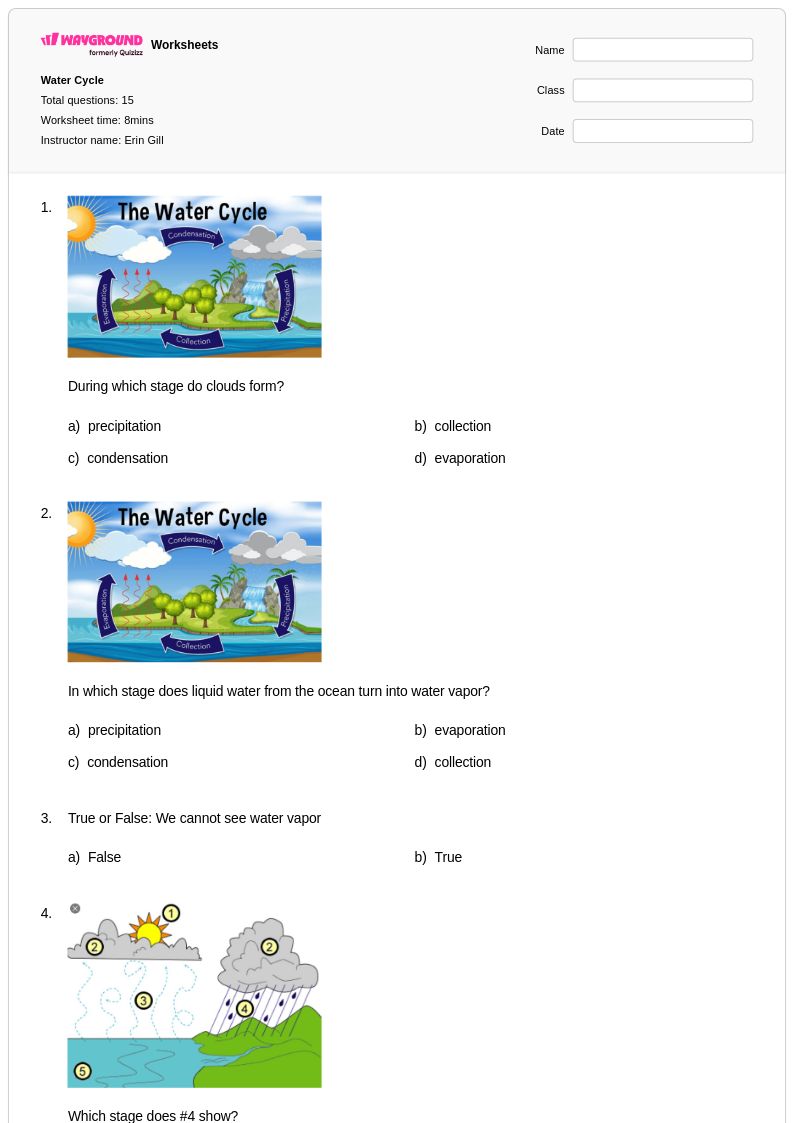
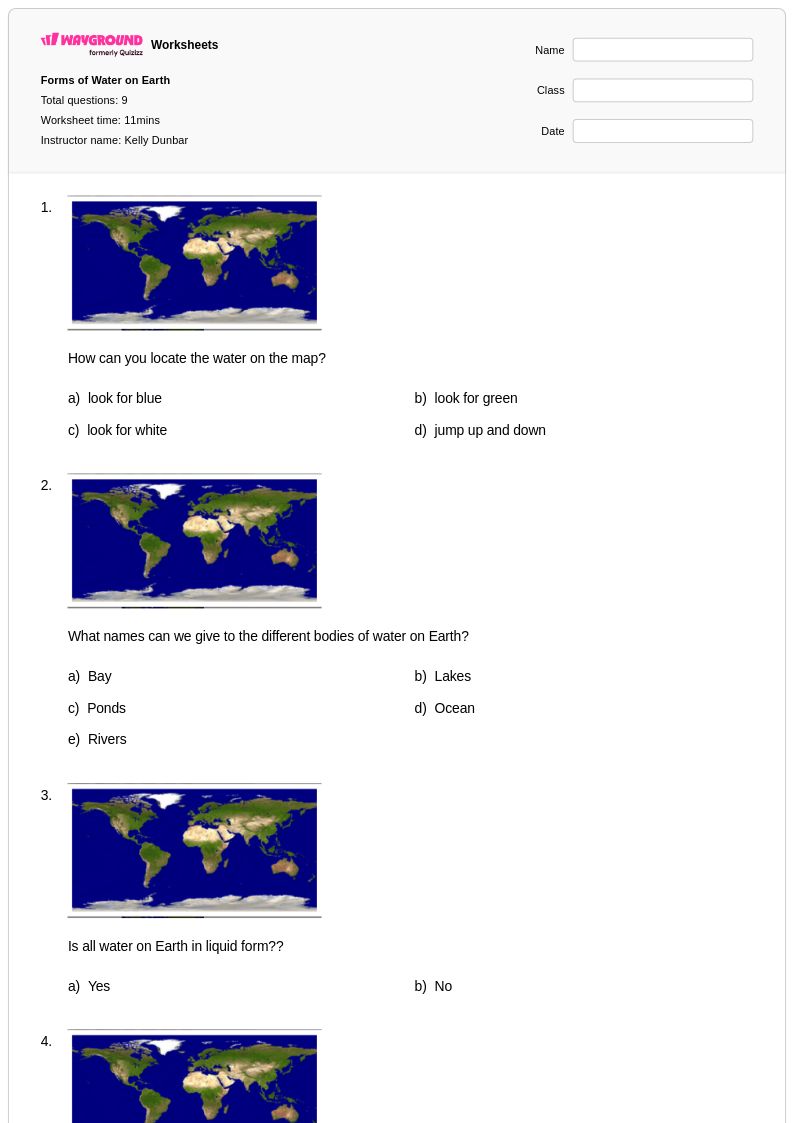
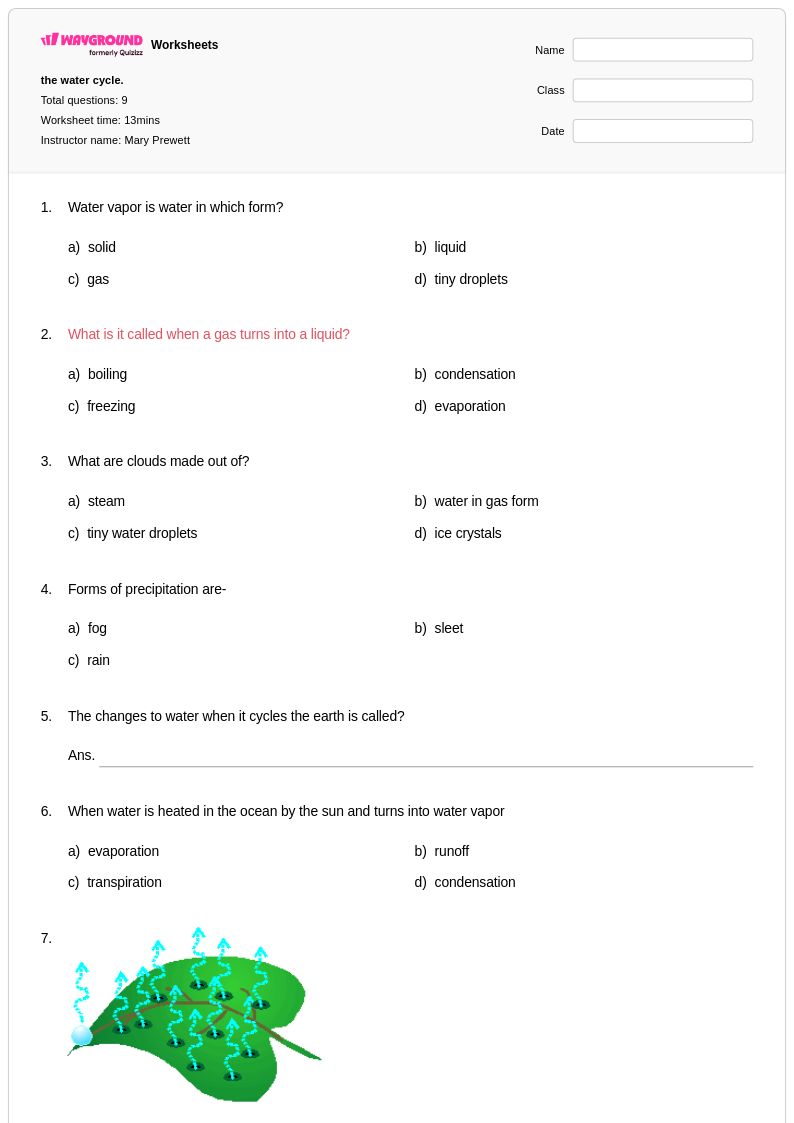
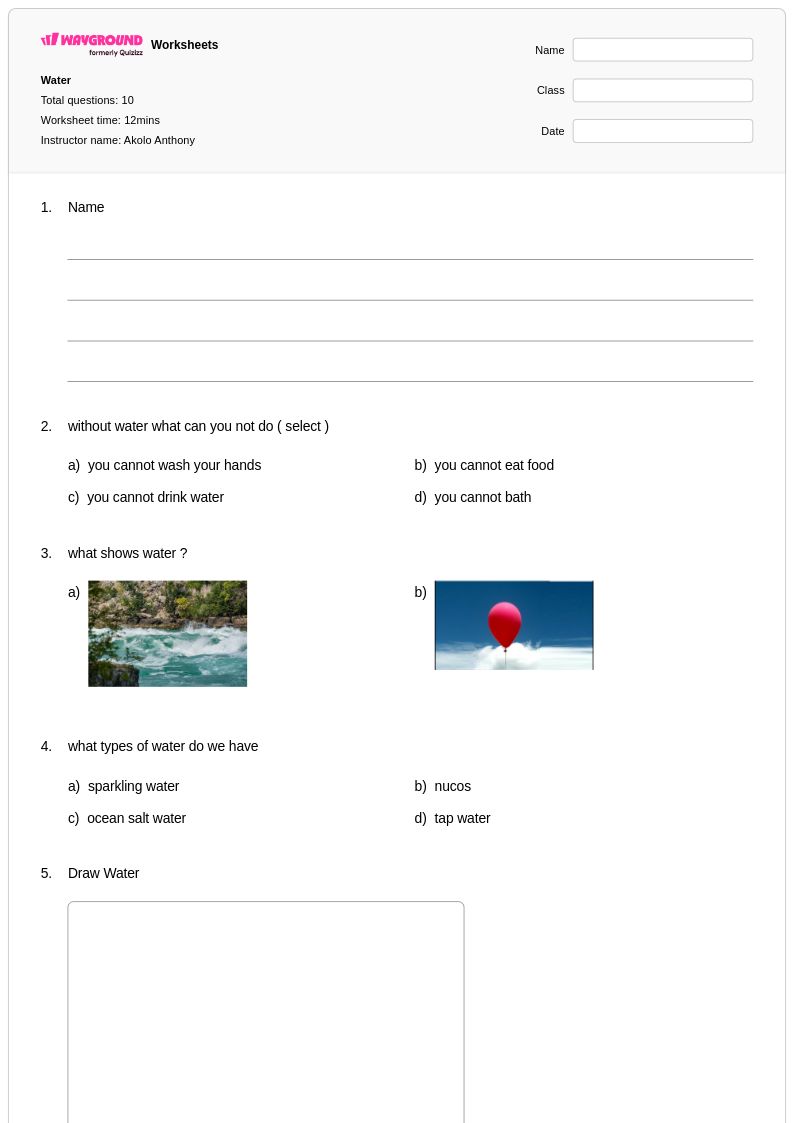
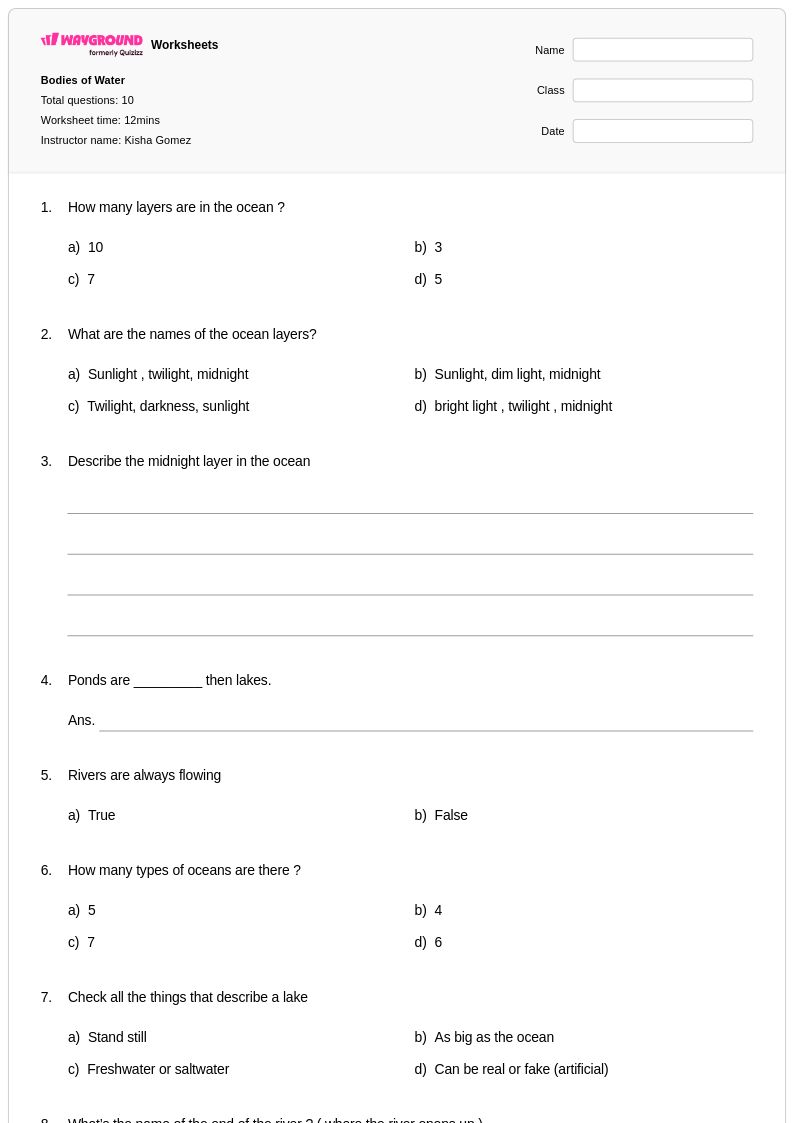
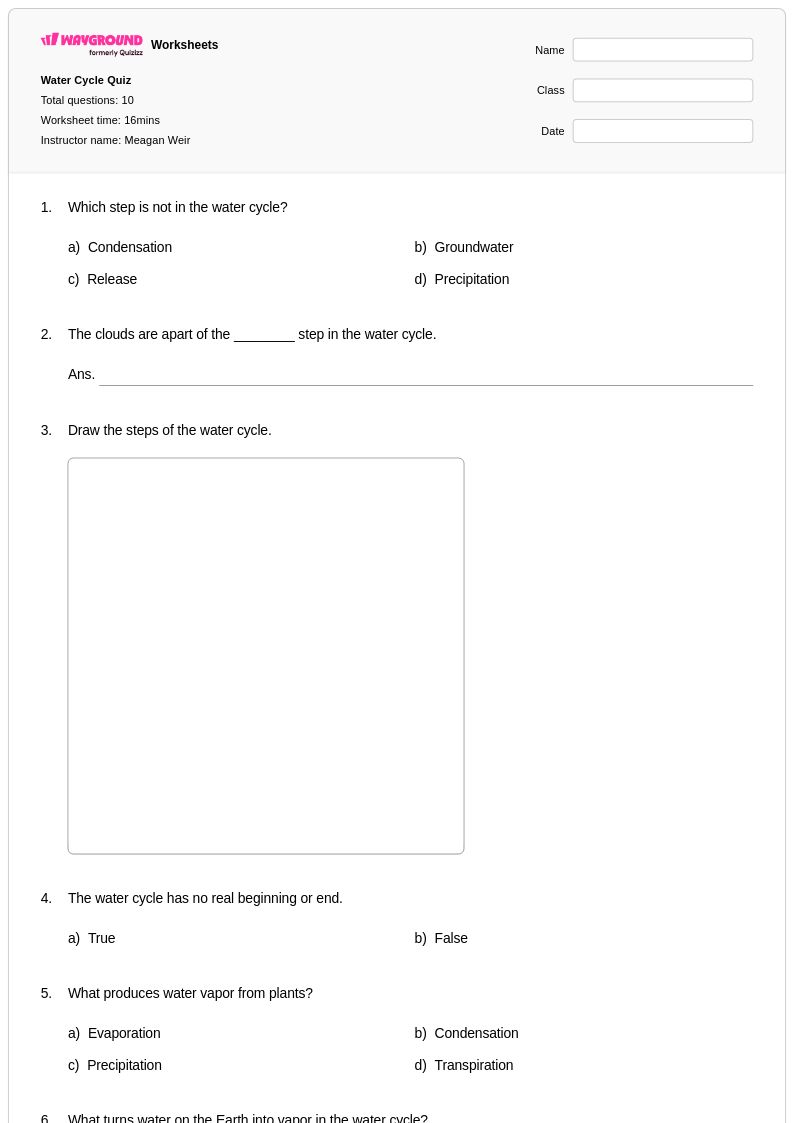
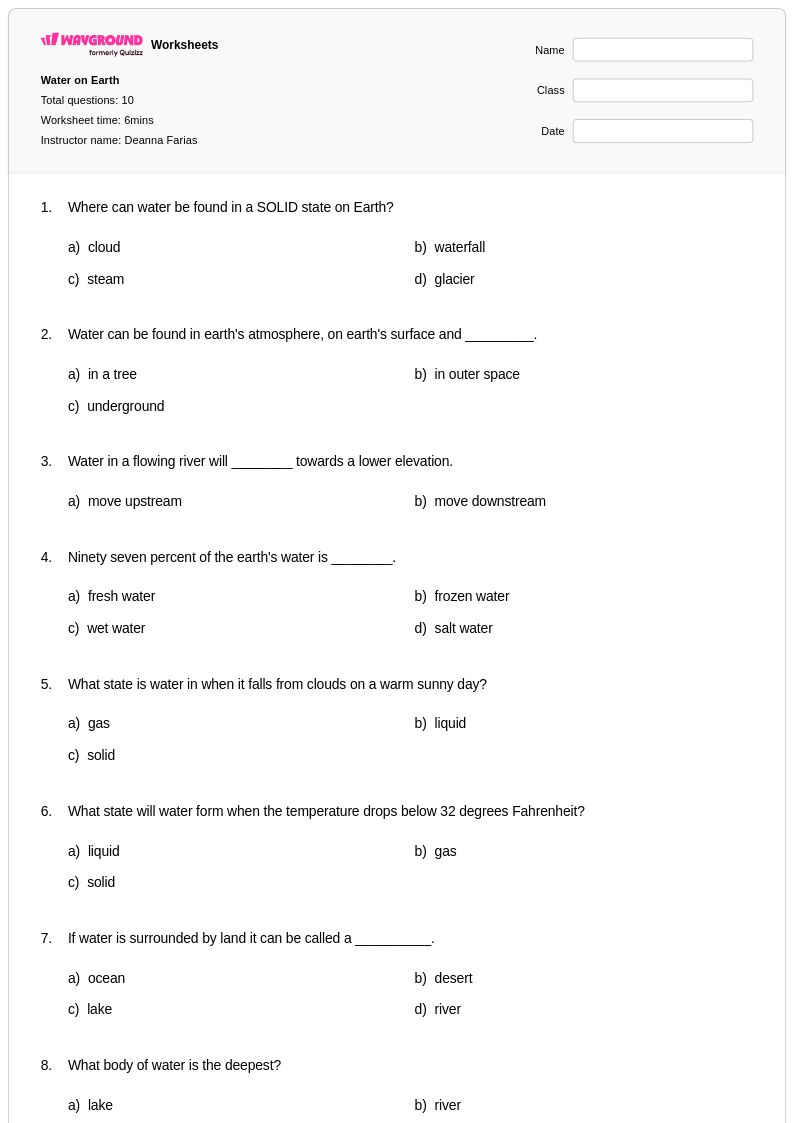
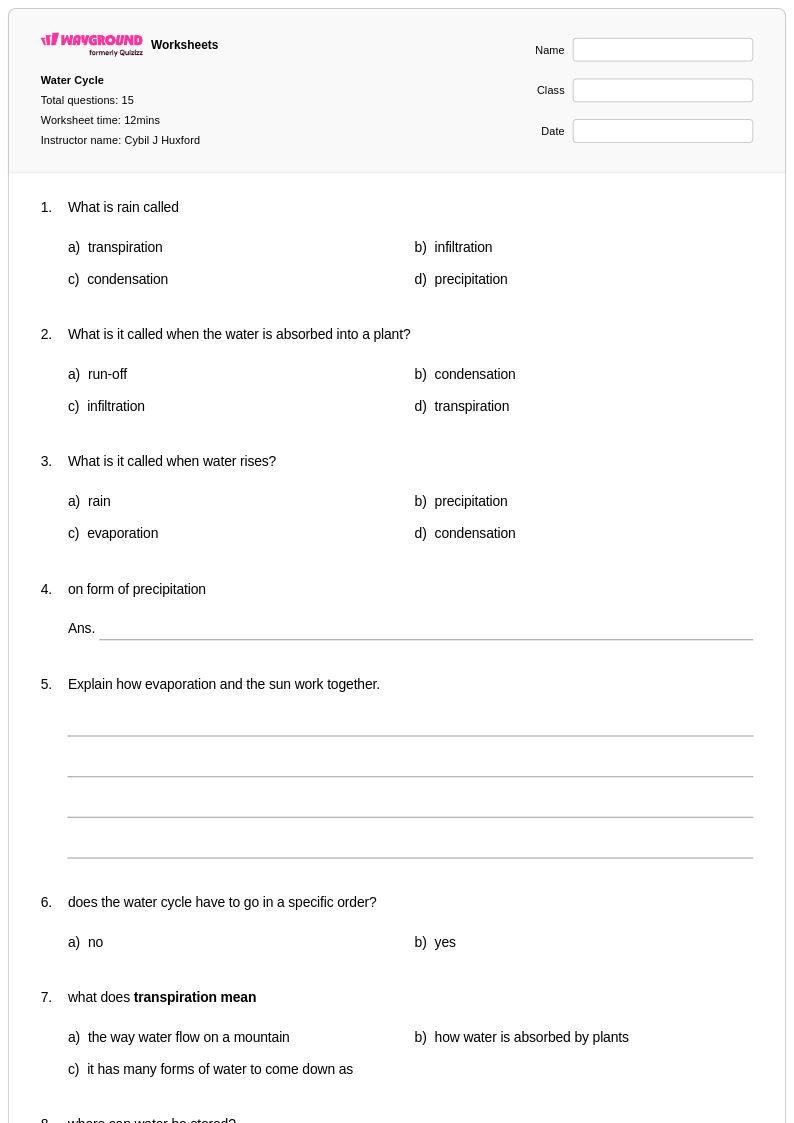
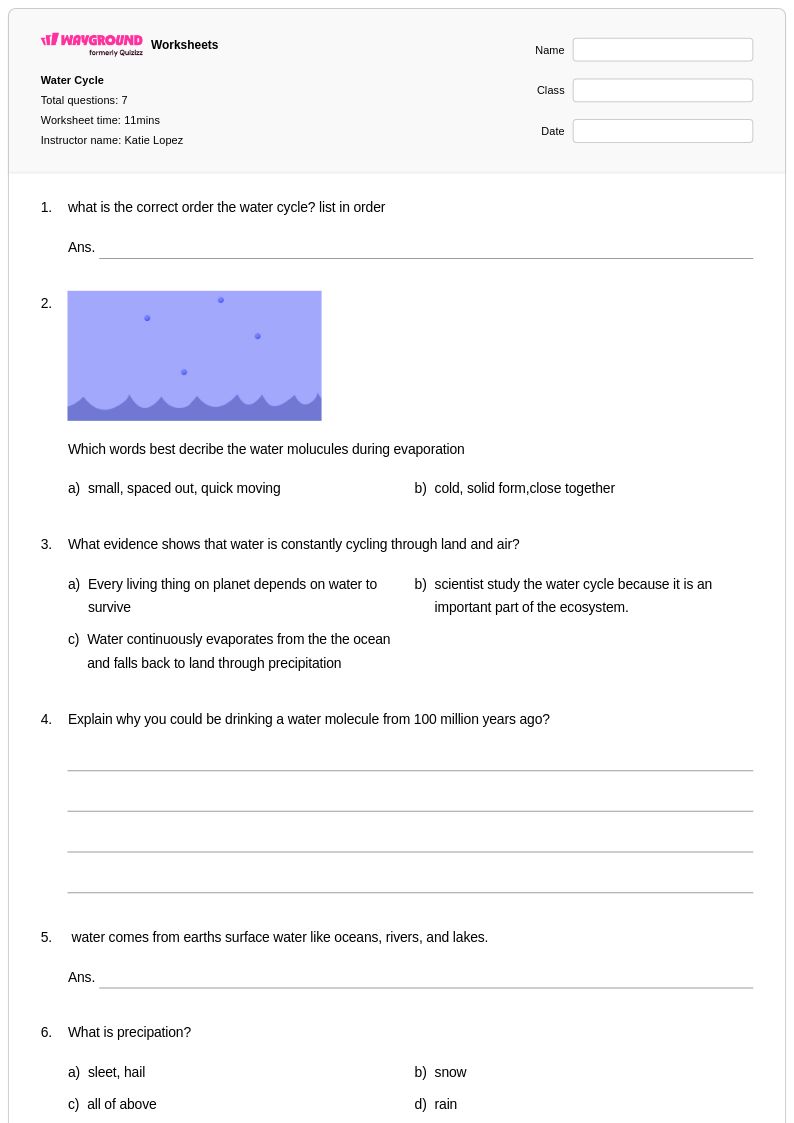
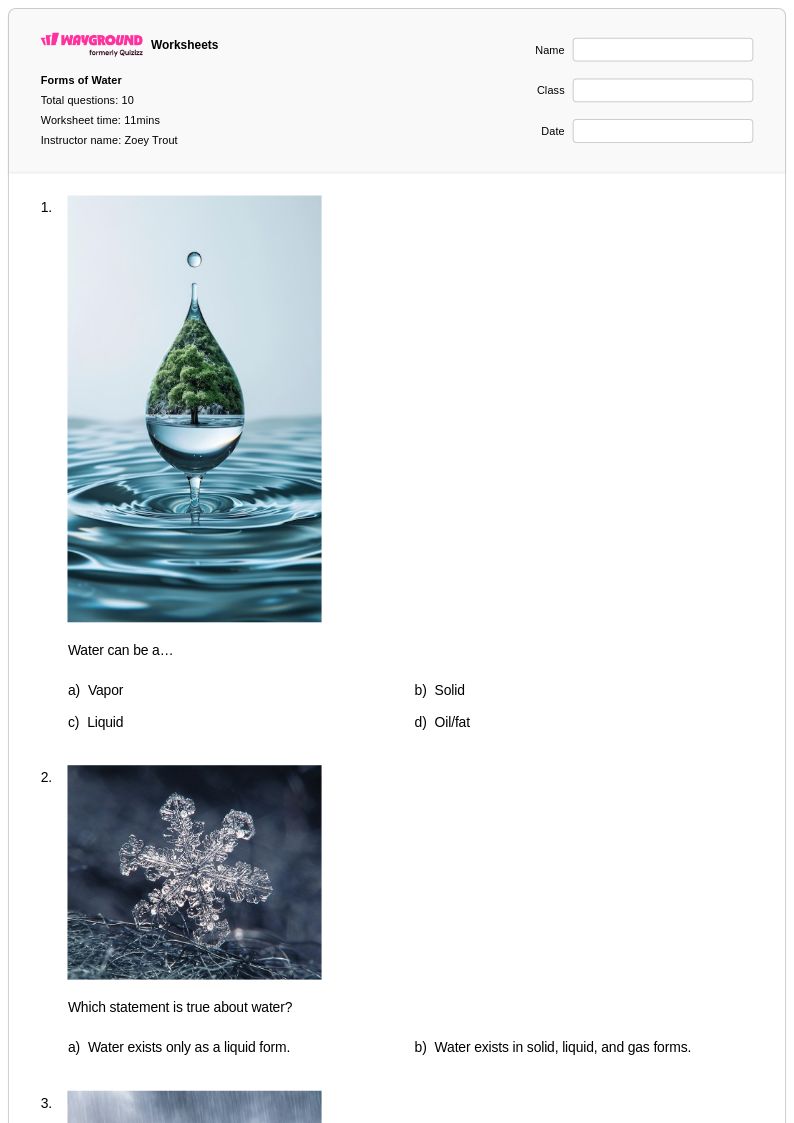
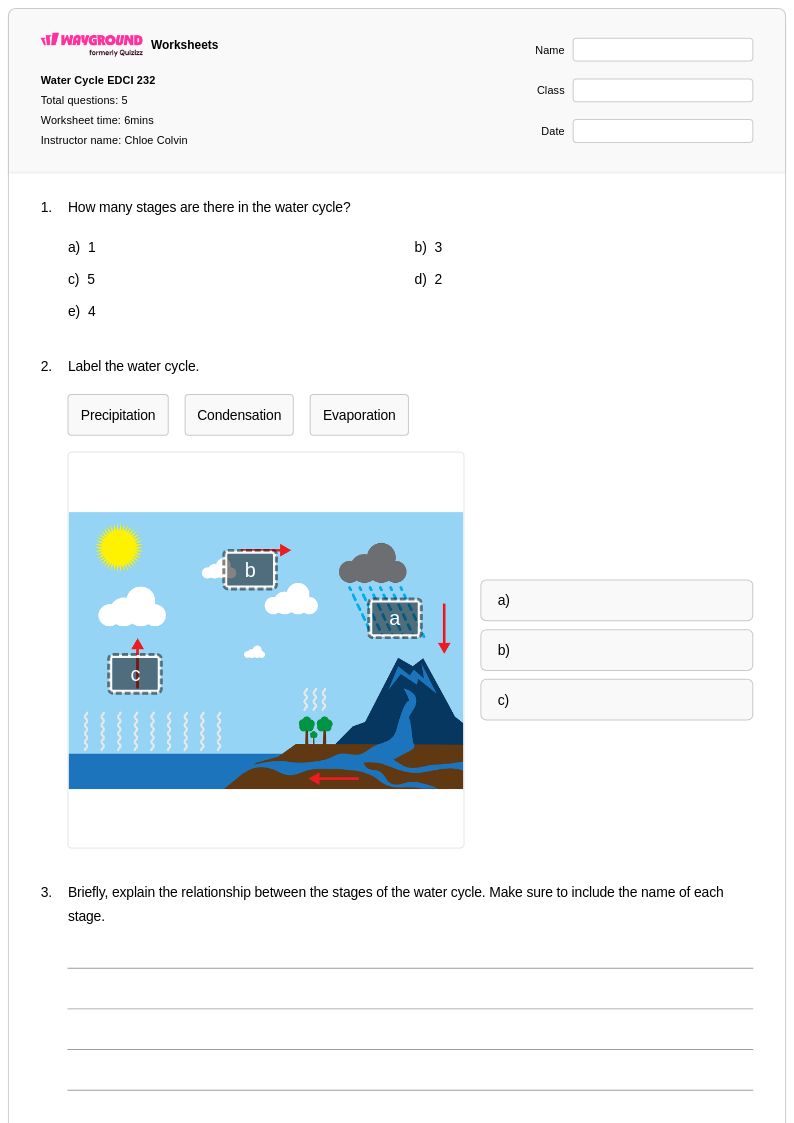
Water distribution worksheets for Class 2 students through Wayground (formerly Quizizz) introduce young learners to fundamental concepts about how water exists and moves throughout our planet. These educational resources help second graders develop essential scientific observation and reasoning skills as they explore where water can be found on Earth, including oceans, rivers, lakes, clouds, and underground sources. The worksheets feature age-appropriate practice problems that guide students through identifying different water sources, understanding basic water cycle concepts, and recognizing how water appears in various forms in their daily environment. Each printable resource includes comprehensive answer keys that support both independent learning and teacher-guided instruction, while the free pdf format ensures easy access and distribution in any classroom setting.
Wayground's extensive collection draws from millions of teacher-created resources specifically designed to support Class 2 Earth and Space Science instruction on water distribution topics. The platform's robust search and filtering capabilities allow educators to quickly locate materials that align with specific learning standards and curriculum requirements, while built-in differentiation tools enable teachers to customize worksheets for varying skill levels within their classrooms. These versatile resources are available in both printable and digital formats, including downloadable pdf versions, making them ideal for diverse instructional settings and learning preferences. Teachers utilize these comprehensive worksheet collections for lesson planning, targeted skill practice, remediation support for struggling learners, and enrichment activities that deepen students' understanding of how water is distributed across Earth's systems.
FAQs
How do I teach water distribution to students?
Teaching water distribution effectively starts with helping students grasp the stark contrast between saltwater and freshwater on Earth, roughly 97% saltwater versus 3% freshwater, and then narrowing in on how little of that freshwater is actually accessible. Using maps, percentage breakdowns, and case studies of water-scarce regions helps students connect abstract data to real-world geography and climate patterns. Tying the concept to the water cycle gives students a framework for understanding how water moves between reservoirs like glaciers, groundwater, rivers, and lakes over time.
What practice exercises help students understand how Earth's water is distributed?
Practice problems that ask students to calculate and interpret percentage distributions of Earth's water reserves, such as comparing ocean water to freshwater glaciers to accessible groundwater, are especially effective for building quantitative understanding. Map-based exercises that require students to identify regions of water scarcity and connect them to climate and topography reinforce the geographic dimension of the topic. Worksheets that combine data analysis with short-answer questions about accessibility challenges give students practice applying both numerical and conceptual reasoning.
What misconceptions do students commonly have about water distribution?
One of the most common misconceptions is that freshwater is abundant because water visibly covers much of Earth's surface, when in reality the vast majority of that water is saltwater. Students also frequently conflate the presence of water with its accessibility, failing to account for the fact that most freshwater is locked in glaciers or deep groundwater and not readily available for human use. Another error pattern is treating water distribution as uniform across continents rather than understanding how climate, elevation, and geography create dramatically uneven regional availability.
How can I use Wayground's water distribution worksheets in my classroom?
Wayground's water distribution worksheets are available as printable PDFs for traditional classroom use and in digital formats for technology-integrated environments, giving teachers flexibility for in-class instruction, homework, or independent study. Teachers can also host worksheets as a live or asynchronous quiz directly on Wayground, which is useful for formative assessment or structured review. For students who need additional support, Wayground's accommodation tools allow teachers to enable features like read aloud or extended time on an individual basis without disrupting the experience for the rest of the class.
How does water distribution connect to the broader Earth science curriculum?
Water distribution is a foundational concept within Earth and Space Science because it connects directly to the water cycle, climate systems, and human geography. Understanding how freshwater is stored and moved across Earth's surface and subsurface helps students analyze real-world issues like drought, groundwater depletion, and water resource management. Teachers often use water distribution as an entry point into environmental science topics, including the relationship between land use, topography, and regional water availability.
How do I differentiate water distribution instruction for students at different levels?
For students who are still building foundational understanding, start with vocabulary reinforcement around terms like aquifer, surface water, and the water cycle before introducing percentage-based data. Advanced students can be challenged with problem-solving activities that ask them to analyze water resource management scenarios and evaluate the environmental implications of overuse or contamination. On Wayground, teachers can apply individual accommodations such as reduced answer choices or read aloud to specific students, allowing the same worksheet to serve a range of learners without requiring separate materials.