
Wayground
Law of Conservation of Matter - Printable Science Worksheets - Wayground

Law of Conservation of Matter

24 questions

8th - 8th Grade

Science

Law of Conservation of Matter is a Grade 8 science worksheet with 24 multiple-choice questions focused on applying conservation of matter in chemical reactions. Students identify the Law of Conservation of Mass, distinguish molecules from compounds, interpret chemical formulas and equations, and identify coefficients, reactants, and products. The worksheet also asks students to use conservation of mass in numerical situations, including dissolving sugar, gas-forming reactions, missing reactant or product masses, and atom counts in chemical equations. Students evaluate whether an equation is balanced by comparing atoms on both sides. This free printable worksheet is useful for science practice, review, or formative assessment and includes a complete answer key for efficient checking.

Worksheet settings

Font size

S
M
L
XL
Worksheets

Law of Conservation of Matter

Total questions: 24

Name
Class
Date
1.

a different way to say Law of Conservation of Matter

a)

Law of Conservation of Volume

b)

Law of Conservation of Energy

c)

Law of Conservation of Mass

d)

Law of Conservation of Environment

2.

two or more atoms joined together (can be from the same element or different elements)

a)

molecule

b)

compound

c)

mixture

d)

solution

3.

two or more atoms joined together (can be from the same element or different elements)

a)

molecule

b)

compound

c)

mixture

d)

solution

4.

a combination of symbols that shows the element(s) in a molecule or compound and the ratio of atoms

a)

mathematical formula

b)

mathematical equation

c)

chemical formula

d)

chemical equation

5.

a representation of a chemical reaction that uses symbols to show the relationship between the reactants and the products

a)

mathematical formula

b)

mathematical equation

c)

chemical formula

d)

chemical equation

6.

a number in front of a chemical formula that indicates how many molecules or compounds of each reactant and product are involved in a reaction

a)

denominator

b)

coefficient

c)

numerator

d)

subscript

7.

a substance that takes part in and undergoes change during a reaction.

a)

coefficient

b)

subscript

c)

reactant

d)

product

8.

a substance that forms in a chemical reaction

a)

coefficient

b)

subscript

c)

reactant

d)

product

9.

If 20g of sugar is stirred into a beaker containing 100g of water. What would the mass of the dissolved solution be after the sugar is dissolved fully?

a)

20g

b)

100g

c)

80g

d)

120g

10.

Suppose you have 15g of baking soda and mix it with 15g of vinegar. When they are combined they bubble and fizz a lot. The final solution has a mass of 25g. What happened to the "lost" 5g?

a)

it dissappears

b)

it is still there just not weighted

c)

it is in the gas that is formed

d)

nothing happened

11.

How many atoms of aluminum are on each side of the following equation?

4Al + 3O2 --> 2Al2 O3

a)

2

b)

6

c)

4

d)

1

12.
If reaction starts with 20g of reactants it should produce 
a)
a total of 40g of products
b)
a total of 10g of products
c)
a total of 80 g of products
d)
a total of 20g of products
13.

How many oxygen atoms are in the products for the chemical reaction below?
4Fe + 3O2 → 2Fe2O34Fe\ +\ 3O_{2\ }\rightarrow\ 2Fe_2O_3  

a)

2

b)

3

c)

5

d)

6

14.
In a reaction A + B ----> C,  reactant A has 5g and product  C has 9g. How many grams does reactant B should have? 
a)
4g
b)
5g
c)
9g
d)
14g
15.
Is this equation balanced or unbalanced? 
H2 + O2 --> H2O
a)
balanced
b)
unbalanced
16.

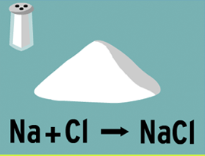
When sodium and chlorine combine to form sodium chloride, sodium chloride is the:

a)

Originator

b)

Reactant

c)

Product

d)

Produce

17.

Which of the models of a chemical reaction best represents the Law of Conservation of Mass?

a)

A

b)

B

c)

C

d)

D

18.

Which of the models of a chemical reaction best represents the Law of Conservation of Mass?

a)

A

b)

B

c)

C

d)

D

19.

Based on the Law of Conservation of Matter, describe the relationship between the mass of the reactants and the mass of the products.

a)

The mass of the products is always greater than the mass of the reactants.

b)

The mass of the reactants is less than the mass of the products.

c)

The mass of the reactants equals the mass of the products.

d)

The mass of the reactants is greater than the mass of the products.

20.
12g of Carbon react with 16g of Oxygen, how much carbon monoxide (CO) is formed? 
a)
28 g
b)
4g
c)
30g
d)
12g
21.

What happens to atoms in a chemical reaction?

a)

they are destroyed

b)

they are created

c)

they are rearranged

22.

Which section represents the yield sign?

a)

A

b)

B

c)

C

23.

Which section represents the products?

a)

A

b)

B

c)

C

24.

Which section represents the reactants?

a)

A

b)

B

c)

C

Answer Key

Law of Conservation of Matter

Total questions: 24

1.
c)

Law of Conservation of Mass

2.
a)

molecule

3.
a)

molecule

4.
c)

chemical formula

5.
d)

chemical equation

6.
b)

coefficient

7.
c)

reactant

8.
d)

product

9.
d)

120g

10.
c)

it is in the gas that is formed

11.
c)

4

12.
d) a total of 20g of products
13.
d)

6

14.
a) 4g
15.
b) unbalanced
16.
c)

Product

17.
a)

A

18.
a)

A

19.
c)

The mass of the reactants equals the mass of the products.

20.
a) 28 g
21.
c)

they are rearranged

22.
b)

B

23.
c)

C

24.
a)

A

FAQs

What does this Law of Conservation of Matter worksheet cover?

This Grade 8 science worksheet uses 24 multiple-choice questions to practice applying the Law of Conservation of Mass to chemical formulas and equations. Students identify molecules, compounds, coefficients, reactants, and products; count atoms on each side of an equation; calculate unknown masses; and determine whether an equation is balanced.

How can I use this worksheet to teach conservation of mass in chemical reactions?

Introduce the vocabulary first by having students distinguish chemical formulas from chemical equations and reactants from products. Then use the mass-calculation and atom-counting questions to model that matter is not created or destroyed, including how gas produced in a reaction accounts for an apparent mass loss. Finish with the balanced-versus-unbalanced equation items and ask students to explain which atoms do not match.

What mistakes should I watch for when students complete this worksheet?

Students may confuse a molecule with a compound, or mistake a coefficient for a subscript when reading chemical notation. They may also assume that bubbling means matter disappeared, overlook gas when comparing reaction masses, or count only the visible numeral instead of multiplying coefficients by subscripts. In the balancing questions, check that students compare each element on both sides rather than judging an equation by its appearance.

How do I assign and grade this worksheet?

This Law of Conservation of Matter worksheet is available as a printable PDF and as a digital quiz on Wayground. It includes a complete answer key, and printable submissions can be graded by scanning student work with the Wayground for Teachers app. The printable option can also support classrooms that are reducing screen time.

How can I differentiate this chemical-reaction worksheet for my students?

Use the worksheet's Advanced Settings to adjust font spacing or font size so the chemical formulas, equations, and multiple-choice options are easier to read. You can also select a dyslexia-friendly font or translate the worksheet into another language when those options better support access to the vocabulary and reaction calculations.

Where can I find more worksheets like this on Wayground?

Wayground offers a comprehensive collection of free printable worksheets and practice problems across all subjects, with downloadable PDFs and answer keys to help students master essential skills and concepts. Browse more resources at https://wayground.com/en-us/worksheets.