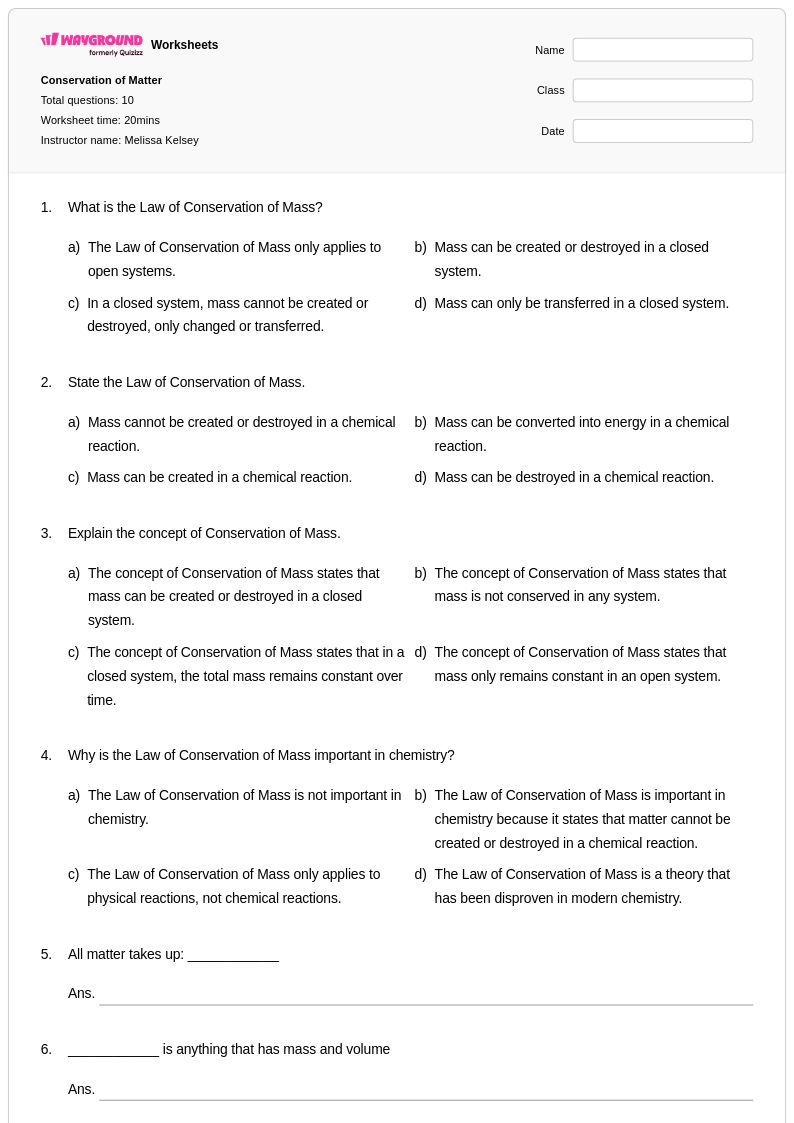
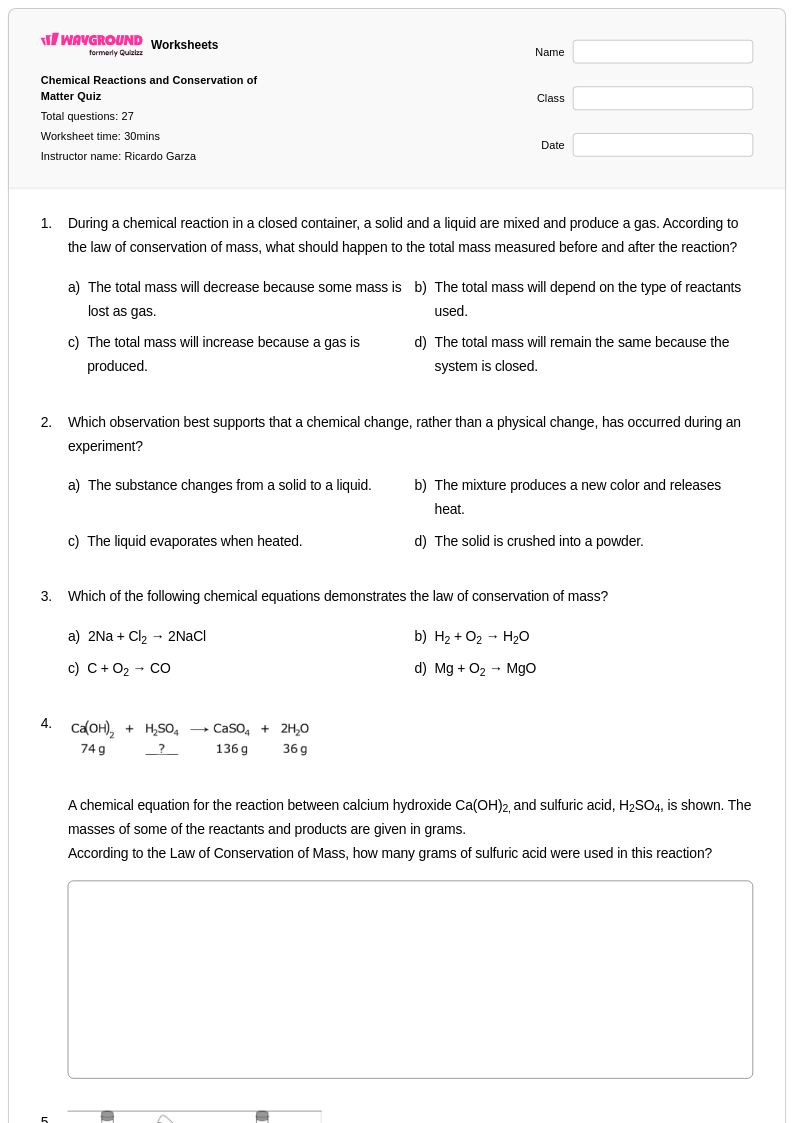
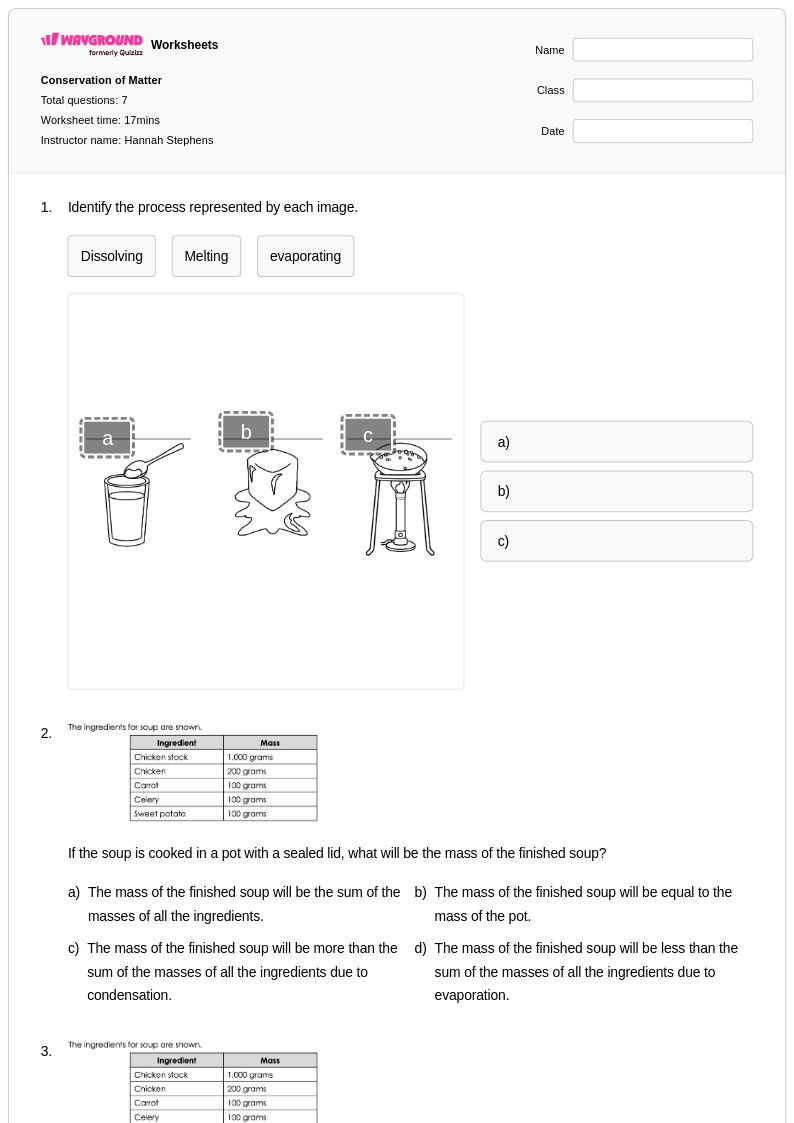
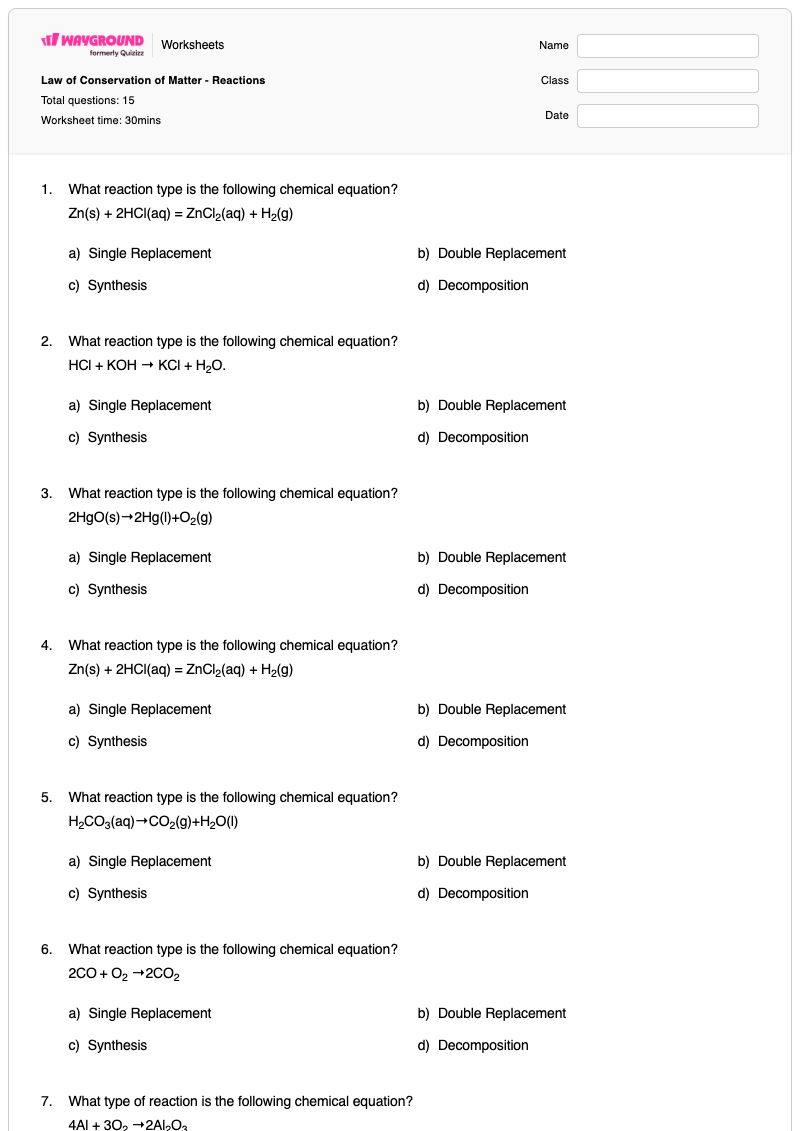
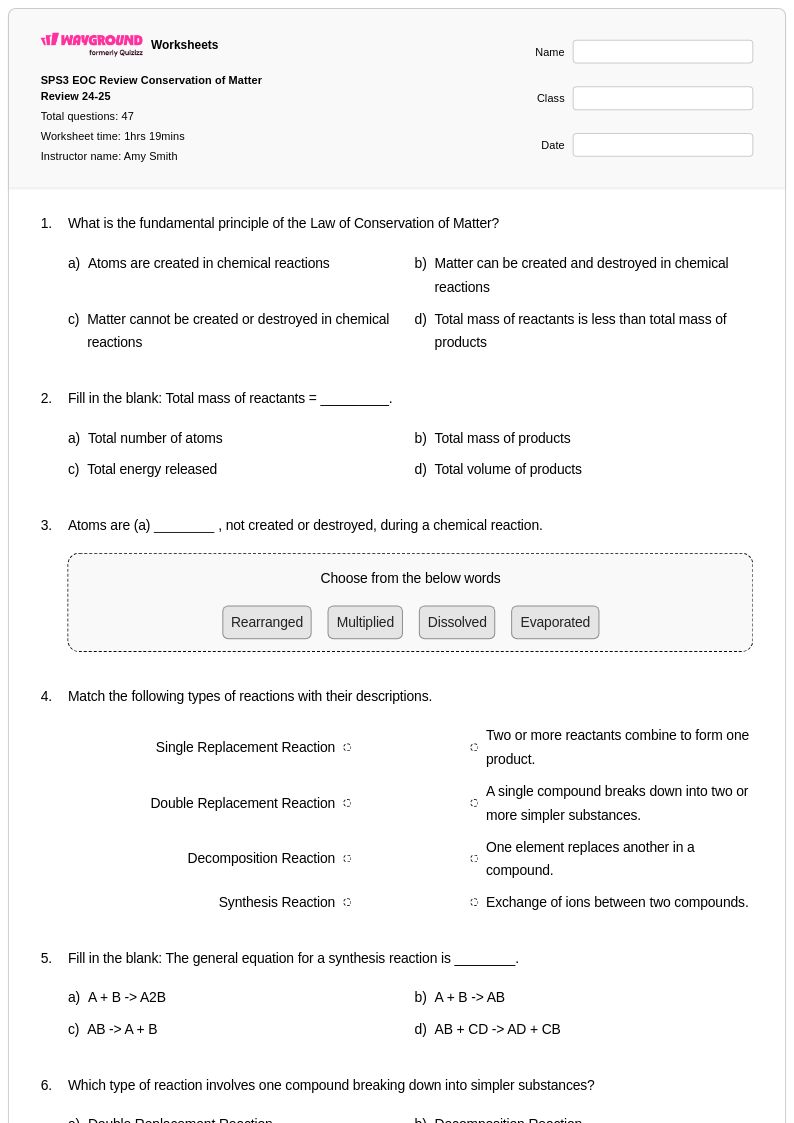
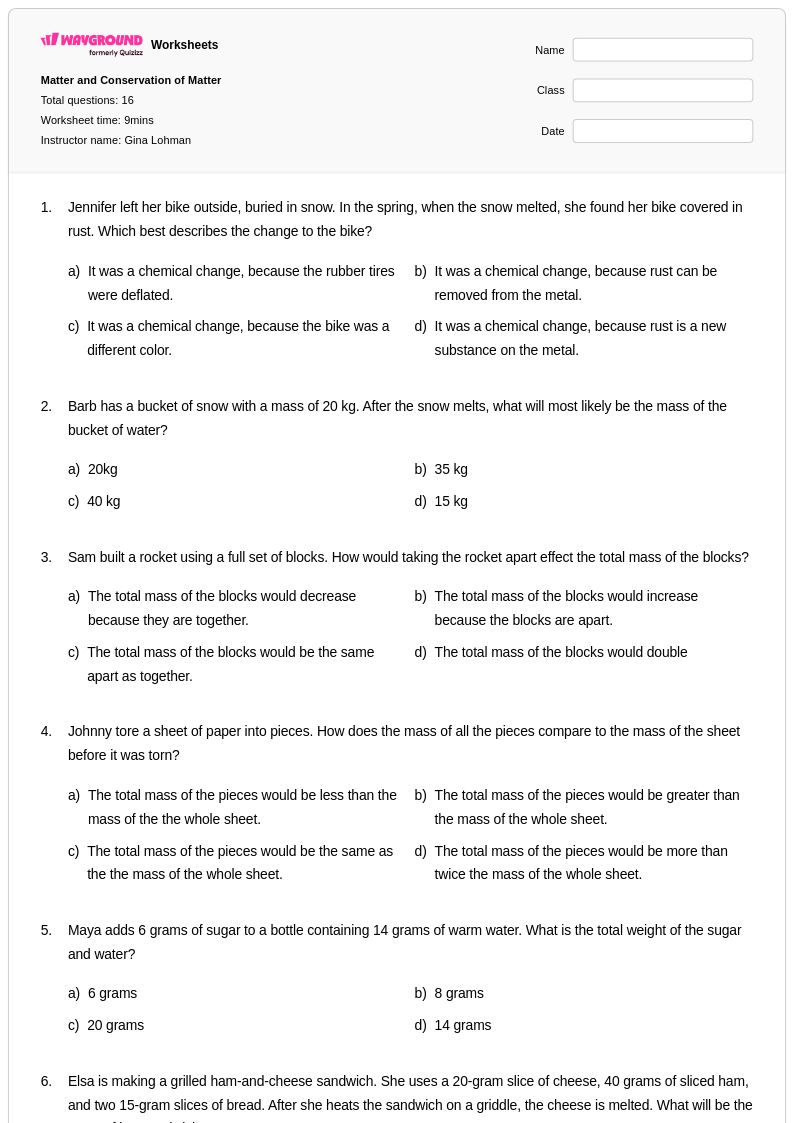
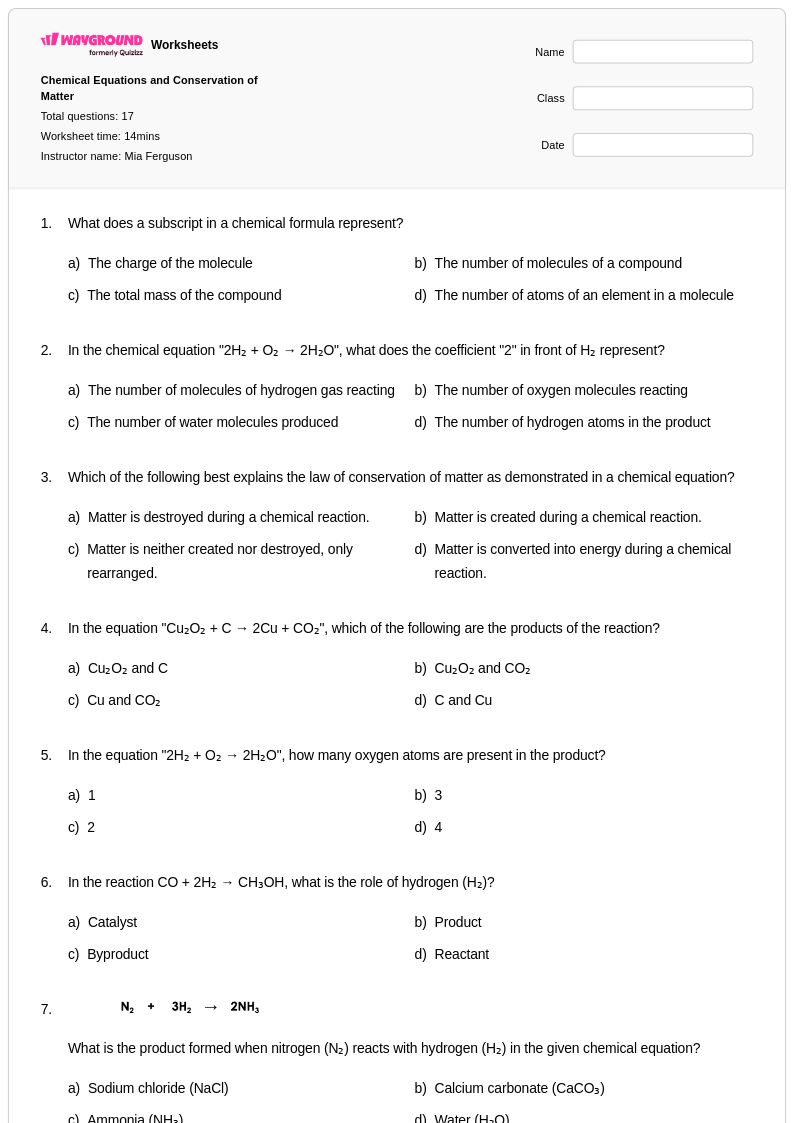
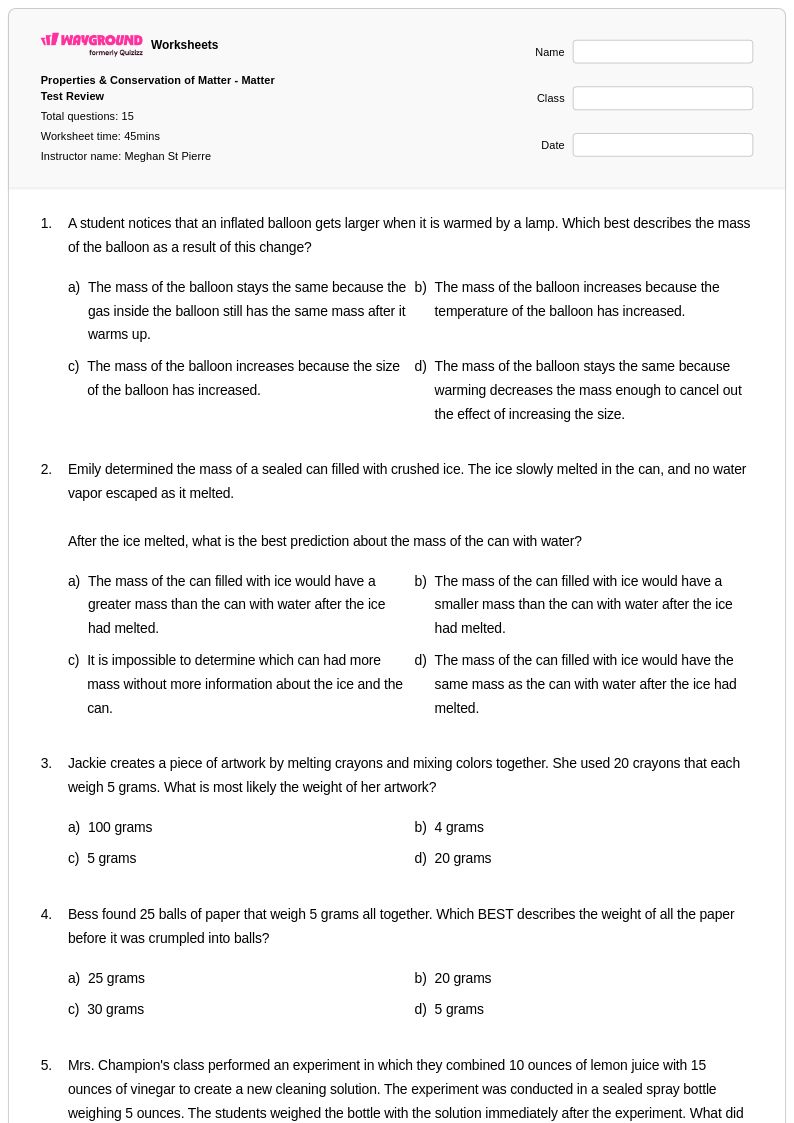
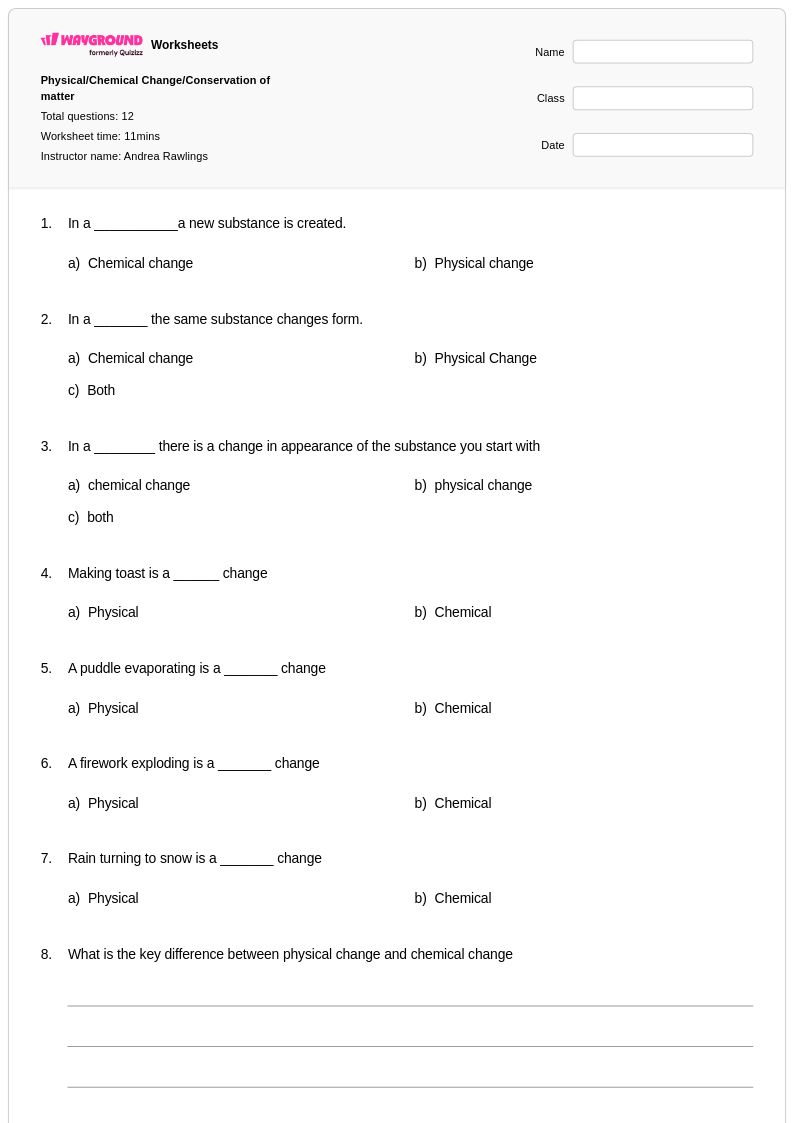
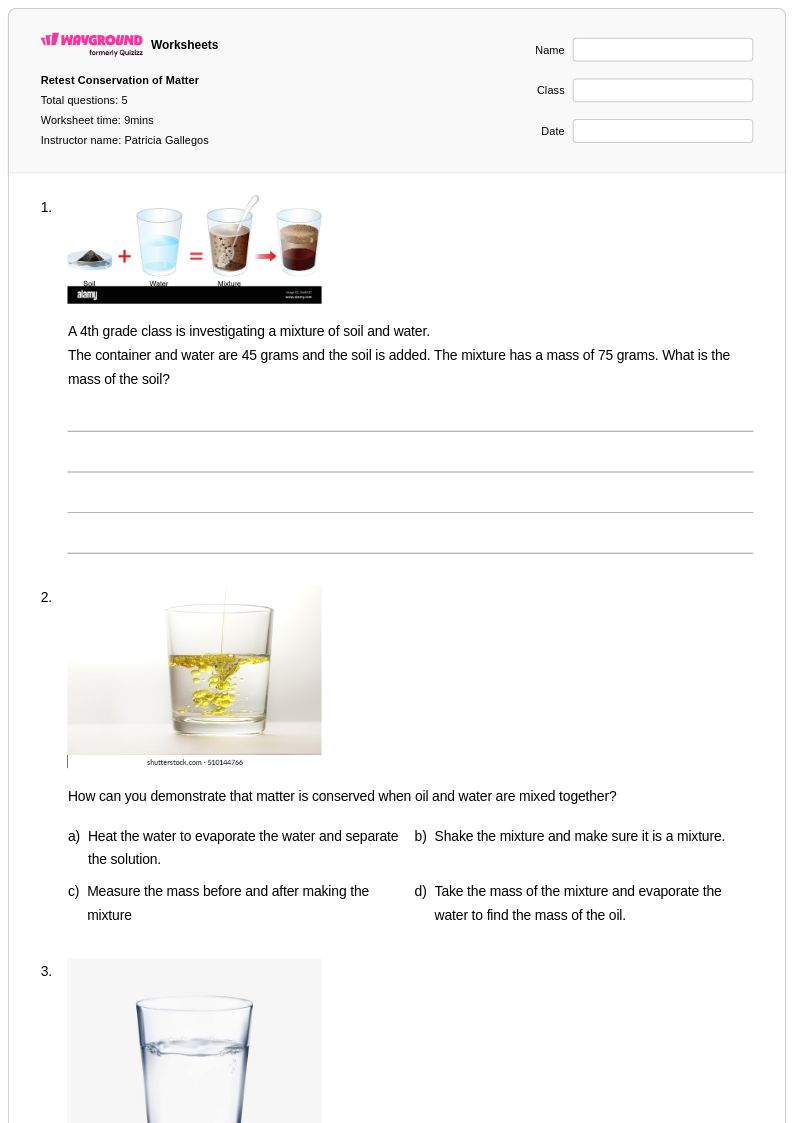
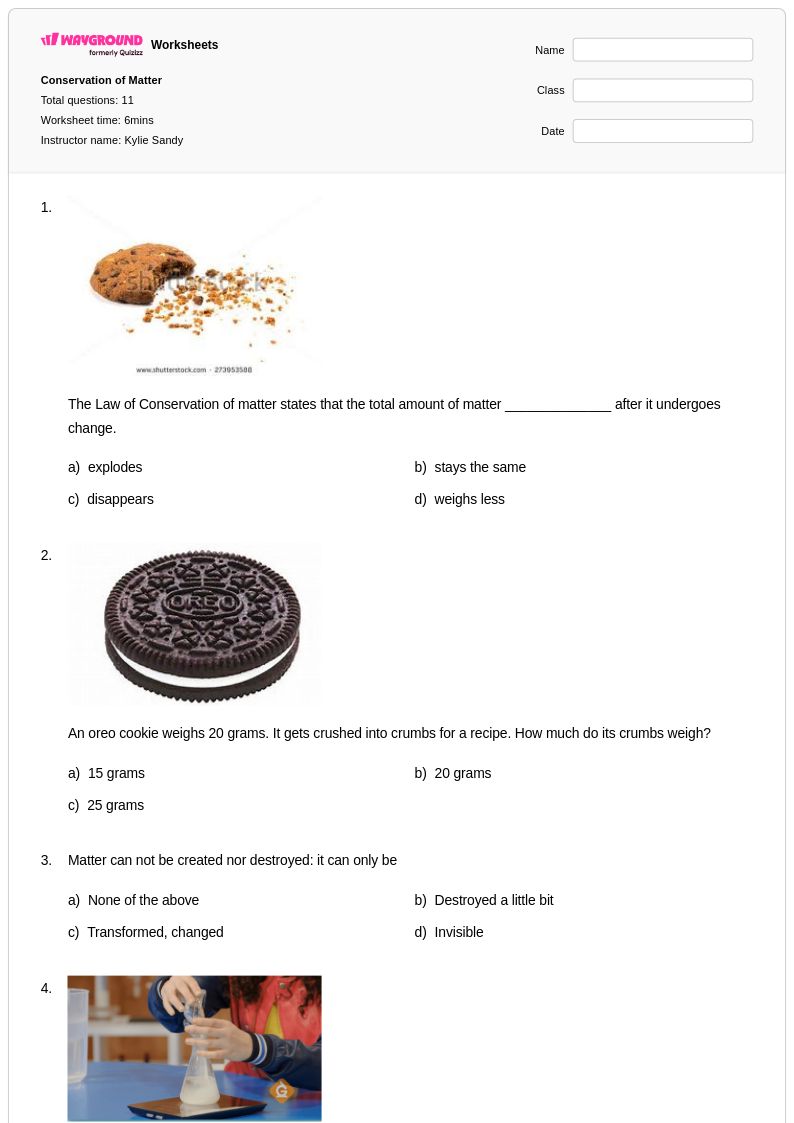
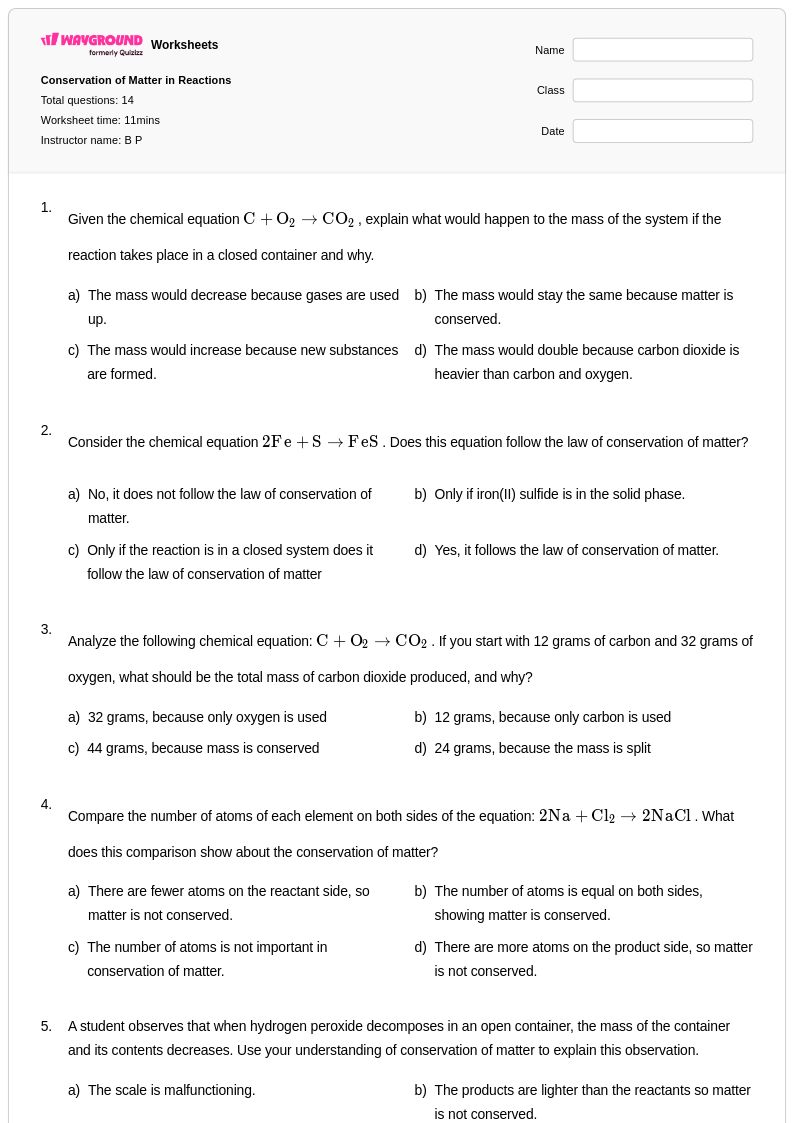
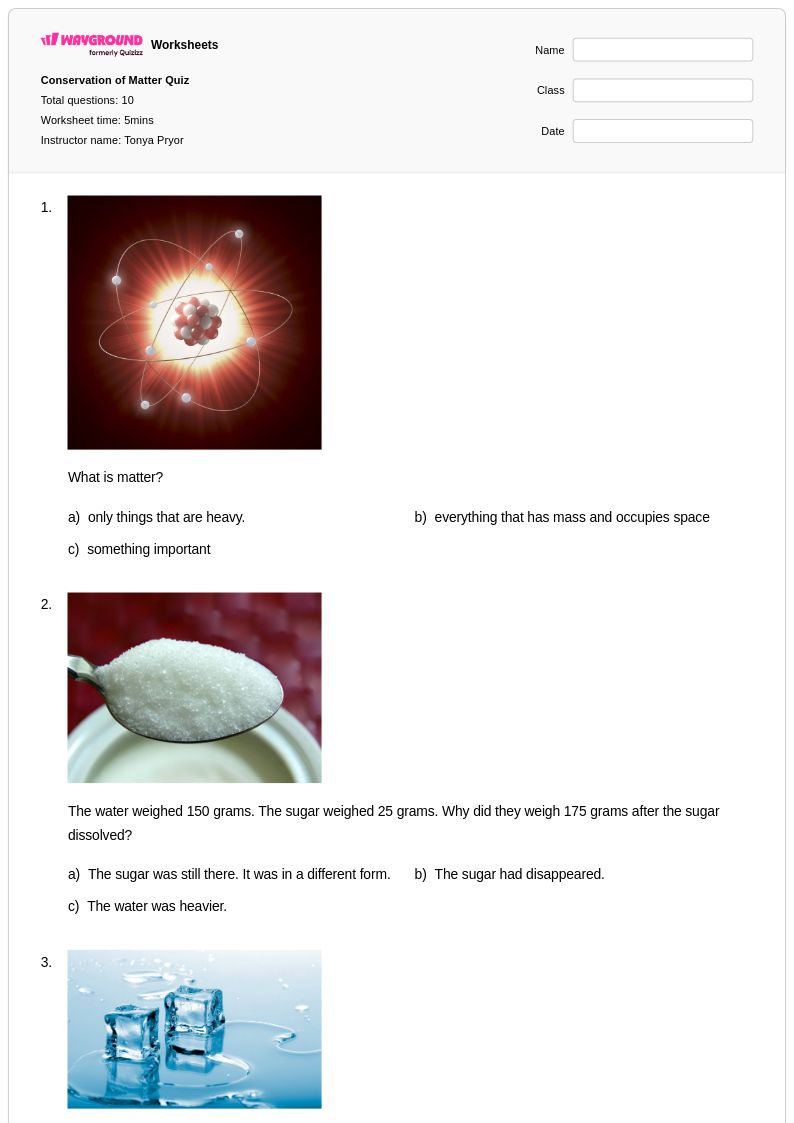
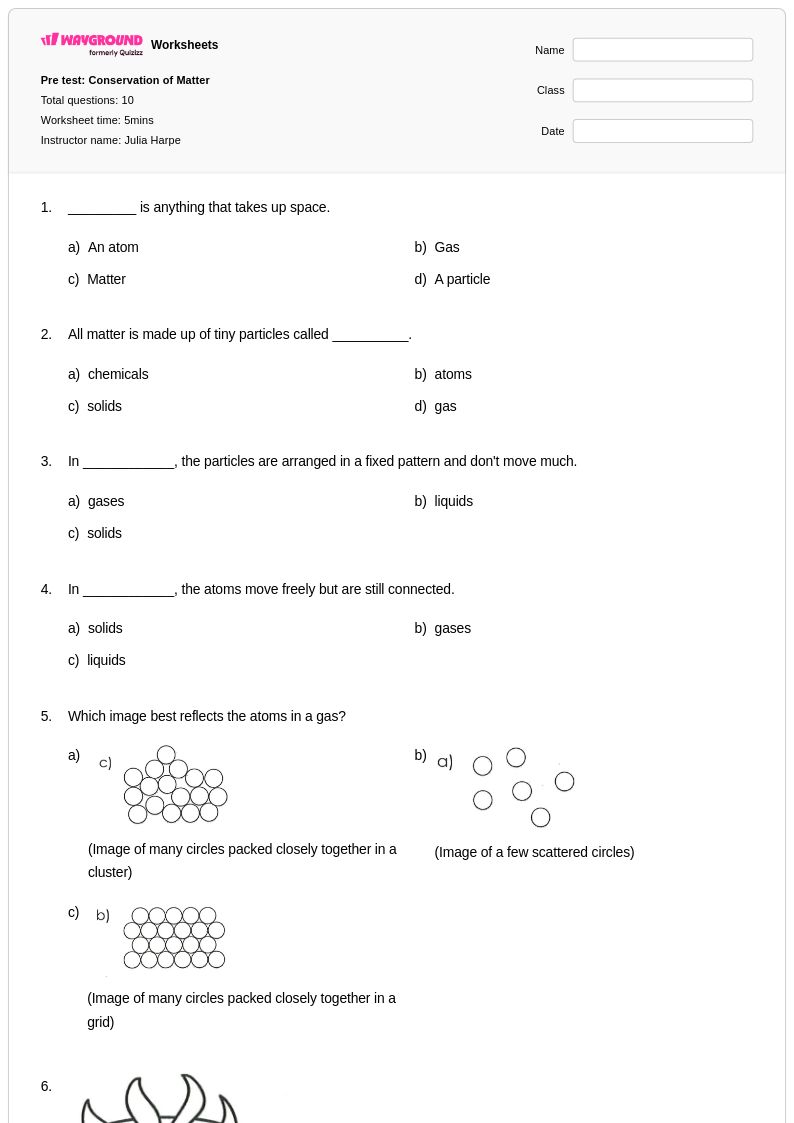
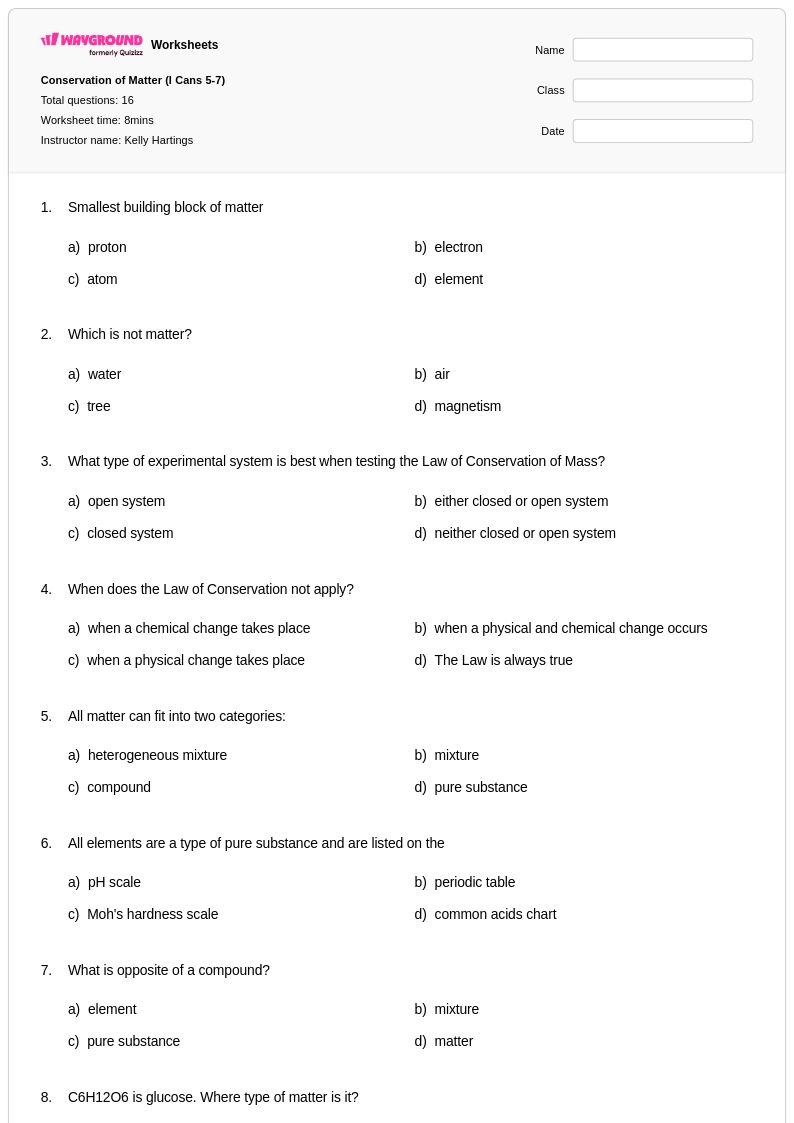
Explore Wayground's free conservation of matter worksheets and printables that help students master chemical equations, mass balance, and the fundamental principle that matter cannot be created or destroyed through engaging practice problems with answer keys.
Explore printable Conservation of Matter worksheets
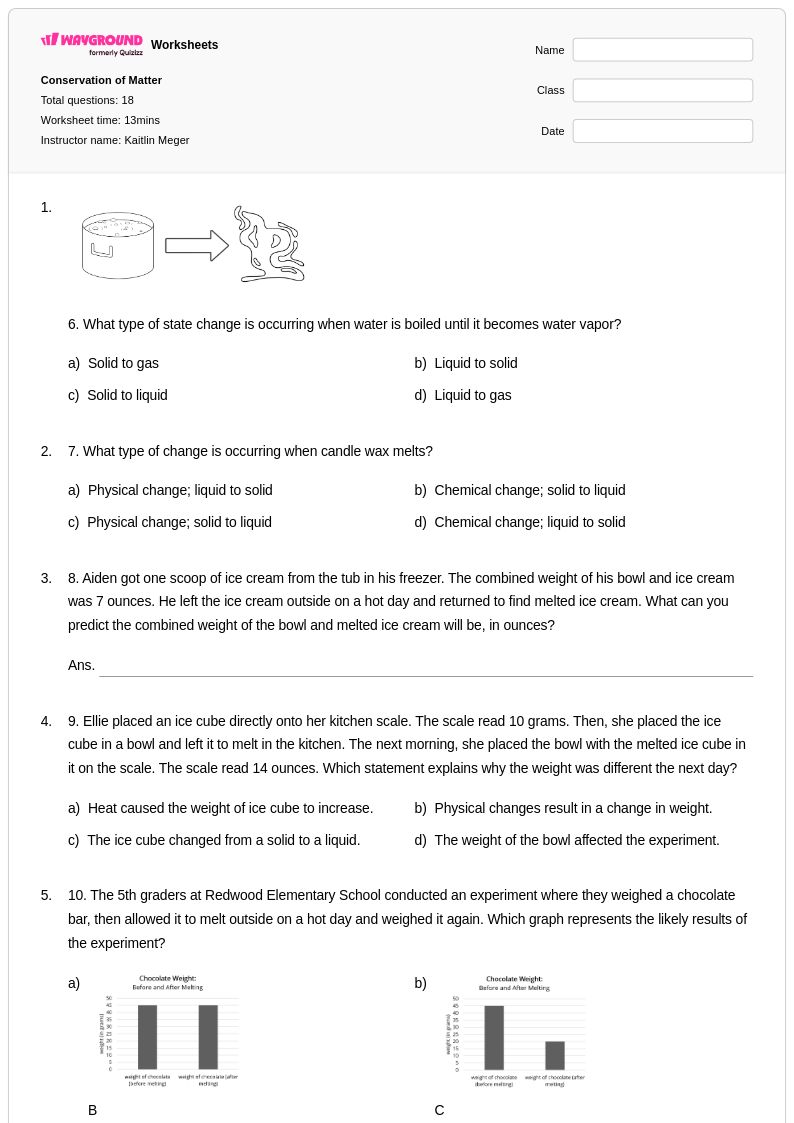
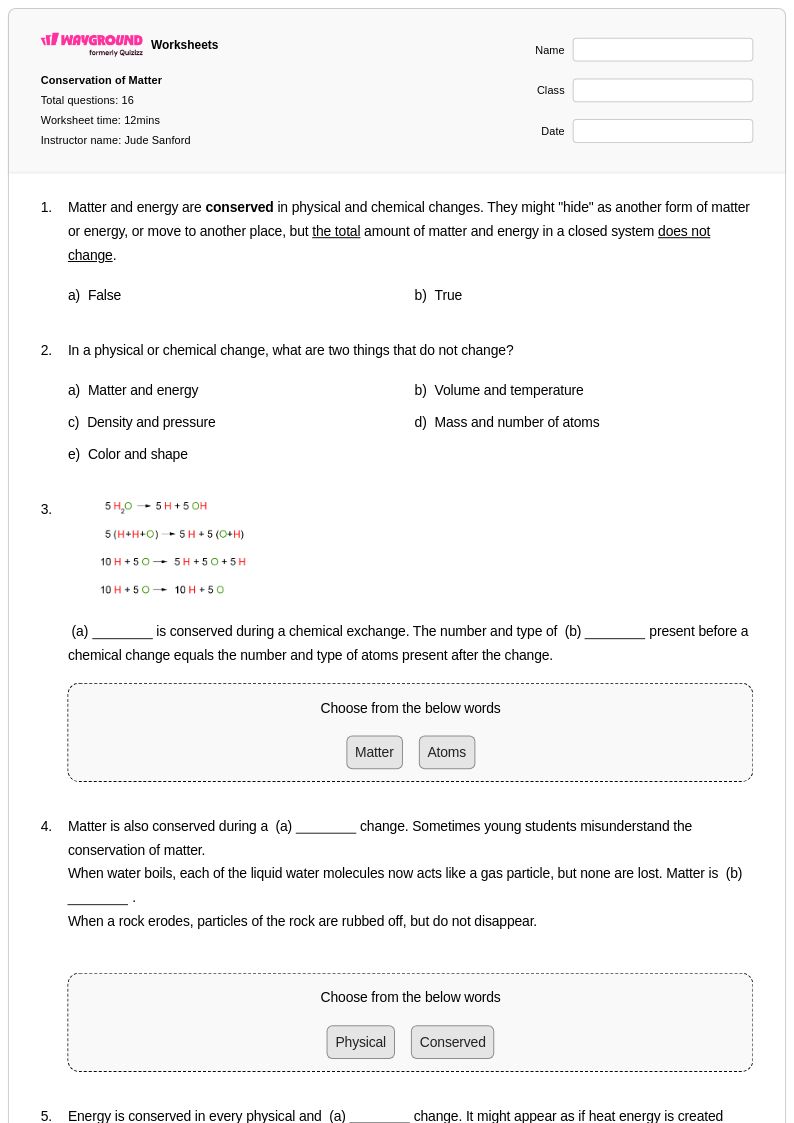
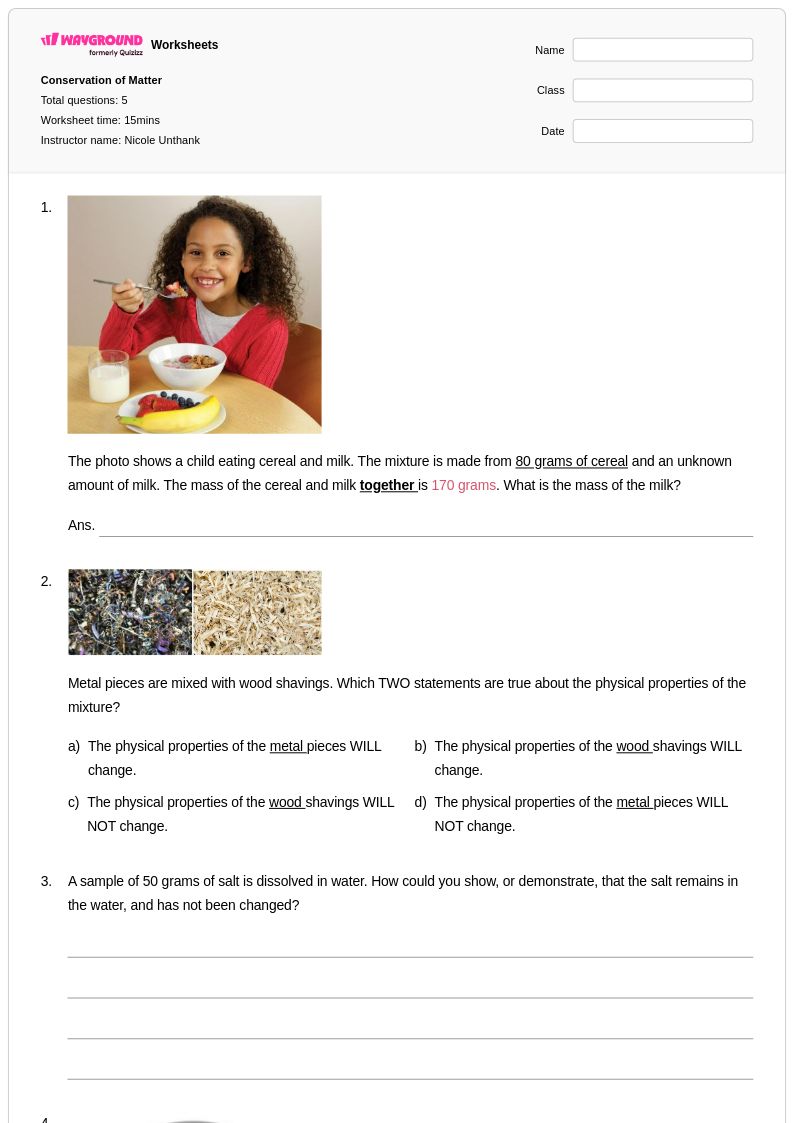
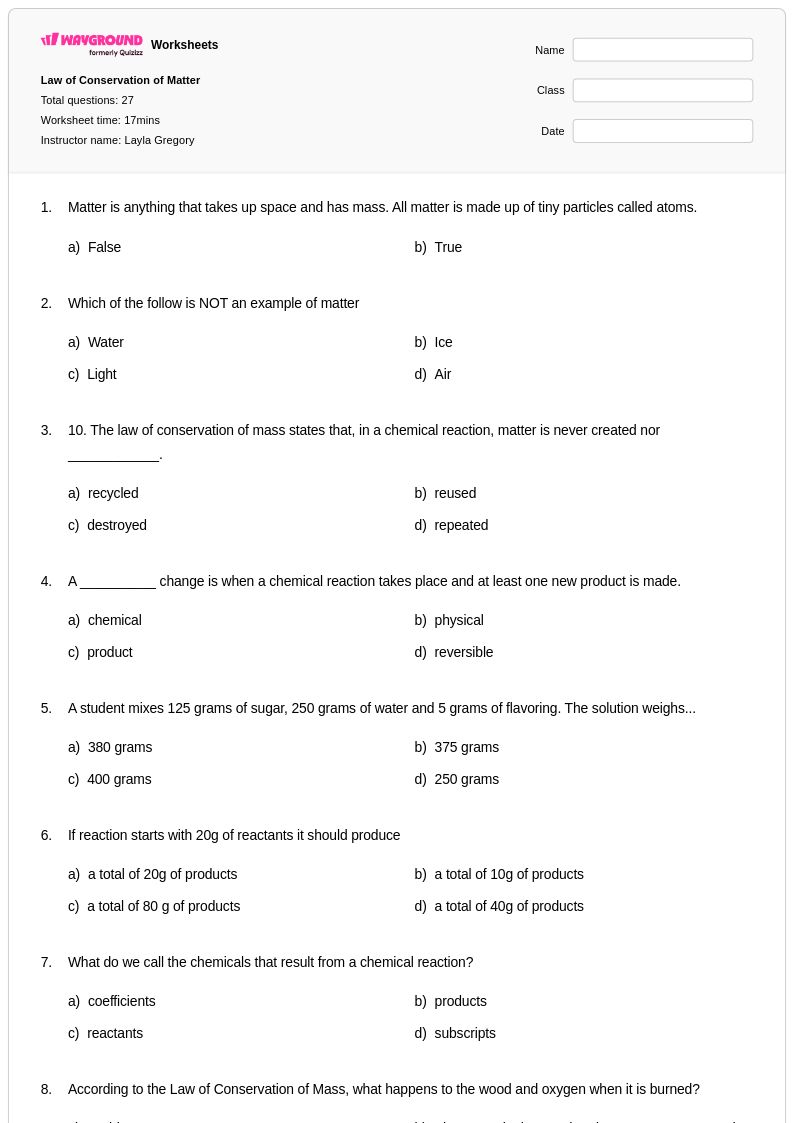
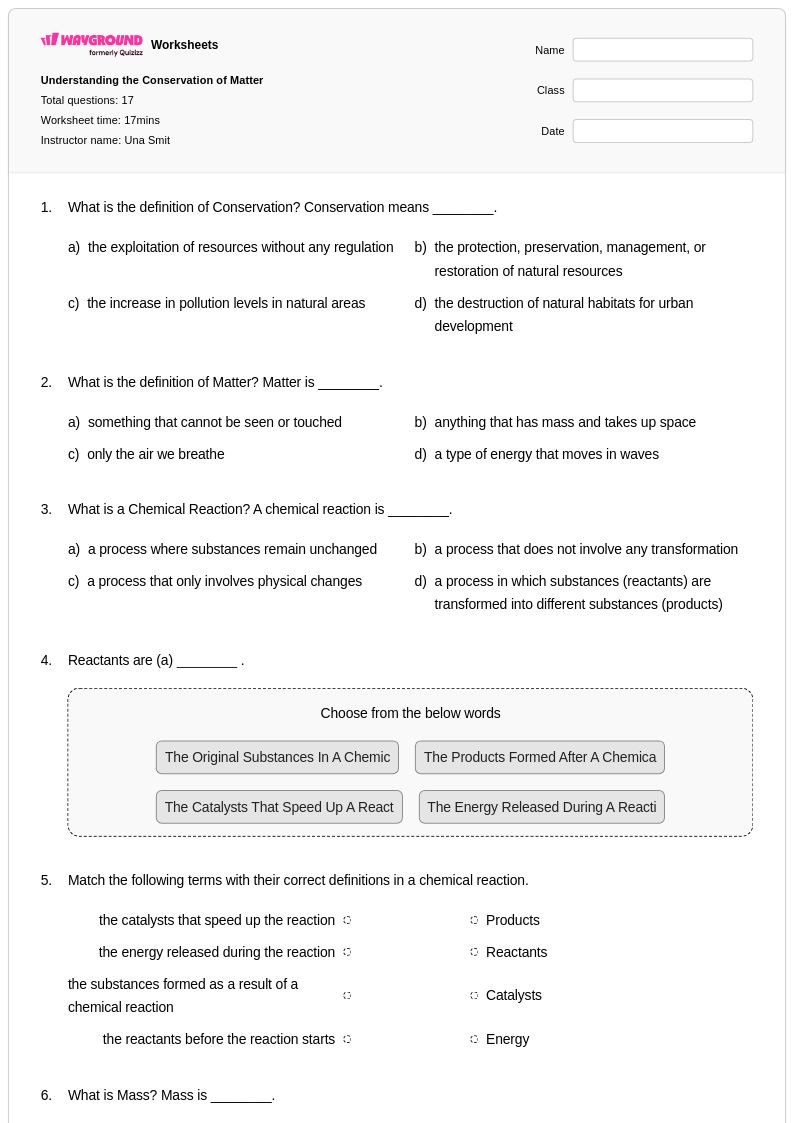
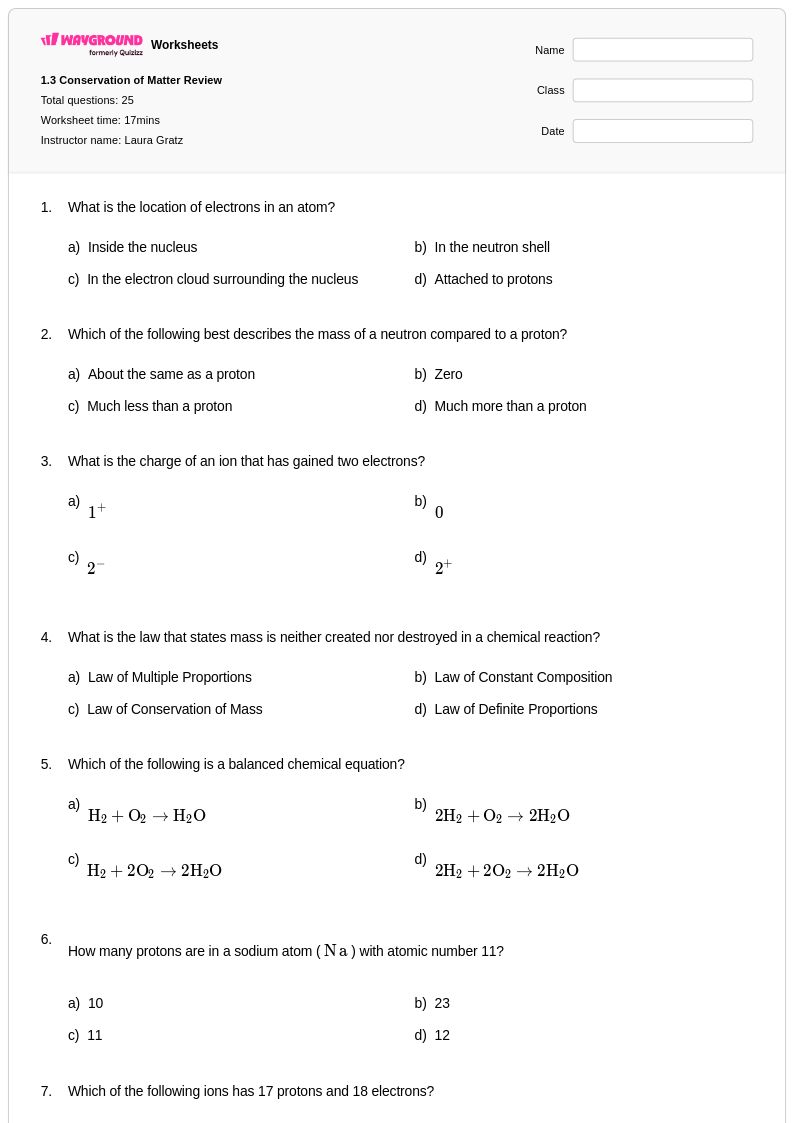
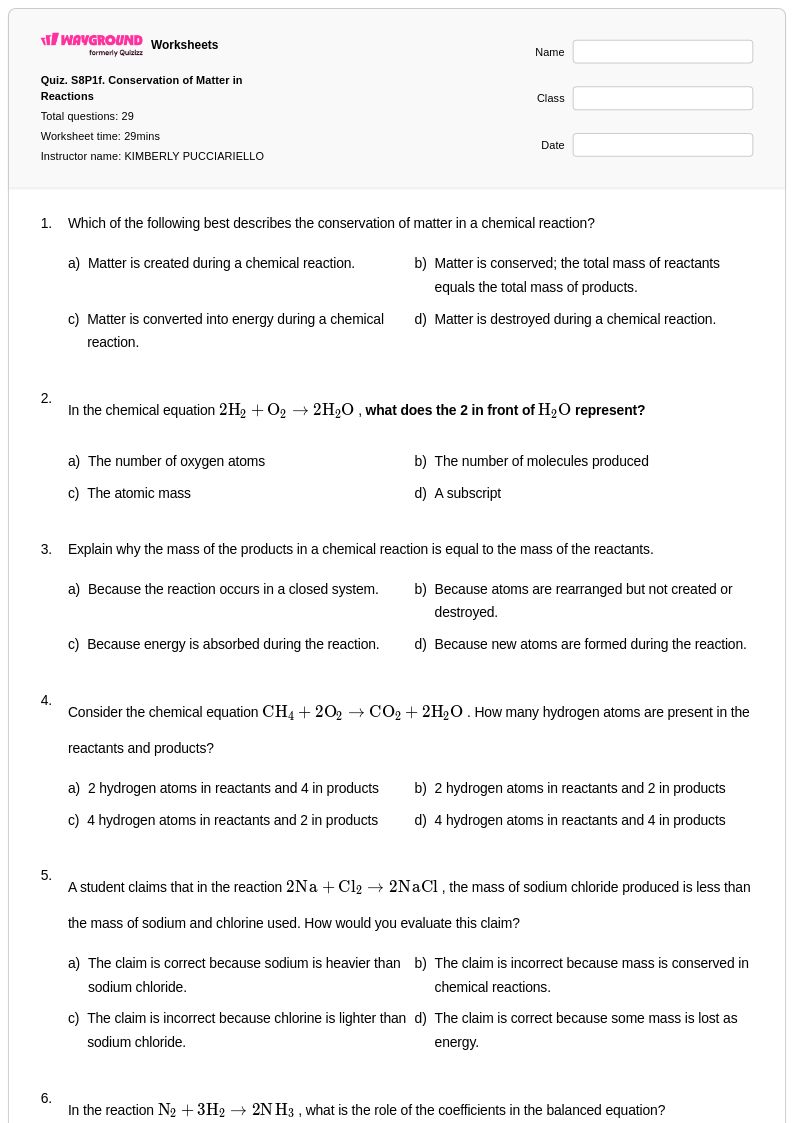
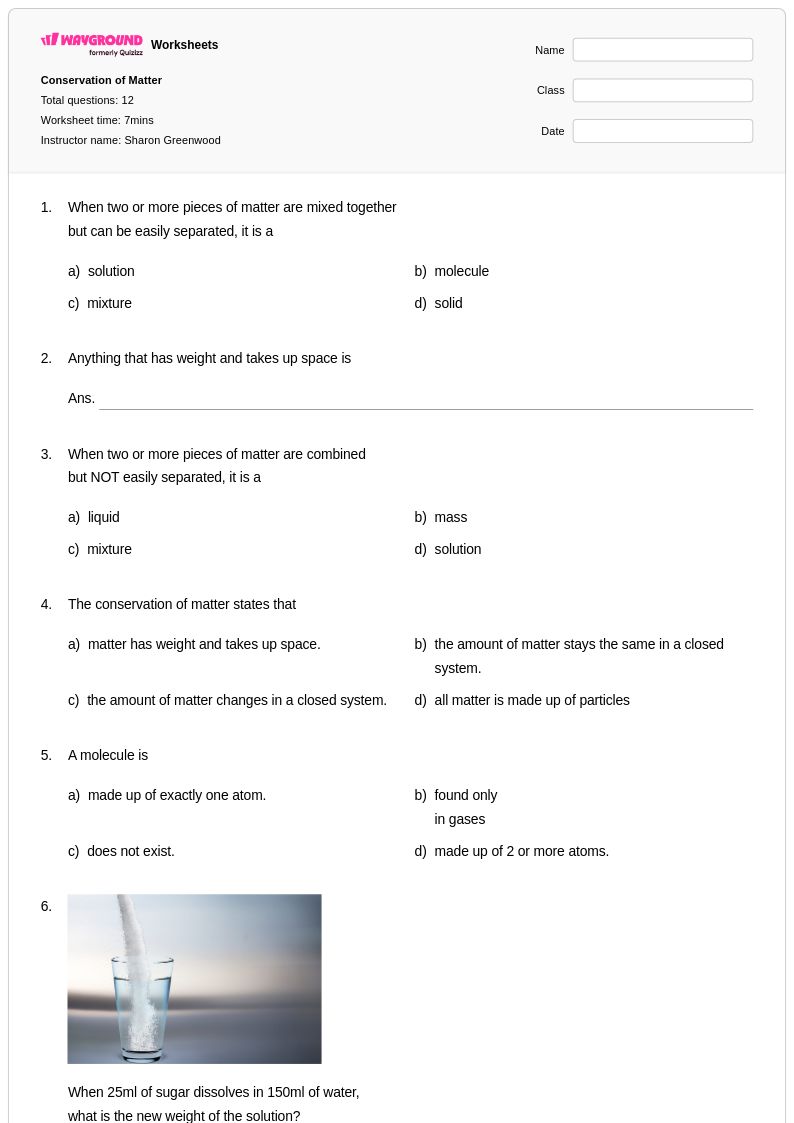
Conservation of matter worksheets available through Wayground (formerly Quizizz) provide comprehensive practice opportunities for students to master this fundamental chemistry principle. These expertly designed resources help students understand that matter cannot be created or destroyed in chemical reactions, only rearranged into different molecular configurations. The worksheets strengthen critical thinking skills through balanced equation exercises, mass calculation problems, and real-world applications that demonstrate how atoms are conserved throughout chemical processes. Students benefit from varied practice problems that reinforce their understanding of atomic theory, chemical equations, and quantitative relationships in reactions. Each worksheet collection includes detailed answer keys and is available as free printable pdf resources, making it easy for educators to provide immediate feedback and support student learning both in classroom settings and for independent study.
Wayground (formerly Quizizz) supports chemistry educators with an extensive library of millions of teacher-created conservation of matter resources that can be easily searched, filtered, and customized to meet specific classroom needs. The platform's robust filtering system allows teachers to locate worksheets aligned with state and national science standards, ensuring that content matches curriculum requirements and learning objectives. Teachers can differentiate instruction by selecting from various difficulty levels and problem types, while the flexible customization tools enable educators to modify existing worksheets or create entirely new ones tailored to their students' specific needs. These conservation of matter resources are available in both printable pdf format and interactive digital versions, providing versatility for traditional classroom instruction, remote learning environments, targeted remediation sessions, and enrichment activities for advanced learners seeking additional challenge in chemical principles.
FAQs
How do I teach the conservation of matter to students who struggle with abstract concepts?
Start with concrete, visual demonstrations before moving to symbolic chemical equations. Activities like tracking the mass of reactants and products in a closed system, or using physical manipulatives to represent atoms being rearranged rather than created or destroyed, help students internalize the principle. Once students can articulate why mass is conserved at the atomic level, introduce balanced equations as a formal representation of that same idea.
What kinds of practice problems help students master conservation of matter?
Effective practice combines balanced equation exercises, mass calculation problems, and real-world application scenarios such as combustion reactions or dissolving substances. Students should practice both identifying whether an equation is balanced and correcting unbalanced ones, since each skill targets a different aspect of understanding. Varied problem types prevent rote memorization and build flexible reasoning about how atoms are conserved across different chemical processes.
What mistakes do students commonly make when learning conservation of matter?
The most common misconception is that mass can change during a chemical reaction, often because students confuse physical observations like gas escaping or a substance appearing to disappear with actual loss of matter. Students also frequently change subscripts instead of coefficients when balancing equations, which alters the identity of the compounds rather than the ratio of molecules. Addressing both errors explicitly, and requiring students to explain their reasoning rather than just produce a balanced equation, significantly reduces these patterns.
How can I use conservation of matter worksheets to assess student understanding?
Worksheets that combine equation balancing with short explanation prompts are particularly effective for assessment because they reveal whether students understand the underlying principle or are simply following an algorithmic procedure. Look for errors in coefficient placement and whether students can connect a balanced equation back to the law itself. Using worksheets as formative checks before a unit test helps identify which students need targeted reteaching on atomic theory versus those who need more practice with quantitative relationships.
How do I use Wayground's conservation of matter worksheets in my classroom?
Wayground's conservation of matter worksheets are available as both printable PDFs and interactive digital formats, so they work equally well for in-class practice, homework, or remote learning. Teachers can host worksheets as a quiz directly on Wayground, enabling real-time student responses and immediate feedback. The included answer keys make it straightforward to review work efficiently, whether students are completing problems independently or in guided group settings.
How can I differentiate conservation of matter instruction for students at different skill levels?
Select worksheets at varying difficulty levels, ranging from simple single-step balancing problems for students still building foundational skills to multi-step mass calculation and real-world application problems for advanced learners. On Wayground, teachers can also apply individual accommodations such as read aloud support for students who need questions read to them, reduced answer choices to lower cognitive load, and extended time settings, all configurable per student without affecting the experience of the rest of the class.