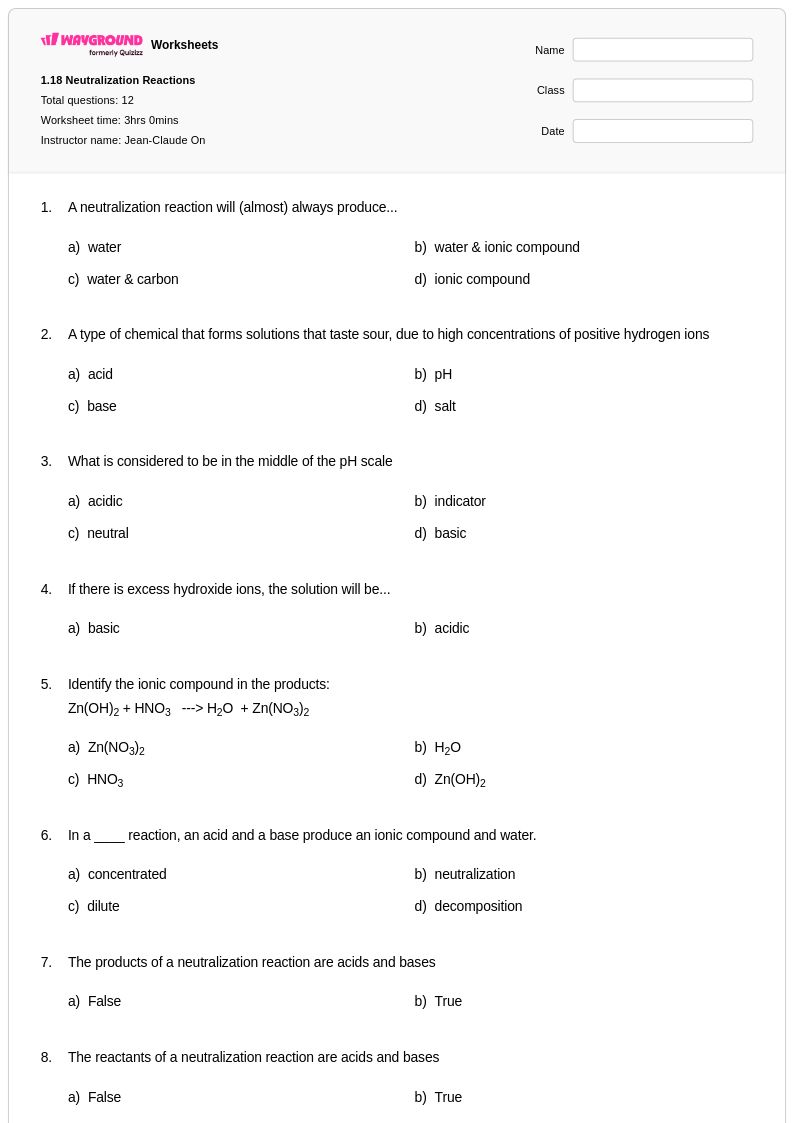
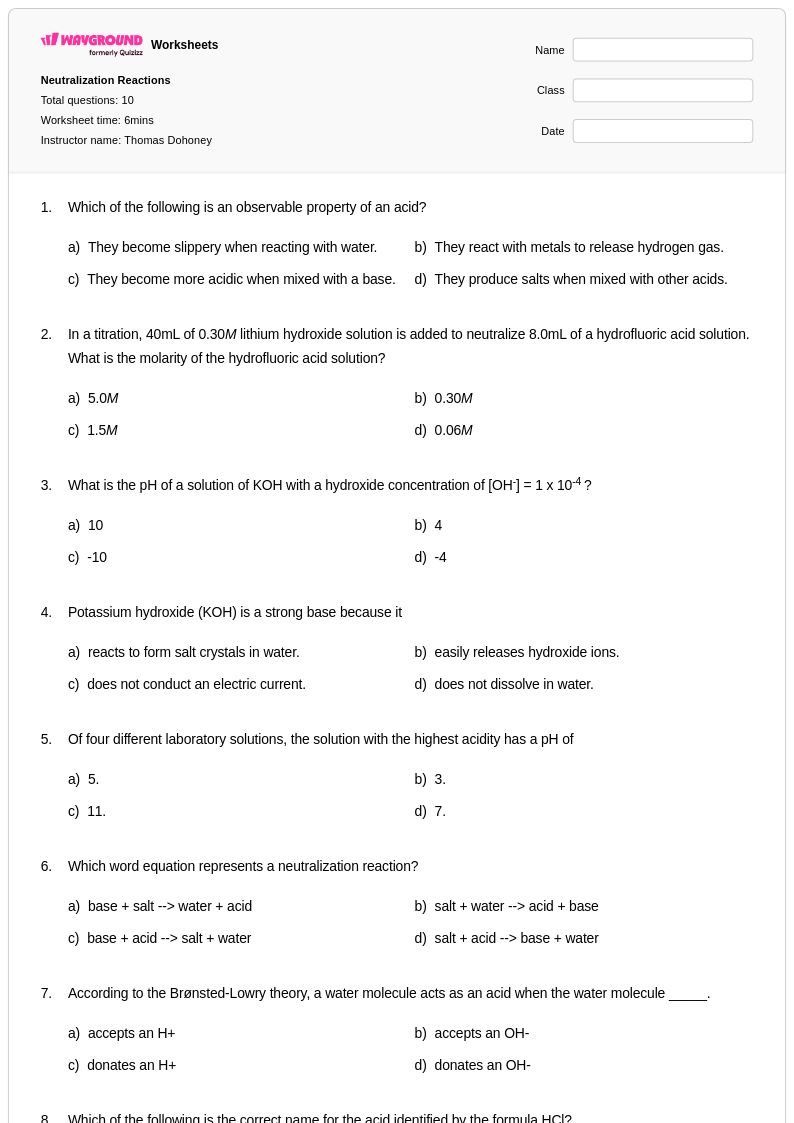
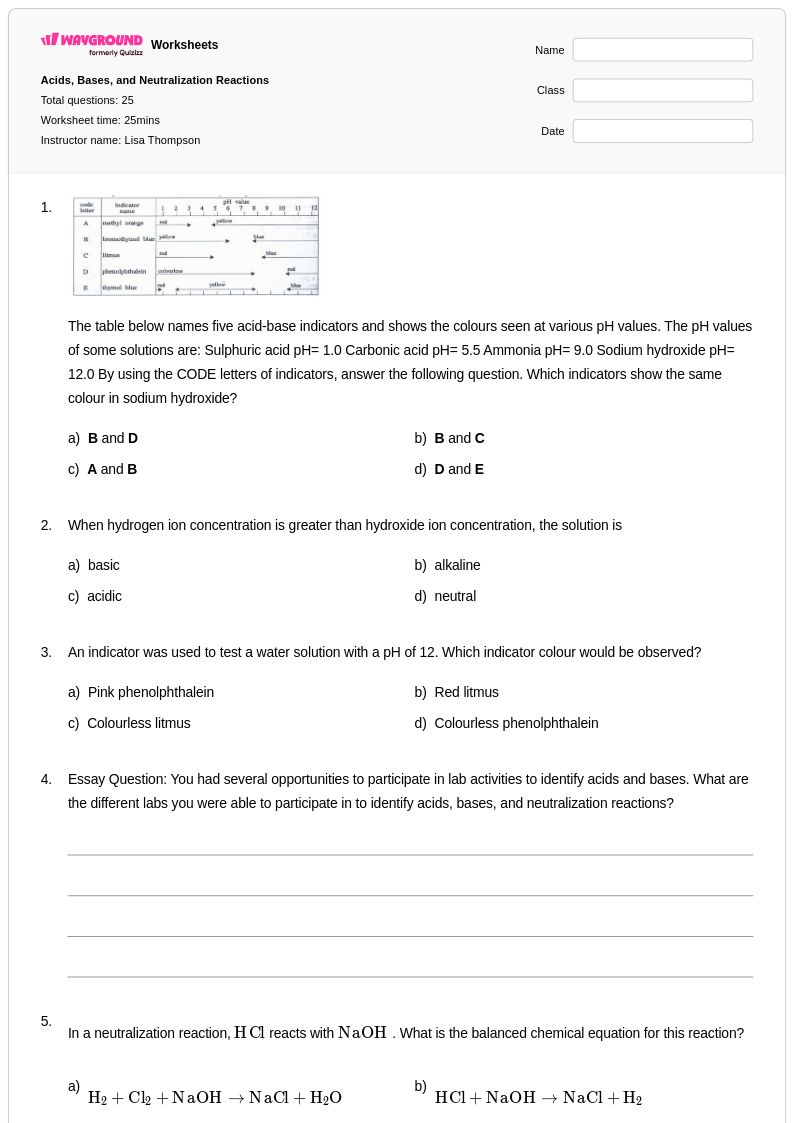
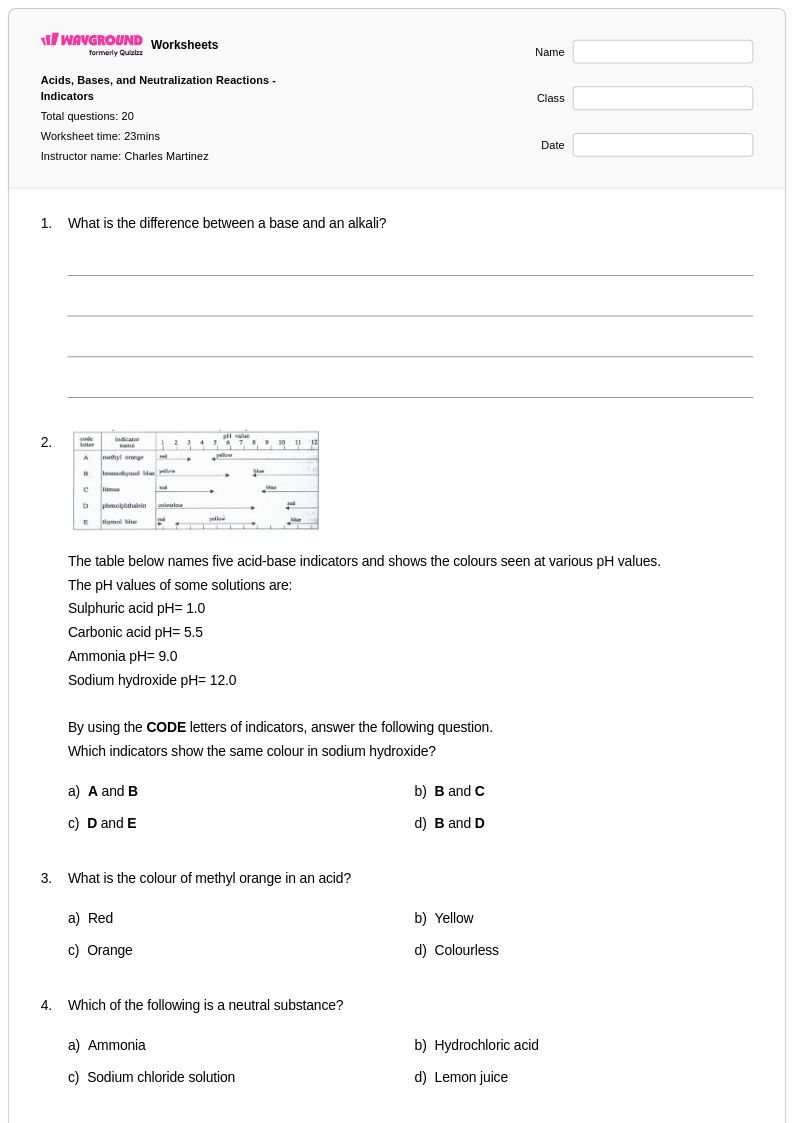
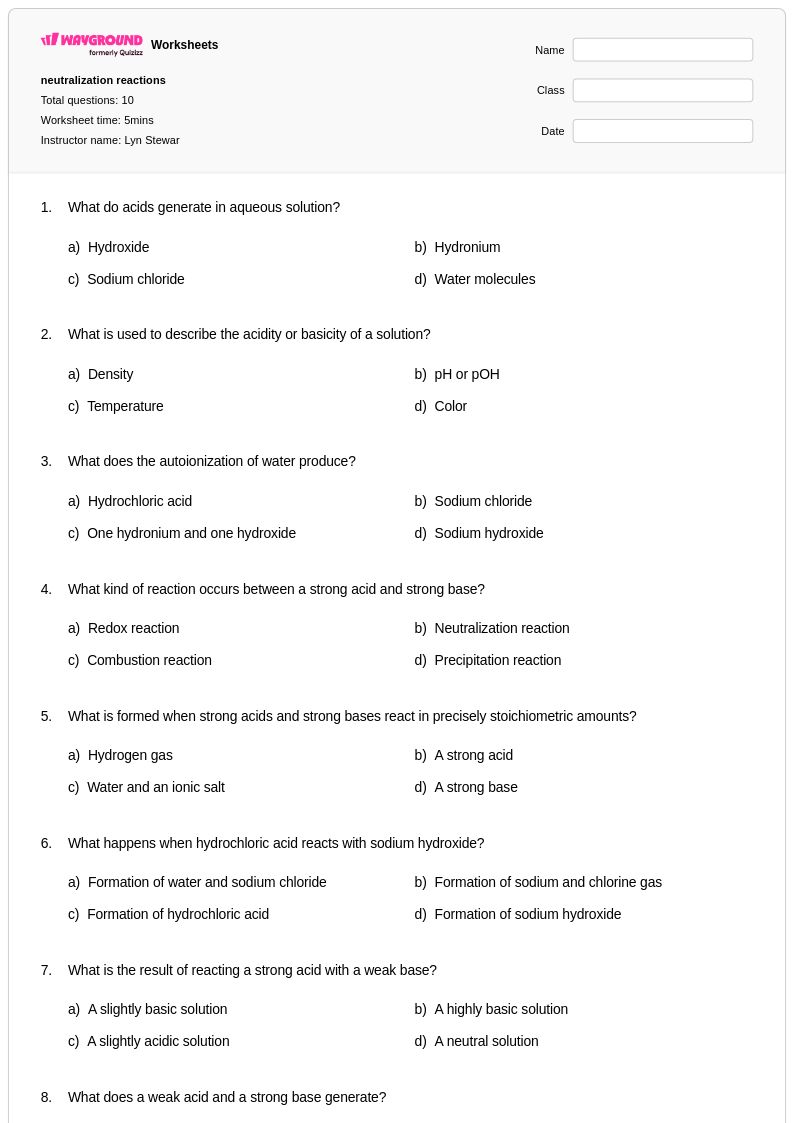
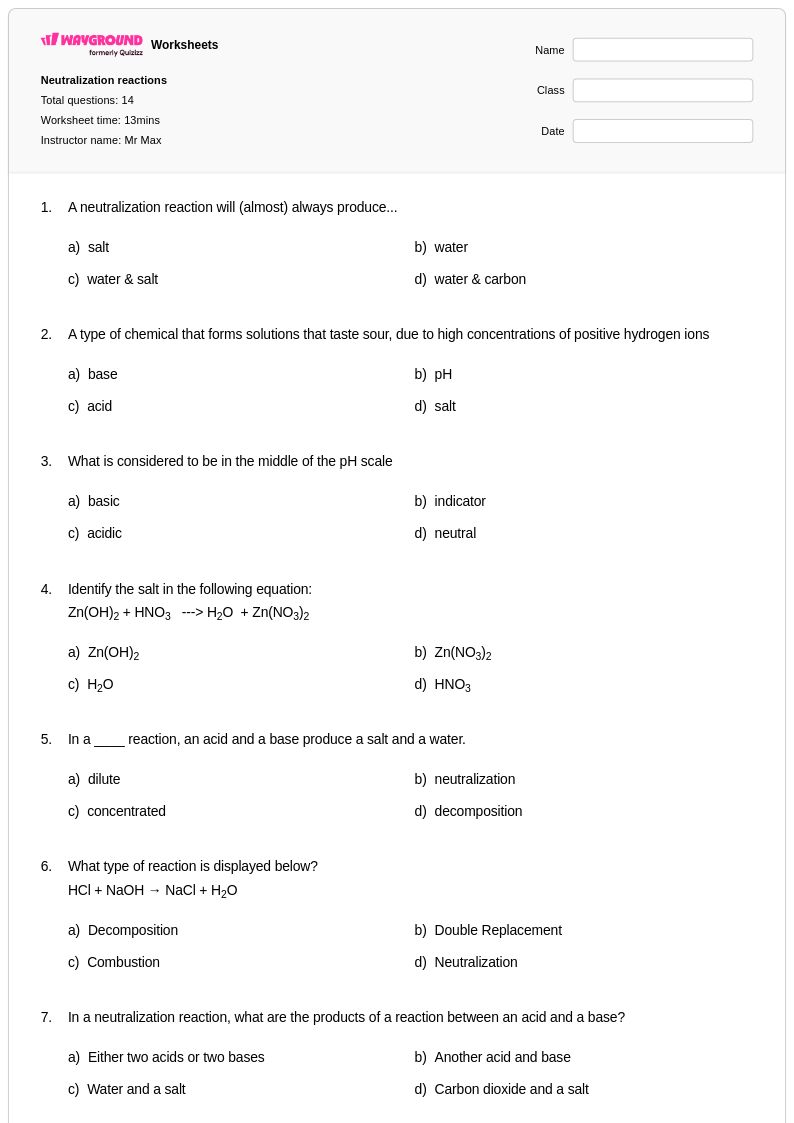
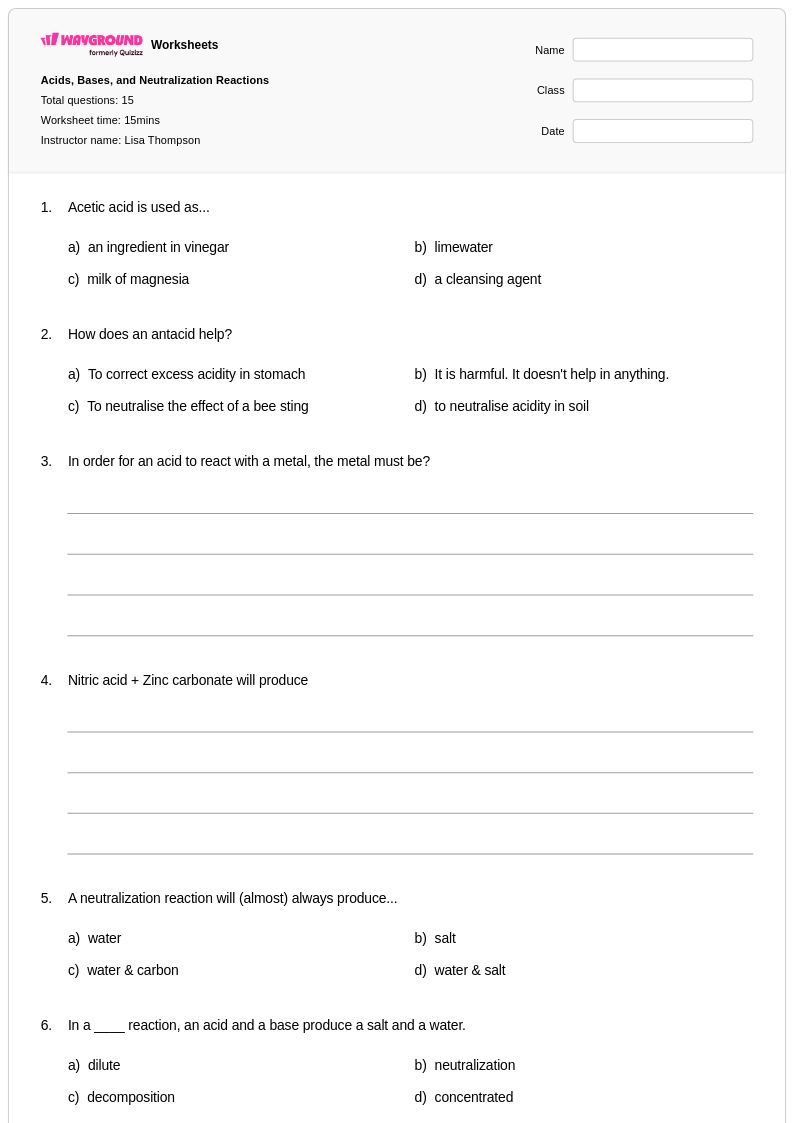
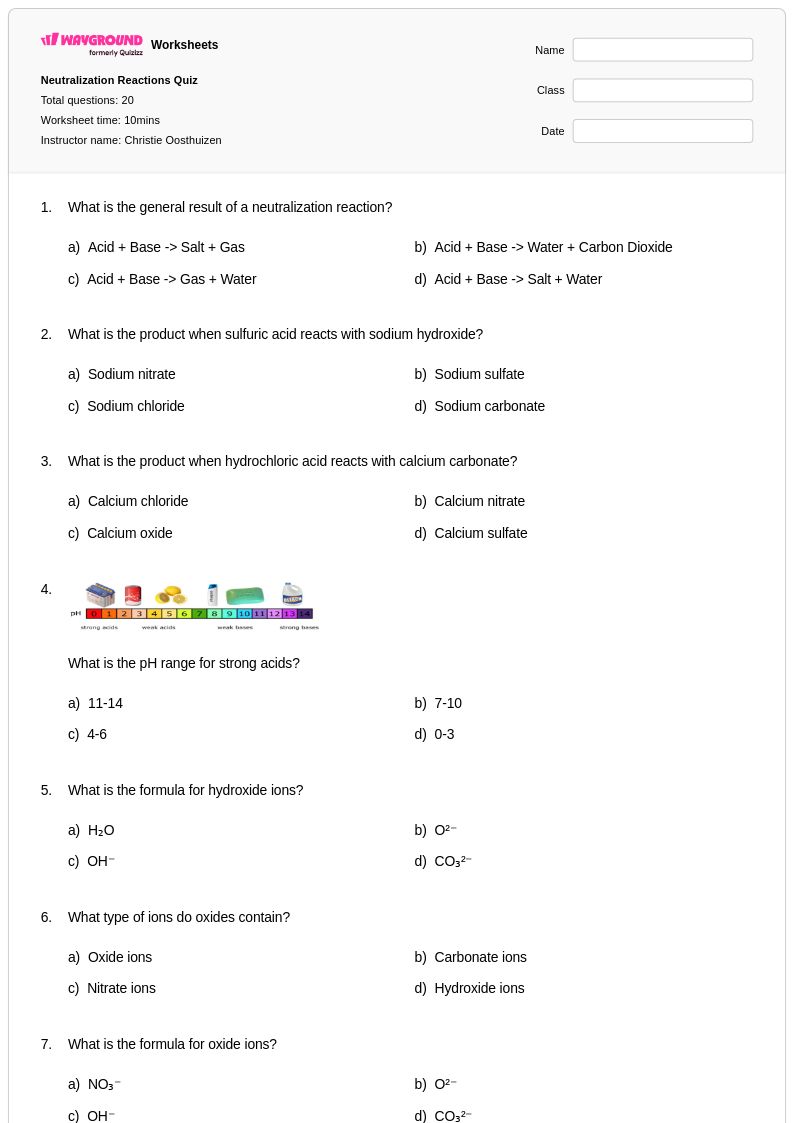
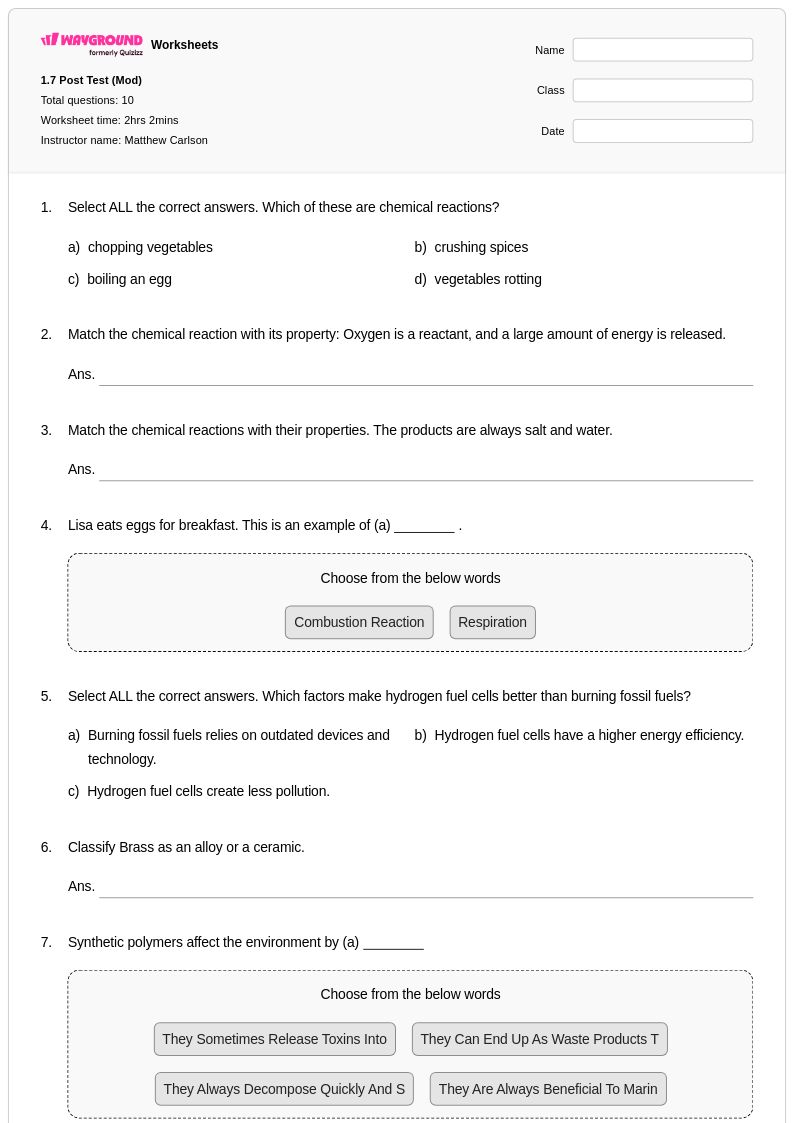
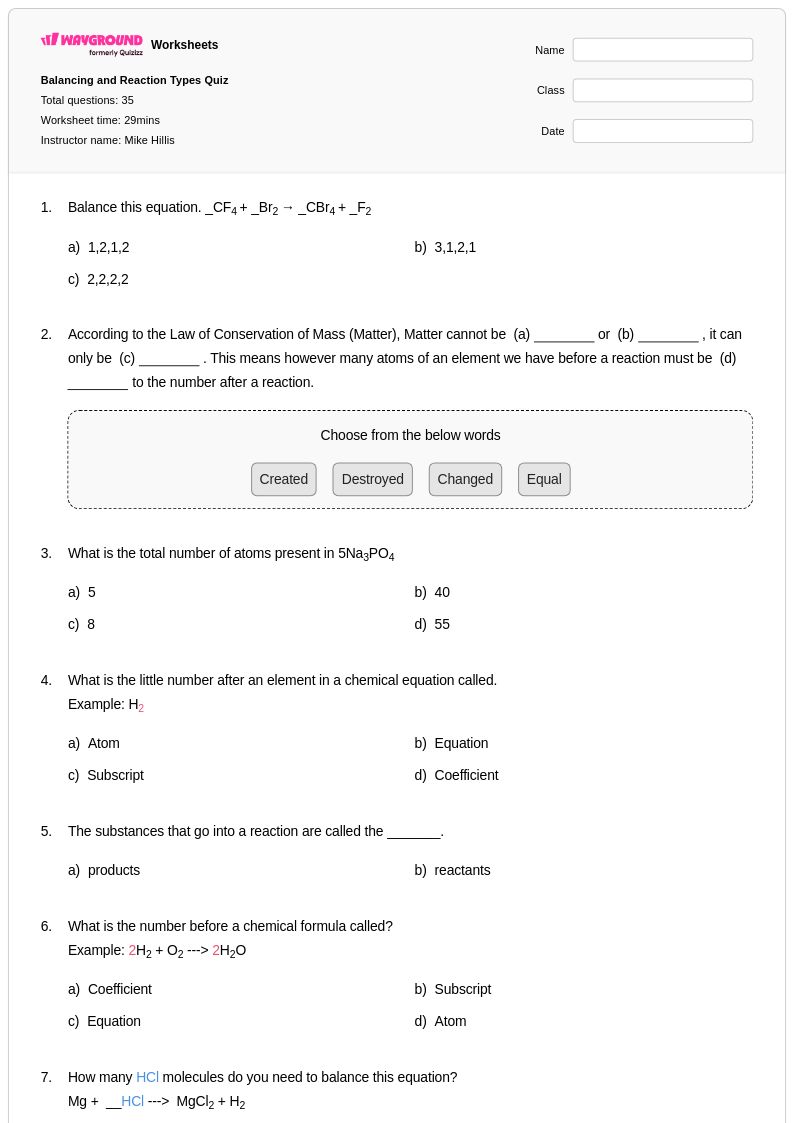
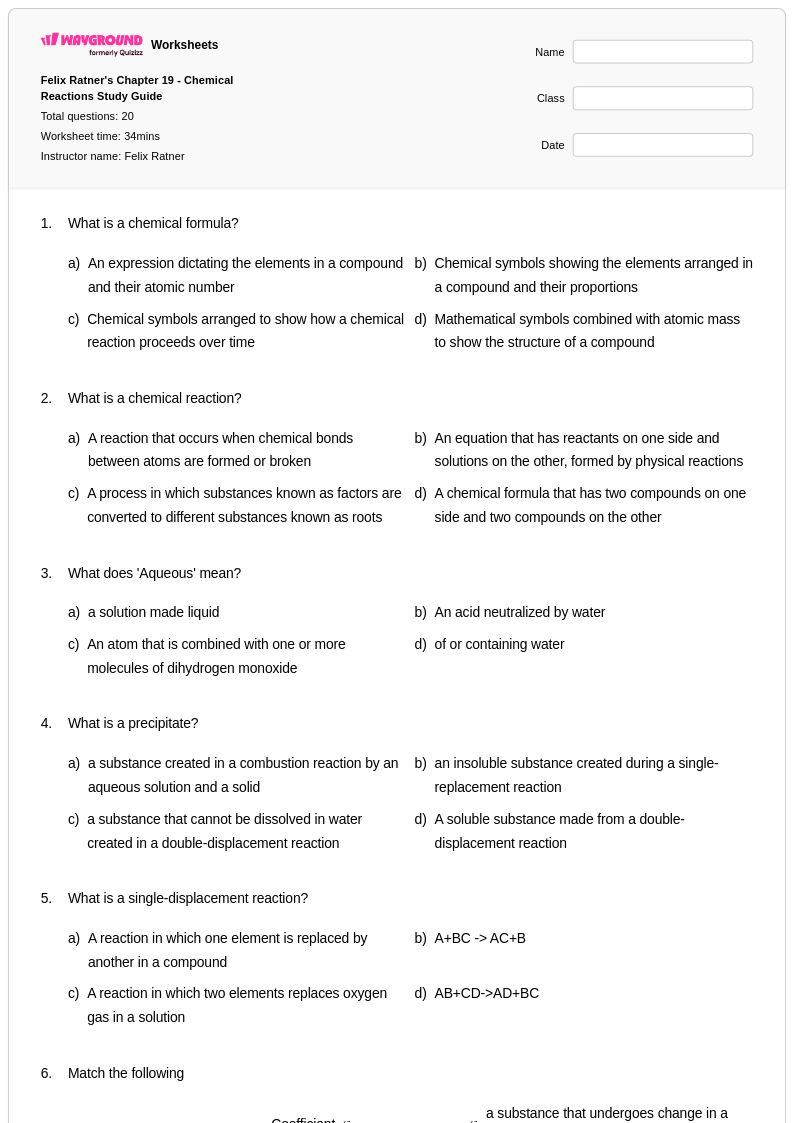
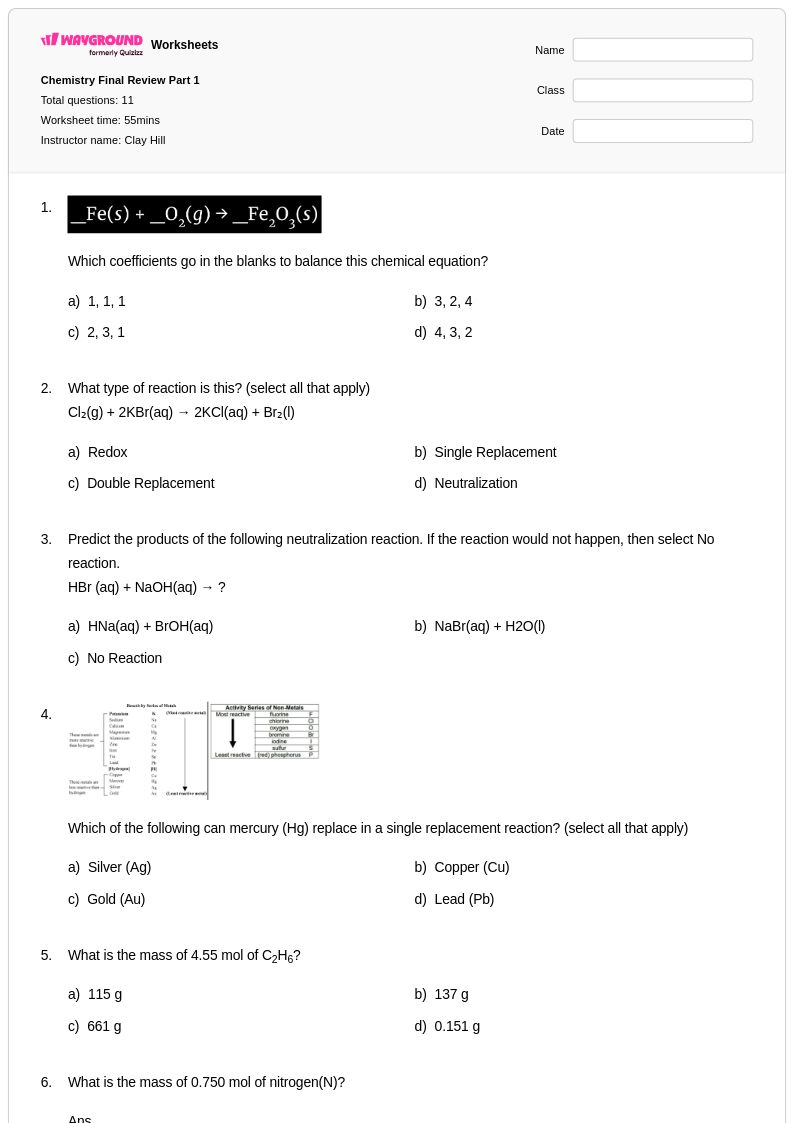
Explore Wayground's comprehensive collection of free neutralization reactions worksheets and printables that help students master acid-base chemistry concepts through engaging practice problems and detailed answer keys.
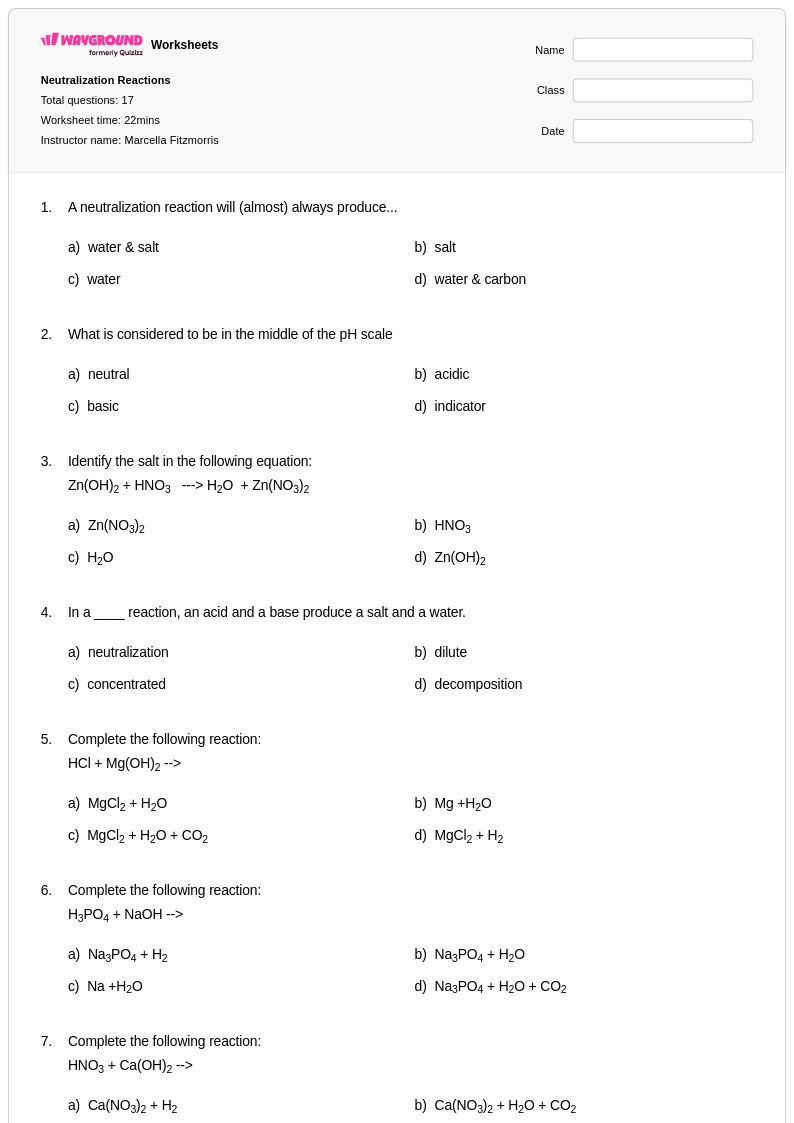
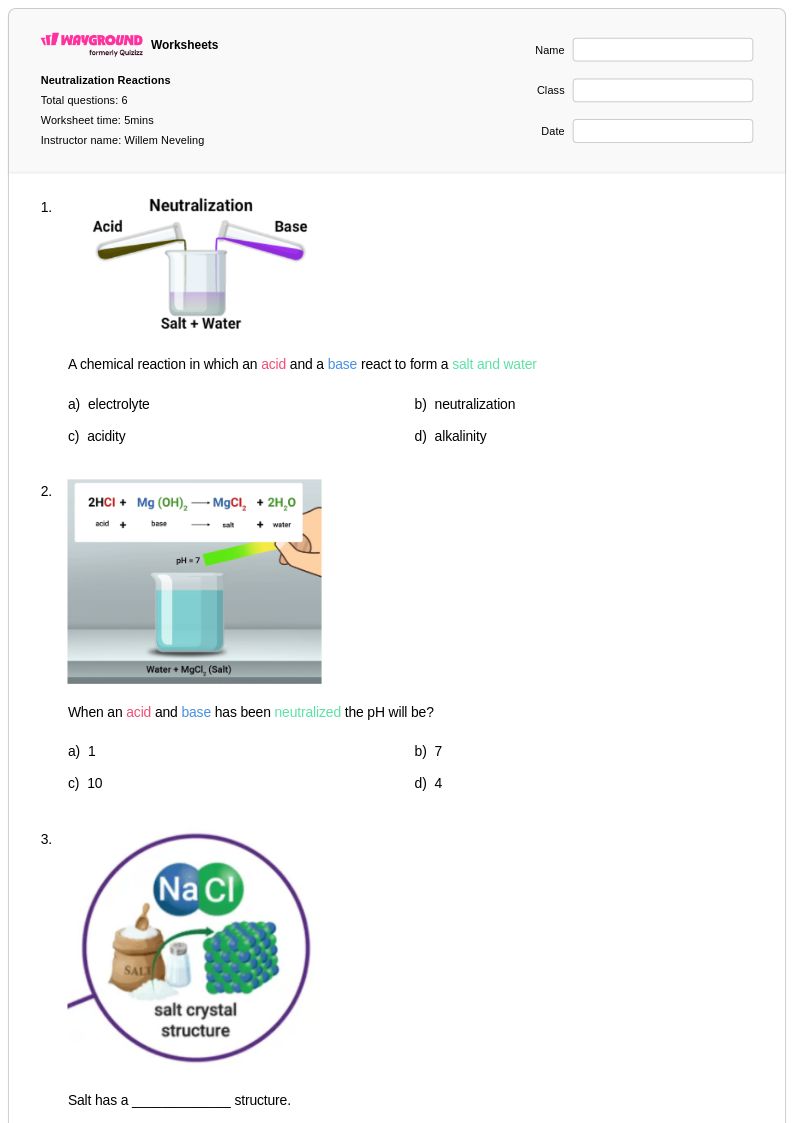
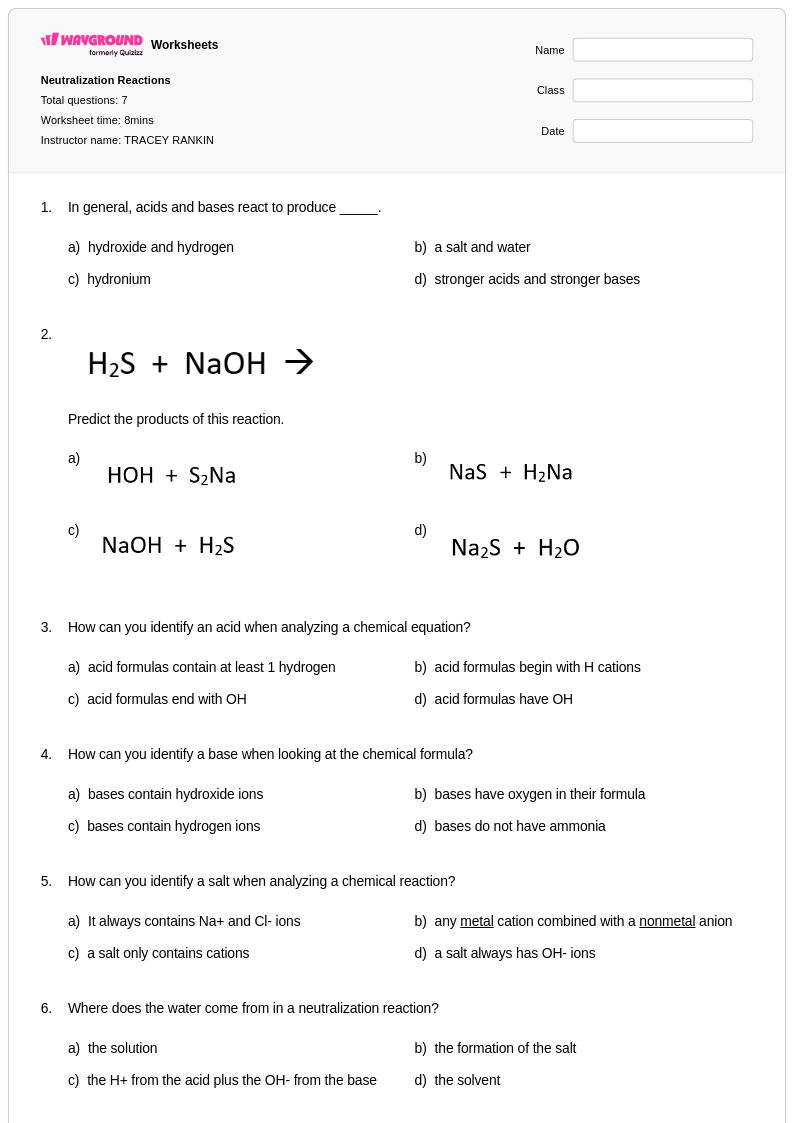
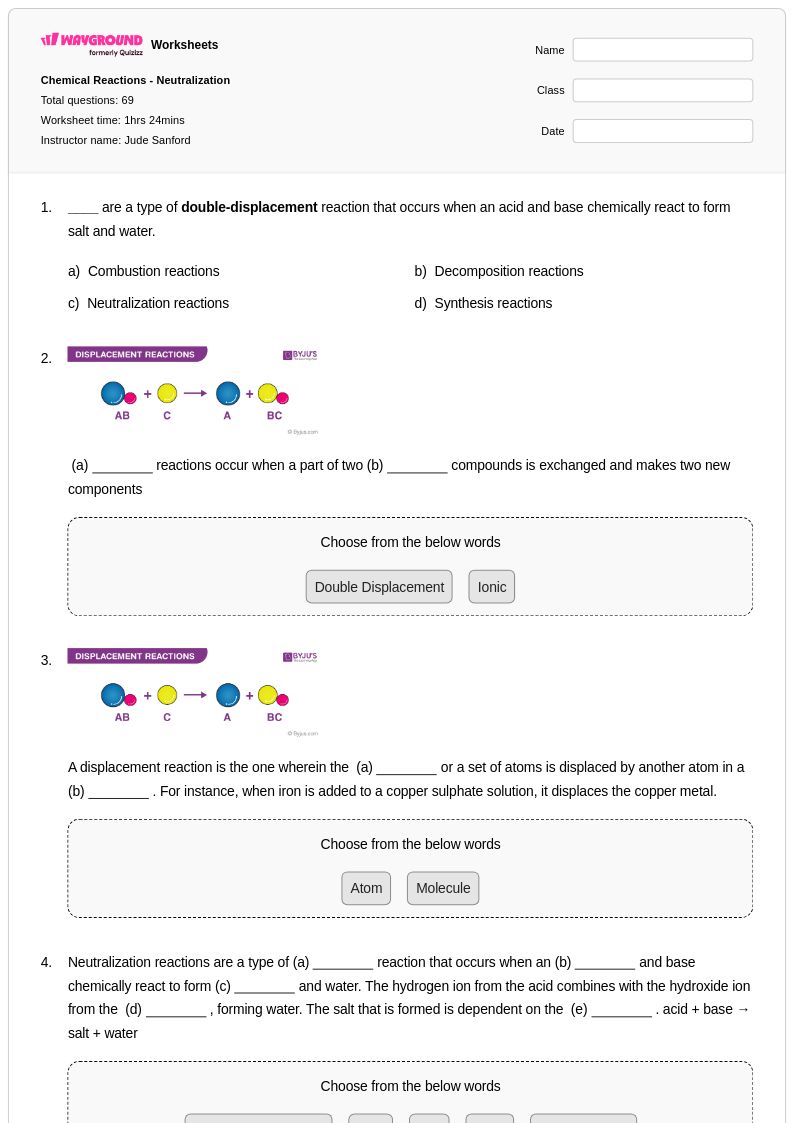
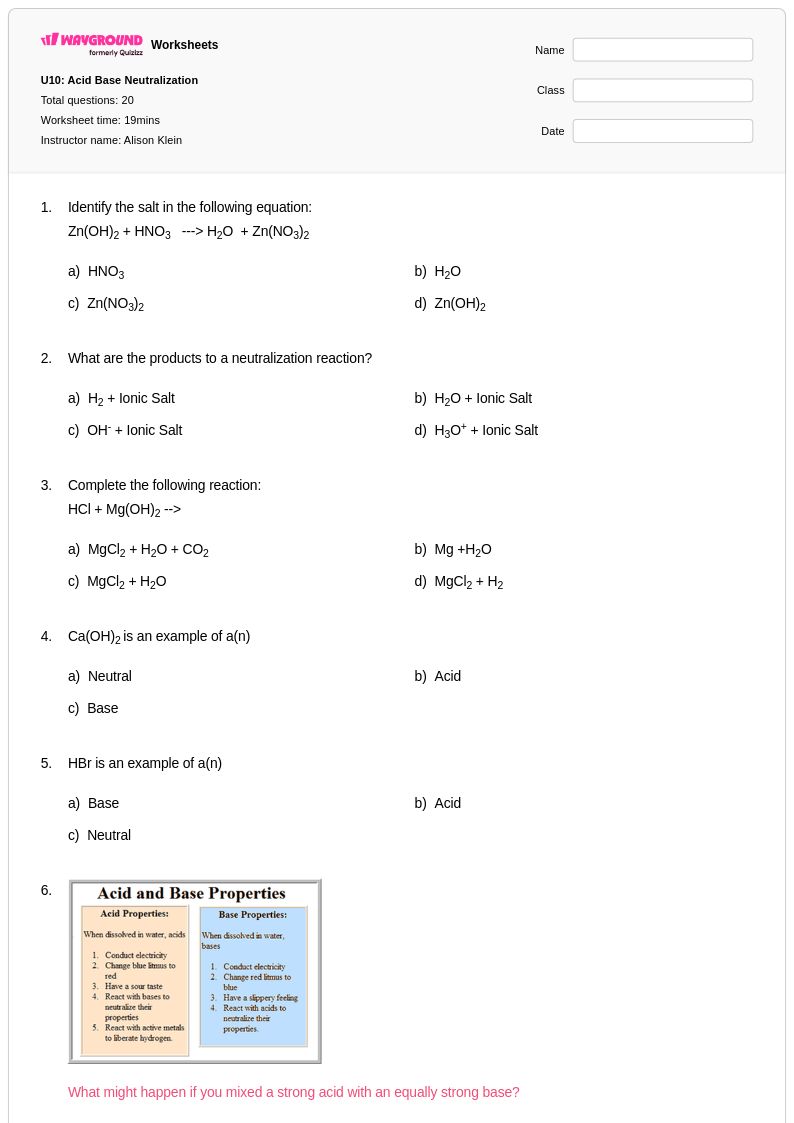
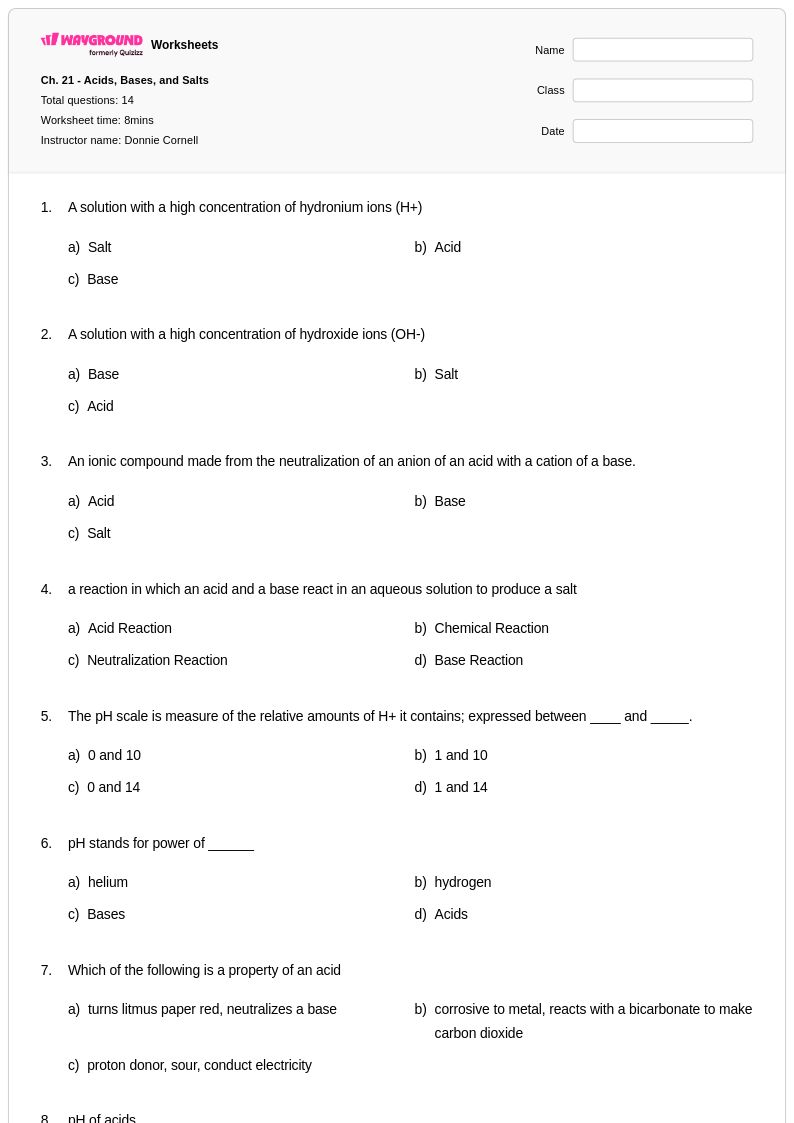
Neutralization reactions represent a fundamental concept in chemistry where acids and bases interact to form salt and water, and Wayground's extensive worksheet collection provides comprehensive resources to help students master this critical chemical process. These carefully designed worksheets guide learners through the step-by-step mechanisms of acid-base reactions, from identifying reactants and products to balancing chemical equations and calculating pH changes. Students develop essential skills in predicting reaction outcomes, understanding the role of indicators, and applying stoichiometric principles to determine quantities of reactants needed for complete neutralization. Each worksheet includes detailed answer keys and practice problems that reinforce conceptual understanding, while the free printable format ensures accessibility for both classroom instruction and independent study.
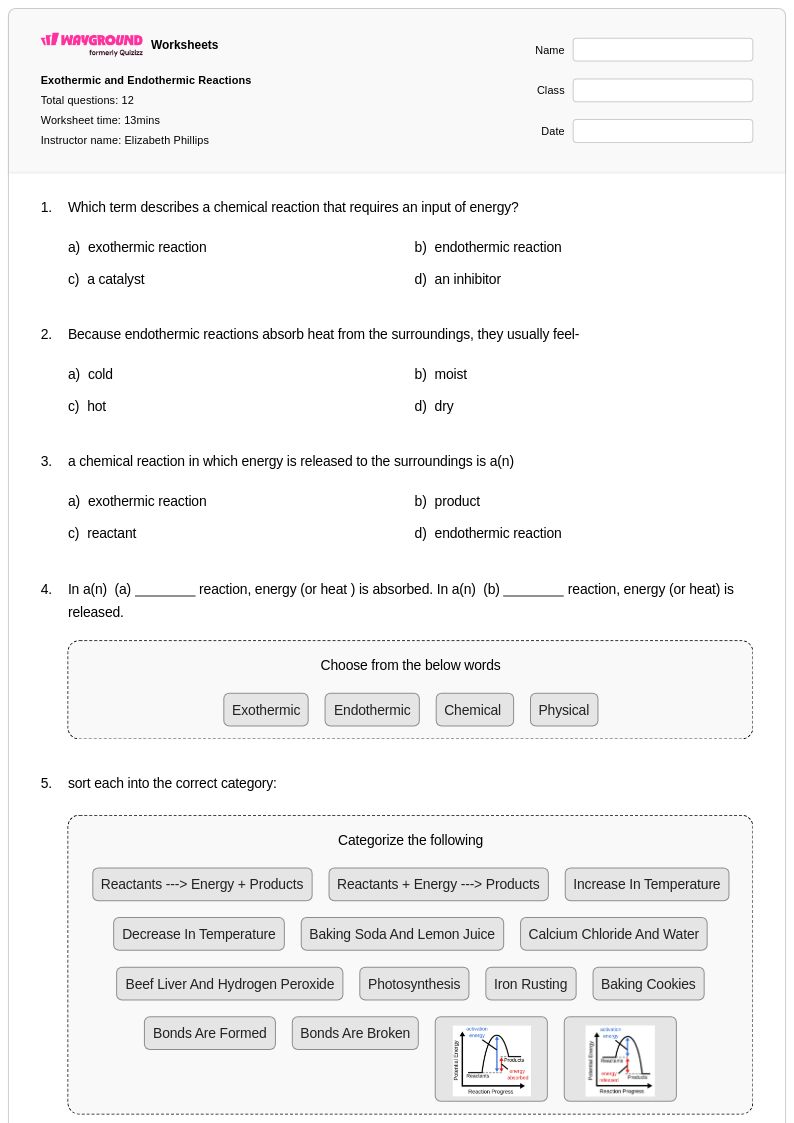
Wayground, formerly Quizizz, empowers educators with millions of teacher-created neutralization reaction worksheets that can be easily discovered through robust search and filtering capabilities. The platform's standards-aligned content supports differentiated instruction by offering materials at various complexity levels, from introductory acid-base concepts to advanced titration calculations and buffer systems. Teachers can seamlessly customize existing worksheets or create original content using the platform's flexible tools, then distribute materials in both digital and printable pdf formats to accommodate diverse learning environments. This comprehensive resource collection streamlines lesson planning while providing targeted materials for remediation, enrichment, and skill reinforcement, enabling educators to address individual student needs and ensure mastery of neutralization reaction principles across all learning styles and academic levels.
FAQs
How do I teach neutralization reactions to chemistry students?
Start by ensuring students understand the properties of acids and bases before introducing neutralization. Use concrete examples like antacids neutralizing stomach acid to ground the concept, then build toward writing and balancing ionic equations. Progressively increase complexity by moving from strong acid-strong base pairs to weak acid-strong base systems, and incorporate indicator color changes as visual evidence of neutralization.
What practice problems should students work through to understand neutralization reactions?
Effective practice should span multiple skill levels: identifying reactants and products, writing balanced molecular and net ionic equations, predicting pH of the resulting solution, and applying stoichiometry to calculate volumes or concentrations needed for complete neutralization. Titration calculation problems are especially valuable because they connect neutralization theory to real laboratory technique and quantitative reasoning.
What mistakes do students commonly make when working with neutralization reactions?
A frequent error is assuming that a neutralization reaction always produces a solution with a pH of exactly 7, which is only true for strong acid-strong base reactions. Students also struggle with writing correct salt formulas, particularly when polyatomic ions are involved, and often forget to balance charges when predicting products. Confusing the equivalence point with the neutral point during titration problems is another persistent misconception.
How do I help struggling students who can't balance neutralization equations?
Break the process into discrete steps: first identify the acid and base, then write the unbalanced products (salt and water), and finally balance by adjusting coefficients rather than changing subscripts. Providing a structured equation template and requiring students to annotate each species as acid, base, salt, or water builds the habit of checking reaction logic before balancing. Wayground's neutralization reactions worksheets offer practice problems at varying complexity levels, allowing teachers to assign simpler strong acid-strong base problems before progressing to more complex systems.
How can I use neutralization reactions worksheets in both print and digital classrooms?
Wayground's neutralization reactions worksheets are available as printable PDFs for traditional lab or classroom use and in digital formats for technology-integrated environments, including the option to host them as a quiz directly on Wayground. Teachers can distribute the same content across both formats, making them suitable for in-class practice, flipped learning, or asynchronous independent study. Each worksheet includes a detailed answer key, reducing grading time regardless of delivery format.
How do I differentiate neutralization reactions instruction for students at different levels?
Offer foundational worksheets focused on identifying acid-base pairs and writing simple product formulas for students who are still building chemistry vocabulary, while advanced learners work through titration calculations, buffer systems, and pH prediction problems. On Wayground, teachers can apply individual student accommodations such as read aloud support, reduced answer choices, and extended time, ensuring that diverse learners access the same content with appropriate scaffolding.