Enhance student understanding of the Combined Gas Law with Wayground's comprehensive collection of free worksheets, featuring practice problems, printable PDFs, and detailed answer keys to master gas behavior relationships.
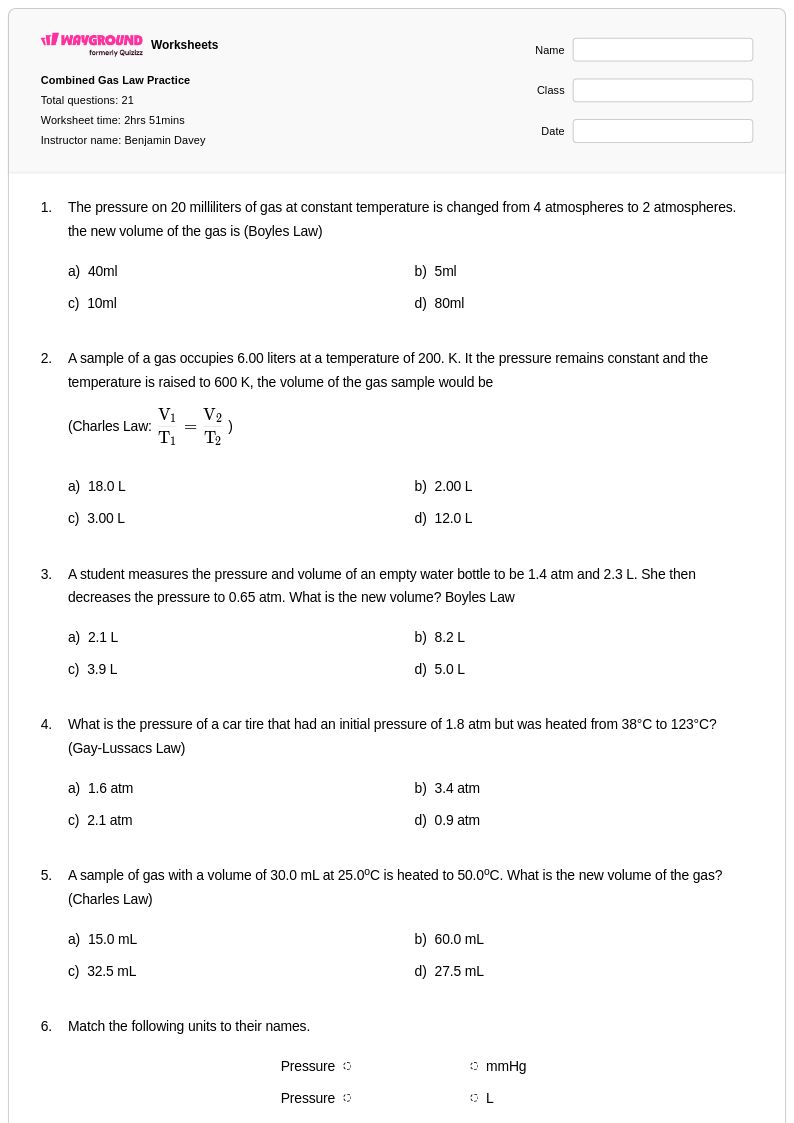
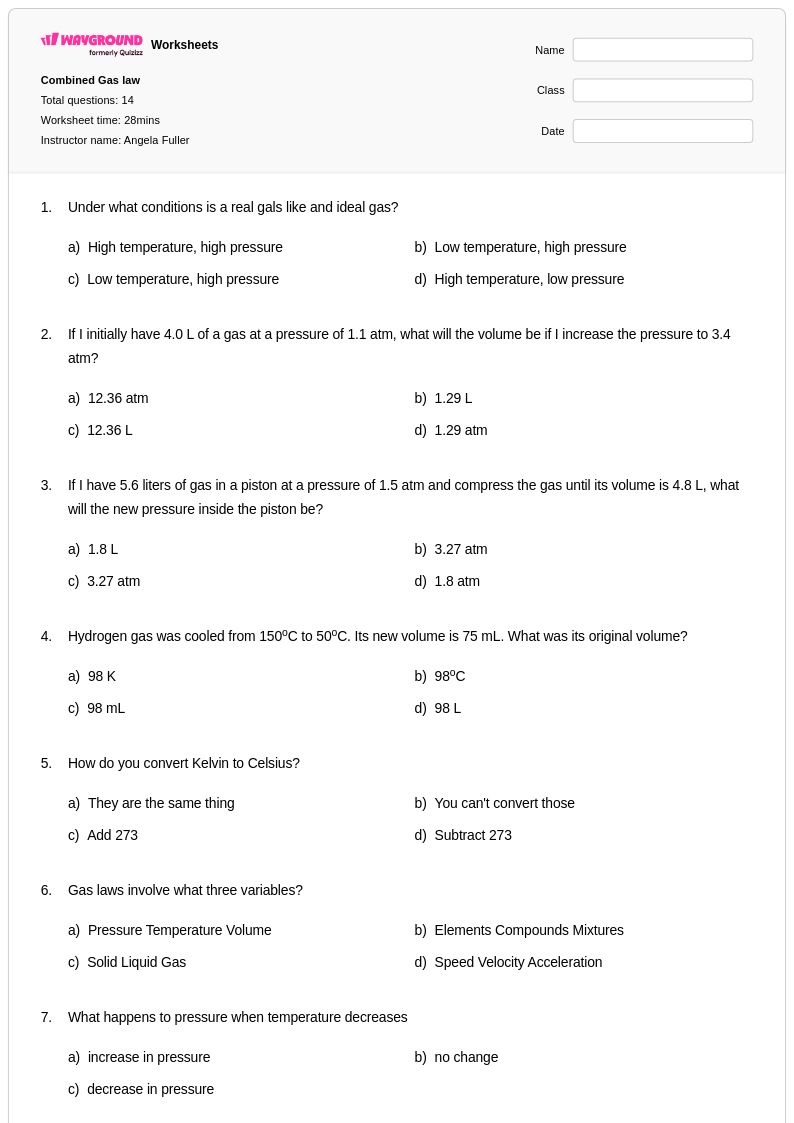
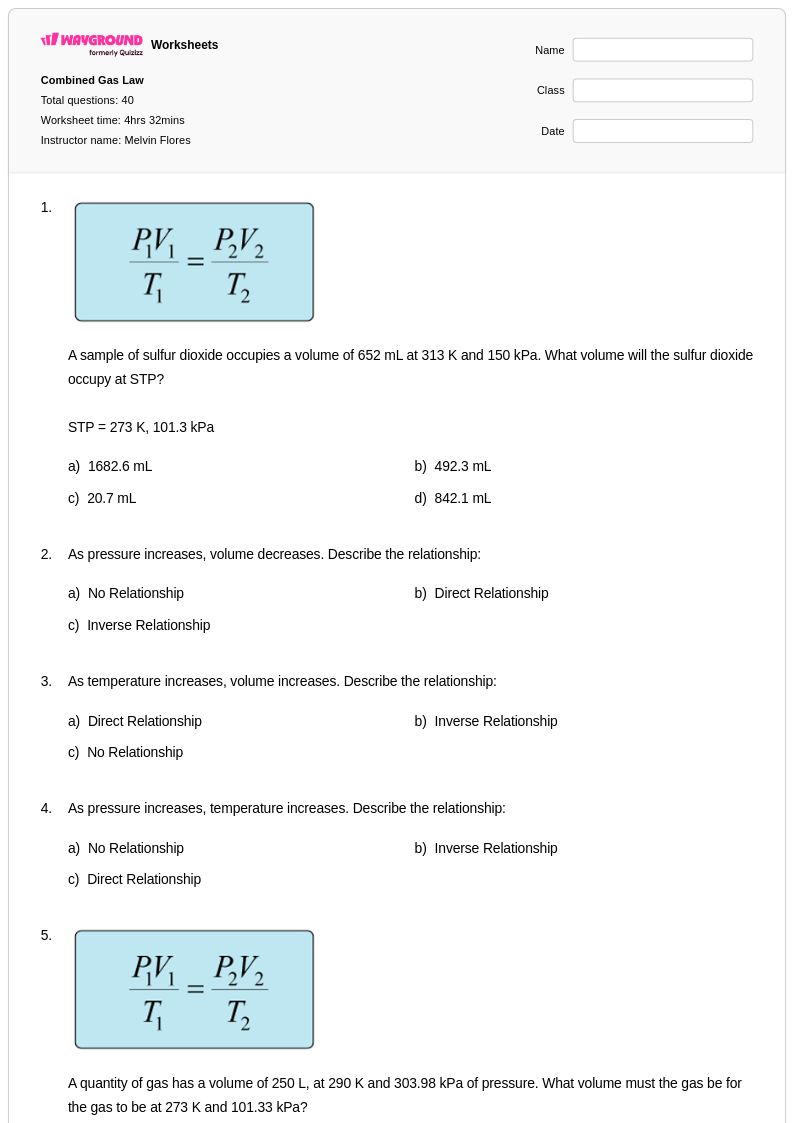
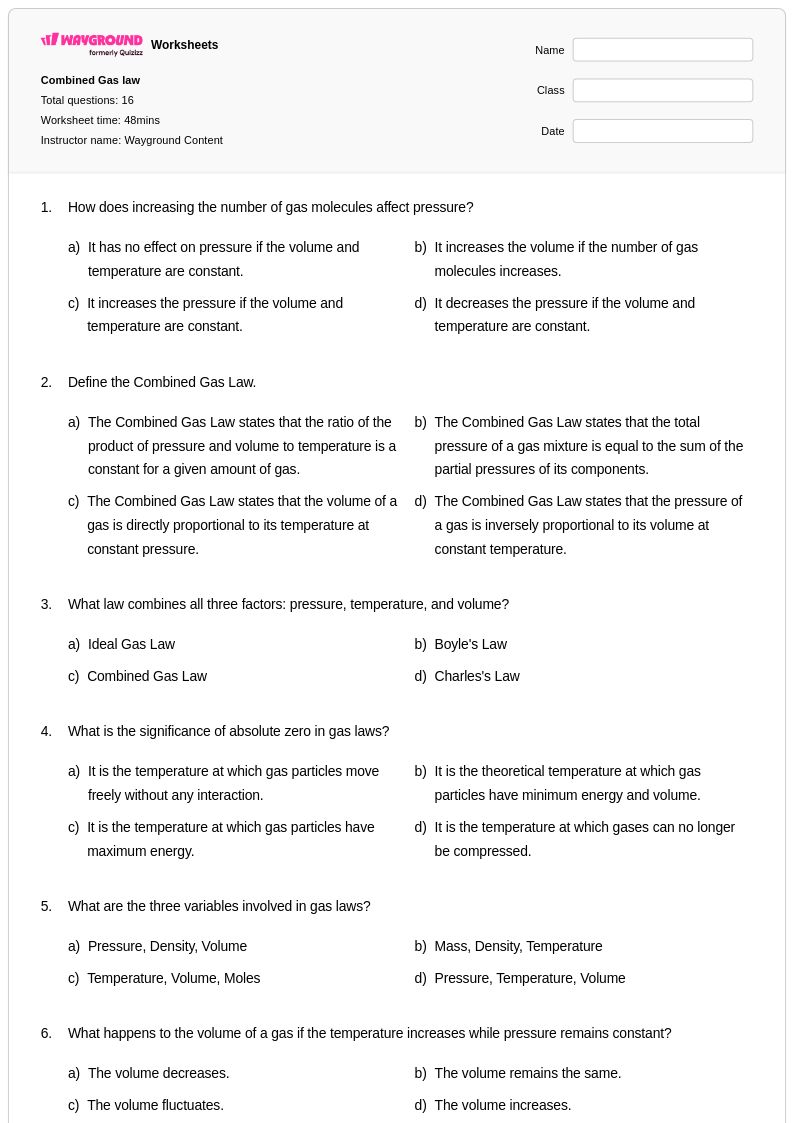
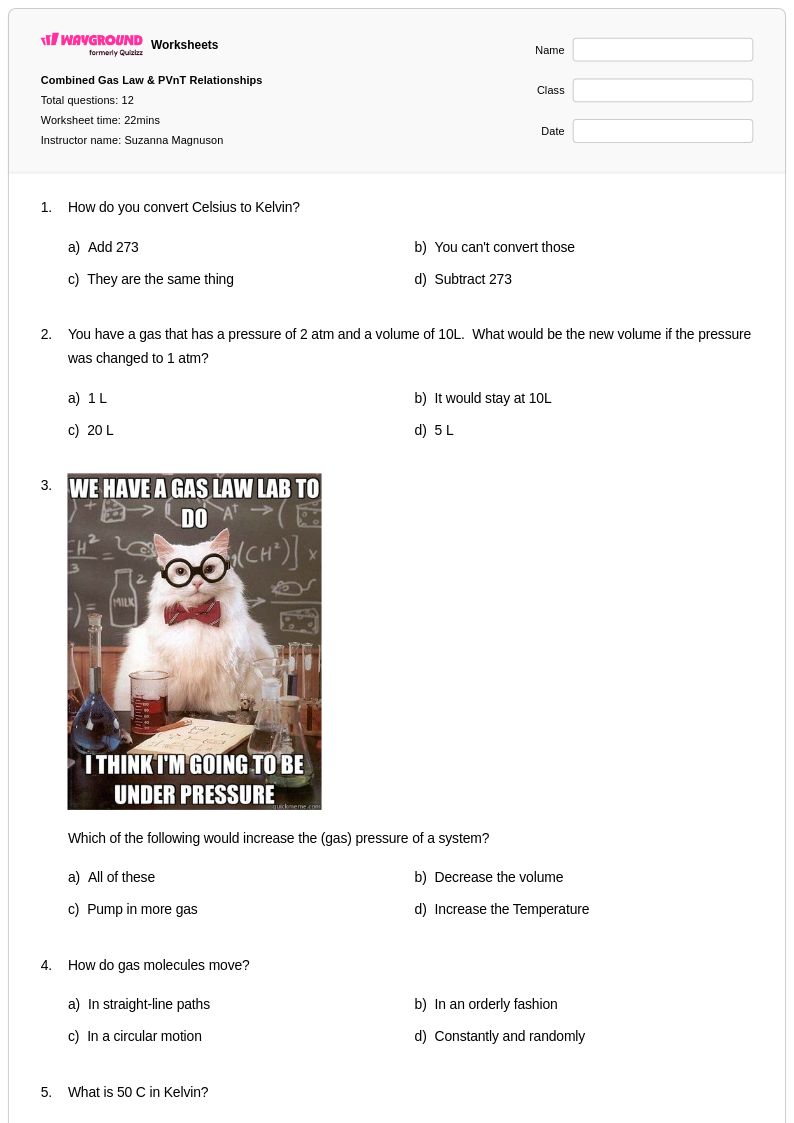
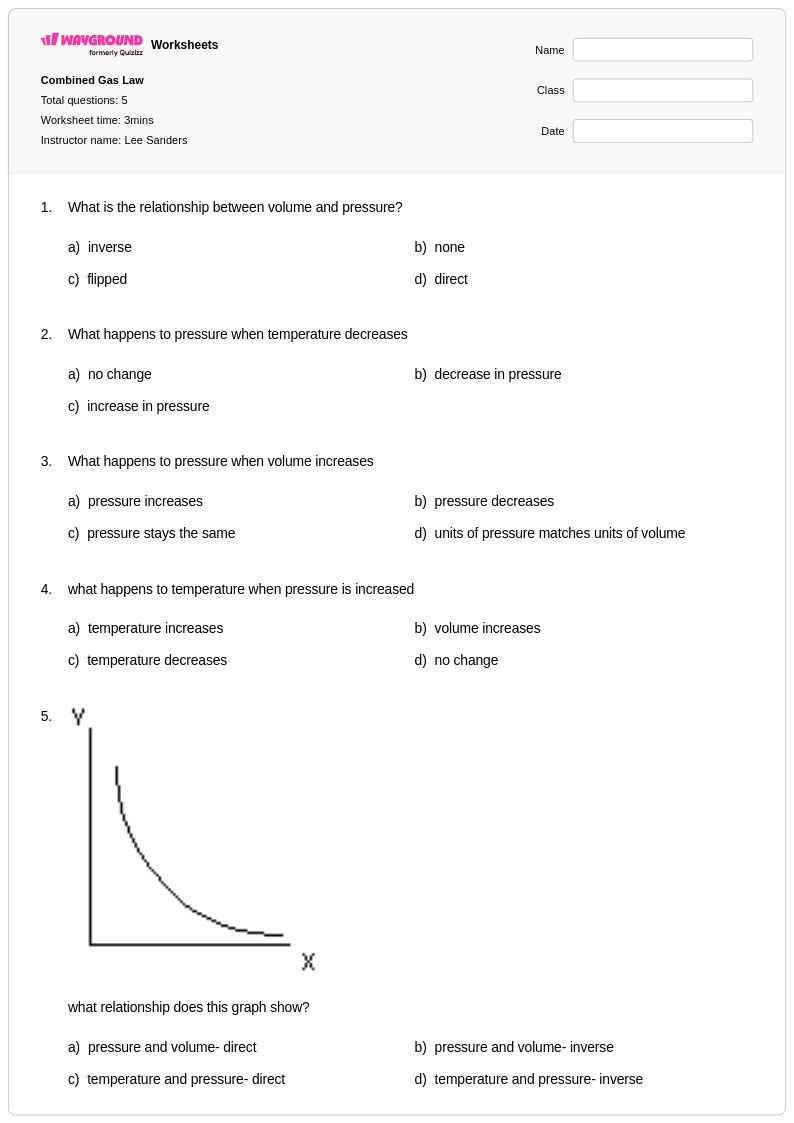
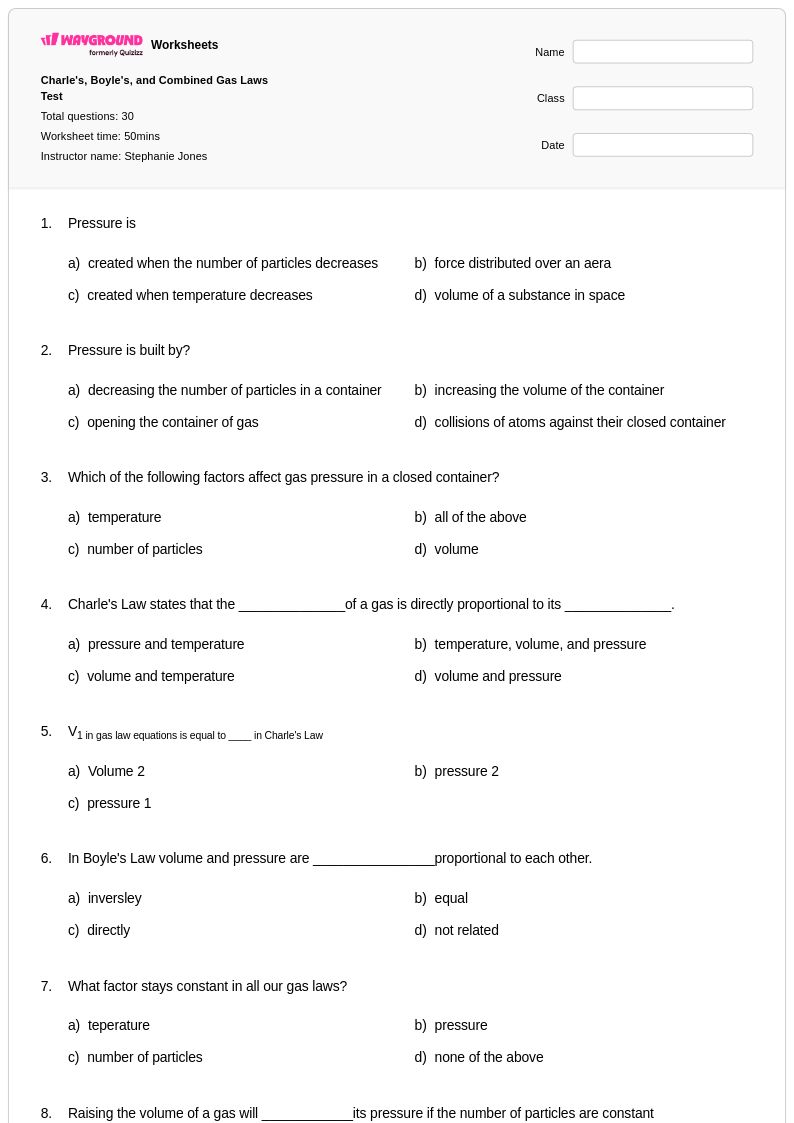
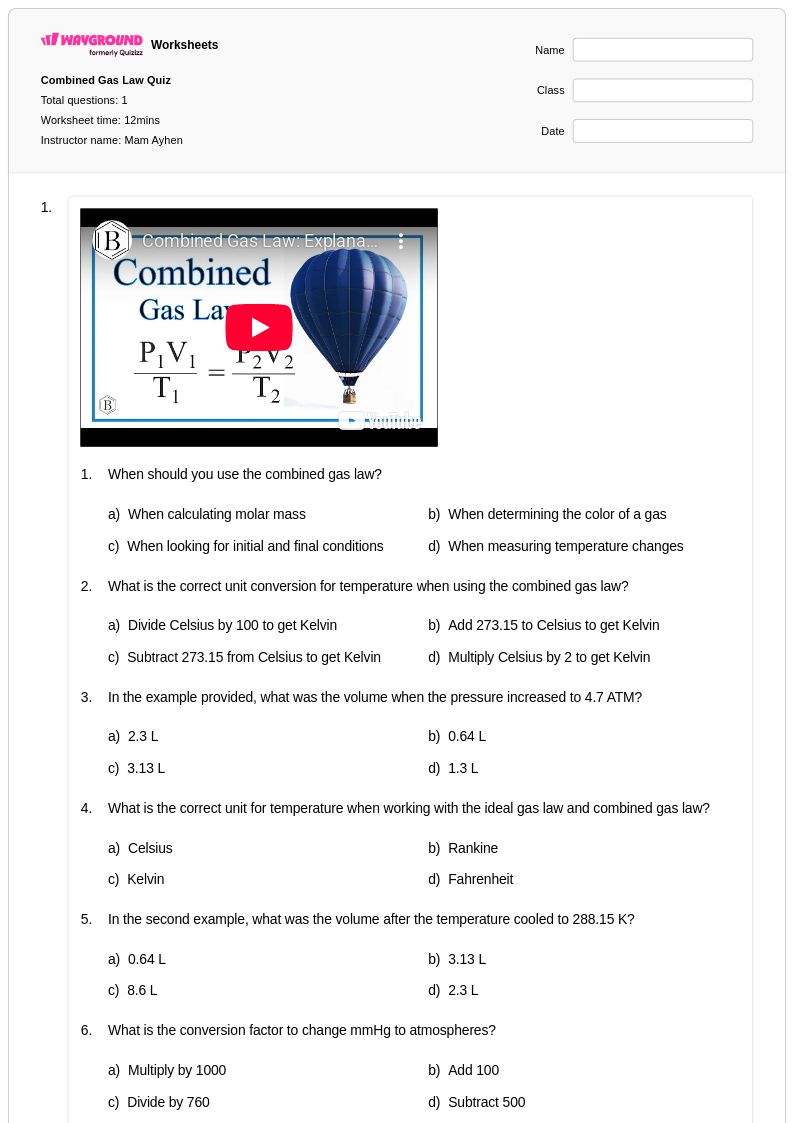
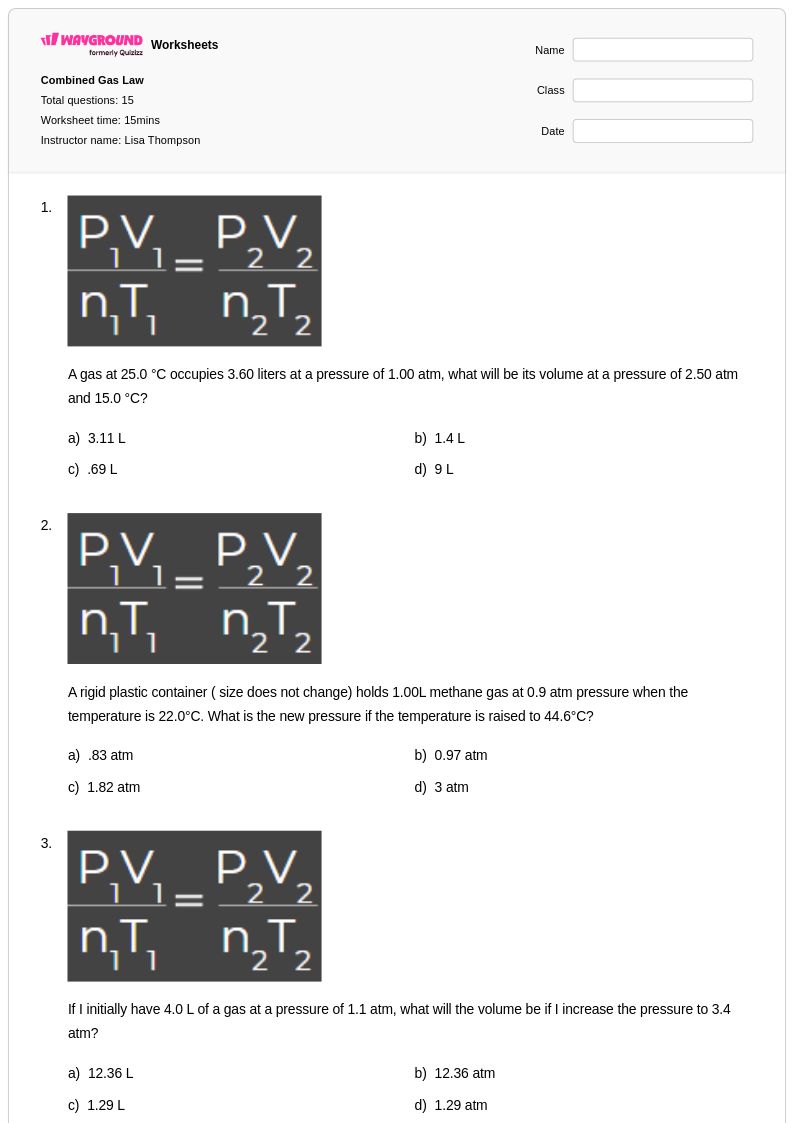
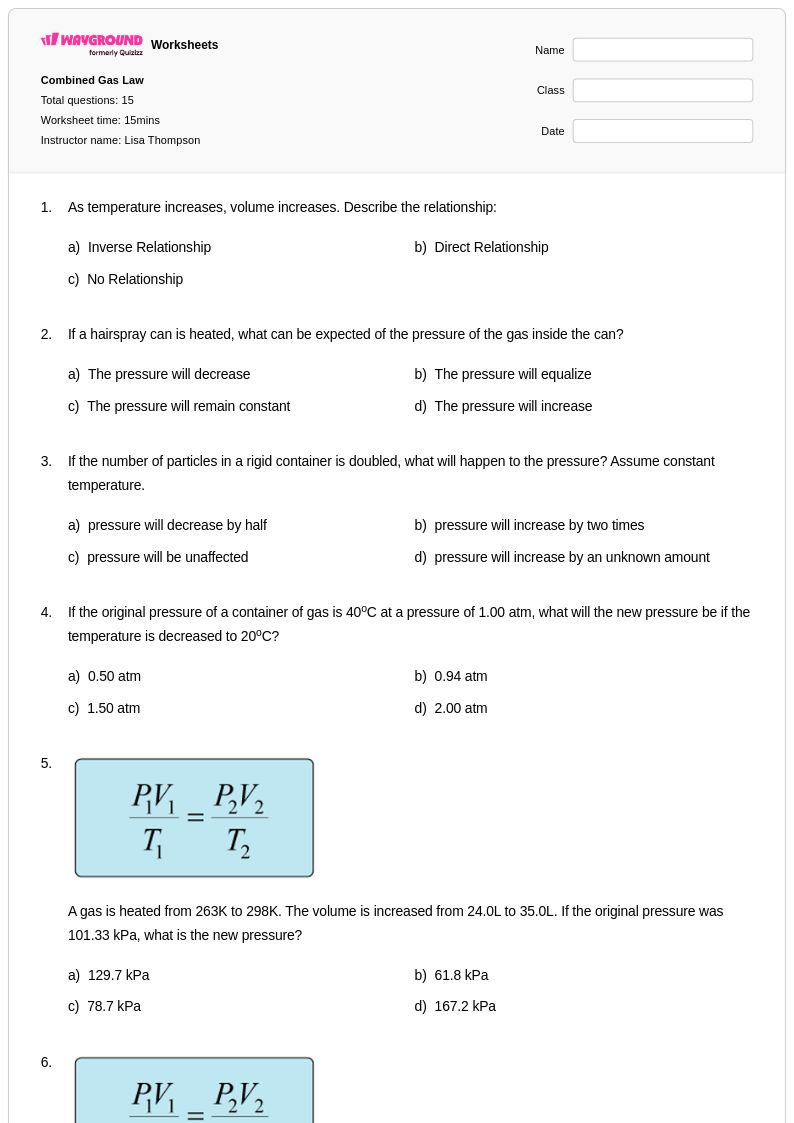
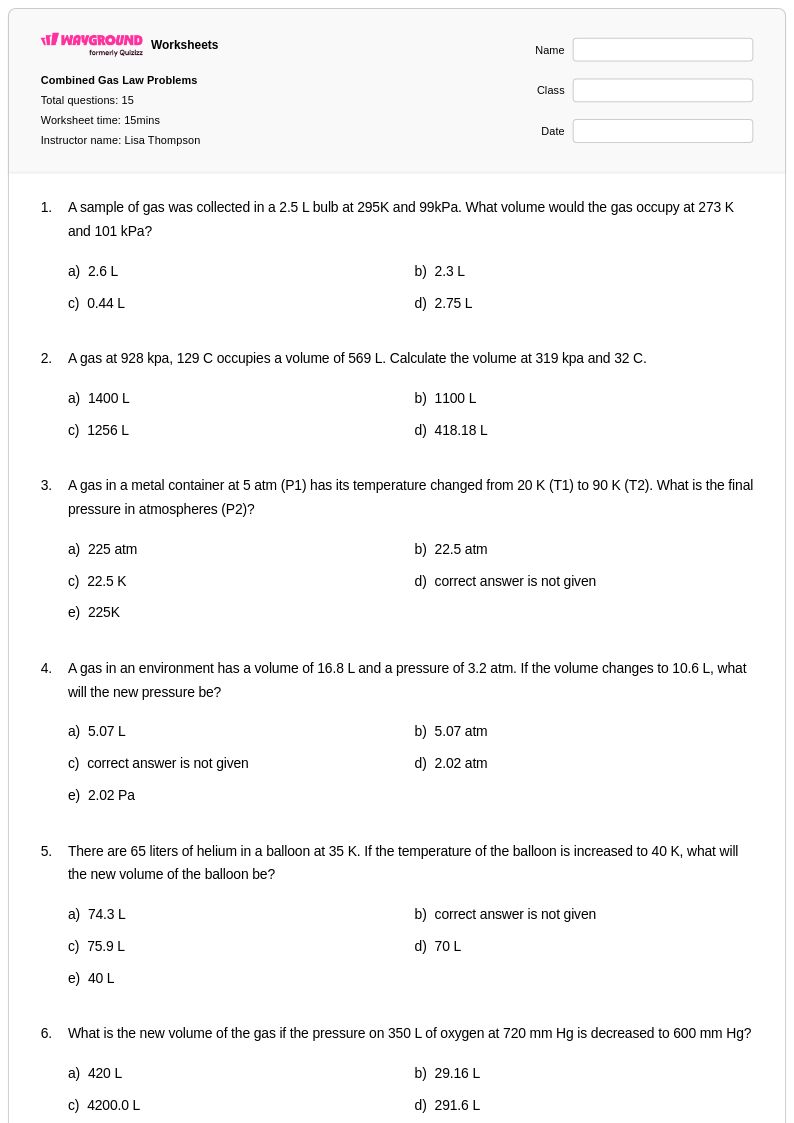
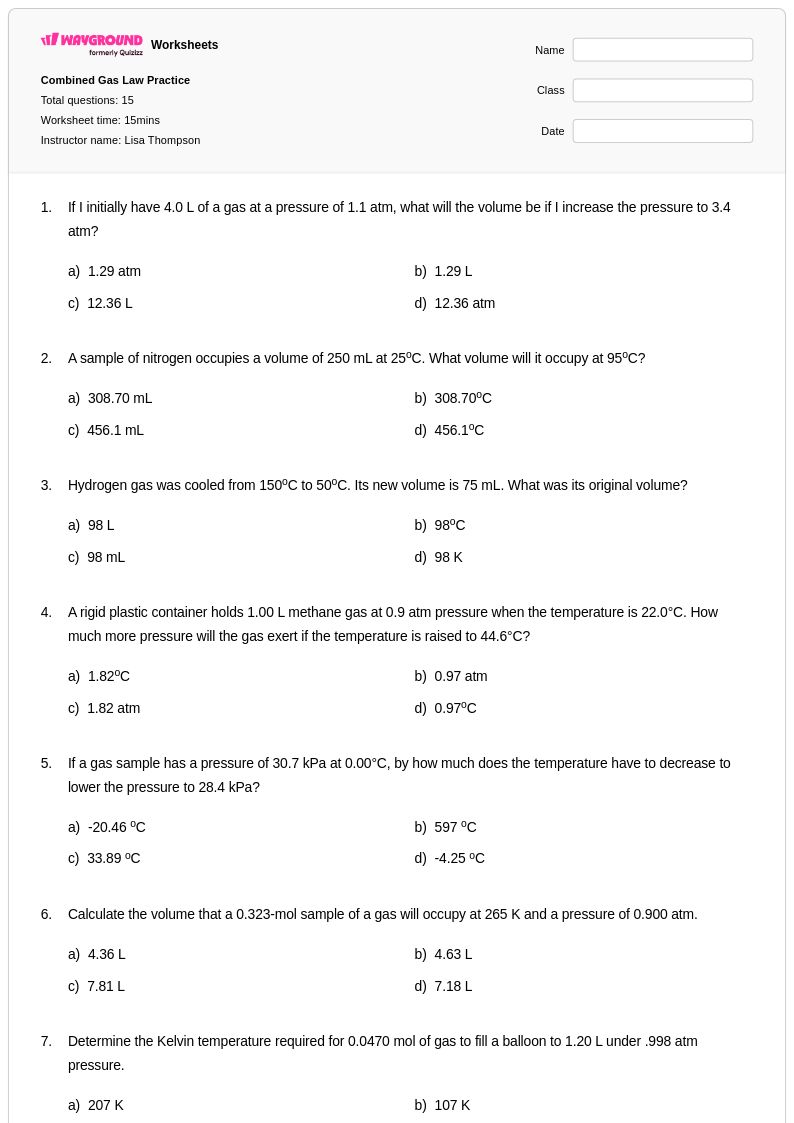
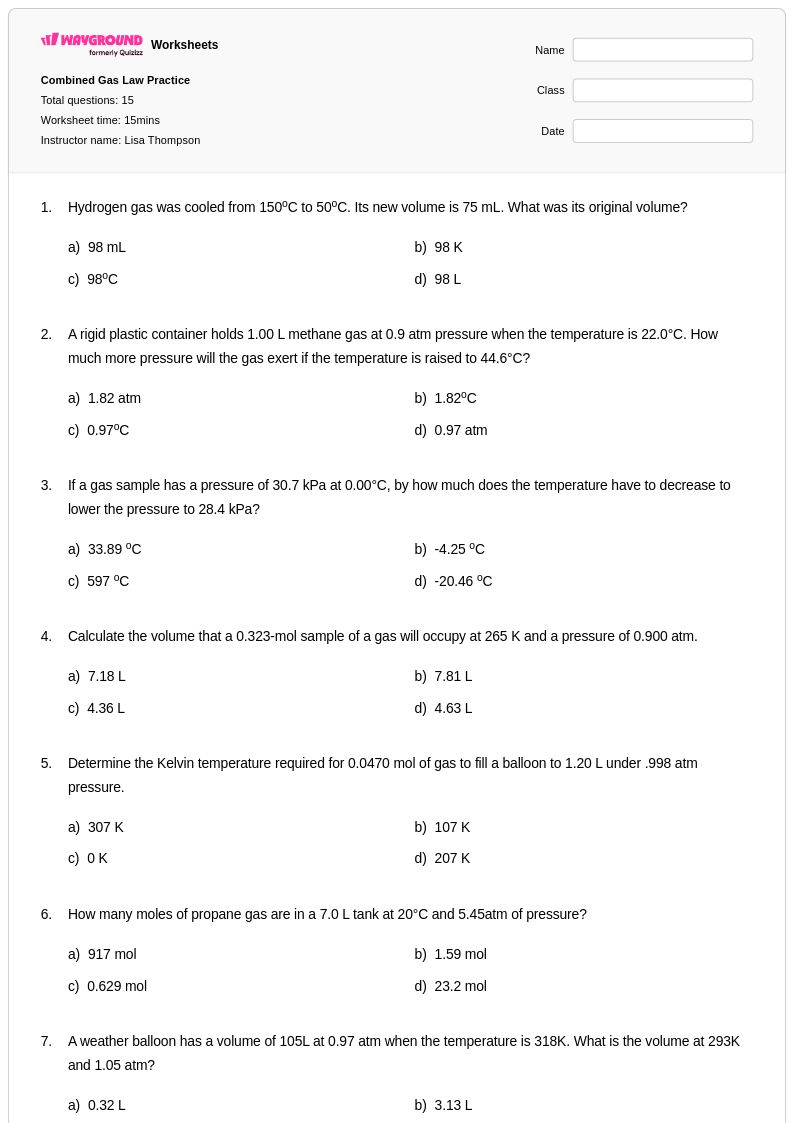
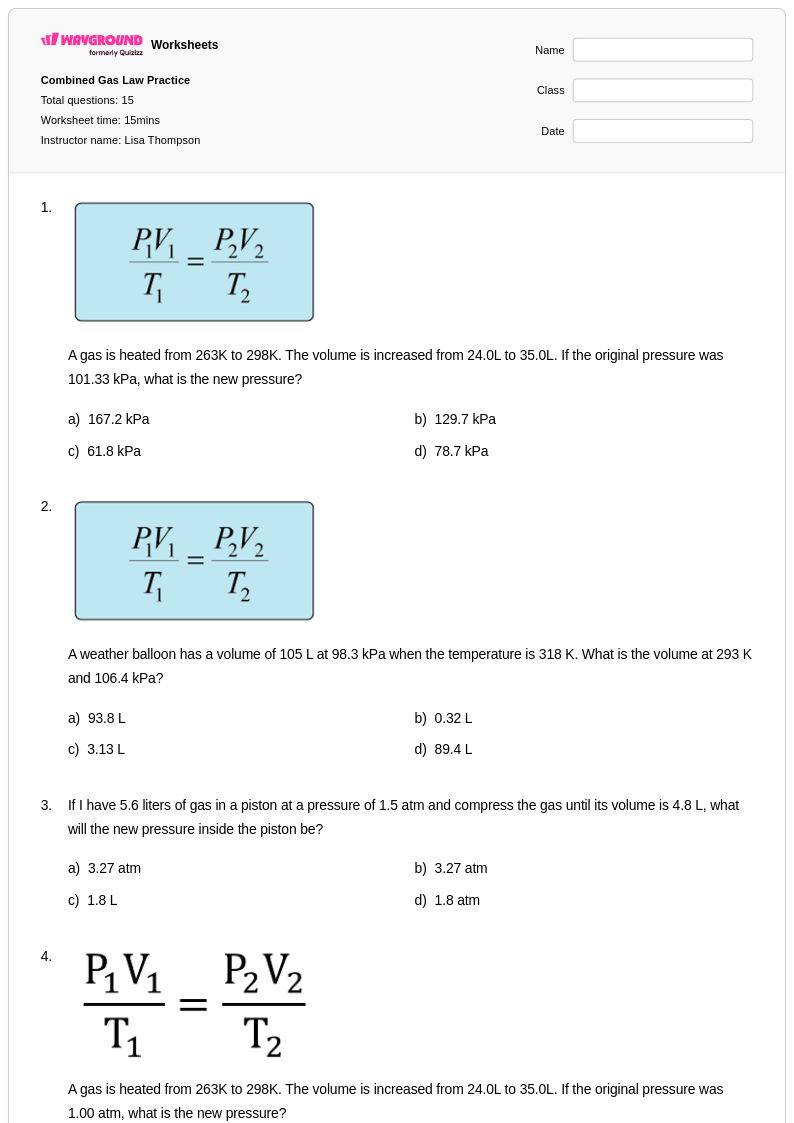
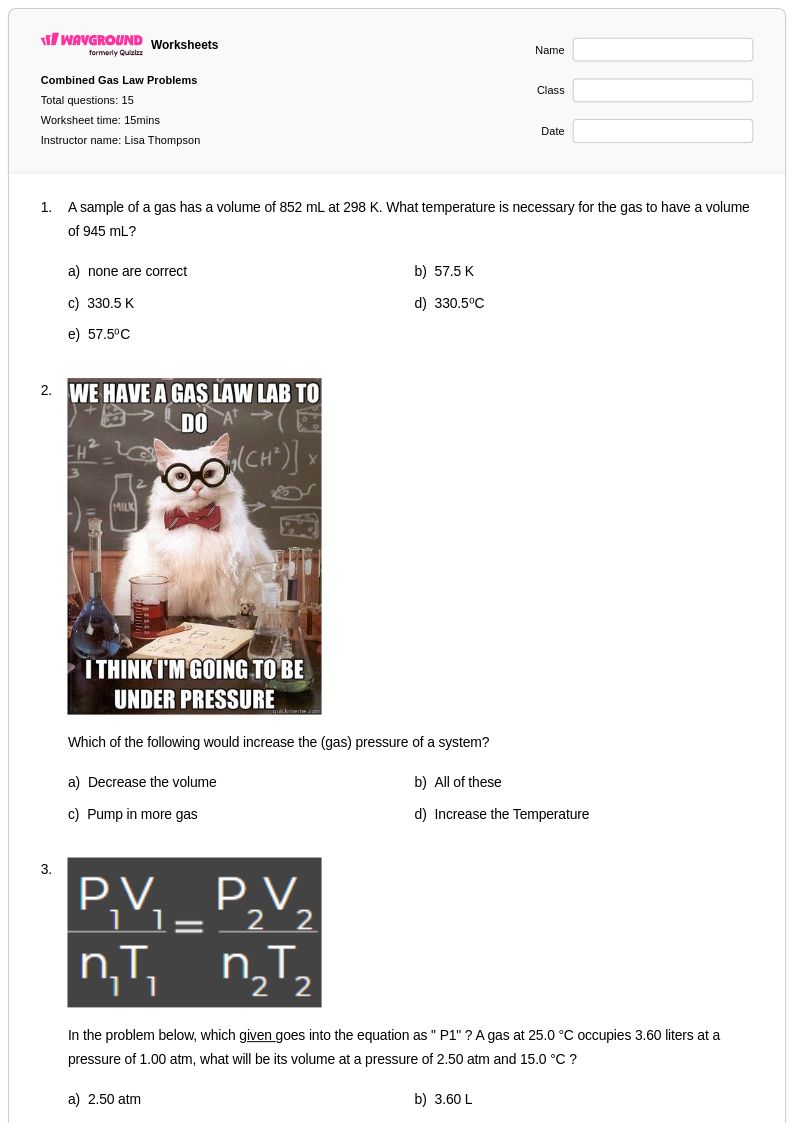
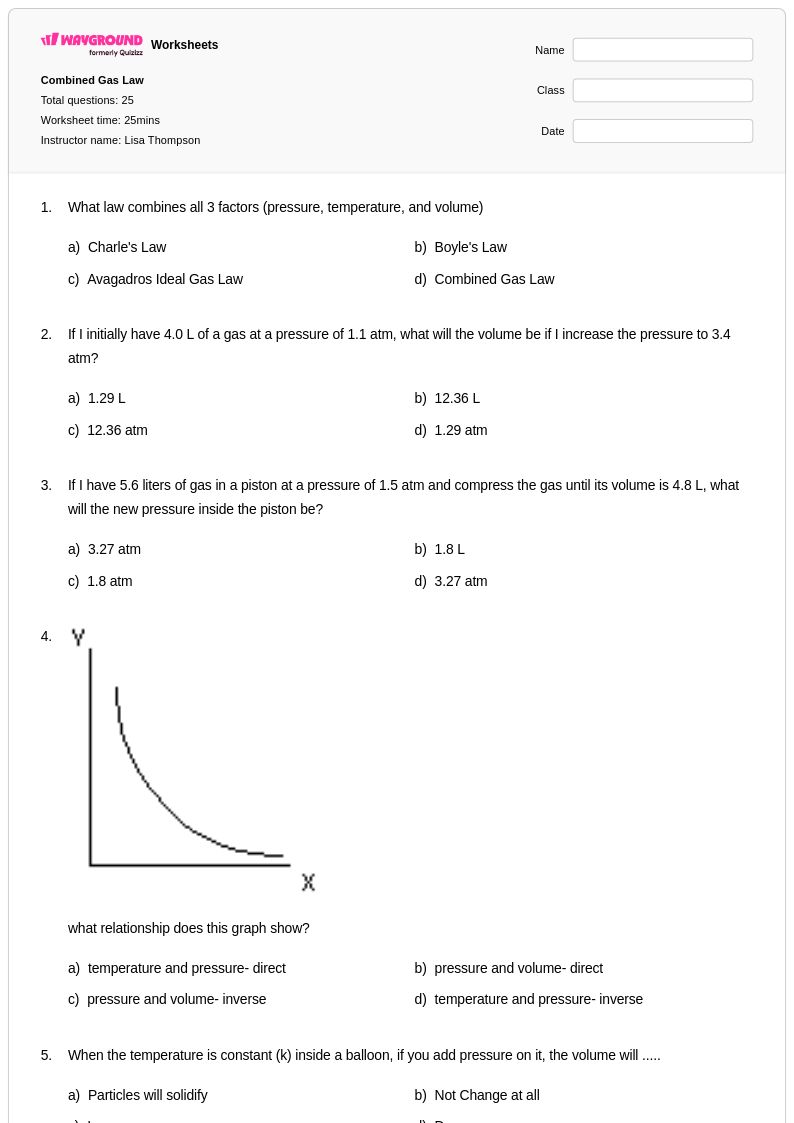
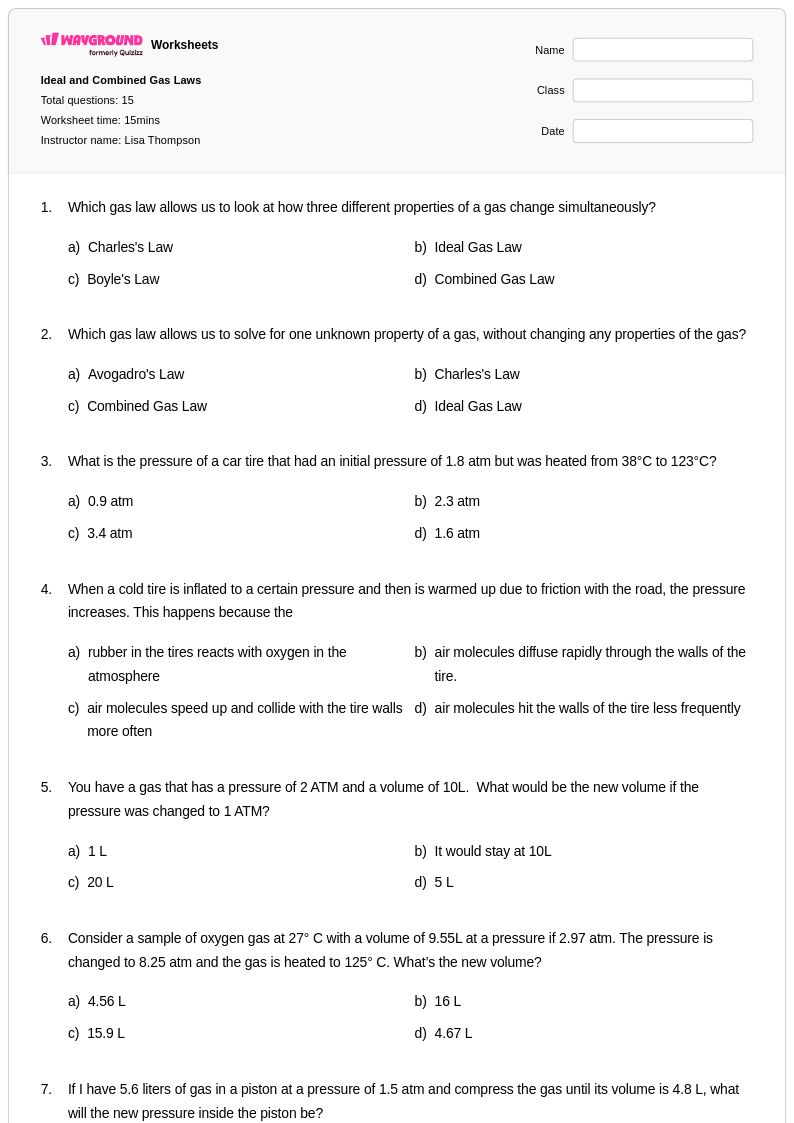
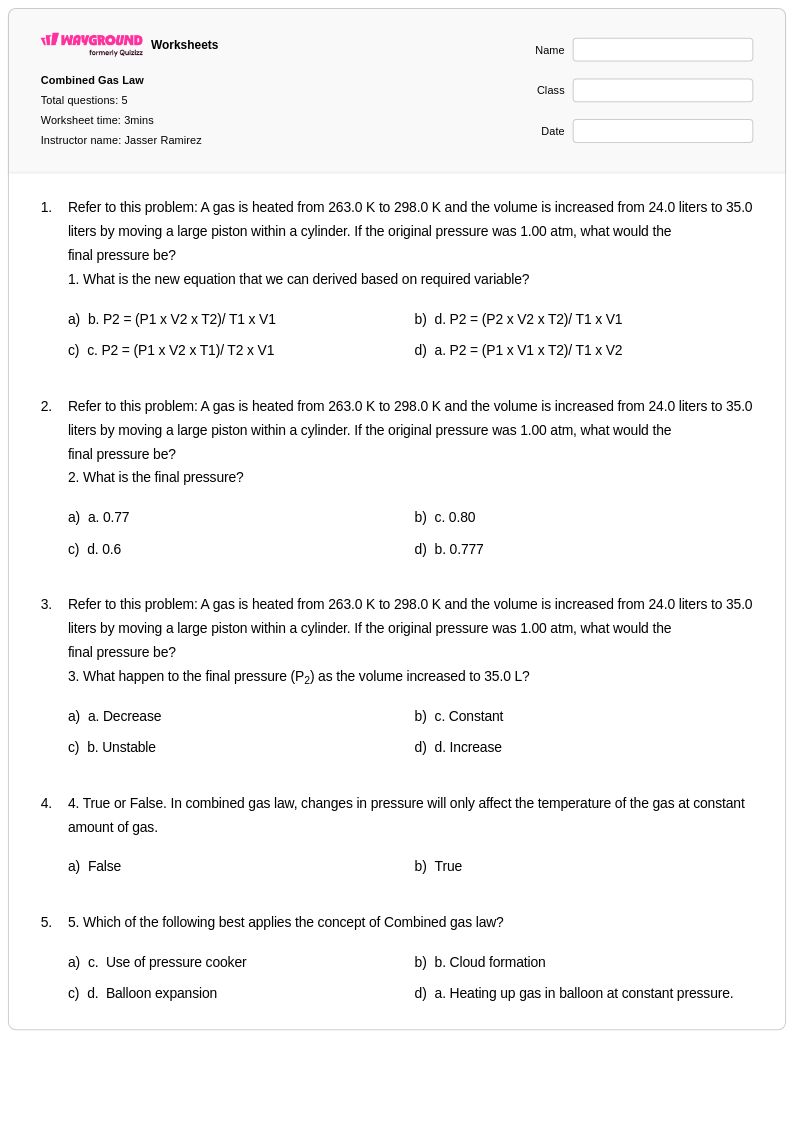
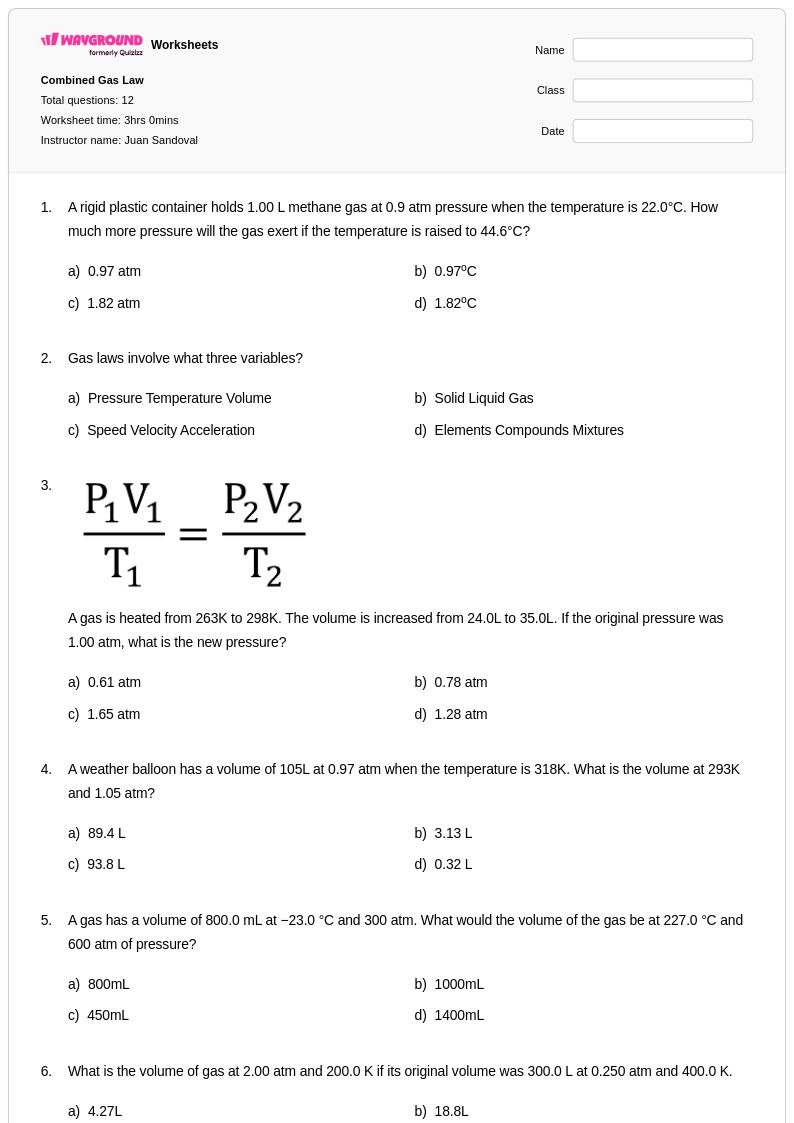
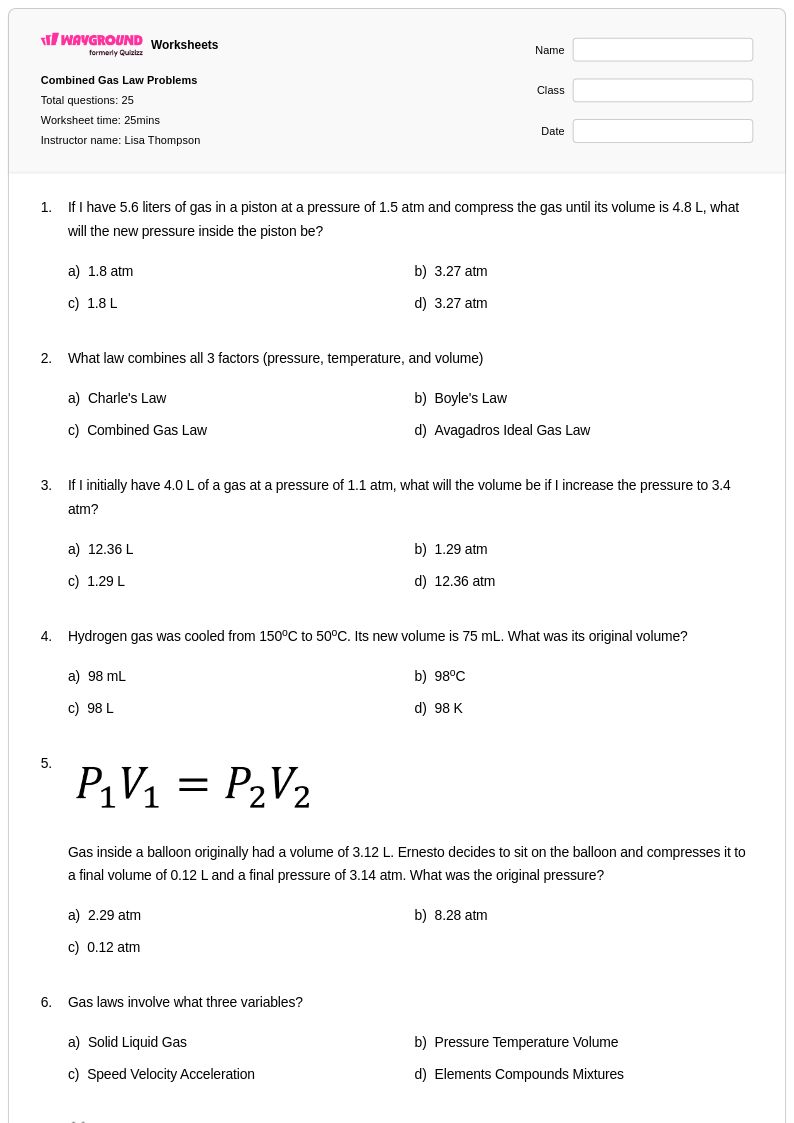
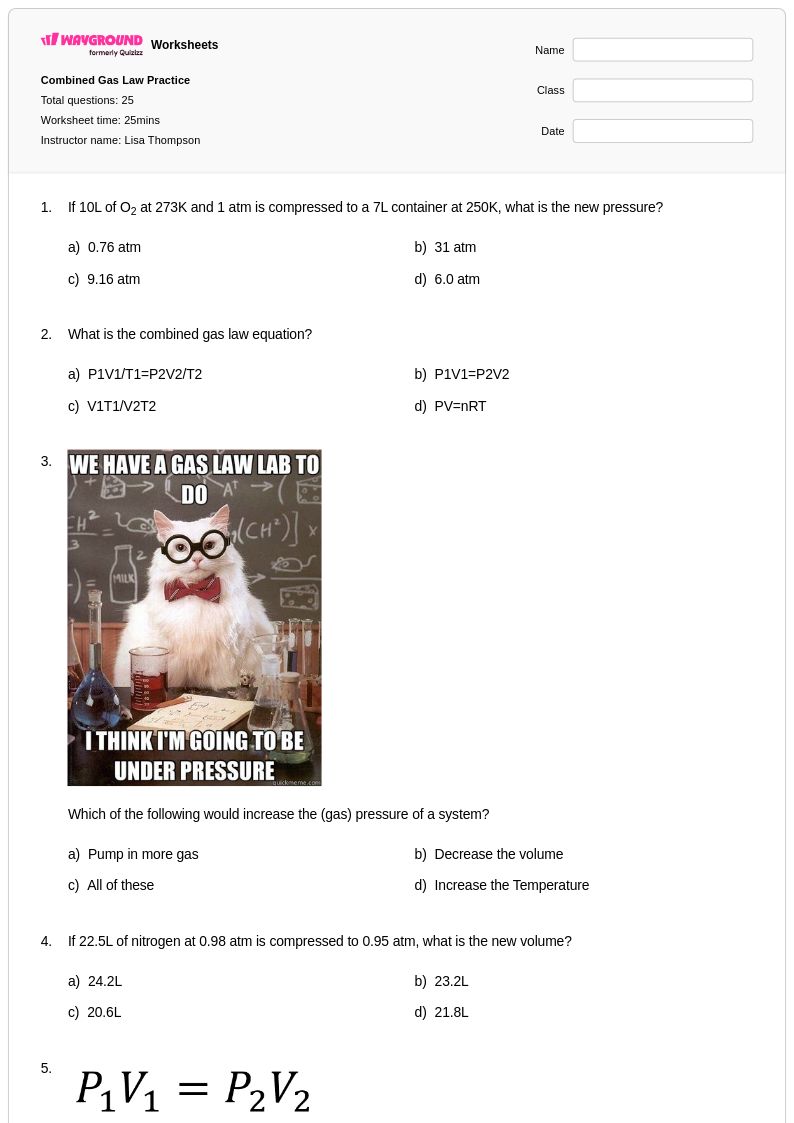
Combined Gas Law worksheets available through Wayground (formerly Quizizz) provide comprehensive practice with one of chemistry's most fundamental relationships, helping students master the integration of Boyle's, Charles's, and Gay-Lussac's laws into a single mathematical expression. These expertly designed worksheets strengthen critical problem-solving skills by challenging students to manipulate the P₁V₁/T₁ = P₂V₂/T₂ equation across diverse scenarios involving changing pressure, volume, and temperature conditions. Each worksheet collection includes detailed answer keys that guide students through step-by-step solutions, while the free printables offer extensive practice problems ranging from basic substitution exercises to complex real-world applications involving gas behavior in closed systems. Students develop proficiency in unit conversions, algebraic manipulation, and scientific reasoning as they work through problems involving everything from compressed gas cylinders to atmospheric pressure variations.
Wayground (formerly Quizizz) supports chemistry educators with millions of teacher-created Combined Gas Law resources that can be easily searched, filtered, and customized to meet specific classroom needs and standards alignment requirements. The platform's robust differentiation tools allow teachers to modify worksheet difficulty levels, adjust problem complexity, and create targeted practice sets for remediation or enrichment purposes. Whether accessing materials in printable pdf format for traditional paper-based assignments or utilizing digital formats for interactive online learning, educators can seamlessly integrate these resources into their gas law instruction. The extensive filtering capabilities help teachers quickly locate worksheets that match their specific curriculum requirements, while the customization features enable easy adaptation of existing materials to address individual student needs and support comprehensive skill practice across all aspects of combined gas law applications.
FAQs
How do I teach the Combined Gas Law to chemistry students?
Start by ensuring students have a solid grasp of Boyle's, Charles's, and Gay-Lussac's laws individually before introducing the Combined Gas Law as their unified expression, P₁V₁/T₁ = P₂V₂/T₂. Contextualize the equation with real-world scenarios such as compressed gas cylinders or atmospheric pressure changes at altitude, which helps students see why integrating all three variables matters. Once students understand the conceptual foundation, structured practice problems that require them to isolate different variables build both algebraic fluency and scientific reasoning simultaneously.
What are common mistakes students make when solving Combined Gas Law problems?
The most frequent error is failing to convert temperature to Kelvin before substituting values into the equation, which produces completely incorrect results. Students also commonly misidentify which variables are held constant in a given problem, leading them to use the full Combined Gas Law when a simpler relationship like Boyle's or Charles's Law would apply. A third recurring mistake is inconsistent pressure or volume units within the same calculation, so explicitly requiring unit checks at the start of each problem is a strong preventive strategy.
What kinds of practice problems help students get better at the Combined Gas Law?
Effective practice should progress from straightforward substitution problems, where only one variable changes, to multi-step problems involving unit conversions and real-world contexts like gas behavior in closed systems or atmospheric conditions. Problems that deliberately include a held-constant variable push students to recognize when to simplify the equation, reinforcing conceptual understanding alongside mechanical skill. Mixing problem types within a single worksheet, rather than grouping identical problem formats together, more accurately reflects the reasoning demands students face on assessments.
How do I use Combined Gas Law worksheets from Wayground in my classroom?
Wayground's Combined Gas Law worksheets are available as printable PDFs for traditional paper-based assignments and in digital formats for technology-integrated or blended learning environments. Teachers can also host worksheets directly as a quiz on Wayground, enabling real-time student responses and automated scoring. Each worksheet includes a detailed answer key, so they work equally well for guided in-class practice, independent homework assignments, or structured review sessions before assessments.
How do I differentiate Combined Gas Law instruction for students at different skill levels?
For students still building confidence, begin with problems where two of the three variables are given and only one unknown must be solved, and ensure all values are already in correct units to reduce cognitive load. More advanced students benefit from problems that embed unit conversion requirements or describe real-world scenarios without explicitly labeling which gas law variables are involved. Wayground's platform also supports individual student accommodations such as reduced answer choices and read-aloud features, which can ease access barriers for students who need additional support without altering the core chemistry content.
How is the Combined Gas Law different from the Ideal Gas Law, and when should I teach each?
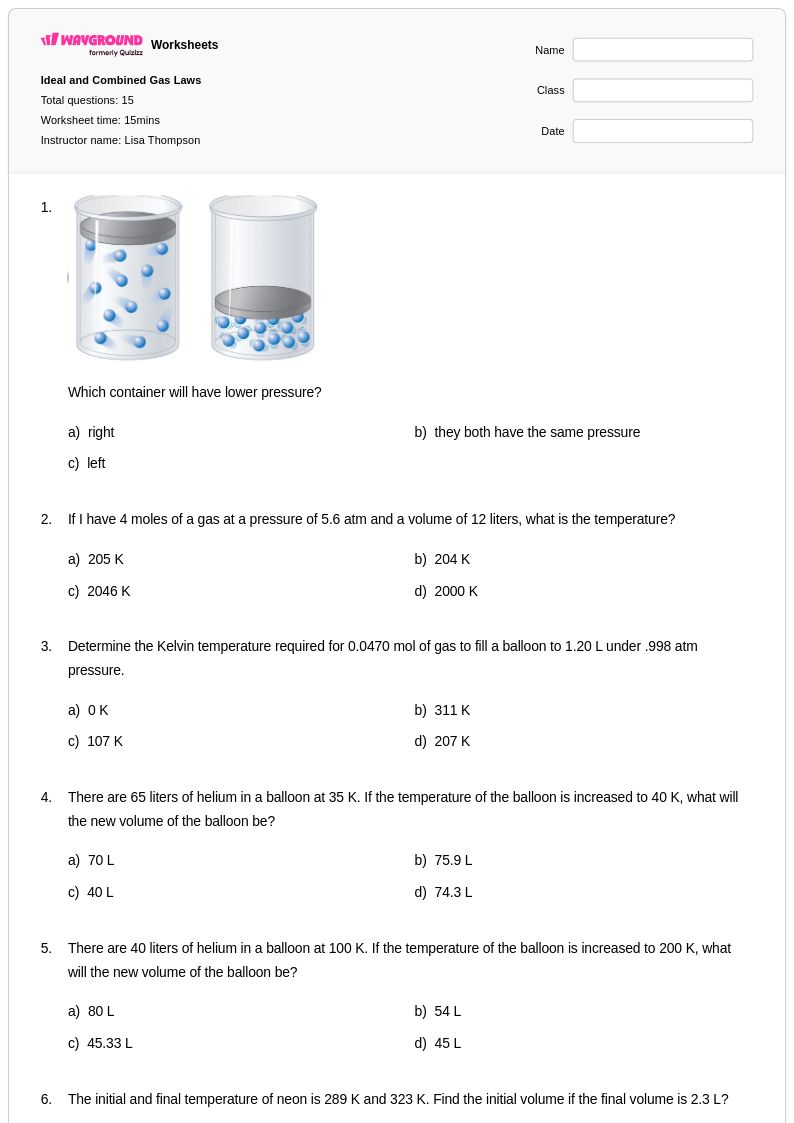
The Combined Gas Law relates two states of the same gas sample using P₁V₁/T₁ = P₂V₂/T₂ and is best applied when the amount of gas remains constant but pressure, volume, or temperature changes. The Ideal Gas Law, PV = nRT, incorporates the number of moles and is used when the quantity of gas itself is part of the problem. In a typical chemistry course, the Combined Gas Law is taught first as a conceptual bridge between the individual gas laws, with the Ideal Gas Law introduced afterward once students are comfortable manipulating multi-variable equations.