Free Printable Conjugate Acid Base Pairs worksheets
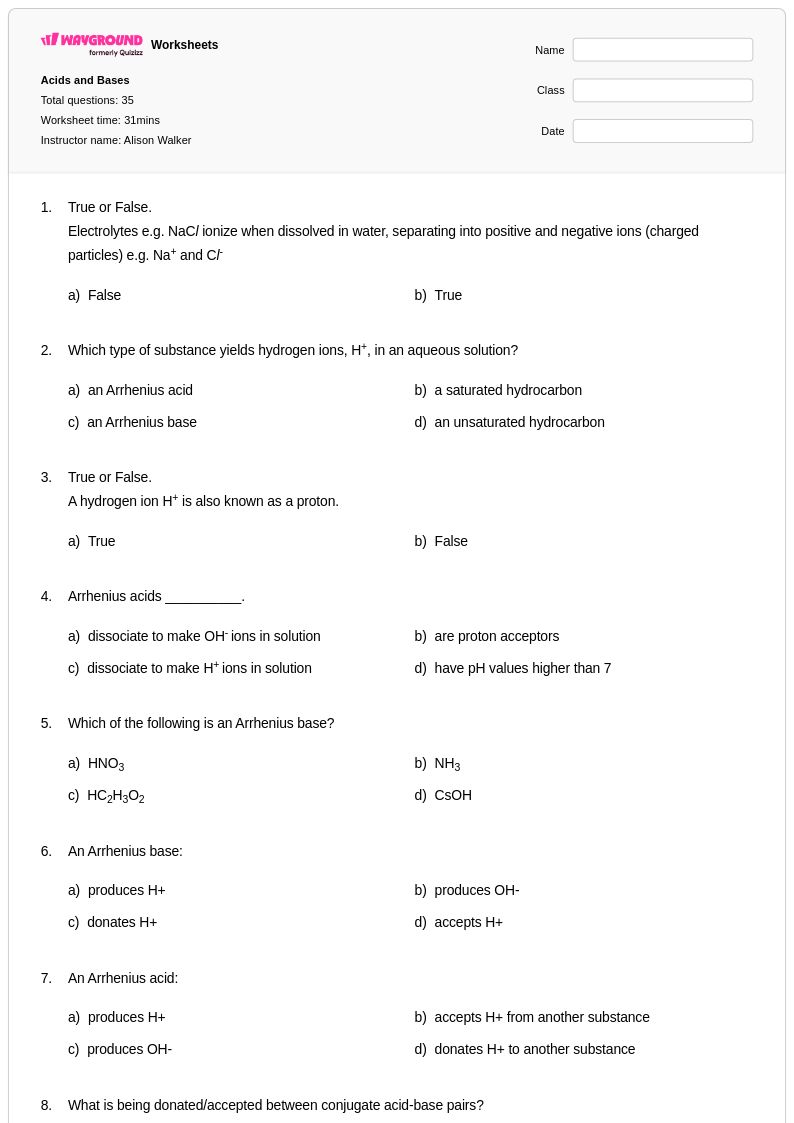
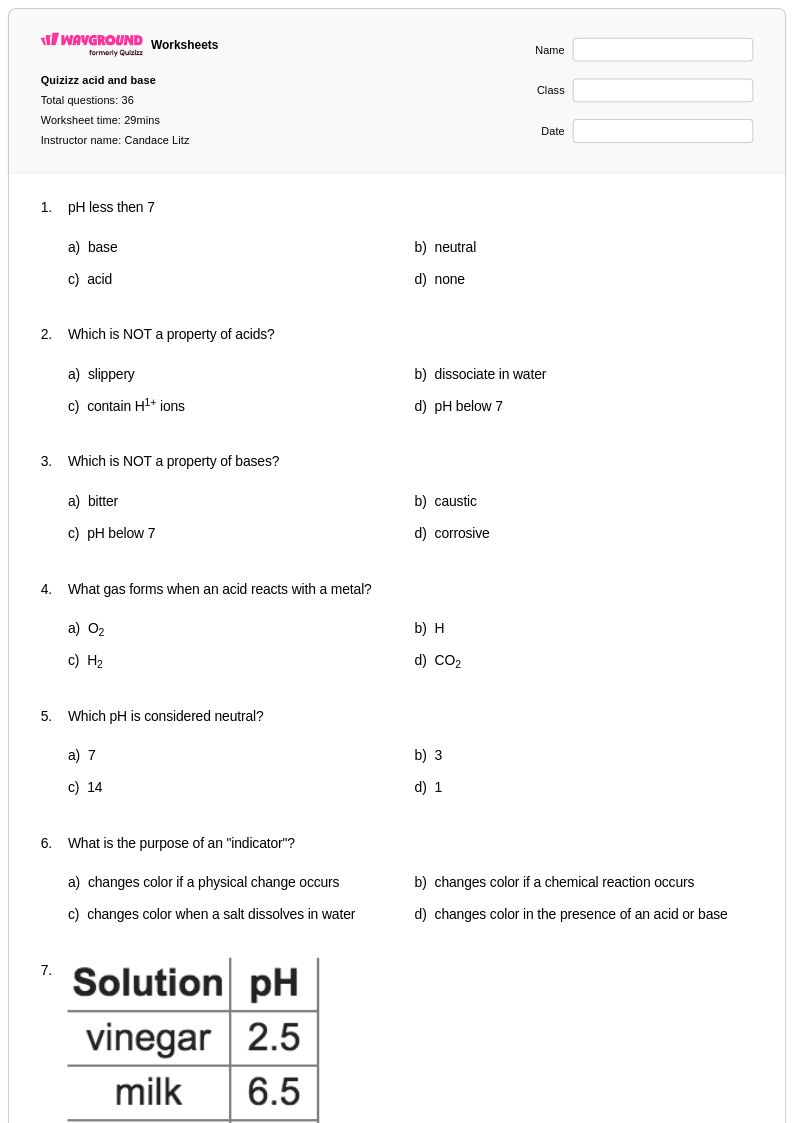
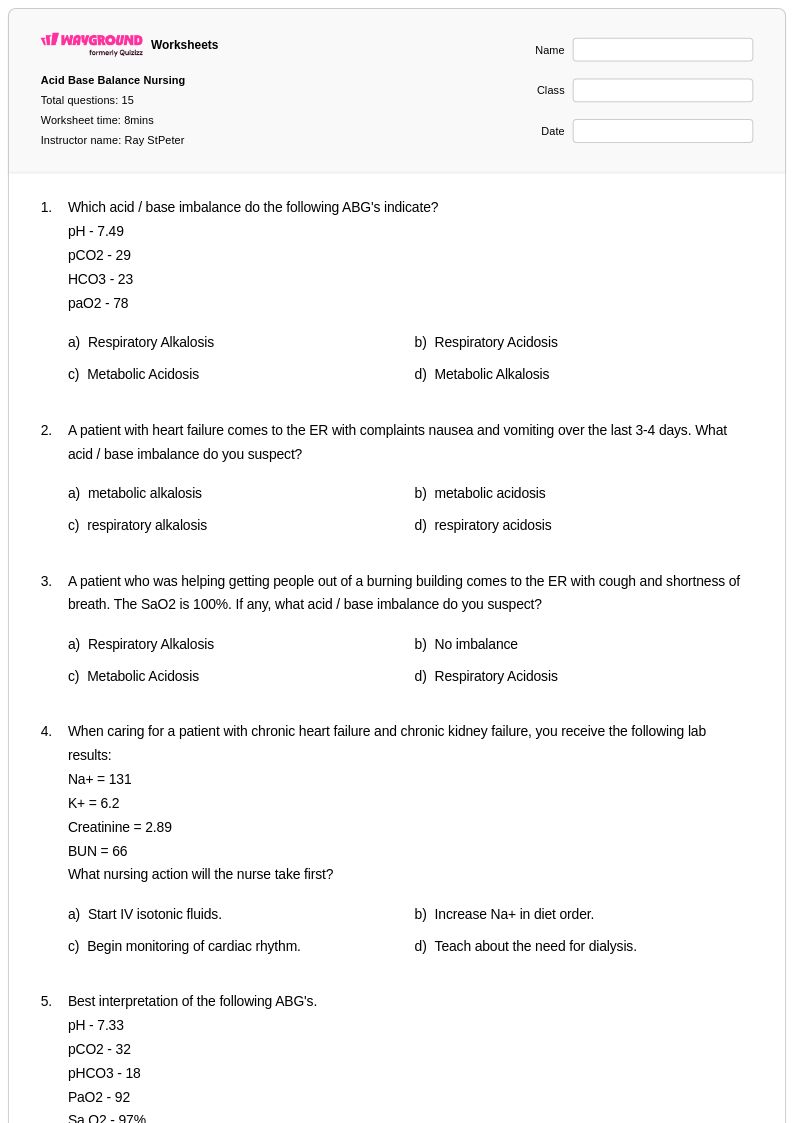
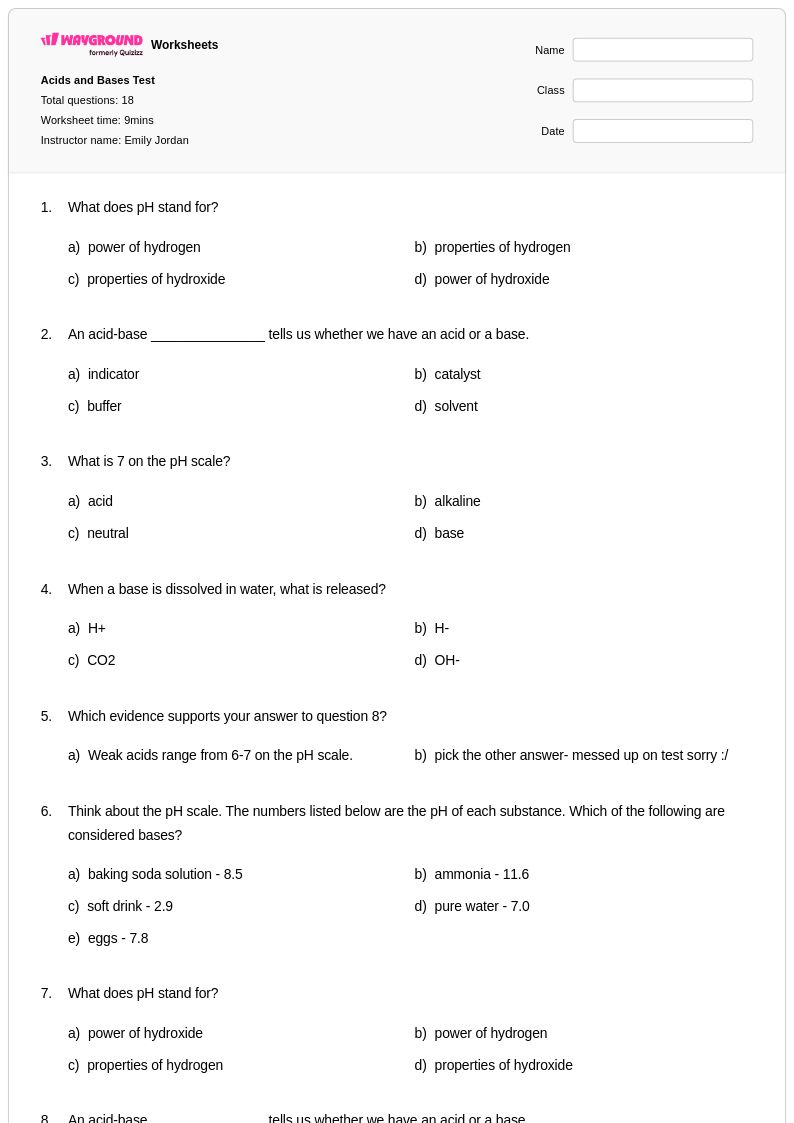
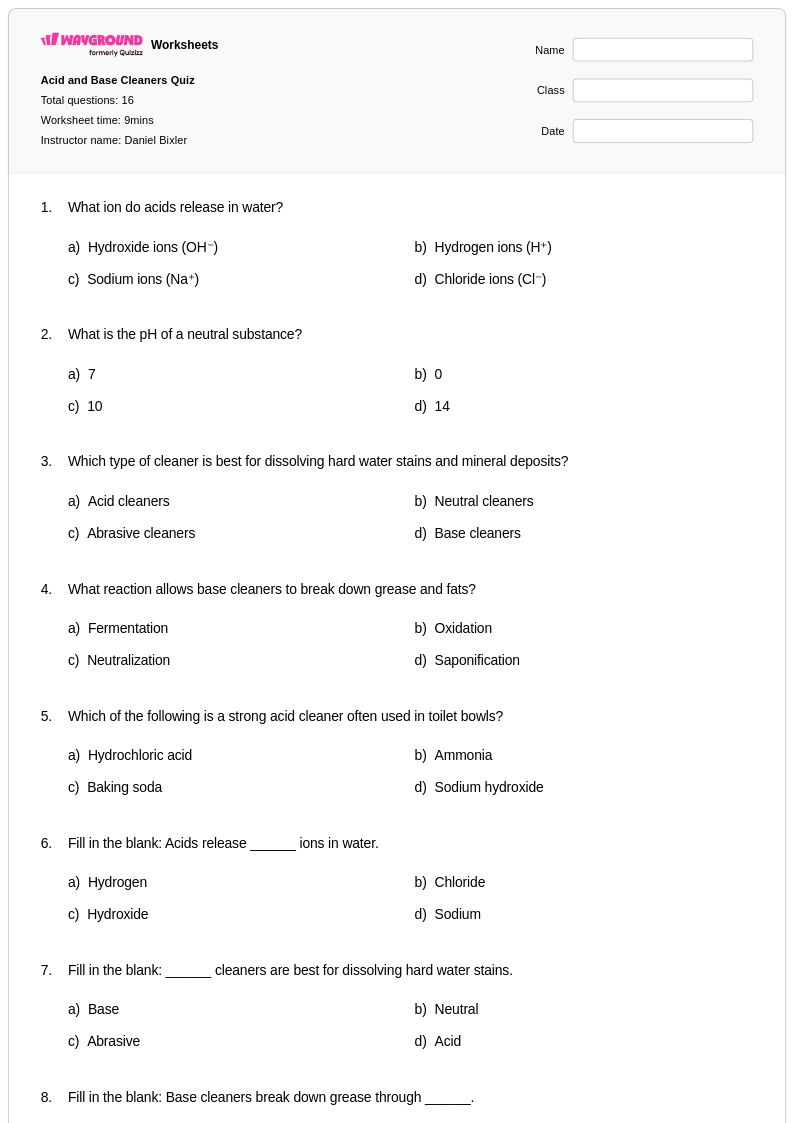
Explore Wayground's free conjugate acid base pairs worksheets and printables that help students master identifying conjugate pairs, understanding proton transfer reactions, and solving practice problems with comprehensive answer keys.
Explore printable Conjugate Acid Base Pairs worksheets
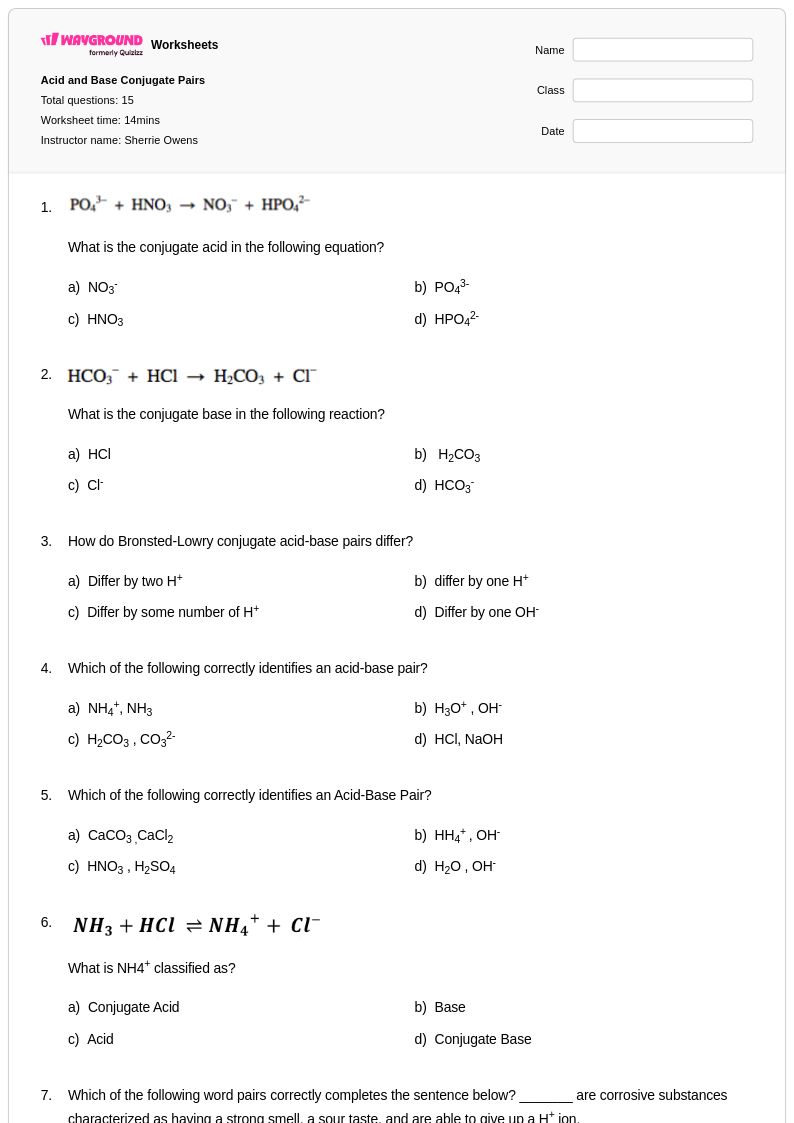
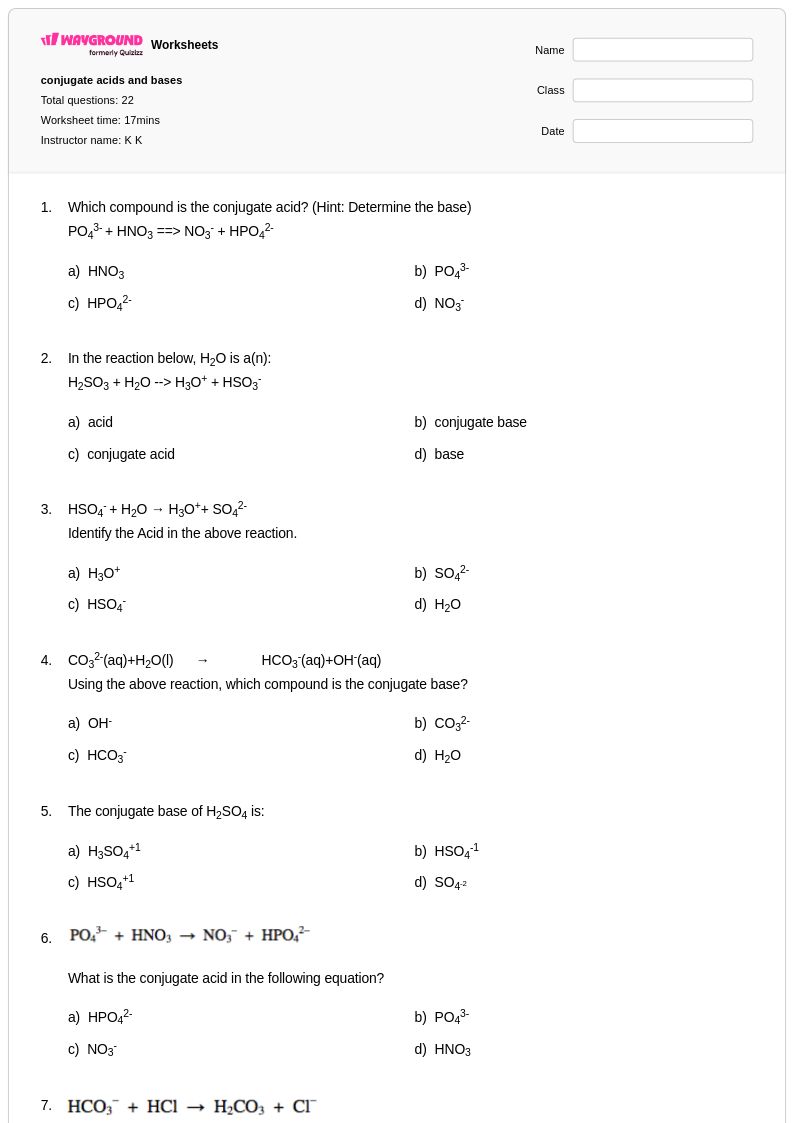
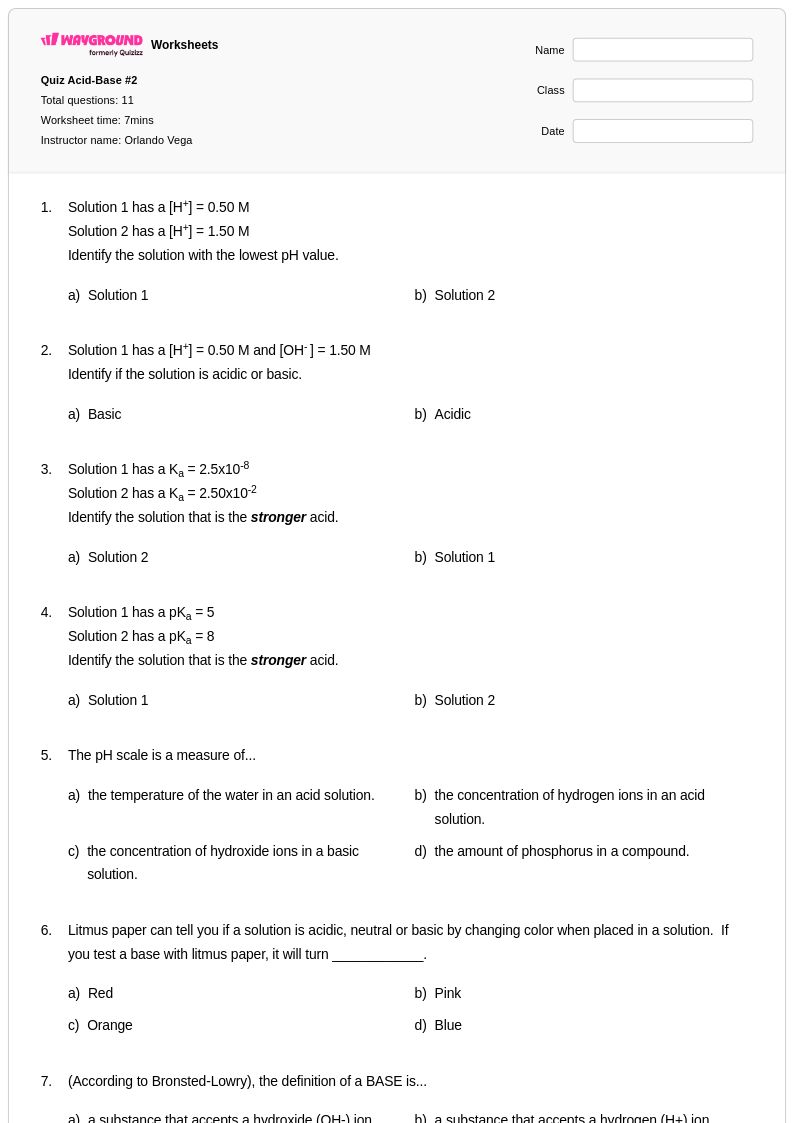
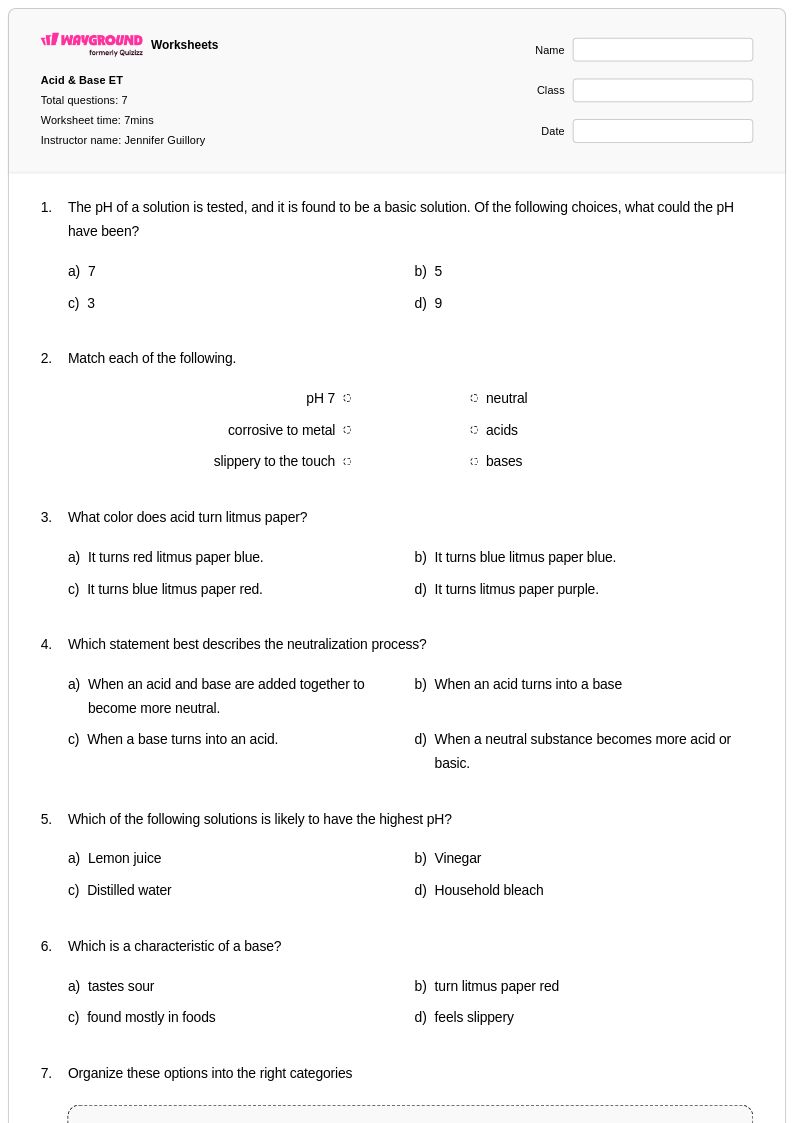
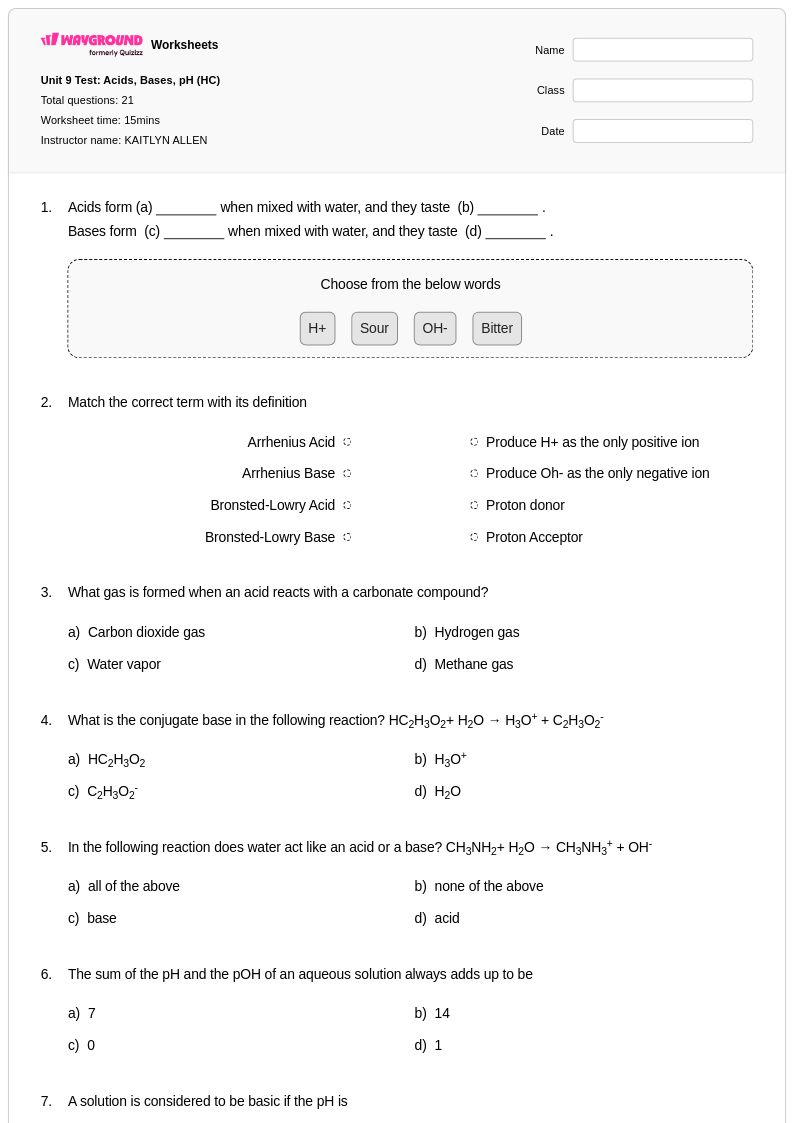
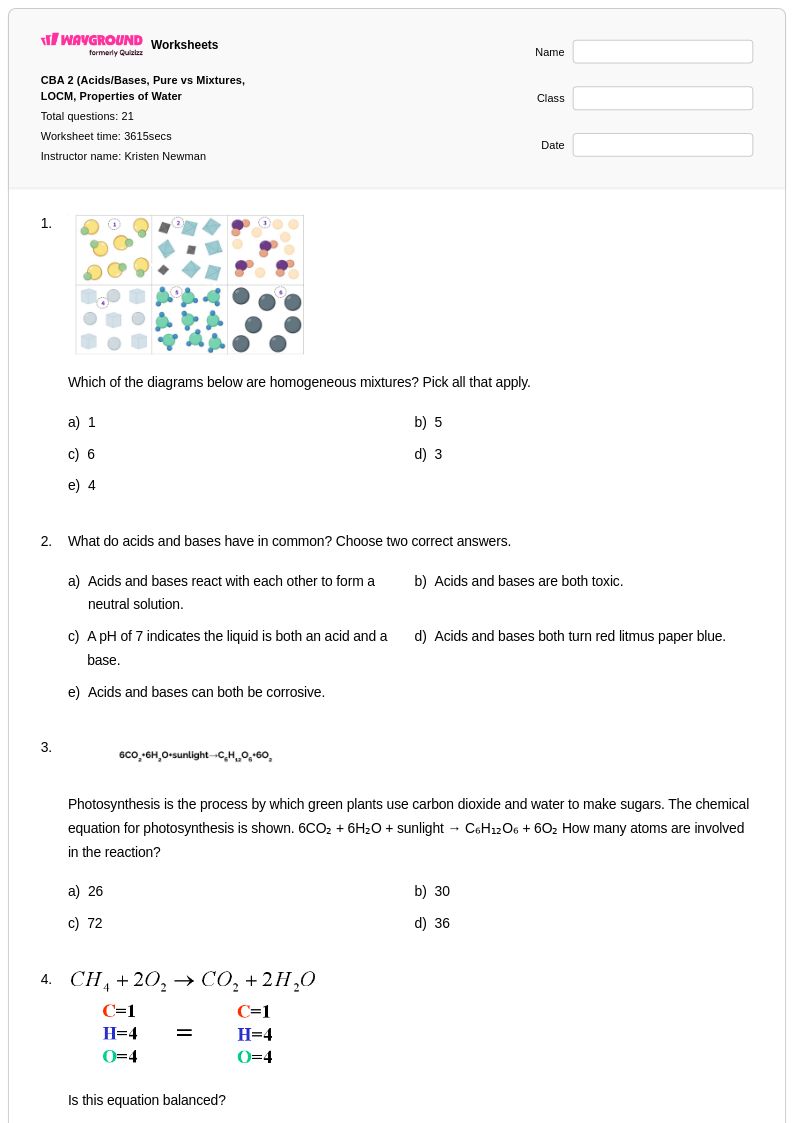
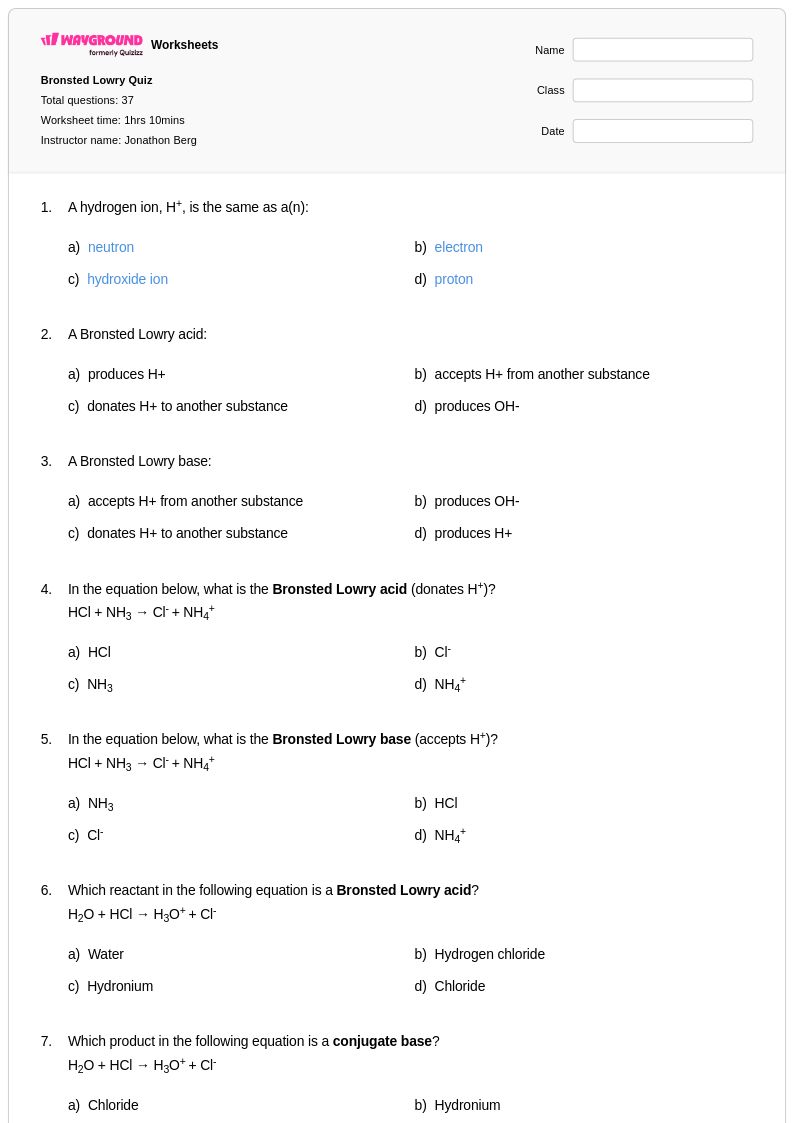
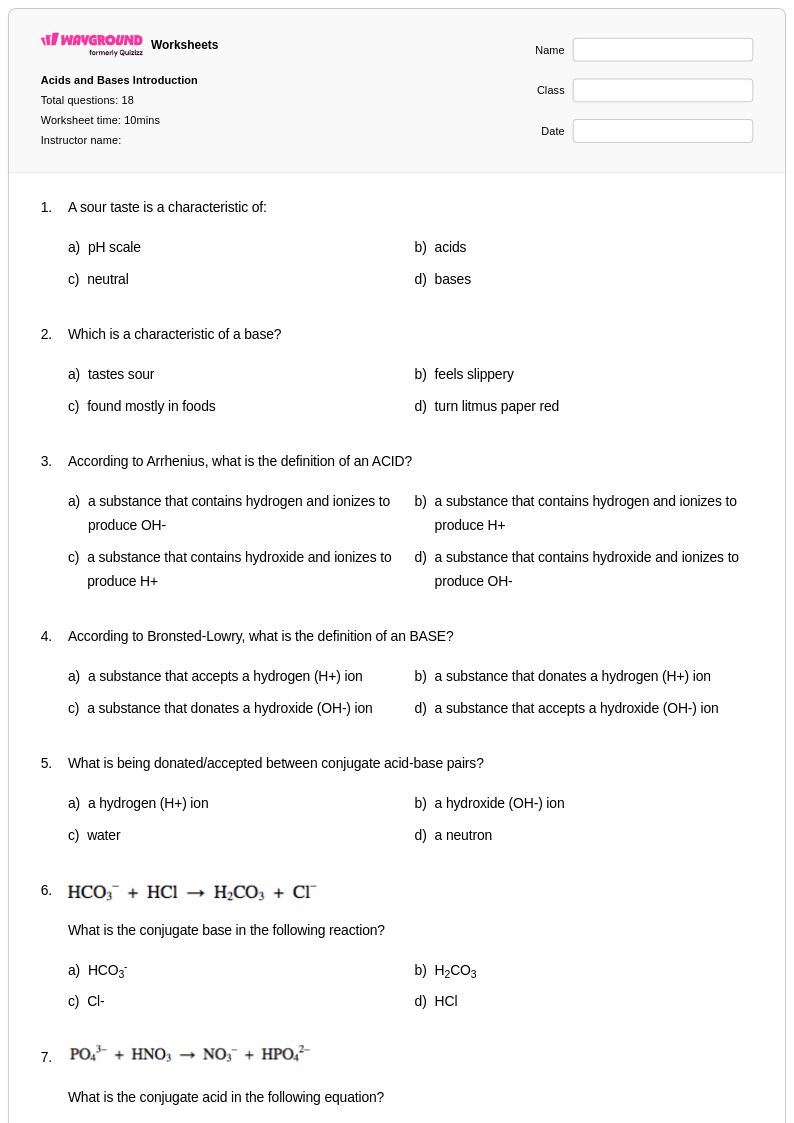
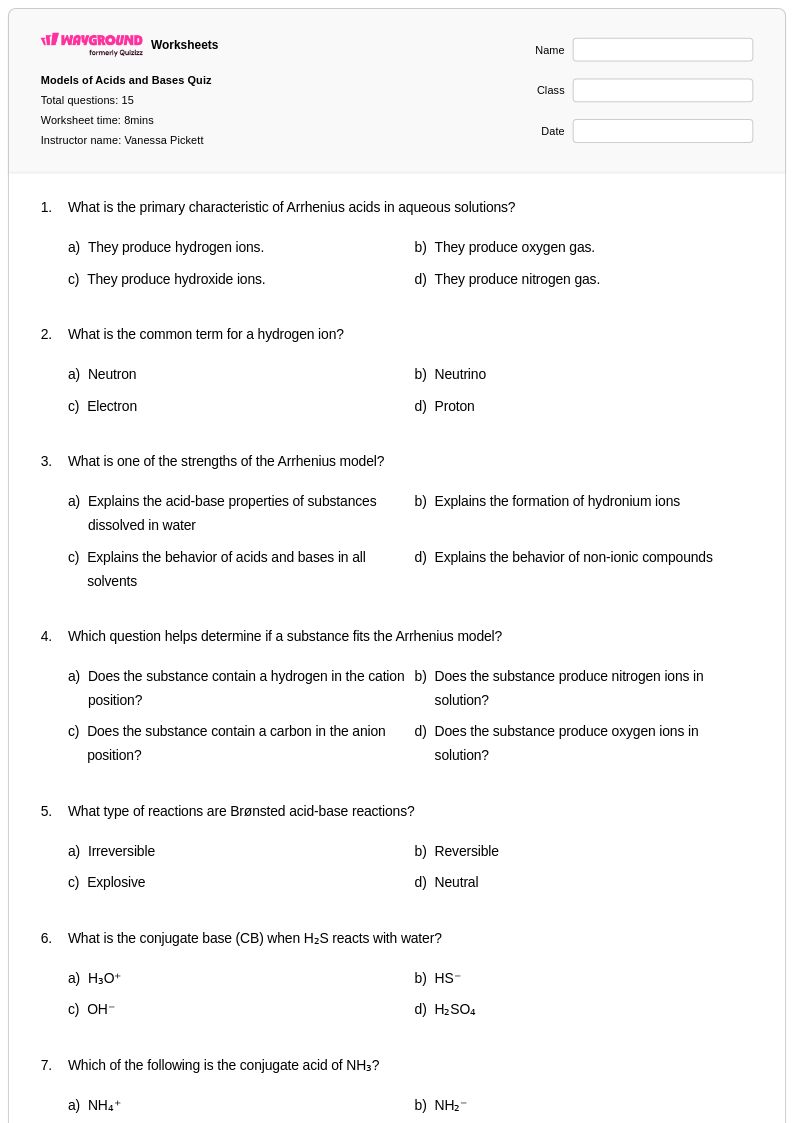
Conjugate acid base pairs worksheets available through Wayground (formerly Quizizz) provide comprehensive practice opportunities for students to master this fundamental concept in acid-base chemistry. These expertly designed resources strengthen critical analytical skills including identifying conjugate relationships, predicting proton transfer reactions, and understanding the reciprocal nature of acid-base behavior according to Brønsted-Lowry theory. Students work through systematically structured practice problems that reinforce how acids donate protons to become their conjugate bases, while bases accept protons to form their conjugate acids. Each worksheet includes detailed answer keys that guide learners through the logical process of recognizing these paired relationships, making these free educational resources invaluable for both independent study and classroom instruction. The printables cover various complexity levels, from simple identification exercises to complex multi-step equilibrium problems involving conjugate pairs.
Wayground (formerly Quizizz) empowers educators with an extensive collection of millions of teacher-created conjugate acid base pair worksheets that streamline lesson planning and enhance student learning outcomes. The platform's robust search and filtering capabilities allow teachers to quickly locate resources aligned with specific chemistry standards and learning objectives, while built-in differentiation tools enable seamless customization for diverse student needs and ability levels. These versatile materials are available in both printable pdf formats for traditional classroom use and interactive digital versions that facilitate immediate feedback and self-paced learning. Teachers utilize these comprehensive worksheet collections for targeted skill practice, remediation of challenging concepts, and enrichment activities that deepen students' understanding of acid-base chemistry principles, ensuring every learner can successfully navigate the complexities of conjugate acid base relationships.
FAQs
How do I teach conjugate acid-base pairs to my chemistry students?
Start by grounding students in Brønsted-Lowry theory: an acid donates a proton (H⁺) to become its conjugate base, while a base accepts a proton to form its conjugate acid. Use concrete examples like HCl/Cl⁻ and NH₃/NH₄⁺ before moving to more complex equilibrium reactions. Emphasizing the reciprocal, paired nature of these relationships early helps students avoid treating acids and bases as independent categories rather than connected partners in a proton-transfer process.
What exercises help students practice identifying conjugate acid-base pairs?
Effective practice exercises include identifying conjugate pairs from written equations, completing partially filled reaction equations by supplying the missing conjugate species, and ranking conjugate base strength based on the strength of the parent acid. Progressing from simple single-step identification to multi-step equilibrium problems ensures students build confidence before tackling the more complex scenarios they will encounter on assessments.
What mistakes do students commonly make when identifying conjugate acid-base pairs?
The most frequent error is confusing a conjugate base with the original acid rather than recognizing it as the species that remains after proton donation. Students also commonly mislabel water in amphoteric contexts, failing to identify whether it is acting as an acid or a base in a given reaction. Another common mistake is assuming that a strong acid always has a weak conjugate base without understanding the underlying relationship between acid strength and conjugate base strength.
How do I differentiate conjugate acid-base pair instruction for students at different skill levels?
Begin lower-level learners with simple binary acid pairs and explicit proton-transfer diagrams before introducing polyprotic acids or buffer systems. For advanced students, extend practice into equilibrium expressions and Ka/Kb relationships involving conjugate pairs. On Wayground, teachers can apply accommodations such as reduced answer choices for students who need additional support, and read-aloud functionality for those with reading accessibility needs, ensuring every student can engage with the material at an appropriate challenge level.
How can I use conjugate acid-base pair worksheets from Wayground in my classroom?
Wayground's conjugate acid-base pair worksheets are available as printable PDFs for traditional classroom use and in digital formats for technology-integrated environments, including the option to host them as a quiz directly on Wayground. The worksheets span various complexity levels, from basic identification exercises to multi-step equilibrium problems, making them suitable for both initial instruction and targeted remediation. Each worksheet includes a complete answer key, so teachers can assign them for independent practice or self-paced review without additional preparation.
How does understanding conjugate acid-base pairs connect to broader acid-base chemistry topics?
Conjugate acid-base pairs are the structural foundation of Brønsted-Lowry theory and directly underpin student understanding of buffer systems, pH calculations, and acid-base equilibrium. Students who can fluently identify conjugate pairs are better equipped to write net ionic equations, interpret titration curves, and analyze how a solution resists pH change. Treating conjugate pairs as a standalone skill rather than a connected concept is one reason students later struggle with buffers and Ka/Kb calculations.