Explore Wayground's comprehensive collection of free chemistry compounds worksheets and printables with answer keys, designed to help students master molecular structures, chemical formulas, and compound properties through engaging practice problems.
Compounds worksheets available through Wayground (formerly Quizizz) provide comprehensive practice materials that help students master the fundamental concepts of chemical compounds and their properties. These educational resources strengthen critical skills including compound identification, chemical formula writing, nomenclature rules, and understanding the distinction between ionic and covalent bonding. Students work through carefully designed practice problems that cover compound formation, molecular structure analysis, and the relationship between chemical composition and physical properties. Each worksheet collection includes detailed answer keys and is available as free printables in convenient pdf format, making them accessible for both classroom instruction and independent study.
Wayground (formerly Quizizz) supports educators with an extensive library of millions of teacher-created compound worksheets that can be easily located through robust search and filtering capabilities. Teachers benefit from resources that align with chemistry standards and offer built-in differentiation tools to accommodate varying student skill levels and learning needs. The platform's flexible customization options allow instructors to modify existing worksheets or create targeted assignments that address specific compound types, from simple binary compounds to complex polyatomic structures. Available in both printable and digital formats including downloadable pdf versions, these worksheet collections streamline lesson planning while providing essential materials for remediation, enrichment activities, and ongoing skill practice that reinforces student understanding of chemical compound principles.
FAQs
How do I teach chemical compounds to students who are new to chemistry?
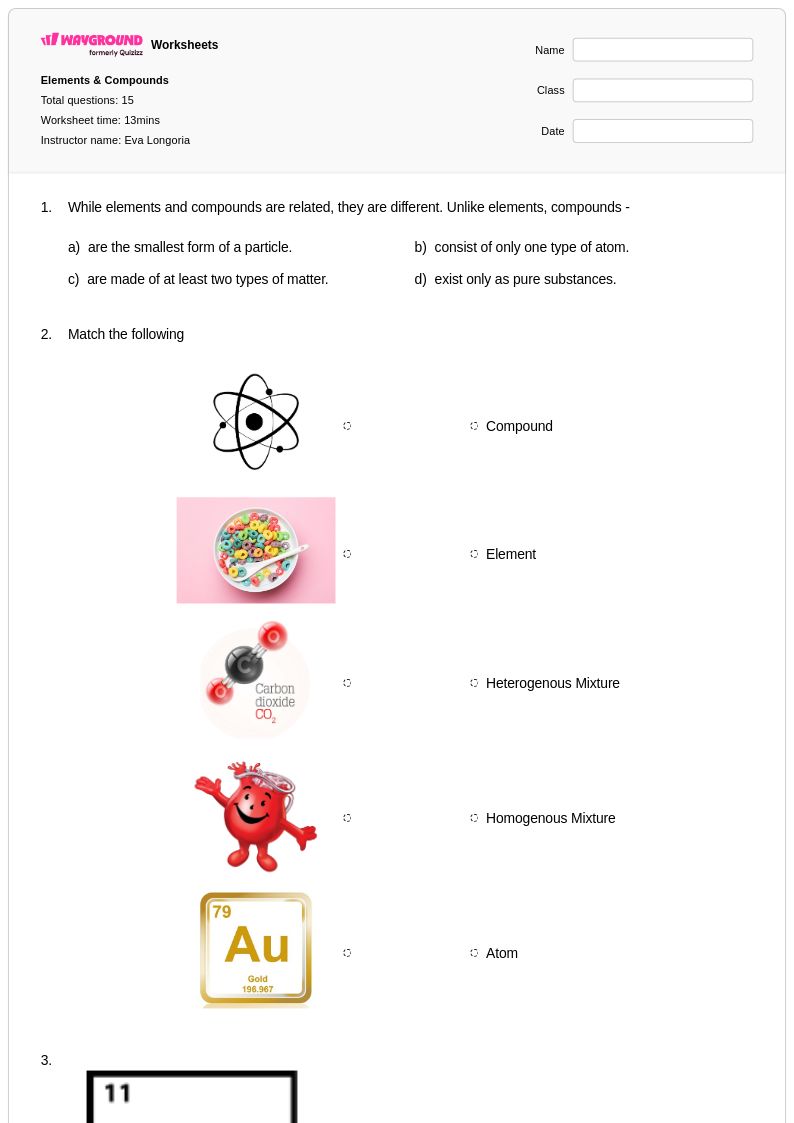
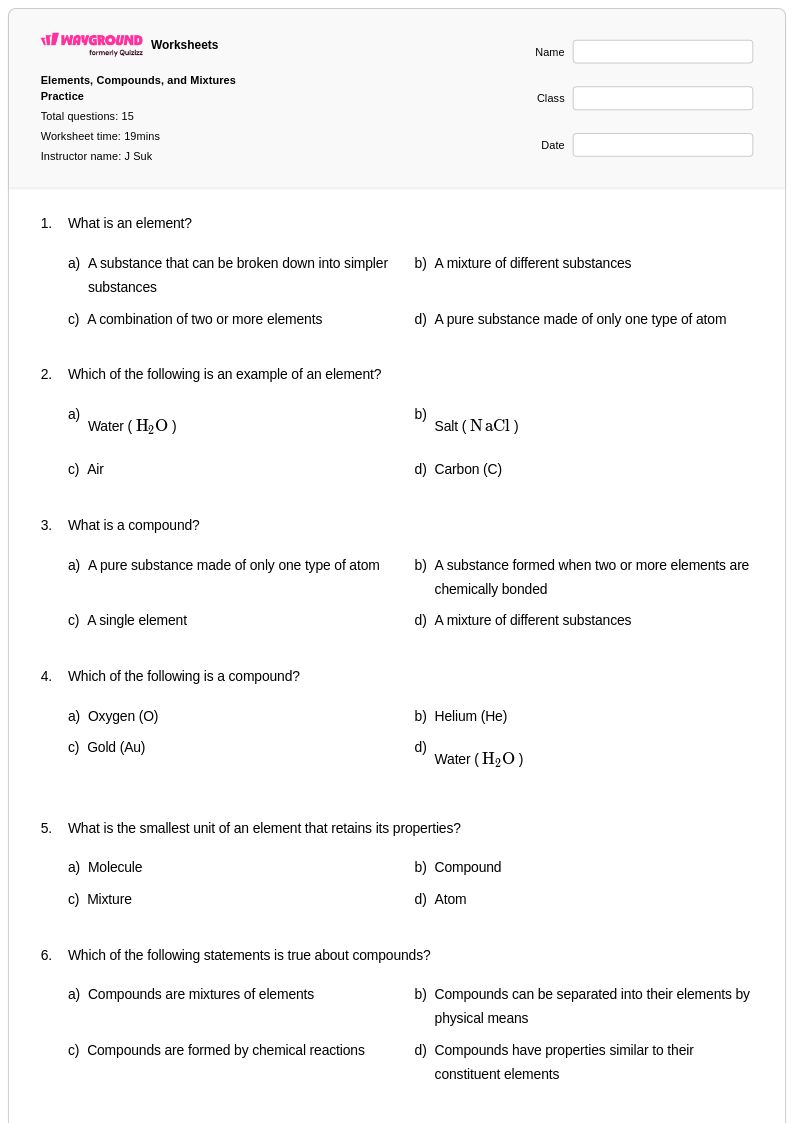
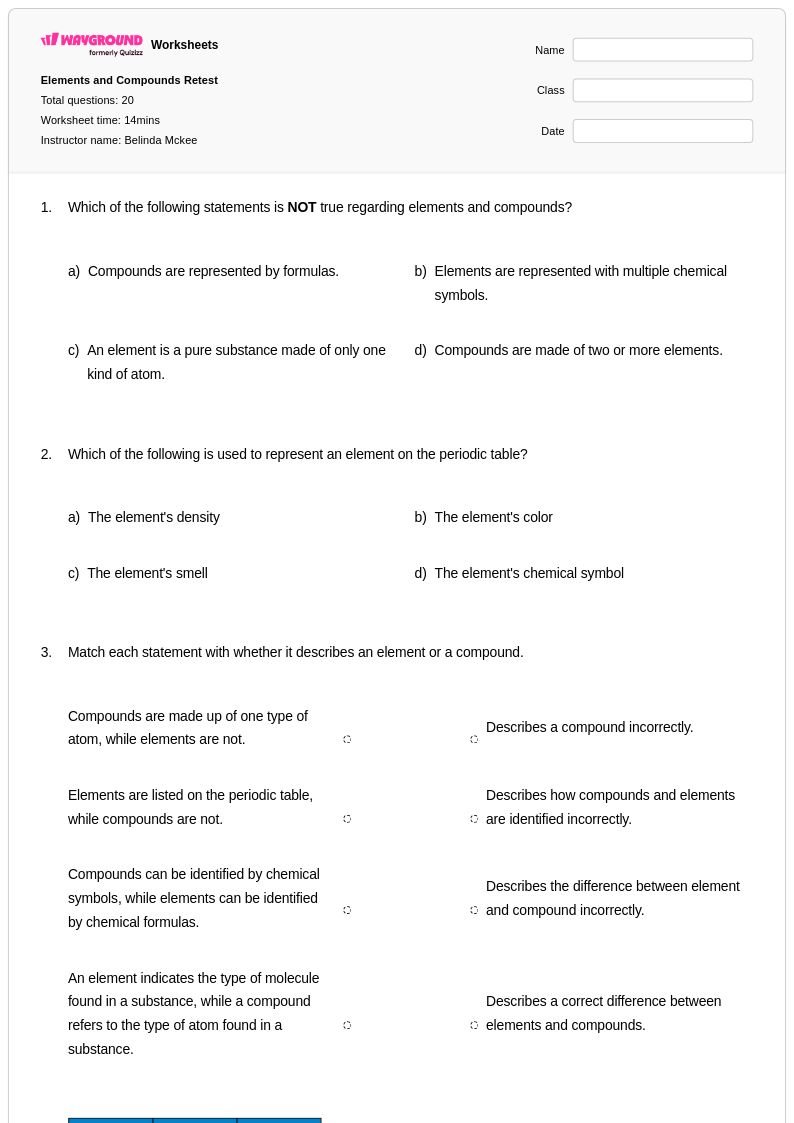
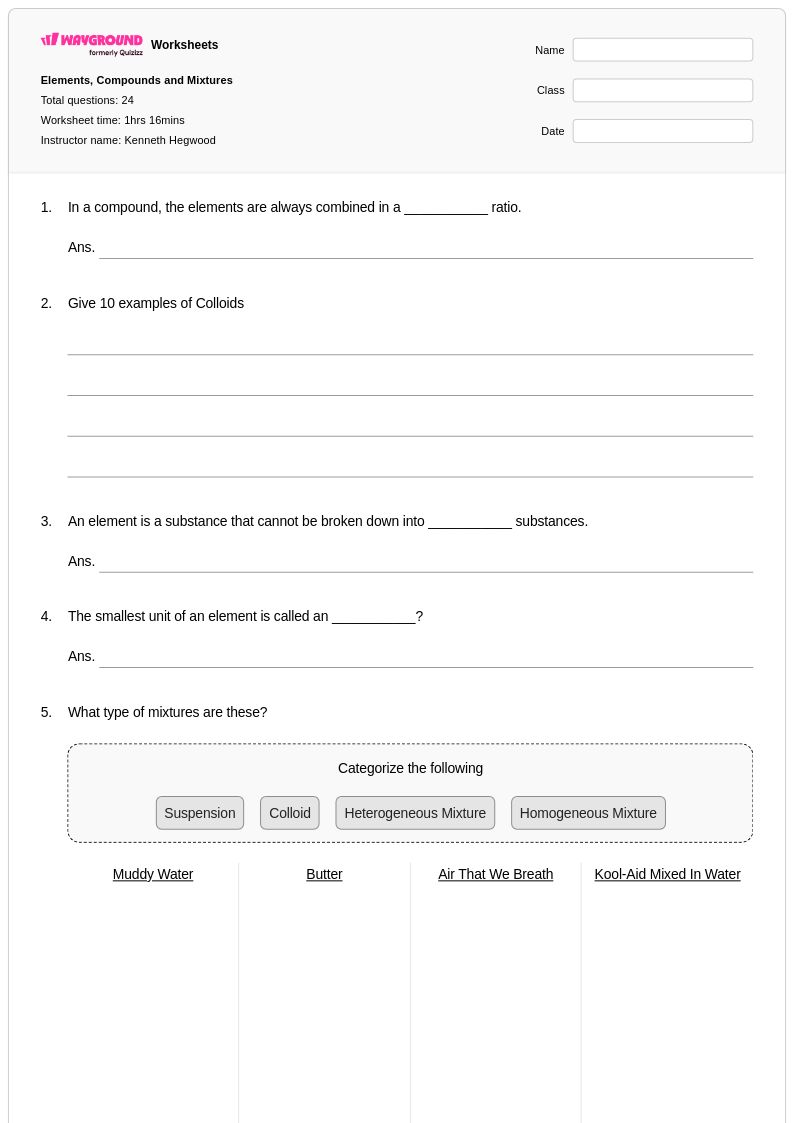
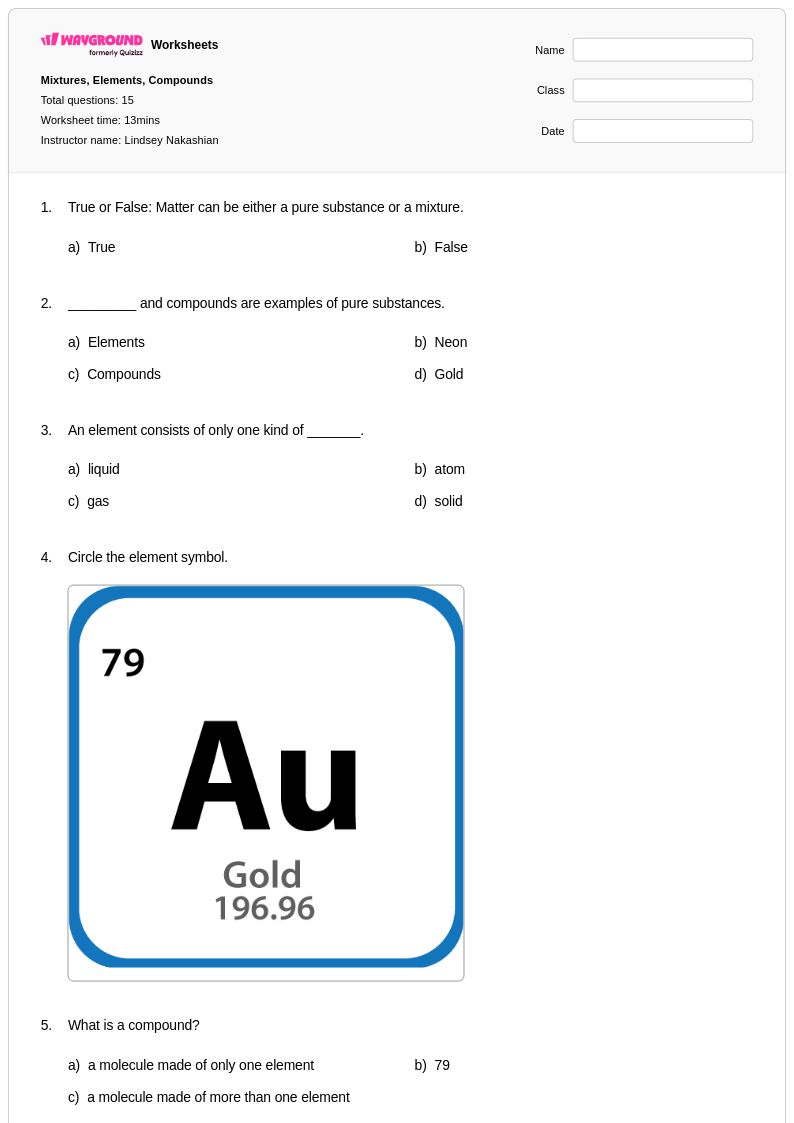
Start by establishing the difference between elements and compounds, then introduce ionic and covalent bonding as the two primary mechanisms by which compounds form. Use concrete examples like sodium chloride (NaCl) and water (H₂O) to anchor abstract concepts before moving into nomenclature rules and formula writing. Building from simple binary compounds toward more complex polyatomic structures gives students a scaffolded progression that prevents early overwhelm.
What exercises help students practice writing chemical formulas and naming compounds?
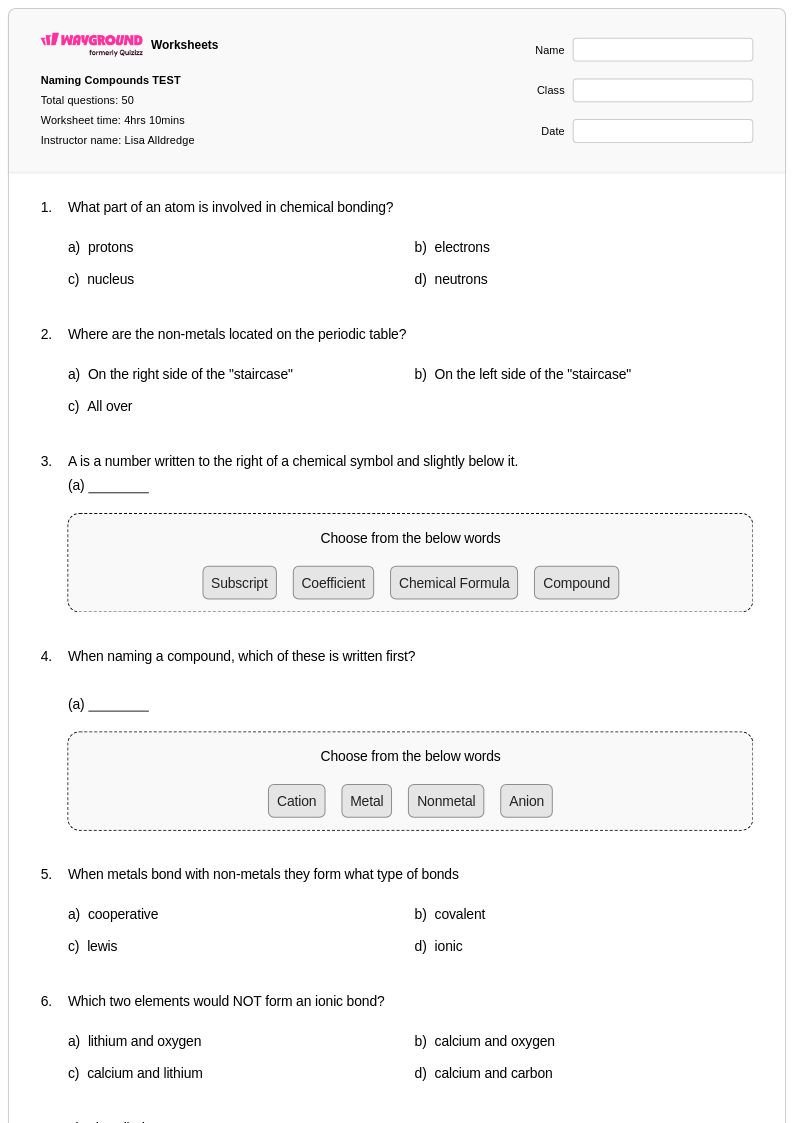
Practice exercises that pair formula writing with nomenclature in the same problem set are especially effective, as they reinforce the bidirectional relationship between a compound's name and its chemical formula. Students benefit from exercises that isolate ionic compounds first, then covalent compounds, before mixing both types so they must apply the correct naming rules in context. Worksheets that include compound identification, formula writing, and property analysis in sequence provide well-rounded reinforcement of all related skills.
What mistakes do students commonly make when learning about chemical compounds?
One of the most frequent errors is conflating ionic and covalent naming conventions, such as applying Roman numerals to nonmetal compounds or omitting prefixes for ionic ones. Students also commonly miswrite formulas by ignoring charge balance in ionic compounds, resulting in formulas that do not reflect electrical neutrality. Another persistent misconception is treating molecular formulas and empirical formulas as interchangeable, when in fact they represent different levels of chemical information.
How do I differentiate compounds instruction for students at different skill levels?
For students who need additional support, begin with visual models of molecular structures before introducing symbolic notation, and limit initial practice to binary ionic compounds with straightforward charge patterns. More advanced students can be challenged with polyatomic ions, transition metals with variable oxidation states, and hydrates. On Wayground, teachers can apply accommodations such as reduced answer choices for students who need lower cognitive load, and read aloud support for students who struggle with technical vocabulary, all configurable per individual student.
How can I use Wayground's compounds worksheets in my classroom?
Wayground's compounds worksheets are available as printable PDFs for traditional classroom use and in digital formats for technology-integrated learning environments, giving teachers flexibility based on their instructional setup. Teachers can also host the worksheets as a quiz directly on Wayground, enabling real-time student responses and built-in answer key support. The platform's search and filtering tools make it easy to locate worksheets targeting specific compound types, from simple binary compounds to complex polyatomic structures, so teachers can assign materials that precisely match their lesson objectives.
How do I help students understand the difference between ionic and covalent compounds?
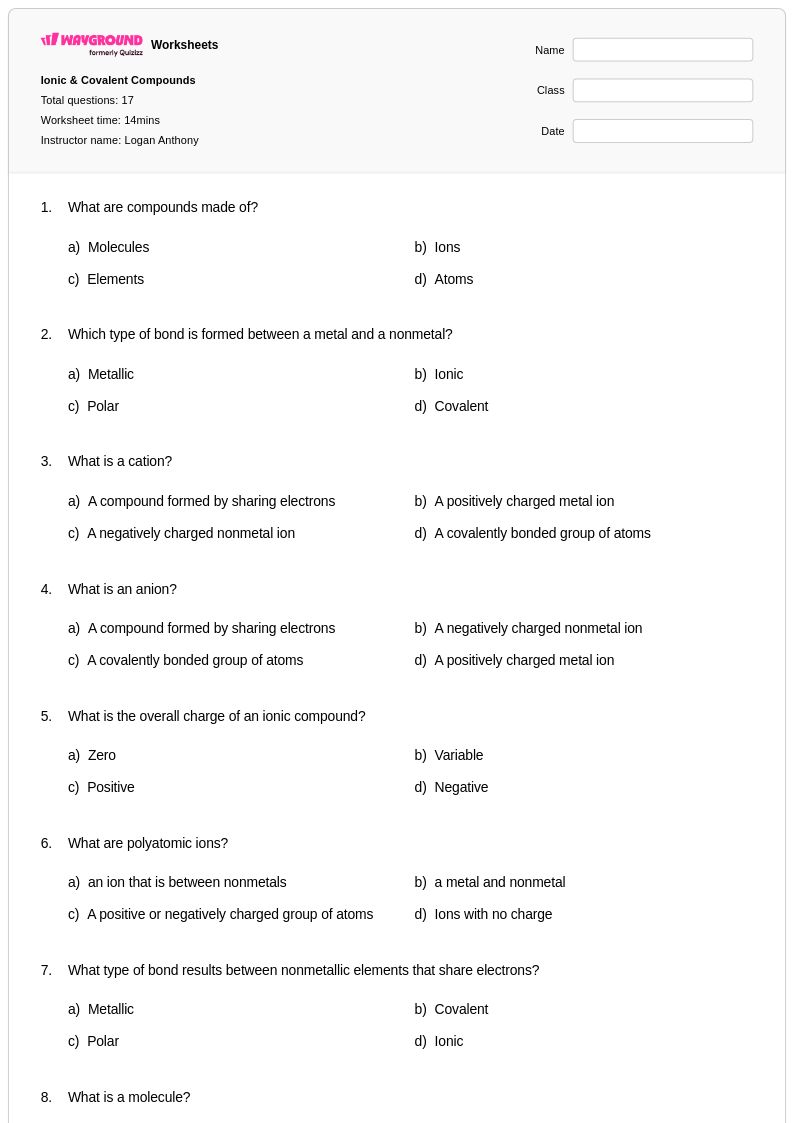
Emphasize that ionic compounds form between metals and nonmetals through electron transfer, while covalent compounds form between nonmetals through electron sharing. Comparing physical properties such as melting point, conductivity, and solubility helps students see that the type of bonding has real, observable consequences. Using side-by-side comparison charts during initial instruction and then asking students to classify unknown compounds from their properties reinforces the conceptual distinction effectively.