Discover comprehensive ion formation worksheets and printables from Wayground that help chemistry students master electron transfer, ionic bonding, and charge predictions through engaging practice problems with detailed answer keys.
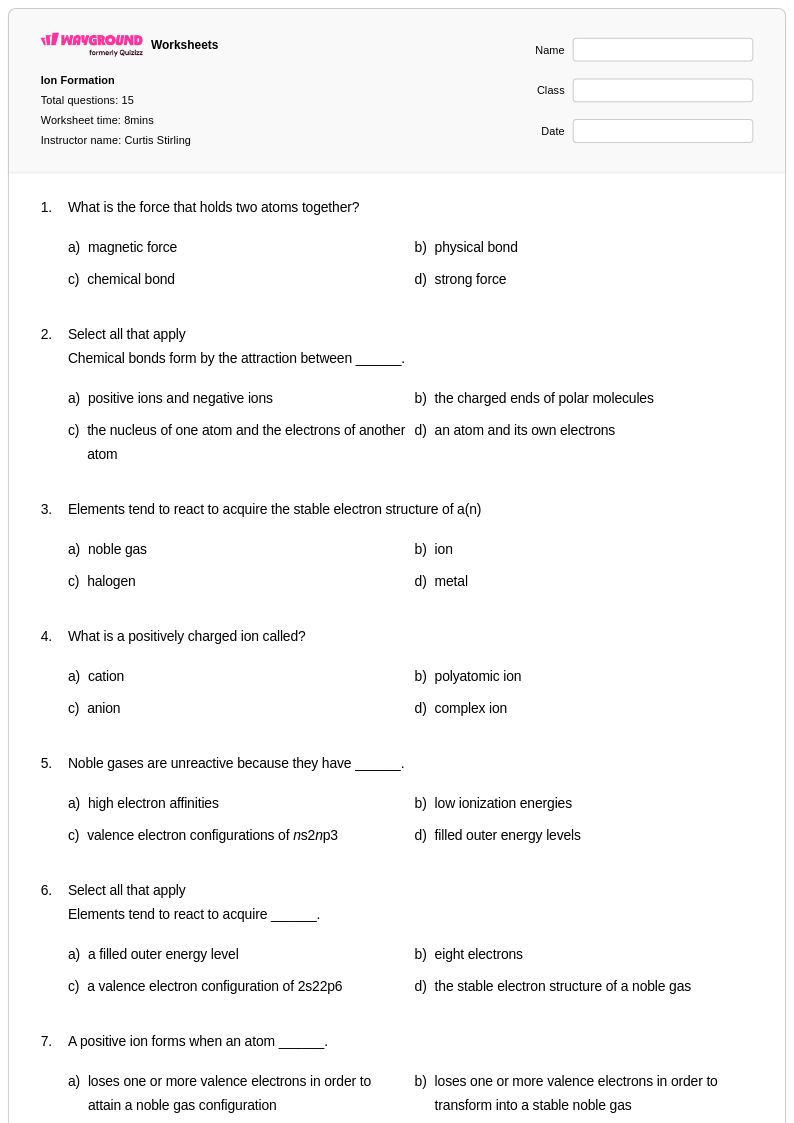
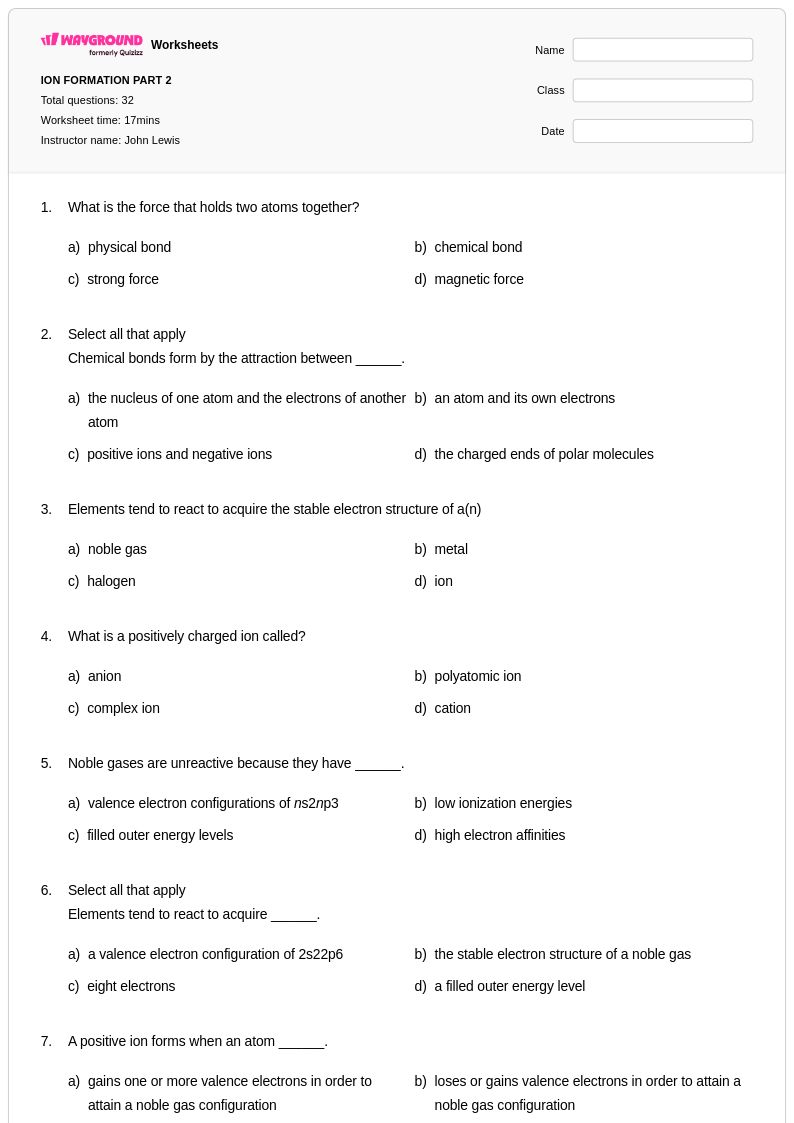
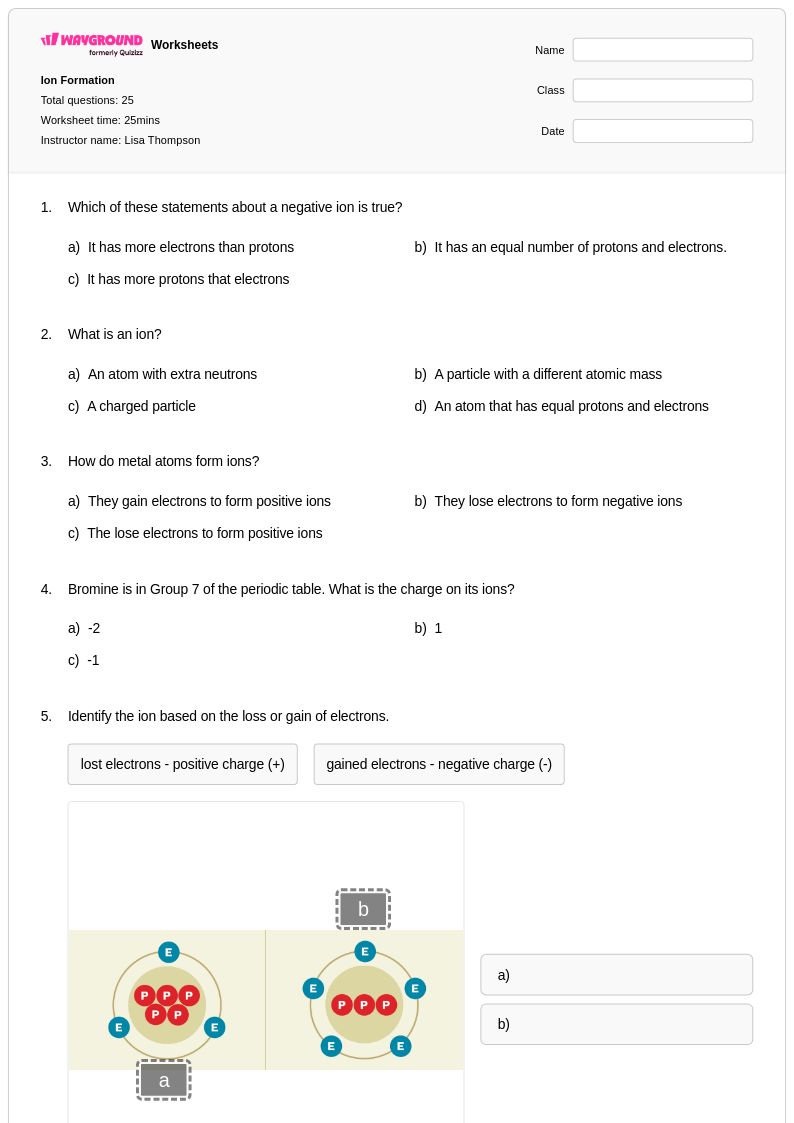
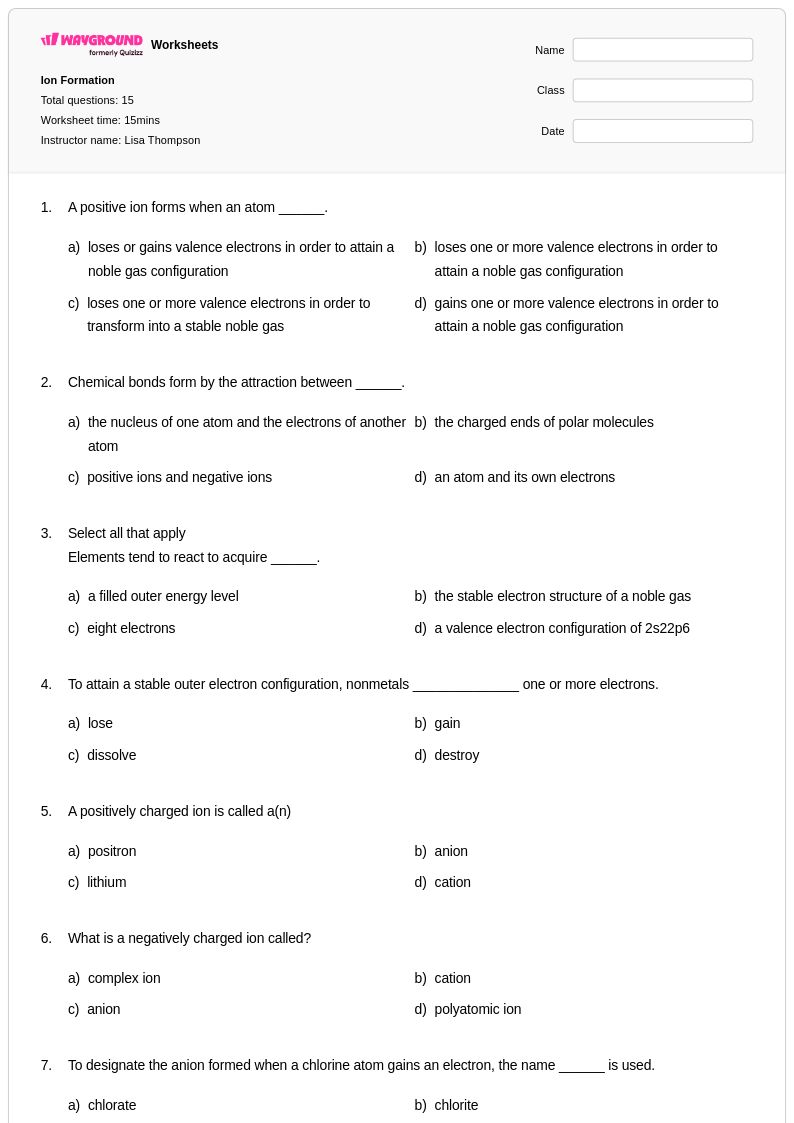
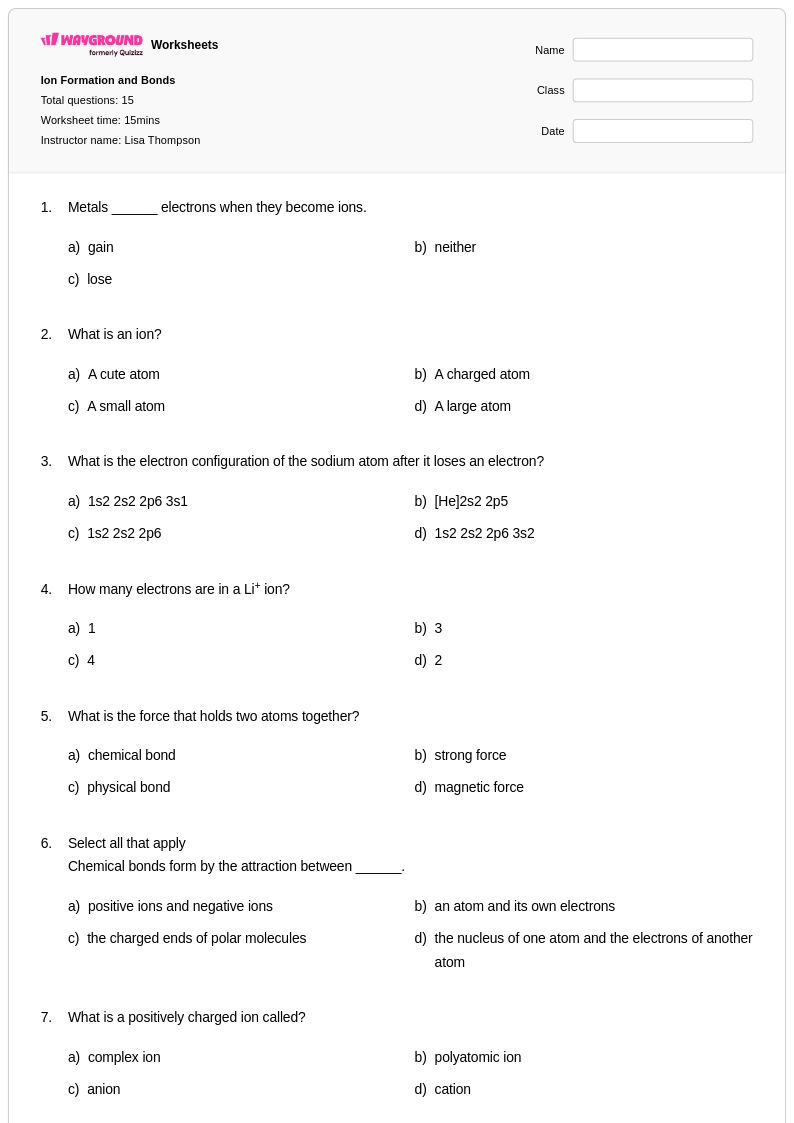
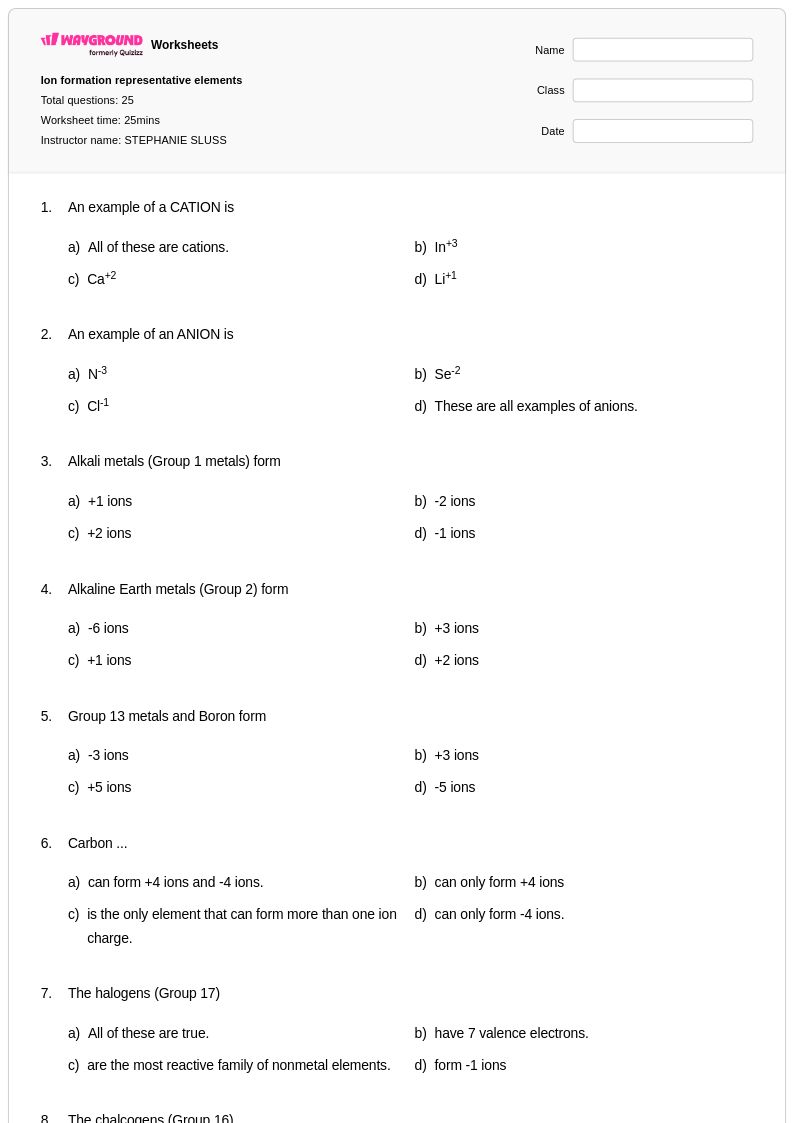
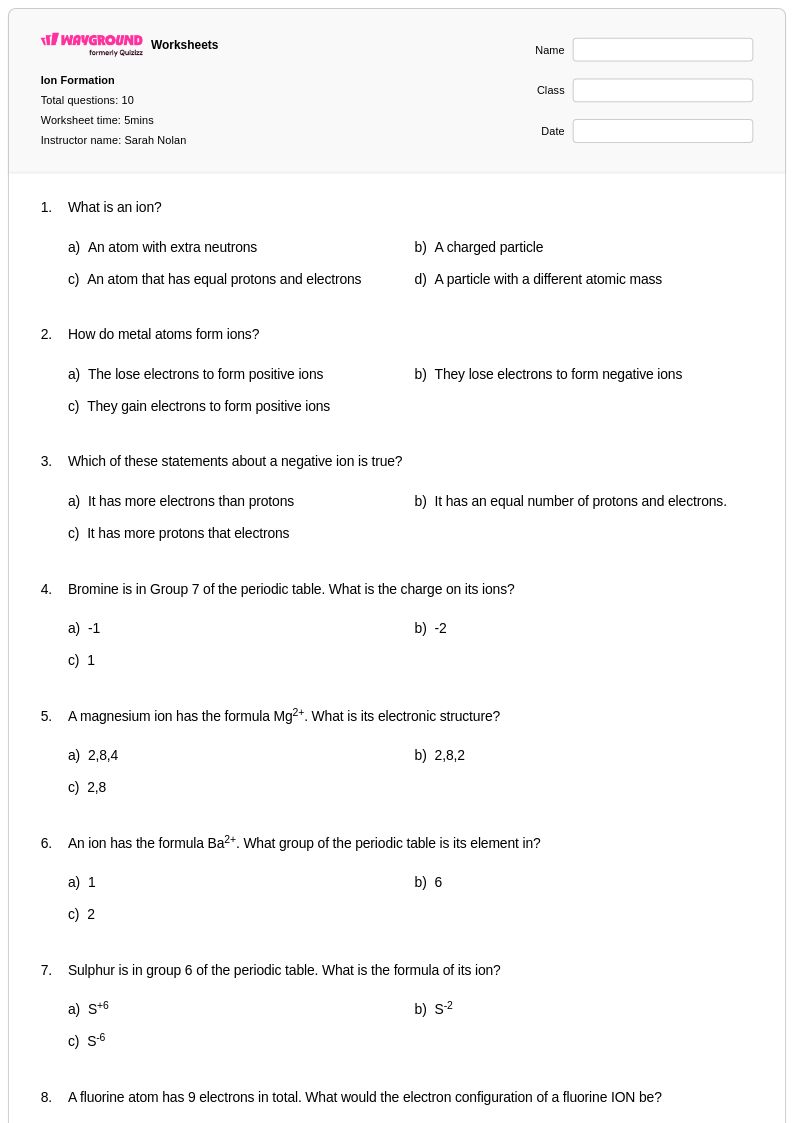
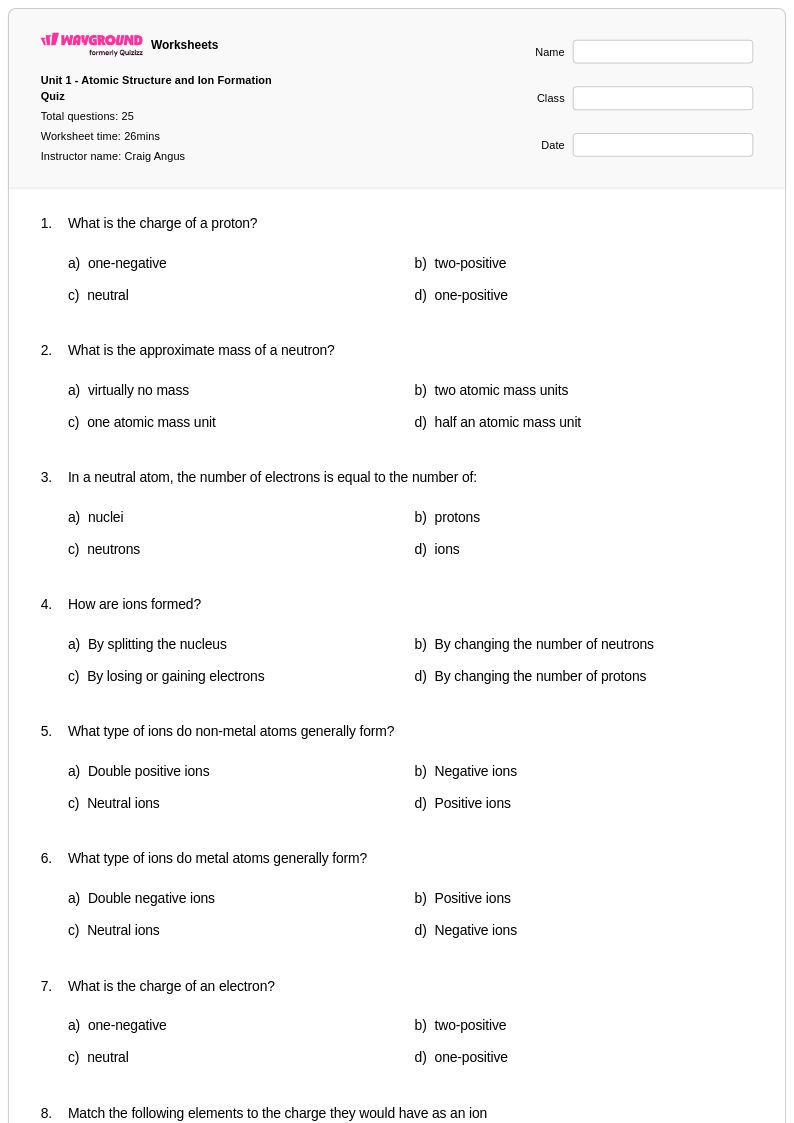
Ion formation worksheets available through Wayground (formerly Quizizz) provide comprehensive practice materials that help students master the fundamental concepts of how atoms gain or lose electrons to form charged particles. These expertly designed resources strengthen critical chemistry skills including electron configuration analysis, predicting ionic charges based on periodic table position, and understanding the driving forces behind ion stability. Students work through carefully scaffolded practice problems that progress from identifying valence electrons to writing complete ionic equations, with each worksheet including detailed answer keys that support independent learning and self-assessment. The collection features free printable pdf resources alongside digital formats, ensuring accessibility for diverse learning environments while reinforcing essential concepts through varied question types and real-world applications.
Wayground (formerly Quizizz) supports chemistry educators with an extensive collection of millions of teacher-created ion formation resources that streamline lesson planning and enhance student outcomes. The platform's robust search and filtering capabilities allow teachers to quickly locate materials aligned with specific curriculum standards, while built-in differentiation tools enable customization for students across varying ability levels. These flexible worksheets are available in both printable pdf format for traditional classroom use and interactive digital versions that provide immediate feedback, making them ideal for remediation sessions, enrichment activities, and targeted skill practice. Teachers can easily modify existing resources or combine multiple worksheets to create comprehensive assessment packages, ensuring that every student receives appropriate challenge and support in mastering the complex relationships between atomic structure and ionic behavior.
FAQs
How do I teach ion formation to chemistry students?
Start by grounding students in valence electron counts using the periodic table, then build toward the concept of electron transfer as atoms seek a stable octet. Use visual models showing electron dot diagrams before and after ion formation so students can see the charge change concretely. Connecting ion formation to real compounds students recognize, like table salt (NaCl), helps anchor the abstract concept in something tangible.
What exercises help students practice predicting ionic charges?
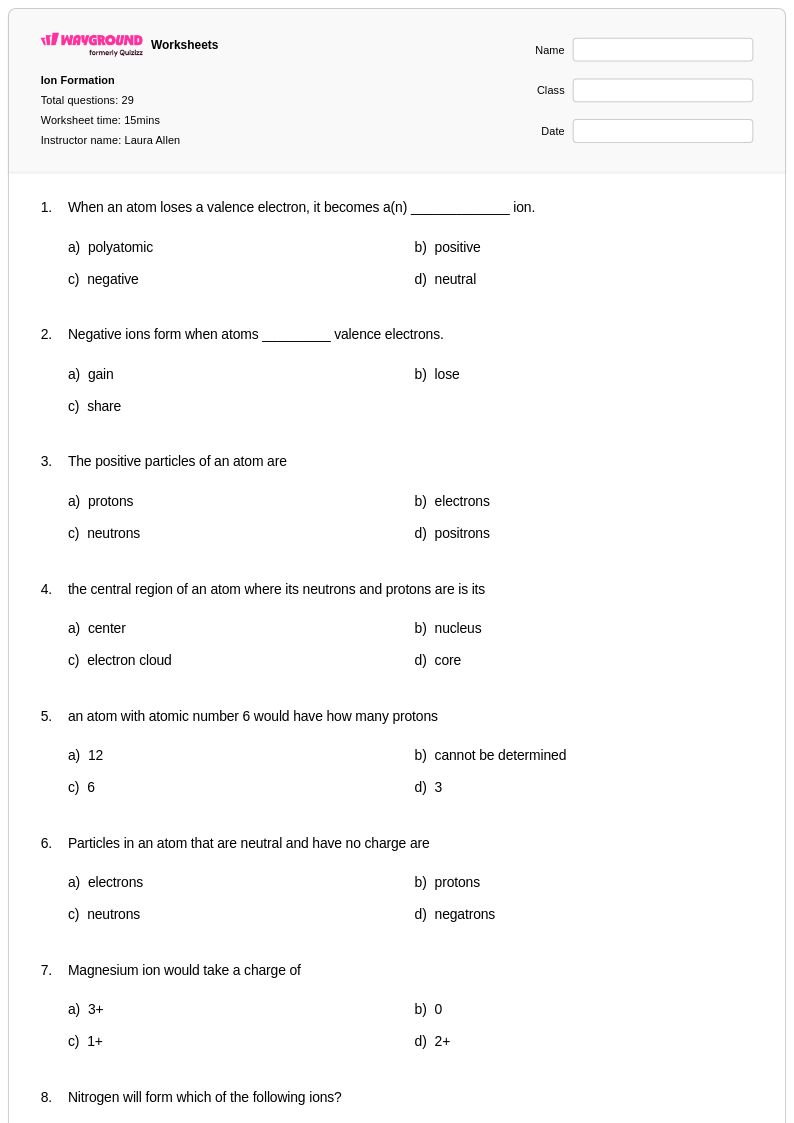
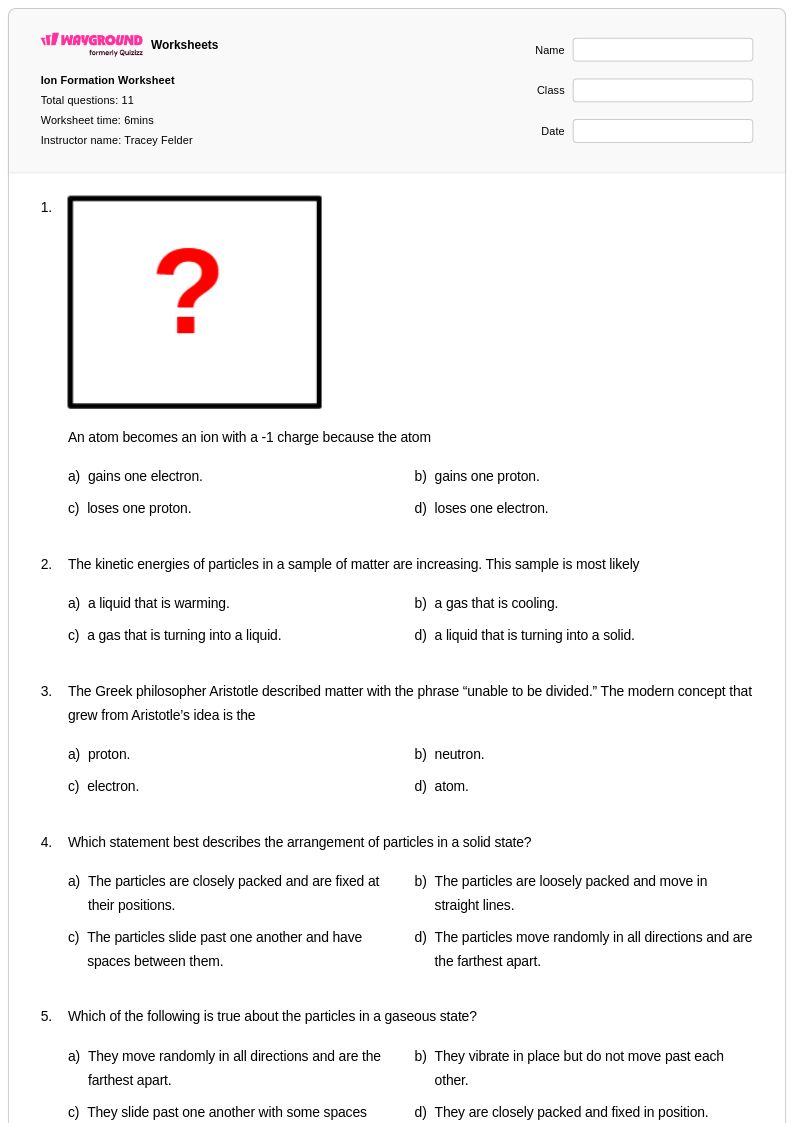
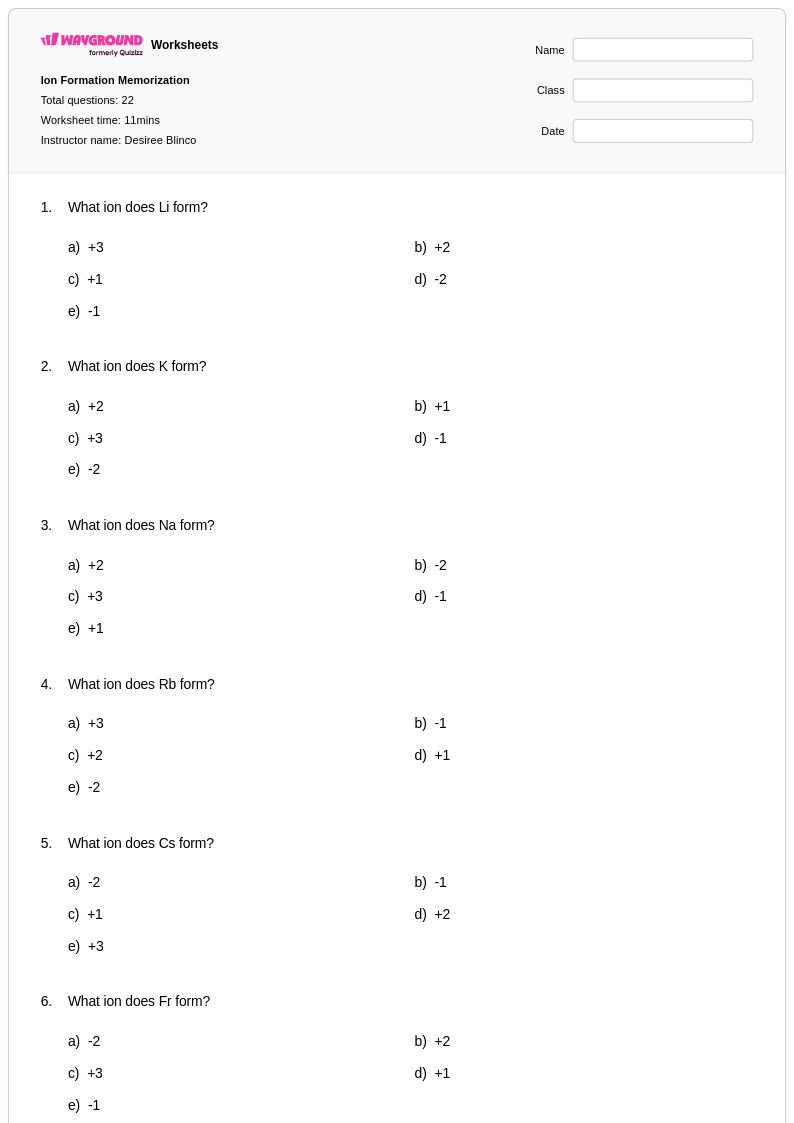
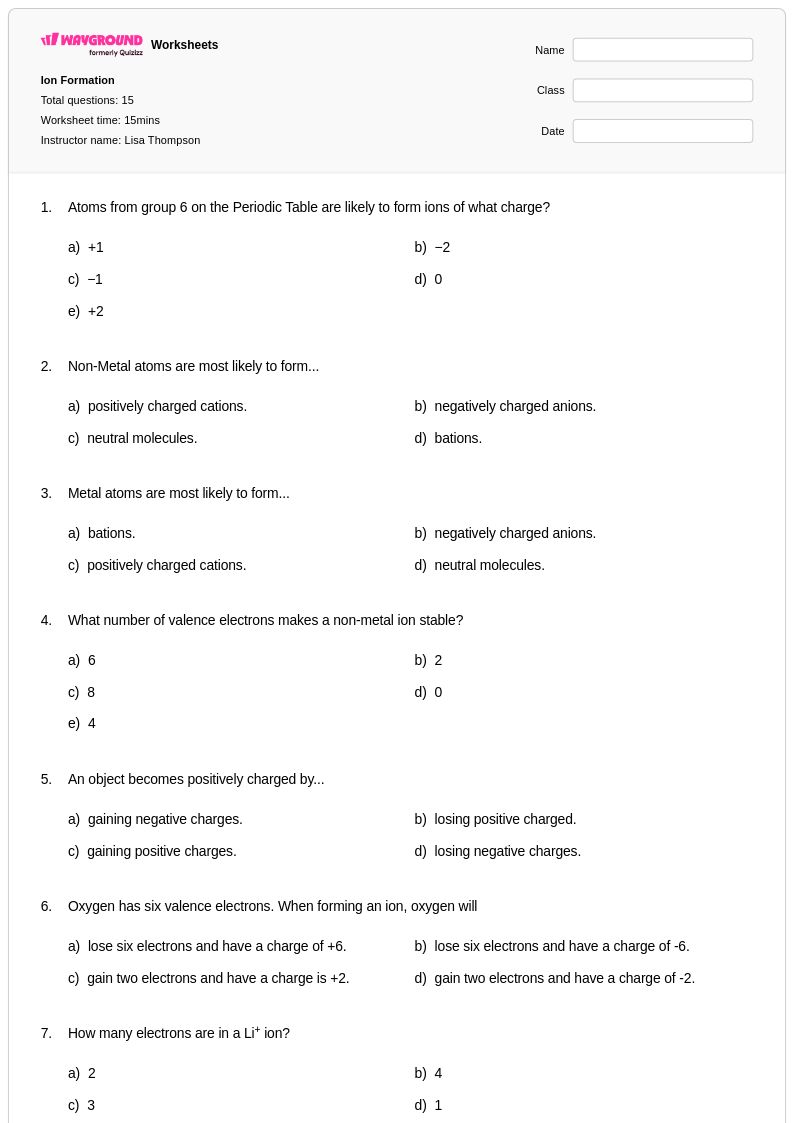
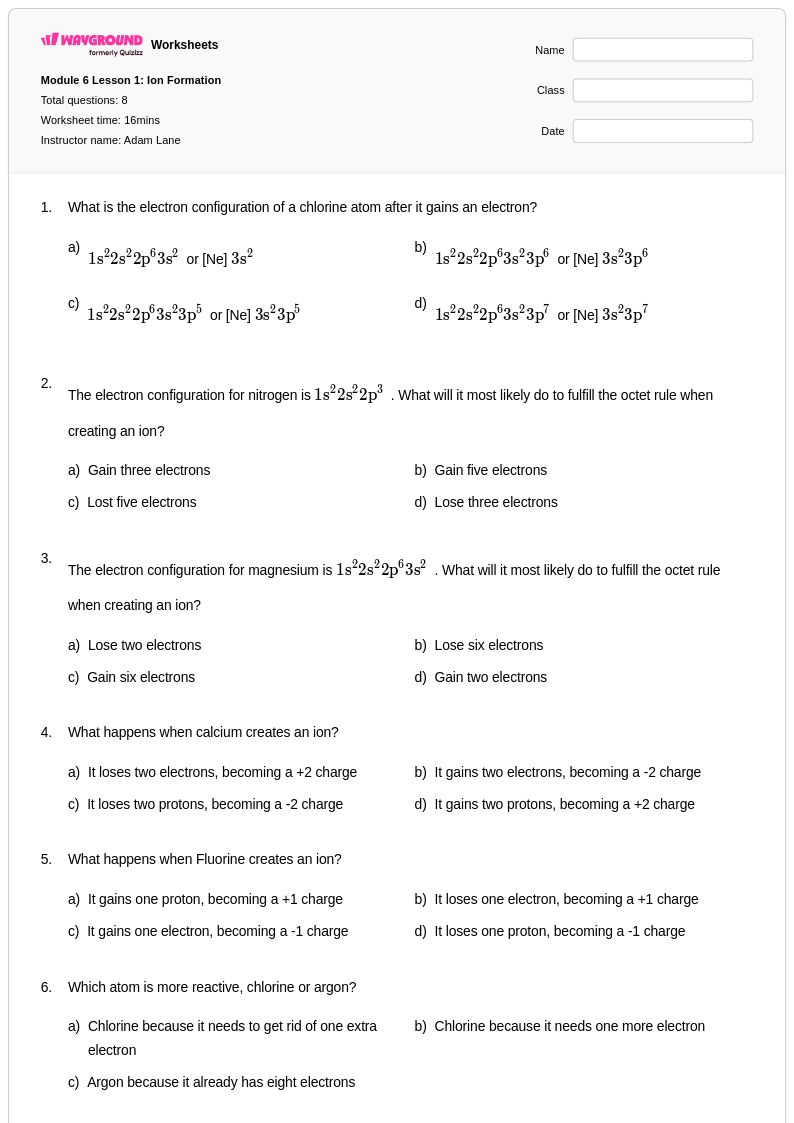
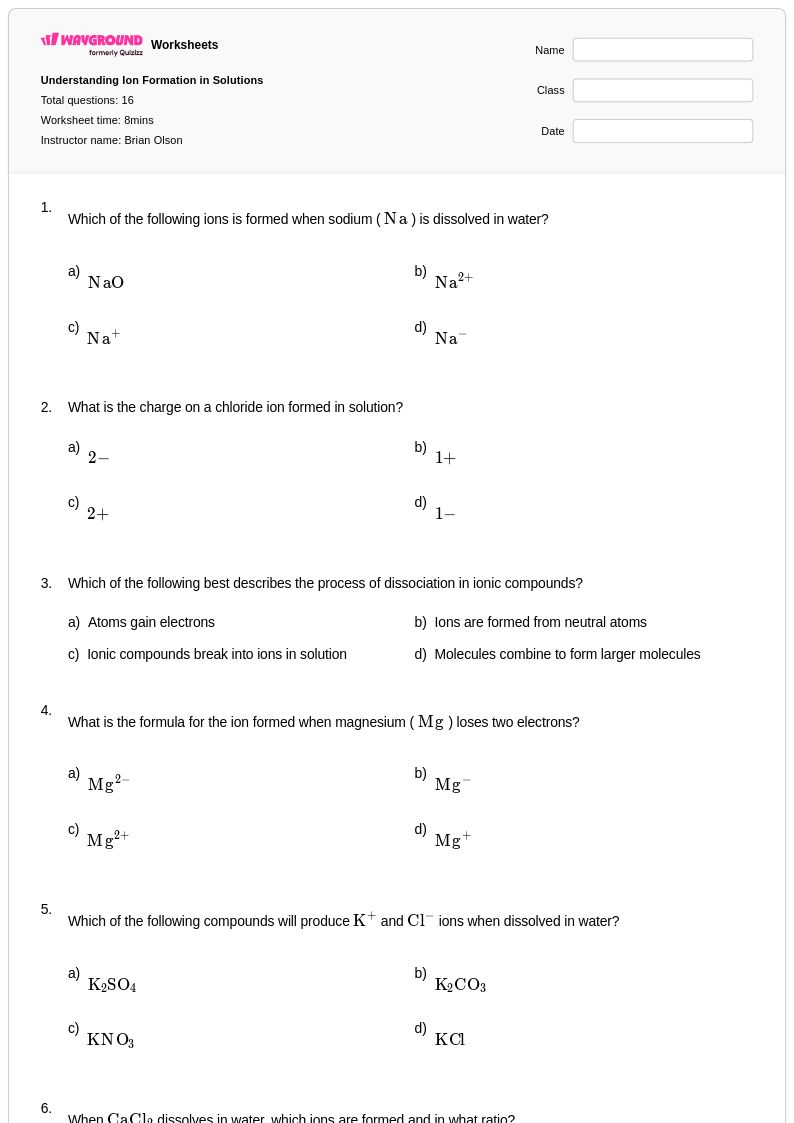
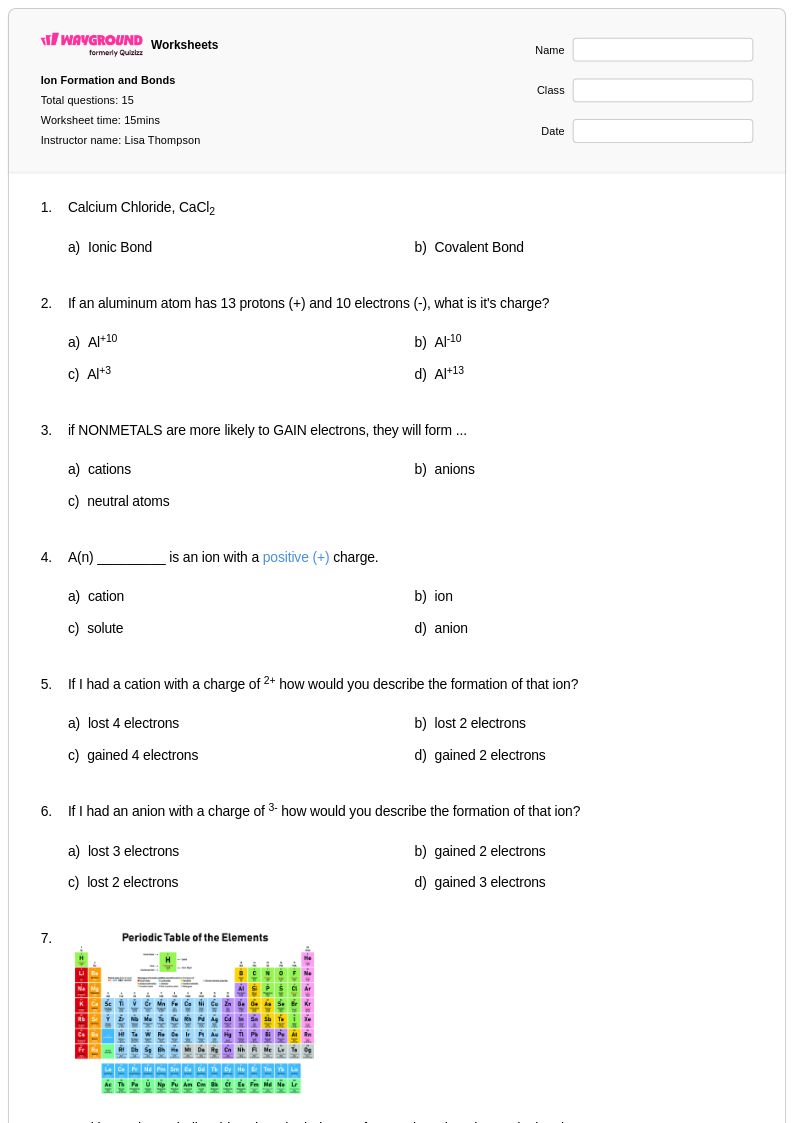
Effective practice exercises include identifying the number of valence electrons for elements in different groups, predicting whether an atom will gain or lose electrons, and writing the resulting ionic charge. Scaffolded worksheets that progress from single-element charge prediction to writing full ionic formulas give students structured repetition across increasing complexity. Problems that require students to justify their charge predictions using periodic table position reinforce the underlying reasoning rather than memorization.
What mistakes do students commonly make when learning about ion formation?
A common misconception is that atoms 'want' electrons in a human sense, which leads students to misapply the octet rule in edge cases like transition metals or polyatomic ions. Students frequently confuse the number of electrons gained or lost with the resulting charge sign, writing a positive charge for an atom that gained electrons. Many also struggle to distinguish between an atom's electron configuration and its ionic state, especially when working with elements that form multiple oxidation states.
How do I use ion formation worksheets to support different ability levels in my chemistry class?
Differentiate by assigning foundational problems focused on main-group elements to students still building fluency, while extending practice to transition metals and polyatomic ions for advanced learners. On Wayground, teachers can apply individual accommodations such as read aloud support, reduced answer choices, and extended time, adjusting settings per student so every learner engages at the right level without disruption to the rest of the class. These settings are saved and reusable across future sessions, reducing setup time for recurring differentiation needs.
How can I use ion formation worksheets from Wayground in my classroom?
Ion formation worksheets on Wayground are available as printable PDFs for traditional classroom use and in digital formats for technology-integrated environments, accommodating varied teaching setups and student preferences. Teachers can also host worksheets as a quiz directly on Wayground, enabling real-time student responses and automated grading. The included answer keys make these resources suitable for independent practice, homework, or review sessions without requiring additional teacher preparation.
How does ion formation connect to ionic bonding, and how should I sequence instruction?
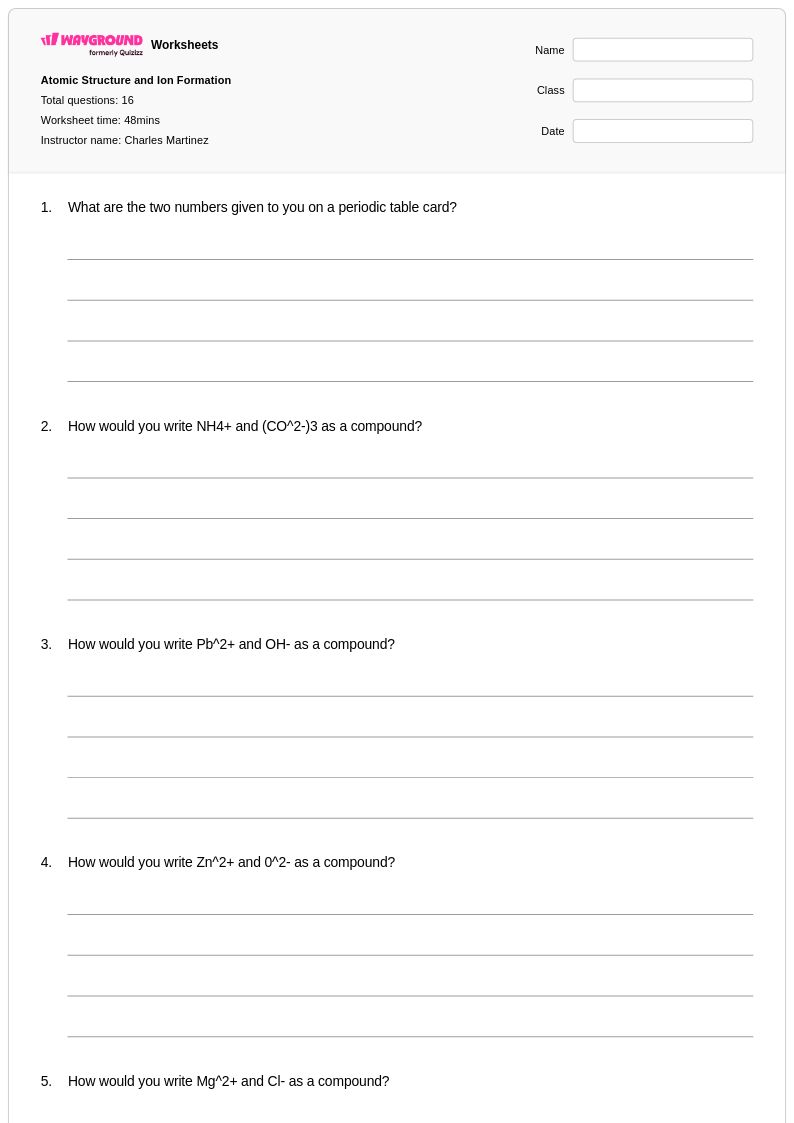
Ion formation is the prerequisite concept for ionic bonding: students must understand how and why individual atoms become charged before they can understand why oppositely charged ions attract to form a compound. A logical sequence moves from valence electrons to ion formation to ionic compound naming and formula writing. Skipping or rushing ion formation often causes persistent errors in ionic bonding because students lack a clear mental model of what the ions actually are.