Free Printable Concentration of Solutions worksheets
Master concentration of solutions with Wayground's comprehensive collection of free chemistry worksheets, featuring printable PDFs with practice problems and answer keys to help students understand molarity, dilutions, and solution calculations.
Explore printable Concentration of Solutions worksheets
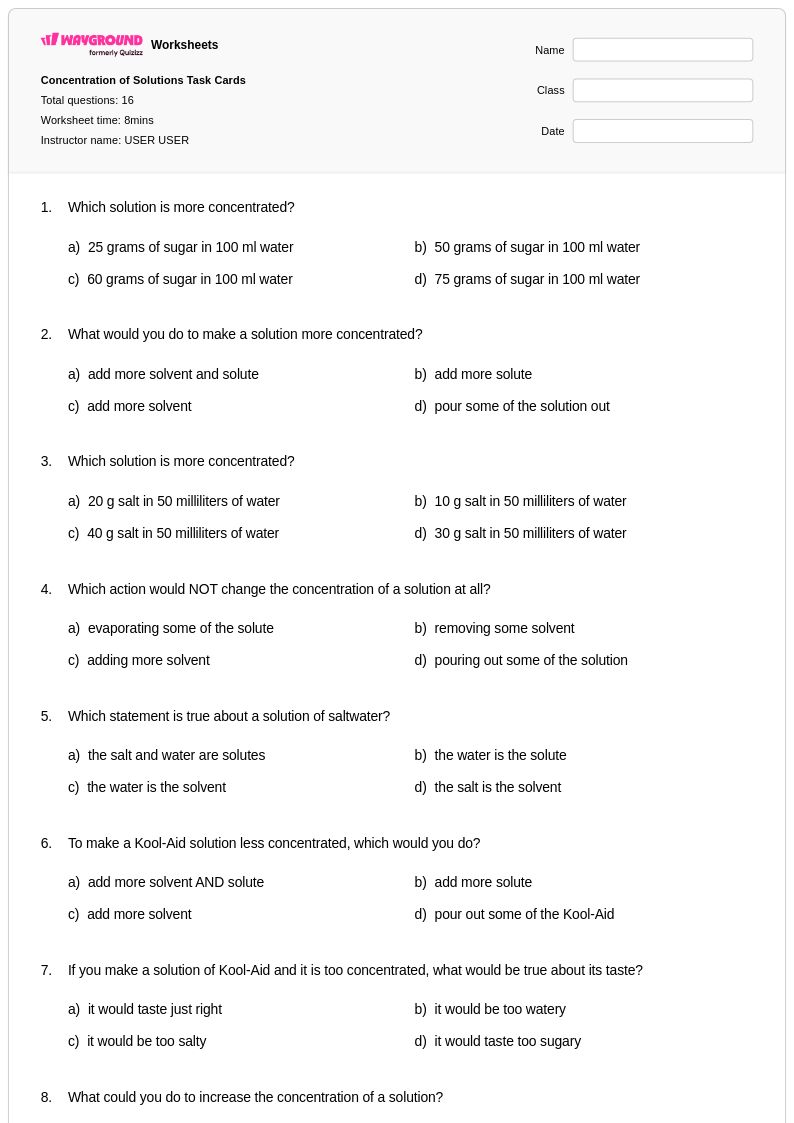
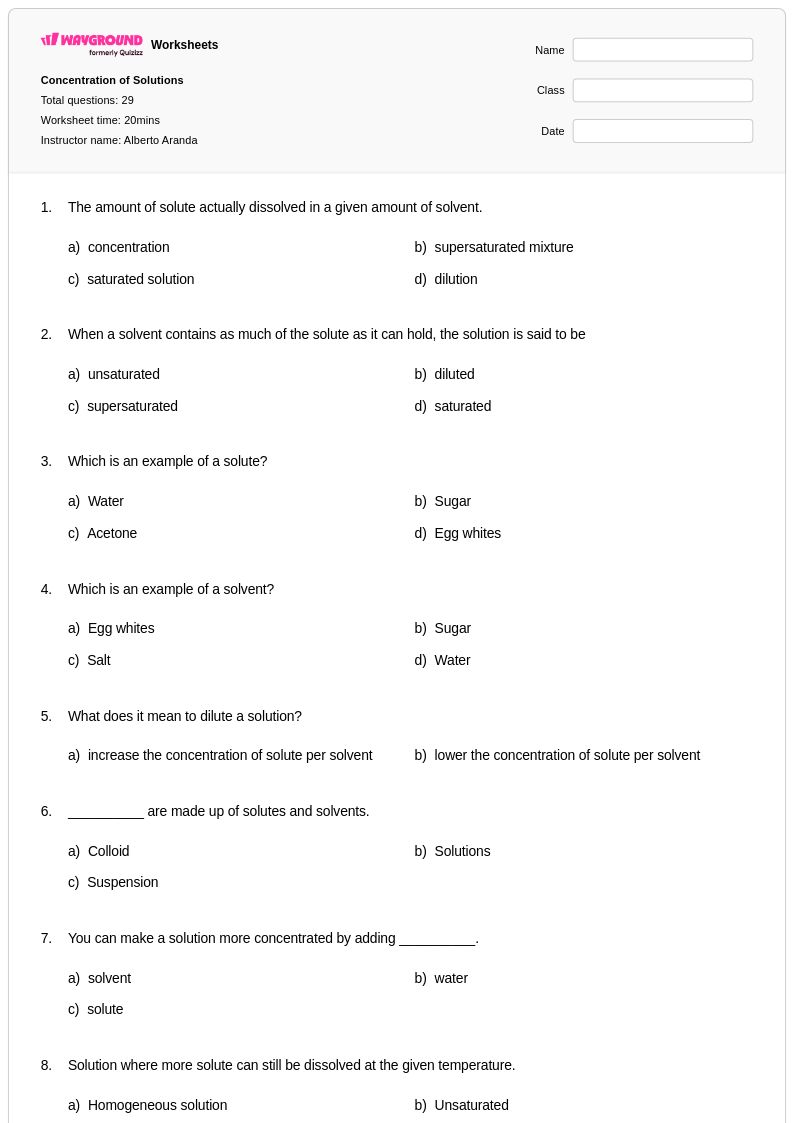
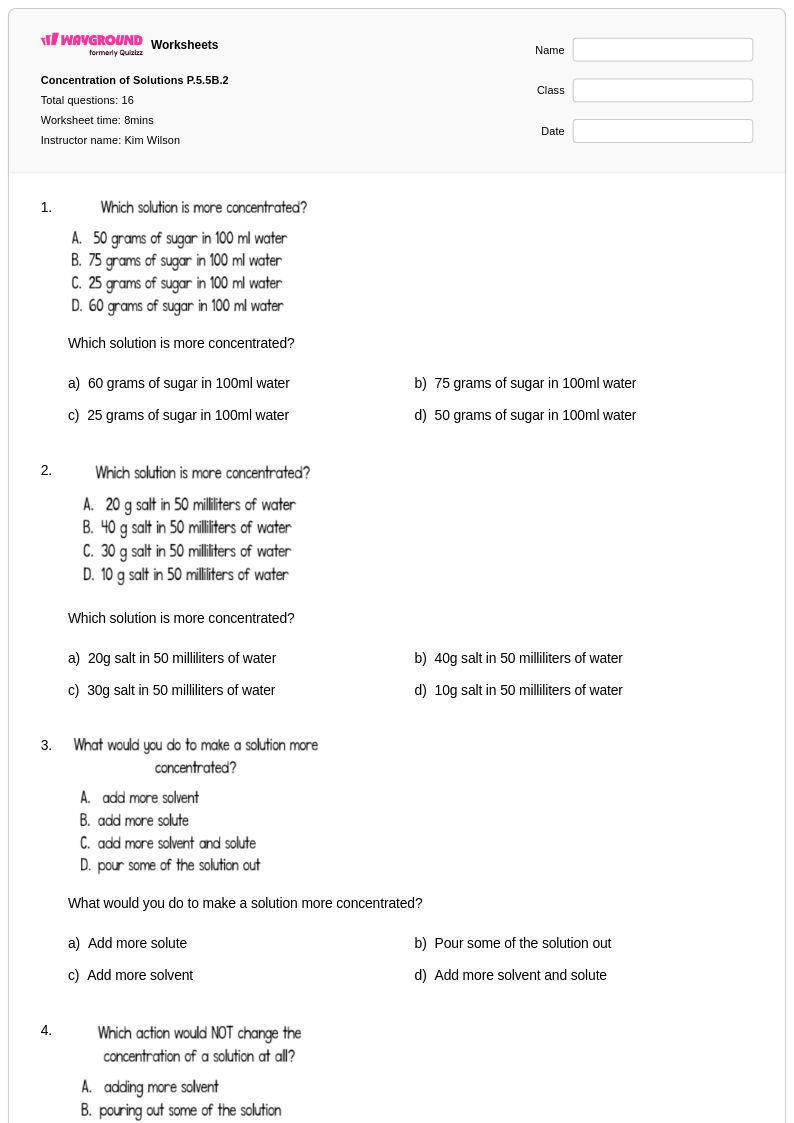
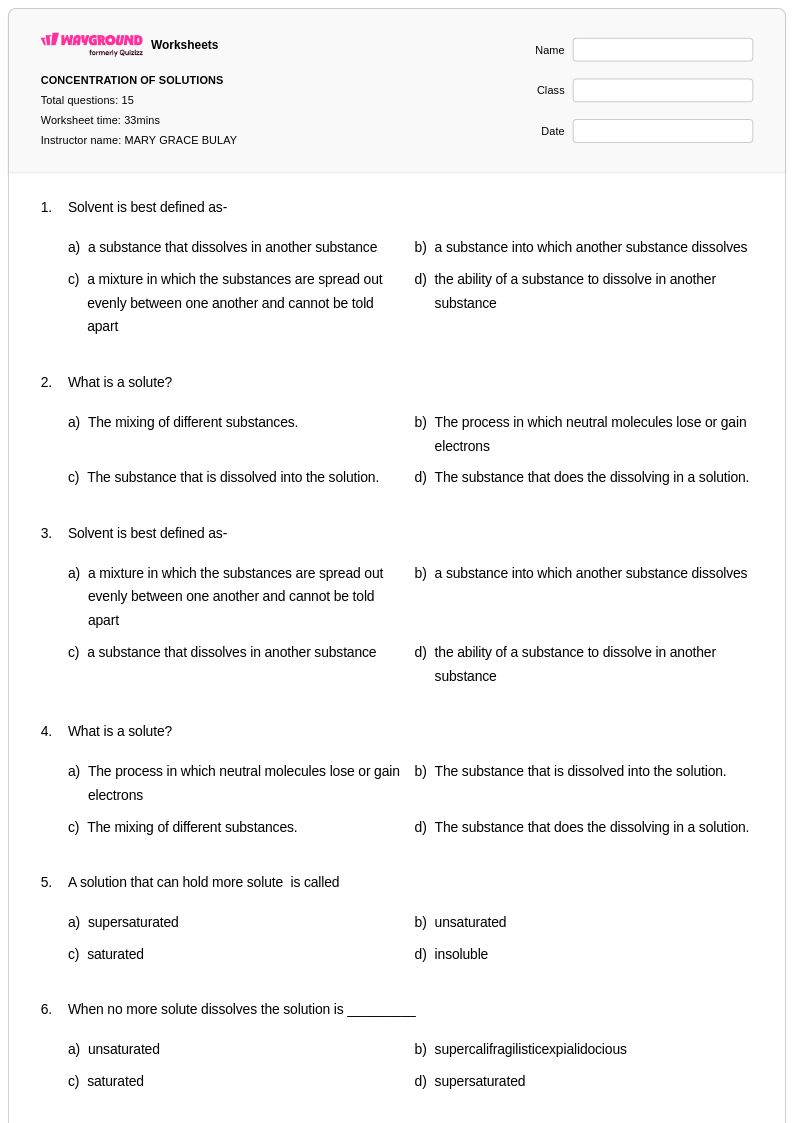
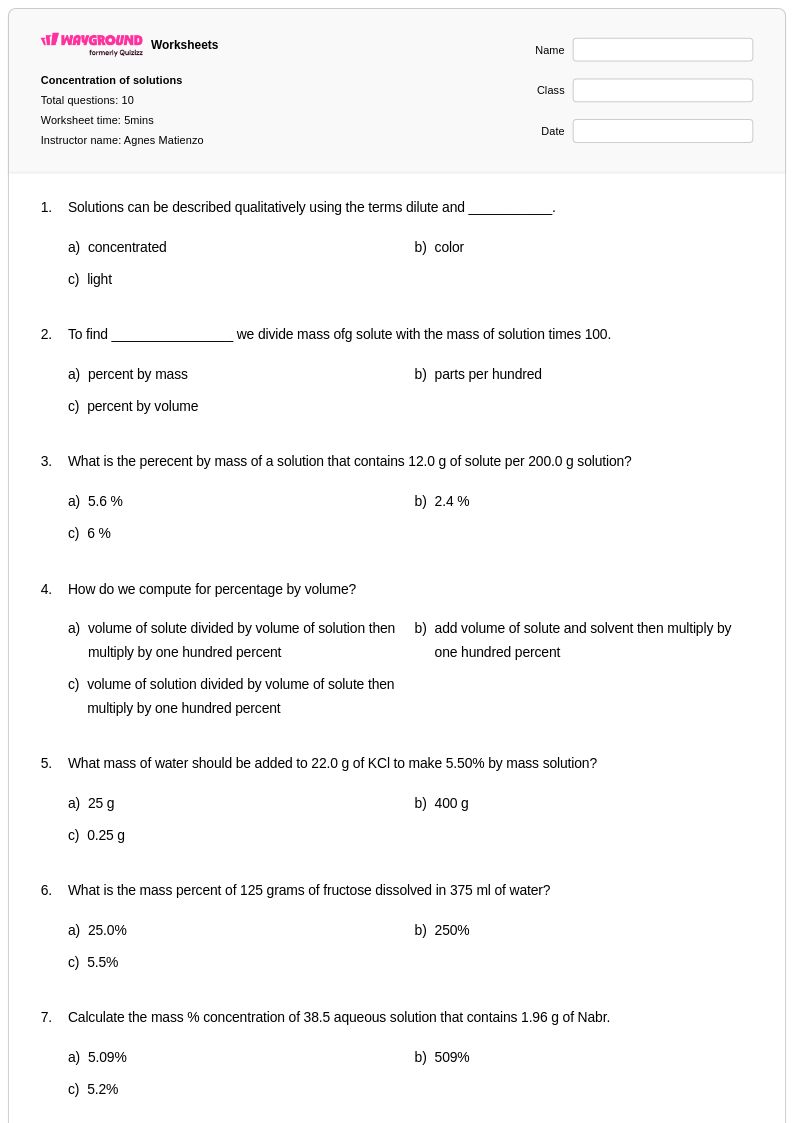
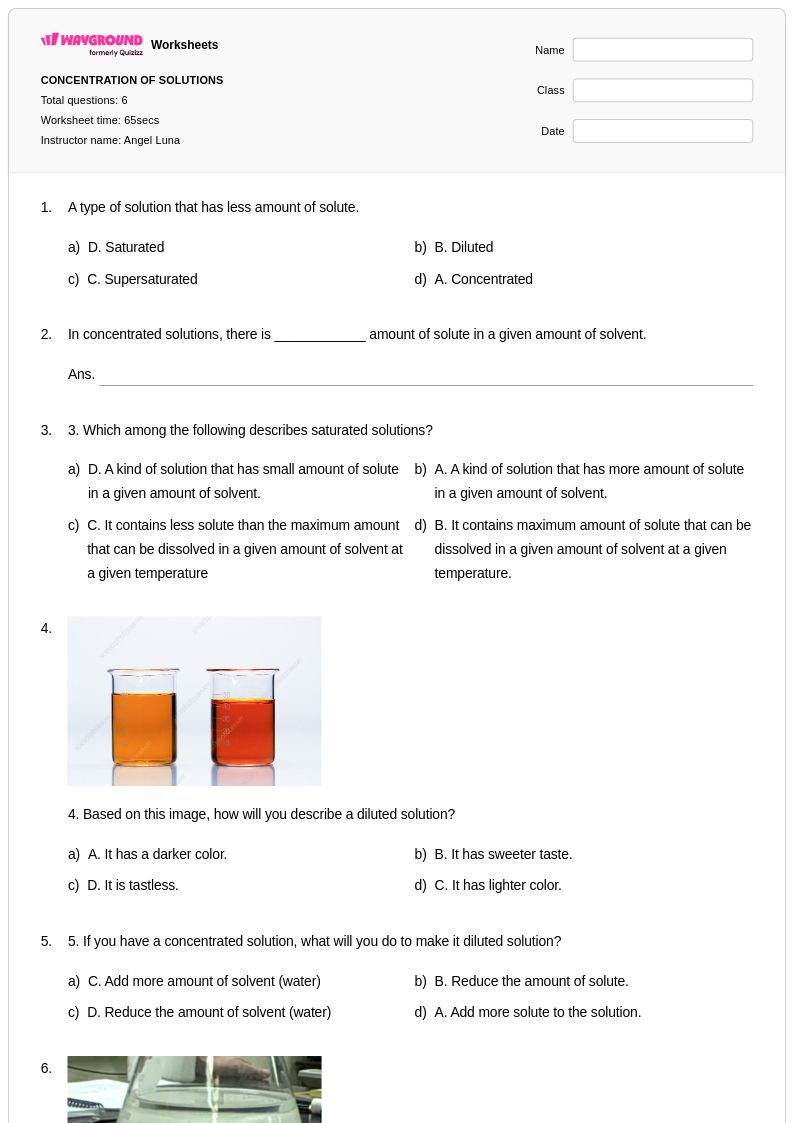
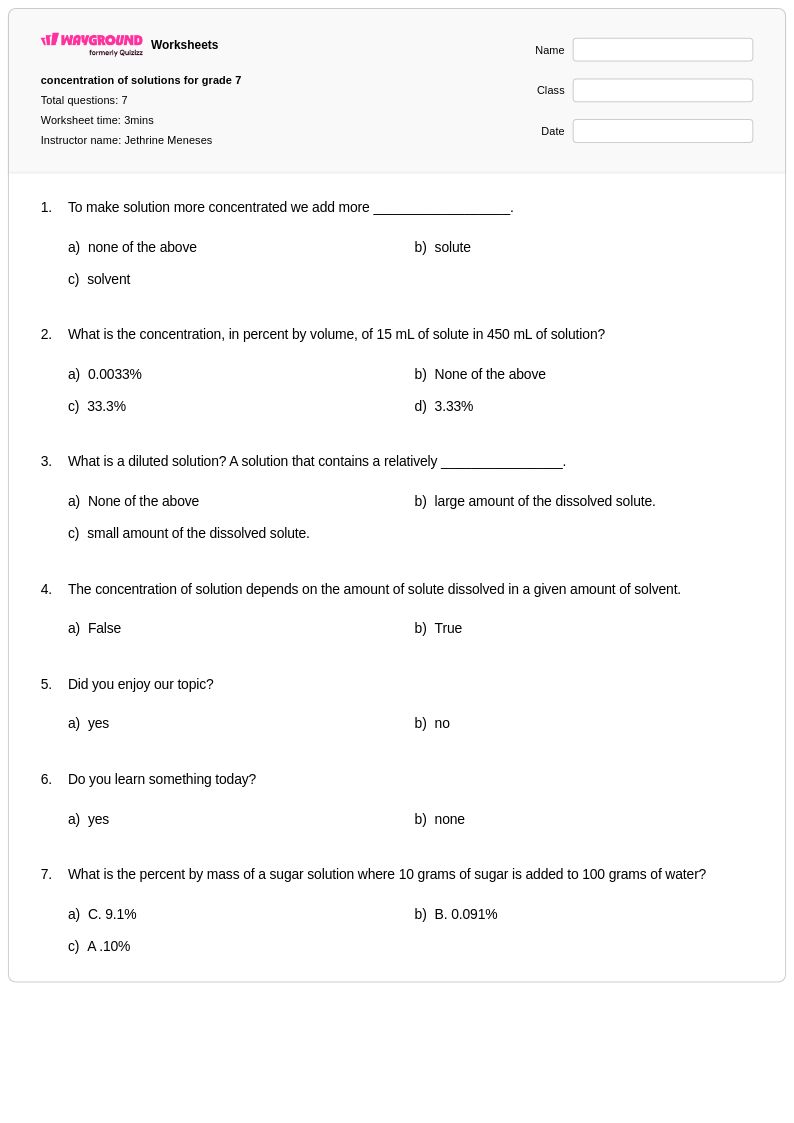
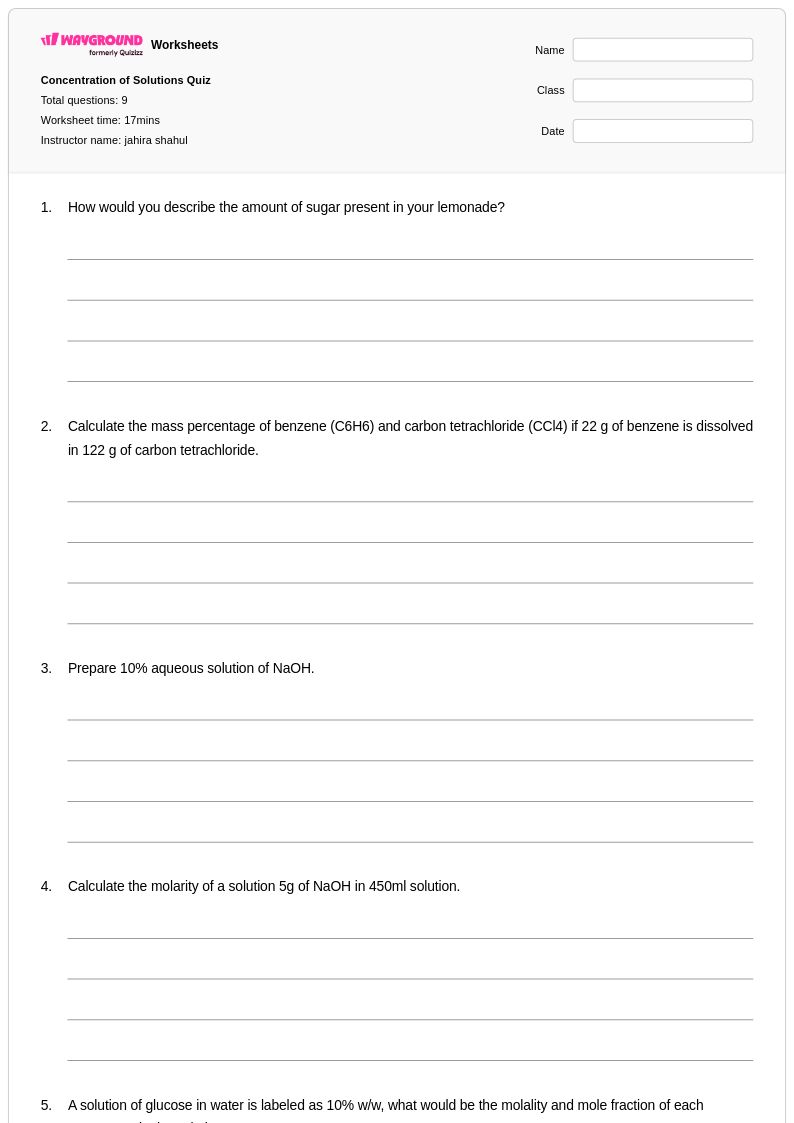
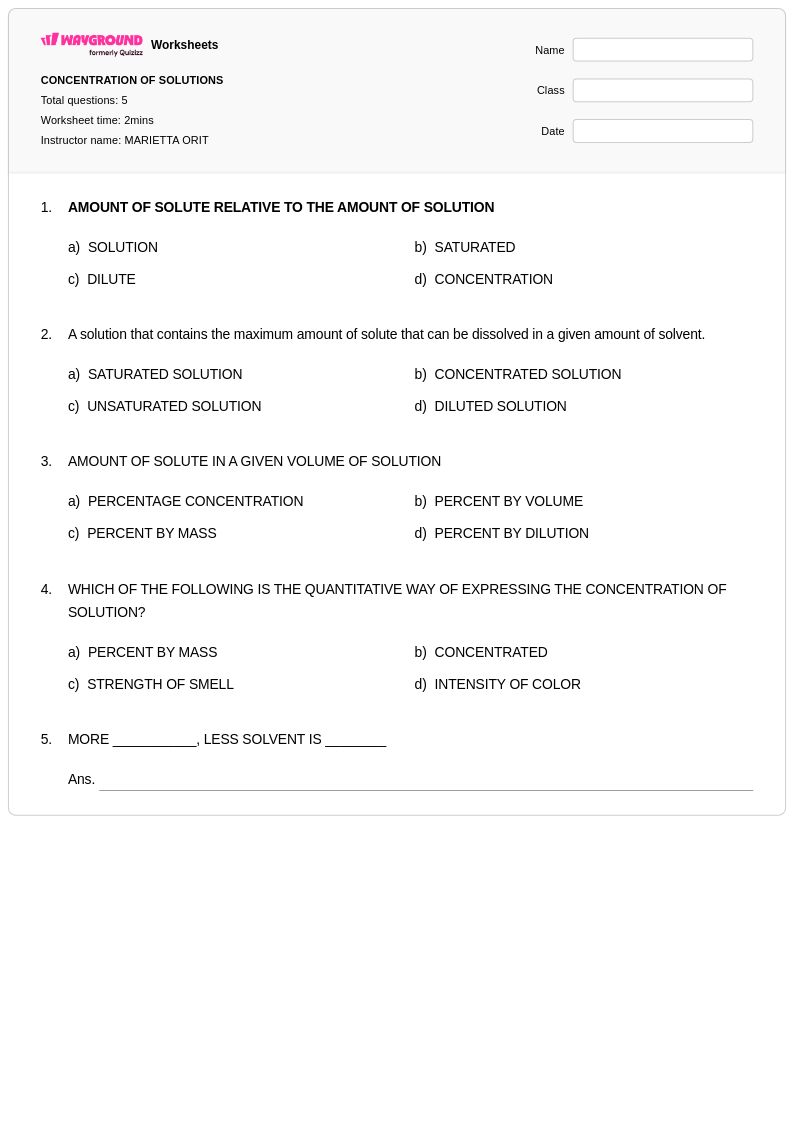
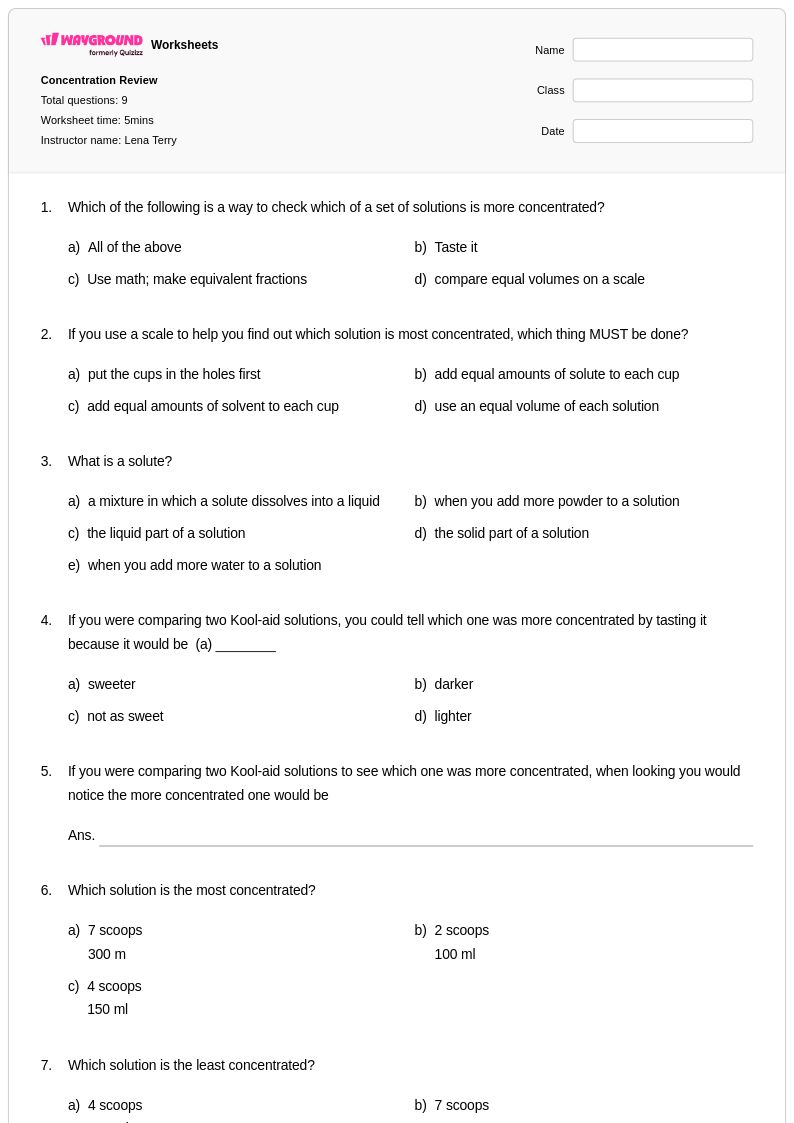
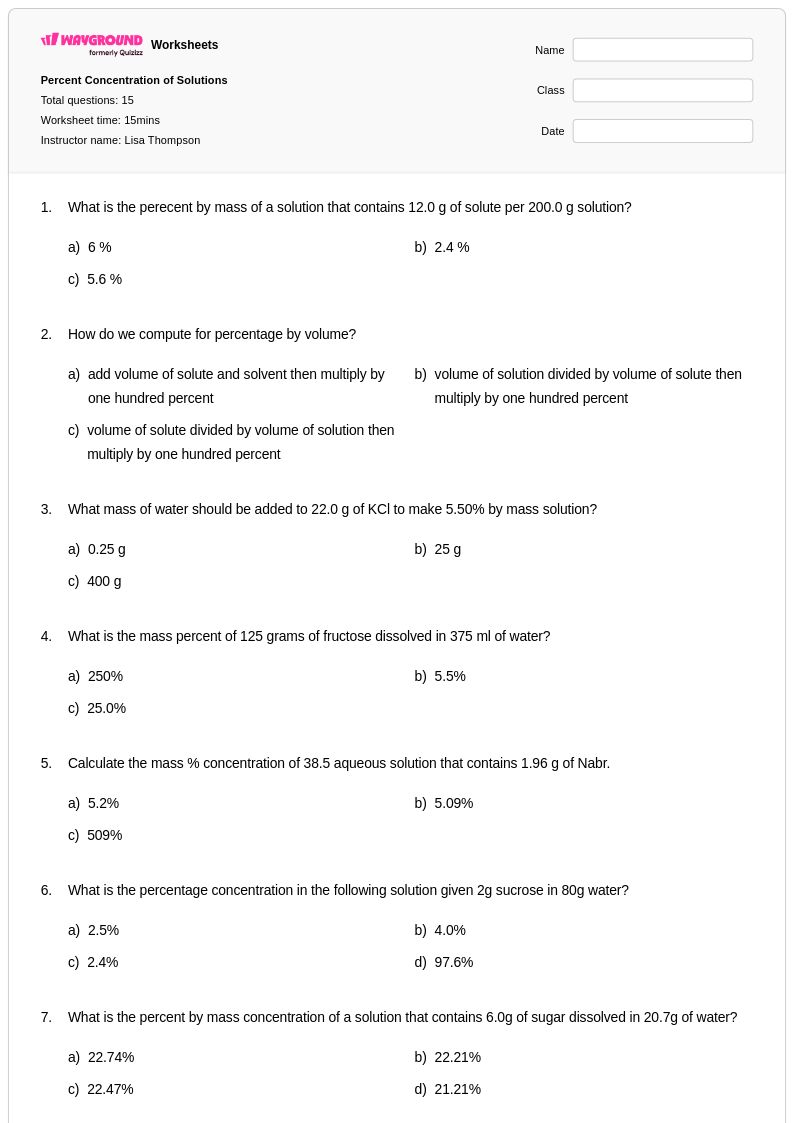
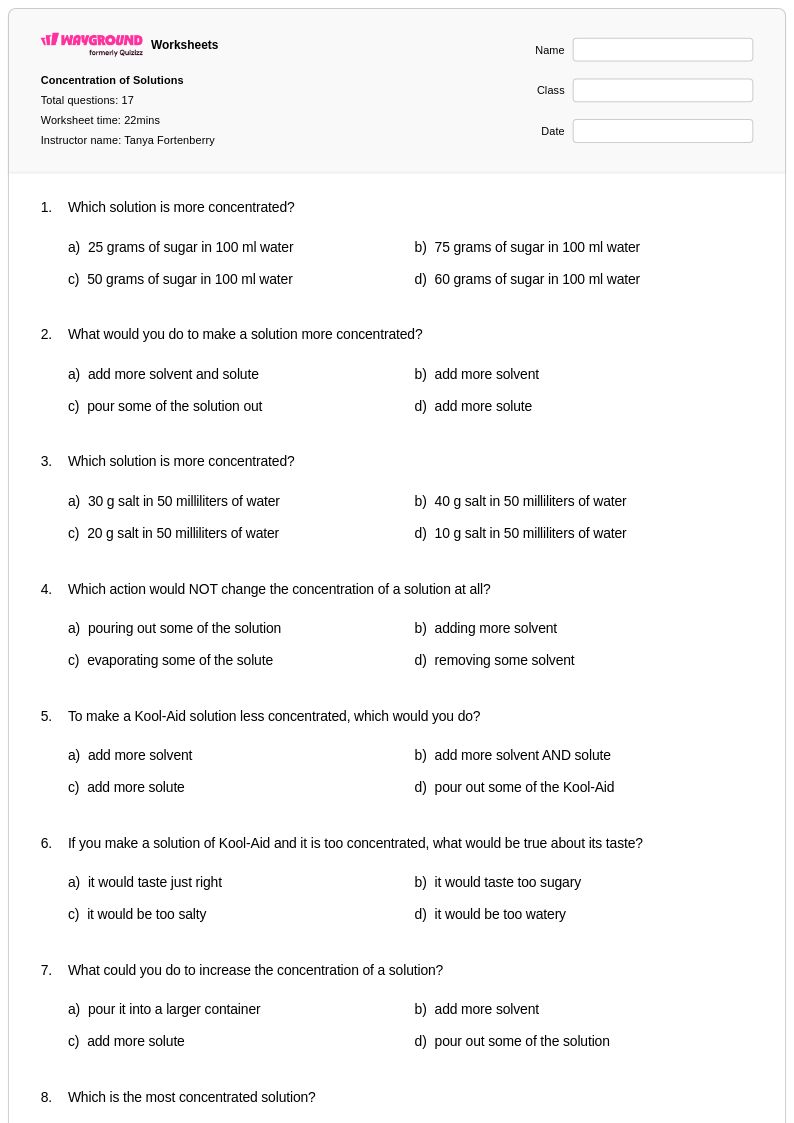
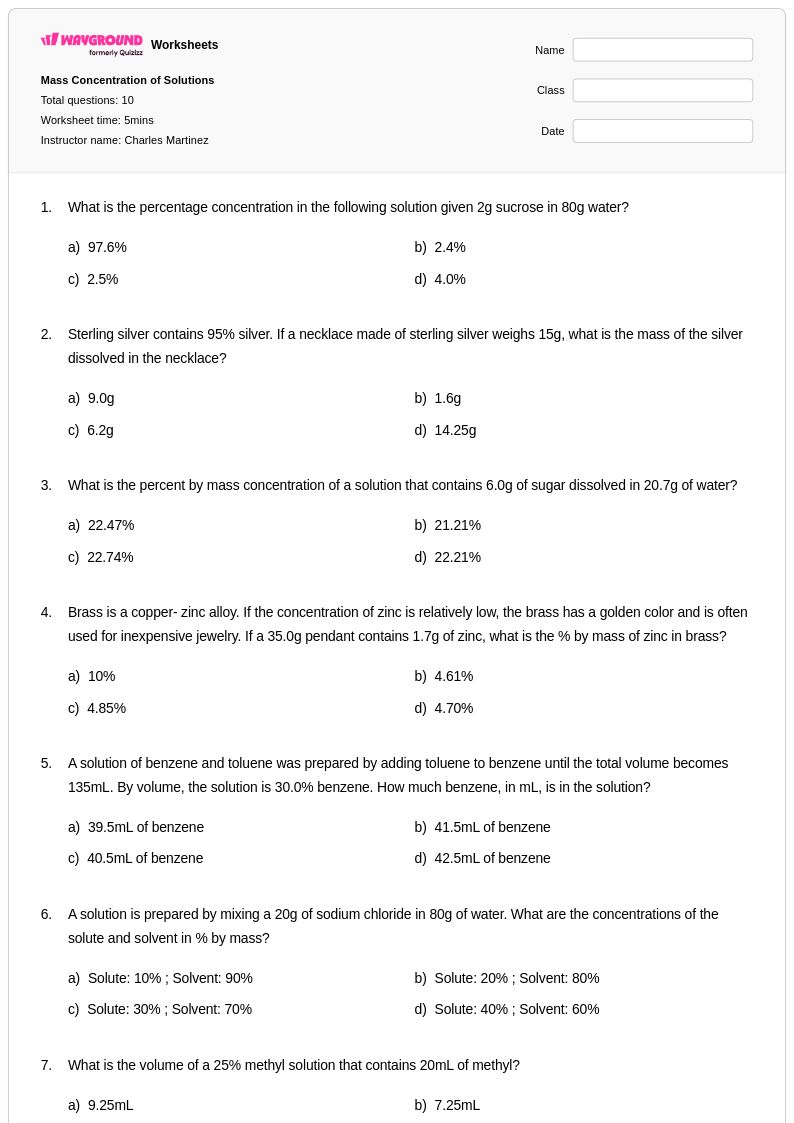
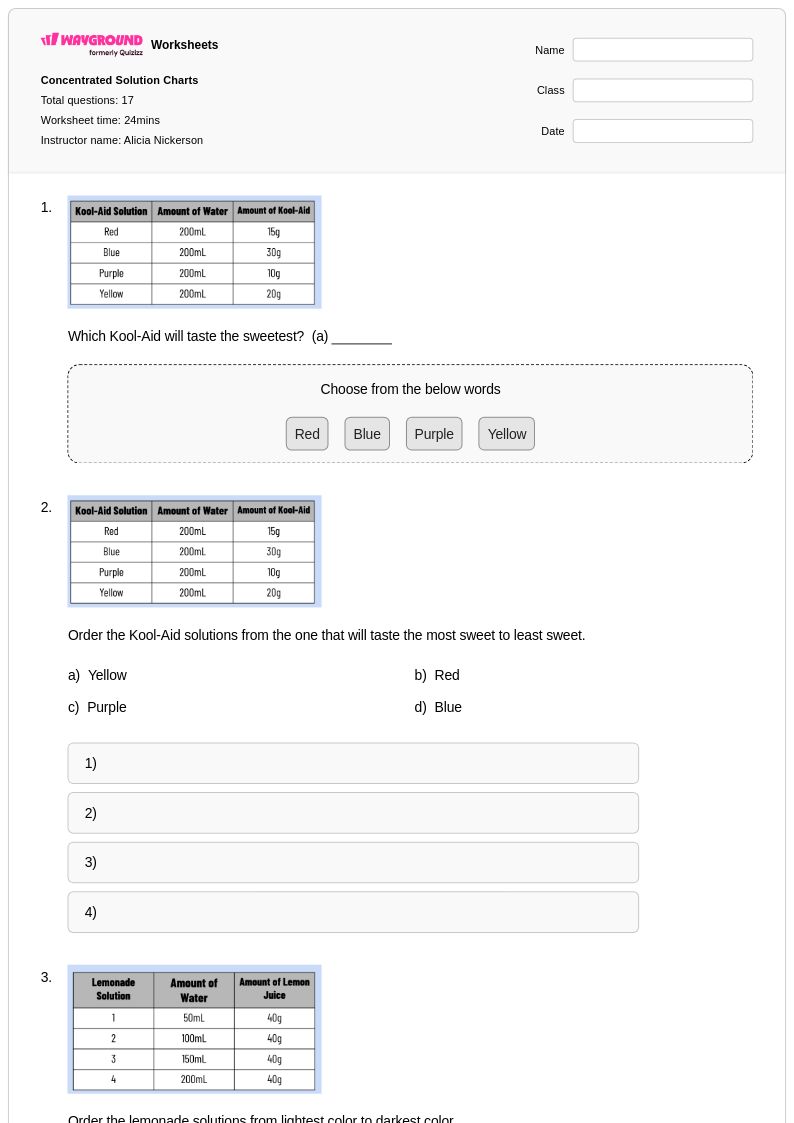
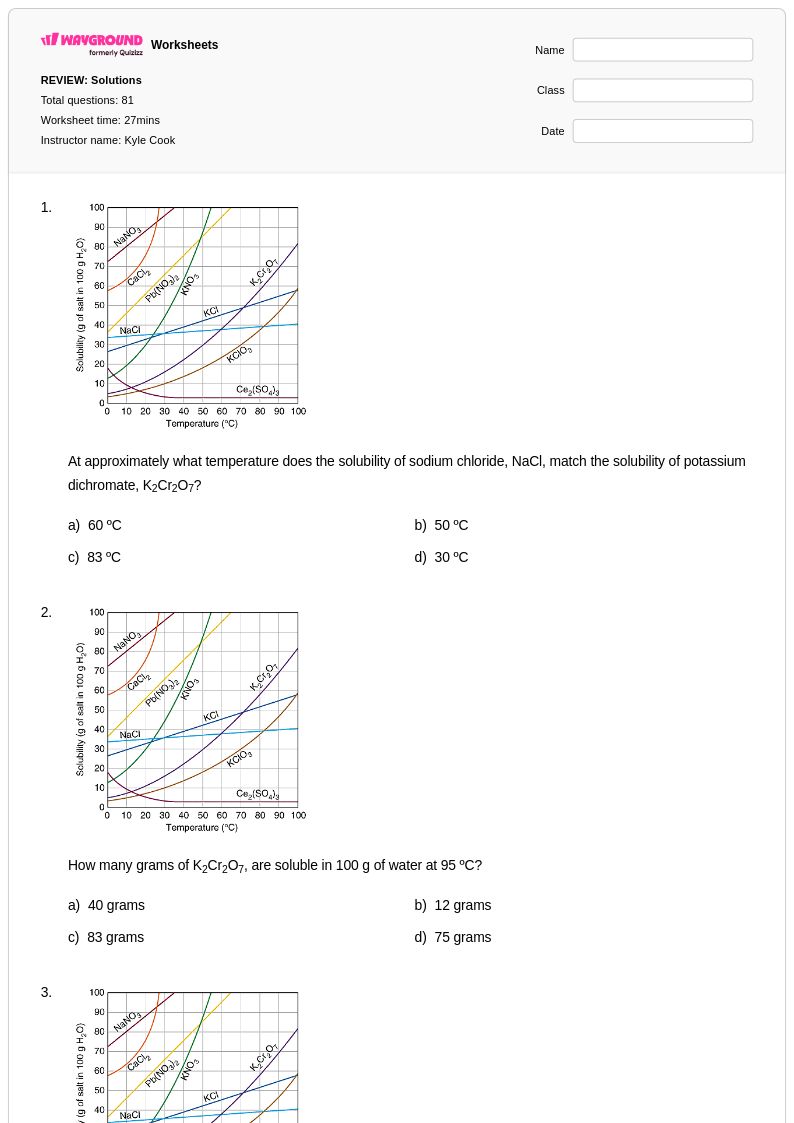
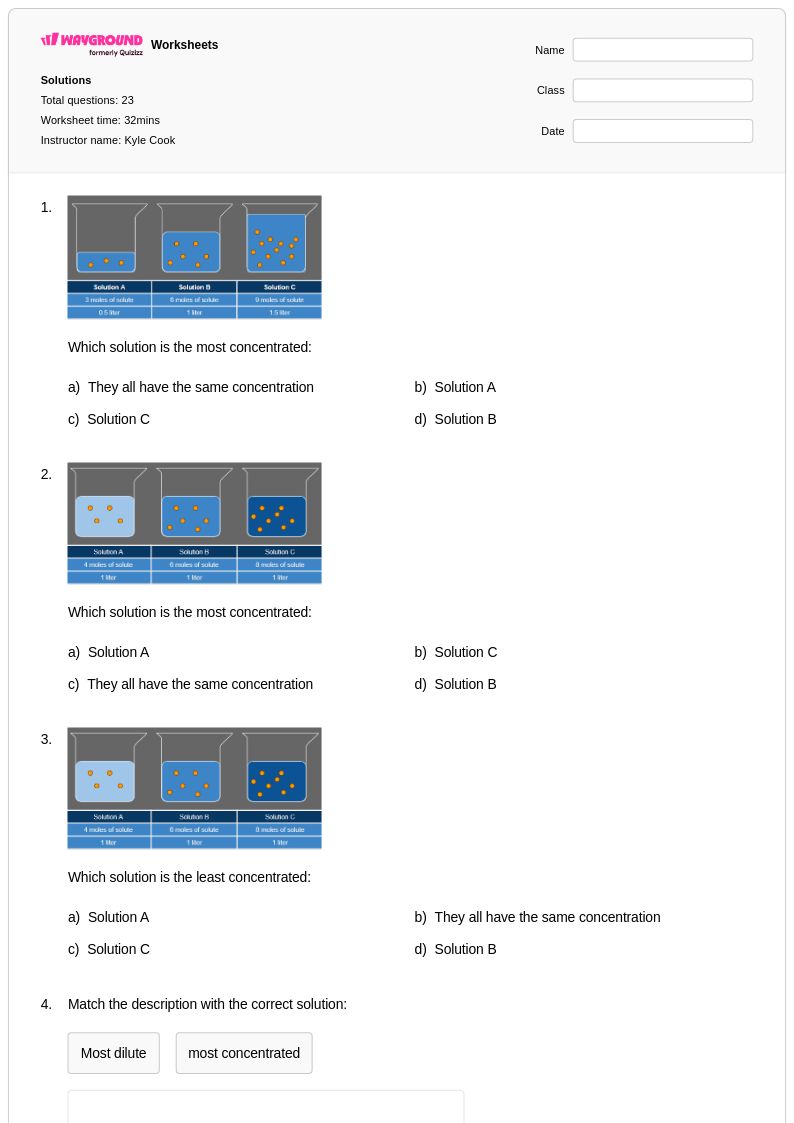
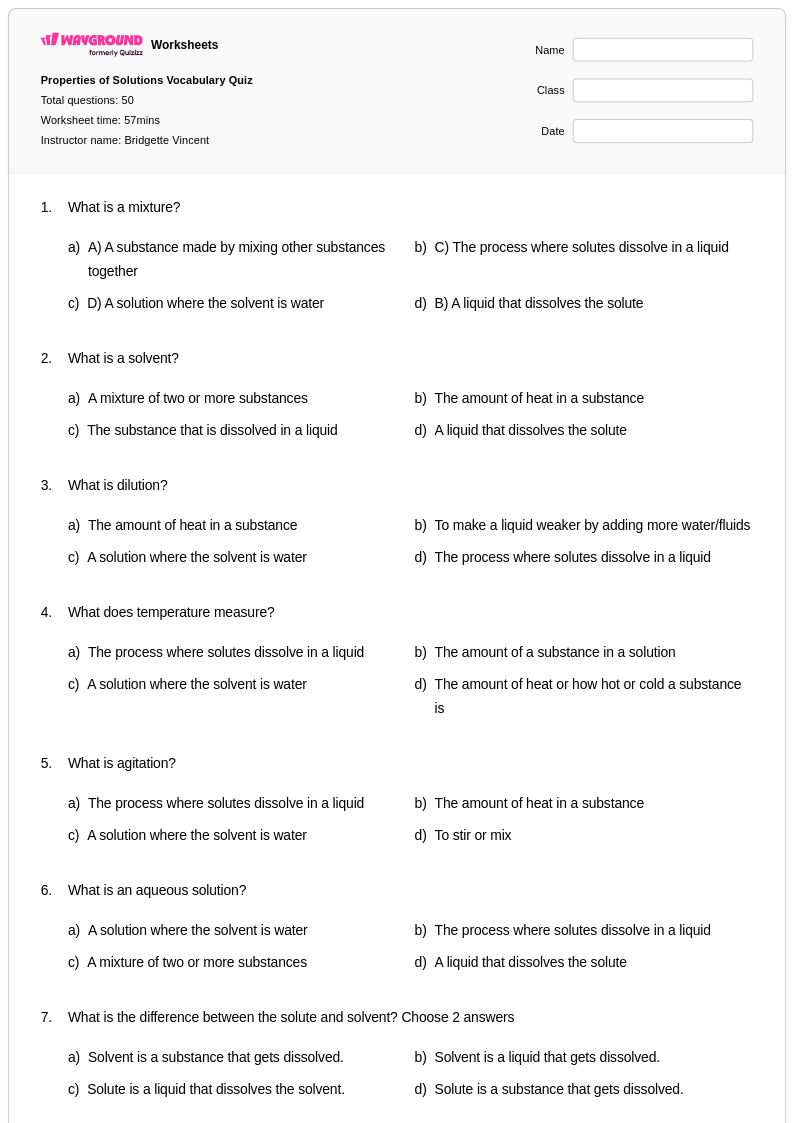
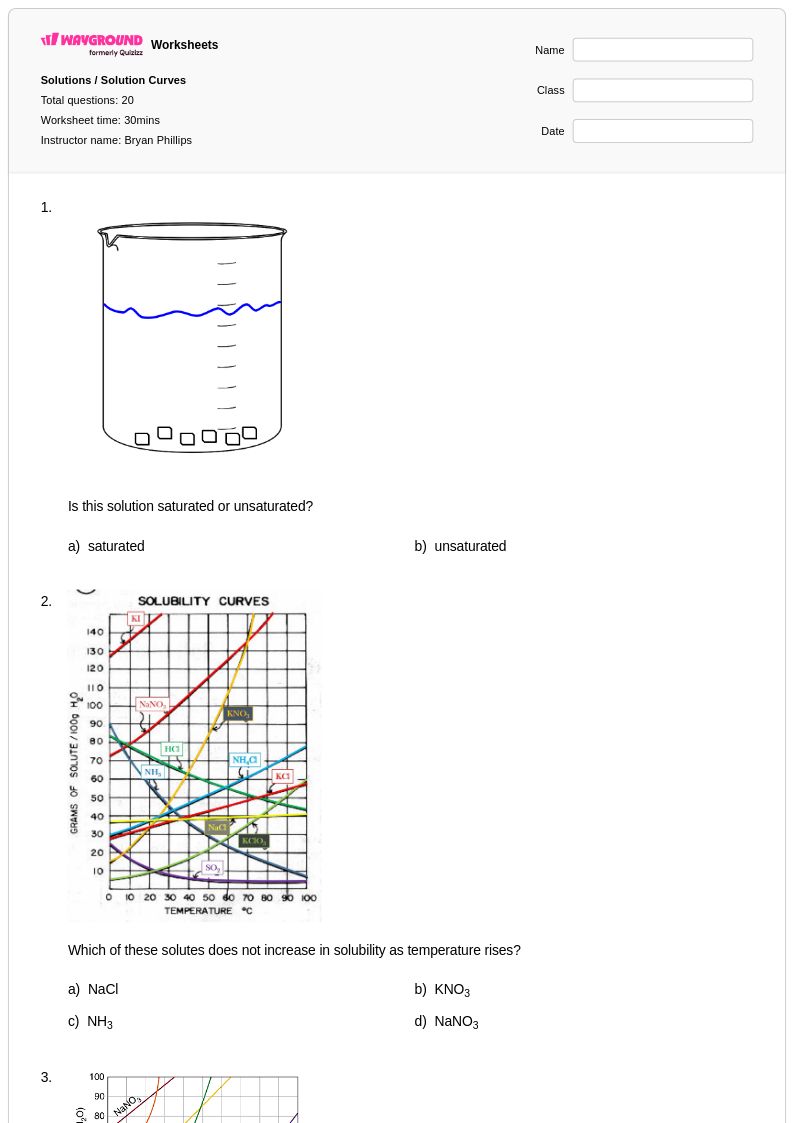
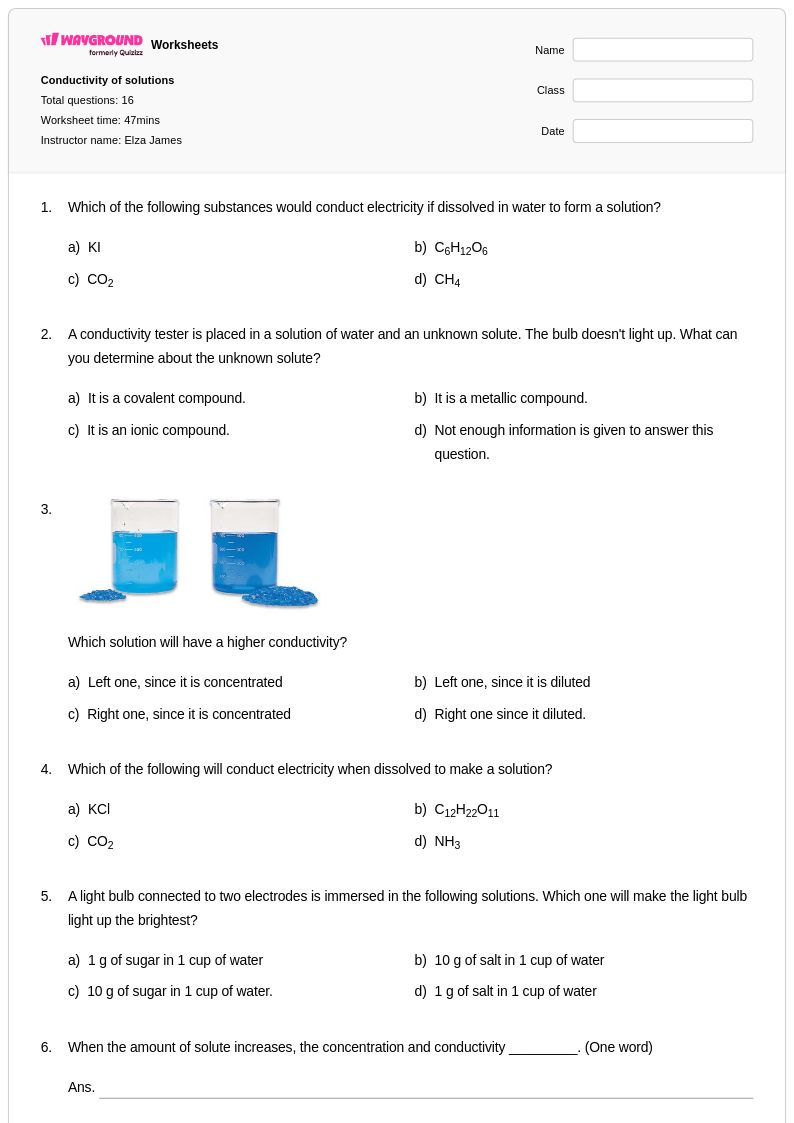
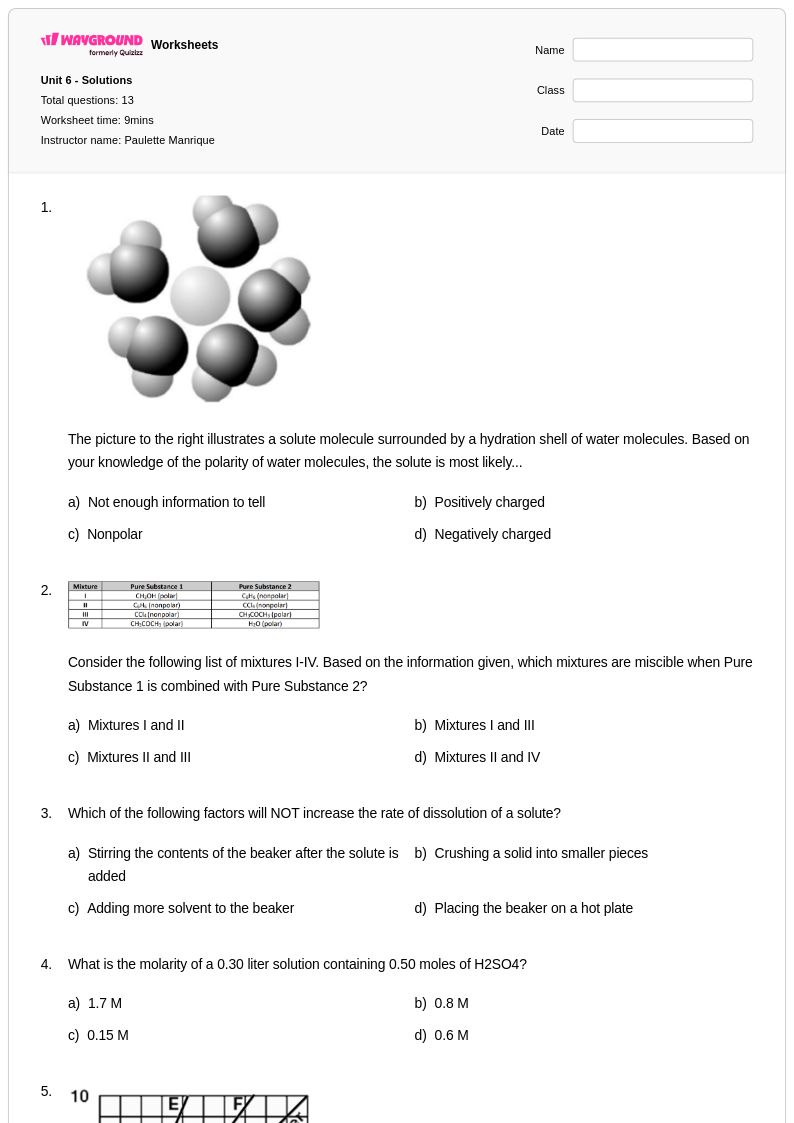
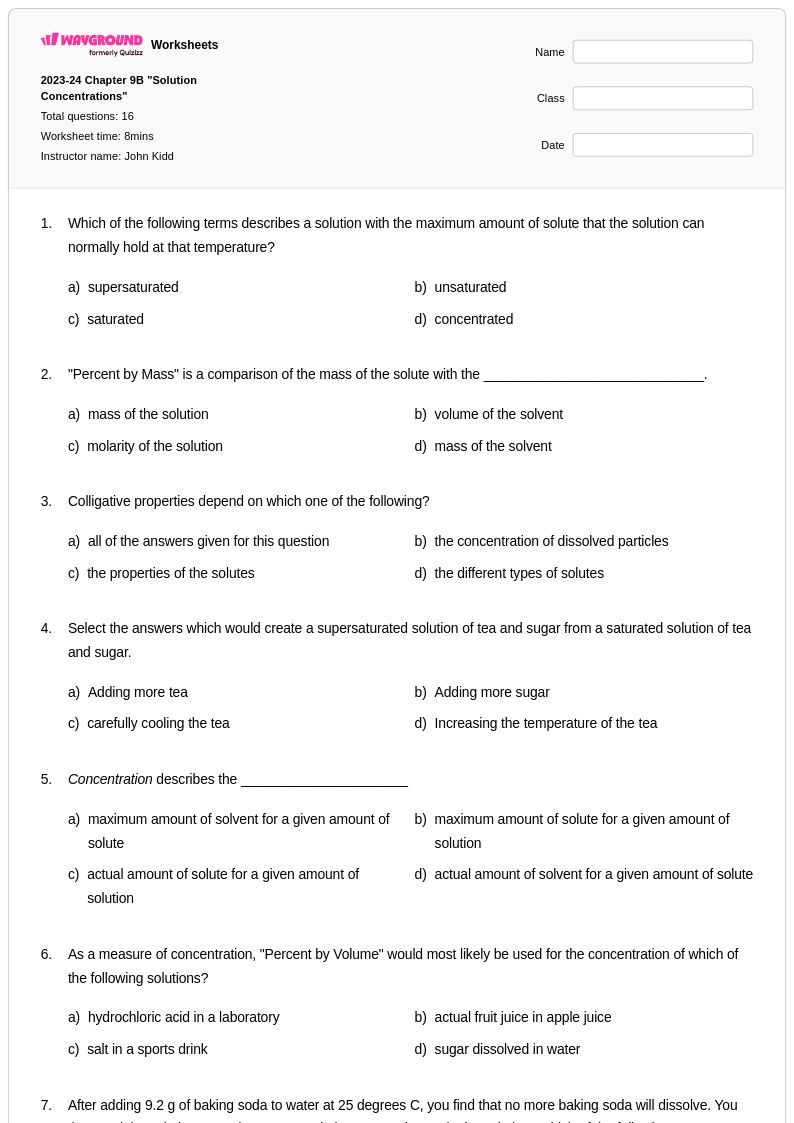
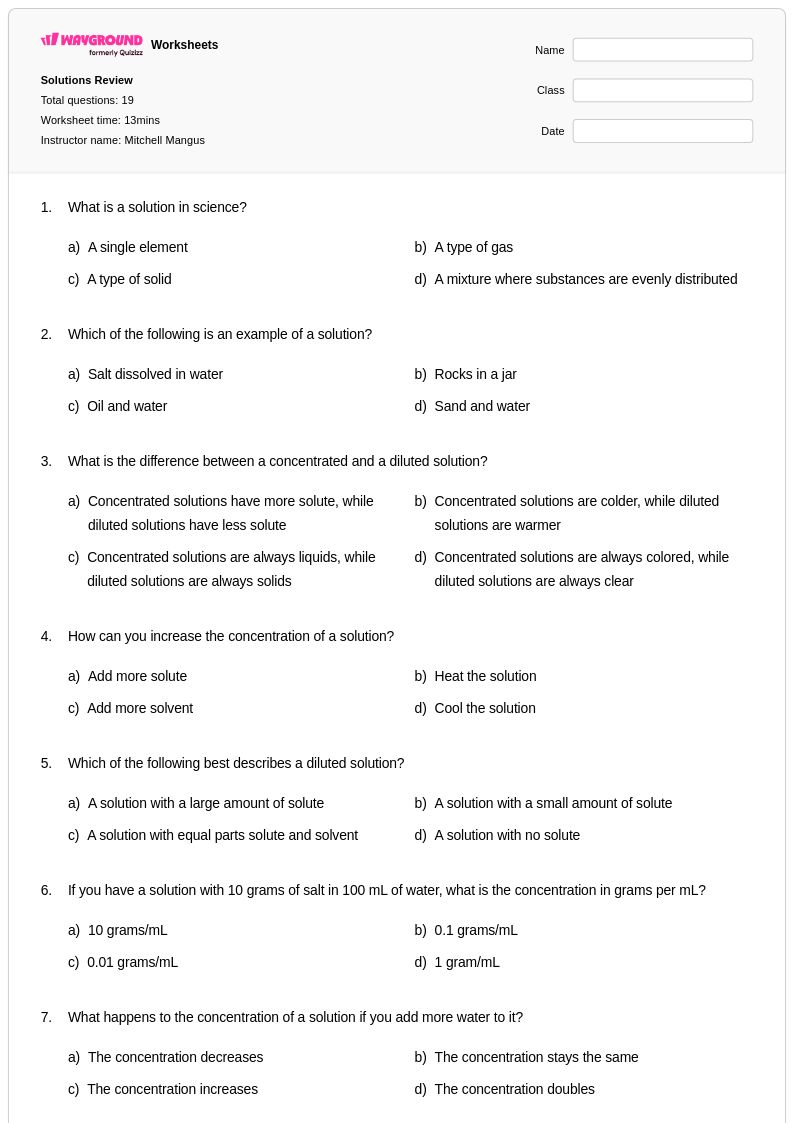
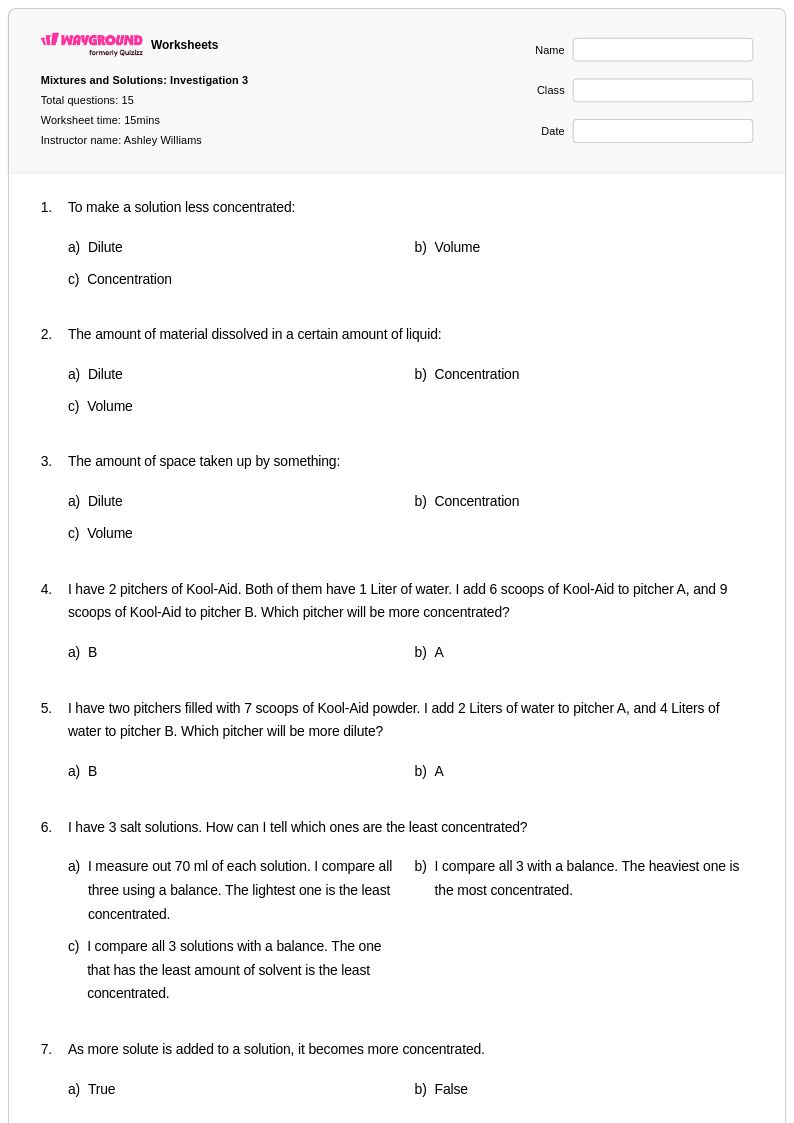
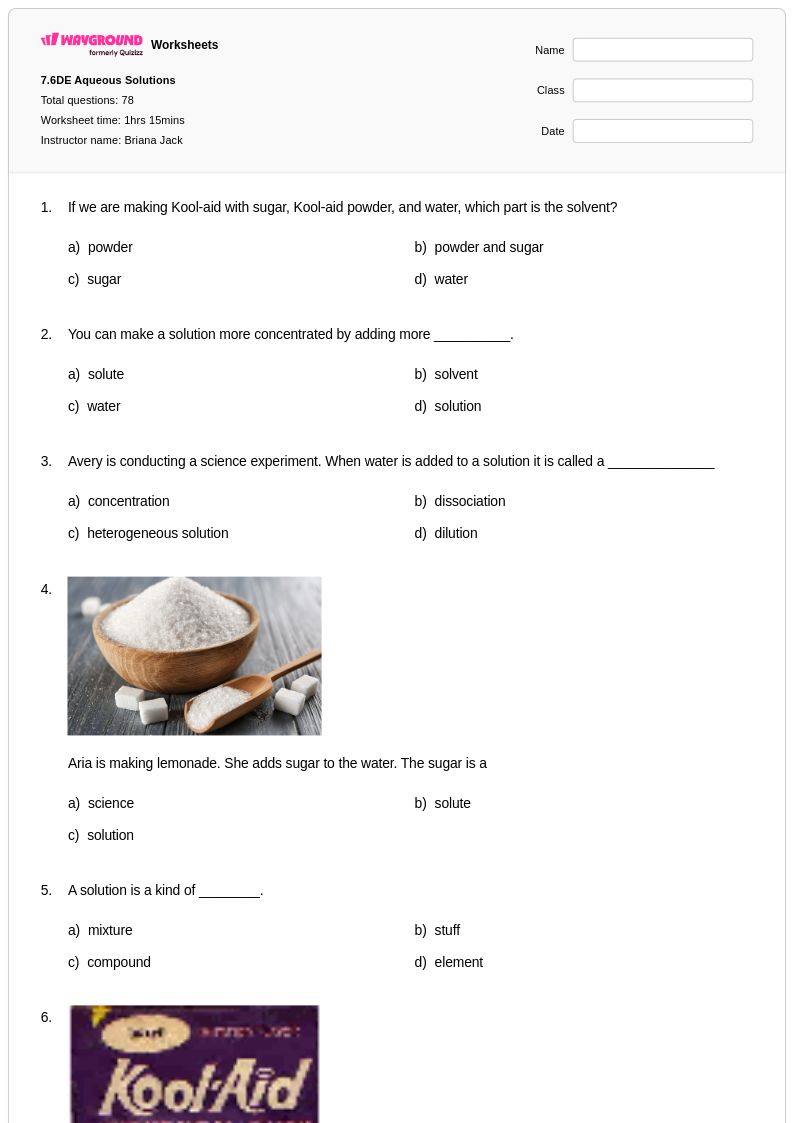
Concentration of solutions worksheets available through Wayground (formerly Quizizz) provide comprehensive practice materials that help students master the fundamental principles of solution chemistry. These expertly designed resources focus on essential concepts including molarity, molality, percent concentration, parts per million, and dilution calculations, strengthening students' analytical and computational skills in quantitative chemistry. The collection features diverse practice problems that range from basic concentration calculations to complex multi-step scenarios involving solution preparation and dilution processes. Each worksheet comes with detailed answer keys that explain solution methodologies, while the free printable pdf format ensures easy classroom distribution and independent study opportunities.
Wayground (formerly Quizizz) supports chemistry educators with an extensive collection of millions of teacher-created concentration of solutions worksheets, all accessible through robust search and filtering capabilities that allow precise content selection based on specific learning objectives. The platform's standards alignment features ensure that materials meet curriculum requirements, while built-in differentiation tools enable teachers to customize worksheets for varying skill levels within their classrooms. These resources are available in both printable pdf and interactive digital formats, providing flexibility for traditional classroom instruction, homework assignments, remediation sessions, and enrichment activities. The comprehensive filtering system allows educators to quickly locate materials targeting specific concentration types or calculation methods, streamlining lesson planning and enabling targeted skill practice that addresses individual student needs in solution chemistry.
FAQs
How do I teach concentration of solutions to chemistry students?
Start by grounding students in the concept of solute-to-solution ratios before introducing formal expressions like molarity and percent concentration. Use concrete analogies, such as dissolving salt in water, to make abstract quantities tangible. From there, scaffold into calculation-based practice, moving from single-step molarity problems to multi-step dilution scenarios. Reinforcing unit analysis throughout helps students track moles, liters, and grams accurately across all concentration types.
What practice problems help students get better at concentration calculations?
Students benefit most from a sequenced mix of problem types: basic molarity calculations, percent composition by mass, parts per million conversions, and dilution problems using C1V1 = C2V2. Practice should progress from single-step calculations to multi-step scenarios that require students to prepare solutions or perform serial dilutions. Including problems that require unit conversion reinforces the dimensional analysis skills essential for quantitative chemistry.
What mistakes do students commonly make with molarity and dilution problems?
The most frequent error is confusing the volume of solvent with the total volume of solution, which leads to incorrect molarity calculations. Students also commonly misapply the dilution formula by substituting mass instead of volume or moles instead of concentration. Another persistent error is failing to convert units consistently, particularly mixing milliliters and liters within the same calculation. Targeted practice problems that isolate each of these pitfalls help students recognize and self-correct these errors.
How do I help students who struggle to distinguish between molarity, molality, and percent concentration?
These three expressions are often conflated because they all describe 'how much solute is in a solution,' but their denominators differ in a meaningful way. Molarity uses liters of solution, molality uses kilograms of solvent, and percent concentration compares solute mass or volume to the total mixture. A side-by-side comparison table followed by matched practice problems, one for each expression, helps students build clear conceptual boundaries before tackling problems that require choosing the correct unit for a given context.
How can I use Wayground's concentration of solutions worksheets in my classroom?
Wayground's concentration of solutions worksheets are available as printable PDFs for traditional classroom use and in digital formats for technology-integrated instruction, giving teachers flexibility for in-class work, homework, or lab preparation. Teachers can also host them as a quiz directly on Wayground, enabling real-time student responses. The platform's search and filtering tools allow educators to pinpoint worksheets by specific concept, such as molarity, dilutions, or parts per million, so lesson planning targets exactly the skills students need. Built-in differentiation tools make it straightforward to adjust materials for varying skill levels within the same class.
How do I differentiate concentration of solutions worksheets for students at different skill levels?
On Wayground, teachers can apply student-level accommodations individually, including reduced answer choices to lower cognitive load for students who are still building confidence with solution calculations, and Read Aloud support for students who benefit from audio delivery of problem text. Extended time can be configured per student for those who need more processing time on multi-step dilution problems. These settings are saved and reusable, so differentiated assignments require minimal setup after the initial configuration.