Free Printable Writing a Strong Ending Worksheets for Class 5
Class 5 students master writing compelling conclusions with Wayground's free printable worksheets on crafting strong endings, featuring practice problems and answer keys to develop essential narrative closure skills.
Explore printable Writing a Strong Ending worksheets for Class 5
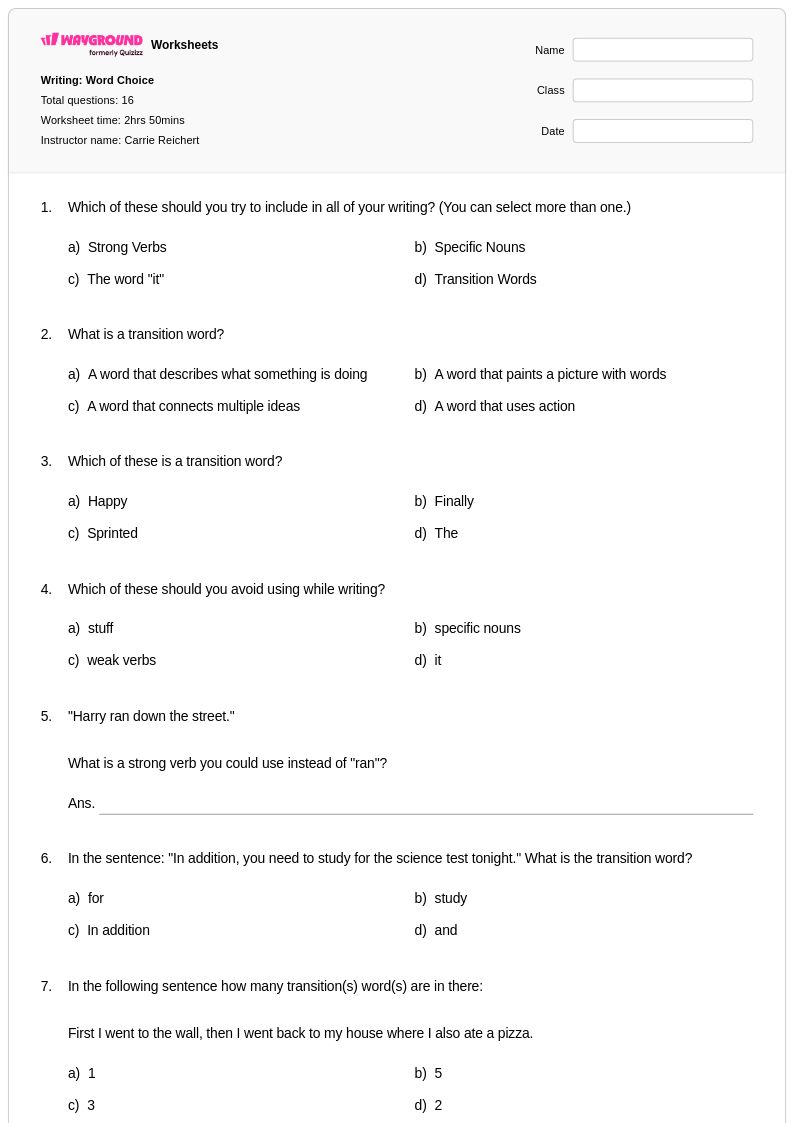
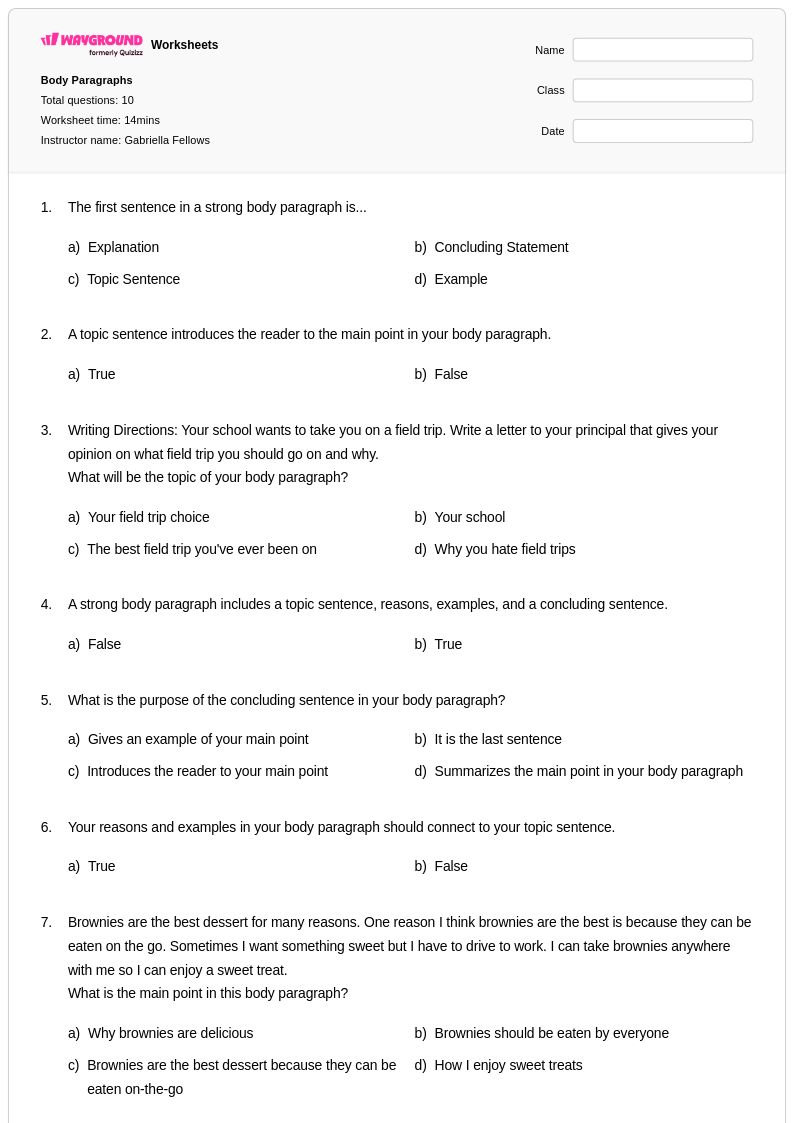
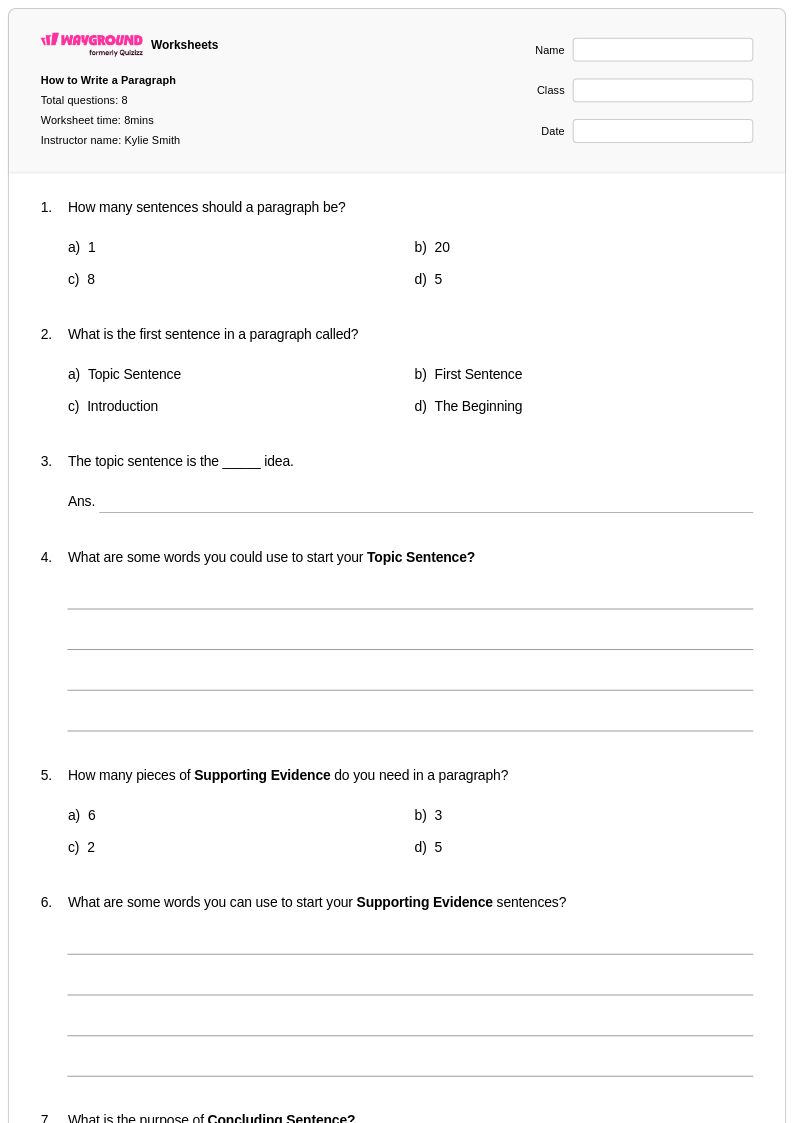
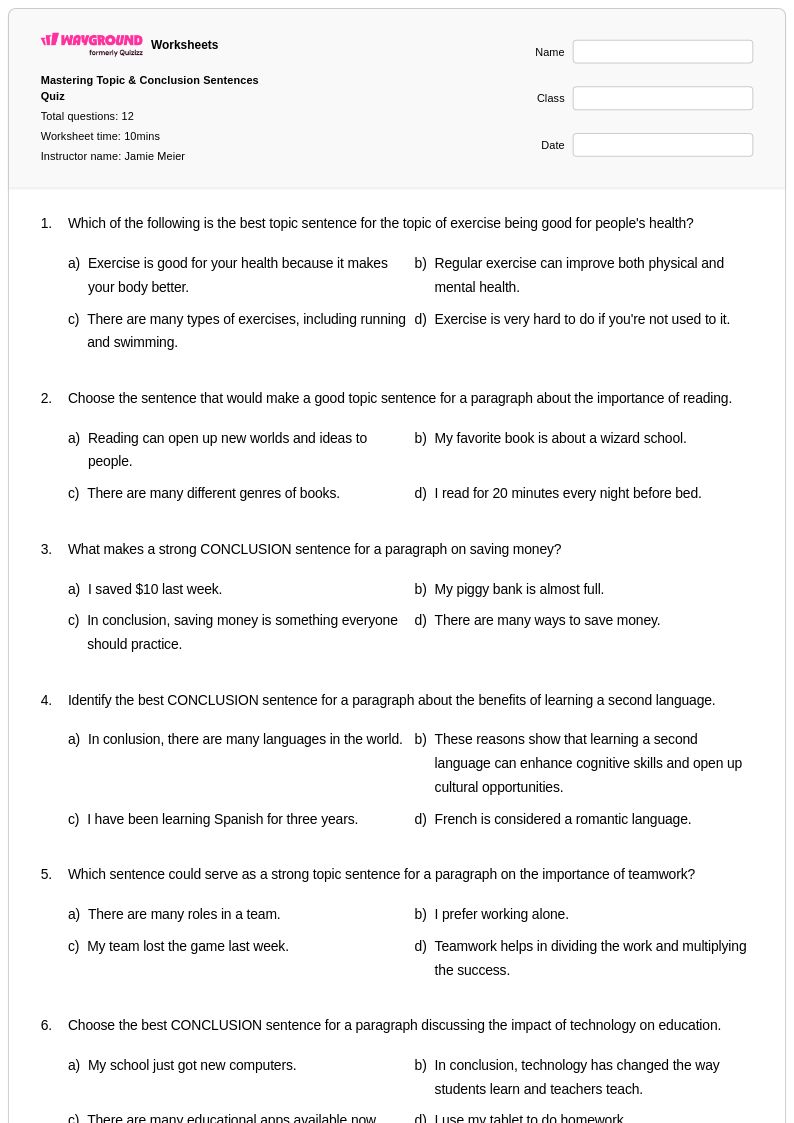
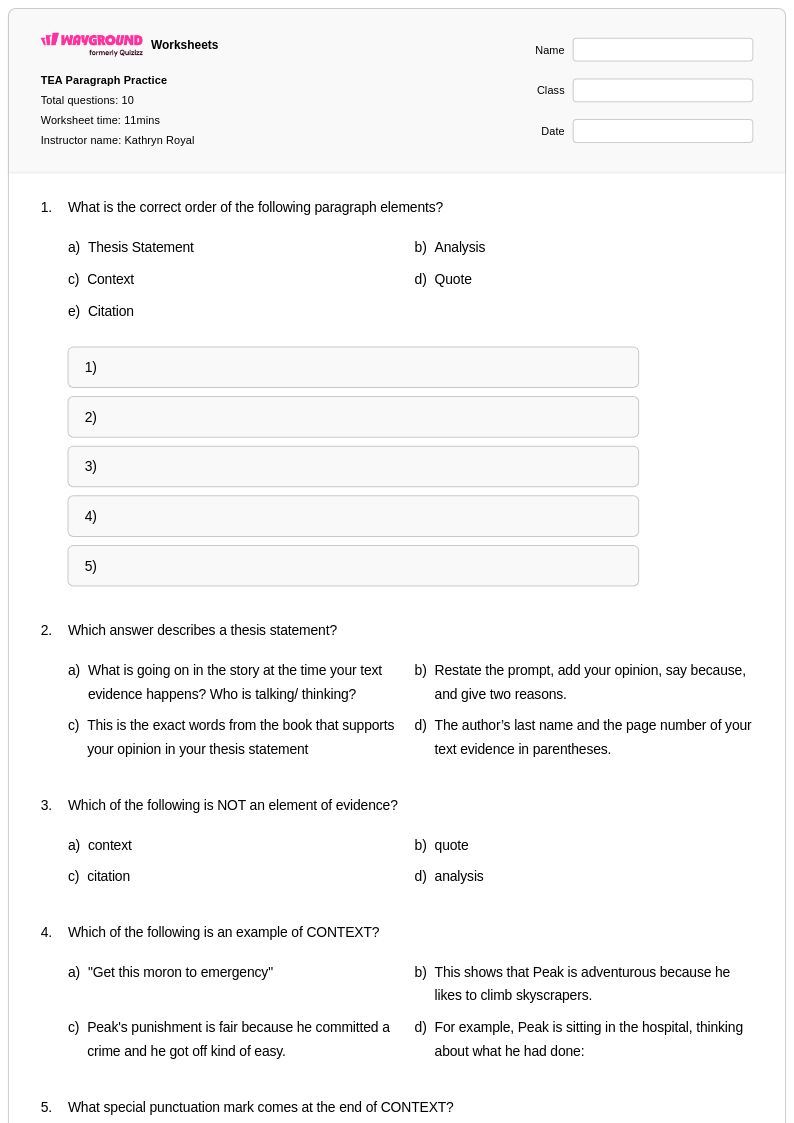
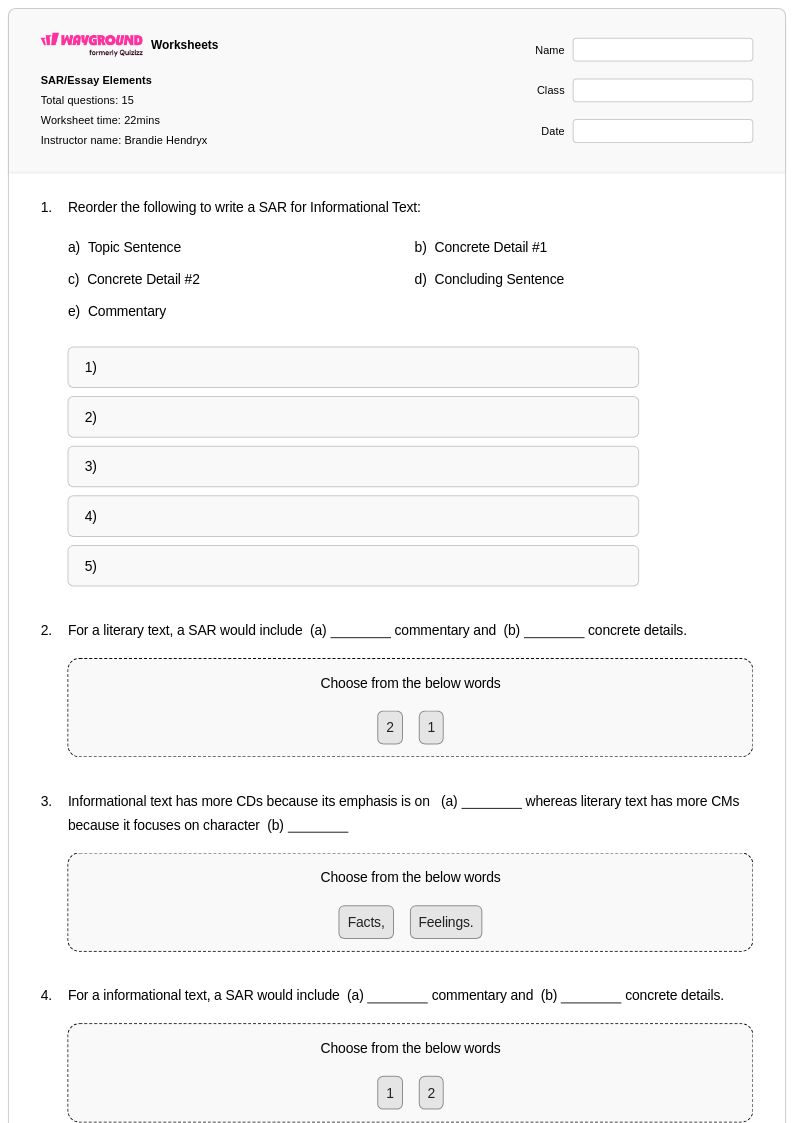
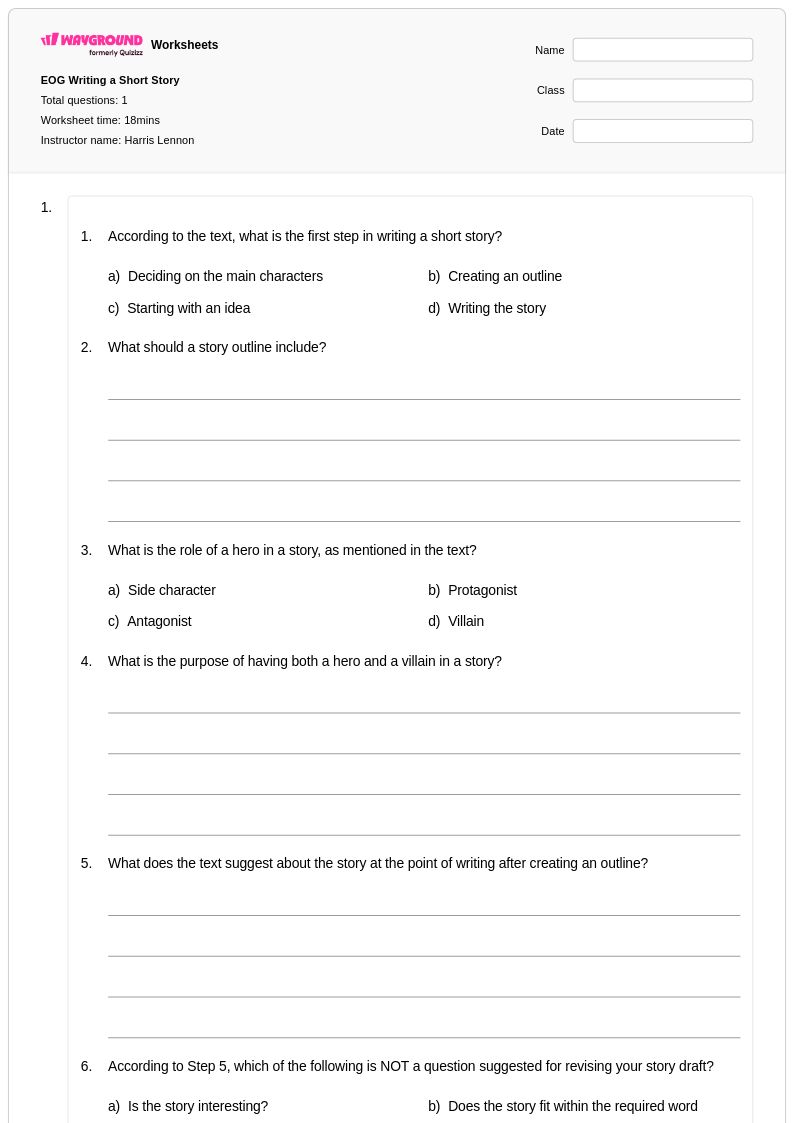
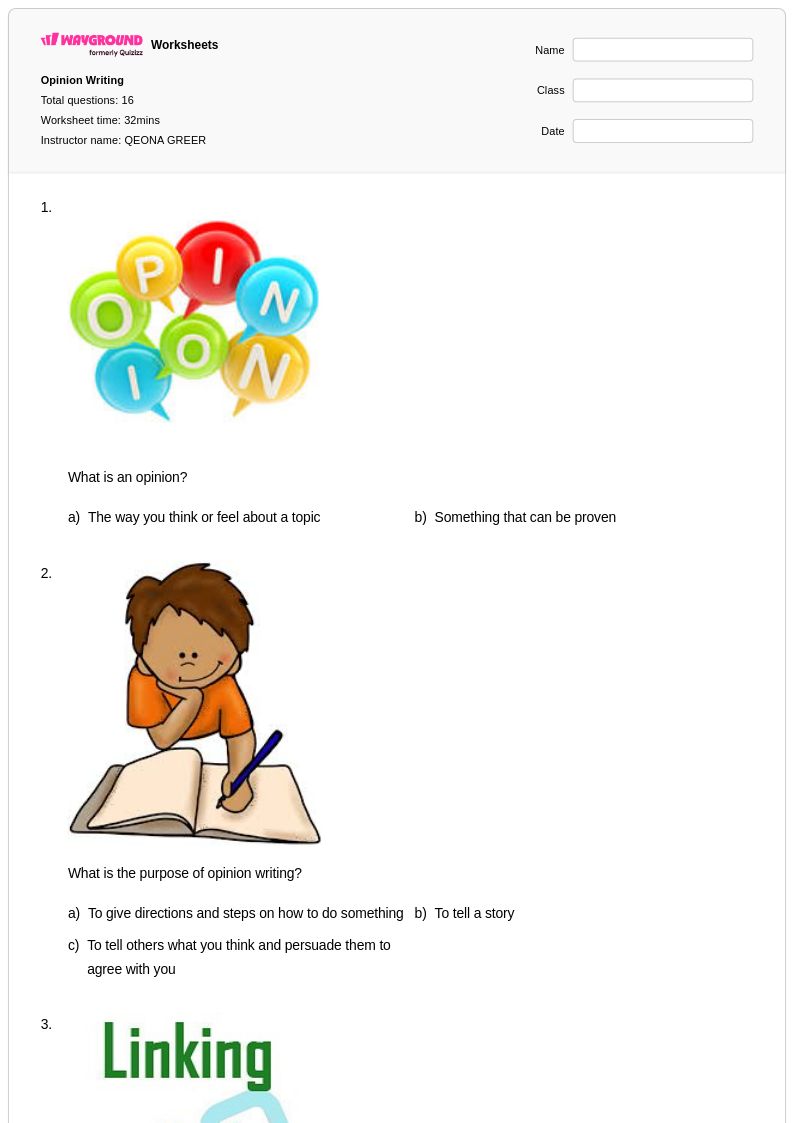
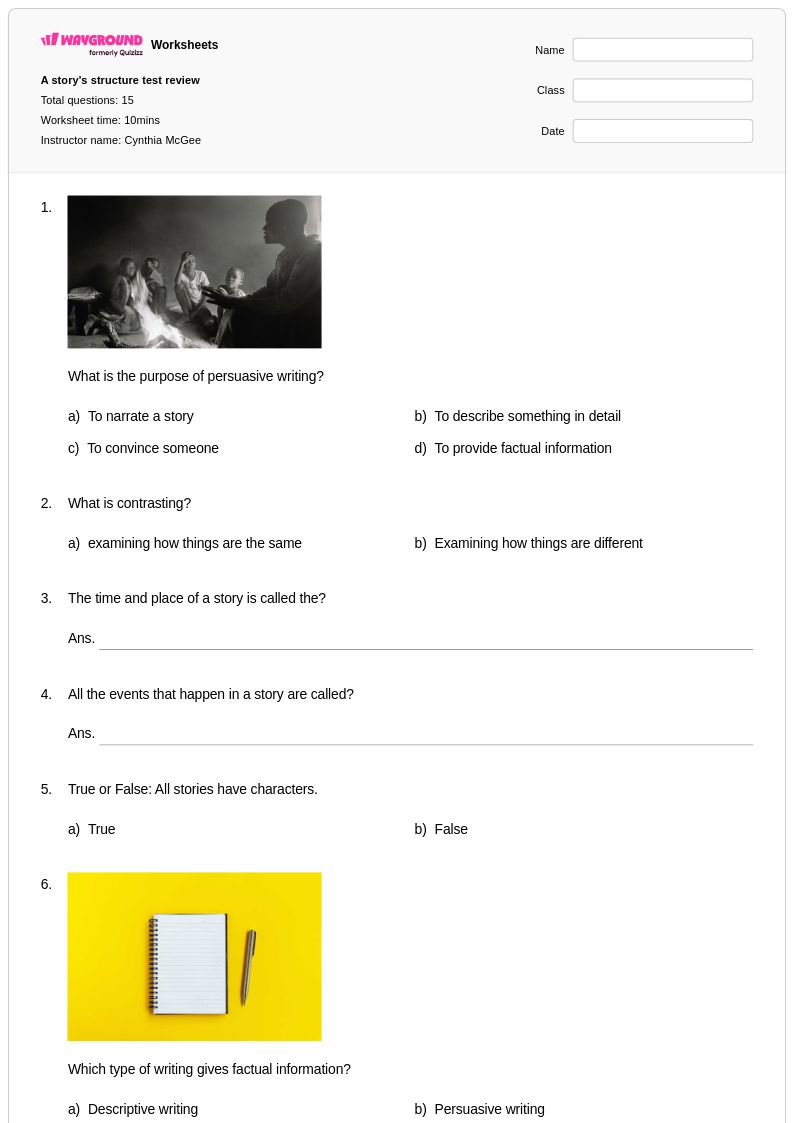
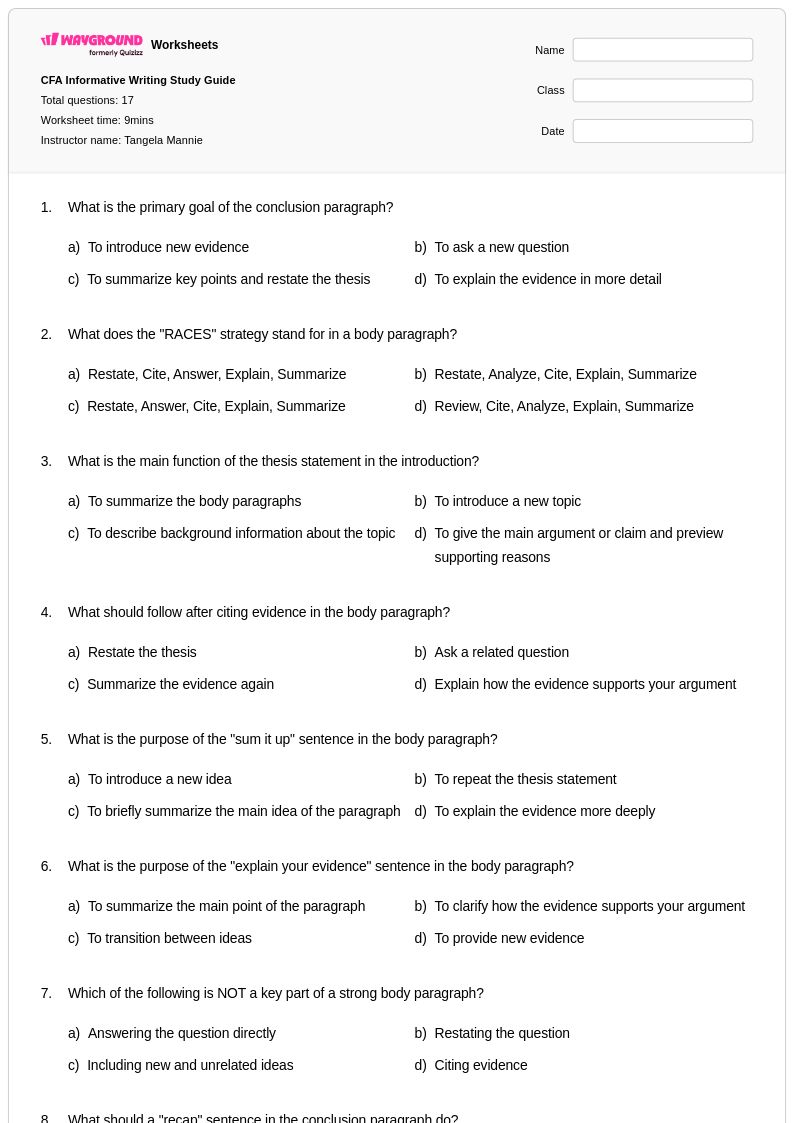
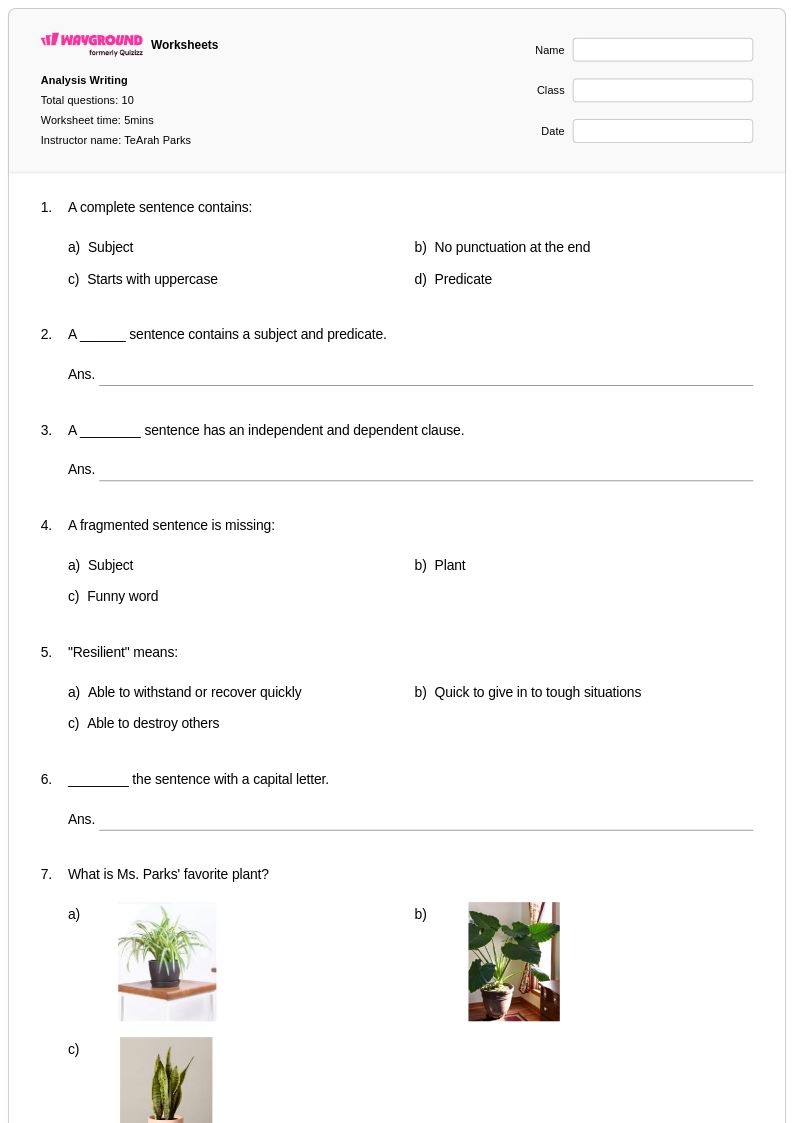
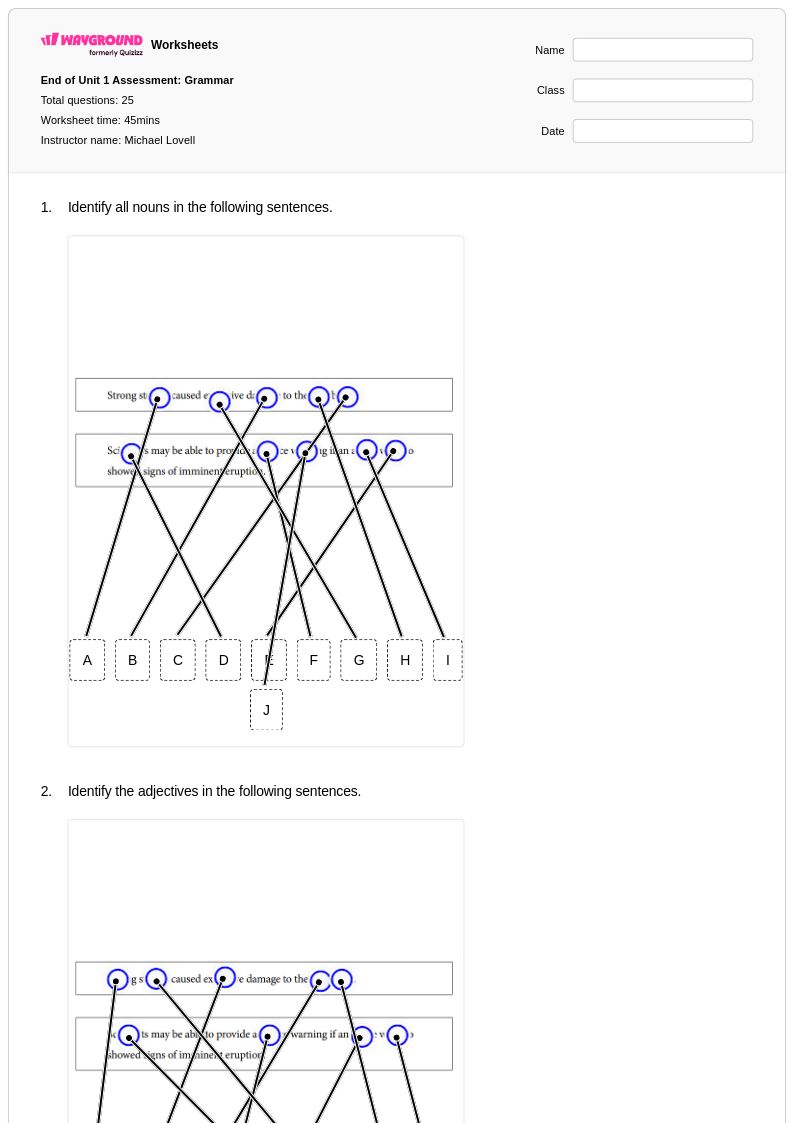
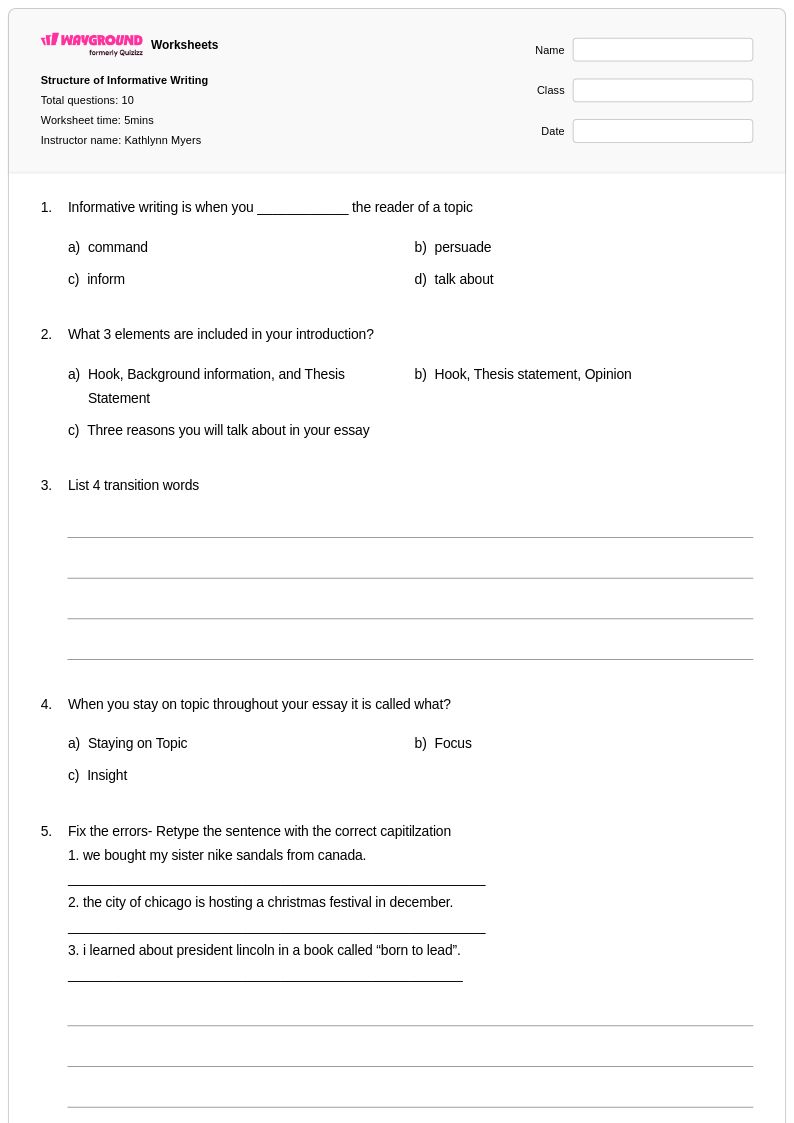
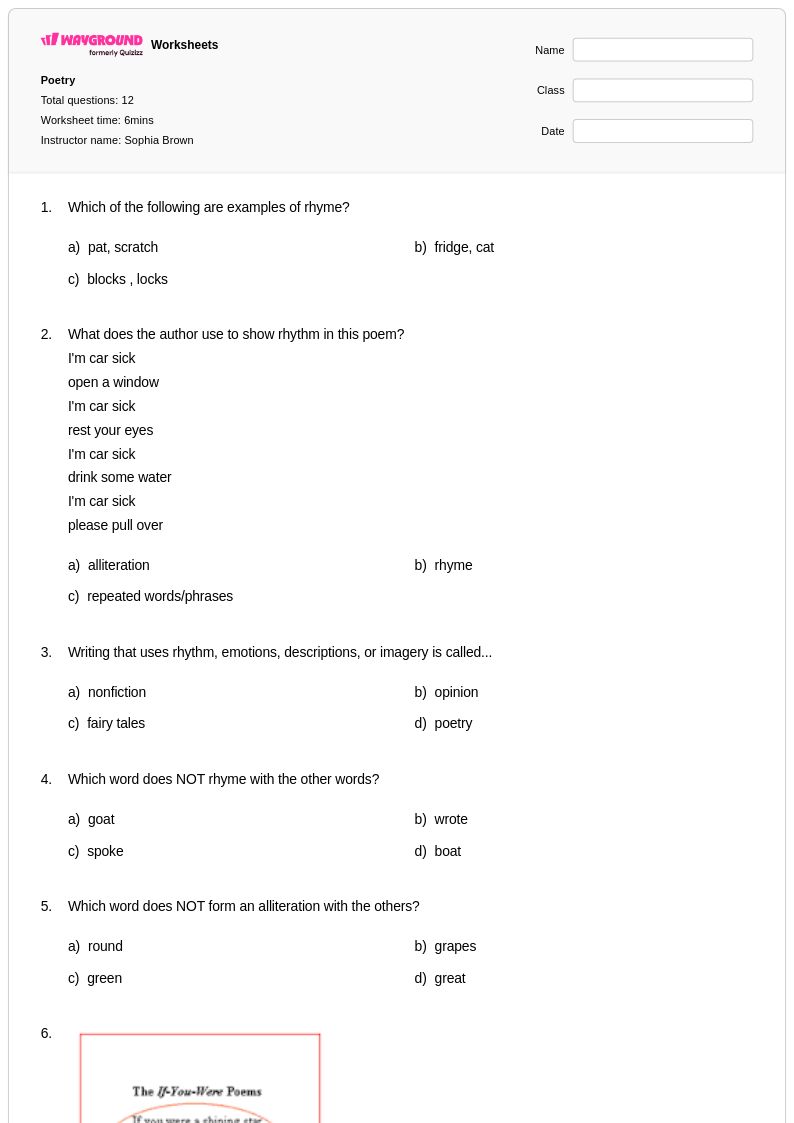
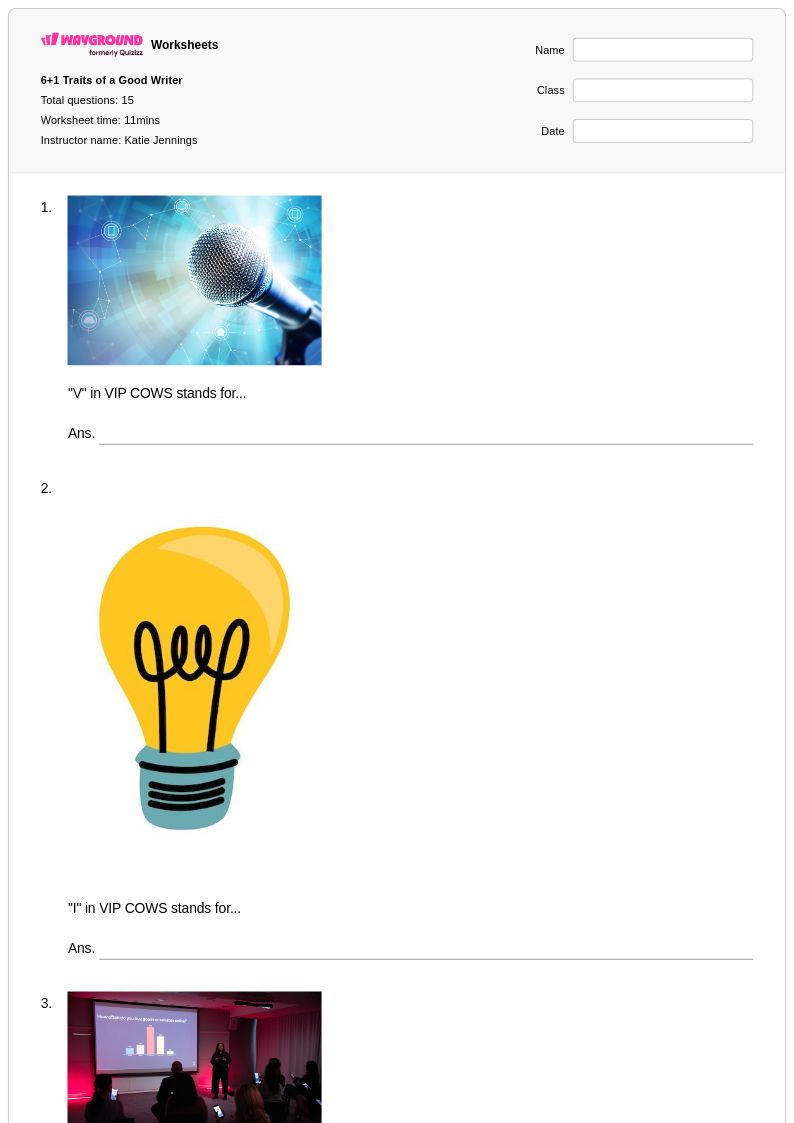
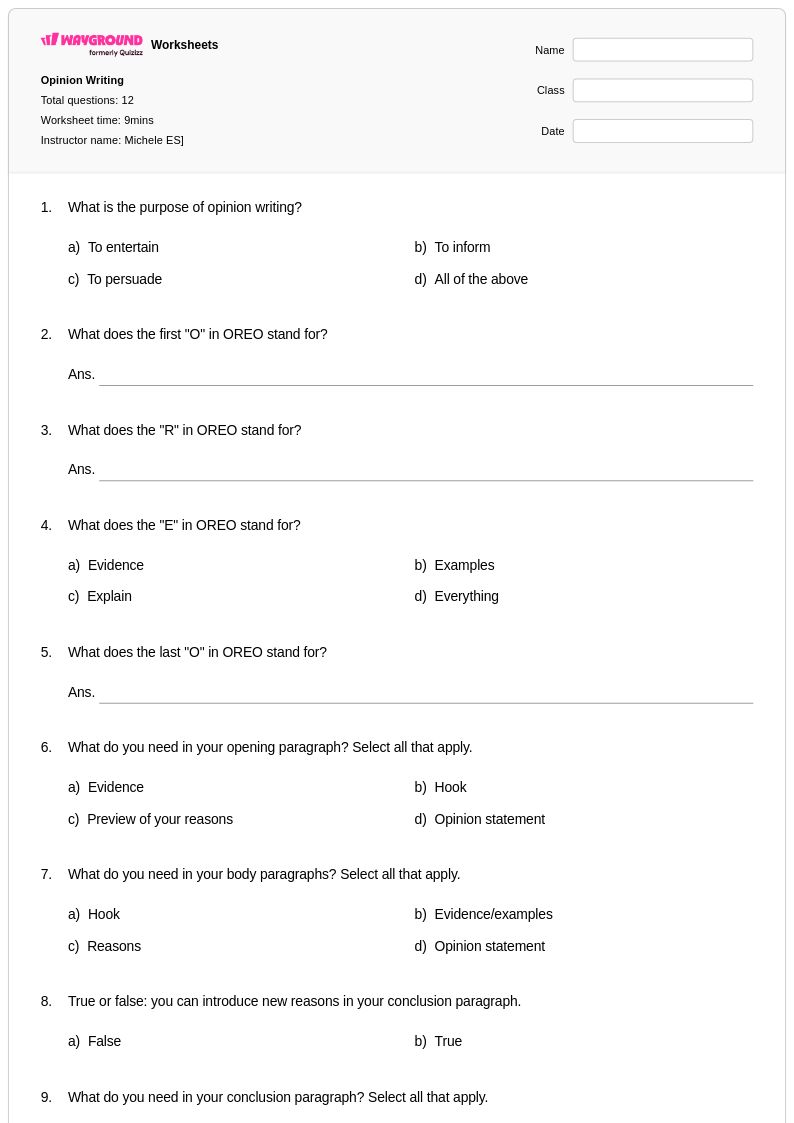
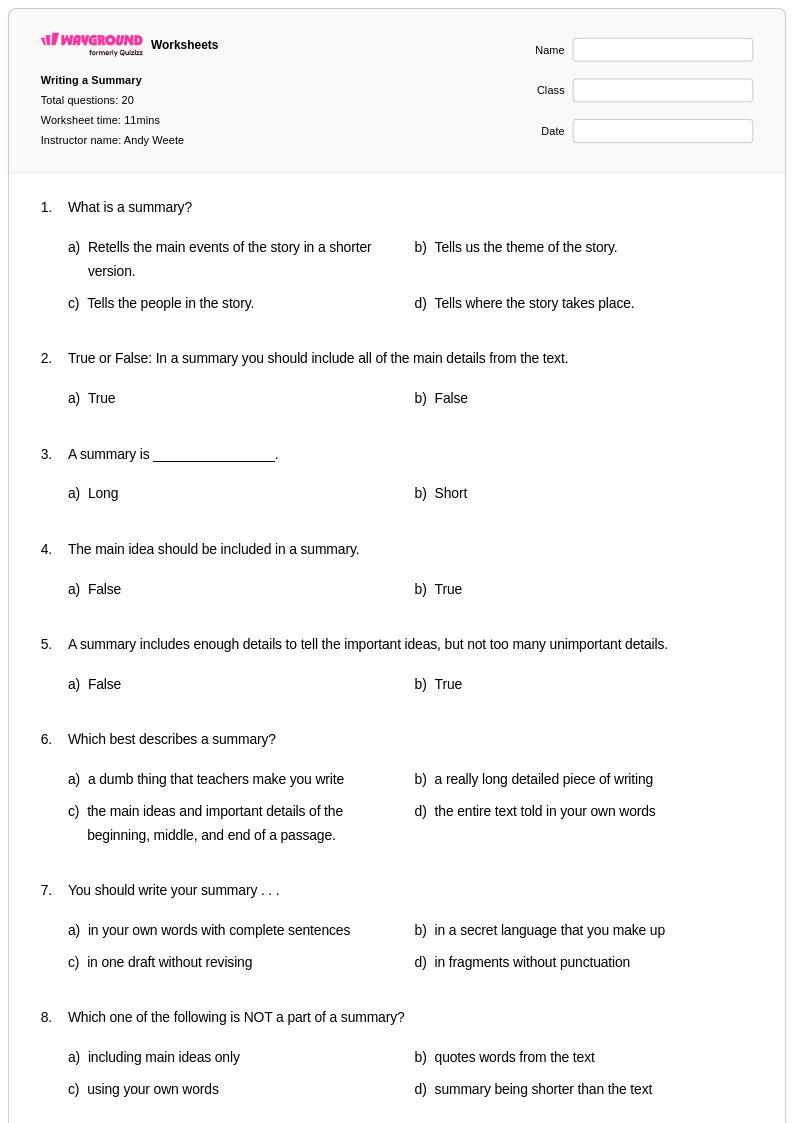
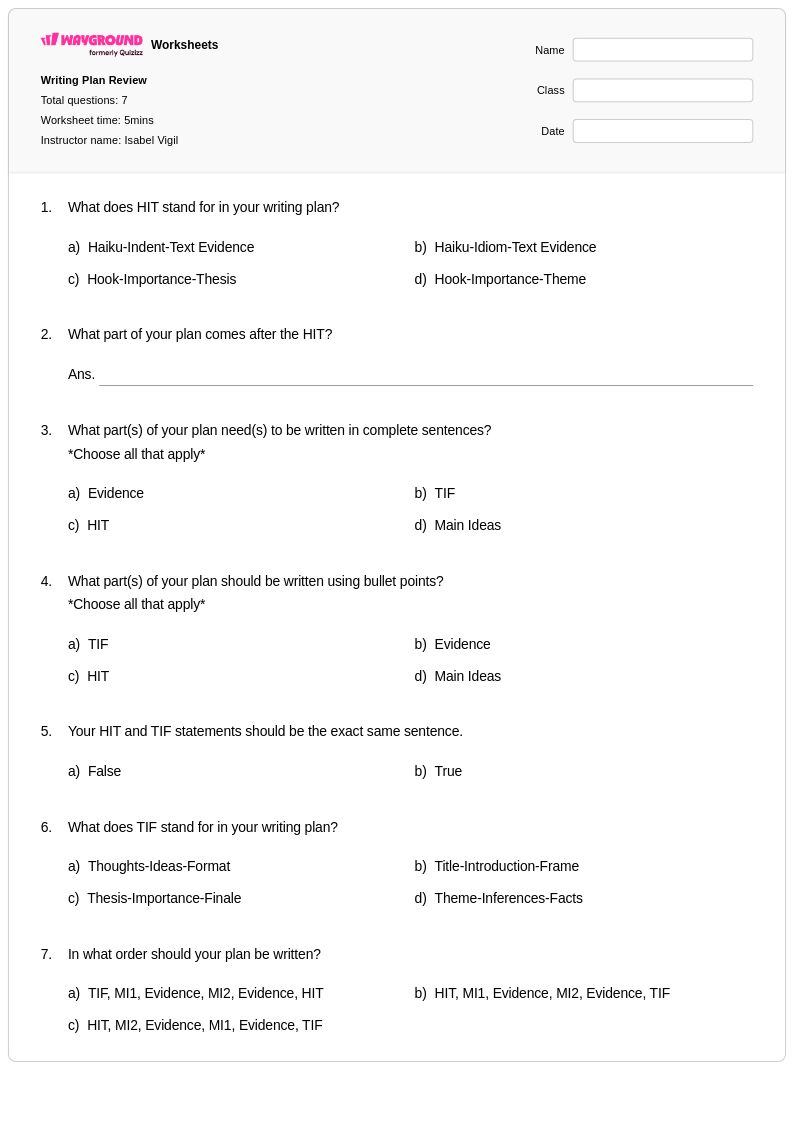
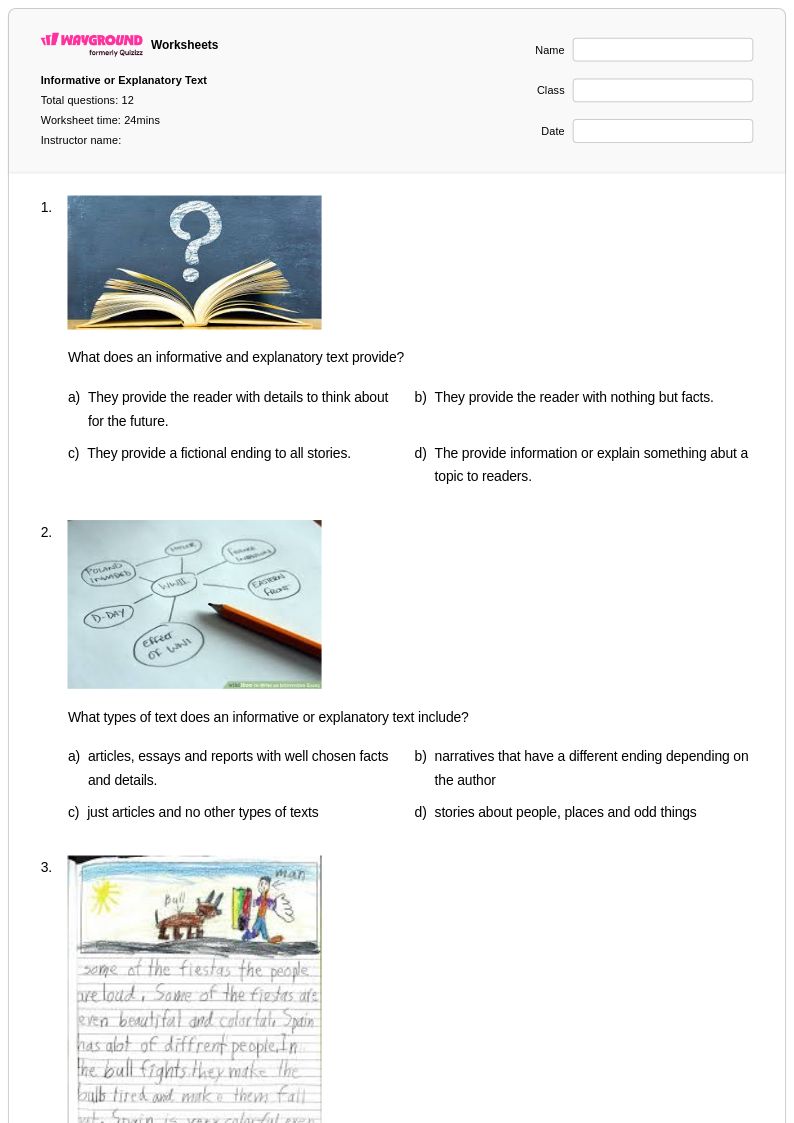
Writing a strong ending represents one of the most crucial skills Class 5 students must master to create compelling and complete compositions. Wayground's comprehensive collection of writing worksheets focuses specifically on helping fifth-grade students develop powerful conclusion techniques that leave lasting impressions on readers. These carefully designed practice problems guide students through various ending strategies, including summarizing key points, connecting back to the introduction, offering final thoughts, and creating memorable closing statements. Each worksheet provides structured exercises with answer keys that allow students to practice crafting conclusions for different types of writing, from narrative stories to persuasive essays. The free printable resources include step-by-step guidance and examples that demonstrate how strong endings can transform ordinary writing into engaging pieces that resonate with audiences.
Wayground, formerly Quizizz, empowers teachers with millions of expertly crafted resources specifically designed to strengthen students' conclusion-writing abilities through targeted skill practice and differentiated instruction. The platform's advanced search and filtering capabilities enable educators to quickly locate Class 5 writing worksheets that align with specific curriculum standards and match individual student needs. Teachers can customize these printable pdf materials to provide appropriate scaffolding for struggling writers while offering enrichment opportunities for advanced students who are ready to explore more sophisticated ending techniques. The flexible digital and print formats support diverse classroom environments, making it simple for educators to incorporate conclusion-writing practice into daily lessons, homework assignments, or remediation sessions. This extensive worksheet collection serves as an invaluable tool for systematic writing instruction, helping teachers guide their students toward mastery of one of writing's most essential components.
FAQs
How do I teach students to write a strong ending?
Effective instruction on strong endings begins with helping students understand that a conclusion does more than simply stop — it reinforces the main idea and gives readers a sense of closure. Start by analyzing published examples of strong and weak endings side by side so students can identify what makes one more impactful than the other. From there, introduce specific strategies such as circling back to the introduction, summarizing key points without repeating them verbatim, or leaving the reader with a thought-provoking question or insight. Modeling the writing process with think-alouds before students attempt their own conclusions builds the scaffolding most writers need at this stage.
What are effective exercises for practicing conclusion writing?
Strong conclusion-writing practice should move students from analysis to creation in deliberate steps. Begin with exercises where students evaluate existing endings and explain why they work or fall flat, then progress to revision tasks where they improve weak conclusions in sample texts. Once students can identify and fix problems, assign open-ended writing prompts that require them to craft original endings for different text types, such as narrative, informational, and persuasive. This graduated approach builds both technical understanding and writing confidence before students are asked to produce conclusions independently.
What mistakes do students commonly make when writing conclusions?
The most frequent error is the abrupt stop — ending a piece mid-thought without providing any sense of resolution or closure for the reader. Many students also fall into the habit of simply restating their introduction word-for-word, which signals a lack of synthesis rather than a purposeful wrap-up. Another common pitfall is introducing brand-new information in the conclusion, which confuses readers and undermines the structure of the piece. Teachers should explicitly address these patterns and show students what revision looks like when correcting each type of error.
How can I differentiate conclusion-writing instruction for students at different skill levels?
For struggling writers, provide sentence starters and graphic organizers that prompt them to identify their main idea, a supporting detail to echo, and a closing thought before they begin drafting. On-level students benefit from analyzing and revising weak conclusions in authentic texts, which builds judgment without the pressure of generating content from scratch. Advanced writers can be challenged with multi-paragraph pieces that require cohesion between the introduction and conclusion, or with prompts that ask them to experiment with different conclusion strategies across genres. When using Wayground digitally, teachers can apply accommodations such as read aloud and reduced answer choices for individual students, so each learner engages with the same material at an appropriate level of support.
How do I use Wayground's writing a strong ending worksheets in my classroom?
Wayground's writing a strong ending worksheets are available as printable PDFs for traditional classroom use and in digital formats for technology-integrated or hybrid learning environments, giving teachers flexibility in how they assign and collect student work. Teachers can also host the worksheets as a quiz directly on Wayground, which allows for real-time engagement and streamlined review. Each worksheet includes a complete answer key that highlights exemplary conclusion techniques and flags common errors, making them useful for both independent practice and whole-class instruction.