
 Worksheets
World History I First Semester Exam Review # 2
Total questions: 57
Worksheet time: 29mins
Name
Class
Date
1.

Which statement best supports the conclusion that the Indus Valley civilization had a centralized government?
a)
the cities had an organized pattern of streets
b)
the farms produced annual crop surpluses
c)
goods were imported from coastal cities
d)
house were constructed with baked bricks
2.

Where was Indian civilization located?
a)
Tigris and Euphrates
b)
Nile
c)
Indus
d)
Huang He
3.
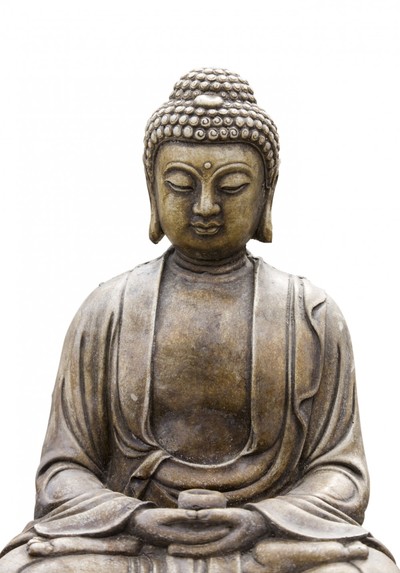
Religion started by Siddhartha Gautama in India?
a)
Islam
b)
Hinduism
c)
Buddhism
d)
Confucianism
4.
The Gupta Empire made a major contribution to world civilizations by developing -
a)
the concept of zero
b)
the production of porcelain
c)
long-lasting roads
d)
wind-powered boats
5.

The Aryans migrated from Europe to India through
a)
the Ganges River
b)
the Gobi Desert
c)
the Hindu Kush Mountains
d)
the Himalayan Mountains
6.

Once the Aryans arrived in India, they were able to take control by
a)
asserting dominance over the Indus people
b)
buying land from the Indus people
c)
converting the Indus people to Hinduism
d)
demonstrating tolerance to the Indus people
7.

The Aryans started a caste system which was hereditary, meaning that your place in society was determined by
a)
work
b)
money
c)
birth
d)
choice
8.

Which of the following is true about the caste system in India?
a)
people could marry whomever they wanted to
b)
the Aryans were at the bottom of the caste system
c)
a person’s occupation did not depend on their caste
d)
the caste system determined a person’s marriage
9.

Hindus believe that _____ is one God that shows himself in many forms
a)
Brahman
b)
Krishna
c)
Vishnu
d)
Shiva
10.

What does the diagram represent?
a)
Class system of China
b)
Political system of Greece
c)
Feudal system of Japan
d)
Caste system of India
11.

What major religion teaches both reincarnation and the conformity to a caste system?
a)
Hinduism
b)
Judaism
c)
Zoroastrianism
d)
Buddhism
12.

The Hindu belief that all thoughts and actions result in future consequences
a)
dharma
b)
nirvana
c)
karma
d)
enlightenment
13.

Hinduism spread along trade routes to which of the following countries?
a)
Europe
b)
Egypt
c)
China
d)
Mesopotamia
14.

The Vedas and Upanishads are the religious books of
a)
Buddhism
b)
Zoroastrianism
c)
Hinduism
d)
Judaism
15.

What ancient cities created a complex grid system as well as indoor plumbing?
a)
Thebes and Memphis
b)
Harappa and Mohenjo Daro
c)
Babylonia and Ur
d)
Athens and Sparta
16.

This image represents the founder of
a)
Buddhism
b)
Hinduism
c)
Islam
d)
Confucianism
17.

The main teachings of the Buddha
a)
Four Noble Truths
b)
Ten Commandments
c)
Vedas
d)
Code of Hammurabi
18.

Buddhists achieve enlightenment by following the
a)
laws of the Old Testament
b)
decrees (orders) of the Upanishads
c)
Five Pillars of Faith
d)
Eightfold Path
19.

Indian king who spread Buddhism from India to China, Korea and Japan
a)
Chandragupta
b)
Asoka
c)
Sargon
d)
Menes
20.

Empire that created a zero, set bones during surgery, were astronomers
a)
Egyptian
b)
Gupta
c)
Babylonian
d)
Han
21.

Where did Chinese civilization start?
a)
Tigris and Euphrates
b)
Nile
c)
Indus
d)
Huang He
22.

What natural barrier separated India from China?
a)
Mediterranean Sea
b)
Red Sea
c)
Ural Mountains
d)
Himalayan Mountains
23.

This was emphasized by Confucius as a way to improve society
a)
wealth
b)
education
c)
fame
d)
slavery
24.

Confucius believed that people
a)
were basically good none of the time
b)
were basically good, not bad
c)
were basically good half of the tim
d)
were basically bad, not good
25.
This practice helps Chinese society run smoothly, even in the 21st century
a)
politeness
b)
selfishness
c)
money
d)
rewards
26.

The ruling authority of China’s ancient dynasties was based on the-
a)
Code of Hammurabi
b)
Mandate of Heaven
c)
Twelve Tables
d)
Ten Commandments
27.

Respect for parents and elders in China
a)
Mandate of Heaven
b)
Filial Piety
c)
Taoism
d)
Legalism
28.

The Tao Te Ching is the philosophical book of
a)
Confucianism
b)
Legalism
c)
Buddhism
d)
Taoism
29.

The belief that ancestors can affect life and should be honored and cared for is
a)
ancestor worship
b)
moon worship
c)
self worship
d)
sun worship
30.

Philosophy that teaches to live in harmony with nature, have a simple life and exercise humility in all things is based in
a)
China
b)
Egypt
c)
Greece
d)
Mesopotamia
31.

The Yin and Yang represents the opposites of
a)
Confucianism, Legalism
b)
Legalism, Taoism
c)
Confucianism, Taoism
d)
Shintoism, Confucianism
32.

The Great Wall of China was built by
a)
Nobles under Ch’in Shih Huangdi
b)
Peasants under Ch’in Shih Huangdi
c)
Nobles under Liu Bang
d)
Peasants under Liu Bang
33.

Classical age of China
a)
Chin Dynasty
b)
Zhou Dynasty
c)
Han Dynasty
d)
Sui Dynasty
34.

To become a member of the Chinese civil service during and after the Han Dynasty, a person had to
a)
be born as a noble to a ruling family
b)
pass an examination that could take three days
c)
be sponsored by a Buddhist priest
d)
serve in the Chinese army at least 20 years
35.

The Chinese civil service test was based on the teachings of
a)
Confucianism
b)
Legalism
c)
Taoism
d)
Buddhism
36.

118. The Silk Road was important to China because
a)
it provided a way to have contact with other cultures through trade
b)
it was a means of administering civil service examinations
c)
it provided a military route for the defense of the northern border
d)
it was a means for the country to expand its empire
37.

Dynasty that created paper money, porcelain and silk
a)
Zhou
b)
Han
c)
Sui
d)
Chin
38.

At the end of the Han Dynasty,
a)
China enter a golden age under the Mongols
b)
ancient Chinese writings were destroyed
c)
Buddhism had become a major religion in China
d)
both Hinduism and Buddhism was banned
39.

The map is describing
a)
the territory conquered by the Mongol Empire
b)
the spread of Buddhism to China, Korea & Japan
c)
the trade routes between India & Mesopotamia
d)
the military conquests of Emperor Huangdi
40.
Which of the following had the greatest impact on the economic and political development of ancient Greece?
a)
The rugged mountains limited land travel and communication.
b)
Its proximity to the major river systems of Europe.
c)
Its mild climate that encouraged outdoor activities like theatre and sports.
d)
The harsh deserts made agriculture difficult.
41.

The pottery shows Greece’s appreciation for-
a)
movies and television
b)
poetry and architecture
c)
art and mythology
d)
plays and government
42.

What allowed the Greek city-states to share a common culture despite their geographic isolation?
a)
government and social structure
b)
currency and economy
c)
religion and language
d)
attitude toward slaves
43.

Which of the following resulted from Greek trade?
a)
Greek knowledge of how to forge iron tools spread to the Hittites
b)
The Greeks adopted the Phoenician alphabet and learned to use coins
c)
Greek religion was heavily influenced by the religion of the Romans
d)
The Greeks were influenced by Chinese ideas on government
44.

Which civilization influenced the architecture in the picture?
a)
Greece
b)
Rome
c)
Byzantium
d)
Arabia
45.

Athena, Apollo and Aphrodite were a god and goddesses from
a)
India
b)
China
c)
Greece
d)
Rome
46.

The picture demonstrates how Greece influenced-
a)
monotheistic religious practices in Northern Africa
b)
the development of Communist governments in the Eastern Hemisphere
c)
economic innovations of the Italian Renaissance
d)
modern day architecture throughout Western Civilization
47.

Greek city-state that created the world's first democracy
a)
Byzantium
b)
Sparta
c)
Rome
d)
Athens
48.

Which Greek city-state was ruled by an oligarchy?
a)
Sparta
b)
Thebes
c)
Athens
d)
Corinth
49.

Which of the following is true about the Spartan social structure?
a)
it was not aggressive
b)
it was undisciplined
c)
it was militaristic
d)
it was peaceful
50.

The Athenian leader who created the first written law code of Athens was
a)
Pheidippides
b)
Draco
c)
Zeus
d)
Philip
51.

The Parthenon was located in the city-state of
a)
Paris
b)
Rome
c)
Athens
d)
Troy
52.

According to the Athenian leader Pericles, the most important role of a citizen was to
a)
be the best buisnessman possible
b)
conquer new city states
c)
give praise to the gods and goddesses
d)
be an active participant in politics
53.

The Persian Wars was
a)
Persia vs. Egypt
b)
Greece vs. Persia
c)
Italy vs. Persia
d)
Persia vs. China
54.

Herodotus and Thucydides are known for what type of writings?
a)
Poetry
b)
History
c)
Drama
d)
Philosophy
55.
Three decade war between Athens and Sparta that ended the Golden Age of Greece
a)
The Gallic Wars
b)
The Peloponnesian War
c)
The Trojan War
d)
The Punic Wars
56.

City-state that had a limited democracy, stressed the importance of the individual, home of Socrates, Plato and Aristotle
a)
Athens
b)
Sparta
c)
Argos
d)
Sicyon
57.
Which statement best supports the conclusion that the Indus Valley civilization had a centralized government?
a)
the cities had an organized pattern of streets
b)
the farms produced annual crop surpluses
c)
goods were imported from coastal cities
d)
house were constructed with baked bricks
100 %

