
 Worksheets
Chapter 17 Review: Enlightenment and Revolution
Total questions: 32
Worksheet time: 20mins
Name
Class
Date
1.

The scientific method was all of the following EXCEPT
a)
a systematic procedure.
b)
based on collecting and analyzing evidence.
c)
reliant on the use of ancient authorities.
d)
crucial to the evolution of science.
2.

Sun-centered model of the universe
a)
geocentric
b)
heliocentric
3.

system of political limits and controls
a)
laissez-faire
b)
separation of powers
c)
democracy
d)
enlightenment
4.

monarchical rule by Enlightenment principles
a)
absolute monarchy
b)
republic
c)
enlightened absolutism
d)
limited constitutional monarchy
5.

All of the following were outcomes of the Seven Years' War in North America EXCEPT
a)
France gave Louisiana to Spain.
b)
Spanish Florida came under British control.
c)
Canada became British.
d)
the 13 colonies became British.
6.

The first American constitution was the
a)
Bill of Rights.
b)
Articles of Confederation.
c)
Stamp Act.
d)
Congress.
7.

The three branches of the national government were the
a)
judicial, executive, legislative.
b)
Senate, House of Representatives, Supreme Court.
c)
president, Senate, judiciary.
d)
executive, Senate, Constitutional Convention.
8.

The first constitution gave the national government
a)
too much power.
b)
the right amount of power.
c)
too little power.
d)
the Bill of Rights.
9.

ten amendments that guaranteed certain freedoms
a)
Constitution
b)
Articles of Confederation
c)
Bill of Rights
10.
According to Hobbes, people agreed to give up their__________________ in exchange for __________________ as part of the social contract.
a)
rights and power / protection
b)
food and shelter / weapons
c)
security and protection / freedom
d)
money / goods and services
11.
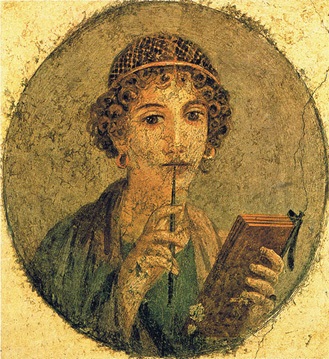
The phrase 'tabula rasa' means...
a)
empty table
b)
blank slate
c)
table of truth
d)
blank space
12.
A government where a God or divine ones are given the status of supreme ruler?
(Examples: The Vatican, Egyptians, etc..)
(Examples: The Vatican, Egyptians, etc..)
a)
Democracy
b)
Dictatorship
c)
Monarchy
d)
Theocracy
13.
When the central government is run by a small group of people.
a)
Autocracy
b)
Democracy
c)
Oligarchy
d)
Parliamentary
14.

What type of government has a king or queen that holds all the power?
a)
Monarchy
b)
Dictatorship
c)
Direct Democracy
d)
Republic
15.
God and religious law are the government's authority.
a)
Anarchy
b)
Oligarchy
c)
Direct Democracy
d)
Theocracy
16.

People elect representatives to make laws/decisions for them, a government without a monarch.
a)
Anarchy
b)
Republic
c)
Dictator
d)
Monarchy
17.

Example: Modern day – England – ruler is a symbolic head of state with elected members of Parliament who govern.
a)
Constitutional Monarchy
b)
President
c)
Dictator
d)
Republic
18.
Who makes most of the important governmental decisions in an oligarchy?
a)
the king
b)
the people
c)
the legislature
d)
small group of powerful rulers
19.
Why do the individual voters have more power in a democracy than they do in an oligarchy?
a)
kings are always poor rulers
b)
the voters get to choose people that make the laws
c)
a small group of people is in charge instead of one
d)
representatives elect themselves to lead the citizens
20.
What type of government is ruled by force?
a)
Theocracy
b)
Democarcy
c)
Dictatorship
d)
Monarchy
21.

John Locke argued that all people had the right to ________________.
a)
Own slaves
b)
Choose their religious beliefs
c)
Pursuit of happiness
d)
Life, liberty, and property
22.
Scientist began questioning the teachings of the.......
a)
Roman Catholic Church
b)
Jewish Church
c)
God
d)
The Government
23.
Scientist began using _____________ and _______________ instead of placing their beliefs in faith.
a)
History and faith
b)
Math and Science
c)
Math and History
d)
reason and logic
24.
Where was the Seven Years' War NOT fought?
a)
Europe
b)
India
c)
Continental U.S.
d)
China
25.
What enlightened monarch considered himself a failure (even though he enacted real reforms)?
a)
Catherine the Great
b)
Frederick the Great
c)
Joseph II
d)
Louis XIV
26.
Frederick the Great was the monarch of ______.
a)
Prussia
b)
France
c)
Austria
d)
Russia
27.
The idea that a monarch gets their power from God.
a)
Absolutism
b)
Balance of Power
c)
Divine Right
d)
Sacraments
28.
What enlightened monarch considered himself a failure (even though he enacted real reforms)?
a)
Catherine the Great
b)
Frederick the Great
c)
Joseph II
d)
Louis XIV
29.
Who fought in the French and Indian War?
a)
French vs. Indians
b)
British vs. French
c)
British vs. French and Indians
d)
Indians vs. British
30.
The name of the treaty that ended the French and Indian War was the...
a)
Treaty of Paris
b)
Treaty of London
31.
The French and Indian War was also called...
a)
Seven Year Itch
b)
Seven Years' War
c)
Seven Dwarfs' War
d)
Seven Lakes' War
32.
Who won the American Revolution?
a)
Americans
b)
Native Americans
c)
French
d)
Britians
100 %

