
 Worksheets
EO 8 Invertebrates Review
Total questions: 42
Worksheet time: 22mins
What domain do animals belong to?
Eukarya
Prokarya
Archaea
What are the two groups that animals are divided into?
Invertebrates
Plants
Vertebrates
Gymnosperms
What animals do not have vertebrae?
Invertebrates
Vertebrates

Phylum that means "round worms"
Mollusca
Nematoda
Platyhelminthes
Porifera

Phylum that means "flat worms"
Mollusca
Nematoda
Platyhelminthes
Porifera

Phylum that means "soft-bodied"
Mollusca
Nematoda
Platyhelminthes
Porifera

Phylum that means "pore bearing"
Mollusca
Nematoda
Platyhelminthes
Porifera

Phylum that means " jointed foot"
Arthropoda
Annelida
Echinodermata
Cnidaria

Phylum that means "stinging cells"
Arthropoda
Annelida
Echinodermata
Cnidaria

Phylum that means "spiny skin"
Arthropoda
Annelida
Echinodermata
Cnidaria

Phylum that means "segmented worms"
Arthropoda
Annelida
Echinodermata
Cnidaria
How do sponges eat?
Gastrovascular cavity
Their mouth
Filter feed
Tentacles
Cnidarians use a ______________ which is a "simple stomach"
Gastrovascular cavity
Their mouth
Filter feed
Tentacles
What are the two body forms Cnidarians have?
Visceral mass
Polyp
Medusa
Which of the following is not a characteristic for animals?
Multicellular eukaryote
Autotroph
Heterotroph
Lack cell walls
Organisms in the phylum Annelida, Platyhelminthes, Mollusca, Arthropoda, and Nematoda have what type of symmetry?
Asymmetry
Bilateral Symmetry
Radial Symmetry
Organisms in the phylum Cnidaria and Echinodermata have what type of symmetry?
Asymmetry
Bilateral Symmetry
Radial Symmetry
Some mollusks have a "tongue-like organ with rows of teeth used for eating". This is known as:
Polyp
Foot
Radula
Tentacle
The 3-part body plan for the Phylum Mollusca is:
Foot
Radula
Mantle
Visceral Mass
What is "pair of appendages used to attack prey"?
Tentacles
Teeth
Antenna
Chelicerae

What is letter B pointing to?
Head
Thorax
Abdomen
What is letter A pointing to?
Head
Thorax
Abdomen
What is letter C pointing to?
Head
Thorax
Abdomen
What are "tiny legs that help echinoderms move and grip surfaces"?
Thorax
Foot
Tube feet
Radulas
What are "calcium-rich plates, that contain spines that project out of the skin"?
Radula
Ossicles
Exoskeleton
Cephalization
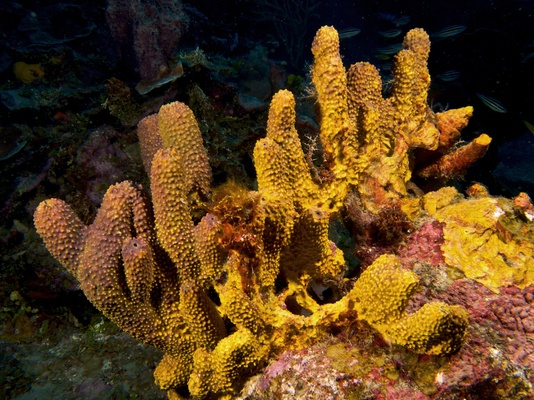
What is an example of the Phylum Porifera?
Sea star
Lobster
Leech
Sponge
What is an example of the Phylum Echinodermata?
Sea urchin
Lobster
Leech
Sponge
What is an example of the Phylum Arthropoda?
Sea urchin
Crab
Leech
Sponge
What is an example of the Phylum Annelida?
Sea star
Lobster
Leech
Sponge
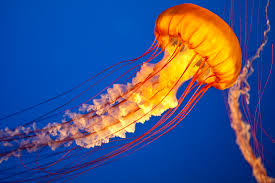
What is an example of the Phylum Cnidaria?
Roundworm
Flatworm
Jellyfish
Snail
What is an example of the Phylum Platyhelminthes?
Roundworm
Planaria
Jellyfish
Snail
What is an example of the Phylum Nematoda?
Roundworm
Flatworm
Jellyfish
Snail
What is an example of the Phylum Mollusca?
Roundworm
Flatworm
Jellyfish
Squid

