wayground logo

Free Printable Worksheets

Font size

S
M
L
XL
Worksheets

Space Semester

Total questions: 92

Worksheet time: 51mins

Name
Class
Date
1.
The nearest large galaxy to the Milky Way is
a)
whirlpool galaxy
b)
galaxy named bob
c)
andromeda galaxy
d)
spinning galaxy
2.
What is the name of the black hole thought to exist at the center of the milky way
a)
sagittarius A
b)
big sucker
c)
large magellanic cloud
d)
the end
3.
What is the nucleus of a comet primarily made of
a)
hopes and dreams
b)
rock
c)
ice and dust
d)
nothing
4.
Which way do the two tails of a comet point?
a)
away from the sun
b)
at earth
c)
towards the sun
d)
towards the moon
5.
How many tails does a comet have
a)
one
b)
two
c)
none
d)
it is all in the imagination
6.
Which of these constellations is not part of the astronomical zodiac?
a)
orion the hunter
b)
ophiuchus the snake bearer
c)
taurus the bull
d)
sagittarius
7.
Which of these is not a constellation?
a)
reticulum the net
b)
neteoroid the coward
c)
puppis the stern
8.
when a star runs out of fuel for nuclear fusion and dies in an explosion it's called a
a)
supernova
b)
standard candle
c)
tantrum
d)
big explosion
9.
stars are made primarily of 
a)
the will to succeed
b)
hydrogen and helium
c)
helium and carbon
d)
star dust
10.
Which of the following is NOT a known type of star
a)
white dwarf
b)
green dwarf
c)
red giant
d)
hobbit
11.
Which quality determines whether a star will become a black hole when it dies
a)
mass
b)
attitude
c)
temperature
d)
spin
12.
Light pollution is
a)
a problem that is caused by humans
b)
when earth glows because it is so big
c)
when earth blinks
d)
a problem that is a natural occurance
13.
the first planet is 
a)
mercury
b)
venus
c)
earth 
d)
mars
14.
rotation effects the movement of a fluid by
a)
moving the particle in a curved path
b)
it has no effect
c)
it allows the fluid to move in a straight line
d)
it slows the particle
15.
the second planet is
a)
mercury
b)
venus
c)
earth
d)
mars
16.
the third planet is
a)
mercury
b)
venus
c)
earth
d)
mars
17.
the red planet is
a)
mercury
b)
venus
c)
earth 
d)
mars
18.
Which planet will glow if the sun disappears
a)
earth
b)
moon
c)
jupiter
d)
neptune
19.
The planet with the most rings is
a)
uranus
b)
neptune
c)
jupiter
d)
saturn
20.
gravity is determined by 
a)
the interaction of mass
b)
orbit
c)
rotation
d)
revolution
21.
The constellations in the night sky change because
a)
earth's orbit
b)
earth's rotation
c)
the moon blocks them
d)
they do not change
22.
gravitational waves helped to prove which theory
a)
theory of gravity
b)
theory of relativity
c)
theory of mass
d)
theory of information
23.
the velocity needed for a rocket to escape earth's gravity is called
a)
escape velocity
b)
escape speed
c)
big bang
d)
escape gravity
24.
Big bang is
a)
a theory of the creation of the universe
b)
a very funny show
c)
wrong
d)
when an explosion happens
25.
mulltiverse is
a)
theory where multiple universes exist
b)
was created by my teacher
c)
crazy
d)
theory where everything was condensed into one single point
26.
the singularity is defined as
a)
a moment where the universe was created
b)
a single person
c)
where a planet is the only celestial body
d)
the moment in time where a black hole is formed
27.
Everything is created with
a)
star dust
b)
carbon
c)
helium
d)
hydrogen
28.
the universe is mostly composed of 
a)
helium
b)
hydrogen
c)
oxygen
d)
carbon
29.
The universe is composed of matter and 
a)
light
b)
dark matter
c)
life
d)
planets
30.
the constellations that are seen in the night sky are 
a)
based on the seasons
b)
based on the tilt
c)
based on the rotation
d)
based on the mind
31.
the universe 
a)
is infinite
b)
has boundaries
c)
never ending
d)
is make believe
32.
the planets all orbit the same direction because
a)
order comes out of chaos
b)
that is the way it was planned
c)
that is the way it has always been
d)
the aliens made it so
33.
Which is the largest object in our solar system?
a)
Sun
b)
Jupiter
c)
Earth
d)
Pluto
34.
A ball of ice and dust with a tail of gas and dust pointing away from the sun.
a)
Asteroid
b)
Comet
c)
Moon
d)
Meteor
35.
A small object that appears as a streak of light as it enters earth's atmosphere.
a)
Asteroid
b)
Comet
c)
Moon
d)
Meteor
36.
People think I'm a silly planet because I rotate on my side what planet am I?
a)
Uranus
b)
Neptune
c)
The Moon 
d)
Pluto
37.
I'm the cold planet but a planet is even colder than me I'm eighth from the sun what planet am I?
a)
1 of Jupiter's moons
b)
Pluto
c)
Moon
d)
Neptune
38.
I'm a dwarf planet i'm colder than Neptune because I'm 9th from the sun And at some point I move out of Neptune's orbit then I go back into that orbit what planet am I?
a)
Moon
b)
Jupiter Moon
c)
Pluto
d)
Uranus Moon
39.
Which planets are terrestrial planets?
a)
Mercury,Venus,Mars,Earth
b)
Mars,Jupiter,Uranus,Mercury
c)
Saturn,Mars,Earth,Mercury
d)
Mercury,Pluto,Saturn,Earth
40.
What order from the planets smallest to largest?
a)
Mercury,Mars,Venus,Earth,Uranus,Neptune,Saturn,Jupiter
b)
Mercury,Venus,.Mars,Earth Neptune,Uranus,Saturn,Jupiter
c)
Mercury,Earth,Venus,Mars Uranus,Neptune,Jupiter,Saturn
d)
Mars,Venus,Earth,Mercury,Uranus,Neptune,Saturn,Jupiter
41.
Which planet is almost the same size as earth?
a)
Mercury
b)
Venus
c)
Mars
d)
Pluto
42.
How many days does it take for the Earth to completely revolve around the sun once?
a)
365
b)
24
c)
12
d)
10
43.
Which color star is the smallest?
a)
Bluish-White
b)
Yellow
c)
Reddish-Orange
44.
Which color star is the hottest?
a)
Bluish-White
b)
Yellow
c)
Reddish-Orange
45.
Which color star burns out the slowest?
a)
Bluish-White
b)
Yellow
c)
Reddish-Orange
46.
From Earth, these appear to twinkle
a)
Stars
b)
Planets
c)
Both
d)
Neither
47.
The pattern of stars in a constellation stays the same, but a planet can be seen in different locations at different times because _______________.
a)
Stars don't move; planets revolve and rotate
b)
Stars and planets revolve and rotate.
c)
Stars not planets move
d)
Planets don't move; Stars revolve and rotate.
48.
the planet with the highest velocity of winds
a)
jupiter
b)
neptune
c)
uranus
d)
saturn
49.
I'm the planet that holds life to creatures such as bees I'm third from the sun what planet am I?
a)
Earth
b)
Jupiter
c)
Pluto
d)
Neptune
50.
I have a red spot that is really a storm I'm a huge Gas Planet what planet am I?
a)
Uranus
b)
Neptune
c)
Jupiter
d)
Pluto
51.
I'm the object with the star-spangeled banner on it I orbit the Earth What object Am I?
a)
Jupiter Moon 
b)
Moon
c)
Saturn Moon
d)
Uranus Moon
52.
how many planets are in our solar system?
a)
6
b)
5
c)
9
d)
8
53.
How often does an equinox happen per year
a)
Three times
b)
Two times
c)
It Depends
d)
None of the above
54.
Which type of galaxy is the Milky Way
a)
Spiral
b)
Barred Spiral
c)
Irregular
d)
Elliptical
55.
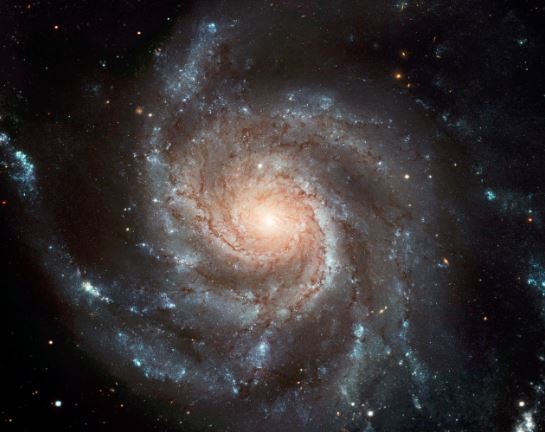
What type of galaxy is this?
a)
Spiral
b)
Elliptical
c)
Irregular 
d)
Irrational
56.
What type of galaxy is this?
a)
Sprial
b)
Elliptical
c)
Irregular
d)
Irrational
57.
What type of galaxy is this?
a)
Spiral
b)
Elliptical
c)
Irregular
d)
Irrational
58.
What type of galaxy is this?
a)
Spiral
b)
Elliptical
c)
Irregular
d)
Irrational
59.
What type of galaxy do we live in?
a)
Spiral
b)
Elliptical
c)
Irregular
d)
Coaxial
60.
What is in the center of our galaxy and other spiral galaxies?
a)
a faint star
b)
a supermassive black hole
c)
lots of small stars
d)
a blue giant
61.
Virgo Cluster is an example of
a)
Galaxy cluster
b)
Galaxy bluster
c)
Galaxy superunit
d)
Galaxy subunit
62.
Sirius and Alpha Centari are examples of
a)
stellar regions
b)
planets
c)
stars
d)
galaxies
63.
The two ways that we can tell a sun has planets orbiting around it are
a)
wobble and brightness of the sun
b)
transit and size of the sun
c)
wobble and transit
d)
we can not detect this
64.
Describe Earth's Orbit. 
a)
About 365 days. 
b)
A nearly circular path around the sun. 
c)
Gravity 
d)
Earth rotates on its axis.
65.
How does Earth's tilt cause the seasons?
a)
It's in the southern hemisphere. 
b)
Earth orbits. 
c)
One hemisphere tilts away from the sun, so the amount of sunlight varies. 
d)
It becomes June Solstice. 
66.
Planets that are closer to the sun
a)
take more time to orbit
b)
take less time to orbit
67.
The order of the planets is:
a)
Mars,Venus,Earth,
Mercury,Saturn
Jupiter, Uranus, Neptune
b)
Earth,Venus,Mars
Jupiter, Neptune,
Mercury,Saturn,
Uranus
c)
Mercury,Venus,Earth
Mars,Jupiter,
Saturn,Uranus
Neptune
68.
Day and night is caused by the _____________ of earth on its axis.
a)
revolution
b)
orbit
c)
rotation
69.
How long does it take the Earth to make one REVOLUTION around the Sun?
a)
12 hours
b)
24 hours
c)
365 days
d)
29.5 days
70.
During the phases of the Moon, the Moon appears to change shape.  This change in appearance is due to the Moon...
a)
physically changing size and shape.
b)
moving closer and then farther away from Earth.
c)
reflecting a different amount of light due to alignment with Earth and the Sun.
d)
having craters on its surface.
71.
What Moon phase is this?
a)
Full Moon
b)
Waxing Gibbous
c)
New Moon
d)
Half Moon
72.
What phase comes AFTER this one?
a)
Waxing Crescent
b)
Waning Gibbous
c)
Waxing Gibbous
d)
Third Quarter
73.

What Moon phase is this?

a)

Half Moon

b)

New Moon

c)

Third Quarter

d)

First Quarter

74.
What Moon phase is this?
a)
Waxing Gibbous
b)
Waning Crescent
c)
Waning Gibbous
d)
Full Moon
75.
What Moon phase is this?
a)
Waning Crescent
b)
Waxing Crescent
c)
Waxing Gibbous
d)
Waning Gibbous
76.

Complete the sentence: The force of gravity depends on...

a)

Distance and mass

b)

Distance and inertia

c)

Distance and speed

77.

How does distance affect gravity?

a)

Gravity decreases as distance increases.

b)

Gravity increases as distance increases

c)

Gravity stays the same no matter the distance

78.

When mass increases, what happens to the gravity?

a)

Decreases

b)

Increases

c)

Stays the same; mass does not affect gravity

79.

What is the force that pulls the earth towards the sun?

a)

Gravity

b)

Inertia

c)

Love

d)

Distance

80.

Perigee describes the point in an orbit closest to earth.

a)

True

b)

False

81.
Without gravity, the stars, planets and all celestial objects in the universe would _?_.
a)
continue to orbit each other
b)
move in a random direction
c)
move in a straight line
d)
stop moving
82.
A(n) _?_ is the gravitationally curved path of an object around a point in space.
a)
orbit
b)
rotation
c)
revolution
d)
phase
83.
If you decrease the mass of the Sun too much, what happens to the Earth? (experiment #1)
a)
It leaves the Solar system.
b)
There is no apparent change in motion.
c)
It is pulled (crashes) into the Sun.
84.
To remain in an orbit around a star, as a planet's distance from that star increases, it's velocity _?_. (experiment #3)
a)
decreases
b)
does not matter
c)
increases
85.

What is a Black Hole?

a)

A Black Hole is an area/spot in space where the gravitational pull is so strong that nothing is likely to get out

b)

Black Holes are spots in space which are to be the remains fallen planets

86.

How are Black Holes formed?

a)

By a supernova

b)

By fallen Planets

c)

By a death or collapsing of a star

87.

What are Super Massive Black Holes?

a)

A type of Black Hole of which is known to absorb/"take in" a whole galaxy

b)

Super Massive black holes are the biggest ones we know so far. Scientists believe that these black holes are the ones occupy the center of a galaxy

88.
What are earthquakes?
a)
rolling, shaking, moving or shocking of the Earth's surface
b)
a giant tidal wave
c)
an eruption
d)
a super storm
89.
What are the puzzle pieces of the Earth's surface called?
a)
Tectonic plates
b)
Puzzles
c)
Earthquakes
90.
What is the outermost layer of the Earth called?
a)
Core
b)
Mantle
c)
Crust
91.

Volcanoes are found...

a)

on land

b)

under water

c)

on islands

d)

all of the above

92.
Where do most earthquakes occur?
a)
in the Earth's mantle
b)
in the center of tectonic plates
c)
at the Earth's inner core
d)
along tectonic plate boundaries