
 Worksheets
6th End of the Year Review
Total questions: 95
Worksheet time: 1hrs 16mins
Name
Class
Date
1.
What is a non renewable resource?
a)
water
b)
wind
c)
coal
d)
biomass
2.
Which of the following is NOT a risk of using spent fuel pools?
a)
Terrorist attacks
b)
Natural disasters
c)
Malfunctions
d)
Extremely low temperatures
3.
Why are fossil fuels considered nonrenewable resources if they are still forming beneath the surface today?
a)
They are being formed as a type of methane which we cannot use.
b)
They are being formed too far beneath the surface.
c)
The fossil fuels are being broken down by a natural process.
d)
We are depleting the fossil fuels much faster than they can form.
4.
What is a fossil fuel?
a)
oil
b)
biomass
c)
wind
d)
hydro
5.

Nuclear
a)
Renewable
b)
Nonrenewable
6.
Which of the following is not a renewable resource?
a)
wind
b)
sunlight
c)
water
d)
fossil fuels
7.
What is the main reason that fewer nuclear power plants a re being built today that 40 years ago?
a)
Supplies of uranium are exhausted.
b)
Federal laws were passed stopping the construction of nuclear power plants
c)
Nuclear power plants have become too expensive.
d)
none of theses reasons
8.
Oil and natural gas result from
a)
the migration of complex carbohydrate molecules to nonporous rock formations.
b)
the decay of tiny marine organisms that accumulated on the ocean floor millions of years ago.
c)
squeezing rock in a huge vise.
d)
the burning of high-sulfur, low grade uranium.
9.
Which of the following is an advantage of nuclear energy?
a)
does not produce solid waste
b)
does not produce air pollution
c)
it is cost effective
d)
can convert uranium into natural gas
10.
Coal is formed when
a)
sediments cover dead marine organisms and heat converts them in to complex, energy-rich carbon molecules.
b)
deposits of methane are subjected to high pressure until they condense into crystals.
c)
swamplands are buried by sediment, the added weight creates heat and pressure that converts the plants into coal.
d)
oil is put under pressure and hardens.
11.
About what percentage of the world's energy comes from nuclear power plants?
a)
1%
b)
50%
c)
5%
d)
10%
12.
What particle is used to start the fission process?
a)
proton
b)
neutron
c)
electron
d)
neutrino
13.

What is an example of a renewable resource?
a)
hydroelectric
b)
oil
c)
coal
d)
fossil fuel
14.
What is a non renewable resource?
a)
water
b)
wind
c)
coal
d)
biomass
15.

What percentage of our energy use comes from fossil fuels?
a)
25%
b)
45%
c)
61%
d)
86%
16.

Human activities affect the supply and quality of resources including . . .
a)
land
b)
air
c)
water
d)
all of these
17.
Where does most of earth`s energy come from?
a)
The sun
b)
Mars
c)
Wind
d)
Water
18.
What is a fossil fuel?
a)
oil
b)
biomass
c)
wind
d)
hydro
19.
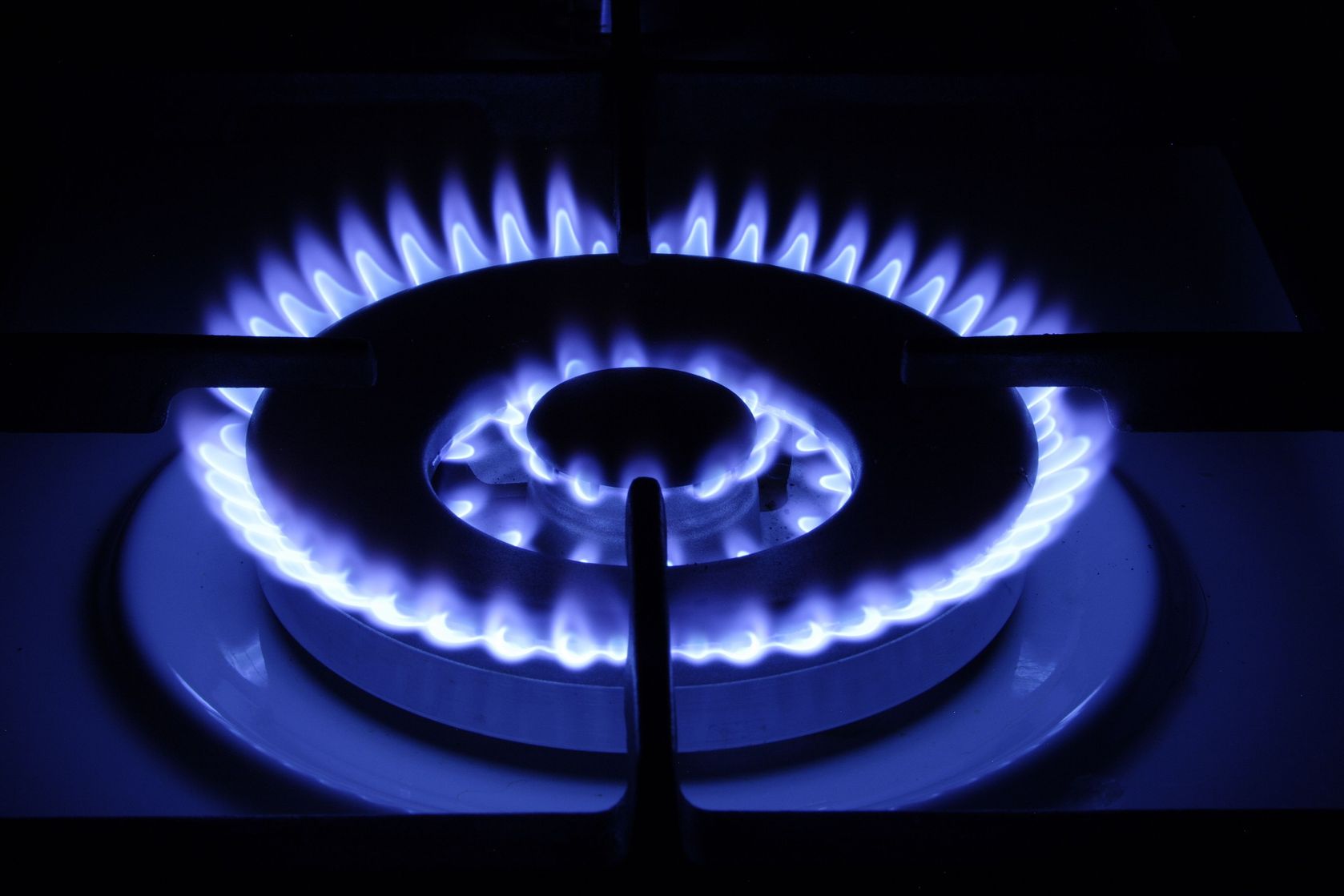
Fossil fuels are Renewable resources. True or False?
a)
True
b)
False
20.
Why are fossil fuels considered nonrenewable resources if they are still forming beneath the surface today?
a)
They are being formed as a type of methane which we cannot use.
b)
They are being formed too far beneath the surface.
c)
The fossil fuels are being broken down by a natural process.
d)
We are depleting the fossil fuels much faster than they can form.
21.
Energy we get from earth's interior heat.
a)
Geothermal
b)
Solar Energy
c)
Wind Energy
d)
Hydroelectricity
22.
Oil and Natural gas are both known as types of what?
a)
Coal
b)
Geothermal Energy
c)
Renewable Resources
d)
Petroleum
23.

_________ is natural products that provide energy through burning them.
a)
Geothermal
b)
Natural Gas
c)
Coal
d)
Biomass
24.

Trees, crops, garbage, & landfill gas are all examples of
a)
Energy
b)
Biomass
c)
Heat
d)
Nuclear waste
25.
Which renewable energy source uses the superheated water below earth's surface to spin a turbine and generator?
a)
hydroelectric dam
b)
geothermal power
c)
wind farm
d)
hydrogen fuel
26.
What form of alternative energy uses a dam?
a)
hydroelectric power
b)
geothermal power
c)
biomass power
d)
solar power
27.

Geothermal
a)
Renewable
b)
Nonrenewable
28.

Biomass
a)
Renewable
b)
Nonrenewable
29.
Nuclear
a)
Renewable
b)
Nonrenewable
30.
fuel made from plant or animal waste (organic matter)
a)
hydropower energy
b)
solar energy
c)
green
d)
biomass energy
31.

The purpose of the panels is to change solar energy into ____________.
a)
light energy
b)
electrical energy
c)
chemical energy
d)
mechanical energy
32.
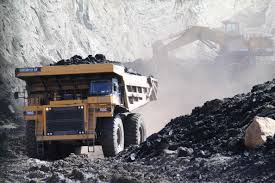
_________is compacted matter dug from under the Earth’s surface that is used to provide energy by burning it.
a)
Hydro
b)
Coal
c)
Nuclear
d)
Geothermal
33.
Why do scientists use the scientific method?
a)
To make sure they get credit for their discoveries.
b)
To make sure their results are valid and can be performed by other scientists.
c)
So that other scientist don't get mad at them
34.
True or False: Your hypothesis can never be wrong.
a)
True
b)
False
35.
If plants are exposed to sunlight, then they will grow taller.
What part of the scientific method is this an example of?
What part of the scientific method is this an example of?
a)
Procedure
b)
Hypothesis
c)
Question
d)
Results
36.
What step does every scientific experiment begin with?
a)
hypothesis
b)
question/problem
c)
procedures
d)
conclusion
37.
The summary at the end of an experiment that explains the results.
a)
conclusion
b)
procedures
c)
materials
d)
hypothesis
38.
Observations made during an experiment are considered:
a)
data
b)
problems
c)
conclusions
d)
questions
39.

What is a hypothesis?
a)
an educated guess stating what you believe will be the result of your experiement
b)
a random guess
c)
a statement of the outcome of your experiment
d)
step by step directions for your experiment
40.
The independent variable is the ONE thing you _____.
a)
change on purpose
b)
control or keep constant
c)
measure
41.
Anything that can change in an experiment. There are three types of these in an experiment.
a)
variables
b)
constant
c)
independent
d)
dependent
42.
The summary at the end of an experiment that explains the results is called the ___________________
a)
conclusion
b)
procedures
c)
materials
d)
responding variable
43.
This part of the experiment serves as a basis of comparison; the one variable being tested has been omitted.
a)
experimental group
b)
control group
c)
data
d)
variables
44.
This variable in an experiment is the one being deliberately changed by the scientist.
a)
dependent variable
b)
independent variable
c)
data
d)
control group
45.
When a warm air mass gently slides on top of a cold air mass, and you have drizzly rain and then warmer weather, what type of front is it?
a)
warm front
b)
cold front
c)
occluded front
d)
stationary front
46.
rapidly moving cold air mass runs into a warm air mass the cold air slides under the warm air. This is called a .....
a)
cold front
b)
warm front
c)
stationary front
47.

What symbol is this?
a)
warm front
b)
cold front
c)
stationary front
d)
occluded front
48.
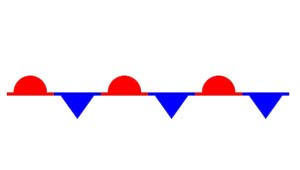
LABEL THE FOLLOWING FRONTS AND/OR WEATHER MAP SYMBOLS.
a)
warm front
b)
cold front
c)
stationary front
d)
occluded front
49.
There are nine dolphins in this pod.
a)
qualitative
b)
quantitative
50.
Dolphins eat the equivalent of 4 - 5% of their body mass each day.
a)
qualitative
b)
quantitative
51.
The flower is red.
a)
Qualitative data
b)
Quantitative data
52.
The mass of the beaker was 122 grams.
a)
Qualitative data
b)
Quantitative data
53.
All of the mold samples have grown this week.
a)
Qualitative
b)
Quantitative
c)
Both
d)
Neither
54.
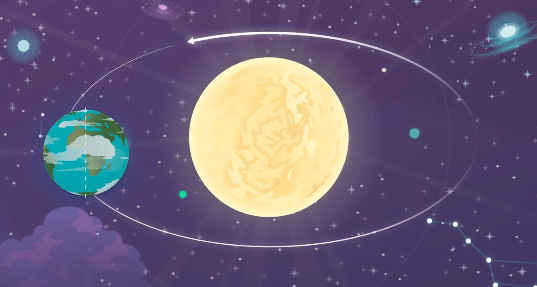
How long does it take for the Earth to make one full orbit around the Sun?
a)
one day
b)
one week
c)
one month
d)
one year
55.
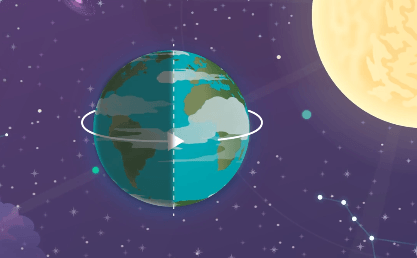
The Earth is rotating on its axis, creating _____
a)
the 12 months
b)
the years
c)
the seasons
d)
day and night
56.

As the Earth travels around the Sun, it creates a pattern that makes _____
a)
the months
b)
the years
c)
the seasons
d)
day and night
57.
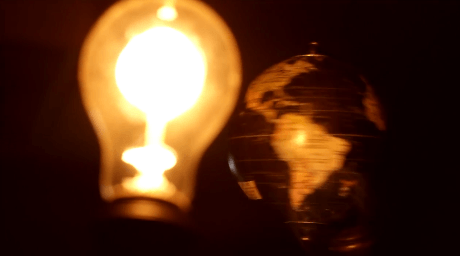
When the Earth completes a full orbit around the Sun, it has completed _____ rotations or days
a)
7
b)
30
c)
91
d)
365
58.
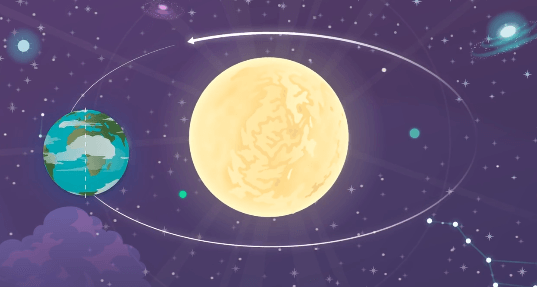
The movement of the Earth around the Sun is called its _____
a)
revolution
b)
rotation
c)
precession
d)
gyration
59.

The invisible line that passes through the North Pole and the South Pole is called Earth's ____
a)
axis
b)
equator
c)
ecliptic
d)
prime meridian
60.
Which gas in our atmosphere is most abundant?
a)
Argon
b)
Oxygen
c)
Nitrogen
d)
Carbon Dioxide
61.
What are the 2 most abundant gases in Earth's atmosphere?
a)
carbon dioxide and oxygen
b)
carbon dioxide and nitrogen
c)
nitrogen and oxygen
d)
nitrogen and hydrogen
62.

What is recycling all about?
a)
taking something old and keeping it old
b)
taking something old and turning it into something new
c)
taking something new and turning it into something old
d)
taking something new and never using it
63.
The moon seems to change shape from day to day in a cycle that lasts about a month as it goes through _.
a)
revolutions
b)
phases
c)
rotations
d)
eclipses
64.
Which moon phase is when you can't see the moon at all?
a)
Waning crescent
b)
Full moon
c)
Waxing gibbous
d)
New moon
65.
What causes the phase of the Moon to change each night?
a)
The Moon changes its acutal shape throughout the course of the month.
b)
The alignment between the Earth, Moon, and Sun determines the amount of light reflected by the Moon.
c)
The season of the year determines the phase of the Moon.
d)
The closer the Moon is to Earth, the more light the Moon reflects.
66.
During the phases of the Moon, the Moon appears to change shape. This change in appearance is due to the Moon...
a)
physically changing size and shape.
b)
moving closer and then farther away from Earth.
c)
reflecting a different amount of light due to alignment with Earth and the Sun.
d)
having craters on its surface.
67.
The parts of an ecosystem that are currently living or that have once lived.
a)
Biotic Factor
b)
Abiotic Factor
c)
Species
d)
Biome
68.
The factors in an ecoysystem that have never had the ability to live.
a)
Biotic Factor
b)
Abiotic Factor
c)
Biome
d)
Community
69.
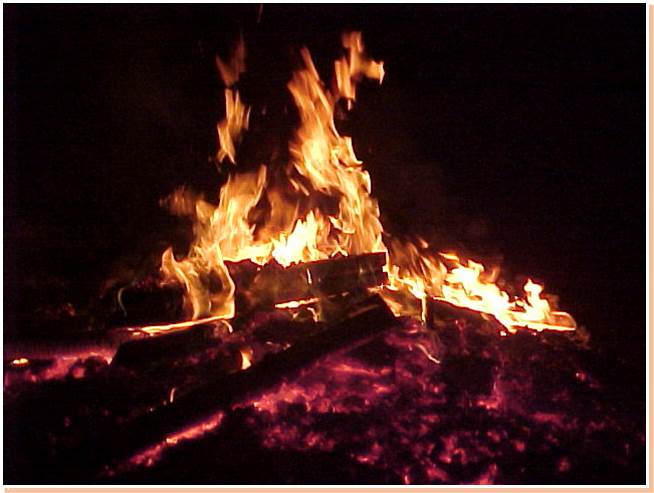
What abiotic factors are present in the picture?
a)
Fire
b)
Oxygen
c)
Heat
d)
All of the Above
70.
A certain plant needs moisture, carbon dioxide, oxygen, light, and minerals to survive. This scenario shows that this particular living organism depends on .
a)
Biotic and Abiotc Factors
b)
Biotic Factors
c)
Abiotic Factors
d)
None of the Above
71.
What do you call an area of higher ground that separates watersheds?
a)
River
b)
Divide
c)
Tributary
d)
Flood Plain
72.
An area of land where the surface water and ground water drain into a particular body of water.
a)
aquifer
b)
watershed
c)
subsidence
d)
divide
73.
A geographical barrier.
a)
aquifer
b)
divide
c)
runoff
d)
point source
74.
Air moves because of differences in temperature and pressure.
a)
True
b)
False
75.
Winds are moving air.
a)
True
b)
False
76.
Which statement correctly defines wind?
a)
Wind is the movement of air from areas of low pressure to areas of high pressure
b)
Wind is the movement of air to a colder area in the atmosphere.
c)
Wind is the movement of air from areas of high pressure to areas of low pressure.
d)
Wind is the movement of air pushed around and bouncing off Earth's surface.
77.

What is the process in which rock is broken down by changes in its chemical makeup?
a)
physical weathering
b)
chemical weathering
78.

What causes minerals in rocks to be changed and leads to the deterioration of the rock?
a)
chemical weathering
b)
physical weathering
79.
an atom with atomic number 6 would have how many protons
a)
6
b)
12
c)
3
d)
cannot be determined
80.
The number of Na's in Na₂CO₃
a)
1
b)
2
c)
3
d)
6
81.
How many Elements are in the compound C2H8O ?
a)
2
b)
1
c)
3
d)
0
82.
How many total atoms are in the compound C2H8O ?
a)
11
b)
2
c)
8
d)
1
83.
How many Sodium (Na) are in 6NaCl?
a)
1
b)
12
c)
6
84.
How many atoms are there TOTAL in:
H2SO4
H2SO4
a)
6
b)
5
c)
7
d)
3
85.

a)
the independent variable is distance
b)
the independent variable is d=25 t
c)
the dependent variable is time
d)
the dependent variable is distance
86.
On a graph, which axis shows the independent variable?
a)
x-axis
b)
y-axis
c)
neither
d)
it changes
87.
On a graph, which axis shows the dependent variable?
a)
x-axis
b)
y-axis
c)
neither
d)
it changes
88.

What was the independent variable in this experiment?
a)
Force
b)
Stretch Distance
c)
Type of Spring Used
89.
Energy due to motion is ____________ energy.
a)
Potential
b)
Energy
c)
Kinetic
d)
Friction
90.

What is the water cycle?
a)
the 3 forms of water
b)
the movement of water on, above, or below the surface of the Earth
c)
when water melts
d)
when clouds form
91.
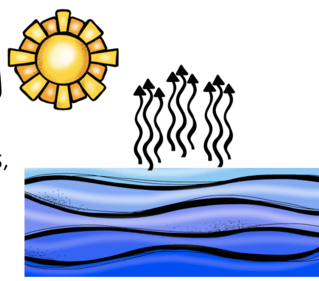
Evaporation happens when the sun ___________ water and turns it into vapor.
a)
cools
b)
heats up
c)
freezes
d)
lights up
92.
Which of these is an example of precipitation?
a)
snow
b)
air
c)
clouds
d)
vapor
93.
What is condensation?
a)
The part of the water cycle when the sun heats up water, turning it from a liquid into water vapor or steam. It rises from the ground into the air.
b)
The part of the water cycle when the water vapor in the air gets cold. The water turns back into a liquid and forms clouds.
c)
The part of the water cycle when clouds get heavy and can no longer hold the liquid water. This causes the water to fall from the sky to the earth as rain, snow, sleet, or hail.
94.
Rainwater can dissolve chemicals that are on the ground. This is because water ....
a)
has capillary action
b)
is the universal solvent
c)
evaporates
d)
is made of oxygen
95.
Water can dissolve many things so it is called the .....
a)
wonderful water
b)
cohesion
c)
liquid
d)
universal solvent
100 %

