wayground logo

Free Printable Worksheets

Font size

S
M
L
XL
Worksheets

Weather Unit Review

Total questions: 95

Worksheet time: 1hrs 18mins

Name
Class
Date
1.

What part of the illustration shows Evaporation?

a)

1

b)

2

c)

3

d)

4

2.

Which number illustrates Condensation?

a)

1

b)

2

c)

3

d)

4

3.

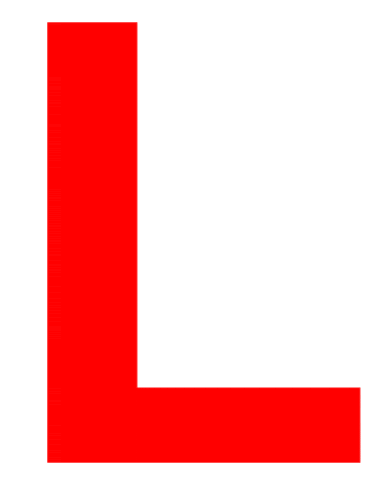
What does this symbol on a weather map indicate?

a)

High pressure system

b)

Low pressure system

c)

Cold front

d)

Warm front

4.

What does this symbol indicate on a weather map?

a)

High pressure system

b)

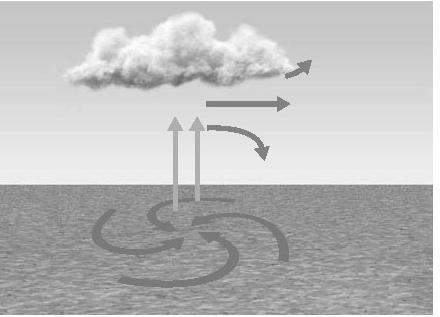
Low pressure system

c)

Cold front

d)

Warm front

5.

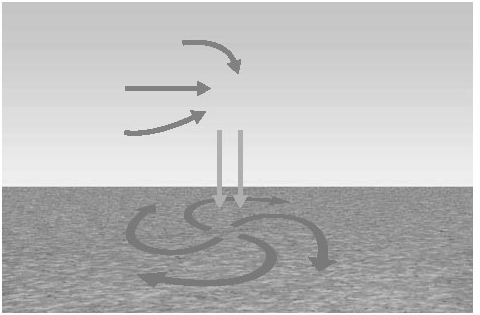
What kind of weather is usually associated with a high pressure system?

a)

Sunny weather

b)

Precipitation (rain, snow, etc.)

6.

Which weather tool measures air pressure?

a)

thermometer

b)

barometer

c)

anemometer

d)

psychrometer

7.

This weather tool measures wind speed and direction

a)

thermometer

b)

barometer

c)

anemometer

d)

psychrometer

8.
Which weather tool measures temperature?
a)
thermometer
b)
barometer
c)
psychrometer
d)
anememeter
9.
The boundary  between two air masses is known as:
a)
front
b)
storm
c)
climate
d)
flood
10.
Mark looks at the clouds in the sky and decides that he does not need to
take his umbrella with him today. Which clouds did Mark most likely see
in the sky?
a)
cirrus
b)
nimbostratus
c)
cumulonimbus
11.
Which type of cloud is most often observed during a thunderstorm?
a)
cirrus
b)
stratus
c)
cumulus
d)
cumulonimbus
12.
Hot air (RISES / FALLS) __________.
a)
RISES
b)
FALLS
13.
Cold air (RISES/ FALLS)  _________.
a)
RISES
b)
FALLS
14.
Which condition usually means cloudy, stormy weather?
a)
high pressure
b)
low pressure
15.
a)
nimbostratus cloud
b)
cumulonimbus cloud
c)
cirrocumulus cloud
d)
altostratus cloud
16.
name this front
a)
warm front
b)
cold front
c)
stationary front
d)
occluded front
17.
What does this symbol on a weather map indicate? 
a)
High pressure system
b)
Low pressure system
c)
Cold front
d)
Warm front
18.
A _____ is a large, swirling, low-pressure system that forms over the Atlantic Ocean.
a)
blizzard
b)
cold front
c)
tornado 
d)
hurricane
19.
A violently rotating column of air called a _____ when it comes in contact with the ground.
a)
hurrican
b)
tornado
c)
trade wind
d)
local wind
20.
Rain, snow, sleet, and hail are all forms of _____.
a)
precipitation
b)
condensation
c)
evaporation
d)
climate
21.
The amount of water vapor present in the air is called ________________.
a)
weather
b)
humidity
c)
air mass
d)
dew point
22.
When a warm air mass gently slides on top of a cold air mass, and you have drizzly rain and then warmer weather, what type of front is it?
a)
warm front
b)
cold front
c)
occluded front
d)
stationary front
23.
What type of storm front is this? 
a)
warm front
b)
cold front
c)
stationary front
d)
occluded front
24.
Located at the leading edge of a temperature drop off. Bring heavy thunderstorms, rain, and hail. Cool, fair weather is likely to follow.  
a)
Warm Front
b)
Cold Front
c)
Occluded Front
d)
Stationary Front 
25.
Located at the leading edge of a warm air mass. Brings gentle rain or light snow, followed by warmer, milder weather.  
a)
Warm Front
b)
Cold Front 
c)
Occluded Front 
d)
Stationary Front 
26.
Where the warm and cold air meet and stall, clouds and fog form, and it may rain or snow.  It could bring many days of clouds and precipitation.  
a)
Warm Front
b)
Cold Front
c)
Occluded Front 
d)
Stationary Front 
27.
When a cold front overtakes a warm front, the temperature drops as the warm air mass is cut off from the ground and pushed upward.  It can bring strong winds and heavy precipitation. 
a)
Warm Front
b)
Cold Front
c)
Occluded Front
d)
Stationary Front 
28.
This is the symbol for a... 
a)
Cold Front
b)
Warm Front
c)
Stationary Front
d)
Occluded Front 
29.
This is the symbol for a... 
a)
Occluded Front
b)
Stationary Front
c)
Warm Front
d)
Cold Front 
30.
This is the symbol for a... 
a)
Stationary Front
b)
Occluded Front
c)
Cold Front
d)
Warm Front
31.
This is the symbol for a... 
a)
Stationary Front
b)
Occluded Front
c)
Cold Front
d)
Warm Front 
32.
Identify the type of front that is shown in the image.
a)
Occluded Front
b)
Cold Front
c)
Stationary Front
d)
Warm Front
33.
Identify the type of front that is shown in the image.
a)
Occluded Front
b)
Cold Front
c)
Stationary Front
d)
Warm Front
34.
Identify the type of front that is shown in the image.
a)
Occluded Front 
b)
Cold Front
c)
Stationary Front
d)
Warm Front
35.
Identify the type of front that is shown in the image.
a)
Occluded Front
b)
Cold Front
c)
Stationary Front
d)
Warm Front
36.
Identify the type of front that is shown in the image.
a)
Occluded Front
b)
Cold Front
c)
Stationary Front
d)
Warm Front
37.
Air pressure is greatest:
a)
closer to Earth
b)
farther from Earth
38.
When severe weather conditions are present, a _______ is issued
a)
watch
b)
warning
39.
Which type of pressure system is pictured?
a)
high
b)
low
c)
medium
d)
none
40.
What type of weather would you expect with the pressure system pictured?
a)
clear
b)
cloudy
c)
severe storms
d)
hot
41.
Which type of pressure system is pictured?
a)
high
b)
low
c)
medium
d)
none
42.
What type of weather would you expect from the pressure system pictured?
a)
clear
b)
cloudy
c)
hot
d)
stormy
43.
The temperature at which air is saturated and condensation forms is the:
a)
dew point
b)
rain point
c)
wind point
d)
relative humidity
44.
Why do hurricanes inflict more damage than tornadoes?
a)
they are larger
b)
longer duration
c)
also associated with flooding and strong rains
d)
all of the rest
45.
Cold air traveling south from Canada is:
a)
continental tropical
b)
continental polar
c)
maritime tropical
d)
maritime polar
46.
Warm air moving upwards from the Gulf of Mexico is:
a)
continental tropical
b)
continental polar
c)
maritime tropical
d)
maritime polar
47.
Warm air mass that does not carry water:
a)
continental tropical
b)
continental polar
c)
maritime tropical
d)
maritime polar
48.
Cold air mass that is carrying water is:
a)
continental tropical
b)
continental polar
c)
maritime tropical
d)
maritime polar
49.
In _________ pressure systems, air sinks:
a)
high
b)
low
c)
medium
d)
none
50.
In _______ pressure systems, air rises
a)
high
b)
low
c)
medium
d)
none
51.
This type of front results in the same weather for several days
a)
warm
b)
cold
c)
stationary
d)
occluded
52.
Which option pictured describes how rain is formed?
a)
A
b)
B
c)
C
d)
D
53.
Which option pictured shows how sleet forms?
a)
A
b)
B
c)
C
d)
D
54.
Which option pictured shows how hail forms?
a)
A
b)
B
c)
C
d)
D
55.
A(n) _____ is a large body of air that has properties similar to the part of Earth's surface over which it depends.
a)
tornado
b)
pressure system
c)
front
d)
air mass
56.
What does this symbol on a weather map indicate? 
a)
High pressure system
b)
Low pressure system
c)
Cold front
d)
Warm front
57.
What is the most abundant gas found in the atmosphere?
a)
Carbon Dioxide
b)
Nitrogen
c)
Oxygen
d)
Water Vapor
58.
What layer does weather occur in?
a)
mesosphere
b)
troposphere
c)
thermosphere
d)
stratosphere
59.
Where is the ozone layer located?
a)
Thermosphere
b)
Troposphere
c)
Stratosphere
d)
Mesosphere
60.
The blanket of gases that surrounds the Earth
a)
Lithosphere
b)
Atmosphere
c)
Hydrosphere
d)
Green House Effect
61.
What type of cloud looks like cotton and is in the lower altitudes?
a)
Cumulus
b)
Stratus
c)
Cirrus
62.
In a sea breeze, the air is warmer above the _____.
a)
land
b)
ocean
c)
sky
d)
beach
63.
How does the air move in a sea breeze?
a)
wind moves from north to south
b)
wind moves from ocean to the land
c)
wind moves from the land to the ocean
d)
wind moves from south to north
64.
How does the air move in a land breeze?
a)
From east to west
b)
From west to east
c)
From the land to the ocean
d)
From the ocean to the land
65.
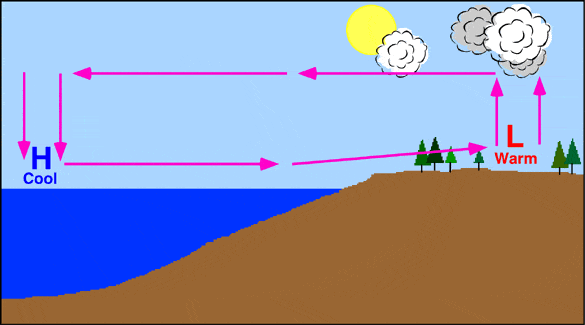
Is this a land or a sea breeze?
a)
land breeze
b)
sea breeze
66.

The sun shines down on this family as the play on the beach.

a)

conduction

b)

convection

c)

radiation

67.

Walking on the warm sand sand with your bare feet.

a)

conduction

b)

convection

c)

radiation

68.
Blow drying your wet hair.
a)
conduction
b)
convection
c)
radiation
69.

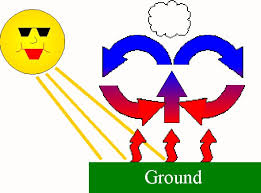
Warm air rises and the cool air sinks.

a)

conduction

b)

convection

c)

radiation

70.

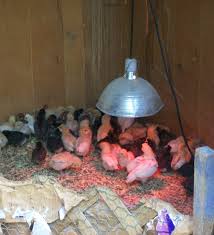
The baby chickens are kept warm from the heat lamps.

a)

conduction

b)

convection

c)

radiation

71.
This weather instrument is a...
a)
anemometer
b)
barometer
c)
wind vane
d)
thermometer
72.
This weather instrument is a...
a)
anemometer
b)
Christmas ornament
c)
wind vane
d)
barometer
73.
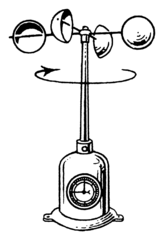
This weather instrument is an...
a)
wind vane
b)
anemometer
c)
barometer
d)
thermometer
74.
What is the most abundant gas found in the atmosphere?
a)
Carbon Dioxide
b)
Nitrogen
c)
Oxygen
d)
Water Vapor
75.
Clouds are formed when millions of drops of water become suspended in the air.  Which of the following is a step in the process of cloud formation?
a)
Condensation of Water Vapor
b)
Expansion of Cold Air
c)
Breakdown of Atmospheric Ozone
d)
Formation of Carbon Dioxide
76.
What are the TWO most abundant gases in Earth's atmosphere?
a)
Carbon dioxide and oxyen
b)
Nitrogen and oxygen
c)
Oxygen and ozone
d)
Oxygen and hydrogen
77.
As altitude increases, the air pressure - 
a)
increases
b)
decreases
c)
stays the same
d)
doubles
78.
In which layer of the atmosphere does most weather occur?
a)
Troposphere
b)
Thermosphere
c)
Mesosphere
d)
Ionosphere
79.
Clouds that are flat and layered are known as - 
a)
Status
b)
Cirrus
c)
Cumulus
d)
Cumulonimbus
80.
The ozone layer protects people from which of the following
a)
effects of radon
b)
too much UV radiation
c)
carbon monoxide poisoning
d)
allergies
81.
Cirrus clouds are - 
a)
puffy and white
b)
low in the sky
c)
thunderstorm clouds
d)
thin and feathery
82.
Air is composed of 78 % of this element.
a)
Carbon Dioxide
b)
Nitrogen
c)
Oxygen
d)
Water Vapor
83.
Air is composed of 21% of this element.
a)
Carbon Dioxide
b)
Nitrogen
c)
Oxygen
d)
Water Vapor
84.
Why does warm air rise?
a)
gravitational pull
b)
Warm air rises, cool air sinks. Warm air has lower density
c)
the heat is drawn back to the sun
85.
Where you will find the ozone layer.
a)
stratosphere
b)
thermosphere
c)
exosphere
d)
mesosphere
86.
Where we live.
a)
stratosphere
b)
thermosphere
c)
troposphere
d)
mesosphere
87.
Considered to be a part of the thermosphere.
a)
ionosphere
b)
thermosphere
c)
troposphere
d)
mesosphere
88.
The coldest layer.
a)
troposphere
b)
thermosphere
c)
exosphere
d)
mesosphere
89.
The hottest layer.
a)
troposphere
b)
thermosphere
c)
exosphere
d)
mesosphere
90.

Which order is correct from the earth to space?

a)

thermosphere

troposphere

exosphere

mesosphere

stratosphere

ionosphere

b)

thermosphere

troposphere

stratosphere

exosphere

mesosphere

ionosphere

c)

exosphere

ionosphere

thermosphere

mesosphere

stratosphere

troposphere

d)

troposphere

thermosphere

troposphere

stratosphere

exosphere

mesosphere

91.
Air moves because of ___ of Earth's surface.
a)
uneven heating
b)
even heating
c)
the magic of wind
d)
the dryness
92.
Global winds curve as Earth rotates. This is called the  __ and creates global wind belts.
a)
Coriolis Effect
b)
high pressure areas
c)
Cornhole Effect
d)
Candy Corn Effect
93.
The trade winds go from____.
a)
east to west
b)
north to south
c)
south to north
d)
west to east
94.
The westerlies go from____.
a)
east to west
b)
north to south
c)
south to north
d)
west to east
95.
Before the invention of steam engines, sailors avoided the _____ because there wasn't enough wind to move the sailing ships.
a)
doldrums
b)
easterlies
c)
westerlies
d)
trade wind