
NEW
Font size
S
M
L
XL
 Worksheets
Assessment - Unit 2 "Reproduction & Genetics"
Total questions: 46
Worksheet time: 1hrs 26mins
Name
Class
Date
1.
Of sixteen rabbits just born, thirteen have brown fur and three have white fur. The trait for white fur is considered to be ______________.
a)
recessive
b)
dominant
c)
stronger
d)
weaker
2.
A pure black guinea pig was crossed with a pure white quinea pig and all the resulting offspring were black. Having black fur is most likely what type of trait?
a)
dominant
b)
recessive
c)
sex-linked
d)
genetically inherited
3.
In a certain variety of plants, red flowers appear in majority of plants and blue flowers appear only in a few plants. Which statement correctly describes the two traits?
a)
Both flower colors are dominant traits.
b)
Both flower colors are recessive traits.
c)
Red is a dominant trait and blue is a recessive trait.
d)
Red is a recessive trait and blue is a dominant trait.
4.

Using the punnet square image provided, If the two parents represented in the Punnett square have four offspring, what does the Punnett square tells you?
a)
Two of the offspring will definitely have the genotype Aa.
b)
It is more likely that two of them will have the genotype Aa than the genotype aa.
c)
There is a 50% chance for each of the four offspring to have the genotype Aa.
d)
It is less likely that two of them will have the genotype Aa than the genotype aa.
5.
During the process of reproduction, what type of information is passed from parent to offspring?
a)
photosynthetic information
b)
abiotic information
c)
environmental information
d)
genetic information
6.
Two red flowers were crossed. The resulting offspring were 75% red and 25% yellow. Which term would be used to describe the yellow flower color?
a)
sex-linked
b)
dominant
c)
co-dominant
d)
recessive
7.
A plant that has red flowers was crossed with a plant that has white flowers. All of the offspring produced pink flowers. In this plant:
a)
the gene for red flowers is dominant.
b)
the gene for white flowers is dominant.
c)
neither gene for flower color is dominant, within which the trait is showing an incomplete dominance trait.
d)
a new gene for pink flower color probably formed in a mutation.
8.
Who is the Austrian monk who worked with pea plants and is credited with first proposing a theory of heredity?
a)
Gregor Mendel
b)
Charles Darwin
c)
Robert Hooke
d)
Rudolph Virchow
9.

Refer to the Punnett square to answer the question: In peas, tall plants are dominant and short plants are recessive. A tall plant that is heterozygous dominant (Tt) is crossed with a short plant that is homozygous recessive (tt). Predict the probability that they will produce an offspring with the genotype Tt.
a)
0%
b)
25%
c)
50%
d)
100%
10.
Mutations cause structural changes in a molecule that helps transmit hereditary information. The molecule is ______________________.
a)
a mineral
b)
DNA
c)
a protein
d)
a carbohydrate
11.

In a flower, the allele for red color is dominant (R) over the allele for white color (r). A cross between two red flowers is shown in the Punnett square below.
a)
rr
b)
Rr
c)
RR
d)
RR and rr
12.
What is the process that is commonly used to assure desirable characteristics, or traits, in the offspring of animals?
a)
selective breeding
b)
genetic splicing
c)
cloning
d)
selective mutation
13.

The punnet square shown is a cross between two heterozygous dominant black rabbits (Bb). What is the probability they will produce an offspring with the genotype bb?
a)
75%
b)
25%
c)
50%
d)
0%
14.
In short, genetics can be defined as:
a)
the study of animals
b)
the study of heredity
c)
the study of cloning
d)
the study of human reproduction
15.
A person with red hair has different ________________ than a person with blonde hair.
a)
centromeres
b)
alleles
c)
chloroplasts
d)
ribosomes
16.
In humans, a trait like red hair color tends to run in families. This is because ____________.
a)
hair color is a genetic characteristic
b)
hair color is a physical characteristic
c)
hair color is an environmental characteristic
d)
particular hair color by chance
17.

The Punnett square shows a cross between two plants that are heterozygous dominant for the trait of having round seeds (Rr). What is the genotype of the wrinkled seed produced from the cross?
a)
only ss
b)
only Ss
c)
both Ss and ss
d)
Both SS and ss
18.
An individual with two different alleles for a specific trait is said to be:
a)
homozygous
b)
heterozygous
c)
homogeneous
d)
heterogeneous
19.

Use the picture to answer the question. A cross between two brown eyed parents is shown below (both are heterozygous dominant). A cross between two brown eyed parents is shown above. Which statement BEST explains why blue eyes appear only in 25% of offspring?
a)
Blue eyes is a mutated trait
b)
Blue eyes is a recessive trait
c)
Blue eyes is a dominant trait
d)
Blue eyes is an acquired trait.
20.
From a cross between a short haired guinea pig (hh) and a long haired guinea pig (Hh), what would be the possible phenotypes of the offspring? Create a punter square analysis to complete the question.
a)
100% will have long hair
b)
75% will have long hair, 25% will have short hair
c)
50% will have long hair, 50% will have short hair
d)
25% will have long hair, 75% will have short hair.
21.

In a particular breed of cattle, the trait of not having horns (Pp) is dominant over having horns (pp). The Punnett square below shows a cross between parents with Pp and pp genotype. What percentage of offspring will be without horns?
a)
0%
b)
25%
c)
50%
d)
75%
22.
In a cross between two pea plants, trait for yellow seed color appears when the expressed gene has one or both alleles for yellow color. Green color appears only when both alleles code for green color. What conclusion can be drawn from the statement?
a)
Both yellow color and green color are acquired traits.
b)
Yellow color is a normal trait while green color is a mutated trait.
c)
Yellow color is a dominant trait while green color is a recessive trait.
d)
Yellow color is a recessive trait while green color is a dominant trait.
23.
Two tall pea plants, not true for tallness, are crossed. 56 tall plants and 14 short plants are produced from this cross. The allele for tallness is
a)
codominant
b)
incomplete dominance
c)
recessive
d)
dominant
24.
A woman with a cleft chin and a man with a cleft chin have a child with a straight chin. The allele for having a straight chin must be
a)
dominant
b)
recessive
c)
codominant
d)
incomplete dominant
25.
If P=purple and p=pink, use a Punnett Square for a cross between two purple flowers (Pp and Pp) to determine the possible phenotypes for the offspring.
a)
50% purple and 50% pink
b)
75% purple and 25% pink
c)
100% purple
d)
25% purple and 75% pink
26.
Which term describes visible or detectable genetic features?
a)
genotype
b)
phenotype
c)
allele
d)
gene
27.
A specific characteristic that varies from one individual to another is:
a)
an allele
b)
a gene
c)
a trait
d)
a chromosome
28.

A test cross is performed on a purple flower with an unknown genotype. The results of the cross are 50% purple and 50% white flowers. White flowers are a recessive trait. What is the genotype of the original purple flower?
a)
PP
b)
Pp
c)
pp
d)
none of the answers are correct
29.
Which of these terms describes the genetic information that is passed from parents to offspring?
a)
trait
b)
phenotype
c)
genotype
d)
allele
30.

In a mouse, black colored fur (F) is dominant over white colored fur (f). A cross between black colored mouse and white colored mouse is shown in the Punnett square below. The genotypes of offspring in box 1 and box 2 are ________.
a)
Ff and Ff
b)
Ff and ff
c)
FF and ff
d)
none of the answers are correct
31.

How many parents does asexual reproduction involve?
a)
one
b)
two
c)
three
d)
four
32.
Which type of asexual reproduction is taking place?
A planarian is a non-parasitic flatworm. If a planarian was injured by a predator, it could re-grow its body parts. If the body parts were not eaten by the predator, the part could re-grow into a whole new planarian as well.
A planarian is a non-parasitic flatworm. If a planarian was injured by a predator, it could re-grow its body parts. If the body parts were not eaten by the predator, the part could re-grow into a whole new planarian as well.
a)
Budding
b)
Fission
c)
Vegetative propagation
d)
Regeneration
33.

If two organisms reproduce sexually, then their offspring will exhibit a genetic makeup that is -
a)
identical to only one parent
b)
identical to all of its siblings
c)
a unique combination of traits
d)
the recessive traits of each parent
34.

The offspring from asexually reproduced organisms are?
a)
Different than their parents
b)
Identical to parents
c)
Like a combination from both parents
d)
A different species
35.

All of the offspring of an organism have the same genetic material, which is identical to the parent organism. From this, we can conclude that this organism -
a)
makes its own food
b)
is unicellular
c)
live in a marine habitat
d)
reproduces asexually
36.

The genetic material of an offspring of sexually reproducing organisms is best described as–
a)
identical to that of the other offspring
b)
a copy of the genetic material of the mother
c)
a copy of the genetic material of the father
d)
genes from both parents, in unique combinations
37.

Is the following asexual or sexual reproduction?
A labradoodle is a type of dog that is crossed between a labradoor retriever and a poodle. The labradoodle puppy takes on the traits of both of its parents. Female dogs have a pregnancy period of almost 70 days.
A labradoodle is a type of dog that is crossed between a labradoor retriever and a poodle. The labradoodle puppy takes on the traits of both of its parents. Female dogs have a pregnancy period of almost 70 days.
a)
Sexual
b)
Asexual
38.
What are some of the facts about sexual reproduction?
a)
Takes two mates to reproduce and takes a longer time to reproduce
b)
Takes one mate to reproduce and takes a shorter amount of time to reproduce
c)
Takes two mates to reproduce and takes a shorter amount of time to reproduce
d)
Takes one mate to reproduce and takes a shorter amount of time to reproduce
39.
Why does diverse offspring look similar to its parents and uniform looks identical to its parent?
a)
Diverse offspring inherits DNA from one parent, making it look similar to its parents and uniform offspring inherits different parts of DNA, making it look identical to its parents
b)
Diverse offspring inherits different parts of DNA, making it look similar to its parents and uniform offspring gets DNA from one parents making it look identical
c)
Diverse offspring inherits a little amount of DNA, making it look similar to its parents and uniform offspring inherits a lot of DNA, making it look identical to its parent
d)
Diverse offspring inherits a lot of DNA, making it look similar to its parents and uniform offspring inherits a little amount of DNA, making it look identical to its parent
40.
Which of the following is a disadvantage for sexual reproduction?
a)
a lot of time and energy is required for making gametes and finding mates
b)
offspring can be produced more quickly than by asexual means
c)
the genetic diversity makes organisms respond differently to environmental changes
d)
the offspring are genetically different
41.
The combination of alleles that codes for the phenotype is called an organism's _________________.
a)
genetic variation
b)
genotype
c)
gene
d)
allele
42.
_____________________ is the appearance of an organism, or how it looks
a)
phenotype
b)
ratio
c)
recessive trait
d)
heredity
43.

As we already know, animal like protists (the amoeba and paramecium) reproduce by asexual reproduction. Which of the following is an example of how the amoeba and paramecium reproduce using asexual reproduction?
a)
regeneration - amoebas and paramecium that are split in half will regenerate, and create more identical offspring
b)
sporulation - as amoebas and paramecium die, they release pores that reproduce other protists under certain environmental conditions.
c)
binary fission - amoebas and paramecium divide by binary fission, within which the cytoplasm and the nucleus divide equally under certain environmental conditions.
d)
budding - amoebas and paramecium reproduce by budding, within which the cytoplasm divides unequally, and the nucleus divides equally. The amoeba or paramecium can either create a colony, or split into two different protists.
44.
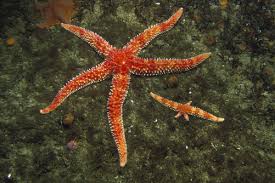
During the late 1800's, oyster fishermen were having a problem with starfish eating most of the oyster population. As a result, the fishermen "cut apart" the starfish. Why would this be a "bad" idea?
a)
Starfish reproduce by budding, within which the starfish grew back and wiped out most of the oyster population.
b)
Starfish reproduce by binary fission, within which the starfish grew back and wiped out most of the oyster population
c)
Starfish reproduce by sporulation, within which the starfish grew back and wiped out most of the oyster population
d)
Starfish reproduce by regeneration by fragmentation, within which the starfish grew back and wiped out most of the oyster population.
45.
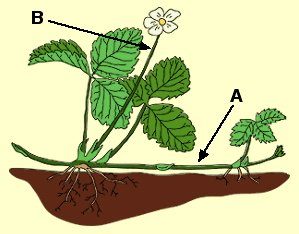
Which of the following asexual reproduction processes includes strawberries, within which strawberries reproduce when the parent organism sends out tendrils which can take root and grow into new organisms.
a)
Tuber
b)
Bulb
c)
Runner
d)
Binary Fission
46.
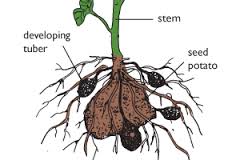
Tubers reproduce by asexual reproduction by sprouting off a new organisms from the original tuber's eye. Which of the following organisms reproduces in this fashion?
a)
Strawberries
b)
Potatoes
c)
Onions
d)
Hydra
Reset

