
 Worksheets
Types of Waves
Total questions: 17
Worksheet time: 17mins
Name
Class
Date
1.
How would you describe the movement of a longitudinal wave?
a)
Up and down
b)
Back and forth
c)
In zigzags
d)
Linear
2.
How would you describe the movement of a transverse wave?
a)
Up and down
b)
Back and forth
c)
In zigzags
d)
Linear
3.
Sound is an example of which type of wave?
a)
Transverse
b)
Longitudinal
c)
Both
d)
Neither
4.
Light is an example of which type of wave?
a)
Transverse
b)
Longitudinal
c)
Both
d)
Neither
5.
Which wave can travel in both a medium and a vacuum?
a)
Transverse
b)
Longitudinal
c)
Both
d)
Neither
6.
Which wave can only travel using a medium?
a)
Transverse
b)
Longitudinal
c)
Both
d)
Neither
7.
Which wave travels perpendicular in relation to a medium?
a)
Transverse
b)
Longitudinal
c)
Both
d)
Neither
8.
Which wave travels parallel in relation to a medium?
a)
Transverse
b)
Longitudinal
c)
Both
d)
Neither
9.
How would you describe the amplitude of a transverse wave?
a)
From centerline to crest or trough
b)
Density of the compression
c)
From centerline to compression
d)
Density of rarefaction
10.
How do you measure the wavelength of a longitudinal wave?
a)
Crest to crest
b)
Middle of compression to middle of next compression
c)
You cannot measure the wavelength.
d)
It does not have a wavelength.
11.
How do you measure the wavelength of a transverse wave?
a)
Crest to crest
b)
Middle of compression to middle of next compression
c)
You cannot measure the wavelength.
d)
It does not have a wavelength.
12.
How would you describe the amplitude of a longitudinal wave?
a)
From centerline to crest or trough
b)
Density of the compression
c)
From centerline to compression
d)
Density of rarefaction
13.
What are the parts of a longitudinal wave?
a)
Compressions and rarefactions
b)
Crests and troughs
c)
Compressions and crests
d)
Rarefactions and troughs
14.
What are the parts of a transverse wave?
a)
Compressions and rarefactions
b)
Crests and troughs
c)
Compressions and crests
d)
Rarefactions and troughs
15.
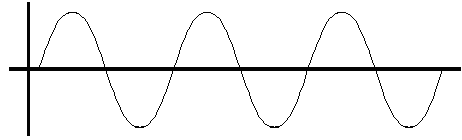
Which wave is pictured?
a)
Transverse
b)
Longitudinal
c)
Both
d)
Neither
16.

Which wave is pictured?
a)
Transverse
b)
Longitudinal
c)
Both
d)
Neither
17.
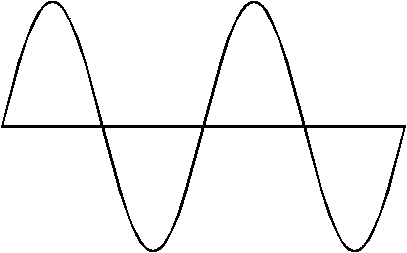
How many waves are in this picture?
a)
1
b)
2
c)
3.5
d)
4
100 %

