
 Worksheets
P4 Waves Light Sound Spectrum
Total questions: 50
Worksheet time: 2hrs 13mins
Name
Class
Date
1.

What kind of wave is pictured below?
a)
compressional wave
b)
transverse wave
c)
sound wave
d)
mechanical wave
2.
What happens when you increase the amplitude of a sound?
a)
it makes the sound louder
b)
it makes the sound travel faster
c)
it increases the wavelength of the sound
d)
it increases the frequency of the sound
3.
What is frequency?
a)
any disturbance that transmits energy through a medium
b)
the distance from any point on a wave to an identical point on the next wave
c)
the number of waves produced in a given amount of time
d)
when the particles in a longitudinal wave are spread apart
4.
What is a medium?
a)
something between a small and a large?
b)
the substance through which a wave can travel
c)
a pattern of vibration that simulates when a wave is standing still
d)
the distance from any point on a wave to an identical point on the next wave
5.

Which letter represents the wave trough?
a)
A
b)
B
c)
C
d)
D
6.

Which letter represents wavelength?
a)
A
b)
B
c)
C
d)
D
7.

Which wave has a greater frequency?
a)
A
b)
B
8.

The orange line is measuring the _________________________.
a)
wavelength
b)
amplitude
c)
crest
d)
trough
9.

____________________ is the number of waves that move past one spot in a second
a)
energy
b)
amplitude
c)
wavelength
d)
frequency
10.

High frequency waves have _________ wavelength.
a)
varying
b)
high
c)
the same
d)
low
11.

High frequency waves have _________ wavelength.
a)
varying
b)
high
c)
the same
d)
low
12.
If a sound was has a big amplitude, it will be a ____ sound.
a)
soft
b)
loud
c)
high frequency
d)
low frequency
13.
Sound travels fastest through
a)
solids
b)
liquids
c)
gases
d)
empty space
14.
One end of the rope is vibrated to produce a wave with a wavelength of .25 m. The Frequency of the wave is 3.0 Hz. What is the speed of the wave?
a)
3.00 m/s
b)
2.50 m/s
c)
.75 m/s
d)
1.25 m/s
15.

If this wave chain represents 1 second, What is the frequency of the waves?
a)
1 Hz
b)
9 Hz
c)
3 Hz
d)
6 Hz
16.

How many waves are in this wave chain?
a)
6
b)
3
c)
4
d)
5
17.

The unit of frequency is ___.
a)
meters
b)
nanometers (nm)
c)
m/s
d)
Hertz
18.
A tennis coach paces back and forth along the sideline 10 times in 2 minutes. The frequency of her pacing is
a)
5 Hz
b)
5 s
c)
0.08 Hz
d)
0.08 s
19.
A wave has frequency of 50 Hz and a wavelength of 10 m. What is the speed of the wave?
a)
500 m/s
b)
50 m/s
c)
5 m/s
d)
0.5 m/s
20.
A wave has frequency of 5 Hz and a speed of 25 m/s. What is the wavelength of the wave?
a)
25 m
b)
125 m
c)
5 m
d)
25 m/s
21.
A wave has wavelength of 10 m and a speed of 340 m/s. What is the frequency of the wave?
a)
34 m/s
b)
3400 Hz
c)
3400 m/s
d)
34 Hz
22.
What happens when light hits an object you can see?
a)
The light turns corners.
b)
The light curves around the object.
c)
The object reflects the light.
d)
The light and the object do not form a shadow.
23.
Through what kind of matter does light move fastest?
a)
liquids
b)
air
c)
matter that is lighter in color
d)
matter that is in larger objects
24.
What happens to blue light when it hits a shirt that appears blue?
a)
The light is reflected.
b)
The light is absorbed.
c)
The light is refracted.
d)
The light is blocked.
25.
What is a property of a transparent object?
a)
Almost all of the light rays that reach it are scattered.
b)
Almost all of the light rays that reach it are absorbed.
c)
Almost all of the light rays that reach it are reflected.
d)
Almost all of the light rays that reach it pass through it.
26.
Which is transparent?
a)
a wooden fence
b)
clean water
c)
aluminum foil
d)
a purple balloon
27.
What happens when light hits a mirror?
a)
it makes a color
b)
it reflects
c)
it makes a rainbow
d)
it passes through
28.
How does light travel?
a)
in a wavy path
b)
in a straight path
c)
in a zig zag path
29.
Why do we see objects as black?
a)
They absorb all the light
b)
They reflect all the light
c)
They absorb some light and reflect
30.
What do all waves have in common?
a)
nothing
b)
they carry energy
c)
they absorb light
d)
you can see them
31.
4. What separates white light into different colors?
a)
transmission
b)
absorption
c)
scattering
d)
refraction
32.
Which of these is an example of visible light?
a)
X-rays
b)
rainbow
c)
microwaves
d)
radio waves
33.
Which is true of a green grape?
a)
It absorbs green light.
b)
It absorbs white light.
c)
It reflects green light.
d)
It reflects white light.
34.
Light is a part of what spectrum?
a)
hydroelectric
b)
Solarpower
c)
electromagnetic
d)
Censa
35.
What happens when a light wave strikes an object and bounces off?
a)
Refraction
b)
Retirement
c)
Reflection
d)
Resonance
36.
electromagnetic waves with the longest wavelengths are
a)
gamma rays
b)
x-rays
c)
infrared waves
d)
radio waves
37.
which of the following does NOT belong in the electromagnetic spectrum:
a)
X-ray
b)
sound wave
c)
ultra violet rays
d)
microwaves
38.
Which waves are used to show heat loss with heat sensitive cameras?
a)
Infrared radiation
b)
ultraviolet radiation
c)
microwaves
d)
gamma rays
39.
Which rays can be felt as heat?
a)
X-Rays
b)
Infrared Radiation
c)
Ultraviolet Radiation
d)
Microwaves
40.

This type of Electromagnetic wave shows a break in bones.
a)
gamma ray
b)
x-ray
c)
brokenometer
d)
radio wave
41.

This shows the phenomenon known as....
a)
reflection
b)
refraction
c)
mirrors
d)
focal point
42.

How does light behave as it enters these mediums?
a)
continue its path as straight line.
b)
bends toward the normal
c)
bends away from the normal
d)
reflects
43.
Swimming pools and the ocean look shallower than they really are due to:
a)
reflection
b)
dispersion
c)
refraction
d)
total internal reflection
44.

What is this called?
a)
refraction
b)
reflection
c)
reconstroction
d)
retraction
45.

The fact the two angles are the same is an example of....
a)
Refraction
b)
Angle of Incidence
c)
Law of reflection
d)
Magnification
46.

The point where the rays meet is known as....
a)
Fire
b)
the focal point
c)
refraction
d)
Plane of the lens
47.

What is this image showing?
a)
Reflection
b)
Refraction
c)
The law of reflection
d)
Concave Mirror
48.
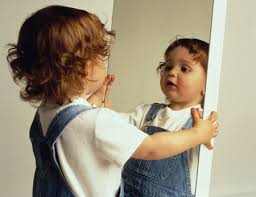
The image formed in a flat mirror is
a)
larger than the object and farther away.
b)
reduced and closer to the mirror.
c)
a real image of the object.
d)
equal to the height and distance of the object.
49.

Why does the lower part of the child appear so much different in size from the upper part?
a)
The light rays that travel through water and then into air are refracted.
b)
The light rays that travel through water and then into air are enlarged.
c)
The light rays that travel through air and then into water are reflected.
d)
The light rays that travel through air and then into water are reduced.
50.
Sound is caused by?
a)
force
b)
vibrations
c)
instruments
100 %

