
 Worksheets
Year 7 Ecology
Total questions: 34
Worksheet time: 28mins
Name
Class
Date
1.
Green plants are
a)
producers
b)
consumers
c)
herbivores
d)
omnivores
2.
What is the original source of almost all energy in most ecosystems?
a)
carbohydrates
b)
sunlight
c)
water
d)
carbon
3.

This is an image of a _________.
a)
consumer
b)
scavenger
c)
decomposer
d)
producer
4.
The energy at each trophic level in the pryamid of energy decreases by a factor of ____.
a)
10
b)
1
c)
100
d)
2
5.

What does a food web represent?
a)
All connections of energy flow throughout all organisms in a habitat.
b)
The specific ways that mutualism is carried out.
c)
A single pathway or energy flow between organisms.
d)
How carnivores get their food.
6.

The image provided is an example of a(n):
a)
Carnivore
b)
Herbivore
c)
Producer
d)
Autotroph
7.

The image provided is an example of a(n):
a)
Producer
b)
Autotroph
c)
Consumer
d)
Insect
8.
The nonliving aspects of an ecosystem.
a)
Abiotic factors
b)
Biotic factors
9.
The living portions of the ecosystem.
a)
Biotic factors
b)
Abiotic factors
10.
Water temperature would be an example of ...
a)
A biotic factor
b)
An abiotic factor
11.
A collection of organisms that belong to different populations but all live in the same area and interact with one another.
a)
Population
b)
Ecosystem
c)
Community
d)
Ecosphere
12.
A place where an organism lives.
a)
Terrain
b)
Habitat
c)
Community
d)
Population
13.
A collection of organisms that make up a community as well as all of the nonliving aspects of the environment.
a)
Population
b)
Community
c)
Habitat
d)
Ecosystem
14.
An organism at the second trophic level would be considered a...
a)
Top carnivore
b)
Producer
c)
Herbivore
d)
Carnivore
15.
True or False: It is possible for a carnivore to be a producer.
a)
False
b)
True
16.
What kind of factors include both the physical and chemical parts of an ecosystem.
a)
Abiotic
b)
biotic
c)
limiting
d)
energy
17.
Abiotic means____________.
a)
Nonliving
b)
Living
18.
What is a community?
a)
A group of the same species
b)
Cotton candy
c)
all of the populations of different species that live in an area.
19.

What are the Biotic factors in this image?
a)
There are none
b)
Sunlight, water, air
c)
Elephants, plants, trees
20.
Organisms include________,___________ and____________.
a)
soda, candy, popcorn
b)
plants, animals, bacteria
c)
baseball, football, soccer
21.
Where do animals get nitrogen from?
a)
soil
b)
air
c)
water
d)
plants
22.
Matter on Earth is limited, so it must be used ____________________________.
a)
only once
b)
over and over again
c)
by only animals
d)
at night only
23.
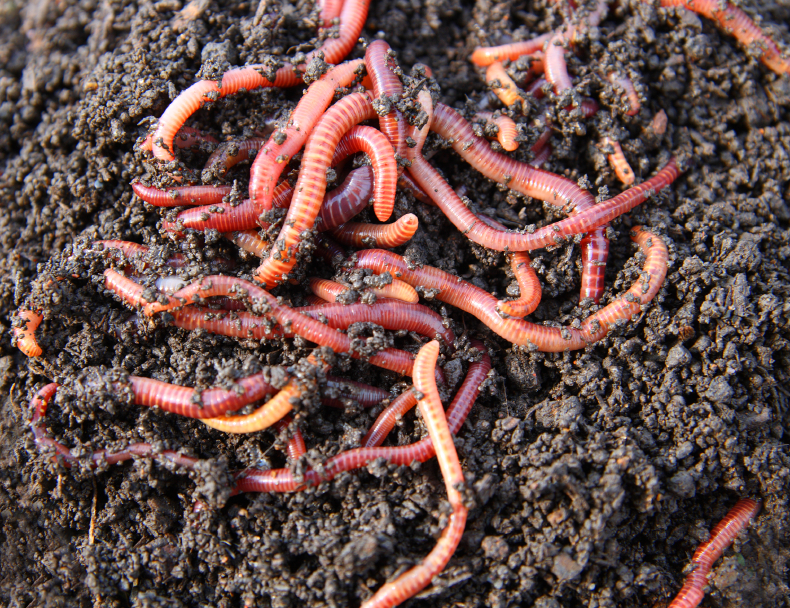
What role do these organisms play in their ecosystem as they break down matter?
a)
producer
b)
primary consumer
c)
secondary consumer
d)
decomposer
24.

What role in an ecosystem is this organism?
a)
producer
b)
primary consumer
c)
secondary consumer
d)
decomposer
25.

The diagram is intended to show relationships in an ecosystem. What do the arrows represent?
a)
The direction of population migration
b)
Differences in dietary habits
c)
Progressively smaller organisms
d)
The direction of the energy flow
26.
Which of the following is not a decomposer
a)
Vulture
b)
Fungus
c)
Worm
d)
Bacteria
27.
1. What is an adaptation?
a)
A feature or behavior that helps an animal survie.
b)
The food that an animal eats.
c)
How energy moves in a food web.
28.
A trait that helps a living thing survive is called an _______.
a)
trait
b)
adaptation
c)
survive
d)
reproduce
29.
A color or shape that helps an animal hide.
a)
camouflage
b)
adaptation
c)
Physical
d)
Behavorial
30.
Wings
a)
Behavioral
b)
Physical
31.
Migration
a)
Behavioral
b)
Physical
32.
What is the first thing that would happen in this food chain if the grass died?
Sun -> Grass -> Mouse -> Snake -> Hawk
Sun -> Grass -> Mouse -> Snake -> Hawk
a)
The snake population would increase
b)
the mouse population would increase
c)
the mouse population would decrease
d)
the hawk population would decrease
33.
Which of the following is a producer
a)
Blueberry Bush
b)
Tree
c)
Flower
d)
All of the above
34.
Plants need the sun to make their own food.
a)
True
b)
False
100 %

