
 Worksheets
Government OH AIR Test
Total questions: 114
Worksheet time: 2hrs 33mins
Name
Class
Date
1.
How many electoral college votes does it take to win the Presidency?
a)
100
b)
200
c)
270
d)
435
2.
How long do Supreme Court Justices get to keep their position?
a)
for life
b)
when they are impeached
c)
for 10 years
d)
for 8 year
3.
Which of the following rights is not covered under the 1st Amendment?
a)
Religion
b)
Speech
c)
Petition
d)
fair trial
4.
In which type of government would it be the hardest for citizens to participate?
a)
Dictatorship
b)
Democracy
c)
Parliamentary Democracy
d)
Federal
5.
The principle behind representation in our government is based on the concept of:
a)
popular sovereignty
b)
jurisdiction
c)
expressed powers
6.
What is the form of democracy that we have in this country called?
a)
direct democracy
b)
democratic republic
c)
constitutional democracy
7.
Antifederalists believed this was needed in the Constitution.
a)
Strong national government
b)
Bill of Rights
c)
Anarchy
8.
What does the Bill of Rights protect?
a)
Individual liberty and the rights of states
b)
individual liberty and the rights of the federal government
c)
individual government and the creation of bureaucracy
9.
Which of the following failures of the Articles of Confederation influenced our current US Constitution?
a)
It was able to levy taxes
b)
Setting up national courts
c)
It had a weak national government
10.
This type of government divides the power between the national, state, and local levels.
a)
federalism
b)
confederacy
c)
oligarchy
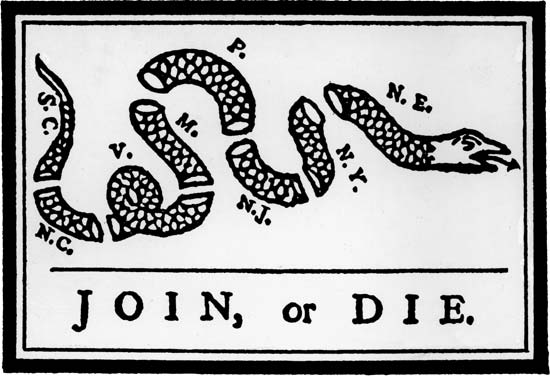
11.
The institution in which the state maintains social order, enacts laws, and provides public services is called:
a)
government
b)
unions
c)
politics
12.
This action is required to override a presidential veto.
a)
judicial review
b)
constitutional convention
c)
2/3 vote of each house
13.
The first 10 amendments are called the
a)
Bill of Rights
b)
Constitution
c)
Preamble
14.
Dividing the powers of government as the colonial charters did is called:
a)
limited government
b)
separation of powers
c)
legislative government
15.
This document establishes the structure and powers of our government.
a)
Declaration of Independence
b)
Constitution
c)
Articles of Confederation
16.
This gives Congress the right to make all "necessary and proper" laws.
a)
Elastic Clause
b)
Judicial Review
c)
Expressed Powers
17.
A state may not take a person's life, liberty, or property without:
a)
Due process
b)
original jurisdiction
c)
a Supreme Court opinion
18.
What does Article II of the Constitution describe?
a)
Judicial Branch
b)
Legislative Branch
c)
Executive Branch
19.
The United States Congress, which is made up of two houses, is a:
a)
bicameral legislature
b)
bi-session legislature
c)
constitutional legislature
20.
Which of the following constitutional amendments required the officers to have a warrant?
a)
4
b)
6
c)
7
21.
Which of the following principles of the Constitution should prevent one branch from overpowering the other two?
a)
Checks and balances
b)
Federalism
c)
Separation of Powers
22.
This is NOT a qualification for election to the House of Representatives.
a)
25 years old
b)
7 year citizen
c)
degree in law
23.
Which of the following is NOT a qualification for election to the Senate?
a)
Live in the US for 14 years
b)
30 years old
c)
Citizen for 9 years
24.
Following the Vice President, the next in succession for the Presidency is the:
a)
Speaker of the House
b)
Majority leader of the Senate
c)
President Pro Tempore
25.
As written in the Constitution, the President of the Senate is the:
a)
Majority leader
b)
Minority Leader
c)
Vice President
26.
This is the court of last resort in all questions of federal law.
a)
District Court
b)
Supreme Court
c)
Appellate Court
27.
This annual speech is given by the President to Congress.
a)
White House Address
b)
State of the Union
28.
Commander in Chief of the national armed forces is the:
a)
President
b)
Vice President
c)
Attorney General
29.
In addition to congressional override, Congress has this power over a president.
a)
Mandate
b)
Pardon
c)
Impeachment
30.
Which body chooses the President?
a)
Popular vote
b)
Electoral College
31.
Which guiding principle would allow the Supreme Court to investigate whether or not something is constitutional?
a)
Federalism
b)
Separation of Powers
c)
Judicial Review
32.
What amendment says that people have the right to own guns?
a)
1
b)
2
c)
5
d)
10
33.
Which amendment says people have a right to a trial by jury?
a)
4
b)
6
c)
12
d)
20
34.
What is an example of the Judicial Branch checking the Executive Branch?
a)
Congress overturns a court ruling using an Amendment
b)
The President is impeached and removed from office
c)
The Supreme Court declares an Executive order unconstitutional
d)
The President nominates a Supreme Court Justice
35.
Which court case decided that "separate but equal" schools were NOT OK?
a)
Brown v. Board of Education
b)
Roe v. Wade
c)
McCulloch v. Maryland
d)
Plessy v. Ferguson
36.
A concurrent power is
a)
shared between the national and state government
b)
held only by the national government
c)
held only by the state government
d)
Neither the national nor the state government has that power
37.
A system where a constitution divides power between national and state government is
a)
federalism
b)
Confederation
c)
Unitary
d)
Communism
38.
Another word for saying that government is restricted in what it may do.
a)
representative goverment
b)
limited government
c)
absolute monarchy
d)
federalism
39.
All of these are weaknesses of the Articles of Confederation, EXCEPT
a)
lack of a strong executive or judicial branch
b)
no freedom to collect taxes
c)
a lack of a strong national government
d)
all of these are weaknesses
40.
"America is a government by the people, for the people." Based on this quote, what is most true?
a)
Government leaders inherit their power in America
b)
A small, elite group controls American government
c)
The power of the government comes from citizens in America
d)
Elected government officials are more important than the citizens in America
41.
All of our courts are part of the ______ branch.
a)
Judicial
b)
Government
c)
Executive
42.
The President is part of which branch?
a)
Executive
b)
Judicial
c)
Local
43.
The highest court is the _____ Court
a)
Special
b)
Government
c)
Supreme
44.
How old do you have to be to vote for President?
a)
35
b)
16
c)
18
d)
21
45.
How many justices are on the U.S. Supreme Court?
a)
7
b)
9
c)
11
d)
13
46.
Which of the following is a FEDERAL Government Power?
a)
to staff police departments
b)
To provide schooling
c)
to issue drivers licenses
d)
To make treaties
47.
How long is the term of service for the President of the United States?
a)
2 Years
b)
4 Years
c)
6 Years
d)
8 Years
48.
What is the Supremacy Clause?
a)
The Constitution is the supreme law of the land.
b)
Laws passed by the states shall be considered supreme law.
c)
People shall be free from search & seizures.
d)
Supreme Court justices can pass amendments.
49.
After a constitutional amendment has been pro- posed by both houses of Congress, its adoption requires
a)
official filing with the secretary of state
b)
support by a majority vote of the people
c)
signature by the president
d)
ratification by three-fourths of the states
50.
If the state of Ohio passed a law that outlawed gatherings of more than 12 people at a time, this would be a violation of
a)
freedom of speech
b)
freedom of petition
c)
freedom of assembly
d)
freedom of the press
51.
The main difference between the Federalists and Antifederalists was that
a)
Antifederalists believed the new Constitution gave too much power to the national government
b)
Federalists wanted a Bill of Rights
c)
Federalists believed in a dictatorship while Antifederalists believed in a democracy
d)
All of the above
52.
How do special interest groups influence Congress and the legislative process?
a)
They contact lawmakers and lobby them to vote on certain issues
b)
They provide political campaign contributions (money) to certain candidates
c)
They give information to the public and try to convince them to support their cause
d)
All of the above
53.
How do special interest groups influence Congress and the legislative process?
a)
They contact lawmakers and lobby them to vote on certain issues
b)
They provide political campaign contributions (money) to certain candidates
c)
They give information to the public and try to convince them to support their cause
d)
All of the above
54.
_____________ is the 5th amendment freedom that guarantees someone cannot be tried twice for the same crime.
a)
Eminent domain
b)
Right to remain silent
c)
Right to counsel
d)
Double jeopardy
55.
How did the 19th amendment expand popular sovereignty?
a)
It allowed inner-city residents to vote, hold office, and participate in politics
b)
It gave women the right to vote, thereby allowing them to run for office and lobby for changes in government
c)
It gave African-Americans the right to vote, thereby allowing them to run their own schools
d)
All of the above
56.
Which type of economic system does the government play the smallest role?
a)
capitalism
b)
communism
c)
mixed economy
d)
socialism
57.
Democracy where citizens participate in lawmaking themselves
a)
Direct
b)
Representative
58.
People do not answer to any leader or government.
a)
Oligarchy
b)
Anarchy
59.
Who controls the executive branch on the state level?
a)
A mayor
b)
State Legislature
c)
The President
d)
A governor
60.
What is naturalization?
a)
When your eat only foods that are "all natural"
b)
When a person is born in the country they hold citizenship in
c)
The process of of gaining permanent resident status
d)
The process that allows immigrants to become citizens.
61.
Serving on a jury, obeying laws, taking care of your community, and ________ are all examples of what responsible citizens do.
a)
Voting
b)
Greasing the palms of local politicians
c)
Eating your veggies
d)
Dancing like Drake
62.
What is Representative Government?
a)
Citizens elect government officials to make laws for them and represent their ideas and concerns.
b)
The government only has the power the people give it.
c)
Anybody can be a representative as long as they are a citizen.
d)
Everybody is held to the same rules and punishments for breaking the law.
63.
Who does a State Senator represent?
a)
Everyone who voted for them
b)
Their political party
c)
Everyone in their state
d)
The United States
64.
Which Amendment is about Searches and Seizures?
a)
1
b)
8
c)
6
d)
4
65.
This style of government is based almost entirely around a specific religion
a)
Dictatorship
b)
Autocracy
c)
Oligarchy
d)
Theocracy
66.
A totalitarian government is one where...
a)
the leader has absolute control
b)
the leader shares responsibility with the legislative branch
c)
a ruler is named but does not really have power
d)
the leader is elected and represents the voters
67.
"America is a government by the people, for the people." Based on this quote, what is most true?
a)
Government leaders inherit their power in America
b)
A small, elite group controls American government
c)
The power of the government comes from citizens in America
d)
Elected government officials are more important than the citizens in America
68.
This document established the first form of self-government is Massachusetts (and the US).
a)
Magna Carta
b)
Right of Petition
c)
Mayflower Compact
d)
English Bill of Rights
69.
This individual is credited with writing "Common Sense" which promoted the ideas of revolution in America.
a)
John Adams
b)
Thomas Jefferson
c)
Thomas Paine
d)
Benjamin Franklin
70.
The Articles of Confederation are best described as:
a)
a statement of ideas to support the Revolutionary war
b)
The first serious plan of union for the 13 original states
c)
a set of articles to support ratifying the Constitution
d)
a list of reasons for the Southern states to leave the US
71.
All of these are weaknesses of the Articles of Confederation, EXCEPT
a)
lack of a strong executive or judicial branch
b)
no freedom to collect taxes
c)
a lack of a strong national government
d)
all of these are weaknesses
72.
All of these documents influenced the US Constitution, EXCEPT
a)
Magna Carta
b)
English Bill of Rights
c)
The Alma Mater
d)
Mayflower Compact
73.
Another word for saying that government is restricted in what it may do.
a)
representative goverment
b)
limited government
c)
absolute monarchy
d)
federalism
74.
A system where a constitution divides power between national and state government is
a)
federalism
b)
Confederation
c)
Unitary
d)
Communism
75.
What is the establishment clause of the first amendment?
a)
The US cannot control what things people say
b)
The US cannot keep people from gathering peacefully
c)
The US cannot make a national religion
d)
The US cannot stop women from voting
76.
This part of the first Amendment says that we can contact and write to our lawmakers about things we do and don't like.
a)
Freedom of Speech
b)
Freedom of Assembly
c)
Freedom of Religion
d)
Freedom of Petition
77.
A concurrent power is
a)
shared between the national and state government
b)
held only by the national government
c)
held only by the state government
d)
Neither the national nor the state government has that power
78.
What is an example of a RESERVED power?
a)
Declarations of War
b)
Drivers Licenses
c)
Taxes
d)
Printing Money
79.
Which court case gave the idea of Judicial Review?
a)
Brown v. Board of Education
b)
Plessy v. Ferguson
c)
Marbury v. Madison
d)
McCulloch v. Maryland
80.
Which court case established that having "separate but equal" schools for black and white students is constitutional (it's ok).
a)
Brown v. Board of Education
b)
Plessy v. Ferguson
c)
Gideon v. Wainright
d)
Roe v. Wade
81.
Which court case decided that "separate but equal" schools were NOT OK?
a)
Brown v. Board of Education
b)
Roe v. Wade
c)
McCulloch v. Maryland
d)
Plessy v. Ferguson
82.
Which executive branch action best shows a check on the legislative branch?
a)
Senate rejects a Supreme Court nomination
b)
The Supreme Court overturns a Presidential pardon
c)
The President vetoes a bill sent from Congress
d)
The Speaker consults with the vice president
83.
What is an example of the Judicial Branch checking the Executive Branch?
a)
Congress overturns a court ruling using an Amendment
b)
The President is impeached and removed from office
c)
The Supreme Court declares an Executive order unconstitutional
d)
The President nominates a Supreme Court Justice
84.
Miranda v. Arizona and Gideon v. Wainwright both dealt with the idea of
a)
due process
b)
implied powers
c)
separation of powers
d)
checks and balances
85.
If the government has to take your home, they have to pay you fair value for it. What is that called?
a)
due process
b)
eminent domain
c)
judicial review
d)
double jeopardy
86.
Who is in charge of the Executive Branch at the state level?
a)
governor
b)
senator
c)
state president
d)
superintendent
87.
What is the job of the executive branch?
a)
make laws
b)
enforce laws
c)
establish a constitution
d)
build roads
88.
What is the main action of a political party?
a)
to get people together to hang out socially
b)
to raise money for a group
c)
promote a particular idea
d)
nominate and campaign election candidates
89.
And interest group has a similar interest. What is their most important job?
a)
write bills for a political party
b)
talk to lawmakers about possible laws for their group
c)
create advertisements that sends a message for their group
d)
none of the above
90.
An example of Congress checking the judicial branch would be:
a)
The Supreme court declaring Obamacare unconstitutional
b)
the President naming a new Chief Justice of SCOTUS
c)
Congress overturning a veto
d)
The Senate impeaching a Supreme Court justice
91.
The first ten amendments to the Constitution are called:
a)
the Big 10
b)
The Bill of Rights
c)
The Articles of Confederation
d)
The Amendments of Absolution
92.
What is the only amendment that REPEALED another one?
a)
21
b)
5
c)
19
d)
27
93.
What amendment says that people have the right to own guns?
a)
1
b)
2
c)
5
d)
10
94.
Which amendment says people have a right to a trial by jury?
a)
4
b)
6
c)
12
d)
20
95.
What is the most likely message this is attempting to give?
a)
our nation was broken beyond repair in 1776
b)
the colonies were too far apart to join together
c)
Great Britain was like a snake they had to kill
d)
the colonies needed to work together to survive
96.
Citizens must choose between a plan to build a new city auditorium or a plan to restore the old one. Supporters of the new auditorium claim that building a new auditorium would be more economical than restoring the old one. In evaluating the credibility of this claim, citizens should pay particular attention to:
a)
A. the number of performances held in the auditorium each year.
b)
B. the amount of money the supporters spend on promoting their position.
c)
C. the popularity of the supporters as community leaders.
d)
D. the project cost data provided by architects and accountants.
97.
In response to public concern about downtown parking availability, a city’s mayor appoints a panel of traffic engineers, transportation officials and citizens to study the issue. Six months later, the panel published a 30-page report documenting its findings. Which factor will contribute to the credibility of the report as a source on the topic?
a)
A. the length of the report
b)
B. the cost of the report to the city
c)
C. the number of tables and charts in the report
d)
D. the qualifications of the contributors to the report
98.
Which constitutional principle is identified with the concept of “consent of the governed?”
a)
rule of law
b)
popular sovereignty
c)
checks and balances
d)
separation of powers
99.
During the 1920s, the manufacture, sale, transportation, import, or export of alcoholic beverages was illegal across the United States. Why did it take the ratification of the 21st Amendment to the Constitution in 1933 to make alcohol manufacture, sale, transportation, importation, or exportation legal again?
a)
The states each had conflicting versions of the law.
b)
A. The Supreme Court refused to rule on the federal law banning alcohol.
c)
A. Congressional representatives knew they would lose votes if they reversed the original federal law.
d)
Alcohol was banned by an amendment to the Constitution, and only another amendment could repeal it.
100.
The Supreme Court takes on a case about the constitutional merits of a law. After hearing arguments for and against the law, they issue a verdict that the law goes against certain provisions of the U.S. Constitution. Once determined unconstitutional, the law is struck down, or voided.
a)
judicial review
b)
federal appeal
c)
limited government
d)
popular sovereignty
101.
The Supreme Court takes on a case about the constitutional merits of a law. After hearing arguments for and against the law, they issue a verdict that the law goes against certain provisions of the U.S. Constitution. Once determined unconstitutional, the law is struck down, or voided.
a)
judicial review
b)
federal appeal
c)
limited government
d)
popular sovereignty
102.
After the Civil War, which goal did the federal government hope to accomplish during Reconstruction?
a)
extending rights to southern women
b)
establishing freedoms for former slaves
c)
ensuring political power for Southern Democrats
d)
guaranteeing southern white control over the social and economic condition of African-Americans
103.

What event brought about the adoption of the 25th Amendment?
a)
President Woodrow Wilson became seriously ill while in office, leaving his ability to perform the duties of president uncertain.
b)
President John F. Kennedy was assassinated and was succeeded by Vice President Johnson, who had heart problems himself.
c)
When President Franklin Roosevelt died in office, he was succeeded by Vice President Truman, leaving the office of the vice president vacant.
d)
President Ronald Reagan was injured in an assassination attempt and was incapacitated for a day, leaving presidential leadership uncertain
104.
The 20th Amendment, ratified in 1933, shortens the period between Election Day and the time when the president and members of Congress office.
a)
The Electoral College needed more time to certify the results of the election.
b)
The public demanded more results from newly elected administrations and wanted the president and Congress to begin serving sooner.
c)
Better and faster transportation made the long delay between the election of a new president and the inauguration unnecessary.
d)
After the election, the outgoing president was eager to step down and hand over the heavy responsibility of the office to another leader.
105.
Which situation brought about the adoption of the 12th Amendment to the U.S. constitution?
a)
Electoral College voters’ values and interests did not match those of the general population.
b)
The Electoral College vote did not correspond to the popular vote in early presidential elections.
c)
A scandal in the Electoral College called into question the validity of the presidential election of 1796.
d)
The Electoral College did not have the separate ballots for president and vice president, resulting in a tie in 1800.
106.
The United State Constitution is a living document that changes over time as a results of amendments and Supreme Court decisions. How did the constitution change as a result of the 26th amendment?
a)
A. It protected the right of African-Americans to own property.
b)
A. It made eighteen-year-old citizens eligible to vote in federal and state elections.
c)
A. It extended the right ot vote to women in federal and state elections.
d)
A. It prohibited practices of racial segregation.
107.
What was one change made by the 1851 Ohio Constitution that affected how the state was governed?
a)
The 1851 Ohio Constitution increased th power of the General Assembly.
b)
The 1851 Ohio Constitution limited the amount of debt the state could accumulate.
c)
The 1851 Ohio Constitution permitted the General Assembly to enact retroactive laws.
d)
The 1851 Ohio Constitution lifted a restriction on how the state could spend its tax funds.
108.
Which statement accurately describes the relationship between the Ohio Constitution and the U.S. Constitution?
a)
Ohio laws overrule federal laws when there is a conflict.
b)
All articles of the Ohio Constitution must be the same as all articles of the U.S. Constitution.
c)
The structure of the Ohio Constitution does not eresemble all the structure of the U.S. Constitution.
d)
The Ohio Constitution is consistent with the key principles of the U.S. Constitution, but contains some laws that differ from the laws of the U.S. Constitution.
109.
According to the Ohio and U.S. constitutions, which responsibility is held by both the state of Ohio and the federal government?
a)
Raising taxes
b)
Declaring war
c)
Declaring war
d)
Forming international treaties
110.
How can a citizen become involved in addressing problems that affect the entire state?
a)
by joining a community watch roup
b)
by volunteering fo rhe fire department
c)
by signing petition to place issues on the ballot
d)
by attending a meeting of the local school board
111.
A town council faces budget cuts and can no longer afford to pay for landscaping in town parks. How could a citizen work within his or her own community to help the local government address this problem?
a)
A. by emailing Ohio’s congressional delegation to inform them of this issue
b)
A. by organizing a group of residents to volunteer for weekly partk maintenance
c)
A. by requesting that the govenor supply the town with state funds for park maintenance
d)
A. by running for a seat in the General Assembly with a promise to increase funding for local parks
112.
Your city is debating whether to install a skateboard park on city-owned land. You want to support the park. Which method would be effective in helping to determine public policy on this decision?
a)
Pariticipate in the governor’s re-election campaign.
b)
Send an email to you U.s. senators expressing your point of view.
c)
Attend the meeting of the city council and present the benefits of a park.
d)
Organize a letter-writing campaign to members of the Ohio General Assembly.
113.
Why might lawmakers increase taxes and decrease government spending?
a)
A. to reduce unemployment
b)
A. to increase consumer spending
c)
A. to decrease the level of demand
d)
A. to encourage corporate spending
114.
Why it is difficult for the federal government to make large cuts in spending?
a)
A. Most of the government’s costs are for wages for federal employees.
b)
A. The largest part of the government spending is fixed and cannot be easily reduced.
c)
A. Most people oppose cuts fo rprograms like foreig aid or the state Department, which make up most government spending.
d)
Constitutional amendment has limited the size of any spending cuts that can be passed yb Congress
100 %

