
 Worksheets
Benchmark Practice Test
Total questions: 64
Worksheet time: 40mins
Name
Class
Date
1.
The frequency of sound waves determines the
a)
amplitude
b)
energy
c)
pitch
d)
volume
2.
Two people hear a dog barking. Willie is 5 meter away. Steve is 20 meters away. Which is MOST likely true?
a)
The barking sounds louder to Willie.
b)
The barking sounds louder to Steve.
c)
The pitch of the barking sounds louder to Willie.
d)
The bark's pitch sounds higher to Steve.
3.

What might the woman in the picture be saying?
a)
"Lower the amplitude of your sound wave."
b)
"Lower the frequency of your sound waves."
c)
"Increase the frequency of your sound waves."
d)
"Increase the amplitude of your sound waves."
4.

What is being shown at the top of the sound wave?
a)
amplitude
b)
direction
c)
trough
d)
wavelength
5.

Which is true about the sounds in the table?
a)
A librarian's whisper has the highest pitch.
b)
Sound waves from the librarian's whisper travels the farthest distance.
c)
The sound waves from a rock concert has the greatest amplitude.
d)
The sound waves from the heavy Atlanta traffic has a higher pitch than the sound waves from a normal conversation.
6.
Sound waves travel fastest through
a)
air
b)
empty space
c)
solids
d)
liquids
7.
A scientist in a sound lab is counting the number of crests of sound waves that pass every second. What is she measuring?
a)
amplitude
b)
wave frequency
c)
wave height
d)
wavelength
8.
What is the best description of how sound is produced by someone playing a guitar?
a)
The strings produce transverse waves of energy.
T
T
b)
When the strings are plucked, air particles vibrate.
c)
The strings transfer energy from the player's hand.
d)
The player's fingers cause dust to vibrate across the room.
9.

What happens when a violin's strings are plucked?
a)
Sound waves move in one direction.
b)
Sound waves move through a string.
c)
The plucked string produces sound waves.
d)
The string absorbs sound waves.
10.
Logan's voice is pitched lower than Kylie's. Based on this fact, which statement is true?
a)
Kylie speaks at a higher volume than Logan.
b)
Logan can speak at a higher amplitude than Kylie.
c)
Kylie speaks at a greater range of frequencies than Logan.
d)
Logan's vocal cords vibrate at a lower frequency than Kylie's.
11.
A scientist in a sound lab is counting the number of crests of sound waves that pass every second. What is she measuring?
a)
amplitude
b)
wave frequency
c)
wave height
d)
wavelength
12.

What is shown when you place a vibrating tuning fork into a dish of water?
a)
What is shown when you place a vibrating tuning fork into a dish of water?
b)
Sound cannot travel through liquid.
c)
Sound is produced at different pitches.
d)
Sound travels as waves through vibrating matter.
13.

Which BEST describes how a piano can play a wide range of notes?
a)
The piano produces sounds at different volumes.
b)
The piano produces sounds at different amplitudes.
c)
Different strings in the piano produces different pitches.
d)
Different people can play the same notes yet produce different sounds.
14.

A trumpet and a tuba are blown with the same amount of effort. They sound different because...
a)
they produce different pitches.
b)
they have different amplitudes.
c)
they are made of different materials.
d)
they have different volumes.
15.

What do the curved lines around the ringing clock show?
a)
The sound wave's amplitude changes each time the clock rings.
b)
You must sit near the clock to hear it ring.
c)
The alarm's pitch changes each time the clock rings.
d)
Sound waves travel outward as the ringing clock causes the air to vibrate.
16.
The amplitude of a sound wave is a measure of...
a)
how long a sound wave takes to travel a certain distance.
b)
how many waves are produced in a given amount of time.
c)
how far the listener is from the source of the sound.
d)
the height of the sound wave.
17.

The glasses in the picture produce different sounds when someone rubs wet fingers across the rim. Which is the BEST explanation for this?
a)
The air does not vibrate across the glasses.
b)
The glasses are made of different materials.
c)
The different amounts of liquid produces different pitches.
d)
The person playing the glasses does not use the same amount of pressure with each glass.
18.
Where in a sound wave are the air particles bunched together closest?
a)
trough
b)
crest
c)
wavelength
d)
amplitude
19.
What should you change to increase the volume of a sound wave?
a)
speed
b)
amplitude
c)
frequency
d)
direction
20.
A form of energy you can see.
a)
opaque
b)
light
c)
refract
d)
shadow
21.
When an object blocks light, a ________ forms in the shape of the object.
a)
shadow
b)
reflect
c)
opaque
d)
transparent
22.
An ________ object blocks light and does not allow any light to pass through.
a)
transparent
b)
translucent
c)
shadow
d)
opaque
23.
Light waves, _______, or bounce, off the surfaces of most objects.
a)
refract
b)
reflect
c)
shadow
d)
light
24.
Some kinds of matter, such as air and glass, are _________ because they allow light to pass through.
a)
transparent
b)
translucent
c)
opaque
d)
shadow
25.
Water and glass can _______ or bend light, making objects in them appear broken or wavy.
a)
reflect
b)
refract
c)
light
d)
energy
26.
Frosted glass is ________ and allows some light to pass through it, but scatters the light in many directions.
a)
opaque
b)
transparent
c)
translucent
d)
shadow
27.

Which best describes this picture?
a)
The water surface is opaque.
b)
The mountain is refracted in the water.
c)
The water reflects the image of the mountain.
28.

A convex lens, like your eye
a)
bends light inward, toward a focal point.
b)
bends light outward.
c)
scatters light in many directions.
29.
Mrs. Dombroski's shirt reflects purple light. What color is Mrs. Dombroski's shirt?
a)
green
b)
blue
c)
purple
d)
black
30.
What is true about white light?
a)
It looks white in any color of light.
b)
It absorbs all colors.
c)
It reflects all colors.
31.
You can make a sharp shadow blurry by increasing
a)
the size of the object.
b)
the shape of the object.
c)
the distance from the object to the shadow.
32.

What caused this shadow?
a)
The cat refracts the light.
b)
The ground absorbs all the light in the shape of a cat.
c)
The cat blocks some of the sunlight that hits it.
33.
Which type of material allows light to pass through it?
a)
reflective
b)
opaque
c)
translucent
d)
transparent
34.
To take in light is to ______ it.
a)
reflect
b)
absorb
c)
refract
d)
no idea
35.
Reflection occurs when light waves
a)
separate into colors.
b)
bounce off a surface.
c)
are taken in by a surface.
36.
How do the lenses in eyeglasses help a person's vision?
a)
They bend light.
b)
They reflect light.
c)
They absorb light.
37.

Sometimes when you see a rainbow when you look at a lawn sprinkler on a sunny day. This is because the water droplets
a)
absorb light.
aborb light
aborb light
b)
separate light.
c)
are transparent.
38.
A scientific method is
a)
getting permission to do an experiment
b)
the way scientists go to school
c)
a set of steps to answer a question
d)
a book that tells how to do experiments
39.
In which of these objects would you most likely see your reflection?
a)
a shiny metal spoon
b)
a rusty metal key
c)
cardboard box
d)
wrinkled paper
40.

Sometimes you can see a rainbow when you look at a sprinkler on a sunny day. Why?
a)
The water droplets are wet.
b)
The water droplets separate light.
c)
The water droplets sparkle.
d)
The water droplets are cold.
41.
How do you test a hypothesis?
a)
You record your observations.
b)
You do an experiment.
c)
You make an observation.
d)
You make another hypothesis.
42.
Reflection occurs when....
a)
light bends.
b)
light shines in your eyes.
c)
light goes through a surface.
d)
light strikes a surface and bounces off.
43.
A boy is plucking a stretched rubber band to make sounds. How can he change the pitch?
a)
Stretch the rubber band more or less tightly.
b)
Pluck the rubber band harder or more softly.
c)
Pluck the rubber band quickly or more slowly.
d)
Move closer or farther away from the rubber band.
44.
What adjective best describes glass that is translucent?
a)
clear
b)
cloudy
c)
thin
d)
dark
45.

The book pictured here is
a)
frosted
b)
opaque
opaue
opaue
c)
translucent
46.
How are sound and light ALIKE?
a)
Both depend on vibrations in the air.
b)
Both travel as rays.
c)
Both are forms of energy that travel as waves.
d)
Both can vary in pitch.
47.
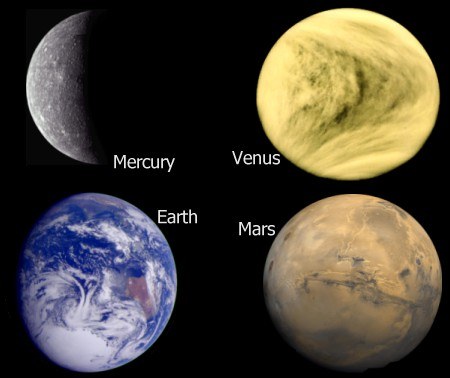
Earth and the other planets closest to the Sun are made mostly of _______
a)
gas
b)
metal
c)
water
d)
rock
48.

Earth's ________ on its axis causes day and night.
a)
rotation
b)
revolution
c)
phase
d)
comet
49.
One of the main differences between the outer and inner planets is __________.
a)
The inner planets all have water
b)
the inner planets are much bigger than the outer planets
c)
the outer planets are gas planets
d)
the outer planets have rings, and the inner planets don't
50.
Where is the asteroid belt found?
a)
between earth and mars
b)
Between Uranus and Neptune
c)
Between Mercury and Venus
d)
Between Mars and Jupiter
51.
Which outer planets have rings?
a)
Just Saturn
b)
Saturn and Jupiter
c)
Jupiter, Neptune, and Saturn
d)
all 4 of them
52.

a pattern of stars that form an imaginary picture or design in the sky
a)
Orbit
b)
Rotate
c)
constellation
d)
Milky Way
53.

This is the symbol for a...
a)
Cold Front
b)
Warm Front
c)
Stationary Front
d)
Occluded Front
54.

This is the symbol for a...
a)
Occluded Front
b)
Stationary Front
c)
Warm Front
d)
Cold Front
55.
Located at the leading edge of a temperature drop off. Bring heavy thunderstorms, rain, and hail. Cool, fair weather is likely to follow.
a)
Warm Front
b)
Cold Front
c)
Occluded Front
d)
Stationary Front
56.
Located at the leading edge of a warm air mass. Brings gentle rain or light snow, followed by warmer, milder weather.
a)
Warm Front
b)
Cold Front
c)
Occluded Front
d)
Stationary Front
57.
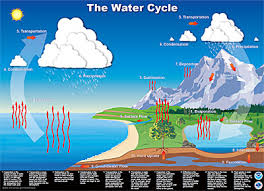
During which stage do clouds form?
a)
condensation
b)
evaporation
c)
precipitation
58.
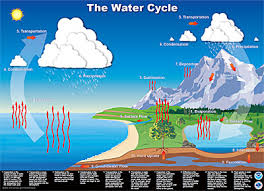
Which stages does liquid water from the ocean turn into water vapor?
a)
condesantion
b)
evaporation
c)
precipitation
d)
run off
59.
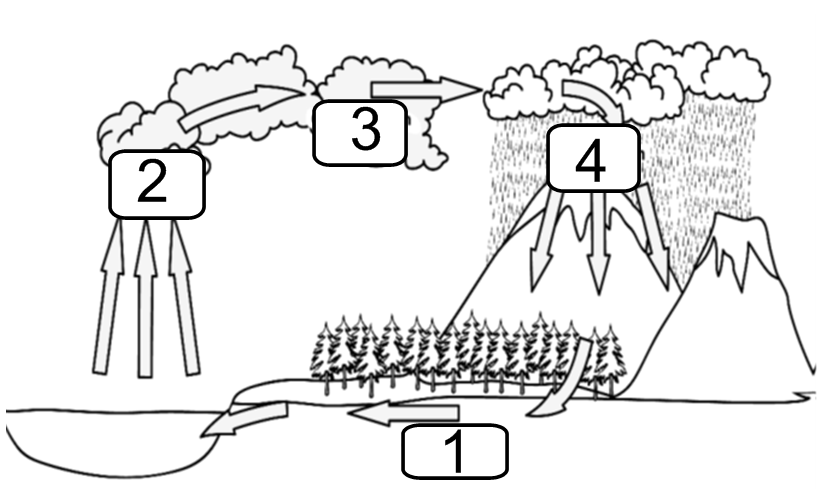
Which stage does the #2 show in the diagram?
a)
condensation
b)
evaporation
c)
precipitation
d)
run off
60.

Which stage does the #3 show in the diagram?
a)
condensation
b)
evaporation
c)
precipitation
d)
run off
61.

what does the #4 show in the diagram?
a)
condensation
b)
evaporation
c)
precipitation
d)
run off
62.

What is the name of this tool?
a)
wind vane
b)
anemometer
c)
wind sock
63.

what does this tool measure?
a)
wind direction
b)
wind speed
c)
air temperature
d)
humidity
64.

What part of the water cycle does this picture show?
a)
condensation
b)
precipitation
c)
evaporation
d)
sublimation
100 %

